Feeds:
Posts
Comments

Archive for the ‘Success’ Category

Joy Ridderhof pulled the blankets around her head to warm her shivering body, knowing she’d soon be throwing them off as sweat soaked her nightgown.

Joy had succumbed to malaria before, but this episode wouldn’t subside. As a result, she’d had to leave the people she’d grown to love in Honduras and return home to Los Angeles. The year: 1937.

Her doctors weren’t sure why she didn’t improve. Added to her discomfort was their discouragement: “You mustn’t go back to Honduras, Joy.”

A mountain village of Honduras , 2008

The thirty-four-year-old had served as a missionary in a remote, mountain village for five years. In spite of hardship, illness, and even threats on her life, she’d loved her time there, and many Hondurans had come to know Christ.

Now it appeared that challenging yet satisfying life-chapter was over. Joy faced the possibility of being an invalid the rest of her life—or at least a semi-invalid.

One day as Joy lay in bed, a wonderful idea occurred to her. The gramophones many villages owned could be put to good use if she made records of stories and songs about Jesus. As far as she knew, no such records existed in Spanish.

But how could she implement such a plan? Joy began to pray and asked others to join her.

Slowly, her health improved. And then, she happened to be introduced to a missionary returned from Central America who’d built a recording studio in his home. She shared her idea, and he became enthused about such a project.

Joy wrote the scripts and arranged for singers and their accompaniment. She herself read the stories.

The first record was produced on December 31, 1938. Joy sent them to various locations in Central America. Now people who couldn’t read would hear about Christ in their own language.

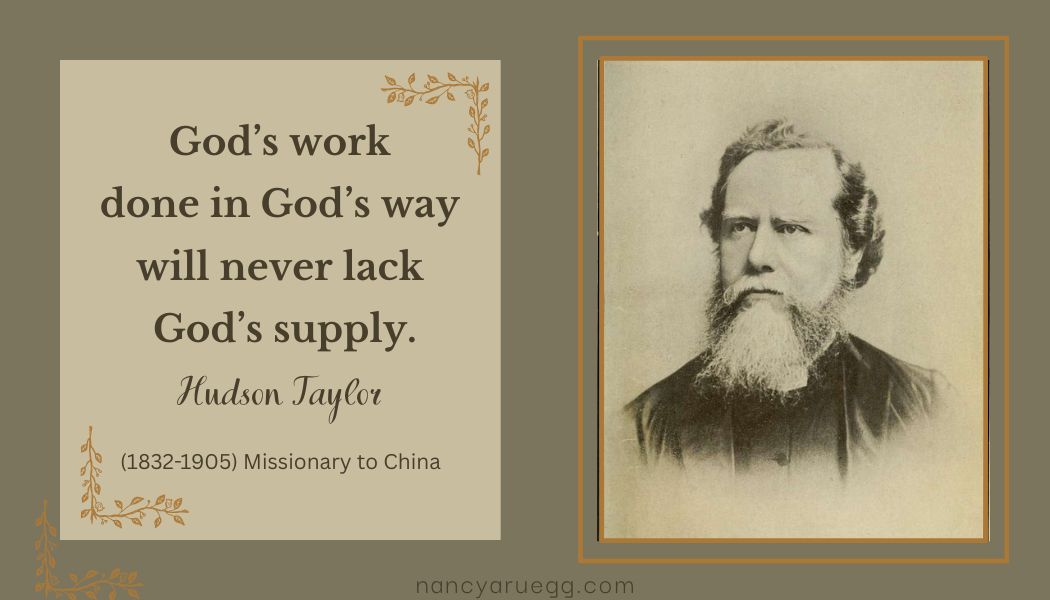
But each record cost fifty cents to produce and Joy had no income. The Great Depression meant resources were tight everywhere. Joy prayed for God’s provision. She believed what the great missionary Hudson Taylor had said [1]:
And supply God did.

In May 1939, Joy established Spanish Gospel Recordings.

Missionaries in Mexico heard about Joy’s work and asked for records in another language. Of course, finding native speakers in L. A. for an indigenous Mexican-Indian language would be nearly impossible.

So Joy and her college friend Ann Sherwood left for Mexico and Central America in 1944, a trip made possible by a doctor who loaned them a car and provided gas ration coupons.

Once they arrived in Mexico, a man invited them to use his new recording studio. The women spent ten months producing records in thirty-five languages, then returned to the States, satisfied their task was complete.

But God had more in store.

Missionaries to the Navajo Indians in Arizona asked for recordings; Joy found native speakers to translate and record scripts for them [2].

Next came a call from Alaska. The two women drove from L.A. to Alaska, equipped with one of the first tape recorders produced in America. While there, someone mentioned that such records would be helpful in the Philippines.

“Oh no!” Joy laughed. “Now we’ve got to go to there!”

Joy and Ann spent one year in the Philippine Islands, producing records in ninety-two languages [3].

By 1955, the two women and others had travelled around the world. Records were being sent to more than one hundred countries [4], prepared on top-of-the-line recorders that God supplied.

He also provided workers who lived in various countries. By 1980 about 3,500 languages had been recorded [5]. Millions of records had been produced.

Of course, not all remote villages owned a record player. So Joy’s organization developed and supplied a number of different players over the decades.

The simplest was a cardboard sleeve that also housed the record for shipping. When opened up, a needle fastened to one edge played the record when placed on the stubby spindle attached to one side. The record could be turned by a pencil or stick stuck into a hole on the edge of the label.   

Hand-wound box-players were later issued, then cassette players, followed by hand-wound mp3 players. Today, the internet and apps allow people all over the world to hear about Jesus and his gift of salvation.

In an interview recorded in 1974 [6], Joy Ridderhof (1903-1984) passionately affirmed:

“We have a God that’s alive, who answers prayer, takes care of us, gives us joy in the work, and provides great results from our work.

“Many thousands have heard about Jesus; little churches have sprung up in different places. He has met our needs and proven himself faithful [7]!”

Today, the Global Recordings Network includes forty offices worldwide, and has produced recordings in more than 6,500 languages [8].  
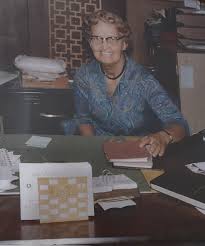
Joy Ridderhof


[1] https://www.globalrecordingsusa.org/wp-content/uploads/2024/03/Magazine-viewing-version-1.pdf

[2] https://fromthevault.wheaton.edu/2024/03/04/too-impractical-to-be-a-missionary-remembering-missions-pioneer-joy-ridderhof/

[3]  https://www.youtube.com/watch?v=TsLfY9bOkxo

[4] https://fromthevault.wheaton.edu.

[5] www.globalrecordings.org

[6] (and [7])  https://www.youtube.com/watch?v=TsLfY9bOkxo

[8] https://www.globalrecordingsusa.org/about/overview/

Image credits: http://www.canva.com; http://www.flickr.com; commons.wikimedia.org; http://www.picryl.com; http://www.canva.com; http://www.commons.wikimedia.org (2).

Processing…
Success! You're on the list.

Read Full Post »

Years ago when our middle granddaughter was a preschooler, we took her to an arcade. In the back corner stood a few free games and among them, two old Tetris side by side.

Some of you will remember this game. Shapes drift down from the screen-top; the player must manipulate them, fitting them together in a solid wall as they reach the bottom—without leaving holes.

After a quick explanation of how to play, E. happily started pushing buttons. I decided to play the neighboring game. Bad mistake.

Video games never were my forte, and the passing years had not contributed to my skills. Frustration began to build as hole after hole appeared in my wall.

At game’s end, E. cried with joyful triumph, “Look Nana! Look at the pretty design I made!”

Though her screen displayed many colorful shapes, there were numerous holes. But that didn’t matter to E. In her view she’d created an eye-catching piece of art.

E. taught me a lesson that day. My attitude could often be improved if I just focused on the positive of what IS and not on the negative of what ISN’T.

All too frequently I’ve strived for unattainable goals, wasted time on unimportant details, or sacrificed rest while slaving through a lengthy to-do-list. I’ve also cared too much what other people thought.

All of these traits are symptoms of perfectionism.

Why are we perfectionists so strict on ourselves? Perhaps it’s because we don’t want to be:

  • ashamed of our performance or handiwork
  • blamed when our efforts aren’t up to par
  • judged inferior or lacking in some way

To move away from such fears and toward the freedom Christ offers (John 8:36), we need to CHILL by affirming these attitudes and actions.

I am:

  • C elebrating more often what’s right, criticizing less often what’s wrong
  • H appy with “good enough” when appropriate
  • I nspiring others with my imperfections!
  • L istening to the truth
  • L oved by God as I am

To jump-start such declarations, consider the following.

CELEBRATE

When faulty efforts occur, we can CELEBRATE this: “A flawed rose still smells sweet” (Unknown). I can still carry the fragrance of Christ as I rely upon him through the mistakes and failures.

(Be) HAPPY

“We don’t have to be perfect to be wonderful” (Unknown).

Lots of fantastic people in this world display admirable qualities, but not one of them is perfect.

You’re wonderful too! Give yourself the same grace you give others.

INSPIRE

“There’s no need to be perfect in order to inspire others. Let people get inspired by how you deal with your imperfections”—Ziad K. Abdelnour.

Also true:

LISTEN

Listen to such truths as these to silence the voice of perfectionism:

  • Jesus did live a perfect life yet was criticized incessantly. However, all he cared about was his Father’s approval, which God bestowed (Matthew 3:17). You know who else is approved? Everyone who believes in Jesus!

Everyone who believes has God’s approval

through faith in Jesus Christ.

Romans 3:22a GW

  • The godly Apostle Paul admitted—after thirty-years as a Jesus-follower— he hadn’t achieved perfection. Even so, he found satisfaction in pressing on toward spiritual maturity (Philippians 3:12-13).
  • We can combat the striving as we embrace God’s desires for us—to lie down in his green pastures now and then, and not fill every minute with activity—to lead us beside quiet waters, and not struggle in a churning ocean of busyness (Psalm 23:1-3).

(Receive) LOVE

God has made it clear: “[He] loves us because of who he is, not because of who we are” (Unknown, 1 John 4:10).

His love for us is:

  • Sacrificial (Romans 5:8)
  • Lavish (1 John 3:1)
  • Patient, kind, unfailing, and more (1 Corinthians 13:4-8)
  • Forgiving (Ephesians 4:32)
  • Everlasting (Jeremiah 31:3)

So! When perfectionism insists we aim even beyond excellence, let’s remember:

There are no perfect daughters, wives or mothers; no perfect sons, husbands, or fathers; no perfect employees, no perfect homes. No one has it 100% together.

“What we do have is a perfect God who is able to lead us through this imperfect life with unfailing strength, incomparable wisdom, and infinite love” (Unknown).

Like our granddaughter E., we can celebrate with joyful triumph the cumulating designs of our lives—imperfect though they may be.

Let’s CHILL!

Art & photo credits: http://www.flickr.com; http://www.canva.com (4); http://www.pixabay.com; http://www.canva.com.

TAKE NOTE! A newsletter launches this month that will include additional topics to what’s on the blog. Please sign up below and check out the first installment. Thank you!

Processing…
Success! You're on the list.

Read Full Post »

Ken looked up from his Bible into the faces of his children, gathered for their family devotions [1]. He’d been reading to them from a puzzling passage, and the circle of glassy eyes betrayed their lack of understanding.

Ken knew the problem; he’d dealt with it himself growing up in the 1920s. The King James Version of 1611, used by most Protestant churches at the time, was difficult for modern generations to comprehend—much less Ken’s children growing up in the 1940s and ‘50s.

He stopped reading and explained the meaning of the confusing verse.

“But Daddy,” said one of his daughters, “if that’s what it means, why doesn’t it say so” [2]?

Why not, indeed, thought Ken. That’s when he decided to rewrite certain Bible stories for his ten children.

Ken’s background provided a strong foundation for such a project. He’d grown up in the home of a pastor father and godly mother, and earned an advanced theology degree.

That training served him well, first as editor for HIS magazine, then at Good News Publishers, and finally as director of Moody Press in Chicago.

Ken’s children loved his stories, and when he shared them with colleagues at Moody, they urged him to publish. (He’d already published two children’s books.) The first collection of scripture-stories, The Bible in Pictures for Little Eyes (1956), was followed by several more.

Then came a new God-inspired epiphany. What if he rewrote scripture thought-for-thought instead of word-for-word, but still based on the original Hebrew or Greek? Could he make scripture—even the non-story parts—more understandable for his children?

Ken flipped open his Bible, and his eyes landed on 2 Timothy 2:4.

“No man that warreth entangleth himself with the affairs of this life; that he may please him who hath chosen him to be a soldier” (KJV).

After careful thought, Ken wrote: “As Christ’s soldier do not let yourself become tied up in worldly affairs, for then you cannot satisfy the one who has enlisted you in his army [3].”

That night he shared his rewrite with the family. They approved.

Thus began a multi-year commitment of evenings, weekends, and vacations, revising scripture for his family. Ken even worked during the 45-minute commute by train from his home (in Wheaton, Illinois) to Chicago.

Each evening he’d share the results of his efforts with the family.

A few years later another possibility occurred to Ken. Other families might also appreciate a scripture revision in modern-day English. By this time (1962), he’d completed the twenty-one epistles (letters) of the New Testament. He called the book Living Letters.

However, publisher after publisher rejected the manuscript. They doubted people would be interested in a modern version of the epistles so far removed from the familiar King James.

Ken and his wife Margaret decided to finance from their savings a printing of 2000 copies. He then rented half a booth at a Christian book convention and sold 800 copies.

The family helped process the orders at the dining room table. Boxes of books were stored under their beds.

Several months passed before the first orders arrived at their home. Ken dipped into their savings again and printed 5,000 copies. A few months later, 10,000 more.

In 1963 the Billy Graham Association contacted Ken. They wanted to offer Living Letters to anyone who requested a copy. They distributed six hundred thousand copies world-wide.

Considerable proceeds began to accumulate, but Ken and Margaret weren’t interested in upgrading their modest lifestyle. They set up a foundation in order to fund Christian mission projects worldwide [4].

Another prompting from God led Ken to leave Moody Press so he could write full-time and revise more books of the Bible into modern day language.

From 1964 to 1970 Ken added such volumes as The Living Prophecies (1964) and The Living Gospels (1966).  Each one included a different portion of the Bible.

By 1965, the dining room no longer sufficed for conducting the business of their company, Tyndale House Publishing [5]. Ken moved the operation to offices nearby. Another move became necessary in 1967 when even more space was required.

By 1972 Ken had completed the revision of the entire scriptures. The Living Bible was released, selling eight million copies by the end of that year.

In 1973, The Living Bible became the best-selling book in America, and Tyndale House Publishing soon became the well-known and highly-respected company it is today.

By the late 1980s Ken had been semi-retired for several years and his son Mark served as CEO. Tyndale House brought together ninety Bible scholars to work on The New Living Translation, which would be “faithful to the ancient texts and eminently readable” [6]. That volume was released in 1996 and has sold more than 50 million copies.

To this day Tyndale House carries on the passion and Living legacy of Kenneth N. Taylor (1917-2005), ministering to “the spiritual needs of people, primarily through literature consistent with biblical principles” [7].


[1] A time of Bible reading and prayer

[2] https://todayschristianliving.org/ken-taylor-making-scripture-clear/

[3] Ibid.

[4] Ibid.

[5] William Tyndale translated the Bible into English, and was burned at the stake in 1536 for doing so.

[6] https://www.tyndale.com/about-the-nlt

[7] https://www.tyndale.com/kenneth-n-taylor

Other sources:

https://www.zianet.com/maxey/ver4.htm

https://www.referenceforbusiness.com/history2/6/Tyndale-House-Publishers-Inc.html

Read Full Post »

David Bussau sat with three of his teenage friends in the dining hall of Sedgley Boys’ Home, an orphanage in New Zealand.

“How’d you guys like to work for me?” he asked.

David had lived in the orphanage himself until recently. Now he was out on his own, living at a boardinghouse. But David had prepared for this eventuality, saving money from odd jobs while living at Sedgley.

Currently he was running his own hot dog stand, and now he was ready to expand. With the help of his friends, David became proprietor of three hot dog stands, then two other food stands, followed by a bakery, and a pancake company. David improved each business and sold them for a substantial profit.

In 1965 at age 25, David married Carol Crowder, a girl from his church. Not long after they moved to Sydney, Australia.

Sydney, Australia 1960s

David found work as a construction foreman, and quickly learned the business. Before long he was part-owner of the company.

Over the next ten years, the Bussaus became parents to two daughters. His boss retired and David purchased his shares of the company. Soon he owned three construction companies, and reached the status of millionaire—before his thirty-fifth birthday.

David knew money wouldn’t satisfy. He wanted to live on enough and use his God-given wealth and talent as an entrepreneur to serve others. But how?

In 1974 a cyclone devastated Darwin, Australia. David and twenty volunteers traveled two thousand miles to help with reconstruction.

Of course, several weeks of work made little difference. So David made arrangements for his businesses in Sydney to carry on without him and moved his family to Darwin. In addition to supervising construction crews, David raised funds throughout Australia for the flattened city.

By 1976 Darwin was nearly rebuilt, and the Bussaus’ pastor in Sydney presented them a new opportunity in Bali, to rebuild a church destroyed by earthquake. Their answer: yes.

“This was my first real exercise in faith,” David said later. “Even when I’m out of my depth I like to take on a challenge. I jumped into it trusting and believing that God would redeem if I screwed up.” [1]

In the remote village of Blimbingsari, the Bussaus lived in a thatch-roofed home with no electricity, running water, or phone. But the community of one thousand Christians were willing to work hard to have a church again.

Water was the top priority, in order to make concrete for a sturdy structure. But bringing water to the village meant bypassing two Hindu villages. David and his crew built a dam and laid pipe, providing water to them first.

That project yielded another blessing. Now the villagers could irrigate their rice fields and harvest twice a year, not just once. 

While working toward church construction, David learned of the systemic debt plaguing the rice farmers. Landowners required sixty percent of the crop as rent; the remaining proceeds didn’t cover most families’ expenses. 

They often mortgaged their children to manage mounting debts, but it was rarely enough.

David created a solution: micro-financing. He began with his interpreter, Ketut, whose wife knew how to use a sewing machine.  

David lent them fifty dollars to purchase an old one. They sold the crafted items in surrounding villages, and as the business grew Ketut paid back the loan.

Even better, they made enough to buy a second machine and hire another worker. Before long Ketut and his family were ready to diversify. They opened an import/export business as well as a taxi service, employing more community members.

And so began the villagers’ escape from chronic debt into sustainable, successful businesses.

When the church was complete, village leaders asked the Bussaus to stay and help build a hotel. People could then be trained to work in the growing tourist industry.

David and Carol agreed. (Their two daughters loved living in Bali, making the decision even easier.)

To further develop his ability to provide micro-loans, David founded a non-profit organization called “Maha Bhoga Marga”— “The Way of Prosperity.” Over the decades he’s founded seventeen international ministries.

David also joined forces with a colleague to form Opportunity International (O.I.). As of 2021, it has served over 18 million clients in thirty countries. [2]

An O. I. savings and loans ready to open in Ghana, 2011

“O. I. creates a job in the developing world every thirty seconds, and they estimate that every permanent job created directly lifts six people out of poverty.” [3]

David explains their success: “Our original intent wasn’t to set up an international organization, it just grew. That’s the way God works. [When you] do what He puts in front of you, the more doors He opens up. The result is that God is glorified through it.” [4]

Now in his eighties, David still travels internationally, furthering the work God gave him to do: bringing people out of poverty one micro-loan at a time and glorifying God through it.


[1]  https://www.issuu.com/opportunity/docs/oia_agency_issue08

[2] https://opportunity.org/content/News/Publications/Annual%20Report/annual-report-2021/annual-report-2021.pdf

[3] https://www.hopechannel.com/read/david-bussau-creates-opportunity

[4]  https://www.issuu.com/opportunity/docs/oia_agency_issue08

Other sources:

https://christiantoday.com.au/news/cma-courageous-leadership-conference-melbourne-and-interview-with-micro-finance-pioneer-david-bussau.html

https://www.discoverwalks.com/blog/australia/top-10-sensational-facts-about-david-bussau/

https://opportunity.org/news/blog/2021/december/back-to-the-beginning-david-bussau

Photo credits: http://www.commons.wikimedia.org; http://www.rawpixel.com; http://www.flickr.com; http://www.commonswikimedia.org; http://www.rawpixel.com; http://www.commonswikimedia.org (2).; http://www.piqsels.com.

Read Full Post »

Mr. Ribeau studied young Michael’s work, checking for crooked stitches and traces of glue. But after just two years of training, the young book-binding apprentice was already quite proficient.

“You’ve done a fine job, my boy!” Mr. Ribeau praised.

A small smile curled on Michael’s face. “Thank you, sir. This is the last book for today. May I go work on my experiments, please?”

Mr. Ribeau chuckled. “Of course. Off with you!” 

Michael scurried to the back room where his master had given him space to investigate his favorite subject: electricity.

Interest had begun five years before in 1803 when Michael became an errand boy for Mr. Ribeau. Michael would read the books that came into the London shop for binding. Even though he attended school for just two years, Michael read with competence.

The volumes on science especially intrigued him, and he desired to conduct his own experiments. Kind Mr. Ribeau had made it possible. He also provided extra pennies now and then to attend scientific lectures.

Another book captured Michael’s attention: The Improvement of the Mind by the famous hymn-writer, Isaac Watts. Michael determined to follow Watts’ advice including: read worthwhile books, take thoughtful notes, and “ever maintain a virtuous and pious frame of spirit.”

No doubt Michael’s heart was primed for such a book, since he came from a Christian home. And as he grew into manhood, Michael embraced his faith in Jesus with ever-maturing dedication. 

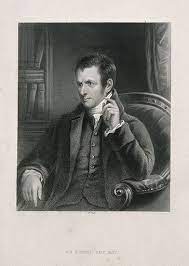
One day Mr. Ribeau presented Michael with four passes to attend presentations by Sir Humphrey Davy, a renowned chemist. At each lecture, Michael took careful notes. Later he bound them into a beautiful book.

Sir Humphrey Davy

In 1811 at age nineteen, Michael completed his apprenticeship, but had no desire to become a bookbinder. Though just a tradesman with little schooling, he sought a position with one of the scientific institutions, including Sir Davy’s prestigious Royal Institution.

With that application, he sent his precious notebook from Davy’s lectures, hoping to convince the great chemist of his passion for the sciences. But no position was available.

In 1813 an invitation arrived for Michael to interview with Davy, and he was hired as a laboratory assistant. Michael quickly proved himself, assisting Sir Davy at his lectures. Six months later, Davy selected Michael to accompany him on a two-year lecture tour through Europe.

When they returned, Michael pursued his scientific studies with passion. He researched steel, hoping to make it stronger. He sought to improve lighthouse lamps, prevent corrosion of ships, clean up the pollution in the Thames, and preserve art works and sculptures.  

Young Michael Faraday

Michael was the first person to liquefy chlorine and discovered a new element, later named benzene, that’s used in dyes, nylon, and plastics. Further discoveries included the process that produced refrigeration and the potential use of ether as an anesthetic.

But he didn’t neglect his first love, electricity. Michael invented the transformer and the dynamo that created electricity without a battery. His discoveries also paved the way for the electric motor. In fact, Michael Faraday has been called “the scientific genius who gave electricity to the world” (1).

Such research propelled Michael into elite circles. He became director of the Royal Institution where he’d begun as an assistant to Sir Davy. Oxford University awarded him a doctorate, and he was invited to become a member—even president–of the prestigious Royal Society. He declined the position.

Michael Faraday lecturing at the Royal Institution: Prince Albert and his sons in the audience. Wood engraving, 1856, after A. Blaikley. Contributors: Alexander Blaikley. Work ID: xt5crqqq.

In spite of great success, Michael Faraday remained a humble man, uninterested in the fortune he could have amassed, manufacturing his inventions.

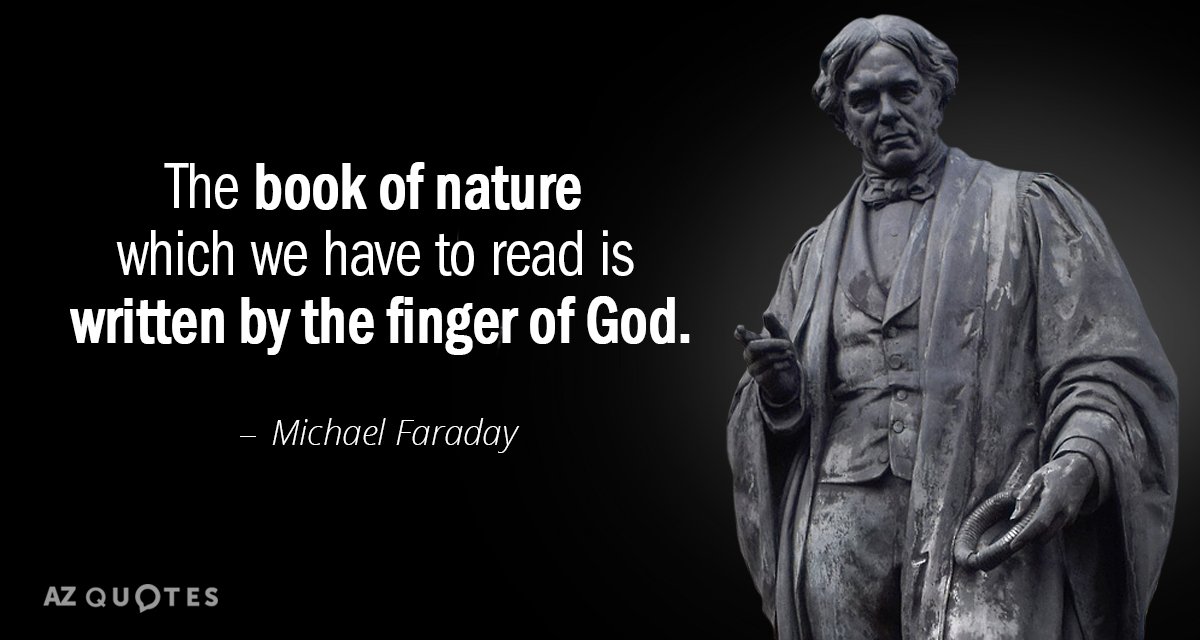
To Michael, the pursuit of scientific studies was a holy calling, and to understand even a fraction of nature’s workings was a gift from God (2) –much more valuable than money.

But not all his waking hours were devoted to science. Faraday was an active church member, serving as elder for more than 20 years, frequently leading in worship and even preaching.

Faraday also demonstrated faith-in-action. For example:

He proved himself a forgiving man on many occasions. One time the elders removed him from their circle—even church membership for awhile–because he accepted an invitation from Queen Victoria for Sunday lunch, which meant he couldn’t be at church. 

But Michael continued to attend services and remained cordial to all, including those who’d hurt him.

Michael demonstrated grace. He and Sir Davy differed in opinion more than several times, but the younger scientist always expressed admiration for his mentor.

Michael’s generosity was also well known. He supported charities and visited the poor. And when his mother became widowed, he also supported her.

Throughout his career Michael expressed gratitude to God that he, a poor, uneducated tradesman should be privileged to explore the beauty and synchronization of God’s physical laws of creation.  

In 1861, the aging Faraday wrote to a friend, “The contemplation of death [is] a comfort—not a fear. Such peace is alone in the gift of God. . . His unspeakable gift in His beloved Son is the ground of no doubtful hope” (3).

Michael Faraday proved himself a man of intelligence and integrity, but also of strong faith in God, and in the end, peace.

Michael Faraday. Photograph by W. Walker & Sons. Work ID: hjz8gkmw.

Isaac Watts, the author that inspired Faraday, would have been pleased, and no doubt so was God (Psalm 147:11).

Notes:

1. https://www.revshirelymurphy.co.uk/post/michael-faraday-and-his-christian-faith-which-influenced-his-science

2. https://crev.info/scientists/michael-faraday/

3. Ibid

Sources:

https://answersingenesis.org/creation-scientists/profiles/michael-faraday-gods-power-and-electric-power/

Heroes of the Faith: Michael Faraday

https://christianhistoryinstitute.org/magazine/article/drinking-from-a-fount-on-sundays

https://christiantoday.com.au/news/michael-faraday-his-christian-faith-influenced-his-science.html

https://creation.com/michael-faradaygods-power-and-electric-power

Michael Faraday

https://www.revshirleymurphy.co.uk/post/michael-faraday-and-his-christian-faith-which-influenced-his-science

Art & photo credits: rawpixel.com (2); http://www.lookandlearn.com; http://www.picryl.com; http://www.lookandlearn.com; http://www.azquotes.com; http://www.lookandlearn.com.

Read Full Post »

If you’d asked Robert’s mother Elizabeth about her teenage son, she may have replied, “He is a strong-willed, rebellious daredevil. If God doesn’t get ahold of him, he may not make it to twenty!”

No doubt Robert’s parents wondered if they’d made the right decision, when they allowed him to drop out of school at age fourteen and work in an iron foundry. But given his learning difficulties, on-the-job training seemed appropriate, to prepare Robert for his future.

Two years later in 1904, God answered the concerned parents’ prayers for their son. Robert decided hell was not an option he wanted to risk and at age sixteen invited Jesus into his life.

Later he would write, “No bolts of lightning hit me. No great flash of awareness. I just prayed to the Lord to save me, and then I was aware of another presence. No words were spoken. I received no messages. It was just that all of my bitterness was drained away, and I was filled with such a vast relief that I could not contain it all.”[1]

Robert moved from one uninspiring tradesmen job to another until he became an auto mechanic and discovered his passion—machinery. He opened his own garage with a business partner in 1911.

In April of 1917 the U.S. entered World War I. Robert volunteered for the war effort, working in a naval shipyard north of San Francisco. In August of that year he married Evelyn Peterson.

Upon returning home to Stockton, CA in 1918, Robert discovered his partner had sunk their business into debt. Robert carried $5000 of that liability.

He wondered, was God trying to transition him out of business? Should he become a missionary so he could work for God more directly? Robert sought guidance from his pastor and after praying together the clergyman remarked, “You know God needs businessmen too.”

Not long after, a rancher asked Robert to level a large parcel of land. The job paid well and Robert signed on. He satisfactorily completed the task in good time and actually enjoyed the work.

Through the 1920s earth-moving contracts kept coming Robert’s way. He bought land and built an engineering shop where he put his ingenuity and giftedness for engineering to work, designing machines that completed the task more efficiently. Most other companies still used mules with plows and dozens of men with shovels.

(Two of LeTourneau’s early machines)

But even as a top-notch, road-construction contractor, financial struggles still plagued Robert. Now and then he’d sell one of his earth-moving inventions to help make ends meet for his growing family. (He and Evelyn had five children, though tragically their first died during the Spanish influenza epidemic.)

In the early 1930s, Robert’s attorney suggested, “Why don’t you focus on manufacturing your machines? That might prove more profitable.”

Robert decided to try, even though the nation was suffering through the Great Depression. During his first year in 1932, he earned a profit of more than $52,000 and by 1935, well over two million.[2]

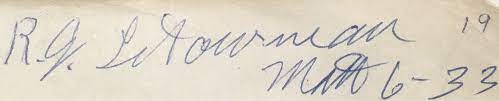
(Robert nearly always included reference to his life verse with each signature.)

It was then that he and Evelyn decided to live on 10% of Robert’s income and give 90% to Christian mission work, colleges, and institutions. Meanwhile Evelyn started Sunday Schools and youth camps. God blessed each of their endeavors.

Robert not only invented the earth mover, but also the bulldozer, the electric wheel, the tree crusher, the log picker, the Tournawheel (a two-wheel tractor), and more. Eventually he’d own 300 patents and construction plants on four continents. He’d also design the first off-shore oil rig.

(from the R.G. LeTourneau Museum and Archives, The Margaret Estes Library, LeTourneau University)

During World War II Robert’s company supplied 70% of the U.S. Army’s earth-moving equipment, making it possible for the Allies to quickly build roads, airports, and military bases.

After the war, Robert’s machinery helped construct the 48,000 miles of U.S. interstate highways.

(R.G. LeTourneau:  The Man, Machines, and Mission Collection
Evelyn LeTourneau Collection)

In 1946 he and Evelyn founded the LeTourneau Polytechnic Institute, a Christ-centered school especially for veterans who desired training in engineering. It has since become LeTourneau University.

Business and philanthropy weren’t Robert’s only pursuits. Though he’d always feared public speaking, Robert felt compelled to accept an invitation to share his story at a banquet in 1935. Soon he was speaking all over America and even overseas.  Robert would encourage others to honor God with their wallets and see what God would do.

“You will never know what you can accomplish

until you say a great big yes to the Lord.”

Robert Gilmour LeTourneau (1888-1969)

How has God blessed you as you’ve honored him with your wallet? Please share your story in the comment section below!


 Notes:

[1] https://www.wayoflife.org/reports/christian_inventor_rg_letourneau.html

[2] Ibid

Other sources:

 http://www.giantsforgod.com/rg-letourneau/

https://www.letu.edu/75/exhibit/panel-faith.html, and subsequent panels

https://www.oemoffhighway.com/trends/article/21366254/historical-construction-equipment-association-hcea-the-great-innovator-r-g-letourneau

https://www.peoriamagazines.com/ibi/2011/jan/rg-letourneau

Photo credits: http://www.flickr.com; http://www.picryl.com; http://www.canva.com; http://www.wikipedia.org; http://www.dailyverses.net; http://www.wikimedia.org; Margaret Estes Library, LeTourneau University (2); http://www.dailyverses.net.

Special thanks to Shelby Ware at the Margaret Estes Library, LeTourneau University, for arranging permission to use the two images of R. G. LeTourneau in this post.

Read Full Post »

(From Morning by Morning, March 4.)

S. Truett Cathy (1921-2014) was just such a person, who grew up in poverty during the Great Depression to become a steadfast and unmovable masterwork of God.

At age eight he started his own business, inspired by a woman in his Atlanta, Georgia neighborhood. She sold cupcakes from her front yard.

M-m-m.  What could I sell to earn some money? Truett wondered. 

The answer: soft drinks. He purchased six bottles for a quarter and sold them for a nickel apiece. Just twenty six-packs, he figured, and I’ll have a whole dollar.

Truett quickly realized he could expand sales by enticing the door-to-door salesmen with cold drinks. He began to serve ice with the soda.

Soon the young entrepreneur had saved four dollars—enough to buy an old bicycle. Now he could make quicker profits by delivering newspapers.  But competition for customers was stiff with three well-established papers in Atlanta.

Truett had learned the value of customer satisfaction, however, so he made sure his papers landed on porches. On rainy days he put them inside the screen doors, and his customer list grew.

Truett delivered papers until high school graduation, after which he was drafted into the Army. Upon honorable discharge in 1945, Truett returned home to pursue his lifelong dream:  owning a business.

He decided to open a restaurant, knowing a bit about cooking for a crowd.  For years he’d helped his mother as she daily prepared meals not only for their family of nine but also for six boarders.

Truett and his younger brother Ben pooled their resources, took out a loan and bought a piece of land near a Ford assembly plant and Delta Airlines at the airport which provided a large customer base.

The tiny restaurant, aptly named the Dwarf Grill, included just ten counter stools and four tables.  The brothers served quick-to-fix burgers and steaks.

(The Dwarf Grill is still in operation, but in a new building with a revised name.)

They worked hard and the business thrived. But in 1949 tragedy struck. Ben, another brother, and two friends were killed.

Later Truett would remark, “I lost two brothers in an airplane crash, both of them leaving a wife and kids.  When I get to heaven, that’s probably the first question I’d like to ask: Why was it necessary?”[1]

The heartbreak did not erode Truett’s strong faith in God, which had been inspired by his devout mother and nurtured by Sunday School teacher and life-long mentor, Theo Abbey.

Then more trouble ensued.  In 1959 Truett was diagnosed with colon cancer. In an interview he explained that just prior to the successful surgery he experienced a new peace, knowing that whether he lived or died, he would be with God.[2] God granted another fifty-six years.

In 1960 the second restaurant burned to the ground, and then the original Dwarf Grill caught fire in 1965. But instead of becoming discouraged, Truett leaned on his God, growing stronger in faith and more determined than ever.

With only one restaurant to oversee, he focused his time on developing the menu. Truett remembered his mother’s impressive fried chicken, how she seasoned it the night before and put it in the ice box to marinate. 

He experimented with recipes, tried his efforts on regular customers and soon created a new menu item: the Chick-fil-A sandwich—a play on the word fillet, but also indicating the meat was grade A.

Customers loved the new sandwich, and in 1967, Truett opened the first Chick-fil-A restaurant. One successful opening followed another until, in the year 2000, the restaurant chain grossed one billion dollars in sales. By 2018, it surpassed $10 billion in sales.

(Double-click and enlarge this image to read about
Truett Cathy’s winning habits
based on Biblical principles.)

Today, the company generates more revenue per restaurant than any other fast-food chain, even though all locations are closed on Sundays. (Since his first day in the restaurant business, Truett set aside that day for his employees and himself “to rest and worship if they choose.”[3])

Truett’s commitment to put God first is expressed in the company’s statement of purpose: “To glorify God by being a faithful steward of all that is entrusted to us and to have a positive influence on all who come in contact with Chick-fil-A.”[4]

Truett also delighted to glorify God by spending his fortune to encourage others.

How do you identify someone who needs encouragement?

That person is breathing.

–Truett Cathy

Since 1973, Chick-fil-A has given more than $35 million in college scholarships to its employees. Truett also founded the WinShape Foundation, providing approximately $18 million dollars for the development of foster homes and summer camps.

His legacy of planting Christian ideals in the lives of others continues, even though Masterwork Samuel Truett Cathy now resides in heaven. (He is survived by his wife of sixty-six years, three children, eighteen grandchildren, and nineteen great-grandchildren.)


[1] https://www.quotetab.com/quote/by-s-truett-cathy/i-lost-two-brothers-in-an-airplane-crash-both-of-them-leaving-a-wife-and-kids-w

[2] https://www.11alive.com/article/news/thank-you-god-that-im-alive-in-book-chick-fil-a-founder-s-truett-cathy-shared-faith-affirming-brush-with-mortality/85-48c52862-7a53-4167-9e7a-1a37bd8d6185

[3] https://thechickenwire.chick-fil-a.com/inside-chick-fil-a/secret-menus-and-closed-on-sundays-chick-fil-a-fact-or-fiction

[4] https://billygraham.org/story/a-conversation-with-truett-cathy

Other Sources:

http://www.academicstar.us/UploadFile/Picture/2015-7/20157331854318.pdf

https://www.entrepreneur.com/article/311452

http://www.giantsforgod.com/s-truett-cathy/

https://www.thextraordinary.org/s-truett-cathy

Photo credits: http://www.pixhive.com; http://www.quotefancy.com; http://www.flickr.com; http://www.dailyverses.net; http://www.samiskelton.com; http://www.flickr.com; http://www.pxfuel.com.

Read Full Post »

The internet offers plenty of advice for maximizing time and effort in order to achieve success. The suggestions include:

  • Prioritize and protect your agenda.  Identify the crucial tasks for each day and focus on those items first.  Limit interruptions; shut down distractions.
  • Build an efficient routine into your schedule to streamline how time is allocated.
  • Pursue your own goals; don’t let others set them for you.
  • Network—especially with influential people who can expedite your success.

Jesus failed to follow any of that advice.

Instead:

His agenda shifted often, and he allowed frequent interruptions.

People interrupted his teaching and traveling all the time with requests for miracles.  Jewish leaders interjected questions while he was speaking.  When he tried to take the disciples to a quiet place for rest, the crowds followed, eager to hear him preach. 

And out of compassion, Jesus complied. [1]

Sometimes even his interruptions were interrupted.

While answering a question of John the Baptist’s disciples one day, a ruler intruded upon the conversation, begging him to come and raise his daughter from the dead.  En route to the ruler’s house, another interruption occurred when a woman touched his robe in hope of healing.[2]

It’s a wonder he ever arrived at his intended destinations.

Jesus had no routine.

Scripture seems to indicate Jesus lived in the moment—teaching, building relationships, healing, and performing miracles as opportunities presented themselves.

However, Christ did make time for important habits, including seclusion, prayer, and worship.[3]

Jesus’ overarching goal in life was to accomplish his Father’s goal.

“For I have come down from heaven

not to do my will but to do

the will of him who sent me.”

–John 6:38

Jesus set his sights on the joy awaiting him, when all earthly pain, frustration, and humiliation would be over and he’d be seated at the right side of his Father’s throne.[4]

Jesus built relationships, not a network.

At the end of three years, he’d assembled 120 followers.[5]  That’s an average of 40 per year; less than one per week.  Not very impressive.

Yet Jesus was the most successful Person who ever lived because:

True success is excellent living—

when a person’s thoughts, decisions,

and actions honor God.

–Chrystal Evans Hurst[6]

And Christ accomplished that perfectly.  

Now, thousands of angels encircle his throne, giving Jesus praise, honor, and glory because of his triumph over sin and death.[7]

What about us?  Are we focused on the culture’s view of success or God’s? 

Do we accept—even celebrate—what he chooses to do through us and then leave the results to him?

*     *     *     *     *     *     *     *     *     *     *     *

Lord God, help me to be a failure like Jesus! I confess that worldly standards of success cloud my vision of what true excellence entails:  obedience to you. Remind me you know what you’re doing and you do all things well; circumstances are not reliable indicators.  I reaffirm my trust in you whose works are always perfect.

(Jeremiah 7:23; Proverbs 19:21; Deuteronomy 32:4)


[1] Matthew 9:18-19; 21:23-24; 20:29-34; Mark 6:30-34

[2] Matthew 9:14-26

[3] Mark 1:35; Luke 4:16

[4] Hebrews 12:2

[5] Acts 1:15

[6] Kingdom Woman Devotional, Tyndale House Publishers (2013), p. 49.

[7] Revelation 5

Art & photo credits: http://www.pixabay.com (2); http://www.freebibleimages.org (2); http://www.canva.com; http://www.dailyverses.net; http://www.pxhere.com; http://www.canva.com.

Read Full Post »


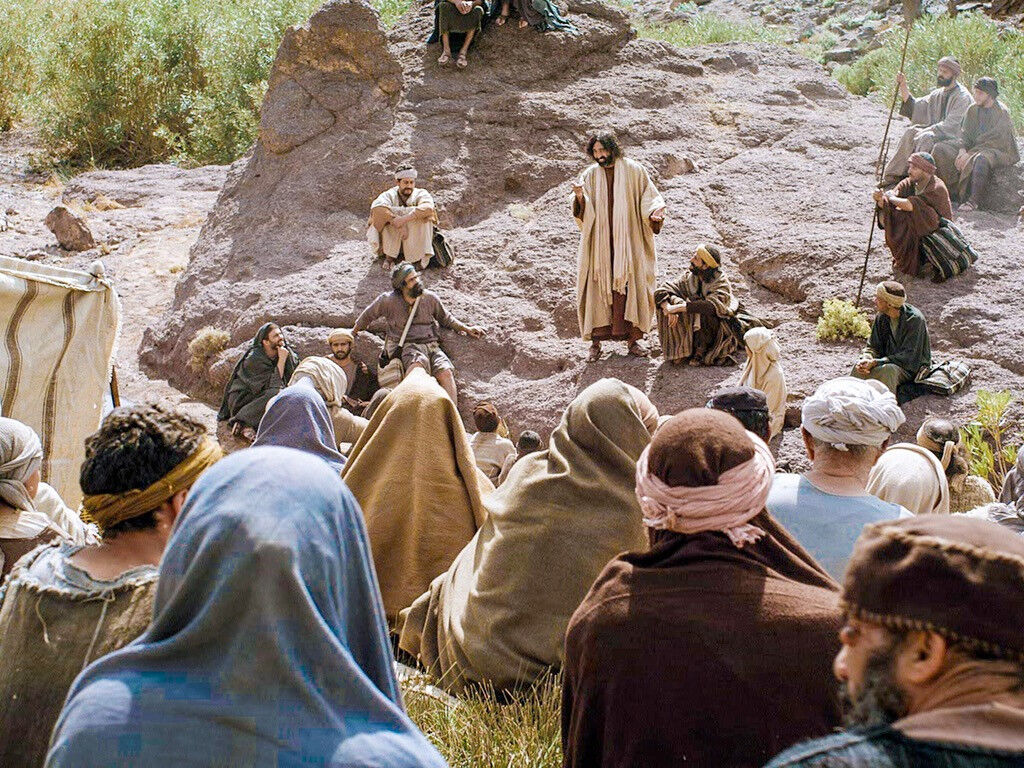
In his Sermon on the Mount, Jesus included eight statements called beatitudes (Matthew 5:3-10). Each one highlighted a virtue that results in the highest kind of happiness: sweet contentment not based on circumstances but on joyful faith in God and his provision for all we need.

In addition to the beatitudes of Matthew 5, the Bible offers dozens of blessing-statements—each one an encouraging slice of truth about God and his ways for us. They just aren’t constructed in typical beatitude style.

For example, consider Psalm 37:4:


Written as a beatitude:


Blessed are those who delight in God

for they shall receive the desires of their hearts.


Of course, the desires of our hearts often reflect child-sized plans, while God may have designed a “hugely dimensional destiny” that will surprise everyone.[1]

Kara’s* story illustrates. She fully expected to attend university and then enter the world of business. But even with a straight-A average, no scholarship materialized, and her parents earned too much money to qualify for sufficient financial aid.

Unless she took out a large student loan, Kara’s only option was community college. Highly disappointed—embarrassed even—she applied. Meanwhile a letter happened to arrive from that local college, describing a new course of study in TV production.


Kara had just completed a high school course in multimedia programming and loved it, so she applied for this new program and was accepted. Better yet, God provided full tuition as she earned that degree. And best of all, he molded Kara’s desire to coincide with the delightful and satisfying plan he’d designed for her.

Now years later, Kara and her husband make their living in the entertainment industry. No doubt the two of them marvel how God brought them together to work in a medium they love.

Kara is a miracle.

Romans 5:3-4 offers another beatitude truth:


As a beatitude it might read like this:


Blessed are those who embrace their challenges,

for they shall be changed for the better.


Anne wanted to support her husband’s dream of a free counseling service in their community and began making pretzels to sell at the local farmer’s market.

Through long effort and a number of failures, Anne was able to grow the business into hundreds of franchises across the country. You’ve probably eaten one of Auntie Anne’s Soft Pretzels at a mall or airport.


Anne’s personal life also included struggles, failures, and even the death of one of her children. Yet she says, “I am now thrilled to live this life, feeling that each day is one to be enjoyed. God’s grace and forgiveness are what got me through it all.”[2]

Anne is a miracle.

Our third new beatitude is based on Mark 10:27b:


Beatitude style?


Blessed are those who care less about their limitations

and care more how limitless God is.


The bio on the backs of Jennifer Rothschild’s books informs the reader she is a wife, mother, and recording artist. Jennifer also travels the country as a speaker, and cofounded WomensMinistry.NET.

What the bio does not reveal is that Jennifer has been blind since age fifteen. In her book, Lessons I Learned in the Dark, she wrote: “God often wraps difficult gifts with His grace—and then uses them to display His glory.”[3] Jennifer’s productive and joyful life perfectly illustrates that statement.

Jennifer is a miracle.

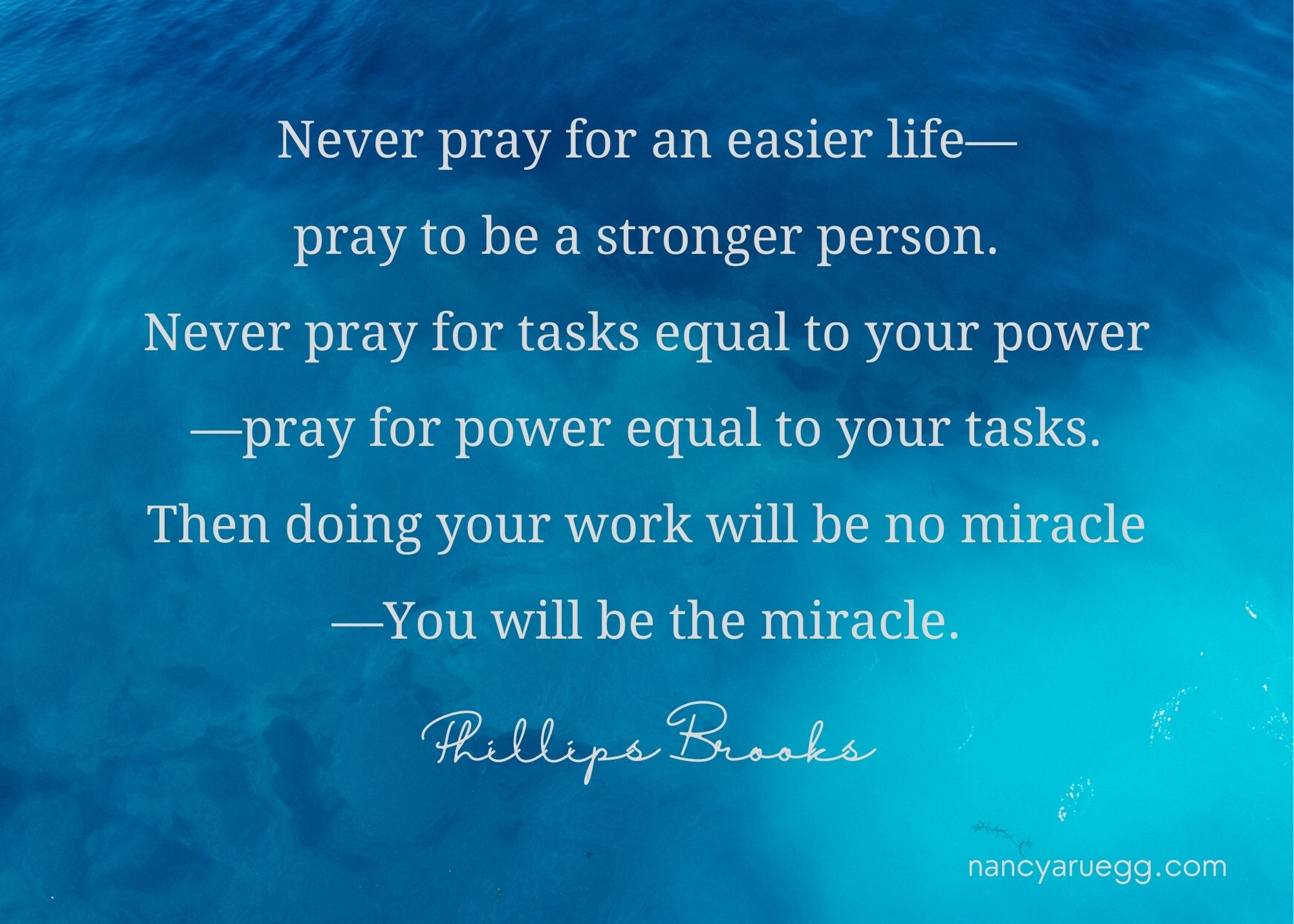
All three women exemplify what Rev. Phillips Brooks (1835-1893) wrote long ago:


Kara, Ann, Jennifer, and countless other believers demonstrate: When we embrace God’s be-attitudes, we not only experience the highest kind of happiness; we become miracles.


*Name changed.


Notes:

[1] Eugene Peterson, Under the Unpredictable Plant, pp. 160-161.

[2] Karol Ladd, Thrive, Don’t Simply Survive, pp. 147-148.

[3]  Jennifer Rothschild, Lessons I Learned in the Dark, p. 84.


Art & photo credits:  http://www.freebibleimages.org; http://www.heartlight.org; http://www.flickr.com; http://www.stocksnap.io; http://www.flickr.com; http://www.canva.com (2).


Read Full Post »


Attend a graduation ceremony, participate in a work-related seminar, or just join in a break room conversation, and you might hear one of these statements:

  1. God helps those who help themselves.
  2. If you can dream it, you can achieve it.
  3. Success = living life on your own terms.
  4. Believe in yourself.
  5. Follow your heart.
  6. You’ve got this.


Such statements are meant to encourage. But are they based on truth, or should a few be tossed in the trash?

Let’s consider:


Does God help those who help themselves?

Many people believe this idea comes from scripture. But the Bible teaches God helps those who recognize they can’t help themselves. The wisest course of action is to present each troubling situation to him in prayer before attempting any solution (1).


If I can dream it, is it a given I’ll able to achieve it?

Nowhere in the Bible are we told to pursue our dreams. Instead, God tells us to pursue righteousness, faith, love, and peace.

Not that God doesn’t place desires for the future on our hearts. He gladly helps us achieve all the good works He’s prepared in advance for us to do.

This is what we need to remember: “A God-given dream is never about position . . . it’s always about contribution.” And it’s through God-ordained contribution that we find satisfaction and fulfillment (2).


Is success a matter of living life on our own terms?

That kind of living most often leads to disappointment and dissatisfaction. Instead, God invites us to live the abundant life on his terms.

Some would say, “But God’s ways are so constrictive!” Actually, his truth provides freedom—freedom from the misery of sin and misguided choices. On the other hand, when we live the way he’s expertly designed for us, we enjoy a myriad of blessings (3).


Should we believe in ourselves?

That puts us in charge, which sounds appealing until you factor in our limited knowledge, imperfect judgment, and inadequate abilities. Due to these restrictions, stress and anxiety become constant companions while we try to keep control over our lives.

How much wiser to trust God who knows all things and can accomplish all things—including the best way to proceed through all our tomorrows.


Does it make good sense to follow our hearts?

No, our hearts are guided by feelings, desires, and emotions, which cannot always be trusted. Just ask Jennifer—Wife #2 of Jack. She believed his stories about self-centered, temperamental Wife #1. Jennifer told herself, Our marriage will be different. But she is now facing divorce herself as Jack’s eyes have wandered toward someone else.

No, we can’t just follow our hearts. We need the guidance of God’s perfect wisdom (4).


Have we got this?

Not really. Life can be turned upside down in a moment—bosses terminate employment, sure investments for retirement turn to ashes, doctors reveal devastating diagnoses. What then? I can’t imagine facing such hardships without God.

How much more encouraging to remember: he’s got this. Numerous experiences of others as well as my own have proven: God always sees us through with his perfect wisdom and almighty strength—whatever we face (5).


Notice how each of these statements in bold print revolves around usour effort, our planning, our confidence—even though we’re prone to make mistakes and foolish choices. God is the only One with the wherewithal to achieve what’s best for us—100% of the time.

As it happens, all these common statements can be tossed in the trash.

So when someone says, “Believe in yourself ,”or “You’ve got this,” perhaps we could respond with a gentle nudge toward truth:

Actually, I’m eternally grateful that Someone much stronger and wiser than I am is in charge. Experience has taught me, I am much better off trusting in God than in myself.


Notes:

  1. Isaiah 41:10; Psalm 56:3; 2 Chronicles 14:11; https://www.christianity.com/wiki/christian-life/why-god-helps-those-who-help-themselves-is-presumed-to-be-biblical.html
  2. 1 Timothy 2:22; Ephesians 2:10; https://www.crosswalk.com/faith/women/why-god-doesn-t-necessarily-want-you-to-pursue-your-dreams.html
  3. Proverbs 12:15; John 8:32; see Alphabet of Joy for examples of such blessings
  4. Romans 11:33
  5. Philippians 4:19


Art & photo credits:  http://www.pxhere.com; http://www.canva.com; http://www.dailyverses.net; http://www.heartlight.org; http://www.pixabay.com; http://www.geograph.org.uk; http://www.dailyveres.net; http://www.canva.com.


Read Full Post »

Older Posts »

Still Traveling

Impressions Becoming Expressions

Living Our Days

Gaining a heart of wisdom

He Said What?!

I'm Patty, and my husband and I are living with our adult son who has autism and epilepsy. I love sharing lessons learned from life around me, especially life with Aaron.

Meditations of my Heart

Impressions Becoming Expressions

Linda Stoll

Impressions Becoming Expressions

Debby Thompson

Impressions Becoming Expressions

Signora Sheila

Notes on Life, Faith & Italy

Colleen Scheid

Writing, Acting, Living in God's Love

Mitch Teemley

The Power of Story

Heidi Viars

Finding the Image of God