Feeds:
Posts
Comments

Some time ago, wise-and-insightful blogger Michele Morin (at Living Our Days) shared that she was journaling through some of the old hymns. I imagined her digging into the meaning of some of the rich language and theology, personalizing the truths, and/or using them as the basis for prayer.

Putting pen or pencil to paper in such a way slows down our thinking, allowing wonderful blessings to emerge:

  • Increased knowledge of God and his Word
  • Clarity of understanding
  • A record of discoveries
  • A record of faith deposits for later encouragement
  • Renewal of the mind
  • Augmented intimacy with God

If writing a meditation sounds intimidating, adopt the attitude of Isaac Asimov:

“Writing to me is simply thinking through my fingers.”

Isaac Asimov

For Christian journalers, writing can be worshiping through our fingers.

But how do we even begin such a process? Try Anne Sexton’s approach:

When we invite Jesus into our lives, the Spirit of God takes up residence within our spirits (1). We can put our ears down close to our souls and listen hard for him to guide our thoughts and lead us to the insights he would have us discover.

And then, we fill our pages with the breathings of our hearts (2).

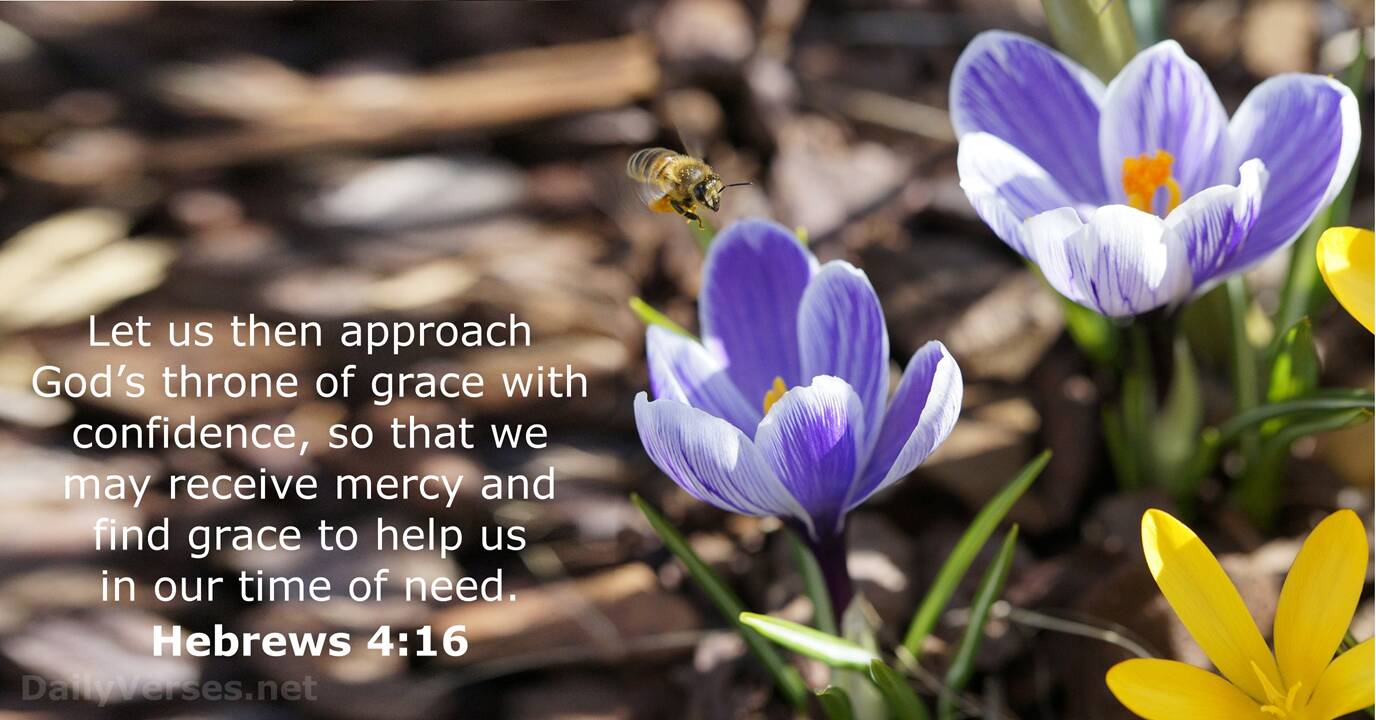
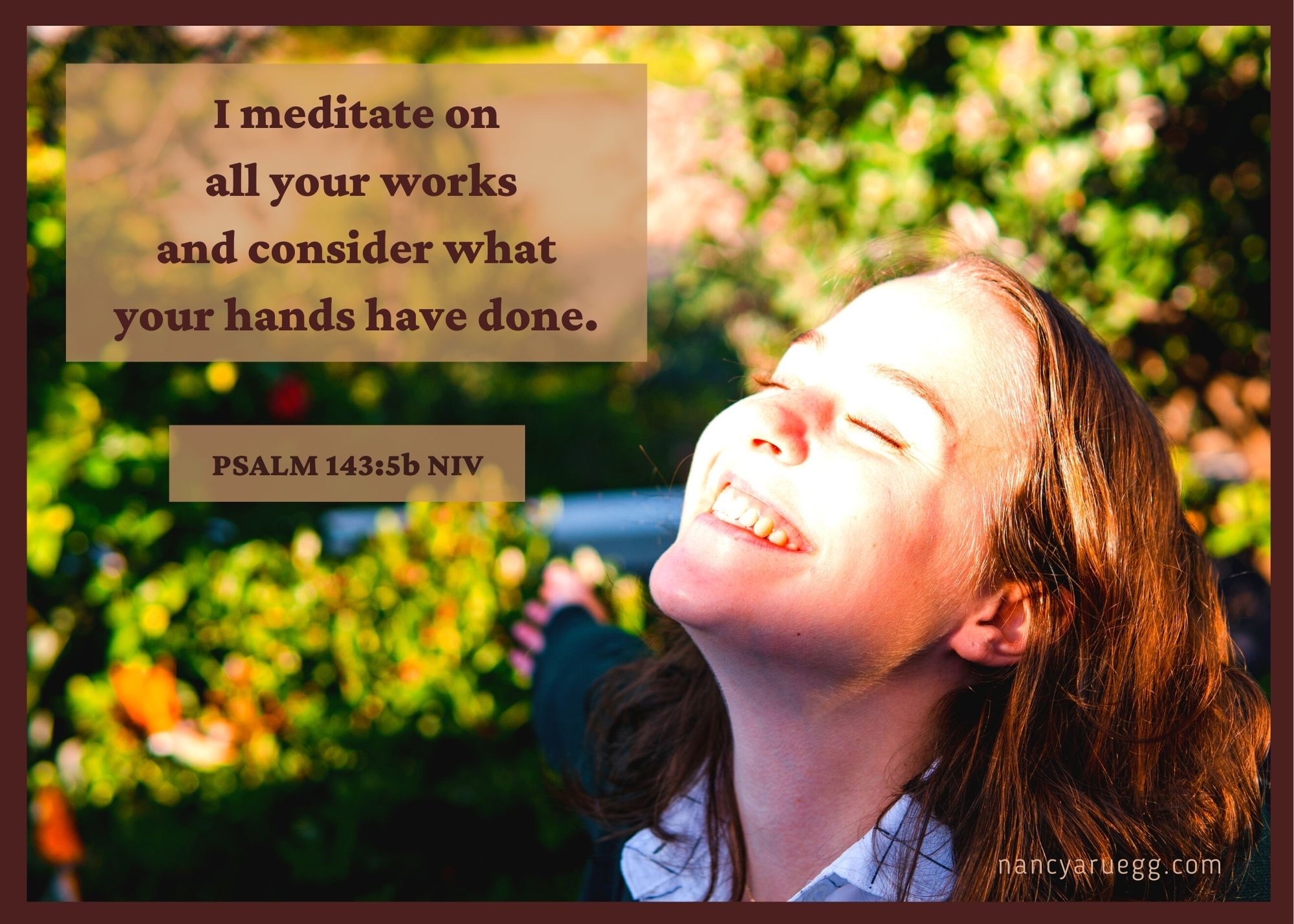
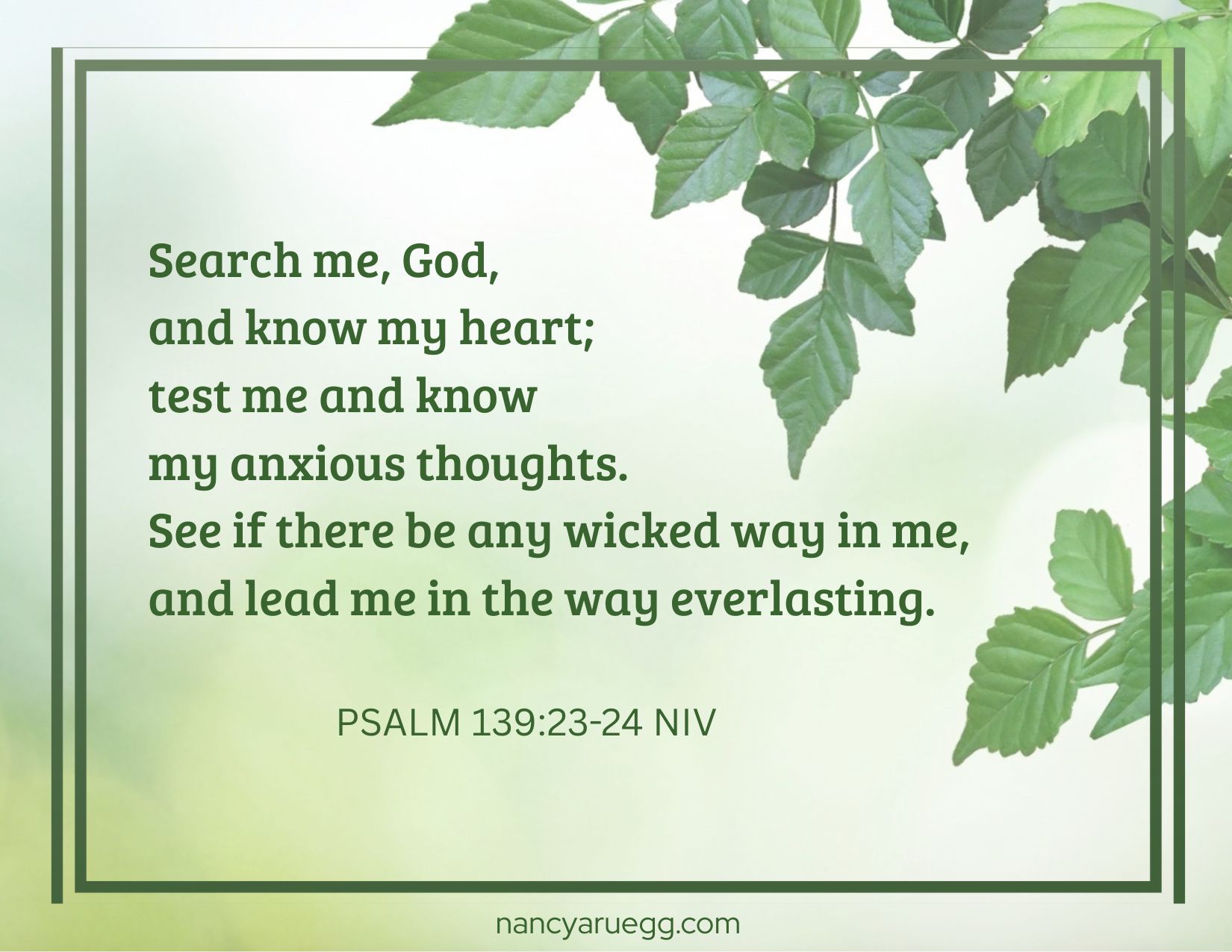
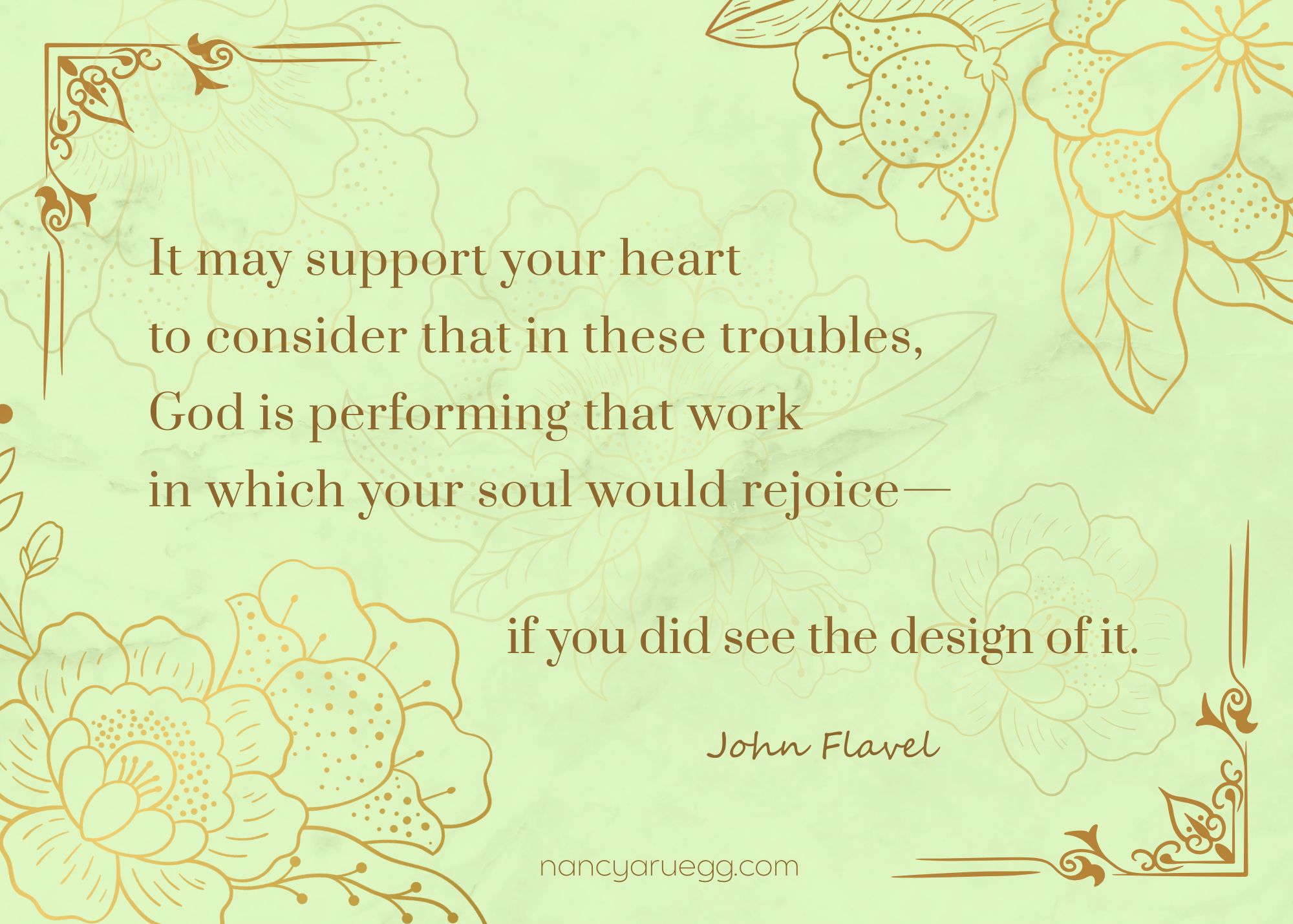
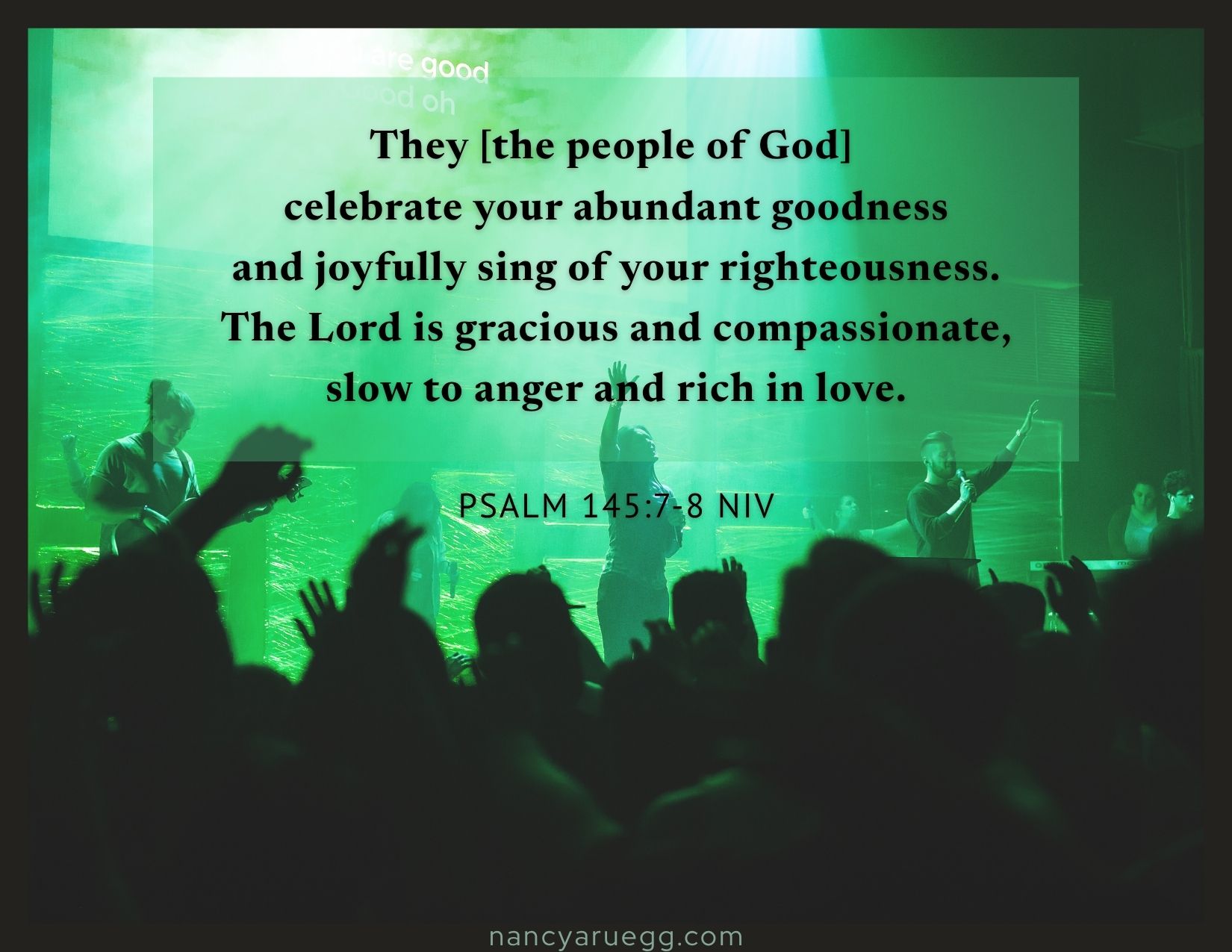
The following is an example of a journal entry, based on the first verse of the hymn, “Come, Thou Fount of Every Blessing”(3). The next four images contain the lyrics.

You, oh God, are the Source of every blessing—every provision, every answered prayer, every wise decision, every creative idea, every moment of joy. All good and perfect gifts come from you (4).

Out of your lavish generosity, blessings flow continually from your hand. May I be quick to praise you for each one as they demonstrate your lovingkindness.

This fount of blessing includes your mercy also. I praise you for your forgiveness, undeserving as I am. Thank you for looking upon me with compassion and tenderness in spite of my weaknesses, failures, and sins.

And I praise you that your mercy never ends! You are faithful to forgive me every time I come to you in repentance. Such grace is beyond comprehension. Yes, I want to sing songs of loudest praise, to honor you rightly for all you’ve done for me and continue to do.

Perhaps if I had the voice of an angel and knew the songs of heaven I could sing the full praise you deserve!
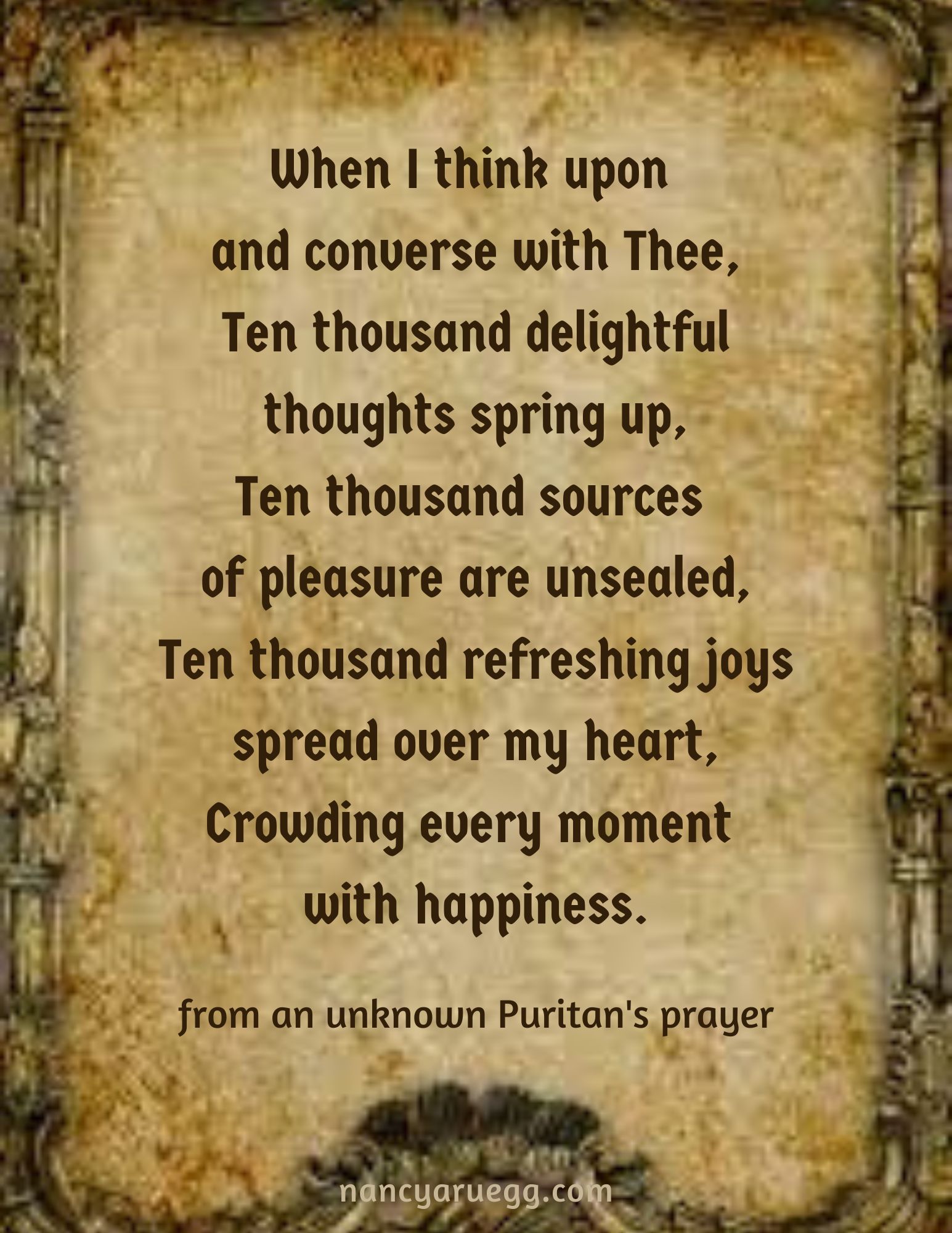
Nevertheless, I celebrate your name(s)—Shepherd, Lord of Peace, God of Grace, Father of Compassion and more. I glory in all the attributes indicated by each one. And I remember: the one trait that is part of them all: your unfailing love.

Thank you for loving me, in spite of my shortcomings; thank you for redeeming me from the consequences of my sins so I might enjoy you forever!
Should you decide to journal through a hymn or praise song, remember: perfection is not the goal, getting to know God better and worship him more passionately are the aims.

An added benefit? Our meditations will positively impact our words and actions (5).

Notes:

  1. 1 Corinthians 3:16
  2. based on a quote from William Wordsworth
  3. by Robert Robinson, text adapted by Margaret Clarkson
  4. James 1:17
  5. Joshua 1:8

Photo credits: http://www.pxfuel.com; http://www.canva.com; http://www.pxhere.com; http://www.canva.com (2); http://www.flicker.com; http://www.freebibleimages.org.

Turnings

Raise your hand if you ever created frothy foam with vinegar and baking soda.

OK, hands down. Now, who can name five other common chemical reactions?

M-m-m. Not as many hands. To be honest, I couldn’t have named that many either. But a bit of research turned up these:

  • Plants turn sunlight into energy for growth—photosynthesis
  • Yeast causes bread dough to rise
  • Bacteria in old milk transforms the lactose into lactic acid, creating that sour odor
  • Combustion causes wood to burn; burnt wood becomes ash
  • In a wet or humid environment, iron and steel will develop rust

And just as marvelous turnings occur in the physical world, God initiates and fosters marvelous turnings in our lives—with spectacular results.

For example:

God’s love turns mistakes into miracles. Joseph’s brothers made a terrible mistake, selling their brother into Egyptian slavery and lying about it. They still carried the guilt two decades later, when the brothers traveled to Egypt for grain during a famine.

Little did they know that Joseph had risen from slave to prime minister, was overseeing the distribution of grain, and saving thousands of lives. What the brothers intended for harm, God turned to miraculous good (1).

God’s power turns weaklings into warriors. Gideon felt powerless against Israel’s enemy, the mighty Midianites. He required much reassurance from God to go into battle against them. But with God’s encouragement and enablement, Gideon led his small army to a rousing victory (2).

God’s grace turns devastation into distinction. Saul was a broken man, blind and no doubt confused when Ananias visited him that day in Damascus. But it wasn’t long before he was traveling the region, preaching passionate sermons, and drawing hundreds of people to Jesus (3).

In addition to his love, power, and grace, our Heavenly Father provides ways for us to turn negatives into positives, and dull into delightful.

For example:

Proper perspective turns irritation into exaltation.

“We can learn to overlook the trivial and fix our gaze on the eternal. What is an offense compared to [God’s] love? What is a rejection compared to His unconditional acceptance? What is a momentary trial compared to an eternity with Him” (4)?

Wonder turns weariness to WOW!

“Even in the familiar there can be surprise and wonder” (5).

(Who’s the fairest beetle of them all? This one!)
(How many folds on this mushroom, do you suppose?)
(A dandelion dressed in dewdrops)

Are you feeling a bit of reverent WOW right now?

“Gratitude turns what we have into enough” (6).

“The bedrock of our contentment isn’t the goodness of our day but the goodness of our God” (7).

Trusting in God turns uncertainty into adventure.

We can lament, “I don’t know how I’m going to get through this,” or we can pray, “Lord, I can’t wait to see how you do this” (8)!

Hope turns apprehension into expectation.

What’s more worthwhile: worrying about what can go wrong or being excited about what can go right, since God is always at work?

Prayer turns anxiety into peace.

“Don’t worry over anything whatever; tell God every detail of your needs in earnest and thankful prayer, and the peace of God which transcends human understanding, will keep constant guard over your hearts and minds as they rest in Christ Jesus” (9).

Worship turns turmoil into calm.

“We would worry less if we praised more” (10).

The question becomes: Will we choose those actions that turn negatives into positives and dull into delightful? Or will we live under a dark cloud of malaise, apprehension, and turmoil?  

God has shown us the way to the former; he leaves the turnings to us.

Notes:

  1. Genesis 37-50
  2. Judges 6-7
  3. Acts 9-28
  4. Emmanuelle Gomez
  5. Tierney Gearon
  6. Unknown
  7. Melissa Krueger, Growing Together, Crossway, 2020, 132)
  8. Unknown
  9. Philippians 4:6-7, Phillips
  10. Harry Ironside

Art & photo credits: http://www.flickr.com; http://www.piqsels.com; http://www.pixabay.com; http://www.wpclipart.com; http://www.lookandlearn.com; http://www.piqsels.com; http://www.wikimedia.org; http://www.pxfuel.com; http://www.pixahive.com; http://www.pxfuel.com; http://www.freebibleimages.org; http://www.wikimedia.org.

Betsy gasped at the revolting scene before her. Yes, she’d been warned by Stephen Grellet, a family friend, but even his graphic descriptions could not have prepared her for this.

In a space meant for sixty women, three hundred women and children[1] swarmed over every square foot, some barely clothed. Screaming and shouting assaulted the ears.

But the worst offense was the stench of unwashed bodies, vomit, human waste and more which saturated the meager straw on the floor. Small barred windows offered little fresh air for relief.

The place: Newgate Prison in London England. The time: 1813.

Newgate prison. Credit: Wellcome Library, London.

In that first moment inside Newgate, Betsy knew that “God wanted her to minister hope to these women who were being treated like animals and had lost their desire to live.”[2]

The jailers told Betsy and her companion, sister-in-law Anna Bruxton, not to enter the cells, that the women were bound to attack her.

But Betsy insisted, and they marveled when her quiet presence actually calmed the women. Betsy read the Bible and then prayed for the prisoners. Many dropped to their knees.

After that first visit, Betsy began to dream of better ways to deal with prisoners—especially those guilty of nothing more than stealing apples to feed their starving children. She wondered, Instead of severe punishment as the only purpose of confinement, what if rehabilitation was provided?  

Betsy went to work immediately.  She organized her Quaker friends (a group which quickly expanded) who made clothing for the inmates and their children.

Betsy recruited volunteers to visit the prisoners, read the Bible and tell them about Jesus, then pray with them, just as she did. No doubt many chose to believe in Jesus as a result.

Mrs. Fry reading the Bible to prisoners.

Betsy arranged for clean straw to be brought in regularly. A prison school was established, paving the way for children and mothers alike to escape destitution. Betsy also convinced prison authorities to hire a matron and female monitors for the women.

It’s no wonder people began to call her the Angel of Newgate. But financial backing proved difficult. None of the male-dominated organizations were interested. Nevertheless, Betsy was able to raise support through friends.

As she worked, Betsy prayed:

“Lord, may I be directed what to do and what to leave undone, and then may I humbly trust that a blessing will be with me in my various engagements—enable me, O Lord, to feel tenderly and charitably toward all my beloved fellow mortals.”[3]

News of Betsy’s reforms began to spread. In 1818 Betsy was invited to speak before a House of Commons committee concerning prison conditions. She was the first woman ever brought before such a body as a witness.

Her experience as a Quaker minister helped Betsy deliver a clear and powerful speech. And members of Parliament responded affirmatively. But when she spoke against capital punishment, any action toward prison reform stagnated.

Disappointed but not discouraged, Betsy continued her efforts toward further reforms. At the time many prisoners were shipped to Australia. Women were chained, then transported to the docks in open carts. Crowds gathered to mock and throw all kinds of filth at them.

Betsy initiated change by offering to escort each convoy and keep order if prison officials used covered carriages. They agreed.

She also supplied each woman with a bag of useful items including materials for a patchwork quilt, giving them something to do on the long voyage. Better yet, when the women arrived they could sell the finished quilts.

Inside the hull of the Edwin Fox, the last surviving convict ship. Just 157 feet long, she transported at least 180 prisoners each voyage.

Also in 1818, an American emissary John Randolph visited England to see Betsy’s work firsthand. He wrote, “I have witnessed there miraculous effects of true Christianity upon the most depraved of human beings. Bad women, sir, who are worse, if possible, than the devil himself: and yet the wretched outcasts have been tamed and subdued by the Christian eloquence of Mrs. Fry.”[4]   

Five years later sympathies in Parliament had changed and the Gaols Act of 1823 was passed. It included many of Betsy’s recommendations from three years before.

The new reforms didn’t apply to local jails or debtors’ prisons. Betsy and her brother Joseph traveled the British Isles to gather evidence of the conditions and then presented additional reform legislation.

And yet Betsy accomplished still more. “She established night shelters for the homeless, libraries for coast guards, societies to help the poor, and the Institution for Nursing Sisters to modernize British nursing. She also influenced Florence Nightingale’s training program.”[5]

For more than thirty years Elizabeth Fry championed these causes in the name of Christ. And to think, one year before that first visit at Newgate, she wrote in her diary, “I fear that my life is slipping away to little purpose.”[6]

But of course God would never let that happen to someone who trusts in him.

Addendum: Elizabeth Gurney (1780-1845), married Joseph Fry in 1800; they had eleven children.


Notes:

[1] The youngsters had no one else to care for them

[2] https://setapartgirl.com/story-elizabeth-fry/

[3] From Great Women of the Christian Faith by Edith Deen, quoted at https://setapartgirl.com/story-elizabeth-fry/

[4] https://christianhistoryinstitute.org/magazine/article/to-act-in-the-spirit-not-of-judgment-but-of-mercy

[5] https://christianhistoryinstitute.org/magazine/article/to-act-in-the-spirit-not-of-judgment-but-of-mercy

[6] (https://christiansforsocialaction.org/resource/heroes-of-the-faith-elizabeth-fry/ ).

Sources:

https://christianfocus.org/elizabethfry

https://christianhistoryinstitute.org/magazine/article/to-act-in-the-spirit-not-of-judgment-but-of-mercy

https://christiansforsocialaction.og/elizabethfry

https://setapartgirl.com/elizabethfry

https://encrustedwords.ca/elizabethfry

Art & photo credits: http://www.wikimedia.com; http://www.lookandlearn.com; http://www.wikimedia.com; http://www.lookandlearn.com; http://www.wikimedia.com; http://www.picryl.com; http://www.dailyverses.net.

Fitness experts will tell you, strong core muscles of the mid-section greatly enhance your physical well-being, contributing to stability that prevents falls, minimization of strain that causes pain, as well as effective breathing that optimizes oxygen flow.

When core strength is absent, a person is likely to:

  • have difficulty getting up from a chair without leverage
  • struggle to bend down and tie his shoes
  • find himself slouching
  • lose his balance
  • experience back pain

But it’s never too late to reverse such ills. Those same fitness experts recommend exercises: crunches, planks, and bridges—to name a few—although just a brisk walk engages core muscles and contributes to strength.

Of course, even more important than our physical fitness is spiritual strength, which raises a new question:

How strong is your core–of the soul?

Just as we can identify symptoms of physical weakness, we can identify soul-weakness when challenge mires us in such thoughts as: Why me? This is so unfair. If God cared, this wouldn’t be happening.

However, it’s never too late to reverse such ills. Our spiritual Fitness Expert, God himself, has provided exercises to strengthen our souls, including:

Bible Meditation

More than just reading a passage, meditation includes taking to heart God’s Word and responding personally.

For example, how might you respond to Psalm 147:5, “Great is our Lord and mighty in power; his understanding has no limit?”

Perhaps your response would be similar to my own.

I praise you, O God, for your omnipotent power. Nothing is impossible for you (Luke 18:27)! Just that knowledge alone can settle my anxious heart and foster sweet hope.

I praise you also for your unlimited understanding. You are a God of infinite wisdom and you generously offer to bestow wisdom to me–if I just ask (James 1:5).

Thank you for coming alongside, ever-ready to expend your power and wisdom for my good. You are a gracious God beyond what anyone could hope for!

Such an exercise develops the muscle of faith, contributes to stability of soul, and helps prevent falls into worry and fear.

Positive Prayer

Even the tone of my prayers can impact soul-strength. If I focus on the problem, the emotional pain is likely to remain:

Lord, I don’t know what we’re going to do. I keep trying various scenarios in my mind but there seems no way out of these circumstances. You’ve got to help us, although I don’t see how. What a mess!  

On the other hand, if I focus on God’s attributes at work and his promises that apply, the strain of the situation diminishes:

“I praise and thank you, Father, that I have no reason to fear. You’ve given our family the promise that you’ll fight for us; all we have to do is stand firm and see your salvation (Exodus 14:13-14). YOU are our strength, providing the wherewithal to rectify this situation. YOU are our very present help in this time of trouble (Psalm 46:1).

As positivity is expressed in our prayers, the spiritual muscle of hope develops.

Gratitude & Joy

It stands to reason: if we focus on the problems surrounding us, discouragement will weaken our spirits.

But if we focus on all the good things flowing to us from God’s loving heart, we’ll find plenty to be joyful about. It’s just a matter of engaging our praise and gratitude muscles.

Most sets of the physical exercises I do each morning include twenty repetitions. I wonder if we could name twenty of God’s attributes, providing twenty reasons to be joyful in him?

Skim through the psalms with me, and let’s see what we find:

1. Watchfulness (1:6)

2. Righteousness (5:8)

3. Protection (5:11)

4. Encouragement (10:17)

5. Unfailing love (13:5)

6. Security (16:5)

7. Perfect ways (18:30)

8. Victorious power (20:6)

9. Goodness (25:8)

10. Uprightness (25:8)

11. Faithful ways (25:10)

12. Strength (28:8)

13. Splendorous holiness (29:2)

14. Justice (36:6)

15. Ever-present help (46:1)

16. Guidance (48:14)

17. Great compassion (51:1)

18. Power (62:11)

19. Forgiveness (65:3)

20. Sovereignty (71:16)

We did it—and long before reaching the end of Psalms!

Do you find the strain on your spirit relaxing, just in reviewing his surpassing greatness?  Is renewed strength, stability, hope, and joy flowing into your soul?

Keep up those soul-core exercises!

Photo credits: http://www.pxhere.com; http://www.pixabay.com; http://www.heartlight.org; http://www.dailyverses.net; http://www.piqsels.com; http://www.heartlight.org; pxhere.com.

The Best Pillows

Have you been pillow-shopping lately? If not, be forewarned: the number of options may cause nausea, dizziness, and high blood pressure.

There are pillows made with down, fiberfill, foam, latex, gel, and even buckwheat hulls. Manufacturers also provide different levels of cushioning, and now pillows come in different shapes, depending on your sleep position or special needs such as neck pain.

All they want is for you to get a good night’s sleep, right? Oh, and sell you lots of different pillows until you find the one best for you!

For proper rest though, we need a different kind of pillow—not made from feathers, foam, or buckwheat hulls; not made by Mike Lindell. The pillows I’m thinking of can easily be taken with us wherever we go and never need to be replaced. They’re free too!

These special pillows have been available a long time, but perhaps Charles Spurgeon, the famous preacher of Victorian England, was the first to make note of them. He suggested we “use the Lord’s words as our pillows,” and lie down upon them in restful faith [1].

We’d do well to understand:

God wants us to rest—physically (Psalm 127:2) and especially spiritually (Matthew 11:28-30).

In fact, the word rest, when referring to spiritual relaxation, is used over 200 times in scripture [2].

Spiritual rest brings tranquility of soul.

We can experience rest from anxiety and fear—even fear of death—as we place our confidence in God, our all-wise and powerful, ever-merciful and gracious, wholly-trustworthy and faithful Heavenly Father.

St. Augustine was right when he prayed:

The key to spiritual rest is acquainting ourselves thoroughly with God’s Word (Psalm 119:52).

It’s there we find the pillows of encouragement, hope, and peace we need in order to experience rest.

And what might some of those scriptural Word-pillows be? Here are three examples.

Pillow #1

My Presence will go with you, and I will give you rest.

–Exodus 33:14

Each moment we can choose to focus on God and his attributes, or on our problems and their difficulty. When we choose the former, He wields his attributes on our behalf.

  • His wisdom offers perspective, and keeps discouragement in check.
  • His power affords strength to endure.
  • His attentive care provides blessing in the midst of challenge.
  • His protection shields us from deep despair.
  • His provision supplies all that we need [3].

Pillow #2

Stand at the crossroads and look; ask for the ancient paths,

ask where the good way is and walk in it,

and you will find rest for your souls.

— Jeremiah 6:16

The more we know of God and his attributes, the better-equipped we’ll be when adversity strikes.

Pillow #3

Don’t worry about anything; instead, pray about everything.

Tell God what you need, and thank him for all he has done.

Then you will experience God’s peace,

which exceeds anything we can understand.

His peace will guard your hearts and minds as you live in Christ Jesus.

–Philippians 4:6-7 NLT

Such truths become all the more meaningful when we remember: the apostle Paul was in prison when he penned these words to the Philippians (1:14). From his own experience he wanted his readers to know that prayer and gratitude produce peace, as we depend upon our sovereign God whose ways are always right.[5]

*     *     *     *     *     *     *     *     *     *

O God, help me rest in you and upon your Word-pillows of scripture.

 I thank you for the pillows of promise, reminding me of your sovereign power to provide whatever I need.

I thank you for the pillows of assurance, affirming your glorious attributes, always at work for the best conclusion.

And I thank you for the pillows of encouragement, reminding me that with you all things are possible, with you I can stand firm through life’s trials, and with you I am NEVER without hope.

(Psalm 23:2-3; Proverbs 30:5; Psalm 145:15-16;

John 5:17; Job 42:2; Ephesians 6:10-17 and 1:18)

What Word-pillow from scripture gives rest to your soul ? Please share it in the comment section below!


[1] Faith’s Checkbook, January 3.

[2] Herbert Lockyer, Seasons of the Lord, 241.

[3] Proverbs 2:1-11; Isaiah 40:31: Jeremiah 17:7-8; Psalm 33:17-18; Philippians 4:19

[4] Psalm 18:30; Psalm 22:28; Deuteronomy 32:4

Photo credits: http://www.rawpixel.net; http://www.wikimedia.com; http://www.dailyverses.net; http://www.pixabay.com; http://www.piqsels.com; http://www.wikimedia.com.

Because God Says

Because God says we’re forgiven (Psalm 103:8-12), let’s refuse to dwell on past sins.

Sins are so remitted, as if they had never been committed.

Thomas Adams

Because God proclaims us righteous (1 Corinthians 1:30), let’s refuse to be haunted by past failures.

Do you know what you imply when you say that you are a Christian? It is that you are as guiltless in God’s sight as Christ Himself.

G. V. Wigram

Because God has already asserted his 100% approval of us (Ephesians 1:4-5), let’s stop pursuing perfection.*

Because God has made clear his love for us (Romans 5:8), let’s not tarnish that love with disbelief.

All shall be well, all shall be well . . . For there is a force of love moving through the universe that will hold us fast and never let us go.

Julian of Norwich

Because God pronounces each of us his masterpiece (Ephesians 2:10 ISV), let’s not berate his workmanship.

All who are in Christ form the highest, finest, and most beautiful expression of [God’s] thought and purpose. They are masterpieces upon whom he bestowed his best.

Herbert Lockyer, Seasons of the Lord, 330

Because God says, “Fear not” (Isaiah 41:13), let’s not doubt his unlimited power to help.

Because God affirms he’s our unfailing source of strength (Isaiah 40:29-31), let’s refuse to say we’re weak.

It is impossible for that man to despair who remembers that his Helper is omnipotent.”

Jeremy Taylor

Because God declares he’ll instruct us and watch over us (Psalm 32:8), let’s not strike out foolishly on our own.

With the goodness of God to desire our highest welfare, the wisdom of God to plan it, and the power of God to achieve it, what do we lack?

A. W. Tozer

Because God promises to work for our good (Romans 8:28), let’s not fret about the what-if’s.

Because God provides the way for victorious living (1 John 5:4-5), let’s not live in defeat.

Daily living by faith in Christ is what makes the difference between the sickly and the healthy Christian, between the defeated and the victorious saint.

A. W. Pink

This means, my friends, we can live each day guilt-free, grace-imbued, love-wrapped, purpose-filled, worry-free, strength-infused, fully-equipped, highly blessed, and victory-assured—because God Almighty says so!

*We don’t have to earn God’s love and acceptance. Neither do we have to pursue perfection, as if it’s necessary in order to please God or be accepted by him.

Photo credits: http://www.piqsels.com; http://www.freeimg.net; http://www.pixabay.com; http://www.canva.com.

Years ago I came across an amusing, tongue-in-cheek article, “What Your Favorite Color Says about You.”  Wish I’d saved it, but alas.

I remember thinking, This will be fun to share with the girls in the faculty lounge during our break.  Those girls would be the other fourth grade teachers at my school.

Sure enough, as each colleague revealed her favorite color and I read its meaning, they began to laugh uproariously, because the humorous descriptions fit each person’s personality perfectly. A few times I could hardly get the words out before a giggle-fit would overpower me—even though the article was already familiar.

Had the laughter come while reading to myself?  No—not until I shared it.

Surely you’ve noticed this phenomenon, which brings us to the first joy-booster:

Share a joy and expand that joy.

St. Augustine explained it this way:

What a God-given gift—the privilege to contribute happiness to one another, and find our own joy increased as well.

Another joy booster?

Pay attention to detail.

I wonder how many of God’s delightful gifts have escaped my attention because I’ve been distracted?

I’m still striving to live aware and not allow my thoughts to be so focused on events (past, present, or future), what-ifs, or the to-do list, that I miss God’s glory right in front of me.

 I want to:

  • Take note of the graceful sway of the willow trees
  • Breathe in the aroma of a crisp winter’s morning
  • Listen attentively to the happy praises of a house sparrow
  • Pause to truly taste the nutty goodness of freshly brewed coffee
  • Focus on the cool softness of a rose petal

The incredible gift of the ordinary! Glory comes streaming from the table of life.

Macrina Wiederkehar

Joy Booster #3:

 Express gratitude and be filled with joy (Deuteronomy 26:11; Psalm 126:3).   

Expressing appreciation for what we already have—even the little things—can profoundly affect our spirits.

For example, I’m grateful for:

Color.  God could have created the world in shades of gray; it probably wouldn’t have mattered.  But the variety, the interest, and infinite number of color-combinations add such great pleasure to our lives.

Anticipation. The remarkable aroma of garlic and onions simmering in olive oil–a precursor to the savory soup we’ll enjoy in a few hours–all the more flavorful because my husband is making it. (He actually likes to cook!)

The contrast of light and shadow. The security lights on the backsides of the neighbors’ houses create enough glow so tree branches cast lovely criss-cross shadows across the snow.

Steve’s three squeezes when he holds my hand.  It means, “I love you;” and we’ve been passing that silent message back and forth for over forty years.

The dimples on a baby’s hand—the epitome of cuteness.

And while contemplating such blessings, I realize afresh why God has told us to rejoice at all times (1 Thessalonians 5:16).

Let’s boost our joy by sharing happiness to those around us, living attentively, and expressing our thanks to God continually!

 *     *     *     *     *     *     *     *     *     *

What boosts your joy?  Tell us about it in the Comment section below!

Photo credits: pixabay.com; canva.com; geograph.org.uk; pixabay.com; wallpaperflare.com; wikimedia.com; pixhere.com.

(Revised and reblogged from March 29, 2014.)

On the Lookout

A glowing horizon and a bright crescent moon provided a delightful inspiration one morning. What if I stayed on the lookout for more of God’s blessings that day and kept a list?

The time was spring—sunbeams spangled the sky, a light jacket warded off cool breezes, daffodils and hyacinths dotted neighbors’ yards, and the birds sang their equivalent of the “Hallelujah Chorus.” By day’s end that list included twenty delights. (You can access that list here.)

Spring is an easy time to count blessings, when creation displays God’s glory in numerous ways.

But what about winter, when skies are often overcast, when much of the landscape offers only shades of gray and brown, and when most birds are silent or absent altogether? Is it possible to find twenty delights in quick succession?

As a matter of fact, yes.

Let’s begin with the first matter of morning: coffee.

Within minutes of hitting the start button, our coffee maker gurgles with gusto as the last of the water pumps through, thus providing the first item for my list:

#1: That happy burbling sound indicating the coffee is almost ready!

#2: The sublime flavor and fragrance of coffee.

#3: The fact that black coffee has no calories! (Yes, I realize the first three mercies on this list involve coffee. But I’m sure you agree: its supreme delight warrants attention to the details!)

#4: The view out the kitchen window, especially when it includes virtual mountains—a pale gray cloudbank spreading along the horizon, looking every bit like a ridge of the Smokies.

#5: For that coffee, my new Ember mug (a Christmas gift), keeping the last sip as hot as the first.

#6: The lamp on my desk perfectly backlighting the graceful steam curls from my mug. Mesmerizing!

#7: Sunshine pouring in the south-facing windows across the back of our house, especially welcome after several days of gray.

#8: Blowing cantaloupe-sized bubbles (sometimes bigger) with my fingers. (I discovered this bit of fun during the early days of pandemic hand-washing. With sudsy hands, make a ring of forefinger and thumb and blow!)

#9: Running an errand in my new, cozy and comfy boots—the outcome of a two-month search.

#10: A collection of herbal teas to choose from, once I’ve met my daily quota of caffeine.

#11:  Lazing in our recliners before the fireplace, with books, computers, and tea, reveling in the warmth, crackle, and wood-scent.  All five senses contentedly engaged.

(The view over our slipper-tops.)

#12: Discovering by chance the last item needed for my Colors of Winter list. Red was easy—cardinals and holly berries. Orange—robins and red foxes. Yellow—prairie grass. . .

. . . Green—the pines and evergreens. Blue—blue jays and blue-gray Northern bayberries. And finally, for purple, a snow-dusted beautyberry shrub. 

For eyes that seek, winter offers more than brown and gray after all.

#13: Restoration through creativity, as a scented candle flickers, restful music provides background, and occasional sips of tea offer refreshment. Again, all senses engaged.

(My latest effort–Thanks to inspiration from Pinterest!)

#14:  Playtime with the grandgirls.

(Calico Critters lined up for their baths.)

#15: The luxury of a cozy nap!

#16: A snow flurry, providing more stars for another list, included in my post two weeks ago, “Emblems of Love.”

(Photo taken on our deck)

#17: Fairy lights and candles to dispel the gloom of a wintry dusk.

#18:  A happenstance glimpse of a fox trotting by, as we view the snowfall one last time before dark.

#19:  Popcorn—a guilt-free snack (if prepared properly) and . . .

#20: . . . dark chocolate–just one square, offering a lesson in savoring. How wonderful researchers have determined dark chocolate is good for us!

The more we look, the more we see of God’s mercies and immense graces—a truth that applies even in bleak winter.

Have you been on the lookout? What mercies and graces have you seen? Please share an example or two in the comment section below!

Photo credits: http://www.maxpixels.net; http://www.pixabay.com; http://www.pixaHive.com; Nancy Ruegg (2); http://www.pxhere.com; http://www.flickr.com; Nancy Ruegg (4).

Sammy Morris

Prince Kaboo’s head hung over his chest. Every part of his body ached from being tied to a wooden cross and then beaten. His back stung like fire from whippings with poisonous vines that also caused chills and fever. 

All Kaboo could think about was death, and he welcomed it. Then the continual torture and starvation would stop, inflicted by the powerful Grebo tribe, who’d taken him captive in central Liberia. They used Kaboo to extort “peace payments” from his father, chieftain of the neighboring Kru tribe. He was only fourteen years old; the year, 1887.

(Liberia is located west of the Ivory Coast in southwestern West Africa.)

Suddenly, a bright light appeared over Kaboo. The ropes that held him to the cross fell off, and a voice called, “Kaboo! Run!” He felt miraculous strength return to his emaciated body.

Kaboo did as the voice commanded, dashing for the jungle and hiding inside a hollow tree until nightfall. Questions swarmed in his head. Where had the light come from? Who spoke to him? How did he become instantaneously strong? Kaboo had no answers.

The young prince did know he could not return home. The Grebos would just come for him again. So Kaboo determined to go in the opposite direction. At nightfall when he emerged from the tree, Kaboo was startled to see the light still shining above him. It guided him through the jungle.

Kaboo walked many days and finally came to a farm where he met one of the workers who happened to come from his tribe. That young man introduced Kaboo to the boss, who gave him a job.

The fellow tribesman took Kaboo to church on Sunday.

(Perhaps the church resembled this one.)

There he heard the story of a man named Saul who saw a great light and heard a voice.

“That’s what happened to me!” Kaboo exclaimed. He realized the same Jesus who spoke to Saul had spoken to him, and he invited Jesus into his life.  Soon after, an American missionary, Miss Knolls, gave Kaboo a new name: Samuel Morris, after her benefactor.

Months later Kaboo met a boy who’d been a slave in the Grebo tribe when Sammy (as he came be known) was held hostage. The boy told Sammy, “We didn’t know what happened to you. A bright light flashed over you, someone called your name, and then you were gone!”

Sammy explained the miracle of his escape and the boy became a Christian too.

A dream began to form in Sammy’s heart, to head for America where there’d be knowledgeable teachers and many books about God. He was hungry to learn. So Sammy set out on foot for the coast where he found a ship headed to America.

(Such a scene may have greeted Sammy as he arrived at the port in Monrovia.)

He offered to work in exchange for passage but the captain declined.

“Oh Lord,” Sammy prayed. “Change his heart!”

And God answered. One of the sailors became sick and Sammy was assigned his tasks. Others on board mistreated him, but Sammy’s kindheartedness won them over, and by voyage’s end many chose to believe in Jesus, including the captain.

Upon arrival in New York City, Sammy set out to find Stephen Merritt. According to his missionary friends back in Liberia, this superintendent of a homeless mission would gladly help him.

(New York City, 1880-1890)

Sammy stayed several months with Stephen, learning to know God better and assisting with the mission work. His passion for Jesus was contagious and many of the men who came through the mission also accepted Christ into their lives.

Stephen urged Sammy to go to Taylor University in Indiana to continue his education. The superintendent contacted the school’s president, Thaddeus Reade, on Sammy’s behalf.

This was the same university where the missionary, Miss Knolls, had attended. By December of 1891, Sammy had enrolled at Taylor and planned to become a missionary himself to the people of Liberia.

(Samuel Morris)

On May 12, 1893, the unthinkable occurred. Sammy died from a respiratory infection.

Some would say, “Why would God allow such a tragedy?”

But here’s what happened.

A few days after Sammy’s funeral, one Taylor student declared in a prayer meeting, “I feel impressed this moment that I must go to Africa in Sammy’s place, and I pray that as his work has fallen upon me, the mantle of his faith may also fall upon me.”[1] 

Two more of that group affirmed they felt God wanted them to go to Africa also. Instead of one missionary—Samuel Morris—there would be three. And many more have followed.

In addition, five books and a film chronicle his life. In Sinoe County, Liberia, stands the Samuel Morris Educational Resource and Conference Center—a joint project of Taylor University, the Sinoe County Association of the Americas (SCAA), and local agencies in Liberia. At Taylor, scholarships and a dorm bear his name, and the school still prepares missionaries to serve around the world.

“Samuel Morris was a divinely sent messenger of God to Taylor University. He thought he was coming over here to prepare himself for his mission to his people, but his coming was to prepare Taylor University for her mission to the whole world. All who met him were impressed with his sublime, yet simple faith in God.”[2]

Thaddeus Reade


[1] https://pillars.taylor.edu/cgi/viewcontent.cgi?article=1000&context=samuel-morris

[2] https://www.taylor.edu/about/samuel-morris

Sources:

https://www.taylor.edu/about/samuel-morris

https://www.taylor.edu/news/taylor-group-traveling-to-liberia-for-dedication-cornerstone-laying-of-samuel-morris-center

https://wellsofgrace.com/biography/english/morris.htm

Photo sources: http://www.picryl.com; http://www.wikimedia.com; http://www.flickr.com; http://www.picryl.com; http://www.wikimedia.org.

The Blissful Life

(What follows is an imaginary conversation between God and me as I contemplated the verses above.)

ME:

O God, at face value this proclamation excludes me from your presence. How unthinkable! I can’t imagine life without you actively involved, providing strength, wisdom, encouragement, and more.

But I haven’t led a blameless life, I haven’t always done what is right, nor kept my mouth from lies or insincerity. Any effort on my part to warrant access to your presence would fall horribly short of your standard.

However.  You understand what I’m made of; you know I’m just dust! You’ve provided the Way for me to enter your presence—even enjoy relationship with you—through your perfect and blameless Son.[1]

Jesus’ sacrifice in my place provided a figurative, pure white robe for me to wear, constructed from his uprightness, which is more than sufficient to cover all the stains of my sins.

It’s not my failures and wrongdoing that you see, but that radiant, spotless robe. “Thank you” seem such paltry words for such a precious gift![2]

And yet, even though I’ve been forgiven of all wrongs and no longer stand condemned, I dearly desire to be pure before you, including my thoughts, motives, and desires. 

I want to please you in appreciation for all you’ve done for me. In addition, a pure life of wisdom and goodness will allow me to experience the fullness of your blessings like peace and joy, untainted by any sin, guilt, or shame.[3]

How do I become pure, Father?

GOD:

(Put your name in the blanks.)

It pleases me greatly, __________, that this is your heart’s desire. Remember, just as my Spirit led you to Jesus, he is at work within you creating good.[4]

This is a joint effort, however. You strive toward purity while I strengthen you for the task and augment the outcome. With each step you take, the next one becomes easier as you grow in self-discipline.[5]

Let’s begin with your thought life. I inspired Paul to include eight adjectives that describe the kinds of thoughts that will cleanse the mind of negativity, discouragement, and temptation:

And the purest, most noble truth you can dwell on is my Word.

Within the covers of your Bible you find the guidance you need and the wherewithal to heed it, the encouragement to press on and the strength to do it, the comfort for every wound and the faith to embrace it.

And then pray, dear __________.  Seek the quality of purity as King David did when he asked, “Create in me a clean heart within me, O God” (Psalm 51:10).

Thus empowered by noble thoughts, scripture-truth, and heartfelt prayers, you’ll learn to love the sound of your feet walking away from things not meant for you[6] and reveling in the pure things that are.

Then–such wonderful blessings I’ve reserved for you! Remember what Jesus said in his Sermon on the Mount?

To see me is to enjoy intimate fellowship with me. You’ll sense my presence with you. Together we’ll enjoy my glory reflected in creation, in the events of your life, and in the lives of others.

I’ll open your eyes to see rare splendors of my glory.  From morning till night, __________, you’ll be praising my name and I will smile with delight.[7]

ME:

O Father, grow me in purity so I may present it as a love-gift back to you, and as a means of experiencing the blissful life with you that you so graciously offer.

In the powerful name of your Son Jesus I pray, AMEN.


[1] Psalm 103:14; 1 John 4:15, 2 Corinthians 5:21

[2] Isaiah 61:10;

[3] Romans 8:1; Romans 12:1-2; John 14:21; Proverbs 2:1-11; James 3:17

[4] Philippians 1:6, 2:13;

[5] 2 Timothy 2:22; 2 Corinthians 9:10; Galatians 5:22-23

[6] Based on quote, author unknown

[7] Isaiah 6:3; 2 Corinthians 3:18; Psalm 113:3; Psalm 147:11

Photo credits: http://www.canva.com; http://www.heartlight.org; http://www.dailyverses.net; http://www.heartlight.org; http://www.maxpixel.net; http://www.dailyverses.net.

Becoming HIS Tapestry

Christian Lifestyle Blogger

He Said What?!

I'm Patty, and my husband and I are living with our adult son who has autism and epilepsy. I love sharing lessons learned from life around me, especially life with Aaron.

Meditations of my Heart

Impressions Becoming Expressions

Linda Stoll

Impressions Becoming Expressions

Debby Thompson

Impressions Becoming Expressions

My Cammino

A Journey of Life, Faith, and Italy

Colleen Scheid

Writing, Acting, Living with Jesus

Walking Well With God

Impressions Becoming Expressions

Mitch Teemley

The Power of Story

Heidi Viars

Taking a closer look

(in)courage

Impressions Becoming Expressions