Feeds:
Posts
Comments

Archive for March, 2026

Mama pressed her cheek against Nabby’s forehead. “Your fever is subsiding. Do you feel up to reading?” 

Eleven-year-old Nabby nodded, as her mother refluffed the pillow. “What shall it be? A bit of European history? One of Papa’s theology books? Shakespeare?”

“All three, please! I’m so tired of lying here—again.

Mama began straightening the bedding. “I know Nabby-Dear. This has been . . .what—your fourth illness this winter?”

Mrs. Quincy tucked the last corner of sheet and blankets. “There! That should make you more comfortable. Now I’ll get your sister to fetch those books from Papa’s library.” And she headed downstairs.

“Thank you, Mama.” Nabby called, grateful she’d soon have something to occupy her mind. 

What if Mama hadn’t taught me to read and write? she thought. Many girls in the colonies received no such instruction.

Books provided such delights, and during Nabby’s frequent illnesses, they offered welcome escape from the frustration of confinement. But God’s full purpose of her love for reading and writing had yet to be revealed.

At age nineteen, Nabby (now addressed by her given name Abigail), married her beloved John after a three-year courtship.

Abigail’s father, a Congregationalist minister, did not approve of the young lawyer and feared he offered little promise for the future.

The young couple settled in John’s hometown of Braintree, Massachusetts, south of Boston, about ten miles from Abigail’s parents.
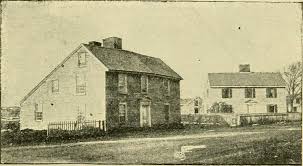
John and Abigail’s home on the right; his parents’ to the left

Within the first year, a daughter was born, followed by a son three years later. Four more children would be added to the family; two would die very young. 

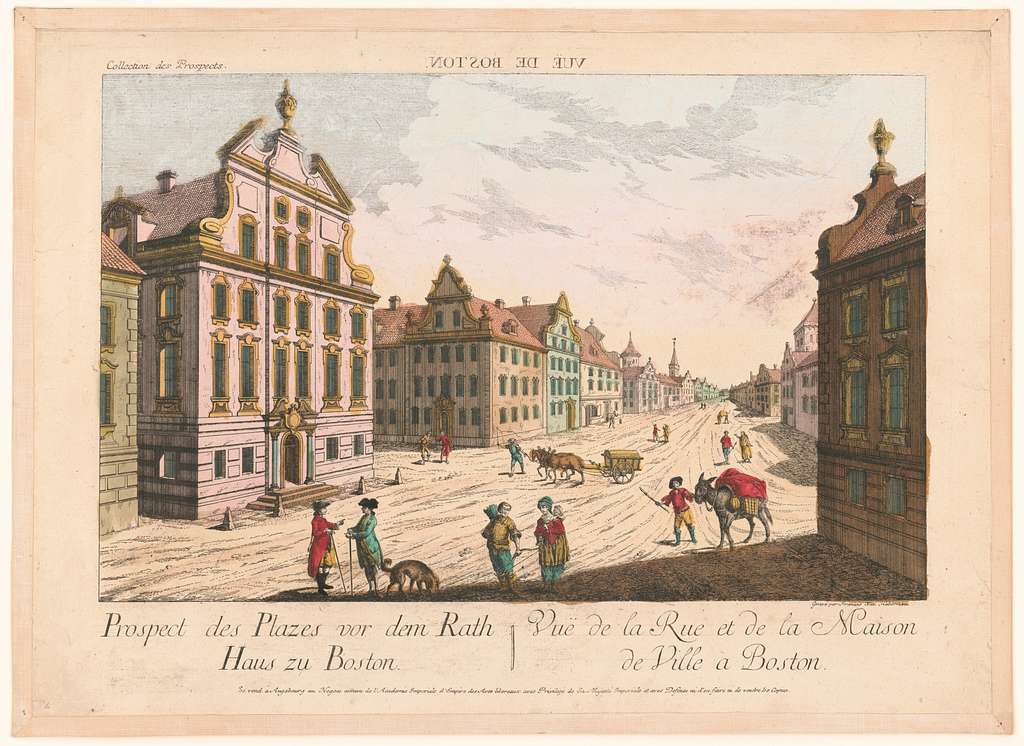
Abigail cared for the household and farm (tended by tenant workers), while John’s growing law practice took him throughout Massachusetts. Soon he was spending much of his time in Boston, so the family moved there in 1768.
Colonial Boston

By 1771, they were swept up in the fervor for American independence as the city suffered through British occupation. Abigail and John moved back to Braintree, away from the tension and danger.

John represented Massachusetts at the First Continental Congress in 1774, held in Philadelphia. From that point, through the pre-war years and the Revolution itself, John served the cause away from home.

The couple wrote a flurry of correspondence to one another, with more than 1,100 of their letters preserved to this day. Abigail’s reveal keen intelligence, extensive scripture-knowledge and strong faith.

For example:

In 1775 as danger mounted, she wrote to John:

“‘The race is not to the swift, nor the battle to the strong; but the God of Israel is He that giveth strength and power unto His people. Trust in Him at all times . . . God is a refuge for us’ (Ecclesiastes 9:11; Psalm 62:8).

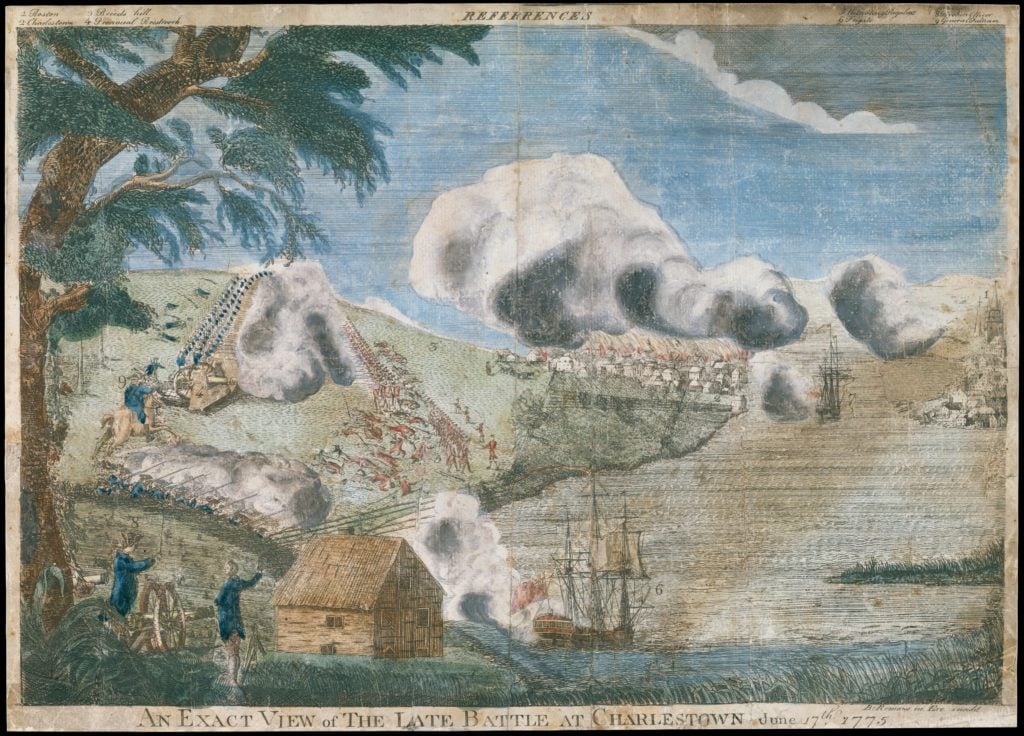
“Charlestown is laid in ashes. The battle began upon our entrenchment upon Bunker’s Hill, Saturday morning about three o’clock, and has not ceased yet, and it is now three o’clock Sabbath afternoon” (1).
In 1776 colonists suffered shortages of food and supplies. She wrote: 

“He who fed the Israelites in the wilderness (Deuteronomy 8:16), who clothes the lilies of the field (Matthew 6:28) and feeds the young ravens when they cry (Job 38:41) will not forsake a people engaged in so righteous a cause, if we remember his loving-kindness” (2).

In 1777-1778, John traveled to France with Benjamin Franklin, to gain support for the war effort. John’s oldest son accompanied them.

Abigail wrote:

“I am sometimes thrown into an agony of distress. Distance, dangers, and oh, I cannot name all the fears which sometimes oppress me . . .

“. . . That we rest under the shadow of the Almighty (Psalm 91:1) is the consolation to which I resort, and find that comfort which the world cannot give” (John 14:27).

Post-Revolution, John helped draft the Treaty of Paris, served in various diplomatic roles including ambassador to Britain, then as vice president under George Washington, and finally John Adams became the second president of the United States.

The Adams’ home, beginning 1788

On Inauguration Day, 1797, Abigail wrote to her husband:

“You have this day to declare yourself head of a nation. And now O Lord my God thou has made thy servant ruler over the people (1 Kings 3:7), give unto him an understanding heart before this great people, that he may discern between good and bad, for who is able to judge this thy so great a people” (1 Kings 3:9; 2 Chronicles 1:10) (4)?

And John responded: “I never wanted your advice and assistance more in my life” (5).

No doubt Abigail Adams’ faith-filled wisdom, discernment, and encouragement continued to support John well as he served America for another four years. 

Upon her death in 1818, Abigail’s son John Quincy Adams and America’s sixth president quoted Proverbs 31:10 to describe his mother, that “her price was indeed above rubies.”

Notes: 

1. https://wallbuilders.com/resource/celebrating-abigail-adams/

2, 3, and 4. https://www.americanbible.org/engage/bible-blog/articles/abigail-adams-woman-of-valor/

5. https://www.frc.org/blog/2021/03/abigail-adams-force-womens-rights-and-abolition#gsc.tab=0

Additional source:

https://thehistorymom.com/2023/03/01/booking-it-through-history-first-ladies-abigail-adams/

Image credits: http://www.flicker.com; http://www.picrylcom.; jenikirbyhistory.getarchive.net; http://www.loc.getarchive.net; http://www.flickr.com; http://www.itoldya420.getarchive.net; http://www.picryl.com; http://www.commons.wikimedia.org (3).

Processing…
Success! You're on the list.

Read Full Post »

(An addendum to one of the stories in last week’s post:)

“John just called,” Steve informed me.  “He and his wife Peg will be in town on business this weekend, and want to visit the church on Sunday. What would you think of inviting them for dinner afterwards?”

‘Let me check with Mom—‘see if she can help,” I responded. “It would be nice to get acquainted with them ahead of our move.”

John served as chairman of the staff-parish relations committee for the new church Steve had been appointed to. In seven weeks we’d be moving from west coast to east coast in Florida, as determined a couple of months previously by those in charge. 

The visit in late April was arranged and dinner planned. My dear mother helped with preparations, since we were already stretched quite thin with Steve’s church responsibilities, mine as an elementary teacher, our three kids, and packing already underway.

As some of you know, we lived in parsonages during Steve’s ministry. Until 2010 or so, these clergy-homes were also supposed to be furnished.

At the time of this move we lived in a lovely middle-class home that fit the current guidelines for parsonages.

This house (over 2000 square feet), included four bedrooms, and even a study. It leant itself well to holding meetings in the living room while the children could be in a separate family room.

Three years previously the church had purchased the house and some new furniture. This is the home that John and Peg saw, as we enjoyed getting acquainted with them.

John would tell us later he was struck by the contrast between our current home and the one we’d be moving into—with approximately 1200 square feet of living space and long-outdated furniture. 

Storage would be another problem, given the insufficient kitchen cabinets, small closets, the detached garage (where bugs and critters could create havoc), no attic, and of course no basement in Florida.

John knew the time had come to provide their pastor a home similar to what other professionals with three-year advanced degrees own, that met the scripture-directive of “double honor for those preaching and teaching” (1 Timothy 5:17).

But John had to wait for the committee to meet and funding to be appropriated.

Soon after John’s and Peg’s visit, Steve and I traveled across-state to tour their church and parsonage. That’s when we realized some of the challenges to come—in the deficient housing provided and in the church situation.

On the way home, we heard Jeremiah 29:11 quoted on the radio:  

Days later, a devotional suggested repeating “all the promises from God’s Word you can remember.” I determined to write in my journal as many as I could find that fit our circumstances. including:

I knew God would enable the five of us to thrive in the small house, or he’d provide another home. But I struggled with “what-ifs.”

Meanwhile, John rallied the staff-parish committee; they voted “yes” for a new parsonage. A week later, the administrative board passed a resolution to purchase a four-bedroom house and allocate funds for some new furniture.

Still to come: a church-wide vote, with the district superintendent presiding.

Of course, a few hiccups occurred. After one disappointment, I wrote: “We still have our promises from our never-failing God. . . I put my trust in You, Lord, by an act of my will, not by what I see happening! 

“You know our needs, you know what’s best for this church. Guide us into Your plan in Your timing, and give us wisdom and grace to accept whatever You have for us. We do want what you want!”

And I copied more scripture-promises.

In mid-June, the move into the small house went smoothly.

A week later the church-wide conference voted by a wide margin to relocate their parsonage. 

Mid-July our daughter and I flew to Austin, Texas to meet my newborn nephew. Steve called one evening to say a suitable house had been found, similar to our previous home but a bit smaller at 1800 square feet. The kids would love the pool. 

I trusted Steve’s appraisal, and agreed the church should make an offer.

As our children started school, we were settling into our new home—just two blocks down the street.

Image credits: http://www.dailyverses.net; http://www.canva.com (3).

Processing…
Success! You're on the list.

Read Full Post »

Our daughter-in-law’s alarm sounded at 4:00 a.m. a few Sundays ago. She needed to work on writing a grant, assigned to her on Friday and due the following Wednesday.

Of course, no time during the work-day had been provided. (How can bosses consider such directives appropriate?)

H. intended to accomplish several hours of work before church. But when she opened her laptop, a message proclaimed that a key code was needed.

WHAT key code?

H. checked her list of passwords; no code. And nothing she tried allowed her access. Finally she woke our son E., who’s quite computer-savvy. But he too was stymied.

H. got dressed and drove to her office to work there, frustrated by the time lost. E. continued his efforts to unlock the computer. He called Apple, but they couldn’t help without the code.

E. texted us to pray, then kept searching for a solution. About twenty minutes later he found what he called a back door, but still needed a password not on their lists.

“Lord, what might we have set as a password?” he prayed.

He sat for a few quiet moments, and suddenly, a scene from the first Ghostbusters movie popped into his head, when one of the characters used a password. E. typed it in:

And H.’s computer came back to life.

No doubt you tell stories of happy-surprises within your family, illustrating God’s attentiveness, generosity, power, and more.

But not all surprises fall into the “happy” category. 

UNHAPPY SURPRISES

They also come in the form of cancer diagnoses, family members announcing a divorce, or the company’s decision to relocate you across the country.

Doubts of God’s attentiveness and power begin to fester. What then? Debbie Macomber would challenge us to:

And Charles Spurgeon offers this nourishing faith food:

“We have gone through many trials. They have never been to our detriment but always to our advantage . . . He who has been with us in six troubles will not forsake us in the seventh. What we have known of our faithful God proves that he will keep us to the end.”

MIXED-BAG SURPRISES

A third category of surprises includes those that cause delight and doubt. 

For example:

L. had invited our family over for dinner a few weeks before we’d be moving across-state.

With her gift for interior design and crafting abilities, L. had created an inviting home. She showed me her guest room, recently refurbished and exuding a warm welcome, given the restful color-scheme, well-coordinated furniture, and attractive linens.

I oohed and aahed over L.’s surprise-display of her handiwork, truly happy for her success and the wherewithal to make it happen.

But I did wonder why she didn’t ask, “Nancy, are you feeling all right? You look a little green!”

Surely my face betrayed the envy in my heart for that beautiful room.

You see, we’d recently visited the parsonage* that our family of five would soon be living in—small, sorely lacking storage, with long-outdated furniture, and no color-scheme at all.

Not only was I struggling to say good-bye to a loving congregation, but also to the pleasant, new-to-us parsonage the current church had purchased and furnished just three years previously.  

Perhaps you too have struggled, when others enjoy circumstances you desire.  Again, the question arises:

What then? 

Since that night in L.’s home I’ve learned:

That would include prayer for the person we envy, that they might flourish. No doubt you’ve heard “prayer changes things.” That includes the person praying.

In addition, we can be attentive to what God has supplied and express gratitude for all he is and all he does—like the unknown Puritan did who wrote this prayer:

“When I think upon and converse with Thee, ten thousand delightful thoughts spring up, ten thousand sources of pleasure are unsealed, ten thousand refreshing joys spread over my heart, crowding every moment of happiness.”

*     *     *     *     *     *     *     *     *

I praise you, God, for the numerous happy surprises you provide.  And for those times when surprise comes through difficulty, I praise you for your ministering presence, providing wisdom, grace, and strength. May I be faithful to avail myself of your enablement. 

*A home provided by a church for their pastor and family, sometimes furnished.

Image credits: http://www.pickpik.com; http://www.canva.com; http://www.freerangestock.com (Enieda Nieves); http://www.ropbymhome.com (Pierce Martin); http://www.canva.com; http://www.dailyverses.net.

Processing…
Success! You're on the list.

Read Full Post »

Many of us memorized 1 Peter 5:7 as children:

Did you ever wonder how we cast our anxiety?

After all, our concerns aren’t jammed into heavy backpacks we can physically heave onto God’s back. We’re talking in the abstract–about nagging problems, physical ailments, troubling situations.

And in spite of God’s capacity and willingness to be our Burden-Bearer (Psalm 68:19), we find anxiety and fear niggling among our thoughts just the same. It’s difficult to get rid of them.

We know gratitude and praise to God can be effective burden-lifters, but worries can linger on the periphery, waiting for the first opportunity to return. Is that a sign of failure?

Here’s what I’ve learned; maybe you have too.

First, ‘remember learning math facts in school?

Mastery required practice because that’s how God made our brains to work. We learn by making neural connections, called synapses. For most of us, it takes a good deal of repetition for synapse-connections to become hard-wired (1).

Second, it makes sense that the advanced skill of controlling our thinking is also going to require practice. It’s a sign of wisdom to keep turning our minds back to God–a hundred times a day if necessary.

Third, I also know this: God appreciates progress; he doesn’t withhold his delight in us until we’re perfect. 

Consider God’s message through the prophet Zechariah: 

So, when a concern wants front-and-center attention in our minds, let’s implement:

Strategy #1: Keep turning the mind to gratitude and praise.

Matthew Henry, the great Bible commentator of the 1600s had his wallet stolen one day. But instead of fretting about it, he wrote this in his journal:

“I thank Thee first because I was never robbed before; second because although they took my purse they did not take my life; third, because although they took my all, it was not much; and fourth because it was I who was robbed, and not I who robbed.”

Henry’s reasons for gratitude surely helped to shift the burden of anxiety from his own shoulders to the formidable shoulders of God. Just reading his entry lifts my spirit. 

Strategy #2: Affirm that God can turn burdens into blessings.  

God achieves purpose, even in our suffering. One purpose: to expand the joy in our lives (James 1:2).

For twenty-six years I taught elementary school. One difficult year, the problems and resulting tension intensified. And yet, as I got in the car each morning, I strongly sensed God’s presence with me, as if he sat in the passenger seat! 

His presence gave me joy–to the point of happy tears sometimes–while also offering reassurance and strength. Without the increased stress, I would not have experienced that singular blessedness.

Strategy #3:  Remember who God is.

For God to be our Burden-Bearer, we have to trust him, and trust grows as we remember:     

He’s our Father of compassion, our ever-present help in trouble, our King of power and glory, our loving and faithful God, our strong deliverer, and more (3). He can handle any load of trouble.

In fact, what seems to us a crushing burden is as inconsequential to him as a speck of dust on a balance scale (4).

*     *     *     *     *     *     * 

Lord, help me remember: You are the one with the answer to every question, the solution to every problem, and the wisdom for every decision (5). To worry is to forget Who’s in charge. May I joyfully rest in you.   

Notes:

  1. https://earlychildhood.qld.gov.au/early-years/early-learning-at-home/read-and-count/the-power-of-repetition
  2. Karol Ladd, Thrive, Don’t Simply Survive, 54-55.
  3. Psalm 103:13; 46:1;1 Chronicles 29:11; Psalm 57:10; 18:2.
  4. Based on a Charles Spurgeon quote from Morning by Morning, 8.
  5. Kay Arthur, His Imprint, My Expression, 36.

Image credits: dailyverses.net; http://www.flickr.com (Jimmie Quick); http://www.canva.com (2); http://www.heartlight.org.

Processing…
Success! You're on the list.

Read Full Post »

When the House is Quiet

Impressions Becoming Expressions

Mitch Teemley

The Power of Story

Still Traveling

Impressions Becoming Expressions

Living Our Days

Gaining a heart of wisdom

He Said What?!

I'm Patty, and my husband and I are living with our adult son who has autism and epilepsy. I love sharing lessons learned from life around me, especially life with Aaron.

Meditations of my Heart

Impressions Becoming Expressions

Linda Stoll

Impressions Becoming Expressions

Signora Sheila

Where faith meets la dolce vita

Heidi Viars

Finding the Image of God