Feeds:
Posts
Comments

Archive for the ‘Thanksgiving’ Category

How would you complete the following statement?

The three attributes that high-virtue Christians share in common include:

God-centeredness, joyful living, and __________.

A.  Love toward others

B.  Gratitude

C.  Prayerfulness

D. Spiritual maturity

The argument could be made that all of these attributes might be logical choices. But given the time of year, you can probably guess the answer–according to author/researcher Michael Zigarelli: gratitude [1].

We all know the value of gratitude. It’s been the topic of a number of posts here at From the Inside Out.

We’ve considered the research proving its benefits (A Taste of Heaven), we’ve affirmed that even in the midst of difficulty, we can find reasons to be grateful (Overflowing), and we’ve turned our thanksgiving into A Thanksgiving Prayer).

But Zigarelli introduces another outcome for our gratitude: character development. He maintains that God-centered, joyful, grateful Christians “are far more likely to reap maximum Christian character—to see manifestations of the fruit of the Spirit in their lives”[2].

I wondered, how might gratitude contribute to such impact? A bit of research turned up ten character traits manifested in grateful people. Some you’d expect; some may surprise.

To keep this post reasonable length, here are six of those traits:

Dr. Robert Emmons at the University of California, Davis, found that people who kept weekly gratitude journals reported up to twenty-five per cent higher happiness that those who didn’t. The change occurred quickly also. Within weeks participants felt happier [3].

To think about mistakes of the past, troubling situations in the present, and disturbing “what-ifs” for the future, only make us tense and anxious.

Gratitude to God, on the other hand, helps us focus on his gracious provision in the past, his dependable help for today’s challenges, and hope-filled promises for the future [4].

Everywhere we turn we see things others have but we don’t: a new car, a bigger and better house, an up-to-date wardrobe, a more fulfilling job, a close-knit family, and more. Our thoughts spiral downward into envy and craving—unless we change our trajectory with gratitude.

Gratitude focuses our attention on what we do have, what God has already provided.

A study conducted in 1998 revealed that those who practiced gratitude experienced a 23% decrease in cortisol (related to stress) and a 100% increase in DHEA (a hormone related to resilience and emotional well-being) [5].

Gratitude can’t erase pain, of course, but it does help focus the mind toward what is true, good, and encouraging, to fortify our strength. And as we thank God for his sustaining presence, eternal faithfulness, absolute wisdom, and sovereignty over all, our resilience grows [6].

To sincerely thank God and other people is to acknowledge we are not self-sufficient on our own. They’ve provided something we needed, wanted, or will benefit from.

Such gratitude gives humility a chance to rise within us. “We are honoring the one who has given to us, and therefore are putting ourselves in a second position” [7].

Research conducted by David DeSteno and his team determined cause-and-effect between gratitude and self-control.

“In some experiments,” they reported, “we nudged participants to appraise [frustrating] situations in ways that gave them something to be thankful for. And in each case, greater self-control was the result” [8].

Why would that be? Writer Amy Tyson has observed: “Noticing good gifts remind us of God’s character. It feeds gratitude and exposes sin’s emptiness” [9].

It stands to reason the sin of indiscipline is not the only sin that gratitude might affect, but all sin. To be thankful for all that is right and good restrains us from clambering for what is ill-advised and harmful.

No wonder the Bible speaks of gratitude approximately 157 times, and thanksgiving approximately 72 times—depending on the translation.

Gratitude requires little effort, but the dividends are monumental.


[1] Cultivating Christian Character, 24, quoted by Peter Amsterdam at https://directors.tfionline.com/post/more-jesus-gratitude-part-1/.

[2] Cultivating Christian Character, 24.

[3] https://cct.biola.edu/gratitude-works/.

[4] Psalm 77:11-14; Psalm 46:1; Psalm 9:10.

[5] https://valleychristian.co/the-science-behind-gratitude/.

[6] Psalm 55:22; Psalm 100:5; Daniel 2:20; Psalm 103:19.

[7] Michael Kelley, https://thinke.org/blog/4-reasons-why-gratitude-i-good-for-your-soul.

[8] https://www.psychologytoday.com/us/blog/beyond-words/202003/resilience-and-the-practice-of-gratitude.

[9] https://harvestusa.org/the-power-of-gratitude-in-fighting-sin/.

Image credits: http://www.publicdomainpictures.net; http://www.canva.com (7); http://www.snappygoat.com.

Processing…
Success! You're on the list.

Read Full Post »

“I can’t even write a postcard,” my grandfather used to lament. “As soon as I pick up a pen, the words stop!”

Had Gramps met American author Isaac Asimov, and the conversation turned to Gramps’ perceived inability to write, Asimov would surely have asked, “Do you ever have thoughts?”

Gramps would chuckle. “Of course!”

Then with a twinkle in his eye, Asimov would share one of his famous quotes:

Perhaps you too avoid writing. The process is challenging—finding the words to express your thoughts, combining them into cohesive sentences, and putting those sentences in a sensible order.

And if you have no desire to start a Substack page or produce a book, what’s the point?

Allow me to suggest: the act of writing doesn’t have to lead to publication to be valuable. 


Even personal writing . . .

. . .  helps us focus

. . .  brings clarity to our thoughts

. . .  prompts deeper thinking which often leads to worthwhile discovery

. . . provides a place to capture insights and consider their implications

. . . can lead to a proper perspective of a matter, while considering all sides

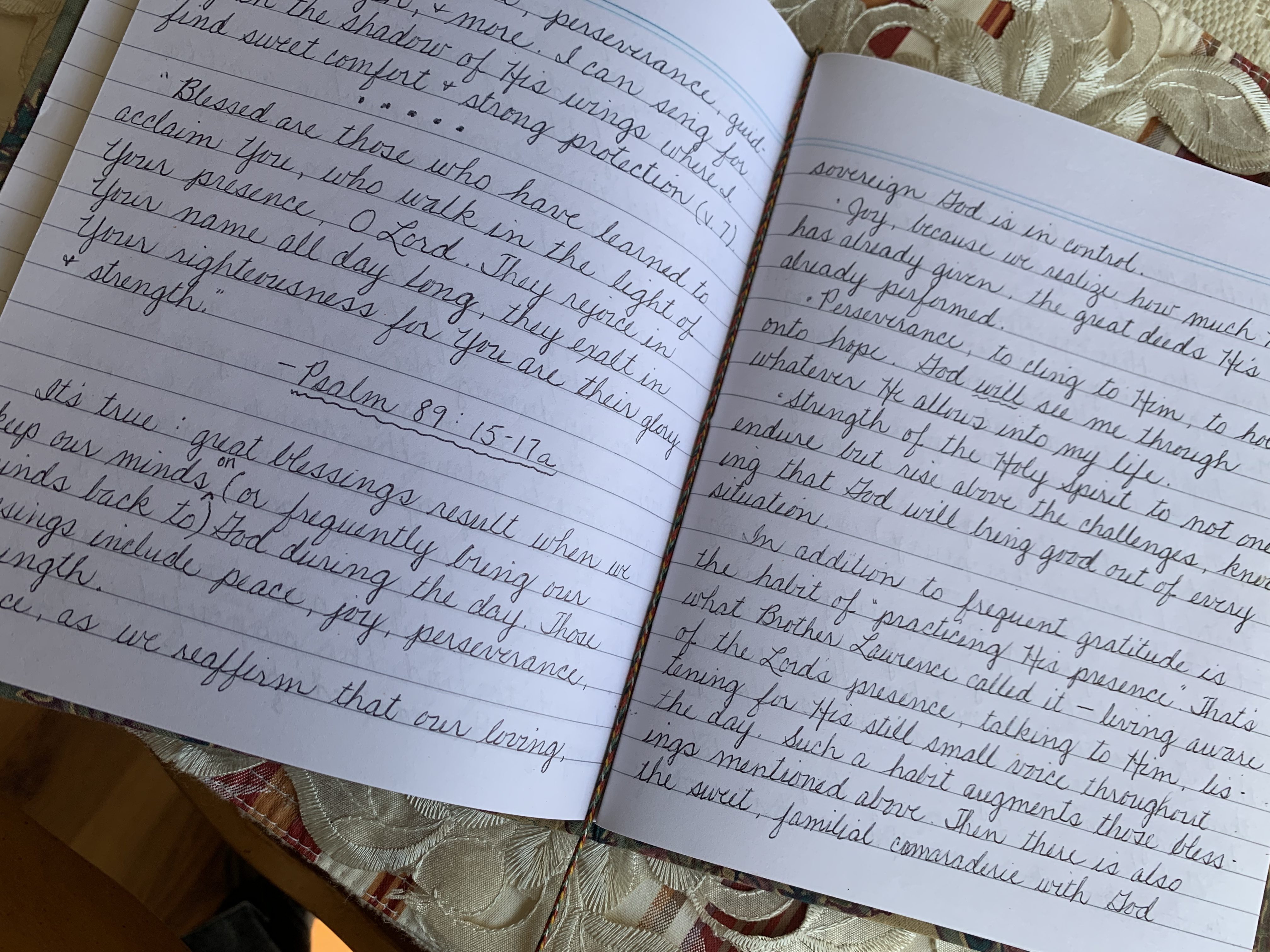
For the Christian, personal writing includes even more benefits, as we write-to-meditate on such matters as: scripture, a theological concept, or a quote from a Christian author we want to explore further. Some of the posts here at From the Inside Out began as such explorations.

For the Christian, writing . . .

. . . encourages thoughtful reflection, which leads to meaningful application.

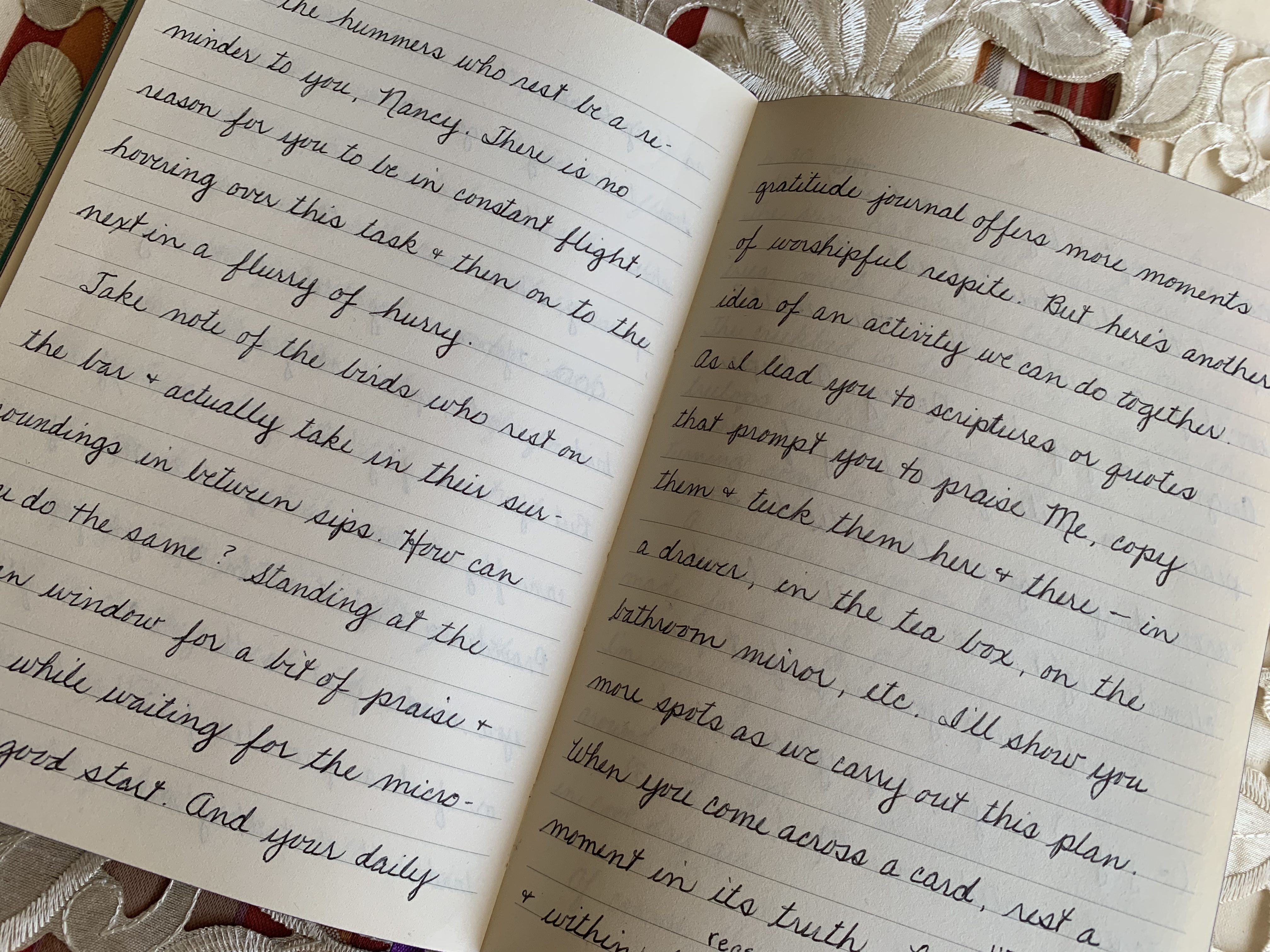
This entry became Quiet Restoration

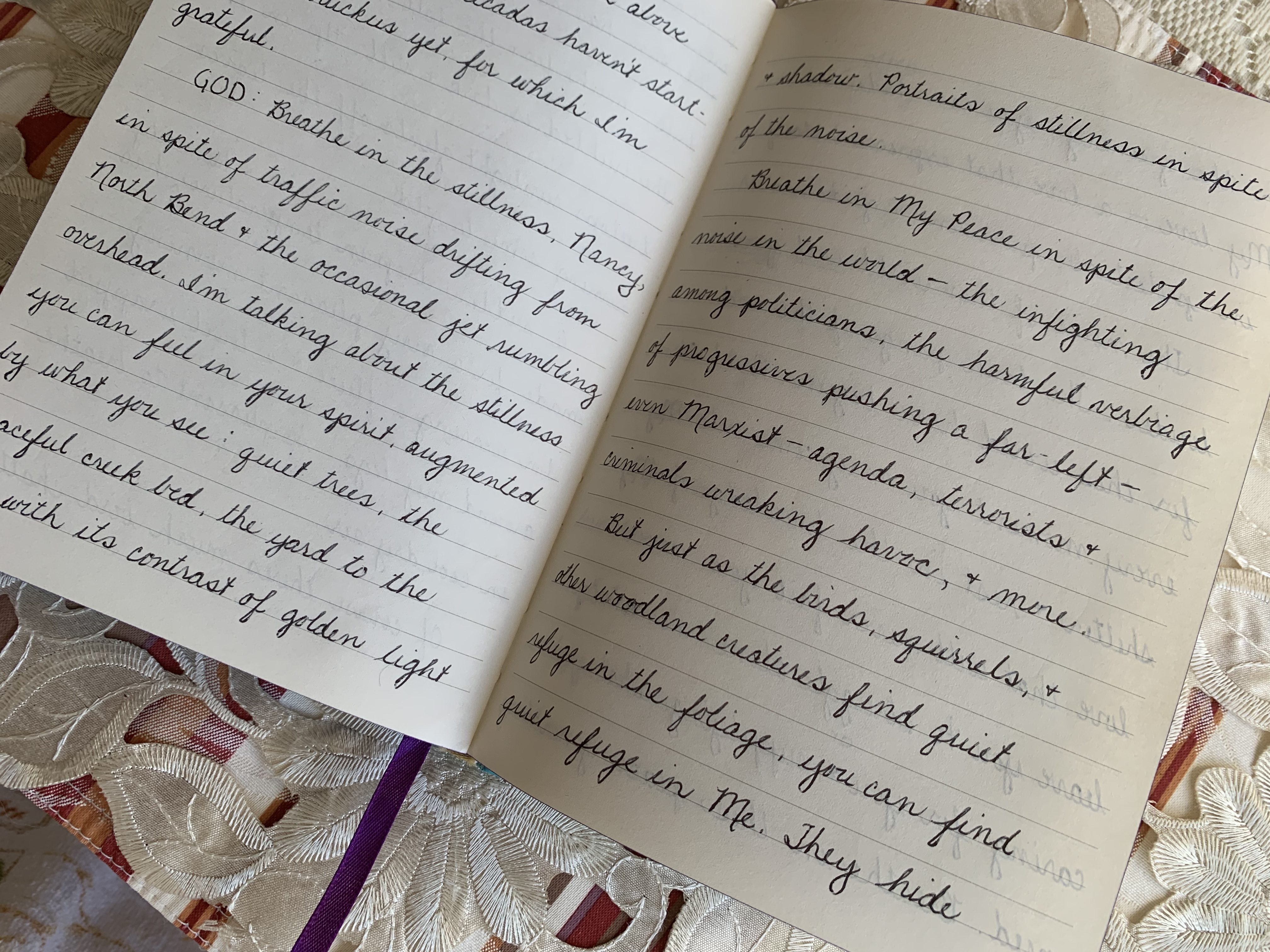
. . . slows our thinking, allowing room for God to speak within our spirits.

This entry inspired Peace Amidst the Noise

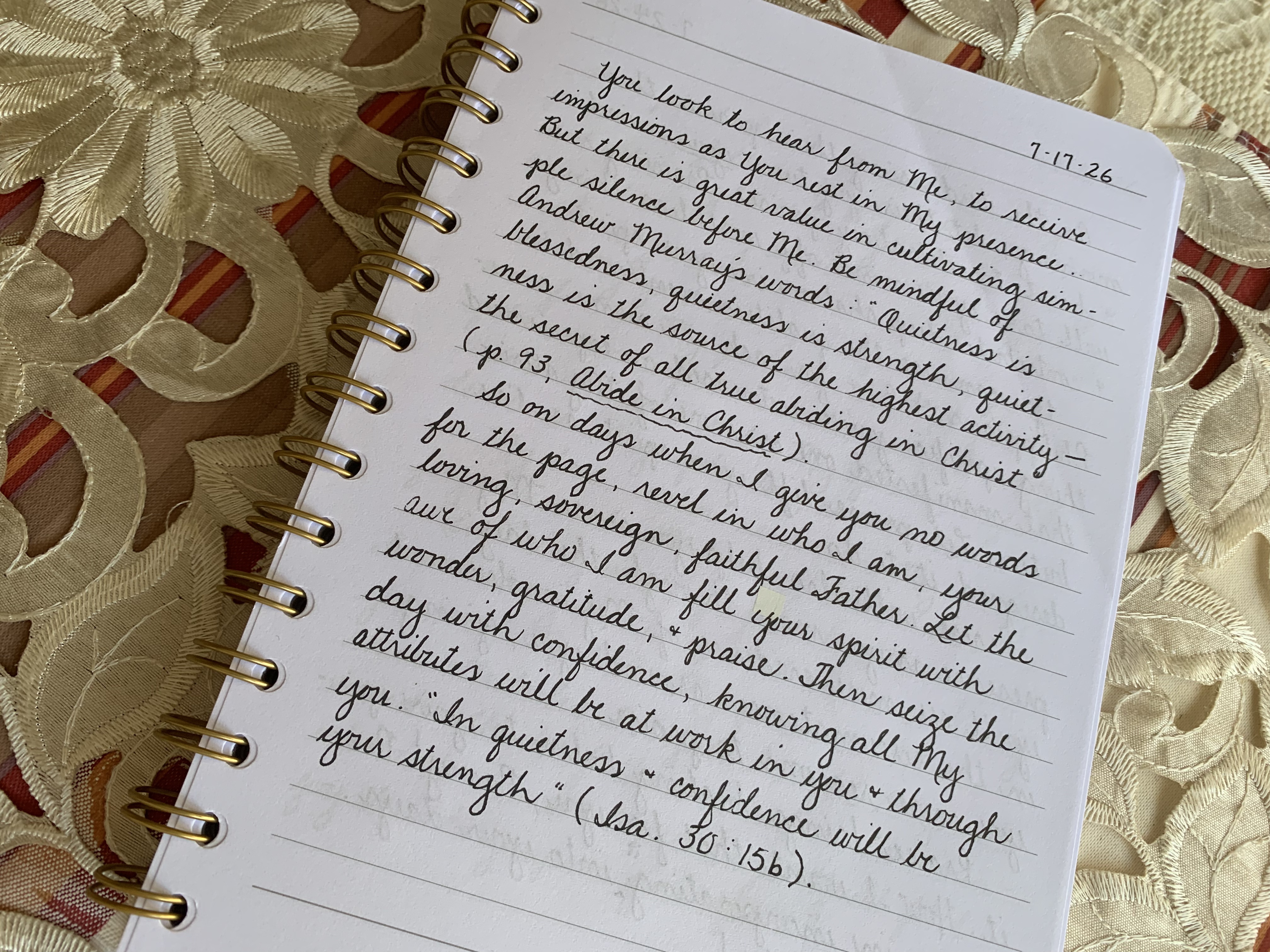
. . . deepens our intimacy with God.

This entry grew into Quietness Is . . .

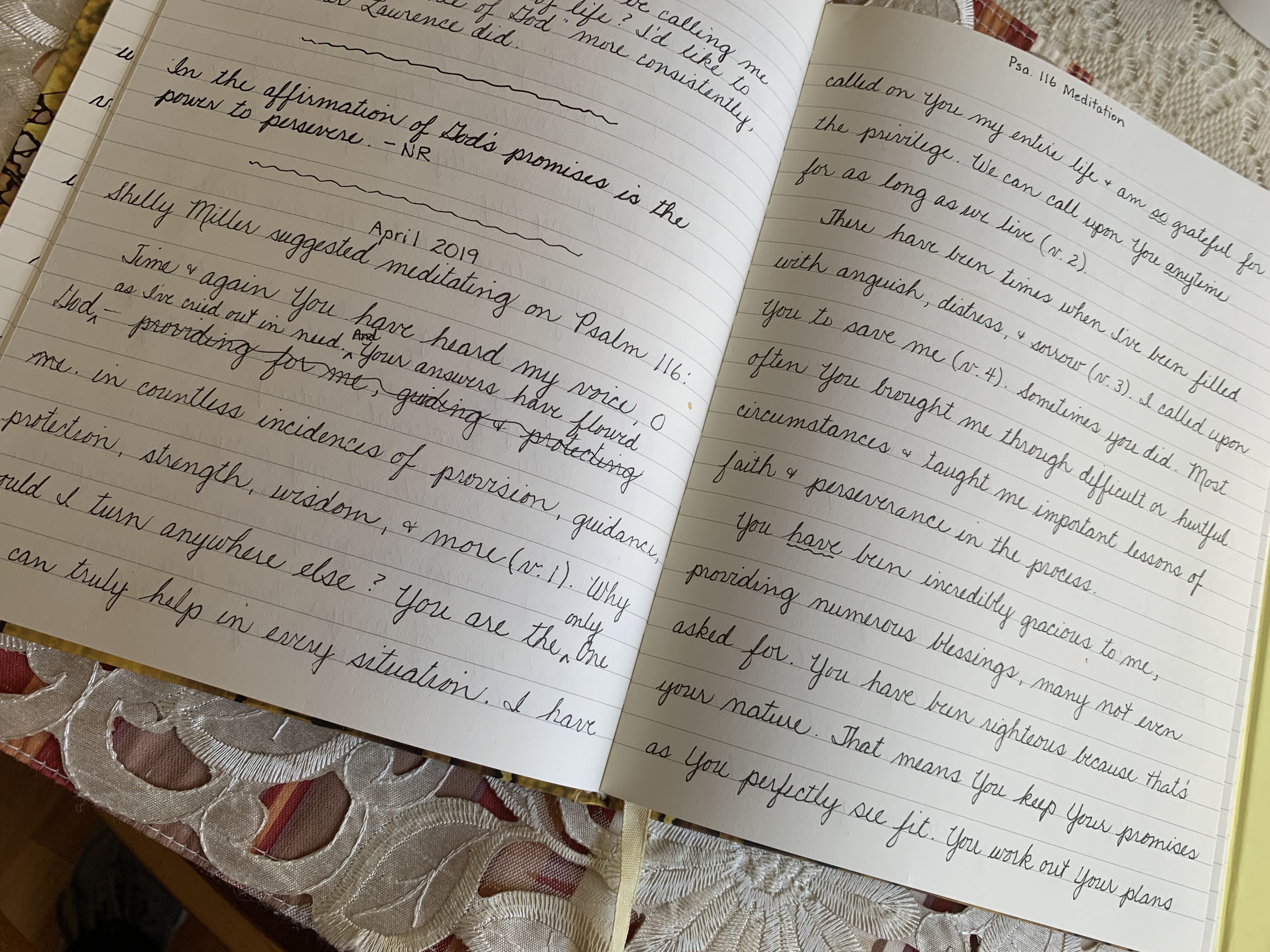
. . . can be an act of worship

This entry prompted Sweetness and Power

When writing for personal purpose, who cares if the verbs include a mix of past and present tense? So what if a dangling modifier sneaks in? The writing is for you and perhaps for your heavenly Father who revels in sincere, honest effort—mistakes aside.

So how might someone like Gramps—totally averse to writing—get words on the page?

With:

Scripture Writing

“Yep, just write it. Writing the Word helps us slow down and prevents us from skimming too quickly over the text. It’s the most straightforward way we can saturate our hearts and minds with the truth of God’s Word”—Denise Hughes, Deeper Waters, 77.

Then. care to challenge yourself? Write the answers to a few questions such as:

1) What stands out to me in this passage?

2) What does the text say about God, his attributes and actions, and how might that knowledge relate to my life?

3) What does this passage point out that I need to apply to my life? What might that application look like?

A Gratitude Journal

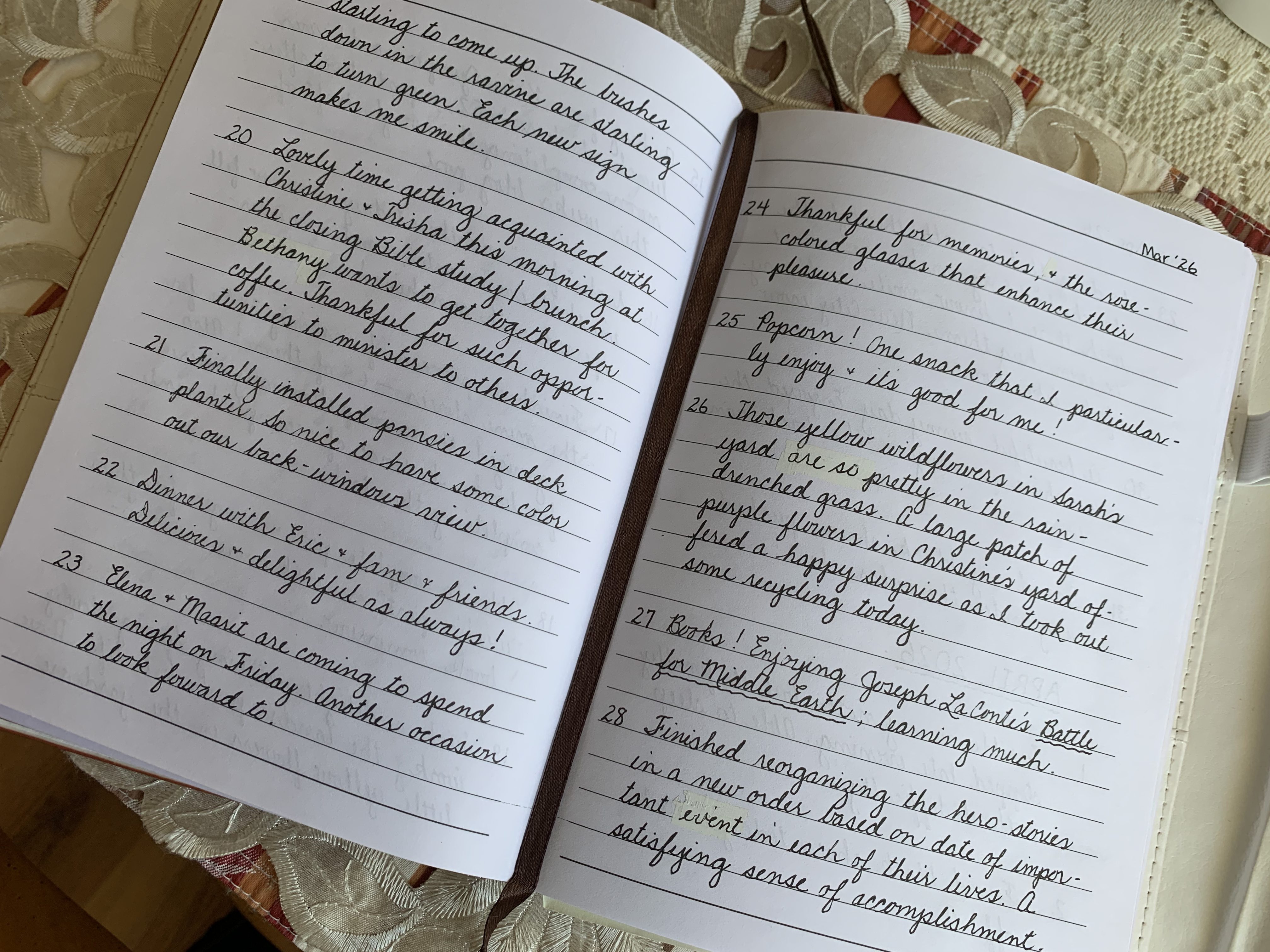
Even secular research has affirmed the value of keeping a gratitude journal. Entries don’t have to be extensive—just a blessing or two each day is sufficient to build up faith, hope, and joy.

‘Can’t think what to write? This website offers 100 prompts, drawing attention to a wide range of God’s blessings: https://proverbs31mentor.com/gratitude-journal-prompts/.

Written Prayers and Praises

In addition to thinking through your fingers, we can also pray or praise through our fingers by simply writing to God what’s on our hearts.

It may be as short as one sentence, but often another thought will surface while writing, and before you know it, a paragraph will appear on the page.

Whatever you choose to write as part of your devotion to God, it need not be elaborate or long.

Just:

And begin to experience the blessings and benefits of the writerly life.

P.S. If you journal already, please share in the comment section below the reasons why you write and what types of entries you write. Your thoughts may spark the interest of others!

Image credits: http://www.canva.com; http://www.easy-peasy.ai; Nancy Ruegg (7); http://www.rawpixel.com.

Processing…
Success! You're on the list.

Read Full Post »

No, that’s not a typo in the title, although I can see why you’d think so. We’re much more accustomed to the reminder, “think ahead.”

But recently I came across that title-phrase in Debora M. Coty’s book, Fear, Faith, and a Fistful of Chocolate [1].

She suggests we turn hindsight—for all God’s previous provision, guidance, and blessing—into foresight and trust his care for us in the future, to thank him ahead of time for what he’s going to do (pp. 115-116).

A doubter might say, “That seems a bit presumptuous. Everybody knows God doesn’t always give us what we want. Thanking him ahead of time for what we may not receive doesn’t make much sense.”

Our doubter is partially right: God doesn’t cater to our every desire, no matter how fervently we pray. But that’s a good thing. Surely all of us can think of a deeply held desire that seemed within God’s will, and we repeatedly asked him to supply it, only to be disappointed.

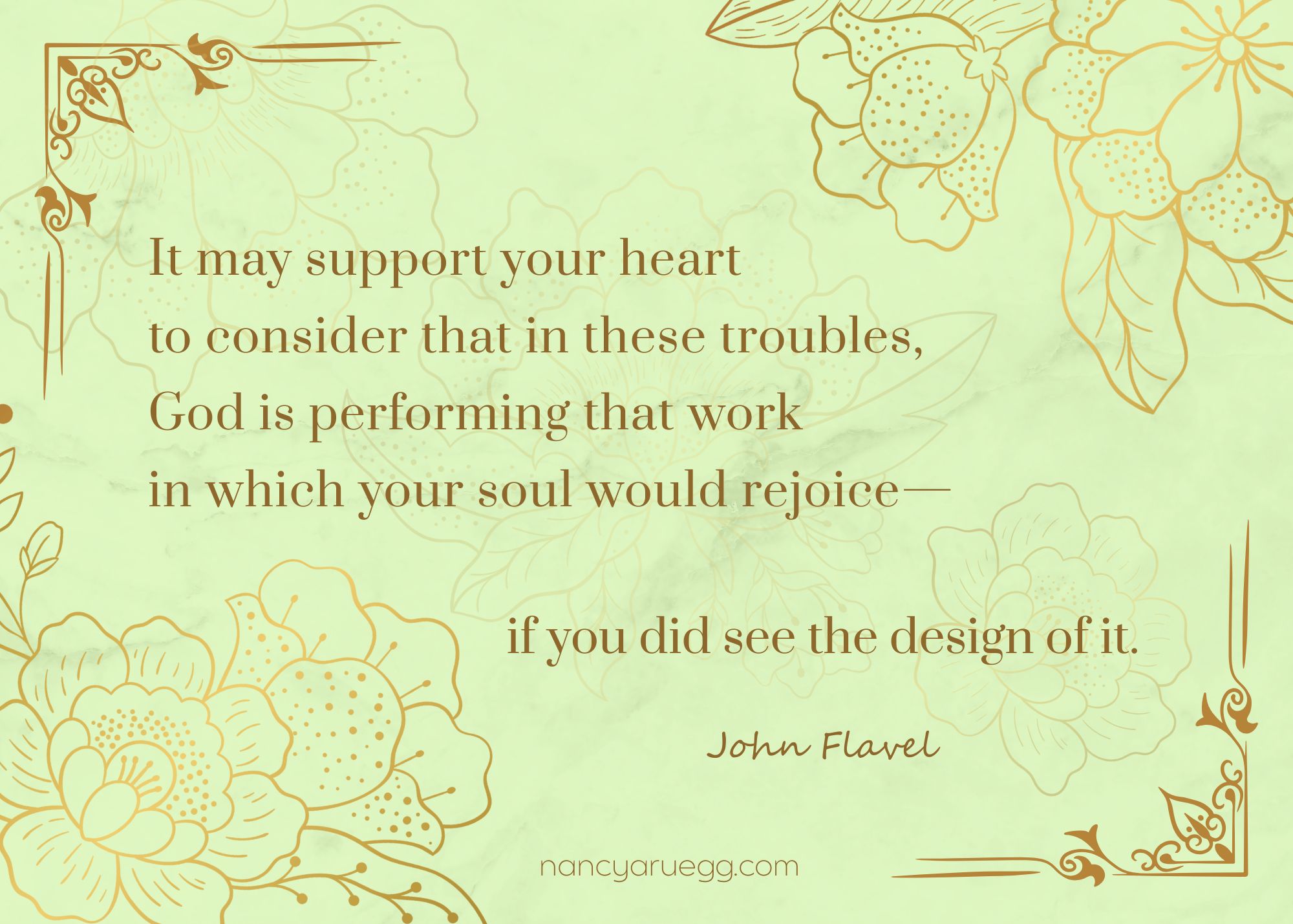
We’d do well to remember what Puritan minister John Flavel wrote long ago:

We might begin to thank ahead by expressing gratitude for such blessings as deeper confidence in God as we cling to him in trust, greater strength of character that’s growing within, and important life-lessons learned as we wait [2].

But that’s not all.

To thank ahead is a step of faith in what we know.

For example: God turns all things to good for those who love him. We may not see what that good is until we get to heaven, but we know our perfect God always works things out perfectly, in his perfect timing [3].

To thank ahead prepares the heart for what God will do.

Let’s say we need a new car. It would be quite impudent to expect a new Corvette ZR1X and thank God for it ahead of time. But we can be grateful he’ll supply our need of transportation and give us the patience to wait, if necessary, until his chosen moment for provision [4].

To thank ahead turns our minds from worthless worry to uplifting truth.

Why is it our minds love to whirl around anxious thoughts? The act of faith-fueled gratitude shifts our focus from our concerns and problems to God’s attributes and promises.

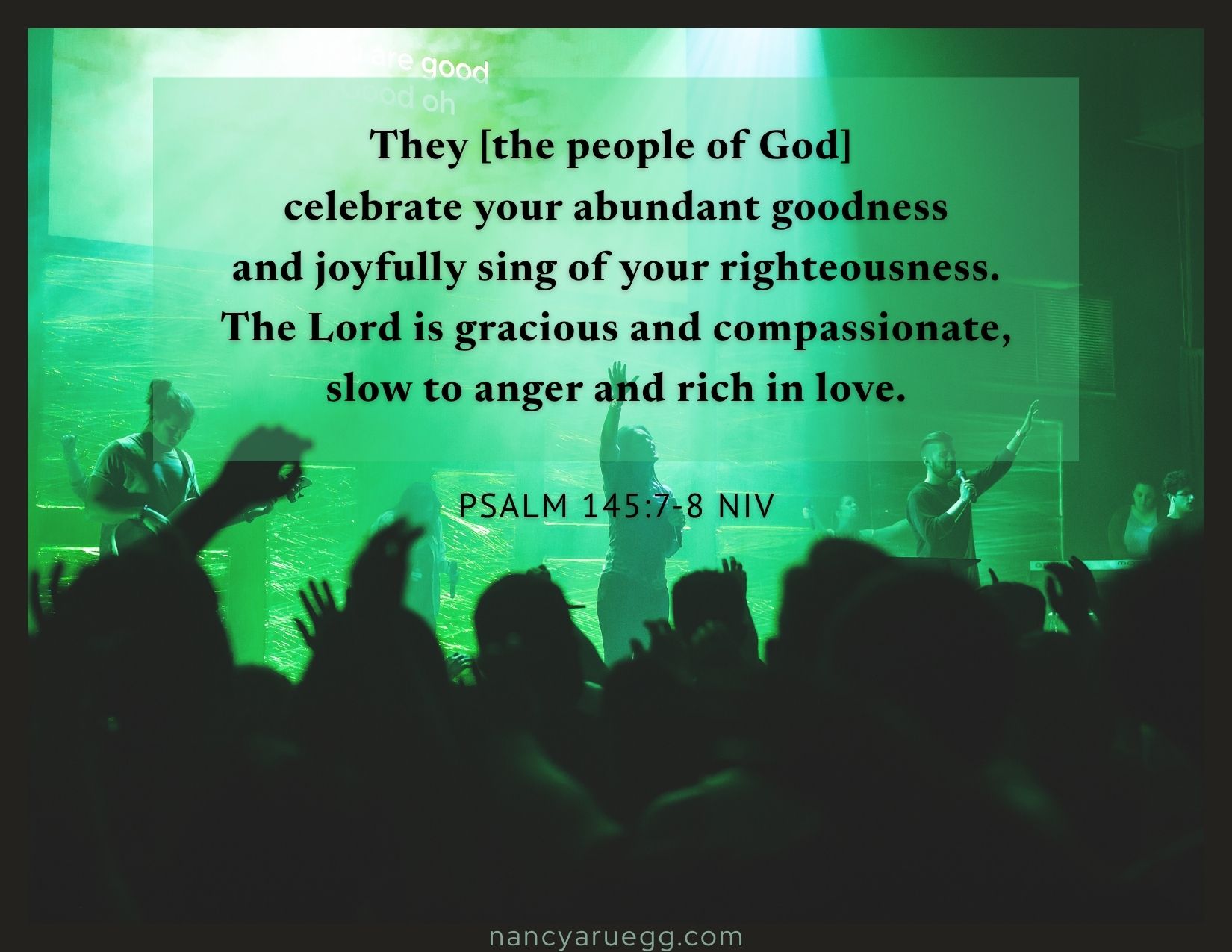
Psalm 145:7-8 offers a list of attributes to get us started:

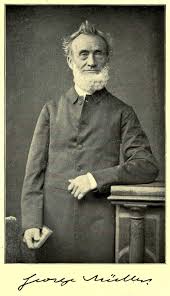
Many of you know of George Muller . . .

. . . who built and superintended orphanages in Bristol, England during the 1800s. Over the sixty years of his ministry, thousands of children received loving care within those facilities and learned about Jesus.

Muller was known for his devotion to prayer. He never asked for funding or borrowed to meet expenses.

One morning there was nothing to feed the children. George instructed the housemother to seat the children in the dining room as usual. He then thanked God for the food–and waited. George knew God would not let the children go hungry.

Soon a baker appeared at the door. “I couldn’t sleep last night,” he explained. “And somehow I knew you’d need bread this morning. So I got up and baked three batches for you. I’ll bring it in!”

Minutes later a milkman knocked at the door. “My cart has broken down here on your street, Mr. Muller. It’ll spoil by the time we get the wheel fixed. Could you use some free milk?”

And the ten cans of milk provided just enough for the 300 children [5].

Notice: In this case, George did nothing to solve the problem. He simply trusted and waited.

George knew:

By thanking ahead, we’ll grow such unwavering trust in our own hearts.


[1] Another thrift store find, published by Barbour, 2013.

[2] Hebrews 12:11

[3] Romans 8:28; Ecclesiastes 3:11

[4] Philippians 4:19; Lamentations 3:25

[5] https://www.georgemuller.org/devotional/a-famous-story-about-mullers-faith).

Image credits: http://www.publicdomainpictures.net; http://www.canva.com (3); http://www.flickr.com; http://www.publicdomainpictures.net.

Processing…
Success! You're on the list.

Read Full Post »

Mom, Dad, and great-granddaughter, about 2011

As he got older, my dad would occasionally quip, “My memory is so good I can remember things that didn’t even happen!”

Actually, Dad remembered accurately many past events, numerous jokes, a plethora of interesting trivia, and an impressive amount of Bible knowledge—well into old age.

Some years ago I happened to recall a fun song from my childhood, but a few lines of lyrics had escaped my memory. Dad was in his upper-eighties by this time, but I asked anyway.

“Do you happen to remember the lyrics to “Cheer Up, Cheer Up?”

He remembered them perfectly, and we enjoyed reminiscing about the Scottish pastor who’d taught us to sing the chorus with a Scottish accent.

Delightful memories are one of the joys of getting older.

In fact:

But God designed our memory-capacity for more than just enjoyment. He had in mind important purpose as we use this ability to foster our relationship with him.

For example:

Remembering God’s interventions contributes to our hope.

Looking back over our lives, we all can remember how God has brought us through challenging times, miraculously supplied urgent needs, and guided us in difficult decisions.

As a result, we can affirm: if he took care of those situations then, he can certainly take care of this situation now. And we find hope beginning to bloom.

Remembering God’s mighty deeds bolsters our faith.

Like the psalmist Asaph wrote: “I will ponder all your works and meditate on your mighty deeds. Your way, O God, is holy. What god is great like our God?” (Psalm 77:12-13).

Remembering is a form of worship. And as we rehearse with him the miracles we’ve witnessed and experienced, our fears subside, doubts shrink, strength increases, and our confidence in God expands.

Remembering God’s faithfulness fosters gratitude and peace.

Brain research has confirmed that “engaging in gratitude rewires neural-pathways, combating anxiety.” 

That means, with every remembrance of God’s faithfulness, we’re taking advantage of the ability he’s given us, to calm our stress and hard-wire pathways to peace. *

Remembering the past encourages personal and spiritual growth.

We find wisdom for the present from the lessons learned in the past.

One lesson I’ve learned along the way was actually proclaimed eons ago by a Greek playwright, Aeschylus: “Happiness is a choice.” 

I can choose negativity and spiral downward into discouragement, or I can look for the blessings in my life and give my heart a good dose of cheer (Proverbs 17:22).

I’d rather do the latter.

Remembering the past contributes to obedience.

  • As we consider how God has provided throughout our lives, we’re more able to obey the instructions:
  • As we praise God for what he’s accomplished in the past, we’ll sidestep complaining about a difficulty in the present.
  • As we remember the joy of liberal generosity (Acts 20:35), we’ll avoid tight-fisted possessiveness.
  • And as we strengthen our faith by remembering God’s amazing deeds, we fight against spiritual complacency.

With the psalmist we can affirm:

We have no need for wishful thinking, remembering things that didn’t even happen. Pondering all the wonders God has performed for us will keep us happily occupied into eternity.

* https://cfc.sebts.edu/faith-and-culture/why-remembering-matters-and-how-it-shapes-our-lives-and-our-brains/


 Image credits: Nancy Ruegg; http://www.easy-peasy.ai; http://www.canva.com; http://www.heartlight.org; Nancy Ruegg; http://www.dailyverses.net; http://www.canva.com.

Processing…
Success! You're on the list.

Read Full Post »

On this cloud-shrouded, Thanksgiving morning,

I pause in the candlelight to thank and praise You, O Lord–

for family and friends, food and clothing,

a cozy home and delightful blessings

we never even thought to ask for.

These are benevolences we see, touch, and hear.

One blessing we never thought to ask for: a trip to Israel in 1994, travel and lodging expenses paid for.

But I also want to thank you for those gifts

that only the senses of the heart can perceive—

blessings that include your eternal faithfulness,

as expansive and enduring as the skies,

and your loving devotion, as measureless as

the far reaches of the cosmos.

I thank you for your alert attentiveness,

keeping watch over me as I come and go,

for your abundant goodness which you store up

for those who fear you and take refuge in you,

for your wisdom that knows what to accomplish and when,

what to give and what to withhold.

I thank you for your compassionate mercy

that offers a fresh start each day,

your transforming grace that takes the sand of troubles

and creates pearls of lustrous steadfastness and stability.

I praise you for your strength that “turns my mush into might.”

When I’m weary in spirit, you prop me up and propel me forward.

 I thank you for your Word that instructs in the ways of abundant living,

guiding me along the right path as I internalize your truths.

I thank you for its encouragement when my spirit falters,

providing hope through the promises that cannot fail

and in the knowledge of who you are, our holy and perfect Father.

Your Word is “an anchor of truth in a sea of lies.”

“Praise and glory and wisdom and thanks and honor and power and strength be to you O God, for ever and ever. Amen” (Revelation 7:12)!

* * * * *

Now it’s your turn! What would you add to this gratitude list that specifically celebrates God? Add your praise in the comment section below!

Scriptures and other sources:

  • Verse 2: Psalm 36:5; 108:4
  • Verse 3: Psalm 121:8 NLT; 31:19; Proverbs 2:6
  • Verse 4: Lamentations 3:22-23; Romans 5:3-5; Anita Donihue, When I’m in His Presence, 52; Isaiah 40:29-31

Image credits: http://www.publicdomainpictures.net (Sheila Brown); http://www.commonswikipedia.org (Edmund Nigel Gail); http://www.canva.com; http://www.dailyverses.net (2); commonswikipedia.org (Marcus Bengtsson).

Processing…
Success! You're on the list.

Read Full Post »

I trust you’ve received your flu and Covid shots for 2025/2026. Viruses are already making their rounds in our area; maybe where you live too.

There’s another booster you may wish to add to the list, a very powerful one that impacts body, mind, emotions, and spirit: a gratitude booster.

Most of us know the research, that great benefit results from simply expressing gratitude: improved sleep, mood, and immunity as well as a decrease in depression, anxiety, chronic pain and risk of disease [1].

But some of us need a little boost now and then, to jump start gratitude. And what better time to make that our focus than during the season of Thanksgiving?

Such boosters would include:

Actively choosing to see what God has provided [2]

‘We just have to turn up our joy detectors, notice, and give credit to the God who provided [every blessing, big and small]” [3].

Try listing the eight adjectives in Philippians 4:8 and then name something God has provided for you that fits each adjective. For example:

  • True: The daily delights God bestows, like morning sunbeams, apparent when I’m attentive
  • Noble: The young neighbor who shoveled our walk
  • Right: A car mechanic who treated us more than fairly
  • Pure: A perfect fall day of cool temps and sunshine, enjoyed with a compelling book
  • Lovely: a grandchild sitting on my lap
  • Admirable: The warm hospitality offered frequently by our nearby son and daughter-in-law
  • Excellent: The music and preaching at our church
  • Praiseworthy: a golden peach sunset followed by a glowing harvest moon

Turn the contemplations into praise for even more benefit.

Thinking on God’s Character Traits

“Our ability to be thankful and content in all things is directly related to our understanding of God’s character” [4].

One website out of many that list God’s attributes:

https://www.blueletterbible.or/faq/attributes.cfm

Here you’ll find not only a list but relevant scriptures, and a brief explanation highlighting the wonder of each trait.

Replacing Negativity with Positivity

As soon as we’re aware our thoughts have turned gloomy, we can flip the switch to positivity. There are many things to be grateful for no matter what, including:

  • I’m a Jesus follower, on my way to heaven (John 3:16)
  • I’m a child of the King—the King of the universe (1 John 3:1)!
  • He always supplies what I need (Philippians 4:19)
  • God can redeem any situation and make me triumphant in any circumstance [5] (Romans 8:31-39)
  • His presence with me always provides guidance, comfort, and more (Psalm 23:3-4)
  • His love for me never wavers (Jeremiah 31:3)
  • His goodness to me will never end (Psalm 23:6)

And as we express gratitude for these realities and many others, “confidence in God replaces complaint, which leads to rejoicing” [6].

Another way to augment positivity is to linger on pleasant memories, God’s promises, and how he’s already fulfilled them. God has equipped our brains with neuroplasticity, giving us the capability of changing how our minds function.

“When we linger on happy experiences or positive truths, these thoughts become encoded. Neural connections strengthen. The brain undergoes actual physical change” [7].

No wonder God inspired the Apostle Paul to write: “Be transformed by the renewing of your mind.” (Romans 12:2).

Now Imagine adding gratitude in the mix—gratitude for each memory, each promise, each fulfillment. The transformation is sure to be augmented. 

*         *          *

St. Augustine wrote:

Doesn’t that sound like a happy way to live? These gratitude boosters will surely help each of us become that Alleluia—just in time for Thanksgiving.


[1] https://www.mayoclinichealthsystem.org/hometown-health/speaking-of-health/can-expressing-gratitude-improve-health

[2] Melissa Krueger, The Envy of Eve, 134.

[3] Deanna Chadwell, contributor to Soul Bare, 82.

[4] Krueger, 49.

[5] Margaret Feinberg, Wonderstruck 148.

[6] Feinberg, 153.

[7] Jennifer Dukes Lee, The Happiness Dare, 199.

Image credits: http://www.commons.wikipedia.org; http://www.pexels.com (Joni Lorraine); http://www.wallpaperflare.com; http://www.pickpik.com (3); http://www.publicdomainpictures.net.

Processing…
Success! You're on the list.

Read Full Post »

Doesn’t that sound perfectly blissful—fullness of joy? According to the verse above, that kind of joy can be found in the presence of our Heavenly Father, at his right hand of favor.

That’s because, “There has never been a parent on earth who wants joy for his or her children as much as your Father in heaven wants joy for you, his child” [1].

To that end, God has provided numerous ways for us to experience his joy—all augmented as we share in each pleasure with him.

Just for fun, I took that phrase fullness of joy and challenged myself to create an acronym from its letters, to name some of the joy-makers our Heavenly Father provides. Then I dressed up each statement with the best-fitted quotes I could find:

F oster your relationship with God; F east on a world filled with his wonders (Psalm 92:4).

“When I am consciously aware of him,

life fills with wonder and wonder brings joy” [2].

U se time, gifts, and talents to bless others (Proverbs 11:25).

“In spreading my joy, God restored ME. MY JOY WAS FULL!

. . . As we pour out ourselves for others,

we ourselves are renewed” [3].

L ive in community with other believers (Psalm 133:1).

“When large numbers of people share their joys in common,

the happiness of each is greater

because each adds fuel to the others’ flame” [4].

L ift your voice in prayer (John 16:24).

“When I think upon and converse with Thee,

ten thousand delightful thoughts spring up,

then a thousand sources of pleasure are unsealed,

then a thousand refreshing joys spread over my heart,

crowding every moment with happiness . . .

I love Thee above the powers of language to express” [5].

N ourish your spirit with scripture (Psalm 19:8).

“[The Bible] is a mine of wealth, a paradise of glory,

and a river of pleasure” [6].

E xperience God’s presence (Psalm 21:6).

“The difference between tears and laughter

is found in being aware of the presence of God” [7].

S pend time outdoors, reveling in creation (Psalm 104:24-25).

“Time outdoors accomplishes a three-fold blessing:

better health, better mind, and better spirit” [8].

S ing (Psalm 100:1)!

“Nothing is more indicative of a fulfilled life,

a contented soul, and a happy heart

than the expression of song” [9].

O ffer encouragement to others (Proverbs 11:25).

“When someone does something good, applaud—

you’ll make two people happy” [10].

F ill your heart with gratitude (Psalm 9:1-2).

“Joy doesn’t cause us to be grateful;

joy is born out of our gratitude” [11].

J ump for joy–because sometimes you have to reach for it (Psalm 28:7)!

“Begin to rejoice in the Lord,

and your bones will flourish like an herb,

and your cheeks will glow

with the bloom of health and freshness.

Worry, fear, distrust, care—all are poisonous!

Joy is balm and healing,

and if you will but rejoice, God will give power” [12].

O ffer praise for who God is (Psalm 145).

“As I decreased my praise time, my joy also decreased.

I found out that when I made a habit

of intentionally giving God the praise he deserves,

I appreciated life so much better” [13].

Y ield to God’s ways, designed for our good that we may prosper (Psalm 19:7-8).

“The ultimate purpose of obedience is joy” [14].

By way of these Joy-Makers and more, we can experience the fullness of joy God wants to bring to our lives—the kind that permeates each moment as we abide in his presence.

(P.S. Continue your praise, guided by the free resource offered below as part of our newsletter!)


[1] Timothy Keller, Prayer: Experiencing Awe and Intimacy with God, p. 238.

[2] Deanna Chadwell, contributor to Soul Bare, 83.

[3] Barbara Johnson, Pack Up Your Gloomies in a Great Big Box, 197.

[4] St. Augustine, Confessions.

[5] From a Puritan prayer included in Valley of Vision by Arthur Bennett.

[6] Anonymous.

[7] Beth Moore, Believing God Bible study workbook, 44.

[8] F. Elaine Olson, Peace for the Journey, 191.

[9] John MacArthur, Ephesians, 256.

[10] Sam Goldwyn.

[11] Brother David Steindl-Rast.

[12] A. B. Simpson.

[13] Thelma Wells, contributor to Boundless Love, 231.

[14] Timothy Keller with Kathy Keller, Songs of Jesus, 199.

Image credits: http://www.canva.com; http://www.stockvault.net (Mohamad Hassan); http://www.pexels.com (Mattheus Bertelli); http://www.publicdomainpictures.net; http://www.freerangestock.com; http://www.commonswikimedia.org (Jason Clendenen); http://www.stockcake.com.

Processing…
Success! You're on the list.

Read Full Post »

Sometimes life can become little more than a repetitive rhythm of responsibilities and commitments. If we’re not careful, the day-to-day routine furrows a rut of monotony and dissatisfaction.

In addition, it may not be feasible to make the changes we dream of: a new job, a move across the country, pursuit of an exciting pastime like paragliding, vacations in exotic locations, or other adventuresome options.

We have kids. Others are counting on us. We don’t have the resources or time.

Does that mean we’re chained to tedium for the foreseeable future? Not at all.

Listed below are six ways (out of many) to spark excitement in our spirits: 

Make Others Smile–and Even Laugh

In fact, Jesus taught that providing benefit to others is actually a greater blessing to the giver than the receiver [1]. Surely that principle applies to smiles and laughter also.

I wonder how many smiles and chuckles we can cause today?

Celebrate the Small

Sometimes we have to be proactive and stir up a little excitement—make a big deal out of something small, such as:

  • Celebrate the achievement of a family member. Did one of the children (grandchildren, nieces or nephews) earn an award, make the honor roll, successfully complete a project, or finish his first chapter book? Commemorate the occasion with the honoree’s favorite main dish for dinner, create a song or present a speech; include plenty of applause.
  • Research an interesting historical event that happened on an upcoming date. Have the kids plan a dinner celebration in honor of the anniversary. They might create table decorations, a reenactment or presentation, a quiz to stump the parents [2].
  • Try something new—a restaurant, park, museum, or activity. Explore another neighborhood or town nearby.

Afterwards, add a prayer of thanksgiving, and you’ll find such experiences enhanced even further.

Be Curious and Pursue Discovery . . .

. . . in creation, in knowledge, in the backstory of people you know, and especially in scripture.

It’s exhilarating to discover something new, don’t you think?

Equally delightful is the realization that no matter how long we live, how much we read, how many people we get to know, how much time we spend studying scripture, there will always be more to discover.

I find that exciting!

Encourage Others

How exciting is that?

Speak Gratitude and Praise

No doubt, such a list would foster excitement in our hearts—for a God of goodness, compassion, generosity and power, who provides enumerable blessings each day.

Pray about Everything . . .

. . . and enjoy the thrill God has ordained, allowing us to be a part of his healings, provisions, guidance for decisions and more.

Now review the headings above and note:

Finding adventure . . . seeing the extraordinary in the ordinary . . . sounds like an exciting pursuit, don’t you think?

What sparks excitement for you? What strategy might you try next? Please share in the comment section below!

____________________

[1] Acts 20:35

[2] See https://www.ducksters.com/todayinhistory.php, a resource for possibilities to celebrate.

[3] https://theruggedface.com/finding-adventure-in-everyday-life/

Image credits: http://www.flickr.com; http://www.stockcake.com; http://www.canva.com; http://www.stockcake.com; http://www.canva.com.

Processing…
Success! You're on the list.

Read Full Post »

Some of you may remember singing this song in Sunday School:

As a child, I knew God loved me. He proved it by sending his Son to take the punishment for my sins, provide the way for me to live in heaven one day, and know him in the present.  

But I also knew my little eyes, hands, and mouth were not as careful they should have been. Surely God was disappointed in me much of the time.

The truth that I could enjoy God never entered my mind. My false impression of his disapproval stood in the way for many years.

Somehow I’d missed the message of such scriptures as:

  • The joy you have in the LORD is your strength (Nehemiah 8:10 GWT).
  • Take delight in the Lord (Psalm 37:4a NIV).
  • I will go to the altar of God, . . . my joy and my delight (Psalm 43:4 NIV).

I read such passages as directives for prayer and worship rather than invitations to take pleasure in relationship with God.

Psalm 100 provides Exhibit A for enjoying him by praising him. “Shout for joy,” the psalmist begins. “Worship the Lord with gladness; come before him with joyful songs” (vs. 1-2, emphasis added).

Then he gives one example why: God has made us his own—in spite of our frailty—and cares for us like a compassionate, attentive shepherd (v. 3).

Parable of the Lost Sheep (Luke 15:3-7)

That’s certainly cause for thanksgiving and praise (v. 4), which in turn fosters our delight in God. Then the psalmist concludes with three more reasons to enjoy him: he is good, loving, and faithful (v. 5).

This psalm hints at another important truth. Dare I use a sport analogy?

My first attempts at playing tennis sent balls whizzing every which way. However, various drills and hitting the ball thousands of times against a wall built up my skills until I could actually play the game.

That’s when I began to enjoy the sport. The better I knew how to play tennis, the more pleasure I took in the game.

‘See the parallel in the spiritual realm? The more we know God, the more we’ll enjoy him.

But that’s not all.

The more we delight in God, the easier it becomes to obey him and live by his ways.

And as we see those ways contributing satisfaction, contentment, and purpose to our lives, we enjoy him all the more.

So how do we foster our pleasure in God? Here are three ways to get us started:

LEARN ALL YOU CAN ABOUT GOD—his character and his ways.

In January we explored the exercise of slowly reading through the psalms and writing down every mention of God’s character and deeds. As the list grows so does our delight in his multi-faceted splendor [1].

LEARN ALL YOU CAN ABOUT JESUS—his life, sacrificial death, provision of eternal life for us and all its implications.

For example, while reading the gospels, note his responses to people, his choices, and his behavior. What character traits can you identify?

While reading the letters written by the Apostles Paul, Peter, and others, consider all that Christ’s sacrifice has purchased for us.

The more we learn about Jesus, the more our love for him grows. The more our love grows, the more we find our hearts filled with joy in him.

REVEL IN GOD’S BEAUTY—his magnificence, the glory of his creation, and the beautiful blessings he bestows.

“His love notes are stashed everywhere,” says Sara Hagerty [2].

And as we discover them, we’ll find ourselves smiling and even laughing in pleasure with God, in the awesome works he performs [3].

Oh—and one more thing to celebrate. There will always be more to enjoy, and we can always acquire more ability to enjoy our God because . . .

quote from Morning by Morning, 268.

How do you enjoy God? Please share in the comment section below!


[1] https://nancyaruegg.com/2025/01/16/celebrating-god-through-the-psalms/

[2] Unseen, 206.

[3] https://nancyaruegg.com/2019/06/06/love-notes/

Image credits: http://www.youtube.com; http://www.dailyverses.net; http://www.freebibleimages.org; Nancy Ruegg; http://www.canva.com; http://www.pixahive.com (Vijay Richhiya).

Processing…
Success! You're on the list.

Read Full Post »

One way to get better acquainted with God is to read through the psalms, watch for statements pertaining to him, and write them down.

That last step is important, as research has proven: writing (not typing) helps us learn and retain what we’ve written [1]. In this case it will also increase our appreciation of God’s glorious attributes and gracious acts on our behalf.

I chose to participate in this exercise during Advent, and became astonished by the number of statements about God, totaling over three hundred by the time I reached Psalm 150. I even skipped over those that I remembered listing previously.

Some psalms offer a number of statements about God, one after another. Psalm 23 includes nine, Psalm 103, sixteen, and Psalm 145, twenty.

Perhaps that explains why these psalms are among the favorites of many people. Subconsciously we crave reassurance of God’s power, wisdom, and goodness working on our behalf.

A lesser-known psalm perhaps, #71, offers seven encouraging descriptors of God:

He is our sovereign Lord (v. 5) over all things, even our blunders and regrets.

No matter my poor choices, God can redeem them. “Our mistakes can never thwart the sovereign will of God” [2].

How thankful I am for that!

He is the One who’s been my hope and confidence since my youth (v. 5).

I’ve been a Jesus-follower since age four. Never have I toyed with the idea of abandoning my faith in him, because I learned early on from the saints around me:

  • God is a good and loving Father
  • There is purpose in everything God does
  • He will bring me through whatever I might face
  • He is accomplishing a good and eternal work in my life [3]

I’d be foolish to turn my back on Someone so invested in my welfare.

God is splendorous (v. 8).

We could surely add more attributes to Brooks’ list. God provides so many wonderful, spiritual blessings in Christ (Ephesians 1:3)!

He is the One who performs marvelous, mighty, and righteous deeds (vs. 16-18).

In truth, “The whole world is a series of miracles, but we’re so used to them we call them ordinary things” [4].

May we rediscover the wonder of God’s deeds in evidence all around us, and respond with gratitude and praise.

He is the One who’s taught me since my youth (v. 17).

Over time I’ve come to cherish God’ Word. And even though I’ve spent many happy hours in study, its inspiration never grows old.

That is very good news.

God is the One whose righteousness reaches up to the heavens (v. 19).

That’s good news too, because “there is no perfect life, no perfect job, no perfect childhood, no perfect marriage, and no set of people who always do what we expect them to do.

“What we do have is a perfect God who is able to lead us through this imperfect life with unfailing strength, infallible wisdom, and infinite love”—Unknown.

Praise God for his attentive participation in our lives!

He is the One who’s done great things. Who is like You, God (v. 19)?

All of these descriptors, among the dozens of others proclaimed in the psalms, do make clear:

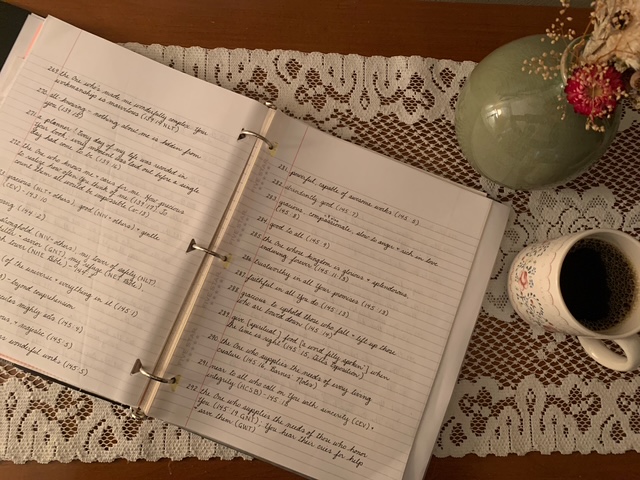
P.S. My list of God-descriptors has become the basis for personal worship. Each morning I slowly read and pray back to him one page of the collected statements. The practice renews wonder and gratitude for my marvelous Heavenly Father.

Perhaps you’d like to try it too?


[1] Denise Hughes, Deeper Waters, 89.

[2] Bev Rihtarchik, contributor to A Moment to Breathe, 151.

[3] Dr. Charles Stanley, Advancing through Adversity, 101.

[4] Hans Christian Andersen

Photo credits: http://www.pxhere.com; Nancy Ruegg; http://www.flickr.com; http://www.pickpik.com; http://www.canva.com (2).

Processing…
Success! You're on the list.

Read Full Post »

Older Posts »

From the Inside Out

Impressions Becoming Expressions

Sylvia Schroeder

Impressions Becoming Expressions

Mitch Teemley

The Power of Story

Still Traveling

Impressions Becoming Expressions

Living Our Days

Gaining a heart of wisdom

He Said What?!

I'm Patty, and my husband and I are living with our adult son who has autism and epilepsy. I love sharing lessons learned from life around me, especially life with Aaron.

Meditations of my Heart

Impressions Becoming Expressions

Linda Stoll

Impressions Becoming Expressions

Signora Sheila

Where faith meets slow living