Feeds:
Posts
Comments

Archive for May, 2026

Mom, Dad, and great-granddaughter, about 2011

As he got older, my dad would occasionally quip, “My memory is so good I can remember things that didn’t even happen!”

Actually, Dad remembered accurately many past events, numerous jokes, a plethora of interesting trivia, and an impressive amount of Bible knowledge—well into old age.

Some years ago I happened to recall a fun song from my childhood, but a few lines of lyrics had escaped my memory. Dad was in his upper-eighties by this time, but I asked anyway.

“Do you happen to remember the lyrics to “Cheer Up, Cheer Up?”

He remembered them perfectly, and we enjoyed reminiscing about the Scottish pastor who’d taught us to sing the chorus with a Scottish accent.

Delightful memories are one of the joys of getting older.

In fact:

But God designed our memory-capacity for more than just enjoyment. He had in mind important purpose as we use this ability to foster our relationship with him.

For example:

Remembering God’s interventions contributes to our hope.

Looking back over our lives, we all can remember how God has brought us through challenging times, miraculously supplied urgent needs, and guided us in difficult decisions.

As a result, we can affirm: if he took care of those situations then, he can certainly take care of this situation now. And we find hope beginning to bloom.
Remembering God’s mighty deeds bolsters our faith.

Like the psalmist Asaph wrote: “I will ponder all your works and meditate on your mighty deeds. Your way, O God, is holy. What god is great like our God?” (Psalm 77:12-13).

Remembering is a form of worship. And as we rehearse with him the miracles we’ve witnessed and experienced, our fears subside, doubts shrink, strength increases, and our confidence in God expands.

Remembering God’s faithfulness fosters gratitude and peace.

Brain research has confirmed that “engaging in gratitude rewires neural-pathways, combating anxiety.” 

That means, with every remembrance of God’s faithfulness, we’re taking advantage of the ability he’s given us, to calm our stress and hard-wire pathways to peace. *

Remembering the past encourages personal and spiritual growth.

We find wisdom for the present from the lessons learned in the past.

One lesson I’ve learned along the way was actually proclaimed eons ago by a Greek playwright, Aeschylus: “Happiness is a choice.” 

I can choose negativity and spiral downward into discouragement, or I can look for the blessings in my life and give my heart a good dose of cheer (Proverbs 17:22).

I’d rather do the latter.

Remembering the past contributes to obedience.

  • As we consider how God has provided throughout our lives, we’re more able to obey the instructions:

  • As we praise God for what he’s accomplished in the past, we’ll sidestep complaining about a difficulty in the present.
  • As we remember the joy of liberal generosity (Acts 20:35), we’ll avoid tight-fisted possessiveness.
  • And as we strengthen our faith by remembering God’s amazing deeds, we fight against spiritual complacency.

With the psalmist we can affirm:

We have no need for wishful thinking, remembering things that didn’t even happen. Pondering all the wonders God has performed for us will keep us happily occupied into eternity.

* https://cfc.sebts.edu/faith-and-culture/why-remembering-matters-and-how-it-shapes-our-lives-and-our-brains/


 Image credits: Nancy Ruegg; http://www.easy-peasy.ai; http://www.canva.com; http://www.heartlight.org; Nancy Ruegg; http://www.dailyverses.net; http://www.canva.com.

Processing…
Success! You're on the list.

Read Full Post »

Gus gave the toy chest one last buffing to make the wood glow, then stepped back to survey his work. Yes, this would serve his pastor’s family well for years to come.

He’d put all his expertise as a cabinetmaker into creating the handsome yet sturdy toy chest. But when Gus and his wife delivered the gift to Rev. Peterson, they received apologies and regret.

“Oh, Gus—this is absolutely beautiful!” their pastor cried.  “You must have spent hours laboring over it, and I thank you with all my heart, but . . . this is so embarrassing.

“I never intended for you to invest so much time when I asked you to throw together a box for the accumulating toys. You’ve given us a piece of furniture! How can we thank you enough for such a gift?”

“You have to understand,” responded Gus’s wife. She lovingly reached out to touch her husband’s arm. “Gus is a cabinetmaker. He could never, as you say, ‘throw a box together.’ His pride would not permit it.”

His pride would not permit it.

Some might read that statement and wonder, Should Gus be prideful of his work? Doesn’t pride go before destruction and precede disgrace (Proverbs 16:18; 11:2)?

A quick check in a thesaurus helps settle the question.

First, pride can mean arrogance, self-importance, and self-glorification, which the Bible does warn against.

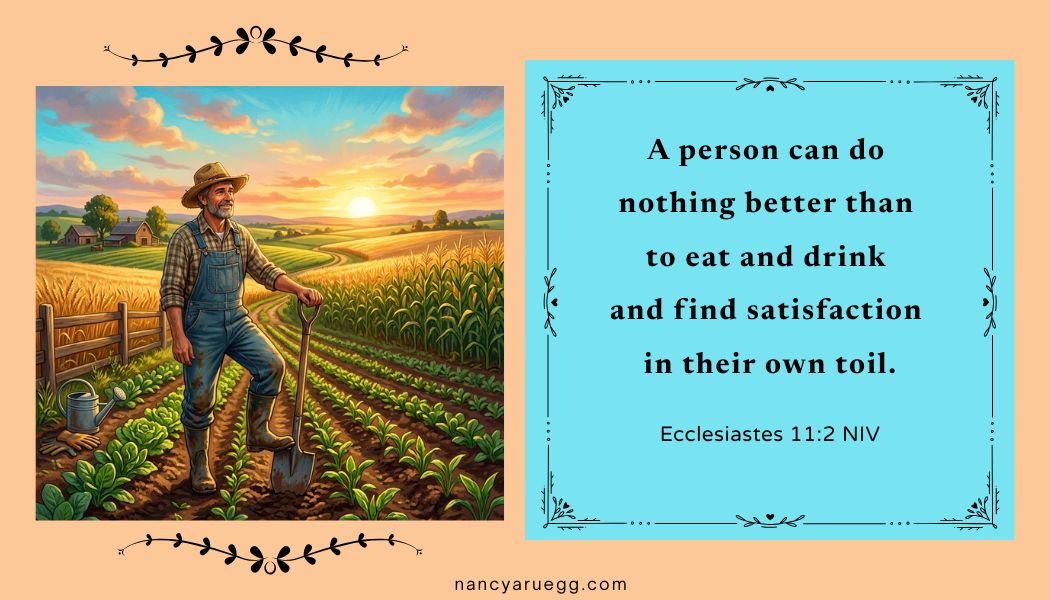
But pride can also take the form of pleasure, joy, and satisfaction.

That’s the kind of pride Gus experienced, creating the best toy chest his skills could produce, resulting in a satisfying sense of achievement.

Is this type of pride mentioned in the Bible? Yes!

Remember when God surveyed his creation? What did he think about his work? Did he say, “Well, I guess that will do.”

NO! “God saw all that he had made, and it was very good” (Genesis 1:31, emphasis added). He acknowledged the worth of his work and took pride—delight and satisfaction– in what he’d accomplished.

God also inspired King Solomon to write:

And what did God say about Jesus after his baptism? “This is my Son . . . with him I am well pleased” (Matthew 3:17).

That sounds similar to what parents say as their children demonstrate honorable character or achieve success in an endeavor.

Only instead of saying, “We are well pleased with you,” Mom and Dad declare, “We’re so proud of you!” Different words; same meaning.

In fact, the apostle Paul expressed such satisfaction in the church at Corinth, writing, “I take great pride in you” (2 Corinthians 7:4).

Of course, even a healthy satisfaction in character-growth, spiritual maturity, or other achievement can slide into arrogance and self-glorification if we’re not careful.

So what might help us maintain wholesome pride and avoid the harmful variety?

Here are a few suggestions:

  • Acknowledge the work of God in our lives. Everything does come from him (James 1:17).
  • Be satisfied our Audience of One sees our efforts; avoid seeking accolades from others (Matthew 6:1).
  • Be wary also of self-deprecation. We are God’s workmanship (Ephesians 4:10); we’ve been amazingly and miraculously made (Psalm 139:18). Take delight in that!
  • Learn humility; resist arrogant thoughts (Philippians 2:3-4).
  • Turn to God frequently, praying for his empowerment to do what’s right, even when no one sees (Isaiah 40:29-31); understand that prideful self-glorification results in turning away from God (Psalm 10:4).

Most of us have never heard of Gus, the builder of that exceptional toy chest. But it’s probable you know of his pastor, Eugene H. Peterson, author of many books and The Message, a modern paraphrase of the Bible.

Peterson shared about Gus in his book, Run with the Horses* (the story embellished a bit in this post).

He included the observation: “That toy box has been in our family for over fifty years now and rebukes me whenever I am tempted to do hasty or shoddy work of any kind” (183).

Gus taught his young pastor to take pride in his work. And Peterson took that lesson to heart.

For all the subsequent decades of his ministry, Peterson pursued excellence in the sermons he preached, the books he wrote, and the leadership he provided, impacting thousands.

It’s likely Gus never realized what an important role he played. I think he would’ve been OK with that.

His healthy pride was enveloped in holy humility.

*published by InterVarsity Press, 2009.

Image credits: http://www.pexels.com (Tima Miroshichenko); http://www.dailyverses.net; http://www.easy-peasy.ai; http://www.canva.com (2).

Processing…
Success! You're on the list.

Read Full Post »

Harry Leigh-Dunmore listened to waves strike the shore and gulls shriek overhead. A year ago, he mused, I’d have considered this a lark, sitting on the beach under a sunny sky.

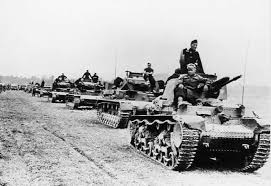
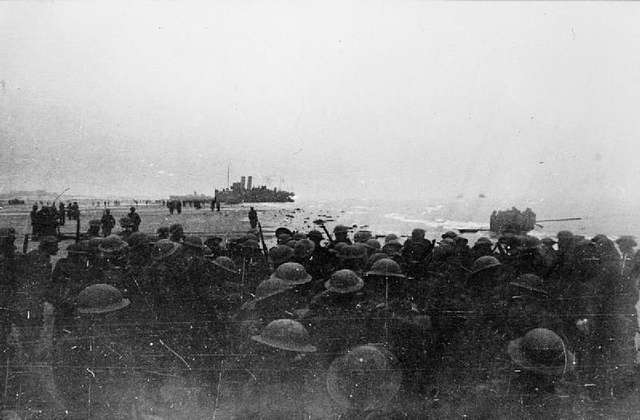
But this was May 25, 1940, and Harry found himself waiting on the French coast for rescue while dozens of German panzer tanks barreled westward toward him and more than 300,000 others of the British Expeditionary Forces gathering on the beaches of Dunkirk.

The Germans had blitzed through Belgium, Holland, and southern France, surrounding the Allied forces and leaving them stranded on the coast.

Rumors spread that ships from Britain would soon rescue them, but how could such an effort be mounted in time and for so many? Harry dared hope they’d find a way.

In the distance, he and every other soldier heard the rumble of the Luftwaffe (the German air force) approaching again from the east.

Quickly they spread out and hunched down small and tight, to make themselves difficult targets. There wasn’t enough cover to protect them all.

Meanwhile in England, in spite of predictions that only 20,000 to 30,000 men could be rescued, Prime Minister Winston Churchill had sanctioned Operation Dynamo on May 20, to begin on Sunday May 26.

Vice Admiral Ramsay called for every boat or ship owner willing to participate in the dangerous mission, to gather their crafts around Dover on the southwestern coast. More than eight hundred began to assemble [1].

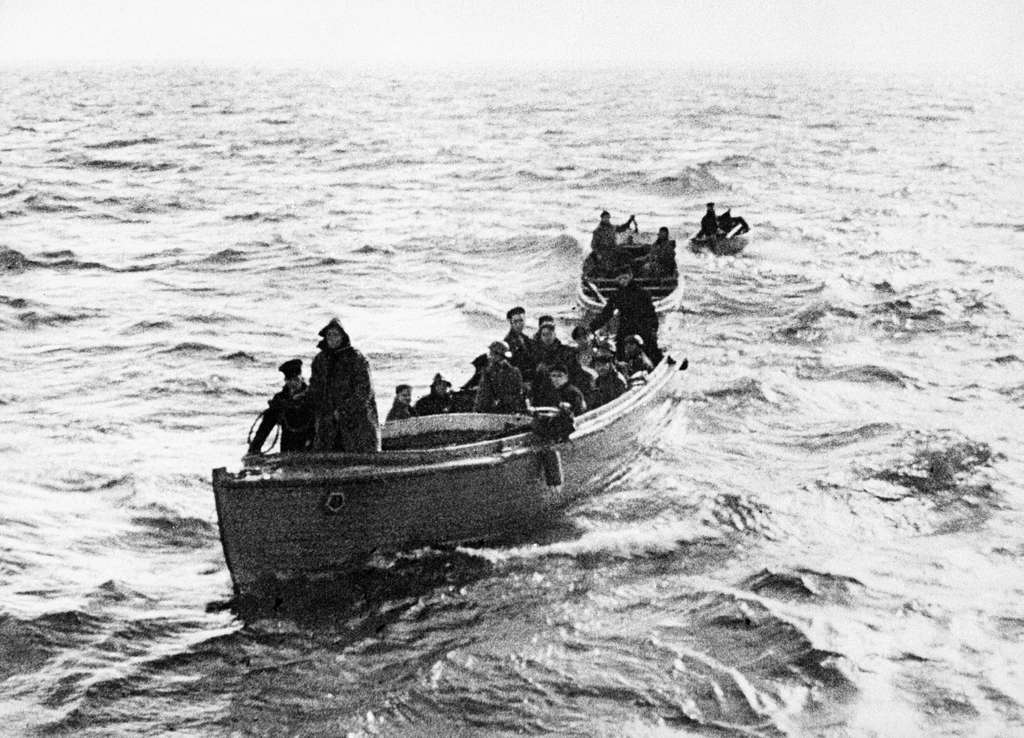
The plan called for smaller boats to shuttle the soldiers from the shallow waters of Dunkirk to larger vessels and naval ships anchored further out, that would then transport the men back to Dover. French ground forces and the RAF would provide cover.

King George VI, a man of strong faith, received briefing of the plan and the dire predictions. On May 24th he called for a National Day of Prayer to occur as evacuations would begin May 26.

Within hours of that call to prayer, Hitler halted that western-bound panzer assault, just ten miles or so from Dunkirk [2], in order to give the German infantry time to catch up [3].

German General Göring assured Hitler the Luftwaffe could decimate the beach-stranded soldiers, even though only one run per day was possible. (They had to fly from Germany and attack quickly in order to conserve fuel for the return trip [4]).

On Sunday May 26th as the rescue mission began, millions of Britons overflowed the churches into the streets, praying for God’s intervention on behalf of their boys.

On Tuesday, more stormy weather grounded the Luftwaffe. Wednesday brought uncommonly calm waters in the English Channel, making it possible for the smallest of boats to participate in the rescue and make the crossings quickly.

When the storms subsided, fog rolled in. The Luftwaffe still couldn’t fly. In fact, for the ten days boats and ships crisscrossed the English Channel, the German pilots only had two and a half days of good weather for attack.

Even then their efforts were often stymied. One group of about four hundred men suffered machine-gun fire and bombing from about sixty aircraft. Not a single man was killed [5].

Another soldier related that many of his comrades knew Psalm 91 by heart. During the Luftwaffe attacks they shouted the verses together [6].

When each Luftwaffe attack subsided, the scattered men would return in orderly fashion to their places in the lines [7].

Meanwhile, a breeze took the smoke from the German bombs and protected from view the soldiers loading onto boats [8].

By June 4, the mission was complete. Yes, there were casualties, but the British had evacuated 338,226 soldiers, including approximately 140,000 French, Belgian, Dutch, and Polish troops [9].

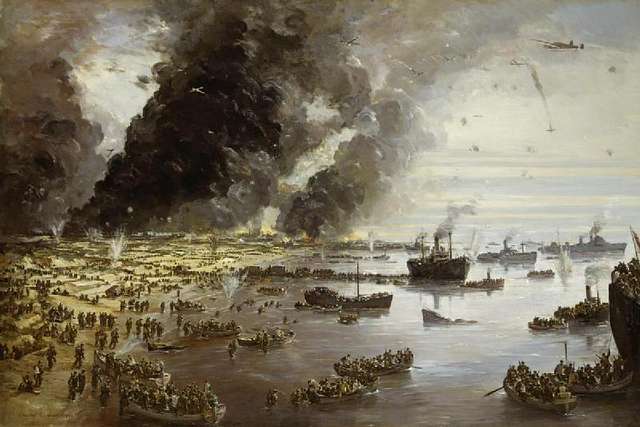
“Battle of Dunkirk” (1940) by Charles Ernest Cundall

Harry Leigh-Dunmore was among them. After a three-hour crossing, he and hundreds of other soldiers were loaded onto a train. Harry promptly fell asleep; he awoke in Wales [10].

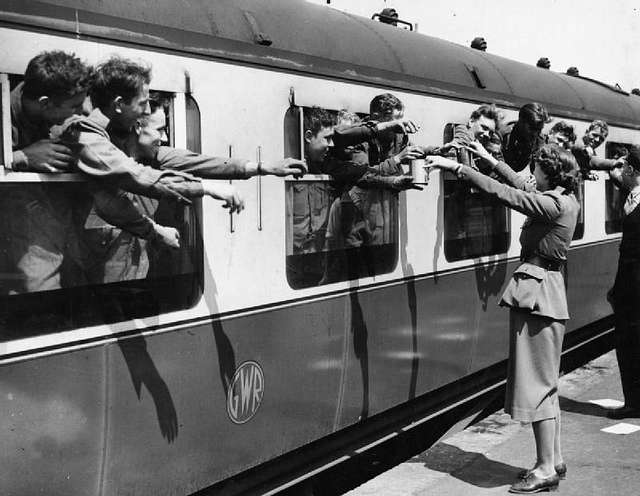
In fact, trains took the Dunkirk evacuees all over Britain.  Women’s organizations provided food and drink at railway stations as the trains passed through.

Once each train arrived at its destination, the men were taken to barracks made ready to house and feed them—another divinely-engineered feat of staggering proportions.

God had answered their prayers; he’d brought about the “the miracle of Dunkirk.”

King George designated the next Sunday, June 9, a Day of Thanksgiving. Citizens and rescued soldiers stood side-by-side in churches across Britain and sang together Psalm 124 [11]:


[1] https://www.godreports.com/2017/07/dunkirk-god-answered-prayers-in-miraculous-ways/

[2] https://www.christianstogether.net/Articles/200052/Christians_Together_in/Christian_Life/The_Miracle_of.aspx

[3] https://the-past.com/feature/was-dunkirk-really-a-miracle/

[5] https://www.standingforfreedom.com/2025/05/26/this-week-in-history-gods-miracle-at-dunkirk/

[6] https://kinshipradio.org/home/psalm-91-and-the-miracle-of-dunkirk/

[7] https://www.britishlegion.org.uk/get-involved/remembrance/stories/remembering-dunkirk

[8] https://guideposts.org/articles/angels-and-miracles/miracles/gods-grace/the-four-miracles-of-dunkirk/

[9] https://www.standingforfreedom.com

[10] https://www.britishlegion.org.uk

[11] https://www.christianstogether.net

Image credits: http://www.pickpik.com; http://www.picryl.com (5); http://www.jenikirbyhistory.getarchive.net; http://www.picryl.com; http://www.canva.com.

Processing…
Success! You're on the list.

Read Full Post »

Chances are you’ve never heard of Dixie Thompson. She was the music director for one of the churches my husband pastored. Descriptors for Dixie would include:

(We performed “I’ll Be Home for Christmas” in 1998. That’s me on the right.)

  • Gifted; directing all aspects of a musical (instruments, choir, players, narrator, stage crew, sound technician, etc.–and making it look easy)
  • Talented; bringing the best out of each participant
  • Good listener; not interrupting, seeking to understand
  • Unflappable; calm under fire
  • Encouraging; often writing notes of appreciation

When I happened to be with Dixie at a restaurant or store, we’d always run into people she knew. And everybody wanted to talk to Dixie. She made each person feel important to her.

Much sooner than we would have liked, God chose to take Dixie home to heaven. She died of a brain tumor several years after my husband had been assigned to another church.

Hundreds of people attended her funeral. And the numerous stories told that afternoon gave indication of Dixie’s widespread impact.

Does that sound appealing—to influence for good the people around you?

In fact, that’s a normal desire:

“The drive to significance is a simple extension of the creative impulse of God that gave us being . . . We were built to count as water is made to run downhill. We are placed in a specific context to count in ways that no one else does. That is our destiny” [1].

But to accomplish our destiny requires determination. Determination to:

Accept who we are and where we are (Psalm 138:8)

‘Feeling ordinary? Insignificant? Unseen? Your feelings are lying to you!

“There is no such thing as an insignificant person or an insignificant place or an insignificant position” [2].

Granted, some people are like Waterford crystal, refracting the light and drawing praise. Others of us feel as forgettable as a compost bin.

Just remember: Crystal can be fragile, but that unremarkable compost bin offers “rich possibilities for fertilizing the lives of others” [3].

Pray to be prepared (Psalm 143:10)

“God’s recipe for significance is to get low, not high, to commit our plans to the Lord in prayer, not to move ahead without a sense of his blessing and guidance ”[4].

We can pray each day that God will work and speak through us to benefit those we encounter.

Invest in others (1 Thessalonians 5:11)

A life isn’t significant except for its impact on other lives” (Jackie Robinson).

And impact occurs as we help and support, share and give, listen and encourage, challenge and celebrate those around us.

Cumulate words and deeds (Zechariah 4:10a)

“Never underestimate the power of a simple act of kindness or an encouraging word” [5].

Sometimes what seems like ordinary conversation and ordinary gestures actually add up to far-reaching impact.

I think of my grandmother, whose steady faith over the course of her life, her consistent kindness, overriding serenity, and more still inspire me, more than fifty years after she went home to her beloved Jesus.

Model / Be an example (Matthew 5:16)

An impactful example can occur even when we’re unaware.

“With every deed you are sowing a seed, though the harvest you may not see.”—Ella Wheeler Wilcox.

Words are seeds too. Even an overheard conversation might be just the catalyst to turn a mind toward Christ.

[Be] Tenacious of faith (1 Corinthians 15:58)

We can determine to be tenacious, faithful, and watchful people, always attentive to those persons God puts in front of us, and seeking to honor him by honoring them. Then “we trust there will be fruit whether we see it or not” [6].

Stir these actions into your life . . .

  • I nvestment in others
  • M odeling / Be an example
  • P rayers of preparation
  • A cceptance of who we are and where we are
  • C umulation of simple words and deeds
  • T enacity of faith

. . . and you will indeed provide IMPACT in this world, an impact that extends into eternity.

No doubt people are still entering heaven’s gates who were impacted by the legacy of Dixie Thompson, and even of my dear grandmother.


[1] Dallas Willard, The Divine Conspiracy: Rediscovering Our Hidden Life in God, quoted by Sara Hagerty in Unseen, 40.

[2] Anne Graham Lotz, The Vision of His Glory, 77.

[3] illustration from Maggie Wallem Row, This Life We Share, 15.

[4] Dane Ortlund, In the Lord I Take Refuge, 359.

[5] Dorothea Shields, https://liviingmagazine.net/a-life-of-significance

[6] Hilary Yancey, contributor to A Moment to Breathe, 135.

Image credits: Steve Ruegg; http://www.pickpik.com; http://www.canva.com; http://www.pick.pik.com; http://www.canva.com; http://www.dailyverses.net; http://www.canva.com.

Processing…
Success! You're on the list.

Read Full Post »

When the House is Quiet

Impressions Becoming Expressions

Mitch Teemley

The Power of Story

Still Traveling

Impressions Becoming Expressions

Living Our Days

Gaining a heart of wisdom

He Said What?!

I'm Patty, and my husband and I are living with our adult son who has autism and epilepsy. I love sharing lessons learned from life around me, especially life with Aaron.

Meditations of my Heart

Impressions Becoming Expressions

Linda Stoll

Impressions Becoming Expressions

Signora Sheila

Where faith meets la dolce vita

Heidi Viars

Finding the Image of God