
Gus gave the toy chest one last buffing to make the wood glow, then stepped back to survey his work. Yes, this would serve his pastor’s family well for years to come.
He’d put all his expertise as a cabinetmaker into creating the handsome yet sturdy toy chest. But when Gus and his wife delivered the gift to Rev. Peterson, they received apologies and regret.
“Oh, Gus—this is absolutely beautiful!” their pastor cried. “You must have spent hours laboring over it, and I thank you with all my heart, but . . . this is so embarrassing.
“I never intended for you to invest so much time when I asked you to throw together a box for the accumulating toys. You’ve given us a piece of furniture! How can we thank you enough for such a gift?”
“You have to understand,” responded Gus’s wife. She lovingly reached out to touch her husband’s arm. “Gus is a cabinetmaker. He could never, as you say, ‘throw a box together.’ His pride would not permit it.”
His pride would not permit it.
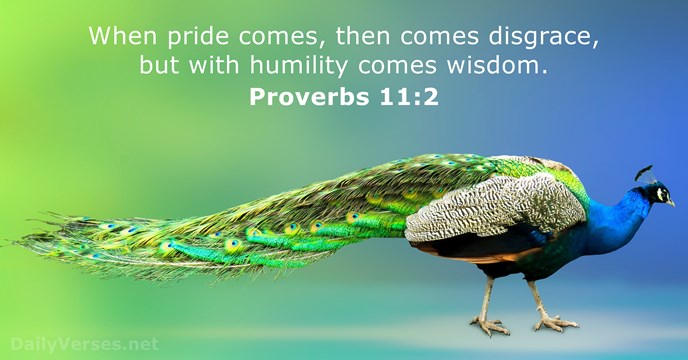
Some might read that statement and wonder, Should Gus be prideful of his work? Doesn’t pride go before destruction and precede disgrace (Proverbs 16:18; 11:2)?
A quick check in a thesaurus helps settle the question.
First, pride can mean arrogance, self-importance, and self-glorification, which the Bible does warn against.
But pride can also take the form of pleasure, joy, and satisfaction.
That’s the kind of pride Gus experienced, creating the best toy chest his skills could produce, resulting in a satisfying sense of achievement.
Is this type of pride mentioned in the Bible? Yes!
Remember when God surveyed his creation? What did he think about his work? Did he say, “Well, I guess that will do.”
NO! “God saw all that he had made, and it was very good” (Genesis 1:31, emphasis added). He acknowledged the worth of his work and took pride—delight and satisfaction– in what he’d accomplished.
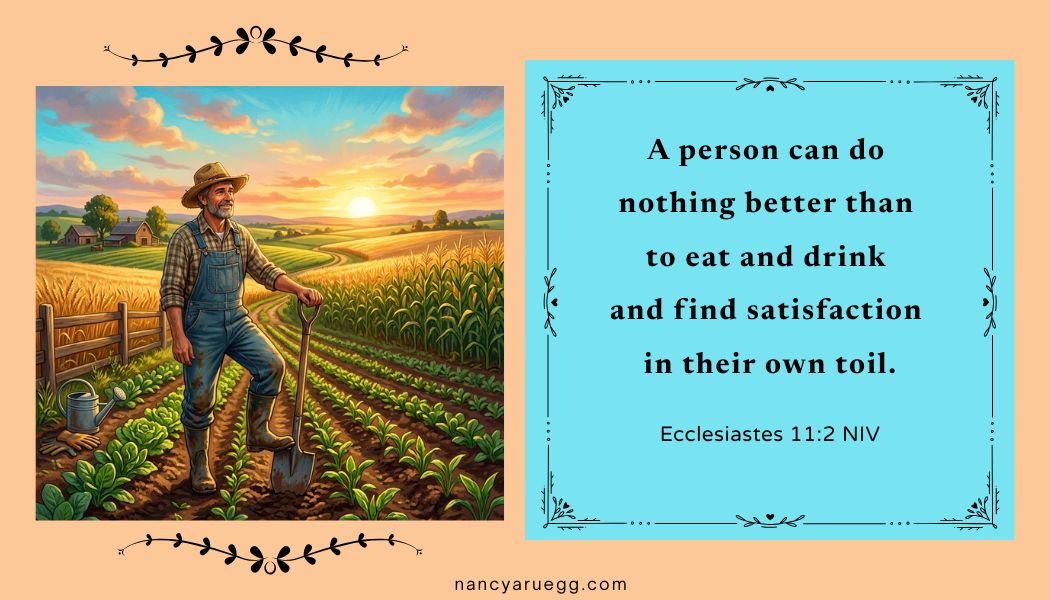
God also inspired King Solomon to write:
And what did God say about Jesus after his baptism? “This is my Son . . . with him I am well pleased” (Matthew 3:17).
That sounds similar to what parents say as their children demonstrate honorable character or achieve success in an endeavor.
Only instead of saying, “We are well pleased with you,” Mom and Dad declare, “We’re so proud of you!” Different words; same meaning.
In fact, the apostle Paul expressed such satisfaction in the church at Corinth, writing, “I take great pride in you” (2 Corinthians 7:4).
Of course, even a healthy satisfaction in character-growth, spiritual maturity, or other achievement can slide into arrogance and self-glorification if we’re not careful.
So what might help us maintain wholesome pride and avoid the harmful variety?
Here are a few suggestions:
- Acknowledge the work of God in our lives. Everything does come from him (James 1:17).
- Be satisfied our Audience of One sees our efforts; avoid seeking accolades from others (Matthew 6:1).
- Be wary also of self-deprecation. We are God’s workmanship (Ephesians 4:10); we’ve been amazingly and miraculously made (Psalm 139:18). Take delight in that!
- Learn humility; resist arrogant thoughts (Philippians 2:3-4).
- Turn to God frequently, praying for his empowerment to do what’s right, even when no one sees (Isaiah 40:29-31); understand that prideful self-glorification results in turning away from God (Psalm 10:4).
Most of us have never heard of Gus, the builder of that exceptional toy chest. But it’s probable you know of his pastor, Eugene H. Peterson, author of many books and The Message, a modern paraphrase of the Bible.
Peterson shared about Gus in his book, Run with the Horses* (the story embellished a bit in this post).
He included the observation: “That toy box has been in our family for over fifty years now and rebukes me whenever I am tempted to do hasty or shoddy work of any kind” (183).
Gus taught his young pastor to take pride in his work. And Peterson took that lesson to heart.
For all the subsequent decades of his ministry, Peterson pursued excellence in the sermons he preached, the books he wrote, and the leadership he provided, impacting thousands.
It’s likely Gus never realized what an important role he played. I think he would’ve been OK with that.
His healthy pride was enveloped in holy humility.
*published by InterVarsity Press, 2009.
Image credits: http://www.pexels.com (Tima Miroshichenko); http://www.dailyverses.net; http://www.easy-peasy.ai; http://www.canva.com (2).
Do sign up below for the monthly newsletter that includes a THANK YOU GIFT: Thirty ways to stretch and enhance our gratitude to God.
Scroll to the end of the newsletter to access this resource!
Discover more from From the Inside Out
Subscribe to get the latest posts sent to your email.


This is a lovely story about the toy chest and the meaningful message it conveys. Thanks, Nancy! 🙂
I thought so too, Nancy. It encouraged me to know that satisfaction in achievement was not the same as sinful pride. As Christians, we still strive for excellence–all the more so because our labor has eternal value.
Thanks, Nancy! The distinction between the two definitions is so little understood anymore.
Thank you, Mitch. I spent many years confused myself!
We should all try to do everything to the glory of God giving it our best. This story is a great reminder of that! Thanks for sharing his story. I am always amazed at the quality and scope of work Eugene Peterson accomplished in his lifetime.
Amen, Linda, to doing everything for the glory of God (1 Corinthians 10:31)–another inspiring scripture to help us strive for excellence. Eugene Peterson certainly lived out that aspiration!
🤗🙏✝️🙏
Very helpful reminder that we can enjoy satisfaction from a job well done with God’s help and blessing. It honors the God who helped us to delight in what he did through us. Great article! Thank you!
I love the way you put that: To enjoy satisfaction from a job well done is to honor the God who helped us. We can delight in what he did through us. Thank you for adding your insight to the conversation!
This is such a thoughtful and well-told reflection. I really appreciate how you distinguish between unhealthy pride and the quiet joy of excellence done with humility. Gus’s story beautifully captures what it looks like to take genuine satisfaction in work while still staying grounded in holy humility.
Gus’s story is a memorable one, isn’t it? It ministered to me; I was quite sure others would find it meaningful also. I like the way you framed humility as a grounding force, Mervin. Amen to that!
Such a stellar example, Nancy, of how we should always aim to use our God-given gifts to enhance the lives of others and celebrate the talents He has uniquely given to us. I certainly can identify with why this is not an example of pride, but of service in His name. You have most certainly enriched my life with this illustration of this man’s commitment to being the best he could be for God’s sake. Blessings!
The story of Gus and the toy chest ministered encouragement to me; I was quite sure others would also be blessed! I’m so glad you found it enriching as well, Martha.
Wonderful explanation of the two different interpretations of the word ‘pride’. It was especially touching that Gus was determined to do nothing but the best in his endeavors; and I find it absolutely wonderful that the young pastor was inspired and reminded by Gus to take pride in his own work whenever he saw that toy box.
We’re often unaware when a word or action makes an important impression upon another person. No doubt God conceals such knowledge from us a good bit of the time so we don’t veer to the negative side of pride. Just often enough he allows affirmations to come our way to keep us encouraged and energized to press on!
What a wonderfully written delineation and how freeing! Thank you, Nancy!
Praise God this post contributed to a sense of freedom for you, Lisa!
A beautiful clarification, Nancy. Well done!
Thank you, Dana. Praise God for his inspiration and guidance!
For sure!
A wonderful example of the two different meanings of pride. Thanks for sharing, Nancy!
You’re welcome, Pam. I’m so glad this post was meaningful for you!
Thanks for clarifying the difference between the use of the word.
You’re welcome, Debbie!
I love your differentiation between healthy and unhealthy prides. It can get confusing for us at times. The story of Gus is a good one. It reminds me of my son-in-law who is also a woodworker and does all his projects with excellence!
I’m glad you enjoyed the story about Gus, Lisa. It’s a memorable one! / Kudos to your son-in-law as he strives for excellence, exemplifying 1 Corinthians 10:31: doing all for the glory of God!
I echo the other reader comments in that I never considered the “two prides” side-by-side until now. Turning to (vs. turning away) from God summarizes the concept perfectly. Interesting to read the John Calvin quote, as it seems to represent only one half of the equation!
Interesting observation, Dave, about Calvin’s quote representing only half the equation. Perhaps a bit of research would turn up the original source of this quote and we could see the context in which he wrote it!
I think you’re on to something, Nancy. A quick Google search shows a list of entries (including Calvin’s) where pride is perceived as a bad thing; indeed, a sin. You’ve brought the other, more encouraging side of the coin for our consideration. I like that 🙂
Thanks, Dave!
Nancy,
There is a misuse of many words in our culture because honestly people don’t get education and learning. I tell my kids, language and communication is a life-long process and use word in the right way, they have power.
In Christ, Gary
Gary Avants Forbear Productions * *garyavants66@gmail.com garyavants66@gmail.com
Agreed, Gary! You might appreciate this quote: “Words are the lubrication of the mind because it canot run any more smoothly within itself thabn its command of words allows. A man’s thinking is axact only to the degree that he has words to make it so. We can think in nothing but words. When our words run out, we come to the end of our thinking; all we can do is to repeat ourselves”–Elmer G. Letterman
Words have power because God’s power is spoken.
Gary Avants Forbear Productions * *garyavants66@gmail.com garyavants66@gmail.com
[…] There’s Pride, and Then There’s PRIDE […]
Great food for thought, Nancy. I’m thinking of the kind of pride we might feel if/when we get to the end of our lives, and Jesus says, “Well done, good and faithful servant.”
I’m also thinking that if we call ourselves Christian, we wouldn’t want to do sloppy work, knowing it would reflect on the Lord. He’s given us certain talents, and we need to do our best with them to glorify Him.
Agreed, Annie! The promise of commendation and reward for our kingdom-work is gracious incentive from our Father to strive for excellence, with the Holy Spirit as our help and guide. We want to work wholeheartedly and enthusiastically, just as the Apostle Paul instructed (Colossians 3:23)!
I love how you bring out both sides of pride – this sentence in particular – But pride can also take the form of pleasure, joy, and satisfaction. How good to consider!
Thank you, Jean. We don’t need to throw out the baby with the bath water, as the old saying points out!
The story is beautiful! Gus couldn’t do less than his best–that was his character and commitment before the Lord! Healthy pride enveloped in holy humility. Being able to do all we can as if for the Lord and not people changes everything. Thanks for this, Nancy.
You’re welcome, Dayle, and totally agree with you: When we can work for the Lord and not for people, the experience drastically changes. Motives are slippery entities to control, but I know God appreciates sincere effort!
Nancy, this is an amazing story! I still consider pride to be negative, but I understand the perspective of confidence, satisfaction, and contentment.
Gus’s story does grab our attention, doesn’t it. As for “considering pride a negative,” if we counted up all the scriptures that warn about its negative impact, we’d certainly find many more than those passages that encourage satisfaction and contentment in our work. We do have to be wary of the devious harm unchecked pride can do!
I love this story! And the lesson it carries! Let’s glorify God with the work of our hands!
TT
[image: –Join me at Living Our Days]
Join me at Living Our Days https://michelemorin.net “The way we live our days is, of course, the way we live our lives.” (Annie Dillard)https://linktr.ee/MicheleDMorin
I loved that story too. You’ve reminded me of a praise song we used to sing, “Establish the Work of Our Hands.” One of the lines, “Only what’s done in love will remain” speaks to what Gus was all about!
Wonderful story Nancy—that explains the healthy definition of pride, perfectly. Thank you for this. 🙂
I found the story memorable and thought others might too. So glad you found it meaningful and helpful, Katie!