Feeds:
Posts
Comments

Hagar_Abraham


All alone she sat–a runaway–heart pounding with fear.

This was not the way she imagined events would unfold. Just weeks before opportunity had blossomed with possibilities–a life of security, provision, and honor seemed assured . But those dreams dissolved in a moment.

If only I’d kept my mouth shut, she thought. What a fool to think I could get away with those snide remarks. But my mind was consumed with the unfairness of it all, and I was so jealous—jealous that she would hold the place of honor, not me. To her I was nothing more than a vessel.

Fresh anger quieted her fear for a moment, as Hagar replayed the events that led her to sit by a spring in the desert, beside the road to Shur.

When Sarai, her mistress, had first suggested she become a substitute wife to Abram, Hagar foresaw a better life for herself. Surely the mother of the master’s son would hold a secure position in the household. She would be well provided for and respected by everyone.

But then the full meaning of “substitute wife” became clear. Hagar realized the child within her would not be her own but Sarai’s. Hagar began to express her frustration and jealousy toward Sarai in spiteful, unkind ways. She couldn’t seem to help herself.

Finally, Sarai hit her and Hagar ran.

Now what? Returning to Egypt seemed the only option. Her desperate hope was to find a home in need of a servant girl—even if she was pregnant.

Hagar shaded her eyes and peered down the road, willing a caravan to come along. If she attempted to cross the desert alone, it would mean certain death.

Instead of a caravan, however, a man approached. Little small talk ensued; he gave her an instruction (“Return to your mistress and do as she says.”); and he gave her a promise (“You will have a son, and descendants too numerous to count”).

It wasn’t until the stranger left that Hagar realized she had been visited by the angel of the Lord, and she named the place, Beer Lahai Roi, “Well of the Living One who sees me” (Genesis 16:1-14).

ElRoiGod2

Imagine. A servant girl in a foreign country, completely alone and pregnant. She herself had compounded her troubles. Yet God sought her out, to instruct and encourage her.

The Good Shepherd has always sought–and always will seek after–his lost sheep.

And then, with eyes of love, grace, and mercy, the Lord saw Hagar–

  • understanding every facet of her predicament, her motives and reactions
  • caring passionately about what would happen to her
  • mercifully forgiving her missteps and regretful behavior (Notice he didn’t say a word of reproach about her actions!)
  • giving instruction for what to do next
  • graciously providing for her needs
  • offering hope for her future

And still today, our God is the Living One who sees us with the same love, grace, and mercy.

quotpsalm-quot-by-cathywillett-redbubble-1414417436g8n4k

*     *     *     *     *     *     *     *     *     *

I praise you, Heavenly Father, that your eyes are upon the righteous—not because of any godly deeds we might accomplish, but because you see us through the righteousness of Jesus. And, oh how I thank you that you don’t just see us, you are watching over us. In these troubling, fear-inducing times, we turn our eyes upon you, our sovereign God, our refuge.

(Psalm 34:15; 2 Corinthians 5:21; Proverbs 15:3; Psalm 141:8)


(Photo & art credits:  www.christian-resources-today.com; http://www.assets.faithgateway.com; http://www.prayerpins.org.)


 

Enlarging the Prospect

Does this photo from a September post look familiar?  The light was just right that morning, the foliage in our back yard at the peak of luxuriance.


img_0249-1


My, the difference two months makes:


IMG_0357


Shorter days, cooler temperatures, wind and rain have taken their toll, stripping aged, brown leaves from their stems.


The houses that were hidden from view all summer are now exposed.


IMG_0353


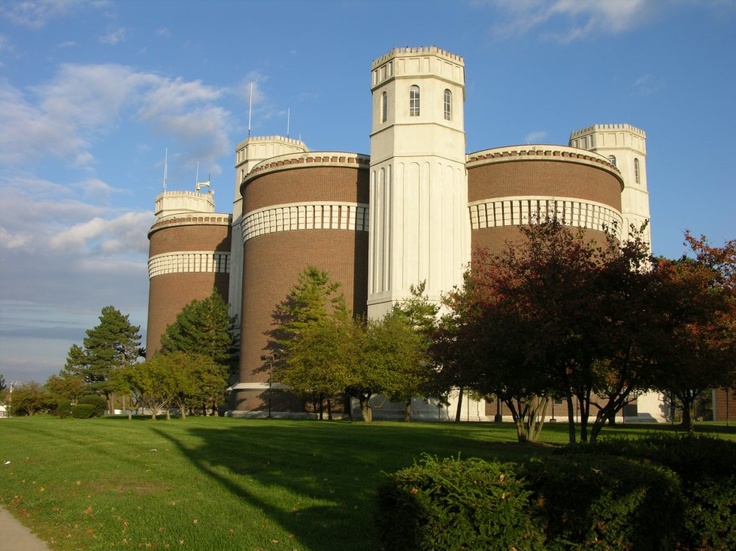
In a few weeks when all the leaves are gone, we’ll be able to see the faraway turrets of “the castle” above the trees. Visions of fairy tale kingdoms dance in my head.


07ac0512865cc2deb1ef446dd27328b2

(Believe it or not, that’s actually a water tower.)


Some vegetation is still in full fall display,


IMG_0359


While other foliage looks pitifully bedraggled.


IMG_0355


A continual leaf-shower creates a crunchy carpet for the deck…


IMG_0348

(Steve just swept two days ago.)


…and clutters the planters.


IMG_0346


This is the price we pay for those glorious weeks of riotous color in October.


893cc0753252d34a0ed621d25e006056


Now comes the season of quiet dormancy.

After such glory, the crumbling decay of leaf and flower seems tragically sad until we remember…

…the world will come to life again with ethereal beauty,

and we’ll revel in the euphoria of spring.


il_fullxfull.119559645


As winter strips the leaves from around us

So that we may see the distant regions

They merely concealed,

So old age takes away our enjoyments

Only to enlarge the prospect

Of the coming of eternity.

–Jean Paul, author (1763-1825)


The first four lines sound tragically sad, don’t they, until we remember the euphoria of what is to come, and the prospect of ethereal Beauty in the kingdom of eternity.

“Your eyes will see the King in his beauty and view a land that stretches afar” (Isaiah 33:17).

Even when times are dismal, cold, and gray…

…glorious HOPE is ours!


(Photo credits–Fall foliage and Mount Airy Water Tower:  www.pinterest.com.  Red bud in spring:  www.etsy.com.  All others photos:  Nancy Ruegg.

Granville Sharp

eaab14ad79f81660b93f3032488a12eddc3a7b6e

Granville Sharp

(b. November 10, 1735)

Never had thirty-year old Granville Sharp seen such injuries: large swellings about the neck and head, gaping wounds, and a face hideously swollen, streaked with trails of dried blood.

The victim: Jonathan Strong, a young slave who’d been pistol-whipped by his master and left to die on the streets of London, 1765. Somehow Jonathan made his way to the house of Granville’s brother, William, a doctor. And there he sat, waiting in line outside William’s office, when Granville stopped by the house.

quote-the-boy-seemed-ready-to-die-he-almost-lost-the-use-of-his-legs-and-feet-and-to-compleat-his-granville-sharp-266227

The encounter would change Granville’s life forever.

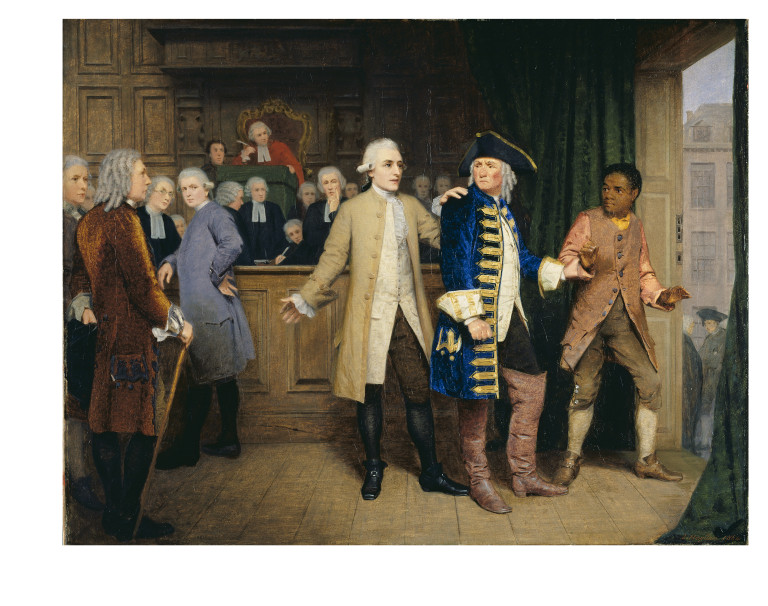
His heart went out to the slave; they became acquainted. Jonathan’s story horrified Granville. To make matters worse, when Jonathan recovered, the master demanded he be returned. Granville determined to help Jonathan, even though he’d “never opened a law-book except the Bible in [his] life” (1).

Those defending the slave owner were evidently intimidated by the case Granville put forth. After a two-year legal battle, they never brought Jonathan’s case to trial.

7149324-Granville_Sharp_1769_Liverpool

Sharp helped other slaves win their cases against tyrant owners, becoming more and more involved in the abolition of slavery. One case in particular, that of James Somerset, helped to set an important precedent in England.

Somerset had escaped his master, been recaptured, and was about to be shipped to a Jamaican plantation when Granville and others became involved.  They helped the slave win his freedom, arguing that “no master ever was allowed here (in England) to take a slave by force to be sold abroad because he deserted his service…therefore the man must be discharged” (2).

2006BB2012

Granville remained active in the abolition movement his entire life. He wrote frequent letters to many leaders in America and Britain, influencing their thinking about slavery and earning their respect. Among them: Dr. Benjamin Rush (signer of the Declaration), John Jay (first Chief Justice of the U.S. Supreme Court), Benjamin Franklin, and John Adams in America; John Wesley, William Wilberforce, the Archbishop of Canterbury in England; and General Lafayette of France.

But that was only one of his passionate pursuits. Another concern was the illegal treatment of the colonists in America. He published books and pamphlets to help their cause, catching the attention of Ben Franklin during one of his visits to England.

Granville gave Mr. Franklin 250 copies of his pamphlet about people’s natural rights as supported by the British constitution. Franklin sent them to America where several presses reprinted the booklet.

Sharp’s pamphlet influenced Thomas Jefferson as he drafted the Declaration of Independence, evidenced by at least several similarities in both documents.

In 1775, when war broke out in the colonies Granville was employed in the ordnance office (handling all matters concerning weaponry). He wanted nothing to do with the war, so he wrote to his employer: “I cannot return to my ordnance duty whilst a bloody war is carried on, unjustly as I conceive, against my fellow-subjects” (3).

Granville’s brothers agreed to support him, enabling him to pursue his studies, causes, and writing. In fact, beginning with his first book in 1765, Sharp published a new work, sometimes more than one, almost annually for the rest of his life (5).

sharp-title-page-Cropped-543x465

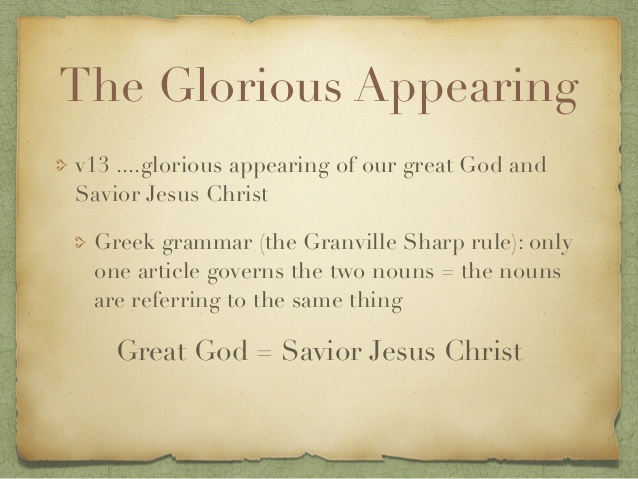
One of those books (with a thirty-six word title!) is now known as “Sharp’s rule” (1777). With his self-taught knowledge of ancient Greek, Granville demonstrated how eight passages of the New Testament had been mistranslated by some Bible scholars, leaving the reader to surmise that God the Father and God the Son were separate Beings. Sharp presented a thorough explanation that God the Father, Son, and Holy Spirit are One, according to the original Greek texts (4).

our-hope-the-appearing-of-jesus-christ-16-638

Yet Granville accomplished still more. In the mid-1780s, Sharp teamed with a Mr. Smeathman to establish a colony for freed English slaves on the west coast of Africa. (Many of them were homeless, subsisting on the streets of London with no hope of improving their lives.) But Smeathman died shortly after he and Granville established their partnership. Sharp continued the work nevertheless.

In April of 1787, the dream for that African colony became a reality with the founding of Sierra Leone. The colonists named the first settlement, Granvilletown.

220px-Province_of_Freedom

Sharp accomplished even more, as he served on a number of boards and societies, in support of mission efforts and philanthropic concerns.

Yet he did not see the fulfillment of his greatest dream—the abolition of slavery. The battle he began with the case of Jonathan Strong in 1765 finally ended in 1833, when slavery was completely abolished in the British Empire.

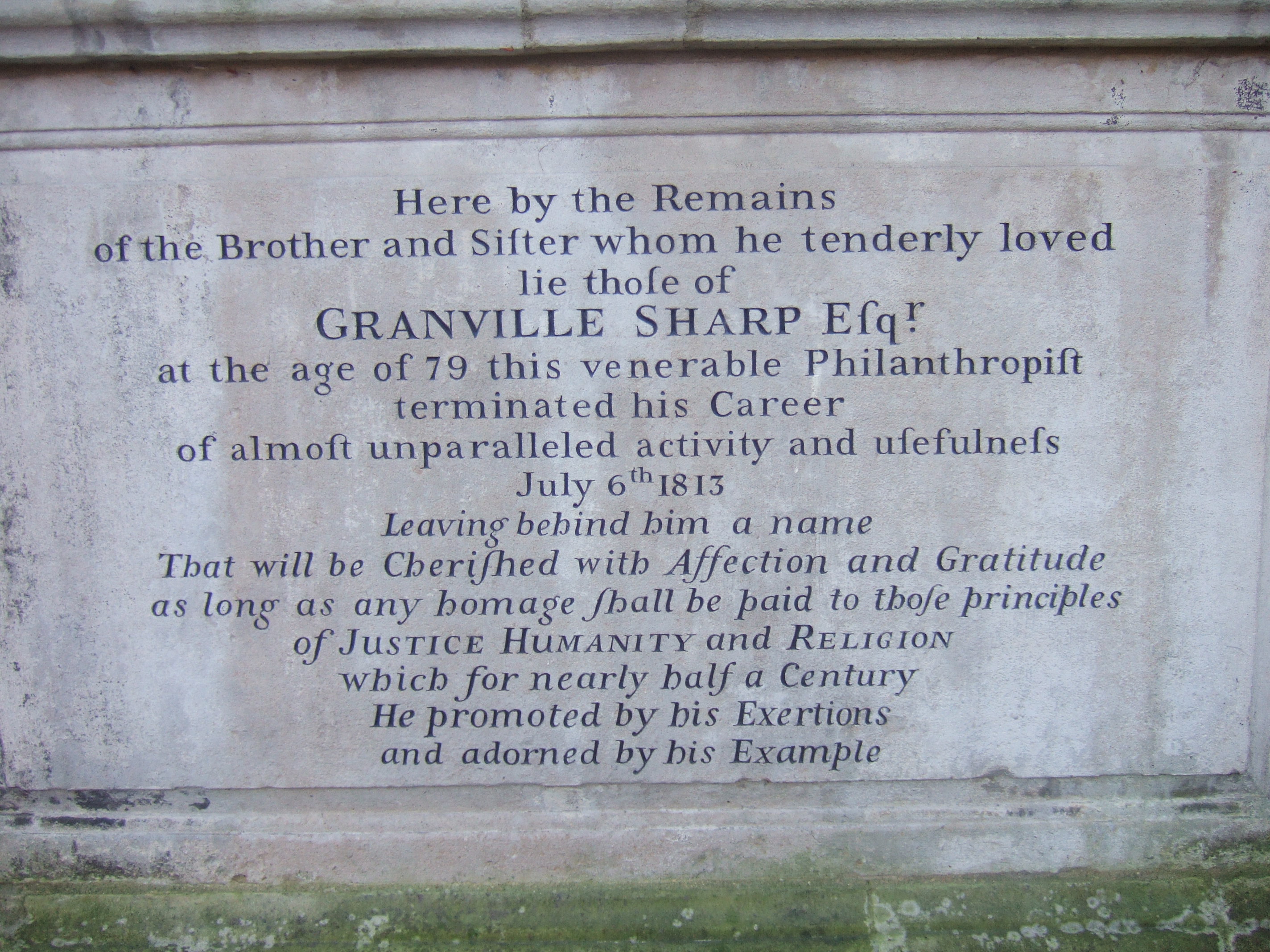
Sharp died in 1813.

Granville_Sharp's_tomb_inscription

His chief biographer, Prince Hoare, said that as he began to study Sharp he intended to “draw a veil over peculiarities of Mr. Sharp’s character,” out of respect for the dead. But when he finished his careful and comprehensive research, he realized Sharp’s “character to be of that high and dignified nature, to leave no necessity for such a precaution…I see nothing to veil.” (6).

Like many other forgotten heroes, Granville Sharp is among that great cloud of witnesses who fixed their eyes on Jesus and ran the race marked out for them (Hebrews 12:1-2a).

May his example and that of others–their faith, integrity, perseverance, and passion–push us along in the race marked for us.

______________________________

  1. history.ac.uk
  2. national.archives.gov.uk
  3. Dr. Daniel Wallace, www.bible.org
  4. christianity.com
  5. brycchancarey.com
  6. Dr. Daniel Wallace, http://www.bible.org

(Art & photo credits:  www.bbc.co.uk; izquotes.com; http://www.virtualtourist.com; http://www.collections.vam.ac.uk; http://www.wikipedia.org; http://www.liverpoolmuseums.org.uk; http://www.slideshare.net; http://www.en.wikipedia.org; )

God’s Loving Grip

what-can-separate-us

“I am convinced that neither death nor life,

neither angels nor demons,

neither the present nor the future,

nor any powers,

neither height nor depth,

nor anything else in all creation,

will be able to separate us from the love of God

that is in Christ Jesus our Lord.”

–Romans 8:38-39

Consider the author of these lofty, poetic words: Paul—a man who endured beatings, stonings, shipwrecks, danger, sleepless nights, extreme hunger and thirst, and exposure to the elements (1).

Yet in spite of all these hardships, Paul never thought, Maybe God doesn’t love me anymore.  No, he was convinced otherwise.  And he wanted to assure his readers, including us today, that nothing can come between the believer and his/her God:

            “Neither death nor life…”

Every moment of our lives God is watching over us, working out his plans that will achieve the highest good. Sometimes that includes suffering, for reasons we don’t always understand.

But consider: the greatest tragedy of history, the cruel torture and death of God’s perfect Son on a cross, brought about the most glorious consequence–the eternal salvation of all who believe (2).

image.axd

And when we die? God will still be watching over us (3). Visit a dying Christian and you will be the one encouraged by their God-given peace, joy, and expectation.

“Neither angels nor demons…” 

Long ago, the rabbis believed some angels were grudgingly hostile to men, not wanting to share God with earthly creatures. Perhaps Paul was saying, “Even jealous angels can do nothing to separate us from God’s love” (William Barclay).

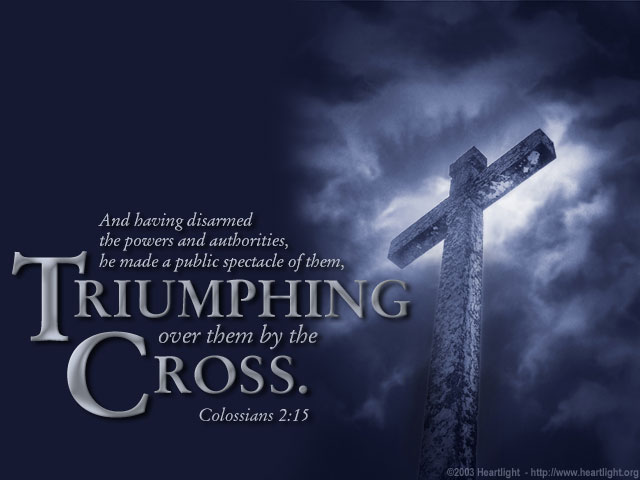
As for demons, they were defeated when Jesus died on the cross (4). Granted, they may prowl around and cause mischief, but they are powerless to sever us from God’s love. Their teeth were removed at Calvary!

colossians2_15

“Neither the present nor the future…”

 Sometimes we worry about the future. Will we be able to handle potential calamities down the road? Or, perhaps it’s the present that’s unbearable, and we wonder if better days will ever dawn.

But our omniscient God has never been surprised by any turn of events. What he says here (through Paul) is a guaranteed promise: nothing present or future—no circumstance–can separate us from his loving presence.

“Nor any powers…” 

All powers of the universe—whether physical or spiritual—are subject to God, because he alone is the Omnipotent One. No one supersedes him.

“Neither height nor depth…”

 Many in Paul’s day believed that the star a person was born under controlled that person’s destiny. Height referred to a star’s zenith; depth to the star’s lowest point in the sky. Paul may have been assuring his readers that the stars have no power over our lives.

By contrast, our Star of David, Jesus, is like the North Star. He never waxes and wanes; he never changes. And his love is present everywhere (5).

22b369c3e20ff6b9ced0597f35085cfb

            “Nor anything else in all creation…”  

No circumstance, no place, no person can remove us from God’s love. “God never loses his loving grip on his children” (Keith Krell, www.bible.org).

And so Paul covered every eventuality that might separate us from the love of God and assured us: It. Can’t. Happen. Surely, if Paul was convinced, after all he suffered, shouldn’t we be convinced as well?

*     *     *     *     *     *     *     *    *     *

Day after day, Father, you express your love to us: forgiving our sins, transforming our spirits, defending us from spiritual enemies, showering us with blessings. We praise you for the warm embrace of your love—a love that spans all time and space, overcomes all pain and suffering, and defeats every foe! “Because your love is better than life, [our] lips will glorify you” (6).

(1) 2 Corinthians 11:25-27

(2) John 3:16

(3) Psalm 23:4

(4) Colossians 2:15

(5) Psalm 139:7-10

(6) Psalm 63:3

Photo credit:  www.doughusen.com; http://www.klove.com; http://www.verseoftheday.com; http://www.pinterest.com.

The Art of Receiving

image.ashx

Scripture is full of promises that speak of precious gifts God is willing to give us:

  • Unstoppable love (Romans 8:38-39)
  • Overflowing hope (Romans 15:13)
  • Wise guidance (Psalm 32:8)
  • Courageous confidence (Psalm 56:3-4)
  • Compassionate comfort (Psalm 34:18)
  • Peaceful rest (Matthew 11:28-29)

And that’s not a complete list by any means. The question is: Are we willing to receive all these blessings?

Or, are our minds full of:

  • Doubt?

“God may love me in a general sense, but personally? I doubt it. After disappointing him so many times, I don’t deserve his gifts.”

  • Negativity?

“Look at all these challenges in my life. I’m not seeing very many blessings.” 

  • Timidity? 

“That promise can’t be for me, can it?” 

These kinds of thoughts originate with Satan, the father of lies, who’s delighted when we don’t embrace God’s blessings.

For most of us, accepting gifts—even from God–can be more difficult than giving them. Gracious receiving is an art.

So how do we develop the art of receiving? 

  1. Reject those lies of the devil.

With the help of the Holy Spirit, we can take such thoughts captive and cast them out of our minds (2 Corinthians 10:5). The next step is to…

  1. Fill our minds with uplifting thinking.

“Whatever is noble, whatever is right, whatever is pure, whatever is lovely, whatever is admirable—if anything is excellent or praiseworthy—think about such things” (Philippians 4:8).

Such glorious categories on which to focus! And undoubtedly our hearts will fill with gratitude as we contemplate God’s magnificent gifts.

  1. Practice. 

Any art form—music, writing, painting, etc.—requires practice. So does the art of receiving. God has not chosen to instantaneously transform our attitudes for us. He almost always takes a gradual approach, providing numerous opportunities for practice.

The art of receiving is no different, developing over time through faith and self-discipline. We affirm that God loves and blesses his children—despite our feelings–and discipline our minds to counter doubt, negativity, and fear with trust-statements from his Word.

  1. Spend time in God’s Word. 

The more time we spend reading the Bible, the more scripture-gems we discover that speak of God’s gracious character, his promises, and blessings. And the more we learn, the more we respond, “Thank you, Father, for all the blessings of the abundant, God-enhanced life with you!”

  1. Receive graciously, even enthusiastically, from others. 

Too often, we’re uncomfortable at the receiving end.  We feel embarrassed or unworthy and worry about repaying the favor.

We need to remind ourselves: gracious, enthusiastic receiving is in itself a gift of: 

Affirmation.  Every gift bestowed with good intention is meaningful—whether it’s a compliment, a favor, or an object. Granted, we may feel awkward when complimented, we may not need the favor or desire the object, but the thoughtfulness can be affirmed just the same.

Pleasure.  God has engineered us so that when the receiver expresses pleasure, the giver also experiences pleasure—usually more so.

Gratitude.  Thoughtful gratitude shows honor and esteem for the giver.

So let’s grit our teeth and be gracious receivers!

No, gritting won’t be necessary if we remember: All gifts originate in the heart of our Heavenly Father (James 1:17). He is the One bestowing the blessings, frequently using people as his agents.

Our highest privilege is to bestow pleasure and honor upon God, by passing the praise and gratitude on to him

In doing so, the art of receiving comes full circle.

(Photo credit:  www.familyconnect.org.)


190-Distracted-While-Praying-1

Are you ever distracted while trying to pray? I am!  One minute I’m deep into intercession for a friend, the next I suddenly think to purchase Christmas cards today (triggered by thoughts of friends, you see).

Why is it my thoughts can drift so easily? How is it possible to lose focus while in the presence of Almighty God? Such a frustration. Guilt-producing, too.

Perhaps strategies such as these will be helpful:

  • Light a candle.

Let it symbolize the presence of Jesus, our Light of the world, with us as we pray.

candle

  • Picture a quiet place with Jesus.

For years my quiet time took place in the early morning hours before anyone else got up. For Bible study, I spread my books and papers across the kitchen table. For prayer time, I spread my arms across the table, visualizing Jesus sitting on the other side from me and holding my hands.

Our current home does not lend itself to this arrangement. My quiet time space is in our guest room/office at my computer armoire. There’s no table to spread my arms across. I need a new visualization.

Perhaps this photo?

2a542f1fea56b0061e673dd49d17150b

I can imagine Jesus and me sitting lakeside, enjoying the stunning view as I present my requests to him (Philippians 4:6).   We can still “hold hands,” as I rest my arm on the arm of the office (imaginary Adirondack) chair.

  • Keep the to-do list handy.

When a task or errand comes to mind, like purchasing Christmas cards, write it down. Then those pesky thoughts beginning with, “Oh! Don’t forget to…” can be put aside.

  • Pray about the distracting thought, if it’s related to a present concern.

For example:

“Lord, I’m sorry the meeting this afternoon keeps popping into my mind. Help me to rest in the knowledge you’ll be with me, providing the words to say as I rely on you. Thank you for your promise in James 1:5 that assures me of your wisdom, simply for the asking. I’m asking! And I trust you for the results that will most benefit everyone involved.” 

  • Pray out loud.

Even whispering the words may be enough to foster focus. 

  • Pray the scriptures.

The psalms work well for this exercise. Skim-read until a key word catches your eye. (If you’ve underlined meaningful passages, focus on those.) Chances are it will not take long to identify an applicable verse.

For example, a friend is very unhappy in her current job. How can I pray for her? Skimming quickly through the underlined verses of psalms, I come to:

6cdd17c921abfa9ef1d6d59dd8a29c44

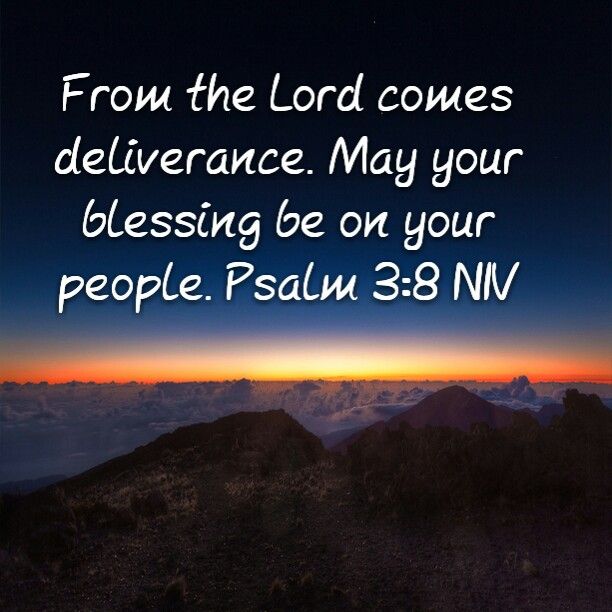
(“From the Lord comes deliverance.

May your blessing be on your people.”

— Psalm 3:8)

And I pray:

Oh, Father, deliver Emily** from her situation at work by removing her from that office, changing circumstances within the office, or giving Emily a fresh perspective that releases her from the stress. Surround Emily, I pray, with blessing: delightful coworkers who will bring her joy and affirmation, encouragement from her boss, and maybe even a raise!

 As my mind focuses on ways the verse might apply to Emily, I find distractions are held at bay.

Yet, in spite of our best efforts, lapses into distractions will occur. I take great encouragement from the wisdom of St. Francis de Sales. Perhaps you will, too: If all you do is return to God’s presence after distraction, then this is very good prayer.  Your persistence shows how much you want to be with God.

*     *     *     *     *     *     *     *     *     *

How do you counter distractions during prayer? Please share your strategies in the Comments section below!

**Name changed.

Art and photo credits:  www.printmytract.com; http://www.refiningtruth.com; http://www.pinterest.com (3).

God Our Vinedresser

john15-1

(“I am the true vine, and my Father is the vinedresser.” — John 15:1)

With that metaphor, Jesus began teaching his followers about living like branches and abiding in him, the vine.

No doubt the disciples readily pictured a vineyard and the vinedresser tending to his work. They would have been familiar with the tasks he performed to assure a maximum yield.

But today, most of us live far removed from the sources of our food and drink. We have little knowledge of what ranchers, farmers, or vinedressers do to assure a high quality product.

We’re left wondering as we read this verse, How is God like a vinedresser?

Here is what I discovered:

His/her main duties include caring for the vines, pest management, irrigation, pruning, and harvest.

granmonte-vineyard

Caring for the Vines

 Grapevines produce fruit for thirty to fifty years. Therefore the vinedresser comes to know each vine like a shepherd knows each sheep. He understands the special care each one requires and how to provide the best growing conditions, depending on the type of grape, the amount and direction of sunlight, the soil conditions, and more.

When branches grow long enough, the vinedresser lifts them up from the ground and gives them support so they can grow upward toward the sun. This practice also helps protect the vine from disease.

Vinedressers remove individual leaves to increase the amount of sunlight on the grapes and air circulation around the clusters, which improves the color and flavor of the crop. The vinedresser must know which leaves to remove, depending on the angle of the sun. Just the right number must be chosen also. If too many leaves are removed, the vine won’t be able to absorb enough sunlight for photosynthesis. If not enough are removed, the crop will fail to achieve optimum quality.

Pest Management

Weeds must be removed by hand or with a hoe. Contemporary vinedressers might be tempted to use a Weed-Eater, but it could easily damage the trunks of the vines. Insects and diseases must also be eradicated.

Irrigation 

Though grapevines can survive dry conditions, parched vines will not produce much fruit. Some experts recommend watering deeply and thoroughly so roots receive plenty of moisture.

 Pruning

Grapevines produce some branches that are barren and worthless. These must be pruned radically. In fact, “vines never produce to full capacity without drastic pruning” (William Barclay).

Harvest

The vinedresser knows the exact moment to harvest.  The grapes are plump, juicy, and rich in color. The skins are slightly transparent; the flavor a balance between sweet and tart.

6351f7348ecdc436db1fb43b7b900e5f


 Given even this scant information, we begin to appreciate God’s role of Vinedresser in our lives:

  • He knows each of us just as an attentive vinedresser knows his vines (Psalm 139:1-5).
  • He tends to us with vigilant, individualized care, providing circumstances, relationships and events that will create the best growing conditions for our souls (Titus 2:11-14).
  • He lifts us up, encouraging our development toward the Son (James 4:10).
  • As we submit to our Vinedresser, he eradicates the disease of sin (Psalm 103:3).
  • He provides streams of living water so we need not fear a year of drought. We can continually bear the fruit of the Spirit and good deeds (Jeremiah 17:8).
  • Like any wise vinedresser, he prunes with discipline, cutting away bad habits, erroneous beliefs, harmful influences, poor attitudes, pride, selfishness and more. He helps us become spiritually healthy as well as productive influences in the world (Hebrews 12:5-11).

And when we’ve reached maturity, our transparency allows the sweet, rich nature of Jesus to radiate from within us.

*     *     *     *     *   *     *     *     *     *

Thank you, Heavenly Vinedressser, for your careful attention and protection. I marvel that you created me for abundance—abundant pleasure in you, abundant fruitfulness for you. Help me to abide in you, Jesus, the Vine, and respond in obedience and trust, so that I might live for your glory–the glory of my splendorous Vinedresser.

(Photo credits:  www.carolinasnalc.org; http://www.tripadvisor.com; http://www.pinterest.com.)

Wisdom of the Woods

IMG_0307

Last weekend I soaked up the cool, crisp atmosphere of autumn in the Pacific Northwest.

The warmth of sunshine compensated for the chill in the air.

Grand trees displayed their fall finery of vermillion, pumpkin orange, and gold.

Birds sang cheery farewells, assuring us they’d be back in the spring.

A chipmunk even scampered close to where I stood, paused for a moment, then leap-hopped to a nearby tree.

And ten other women who love to write, draw, and/or create in other ways gathered at the Grunewald Guild in Plain, Washington, to learn, be inspired and encouraged.

Our very capable facilitators, Jody Lee Collins* and Kimberlee Conway Ireton* pushed our thinking and stretched our creativity. One activity: poetry-writing.

Yes, it was a bit intimidating at first. The likes of John Milton, Charles Wesley, and Christina Rossetti always leave me awestruck by their prowess and power with words.

But Kimberlee challenged us to give it a try, jump-starting us with samples, a quick lesson on alliteration (words within a line that begin with the same sound), and a framework to build upon.

We all began our poems with “Glory to God for…” and ended with “Praise him,” based on “Pied Beauty” by another stellar poet, Gerard Manley Hopkins.

For the lines in between, Kimberlee spread out on two tables hundreds of words, printed on slips of paper, suggesting we search for those that shimmer with possibilities, and build a poem from the ideas that bubble up. We were given twenty to thirty minutes.

I found several pairs that sparked ideas: garb and garden, mystery and memory, shift and sheen.

But several false starts soon left me discouraged.

Oh-oh.  I’m going to be poem-less! I thought. How embarrassing. Lord, help me find SOMETHING!

He did. Wisdom and woods caught my attention, and I began to write:

Glory be to God for

The wisdom of the woods –

Proclaiming perseverance

Through drought and storm,

Demonstrating ongoing praise

With outstretched limbs,

Growing steadily year by year –

Roots deep, leaves green,

Fruit in abundance.

He enables, provides, attends.

Praise Him.

It’s not Milton, that’s for sure. But I personally love the visual connection between the words that shimmered on the table, wisdom and woods, and the scenic wooded property of the Grunewald Guild – two delightful memories of the weekend entwined by imagery.

Oh.  And one more aspect of the weekend is woven into the lines — the theme for the weekend:  Abide (John 15:1-11).

*Do visit Jody’s and Kimberlee’s blogs; you’ll be glad you did. Meet Jody at Three Way Light (http://threewaylight.blogspot.com) and Kimberlee at Kimberlee Conway Ireton (http://www.kimberleeconwayireton.net/).

(Photo credit:  Nancy Ruegg)

(Steve and I are enjoying time with family this week.  I’ll return soon with  new posts.  Meanwhile, I’ll reblog previous ones.  Hopefully you’ll find them meaningful again, or perhaps for the first time.  The following post was first published June 13, 2013.)

From stage left, she crosses the platform in confident strides.  One hand waves in sweeping arcs to the large audience. The crowd claps and cheers.

In the other hand, with confident ease, she holds the microphone.  And the smile—big and broad, bright white teeth visible even from the balcony.

Able to sing like a nightingale and articulate truth with conviction. Impacting thousands.

Now there is someone God is using in a powerful way, whispers an accusing voice.  Look at her significant contribution in the Kingdom of God. No doubt she’s highly valuable to him.  So what are you doing that’s important?  Your spot in the scheme of things is nothing compared to that shining star on the stage.  You might as well face the truth:  You are unimportant.  The ship of Significance has passed you by.

Sound the least bit familiar? You’re not alone. Demons use those same lies on a lot of us. Evil spirits aren’t very creative, are they?

But here’s the truth of the matter:

Each of us is the workmanship of God (Ephesians 2:10). The Greek word, workmanship, sometimes has the connotation of “work of art.” You are a work of art—carefully designed and meticulously executed.

The verse goes on to explain we’ve been created to do good works. It does not say the same work. Diversity of personality, talent, and interest are necessary among the children of God in order that all his plans are accomplished.

He made each of us unique, to fulfill a personalized plan. Every now and then we see such a plan unfold so clearly, we know God engineered the circumstances. Sometimes it’s a unique set of talents or gifts that work together sublimely to meet a need.

Take, for example, the naturally talented writer, who happened to grow up in a bilingual home, and studied Christian Education in college. She was especially prepared by God to write Spanish curriculum for a Christian publishing company.

Other times the plan is much less obvious, and we must trust that the task before us–caring for our families, teaching that Sunday School class, working at the homeless shelter–is indeed accomplishing divine purpose.

What we can know for certain:  each of us is valuable to God (Matthew  10:29-31).

Believe that he has prepared in advance good works for you to do (Ephesians 2:10).  Take joy and satisfaction from completing those good works.

It may not be walking across a stage with a microphone. It might mean walking across the kitchen with a rolling pin—to bake cookies for the neighbors.

That’s just a small, insignificant thing, you say?

Think about this: What if God takes particular pleasure in small things?

Personally, I’m fascinated by small things. Miniatures, doll houses, petit-point, babies!

Scripture gives us indication that God does indeed love small things as well:

Sparrows (Matthew 10:29-31).

Two little mites given by a widow (Mark 12:41-44).

Five small barley loaves and two small fish (John 6:1-13).

Bethlehem (Micah 5:2).

Let’s never again allow those little demons of abasement to put us down. God has promised: “I will bless those who fear the Lord—small and great alike” (Psalm 115:13, emphasis added).

You see, in God’s sight, we’re of equal worth.

(Steve and I are enjoying time with family this week.  I’ll return soon with  new posts.  Meanwhile, I’ll reblog previous ones.  Hopefully you’ll find them meaningful again, or perhaps for the first time.  The following post was first published November 14, 2013.)

(“The Lord make his face shine upon you and be gracious to you;  the Lord turn his face toward you and give you peace.”– Numbers 6:25-26)

Lovely, poetic words.  But what do those phrases about God’s  face mean?  Even if God’s face did shine upon me, or turn toward me, how would I know?  I’ve never seen God; no one has (1 John 4:12).

A little research turned up this explanation:   God’s face represents his character.

Read those verses from Numbers again.  But this time replace the word face with the word character.  The meaning becomes clearer.

The Lord make his character shine upon you

And be gracious to you;

The Lord turn his character toward you

And give you peace.

How many of God’s character traits can you name?  David named seven in a psalm of thanksgiving found in 1 Chronicles 16:8-34.  God is:

  • Powerful (v. 9)
  • Strong (v. 11)
  • Trustworthy (v. 15)
  • Majestic (v. 27)
  • Holy (v. 29)
  • Good (v. 34)
  • Loving (v. 34)

This brief list is just the beginning of descriptors we could name about God.  He is infinite; his attributes are infinite!

All of those character traits and more are shining upon our lives, as he cares for us, lives in us,and participates with us every moment of our lives.

  • His power works miracles.
  • His strength carries us through difficult times.
  • He can be trusted to always do what is best.
  • His supreme majesty speaks of his authority over the universe.
  • He is righteous and holy in all he does.
  • Out of his goodness he provides countless blessings.
  • And all of this is graciously given, not out of a sense of duty because he made us, but because he loves us.

God’s face shining upon us represents God’s radiance.

 If we insist on following our own way, as Israel did, he may choose to hide his face from us (Isaiah 1:15).

But.

“When a king’s face brightens, it means life; his favor is like a rain cloud in spring” (Proverbs 16:15).

When the King of the universe shines his favor upon us, what more could we want?  Life for us is not mere existence.  It is a rich, full life–rich with blessings, and full of satisfaction, peace, and joy!

*     *     *     *     *     *     *     *     *     *

Thank you, Almighty God, for manifesting your character in my life.  I have seen you work miracles and give strength to the weak.  I have watched as you engineered circumstances to accomplish your plan. (And it always turned out to be a hundred times better than anything I could dream up!)

 I marvel at your power and majesty on display in creation.  I have recorded hundreds of blessings you’ve provided for our family.  Your radiance shines brilliantly all around me. 

 And now, as a thank you gift back to you, dear Father, may my life reflect your radiance to others—with ever-increasing glory (2 Corinthians 3:18). 

*     *     *     *     *     *     *     *     *     *

How has God shone his face upon you?  Please share in the Comments below!

(art credit:  www.christianwordart.com)

When the House is Quiet

Impressions Becoming Expressions

Mitch Teemley

The Power of Story

Still Traveling

Impressions Becoming Expressions

Living Our Days

Gaining a heart of wisdom

He Said What?!

I'm Patty, and my husband and I are living with our adult son who has autism and epilepsy. I love sharing lessons learned from life around me, especially life with Aaron.

Meditations of my Heart

Impressions Becoming Expressions

Linda Stoll

Impressions Becoming Expressions

Signora Sheila

Notes on Life, Faith & Italy

Heidi Viars

Finding the Image of God