Feeds:
Posts
Comments

Posts Tagged ‘2 Corinthians 3:5’

Perhaps you too watched the episode of Antiques Roadshow when an appraiser analyzed a Kintsugi bowl.

This ancient Japanese art form involves mending broken pieces of pottery with gold or silver. The glimmering veins resurrect the ruins to create a beautiful work of art.

Such a transformation offers imagery for what happens when we allow the golden work of Christ to mend our brokenness from failures, sins, and shortcomings. As a result, each of us becomes a masterpiece [1].

But what about Jesus’ instruction, “Be perfect as my Heavenly Father perfect”[2] and all the itemized directives for Christian conduct in the New Testament—all 1,500 of them, give or take?

I can’t possibly measure up to such a standard, so what’s a cracked pot like me supposed to do? Is the pure gold of Christ’s work (on my behalf at his crucifixion, and in my life now) enough to make me acceptable to God, considering my faults and failures?

We’d do well to remind ourselves often: just as family members love one another in spite of shortcomings and wrongdoing, our Heavenly Father does the same.

Note the above verse doesn’t say the Lord has compassion only on those nearing perfection.

Then what did Jesus mean when he instructed us to be perfect?

The Amplified Version offers clarity for that key word:

“You, therefore, will be perfect [growing into spiritual maturity both in mind and character, actively integrating godly values into your daily life], as your heavenly Father is perfect.”

Matthew 5:48 AMP

‘You see? Jesus isn’t requiring angelic perfection; he’s directing us toward full spiritual maturity.

Jesus would also direct us away from unrealistic expectations.

Some think that unless we’re . . .

  • spending long hours in Bible study and prayer
  • attending every pertinent service and event at church
  • serving those around us
  • extending hospitality in our homes
  • discipling and mentoring others
  • sharing with everyone in need . . .

. . . we’re not doing enough for God.

So when is enough enough?

I’m reminded of the time I sat in the pediatrician’s office with one of our children when a young mom from our church, Nicole*, walked in with her infant son. Sagging shoulders and dark eye-circles gave evidence to the truth about parenting a newborn: it’s exhausting.

But this Mama was dealing with even more: another son, age three (whom Daddy was babysitting at that moment), and a full-time job. She worked nights as a nurse, and her husband worked days so they could avoid childcare costs.

Somehow Nicole was surviving on naps here and there, and a few hours of sleep before her shift, once her husband got home.

During our conversation, Nicole confessed it had become nearly impossible to spend quiet time with God in Bible study and prayer, and she felt terribly guilty.

In that moment God brought to mind an image of my loving, earthly father. If I were in Nicole’s situation and said to him, “Dad, I’d come see you in a minute, but with things the way they are right now . . .”

I knew what he’d do. Dad would interrupt and say, “Don’t worry–I understand! I know you love me, and you know I love you. When your schedule lightens up, then we’ll get together for an extended visit. For now, I’m delighted in these quick phone calls.”

I told Nicole, I think our heavenly Father would respond in the same way. (Remember Psalm 103:13 above?) Her heart was in the right place; she longed to spend quiet hours with God.

But in her current situation, it was perfectly fine to postpone such a plan until that debilitating season ended. Our God of grace understood; there was no cause for guilt.

Our God of grace would have us let go of perfectionism and unrealistic expectations.

He’d have us delight in the golden work Christ has done and continues to perform in our lives [3].

And though we do press on to live by God’s wise ways, he would have us embrace the beauty of imperfect perfection [4].

Like a Kintsugi masterpiece.  

*Not her real name


[1] 2 Corinthians 3:5; Ephesians 2:10 ISV

[2] Matthew 5:48

[3] 1 Peter 1:3-5; Philippians 1:6

[4] Philippians 3:12-14; Lamentations 3:22-23

Photo credits: http://www.commons.wikimedia.org; http://www.heartlight.org; http://www.pexels.com/Tima Miroshnichenko; www. rawpixel.com; http://www.pexels.com/Alexander Dummer; http://www.pxhere.com/Forrest Cavale; http://www.commons.wikimedia.org./Ruthann Hurwitz.
Read Full Post »

portrait_bf

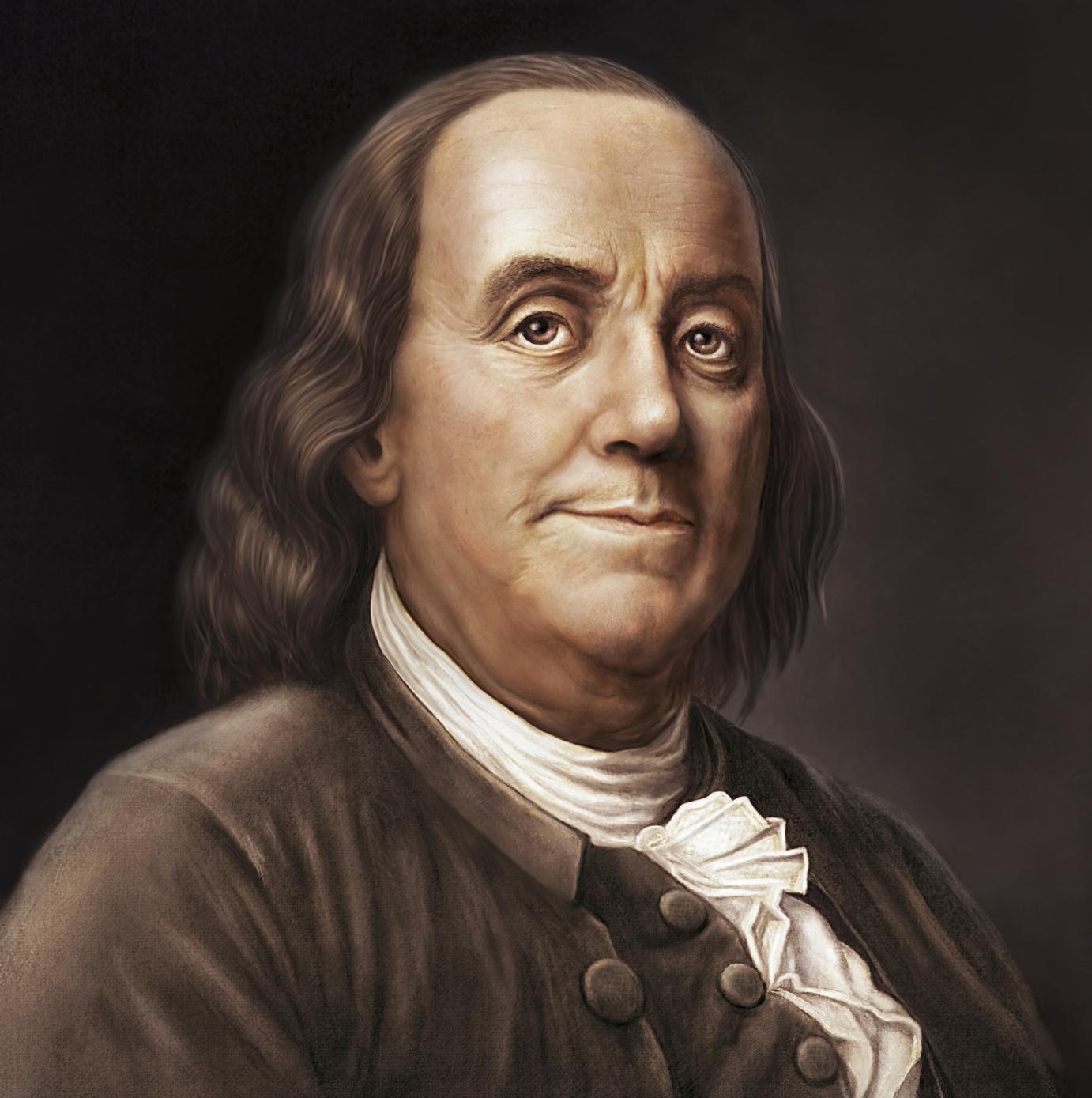
Benjamin Franklin was the thirteenth child of a humble soap-and-candle maker. Obviously, no family fortune provided him easy success in life. Neither did a stellar performance in school that would lead to scholarships. His formal education lasted all of two years, from ages eight to ten. Yet Ben became:

  • a respected publisher
  • the country’s first millionaire
  • a world-famous scientist
  • an influential voice as the thirteen colonies fought for independence and established a nation
  • a distinguished diplomat in Europe

No wonder Franklin was proclaimed a self-made man. But there are other factors, outside his control, that contributed to his success, including:

INTELLIGENCE

His varied accomplishments as writer, statesman, and diplomat prove his sharp intellect.

CHARACTER

Ben was  curious and skeptical–useful attributes for a scientist. His astuteness, sense of humor, and ability to communicate served him well as publisher of Poor Richard’s Almanac. And all of these traits came into play when Franklin participated in the forming of our nation.

Writing_the_Declaration_of_Independence_1776_cph.3g09904

TEMPERAMENT

Surely Ben was an energetic and passionate individual. He was always in pursuit of something—things like:

  • Solving problems. Numerous inventions credited to Franklin grew out of need. For example, his desire to create more heat in his home led to his invention of the wood stove.
  • Acquiring new knowledge. Ben attempted his well-known key-and-kite experiment because of his curiosity about lightning.
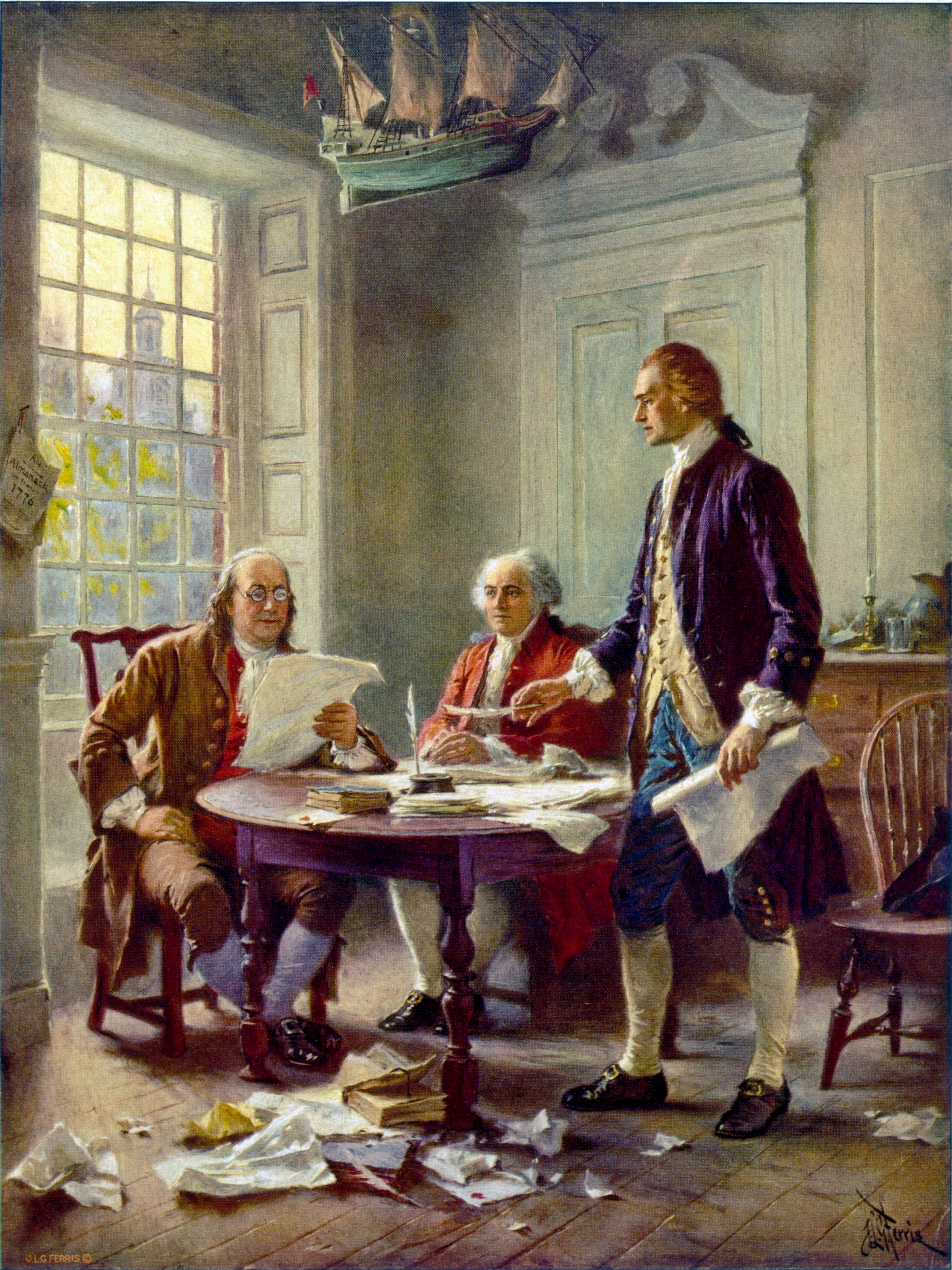
  • Improving the lives of his fellow colonists. Franklin wrote, met with other delegates, sought the help of France, and more, in America’s struggle to gain independence from England. In 1789, at age 84, he was still writing and working. His cause? The abolition of slavery in America.

OPPORTUNITY

Franklin was often in the right place at the right time. One example: through his connections in the publishing industry of Philadelphia, Ben secured a contract to print the colony’s paper money.

Seems that Ben’s success had much to do with factors outside his control. These elements just mentioned–intelligence, character, temperament, and opportunity–came from God. In fact, for all of us, “Our sufficiency is from God” (2 Corinthians 3:5).

28847

In reality, the idea of a self-made man/woman is myth. No one is truly self-sufficient.

On the other hand, God has ordained work and effort. From beginning to end, scripture proclaims the value of industry. In Genesis 2:15 we see God placing Adam in the Garden of Eden to tend and keep it. In 2 Thessalonians 3:10, Paul says, “If a man will not work, he shall not eat.”

So how do we balance working with our God-given abilities and depending on God?

  1. Pray.  Thank God for the gifts he has given us.  Then prayerfully seek to determine what God is doing and cooperate with him. If we are earnest in this desire, he’ll make each step clear. As seminary professor, Howard Hendricks, used to say: God does not play hide-and-seek in the trees with his will.
  1. Nourish.  The effectiveness of our giftedness requires preparation and inspiration. Preparation includes study and practical experience. (Even a talented pianist must take lessons and practice.) Preparation includes nourishing the spirit, too, with study of scripture and practical experience of worship and service. Inspiration comes from the Holy Spirit as he works within us.
  1. Embrace.   Embrace the teaching of wise, godly leaders. Embrace the help of others. Keep in mind that self-sufficiency is not a praiseworthy quality; it’s a form of pride. The person who thinks he knows everything and needs no input, or who is too proud to ask for help, is someone to be pitied, not celebrated.

As dependents upon God, we are meant to work. As workers, we are meant to be dependent upon God.

And…

13498c445c1e1c4e8f0c84056a33f287

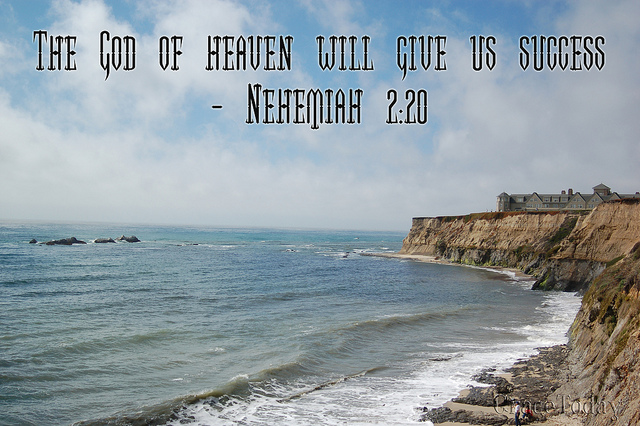
(“The God of heaven will give us success”–Nehemiah 2:20)

*     *     *     *     *     *     *     *     *     *

I praise you, Father, for being my all-sufficient God, Someone I can trust completely for guidance, direction, and training. Help me find that balance between working for you and depending on you. May I not neglect preparation, but also look to you for inspiration.  And may I be a humble, grateful recipient of help.  Amen.  

Read Full Post »

Still Traveling

Impressions Becoming Expressions

Living Our Days

Gaining a heart of wisdom

He Said What?!

I'm Patty, and my husband and I are living with our adult son who has autism and epilepsy. I love sharing lessons learned from life around me, especially life with Aaron.

Meditations of my Heart

Impressions Becoming Expressions

Linda Stoll

Impressions Becoming Expressions

Debby Thompson

Impressions Becoming Expressions

Signora Sheila

Notes on Life, Faith & Italy

Colleen Scheid

Writing, Acting, Living in God's Love

Mitch Teemley

The Power of Story

Heidi Viars

Finding the Image of God