Feeds:
Posts
Comments

Posts Tagged ‘Christmas’

The Annunciation by Philippe de Champaigne, 1644

‘Remember what the angel Gabriel said to Mary when he first appeared to her?

“Greetings, you who are highly favored! The Lord is with you. Do not be afraid, you have found favor with God” [1].

He then made an incredible announcement. Mary would give birth to the Messiah [2].

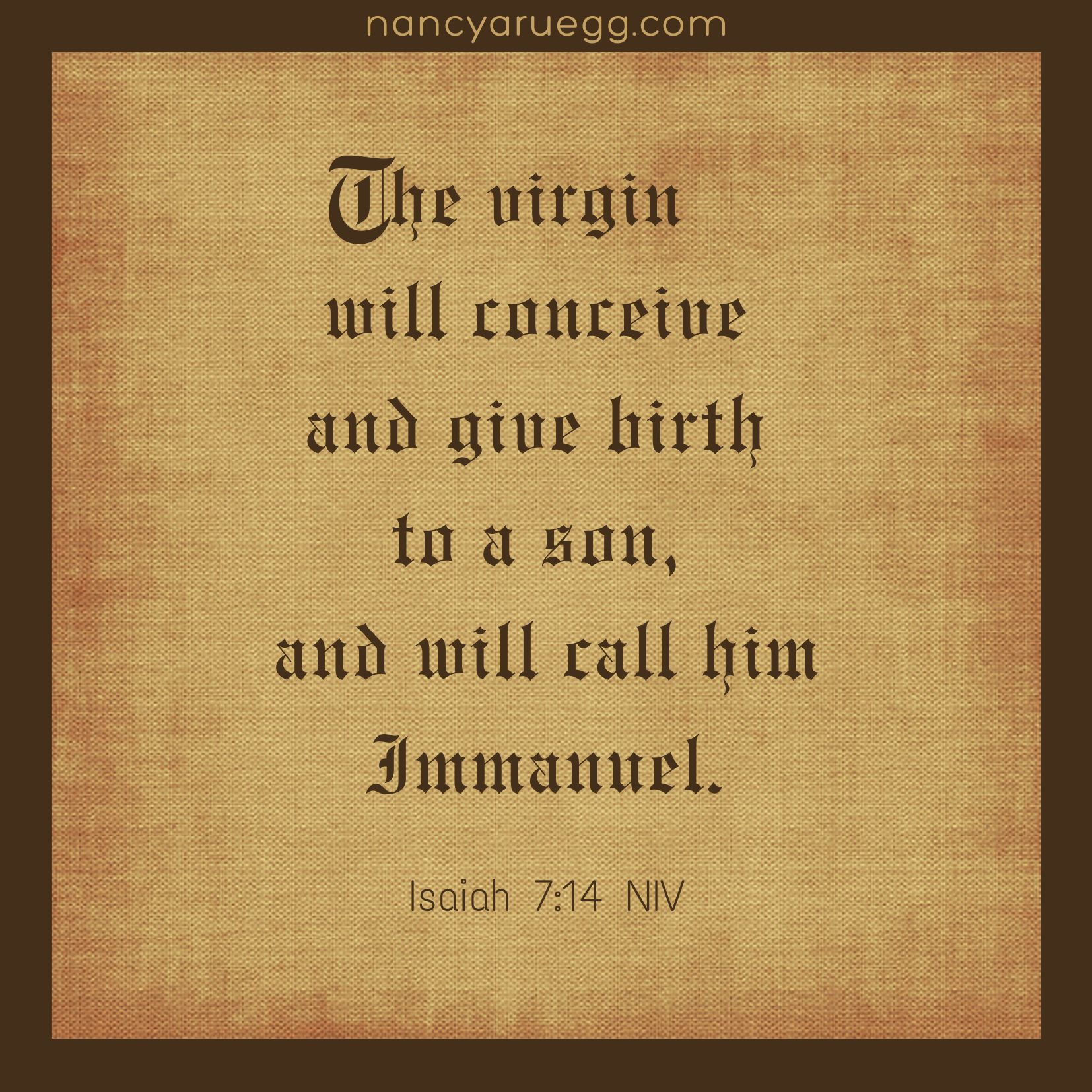
Did her mind jump to Isaiah’s prophecy about a young woman who would conceive and give birth to Immanuel?
Surely many Jewish girls knew the passage. And each must have wondered, Might I grow up to be the mother of the King of all?

God favored Mary with the singular role of mother to the Righteous One. Perhaps his choice was based on Mary’s virtue, but scripture gives no indication of that.

Luke did mention that Zacharias and Elizabeth, the parents of John the Baptist, “were righteous in the sight of God, observing all the Lord’s commands and decrees blamelessly” [3].

But no such commendation is given for Mary. It may be God wanted us to understand: he can use anyone. His empowerment doesn’t depend on social standing, intelligence, accomplishments, or even moral superiority.

Our part is willingness and faith, which Mary did demonstrate when she professed: ‘’I am the Lord’s servant. May your word to me be fulfilled” [4]. Mary acquiesced to God’s plan, his choice for her.  

If you’re like me, you’ve wondered about the favor bestowed upon Mary. To us the word conjures up kindness and generosity.

But Mary faced:

  • rejection and cruelty as a pregnant and unmarried, young teen [5]
  • the probable annulment of her engagement to Joseph
  • a grueling trip to Bethlehem, nine months pregnant
  • delivering her first child in a stable-cave
  • another difficult journey to Egypt to protect Jesus from Herod’s slaughter
  • the hurtful disapproval of many for her firstborn, including his own half-siblings
  • watching her son die in agony [6]

How could Gabriel call Mary favored?

We’re looking in the wrong direction. God’s favor, his best for us, does not guarantee an easy path through life and an abundance of material blessings. That kind of favor would only spoil us.

God would have us look in the direction of more satisfying favor: his spiritual blessings [7].

That’s what Mary did, evidenced by her Magnificat, a prayer preserved for us in Luke 1:46-55, where she praised God for his mindfulness of her, his might that had accomplished great things for her, his mercy extended to those who fear God, and more.

In the NIV Study Bible, nineteen cross-references from this passage cite verses from seven books of the Old Testament. Mary knew scripture.

It’s unlikely she thought God’s favor would bring fame and fortune. Mary would have known that God’s best more often includes:

  • empowerment to carry out his assignments
  • instruction in the ways we should choose
  • help in times of trouble
  • strength to endure hardship and grief
  • compassion and comfort to quell distress
  • satisfaction in taking part in God’s wonderful plans [8]

And as God’s wonderful plan of redemption for all people began to unfold, his favor began to flow upon Mary.

He dispelled her fears, gave her courage to tell Joseph the unsettling news, inspired Mary to visit her wise cousin Elizabeth for encouragement, filled her with endurance for the journey to Bethlehem, and strength for the birth of her first child in less-than-ideal circumstances.

Of course, Mary isn’t the only one who’s experienced the favor of the Lord. God’s best is available to everyone who allows God to choose what’s best.

God would have us know:

By his favor he forms our characters and fits us for satisfying service. He charts our course, imparts strength to accomplish his plan, supplies all that is necessary, and ultimately crowns our efforts [9].

Just as he did for Mary.


[1] Luke 1:26-30 NIV, emphasis added

[2] Luke 1:31-33

[3] Luke 1:6

[4] Luke 1:38

[5] This was surely Mary’s experience, given the social norms of the day.

[6] Matthew 1:18-19; Luke 2:1-5; 6-7; Matthew 2:13-15; Mark 3:20; John 19:26-27

[7] Ephesians 1:3

[8] Psalm 138:8 ESV; 25:12; 46:1; 73:26; 86:15; Isaiah 66:13a; Psalm 128:1

[9] Based on Herbert Lockyer quote, Seasons of the Lord, 202.

Image credits: http://www.picryl.com; http://www.canva.com; http://www.freebibleimages.org (4); http://www.stockvault.net.

Processing…
Success! You're on the list.

Read Full Post »

No Christmas season would be complete without the reading of the second chapter of Luke—the account of Mary and Joseph traveling to Bethlehem, presiding over the birth of Jesus in a stable or cave, and receiving shepherd-guests.

Toward the end of the account, as those shepherds were spreading the word of Jesus’ birth, Luke wrote, “Mary treasured up all these things and pondered them in her heart” (v. 19).

Indeed. She had much to process:

  • Her baby was the Messiah, the Promised One, who would save his people from their sin. I wonder if she studied him, looking for signs that he was different from other infants.
  • This was the Prince of Peace cradled in her arms. Yet he had been born to a common village girl in very primitive conditions.  Did that seem strange to her?
  • The shepherds had learned of his birth when angels visited them, just as the angel, Gabriel, had visited Mary and then Joseph.  Gabriel had also visited Zechariah, the father of John the Baptist. Four angel visitations in a matter of months. Never had that happened before.

I find myself pondering, too—pondering Mary herself–this dear, young girl who carried a tremendous burden for a long time.

Dear means beloved and valued. Mary is certainly that for numerous reasons.

  • She embraced Gabriel’s announcement with great faith. “May it be to me as you have said,” (Luke 1:38). She put herself in the care of God in spite of incomprehensible circumstances.
  • Her prayer, the Magnificat (Luke 1:46-55), gives indication of a heart fully committed to God.
  • She endured much: shame for her pregnancy, a long, uncomfortable journey to Bethlehem, and crude circumstances for the birth of her Son.

Mary was young—perhaps between thirteen and fifteen years of age. That was the typical age for a girl to be married in Bible times.

Yet, young as Mary was, Gabriel praised her for being “endued with grace” (v. 28, AMP). In addition, Mary demonstrated stamina, maturity, and gentleness beyond her years.

No doubt God graced her with these traits. But I have to believe Mary also had freedom of choice, as we all do, to embrace God’s way for her.

What I ponder most, however, is the fact Mary carried a tremendous burden, given to her by an elderly man, Simeon, eight days after Jesus was born.

You undoubtedly remember the story. Joseph and Mary took Jesus to the temple at Jerusalem to be circumcised.

There they met the righteous and devout Simeon who had been waiting decades for the Messiah. The Holy Spirit had revealed to him he would not die until he had seen the Lord Christ.

Immediately upon seeing the Child, Simeon knew this was the One.

He praised God for keeping his promise, blessed Mary and Joseph, and then spoke particularly to Mary, saying Jesus would cause some to rise and some to fall, he would be spoken against, the thoughts of many hearts would be revealed, and a sword will pierce your own soul too (Luke 2:21-35).

Those last words must have caused Mary’s eyes to grow wide and her heart to skip a beat. Wasn’t the worst behind her? Surely Mary wanted to ask Simeon, “What do you mean?” Scripture gives us no indication that she did so.

For thirty-three years those last words of Simeon must have echoed in Mary’s mind again and again. How does a person live with such long-term foreboding? Perhaps her mind turned back to the night of Gabriel’s visitation.

Perhaps, for thirty-three years, Mary repeated what she had told the archangel: “I am the Lord’s servant. May it be to me as you have said” (1:38).

Mary may very well have developed the calm assurance that even when God’s ways are baffling, we can rest assured he is orchestrating events to accomplish far more than we could ever imagine (Ephesians 3:20). She’d been witness to such orchestration in Bethlehem.

Mary knew that even our personal hardships can fulfill purposes that extend far beyond ourselves.

That’s a lesson for all of us to embrace with calm assurance.

(Revised and reblogged from December 15, 2014, while we enjoy a blessed week with family!)

Photo credit: http://www.stocksnap.io.

Processing…
Success! You're on the list.

Read Full Post »

As his father prayed, little Isaac peeked through his fingers to see what was causing a rustling sound. His eyes spied a mouse crawling up a bell-rope, and Isaac giggled.

After family prayers, Father wanted to know what had possessed his son to be so disrespectful.

“I saw a mouse running up the bell-rope, and it came to my mind:

There was a mouse for want of stairs,

‘Ran up a rope to say his prayers.”

Father was not amused and reached for the rod. Isaac fell to his knees and begged:

“Father, Father, pity take,

And I will no more verses make [1]!”

Neither the little poet Isaac Watts (1674-1748) nor his father could have known where the boy’s penchant for rhymes would take him.

As a late teen, Isaac complained often to his father about the tiresome, chanted hymns of the church. How was a person supposed to sing them with joy as the Bible-psalms often urged, when the music droned in a minor key?

From a 1600’s hymnal

Mr. Watts finally suggested he turn complaining into composing and create better melodies and lyrics. Isaac did, and over the next fifty-plus years more than six hundred of his hymns were published.

Some people found fault with Isaac’s contemporary worship songs. But at least several prominent leaders supported him, including Samuel Johnson, Cotton Mather, and John Wesley [2].

Isaac Watts

Probably the best known of Watts’ hymns is “Joy to the World,” although Watts never set it to music. Decades later Lowell Mason felt inspired to do so and upon publication in 1848, the song soon became a beloved Christmas carol.

Some insist this hymn has no place in the carol-category, because Watts included no elements of the Christmas story in the lyrics.

But as Alyssa Poblete points out: This song celebrates what Christ came to do. And along with looking back at the grace accomplished in the past, we also look forward to the grace accomplished for our future, to the ultimate joy to be revealed [3].

That enlightenment helps explain that puzzling first line, “Joy to the world, the Lord is come” (emphasis added). I’ve often wondered why Watts didn’t choose “has come.”

Ms. Poblete gives us indication. God’s grace (explained in part by the acronym, God’s Riches at Christ’s Expense) is active in all of time—past, present, and future.

Our Messiah’s birth was long-promised for centuries. His coming ushered in a new kingdom of Light. Those who believe in Jesus gain release from the kingdom of darkness, and one day that evil kingdom will be utterly destroyed [4].

In addition:

Christ’s coming is an ever-present and ongoing engagement in the world.

–Darrow L. Miller [5]

The Lord didn’t just come. He is here! And we can sing with dazzling Christmas joy because:

  • One day the whole earth will receive her King. Therefore, let heaven and nature sing (v. 1) [6]
  • The Savior reigns forever and ever (v. 2) [7]
  • Sins and sorrows will be no more, when Christ returns (v. 3) [8]
  • He comes to make his blessings flow (v. 3) [9]
  • He rules the world with truth and grace (v. 4) [10]
  • The glories of his righteousness and the wonders of his love are on display everywhere (v. 4) [11]

These musicians capture well the dazzling joy of knowing our Savior reigns!
For the reasons listed above and more, Watts invites: “Let every heart prepare him room” (v. 1), and “Let men [all humanity] their songs employ” (v. 1)!

May we be just such people who sing with intention, from a place of authenticity [12].

In fact, take a moment right now if you can, and worship, celebrate, and sing with dazzling Christmas joy!


[1] Betty Dunn, https://www.powerofchange.org/blog/2011/12/16/isaac-watts-joy-to-the-world.html

[2] Erin Tabor, https://www.zmiinternational.org/daily-dose-of-encouragement/joy-to-the-world-the-lord-is-come  

[3] https://www.thegospelcoalition.org/article/joy-to-the-world-a classic-christmas-hymn-reconsidered/

[4] Isaiah 7:14 and 9:6; Colossians 1:14; Revelation 20:7-20.

[5] https://disciplenations.org/wp-content/uploads/202004/Music-that-Writes-Culture-Reflections-on-Joy-to-the-World.pdf

[6] Romans 8:19-23; Revelation 22:20; Psalm 96:1-4

[7] Revelation 11:15

[8] Revelation 21:4

[9] Psalm 5:12; 34:10b; 2 Peter 1:3

[10] John 1:14; Colossians 1:16-17

[11] Psalm 33:4; 145:17 31:21

[12]  https://passioncitychurch.com/article/joy-to-the-world/

Art & photo credits: http://www.justanotherclaypotblogspot.com 9/10/2008; http://www.boudewijnhuijgens.getarchive.net; http://www.jenikirbyhistory.getarchive.net; http://www.canva.com (2); youtube.com; http://www.pxhere.com and canva.com.

Processing…
Success! You're on the list.

Read Full Post »

Some time ago, wise-and-insightful blogger Michele Morin (over at Living Our Days) shared that she was journaling through some of the old hymns. Isn’t that a brilliant idea?

I imagined her digging into the meaning of some of the rich language and theology, personalizing the truths, and/or using them as the basis for prayer.

Most often we sing through the lyrics so quickly we miss their full significance. But if we intentionally slow our thinking by putting pen or pencil to paper, we make room for wonderful blessings to emerge—blessings like increased understanding of God and his Word, renewal of the mind, and augmented intimacy with God.

Our contemplations can become worship.

So far I’ve journaled through seven hymns. For Advent I chose to contemplate a Christmas carol: Charles Wesley’s “Hark! The Herald Angels Sing,” which offers both rich language and theology. (The story behind the song is also interesting. You can read it here: “Hark, the Herald Angels Sing.”)

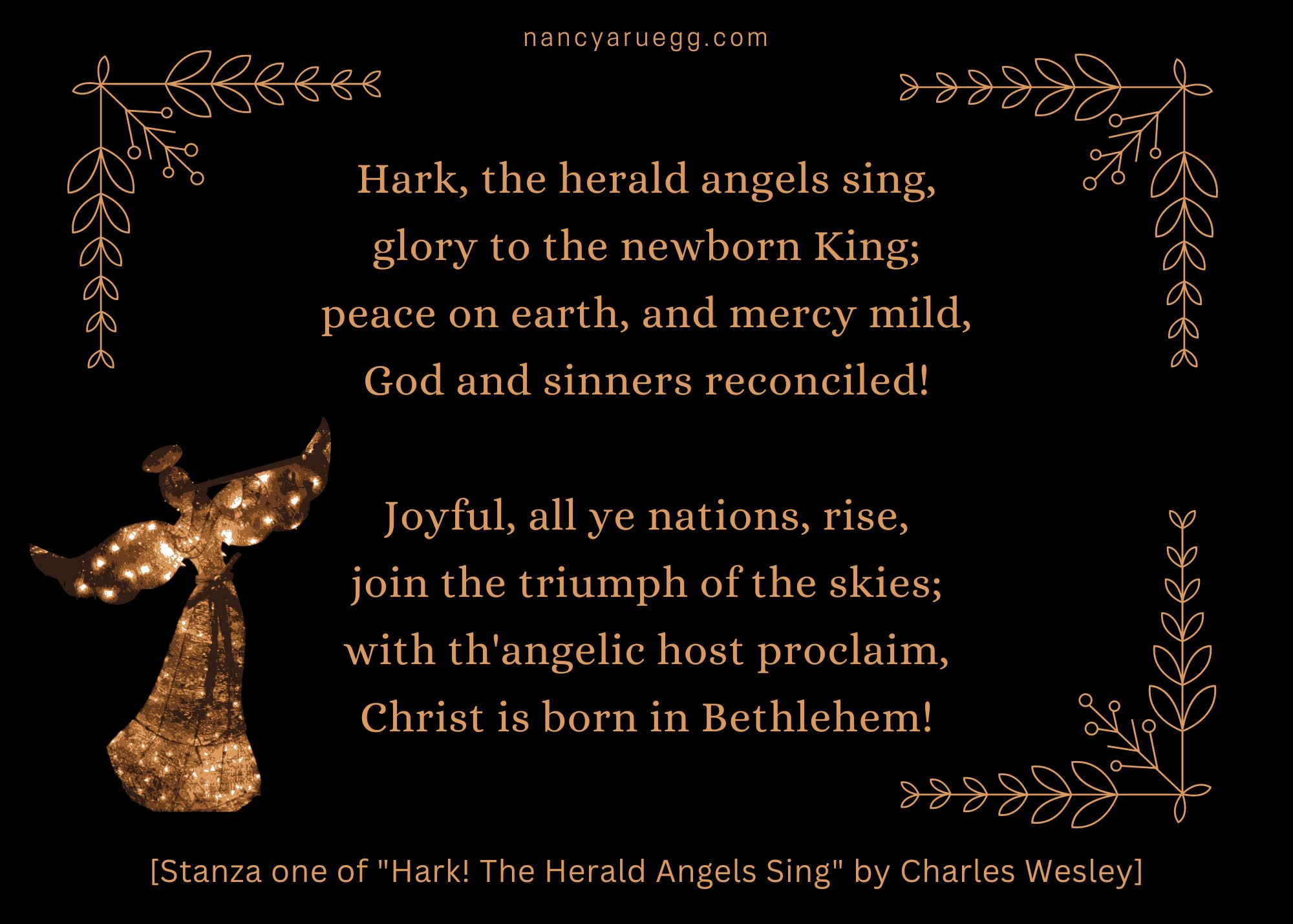
Over the next three weeks we’ll savor the three best-known verses of this carol. No doubt you’re familiar with the first:  

My journaled prayer included the following.

“Hark!” the hymn writer begins, inviting me to listen with close attention. His lyrics take me back in time to that night when angels declared life-transforming news for those who embrace it:

A new King has been born—a king like no other (1)!

That’s YOU, Lord Jesus. You are the Prince of Peace, the One who offers inner tranquility to all who desire it (2), and universal, all-encompassing peace when the new heaven and the new earth are established (3).

I praise You, O Christ, for Your comforting peace

that steadies me and gives me hope.

You’re the One who bestows mercy—tender-hearted forgiveness—when I confess the wrongs I’ve committed. You’re the One who put ultimate mercy into action by “being obedient to God and dying a criminal’s death on a cross” (4).

I praise You, O Christ, for your unceasing mercy.

You have not punished me

the way I deserve, and You never will.

You’re the One who reconciled me to God (5). First, You chose to do the unthinkable, to die in my place and pay the penalty for every sin I commit.

Then You restored my broken relationship with God, as I put my trust in You and accepted Your free gift of eternal life. Because of You, I have right standing with God and access into His presence at any time.

I praise You, O Christ, for your unimaginable sacrifice,

making the impossible possible.

For all these blessings (and so much more) I rise up with Jesus-followers from around the world to sing joyful praise to You (6)!

Our voices join those of the angels to give you glory (7)–celebrating Your attributes, rejoicing in Your excellent works, and taking pleasure in the privilege of being sons and daughters of Almighty God.

I praise You, O Christ, for leaving the wonders of heaven

to be born in the humble village of Bethlehem

and live among ignoble humanity—

all for our benefit.

I praise You, O Christ, for the incredible FREE gift

of eternal ecstasy in paradise with You.

And I praise You for being my compassionate Christ,

my glorious Emancipator, and my powerful King!

Notes:

  1. Revelation 1:5-6
  2. Romans 5:1
  3. 2 Peter 3:13
  4. Philippians 2:8 TLB
  5. 2 Corinthians 5:18-19
  6. Psalm 67:4
  7. Psalm 148:11-13

Photo credits: http://www.pxhere.com; Nancy Ruegg; http://www.openclipart.com and http://www.canva.com; http://www.negativespace.com (3); http://www.publicdomainpictures.net.

Read Full Post »


Why is it that most of us find Christmas to be the pinnacle of each year?

Is it:

  • the twinkling lights and candle glow?
  • the treats like eggnog that we only allow ourselves during the holidays?
  • the gift-giving, with all the build-up of anticipation beforehand?

Or might it be because: “Christmas is the day that holds all time together?”

Those words were penned by Alexander Smith, a Scottish poet of the 1800s. With just nine words he deftly solved the riddle. It is the Christmas season, more so than any other time, when past, present, and future come together in one glorious, unified experience.

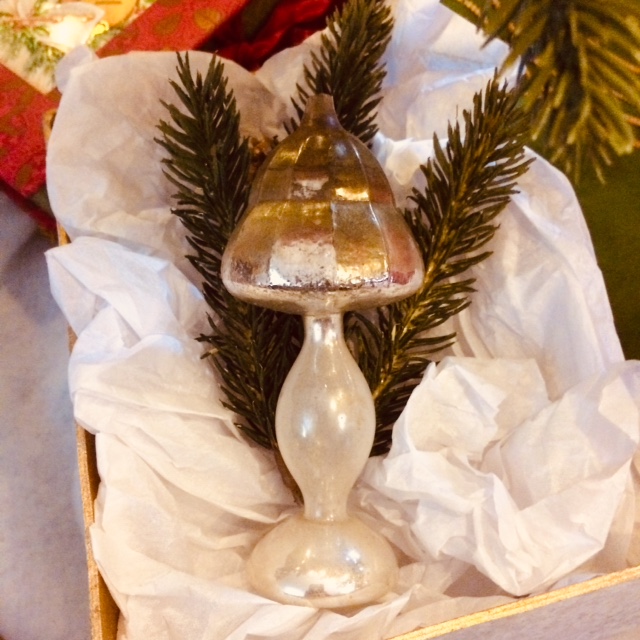
Consider how the past becomes entwined with the present as families celebrate traditions or display treasured Christmas heirlooms, passed down from one generation to the next.


Releasing each one from its cocoon of packing tissue is like greeting an old friend. And attached to those decorations are memories–memories of the loved ones who gave them to us and memories of Christmases past.


(Aunt Louise made these for us,

the first year Steve and I were married.)


One ornament in our family’s vintage collection causes a great wave of nostalgia for me. It’s shaped a bit like an old lamp, and shimmers softly with the patina of age, pale green and silver.

My father bought the ornament when he was just nine or ten years old in the mid-1930s. Grandma gave him the honor of bicycling to the dime store to choose a new decoration for the family tree.

Later he realized she and his older siblings were probably anxious to get him out of the house, so they could deck the halls without an excited boy underfoot.

That lamp-ornament hung on our family Christmas tree all the years I was growing up in the 1950s and ’60s. And sometime in the 1980s, Mom and Dad passed it on to me.


Wrapped up in that one decoration are all the Christmases of my distant, childhood past, characterized by tinsel-covered trees, dolls in crisp dresses, programs at church and school, and dining tables overflowing with delectable feasts.

As I hang the little lamp, my imagination returns to those Christmases, celebrated with grandparents, aunts, uncles, and cousins, whose love and laughter now live only in my heart.

Undoubtedly, memories are an important part of the euphoria Christmas creates. But there is plenty about the present that brings joy to the season as well:

  • Carols ring, and sweet aromas waft from kitchens
  • Cards arrive from distant loved ones, renewing bonds of love and friendship
  • Gifts are purchased and wrapped, with the hope of bringing delight to the recipients
  • Meals become occasions to be savored, as family and friends gather to simply enjoy one another’s company


And what about the future? As Christmas approaches, the thrill of splendorous moments to come certainly has us looking forward. Who has not felt the excitement of checking off days on the calendar until that special party? Until loved ones arrive? Until Christmas Day itself?

And no sooner does one holiday season draw to a close, than we start thinking, “Next year, I’m going to make some of those cookies Sylvia brought to the party.” Or, “Next Christmas we’ll have another grandchild to enjoy!”


(Our youngest granddaughter,

in 2016)


And so, it is just as Alexander Smith said. Christmas holds all time together–in memories of the past, joys of the present, and anticipation of the future.

However, Mr. Smith’s words include a deeper truth for us as Christians. In one shining moment, past, present, and future came together at the birth of our Savior.

First, a number of prophecies from hundreds of years in the past, were perfectly fulfilled.


(Gerard van Honthorst’s Adoration of the Shepherds, 1622)


Second, we have only to consider his name, Emmanuel, to realize how Jesus’ birth touches the present. No doubt you remember Emmanuel means “God with us.” Present tense is suggested, reminding us that now, Jesus is with those who desire his presence.

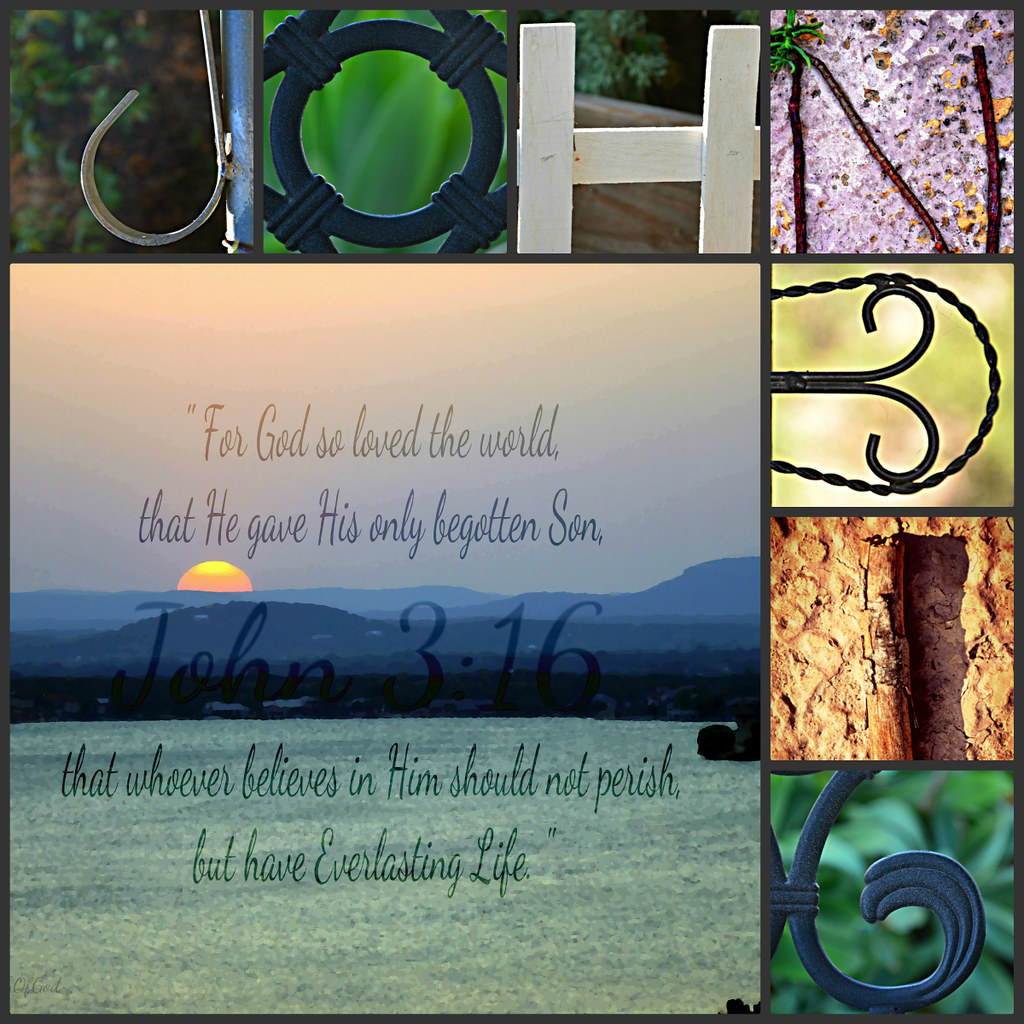
Finally, our future is secure because of Christmas. Those familiar words of John 3:16 make clear:  God loves us and sent his Son, Jesus. When we believe in him, he gives us the precious gift of eternal life. Such simple truth, yet wondrously profound.


In reality then, it’s not just the celebration of Christmas that joins past, present, and future. It’s the One we celebrate on Christmas that holds all time together.


“To the only God our Savior

be glory, majesty, power and authority,

through Jesus Christ our Lord,

before all ages, now and forevermore!

Amen.”

Jude 25

(Emphasis added.)


________________________


What experience(s) of the Christmas season bring together all time for you?  Tell us about it in the Comment section below!


Photo credits: Nancy Ruegg; http://www.needpix.com; Nancy Ruegg (2); http://www.flickr.com; Nancy Ruegg; http://www.wikipedia.org.


(revised and reblogged from December 9, 2012)


Read Full Post »


Decades ago at the birthday party of a childhood friend, each of us that attended was given a surprise ball. (Maybe you remember this party favor?) Thin strands of colorful tissue paper were wrapped around and around to make the ball, about the size of a small grapefruit. Among the layers were tucked small trinkets.

We sat at the young host’s dining table, unwrapping, discovering, and exclaiming, until we’d created little piles of treats and toys such as candy, erasers, miniature tops, finger puppets, rings, gum, and stickers—next to a large mound of tissue spaghetti.

But the best surprise was at the center. When all the wrapping was removed, each girl found a miniature doll with hand-painted features, and each boy found a tiny car—with wheels that actually moved.

The trinkets paled in comparison to the treasures at the center.

I’m thinking the Christmas season offers us many delights among the layers of things to do and places to be, including:


  • unpacking the familiar decorations, each one laced with memories
  • baking vanilla sugar cookies and scenting the house
  • reading Christmas cards and letters, bringing far distant loved ones close to heart
  • creating a jumble of colorful packages under the tree

Lovely, holiday moments for sure, but they pale in comparison to the heart of Christmas: Jesus.

He is the treasure, and everything else is mere trifles.


He is the way—for a world that is lost.

He is the truth—in a world full of lies.

He is the life—for a world that is dying.


And the wonders of His radiance far exceed our capability to understand.

For example, he is:


  • Emmanuel—God with each of us always (Matthew 1:22-23)
  • God incarnate–fully divine, yet became fully human (John 1:14)
  • Our compassionate Friend (John 15:15)
  • Omnisapient—all-wise (Romans 16:27)
  • Lord of our Righteousness, putting us right with God (1 Corinthians 1:30)
  • Our great intercessor, praying for us continually (Hebrews 7:25)
  • Able to create out of nothing (Hebrews 11:3)
  • Productive —always working on our behalf (Hebrews 13:21)
  • Faultless–absolutely perfect (I John 3:5)
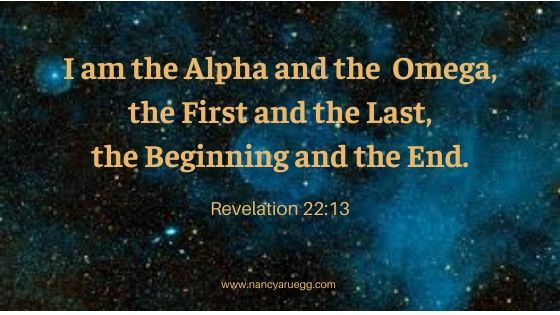
  • The Alpha and Omega—eternal from beginning to end (Revelation 22:13)


There is nothing wrong with the Christmas traditions of decorating, baking, card-sending, and gift-giving. But they are just paltry trinkets—unless Jesus is preeminent within the celebration.


https://quotefancy.com/saint-augustine-quotes


And as we contemplate our Treasure, adoration swells within our hearts:

Lord Jesus, we bow in holy wonder before your supreme majesty, incomparable power, and unfathomable glory. You are the Morning Star! The King of kings! The Everlasting Father!

Yet, out of love for us, you left your throne and kingly crown to take on human form, giving up your majesty for a manger, supreme rule for severe restraint, and the beauty of heaven for the brokenness of earth.

What wondrous love is this, that you were willing to bear the dreadful curse for our souls? Our minds cannot comprehend.


But our hearts can sing in adoration of you and your overwhelming love that dispels the darkness with glorious splendor and ushers in eternal bliss—when we say YES to You.


You have opened heaven’s door,

Man is blessed forevermore–

Jesus, our priceless Treasure.


(Carols referenced: “Thou Didst Leave Thy Throne,” “What Wondrous Love Is This,” “Lo, How a Rose E’er Blooming,” “Good Christian Men, Rejoice.”)


Art & photo credits:  http://www.publicdomainfiles.com; http://www.flickr.com; http://www.heartlight.org; http://www.canva.org; http://www.jpl.nasa.gov; http://www.quotefancy.com; http://www.canva.com.


Read Full Post »


Years ago Steve’s Aunt Louise gave us a little ceramic church music box.  With its drab gray walls, greenish-gray roof, and standard steeple, the church did not grab attention. But the arched windows on each side were filled with tiny chips of colored glass, and when lit from within the little church sparkled with glorious light.

Sometime when our three children were young, the church was broken by “Not Me.” Fortunately, the pieces were large and Steve was able to glue them back together.   When the light was turned on, the cracks didn’t even show.

But as the years passed, the glue began to discolor and turn dark. The poor little music box became a sad sight, and I was about to throw it away when our youngest son–probably in high school by this time–said, “Oh, Mom! You can’t get rid of the church! That’s been my favorite Christmas decoration since I was a little kid!”

So Jeremy saved the music box from destruction.


He finished college, married a sweet girl from our church, and moved twice more while attending seminary. Somewhere along the way the music box disappeared.

Each year as he and his wife Nancy decorated for Christmas, he’d remember fondly that little ceramic church and wonder what happened to it.

Seminary graduation came and went, four years at his first church appointment also passed. While settling into their second parsonage, Jeremy finally unpacked a carton labeled “Memorabilia” that had been sealed up since he left our home.

Buried at the bottom was a sealed shoebox. Jeremy sliced through the tape with his pocketknife, lifted the lid, and brought into the light a lumpy, tissue-wrapped object.


Within moments Jeremy held in his hands that precious, long-missing ceramic church. And joyful tears stung his eyes.

He quickly found a new bulb and plugged the cord into a nearby socket. The windows instantly filled with glorious rainbow light. Jeremy didn’t even notice the fissures or dark, crusty glue.

Isn’t it amazing to consider that, just as Jeremy loves that damaged music box, God loves us—scarred, and imperfect as we are? We too were just as lost as that little church—sealed up in a box of our own prideful independence.


But Jesus came looking for us. He brought us into his glorious Light, and filled us with the Light of his inviting, benevolent grace.*

Now, we have the privilege to shine with gleaming Light just like that little church—in spite of our scars.


*     *     *     *     *     *     *     *     *     *


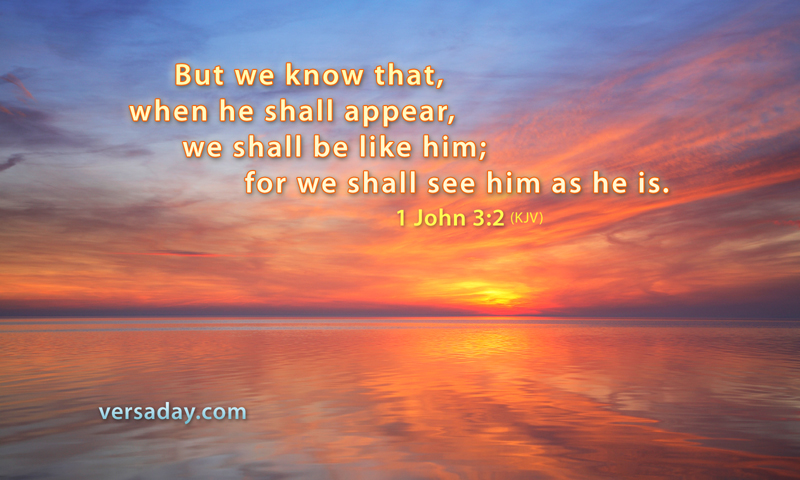
God of all grace, I thank you for rescuing me from mere existence in my self-made box, and bringing me into a rich, full life with you. Even though cracks and blemishes remain in my being, what you see is not what I have been but what I am becoming—holy and blameless and filled with Light—for that day when I see you as you are!


(John 10:10; Ephesians 1:4; John 8:12; 1 John 3:2)


*Often defined by using an acronym: God’s Riches At Christ’s Expense


Scripture references: Luke 15:8-10; John 8:12; Colossians 1:27; 2 Corinthians 9:8; 2 Corinthians 3:18; Romans 3:24; Matthew 5:14.


(Photo credits:  Jeremy Ruegg (2); http://www.flickr.com; http://www.heartlight.org (Ben Steed); http://www.verseaday.com.)


Read Full Post »


Christmas is indeed a season of light.

Candles glow and twinkling lights glimmer from houses, buildings, and trees.

People love all the flickering and shimmering!  Some spend weeks decorating their yards and rooftops in spectacles of illumination.  If you asked them why, they might be hard-pressed to express more than, “They’re beautiful!”


But perhaps it’s more than just aesthetics.  Perhaps it’s a heart-response.

Light is symbolic for:

  • Beauty.  Light grabs our attention, whether it’s sparkling and dazzling or soft and luminous.


  • Safety.  Where there is light, we can navigate through our surroundings.
  • Comfort.  A nightlight offers just that for many a child who is afraid of the dark.
  • Hope.  Light gleams triumphantly in the darkness at the end of a tunnel.
  • Guidance.  Light illuminates the way.


Might it be that people respond to light, especially when associated with Christmas, because the human spirit is made to respond to the Light?

Jesus came from the Father who is Light (1 John 1:5), and proclaimed, “I am the Light of the world” (John 8:12).

But that statement is more than symbolic.

God the Son is our safety, because he offers eternal life.


“My sheep listen to my voice; I know them and they follow me.

I give them eternal life, and they shall never perish;

no one can snatch them out of my hand.”

John 10:28-29


God the Father is our comfort, because he is loving and compassionate.


“Praise be to the God and Father of our Lord Jesus Christ,

the Father of compassion and the God of all comfort,

who comforts us in all our troubles.”

2 Corinthians 1:3-4a


God the Son is our hope, because of his resurrectionWe will be raised from the dead because he was. 


“In his great mercy [God] has given us new birth

into a living hope through the resurrection of Jesus Christ from the dead,

and into an inheritance that can never perish, spoil, or fade—

kept in heaven for you.”

1 Peter 1:3b-4


God the Father is beauty, because of all his exquisite attributes.  And we have the opportunity to bask in that beauty.


“I’m asking God for one thing…

To live with him in his house my whole life long.

I’ll contemplate his beauty; I’ll study at his feet.”

Psalm 27:4  MSG


God the Father is guidance, characterized by wisdom, compassion, and readiness.


The Light of the world offers us all this and more.

I can’t imagine life without him, can you?

Let’s make time to linger in his Light during this Advent season.


Let’s be watchful for “Glory-moments, awash in his dazzling Light” (Sarah Young).


*     *     *     *     *     *     *     *     *    *


How else might we expand our heart-response to Jesus?  Please share your thoughts in the comment section below!


Photo credits: http://www.pxhere.com; http://www.wikimedia.com; http://www.tOrangebiz; http://www.flickr.com; http://www.dailyverses.net; http://www.canva.com (3).


(Revised and reblogged from December 2, 2013.)

Read Full Post »


Consider.  Jesus, our Savior, is:


  • Incomparable– without equal or rival (Psalm 86:8)


  • Incomprehensible– beyond understanding or knowing; unfathomable (Romans 11:33)


  • Indescribable– exceeding words to characterize (Jeremiah 10:6-7)


  • Indisputable— incontestable (Isaiah 40:13-14)


  • Inestimable– of incalculable value (Psalm 145:3)


  • Inexhaustible– incapable of being used up or consumed or becoming tired (Revelation 1:8; Psalm 121:3)


  • Infallible– cannot fail or even make a mistake (Psalm 145:17)


  • Invariable– never-changing (Hebrews 13:8)


  • Invisible (John 1:18)


And those nine descriptors only begin to define Jesus. No matter how many fancy, multi-syllable words we might collect, the attributes of God’s Son are beyond full comprehension.

And he is God’s gift to us.

*     *     *     *     *     *     *     *     *     *

Oh, Jesus, how we thank you for giving up the splendor of heaven and the glory of your deity, to take on human form and become our Savior.  How incomprehensible that you could love such pitiful creatures as mankind.

Nevertheless you came so that we, too, could become God’s sons and daughters. Even more incredible, many of the descriptors above will be true of us—on that day when you appear again, and we shall be like you. 

(Philippians 2:6-7; John 3:16; Romans 8:29; 1 John 2:2)


(Photo credit:  http://www.heartlight.org.)


Reblogged from December 7, 2015


Read Full Post »


Just twelve days to Christmas 2017. Are you too immersed in preparation? In all honesty, I’m scrambling a bit in order to accomplish the remaining items on the must-do list: finish the Christmas cards, wrap the gifts, clean the house before the first guests arrive on Saturday, etc.

And for me, with the scrambling comes that uncomfortable feeling I’ll never get everything done.

It’s so silly, I tell myself. In the final analysis will our friends and family care if their cards arrive after Christmas? Is it necessary the packages be just so? Will our guests mind if every surface of the house isn’t gleaming?

Of course not. But my OCD tendencies still want to press me toward those expectations.

So what can I do to calm my spirit? I’m thinking the answer is worship.  I can express to God my gratitude, praise, and adoration–even while writing cards, wrapping gifts, and cleaning the house.


Scripture assures me that, as I worship in God’s presence, I will experience:


  1. Peace.


  1. Joy.

You, [O God], will fill me with joy in your presence.”

Psalm 16:11b

  1. Rest.

“He who dwells in the shelter of the Most High

Will rest in the shadow of the Almighty.”

Psalm 91:1


What a glorious gift worship is! Isn’t it just like our loving Father to bless us as we seek to bless him?

And so, while writing the Christmas cards, I am praising God for friends and extended family spread all over the country, and praying for them, too.


Heavenly Father, I praise you for (insert name).

Thank you for their influence in our lives,

Their support and affection.

Thank you for treasured memories of time spent together.

We may have lived apart for many years,

Yet the bonds of love hold firm because of you.

Bless them, I pray, with joy in each day,

Provision and protection too.


While wrapping the family’s gifts I can offer praise on behalf of the recipients.


Your goodness, O Lord, has impacted our family again and again.

Every member has his/her stories to tell of

Your wonders, interventions, and miracles.

I praise you for each loved one—

His/her gifts and personality traits,

The delight You give us in each other.

I praise you we are able to gather once more

In celebration of you, our indescribable gift.

.

While cleaning, I can focus on gratitude. What am I thankful for in each room?


I praise you, Father for our cozy home,

for the perfectly sized dining set you provided

And the hutch we found rather miraculously.

I praise you for the large windows

Across the back of the house,

giving us a grand view of the backyard trees.

And I praise you that with gratitude

Even housekeeping can be turned into joyful worship.


Throughout the day, whatever the task, I can meditate on the wonder of what Jesus our Savior has accomplished.

And marvel again that it all began with his humble birth in a stable-cave:


(Gerard von Honthorst, 1622)


“O Sovereign God!

You have humbled yourself in order to exalt us.

You became poor so that we might become rich.

You came to us so that we can come to you.

You took upon yourself our humanity

In order to raise us up into eternal life.

All this comes through your grace,

Free and unmerited;

All this through your beloved Son,

Our Lord and Savior, Jesus Christ.”

–Karl Barth


Come! Let us adore him—even as we work!


(Art & photo credits:  http://www.pixabay.com; http://www.wikimedia.commons.org; http://www.flickr.com; publicdomainpictures.net; Nancy Ruegg; http://www.flickr.com; Nancy Ruegg; http://www.wikipedia.org.)


Read Full Post »

Older Posts »

Still Traveling

Impressions Becoming Expressions

Living Our Days

Gaining a heart of wisdom

He Said What?!

I'm Patty, and my husband and I are living with our adult son who has autism and epilepsy. I love sharing lessons learned from life around me, especially life with Aaron.

Meditations of my Heart

Impressions Becoming Expressions

Linda Stoll

Impressions Becoming Expressions

Debby Thompson

Impressions Becoming Expressions

Signora Sheila

Notes on Life, Faith & Italy

Colleen Scheid

Writing, Acting, Living in God's Love

Mitch Teemley

The Power of Story

Heidi Viars

Finding the Image of God