Feeds:
Posts
Comments

Posts Tagged ‘Jeremiah 29:13’

She was very popular at the University of British Columbia: effervescent, attractive, and intelligent. Yet Isobel (Belle) Miller found herself standing at the medicine cabinet in her parents’ home, ready to swallow poison.

Life had become meaningless, her spirit restless. To make matters worse, her fiancé was seeing another girl. Belle didn’t turn to God, having brushed aside her Christian upbringing when a professor insisted Christianity was for the superstitious.

She heard her father’s snuffling snore from the next room.  If he found her dead, Belle knew it would break his heart. She returned to her room.

Suddenly, a line from Dante came to mind: “In His will is our peace.”

Belle prayed, “God, if you prove to me that you are, and if you will give me peace, I will give you my whole life[1].  She began a passionate search for God, truth, and purpose.

Following graduation in 1922, Belle taught school. During this time she heard J. O. Fraser speak about his ministry in China and the need for more missionaries. Belle wondered, Is this what you want me to do, God?

Fraser was staying with Belle’s family. She asked questions about missionary life and the China Inland Mission he represented. Belle learned they required two years of Bible school and Fraser recommended Moody Bible Institute. With funds from a friend, she enrolled.
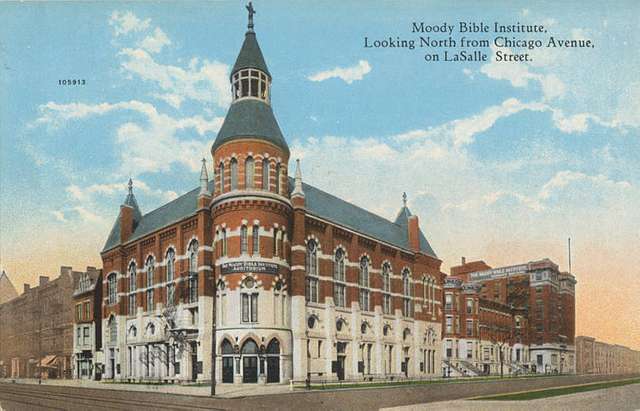
While at Moody, Belle met John Kuhn who also felt called to serve in China. Friendship developed into romance, but Belle wasn’t sure God wanted her to marry him. John sailed for China in 1926.

After graduation, Belle attended the China Inland Mission training school in Toronto. She and John corresponded frequently. In one of his letters he proposed and Belle said yes. They prayed to be assigned in the Yunnan province, hoping to work under Fraser. God answered their prayer affirmatively.

After Belle completed a year of language study, she and John finally married in 1929. Belle moved to Cheng Chiang where he lived.

Yunnan Province in southwest corner

The first time she hosted a few women in their home, a baby soiled the Kuhn’s new rug. Worse yet, Belle found more “guests” after the humans left: bed bugs, fleas, and lice.

“Lord, make these souls more important to me than anything else,” she prayed. And soon genuine love superseded concerns about vermin or stains.

Over the next twenty years, the Kuhns served in five locations. For the most part, John preached in the villages and Belle taught women’s Bible classes. Their first child Kathryn arrived in 1931.

A terrible flood occurred in 1933, during Belle’s second pregnancy. John was away preaching, so she dragged belongings upstairs, some very heavy. Belle miscarried the baby.

There was little time to grieve as a new directive arrived from Fraser the next day: You’re needed in the Salween Valley to work with the Lisu people.

In 1936 Communist soldiers threatened the valley and missionaries were instructed to evacuate. For eight days they trekked northward, but so did the enemy.

“It seemed as if the Communists were after us,” she wrote, “but in real fact, our pursuers were those faithful watch dogs of Jehovah . . . ‘Goodness and Mercy followed us all our days ‘”[2].

In 1937, as the war with Japan escalated, they were told Kathryn needed to attend a far-distant CIM school out of harm’s way, causing a heartbreaking separation.

Belle fought her distress with a new form of ministry to train church leaders: Rainy Season Bible School, taking advantage of the free time inclement weather provided. Many men attended.

In 1938 their dear friend Fraser died. John’s ministry broadened to include travel throughout Lisu territory. At home, Belle continued to teach, but she also found time to write, completing four books during those twenty years of ministry.

Several times the Kuhns had to escape the Communists and then the Japanese. Each time the Kuhns returned when the danger had passed.

Yangtze River, Yunnan Province

Daniel Kuhn was born in 1942. When he was six, Belle and her son had to evacuate again. This time they traveled to America where Kathryn was attending college. John followed a short time later. They were never allowed to return to China.

Did the Kuhns wonder if the Lisu Christians would lose heart and give up their faith?

Author Wright Doyle wrote: “Of the 18,000 Lisu who lived in Fugong, Yunnan in 1950, 3,400 professed faith in Christ. As of 2007, it is estimated that 80-90% of the 70,000 population make the same profession. In Yunnan, it is estimated that there are between 100,00-200,000 Lisu Christians”[3].

A church in Fugong today

For three years the Kuhns worked in Thailand, but then Belle was diagnosed with cancer. She died in 1957 at age fifty-five. Yet even while battling disease, Belle completed five more books.

To this day, the legacy of Isobel Miller Kuhn lives on, among her beloved Lisu people and through her writing.


[1] https://bdcconline.net/en/stories/kuhn-isobel-miller

[2] https://fromthevault.wheaton.edu/2021/03/01/letters-from-lisuland-the-ministry-of-isobel-kuhn/

[3] https://g1.fieldpartner.org/isobelkuhn/

Other sources:  

https://www.evangelical-times.org/isobel-kuhn

https://www.thetravelingteam.org/articles/isobel-kuhn

Photo credits: http://www.dailyverses.net; http://www.picryl.com; http://www.flickr.com; http://www.dailyverses.net; http://www.flickr.com; http://www.enwikipedia.org.

Read Full Post »

71776


No doubt many of you know the name, Jan Karon. She’s the author of the Mitford series, named after the fictional village tucked into the Blue Ridge Mountains where most of her compelling stories take place. Within the pages of these thirteen books live Father Tim, an Episcopal priest, and a delightful cast of eccentric, endearing characters.

One of Mitford’s residents is Dooley, a foster child who is eventually adopted and the recipient of God’s generous, providential care.

In volume #11 of the series, In the Company of Others, Ms. Karon writes of Dooley: “While most people understandably took family for granted, he took it for grace.”

Isn’t that a wonderful quote? I copied it down with the thought, I want to be like Dooley and take all gifts for grace—never for granted.

Gifts such as:

  • A praise song that causes my heart to overflow in joyful, reverential tears.
  • A word of instruction or encouragement that speaks to a need in my life with uncanny accuracy.


IMG_0743

  • Participation with God in his creation–even if it’s just in the yard.  Gardening offers great pleasure and a sense of his presence in the beauty of leaf and flower; the concert of bird song as I putter; the aroma of soil, grass, and blooms; the delicate softness of petals–all gracious gifts of my Heavenly Father.
  • Holy beauty in a writer’s words (even in a secular work)–words like: “Lingering as long as it could, sunset’s sad joy filmed over the day with a delicate blush…” (Susan Vreeland, Lisette’s List, 355).

To “take all gifts for grace” can produce ethereal joy.  For a moment we experience the transcendent, as if the veil between heaven and earth is parted ever so slightly, and a single beam of God’s shimmering glory pierces through the dullness. Suddenly we’re basking in the warm euphoria of his presence.

We never want the moment to end. But inevitably the splendor begins to fade and we’re left reeling like Jacob—as though we’d been transported to the gate of heaven (Genesis 28:17).


3886825d61642e9e40513cc3b0f5aed8


And we’re anxious to repeat the experience.

Is it wrong to desire frequent glimpses of God’s glory?

I don’t think so. Yes, on the one hand we’d be misguided to try and evoke such moments (“Come on, tears! FLOW!”). On the other hand, surely God wants us to live aware, alert to receive those gifts of grace when he sees fit to grant them.

Like Micah, the prophet, we can affirm:


aeb840bdb7c75d8b80d14fc6043675eb

(“As for me, I watch in hope for the Lord,

I wait for God my Savior.”

–Micah 7:7, NIV)


Surely watchfulness is part of seeking—seeking to know him more intimately, to experience him more profoundly (Jeremiah 29:13).


2958f422983b6512856e42b6b07d56eb


And as we grow in our awareness of these glory-infused moments, we begin to realize how often they really do occur.

Just in creation alone we:

  • See him in the towering mountains and trees, the powerful oceans and rivers. There is glory in the grandeur.
  • Hear him in a pounding waterfall and crashing thunderstorm. There is glory in the power.
  • Feel him in a soft breeze and gentle rain. There is glory in the whisper.
  • Take in his aroma from the pungent pine tree and sweet honeysuckle vine. There is glory in the refreshing.


162769


In fact, his glorious gifts of grace are all around us.


*     *     *     *     *     *     *     *     *     *


Thank you, oh God, for the gracious display of your splendor throughout each day. You fill my heart with wonder and joy every time I catch a glimpse of your glory—from an early morning bird chorus to a liturgical dance performed by children, from the encouraging word of a friend to the warm welcome of strangers. I praise you that your gifts of grace are bestowed with such delightful creativity! May I never take them for granted.


What gift of grace has filled your heart with euphoric gratitude lately?  Tell us about it in the Comment section below!


(Art & photo credits:  www.goodreads.com; Nancy Ruegg; http://www.pinterest.com (2); http://www.doityourself.com.)


Read Full Post »


Seeking after God.  It’s a concept we come across frequently in scripture.  But God is Spirit; he’s invisible to us.  How do we seek after someone we can’t see?

Perhaps we can answer that question by considering the ways we seek a person, who can be seen.

Example #1:

When my husband, Steve, and I are separated in a crowd, it’s quite amazing how quickly I can spot him.  Beyond height, hair, and eye color, I know the breadth of his shoulders, the way the hair grows on the back of his head, the shape of his ears.  In fact, it’s such nuances as these that draw my attention, even more than the descriptors listed on his driver’s license.

Perhaps our first step in seeking God is to get to know what he looks like, although not his physical Being, since he’s chosen not to reveal himself that way.  But as we read his Word, the Bible, we become familiar with who he is.  Through frequent, thoughtful study—not occasional reading—we learn about his character and his ways.  One guiding question can train us to seek God as we study:  What does this passage teach me about God?

Example #2:

Sometimes I find Steve in a crowd when I hear his voice or the timbre of his laugh.

Step two in seeking God:  We can listen carefully for his voice, although he rarely chooses to speak audibly.  More often he communicates his wisdom and encouragement to us through the Bible, and the voices of wise and mature Christians—spoken and written.

God also speaks directly into our spirits, so we must cultivate the habit of listening carefully for strong but silent impressions.  We can ask God to make clear if those thoughts are indeed from him.  He will affirm.

Example #3:

I know Steve’s signature.  Give me a sheaf of papers with Steve’s name written by different people, and his distinctive style will stand out from the others.

Step three in seeking God:  Look for his distinctive signature of wisdom and power in his people and in God-incidents.

Even in creation, “God’s invisible qualities—his eternal power and divine nature—have been clearly seen, being understood from what has been made” (Romans 1:19).


Take note of the slow loops of a circling hawk, the graceful curve of a flower stem, the straight, tall sentries of a pine forest.  Pay attention to the perfect oval of a ladybug, the teardrop shape of  a milkweed seed, or the mounds of clouds in a summer sky.  You’ll soon find that God loves variety, pattern, organization, beauty, intricacy, and color.  Your heart will begin to respond with wonder and praise for your magnificent, powerful God.

Example #4:

Steve doesn’t even have to be with me, and my thoughts will turn to him.  A song, a phrase, a person who reminds me of someone from our past, and I think, “Oh, Steve would like this,” or, “I’ll bet Steve would agree he looks just like So-and-So.”

Just looking down at my new Mother’s Day watch, and I’m reminded of my thoughtful, generous husband.

Step four in seeking God:  As we get to know God through the Bible, as we learn to hear his voice, as we see his signature everywhere, we find our thoughts turning to him throughout the day.  A song may urge a response of praise.  A phrase might prompt a prayer, a person’s gracious kindness causes us to reflect upon his character shining through that individual.

And every blessing should result in gratitude.

Seeking God is an ongoing, progressional process.  Awareness of his presence grows slowly yet continually.  Perhaps God planned it that way so we always have more delights to discover about our Heavenly Father until we do see him face to face.


Seeking after God can begin with a simple prayer:  God, I want to know you more intimately,  to sense your presence  even though I can’t physically see you.  And I want you to be an integral part of my life and thoughts.  Nothing could be more satisfying than a close relationship with you.  This is what I seek.

That’s my prayer.  Will you seek God with me?  What steps have helped you to seek after God?

(Art & photo credits:  www.experienceproject.com; http://www.luddite1811.blogspot.com; http://www.revelife.com; http://www.finartamerica.com;  www.hullquist.com.)

Read Full Post »

Still Traveling

Impressions Becoming Expressions

Living Our Days

Gaining a heart of wisdom

He Said What?!

I'm Patty, and my husband and I are living with our adult son who has autism and epilepsy. I love sharing lessons learned from life around me, especially life with Aaron.

Meditations of my Heart

Impressions Becoming Expressions

Linda Stoll

Impressions Becoming Expressions

Debby Thompson

Impressions Becoming Expressions

Signora Sheila

Notes on Life, Faith & Italy

Colleen Scheid

Writing, Acting, Living in God's Love

Mitch Teemley

The Power of Story

Heidi Viars

Finding the Image of God