Feeds:
Posts
Comments

Posts Tagged ‘Jesus’ birth’

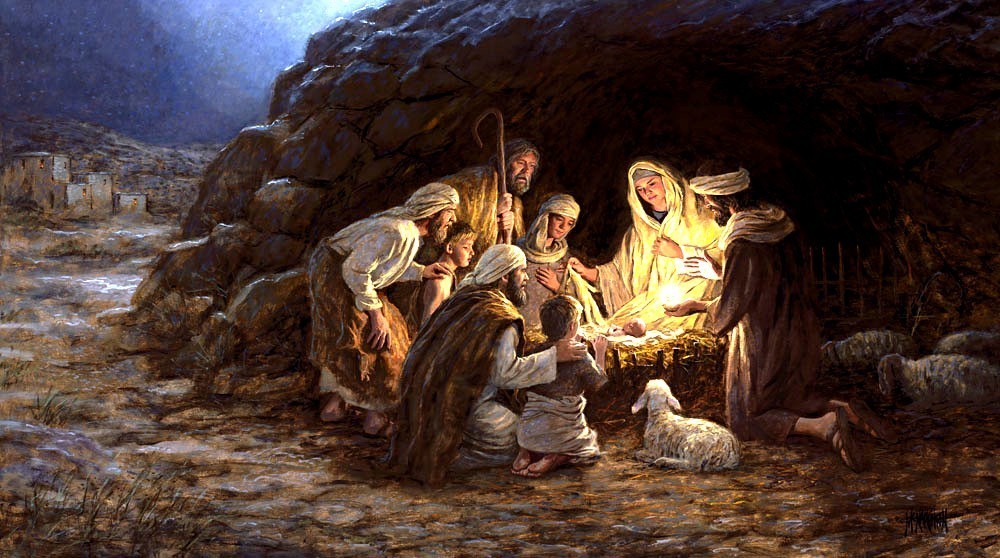
The Annunciation by Philippe de Champaigne, 1644

‘Remember what the angel Gabriel said to Mary when he first appeared to her?

“Greetings, you who are highly favored! The Lord is with you. Do not be afraid, you have found favor with God” [1].

He then made an incredible announcement. Mary would give birth to the Messiah [2].

Did her mind jump to Isaiah’s prophecy about a young woman who would conceive and give birth to Immanuel?
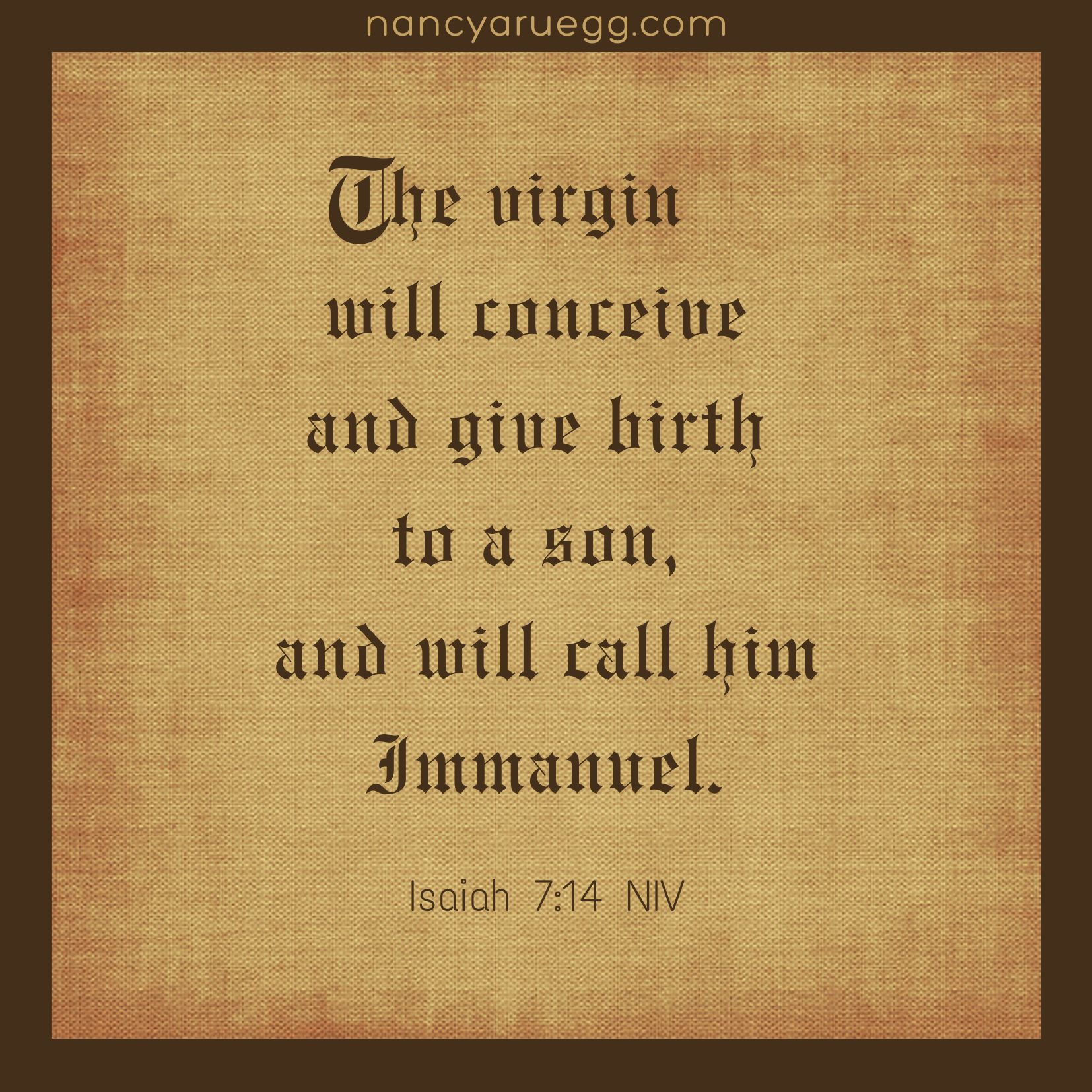
Surely many Jewish girls knew the passage. And each must have wondered, Might I grow up to be the mother of the King of all?

God favored Mary with the singular role of mother to the Righteous One. Perhaps his choice was based on Mary’s virtue, but scripture gives no indication of that.

Luke did mention that Zacharias and Elizabeth, the parents of John the Baptist, “were righteous in the sight of God, observing all the Lord’s commands and decrees blamelessly” [3].

But no such commendation is given for Mary. It may be God wanted us to understand: he can use anyone. His empowerment doesn’t depend on social standing, intelligence, accomplishments, or even moral superiority.

Our part is willingness and faith, which Mary did demonstrate when she professed: ‘’I am the Lord’s servant. May your word to me be fulfilled” [4]. Mary acquiesced to God’s plan, his choice for her.  
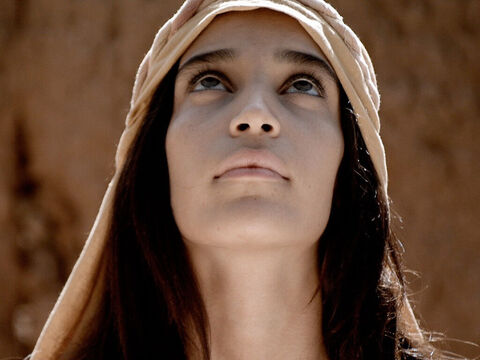
If you’re like me, you’ve wondered about the favor bestowed upon Mary. To us the word conjures up kindness and generosity.

But Mary faced:

  • rejection and cruelty as a pregnant and unmarried, young teen [5]
  • the probable annulment of her engagement to Joseph
  • a grueling trip to Bethlehem, nine months pregnant
  • delivering her first child in a stable-cave
  • another difficult journey to Egypt to protect Jesus from Herod’s slaughter
  • the hurtful disapproval of many for her firstborn, including his own half-siblings
  • watching her son die in agony [6]

How could Gabriel call Mary favored?

We’re looking in the wrong direction. God’s favor, his best for us, does not guarantee an easy path through life and an abundance of material blessings. That kind of favor would only spoil us.

God would have us look in the direction of more satisfying favor: his spiritual blessings [7].

That’s what Mary did, evidenced by her Magnificat, a prayer preserved for us in Luke 1:46-55, where she praised God for his mindfulness of her, his might that had accomplished great things for her, his mercy extended to those who fear God, and more.

In the NIV Study Bible, nineteen cross-references from this passage cite verses from seven books of the Old Testament. Mary knew scripture.

It’s unlikely she thought God’s favor would bring fame and fortune. Mary would have known that God’s best more often includes:

  • empowerment to carry out his assignments
  • instruction in the ways we should choose
  • help in times of trouble
  • strength to endure hardship and grief
  • compassion and comfort to quell distress
  • satisfaction in taking part in God’s wonderful plans [8]
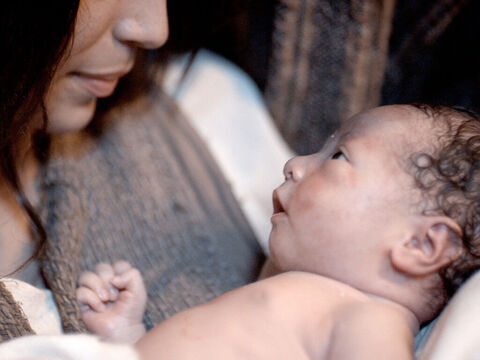
And as God’s wonderful plan of redemption for all people began to unfold, his favor began to flow upon Mary.

He dispelled her fears, gave her courage to tell Joseph the unsettling news, inspired Mary to visit her wise cousin Elizabeth for encouragement, filled her with endurance for the journey to Bethlehem, and strength for the birth of her first child in less-than-ideal circumstances.

Of course, Mary isn’t the only one who’s experienced the favor of the Lord. God’s best is available to everyone who allows God to choose what’s best.

God would have us know:
By his favor he forms our characters and fits us for satisfying service. He charts our course, imparts strength to accomplish his plan, supplies all that is necessary, and ultimately crowns our efforts [9].

Just as he did for Mary.


[1] Luke 1:26-30 NIV, emphasis added

[2] Luke 1:31-33

[3] Luke 1:6

[4] Luke 1:38

[5] This was surely Mary’s experience, given the social norms of the day.

[6] Matthew 1:18-19; Luke 2:1-5; 6-7; Matthew 2:13-15; Mark 3:20; John 19:26-27

[7] Ephesians 1:3

[8] Psalm 138:8 ESV; 25:12; 46:1; 73:26; 86:15; Isaiah 66:13a; Psalm 128:1

[9] Based on Herbert Lockyer quote, Seasons of the Lord, 202.

Image credits: http://www.picryl.com; http://www.canva.com; http://www.freebibleimages.org (4); http://www.stockvault.net.

Processing…
Success! You're on the list.

Read Full Post »

If asked to name a theme from the Christmas story, most people would probably mention one of these:

  • Love—expressed by God when he sent his Son to be born a man, then die in our place (John 3:16)
  • Joy—that the Savior of the world has come (Luke 2:10-11)
  • Peace—because Jesus is our Prince of Peace (Isaiah 9:6)
  • Hope—in the knowledge that our future is secure in heaven, when we believe in Christ (1 Peter 1:3-5)

But another word is mentioned more often in the account than any of the four mentioned above.  Perhaps you’ve already discovered this theme: 

FEAR.

You’ll remember:

  • Mary was greatly troubled when Gabriel appeared. He had to reassure her, “Do not be afraid for you have found favor with God” (Luke 1:29-30).
  • Joseph received an angelic visitor in a vision. “Do not be afraid to take Mary home as your wife,” he was instructed (Matthew 1:20).
  • The shepherds were terrified when an angel materialized before them.  They too heard: “Do not be afraid” (Luke 2:9-10).
Annunciation to the Shepherds
by Edouard Joseph Dantan (1848-1897)

I jump and shriek if my husband walks into the room and I haven’t heard him coming. What must it feel like to witness the sudden appearance of an angel?    

And just so we understand:  Angels are formidable beings—quite different from the delicate, winged creatures or sweet little cherubs often found in paintings or nativity scenes. (See Daniel 10:5-6 for one description of a fearsome angel.)  

The Nativity by Bartolome Esteban Murillo (1617-1682)

One of our pastors said Sunday, “In my imagination, I see Gabriel about the size of Dwayne Johnson!”

No wonder these Christmas-story participants were afraid, to be confronted with such a large, commanding presence.

But surely the angel’s message of “Do not be afraid”–spoken three times in the narrative–is not just happenstance.  Perhaps God would have us learn how to respond to fear from the examples of Mary, Joseph, and the shepherds.

First, Mary would teach us to counter fear with faith.

It’s doubtful the fear brought on by the angel’s appearance just evaporated at his command. Yes, his message contained good news, including great honor for Mary, but it also came with risks: “scandal, misunderstanding, lunacy charges, and possibly stoning.”[1]

Yet this young girl responded, “I am the Lord’s servant.  May your word to me be fulfilled” (Luke 1:38).

Mary demonstrates:  Faith and fear can coexist as we exercise the former to control the latter.

Second, Joseph would teach us:  “Do it afraid.”[2]

Courage is not the absence of fear; courage acts rightly in spite of fear.

Joseph is a prime example. He’d face scandal himself as news of Mary’s pre-marriage pregnancy spread through Nazareth. Would his neighbors whisper in the shadows as he passed?  Might people refuse to employ him as their carpenter? Would his reputation as an honorable man (Matthew 1:19 GWT) be sullied forever? Surely such questions plagued Joseph.

Yet he chose to do the right thing.

Third, the shepherds would teach us to fight fear with truth.

Even while cowering in fear, the shepherds listened to the angel.

“I bring you good news that will cause great joy for all people,” the angel announced.  The shepherds’ hearts that had pounded with fear the moment before must have continued racing, in anticipation of what this glad celestial news might be:

I imagine the angel’s voice boomed with emphasis upon each phrase.  And now all-out excitement coursed through the shepherds’ veins.  Fear had been eradicated by the truth of what God’s messenger had told them.

In our time we’ve no need to wait for an angelic visitation to bring us good news. Our Bibles provide all the truth, wisdom, and encouragement necessary to meet all circumstances—even those that cause fear.

Like Mary, Joseph, and the shepherds, we have a choice: give in to fear and become disheartened, paralyzed, and useless, OR we can exercise our faith to become encouraged, empowered, and useable.


[1] Patsy Clairmont, Joy Breaks, p. 109.

[2] Suzanne Eller, A Moment to Breathe, p. 43.

Art & photo credits: http://www.freebibleimages.org; http://www.wikimedia.com; http://www.picryl.com; http://www.pxhere.com; www. rawpixel.com; http://www.pixhere.com.

Read Full Post »


Does that title sound familiar? It’s an old Christmas carol—my maternal grandmother’s favorite. Sadly it never occurred to me to ask her why.

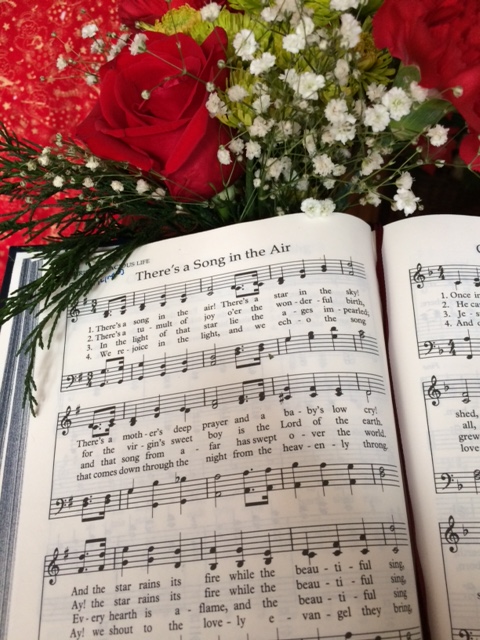
Perhaps it was the lilting tune that dances up and down the treble clef, with leaps from low notes to high. (You can listen to the carol here: There’s a Song in the Air.)

Perhaps Grandma especially enjoyed the expressive lyrics since she was a poet herself. I found this Christmas poem in her journal.  (Keep scrolling for a typed version–easier to read.):


FOR CHRISTMAS 1955

Star of the East that shone for men

To guide to Jesus’ side,

Shines in the Christian heart today

Where the Lord Jesus abides.

For he’s the Bright and Morning Star,

Turning darkness into light.

He died on Calvary to save,

To remove sin’s dark blight.

Baby Jesus was born a King,

A Savior to die yet to reign.

He left His home in heaven above

And chose instead earth’s pain.

–C. E. M.  (Clara Edna Mensinger)


Perhaps “There’s a Song in the Air” appealed to Grandma because her creative soul responded to such artful lines as these:


  • And the star rains its fire while the beautiful sing
  • And that song from afar has swept over the world
  • In the light of that star lie the ages impearled
  • Ay! We shout to the lovely evangel they bring


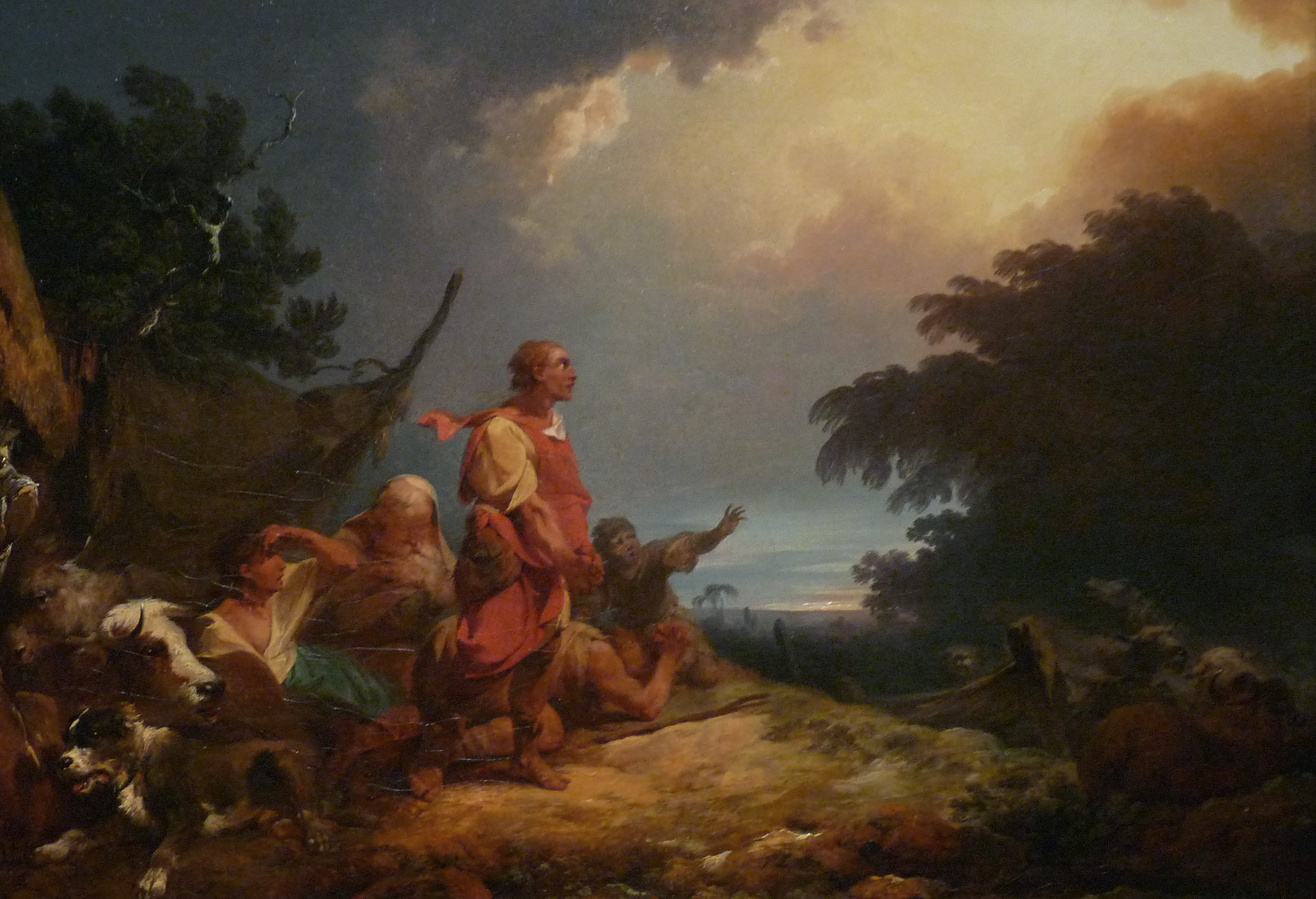
“The Angel Appears to the Shepherds”

by Philip James de Loutherbourg (1740-1812)


I wonder if Grandma ever became curious about the origins of the carol? Did she know that the composer of the tune, Karl Harrington, discovered the lyrics while reading the works of one of his favorite authors Josiah Holland?

Holland was a novelist, poet, and editor of the popular Scribner’s Monthly. In the 1870s he reprinted his Complete Poetical Writings. This was the book in which Harrington found the poem “There’s a Song in the Air.”

At the time, the summer of 1904, Harrington was struggling through an overwhelming assignment: to compile a new hymnbook for the Methodist Church. Even for someone with his background as a highly trained musician, choral director, and composer–the task proved difficult.


Karl Harrington (1861-1953)


While taking a rest one hot afternoon, he picked up Harrington’s book, came across the poem, and immediately felt inspired to set the lovely verse to music.

He went to his organ and as he read the words aloud, let his fingers drift along the keys. A melody soon began to form. Harrington included the carol in the new hymnal.*

Perhaps like Harrington, my grandmother appreciated the fresh wonder stirred up by such inspiring lines as:


  • The manger of Bethlehem cradles a King!
  • There’s a tumult of joy over the wonderful birth
  • We rejoice in the light, and we echo the song, that comes down through the night from the heavenly throng


Grandma didn’t know Jesus until her mid-thirties, and up to that time had endured several painful traumas. (You can read a bit of her story in the post, The God of Rachel, Henry, and Clara Part 2.) But her newfound relationship with God brought peace and strength.


(Grandma Clara, years later, 1968.

P.S.  Those glasses were the height of fashion back then!)


Perhaps a carol about joy, light, and song reminded her of the transformation Christ had brought to her life.

Grandma would want these lyrics to speak to our hearts too, refreshing our wonder in a Savior once cradled in a manger, destined to be King, who comes to us with “the lovely evangel” (verse 4, line 3)–the good news of God’s gracious plan to rescue us.

Hallelujah and a blessed Christmas to all!


*Ace Collins, Stories Behind the Best-Loved Songs of Christmas (Grand Rapids, MI: Zondervan, 2001) 164-166.


What is your favorite carol and why? Please share in the comment section below!


Art & photo credits:  Nancy Ruegg (2); http://www.pixy.org; http://www.wikimedia.org; http://www.hymnary.org; http://www.pixy.org; Nancy Ruegg.


Read Full Post »

Still Traveling

Impressions Becoming Expressions

Living Our Days

Gaining a heart of wisdom

He Said What?!

I'm Patty, and my husband and I are living with our adult son who has autism and epilepsy. I love sharing lessons learned from life around me, especially life with Aaron.

Meditations of my Heart

Impressions Becoming Expressions

Linda Stoll

Impressions Becoming Expressions

Debby Thompson

Impressions Becoming Expressions

Signora Sheila

Notes on Life, Faith & Italy

Colleen Scheid

Writing, Acting, Living in God's Love

Mitch Teemley

The Power of Story

Heidi Viars

Finding the Image of God