Feeds:
Posts
Comments

Posts Tagged ‘Psalm 18:28’

What would happen if the keeper(s) of the house gave up their responsibilities? Can you imagine the pile-up of dishes and dust, garbage and grime, dirty clothes and clutter? The house would soon become uninhabitable.

Now think of what would happen if the Keeper of the universe gave up his responsibilities–just on Planet Earth.

His carefully-engineered habitats for plants and animals would collapse, weather patterns conducive for agriculture would become sporadic, and the regulation of Earth’s orbit and rotation would end. Our planet would soon become uninhabitable.

Our God is indeed Keeper extraordinaire of creation!

But his preservation skills impact more than the physical realm. Skim-read these scriptures and see what categories-of-keeping you notice:

  • “The Lord bless you and KEEP you [protect you, sustain you, and guard you]” (Numbers 6:24 AMP).
  • “Lord God of heaven, . . . you faithfully KEEP your promise and show mercy to those who love you and obey your commandments” (Nehemiah 1:5 NIV).
  • “You Lord, KEEP my lamp burning and turn darkness to light” (Psalm 18:28 CEV).
  • “The Lord will KEEP you from evil; he will KEEP your life” (Psalm 121:7 ESV).
  • “You will KEEP in perfect peace all who trust in you, all whose thoughts are fixed on you” (Isaiah 26:3 NIV).
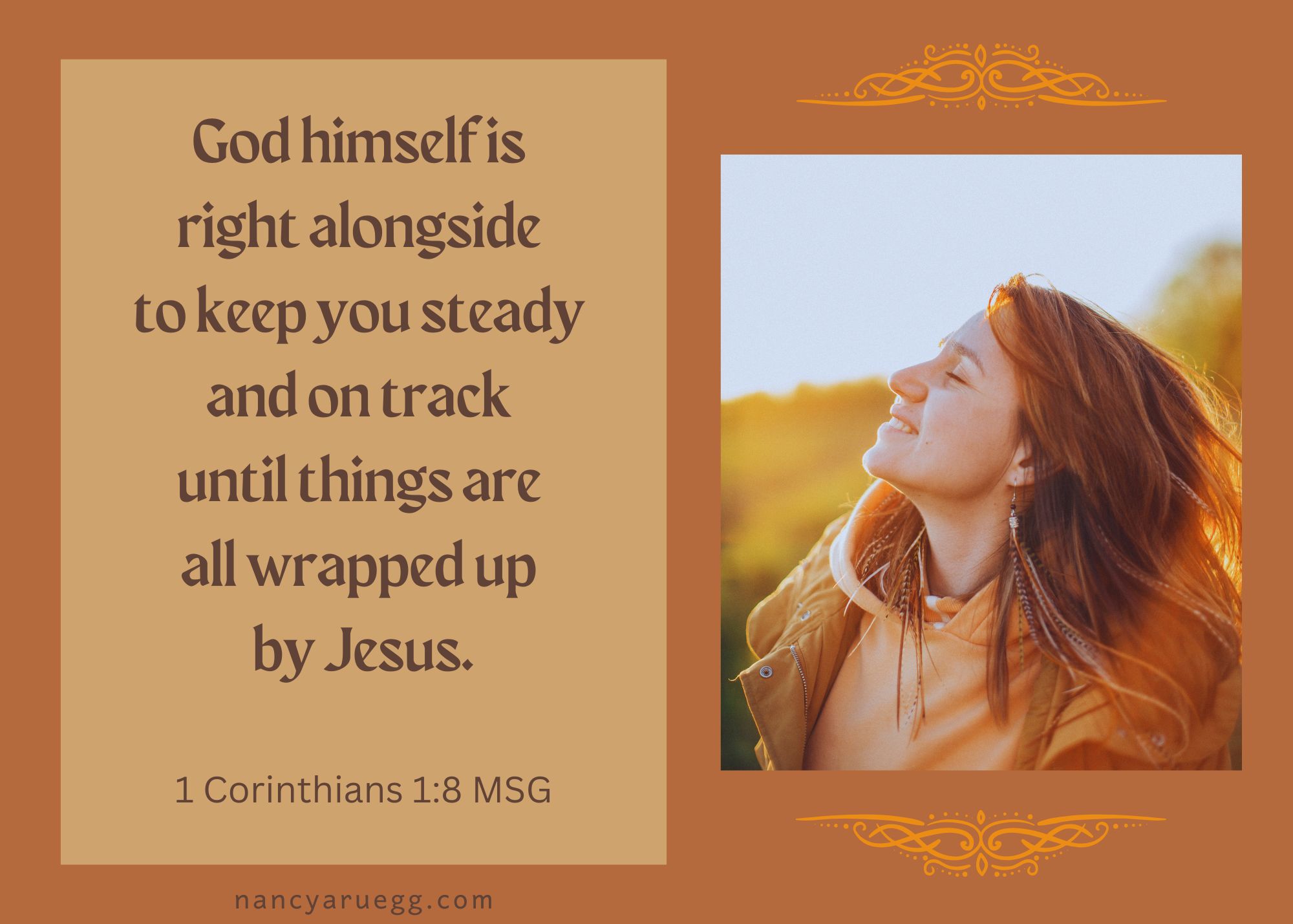
  • “He will KEEP you strong to the end” (1 Corinthians 1:8 NLT).
More scriptures could be added, but even this short list makes clear: We are cared for, guarded, preserved, protected, provided for, shielded, upheld, and watched over (all synonyms for kept).

I’ve lived long enough to see much evidence of God’s keeping, including:

  • His provision when the A/C repairman “just happened” to have in his truck the part we needed, slightly used but still good, which he gave us without charge.
  • God’s protection when the IRS declared our son owed the government $5000. He engaged a tax accountant who verified he only owed $1500. But she also found additional deductions and discovered the IRS owed him $1500!
  • God’s care during sieges of too much to do and not enough time to do it, relieved by changes of plans, help from unforeseen sources, and tasks that didn’t take as long as expected.
  • God’s preservation when troubling events haven’t happened: exposure to illness and we didn’t get sick, dangerous weather projected by meteorologists turned out to be much less severe, or a meeting expected to be stressful actually went smoothly.

Such circumstances occur more frequently than we realize. In fact, “There are not five minutes in the day when [we] do not need the Almighty Keeper to keep charge of [us]” [1].

For some, however, keeping sounds constrictive, like God is repressing us under his thumb, insisting on control, spoiling our fun.

Charles Spurgeon offers a different perspective: “It is . . . a delightful thing to be kept of God . . .  They are kept indeed whom God keeps: they are preserved from evil; they are reserved unto boundless happiness” [2]. The above examples offer proof.

“No, no,” some will say. “Evil happens to good people much too often; sadness intrudes upon every life. Where is God’s keeping then?”

Surely the Apostle Paul was addressed such a question, while held under house arrest in Rome.

He might have answered, “I’ve known and served Christ for many years, and have enjoyed countless blessings along with dynamic relationships. I’ve watched God perform astounding miracles and seen people’s lives transformed by faith in Christ.

“But I’ve also experienced hardship, persecution, suffering, and sorrow, including my imprisonment now. God doesn’t necessarily remove us from difficulty; he preserves us through it.

“We’re upheld by his light in darkness, his comfort in stress, his strength in trouble, his peace in upheaval, and even his joy in spite of disappointment” [3].

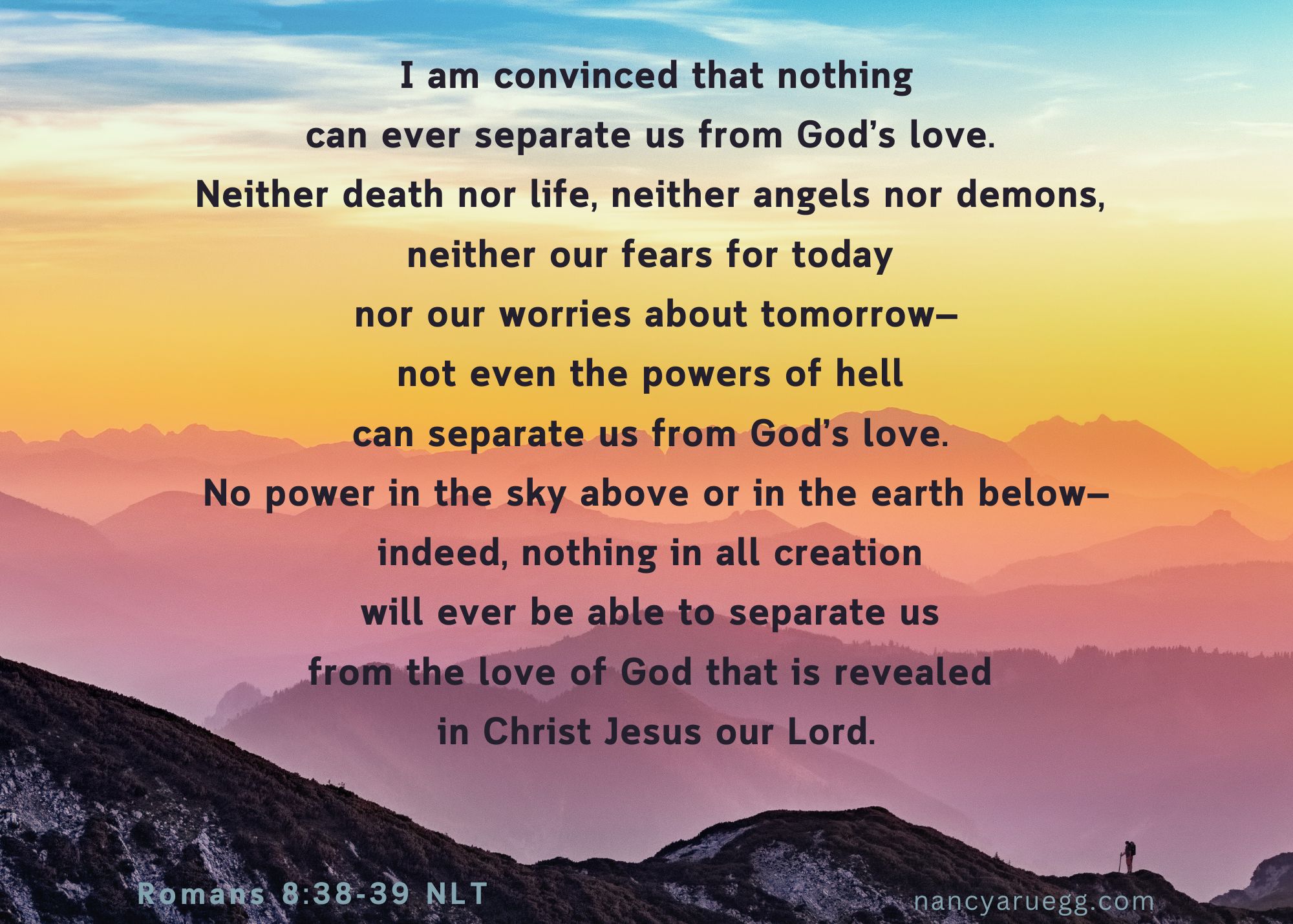
And because he wanted everyone to remember that nothing can interfere with God’s compassionate keeping of our lives, Paul wrote:    
How has God demonstrated his compassionate keeping in your life? Please share in the comments below!


[1] Andrew Murray, The Spiritual Life, Whitaker House, 1996, 235.

[2] Faith’s Checkbook, August 4.

[3] Psalm 55:22; 139:12; 23:4; Isaiah 41:10; Nehemiah 8:10c.

Image credits: ww.flickr.com; stockcake.com; http://www.canva.com; stockcake.com; http://www.canva.com (2).

Processing…
Success! You're on the list.

Read Full Post »

Three weeks ago we embarked upon a reflection of one of the most important songs in the history of the Christian faith: “O Come, O Come, Emmanuel.”

The lyrics beautifully weave together the Old and New Testaments, telling the story of our Messiah, “the chosen One”—who would come to deliver his people from the consequences of their sins and establish his kingdom forever [1].

Each verse helps us place our eyes on Jesus’ return by remembering his first coming and then expressing hope and yearning for his second coming [2].

As noted before, the unknown lyricist (from the eighth or ninth century) carefully based each stanza on scripture. You’ll find references for further reflection listed at the end of this post.

One fact not mentioned thus far: the poet constructed the Latin lyrics in the form of a seven-sentence acrostic. When the first letter of the second word of each sentence (the names of Jesus) are put together, they spell SARCORE.

Read that word backwards, and the letters form two words of sublime hope: Ero cras, which means, “I will be present tomorrow.”

Whatever the future may hold, our Emmanuel will see us through. What a faith-stirring surprise the lyricist created for us [3]!

Now let’s turn our attention to the last two verses [4].

VERSE SIX

I praise you, Lord Jesus, that just as the morning star shines brightly against the darkness of night, you are the glorious Light of the world, shining brightly against the darkness of evil [5].

Just as the morning star glows steadily without a flicker, you shine in our lives with unwavering faithfulness and love [6].

Just as the morning star is a promise of coming day, your light provides hope and assurance that you will come again, to usher in The Day of the Lord, when a new heaven and a new earth will be established and righteousness will dwell [7].

Finally, just as the morning star can guide those at sea, your light guides our way through life. “In your light we see light”—the light of wisdom and discernment [8].

Such truths do bring us comfort, dispelling shadowy thoughts and flooding our spirits with the light of your perfection.

I praise you, Lord Jesus, for turning the darkness of sin, anxiety, discouragement, and more, into the light of your forgiveness, peace, hope, and joy [9]!

VERSE SEVEN  

I praise you, Lord Jesus, our King! How comforting to know that Someone all-wise and supremely gracious is the Ruler of all nations, all things [10].

Yet you are also a respecter of persons. You’ve bestowed upon us the gift of choice, the ability to determine our own way. And what have we accomplished? Our world is tainted by selfishness, pride, and contention [11].

How we need you, Lord Jesus! You are our only hope for our selfishness to be transformed into selflessness, pride into humility, and contention into unity.

So we boldly pray that every person on earth would come to faith in you [12].

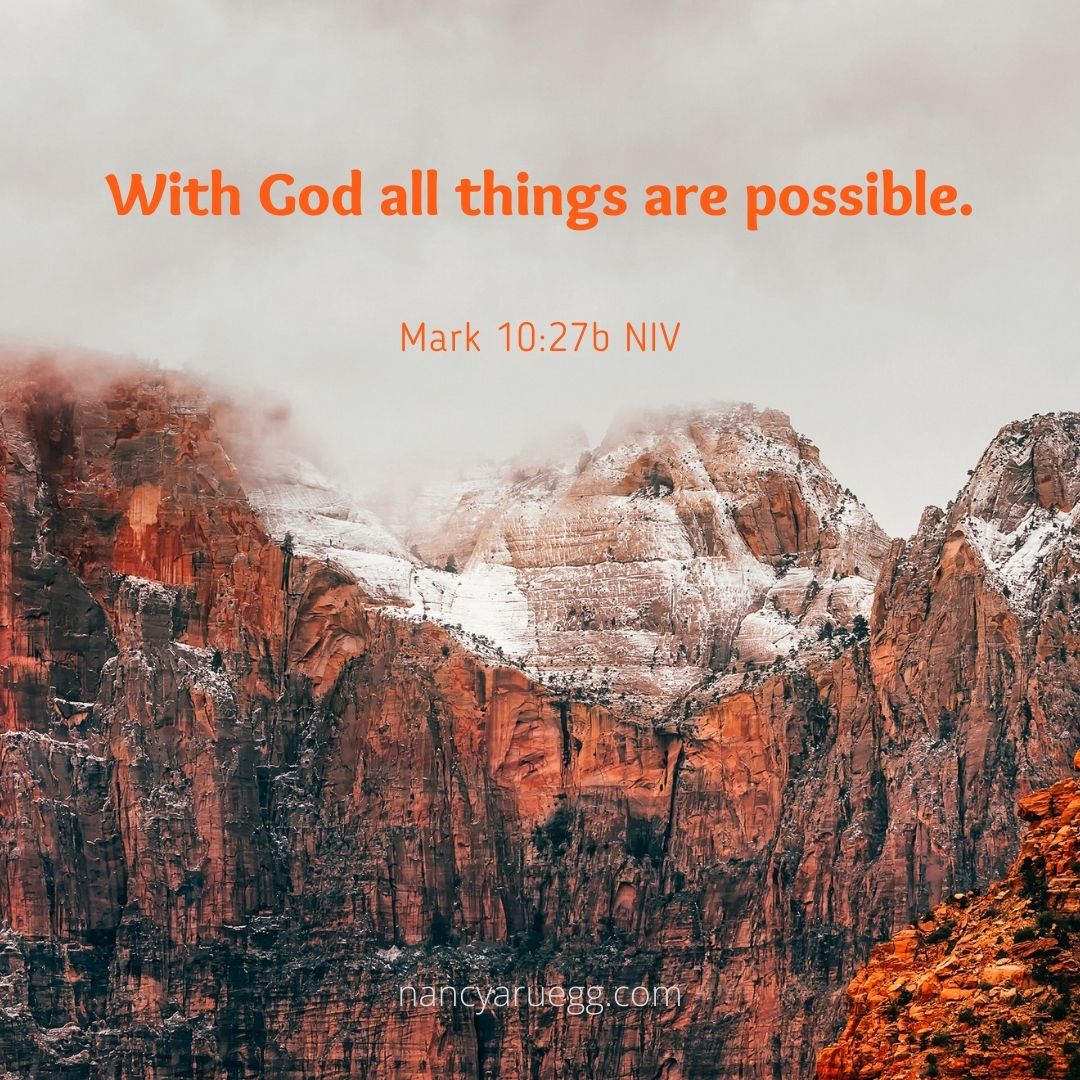
Is that an unattainable dream? No, because you also are unwilling that anyone should perish. And all things are possible with you, our sovereign God and Savior [13].

After all, you:

  • Created all things everywhere
  • Maintain order in the entire universe
  • Control the course of human history
  • Depose kings and raise up others
  • Exist in all places at the same time [14]

I praise you, Lord Jesus, that nothing can prevent you from accomplishing your purpose [15].

And I praise you, Lord Jesus, that you’ve given us the wherewithal to experience harmony with one another, as we demonstrate love and compassion with humility [16].

May we be examples to the world, whetting their appetite for what we experience: the joy of living in the presence of the King of Peace [17]!


[1] Ace Collins, Stories Behind the Best-Loved Songs of Christmas,127; Isaiah 59:20; John 1:40-49; Romans 6:23; Revelation 11:15.

[2] https://www.danielim.com/2017/12/19/the-hidden-theology-and-history-of-o-come-o-come-emmanuel/

[3] https://www.ligonier.org/learn/articles/o-come-o-come-emmanuel

[4] From www.hymnary.org. (Lyrics vary depending on source.)

[5] Revelation 22:16

[6] Psalm 100:5; John 8:12

[7] 2 Peter 3:12-13

[8] Psalm 36:9b; Ecclesiastes 2:13-14

[9] Psalm 18:28

[10] Revelation 19:16

[11] Proverbs 5:23

[12] 1 Timothy 2:1-4

[13] 2 Peter 3:9; Mark 10:27b

[14] Colossians 1:16-17; Daniel 2:21; Jeremiah 23:23-24 GNT

[15] Psalm 115:3

[16] 1 Peter 3:8

[17] Psalm 16:11

Photo credits: http://www.flickr.com; http://www.heartlight.org; http://www.stockvault.net; http://www.rawpixel.com; http://www.stockvault.net; http://www.canva.com; http://www.pickpik.com.

Read Full Post »

2008_003703


We sat on the runway, awaiting take-off clearance for our flight. Low, thick clouds hung above us, shrouding the area in gloom. Folks in the plane sat quietly in their seats. Really quiet. Not very many smiles either. The oppressive bleakness outside seemed to cause a depressive state inside.

Finally we felt the plane move, pick up speed, and lift off the ground. In seconds the view out our windows was obliterated by the gray-white clouds. We could see absolutely nothing, as if curtains had been drawn outside the windows. Was the plane even moving? There was no way to tell, except for the loud drone of the engines and the upward angle of the plane.

Suddenly we escaped the cloud bank and were almost blinded by the brilliant sun. Some people turned off the overhead lights, others closed their window blinds against the glare.

As a result of the bright light, the atmosphere changed inside the plane. The dark mood of moments before turned to cheer. Some passengers shifted in their seats, sitting up a bit straighter. Soft chatter, even a few chuckles, peppered the air.

What a difference sunlight makes.

The physiological connection between sunlight and mood has been studied by scientists. They’ve determined that sunlight increases the production of serotonin in the brain, which is tied to wakefulness and feeling happy.

Those of us who know God can experience another source of light – his light — even when the dark clouds of trouble roll in (Psalm 18:28).  The benefits are incredible.

1.  “In [his] light we see light” (Psalm 36:9b). As we practice God’s presence and live according to the directions of his Word, we see the wisdom of his ways. We also become more aware of God’s glorious attributes shining into our lives—his power, loving kindness, grace, and more.

2.  “Blessed are those who have learned to acclaim you, who walk in the light of your presence, O Lord. They rejoice in your name all day long; they exult in your righteousness. For you are their glory and strength” (Psalm 89:15-17a).

Take note. God is righteous. Everything he does is good and right, absolutely perfect.

Did you catch that amazing statement at the end?  Our God of Light is our glory. He is magnificent, full of splendor, and grandeur, yet he is our Heavenly Father!  Could any state of circumstances be more incredible?

God is the source of all strength. Think of it. The all-powerful, all-knowing, sovereign God of the universe is on our side—all the time. He is completely, forever committed to us, until that day we see him in all his glory, our King of kings!

3.  “The Lord is my light and my salvation—whom shall I fear” (Psalm 27:1)?

Consider what dark clouds might symbolize in our circumstances: stress, problems, fear, and sorrow.

Now consider what the Lord of Light brings to us: guidance, wisdom, joy, provision, comfort, grace, and peace.

He is light within us and around us.

Sometimes when a thick cloud bank of difficulty settles over our lives, we think God has abandoned us. But take note of these wise words:


“Measure not God’s love and favor by your own feeling.

The sun shines as clearly on the darkest day as it does in the brightest.

The difference is not in the sun,

but in some clouds which hinder the manifestation of the light thereof”

– Richard Sibbes (Anglican theologian, 1577-1635).


Praise God for his glorious constancy!


(Photo credit:  www.vision.cs.uiuc.edu.)

Read Full Post »

Still Traveling

Impressions Becoming Expressions

Living Our Days

Gaining a heart of wisdom

He Said What?!

I'm Patty, and my husband and I are living with our adult son who has autism and epilepsy. I love sharing lessons learned from life around me, especially life with Aaron.

Meditations of my Heart

Impressions Becoming Expressions

Linda Stoll

Impressions Becoming Expressions

Debby Thompson

Impressions Becoming Expressions

Signora Sheila

Notes on Life, Faith & Italy

Colleen Scheid

Writing, Acting, Living in God's Love

Mitch Teemley

The Power of Story

Heidi Viars

Finding the Image of God