Feeds:
Posts
Comments

Archive for September, 2023

Online dating services have proved: you don’t have to see a person to fall in love. Through heart-to-heart sharing over the internet, couples can become acquainted with the likes and dislikes of one another, their opinions on current issues, and what brings them satisfaction in life.

The format provides the opportunity to learn about who the other person is before finding out what he/she looks like.  (One site requires five contacts back and forth before names are exchanged–much less photos.)

It’s possible that couples in new online relationships grow to know one another better than couples who meet face-to-face, because they communicate more and at a deeper level. (Assuming they’re being honest, of course.)

Similarly, we can grow to know and love God through heart-to-heart sharing, even though we can’t see him.

For example, we might share such whisper-thoughts as these, when:
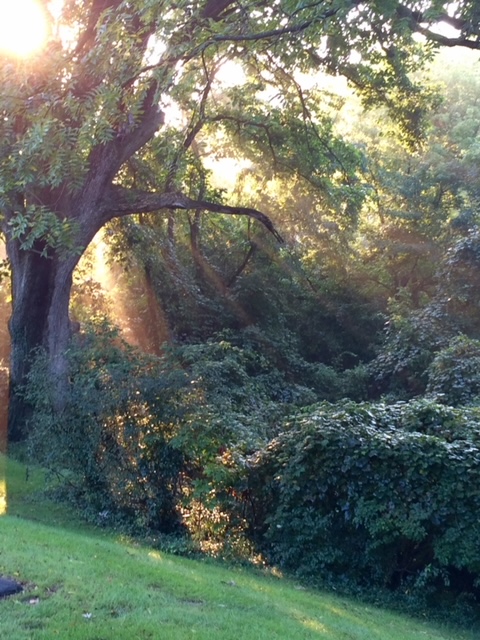
The view from our deck one September morning

  • Our attention is drawn to sunbeams on mist-draped foliage, and we turn the observation into praise for God’s creative handiwork
  • Someone grabs us in an exuberant hug, and we thank God for family and friends who provide encouragement and support
  • An unpleasant task is finished, and we praise him for the fortitude to see it through
  • Humor comes into our lives and we laugh in response, but also in gratitude to the God of all joy
  • We light quiet-time candles, reminding us the Light of the world is with us in our solitude

There is no sweeter manner of living in the world

than continuous communion with God.

Brother Lawrence (1611-1691)

But one-sided communication doesn’t build a relationship. Listening for God’s words and watching for his works are essential. How do we do that? God rarely speaks audibly or shows himself physically. No one has seen his face (1).

However, God does reveal his heart to us in a number of ways through:

The Bible 

No surprise there. Its pages offer a lifetime of new discoveries about who our God is and how he works in our lives. We hear God’s wisdom in his words; we see God’s love in his actions (2).

Other reading 

Although Christian writers often provide personal impressions from God, he sometimes speaks through secular works as well. Such moments often catch me off guard.

Recently I read Natalie Goldberg’s Writing Down the Bones (1986). Among the many worthy morsels I wrote down, she said, “We walk through so many myths of each other and ourselves; we are so thankful when someone sees us for who we are and accepts us.”

O God, I thought, that describes YOU! You see more of my real self than anyone, yet you still accept me. How astounding that you, a perfect God, envelop me in absolute love–in spite of all my flaws.

People  

What a heart-lift when others provide encouraging words, warm smiles, or comforting hugs–especially when we remember such good and perfect gifts come from God himself (3).

Creation

John Calvin once described the world of nature as God’s glorious theater. As we take note of his infinite genius on display, we learn of his ingenuity, attention-to-detail, and ability to bring together disparate parts into harmonious habitats.   Our hearts fill with wonder.

Music  

Sometimes I can almost feel God’s warm touch on my shoulder as he speaks comfort, strength, and joy through the power of song.

Notice: when God communicates with us, there’s a heart-reaction.  We experience a quickening in our spirits as we recognize his truth, sense his loving attention, receive guidance and empowerment, or know without a doubt he’s with us and has everything under control.

So!

Keep your eyes open for God,

watch for his works;

be alert for signs of his presence.

Psalm 105:4 MSG

What a glorious way to live!

Notes:

  1. Exodus 33:20
  2. Hebrews 1:2-3
  3. James 1:17
  4. See “The Power of Song” for more on this subject.

Photo credits: http://www.wallpaperflare.com; Nancy Ruegg; http://www.commons.wikipedia.org; http://www.pxhere.com; http://www.pxnio.com; http://www.pexels.com (Gustavo Fring).

This post revised and reblogged from 9-17-2015 while we enjoy the company of old friends.

Read Full Post »

Some of you may know of the long-running PBS program with the same title as this post. Begun in 1987, it continues to provide seniors and those with physical limitations a way to exercise while seated in a chair.

Research has proven that participants experience better heart and vascular health, core and back strength, joint health, flexibility, posture, and balance. They also benefit from boosted energy, thinking skills, memory, and overall mental health [1].

Surprising, isn’t it, the number of benefits from chair exercises?

There’s another list of benefits we can enjoy–if we choose to sit in God’s presence.

A psalmist offers this lovely invitation:

Can you picture yourself seated at God’s feet, much as Mary sat at Jesus’ feet in Bethany [2]?

Imagine the love in his eyes as he gazes at each of us, the tenderness in his voice as he speaks, the gentle pressure of his hand on our shoulders as he expresses his affection.

And as we sit, he’d undoubtedly encourage us to participate in exercises for our spirits that will make us fit—trained and equipped to thrive [3].

What might such exercises include? These four offer a good place to start:

Bible Study and Meditation to Foster Strength

Soul strength doesn’t develop overnight any more than physical strength. Time spent in God’s Word is essential.

[Scripture] will not yield its astonishing riches except through diligence and sustained reflection [4].

Timothy Keller

But given our busy schedules, how do we pause long enough for sustained reflection? It may mean going to bed earlier and getting up earlier, reducing screen-time or limiting time spent reading for pleasure, but the results are supremely worth the small sacrifice.

We soon experience the soul strength to be gained from sitting with God and contemplating his Word–soul strength that equips us to better handle the everyday strains of life.

Worship (with Gratitude and Praise) for Improved Spiritual Health

Developing our gratitude-muscles fortifies our faith, refreshes our spirits, and adds vitality to life as we become attuned to God’s blessings all around us.

Praising God for who he is and what he’s done lifts our spirits and improves our mood. We soon find this exercise fostering encouragement, peace, and even pleasure within our hearts as we focus on him. (Praise music can be especially uplifting.)

Scripture Memorization to Enhance Endurance

The Bible creates endurance. Its promises lift the heart and its panoramic insights strengthen the will [5].

Timothy Keller

That endurance-factor increases when we commit meaningful passages to memory.

We can begin with just a phrase or single statement such as: “With God all things are possible” [6].

Speak it aloud in the shower or as you pull out of the driveway for work. While in the carpool line or running errands, quiet the noise around you with the sound of your voice saying His Word [7].

Sara Hagerty

Engaging the Imagination to Increase Heart Health

For example, imagine God as:

  • Your all-powerful King seated on his glorious throne, yet ready and willing to help you at any moment
  • Your constant Companion, accompanying you throughout the day
  • Your loving Shepherd, caring for your every need
  • Your heavenly Father, holding your right hand, protecting and guiding you [8]

Such visualizations will surely help us keep our balance as the day unfolds—even with its stresses, interruptions, and difficulties.

*     *     *     *     *     *     *     *     *     *

You don’t need me to tell you: if a person chooses not to exercise, he can’t expect to be physically fit.

The same is true in the spiritual realm. If we forego such exercises as suggested above, we can’t expect to be spiritually fit.

On the other hand, great benefits await those who do choose to sit in God’s presence.

They will become strong.

And that’s a promise:

What exercise helps you sit and be fit in the spiritual realm? Please share in the comment section below!


[1] https://sunshinecentres.com/7-benefits-of-daily-seated-exercise/

[2] Luke 10:38-42

[3] Psalm 92:12-15 HCSB

[4] Timothy Keller and Cathy Keller, The Songs of Jesus, 320.

[5] Keller, The Songs of Jesus, 310.

[6] Matthew 19:26b

[7] Sara Hagerty, Unseen, 149.

[8] Revelation 4:1-11; Psalm 46:1-3; Psalm 145:18; Isaiah 40:11, 41:13.

Photo credits: http://www.pexels.com; http://www.canva.com; http://www.pxhere.com; http://www.pixexid.com (Ralph, AI Artist); http://www.canva.com; http://www.rawpixel.com; http://www.dir.es.

Read Full Post »

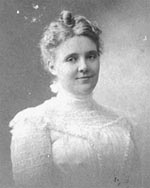
Ida Scudder, a senior at Northfield Seminary in Massachusetts, envisioned a future for herself in a small American town that included a charming home with a loving husband, fun times with good friends, adventure, and eventually several children.

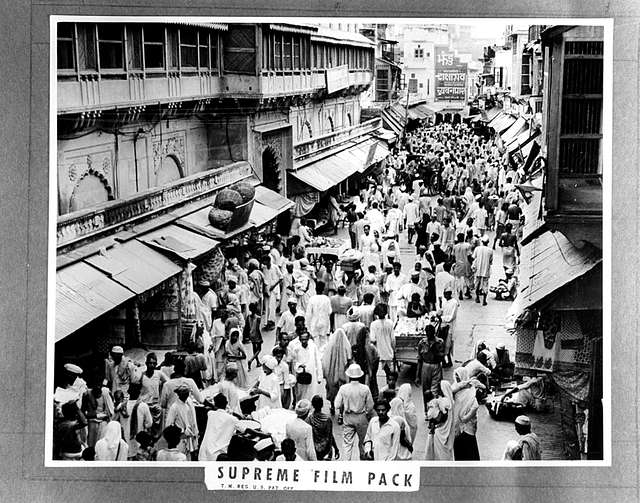
Such a dream was the antithesis of her upbringing in Vallore, India—with its crowds, poverty, famine, and disease. Having lived in the States now for several years, Ida had no desire to return.

Her parents served as medical missionaries in Vallore, and her paternal grandparents before them. Ida wanted no part of that kind of life.

But when Mrs. Scudder became seriously ill in 1894, Ida felt compelled to return home to care for her mother and help run the clinic. Following graduation that year, she set sail, praying she’d arrive before the unthinkable occurred. Ida’s prayers were answered [1].

One evening during her visit, a Hindu man knocked at the door, desperate for Ida to come help his wife.

“She’s been struggling for hours to deliver our baby,” he cried. “Now she is growing weak. I’m afraid for her!”

“Let me get my father,” Ida suggested. “He’s the doctor.”

“Oh no,” the man replied. “It is against our beliefs for another man to see my wife. You must attend to her.”

Ida explained she could not help; she knew nothing about childbirth. And the grief-stricken man turned away.

Later that same night a Moslem came to the door with the same request. He too refused help for the same reason. And not long after, the scenario repeated itself a third time with another Hindu.

When Ida finally went to bed, no visions of idyllic living in America filled her mind. Instead she prayed, and a new dream began to form. God meant for her to become a doctor and help the suffering women of India. Even more startling: Ida found herself eager to follow his plan.   

In the morning, she learned that all three mothers and their infants had died. It broke her heart and solidified her resolve.

When Ida returned to the States, she was one of the first women to attend Cornell Medical College. And no sooner had she graduated in 1899, than Ida was on her way back to India, bolstered by a $10,000 grant from a Manhattan banker, in honor of his wife, Mary Taber Schell.

At first Ida treated women in a small medical office set up in her parents’ home. But patients often waited too long to see her, so she decided to go to them.

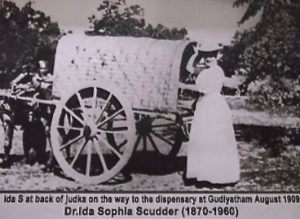
An ox-pulled cart full of medical supplies became her clinic. And as she tended the sick and injured, Ida spoke of Jesus and asked patients if they’d like to know more about the Great Physician.

In 1902, Ida was able to open the Mary Taber Schell Hospital in Vellore. But with only forty beds, the medical needs in the region far exceeded what Ida could provide.

She set about establishing a school for young women to train as nurses. Critics warned no one would come since the education of girls wasn’t part of Indian culture. But come they did—151 students that first year—and they performed well.

Funding from various denominations in the U.S. and Britain allowed for expansion of the hospital. By 1906, 40,000 patients were being treated annually.

Ida’s next venture, in 1918, was to establish a medical school to train women doctors. Naysayers claimed women would not be able to pass the final exams, but all fourteen of the first class succeeded.

More qualified staff meant more space needed for them to work. A second hospital was built in Vallore in 1923.

Expansion continued in 1928 with an endeavor even Ida could not have envisioned:  the construction of the Vellore Christian Medical College and Hospital, spread over 200 acres. Gandhi himself came to see Ida and the monumental project underway.

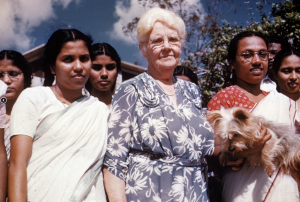
Ida seated on left.

Also during this time, Ida traveled back and forth to America to raise funds. Her passion for the work inspired people to give, and she raised millions of dollars.

Back in India, Ida spent less time with patients and more time preparing for the opening of the new college, “negotiating between various missionary agencies, and dealing with a turbulent Indian political scene as fierce demands for independence were growing”[2].

Today the Vallore Medical College and Hospital treat over 8,000 patients a day and are well known for excellence in the fields of research, patient care, and disease prevention. Chaplains pray with the patients, and Bible classes are offered in nine different languages [3].

The main building of Vallore Medical College and Hospital

Dr. Scudder and students

Ida Scudder (1870-1960) was once asked how she was able to accomplish so much. Her answer explains how to fulfill God’s individualized plan for each of us:

“I took only one step at a time; the step God showed me” [4].


[1] Mrs. Sophia Scudder passed to heaven in 1925.

[2] https://canonjjohn.com/2022/11/12/heroes-of-the-faith-ida-scudder/

[3]  https://scudder.org/family-history/ ; https://www.christianity.com/church/church-history/church-history-for-kids/ida-scudder-reluctant-missionary-11635053.html  

[4] https://www.youtube.com/watch?v=tJIHIJpmVTs

Other Sources:

  1. https://scudder.org/about/history/india-medical-missions/ida-scudder-story/

3. “A Life of Consecrated Purpose: The Ministry of Dr. Ida Scudder” by Dr. Rebekah Naylor at http://www.imb.org.

Photo credits: All photos of Dr. Ida Scudder courtesy of The Scudder Association Foundation at http://www.scudder.org. The Indian city street scene, http://www.picryl.com.

Read Full Post »

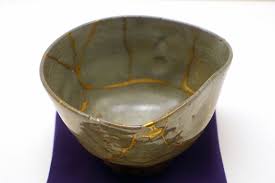
Perhaps you too watched the episode of Antiques Roadshow when an appraiser analyzed a Kintsugi bowl.

This ancient Japanese art form involves mending broken pieces of pottery with gold or silver. The glimmering veins resurrect the ruins to create a beautiful work of art.

Such a transformation offers imagery for what happens when we allow the golden work of Christ to mend our brokenness from failures, sins, and shortcomings. As a result, each of us becomes a masterpiece [1].

But what about Jesus’ instruction, “Be perfect as my Heavenly Father perfect”[2] and all the itemized directives for Christian conduct in the New Testament—all 1,500 of them, give or take?

I can’t possibly measure up to such a standard, so what’s a cracked pot like me supposed to do? Is the pure gold of Christ’s work (on my behalf at his crucifixion, and in my life now) enough to make me acceptable to God, considering my faults and failures?

We’d do well to remind ourselves often: just as family members love one another in spite of shortcomings and wrongdoing, our Heavenly Father does the same.

Note the above verse doesn’t say the Lord has compassion only on those nearing perfection.

Then what did Jesus mean when he instructed us to be perfect?

The Amplified Version offers clarity for that key word:

“You, therefore, will be perfect [growing into spiritual maturity both in mind and character, actively integrating godly values into your daily life], as your heavenly Father is perfect.”

Matthew 5:48 AMP

‘You see? Jesus isn’t requiring angelic perfection; he’s directing us toward full spiritual maturity.

Jesus would also direct us away from unrealistic expectations.

Some think that unless we’re . . .

  • spending long hours in Bible study and prayer
  • attending every pertinent service and event at church
  • serving those around us
  • extending hospitality in our homes
  • discipling and mentoring others
  • sharing with everyone in need . . .

. . . we’re not doing enough for God.

So when is enough enough?

I’m reminded of the time I sat in the pediatrician’s office with one of our children when a young mom from our church, Nicole*, walked in with her infant son. Sagging shoulders and dark eye-circles gave evidence to the truth about parenting a newborn: it’s exhausting.

But this Mama was dealing with even more: another son, age three (whom Daddy was babysitting at that moment), and a full-time job. She worked nights as a nurse, and her husband worked days so they could avoid childcare costs.

Somehow Nicole was surviving on naps here and there, and a few hours of sleep before her shift, once her husband got home.

During our conversation, Nicole confessed it had become nearly impossible to spend quiet time with God in Bible study and prayer, and she felt terribly guilty.

In that moment God brought to mind an image of my loving, earthly father. If I were in Nicole’s situation and said to him, “Dad, I’d come see you in a minute, but with things the way they are right now . . .”

I knew what he’d do. Dad would interrupt and say, “Don’t worry–I understand! I know you love me, and you know I love you. When your schedule lightens up, then we’ll get together for an extended visit. For now, I’m delighted in these quick phone calls.”

I told Nicole, I think our heavenly Father would respond in the same way. (Remember Psalm 103:13 above?) Her heart was in the right place; she longed to spend quiet hours with God.

But in her current situation, it was perfectly fine to postpone such a plan until that debilitating season ended. Our God of grace understood; there was no cause for guilt.

Our God of grace would have us let go of perfectionism and unrealistic expectations.

He’d have us delight in the golden work Christ has done and continues to perform in our lives [3].

And though we do press on to live by God’s wise ways, he would have us embrace the beauty of imperfect perfection [4].

Like a Kintsugi masterpiece.  

*Not her real name


[1] 2 Corinthians 3:5; Ephesians 2:10 ISV

[2] Matthew 5:48

[3] 1 Peter 1:3-5; Philippians 1:6

[4] Philippians 3:12-14; Lamentations 3:22-23

Photo credits: http://www.commons.wikimedia.org; http://www.heartlight.org; http://www.pexels.com/Tima Miroshnichenko; www. rawpixel.com; http://www.pexels.com/Alexander Dummer; http://www.pxhere.com/Forrest Cavale; http://www.commons.wikimedia.org./Ruthann Hurwitz.

Read Full Post »

Still Traveling

Impressions Becoming Expressions

Living Our Days

Gaining a heart of wisdom

He Said What?!

I'm Patty, and my husband and I are living with our adult son who has autism and epilepsy. I love sharing lessons learned from life around me, especially life with Aaron.

Meditations of my Heart

Impressions Becoming Expressions

Linda Stoll

Impressions Becoming Expressions

Debby Thompson

Impressions Becoming Expressions

Signora Sheila

Notes on Life, Faith & Italy

Colleen Scheid

Writing, Acting, Living in God's Love

Mitch Teemley

The Power of Story

Heidi Viars

Finding the Image of God