Feeds:
Posts
Comments

Archive for the ‘Blessings’ Category

(A personal, prayer-response:)

How I love this passage, Lord, with its comfort and reassurance!

Paul reminds me here that You, O God, are all-wise and all-knowing; You know what’s best for each of us.

You cause all things to work together for our benefit, for those who love You (Romans 8:28).

Sometimes though, I have to admit, certain events confound and frustrate me. My finite mind cannot understand what good you could possibly bring out of:

  • Severe financial setbacks for a godly family
  • A rejection letter from a mission board for an eager candidate
  • An announcement of divorce between a respected couple in the church
  • A cancer diagnosis for a young mother
  • The death of a child

But those of us who trust in You know that we can count on Your wisdom and knowledge in all things, and the absolute dependability of Your character—Your benevolent goodness, Your perfect righteousness, Your deep compassion, Your unfailing faithfulness and infinite love (to name a few)—even in the face of struggle and tragedy.

Remind me, Father, that “making room for mystery in my worldview”(1) is an important element of spiritual maturity.

And to demonstrate that mature trust, I can follow Job’s example. His first response to catastrophe was worship (Job 1:20).

And as I worship, I can praise and thank You, not only for those blessings I see but also for those I can’t.

Help me Father to rest in the knowledge that:

  • Out of Your infinite wisdom, You select the best possible conclusion of events, and You adopt the best possible means for accomplishing that conclusion (2).
  • You are the Most High God, Lord of heaven and earth. You are subject to no one and influenced by no one; neither can anyone thwart or hinder Your plans (3).
  • Even my mistakes could never obstruct Your will.
  • You, on the other hand make no mistakes. Your choices for me are always right, because they come from Your perfect mind and heart. You always know exactly what you’re doing.
  • “Everything from You and for You” (v. 36) often includes mundane tasks, tedious routine, and lack of recognition. But I can count on the fact that, “in the midst of what seems terribly ordinary, You—in your wisdom and power–are doing something extraordinary” (4).
  • Everything serves Your purpose (5). You direct everything toward the conclusion you ordained for it.

May I be joyfully submissive to Your plans for me, in light of these marvelous truths!

Notes:

  1. Sarah Young, Jesus Always, 65. 
  2. Based on a J. L. Dagg quote, www.gracequotes.com.
  3.  Based on an A. W. Pink quote, www.gracequotes.com.
  4. Alice Mathews, A Woman God Can Use, 77.
  5. A quote my dad copied into one of his Bibles, source unknown.

Image credits: http://www.canva.com

Processing…
Success! You're on the list.

Read Full Post »

She stands before the judge, tears filling her eyes, as one misdeed after another plays out on a Jumbotron for all to see.

He waves his arm toward the mammoth screen. “The evidence is clear,” he thunders. “You’ve committed numerous indiscretions. What do you have to say for yourself?”

Her response is barely audible. “I am guilty as charged, your Honor.”

“Highly disappointing,” he asserts.  “However, my Book of Life does indicate you accepted the gift of eternal life made possible by my Son, so you will be allowed to enter heaven, but of course, your place will be far to the rear.

“You can also expect far fewer blessings in my celestial kingdom, compared to those who have lived truly saintly lives. You understand, of course.”

She nods and bows her head in shameful misery.  

Such a scene is imaginary, of course, but reflects the fear and foreboding I used to feel toward the Judgment Day to come, when it’s my turn to face the Judge of all the earth.

After all, he is holy and I am a wretched sinner—even as a Jesus-follower. And though God has provided the way for me to escape hell when I die, he’ll have every right to reprimand me, even banish me to some far corner of heaven.

Perhaps you’ve been plagued by such thoughts as well. If so, have I got good news for YOU!

First, consider this passage from a praise-psalm of King David:

A rather surprising reason to rejoice, agreed?

David goes on to explain: “He will judge the world in righteousness and the peoples in his faithfulness” (v. 13).

Could God judge any other way? No. He is holy and perfect in all that he does and says.

That means all his righteous and faithful perfections will come into play as he fulfills this role: his compassion and grace, wisdom and discernment, goodness, patience, and more.

We can rest assured: on Judgment Day God will not divorce himself from these attributes and become a stern, vindictive, and unforgiving judge.

He is for us, not against us [1].

In addition we mustn’t forget that God is rich in mercy [2]–mercy “so great that you may sooner drain the sea of its water, or deprive the sun of its light, or make space too narrow, than diminish the great mercy of God”–Charles Spurgeon [3].

Another factor to keep in mind: the affirming promise the Apostle Paul included in his letter to the Romans. For clarity’s sake, here’s the Amplified Version:

“There is now no condemnation [no guilty verdict, no punishment] for those who are in Christ Jesus [who believe in Him as personal Lord and Savior]” [4].

Elsewhere Paul makes clear: the charge of our legal indebtedness has been cancelled.

I repeat, cancelled.

In fact, our sins are removed as far as the east is from the west [5].

So how might that opening scenario proceed differently for that Christ-following woman, standing before the Judge of all the earth?

He may open his Book of Life, find her name, and announce, “Ah! Here you are! Your debt has been fully paid by my Son.”

Then perhaps he’d lean forward on his forearms and smile warmly upon her. “Proceed through those doors to your right, my child, and enjoy forever my complete peace, joy, and blessing!”

 *     *     *     *     *     *     *     *     *     *

I praise you, O God, for your gift of salvation, not granted grudgingly because you feel sorry for us wretched creatures, but because you love us. That love is manifested by your kindness and compassion in spite of our sinful tendencies.

And now we can stand in a place of confidence and peace as we anticipate our homegoing to heaven—with no fear of retribution. Thank you, Lord God, our Father!

(Romans 5:8; Psalm 103:8-14; John 5:24)

P.S. Though all those who believe in Christ will receive all the benefits of eternal life in heaven, the rewards we receive for godly behavior will differ [6].

What might those rewards include and how do we earn them? Topics for another day!


[1] Romans 8:31b

[2] Ephesians 2:4-5

[3] Charles Spurgeon (1834-1892), British preacher and author

[4] Romans 8:1 AMP

[5] Psalm 103:12

[6] John 3:16; 1 Corinthians 2:9; 3:8

Image credits: http://www.itoldya420.getarchive.net; http://www.stockvault.net; http://www.canva.com (3); http://www.stockcake.com.

Processing…
Success! You're on the list.

Read Full Post »

Most tourists to Rome will visit St. Peter’s Basilica and find their way to the Chapel of the Pietá. There resides the striking statue carved by Michelangelo when he was only twenty-four years old.

For the viewer, the subject matter evokes sad commiseration with the grieving mother, and yet the artistry of the statue manifests incomparable beauty in Mary’s tranquil expression, the luxurious folds of her robe, and the peaceful repose of Jesus’ face.

Perhaps Michelangelo wished to convey Mary’s relief that the anguish of her Son was over. Jesus’ expression might indicate his satisfaction in perfectly executing the Father’s mission.  

The Pietá gives evidence: beauty may be its most captivating when viewed in juxtaposition against suffering. And Michelangelo superbly represented the two entities in this one statue.

Yet there is One who surpasses even the great Renaissance sculptor in the compelling intertwining of beauty and suffering: our heavenly Father. His medium? The lives of his children.

He can make all things beautiful—even suffering.

Perhaps you’ve known people who’ve endured much—physically, mentally, and/or emotionally. And among them are those who’ve manifested the beauty of strong faith.

We’ve seen heavenly joy in their eyes, even amidst the tears.

We’ve heard the winsome affirmations of God’s palpable, sustaining presence and even of God’s blessings during their season of trouble.

We’ve witnessed their striking maturity in the way they react to their circumstances.

 These saints have embraced the truth that:

How do people find the wherewithal to radiate such loveliness of spirit even as they suffer?

Beauty-in-Suffering Begins with Trust

Of course, it begins with strong trust in God—in his sovereignty over all things, his grace to uphold, and in his power to accomplish purpose through hardship. Such people can say:

–Dr. Charles Stanley, Advancing through Adversity, 78.

Can you also see the beauty of joy on the face of such a witness? How do we grow a strong trust like that?

Beauty-in-Suffering Grows with Intimacy

The formula for growing intimacy with God is quite simple: Prayer + the Word + Time [1].

The closer we walk with God, the less room there is for any other thing to come between us, including trouble, hardship, or pain. In addition, we begin to reflect the glory of his beautiful character [2]!

Beauty-in-Suffering Impacts Others

The question is, will the impact be characterized by the ugliness of complaining, negativity, and self-pity? Or will it be the beauty of vibrant faith, contagious joy, and a settled peace?

Meet Anik, a young African father who was suffering through illness and finding it difficult to provide for his family. Nearby another household also dealt with hardship, and yet their quick smiles and frequent laughter indicated a happiness Anik craved.

He could hear them worship God and pray. They even prayed for him! Anik finally asked them about this God they praised. They told him about Christ, and the family shared their Bible with him.

Upon reading the stories about Jesus, Anik prayed to receive him into his life. So did his family, and they found their hearts transformed.

Their circumstances didn’t change immediately, but they did [3].

May the beauty-in-suffering illustrated by the Pietá and reflected in those like Anik’s neighbor, be evidenced in us also.

*     *     *     *     *     *     *     *     *     *

We praise you, O God, for gifting us with extra measures of your peace and presence—even joy—when difficulty invades our lives. Only you can bring beauty out of suffering! Help us to lean upon you in ever-deepening faith, to carry us through until the final day of triumph. 

(Psalm 34:18; Philippians 4:5-7; Romans 5:3-5;

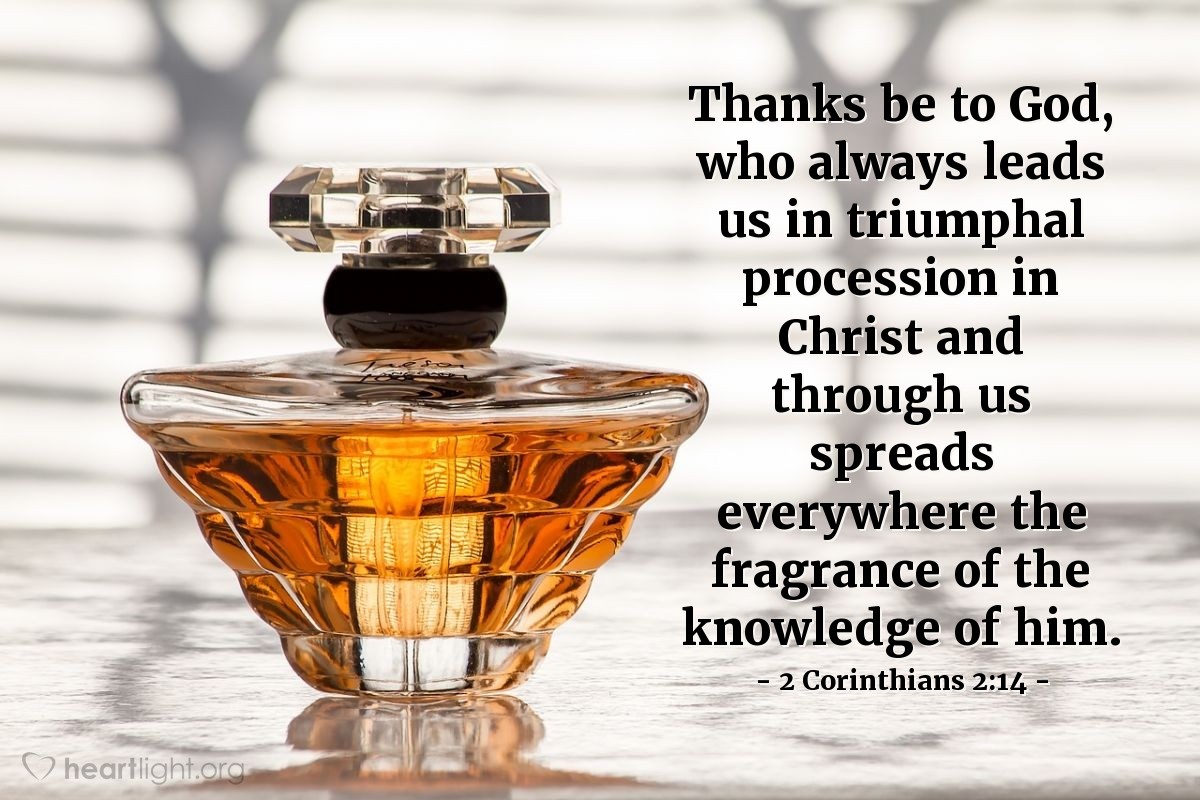
2 Corinthians 2:14)


[1] Joanna Weaver, Having a Mary Heart in a Martha World, 77.

[2] 2 Corinthians 3:18

[3] www.wycliffe.org/blog/posts/the-light-of-hope-scripture-passages-for-hard-times-.

Image credits: http://www.flickr.com; http://www.canva.com (2); http://www.en.wikipedia.org; http://www.heartlight.org.

Processing…
Success! You're on the list.

Read Full Post »

Behind our home stand many large trees that border a small creek bed. As the sun sets, fireflies rise from the grass and undergrowth, slowly soaring higher and higher until the trees appear decorated for Christmas.

Hundreds of glimmering lights sparkle against the deep dark of night.

God’s creative handiwork, right in our own backyard.

*     *     *     *     *

On the Fourth of July our family attended the local Independence Day parade. While waiting for the festivities to begin, a young boy seated next to us chatted with me every now and then.

One time he commented, “Wow! There’s not even one cloud in the sk___ . . . Wait a minute. There’s a little one over there.”

We both studied the wisp of vapor for a moment. “It’s disappearing already,” he added.

Together we witnessed the last visible curl evaporate away.   My attention returned to people-watching.

Moments later the boy suddenly cried out, “There it is again!”

Sure enough, the water droplets had regathered themselves.

It was then I noticed a phenomenon that I’d missed before. In the area of that little cloud was a faint veil of fog, barely visible. Millions, perhaps billions of water droplets were suspended there all along.

The boy and I only noticed them when they drew together in a dense gathering.

Watching the cloud reform, the boy exclaimed, “Cool!”  Cool indeed.

God’s ingenious engineering of the elements, right above the street.

*     *   *     *     *

After dinner recently Steve said, “I’ll do the dishes.”

Now lots of husbands probably do the dishes now and then. But do they also do the cooking? My Steve does! He actually enjoys it, and almost always takes care of the cleanup, too. (Sorry, he’s not for sale.)

God’s love expressed to me through my caring husband, right there in our kitchen.

*     *     *     *     *

Our toddler granddaughter loves the swings at the park. “Weeee!” she squeals with each push.  For her it’s a new, exciting delight.

Actually, Elena’s days are filled with new discoveries: the ping-sound of a metal post when struck with a stick, the mystery of bubbles that disappear with a touch, the slow, spiral dance of a dropped feather.

Her eyes sparkle; her smiles and laughter indicate intense pleasure.

God’s gift of joy on display right in our own family.

*     *     *     *     *

And paying attention to all of these manifestations makes me more aware of his presence.

And awareness of his presence changes my heart.

Stress gives way to peace, tedium gives way to joy, striving gives way to contentment, fear gives way to consolation.

And surely God must smile when we live aware and celebrate his gracious provision.

*     *     *     *     *

I praise you, Father, for reminding me of your active, loving presence throughout each day, everywhere I go — even at a parade.  Thank you for ministering to my needs, assuaging my fears, comforting my hurts, and giving me joy.  What a gracious God you are!

Image credits: http://www.wikimediacommons.org (Sushanth2212); www. wikimediacommons.org (GerritR); http://www.flickr.com (Ryan Lee); Nancy Ruegg.

(I do apologize for reblogging again, this time from July 17, 2014. We’ve had one commitment, event, or appointment, one after another for the last week.)

Processing…
Success! You're on the list.

Read Full Post »

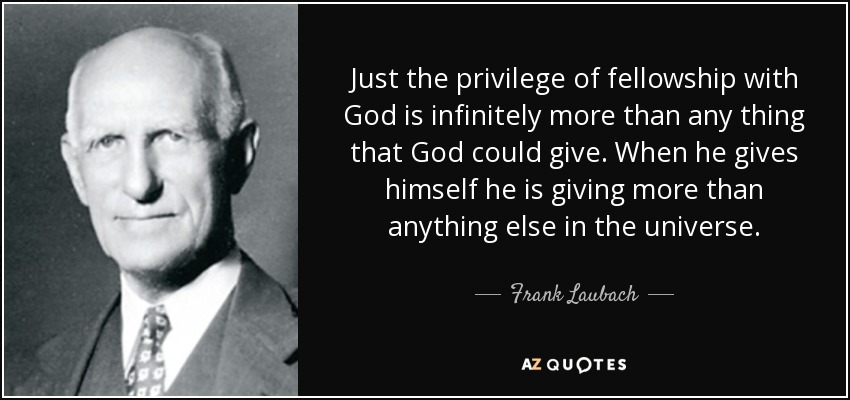
Frank Laubach (1884-1970): missionary to the Philippines, college dean, author, and developer of a highly-successful literacy program.

These are a few of the accomplishments of the devout Christian hero we met in last week’s post, “Toward Undiscovered Continents.”

His fifty-six books included those about the Philippines and teaching literacy, but also about growing into an intimate relationship with God, something he’d greatly desired, like King David centuries before:

In a letter dated March 23, 1930, Frank wrote, “Can I bring God back in my mind-flow every few seconds so that God shall always be in my mind [1]?”

He decided to make the rest of his life an experiment, and for the next forty years Frank disciplined himself to become more aware and more submissive to his heavenly Father—moment by moment.

As the habit grew, Frank wrote it was “the most amazing thing I ever ran across.” In another letter he tried to describe the sheer joy he experienced one afternoon:

“God was so close and so amazingly lovely that I felt like melting all over with a strange and blissful contentment [2].”

Surely all of us desire such loveliness and contentment in God’s presence.

But how did Frank manage to accomplish such a goal? And how might we hope to achieve that kind of intimacy with God?

First, we have to be patient with ourselves. Seeking to experience God throughout the day takes time and practice. About seven weeks into his experiment, Frank admitted:

“When for a half hour or so He slips out of mind—as He does many times a day, I feel as though I had deserted Him, as though I had lost something very precious in my life [3].”

So how did Frank become more consistent in his focus?   

 Here are a few of his practical suggestions (The comments in brackets are my own):

  • In the chinks of time between things, pray: “Lord, think your thoughts in my mind. What is on Your mind for me to do now?”
  • Instead of talking to your “inner self,” talk to Jesus. Imagine Him with you.
  • Pursue a two-way conversation in prayer. Ask, “God, what are You saying to me?” Let your imagination consider what you suppose He might answer. [It’s worthwhile to record these responses in a journal. Do keep in mind, God will never contradict what he’s already said in scripture.]

Can you imagine him saying, “I have been waiting for this moment all your life, waiting until you opened the channel so that I could speak. I have wonderful plans for you which cannot be realized until you listen as you are listening now [4].”

  • Make a daily habit to prayerfully read about the life of Jesus, from the Bible-books of Matthew, Mark, Luke, and John. Try different translations to keep the experience fresh.

[Or, listen to scripture being read to you. Here’s an APP to try: https://www.bible.com/audio-bible/111/MAT.1.NIV .]  

Frank urges, “Walk with Jesus through Galilee by walking with Him through the pages of His earthly history [5].”

  • Hum a favorite prayer-hymn or chorus to yourself. [One possibility: “Take My Life and Let It Be,” with its upbeat tune.]
  • We invite Christ to share—all day long–in everything we do, say, or think. We don’t need to stop our work, but “we try to call Him to mind at least one second of each minute [6].” [How’s that for a lofty but highly worthy goal?]

The websites listed below offer more of Frank’s suggestions.

With him we can attest: “Now that I have discovered Him I find that it is a continuous discovery. Every day is rich with new aspects of Him and His working [7].”

Doesn’t that sound delightful? Let’s make the most of our minutes, availing ourselves of that “melt-all-over, blissful contentment” in the presence of God that Frank Laubach wrote about.

https://www.azquotes.com/quote/803882


[1] https://renovare.org/articles/living-each-moment-with-a-sense-of-gods-presence-frank-laubach.

[2] Quoted by Nayswami Nakin at https://www.ananda.org/blog/laubach-christian-literacy-god/ .

[3] Letters of a Modern Mystic, quoted by Richard J. Foster and James Bryan Smith, www.renovare.org.   

[4] These first three suggestions come from Laubach’s book, Prayer: The Mightiest Force in All the World, highlighted by Bill Gaultiere, at https://www.soulshepherding.org/christ-answer-inspiration-frank-laubach/.

[5] From The Game with Minutes, by Frank Laubach, quoted by Dr. Tom Sweeney at  https://the-magpie.org/2017/02/28/laubach-on-experiencing-god-every-minute/.

Image credits: http://www.dailyverses.net; http://www.pexels.com (Mk7Bober); http://www.heartlight.org; Nancy Ruegg; http://www.pickpik.com; http://www.azquotes.com.

Processing…
Success! You're on the list.

Read Full Post »

Which would you say is the most common human weakness?

  • A. Living unaware?
  • B. Greed?
  • C. Pride?
  • D. Selfishness?

According to pastor and author, Lou Guntzelman, the answer is A.*

Even twenty years ago when Guntzelman wrote his book, he saw many people living superficially, busily, and distractedly –moving too fast and focusing too much on insignificant matters.

Maybe those descriptors don’t apply to you. But I have been guilty on all counts. And those of us who tend to fly through our days risk missing many delights of life.

For example, we don’t see the unique qualities of the people around us.

We don’t hear the laughter of our children.

We don’t even think to take in deep gulps of rain-scented air, just for the pleasure of breathing.

We don’t taste and see God’s goodness in the world.

Blackwater Falls, WV

We don’t sense His presence.

But!

When we learn to engage the mind and especially the spirit in the moment at hand, we discover the splendor of God’s glory tucked into surprising places–right in front of us.

–Henry Miller

The obvious question is: how do we reprogram ourselves to live more aware?

Perhaps the first step is to condition our minds through quiet reflection.

In a place of solitude, we avail ourselves of his presence and redirect our attention from the day’s cares to God’s truth.

Sometimes that might include:

  • Studying and contemplating scripture, open to a change of heart or a change of direction
  • Naming God’s attributes and celebrating how he’s demonstrated those attributes in our lives
  • Keeping a gratitude journal, to help us tune in to the positive  (It’s a transformative habit!)
  • Reading books by thought-provoking Christian authors, then mentally processing their tenets, and seeking ways of application to life when appropriate

The state of our minds affects our perception of everything.

Second, we condition our focus.

We determine to:

Backyard beauties at our house, on display the end of April

  • Appreciate more fully the natural wonders around us—even in the backyard, on the way to work, while running errands.
  • Honor each person we meet with eye contact, smiles, and a kind word.
  • Sift out the immaterial and apply ourselves to the important.
  • Refuse pointless worry and find priceless treasure in scriptural reassurance and God’s inimitable peace.
  • Pursue wholeness—the state of being perfectly well in body, soul (mind, will, and emotions) and spirit.  That happens as we submit more and more to God’s perfect ways (Psalm 119:1-2).

And what will be the result?

Each day there will be the anticipation of discovery and delight, joyful praise and expectant hope.

We’ll find ourselves speaking to God more and more often, and hearing his whispers in our hearts. We’ll experience greater satisfaction in life as we train our focus on him and savor his endless blessings.

Bottom line: We will live on the threshold of heaven.

*     *     *     *     *     *     *     *     *     *

Oh, this is where I want to live, Father—on the precipice of your glory. Though responsibilities must be taken care of, I can still take note and inwardly soak in all the beauty, blessings, discoveries, and lessons that you bring to my attention. Help me to live aware!

*Lou Guntzelman, So Heart and Mind Can Fill, St. Mary’s Press, 1998.

Image credits:  

http://www.publicdomainpictures.nethttp://www.commons.wikimedia.org; wwwpxhere.com; http://www.pixabay.com (2); http://www.commons.wikimedia.orghttp://www.pxhere.com (2); http://www.pixabay.comhttp://www.pixnio.com; Nancy Ruegg; http://www.quotefancy.com; Nancy Ruegg; http://www.flickr.com.

(This post reblogged from June 21, 2018 while we enjoy a visit from out-of-town family.)

Processing…
Success! You're on the list.

Read Full Post »

Brady Miller, a young and single first-year employee at Reed Investments, smiled as he read the email from his boss Justin. The memo reminded him of the personal day he hadn’t used yet.

Stipulations required he not add the day to vacation time or a weekend, but otherwise, any mid-week day was allowed, pending approval from Justin.

Brady immediately began planning for his Perfect Day the next Thursday: wearing sweats all day, binge-watching The Mandalorian, eating toaster-waffles for breakfast, broccoli cheddar soup and a ham on rye for lunch, nachos for snacking, and a pepperoni pizza for dinner—oh, and a big bowl of mint chocolate chip ice cream for dessert.

He’d also enjoy the solitude—no one to play host for, no one talking during the episodes, and no one to clean up after. Absolute bliss.

But late the next Thursday evening, Brady noticed he felt rather blah, maybe even a bit depressed and de-energized. Wasn’t his Perfect Day supposed to make him happy and content? What happened?

Brady wasn’t aware that researchers have actually studied what contributes to a good day. And all the indulgences he’d allowed himself did not make the list.

Here’s what did:

  • Eat nourishing food
  • Exercise 150 minutes per week
  • Include meaningful activity that also brings pleasure
  • Spend time with family and/or friends
  • Practice mindfulness
  • Limit recreational screen time
  • Show kindness toward others
  • Encourage others
  • Express gratitude

Brady incorporated none of these activities into his day off. No wonder satisfaction alluded him.

Perhaps you also noticed: all these elements contributing to a good day are included in biblical instruction. God wants us to enjoy good days!

For example, scripture directs us to:

Take proper care of our bodies which are temples of the Holy Spirit (1 Corinthians 6:19-20).

Get a good night’s sleep (Psalm 127:2).

Choose meaningful activities, especially those that benefit others. Blessing for the giver is built in (Acts 20:35c).

Spend time with family and/or friends, providing uplift, encouragement, and support (Ecclesiastes 4:9-12).

For me, “the greatest by far is the possession” of family who double as friends.

Practice mindfulness, taking note of what is excellent and praiseworthy, protecting against discouragement and anxiety (Philippians 4:8).

What better way to occupy the mind than to look for evidence of God around us?

Be compassionate, kind, and encouraging (Colossians 3:12; Ephesians 4:29).

And, I would add, that touch includes the one demonstrating kindness.

Express gratitude (1 Thessalonians 5:16-18).

It makes me smile to see secular research backing up what scripture has taught all along.

However, one important activity for a good day is not mentioned in the research:  quiet time with God— studying his Word and conversing with him in prayer (Psalm 119:15-16).

Then again, to do so does incorporate four of the elements researchers identified: meaningful activity that also brings pleasure, time with a Friend, mindfulness, and gratitude.

Is it possible to accomplish all of these activities every day? YES! Some might take only a moment: a kind deed or a word of gratitude. Some can be combined, as illustrated above.

You can start small and choose just one activity to start reducing the blahs and increasing the good. Go ahead—choose one.

Now, let’s get out there and MAKE IT A GOOD DAY!

Sources:

Image credits: http://www.frreerangestock.com (Matt Moloney); http://www.stockcake.com; http://www.freerangestock.com (FOCA Stock); http://www.canva.com (4); http://www.flickr.com.

Processing…
Success! You're on the list.

Read Full Post »

Late spring, 1961, President John F. Kennedy and his wife Jackie visited France. He’d only been in office four months, but already the world had embraced the refined and fashionable First Lady.

Upon arrival in Paris, people lined the streets and shouted, “Vive Jackie!”

And as the week unfolded, she impressed them further with her knowledge of French history and culture and her command of their language, polished to perfection at the Sorbonne during her junior year of college.

With dignitaries Jackie proved to be articulate, diplomatic, and a good listener. She especially charmed their president, Charles DeGaulle.

President Kennedy, on the other hand, received a cool reception from his French counterpart. The two had not seen eye-to-eye on certain policies. Jackie helped pave the way for diplomacy between them.

At a state dinner held in the Palace of Versailles, JFK famously introduced himself as “the man who accompanied Jacqueline Kennedy to Paris. And I have enjoyed it.”

The Hall of Mirrors where the dinner took place

Today, many still remember Jackie’s iconic style, her gentle demeanor, and stalwart courage following President Kennedy’s tragic death. But she will also “go down in history . . . for creating a dominant soft power dynamic in American politics” [1].

We also admire the way JFK humbly honored his wife at that state dinner. He appreciated her strengths that provided great benefit to him.

With this example in mind (although a weak one compared to what it illustrates!), we might understand more clearly what the psalmist meant when he wrote that God is the glory and strength of those who put their faith in him:

“Strength” we more readily understand. Many of us have experienced God’s power upholding us through crises and augmenting our efforts to serve him. But glory? What did the psalmist mean by “God is their glory?”

Perhaps the following comparisons will make the meaning clearer.

  • Even more than the great benefit Jackie provided to her husband, God provides abundant benefit to us.
  • As Jack gloried in Jackie, honoring her and acknowledging her worth, we glory in God.
  • As Jackie made the visit to France a glowing success, so God makes his people glow with success—that is, prosperity of soul, contentment of heart, and peace of mind.

JFK understood it was Jackie who exalted his position with DeGaulle and the French people. Similarly, we need to acknowledge that our sovereign God is the one who exalts us.

We don’t have to push and strive to prove ourselves; we can rest in all the glorious attributes of our Heavenly Father, lavished upon us for our benefit [2].

But like all analogies, this one involving the Kennedys breaks down, because no one is like our God.

Beyond the examples given above to explain how God is our glory, consider these truths:

God’s magnificence

God’s infinite power gives impetus to all his perfections in our lives. After all, what good would his perfect wisdom do without the wherewithal to execute it? His unfailing mercy without the ability to apply it? His infallible promises without the capability to keep them [3]?

God’s enabling work in our lives

God’s incomparable strength is instilled in us as we rely upon him. The result? We begin to display the glory of his attributes, including: patience in the midst of stress, kindness in response to rudeness, and self-control in the face of frustration [4].  

God’s power

God specializes in the impossible. Nothing is too great for his almighty power; nothing is too small for his love. Enter God’s realm where everything is possible [5]!

Of course there are many more facets to God’s glory. And this splendorous God of wonders is our strength—even if we don’t feel tough enough, talented enough, smart enough, or engaging enough for the path ahead—even if circumstances seem against us.

That last state of affairs must have been President Kennedy’s perception as he and Jackie left for France. Little did he know how Jackie would transform their visit.

By contrast we KNOW God’s capabilities of transformation! The evidence is in scripture, history, in the lives of those around us, and in our own experience.

Therefore, let’s remember:

Praise be to God, our glory and strength!


[1] https://uscpublicdiplomacy.org/blog/jackie-kennedy-public-diplomacy-camelot

[2] Another post about God’s attributes: Rooted/

[3] 2 Peter 1:3

[4] 2 Corinthians 12:9; Ephesians 1:15

[5] Based on a quote of Corrie ten Boom, Holocaust survivor

Image credits: http://www.deviantart.com (Kralj Aleksandar); http://www.boudewijnhuijgens.getarchive.net; http://www.flickr.com; http://www.pickpik.com; http://www.dailyverses.net (2); http://www.canva.com (2).

Processing…
Success! You're on the list.

Read Full Post »

We’ve all known people who push themselves hard all day long until they fall into bed at night. Their lists and schedules make sure they use every minute to the fullest.

And though efficiency experts might be impressed by their productivity, it’s likely these ultra Type-A folks are harming themselves—physically, mentally, and spiritually.

The truth is, “Renewal and restoration are not luxuries, they are essentials. Being alone and resting for a while is not selfish; it is Christlike.” Even Jesus took time away to be with his Father [1].

Also important to understand: Rest is an attitude of the heart amidst the responsibilities of the day.  It’s not “some holy feeling that comes upon us in church. It is a state of calm rising from a heart deeply and firmly established in God” [2].

The restful life begins in trusting God, and he’s given us plenty of good reasons to do so:

 OUR GOD PERFORMS RIGHTEOUS DEEDS AND MIGHTY ACTS (Psalm 71:16-18)

OUR GOD HELPS IN NUMEROUS WAYS (Psalm 27:9)

He supplies our needs, guides our decisions, strengthens our spirits, and more.

In addition, his power is at work to help us “understand his love, live a life worthy of our calling, bear fruit in every good work, endure with patience, live a life of thanksgiving, escape the corruption caused by evil desires and overflow with hope” [3].

In other words, he helps us experience the God-enhanced life that truly satisfies our souls.

OUR GOD PROTECTS HIS PEOPLE (Psalm 3:8 CEV)

It’s not his way to protect us from all pain and trouble. Instead, he grants us stamina and strength of spirit to endure, growing us into maturity.

OUR GOD LAVISHES US WITH HIS LOVE (Psalm 86:13)

His compassionate care is expressed as “His wisdom is our direction, His knowledge, our instruction, His power, our protection, His justice, our surety, His love, our comfort, and His mercy, our solace. He holds back nothing from us” [4].

OUR GOD BESTOWS BLESSINGS, BENEFITS, AND GOODNESS (Psalm 103:1, 5)

OUR GOD FULFILLS HIS PROMISES (Psalm 145:13b)

But how can we be sure of that?

“The permanence of God’s character guarantees the fulfillment of his promises” [5].

OUR GOD ANSWERS WHEN WE CALL (Psalm 86:7)

To rest in spite of a “No” or “Wait” answer surely gives indication how well we trust.

These seven assurances of God’s influence in our lives certainly offer wonderful encouragement. But they won’t contribute to spiritual rest unless we “grasp them by faith, plead them by prayer, expect them by hope, and receive them by gratitude” [6].

*     *     *     *     *     *     *     *     *     *

O Lord, I bow before you in wonder that you, the God of the universe, with your infinite power and glory, would provide all these blessings and benefits for me.

Thank you for your gracious benevolence. Help me to REST in these truths, knowing that you have everything under control and you will see me through until I’m home with you.


[1] Chuck Swindoll, The Quest for Character, 49; Luke 6:12.

[2] Henry Drummond, quoted in Streams in the Desert, Jim Reiman, ed., 232.

[3] Melissa Krueger, The Envy of Eve, 104.

[4] Charles Spurgeon, Morning by Morning, 141.

[5] A. W. Pink, http://www.gracequotes.org.

Image credits: http://www.stackcake.com; http://www.canva.com (5).

Processing…
Success! You're on the list.

Read Full Post »

In May of 2019 archaeologists in central England discovered an ancient shield made of bark, dating back to the Iron Age. It’s the oldest shield ever found.

Some might think such a shield would offer little protection during battle. But experiments have proven the bark of such trees as alder and willow would have served well, providing an effective but lightweight shield, easy to maneuver [1]

Fast forward to today. Modern technology has made Israel’s Iron Dome possible. The system shields the country with exceptional radar protection–detecting, tracking, and destroying incoming enemy rockets, high in the sky before they can do any harm [2].

One of Israel’s missile launchers in action

Both shields impress—one for its age and unusual material; the other for its advanced technology and precision.

Scripture speaks of another shield, much older than the one found in England yet still available today, and even more impressive than Israel’s Iron Dome:

The Lord himself.

As we consider that truth, a few questions present themselves:

  • Why would God inspire that metaphor?
  • What does God want me to understand about him being my shield?
  • How might new understanding impact my life?

In researching and pondering the answers to those questions, I discovered that:

God is our shield because of his attributes.

His power shields us from ultimate ruin.

His wisdom shields us from foolishness.

His compassion shields us from emotional and spiritual wounds too deep to heal.

His righteousness shields us from the evil one.

His mercy and grace shield us from the punishment we deserve for our wrongdoing [3].

The list could go on.

God is also our shield because of his actions.

His shield offers:

  • Protection against our arch-enemy Satan and all his cohorts
  • Salvation, saving us from the condemning power of sin
  • Help in times of trouble
  • Faithfulness we can rely on, because of his covenant of love
  • Truth—like the promises of God’s Word that can protect us against discouragement and confusion
  • Favor in the form of lovingkindness, mercy, and grace [4]

God’s shield can cover every aspect of our lives, but . . .

 . . . we must each take up our shield.

God is a gentleman; he doesn’t force his protection, help, or favor upon us. We must come to him and choose to take refuge in him [5].

How? Through prayer.

We invite him to watch over us and protect us.

We affirm the promises and encouragement from his Word.

We remind ourselves of who he is, our Almighty God of Refuge, Shelter and Strength, our Rock of Stability and Safety.

Will you pray with me right now?

*     *     *     *     *     *     *     *     *     * 

I praise you, O God, for being my strength and impenetrable shield. I can put my trust in you with unwavering confidence because of who you are [6].

I praise you for not only being a shield in front of me; you are a shield that surrounds me, guarding on all sides [7].

You are above, beneath, around, and within, protecting me from ultimate ruin, irreparable damage to my spirit, and foolishness. You shield me from the full brunt of trouble, the fiery darts of the enemy, and his lies [8].

I praise you for the overflowing peace in knowing you are guarding me as a shield!


[1] https://www.theguardian.com/science/2019/may/23/2300-year-old-iron-age-bark-shield-leicestershire

[2] https://www.bbc.com/news/world-middle-east-20385306#:~:text=Iron%20Dome%20detects%20and%20tracks,to%20fall%20on%20open%20ground.

[3] Proverbs 3:23-26; 28:26; Psalm 86:12-15; 2 Thessalonians 3:3; Ephesians 2:4-5

[4] Ephesians 6:16; Psalm 18:35 ESV; Deuteronomy 33:29; Psalm 91:4 and Deuteronomy 7:9; Psalm 91:4c; Proverbs 30:5; Psalm 5:12

[5] Matthew 11:28-30

[6] Psalm 28:7 AMP

[7] Psalm 3:3 GWT

[8] Psalm 91:4a; Isaiah 28:16; Psalm 3:3; Colossians 1:27; Ephesians 6:16

Image credits: http://www.commons.wikimedia.org (2); http://www.biblepics.co & http://www.canva.com; http://www.canva.com (2); http://www.heartlight.org (3).

Processing…
Success! You're on the list.

Read Full Post »

« Newer Posts - Older Posts »

Still Traveling

Impressions Becoming Expressions

Living Our Days

Gaining a heart of wisdom

He Said What?!

I'm Patty, and my husband and I are living with our adult son who has autism and epilepsy. I love sharing lessons learned from life around me, especially life with Aaron.

Meditations of my Heart

Impressions Becoming Expressions

Linda Stoll

Impressions Becoming Expressions

Debby Thompson

Impressions Becoming Expressions

Signora Sheila

Notes on Life, Faith & Italy

Colleen Scheid

Writing, Acting, Living in God's Love

Mitch Teemley

The Power of Story

Heidi Viars

Finding the Image of God