Feeds:
Posts
Comments

Archive for the ‘Decision-Making’ Category

Nineteen-year-old William hunkered low in the mule-drawn wagon he drove, to avoid the bullets whizzing over his head.

Once he reached the front lines of his Ohio regiment, William and a few others began serving up tin plates of warm food and cups of hot coffee to the hundreds of soldiers—using the wagon as a shield.

The mission required numerous trips, but William did not stop until everyone had been fed.

No one had told the young commissary sergeant to attempt the undertaking. William took it upon himself, knowing that after three days of heavy fighting and not much breakfast, the men would be exhausted and famished.

His action during this crucial battle at Antietam, Maryland, may have helped turn the tide against the Confederates, who soon retreated back to Virginia.

William continued to distinguish himself as the Civil War wore on, living out his Christian faith with courage, compassion, integrity, and more. He earned the rank of major before General Lee surrendered in April, 1865.

William, 1865

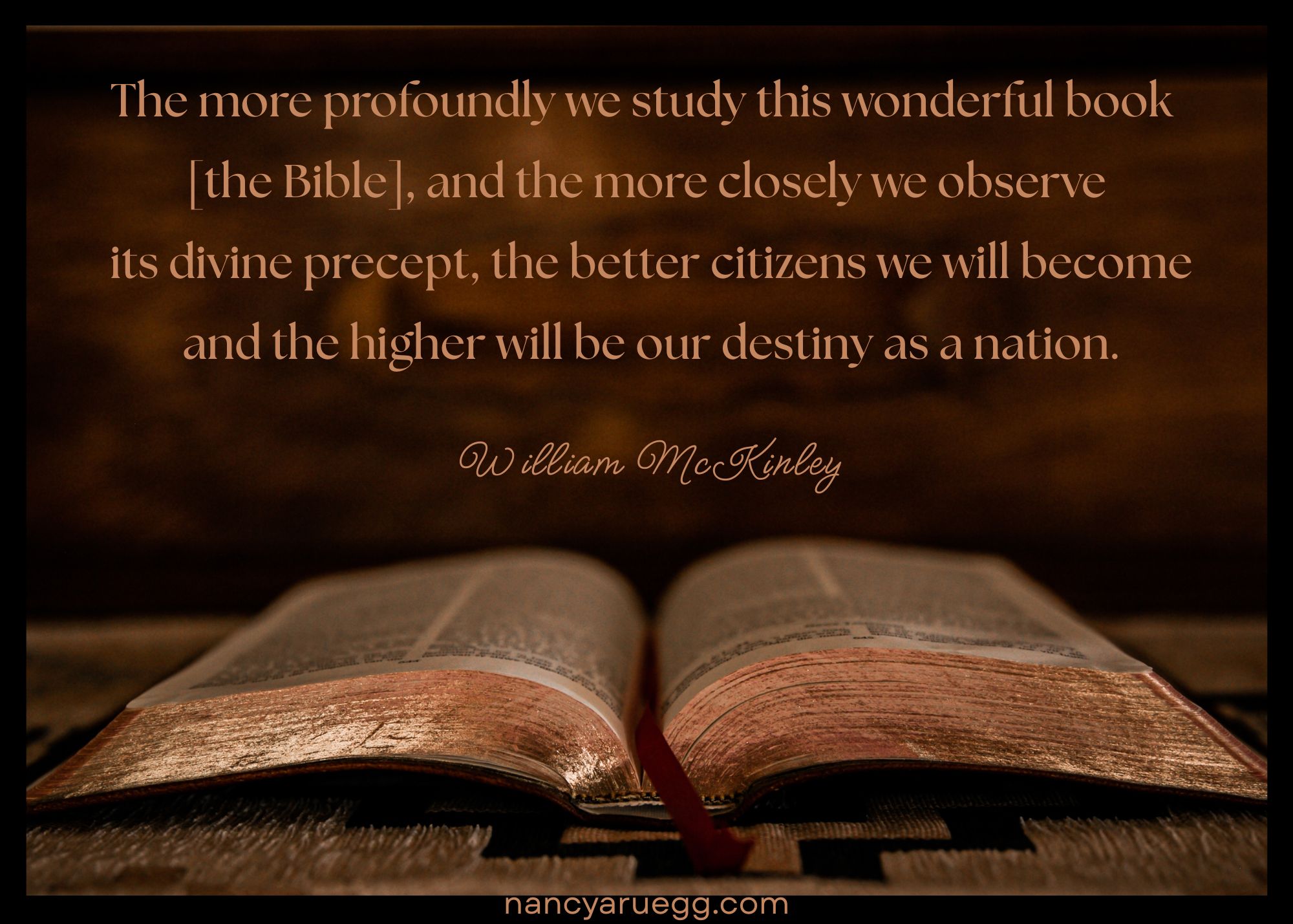
Several years before William had proclaimed at his baptism, “Here I take my stand for life” [1].

Stand he did.

William read the Bible daily, testified to his faith, and lived a moral life. He also sought God’s guidance when making decisions [2].
After the war William returned to Ohio, becoming a lawyer in 1867. He garnered respect as an outstanding prosecuting attorney.  

Leaders in the Republican Party noted his intelligence, winning personality, and integrity. They drafted him to run for the U.S. Congress in 1876, and William won. He served fourteen years, distinguishing himself on the Ways and Means Committee [3].

In 1890, however, William’s re-election bid failed due to gerrymandering. His district suddenly included three thousand more Democratic voters. Still, he lost by only three hundred votes.

Some may have thought they’d stymied William’s political career. Instead, he received a promotion, elected as Ohio’s governor in 1891. His success in that position led to an easily-won second term.
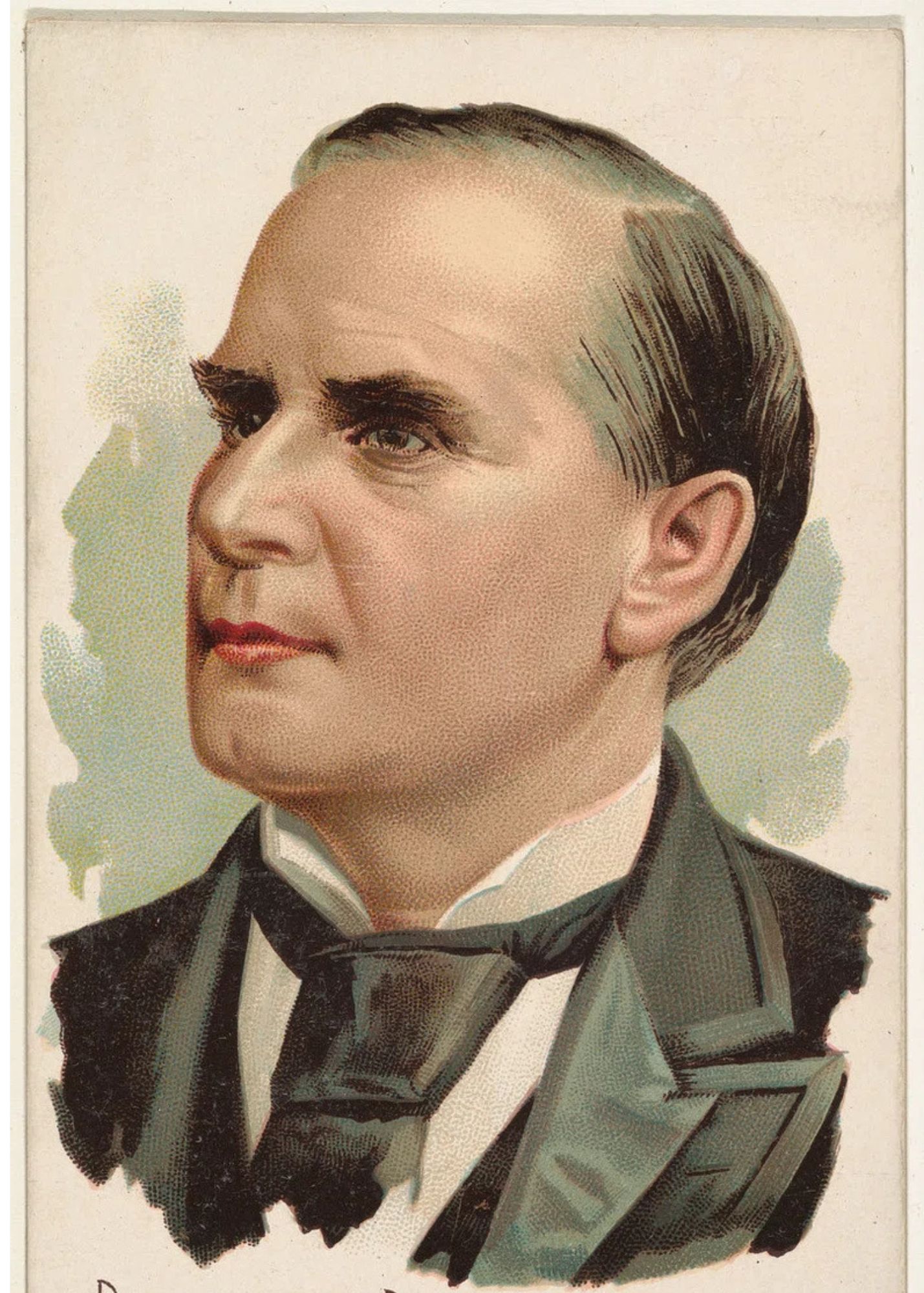
In June of 1896, the Republic Convention named William McKinley, Jr. as their presidential candidate. He won the popular vote and the electoral college.

In his first inaugural address, William repeated the oath administered to him. Then he added:

“This is the obligation I have reverently taken before the Lord this day. To keep it will be my single purpose and prayer . . .

“ . . . faith teaches that there is no safer reliance than upon the God of our fathers . . . who will not forsake us so long as we obey His commandments and walk humbly in His footsteps” [4].

One of McKinley’s most difficult decisions occurred in 1898: what to do about the Philippines after the Spanish-American War. Should he:

  • Affirm their independence, which would lead to chaos and misrule due to dire instability?
  • Allow a European power to take control?
  • Or make the Philippines a U. S. Territory to prevent exploitation?

The last option would require financial investment from America, and some Filipinos would certainly resist American-annexation [5].

To a group of church leaders at the White House, McKinley later shared:

“The truth is, I didn’t want the Philippines. I did not know what to do.  . . . I sought counsel from all sides—Democrats as well as Republicans—but got little help.  . . .

“. . . I walked the floor of the White House night after night . . . and am not ashamed to tell you I went down on my knees and prayed Almighty God for light and guidance more than one night. And one night late it came to me this way.”

William explained the Philippines clearly needed help and the United States should “by God’s grace do the very best we could by them as our fellow-men for whom Christ died.

“And then,” William concluded, “I went to bed, and went to sleep and slept soundly [6].

In 1900, McKinley easily won a second term, the first president to do so since Grant in 1872.
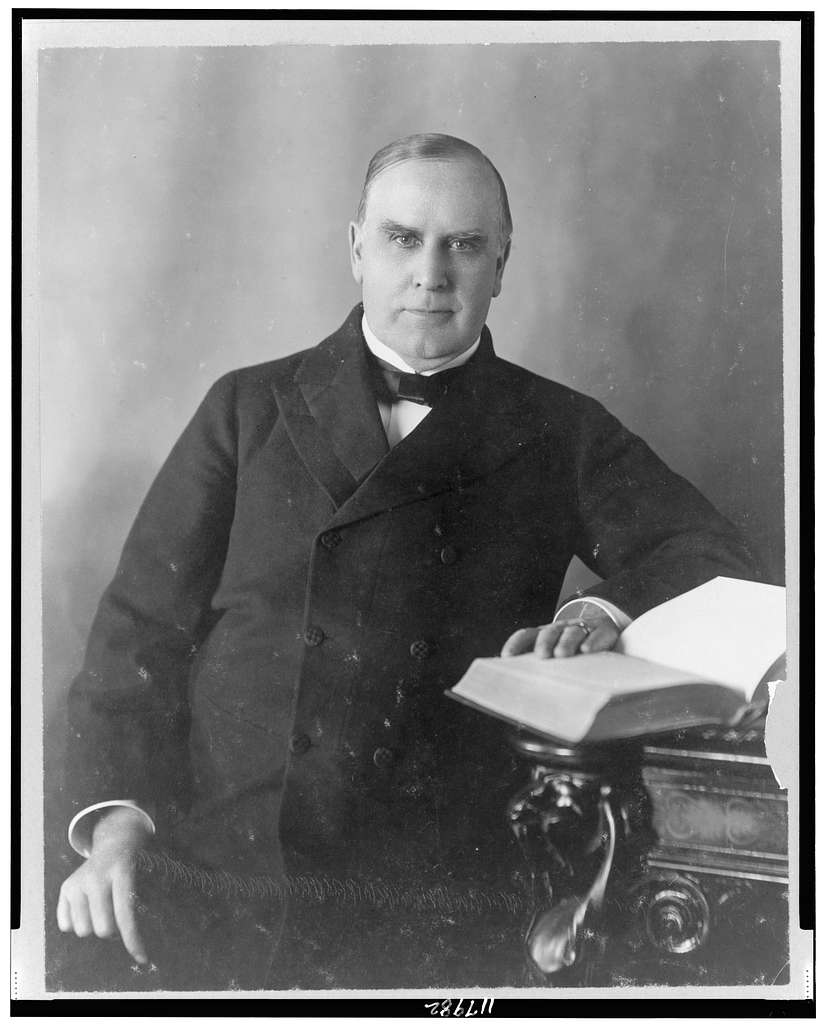
But on September 6, 1901, an anarchist, Leon Czolgosz, shot the president in the abdomen. Immediately, men nearby wrestled the assailant to the ground.

William instructed, “Don’t let them hurt him.” And then to his secretary, “My wife—be careful how you tell her—oh, be careful” [7].

Even in extreme crisis, William displayed honorable Christian character.

For eight days he lingered; the nation hoped and prayed for recovery. But as William grew increasingly weak, he told his doctors, “It is useless, gentlemen. I think we ought to have a prayer.”

Later the president recited from his favorite hymn, “Nearer My God to Thee.”

And finally William spoke his last words: “Good-bye, good-bye all. It is God’s way. His will, not ours be done” [8].

President McKinley did indeed stand tall on his Christian faith, from the day he first proclaimed it until his dying breath.


[1] https://www.tribtoday.com/news/local-news/2018/11/methodist-faith-affected-mckinleys-life/

[2] www.tribtoday.com

[3] https://www.whitehousehistory.org/the-life-and-presidency-of-william-mckinley

[4] https://courierheraldtoday.com/william-mckinley-american-patriot-and-man-of-faith/

[5] https://shec.ashp.cuny.edu/items/show/878

[6] www.preachingtoday.com

[7] https://gentlereformation.com/2024/02/19/the-last-words-of-william-mckinley/

[8] www.gentlereformation.com

Additional source:

https://www.britannica.com/biography/William-McKinley

Image credits: http://www.picryl.com; http://www.commons.wikimedia.org; http://www.canva.com; http://www.rawpixel.com (2); http://www.picryl.com (2).

Processing…
Success! You're on the list.

Read Full Post »

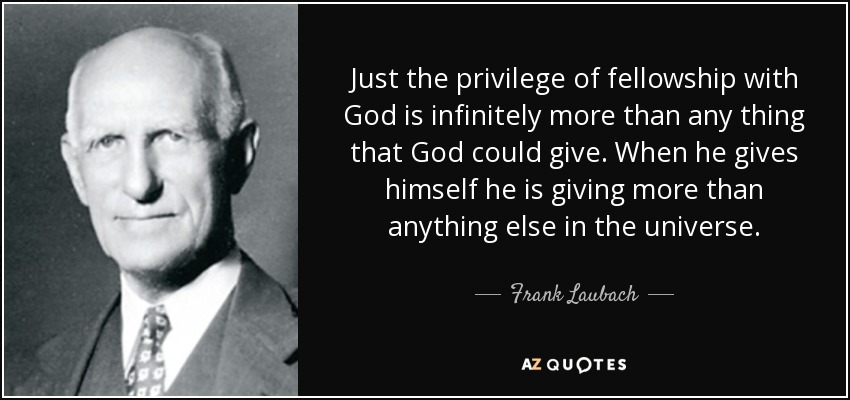
Frank Laubach (1884-1970): missionary to the Philippines, college dean, author, and developer of a highly-successful literacy program.

These are a few of the accomplishments of the devout Christian hero we met in last week’s post, “Toward Undiscovered Continents.”

His fifty-six books included those about the Philippines and teaching literacy, but also about growing into an intimate relationship with God, something he’d greatly desired, like King David centuries before:

In a letter dated March 23, 1930, Frank wrote, “Can I bring God back in my mind-flow every few seconds so that God shall always be in my mind [1]?”

He decided to make the rest of his life an experiment, and for the next forty years Frank disciplined himself to become more aware and more submissive to his heavenly Father—moment by moment.

As the habit grew, Frank wrote it was “the most amazing thing I ever ran across.” In another letter he tried to describe the sheer joy he experienced one afternoon:

“God was so close and so amazingly lovely that I felt like melting all over with a strange and blissful contentment [2].”

Surely all of us desire such loveliness and contentment in God’s presence.

But how did Frank manage to accomplish such a goal? And how might we hope to achieve that kind of intimacy with God?

First, we have to be patient with ourselves. Seeking to experience God throughout the day takes time and practice. About seven weeks into his experiment, Frank admitted:

“When for a half hour or so He slips out of mind—as He does many times a day, I feel as though I had deserted Him, as though I had lost something very precious in my life [3].”

So how did Frank become more consistent in his focus?   

 Here are a few of his practical suggestions (The comments in brackets are my own):

  • In the chinks of time between things, pray: “Lord, think your thoughts in my mind. What is on Your mind for me to do now?”
  • Instead of talking to your “inner self,” talk to Jesus. Imagine Him with you.
  • Pursue a two-way conversation in prayer. Ask, “God, what are You saying to me?” Let your imagination consider what you suppose He might answer. [It’s worthwhile to record these responses in a journal. Do keep in mind, God will never contradict what he’s already said in scripture.]

Can you imagine him saying, “I have been waiting for this moment all your life, waiting until you opened the channel so that I could speak. I have wonderful plans for you which cannot be realized until you listen as you are listening now [4].”

  • Make a daily habit to prayerfully read about the life of Jesus, from the Bible-books of Matthew, Mark, Luke, and John. Try different translations to keep the experience fresh.

[Or, listen to scripture being read to you. Here’s an APP to try: https://www.bible.com/audio-bible/111/MAT.1.NIV .]  

Frank urges, “Walk with Jesus through Galilee by walking with Him through the pages of His earthly history [5].”

  • Hum a favorite prayer-hymn or chorus to yourself. [One possibility: “Take My Life and Let It Be,” with its upbeat tune.]
  • We invite Christ to share—all day long–in everything we do, say, or think. We don’t need to stop our work, but “we try to call Him to mind at least one second of each minute [6].” [How’s that for a lofty but highly worthy goal?]

The websites listed below offer more of Frank’s suggestions.

With him we can attest: “Now that I have discovered Him I find that it is a continuous discovery. Every day is rich with new aspects of Him and His working [7].”

Doesn’t that sound delightful? Let’s make the most of our minutes, availing ourselves of that “melt-all-over, blissful contentment” in the presence of God that Frank Laubach wrote about.

https://www.azquotes.com/quote/803882


[1] https://renovare.org/articles/living-each-moment-with-a-sense-of-gods-presence-frank-laubach.

[2] Quoted by Nayswami Nakin at https://www.ananda.org/blog/laubach-christian-literacy-god/ .

[3] Letters of a Modern Mystic, quoted by Richard J. Foster and James Bryan Smith, www.renovare.org.   

[4] These first three suggestions come from Laubach’s book, Prayer: The Mightiest Force in All the World, highlighted by Bill Gaultiere, at https://www.soulshepherding.org/christ-answer-inspiration-frank-laubach/.

[5] From The Game with Minutes, by Frank Laubach, quoted by Dr. Tom Sweeney at  https://the-magpie.org/2017/02/28/laubach-on-experiencing-god-every-minute/.

Image credits: http://www.dailyverses.net; http://www.pexels.com (Mk7Bober); http://www.heartlight.org; Nancy Ruegg; http://www.pickpik.com; http://www.azquotes.com.

Processing…
Success! You're on the list.

Read Full Post »

The decision had been narrowed down to two schools for our granddaughter Emma*, a rising seventh-grader. Which would be the best choice for next year–Willow Hills or Sheridan? She’d taken the tests and been accepted by both; each offered its own set of benefits.

Our son Derek and daughter-in-law Heidi received input from others, but their comments only added to the list of pros and cons. No definitive answer came to light.

Emma spent a school day shadowing another student at Sheridan. “It was OK,” she reported afterward. “The teachers were nice.” But nothing she’d seen or experienced had convinced her, “This is the place I want to be!”

All through this process Derek, Heidi and Emma (as well as little sister Madison) had been praying God would make clear the best choice.  The deadline was nearing and the uncertainty felt like a heavy weight upon their minds and hearts.

No doubt you’ve faced similar decisions. It’s not a comfortable place to be.

So why does God allow such distress? Why don’t the answers to our prayers become evident immediately?

There are a number of reasons. Among them:

Uncertainty reveals the frailty of self-reliance.

We can’t see the big picture, and to be honest, very little in our lives is under our full control. Times of uncertainty press us into a place of trusting God [1].

We do well to affirm he’s our devoted heavenly Father. We can trust that what he’s lovingly planned is exactly what we’d choose for ourselves if we could see the entire storyline [2].

So our son and his family (Nana and Papa too!) waited and prayed. All we could do was trust our faithful God to reveal his good and wise plan in his good time.

Uncertainty provides a platform for God to display his grace, wisdom, and power.

These attributes and more become apparent as the answer unfolds and we see his lovingkindness in the plan he’s designed, the wisdom behind it, and the power he’s wielded to make events play out just so.

In the meantime, we must realize the uncertainty we face is only apparent uncertainty. Our future and our provision are certain to God. We’d also do well to remember that “uncertain seasons are often some of the most powerful moments we experience with God” [3]

Uncertainty allows us to experience God in fresh ways as we:

  • Sense his presence more profoundly during difficulty. Pat Chen calls it liquid love [4] — perfect imagery for the warm and comforting presence of our Heavenly Father.
  • See his unfailing love on display, even as we struggle—through the kindness of others, the beauty of creation, an encouraging scripture, and more.
  • Recognize his lavish goodness in the eventual, right-on-time provision.

The Sunday after the two acceptance letters arrived for Emma, our family just happened to sit in church in front of a couple with a son who attends Willow Hills.

Both the parents and he shared enthusiastically about the school. They also knew students at Sheridan and expressed concerns that our son and daughter-in-law hadn’t heard before.

The young man, several years older than Emma, spoke directly to her, giving her reasons why he’s loved Willow Hills.

Several days after that encounter, Emma and her dad visited Willow Hills for a tour. “Impressive!” he declared. “I like it!” she affirmed.

And so, just as we’d all prayed, God made the decision clear, and the weight lifted.

When have you faced a season of uncertainty? What helped you to triumph over the doubts and questions? Please share in the comment section below!

*All names changed, including the schools.


[1] https://serenityinsuffering.com/4-ways-to-trust-god-in-uncertainty/

[2] Katilyn Bouchillon, contributor to Take Heart, 210.

[3] Jon Bloom, Not by Sight, 57.

[4] Intimacy with the Beloved, 81-82.

Image credits: http://www.pexels.com; http://www.dailyverses.net; http://www.heartlight.org; http://www.canva.com (3).

Processing…
Success! You're on the list.

Read Full Post »

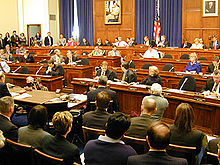
Between the internet, TV, and our mailboxes we’ve been inundated with political ads for months. Not only do Republican and Democrat candidates oppose one another on numerous issues, each side also loudly complains about the errors and character flaws of the other.

No doubt we can all agree: it’s been another contentious election season.

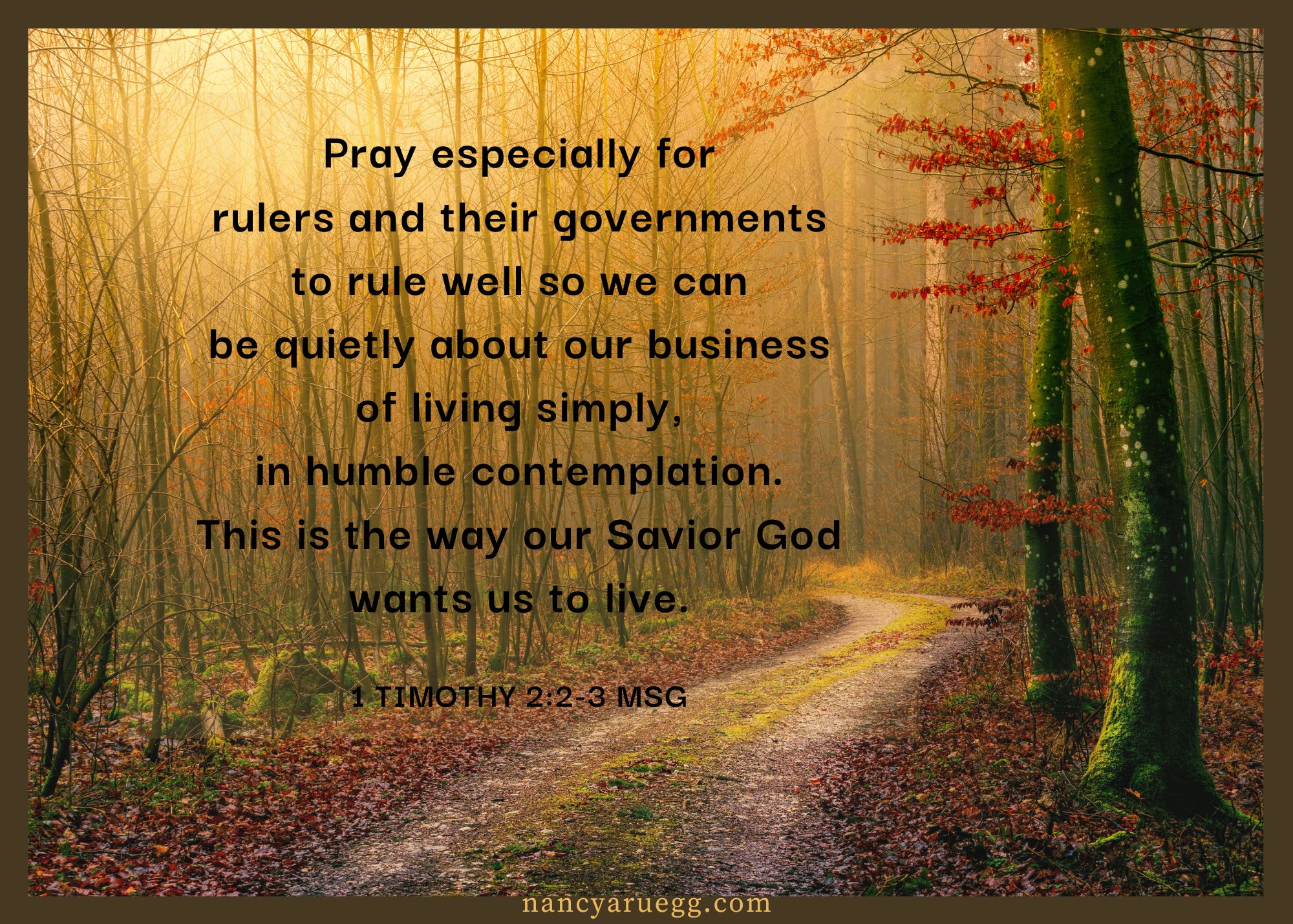
We might also agree that the whole process is worthy of prayer. In fact, through the inspired writings of the Apostle Paul, God urges us to pray for our leaders:

Perhaps we might pray like this:

We praise you, O God:

  • That you are willing to use our earnest prayers to change the course of our nation, to stay your hand of judgment, and make us into the kind of people you long for us to be in the process [1].
  • That you are all-wise and all-powerful. There is no problem that can’t be alleviated, there is no argument that can’t be settled, when people seek your wise insight and revelation. May all of us turn to you with sincere hearts, eager to follow your ways, to live together in peace and unity [2].
  • For leaders already serving in city, state, and federal governments: may they strive to apply your wisdom, justice, and the Golden Rule on behalf of those they serve. Keep them strong in mind and spirit for the work ahead.

Be our guide, O God:

  • That we might understand clearly the issues at hand, the problems we face, and the consequences of each policy implemented.
  • To elect those whose lives and leadership are based on truth and integrity.
  • To elect individuals who will not suppress those who profess faith in you. May they support, not detract from, opportunities that introduce people to Christ and the enhanced life he offers.
  • To elect those who will honestly consider the best practices (many of them Christ-centered), already implemented and working in some areas—best practices with high success rates in reducing poverty, substance abuse, homelessness, crime, and more. Conversely, may our public servants terminate those government programs that aren’t working and waste financial resources.
  • To elect people who value unity and are willing to seek creative compromises and solutions with those of different political affiliations. In the process, may such leaders contribute to healing the divide among us and strengthen our country [3].

We pray for:

  • Lies to be exposed and truth to shine with clarity.
  • A sense of serious responsibility in the heart of ALL Americans, that each might cast an informed, thoughtful, and prayerful vote. May we remember that men and women have died in order that we might exercise this precious freedom.
  • An honest election, untainted by fraud and interference. May those involved in such activities be exposed and held accountable.

And finally:

  • May the injustices perpetrated by dishonorable leaders be rectified.
  • May elected officials serve with integrity, stand against evil, and work toward the prosperity of all. May they be mindful they are accountable to you first, and then their constituents [4].
  • May YOUR power and greatness, justice and mercy, righteousness and goodness, wisdom and more reign supreme as elected officials take office.

In the powerful name of Jesus, we pray,

AMEN.


[1] Kay Arthur, His Imprint, My Expression, p. 157.

[2] Hebrews 10:22; Psalm 119:30-32; Ephesians 4:3

[3] Mark 3:25

[4] Hebrews 13:17

Art & photo credits: http://www.canva.com; http://www.en.wikipedia.org; http://www.rawpixel.com; http://www.pexels.com (Vera Arsic); http://www.publicdomainpictures.net; http://www.heartlight.org.

Processing…
Success! You're on the list.

Read Full Post »

Remember Peter Piper who picked a peck of pickled peppers? I wonder what he’d choose if he picked a peck of puzzling proverbs? And how many puzzling proverbs would Peter Piper pick?

Perhaps you’ve encountered some biblical proverbs that raised questions rather than supplied insight—at least at first reading. I certainly have.

Below are five examples. (Perhaps Peter Piper would pick these too!)

PUZZLING PROVERB #1

But how is instruction like a garland or jewelry?

When we receive the wise teaching of godly parents (and our Heavenly Father), our lives are crowned with the blessing and honor of maturity, integrity, and wisdom. We also radiate to others the beauty of godliness, like a chain of distinction around our necks [1].

I wonder too if this garland on the head alludes to the peace of mind that comes from living wisely, and the chain over the chest intimates joy of heart for those who follow biblical instruction.

PUZZLING PROVERB #2

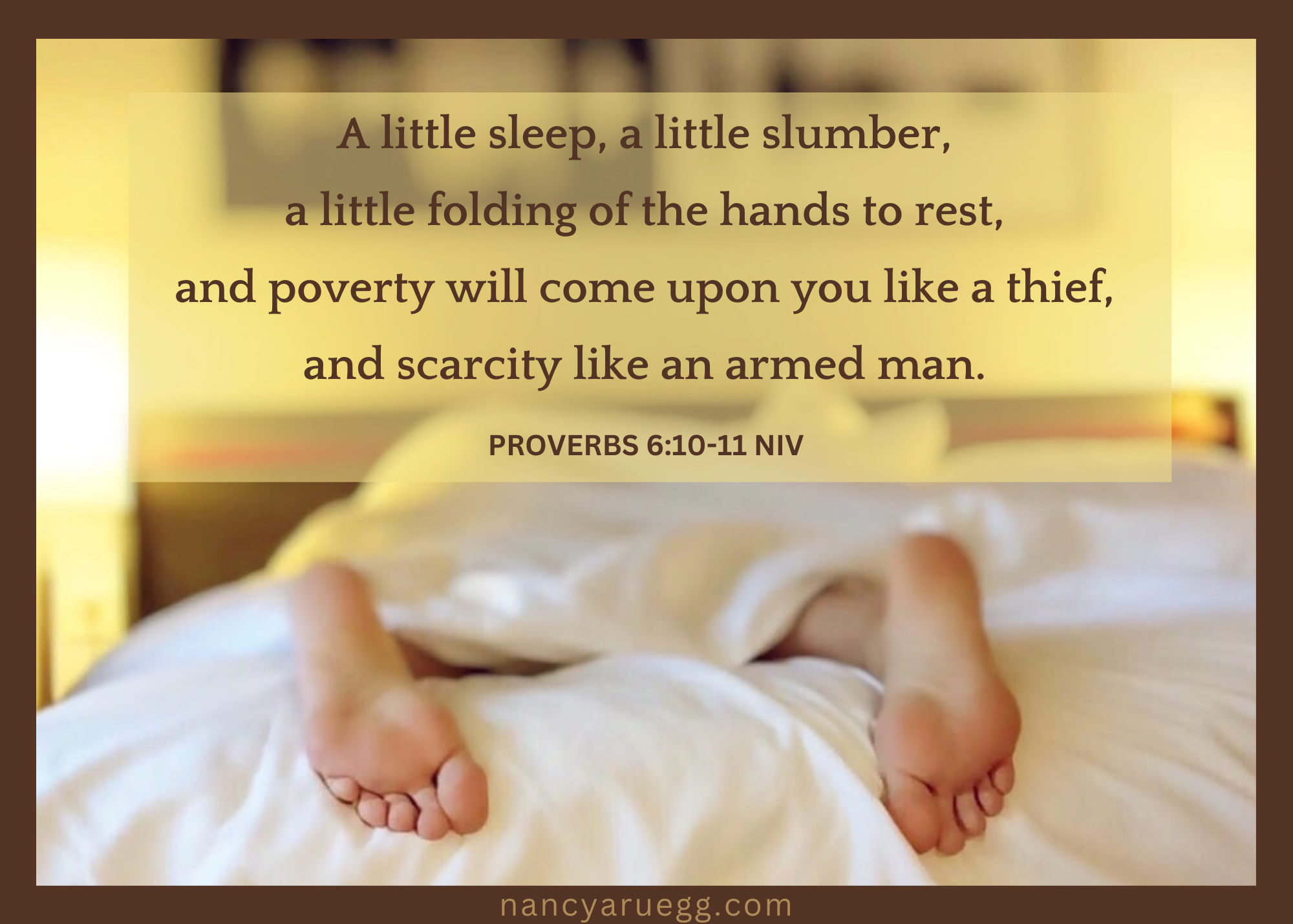
But rest is necessary. So what’s the meaning here?

It’s a warning against apathy and a lack of responsibility, because it’s so easy to:

  • put off to tomorrow what we don’t feel like doing today
  • avoid certain tasks because they’re challenging
  • over-indulge in leisure and accomplish little

We’d do well to remember:

The enjoyment of leisure would be nothing if we only had leisure. It is the joy of work well done that enables us to [truly] enjoy rest.

— Elizabeth Elliot

PUZZLING PROVERB #3

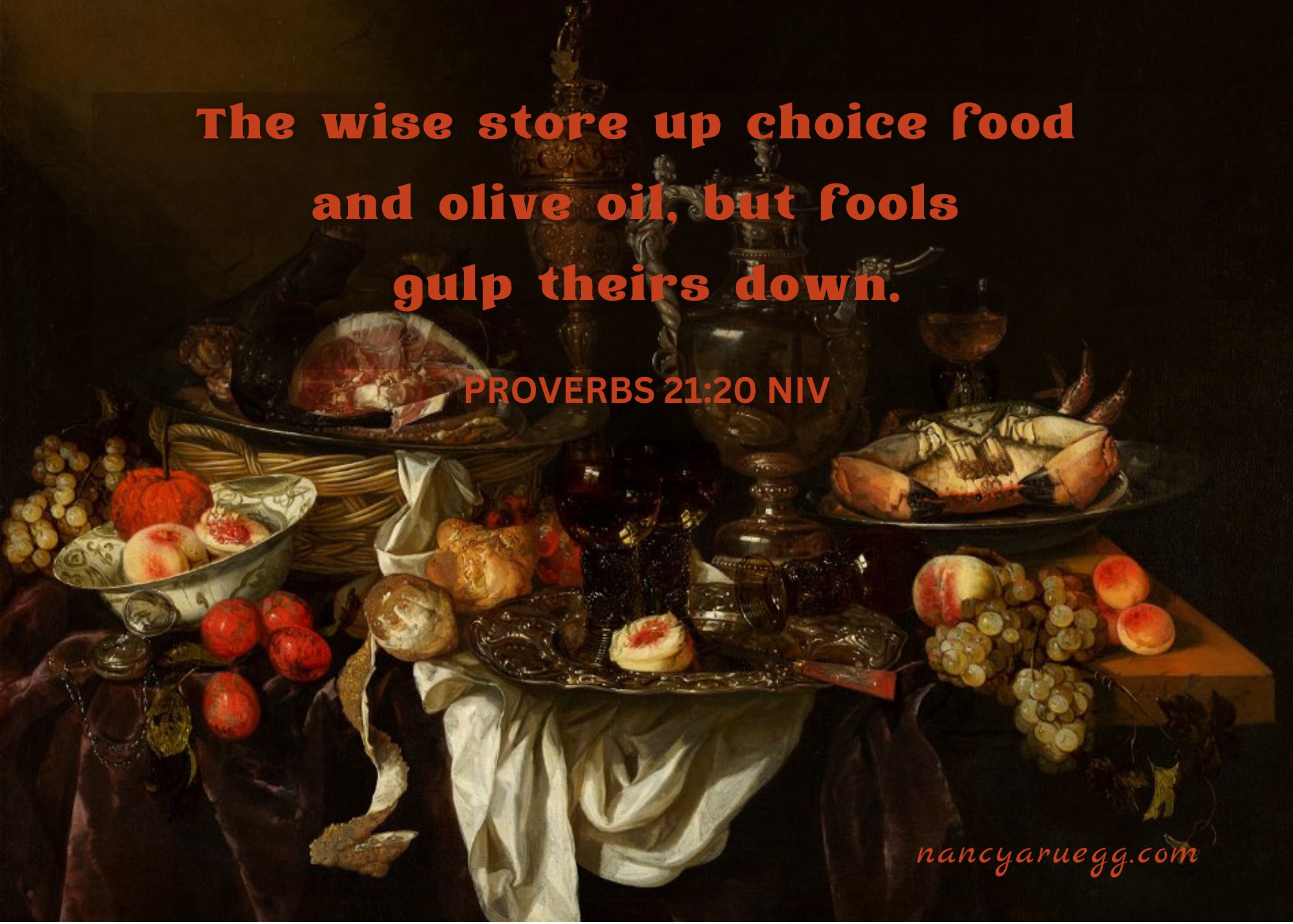
“Banquet Still Life” by Abrahan van Beyeren (1620-1690)

Is this a summary of Aesop’s fable, “The Grasshopper and the Ants,” or might there be a spiritual lesson here?

Actually, it’s both. Yes, God would have us live responsibly and save for the future, but he’d also have us share from our resources and enjoy the blessing of generosity.

The wise also store up within their spirits the choice nourishment of God’s Word and the oil of divine influence, to be ready for the work God calls them to do [2].

PUZZLING PROVERB #4

How can it be part of God’s glory (his splendorous attributes) to conceal a matter, and why is it the glory of a king to seek answers?

One reason God doesn’t reveal everything to us is this: knowledge of all things would overwhelm and frustrate our finite minds.

Second, if God answered all our why questions (like “Why did So-and-So have to die? She was so young!”), it’s likely we still wouldn’t be satisfied. We’d want to suggest he accomplish his plans some other less painful way.  

But. Living with uncertainty does teach us endurance and trust as we wait for the day when all will be made clear.

On the other hand, we do well to prayerfully seek guidance for our decisions. This is especially true for those in authority. It’s to their credit to learn the facts of a matter, consider probable solutions in light of outcomes and impact on others, and apply wisdom [3].

PUZZLING PROVERB #5

But what about those saints who’ve exhibited great wisdom, yet have suffered adversity, ill health, and/or untimely, undeserved death?

Obviously, King Solomon is not suggesting that wisdom results in complete protection from difficulty. His point is, by following the wise ways of scripture, we can avoid many of the troubles and heartaches that fools bring upon themselves.

In addition, true wisdom leads us to seek truth. Truth leads to Christ, and he leads us to the way of salvation and eternal safety in heaven [4].

I wonder, do you suppose Peter Piper is wise enough to be guided by these once-puzzling, now-clarified proverbs?

Are we?


[1] John 15:10-11; 1 Samuel 2:30; https://biblestudycourses.org/proverbs-bible-study-courses-sect-1/proverbs-1-8-19-exploring-the-passage/ ; Proverbs 1:8-9 NLT

[2] Acts 20:35; Barnes Notes on the Bible for Proverbs 6:1-11; Matthew 25:1-13; Deuteronomy 8:3b

[3] John 13:7; Psalm 119:130; https://www.bibleref.com/Proverbs/25/Proverbs-25-2.

[4] Proverbs 2:3-5, 9-11; John 1:17b; John 14:6; Acts 4:12

Art & photo credits: http://www.rawpixel.com; http://www.pexels.com; http://www.henikirbyhistory.getarchive.net; commons.wikimedia.org; http://www.pickpic.com; http://www.pexels.com; http://www.dailyverses.net.

Read Full Post »

The Ruegg crew–1980

Years ago when my husband Steve was two-and-a-half years into his first pastorate and our three children were ages five and under, I found myself over-committed.

Sundays, of course, included Sunday School, church, and an evening service. Mondays we hosted a small group in our home that grew to about 30 (which, in my mind, required a clean house plus fresh iced tea and coffee). Thursday evening was choir practice.

From a handful of members to a loft-full; I’m 5th from the left

Every other week, I facilitated a Moms’ support group/Bible study. Also on the to-do list: leading Children’s Church each Sunday for a year, and participating in numerous other activities that happened on a less frequent schedule.

Do you see any issues here?! I didn’t.

All this activity felt important for the growth and community-building of our church that had been dying before we arrived. As a result, I was always on the go between the responsibilities there and at home. Sometimes I resented it (which can be one of the symptoms of striving too hard).  

But the bustle felt gratifying too. In seeking to please the people around me, I was feeding my own neediness for validation. Pride and self-satisfaction lurked in the corners of my soul—wrong reasons for the striving. In addition, I was discovering those attitudes are never satiated.

What’s a Type-A person–who wants to do what’s right–supposed to do?

The following questions can help us evaluate our choices of activity, how many we choose, as well as analyze the motivations behind them:  

Am I propelled most days by determination or devotion?

The determined person rarely reads her Bible or prays except on the run. Her calendar is impressively full of good-deed commitments for others, but contentment is illusive.

This woman may know that a quiet time spent with God refreshes and transforms the spirit, but she can’t seem to make it happen.

Do I find myself pressing on (to the point of exhaustion), while rarely pressing in to be strengthened?

Pressing in includes connecting with God throughout the day, especially in the thick of stress, frustration, or anxiety.  One means is to recite scripture verses that bring our focus back to our all-powerful, all-wise God. [1]

Such verses include:

  • “God is our refuge and strength, a very present help in trouble” (Psalm 46:1).
  • “Call on me in the day of trouble; I will deliver you, and you will honor me” (Psalm 50:15).
  • “The Lord is good to those whose hope is in him, to the one who seeks him” (Lamentations 3:25).

God is ever-ready to help—with the choices before us, when to say yes and when to say no, as well as the right motivations behind those choices.

Does people-pleasing supersede God-pleasing in my life?

Author Shauna Niequist speaks for some of us when she asks: “Why am I doing this? What is it in me that keeps things moving so breakneck fast, . . . that sacrifices my own health and happiness so that people who aren’t me will think I’m doing a good job, in some vague, moving-target kind of way?”[2]

I too find my service for others frequently tinged with people-pleasing. Does that mean I should forego such activity until I can purify my intentions?

No, wrote author and pastor, Tim Keller: “If you wait until your motives are pure and unselfish before you do something, you will wait forever.”[3]

BUT! Our heavenly Father offers this glorious hope:

Because we are covered by Jesus’ righteousness, even our imperfect efforts to please God are acceptable. And as we grow in dependence upon Christ, he’ll purify our hearts more and more.[4]

*     *     *     *     *     *     *     *     *     *

Father, I know it’s downright foolish of me to strive so hard, especially for all the wrong reasons. I want to be free from people-pleasing, self-gratification of the ego, and pride. Forgive me for giving room to such attitudes in my mind.

Help me to be an eager and compliant participant as you work within me to create a pure heart and make my attitudes new.

In the powerful name of Jesus, AMEN.

(Proverbs 4:23; Psalm 51:10; Romans 12:2)


[1] Psalm 72:12 ESV

[2] Present over Perfect, 58.

[3] The Reason for God: Belief in an Age of Skepticism

[4] Isaiah 61:10; Titus 2:11-14

Photo credits: Nancy Ruegg (2); http://www.dailyverses.net; http://www.pixabay.com (TheDigitalArtist); http://www.heartlight.org; http://www.dailyverses.net.

Read Full Post »

Facts are stubborn things; and whatever may be our wishes,

our inclinations, or the dictates of our passions,

they cannot alter the state of facts and evidence.

John Quincy Adams

Many in today’s world want to believe that truth is relative. You’ll hear them say, “What’s true for you isn’t necessarily true for me.”

In the case of taste, that statement may apply. You might love coconut, hard rock music, and skinny jeans ; I do not. And that should be OK. We all have our preferences.

But to understand the absolutes of reality, we must consider the facts and evidence in order to judge rightly and respond accordingly. Truth is truth. And when it comes to our eternal destiny, we cannot risk basing our hopes on untruth, no matter how well-intentioned.

Yet falsehoods frequently masquerade as truth, and have for centuries.

So how are we supposed to know what is right and true concerning our eternal destiny?

Behold the Truth

There’s no getting around the fact that every one of us will die. And though we don’t know the details of what happens next, the Bible is clear: When we trust in Jesus, who took the punishment we deserve for our sins, God graciously grants us eternal life with him in heaven (John 3:16). This is the way he’s established (John 14:6).

But why should we believe the Bible? That‘s a key question every person needs to be able to answer.

Whole books have been written on the subject; I’ve listed a few at the end of this post. But here’s a sample of categories that affirm the Bible is reliable truth, to whet your appetite. And with each I’ve provided just one example or a link to one.

So what facts and evidence prove the Bible is true?

  • Thousands of archaeological discoveries verify names and places mentioned in the Bible. Nothing has been found to repudiate any scripture. (One amazing example: When Truth Unfolds.)
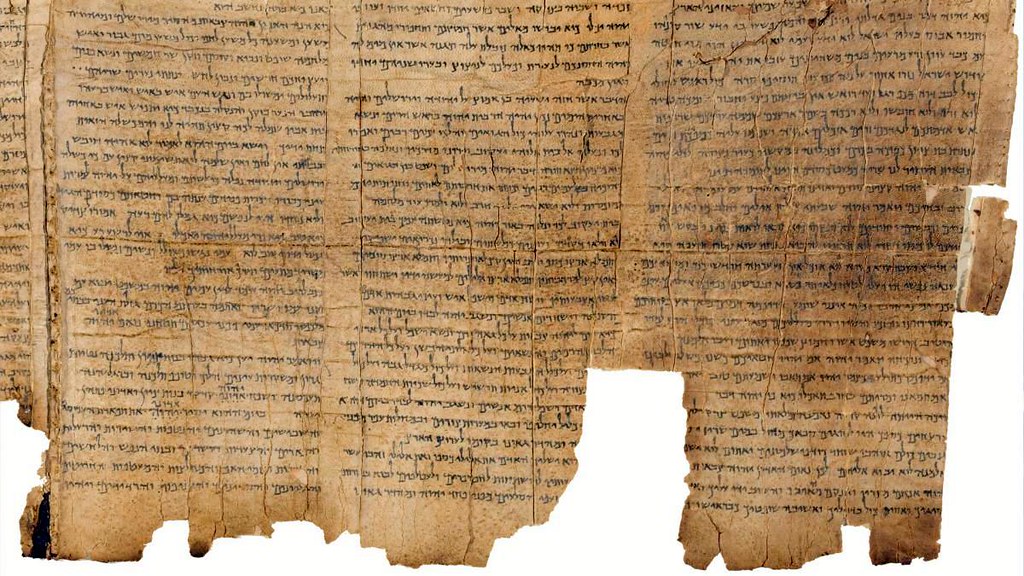
  • Over 5,000 ancient manuscripts or fragments corroborate the Bible.
The Dead Sea Scrolls include 800-900 manuscripts representing every Old Testament book except Esther. They date from about 225 B.C. to 50 A.D.
  • Hundreds of prophecies have come true with 100% accuracy. (Compelling Evidence offers just one set of prophecies concerning one city–all of them fulfilled with mind-boggling perfection.)
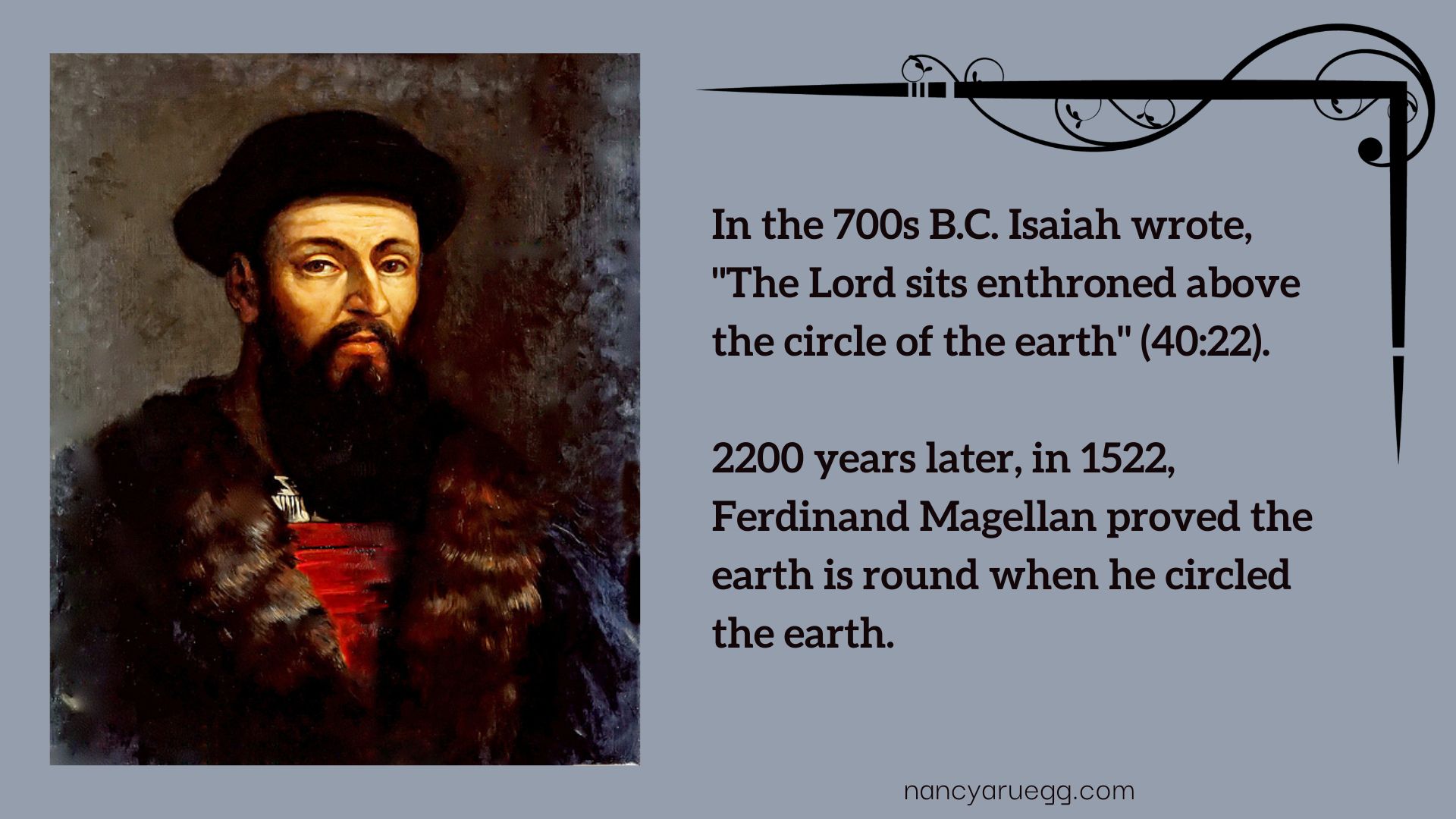
  • A number of scientific and medical facts mentioned in the Bible have also been proven accurate. One example:
  • Over the centuries, millions of lives have been transformed because of Christ’s work within them. (When Love Drove Out Hate tells just one miraculous story.)

But don’t take my word for it. Find out for yourself “the state of facts and evidence.”

Study the photos of archaeological finds. Many are available online.

Learn about fulfilled, biblical prophecies and why the argument that they were written after the fact is provably false. (Read Is the Bible True?/ Fulfilled Prophecy as a good starting point.)

Consider all the scientific and medical facts mentioned in the Bible and how unfolding knowledge over the ensuing centuries has verified their accuracy.

Read biographies of those who hit rock bottom in their lives and how God lifted them up, often in miraculous ways.    

We begin to recognize lies

when we know the truth.

Beth Moore, Praying God’s Word, 76

And if we truly seek after God, he has promised, we will find him (Proverbs 8:17).

Believe in the Truth

Many people believe that heaven is earned. If our good deeds outweigh the bad, God will allow us to enter. But that teaching is not in the Bible. And if we’re going to assert the veracity of scripture (which we must, given the overwhelming evidence), then we have to accept:

This is not a matter of taste, choosing our beliefs depending on what we like, as with food, music, or clothing.

This is a matter of life and death.

Now is the time to behold the Truth, believe in the Truth, and belong to the Truth, if you haven’t made that choice before.

You’ll be so glad you did!

If you’re already a Christian, please share in the comment section below about what brought you to accept the Bible as truth and Jesus Christ as the Way to eternal life.

For further reading: The Case for Christ and The Case for Faith, both by Lee Strobel, and Why Should I Trust the Bible by William D. Mounce.

Photo credits: http://www.wikimedia.org; http://www.dailyverses.net; http://www.flickr.com; http://www.jenikirbyhistory.getarchive.net; http://www.heartlight.org; http://www.publicdomainpictures.net; http://www.canva.com.

Read Full Post »


My nephew is training for an Iron Man competition taking place in April.

Every day Preston follows a carefully prescribed regimen of exercise, riding his bike, running, and/or swimming. He eats a specified diet, and strives for proper rest. Recently he purchased a new bike based on current research for achieving top speed.

Much of this is according to his trainer’s recommendations, from his acquired knowledge and experience as a competitor. The trainer knows what it takes to finish the race.

Over the last forty-plus years of Iron Man Triathlons, participants have learned strategies for success. For example, they use their arms almost exclusively for the swim portion, saving leg strength for the bike ride and run.


Months ago Preston had to choose: should he embark on this test of endurance or opt for an easier goal? And if he did tackle an Iron Man race, would he seek guidance or train on his own? You already know his choices.

Now Preston is within weeks of the race. He’s in the best shape of his life and pushing his body to accomplish far more than ever before. But any current contentment will be multiplied many times over when he crosses that finish line and celebrates the completion of this extreme challenge.

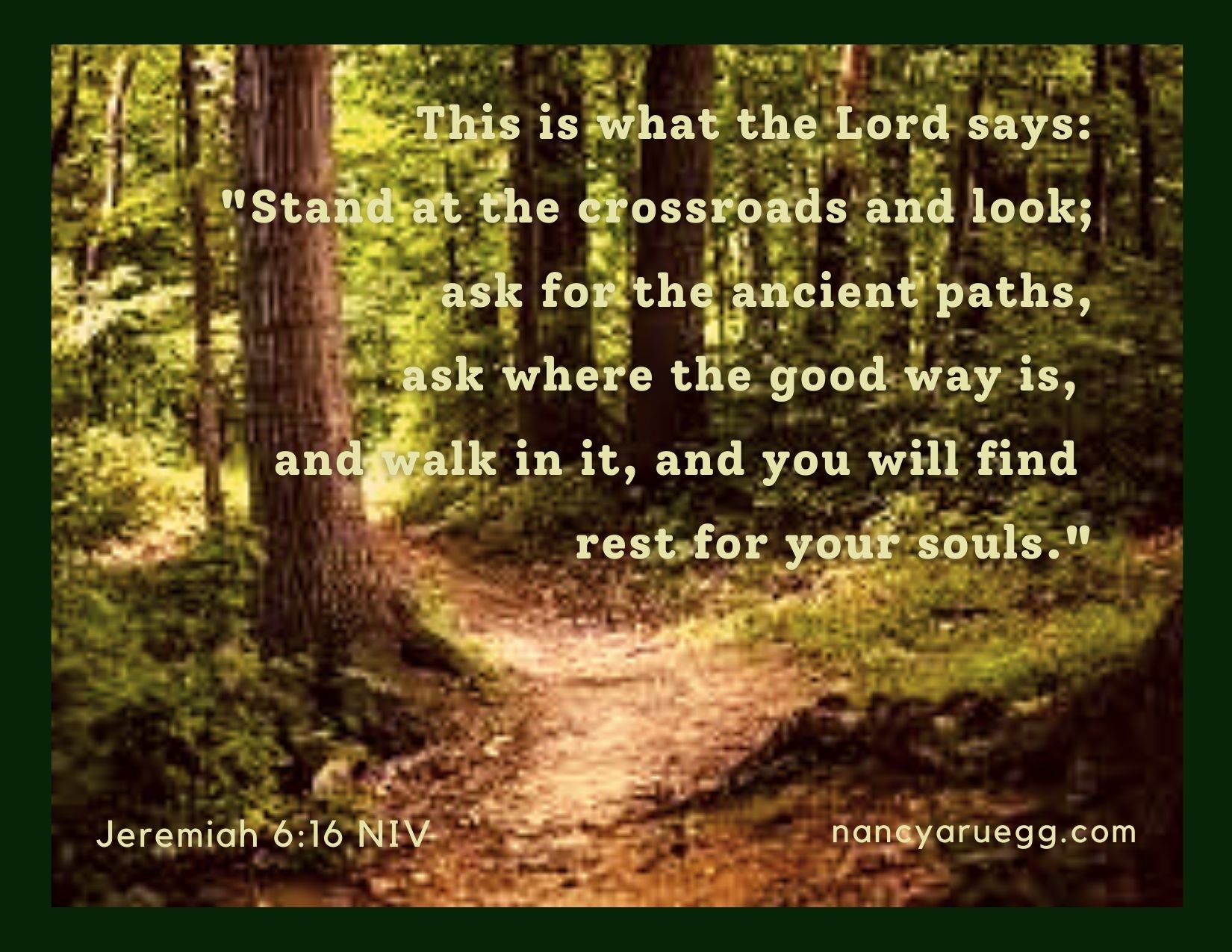
What Preston is experiencing in the physical realm, God would have us understand in a spiritual sense, as laid out in Jeremiah 6:16:


Like Preston, we face a choice, but of much greater consequence than a competition.  Will we follow the ancient paths of God’s good ways or not? And like Preston, we can experience contentment now—not just when the race is complete. God offers us peaceful rest within our spirits (Philippians 4:6-7).

Meanwhile, many around us suffer from discontent and restlessness–the result of sin and following one’s own path. Jeremiah proposes a better plan: follow the good ways of God and contentment of soul will result.

But there’s a broader meaning to this verse. Jeremiah was addressing the entire nation of Judah. As he spoke the words quoted above, a national calamity loomed. Within a few years the people of Judah would be taken captive to Babylon, because the people had not listened to God’s words and they rejected God’s law (Jeremiah 6:19).


Our nation also stands at a crossroads, but few Americans seem to be looking to God for how to proceed. Instead they’re engrossed in self-interests. They don’t ask for the ancient paths that led us to security, prosperity, and blessing in the past.[1] They reject biblical values as out-of-date and stifling.

As a result, many Americans experience dissatisfaction in life, relying on drugs or alcohol to numb the emptiness and soul-strife.[2]

And what of us who believe in Christ and do seek the ancient paths? We stand at the crossroads of these choices:


  • Will we defend our faith even though ridiculed?
  • Will we remain on the ancient path of righteousness, or bend to blend in?
  • Will we stand for absolute truth or succumb to the relative truth of the culture that says it all depends on perspective?


Uncomfortable repercussions may result when we stand for our faith and absolute truth. But our souls will rest in the peace and contentment of a clear conscience.

When Preston finishes his race, family and friends will be ready to congratulate him.


When we finish our life race, God will be ready to congratulate us with, “Well done, good and faithful servant!”

IF we remain steadfast.


“Blessed is the man who remains steadfast under trial,

for when he has stood the test

he will receive the crown of life,

which God has promised to those who love him.”

James 1:12 (ESV)


*     *     *     *     *     *     *     *     *     *

Help us all, O God, to be on guard against the lies of the enemy, to stand firm in our faith, to remain courageous and strong in all circumstances. Our heart’s desire above all is to honor you—by finishing strong. 

(1 Corinthians 16:13)


Notes

[1] The security of settled minds (Psalm 112:7-8), the prosperity as God’s people (Jeremiah 29:11), and the blessing of his provision (2 Corinthians 9:8).

[2]   a. In 2017, 12.7% of Americans were taking antidepressants, up 64% since 2014 (https://www.apa.org/monitor/2017/11/numbers).

b. About 38% of adults in 2017 battled an illicit drug use disorder (https://americanaddictioncenters.org/rehab-guide/addiction-statistics ).

c. 14.5 million people, or 5.3% of the population had AUD, alcohol use disorder, in 2019 (https://www.niaaa.nih.gov/publications/brochures-and-fact-sheets/alcohol-facts-and-statistics).

Read Full Post »

(azquotes.com/quote/56292)


Churchill would have us understand:  truth is not determined by what we believe to be true.

Consider:  I can strongly believe that a coin tossed in a fountain will cause my wish to come true, or that a kind, friendly salesperson has my best interest at heart, or a sad, desperate plea for financial help is legitimate.

But such beliefs can result in misplaced trust and even trouble.  As we all know, there is no factual basis for believing in superstitions, or trusting every winsome person or assuming every heart-breaking story is true.

No, beliefs worth holding must be based on fact and reality.

On November 3, what we believe to be true will guide us to make critical choices— choices that will greatly impact the future of America.


Each of us needs to honestly assess:  Are my beliefs about each candidate based on verifiable fact and not just hearsay? 

We must also consider the essential matters facing our nation: bringing the country back to the pre-Covid prosperity of 2016-2019 (once the vaccination becomes available), ending the domestic terrorism in our cities, providing better alternatives for healthcare coverage, and lowering the national debt—to name a few.

Valid information about each of these concerns is paramount.  We must be alert to broad statements that include no facts, promises that include no plan, and accusations that include no proof.   

But gathering accurate evidence has become more difficult in recent years.  Some media outlets cannot be trusted to present facts.  Their long-term dissemination of misinformation has been exposed in recent months and most have offered no apology.  

Perhaps the answers to the following questions will lead to the wisest choices:

  • What kind of leader does our country/state/county need for this position?
  • What does each party’s platform uphold?  How do their beliefs and plans coincide with what scripture teaches?
  • What are the most pressing concerns? Which candidate addresses those concerns with realism, clarity, and insightful solutions?
  • Which party aligns with the truths I consider most important?
  • Which candidate has a proven, verifiable track record for addressing local, state, or national needs?


If you’re not sure how to answer those questions, may I recommend you ask for advice from people you highly respect, people who are knowledgeable about current events and have demonstrated wisdom in the life-choices they’ve made. Who are they voting for and why? What sources of news and information do they trust and why?

In addition:

  • Be responsible, cooperative, and supportive citizens, as the Apostle Paul laid out in Romans 13:1-7.


  • Be realistic about the outcome of this election. Our pastor pointed out in 2016 during that election season:  much as it may disappoint us, we don’t have to live in a Christian nation in order to thrive as Christians.   Throughout the centuries, the church has actually strengthened and grown under persecution.
  • Be prayerful–not only for which candidates to choose in the various races but for the welfare of our nation after the election.


Again, Paul offers wise advice:


 “I urge then, first of all,

that requests, prayers, intercession and

thanksgiving be made for everyone—

for kings and all those in authority

that we may live peaceful and quiet lives

in all godliness and holiness.

This is good and pleases God our Savior

who wants all men to be saved

and to come to knowledge of the truth.”

–1 Timothy 2:1-3 (NIV)


Art & photo credits:  http://www.flickr.com; http://www.wikimedia.org; http://www.wikimedia.com; http://www.heartlight.org; http://www.pickpic.com.


(This post is a revision of the post for October 27, 2016.)


Read Full Post »

 
Five samples of red wine sat before the young man, each labeled with a price tag ranging from $5 to $45 a bottle. He tasted one, cleansed his palette with plain water, then tasted the next.

“Which one tastes better to you?” the researcher asked.

“Oh, definitely the $45 bottle,” responded the participant.

Most everyone who tried the wines agreed. The more expensive vintage was clearly superior. What they didn’t know: the wines labeled $5 and $45 came from the same bottle (1).

The preconceived idea that more expensive wines taste better had greatly influenced the participants. And it makes one wonder, what other preconceived ideas influence what we value?


Do we choose our clothing based on the logo? Are we more likely to accept certain invitations based on the importance of the host? Do we take great interest in the rich and famous?

In today’s world, people value:

  • Influence, power and authority, little realizing its downward pull. “Power intoxicates men,” asserted James F. Byrnes. “When a man is intoxicated by alcohol, he can recover, but when intoxicated by power he seldom recovers.”
  • Self-reliance, assertiveness and drive. Charles W. Eliot isn’t the only one who’s believed “the efficient man is the man who thinks for himself.” But that discounts the value of knowledge, wisdom, and creativity of others–including God’s.


  • Wealth and material possessions. By contrast, St. Augustine would have us “soar above our worldly possessions. The bee does not need its wings less when it has gathered an abundant store; for if it sinks in the honey it dies.”
  • Fame and privilege. But “what is Fortune, what is Fame? Futile gold and phantom name—Riches buried in a cave, Glory written on a grave” (Henry Van Dyke, “The Talisman”).
  • Physical attractiveness. “The most highly respected and valued attribute in our culture is physical attractiveness, “ wrote Dr. James Dobson (2). But of course beauty fades over time. What then?


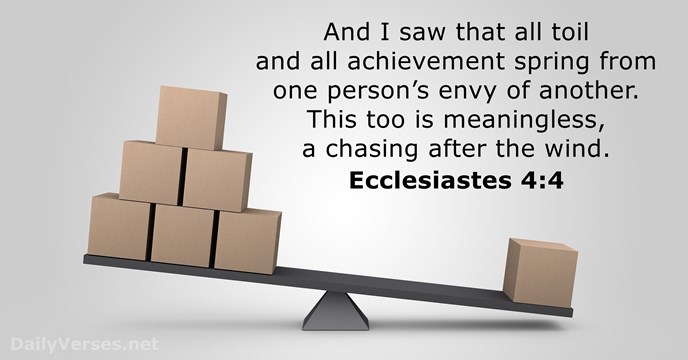
It’s all chasing after the wind.
 

“Life’s but a walking shadow, a poor player,

that struts and frets his hour upon the stage,

and then is heard no more;

it is a tale told by an idiot, full of sound and fury,

signifying nothing.”

–William Shakespeare, Macbeth

 
And yet, if you exhibit at least several of the elements listed in bold print above, you are deemed successful in this world—even though those who reach the pinnacle of such success often experience loneliness, boredom, and dissatisfaction.  What kind of prosperity is that?

Still, men and women through the ages have been fooled into believing that pursuit of these values will bring happiness–in spite of overwhelming evidence to the contrary.


Praise God he offers a better, truly fulfilling way to live. And since he made us, he knows exactly what will satisfy.

To an outside observer, the values of his kingdom must appear upside down. Note how opposite they are from the world’s values listed above:

  • reliance upon him (Proverbs 3:5-6)


  • humility (James 4:6)


  • generosity (2 Corinthians 9:7)


  • a servant’s heart (John 12:26)


  • inner beauty based on character (1 Peter 3:3-4)


These are the qualities that provide a solid foundation for wise choices.  And it’s wise choices that contribute to peace, contentment, and fulfillment.

*     *     *     *     *     *     *     *     *     * 

Lord God, I know the world’s ways lead to futility, yet I can still be drawn in by the lies. Give me strength to choose your way and make wise choices based on your Word. May I be mindful how blessed are those who are hungry and thirsty for righteousness, because it is they who will be satisfied. I praise and thank you for the full satisfaction you freely give!

Ephesians 4:17-24; James 1:5; Matthew 5:6 ISV


Notes:

  1. https://www.sciencedaily.com/releases/2008/01/080126101053.htm
  2. https://www.drjamesdobson.org/blogs/dr-dobson-blog/dr-dobson-blog/2018/10/15/sources-of-self-esteem-in-children-part-1-society’s-infatuation-with-beauty

Photo credits:  http://www.pixabay.com’ http://www.pxhere.com (2); http://www.pixnic.com; http://www.dailyverses.net; http://www.heartlight.org; http://www.wikimedia.com; http://www.heartlight.org; http://www.dailyverses.net (2).

Read Full Post »

Older Posts »

Still Traveling

Impressions Becoming Expressions

Living Our Days

Gaining a heart of wisdom

He Said What?!

I'm Patty, and my husband and I are living with our adult son who has autism and epilepsy. I love sharing lessons learned from life around me, especially life with Aaron.

Meditations of my Heart

Impressions Becoming Expressions

Linda Stoll

Impressions Becoming Expressions

Debby Thompson

Impressions Becoming Expressions

Signora Sheila

Notes on Life, Faith & Italy

Colleen Scheid

Writing, Acting, Living in God's Love

Mitch Teemley

The Power of Story

Heidi Viars

Finding the Image of God