Feeds:
Posts
Comments

Archive for the ‘Excellence’ Category


Years ago I created a memory booklet to celebrate my dad on his birthday. Good thing I did. Over the intervening decades, some of those recollections would surely have been forgotten. And now the memories are more precious than ever.


(Dad and me 1964)


Their meaning, however, goes deeper than mere sentiment. Throughout my life, Dad has modeled the loving ways of my Heavenly Father.

For example:

Dad often took my brother and me to the community pool or on bike rides through the back streets near our home.  We also accompanied Dad to the hardware store, the lumberyard—even the dump! When he asked us to tag along, we always said yes. It meant quality time with our hero.

How incredible to realize God Almighty desires our intimate company, too (2 Corinthians 6:16).


    *     *     *


John and I had our own personal shoe fitter—Dad. He’d gently press on toes, instep, and heel, to ensure proper fit. Such attention to detail was his modus operandi. As a result, we could trust him. He always had our best interests at heart.

God also carefully attends to the details of our lives (Isaiah 40:11).   For a number of months in 2013 we searched realty websites for a new house. Two weeks before the actual walk-throughs, a perfect brick ranch just happened to become available. Though we looked at other homes, this became his obvious choice for us—a true gift.


 *     *     *


Dad started taking me to the library as a toddler. It was on his lap and my mother’s I learned to appreciate books.

My Heavenly Father guided me to appreciate his Book.  Nowhere else have I found such wisdom, consolation, inspiration, and direction. David was right: The scriptures are more valuable than gold (Psalm 19:10).


 *     *     *


One time I ran out of reading material while sick with a virus. Dad went to the library to remedy the situation. Because he knew me well, Dad could choose books he was reasonably confident I’d like. And sure enough, I read all four.


My Heavenly Father knows me more intimately yet and cares about my interests (Psalm 139:1-3). After I had taken up writing again, a woman at church just happened to invite me to her writers’ group. Not only did the members offer encouragement and challenge, they became delightful friends as well.


  *     *     *


Dad and I were on an errand at Sears when we passed the bicycle display. Suddenly he asked, “If you’re willing to pay half out of your savings, what do you say we get you a new bike today?”   My heart pounded so loudly at such a glorious surprise, I found it difficult to focus on the decision of red or blue. (Blue won.)

God in heaven blesses us in delightful, surprising ways as well (Matthew 7:7-11). One afternoon a member of our church (where my husband, Steve, was pastor) called to seek a recommendation on a car. Why me? he wondered.  Steve thought perhaps she planned to purchase one for her grandson’s graduation. But no, it was for us.


    *     *     *


When I was seven or eight, Dad taught me the card game, “21,” so I could practice addition and subtraction. (Math never was my friend.) Not only did he sacrifice his time to help me, he aimed to make the exercise pleasurable too.

My Heavenly Father has gently taught me life skills too (2 Timothy 3:16-17). Recently I came across Ephesians 5:4 about what should be coming out of my mouth instead of foolish talk. Paul encourages thanksgiving, because it is life changing.   Positive thoughts become positive words that foster positive action. In addition, God knows a grateful heart is a joy-filled heart (Psalm 92:1-2, 4).


  *     *     *


My father is ninety-three, and still a remarkable man of strength, wisdom, and faith. His godly influence greatly helped shape my life.

I wonder how different the world would be if all fathers followed the model of our Heavenly Father (1 Corinthians 13:4-8)?  He lavishes such attentive, everlasting love on his children.  My heart fills with awe and adoration at the wonder that I am his and he is mine.


(Art & photo credits:  Nancy Ruegg (2), http://www.pinterest.com; Nancy Ruegg; http://www.slideshare.net; http://www.pinterest (2).


Read Full Post »

h63568

(In honor of Black History Month)

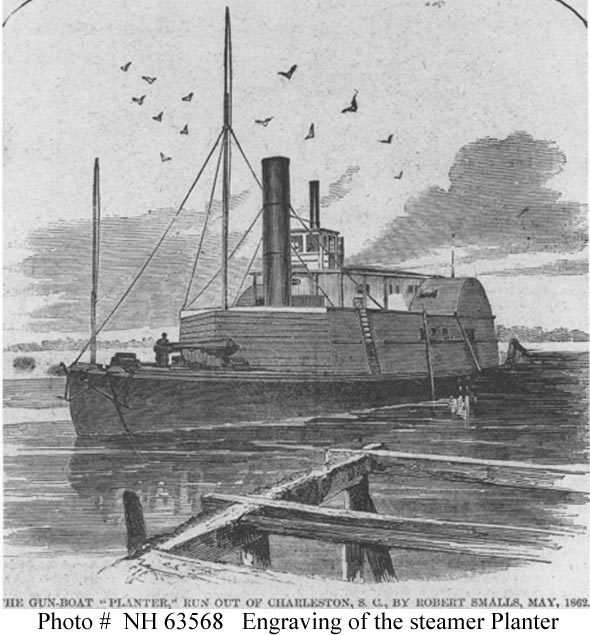
In the predawn hours of May 13, 1862, Robert Smalls’ experienced hands gripped the ship’s wheel of the Planter, though his heart was pounding. Ahead were five checkpoints along the Charleston River, and then the open sea. Within a few hours he and the fifteen others onboard would be free from slavery.

Or, failing to succeed, they would be sinking the ship, jumping overboard and perishing together. They had already decided: being captured was not an option.

Smalls prayed aloud, for the benefit of his crew and passengers: “Lord, we entrust ourselves into thy hands. Like thou didst for the Israelites in Egypt, please stand over us to our promised land of freedom” (1).

The first checkpoint came into view, its lanterns gleaming gold against the dark night. Even though the sentries would not be able to see him clearly, Smalls had taken the precaution of wearing the captain’s coat and straw hat. He even assumed his captain’s posture. And when Smalls gave the correct whistle signal, they allowed him to pass without question.

Robert whispered another prayer, this time of gratitude and praise. He marveled how God had engineered events to bring him to this moment:

  • At age twelve, Smalls’ master, Mr. McKee of Beaufort, South Carolina, had rented him to an employer in Charleston. Smalls had worked in the city ever since, as waiter, lamplighter, and then wharf hand.
  • Currently he was employed as wheel hand aboard the Confederate supply ship, Planter, under command of Captain Ripley. His circumstances had allowed him to learn how to sail and how to make the correct whistle signals at checkpoints.
  • The captain and white crew members frequently spent their nights in Charleston, not on the ship. This night was one of them.

charleston_s-c-_-_street_scene_-_nara_-_525179

(Charleston street scene by Matthew Brady)

  • Smalls enjoyed good rapport with the other ship-hand slaves of the Planter. Without them, this daring getaway would have been impossible.
  • The opportunity for escape presented itself when a pre-dawn mission was scheduled for May 13. Smalls’ 3:30 a.m. departure, although earlier than actually scheduled, did not alert the harbor guards.
  • Smalls had time to notify his wife and children that he would pick them up at a prearranged wharf nearby, prior to the first checkpoint.

A small pinpoint of pale light appeared ahead. Checkpoint Two. Again, the Planter slid by without incident as Smalls signaled to those on shore. Three, four, and five also allowed them to pass.

By sunrise they were sailing into safe Union waters. Upon sighting the first vessel of the Union blockade, Smalls took down the Confederate flag and hoisted a white sheet—just in time before Onward sailors began to fire at the Confederate vessel.

His plan had worked; the little band onboard had escaped to freedom. No doubt their shouts of celebration included, “Thank you, Jesus!”

Smalls surprised the captain of Onward with his knowledge of Rebel fortifications and their locations. Also of value: a book of secret flag signals used by the Confederates, and a full cargo of armaments.

It wasn’t long before Smalls had joined the war effort for the Union, helping to enlist Black men to fight. Nearly 5,000 former slaves fought courageously for the North.

For his part, Smalls became the Union Navy captain for the CSS Planter, the ship he had sailed to freedom. He also captained the ironclad, USS Keokuk.

uss_keokuk_h59546

(The USS Keokuk)

Smalls led Union ships into waters the Confederacy had protected with mines—mines that Small had helped to plant while enslaved in Charleston. Soldiers deactivated the mines, opening those passageways to Union vessels.

Smalls courageously conducted seventeen missions in and around Charleston, which included assisting in the destruction of railroad bridges in the harbor area.

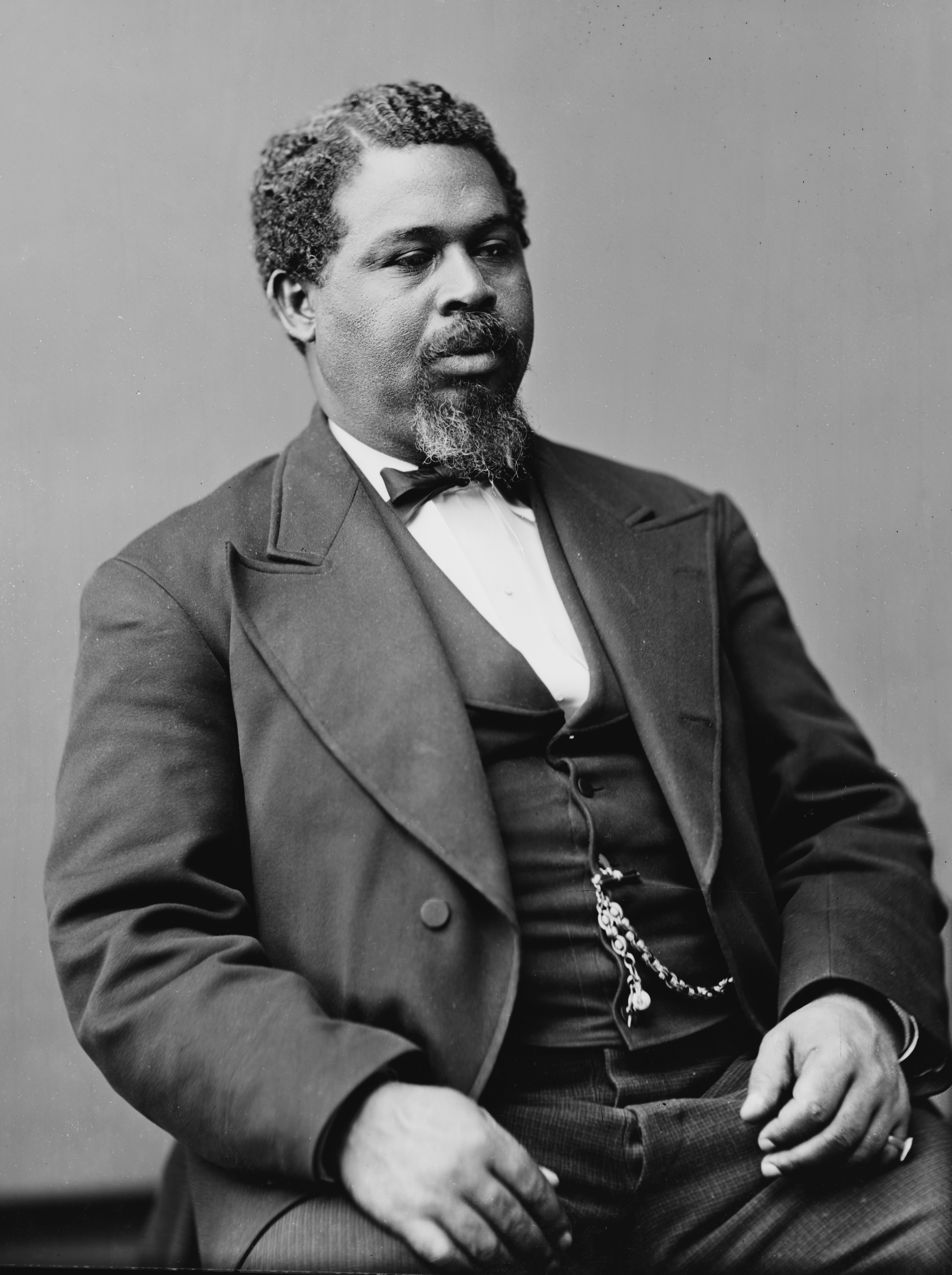
After the war, Smalls and his family returned to Beaufort, South Carolina. He was awarded the rank of Major General of the South Carolina Militia during Reconstruction, and turned his attention to business, education, and finally, politics.  He opened a general store and started a newspaper. He helped establish the first school built for African-American children in Beaufort County.

robert_smalls_-_brady-handy

From 1869 to 1889 Smalls served in both houses of the South Carolina Legislature, and five terms in the U.S. Congress. Referring to his political service, one commentator said, “His record was brilliant, consistent, and indeed he led in all the most prominent measures” (2).

One story in particular highlights Smalls’ Christ-like attitude that impacted his entire life:

robert_smalls_house_beaufort_south_carolina

(The McKee/Smalls House in Beaufort, SC)

He eventually acquired enough wealth to purchase the house in Beaufort where he and his mother had been slaves of the McKee family. Sometime after Smalls and his family moved in, Mrs. McKee came to the door. By this time she was elderly and perhaps suffering from dementia. She thought the house still belonged to her.

The natural inclination would have been to send her away or have her delivered to her current home. But that was not Robert Smalls’ way. He invited Mrs. McKee inside, gave back to the woman her old bedroom, and then served her.

Robert Smalls died in 1915 at age 76, and was buried with great honors.

In 2001 a Logistics Support Vessel was launched with his name, the Major General Robert Smalls. It was the first ship named for an African-American.  A worthy honoree, indeed.

Notes:

(1) Boone, Bishop Wellington, Black Self-Genocide, p. 165.

(2) http://www.docsouth.umc.edu/neh/simmon/simmons.html

Sources:  Black Self-Genocide by Bishop Wellington Boone, APPTE Publishing, 2016; http://www.biography.com/people/robert-smalls; http://www.cbn.com/CBNnews/138685.aspx; http://www.historynet.com/robertsmalls; http://www.robertsmalls.com.

Art & photo credits:  www.ibiblio.org; http://www.wikimedia.org (4)

Read Full Post »

Staff Sgt. Jacob DeShazer, a member of the famed Doolittle Raiders, was the bombardier of Crew No.16, the last of the 16 B-25 Mitchell bombers to launch from the USS Hornet April 18, 1942, on the famous bombing run over Tokyo. Sergeant DeShazer, 95, died March 15. (U.S. Air Force photo)

Jake DeShazer sat on a narrow bench facing the back wall of his cell, a position he was forced to keep hour after hour, day after day, as his imprisonment dragged on.

The year was 1945. DeShazer had been a prisoner of war in Japan for forty long months, enduring suffocating heat in summer, bitter cold in winter, solitary confinement, near-starvation, cruel treatment, and torture.

As he sat, perhaps Jake thought of his comrades among the eighty flyers of Dolittle’s Raiders, the bombing run over Japan that helped turn the tide of the war in favor of the Allies in 1942.

DeShazerTakeOffFinal_md

But DeShazer’s plane was among those shot down, its crew members captured. How many of the original eighty had survived? Jake had no way of knowing, except for the few in his own cell block.

During those long, solitary hours, perhaps Jake reviewed the encouragements from scripture he had learned and the verses he’d memorized when–for three short weeks–he was allowed to have a Bible. What a change had taken place in his heart.

Prior to his captivity, Jake had no interest in Christianity. But the cruel treatment from his captors month after month nearly drove him crazy. Hatred consumed him. He remembered that Christianity supposedly changed hatred into brotherly love. Was that really possible?

He had begged for that Bible, but it was a long time coming. When the emperor of Japan told prison guards to treat their captives better, DeShazer’s request was finally honored. And as a result of studying the scriptures, he put his faith in Jesus. Bitter hatred for the Japanese transformed into loving pity.

As Jake’s thoughts focused on his captors, he may have prayed again the words from scripture that first melted his heart: “Father, forgive them, for they know not what they do” (Luke 23:34). Perhaps DeShazer reaffirmed what God’s Spirit had revealed to him earlier: His captors knew nothing of a Savior.  Without Jesus it was only natural for them to be cruel.

And so, as he lifted up loved ones and fellow soldiers, as he expressed his longing for the war to end, Jake also prayed for his captors to know Christ.

Finally, on August 10, 1945  the emperor of Japan surrendered to the Allied forces, following the atomic bombings of Hiroshima and Nagasaki.

The horror was finally over; DeShazer and thousands of other soldiers returned home to pick up the pieces of their lives.

Jake chose to pursue a degree at Seattle Pacific University, which he accomplished in three years. By December of 1948, he and his wife, Florence, along with their first baby, were headed for the mission field, to—of all places—Japan.

Every time DeShazer met someone in his new home country and told his story, almost always the person would ask, “Why did you come back here?” And he would introduce them to Jesus.

DeShazer-with-kids-1952

(DeShazer with Japanese children, 1952)

It is estimated that some 30,000 people accepted Christ into their lives—just in the first year of Jake’s ministry in Japan. Among them, a number of former prison guards who had held Jake and his comrades captive.

Another surprising convert: Mitsuo Fuchida, the pilot who led the attack on Pearl Harbor. He “happened” to read a pamphlet Jake had written, “I Was A Prisoner of Japan.” Fuchida began to study the Bible, became a Christian, and served as a missionary himself in Asia. He and Jake eventually met and became friends.

fuchida

(DeShazer and Fuchida)

For nearly thirty years the DeShazers served God in Japan, helping to found sixteen churches throughout the country.

Someone has said:

e29eb6e78638f02633d911339071451d

(“Forgiveness does not change the past,

but it does change the future.”)

DeShazer’s story proves just how mind-boggling and miraculous that future can be.

*     *     *     *     *     *     *     *     *     *

Thank you, Father, for DeShazer’s story, proving it is possible to love our enemies, bless those who curse us, do good to those who hate us, and pray for those who persecute us (Matthew 5:44). By comparison to DeShazer’s horrific experiences, my hurts and resentments are embarrassingly puny. Yet I still need your Spirit to transform them into compassion and love. As a starting point, may I never lose sight of the totally underserved forgiveness you have lavished upon me.

You can access more of Jacob DeShazer’s story at:

(Art & photo credits:  www.verterantributes.org; http://www.worldevangelism.net; http://www.spu.edu; http://www.jacobdeshazer.com; http://www.pinterest.com.)

Read Full Post »


Destroyed_Warsaw,_capital_of_Poland,_January_1945

(Warsaw, Poland, January 1945)


World War II reduced much of Western Europe to rubble. Homes, businesses, factories, and much of the infrastructure were damaged or destroyed. How could the region rehabilitate itself? It couldn’t. Even two years after the war ended, very little rebuilding had been accomplished. Many people were living in poverty. Government agencies, in chaos themselves, could offer little if any support.

America came to the rescue, helping to rehabilitate post-war Europe at the cost of $22 billion dollars.   That’s about $182 billion in today’s economy, to assist sixteen nations, including Germany, for six years (1946 to 1952) (1).

Granted, the investment provided a boon to our economy when those nations began to thrive and became strong trade partners with us. National security was undoubtedly enhanced as well.

But a nation such as ours, rich with resources and populated by creative, entrepreneurial people, could surely have survived quite well without their participation. Besides, think what America could have done with $22 billion.

No, greater than economic gain or national security was the importance of doing the right thing and providing humanitarian aid – even to our enemies.


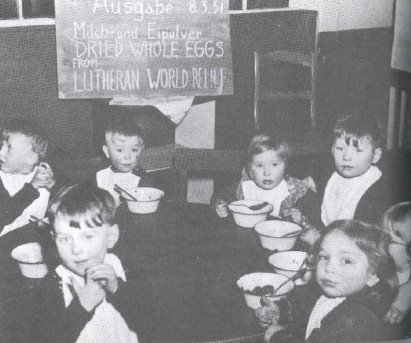
Picture of German Children receiving aid from LWR in 1951, taken from Together in Hope book by John Bachman.

German Children receiving aid in 1951, taken from Together in Hope book by John Bachman.


“Our policy is directed not against any country or doctrine but against hunger, poverty, desperation, and chaos,” said then-Secretary of State, George C. Marshall.

No other nation in history has offered such post-war assistance—and so generously. Now, nearly seventy years later, the foreign aid continues—still totaling billions of dollars every year. And not only does this aid go to our allies or other republics, but to nations of differing political doctrines, all over the globe.

Such generosity is one of our core values in America, contributing to our nation’s greatness. But it is not the only thing.

No other nation on earth offers so much humanitarian aid—much of it by volunteers. Think of the doctors and nurses, teachers and engineers, plus a multitude of non-profit organizations whose sole objective is to relieve suffering around the world and help others lead more productive, satisfying lives.

In 2013 just one agency, the American Red Cross, accomplished the following (among many other achievements).

They:

m6040129_514x260-our-supporters

  • Assisted millions of people in 24 countries, impacted by disaster.
  • Continued to aid 4.3 million earthquake victims in Haiti to rebuild their lives.
  • Helped vaccinate over 98 million children against measles.
  • Continued to develop disaster preparedness in 32 countries, so communities are not so vulnerable.
  • Helped to reconnect nearly 900 families separated by war or disaster (2).

Is it safe to say that, without America, the world would be a very different place? Our generosity and humanitarianism alone have produced significant results around the globe. But there is still more that sets us apart.

No other nation on earth provides such freedom, opportunity, and protection for its citizens.

In addition, recent immigrants often speak of the wonder and delight they experience upon coming to America. They marvel that: roads are regularly repaired, highway signs are clear and accurate, business practices are generally fair. They’re astonished by the volume and variety of goods available–things that most American take for granted, like shampoo, disposable diapers, and deodorant (3).

And what’s the foundation of all this goodness that has contributed to America’s greatness? It’s the values and principles most Americans still embrace–those laid out in the Bible.

For example:

Our generosity can be traced back to Deuteronomy 15:7-8, Proverbs 21:26, and Matthew 25:34-40.


10f6940bb1a13a747e3a6c6c0928fed3


Our humanitarianism—even to our enemies—is rooted in the teachings of Jesus (Matthew 5:44) and Paul (Romans 12:20).

And our way of life, based on freedom, fairness, and adherence to law brings to mind the Golden Rule (Matthew 7:12), Romans 12:9-10, and many other scriptures upholding respectful treatment of all.

Granted, we’re not perfect. Selfishness, greed, and power-grabbing fester among us.  But the world is still a better place for the biblical principles named above which provide America’s foundation–whether folks acknowledge that truth or not.

Praise God for his influence through our founding fathers (many of whom were Christians) and self-sacrificing believers in Jesus throughout our 240-year history. It is on their shoulders we stand to do our part. to advance those attributes that make America great–like no other nation.


quote-america-is-great-because-she-is-good-if-america-ceases-to-be-good-america-will-cease-alexis-de-tocqueville-36-20-68


What do you think has contributed to America’s greatness?  Celebrate your appreciation for our nation in the comment section below!


Notes:

  1. usnews.com
  2. redcross.org
  3. heritage.org


(Art & photo credits:  www.wikipedia.org; http://www.lwr.org; http://www.redcross.org; http://www.pinterest.com; http://www.azquotes.com.)


Read Full Post »


Joseph_and_the_Amazing_Technicolor_Dreamcoat_(3640665731)


We’ve all heard the story of Joseph (or seen the musical, Joseph and the Amazing Technicolor Dream Coat). You’ll remember he’s the one who endured years of slavery and prison before his dreams (of bowing wheat sheaves and stars paying homage) came true.

We also know about Moses, an adopted prince in Pharaoh’s household who ended up in the wilderness herding sheep.  Forty years later God called him to lead the Hebrews out of Egypt.

And we’re familiar with Paul who spent years traveling from place to place and, yes, suffering all kinds of trials—beatings, imprisonment, dangers, shipwrecks—all for the privilege of serving God, introducing people to Jesus and establishing churches.

These Biblical stories and others teach us to never give up, because we never know when God will show up to turn a prisoner into a prime minister, a shepherd into a great leader, or a Pharisee tentmaker into a world evangelist.

Then there’s Jeremiah. His is a different kind of story altogether. He was called by God to warn the inhabitants of Judah that destruction would come if they did not return to God and follow his ways. It was not a one-time message. Over a period of forty years Jeremiah spoke many times of coming doom.


4ef160f6525a2c685725524e6193fbd9


Almost no one listened. (A brief revival took place under King Josiah, but when he died, the people returned to their complacency and evil ways.)

We love the stories of Joseph, Moses, Paul, and others, whose perseverance was rewarded with success. But what about Jeremiah?

He, too, persevered through trials–poverty and deprivation, imprisonment and ill-treatment, rejection and ridicule. For what? According to the evidence (minimal results for his efforts), Jeremiah was a wretched failure. Yet he had obeyed God faithfully, endured patiently, and preached courageously.

Perhaps visible evidence is not the best way to quantify success.

Instead, the true measure of success involves our characters, not our acquisitions (Joshua 1:8).


eac79fb6c5313818bb8b68fb51b50b24


The true measure of success may include the tenacity to get up every day and face the same tasks as yesterday, to persistently make choices that further God’s objectives for each of us, and to remain steadfast even when discouraged (1 Corinthians 15:58).

Last, a true measure of success is how our choices honor God (1 Kings 2:3). Jeremiah may not have turned thousands back to Yahweh, but that was not due to his lack of effort or disobedience to God. Jeremiah doggedly preached to the people of Judah—month after month, year after year.

So the true measure of success includes: 1) pursuing godly character, 2) persevering toward God-given purpose, and 3) making choices that honor him.


Zac-Poonen-Quote-Mans-Greatest-Honor1


Today, such successful people might look like:

  • The parent who has put his career on hold to invest time in his young children.
  • the business owner who drives a twelve-year old car so he can give generously to ministries.
  • The college student slowly working her way through school, anxious to return to her inner city neighborhood and teach school

For those of us looking for that kind of success, Jeremiah is our hero.

He lived out these precepts :

  • Do our prayerful best and leave the results with God.
  • Press on–day by day, month by month, year by year if necessary. Allow such perseverance to build our trust in God and strengthen our character.
  • Persist until God tells us to stop. (How do we know we’ve reached that moment? Peace, not uncertainty, will fill our spirits.)

We may not understand what God is doing, but we know him. And he is holy love and perfect wisdom.*


Pilgrims-Rock-gods-wisdom-is-faultless-application-of-his-perfect-knowledge-300w


*Oswald Chambers, My Utmost for His Highest, p. 129.


(Art & photo credits:  www.commons.wikimedia.org; http://www.pinterest.com (2); http://www.christianquotes.info; http://www.pilgrimsrock.com.)


Read Full Post »


“The whole meaning of history is in the proof that

there have lived people before the present time

whom it is important to meet” (1).


I greatly enjoy meeting the heroes of history and hope you do, too.

One such hero, a founding father of America, is remembered more for his words than his deeds–words such as:


“Give me liberty or give me death.”


His name: Patrick Henry, born May 29, 1736. (His birthday is this Sunday.)


Imacon Color Scanner


But what brought Patrick Henry to that pivotal moment in history and that immortal statement? What influence did he carry afterwards?

A bit of exploration revealed the following:

Patrick Henry’s education and faith began at home, under the guidance of his college-educated father and his namesake-uncle, an Episcopal minister. Uncle Patrick’s teaching, example, and encouragement helped instill in young Patrick the Christian virtues that would impact his entire life.

As Henry grew into manhood, he transitioned from business to law to government. He was elected to the Virginia House of Burgesses in 1765.

Soon after, Great Britain established the Stamp Act, which required almost everything printed in the American colonies to be inscribed on specially stamped paper, available only from agents of the British crown–with the payment of a hefty tax.

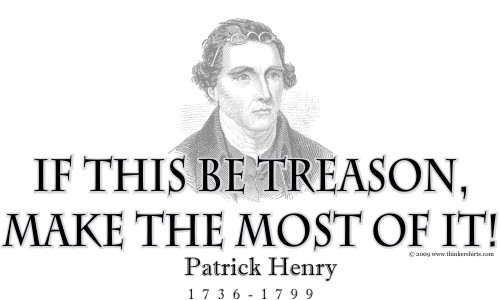
Henry spoke eloquently against the Stamp Act: “If this be treason, make the most of it,” he challenged. The Virginia Stamp Act Resolutions passed, and those with pro-British leanings did consider the action treasonous.


sku-gt184


In 1774, Patrick Henry was elected to the First Continental Congress. Delegates met to determine a course of action for the colonies, in response to Great Britain’s offenses: taxation without representation, searches and seizures without probable cause, confiscation of firearms, and more.

On March 23, 1775, Henry rallied the Second Virginia Convention, calling them to arms against advancing British troops. England was already at war against the colonies, he reasoned. Then Henry concluded with those famous, rousing words:


2015-06-03-d50a1173_large


(“Is life so dear, or peace so sweet

as to be purchased at the price of chains and slavery?

Forbid it, Almighty God!

I know not what course others may take;

but as for me, give me liberty, or give me death!”)


No doubt such eloquent and impassioned words held the delegates spellbound. But more astounding still? Henry had not prepared a speech for that day; he held no notes in his hands.

Another surprise for most of us: Henry spoke of God throughout that speech, and quoted from the Bible.  In one short paragraph, he used eight scriptural phrases.


patrick_henry5


Other examples include:

  • “Gentlemen may cry, Peace, Peace—but there is no peace (Jeremiah 6:14). The war is actually begun! 
  • “The battle, sir, is not to the strong alone” (Eccl. 9:11). 
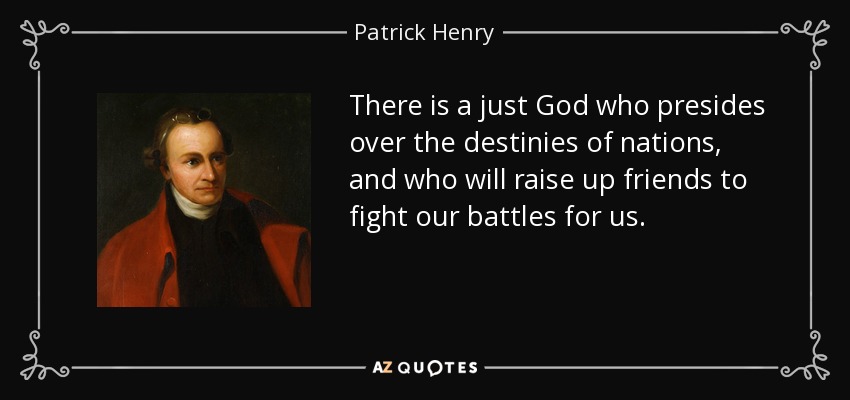
  • “There is a just God who presides over the destinies of nations, and who will raise up friends to fight our battles for us” (2 Chron. 32:8).


quote-there-is-a-just-god-who-presides-over-the-destinies-of-nations-and-who-will-raise-up-patrick-henry-53-32-60


Remember, his speech was delivered with no notes. These verses and many more were imprinted in Henry’s memory.

On many occasions during the war that ensued, he encouraged the beleaguered soldiers to pray for divine intervention, reminding them that:


“…the same God whose power divided the Red Sea for the deliverance of Israel,

still reigns in all of his glory, unchanged and unchangeable…” (3).


The American Revolution officially began April 19, 1775 at the Battle of Lexington and dragged on for  eight long years.  At first, Henry served in the military, as commander-in-chief of the Virginia militia.  But in 1776, Henry shifted his attention from the military to governmental aspects of the war and the development of a new nation.

In fact, governmental affairs were to be his main focus from that time forward. Henry served five terms as governor of Virginia and as a representative in the state legislature.

Yet it was not his accomplishments that he prized most.


thumbs_ph-beingachristian

(“Being a Christian…is a character which I prize

far above all this world has or can boast” (4).


After Henry’s death, this note was found, containing truth just as appropriate for today as in 1799:


“Whether this [the American Revolution] will prove a blessing or a curse

will depend upon the use our people make of the blessings

which a gracious God hath bestowed on us.

If they are wise, they will be great and happy.

If they are of a contrary character, they will be miserable.

Righteousness alone can exalt them as a nation [Proverbs 14:34].

Reader! – whoever thou art, remember this! –

and in thy sphere practice virtue thyself and encourage it in others.

–P. Henry” (5).


Patrick Henry certainly practiced Christian virtue himself, and is still encouraging it—in those who will listen.


Notes:

(1) Eugene Rosenstock Huessy, Speech and Reality, Argo Books, 1970, p. 167.

(2) The Founders’ Bible, p. 1734

3) http://www.christianhistorysociety.com

(4) www.faithofourfathers.net

(5) The Founders’ Bible, p. 957


Sources:

www.christianhistorysociety.com

www.faithofourfathers.net

The Founders’ Bible, Shiloh Road Publishers, 2012

www.patrickhenrycenter.com

www.wallbuilders.com


Art credits:  www.wikitree.com; http://www.thinkershirts.com; http://www.patriotpost.us; ce-wiki.wikispaces.com; http://www.azquotes.com http://www.thefederalistpapers.org.)

Read Full Post »


talk_too_much


Oh, boy. Here she comes again. ‘Seems like she seeks me out every week. Lord, help me.

As Mrs. T. approached me after church, I braced myself for a lengthy, one-sided conversation. Mrs. T. loved to talk, usually about herself, her pains and struggles. As annoyance and frustration would build within me, all I could think about was how to get away without offending.

Now I realize there is a remedy for such situations.

I could have had V-8!

No, not the fortified tomato juice—the VICTORY x 8!


field of spring grass and sunset


I can win over annoyance and frustration—when faced with situations I cannot change—even those circumstances much bigger than aggravating people.

The “times eight” refers to eight ways the battle can be fought. By implementing the following actions, victory can be mine:

  1. Confession and repentance provide the best place to begin. Lord, my attitude toward Mrs. T is negative and unloving; bitterness and self-pity have taken root. Help me to abandon those roots so they shrivel up and die.
  1. Forgiveness.  You, oh God, have forgiven me of so much; how dare I withhold forgiveness from Mrs. T? Help me to remember that forgiveness is not a feeling; it’s a commitment to lay aside the offense—as many times as necessary.
  1. Prayer for the person(s). Father, my first inclination is to pray you reveal to Mrs. T. how annoying her self-centered chatter can be! But your wisdom dictates I pray blessing upon her (Luke 6:28). Ease the distresses and frustrations in her.  Show me how I can help, beyond providing a listening ear.


d520ea38daca324cb2f460f1ce679ee6


  1. Thought Control. Those resentful, self-pitying thoughts in my mind want front-and-center attention, Lord. Turn my focus instead to gratitude. Thank you for the privilege of being your ears and perhaps your voice for Mrs. T.  
  1. Attitude Adjustment. Oh God, help me keep a proper perspective. On a “Scale of Measurement for Difficulties in Life”, Mrs. T rates only a 1 or 2. Forgive me for allowing such a small annoyance to steal my joy.
  1. Affirmation of God’s sovereignty and attributes. It is well within your power to redeem this situation, Lord. Help me to embrace the fact you may have a different plan– that redemptive change take place within me rather than in the situation. May I avail myself of your strength, determination, and wisdom for that change.
  1. Expectation. As Mrs. T. approaches, Father, remind me that you are working for my good and hers. My good undoubtedly includes growing the fruit of the Spirit. But it’s also possible you have planned an additional positive outcome that will surprise and delight—at the proper time.


b970a1bf7167a0962eeebd02bb23cda4

  1. Perseverance.  Thank you for that glorious promise in James 1:4–that perseverance in faith principles produces maturity and sound character. Thank you for the joy and peace that results—so much more satisfying that allowing frustration to fester!


9a2544d9327a7da1f434c3cfa2c08232


Since those days of listening to Mrs. T, have I always applied V-8 to difficult situations? No. Annoyance, bitterness, and a host of other negative emotions can still crop up as challenges arise. This post was much more for me than anyone else.

When the next problem occurs and I feel weak to handle it, I’m serving up some V-8!


(Art & photo credits:  www.quotes.gram.com; http://www.faithmessenger.com; http://www.pinterest.com; http://www.indulgy.com; http://www.pinterest.com.)


Read Full Post »

“This world can be saved from political chaos and collapse

by one thing only, and that is _______________.”

How would you fill in the blank?

A. Wise leadership?

B. Liberal generosity?

C. Open-hearted worship?

D. Unconditional love?

Before we consider the answer, let me introduce the author of that quote, William Temple, who served as Archbishop of Canterbury from 1942-1944.

220px-WTemple

You may remember those were three of the six years when Great Britain and her allies fought against the Nazis. In fact, when Bishop Temple took office, England faced the real possibility of a German invasion.

Temple did not cloister himself within the church walls. He worked to aid Jewish refugees from Nazi Germany, supported a negotiated peace (instead of the unconditional surrender that Allied leaders desired), and traveled frequently throughout England, encouraging British citizens to take courage in their fight against evil and hold onto hope in God.

It was part of a radio broadcast during those grim days of German air attacks that Bishop Temple spoke about “one thing only.” His last word of that statement was Answer C, worship.

Now how did he expect a bit of hymn singing, scripture reading, and a sermon in church to make a difference?

He didn’t. Bishop Temple was referring more to personal worship than public.

His own definition of worship clarifies what he had in mind:

CfTp0ojVIAAXMCN

Imagine a world where each person worshiped God by:

  • Submitting his conscience to God as David did, when he asked for a pure heart and steadfast spirit (Psalm 104:10).
  • Seeking to fill his mind with the truth of God’s Word, recognizing that all his commands are trustworthy (Psalm 119:86a).
  • Replacing negative, impure, unkind, and prejudiced thoughts with whatever is true, noble, pure, and admirable (Philippians 4:8).
  • Availing himself of God’s love and then imitating him—his mercy to forgive, his grace to provide, his benevolence to bless (Ephesians 5:1).
  • Putting aside selfish desires and focusing effort on what God would have him achieve (1 Corinthians 10:31).

Surely there would be less animosity and power-grabbing in our world.

But I can’t point fingers at others when the truth is, I have yet to experience the fullness of what Bishop Temple asserted. An honest inventory of my life includes:

  • A heart not consistently pure, and a spirit not always steadfast.
  • Faith that sometimes falters in God’s trustworthy commands.
  • Thoughts that can grovel in the negative.
  • Choices and actions that do not always reflect God’s love.
  • Selfishness that still rears its ugly head.

On the other hand, guilt is not what God intended as the motivation for worship.

No, he designed it to be a delight, not a duty. He wants to expand our joy (Psalm 16:11), provide rest and refuge (Psalm 91:1-2), bestow his strength (Psalm 138:2-3), and more–through the acts of worship. We short-change ourselves by neglecting its pleasure each day.

Perhaps there’s a reciprocal relationship among all these processes. As we worship God with our adoration and appreciation, praise and prayer, might those other aspects of worship highlighted by Bishop Temple–submission, faith, a renewed mind, love-in-action, and selflessness–be the result?

Might there be an upward spiral effect because, the more a person worships, the more she’ll be transformed? And the more she’s transformed, the purer and more passionate her worship will become?

The influence of such a person—even against political chaos and collapse—knows no bounds, as God magnifies the impact.

One thing only is necessary: worship—with all its many facets.

God will do the rest.

(Art & photo credits:  www.wikipedia.org; http://www.twitter.com; http://www.piqsels.com; http://www.pixfuel.com.)
Read Full Post »

clothing-5

A friend and I enjoyed a bit of clearance shopping last week.  As she gleaned one rack, I gleaned another.  It was while scooting hangers left to right that a sweater fell to the floor. I bent over to pick it up and my sunglasses fell from their perch on my head. Quick as a wink, though, a nearby shopper (not my friend) retrieved them.

“Wow!” I exclaimed, taking back the sunglasses. “That has to be the fastest ‘pay it forward’ in history! Thank you!”

With a big smile for me, she returned to her shopping.

What a contrast to other shopping experiences, when someone has:

  • Bumped past me with her cart without an “Excuse me.”
  • Sauntered with two or three others down the middle of the parking lot lane, oblivious to the fact they’re holding up traffic.
  • Walked through a door I have held open without saying, “Thank you.”

Common courtesy seems to be disappearing from society, as some people have allowed the constant pursuit of self-interests to turn into self-absorption. Perhaps they think worrying about other people’s feelings is a waste of time and energy.   Others may see customs of politeness as downright archaic and puritanical.

The truth is, courtesy and consideration can do us a world of good. Research indicates that kind deeds release feel-good endorphins into our nervous systems. Benefits include diminished pain, decreased depression, and relieved stress (1).

Of course, the Bible has taught the value of kindness all along (2).

il_214x170.742284765_fg16

Yet some folks cringe at the thought of teaching scriptural principles to our children in school or holding ourselves to those standards. “Legalistic!” they claim.

But would it be so horrible if we:

  • Cheerfully greeted one another, even if we’re strangers?
  • Allowed others to enter a building or aisle first?
  • Held doors for one another?
  • Treated service personnel (clerks, wait staff, attendants, etc.) with friendly respect?
  • Said “thank you” at every opportunity?
  • Followed the Golden Rule that Jesus taught (Matthew 7:12)?

fadb62c793485a720e50c5010abae6a0

Good manners are based on good principles; good principles are found throughout the Bible.

And Biblical principles not only provide positive impact on people (and our own nervous systems!), but may very well form the foundation of a strong nation:

“Neither the wisest constitution nor the wisest laws

will secure the liberty and happiness of a people

whose manners are universally corrupt.”

–American statesman, Samuel Adams (1722-1803)

So…

quotes-about-love-kindness-footprints-890x593

*     *     *     *     *     *     *     *     *     *

Oh, Lord, help me leave footprints of kindness wherever I go, to live out your Golden Rule for the benefit of others and for the praise of your glory.  May others know I’m a Christian by the cross I wear and the love I share.

(1) Allan Luks, The Healing Power of Doing Good (2001).

(2) Examples include: Galatians 5:22-23, Ephesians 4:32, and 1 Peter 2:17.

(Art & photo credits:  www.allthingstarget.com; http://www.etsy.com; http://www.pinterest.com; http://www.askideas.com.)

Read Full Post »

237521d60ffd35b9153d70894610fda3

(“The object of a new year is not that we should have a new year.

It is that we should have a new soul.”

G.K. Chesterton)

A new soul. I like the sound of that, don’t you? In my imagination I see a freshening of my attitudes, improved motivations, and increased spiritual strength.

But where do I start in order to achieve a new soul?

No doubt, a new soul begins with repentance—expressing to God my sorrow for wrongdoing and availing myself of his help to change. Just as King David prayed, I can ask God to:


small_efa4fbb2a9df56d01e2f4ab4


(“Create in me a pure heart, and renew a steadfast spirit within me.”

–Psalm 51:10, emphasis added)


Notice that David asked God to create in him a pure heart. David didn’t promise to clean up his act on his own. Only God could make David’s heart new and pure. The same goes for me. All I can do is submit myself to his transforming power and follow his lead.

That pure heart David asked for is a clear conscience. And with the release from guilt came a rush of joy and the restoration of sweet peace with God. Doesn’t that sound wonderful?

“No one is happier than the one who has repented of wrong” (Max Lucado).


A new soul involves renewal of the mind.


romans12_2


Or, put another way:


“Don’t copy the behavior and customs of this world,

but let God transform you into a new person

by changing the way you think.

Then you will learn to know God’s will for you,

which is good and pleasing and perfect.”

Romans 12:2, NLT (emphasis added)


Once the negative influences of sin have been removed, I need to fill my mind with excellent, praiseworthy contemplations.

Why waste my thoughts and allow them to wander on worthless topics or circle around pointless worries? Instead, I want to set my mind on the positive, especially on God himself.

A renewed mind is not problem-focused; it is Person-focused.


A new soul requires day-by-day rejuvenation.


“We do not lose heart.

Though outwardly we are wasting away,

yet inwardly we are being renewed day by day.”

–2 Corinthians 4:16 (emphasis added)

2-corinthians-4-16


God has established certain laws by which our world is governed. Gravity is one example. The law of entropy is another. It states that all elements of the universe tend to disintegrate over time. Plants and animals die and decay, iron rusts, rock erodes.

Our souls tend to disintegrate over time, too, when left unattended:

  • Worry and fear wreak havoc.
  • Self-centeredness creates an appetite for entertainment, possessions, and recognition—appetites that are never satiated.
  • Foolishness reigns because wisdom is ignored.
  • Rationalizations replace honest evaluations.
  • Uncontrolled behaviors harm relationships.

But when we avail ourselves of God’s influence day-by-day and step-by-step, the law of entropy has no effect on our souls.


f5c507e82ee69ce83a7b75164ed04bd8


The Amplified Version expands the meaning:


“The steps of a [good and righteous] man

are directed and established by the Lord,

And He delights in his way

[and blesses his path].”

–Psalm 37:23, AMP


Consider the import of these key words:


Steps – Even spiritual achievement rarely happens in an instant. God values slow and steady progress.


Directed – He isn’t just interested in the details of our lives; he’s lovingly engineering them.


Established – There is always design and strategy in God’s endeavors, even if we only occasionally perceive it.


Delights – God is pleased with those who follow the path he has thoughtfully and wisely set.


Blesses – God lovingly bestows such gifts as peace, joy, hope, satisfaction, and purposeful living.


*     *     *     *     *     *     *     *     *     *


Holy Creator of new souls, as I stand on the brink of a new year, I do confess my failings to you. Purify my heart; show me how to refine even the motivations behind my right actions. Thank you for your gentle nudges to turn my mind toward you, and your loving attention upon every step of my life. I praise you that continual contact with you results in a soul–a life–that is continually refreshed and made new!


(Art & Photo credits:  www.pinterest.com; http://www.mybible.com; http://www.verseoftheday.com; http://www.dailylifeverse.com; http://www.pinterest.com.)


Read Full Post »

« Newer Posts - Older Posts »

When the House is Quiet

Impressions Becoming Expressions

Mitch Teemley

The Power of Story

Still Traveling

Impressions Becoming Expressions

Living Our Days

Gaining a heart of wisdom

He Said What?!

I'm Patty, and my husband and I are living with our adult son who has autism and epilepsy. I love sharing lessons learned from life around me, especially life with Aaron.

Meditations of my Heart

Impressions Becoming Expressions

Linda Stoll

Impressions Becoming Expressions

Signora Sheila

Notes on Life, Faith & Italy

Heidi Viars

Finding the Image of God