Feeds:
Posts
Comments

Archive for the ‘Faith’ Category

‘Won’t be long and we’ll either be the asker or receiver of the question, “What would you like for Christmas?”

Here’s one answer you likely won’t hear: “Give me some tests and challenges, please!”

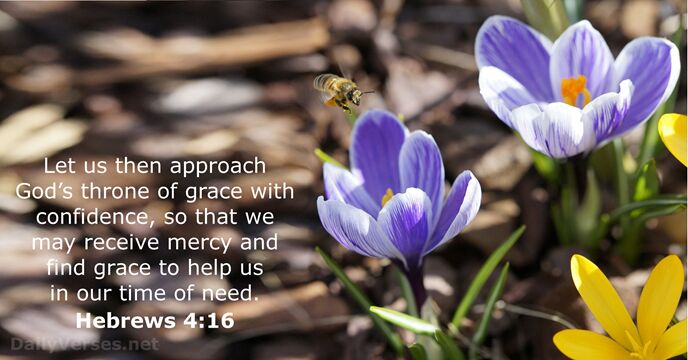
And yet, in the Bible we find this encouragement written by James, the half-brother of Jesus:

What could he possibly have meant? How can tests and challenges be considered gifts?

And then we might remember the saying, “What doesn’t kill you makes you stronger.”

James does mention strength that comes from perseverance, contributing to maturity and spiritual competency (v. 3). But difficult circumstances produce even more, including these ten aspects of the gift of trials:

GREATER GODLINESS

Pressure will make us into the kind of people God wants us to be—more responsive to him, more like him [1]. (And isn’t that who we want to be also?)

HEIGHTENED AWARENESS OF GOD’S PRESENCE

In the darkness of adversity, we’re able to see more clearly the radiance of his face. It happens as we spend time with him, and he ministers to us [2].

INCREASED SPIRITUAL POWER

God creates more friction when he desires to create more power in our lives [3].

Think of Joseph’s trials before becoming prime minister of Egypt, or David’s troubles while on the run from King Saul, or Jonah’s suffering in the belly of the great fish before preaching in Nineveh.

STRENGTHENED CONFIDENCE

Trouble strengthens our confidence that with God, we can endure whatever difficulties the future may hold [4].

A CLEARED PATHWAY

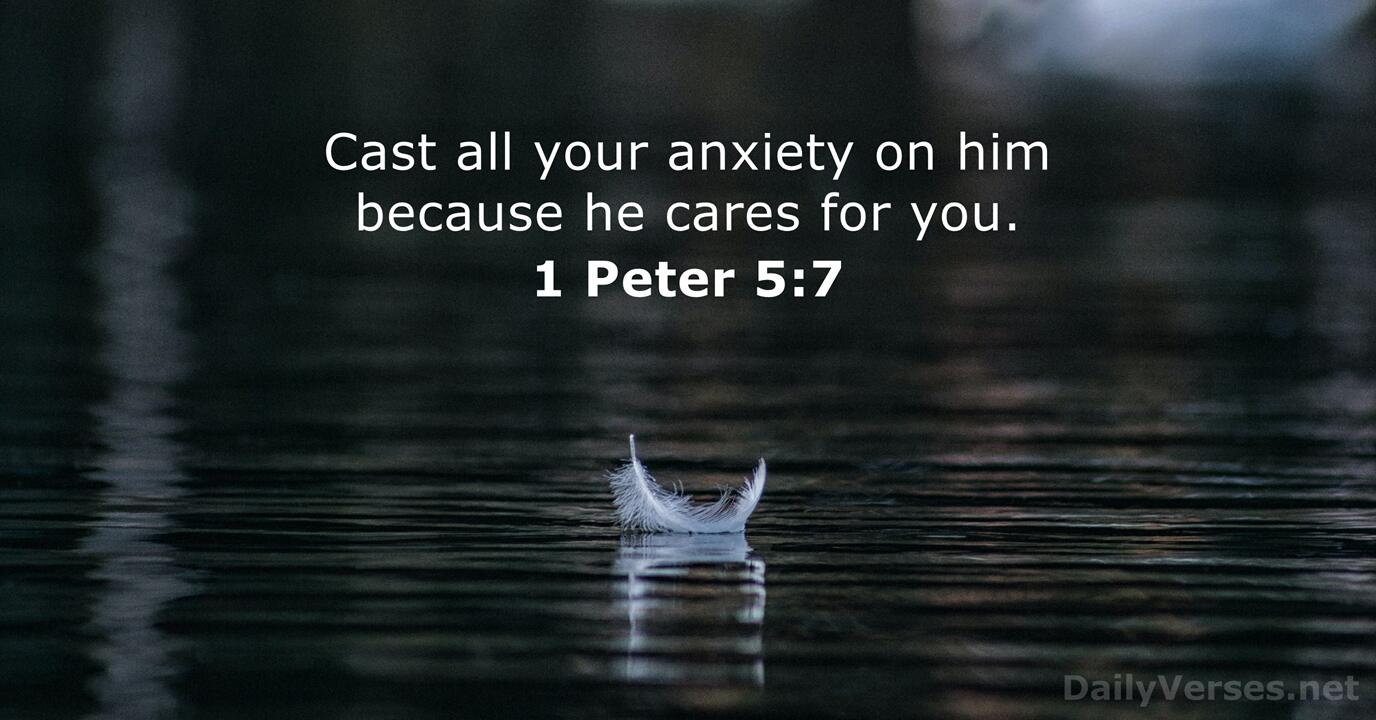
Some storms come, not to disrupt our lives, but to clear our path [5].

For example, a young couple we know put an offer on a house they really liked, but the sale fell through. Highly disappointing, of course, but that cleared the path for a better-suited home at a better price.

And during the season of waiting, they learned lessons in faith and perseverance.

ENHANCED EMPATHY

The pressure we endure helps us understand the challenges faced by others, equipping us to empathize and help [6].

ETERNAL INFLUENCE

God will make our sacrifice of suffering count for all eternity [7]. The person who serenely trusts God to bring good out of their pain demonstrates the power of faith and draws others to Christ.

SWEET DISCOVERIES

“It is often through the most difficult trials that God brings the sweetest discoveries of himself” [8].

During a particularly trying season, I sensed God next to me in the car every day while driving to the school where I taught. His sweet presence was so palpable I sometimes had to blink away tears.  

A SIGN OF VALUE

Trials indicate we’re precious to God. Otherwise, why would he spend so much time and energy perfecting us [9]?

ENHANCED JOY

Paul wisely advised we think on those things that are excellent and praiseworthy [10], turning our minds from what hurts to what helps—gratitude. To do so magnifies our joy, even during troublesome times.

These bits are from my gratitude journal:

  • An hour-plus of fun with the toddlers at church. Who can think about troubles when playing with little ones?
  • Six different species of birds, frolicking in the backyard trees–a veritable circus to enjoy.
  • The prayer of a friend that warmed the heart and lifted the spirit
  • The treasure of family, whose love and support are especially meaningful during stressful times
  • The good medicine of laughter. I texted our younger son that his third niece had taken her first steps. “I don’t understand what the big deal is,” he wrote back. “I’ve been doing that for years!”

And there you have it. Ten facets of the sheer gift that tests and challenges bring into our lives—all wrapped in God’s unfailing love.

The question is, will we receive it?


[1] Selwyn Hughes, Every Day Light, 142; Romans 12:1; 2 Corinthians 3:18

[2] Sarah Young, Jesus Calling, 361; Psalm 89:15-17a

[3] Based on an A.B. Simpson quote.

[4]Sarah Young, Jesus Always, 152; Philippians 4:13 AMP

[5] Unknown.

[6] A.B. Simpson, quoted in Streams in the Desert, 197; Philippians 1:6 AMP

[7] F. Elaine Olsen, Beyond the Scars, 163.

[8] L. B. Cowman, Streams in the Desert, Jim Reimann, ed., 143.

[9] L. B. Cowman, 77.

[10] Philippians 4:8

Image credits: http://www.canva.com (4); http://www.stockcake.com.

Processing…
Success! You're on the list.

Read Full Post »

Nineteen-year-old William hunkered low in the mule-drawn wagon he drove, to avoid the bullets whizzing over his head.

Once he reached the front lines of his Ohio regiment, William and a few others began serving up tin plates of warm food and cups of hot coffee to the hundreds of soldiers—using the wagon as a shield.

The mission required numerous trips, but William did not stop until everyone had been fed.

No one had told the young commissary sergeant to attempt the undertaking. William took it upon himself, knowing that after three days of heavy fighting and not much breakfast, the men would be exhausted and famished.

His action during this crucial battle at Antietam, Maryland, may have helped turn the tide against the Confederates, who soon retreated back to Virginia.

William continued to distinguish himself as the Civil War wore on, living out his Christian faith with courage, compassion, integrity, and more. He earned the rank of major before General Lee surrendered in April, 1865.

William, 1865

Several years before William had proclaimed at his baptism, “Here I take my stand for life” [1].

Stand he did.

William read the Bible daily, testified to his faith, and lived a moral life. He also sought God’s guidance when making decisions [2].

After the war William returned to Ohio, becoming a lawyer in 1867. He garnered respect as an outstanding prosecuting attorney.  

Leaders in the Republican Party noted his intelligence, winning personality, and integrity. They drafted him to run for the U.S. Congress in 1876, and William won. He served fourteen years, distinguishing himself on the Ways and Means Committee [3].

In 1890, however, William’s re-election bid failed due to gerrymandering. His district suddenly included three thousand more Democratic voters. Still, he lost by only three hundred votes.

Some may have thought they’d stymied William’s political career. Instead, he received a promotion, elected as Ohio’s governor in 1891. His success in that position led to an easily-won second term.

In June of 1896, the Republic Convention named William McKinley, Jr. as their presidential candidate. He won the popular vote and the electoral college.

In his first inaugural address, William repeated the oath administered to him. Then he added:

“This is the obligation I have reverently taken before the Lord this day. To keep it will be my single purpose and prayer . . .

“ . . . faith teaches that there is no safer reliance than upon the God of our fathers . . . who will not forsake us so long as we obey His commandments and walk humbly in His footsteps” [4].

One of McKinley’s most difficult decisions occurred in 1898: what to do about the Philippines after the Spanish-American War. Should he:

  • Affirm their independence, which would lead to chaos and misrule due to dire instability?
  • Allow a European power to take control?
  • Or make the Philippines a U. S. Territory to prevent exploitation?

The last option would require financial investment from America, and some Filipinos would certainly resist American-annexation [5].

To a group of church leaders at the White House, McKinley later shared:

“The truth is, I didn’t want the Philippines. I did not know what to do.  . . . I sought counsel from all sides—Democrats as well as Republicans—but got little help.  . . .

“. . . I walked the floor of the White House night after night . . . and am not ashamed to tell you I went down on my knees and prayed Almighty God for light and guidance more than one night. And one night late it came to me this way.”

William explained the Philippines clearly needed help and the United States should “by God’s grace do the very best we could by them as our fellow-men for whom Christ died.

“And then,” William concluded, “I went to bed, and went to sleep and slept soundly [6].

In 1900, McKinley easily won a second term, the first president to do so since Grant in 1872.

But on September 6, 1901, an anarchist, Leon Czolgosz, shot the president in the abdomen. Immediately, men nearby wrestled the assailant to the ground.

William instructed, “Don’t let them hurt him.” And then to his secretary, “My wife—be careful how you tell her—oh, be careful” [7].

Even in extreme crisis, William displayed honorable Christian character.

For eight days he lingered; the nation hoped and prayed for recovery. But as William grew increasingly weak, he told his doctors, “It is useless, gentlemen. I think we ought to have a prayer.”

Later the president recited from his favorite hymn, “Nearer My God to Thee.”

And finally William spoke his last words: “Good-bye, good-bye all. It is God’s way. His will, not ours be done” [8].

President McKinley did indeed stand tall on his Christian faith, from the day he first proclaimed it until his dying breath.


[1] https://www.tribtoday.com/news/local-news/2018/11/methodist-faith-affected-mckinleys-life/

[2] www.tribtoday.com

[3] https://www.whitehousehistory.org/the-life-and-presidency-of-william-mckinley

[4] https://courierheraldtoday.com/william-mckinley-american-patriot-and-man-of-faith/

[5] https://shec.ashp.cuny.edu/items/show/878

[6] www.preachingtoday.com

[7] https://gentlereformation.com/2024/02/19/the-last-words-of-william-mckinley/

[8] www.gentlereformation.com

Additional source:

https://www.britannica.com/biography/William-McKinley

Image credits: http://www.picryl.com; http://www.commons.wikimedia.org; http://www.canva.com; http://www.rawpixel.com (2); http://www.picryl.com (2).

Processing…
Success! You're on the list.

Read Full Post »

In ancient times, someone noticed that candles held up high extended the light further and made the room brighter. That observation led to an invention.

He (or she!) crisscrossed two small boards, fastened them together, hammered a spike through each of the four ends, and fixed a candle on each spike. Last he suspended the contraption from the rafters [1].

Perhaps something similar to this!

Voilà! The first chandelier was born.

Fast forward to the 1600s. Artisans began producing the first crystal chandeliers that reflected and refracted the light, creating more ambient light than candles alone, not to mention stunning beauty.

1600s rock crystal chandelier, from the Nethercutt Collection, Sylmar, CA

Some designers incorporated mirrors, increasing the luminosity even further.

Louis XIV of France famously ordered numerous chandeliers—forty-three of them—for the Hall of Mirrors at Versailles. Thousands of crystals maximized the light of approximately twenty thousand candles, which was also reflected in the 357 pieces of mirrored glass [2] 

A chandelier offers us a radiant picture of the kingdom of God with the crystals and mirrors representing us. Just as a chandelier glorifies a room with its resplendent light, so we’re called to glorify GOD by reflecting his resplendent light to those around us [3].

But how do we do that? Consider these possibilities:

We Glorify God by Trusting Him (Psalm 147:11)

It must warm God’s heart when his saints keep returning to him for strength and comfort during a difficult season. Such people, calmed by the profound and inexplicable peace of God, stand in beautiful contrast to the angry or anxious around them.

We Glorify God by Enjoying Him (Psalm 96:6-8)

That enjoyment will surely create a noticeable glow of contentment on our faces, as we delight in his mercy, goodness, compassion, and more.

We Glorify God by Letting Him Love Us (Romans 8:35-39)

We may know God loves us, but how often do we rest in his warmth, contemplating his love-gifts throughout the day, like:

  • a multi-hued sunrise
  • the cheery song of a cardinal
  • a friendly wave from a neighbor
  • an uplifting word of encouragement
  • the long-awaited rain pattering on the roof
  • a sweet memory that suddenly comes to mind and makes you smile

This is just a short-list of possibilities. God continually expresses his love. Receive it—no, better yet, revel in it and glorify him for his lavish demonstrations and the grace behind each one.

We Glorify God by Living His Ways (Matthew 5:16)

Years ago a church member told me she’d recently been driving along the main street of our neighborhood and caught up with a car going the speed limit.

“Who goes the speed limit these days?” She laughed and then continued. “But to be honest, I began to get frustrated, because I was in a hurry to get home! And then the car turned down your street and I could see who was driving–your son!

“Imagine: a teenager going the speed limit! I just had to tell you: he’s a good driver, even when he thinks no one’s paying attention.”

E. honored us, his parents, that day, by choosing character over convenience. But better yet he honored God. Without even knowing, he reflected the light of Christ and His character to that church member.

Now imagine the dazzling light-display we can create corporately to glorify God–as we all trust him, enjoy him, let him love us, and live by his ways.

Surely we can even outshine those chandeliers in the Hall of Mirrors!


[1] https://chandelierrental.com/the-history-of-a-chandelier/

[3] James 1:17; Matthew 5:16; 2 Corinthians 3:18

Image credits: http://www.flickr.com (2); http://www.pexels.com; http://www.canva.com (2); http://www.pxhere.com; http://www.publicdomainpictures.net; http://www.pickpik.com; http://www.stockcake.com.

Processing…
Success! You're on the list.

Read Full Post »

Since Charlie Kirk’s tragic death last week, perhaps you’ve heard people ask, “Why didn’t God stop Tyler Robinson?” Or, ”Why is so much violence occurring in our country? Why does God allow such suffering [1]?”

Perhaps you’ve been wondering yourself.

But even if we knew the answers to all of our why questions, we’d still want to ask God: Couldn’t you have accomplished your purpose some other way?

Better than seeking answers (that likely won’t satisfy), we’d settle our spirits more effectively if we sought perspective, built our hope and faith with God’s promises, and encouraged our hearts with praise.  

See Job’s example, Job 1:20

Perspective

I appreciate this wisdom from Eugene Peterson:

Evil must be faced, he says, raising the question, how? The Bible tells us: with prayer, with goodness, and with soft (not incensed or arrogant) responses to anger [3].

Peterson also asserts God uses evil for good. What possible good could God accomplish from Charlie Kirk’s assassination?

Just since last Wednesday, there are more than one million new subscribers to Charlie’s organization, Turning Point USA, and more than 54,000 new requests for Turning Point chapters at high schools, colleges, and universities across the country.

I pray that as participants hear about Charlie’s faith, his passion for the institutions of marriage and family, as well as his irrefutable logic in support of biblical values, they too will accept Christ into their lives, to experience the God-enhanced life he offers [4].

Promise

Charles Spurgeon would have us understand:

What might those stars of promise include?

  • Psalm 9:9-10 “The Lord is a refuge for the oppressed, a stronghold in times of trouble. Those who know your name trust in you, for you, Lord, have never forsaken those who seek you.”
  • Romans 8:31 “If God is for us, who can be against us?”
  • Romans 16:20 “The God of peace will soon crush Satan under your feet.”

We can also be encouraged by such scripture-based affirmations as:

  • “Underneath are the everlasting arms, full of sustaining comfort and strength” [5].
  • “I know nothing which can so comfort the soul, so calm the swelling billows of grief and sorrow, so speak peace to the winds of trial, as a devout musing upon the subject of the Godhead” [6].
  • “The devil may land a punch or two. He may even win a few rounds, but he never wins the fight” [7].

Praise

Even though it’s counterintuitive to praise God when we’re distressed, it’s a powerful way to lift our spirits [8].

Perhaps we could begin . . .

I praise you, Lord, for drawing especially near to those who are hurting. You DO make your presence known in palpable ways. And to sense your presence is to experience inexplicable peace and comfort. I pray this for Charlie Kirk’s family and friends.

I praise you also for your Word that ministers consolation and strength. May we all avail ourselves with renewed appetite for your truth.

Psalm 34:18; 139:7-10; John 16:33;

Lamentations 3:32-33; Psalm 119:49-50;

Proverbs 15:14

P.S. Continue your praise, guided by the free resource offered below, as part of our newsletter.


[1] Two worthwhile books that consider such questions: The Problem of Pain by C. S. Lewis and Os Guinness’ book, Last Call for Liberty.

[2] Excerpts from pp. 55-57 of Run with the Horses.

[3] Luke 6:27-28; Proverbs 15:1

[4] John 10:10

[5] Oswald Chambers, My Utmost for His Highest, 145; Deuteronomy 33:27

[6] Charles Spurgeon, from a sermon, “The Immutability of God”; Isaiah 26:3

[7] Max Lucado, Grace for the Moment, 91; 1 John 3:8

[8] Isaiah 61:1-3

Image credits: http://www.picryl.com; http://www.canva.com; http://www.heartlight.org; http://www.canva.com (2); http://www.pexels.com.

Processing…
Success! You're on the list.

Read Full Post »

One fall years ago, we visited friends in North Carolina during peak leaf season.  At the time, Steve and I lived in Florida. It had been years since we’d enjoyed autumn leaves.

The day after our arrival, plans included a drive along the Blue Ridge Parkway to take in all the festive foliage of: birch (yellow), dogwood (deep red), oak (russet to maroon), red maple (from yellow to maroon), sassafras (orange), and more.

But our much-anticipated excursion had to be postponed due to fog and rain.

On Day Three we finally ventured forth, and surveyed mountains transformed. Dust had been washed away, sunlight reflected from gleaming leaves, and the vibrant colors took our breath away.

Sometimes the dust of concern, discontentment, frustration and more can accumulate in my spirit, clouding the colors of joy and awareness of God’s presence. Life loses its luster.

My eyes miss his blessings, my ears miss his words, my heart misses moments of intimacy with him.

What then? Is there refreshing rain for the soul? Oh yes!

God himself renews. All we have to do is ask [1], perhaps with such a prayer as this:

Restore my EYES, Father. May the tears of repentance clear my vision to see more clearly the beauty of your perfections.

And with an enhanced view of you, I’ll be able to view all other things more clearly [2]–like what you want to show me instead of what I want to see.

Refresh my MOUTH, O God. May I be quick to share gracious words with others as well as appreciation and songs of praise to you for your marvelous deeds.

King Solomon wrote, “The tongue has the power of life and death.” Keep me mindful of this power, to use my words as refreshing balm for others, for my own spirit, and to celebrate you also [3].

Renew my EARS, O Lord—to be attentive to your gentle whisper within.  May I heed your instruction as you train me in the delight of right-doing, and lead me ever deeper into the abundant life you provide.

Tune my ears to hear your words of inspiration, cheering me on [4].

Restore my MIND, Father—my understanding, thoughts, and intentions. The things I think are the things that impact my soul.

May I meditate on all the wonders of your attributes and think Christ-honoring thoughts, becoming more Christ-like as a result [5].

Refresh my HEART, O Lord—my motivations, dreams, and desires. I want my heart to align with yours because I know that’s the first step toward fulfilling purpose and satisfaction in life.

Turn my heart, I pray, from what I’d like to have happen, to who you’d have me become—a reflection of your image. That’s where contentment lies [6].

Renew my SPIRIT, O God—my faith, passions, and confidence. May I navigate the challenges of this day with your strength pulsing through my spirit.

Remind me: when negativity or frustration begin to rise, you are my God of help to quell such emotions.

When setbacks occur, you are my God of guidance to show me the way forward, and when disappointments come, you are my God of hope who brings good out of every situation [7].

I praise you, Father, that I can rely upon you to wash away the grime of discouragement, listlessness, and aggravation.

Because of your compassionate love and with your omnipotent power you will restore, refresh, and renew my inner self—just as you have promised.

Begin this moment, I pray.

Restore my eyes, to see more clearly.

Refresh my mouth, to speak gratitude, grace, and praise.

Renew my ears to listen well (and then obey).

Restore my mind to think Christ-honoring thoughts.

Refresh my heart to align my desires with yours.

Renew my spirit to navigate this day with your strength.

P.S. Try renewing your spirit with “Thirty Days of Praise,” offered below (as part of the newsletter).


[1] Psalm 51:10b

[2] Psalm 119:15; 50:2. Last statement based on Selwyn Hughes, Every Day Light, Day 1.

[3] Psalm 98:1; Proverbs 16:24

[4] Proverbs 2:1-5; 1 Kings 19:11-13; John 10:10

[5] Hannah Whitall Smith, quoted in Values for Life, 256; Psalm 143:5; Romans 12:1-2

[6] 2 Corinthians 3:18

[7] Isaiah 41:10; Psalm 32:8; Romans 15:13

Image credits: http://www.pickpik.com; freerangestock.com (JJ Skys the Limit); http://www.canva.com; http://www.pxfuel.com; http://www.pickpik.com; http://www.canva.com; http://www.pexels.com (Furkan Idrizi).

Processing…
Success! You're on the list.

Read Full Post »

Remember the Sesame Street game, “One of These Things Is Not Like the Others?”

See if you can find the misfit in this list of especially nutritious superfoods. One of these things is not like the others! Berries, cruciferous vegetables, cucumber, fish, leafy greens, legumes, nuts, olive oil, tomatoes, whole grains, and yogurt [1].

Did you choose cucumber? You win! Go eat some broccoli as a special winner’s treat!

And know this: prioritizing these foods on our plates leads to beneficial outcomes, including more energy, lower blood pressure and cholesterol, plus less risk of diabetes, depression, cognitive decline and even some cancers.

It’s no secret: our souls also need to be fed well. Choose the best options and experience such outcomes as these: lower anxiety, less depression, more contentment in life, and improved ability to handle life’s challenges with confidence and hope [2].

In addition, the well-fed soul tends to be resilient, able to navigate the ups and downs of everyday life [3].

So what are the best options for feeding our souls? There are a number of them, but for today, we’ll concentrate on just five.

No doubt they’re familiar to you. But I’d encourage you to at least skim-read below for an A-HA moment or two. I found worthwhile insights among the following; perhaps you will too.

BIBLE STUDY

The Center for Bible Engagement conducted extensive research to determine what happens when people engage with scripture at least four times per week. They found that people involved in Bible study are:

  • more pro-active in their faith (improving their quality of life as a result)
  • less likely to deal with bitterness, unforgiveness, discouragement, and more
  • more likely to resist temptations such as excess drinking, lashing out in anger, gossiping, or lying [4]

There’s much joy to be experienced in Bible study as well.

Theologian Jonathan Edwards (1703-1758) wrote that the Bible communicated “such refreshing food,” that “almost every sentence seemed to be full of wonders” [5].

I couldn’t agree more and know many of you would also.

PRAYER

And what might those changes include?

  • Less anxiety and more peace (Philippians 4:6-7)
  • Improved attitude as trust replaces doubt and hope replaces despair (Isaiah 40:31)
  • More understanding of God’s will (Colossians 1:9)
  • Greater endurance (Colossians 1:9-11)
  • Fine-tuned perspective as we allow God to reorient our thinking (Romans 12:2)

PRAISE AND WORSHIP

“Praise . . . is one great means of promoting the growth of the spiritual life. It helps to remove our burdens, to excite our hope, and to increase our faith.

“It is a healthful and invigorating exercise which quickens the pulse of the believer and prepares him for fresh enterprises in his Master’s service” (Charles Spurgeon) [6].

Here’s a praise-appetizer to whet your taste for glorifying God:

GRATITUDE

Gratitude is not just for those times when blessings abound.

“What was the prayer Daniel prayed right before being thrown in the lions’ den . . . ? Thanksgiving. What was Jonah’s prayer right before he was finally delivered onto dry land? Thanksgiving. How are we instructed to pray in Philippians 4:6 when we feel anxious? With thanksgiving. And what is the outcome . . . ? Peace” [7].

And that’s just one of many glorious benefits of gratitude—even when circumstances don’t seem to call for it. You can augment the positive impact by keeping a gratitude journal [8].

COMMUNITY

If we’re going to grow spiritually, we need the encouragement, prayer, and insight of other Jesus followers. Character and wisdom do not develop in a vacuum; interaction with others is an important factor [9].

All of these things—Bible study, prayer, praise and worship, gratitude, and community—are alike, in that they lead to the exceptionally satisfying life Christ offers [10].

Bon appétit!


[1] https://www.health.harvard.edu/blog/10-superfoods-to-boost-a-healthy-diet-2018082914463

[2] https://www.focusonthefamily.com/get-help-how-practicing-spiritual-disciplines-can-positively-impact-your-mental-health/

[3] https://www.healthline.com/health/emotionalhealth

[4] https://www.centerforbibleengagement.org/post/bible-engagement-a-key-to-spiritual-growth

[5] www.gracequotes.org

[6] Morning by Morning, 306.

[7] Lysa Terkhuerst, Embraced, 257.

[8] See https://nancyaruegg.com/2020/11/19/one-single-strategy-for-an-exceptional-life/

[9] Kenneth T. Aiken, Proverbs (from the Daily Study Bible Series), 170.

[10] John 10:10; Colossians 1:9-10; 1 Thessalonians 5:17; Psalm 34:1-3; Proverbs 27:17

Image credits: http://www.freerangestock.com; http://www.stockcake.com; http://www.canva.com; http://www.rawpixel.com; http://www.pickpik.com; http://www.stockvault.net.

Processing…
Success! You're on the list.

Read Full Post »

Joy Ridderhof pulled the blankets around her head to warm her shivering body, knowing she’d soon be throwing them off as sweat soaked her nightgown.

Joy had succumbed to malaria before, but this episode wouldn’t subside. As a result, she’d had to leave the people she’d grown to love in Honduras and return home to Los Angeles. The year: 1937.

Her doctors weren’t sure why she didn’t improve. Added to her discomfort was their discouragement: “You mustn’t go back to Honduras, Joy.”

A mountain village of Honduras , 2008

The thirty-four-year-old had served as a missionary in a remote, mountain village for five years. In spite of hardship, illness, and even threats on her life, she’d loved her time there, and many Hondurans had come to know Christ.

Now it appeared that challenging yet satisfying life-chapter was over. Joy faced the possibility of being an invalid the rest of her life—or at least a semi-invalid.

One day as Joy lay in bed, a wonderful idea occurred to her. The gramophones many villages owned could be put to good use if she made records of stories and songs about Jesus. As far as she knew, no such records existed in Spanish.

But how could she implement such a plan? Joy began to pray and asked others to join her.

Slowly, her health improved. And then, she happened to be introduced to a missionary returned from Central America who’d built a recording studio in his home. She shared her idea, and he became enthused about such a project.

Joy wrote the scripts and arranged for singers and their accompaniment. She herself read the stories.

The first record was produced on December 31, 1938. Joy sent them to various locations in Central America. Now people who couldn’t read would hear about Christ in their own language.

But each record cost fifty cents to produce and Joy had no income. The Great Depression meant resources were tight everywhere. Joy prayed for God’s provision. She believed what the great missionary Hudson Taylor had said [1]:

And supply God did.

In May 1939, Joy established Spanish Gospel Recordings.

Missionaries in Mexico heard about Joy’s work and asked for records in another language. Of course, finding native speakers in L. A. for an indigenous Mexican-Indian language would be nearly impossible.

So Joy and her college friend Ann Sherwood left for Mexico and Central America in 1944, a trip made possible by a doctor who loaned them a car and provided gas ration coupons.

Once they arrived in Mexico, a man invited them to use his new recording studio. The women spent ten months producing records in thirty-five languages, then returned to the States, satisfied their task was complete.

But God had more in store.

Missionaries to the Navajo Indians in Arizona asked for recordings; Joy found native speakers to translate and record scripts for them [2].

Next came a call from Alaska. The two women drove from L.A. to Alaska, equipped with one of the first tape recorders produced in America. While there, someone mentioned that such records would be helpful in the Philippines.

“Oh no!” Joy laughed. “Now we’ve got to go to there!”

Joy and Ann spent one year in the Philippine Islands, producing records in ninety-two languages [3].

By 1955, the two women and others had travelled around the world. Records were being sent to more than one hundred countries [4], prepared on top-of-the-line recorders that God supplied.

He also provided workers who lived in various countries. By 1980 about 3,500 languages had been recorded [5]. Millions of records had been produced.

Of course, not all remote villages owned a record player. So Joy’s organization developed and supplied a number of different players over the decades.

The simplest was a cardboard sleeve that also housed the record for shipping. When opened up, a needle fastened to one edge played the record when placed on the stubby spindle attached to one side. The record could be turned by a pencil or stick stuck into a hole on the edge of the label.   

Hand-wound box-players were later issued, then cassette players, followed by hand-wound mp3 players. Today, the internet and apps allow people all over the world to hear about Jesus and his gift of salvation.

In an interview recorded in 1974 [6], Joy Ridderhof (1903-1984) passionately affirmed:

“We have a God that’s alive, who answers prayer, takes care of us, gives us joy in the work, and provides great results from our work.

“Many thousands have heard about Jesus; little churches have sprung up in different places. He has met our needs and proven himself faithful [7]!”

Today, the Global Recordings Network includes forty offices worldwide, and has produced recordings in more than 6,500 languages [8].  

Joy Ridderhof


[1] https://www.globalrecordingsusa.org/wp-content/uploads/2024/03/Magazine-viewing-version-1.pdf

[2] https://fromthevault.wheaton.edu/2024/03/04/too-impractical-to-be-a-missionary-remembering-missions-pioneer-joy-ridderhof/

[3]  https://www.youtube.com/watch?v=TsLfY9bOkxo

[4] https://fromthevault.wheaton.edu.

[5] www.globalrecordings.org

[6] (and [7])  https://www.youtube.com/watch?v=TsLfY9bOkxo

[8] https://www.globalrecordingsusa.org/about/overview/

Image credits: http://www.canva.com; http://www.flickr.com; commons.wikimedia.org; http://www.picryl.com; http://www.canva.com; http://www.commons.wikimedia.org (2).

Processing…
Success! You're on the list.

Read Full Post »

(A personal, prayer-response:)

How I love this passage, Lord, with its comfort and reassurance!
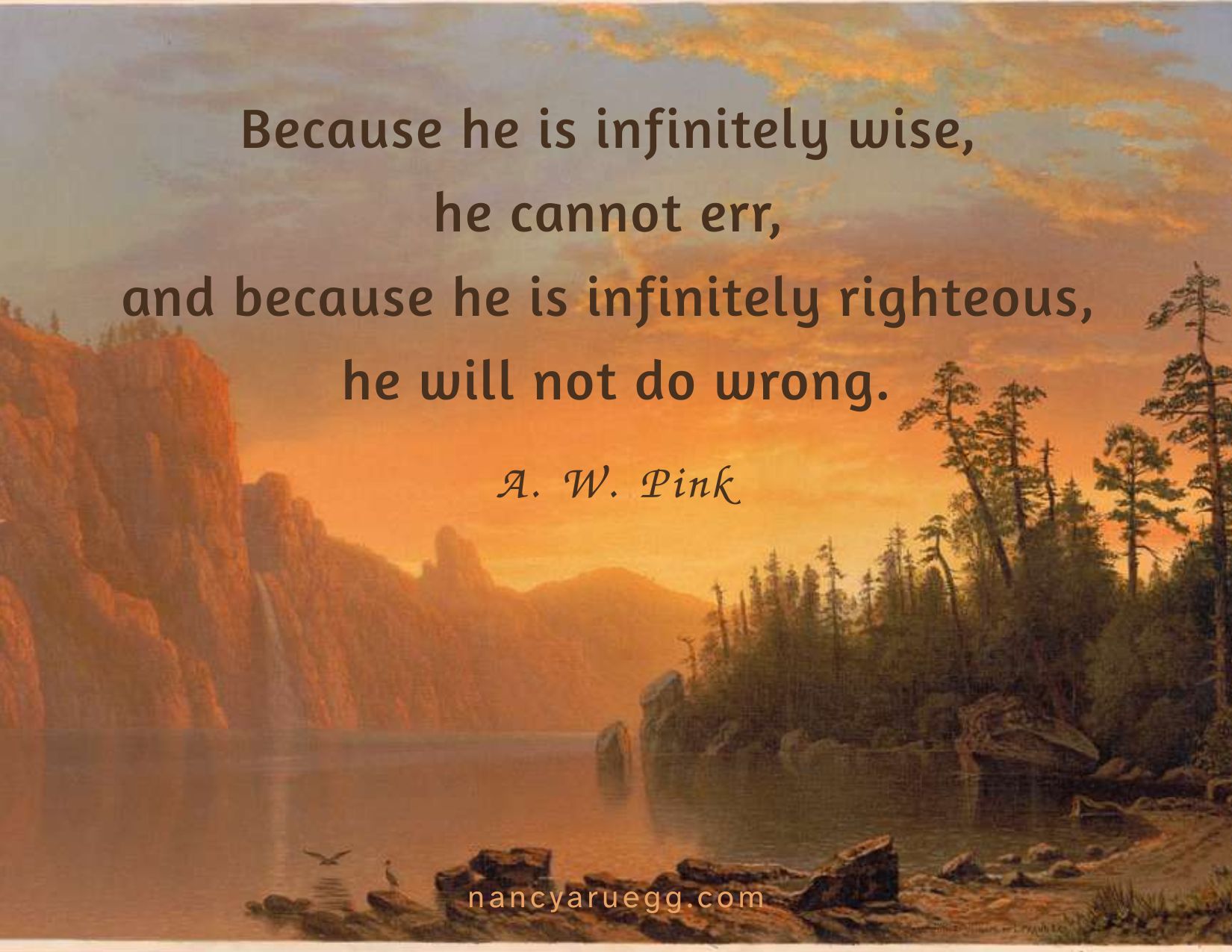
Paul reminds me here that You, O God, are all-wise and all-knowing; You know what’s best for each of us.

You cause all things to work together for our benefit, for those who love You (Romans 8:28).

Sometimes though, I have to admit, certain events confound and frustrate me. My finite mind cannot understand what good you could possibly bring out of:

  • Severe financial setbacks for a godly family
  • A rejection letter from a mission board for an eager candidate
  • An announcement of divorce between a respected couple in the church
  • A cancer diagnosis for a young mother
  • The death of a child

But those of us who trust in You know that we can count on Your wisdom and knowledge in all things, and the absolute dependability of Your character—Your benevolent goodness, Your perfect righteousness, Your deep compassion, Your unfailing faithfulness and infinite love (to name a few)—even in the face of struggle and tragedy.

Remind me, Father, that “making room for mystery in my worldview”(1) is an important element of spiritual maturity.

And to demonstrate that mature trust, I can follow Job’s example. His first response to catastrophe was worship (Job 1:20).

And as I worship, I can praise and thank You, not only for those blessings I see but also for those I can’t.

Help me Father to rest in the knowledge that:

  • Out of Your infinite wisdom, You select the best possible conclusion of events, and You adopt the best possible means for accomplishing that conclusion (2).
  • You are the Most High God, Lord of heaven and earth. You are subject to no one and influenced by no one; neither can anyone thwart or hinder Your plans (3).
  • Even my mistakes could never obstruct Your will.
  • You, on the other hand make no mistakes. Your choices for me are always right, because they come from Your perfect mind and heart. You always know exactly what you’re doing.
  • “Everything from You and for You” (v. 36) often includes mundane tasks, tedious routine, and lack of recognition. But I can count on the fact that, “in the midst of what seems terribly ordinary, You—in your wisdom and power–are doing something extraordinary” (4).
  • Everything serves Your purpose (5). You direct everything toward the conclusion you ordained for it.

May I be joyfully submissive to Your plans for me, in light of these marvelous truths!

Notes:

  1. Sarah Young, Jesus Always, 65. 
  2. Based on a J. L. Dagg quote, www.gracequotes.com.
  3.  Based on an A. W. Pink quote, www.gracequotes.com.
  4. Alice Mathews, A Woman God Can Use, 77.
  5. A quote my dad copied into one of his Bibles, source unknown.

Image credits: http://www.canva.com

Processing…
Success! You're on the list.

Read Full Post »

She stands before the judge, tears filling her eyes, as one misdeed after another plays out on a Jumbotron for all to see.

He waves his arm toward the mammoth screen. “The evidence is clear,” he thunders. “You’ve committed numerous indiscretions. What do you have to say for yourself?”

Her response is barely audible. “I am guilty as charged, your Honor.”

“Highly disappointing,” he asserts.  “However, my Book of Life does indicate you accepted the gift of eternal life made possible by my Son, so you will be allowed to enter heaven, but of course, your place will be far to the rear.

“You can also expect far fewer blessings in my celestial kingdom, compared to those who have lived truly saintly lives. You understand, of course.”

She nods and bows her head in shameful misery.  

Such a scene is imaginary, of course, but reflects the fear and foreboding I used to feel toward the Judgment Day to come, when it’s my turn to face the Judge of all the earth.

After all, he is holy and I am a wretched sinner—even as a Jesus-follower. And though God has provided the way for me to escape hell when I die, he’ll have every right to reprimand me, even banish me to some far corner of heaven.

Perhaps you’ve been plagued by such thoughts as well. If so, have I got good news for YOU!

First, consider this passage from a praise-psalm of King David:

A rather surprising reason to rejoice, agreed?

David goes on to explain: “He will judge the world in righteousness and the peoples in his faithfulness” (v. 13).

Could God judge any other way? No. He is holy and perfect in all that he does and says.

That means all his righteous and faithful perfections will come into play as he fulfills this role: his compassion and grace, wisdom and discernment, goodness, patience, and more.

We can rest assured: on Judgment Day God will not divorce himself from these attributes and become a stern, vindictive, and unforgiving judge.

He is for us, not against us [1].

In addition we mustn’t forget that God is rich in mercy [2]–mercy “so great that you may sooner drain the sea of its water, or deprive the sun of its light, or make space too narrow, than diminish the great mercy of God”–Charles Spurgeon [3].

Another factor to keep in mind: the affirming promise the Apostle Paul included in his letter to the Romans. For clarity’s sake, here’s the Amplified Version:

“There is now no condemnation [no guilty verdict, no punishment] for those who are in Christ Jesus [who believe in Him as personal Lord and Savior]” [4].

Elsewhere Paul makes clear: the charge of our legal indebtedness has been cancelled.

I repeat, cancelled.

In fact, our sins are removed as far as the east is from the west [5].

So how might that opening scenario proceed differently for that Christ-following woman, standing before the Judge of all the earth?

He may open his Book of Life, find her name, and announce, “Ah! Here you are! Your debt has been fully paid by my Son.”
Then perhaps he’d lean forward on his forearms and smile warmly upon her. “Proceed through those doors to your right, my child, and enjoy forever my complete peace, joy, and blessing!”

 *     *     *     *     *     *     *     *     *     *

I praise you, O God, for your gift of salvation, not granted grudgingly because you feel sorry for us wretched creatures, but because you love us. That love is manifested by your kindness and compassion in spite of our sinful tendencies.

And now we can stand in a place of confidence and peace as we anticipate our homegoing to heaven—with no fear of retribution. Thank you, Lord God, our Father!

(Romans 5:8; Psalm 103:8-14; John 5:24)

P.S. Though all those who believe in Christ will receive all the benefits of eternal life in heaven, the rewards we receive for godly behavior will differ [6].

What might those rewards include and how do we earn them? Topics for another day!


[1] Romans 8:31b

[2] Ephesians 2:4-5

[3] Charles Spurgeon (1834-1892), British preacher and author

[4] Romans 8:1 AMP

[5] Psalm 103:12

[6] John 3:16; 1 Corinthians 2:9; 3:8

Image credits: http://www.itoldya420.getarchive.net; http://www.stockvault.net; http://www.canva.com (3); http://www.stockcake.com.

Processing…
Success! You're on the list.

Read Full Post »

Most tourists to Rome will visit St. Peter’s Basilica and find their way to the Chapel of the Pietá. There resides the striking statue carved by Michelangelo when he was only twenty-four years old.

For the viewer, the subject matter evokes sad commiseration with the grieving mother, and yet the artistry of the statue manifests incomparable beauty in Mary’s tranquil expression, the luxurious folds of her robe, and the peaceful repose of Jesus’ face.

Perhaps Michelangelo wished to convey Mary’s relief that the anguish of her Son was over. Jesus’ expression might indicate his satisfaction in perfectly executing the Father’s mission.  

The Pietá gives evidence: beauty may be its most captivating when viewed in juxtaposition against suffering. And Michelangelo superbly represented the two entities in this one statue.

Yet there is One who surpasses even the great Renaissance sculptor in the compelling intertwining of beauty and suffering: our heavenly Father. His medium? The lives of his children.

He can make all things beautiful—even suffering.

Perhaps you’ve known people who’ve endured much—physically, mentally, and/or emotionally. And among them are those who’ve manifested the beauty of strong faith.

We’ve seen heavenly joy in their eyes, even amidst the tears.

We’ve heard the winsome affirmations of God’s palpable, sustaining presence and even of God’s blessings during their season of trouble.

We’ve witnessed their striking maturity in the way they react to their circumstances.

 These saints have embraced the truth that:

How do people find the wherewithal to radiate such loveliness of spirit even as they suffer?

Beauty-in-Suffering Begins with Trust

Of course, it begins with strong trust in God—in his sovereignty over all things, his grace to uphold, and in his power to accomplish purpose through hardship. Such people can say:

–Dr. Charles Stanley, Advancing through Adversity, 78.

Can you also see the beauty of joy on the face of such a witness? How do we grow a strong trust like that?

Beauty-in-Suffering Grows with Intimacy

The formula for growing intimacy with God is quite simple: Prayer + the Word + Time [1].

The closer we walk with God, the less room there is for any other thing to come between us, including trouble, hardship, or pain. In addition, we begin to reflect the glory of his beautiful character [2]!

Beauty-in-Suffering Impacts Others

The question is, will the impact be characterized by the ugliness of complaining, negativity, and self-pity? Or will it be the beauty of vibrant faith, contagious joy, and a settled peace?

Meet Anik, a young African father who was suffering through illness and finding it difficult to provide for his family. Nearby another household also dealt with hardship, and yet their quick smiles and frequent laughter indicated a happiness Anik craved.

He could hear them worship God and pray. They even prayed for him! Anik finally asked them about this God they praised. They told him about Christ, and the family shared their Bible with him.

Upon reading the stories about Jesus, Anik prayed to receive him into his life. So did his family, and they found their hearts transformed.

Their circumstances didn’t change immediately, but they did [3].

May the beauty-in-suffering illustrated by the Pietá and reflected in those like Anik’s neighbor, be evidenced in us also.

*     *     *     *     *     *     *     *     *     *

We praise you, O God, for gifting us with extra measures of your peace and presence—even joy—when difficulty invades our lives. Only you can bring beauty out of suffering! Help us to lean upon you in ever-deepening faith, to carry us through until the final day of triumph. 

(Psalm 34:18; Philippians 4:5-7; Romans 5:3-5;

2 Corinthians 2:14)


[1] Joanna Weaver, Having a Mary Heart in a Martha World, 77.

[2] 2 Corinthians 3:18

[3] www.wycliffe.org/blog/posts/the-light-of-hope-scripture-passages-for-hard-times-.

Image credits: http://www.flickr.com; http://www.canva.com (2); http://www.en.wikipedia.org; http://www.heartlight.org.

Processing…
Success! You're on the list.

Read Full Post »

Older Posts »

Still Traveling

Impressions Becoming Expressions

Living Our Days

Gaining a heart of wisdom

He Said What?!

I'm Patty, and my husband and I are living with our adult son who has autism and epilepsy. I love sharing lessons learned from life around me, especially life with Aaron.

Meditations of my Heart

Impressions Becoming Expressions

Linda Stoll

Impressions Becoming Expressions

Debby Thompson

Impressions Becoming Expressions

Signora Sheila

Notes on Life, Faith & Italy

Colleen Scheid

Writing, Acting, Living in God's Love

Mitch Teemley

The Power of Story

Heidi Viars

Finding the Image of God