Feeds:
Posts
Comments

Archive for the ‘Faith’ Category

One way to get better acquainted with God is to read through the psalms, watch for statements pertaining to him, and write them down.

That last step is important, as research has proven: writing (not typing) helps us learn and retain what we’ve written [1]. In this case it will also increase our appreciation of God’s glorious attributes and gracious acts on our behalf.

I chose to participate in this exercise during Advent, and became astonished by the number of statements about God, totaling over three hundred by the time I reached Psalm 150. I even skipped over those that I remembered listing previously.

Some psalms offer a number of statements about God, one after another. Psalm 23 includes nine, Psalm 103, sixteen, and Psalm 145, twenty.

Perhaps that explains why these psalms are among the favorites of many people. Subconsciously we crave reassurance of God’s power, wisdom, and goodness working on our behalf.

A lesser-known psalm perhaps, #71, offers seven encouraging descriptors of God:

He is our sovereign Lord (v. 5) over all things, even our blunders and regrets.

No matter my poor choices, God can redeem them. “Our mistakes can never thwart the sovereign will of God” [2].

How thankful I am for that!

He is the One who’s been my hope and confidence since my youth (v. 5).

I’ve been a Jesus-follower since age four. Never have I toyed with the idea of abandoning my faith in him, because I learned early on from the saints around me:

  • God is a good and loving Father
  • There is purpose in everything God does
  • He will bring me through whatever I might face
  • He is accomplishing a good and eternal work in my life [3]

I’d be foolish to turn my back on Someone so invested in my welfare.

God is splendorous (v. 8).

We could surely add more attributes to Brooks’ list. God provides so many wonderful, spiritual blessings in Christ (Ephesians 1:3)!

He is the One who performs marvelous, mighty, and righteous deeds (vs. 16-18).

In truth, “The whole world is a series of miracles, but we’re so used to them we call them ordinary things” [4].

May we rediscover the wonder of God’s deeds in evidence all around us, and respond with gratitude and praise.

He is the One who’s taught me since my youth (v. 17).

Over time I’ve come to cherish God’ Word. And even though I’ve spent many happy hours in study, its inspiration never grows old.

That is very good news.

God is the One whose righteousness reaches up to the heavens (v. 19).

That’s good news too, because “there is no perfect life, no perfect job, no perfect childhood, no perfect marriage, and no set of people who always do what we expect them to do.

“What we do have is a perfect God who is able to lead us through this imperfect life with unfailing strength, infallible wisdom, and infinite love”—Unknown.

Praise God for his attentive participation in our lives!

He is the One who’s done great things. Who is like You, God (v. 19)?

All of these descriptors, among the dozens of others proclaimed in the psalms, do make clear:

P.S. My list of God-descriptors has become the basis for personal worship. Each morning I slowly read and pray back to him one page of the collected statements. The practice renews wonder and gratitude for my marvelous Heavenly Father.

Perhaps you’d like to try it too?


[1] Denise Hughes, Deeper Waters, 89.

[2] Bev Rihtarchik, contributor to A Moment to Breathe, 151.

[3] Dr. Charles Stanley, Advancing through Adversity, 101.

[4] Hans Christian Andersen

Photo credits: http://www.pxhere.com; Nancy Ruegg; http://www.flickr.com; http://www.pickpik.com; http://www.canva.com (2).

Processing…
Success! You're on the list.

Read Full Post »

Twenty-one-year-old James Gribble, a streetcar conductor, scanned the avenue ahead, but his mind swirled with visions of the future. Life was treating him well in Philadelphia with its many amenities in 1904, compared to his hometown of Mechanicsburg, PA. What opportunities might lie ahead?

Then it happened. A woman stepped off the still-moving trolley, caught her skirt under a wheel, and was pulled under. She died at the scene.

James agonized over the terrible accident. “Oh God, deliver me, and I’ll serve you!” he wrote in his journal.

That Sunday James attended church and accepted Jesus into his life. That evening he was baptized.

On Monday while reading his Bible, James came to Matthew 28:19a:

He told his pastor, “I think God wants me to become a missionary.”

For several years James received mentoring and instruction, then joined the African Inland Mission. To his delight, the team included a pretty young doctor, Florence Newberry. In 1908 they established a mission station in West Central Africa and started ministering to the nearby tribes.

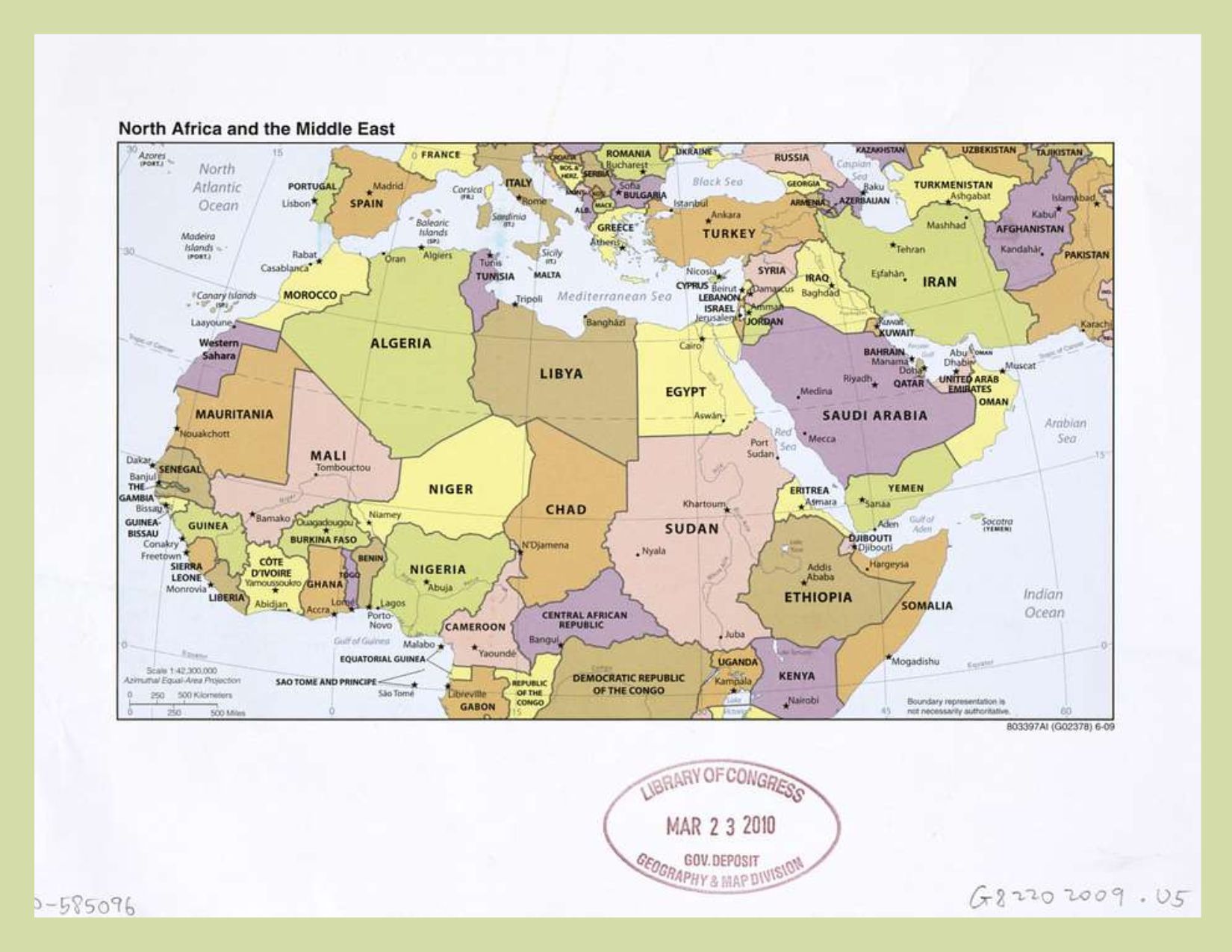
The station was located in what is now the Central African Republic, south of Chad.

James wanted to become better-acquainted with Florence, but patients kept her busy from morning till night. Suddenly genius struck. James could pretend he was sick!

During the appointment he suggested courtship. Florence preferred they remain friends, still devastated over a previous beau uninterested in foreign mission work.

Twice more over the next four years James would approach her about courtship; twice more she declined.

James and another missionary traveled inland to establish a new station.

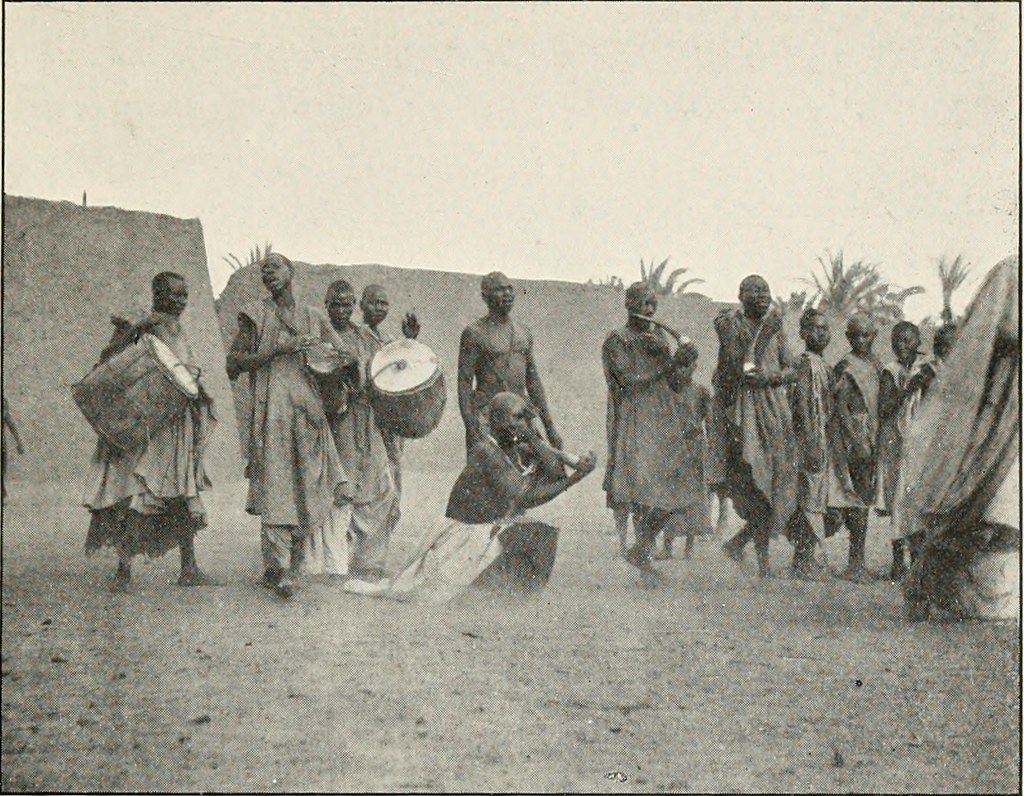
West African tribesmen, 1912

Soon his partner became ill and had to return to base camp, then James succumbed to black water fever. He expected to die.

Afterward James wrote about the vision God gave him on his sickbed—a panoramic view of the tribes of West Central Africa. God said, “Thou shalt be instrumental in carrying the gospel to these.” James knew then he’d survive.

During a prayer vigil in 1912, Florence’s thoughts turned to James. Her heart had warmed toward the trustworthy and kind missionary, so passionate about sharing Christ with the African people. Florence sensed the Spirit whispering to her, “Why not?”  

The two were married within a few months.

Sometime later Florence developed appendicitis and required hospitalization. For thirty days they traveled the three hundred miles to the nearest hospital.

As she slowly recovered, the doctor told James, “You must take her back to America. She cannot live in the tropics.”

Florence did return home and six months later James followed. They lived in Chicago for several years while Florence regained strength. Their only child Marguerite was born there in 1915.

Daily James would pray over a map of Africa. He found his attention drawn to a town named Bozoum, in Ubangi-Shari (now the Central African Republic). He wondered why.

Bozoum is located in the northwestern province of Ouham-Pende.

The couple shared their hope with area churches: to establish base camps across central Africa as a barrier against encroaching Islam. When they returned in 1918, two nurses and another family joined them.

The group desired to enter a French-controlled area, but it took eighteen months to receive permission. They named their base, Camp-Wait-Some-More.

Finally able to move on, they arrived in Carnot. While waiting there another eighteen months, they spent their time learning the language and praying.

A new official arrived, and James made an appointment with him.

He asked James, “Where do you intend to set up camp, now that you’ve received permission?”

Permission?! James was stunned. “Where would you recommend?”

Then came Surprise #2. “I think Bozoum would be a good place.”

Now James knew why God had inspired him to pray particularly for this town.

In 1921, Florence and James became ill again. She had to return to the States, taking their daughter with her. Eighteen months later Florence traveled back to Africa, but without Marguerite. Though an anguishing decision, the couple determined she should remain in America to attend school.

In 1923 a young recruit was due to arrive, but he died within miles of reaching their mission station, causing more heartache.

James wrote:

Not long after, James succumbed to black water fever again; this time the forty-year-old did not survive.

He’d previously written to Florence, “I shall be content with the lowest seat in heaven if only there I may sit and see the redeemed of the Lord come in from those fields where I have a been a pioneer missionary.”

Except James had not witnessed one person becoming a Christ-follower during his years in Africa.

Some might say those years of pain and hardship had accomplished nothing. And what about God’s promise: ““Thou shalt be instrumental in carrying the gospel to these?”

James had been instrumental, by bringing others to join in their work. Even his own daughter returned to Africa, ministering with her husband for thirty-one years.

James had served as a foundation builder—constructing base camps, encouraging others, and giving himself to prayer. He followed in the footsteps of the Apostle Paul:

Today, 70% of the population of the Central African Republic are Christians.

In my mind’s eye I see James in heaven, greeting saint after saint from West Central Africa, just as he imagined. But instead of sitting, I think James is standing and celebrating with all his heart.

Sources:

Photo credits: http://www.flickr.com; http://www.rawpixel.com; http://www.picryl.com; http://www.flickr.com; http://www.commons.wikimedia.org; http://www.nara.getarchive.net; http://www.commons.wikimedia.org.

Processing…
Success! You're on the list.

Read Full Post »

No Christmas season would be complete without the reading of the second chapter of Luke—the account of Mary and Joseph traveling to Bethlehem, presiding over the birth of Jesus in a stable or cave, and receiving shepherd-guests.

Toward the end of the account, as those shepherds were spreading the word of Jesus’ birth, Luke wrote, “Mary treasured up all these things and pondered them in her heart” (v. 19).

Indeed. She had much to process:

  • Her baby was the Messiah, the Promised One, who would save his people from their sin. I wonder if she studied him, looking for signs that he was different from other infants.
  • This was the Prince of Peace cradled in her arms. Yet he had been born to a common village girl in very primitive conditions.  Did that seem strange to her?
  • The shepherds had learned of his birth when angels visited them, just as the angel, Gabriel, had visited Mary and then Joseph.  Gabriel had also visited Zechariah, the father of John the Baptist. Four angel visitations in a matter of months. Never had that happened before.

I find myself pondering, too—pondering Mary herself–this dear, young girl who carried a tremendous burden for a long time.

Dear means beloved and valued. Mary is certainly that for numerous reasons.

  • She embraced Gabriel’s announcement with great faith. “May it be to me as you have said,” (Luke 1:38). She put herself in the care of God in spite of incomprehensible circumstances.
  • Her prayer, the Magnificat (Luke 1:46-55), gives indication of a heart fully committed to God.
  • She endured much: shame for her pregnancy, a long, uncomfortable journey to Bethlehem, and crude circumstances for the birth of her Son.

Mary was young—perhaps between thirteen and fifteen years of age. That was the typical age for a girl to be married in Bible times.

Yet, young as Mary was, Gabriel praised her for being “endued with grace” (v. 28, AMP). In addition, Mary demonstrated stamina, maturity, and gentleness beyond her years.

No doubt God graced her with these traits. But I have to believe Mary also had freedom of choice, as we all do, to embrace God’s way for her.

What I ponder most, however, is the fact Mary carried a tremendous burden, given to her by an elderly man, Simeon, eight days after Jesus was born.

You undoubtedly remember the story. Joseph and Mary took Jesus to the temple at Jerusalem to be circumcised.

There they met the righteous and devout Simeon who had been waiting decades for the Messiah. The Holy Spirit had revealed to him he would not die until he had seen the Lord Christ.

Immediately upon seeing the Child, Simeon knew this was the One.

He praised God for keeping his promise, blessed Mary and Joseph, and then spoke particularly to Mary, saying Jesus would cause some to rise and some to fall, he would be spoken against, the thoughts of many hearts would be revealed, and a sword will pierce your own soul too (Luke 2:21-35).

Those last words must have caused Mary’s eyes to grow wide and her heart to skip a beat. Wasn’t the worst behind her? Surely Mary wanted to ask Simeon, “What do you mean?” Scripture gives us no indication that she did so.

For thirty-three years those last words of Simeon must have echoed in Mary’s mind again and again. How does a person live with such long-term foreboding? Perhaps her mind turned back to the night of Gabriel’s visitation.

Perhaps, for thirty-three years, Mary repeated what she had told the archangel: “I am the Lord’s servant. May it be to me as you have said” (1:38).

Mary may very well have developed the calm assurance that even when God’s ways are baffling, we can rest assured he is orchestrating events to accomplish far more than we could ever imagine (Ephesians 3:20). She’d been witness to such orchestration in Bethlehem.

Mary knew that even our personal hardships can fulfill purposes that extend far beyond ourselves.

That’s a lesson for all of us to embrace with calm assurance.

(Revised and reblogged from December 15, 2014, while we enjoy a blessed week with family!)

Photo credit: http://www.stocksnap.io.

Processing…
Success! You're on the list.

Read Full Post »

I praise you, Lord Jesus, for surrendering all the glorious perfections of heaven, to live among us with all our un-glorious imperfections [1].

Also astounding is your arrival as an infant, born to peasants, in a stable-cave. How ignoble for the King of kings, the Alpha and Omega who always was and always will be.

As Mary and Joseph tried to rest on scratchy straw, did they wonder, “How could this be part of your plan, Lord Jehovah? How could the Messiah fulfill his grand destiny from such lowly beginnings?”

Little did the couple know:

  • their helpless baby who could not stand “would one day walk on water” [2]
  • his little hands that could not grasp would one day break five rolls and two fish into pieces and feed five thousand people
  • their Child who could not speak would one day make the hearts of men burn within them as he spoke words of supernatural wisdom and insight
  • his flailing arms would one day spread wide on a cross, to save his people from their sins [3]

The depth of your humility and the magnitude of your sacrifice, Lord Jesus, overwhelm me.

I praise you for all the ways you demonstrated God’s character to us during your earthly ministry—his love, compassion, goodness, and more.

I praise you, Lord Jesus, for your power on display in the miracles you performed and those you continue to perform to this day, confirming who you are—not just a wise teacher or mystic but the Son of God.

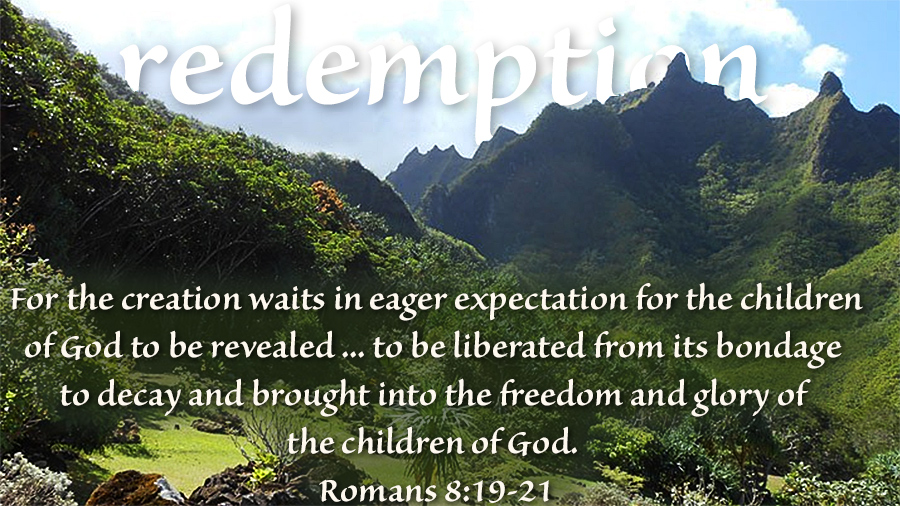
I praise you for the glimpses of heaven we experience from time to time of what it will be like when all creation is “brought into the freedom and glory of the children of God,”–because of what you accomplished [4].

Such glimpses include:

  • The exquisite beauty of nature, causing us to gasp in wonder
  • The profound heart-to-heart connections we experience with other believers
  • The songs that move our spirits and cause tears of blissful joy
  • The sense of your presence—your encompassing and perfect shalom [5]

–C. S. Lewis (The Problem of Pain, 150-151)

I praise you, Lord God, that before time began, you’d already established the plan for your Son’s birth, ministry, death, and resurrection [6].

I praise you, Lord Jesus, for withstanding horrific suffering in our place, paying the penalty for our sins [7].

I praise you Heavenly Father, for your power over death, proven by the resurrection of your Son. He received a grand welcome back to heaven and now sits on his throne, receiving the honor, glory, and power he deserves [8].

I praise you for the promise—repeated many times through scripture—that upon our physical deaths, those of us who believe in Christ will live forever with you, surrounded by the wonders of heaven [9].

I praise you, Lord Jesus, we’ll even sit with you on your throne [10]!

Such an honor seems downright absurd, and yet there it is—promised and guaranteed in your infallible Word—promises we can trust, a guarantee we can believe in.

I pray that many will see:

And may many embrace you, O Christ, as their Prince of Peace and King of kings, to experience your shalom and joy. May they accept your gift of gifts: eternal life!


[1] Philippians 2:5-7

[2] From Mark Lowry’s carol, “Mary Did You Know”; see also Matthew 14:22-33 for one example

[3] Matthew 14:13-33; Luke 24:13-24; Luke 23:33; Matthew 1:21

[4] Romans 8:21

[5] Shalom includes not only peace, but complete well-being and wholeness

[6] Titus 1:2

[7] Romans 5:8

[8] Revelation 3:21

[9] John 3:16

[10] Revelation 3:21

[11] From a sermon, “The Great Birthday of Our Coming Age,” December 21, 1884.

Photo credits: http://www.freebibleimages.com; http://www.canva.com; http://www.heartlight.org; http://www.dailyverses.net; canva.com.

Processing…
Success! You're on the list.

Read Full Post »

Although the family gathered ’round him wept openly, Pastor Martin Rinkhart held back his own tears as men lowered another townswoman into her grave. It was his forty-second burial that day; and a few more would require his administration before sundown.

The next day promised more of the same as the plague ravaged the city of Eilenburg, Germany, Rinkhart’s hometown. But this wasn’t their only tragic circumstance. Long before in 1618 the Thirty Years’ War had begun, devastating much of Europe—especially Germany.

Now it was the mid-1630s, and numerous refugees had crowded into the walled city of Eilenburg to escape death and destruction at the hands of the Swedish army. The plague had soon followed.

Eight thousand people died, including many children, two clergymen from nearby neighborhoods, and Rinkhart’s wife. He would bury nearly 4,500—forty to fifty per day– before mass graves were instituted.

Martin Rinkhart could never have imagined such heartbreak when he earned his degree in theology in 1602.  He no doubt looked forward to shepherding a little flock of believers, leading them to grow in faith and ministering to their needs.

And for fifteen years or so, Rinkhart did serve as music minister or pastor in several locations. Then in 1617, at age thirty-one, he was invited back to his native Eilenburg.

Eilenberg, Germany today

Shortly after his relocation, the Thirty Years’ War began—one of the longest, most destructive conflicts in European history, taking eight million lives [1].

The Swedish army caused much suffering. Soldiers plundered livestock, food stores, and household goods.  They demanded to be billeted in citizens’ homes. Even as Rinkhart endured these same hardships, he continued to faithfully care for his hurting parishioners.

No sooner did the plague subside than famine gripped the land. Rinkhart did his best to help others, reducing rations for his own household until he found himself mortgaging his future income in order to purchase food and other necessities for them.

During this time, the Swedish army returned, besieging Eilenberg for several months. They finally demanded an exorbitant ransom to leave the city. Rinkhart met with the general to plead the city’s case, but he wouldn’t back down.

One account explains that Rinkhart called together his parishioners and others to pray. “Come my children,” he invited. “We can find no hearing, no mercy with men; let us take refuge with God” [2].

Evidently the general was present as Rinkhart prayed fervently for God’s deliverance. The Swede acquiesced, and lowered the ransom considerably.

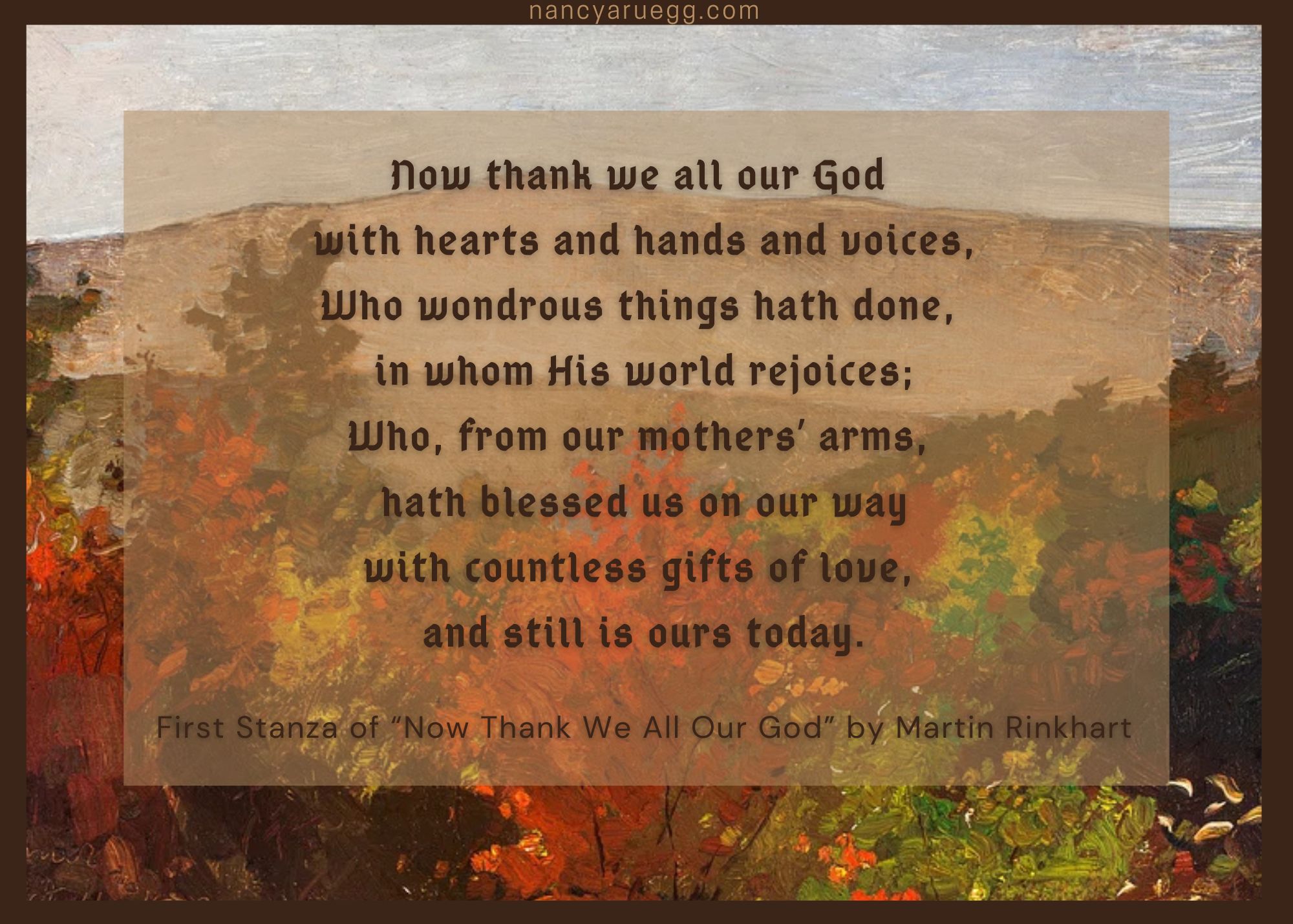
During these decades of suffering, in 1636, Rinkhart wrote a mealtime prayer-song for his two children. They sang it at bedtime too.  

Most of us would expect a prayer pleading for relief and rescue by God’s power and mercy. Instead, Rinkhart focused on gratitude:

His prayer became the basis for a beloved hymn, chosen to be sung at the national thanksgiving service when the Thirty Years’ War ended. It’s still sung today:

https://youtu.be/ItfKjxkXhMk?si=TXR0eN0Tj9rP0Of4

I marvel how someone could write such lyrics—about the wondrous things God has done, his blessings along the way, and countless gifts of love—all while suffering terrible hardship and grief.

But I’m thankful for Martin Rinkhart’s example, demonstrating what it means to trust in the Lord with all your heart, in all circumstances [3].

Still, the question remains: WHY. Why Lord?” we plead toward heaven. “Why must good people suffer?”

Herbert Lockyer would have us understand:

No doubt Rinkhart embraced those truths. He also understood: Gratitude to God nurtures hope in him, the One who brings good out of all circumstances [5].


[1] https://enjoyingthejourney.org/hymn-history-now-thank-we-all-our-god/

[2] https://www.thedestinlog.com/story/lifestyle/faith/2018/11/20/story-behind-song-pastor-gives-praise-thanks-during-darkest-of-times/8320618007/

[3] Proverbs 3:5; 1 Thessalonians 5:18

[4] Seasons of the Lord, 371.

[5] Romans 8:28

Additional Source: http://www.baptistnews.com/article/now-thank-we-all-our-god/

Art & photo credits: http://www.picryl.com (Artist: Jozef Szermentowski); http://www.wikimedia.org; http://www.rawpixels.com.

Processing…
Success! You're on the list.

Read Full Post »

Surely you’ve met them—those glowing saints whose eyes always twinkle, smiles always dazzle, and whose faith and attitude always inspire.  We’re left wondering, how did they grow that glow?

No doubt it begins with strong trust in Christ, cultivated by scripture-study and prayer. They apply what they’ve learned about:

  • Giving all their concerns to God, knowing he truly cares
  • Focusing on the positive, the joyful, the beautiful
  • The pleasure of giving such gifts as time, encouragement, and a listening ear
  • Practicing God’s presence to experience his peace, strength, and more [1]

But researcher Michael Zigarelli discovered another reason why godly saints radiate joy: gratitude. He found that expressing continual gratitude to God actually energizes the practice of other spiritual disciplines, and altogether they contribute to growing that saintly glow [2].

Insightful author, Ann Voskamp concurs:

“The brave who focus on all things good and all things beautiful and all things true, even in the small, who give thanks for it and discover joy even in the here and now, they are the change agents who bring fullest Light to all the world” [3].

In addition, author and theologian Warren Wiersbe would have us know:

“That’s all fine and good,” someone might say. “But right now I see very little to be thankful for. We’ve had one financial setback after another, my job is more stressful than ever, our son is having a hard time in school, and my brother and sister-in-law just announced they’re separating. ‘See what I mean?”

Yes, we do. Some seasons of life include multiple troubles all at once.

But take note of this good news: simply expressing thankfulness (even if we don’t feel grateful) has been proven to create positive change in our brain chemistry [4].

And we find: continual gratitude contributes to a sense of WELL-BEING.

Another surprise?

Continual gratitude provides HEALING for the wounds of distress [5] —especially appreciation for who our Savior God is and what he has done.

Think of it: He created all things! He sustains all things! He has supremacy over all things! He is our Emmanuel (God with us), our Good Shepherd, our Wonderful Counselor, and so much more [6]!

God hears us as we pray, loves us with an everlasting love, empowers us through the Holy Spirit, fills us with hope, and anchors us through the storms of life [7]

And as we cultivate continual gratitude for such realities, we find PEACE.

The truly thankful person

is a truly peaceful person.

—Lysa TerKeurst [8].

It makes sense. The more we thank God for all the benefits he bestows, the firmer our faith-stance in his competence to sustain us.

Third, continual gratitude cultivates JOY.

Turn [your] eyes toward Jesus and everything shines—

even the tough spots morph into excitement. . .

How is he going to solve my problem this time? . . .

When I am consciously aware of him,

life fills with wonder and wonder brings joy [9].

What better way to remain aware of God and expand joy-inducing wonder than with gratitude?

Last, continual gratitude “lays out planks of TRUST” [10].

Think of all the moments he’s been faithful, when:

  • an impossible situation worked out amazingly well
  • a potentially difficult conversation turned out to be restorative and beneficial
  • an inspired idea came to mind that cleverly solved a problem
  • a surprising bargain materialized, supplying a current need
  • a string of just-so-happened circumstances provided the answer to a prayer

Yes, some will call these coincidences. Around here we call them God-incidences, because “whatever is good and perfect is a gift coming down to us from God our Father” [11].

And every time we acknowledge such gifts of provision, protection, and guidance, we lay another plank of trust, constructing a strong bridge of faith from yesterday into tomorrow [12].

Now we know. Each of us can grow a glow as we embrace the power of gratitude.

And isn’t November—with Thanksgiving just a few weeks away—the perfect month to grow that glow a little bit brighter?


[1] 1 Peter 5:7; Philippians 4:8; Acts 20:35; Isaiah 26:3 NLT

[2] https://godsmissionarychurch.org/2018/10/26/growing-through-thankfulness/

[3] One Thousand Gifts, 58.

[4] https://www.focustsoul.com/blog/signs-of-maturity-in-christ-part-1-gratitude-and-joy

[5] https://cct.biola.edu/spirituality-suffering-gratitude/, emphasis added

[6] Colossians 1:15-20; Matthew 1:23; John 10:14; Isaiah 9:6

[7]  1 Peter 3:12; Jeremiah 31:3; 2 Timothy 1:7; Romans 15:13; Hebrews 6:19

[8] Embraced, 256.

[9] Deanna Chadwell, Soul Bare, 82-84.

[10] Ann Voskamp, One Thousand Gifts, 151.

[11] James 1:17 NLT

[12] Voskamp, 152.

Art & photo credits: http://www.commons.wikimedia.org; http://www.heartlight.org; http://www.pexels.com; http://www.pickpik.com; http://www.flickr.com; http://www.shutterstock.com.

Processing…
Success! You're on the list.

Read Full Post »

Young Klaus-Dieter John read the last page of another “jungle doctor” book by Dr. Paul White—his favorite series. The adventures, based on the missionary doctor’s experiences in Africa, never failed to capture Klaus’s imagination and heart.

The boy sighed. How great would it be to live in the jungle and help people as a medical missionary.

That dream stayed with Klaus through high school in his hometown of Weisbaden, Germany. As graduation neared in the late 1970s, he felt certain God wanted him to become a doctor and serve in a third world country.

Another person in his school carried the same dream, a pretty girl named Martina. Soon Klaus and Tina were a couple.

The next decade included university, medical school, and marriage. Further training took the Johns to England, Johannesburg, and finally America. Klaus studied at Harvard, and then completed his surgical residency at Yale.

Meanwhile, Tina earned board certification in pediatrics, in Germany and America.

God used a backpacking trip through Peru in 1991 to draw their hearts toward the Quechua people, descendants of the Incas. These Indians live on high plateaus and in deep valleys of the Andes Mountains, impoverished and illiterate.

At that time, just four doctors served 40,000 people. The Johns knew immediately: this was where God wanted them to serve.

First they volunteered for five years at a well-established mission hospital in Ecuador. During that time Klaus and Tina founded the Diospi Suyana organization to alleviate the suffering of Peruvian Indians.

In Quechua, the words mean, “We trust in God.”

But they desired to do much more. “What if,” the couple dreamed, “we could establish a hospital for the Quechua people near Machu Picchu—not just a bare-bones clinic but a true hospital with everything necessary to provide excellent care?”

Just saying the words out loud highlighted the implausibility of their desire. How could they raise the millions of dollars necessary? And even if they could build such a facility, how would they keep it staffed and equipped?

But God propelled them forward.

In 2004 the Johns began seeking financial support for their vision, first in Germany and then in other countries. A trickle of donations at first grew to a steady flow. Several companies even committed to provide equipment and materials.

Also during this time, Klaus and Tina moved their family of five into a mud home in the village of Curahuasi, a village strategically located between three Peruvian cities.

By May 2005, the Johns were participating in a miracle: the ground-breaking for Diospi Suyana Hospital—a project that would cover eight-plus acres of land, and cost $100,000 each month to construct [1].

The couple was determined not to incur debt. God would either supply the needed funds or construction would be discontinued.

Supply he did—through more than 50,000 individual donors who’ve contributed to the hospital’s ministry [2].

As the complex took shape, fifteen miles of computer cable were set in the walls, as well as “countless miles of pipes for suction, compressed air, and oxygen” [3].  

The dedication of the facilities took place in August, 2007. By 2017, 300,000 Peruvian patients had received care at Diospi Suyana—patients who only pay 20% of the cost of their care—at most; the other 80% is paid by generous donors.

Each day begins with a worship service. Thousands of Peruvians have heard about Jesus and been told of his gift of eternal life. For those who accept that gift, one of the hospital pastors visits their home and connects them to a local church [4].

The ministry has expanded over the years to include dental and eye clinics, Kids’ Clubs, a school for six hundred children, and a radio station [5].

Many miraculous provisions have contributed to the flourishing of Diospi Suyana.

For example, in January 2006, while Klaus was in Germany on a speaking tour, he met with a good friend. Klaus mentioned they needed a civil engineer to oversee the hospital construction, but the person had to be willing to serve without pay.

“I know someone who might be interested,” declared the friend and he made a phone call, setting an appointment for later that day with the engineer Udo Klemenz.

Meanwhile, when the phone rang at the Klemenz’ home, Udo and his wife were in the midst of praying about their plans for the future.

At the meeting that afternoon, Klaus made his proposal. The couple gasped in surprise for this near-instantaneous answer to their prayer.

“Come to Peru for as long as you can stay,” Klaus invited.

Udo and his wife soon traveled to Curahausi—and stayed for eight years [6].

Klaus affirms often, “God has become visible in my life” [7]. (Emphasis added.)

Indeed, he has.


[1] https://cvm.swisshealthweb.ch/fileadmin/assets/CVM/2018/cvm.2018.00564/cvm-2018-00564.pdf

[2] https://cbn.com/news/news/hospital-built-faith-proof-me-god-real

[3] https://cvm.swisshealthweb.ch/fileadmin/assets/CVM/2018/cvm.2018.00564/cvm-2018-00564.pdf

[4] https://cbn.com/news/news/hospital-built-faith-proof-me-god-real

[5] https://www.diospi-suyana.de/diospi-suyana-2-2/?lang=en#

[6] https://cvm.swisshealthweb.ch/fileadmin/assets/CVM/2018/cvm.2018.00564/cvm-2018-00564.pdf

[7] https://www.churchtimes.co.uk/articles/2014/3-october/features/interviews/interview-klaus-dieter-john-founding-director-diospi-suyana-hospital

Photo credits: http://www.pixabay.com (2); http://www.canva.com; http://www.heartlight.org; http://www.travelingteacheronline.com, H. McElwee; http://www.pxhere.com.

TAKE NOTE! A newsletter launched this month that includes additional topics to what’s on the blog. Please sign up below and check out the first installment. Thank you!

Processing…
Success! You're on the list.

Read Full Post »

(An imaginary conversation between God and me, but I invite you to put your name in the blanks):

ME: You’ve heard me say, Lord, “I can’t imagine life without You,” because You’ve been an invaluable, all-wise influence through the years.

You’ve provided protection, guidance, care, and more. Just knowing You are with me gives me comfort, strength, and peace.

GOD: Ministering to you in these ways has been My delight, __________. I do love to see you practicing My presence—asking for My help and connecting with Me through praise and prayer.

As you draw near to Me, you experience wonder, quiet, calm, and warmth.  

ME: Thank you Father for these blessings! But I’m still on the learning curve of sustained awareness. Distractions frequently interfere. It seems I’ll never attain moment-by-moment communion with You.

GOD: I understand, __________. Remember, I’m the One who made you and am well aware you cannot achieve perfection [1].

What I value is progress, and rest assured, that is occurring.

Think back to the days when you experienced great difficulty practicing My presence. Your thoughts rarely turned toward Me once your morning quiet time was over—unless you ran into trouble.

Now you come to Me much more frequently, giving Me the opportunity to strengthen and encourage you. Keep coming back to Me, __________.

The day will come when we enjoy almost-unbroken communion and it will be all the sweeter for the wait. Meanwhile, there are habits-of-thought to embrace that will advance your progress toward that day:

BE ATTENTIVE TO MY ATTRIBUTES

Stay alert to discover reminders of Me everywhere. And let each discovery bring to mind one or more of My attributes.

As attentiveness leads to praise and praise to joy, you’ll find yourself nestled more closely to My side. That’s where I long for you to be!

BE GRATEFUL FOR MY BLESSINGS

Ask yourself throughout the day, “What can I thank God for right now?”

For example, your answer in this moment might include the colorful fall flowers in the deck planter—a delight for your eyes—enjoyed in the surroundings of My living room [2].

And as we enjoy such blessings together, you’ll find your heart drawing close to Me.

AFFIRM MY PROMISES

Come worship at My footstool, __________ (Psalm 132:7).

Look up into My face and see in My eyes the love I have for you. See in My smile the delight you bring Me. Imagine My hand upon your back and feel My compassion.

Now, breathe out your cares and breathe in the truth of My promises. Listen closely as I affirm:

  • I love you __________ with an everlasting love (Jeremiah 31:3).
  • I will always help you (Isaiah 41:13).
  • My lovingkindness prevails over you (Psalm 117:2 AMP).
  • I am in control of all things (Ephesians 4:6).
  • I will work all things together for the good of those who love Me, who seek to live out My purpose for them (Romans 8:28).

It delights Me that you want to be more aware of My presence. Know that I take deep pleasure in every occasion you turn your attention toward Me.

Know too that beautiful transformation is taking place within you each time you do, because you can’t spend time in My presence and not grow more into My likeness [3].

 *      *      *     *     *     *     *     *     *     *

ME: Thank You, Father, for encouraging me toward greater intimacy with You, to enjoy You more fervently. Help me pause and sense Your presence, even in the ordinary moments of life.

May I create space for You through attentiveness to Your attributes on display, gratitude for Your countless blessings, and review of Your uplifting promises.

May I remember:

 I don’t want to miss that pleasure, even for a moment.


[1] Psalm 103:13-14

[2] Those of you who visit here often will probably remember that Michael Hyatt, former CEO of Thomas Publishing, is the one who calls the outdoors God’s living room. I love that imagery!

[3] 2 Corinthians 3:18

Photo credits: http://www.canva.com; http://www.heartlight.org; http://www.picryl.com; http://www.dailyverses.net; http://www.freerangestock.com; http://www.canva.com.

Read Full Post »

 No doubt all of us have heard those five words of the title.

We’re well aware that optimum food choices support optimum health while poor choices contribute to health conditions like heart disease, diabetes, and cancer, as well as quality-of-life ailments such as infection, fatigue, and brain fog [1].

But not everyone seems to know the same principle applies in the spiritual realm.

What we feed our souls impacts our spiritual health.

For example, research affirms a steady diet of isolation, dwelling on the negative, scrolling through social media, and binge-watching movies and TV all contribute to depression [2].

However, there is an alternative that results in less anxiety and more peace, less dissatisfaction and more contentment, less fear and more strength. That alternative is meditation on scripture.

What It Means to Meditate

Some might ask, So I’m supposed to read the Bible to make me feel better?

Actually, reading alone isn’t enough, any more than licking a carrot will provide the day’s requirement of vitamin A. No, to nourish the soul we need to regularly meditate on God’s Word.

“Biblical meditation is pondering the words of scripture with a receptive heart, and trusting the Holy Spirit to work in us through those words” [3] (emphasis added).

It’s slow-reading that contributes to savoring scripture much as slow-eating contributes to savoring food.

Why Meditate

My ponderings most often occur on paper. Sometimes I journal through the meaning of a passage; other times I might compose a prayer in response to what I’ve read.

Writing slows and augments my thinking. As I record impressions and prayers, new discoveries have a chance to surface, truths impact my spirit more profoundly, and encouragement nourishes my soul.

In addition, meditation on scripture offers transformation of:

  • Thought processes and choices, as God’s truth cultivates wisdom.
  • Attitudes as mentioned above—anxiety into peace, discontentment into satisfaction, fear into strength, and more.
  • Character, as I contemplate God’s attributes, and they begin to rub off on me [4].
  • Action, as a deeper relationship with God results in compassionate, loving action toward others [5].

How to Meditate

Not sure how to start? Perhaps these suggestions will be helpful. (You’ll also find a sample below.)

  • Write out the scripture or an especially-meaningful part of it. Look up definitions or synonyms of key words.
  • If you’re reading a narrative-passage, use your imagination to put yourself in the position of one of the characters. What might they be thinking and feeling?
  • Prayerfully consider what truth God wants you to understand from the verse(s).
  • Identify the characteristics of God on display or directly mentioned.  Praise him for who he is and what he has done (Psalm 150:2).
  • Write a sentence or two of prayer, presenting yourself before God to accomplish or become whatever he’s revealed during your time of meditation [6]. As you begin to write, you’ll discover more thoughts to express.

An Example of Meditative Writing

Below you’ll find an example of meditative prayer based on Psalm 31:14-15a:

I trust in you, Lord; you are my God. You’ve proven yourself faithful thousands of times in my life, demonstrating your love and compassion, wisdom and guidance, goodness and generosity [7].

Thank you for being such a gracious God! No matter what happens in the future, I know I can trust you to supply my needs. It’s a wondrous thing to rest in you, especially during these uncertain times.

You are my steadfast foundation, my shelter from the storms of life, and my strong tower of safety [8]. Thank you for these comforting images, giving vivid assurance of your power to care for your people in all circumstances. I’m so grateful my future is in your capable hands.

Just as we’d never wolf down a magnificent meal in a fine restaurant, we’d be wise not to wolf down the rich substance of scripture.

And in the savoring, we experience more intimately and powerfully the reality of God.


[1] https://my.clevelandclinic.org/department/wellness/integrative/shared-medical-appointments/eating-well-for-optimal-health-sma ; https://www.webmed.com/diet/what-is-a-balanced-diet

[2] https://www.webmd.com/depression/features/depression-traps-and-pitfalls

[3] https://ourdailybread.org/resources/what-is-biblical-meditation/

[4] Linda Dillow, Satisfy the Thirsty Soul, 15.

[5] https://www.gcu.edu/blog/theology-ministry/theology-thursday-christian-perspective-meditation

[6] See Tim Keller’s list of additional questions:

[7] These previous posts offer examples: After the Fact, Liquid Love, and Sweetness and Power.

[8] Isaiah 33:6 CEV; 25:4; Proverbs 18:10

Photo credits: http://www.pickpik.com; http://www.pexels.com; http://www.canva.com; http://www.pickpik.com; http://www.flickr.com (David Andrako); http://www.canva.com; http://www.pickpik.com; http://www.commons.wikipedia.org.

Read Full Post »

(An imaginary conversation between God and me.)

ME:

You know me, Lord. If I’m not careful my mind can slide into fear and worry, especially about the needs and struggles of loved ones. Or I can slip backward into hurts or regrets of the past. Release from such thoughts is not always easy.

But I’ve heard it said, “What is IM-possible is HIM-possible” (Unknown).

So when negativity seeks to pull me down, I want to be quick to remember who YOU are, your promises, and what you can do that make all things HIM-possible.

GOD:

Indeed, nothing is IM-possible with me (Luke 1:37).

Here are four important truths to keep in mind that make for HIM-possible-living:

I am greater than your fears.

Think on My sovereignty and might.

I am in control of all things. I have established My throne in heaven and My kingdom rules over all. Therefore, the one who fears Me need not fear anything else [1].

I am all-wise and all-powerful, always with you and ready to offer counsel.

I am your all-sufficient Father, able to provide everything and anything you’ll ever need.

ME:

I praise You, Lord, for equipping me to contend with whatever circumstances unfold. You are the Mighty Warrior who saves!

(Psalm 103:19; 1 John 4:18a; Romans 11:33; Psalm 15:3, 46:1; Ephesians 3:20; Zephaniah 3:17)

GOD:

I am greater than your troubles.

Remember My power and strength.

Out of My omnipotence, I promise to supply you with strength sufficient for the day. Each morning I provide a fresh supply of all my mercies.

No matter what the future may hold, you can keep on bearing all things through My Son, Jesus Christ, who constantly infuses you with His strength.

Every trouble produces benefit–strong, honorable character in you, and blessing for others as they see My peace and joy reflected in you.

ME:

I praise you, Lord, for being a present-and-active help in times of trouble.

(2 Chronicles 20:6; Psalm 18:32; Lamentations 3:22-23; Philippians 4:13;

Romans 8:28; James 1:2-4; Matthew 5:16; Psalm 46:1)

GOD:

I am greater than your hurts.

Remember my love and tenderness, my grace and kindness.

I provide a solid foundation on which to rest, even when wave after wave of challenge sweeps through your life [2].

I am your Great Physician. Cling to Me by immersing yourself in My Word and find the cure for your heartache.

I am patiently transfiguring all the notes of your life into the song of My Son, Jesus . . . All is grace, as your hurts and heartaches become tools in My hands, to transform you into the image of Christ [3].

ME:

I praise you, Lord, for your devoted, attentive care.

(Isaiah 66:13a; Psalm 86:15; Psalm 147:3; Psalm 119:49-50; 2 Corinthians 3:18)

GOD:

I am greater than your regrets.

Remember my compassion and forgiveness.

Dwell on regrets and you’ll stir up a whirlpool of excruciating details. It’s an easy place to drown [4].

Leave the irreparable past in My hands, and step into the irresistible future with Me [5]. You’ll find joy replacing remorse and peace replacing agitation.

When thoughts of your failures do push their way into your consciousness, allow my total forgiveness to relieve your pangs of guilt. Then offer Me praise for accepting you just as you are, thanking Me for growing you into more than you were yesterday [6].

ME:

I praise you, Lord, for your mercy to forgive and your grace that meets me where I am but does not leave me where it found me [7].

I praise you that victory over fears, troubles, hurts, and regrets is more than HIM-possible with you!

(Psalm 103:8, 13; Romans 8:37)


[1] The fear of God in the original language doesn’t mean to be afraid. It means sustaining a joyful, astonished, awe and wonder before Him—Timothy Keller.

[2] Jane Fryar, Be Blessed, 34-35.

[3] Ann Voskamp, One Thousand Gifts, 100; Kay Arthur, His Imprint, My Expression, 180.

[4] Based on a David Powlison quote, https://www.sgclouisville.org/blog/2024/01/16/sermon-quotes-what-do-we-do-with-regret.

[5] Oswald Chambers, My Utmost for His Highest, Dec. 31.

[6] Ruth Bell Graham, Blessings for a Mother’s Day, 101.

[7] Anne Lamott, GRACE Eventually.

Art & photo credits: http://www.canva.com; http://www.heartlight.org; http://www.pxhere.com; http://www.canva.com; http://www.heartlight.org; http://www.dailyverses.net; http://www.rawpixels.com.

Read Full Post »

« Newer Posts - Older Posts »

When the House is Quiet

Impressions Becoming Expressions

Mitch Teemley

The Power of Story

Still Traveling

Impressions Becoming Expressions

Living Our Days

Gaining a heart of wisdom

He Said What?!

I'm Patty, and my husband and I are living with our adult son who has autism and epilepsy. I love sharing lessons learned from life around me, especially life with Aaron.

Meditations of my Heart

Impressions Becoming Expressions

Linda Stoll

Impressions Becoming Expressions

Signora Sheila

Where Faith Meets La Dolce Vita

Heidi Viars

Finding the Image of God