Feeds:
Posts
Comments

Archive for the ‘God’s Salvation’ Category

For a number of months, the pastoral staff of our church has been preaching from the gospel of Mark. Yesterday the text was chapter fifteen, the account of Jesus’ trial and crucifixion.

Pastor C. graphically described the flogging, the nailing of limbs to the cross, and the slow death by asphyxiation so we might better grasp the appalling circumstances of Jesus’ death and appreciate, at least in part, the supreme sacrifice he endured for us. Tears kept burning my eyes as I contemplated Jesus’ physical pain and emotional suffering—for me.

 

jesus-crucifixion


Next Sunday, the sermon text will come from chapter sixteen of the same gospel—the description of astounding events surrounding Jesus’ resurrection from the dead, his escape from a sealed tomb, and his sudden appearance to a group of men in a locked room.  (Further details are described in the other gospels.) The wonder and splendor are in sharp contrast to the preceding horror.

 

1705097-bigthumbnail


Now according to the traditional church calendar, such sermons in November are terribly out of sync. Usually we save the sobering remembrances of Christ’s crucifixion for Lent. And it’s Easter morning we celebrate “He is risen! He is risen indeed!” with euphoric joy.

But my husband, Steve, noted after church, “It might seem strange to some people that we’d focus on Jesus’ death and resurrection at this time of year, but actually, I see it as the perfect time. Next week is Thanksgiving Sunday.   And of all the things we have to be thankful for, nothing is more precious than Christ’s sacrifice in our place and his gift of eternal life.”


0bd29ca7ead2ae25d9149affae57cd32


So true, I thought and nodded in agreement. How dreadful my life would be if Jesus had not taken my sin upon himself and provided the God-enhanced life I’ve enjoyed all these years.


56a5f1acb40e811ef83713585c1324ba


“I also find it fascinating,” Steve continued, “that Mark fifteen would just happen to be the text for today. Pastor C. couldn’t have known months ago when he planned this series that a lot of people would be distraught and even angry about the presidential election. Other issues have folks divided too—from racial tension on the national level to family concerns on the personal level.

“But there is one central fact that should overshadow everything else and help us keep a proper perspective: Jesus’ death and resurrection and all the incredible implications.”
 

untitled


Smart man, that Steve.

The crux* of our lives is the cross, because it put on display the wondrous love of our God and Savior (John 3:16) and his omnipotent power over sin and death (1 Corinthians 1:18).  All matters of our day-to-day lives are secondary — including disappointments, irritations, and frustrations.


*     *     *     *     *     *     *     *     *     *


Oh, Jesus, keep me mindful it was my sin you took upon yourself that dark Friday. Every selfish deed, every outburst of anger or hurtfulness, every unkind, impure, or prideful thought—you paid the price.

That price included torn flesh, spilled blood, and excruciating pain beyond my ability to imagine. Yet such unthinkable suffering resulted in hope and healing for me.

Remind me to let go of  petty irritations, and prideful self-centeredness, to live instead in continual gratitude, awe, and celebration of you, precious Savior!


 *In Latin, crux means cross.


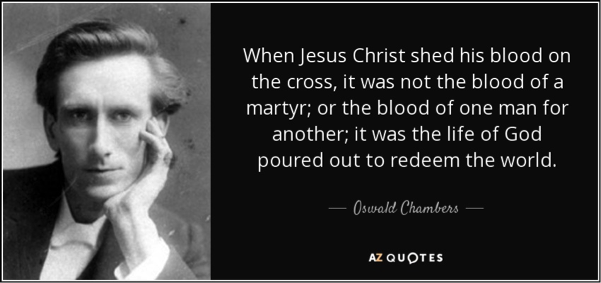
(Art & photo credits:  www.christiannews.com; http://www.desktopnexus.com; http://www.pinterest (2); http://www.azquotes.com.)


Read Full Post »

God-is-light-in-him-there-is-no-darkness-at-all-christian-wallpaper_1366x768

You, oh God, are resplendent with light

As if full of fire—

Blazing with power, dazzling in majesty,

shimmering in an aura of glory (1).

You are the Father of lights

The Creator of sun, moon, and stars.

From the moment You spoke them into being,

The heavenly lights have never ceased to shine (2).

Starsinthesky

Neither has your Light of Goodness

Ceased to shine upon your people.

You are loving and patient, generous and gracious,

Always seeking the brightest, highest good (3).

You are the Light of my Salvation,

Showing me the way to heaven through your Son, Jesus,

Guiding me home through the twists and turns of life,

The dark shadows of uncertainty and fear (4).

psalm-27-1

You are the Light of Life,

Providing Son-lit days of peace, joy, and contentment

As I avail myself of your calming presence,

And celebrate your gifts (5).

You are the Light of Truth,

Who graciously shares his omniscient wisdom with his people.

Through your Word you expose falsehoods and evil.

You show me the best way to live—side by side with You (6).

sunrise6002

You are the Light of Holiness

Pure and perfect, completely separate from all else in the universe.

Through Jesus you already see me as perfect,

Yet day by day you are molding me to be holy, like you (7).

You are the Light of Blessing,

Making your face shine upon me

With grace, mercy, and compassion,

Lovingly exercising your power for my benefit (8).

06MayP126JE800x500

You provide the Light of the Knowledge of the Glory of God.

I find it when I seek your Son, Jesus.

His earthly life gives me a glimpse of your glory in human form–

A form I can more easily understand (9).

And now, you have made me a Child of the Light,

Called to reflect your glory to others,

Shining brighter, I pray, as the years pass,

Till the full light of day–inside heaven’s gates (10).

9e5932689ed9b20d5722ba998f3c82d5

I praise you, oh God, that your Light shattered the darkness

Of evil that first Easter morning—and for all time.

I praise you for the privilege of living in that Light,

Now and into eternity!

  1.  Psalm 76:4; Ezekiel 1:28
  2. James 1:17
  3. Psalm 89:15, 34:8-9
  4. Psalm 27:1; 23:4
  5. John 8:12, 14:27; Psalm 16:11; Hebrews 13:5
  6. Psalm 43:3; 119:105; Proverbs 6:23; Ecclesiastes 2:13
  7. Isaiah 5:20; Romans 13:12
  8. Numbers 6:24-26
  9. 2 Corinthians 4:6
  10. Philippians 2:15-16; Ephesians 5:13; 2 Corinthians 3:18; Proverbs 4:18

Read Full Post »

Say the word, “blessing,” and what immediately comes to mind?

For me, it’s happy events and lovely gifts, engineered or bestowed by God out of his loving kindness.

But James, the brother of Jesus, saw a different side of blessing: “Consider it a sheer gift, friends, when tests and challenges come at you from all sides” (James 1:2, MSG, italics added).

Tests and challenges as gifts?! Sounds a bit daft—until we consider:

What-Seems-To-Us-As-Bitter-Trials-Are-Often-Blessings-In-Disguise

Take, for example…

THE CRAZY BLESSING OF WANT

Do you wish you had a bigger house? A newer car? Better furniture? Consider yourself blessed, that you’re not like King Solomon–the wealthiest person who ever lived. For all his striving to achieve and accumulate, Solomon discovered that when every desire is gratified, the end result was nothing but meaningless smoke (Ecclesiastes 1:2, MSG).

The blessing of want protects us from the pit of depression caused by self-indulgence.

The blessing of want fosters contentment, as we learn to enjoy and be grateful for what we already have.

THE CRAZY BLESSING OF DIFFICULTY

Difficulties provide a surprising number of positive opportunities. Here are ten:

  • To press in closer to God and trust him more completely.
  • To experience the adventure of God’s sufficiency (Philippians 4:13) as he enables us to endure—in ways we never thought possible.

Philippians4_13

  • To see how God will bring beauty out of ashes (Isaiah 61:3).
  • To discover more of who God is.
  • To witness the fulfillment of his never-failing promises.
  • To present a sacrifice of praise to God, beginning with the affirmation that he has our best interests at heart—in spite of what we see.
  • To be prepared for greater usefulness for God (John 15:2), which fosters greater fulfillment and satisfaction in our spirits.

46dd131cacc19b855d589b3358b83851

  • To have a compelling story to share, as encouragement for others. Years ago I heard a speaker say, “With no test there is no testimony.” In the final analysis, I’d rather have the latter. You, too?
  • To become mature, complete, not lacking anything (James 1:4). That doesn’t happen without trials.  As Thomas Carlyle wrote:

quote-no-pressure-no-diamonds-thomas-carlyle-31833

  • To love our Savior more passionately. Josif Trif, a pastor from Romania during the days of Communism, said, “If it weren’t for Communism, I would not have loved our Lord as much. I kissed the cross the Communists gave me” (1).

THE CRAZY BLESSING OF FAILURE

If failure served no purpose in our lives, God would not allow it to happen. But since he does, we can know that failure is either for our benefit or for God’s glory—often both.

Failure is the soil from which great success can grow, beginning with a crop of positive character traits, such as perseverance, humility, and greater reliance upon God.

Green-Bean-Sprouts1

Out of failure comes experience; from experience comes greater wisdom; and wisdom leads to a godly life.

“How blessed are those who are hungry and thirsty for righteousness, because it is they who will be satisfied (Matthew 5:6, ISV)!

*    *     *     *     *     *     *     *     *     *

Crazy as it sounds, I want to praise you, Father, for the blessings of challenges and tough times. Thank you for your loving attention that carries me through, transforming me and makes me a better version of myself.  I also praise you for the glorious promise that through trouble, hardship, disappointment, or pain–“overwhelming victory is ours through Christ” (Romans 8:37, NLT)!

What crazy blessing have you experienced in the crucible of trouble, hardship, disappointment, or pain?  Please join the conversation below!

(1) His Imprint, My Expression, Kay Arthur, Harvest House, 1993, p. 135.

(Art & photo credits:  www.imagesbuddy,com; http://www.wallpaper4god.com; http://www.pinterest.com; http://www.izquotes.com; http://www.pinterest.com; http://www.harvesttotable.com.)

Read Full Post »

(Based on the story of the Prodigal Son, Luke 15:11-24)


019-prodigal-son300x225


Eliab plodded to the top of a familiar rise.  Just ahead he could see the flat rooftop of his ancestral home. Eliab’s heart began to drum in his ears, his face grew hot with shame, and sweat trickled down his back. Soon Eliab would face his father.

As he watched his feet take one step after another, thoughts circled around one question:

What would his father say?

Perhaps, “Get out of my sight! I no longer have two sons, only one.”

Perhaps, “Alright, Eliab, you may work in the fields and barn to pay back your debt. You may also sleep in the barn and take your meals with the other hired hands. Such flagrant waste of your inheritance must be recompensed.”

Eliab would soon know the response that would determine his fate.  He looked up once again to check his progress.  A man was running toward him down the road. What would cause him to be in such a hurry?

No sooner had the question formed in his mind than he recognized the bearing of the approaching figure. It was his father. Eliab’s knees grew weak, and not just from hunger. He collapsed to the ground in a heap, tears streaming down his face.

Quick steps approached; strong arms lifted Eliab up and grasped him in a tight embrace. He heard his father cry, “Oh, Eliab!” And together they wept.


prodigalson


Moments passed and Eliab steeled himself for the speech he had prepared during his long journey.

“Father,” he choked, “I’ve sinned against God and I’ve sinned before you. I know I can no longer be considered your son, but…”

Eliab’s father wasn’t even listening. He turned to call out to his servants, “Get a clean set of clothes and new sandals. Bring the family signet ring. Then prepare the grain-fed heifer for roasting.   We are going to have the grandest celebration our village has ever seen! My son that was as good as dead to me is alive again!”

And with that, Eliab, caretaker of pigs, was lavishly honored because his father:

  • Forgave him for being so foolish, squandering his inheritance.
  • Restored his position in the family, symbolized by the specific request of shoes. (Family members wore shoes; slaves did not.)
  • Clothed him in fresh, clean robes.
  • Honored him with the signet ring, a symbol of authority.
  • Loved him, pure and simple.


return-of-prodigal-son-celebrated


Now I’ve never been a caretaker of pigs. You probably haven’t been either. But I’ve certainly committed my own foolish acts of selfish rebellion. Maybe you have, too.

And yet, when we throw ourselves on God’s mercy, he

  • Forgives our sins and remembers them no more (Hebrews 8:12).
  • Adopts us into his family, making us his children (John 1:12-13).
  • Clothes us in the righteousness of Jesus (Isaiah 61:10), and God sees us as if we had never sinned (Colossians 1:21-22).
  • Honors us (Psalm 91:15)—with his presence and countless gifts. Someday we’ll receive a crown of glory that will never fade away (1 Peter 5:4).
  • Loves us, pure and simple, for now and always (Jeremiah 31:33).

tumblr_nc8rcivx4e1ttry05o1_500

*     *     *     *     *     *     *     *     *     *

How I thank you, Heavenly Father, for taking pity on me, as the father did in the story of the prodigal son.  You redeemed my life from the pig sty.  You forgive my sins–every one of them.  You have more than satisfied me with your goodness and faithful love.  Never do I want to lose the wonder of your love and grace!

(Psalm 103:1-5, 13)

Eliab means “to whom God is Father.”

(Art & photo credits:  www.childrenschapel.org; http://www.ncregister.som; http://www.susaneball.com; http://www.spiritualinspiration.tumblr.com.)

Read Full Post »

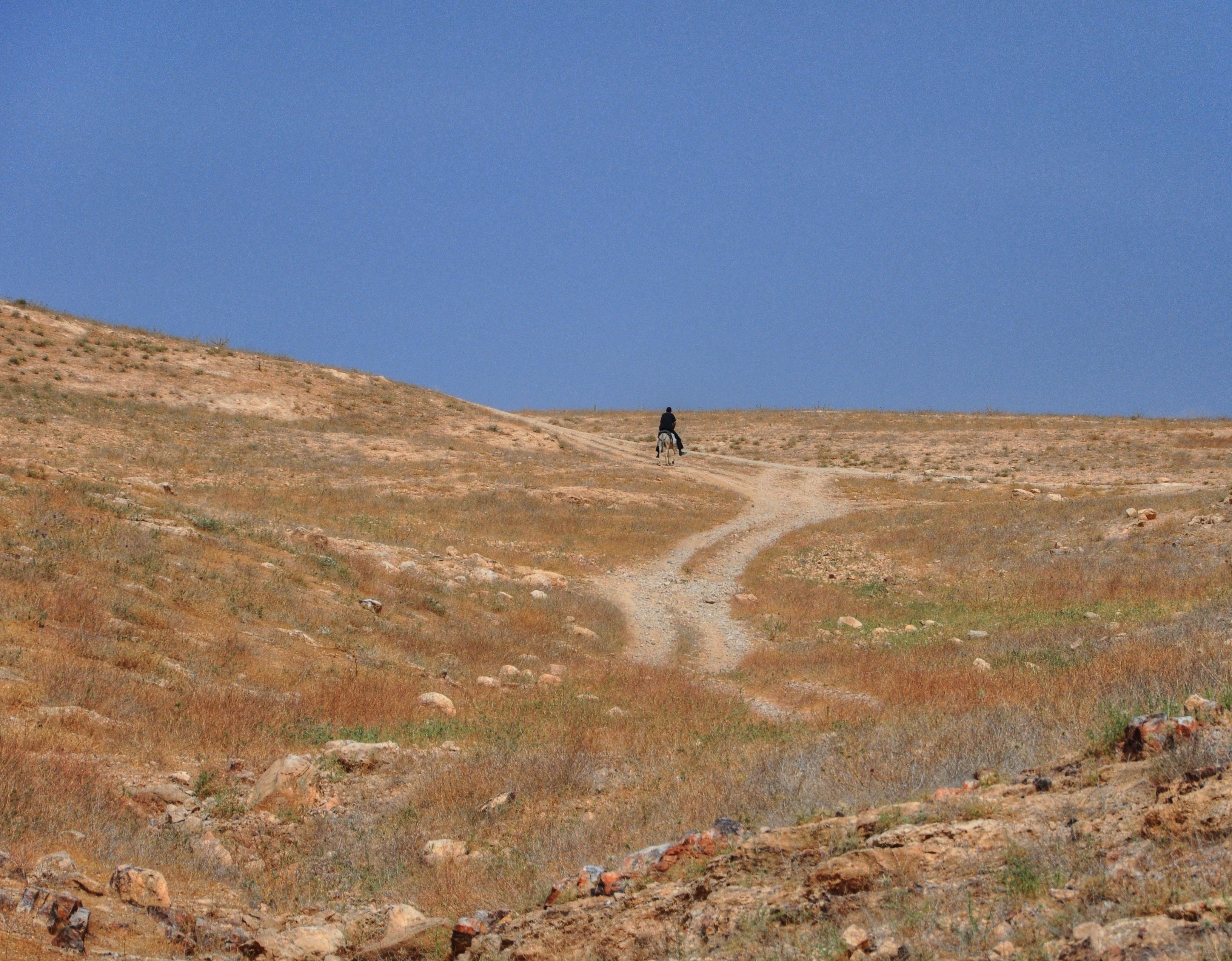
Munttar17

In a desert land he found him,

in a barren and howling waste.

He shielded him and cared for him;

he guarded him as the apple of his eye

(Deuteronomy 32:10, italics added).

Notice the verbs: found, shielded, cared for, and guarded. Just as God watched over the Hebrew nation in the wilderness, God is surely watchful over each of us. See if these stories trigger memories of your own–when God found, shielded, cared for, and guarded you.

FOUND:

Growing up in a Christian home, I learned about Jesus before taking my first steps. At age four, after hearing the crucifixion story, I asked Jesus to be my Savior and constant Companion. Even as a preschooler, I understood my need for Someone to take the punishment I deserved for my naughtiness, so I could receive God’s gift of eternal life. If Jesus was willing to suffer and die in my place, how could I say, “no?”

81dcb5dcf618c976c041e845ebb0dd25

Praise God he seeks after lost sheep—even the little ones (Luke 15:4)!

Where did God find you?

 SHIELDED:

Numerous times over the years I have felt shielded from harm, including serious car accidents.

One time while approaching a stoplight, I hit a rain-slicked patch of city street, with cars in front of me and a bus to the right. My car began to slide and swerve; I started pumping the brakes. But there was no way to stop soon enough and avoid collision with the slowing line of vehicles ahead.

I took a chance and turned a bit to the right, hoping beyond hope there would be enough room for me to squeeze ahead of the bus, where the lane was open. Surely God intervened and created the needed space. (I think he also alerted the bus driver to apply his brakes and leave room for me!) My car did come to a safe stop, with room to spare.

God has shielded me in other important ways, too. He’s protected me from life-choices that would have led me down treacherous paths. He’s saved me from unhealthy relationships.

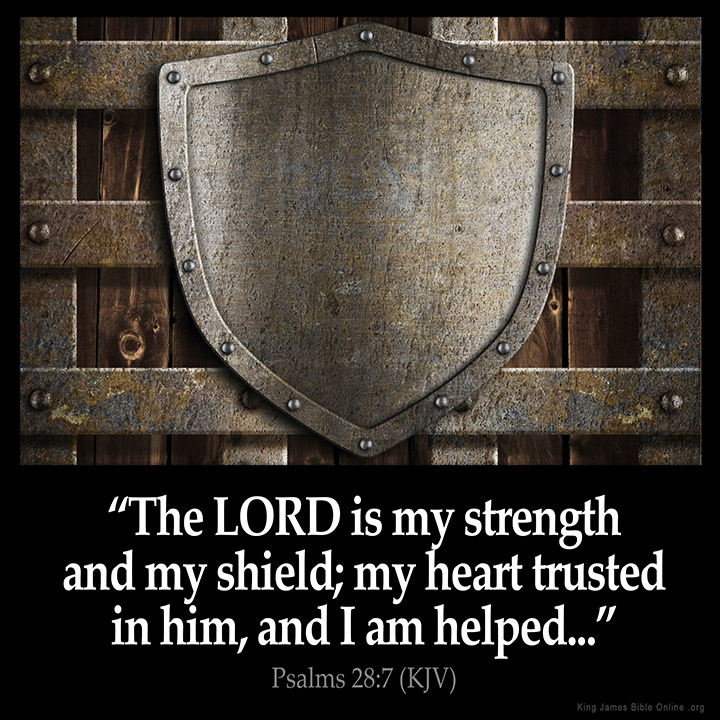
Psalms_28-7

Praise God he is our shield! We can trust in him, and receive the help we need (Psalm 28:7).

How has God shielded you?

CARED FOR:

I couldn’t find the dental insurance form I needed to drop off at Dr. H.’s office. Jeremy (our younger son and a middle schooler at the time) assisted me in a thorough search.  No form. While out on my walk, it suddenly occurred to me the form may have been gathered up with the newspaper. Sure enough, that’s where it was. Being Wednesday, those papers—and the dental form—should have been long gone in the recycling truck, but Jeremy was saving newsprint for his art teacher. God not only revealed to me the location of that form, but kept it safe, saving me the hassle of getting a new one and filling it all out again.

a6b7d3947c75be26393ae18a51f35ccc

Praise God for his loving attention, even in small matters like dental forms (1 Peter 5:7)!

How has God cared for you?

GUARDED:

One spring day in 1985, an elderly gentleman hit the gas pedal instead of the brake, at the stop sign on our corner. He drove his station wagon right through the garage wall. Several feet more to the right and he would have plowed into our daughter’s room, and she was playing there at the time. The driver was protected, too, sustaining only minor injuries.

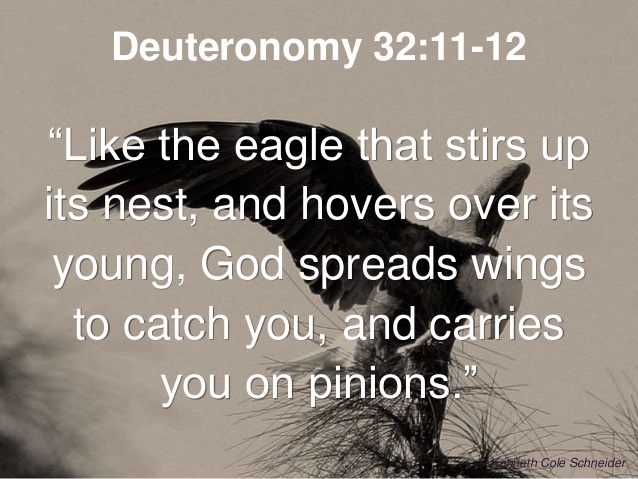
god-of-the-bible-gcsrw-25-638

Praise God he guards us like an eagle, hovering over its young (Deuteronomy 32:11).

How has God guarded you?

THE APPLE OF HIS EYE:

The last phrase of Deuteronomy 32:10 explains why God is so attentive to his people. We are the apple of his eye. Some translations replace apple with pupil. God protects us as the pupil of his eye.

Just as our eyesight is precious to us, so we are precious to God.

As we’re careful to provide protective care for our eyes, shielding them from danger, for example, so God provides loving, protective care of us.

May we continually praise our God for all he is to us. First, he found us, and then became our attentive Shield, Provider, and Guard.

bbd550f7373b204033320b16c5638e3c

(“You make me glad by your deeds, O Lord; I sing for joy at the works of your hands” — Psalm 92:4.)

 In the Comments below, please share your personal stories of how God found you, or how he has proved himself as your Shield, Provider, and Guard. Let’s celebrate together God’s powerful deeds on our behalf!

(Art and photo credits:  www.biblewalks.com; http://www.pinterest.com; http://www.kingjamesbibleonline.com; http://www.imagefriend.com; http://www.slideshare.net; http://www.pinterest.com.)


Read Full Post »

SunsRays

The exhibition of God’s glory

and the deepest joy of human souls

are one thing.

–Jonathan Edwards

(1703-1758, preacher, theologian, author)


Wooh—that’s a mouthful! I have to break that down into smaller bites.

God’s glory includes his splendor and majesty, infinite power and wisdom, creative genius and perfect engineering, absolute holiness and righteousness, and much more. God’s glory is, in part, the sum of his glorious attributes.

The exhibition of God’s glory is all around us in creation, and visible to all people (Isaiah 6:3, Psalm 97:6).

36e8e624124bc4606ae3499824a2dded

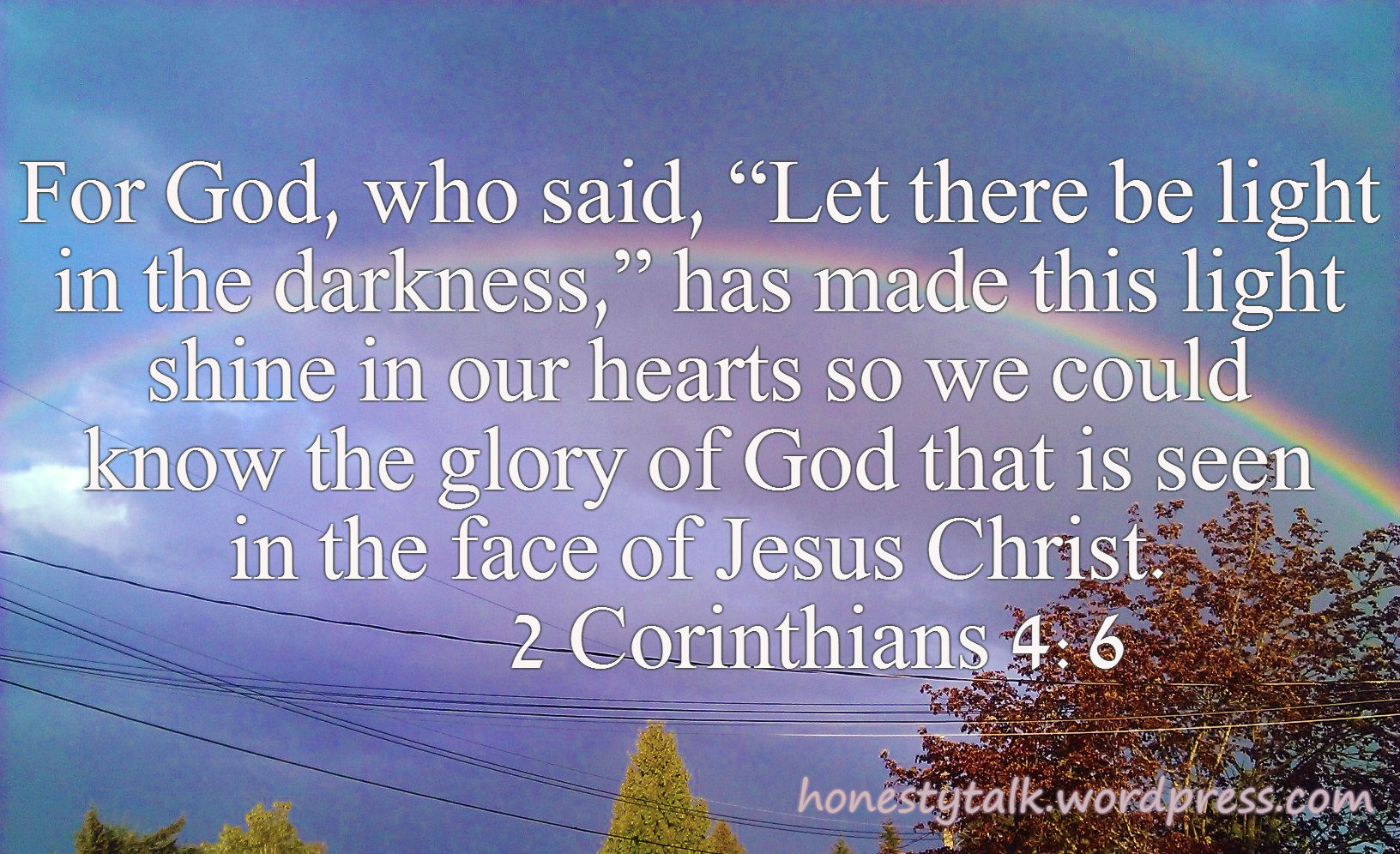
But more profound:  God’s glory is made known to us in our hearts—to those who have asked Jesus to save us from the ultimate consequence of our sin, and to become Master of our destinies (2 Corinthians 4:6).

2-corinthians-4-6

How incredible that we can experience God’s glory here and now, although in a limited way. And how wonderful that the deepest joy of humans souls is a result of knowing him now—not just when we get to heaven.

Someday, though, we will witness the full revelation of his splendor, and that of his Son, Jesus. It’s beyond our wildest imaginings (1 Corinthians 2:9).

1-Corinthians-2-9

Scripture does include a few glimpses, however. We see his:

  • Golden splendor and awesome majesty (Job 37:22)
  • Garment of light, wrapped around himself (Psalm 104:2a)
  • Clouds surrounding the throne (Daniel 7:13)
  • Belt of gold and gleaming, flaming eyes (Daniel 10:5-6)
  • Long robe with a golden sash across his chest, white hair, and blazing eyes (Revelation 1:13-16)

Charles Spurgeon eloquently expressed the glory of Jesus in a sermon, over 150 years ago. He proclaimed Christ…

 “…Radiant with splendor,

effulgent with light,

clothed with rainbows,

girded with clouds,

wrapped in lightning,

crowned with stars,

the sun beneath his feet.”


Doesn’t that give you holy goosebumps?

Yet there is more.

When he appears, we shall be like him (2 Thessalonians 2:14; 1 John 3:2).

1029-2TH003005ENGKJV08000480ISP05531394000

Can you imagine? We will share in the radiant splendor of our Savior. As if that wasn’t enough, we’ll finally be transformed into the holy and perfect beings we have always wanted to be.

And as we share in the glory of Jesus, we will enjoy incredible blessings that God has prepared. The following scriptures offer us tantalizing samples—to whet our appetites for what is to come:

  • There will be no need for sunlight; God will be our everlasting light. There will also be no more sorrow (Isaiah 60:19-20).
  • We will see Jesus face to face and finally have full understanding of all things (1 Corinthians 13:12-13).
  • We will bear the likeness of Jesus (1 Corinthians 15:49).
  • We will reign with Jesus forever (Revelation 3:21; 22:5).
  • There will be no night and no impurity (Revelation 21:23-27).

Now, there are those who worry that heaven will involve a lot of cloud-sitting and harp-playing. Well, yes, there are clouds and harps.  (I, for one, am very glad for the harps–it’s my favorite instrument. And, I have to admit, there are some days when a bit of cloud-sitting and harp-playing sounds rather appealing!)

However, I agree with theologian, Albert Barnes. “To reign with Jesus” means we will share in Christ’s dominion of the universe, administering the affairs of all the worlds.” That sounds exciting and fulfilling (but mind-boggling) to me!

Such glimpses of our glorious future really are too much for my mind to absorb. But, oh how thankful I am that God has tucked them into his Word, to fill our hearts with expectation and hope.

Also worth contemplating is the eternal expanse of time we’ll enjoy God’s majesty and splendor. According to John Piper, heaven’s joys will actually increase as we discover more and more of God’s glory. “The end of increased pleasure in God will never come” (God’s Passion for His Glory, p. 37).

Then “the exhibition of God’s glory and the deepest joy of human souls” will indeed be one perfect, sublime, eternal thing.

*     *     *     *     *     *     *     *     *     *

Lord God of heaven and earth, my heart shouts praise in honor of your glory! I praise you for being a holy God, completely separate from all else in the universe. No one is your equal in power, wisdom, creativity, splendor, or love. No one else is perfect in all he does. Thank you for your Word, where we can glimpse your glory and your plans–for our glorious and joyous future with you.

(Photo & art credits:  www.beforethebeginning.net; http://www.pinterest.com; http://www.honestytalk.wordpress.com; http://www.verseaday.com.)


Read Full Post »

 Zwald-62


One of the “Letters to the Editor” in the most recent issue of Country Magazine caught my attention. The writer, James, related an event from his boyhood days on a farm in the 1940s.

Seems he had injured his hand quite severely one day while tightening a chain. But work on a farm doesn’t wait, especially during hay-baling season when the hay is ripe for harvesting. So in spite of his injury, James had to wear rough work gloves as he operated the wire baler. Every day for a week when he removed the gloves, the scab on his hand would come off and the wound would bleed profusely again.

On Sunday afternoon he plopped down on the living carpet to take a nap. His dog, Shadow, came to lie down beside him. But instead of settling in for a snooze himself, Shadow began to lick James’ wound. It actually felt good, James explains, so he let the dog continue.

The next morning James was astonished to see that his wound was completely healed. “It was as if the injury had never happened.”

Not until much later did James find out that a dog’s saliva contains healing properties. That’s why, when injured, they will lick their own wounds over and over.

I found James’ story particularly interesting because of a question that had been niggling in my mind this Easter season: Why did Jesus bear the scars of the crucifixion—in his hands, feet, and side–after the resurrection? It was certainly within God’s power to return Christ’s physical body to perfect wholeness, “as if the injuries had never happened.”

Come to find out, I’m not the first one to consider this question. As far back as the seventh century, Saint Bede of England (672-735, A.D.) wrote about the possibilities. Many others throughout the ages of the church have contemplated the reasons, including the following:

  1. The scars were proof to the disciples that he was the same person after resurrection as before. Had Jesus been completely restored, his followers may have assumed that their first inclination was correct: that what they saw was an apparition of Christ. After all, he appeared to them out of nowhere—an impossibility for a physical body.

But they not only saw him, Jesus invited them to touch him, so there could be no doubt (Luke 24:36-42).

  1. The scars were part of the proof of the prophecy that Jesus spoke of himself, that he would suffer, be killed, and rise again on the third day (Matthew 16:21). “This is what I told you,” Jesus reminded them (Luke 24:44).
  1. The scars provided evidence of Jesus’ physical body. Early in church history there were those who taught that Jesus didn’t really suffer on the cross. He was not truly human, therefore he only appeared to suffer.

They could not fathom the sinless Son of God submitting himself to such humiliation and horrific pain.   But dismissing the agony of Christ on the cross as well as the scars is incomprehensible.

Those three answers do quiet our curiosity, but what relevance might Jesus’ scars provide for us today?

  1. The scars prove that Jesus knows what it means to suffer. Crucifixion is the most cruel of death penalties, the worst that man can deliver. No one can say, “Jesus doesn’t know what I’m going through.” No, he is well-acquainted with grief. He knows what it’s like to bear scars of suffering.
  1. The scars prove God’s love and compassion. As the Son of God, he didn’t have to suffer on our behalf. Surely he could have devised a less abhorrent way. Instead, he identified himself with humanity by becoming human himself. He took our physical, emotional, and spiritual pain upon himself.   And he will wear the scars of suffering for eternity (Revelation 5:6).
  1. The scars remind us of what is to come. On Good Friday, Jesus body was beaten, bruised, and pierced. On Easter Sunday, those wounds became scars. A miraculous healing of gruesome wounds had occurred in a matter of hours.

One day a miraculous healing of our gruesome wounds will take place. Pain, suffering, loss, illness, and physical challenges will cease. Every negative aspect of life will melt away.

*     *     *     *     *     *     *     *     *     *

Oh, Lord Jesus, thank you, THANK YOU for carrying our pains, our disfigurements, all the things wrong with us.  Thank you for taking the punishment we deserve and making us whole.  You are the one and only source of eternal salvation.  And only through your eternal bruises are we healed.  Out of overwhelming gratitude, we give ourselves to you.  We want to follow your example and please you.  Make us into what gives you pleasure.  

All glory to you, Jesus, forever and always!”  

 (Isaiah 53:4-6; Hebrews 5:9, 13:21, MSG)

Photo credits:  www.motherearthnews.com

Read Full Post »

Jesus-Praying-Last-Supper-570x377


Whether I heard it or read it, I don’t remember. But the words caught me by surprise, and I jotted them down:

“What was uppermost in Jesus’ mind as Good Friday approached?

“Joy.”

Do you find that surprising, too?

Yet at least three times on the eve of his crucifixion Jesus spoke about joy (John 15:11; 16:22, 24; 17:13)–a most unusual topic and completely unnatural.  Who thinks about joy when they know that catastrophe is about to strike?

Jesus, that’s who.

Within the next twenty-four hours he would face excruciating pain, total abandonment by his Father, and the most horrific death ever devised.

But his concern was for his disciples, not himself.  Jesus wanted them to remember the important principles of love, obedience, and joy–an empowering joy that no one could take away from them.

Perhaps you remember the scene. Jesus and his disciples had just finished their last Passover supper together. After the meal, he taught his final lesson.

The first mention of joy came near the end of his teaching about the vine and the branches:

“I have told you this

so that my joy may be in you

and that your joy may be complete”

(John 15:11).

The word, “this,” refers to the ways Jesus had just mentioned that will contribute to joy:

1.  Live close to him and produce much good in and through your life (vs.4-8).

2.  Live in obedience to Jesus and experience the warmth, peace, and care of His love (vs. 9-10).

 Note that Jesus wanted his joy to be in the hearts of his disciples. What characterized his joy, compared to that of others?

  1. Strong awareness of the Father’s love for him, and his own love for the Father (vs. 9-10).
  1. Absolute surrender and self-sacrifice of himself to his Father, and the joy of doing what his father had sent him to do. Even during his great travail in the Garden of Gethsemane, his one desire was to do his Father’s will (Luke 22:42).

Jesus’ joy coexisted with the profound sorrow of his impending suffering, because he was already well-acquainted with the satisfaction and fulfillment of obedience.

  1. The understanding that joy deferred to the future is anticipatory joy in the present. “For the joy set before him he endured the cross” (Hebrews 12:2).

And finally, Jesus told his disciples that he desired complete joy for them. What does complete joy look like? It is:

  • Not so much an emotion as it is a conviction (Keith Krell, “Moment by Moment,” http://www.bible.org).
  • Inner contentment, resulting from continually cultivating an intimate relationship with Jesus.
  • Constant, not dependent on circumstances.
  • Enduring, day after day. Indestructible.
  • Perfect—the perfect, joy-filled fulfillment of the destiny for which God created you, even when a portion of that destiny is suffering.

I’m thinking of the martyrs–Stephen, Polycarp, Ignatius of Antioch, William Tyndale, John Wycliffe and countless others who demonstrated complete joy even as they died in anguish.

Polycarp, disciple of the Apostle John and Bishop of Smyrna for many years, refused to revile Jesus. For that he was burned at the stake.

But before the flames rose up, Polycarp prayed:

“O Lord God Almighty, Father of thy blessed and beloved Son, Jesus Christ, through whom we have been given knowledge of thyself…I bless thee for granting me this day and hour, that I may be numbered amongst the martyrs, to share the cup of thine Anointed and to rise again unto life everlasting…”

Such devotion, courage, and supernatural strength are impossible to fathom apart from the enablement of the Holy Spirit.

Can you hear the grace in Polycarp’s voice as he blessed God for the privilege of dying a martyr?

That is complete joy, only experienced by those who trust in Jesus implicitly.

Complete joy that Jesus purchased for us at Calvary.

*     *     *     *     *     *     *     *     *

We marvel, Heavenly Father, in the extreme paradox that is the cross. Out of the evil unleashed upon your Son comes your holy, righteous goodness–upon us. Out of the horror of the crucifixion that Jesus endured comes inexpressible and glorious joy, to those who put their faith in him–not a temporary feeling of elation, but deep, abiding, abundant joy. 

All praise to you, our loving, gracious God!       

(Acts 3:13-16, 1 Peter 1:8, John 6:47, John 10:10)


(Photo credit:  www.rejesus.co.uk.)


Read Full Post »

The spacious, free life is from God,

It’s also protected and safe.

God-strengthened, we’re delivered from evil—

When we run to him, he saves us.

(Psalm 37:39-40, The Message)

Freedom-Quote


There are folks who think that Christians surrender their freedom when they choose to follow Jesus. They think we give up our freedom to do as we please and take part in everything life has to offer.

Those folks miss an important fact: Self-centeredness does not satisfy in the long-term.

Even secular research has proven that truth. Several years ago, the Journal of Research in Personality published a study conducted by psychologists. They recorded their therapy sessions and found that individuals who used more of the first-person singular pronouns (I, me, my) were more likely to suffer from depression.

The truth of the matter is, real freedom is not freedom to, but freedom from. God offers us a number of glorious freedoms. For example:

  • Freedom from guilt. God forgives my sins and remembers them no more (Isaiah 43:25).  How loving, merciful and gracious He is!
  • Freedom from fear. He is my stronghold in time of trouble (Psalm 37:39.) How often have I called out, “Oh, Jesus,” with my heart pounding in my chest—at the moment a car crash was imminent, a child approached with blood oozing from his head, or the phone rang just before curfew, and our teenager wasn’t home yet.

bible11

But fears can be quieted as we affirm who is in control. God is Lord of every circumstance. He is also the Source of solace, perspective, strength and wisdom–whatever I need, for every situation.

  • Freedom from worry. God has promised to supply my needs (Philippians 4:19). 

When worries begin to whirl in my head, I try to put into practice what Kay Arthur teaches: “Focus on God. Rehearse his character, his promises, his works. Remember his names, his attributes and how they suit your situation” (His Imprint, My Expression, p. 117). Extolling God’s greatness causes my problems to shrink.

Notice I said try. I’ve not always accepted God’s offer of freedom from worry. Sometimes dark clouds of concern fill my thoughts and blot out his goodness—his character, promises, and works. Sometimes it takes awhile for me to remember: My God is all-sufficient. He will see me through.

 As I grow older, the gap is shortening between worry-onset and God-focused thinking. Practice hasn’t made perfect yet, but at least it’s producing improvement.

  • Freedom from foolish decisions. He provides wisdom when I ask (James 1:5).

“I need not despair because the living God is my partner. I do not have sufficient wisdom to meet these difficulties, but He is able to direct me. I can pour out my heart to God and ask Him to guide and direct me and to supply me with wisdom. Then I have to believe that He will do so. I can go with good courage to my business and expect help from Him in the next difficulty that may come before me” – George Mueller

816184962d6bdc67aaa7f052c00369bf

  • Freedom from discouragement, because God is omnipotent. With him all things are possible (Matthew 19:26). He specializes in redeeming disappointment. And while we wait, our loving Father provides strength.

The shroud of discouragement can also be lifted through gratitude, praise, and worship. Focusing on who our God is and what he has already provided can relieve the ache for what has not come to pass—yet.

 This post is getting long, so I’ll just list another five briefly:

  • Freedom from despair. He is my God of hope, joy, and peace as I trust in him, so I can overflow with hope by the power of the Holy Spirit (Romans 15:13.)
  • Freedom from loneliness, because He is always with me (Psalm 23:4).
  • Freedom from prolonged sadness.  Weeping may remain for a night, but rejoicing comes in the morning (Psalm 30:5).
  • Freedom from feeling helpless. In God’s hands are strength and power (1 Chronicles 29:12).
  • Freedom from feeling useless, as we live each moment for the praise of His glory (Ephesians 1:11-12).

0a44f1bd0f54a3d2e22c78ec65923491

Jesus said, “If the Son sets you free, you will be free indeed” (John 8:36). What he offers is the spacious, free life–to those who follow him, to those who become the children of God.


*     *     *     *     *     *     *     *     *     *


My heart is overwhelmed, Father, as I skim down this list of miseries for which you provide relief. No doubt there are even more freedoms that could be included. I pray that when these negative emotions threaten to overtake my spirit, you would tap me on the shoulder and remind me: the more I turn my thoughts and feelings over to you, the more spacious my soul will become to enjoy the freedom of your peace. Praise you, gracious God, for such glorious provision.

(Photo credits:  www.moreofimministries.org; http://www.wallpaper4god.com; http://www.treasuring-christ.org; http://www.887thebridge.com.)


Read Full Post »

Olive-grove

In one of his many psalms, David compared himself to an olive tree:

“I am like an olive tree flourishing in the house of God; I trust in God’s unfailing love for ever and ever” (Psalm 52:8).

If you’re like me you’re wondering: Why does David identify himself as this particular tree? Is there something special about olive trees?

As a matter of fact, yes.

It may be that, as David composed this psalm, he was contemplating several qualities characteristic of these distinctive trees:

Long Life

Olives are among the longest-living trees, continuing to grow for hundreds of years.   In fact, one specimen in Algarve, Portugal is 2000 years old, according to carbon dating.

Perhaps their longevity is due to adaptability. They can grow in various conditions—on terraced hillsides or in valleys, in rocky soil or rich, fertile loam. But even in hot climates with little rainfall the olive can grow quite contentedly.

Not only is it adaptable, the olive tree is tenacious. If it is cut down, shoots from the roots will develop, and the tree will miraculously regenerate itself.

Far-Reaching Root Systems

Because they grow for centuries, and spread their branches wide, the root system of an olive tree can be quite massive, expanding twenty feet in every direction around the trunk.

Fruitfulness

Even dwarf olive trees will produce 20-40 pounds of fruit each year.  The largest variety can produce a ton of olives annually!  The oil pressed from the fruit is also useful for cooking, for fuel in oil lamps, and even for skin care products.

No doubt you already see parallels to a life rooted and established in God:

  • The olive tree is almost eternal; David knew that one day he would “dwell in the house of the Lord forever” (Psalm 23:6).
  • The massive root system brings to mind the qualities of stability and perseverance, and the habit of abiding (John 15).  An anonymous psalmist expanded the word picture for us when he wrote: “And he shall be like a tree firmly planted [and tended] by the streams of water, ready to bring forth its fruit in its season; its leaf also shall not fade or wither; and everything he does shall prosper [and come to maturity]” (Psalm 1:3, AMP). In other words, a person seeking after God is so well-rooted in Him, nothing can destroy his spirit.
  • The fruitfulness of the olive tree reminds us of the fruitfulness of the Spirit-led life (Galatians 5:22-23).  As a person grows deep in her knowledge of God and in relationship with God, she becomes more loving, joyful, peaceful, and so on.  Not all at once, however.  It is a growing process, after all.

And so, an expansion of David’s metaphor in Psalm 52 might read:

I am like an olive tree,

Content to bloom where the Gardener plants me,

Flourishing and thriving even,

In the gracious presence of my God–

Immortal through faith,

Grounded in Him,

Growing toward maturity

As I trust

In His unfailing love,

His protection and provision,

His guidance, and grace–

Forever and ever.

We praise you, Heavenly Father, for what you have done (Psalm 52:9a)!


(Photo credit:  www.home-hunts.net.)

Read Full Post »

« Newer Posts - Older Posts »

When the House is Quiet

Impressions Becoming Expressions

Mitch Teemley

The Power of Story

Still Traveling

Impressions Becoming Expressions

Living Our Days

Gaining a heart of wisdom

He Said What?!

I'm Patty, and my husband and I are living with our adult son who has autism and epilepsy. I love sharing lessons learned from life around me, especially life with Aaron.

Meditations of my Heart

Impressions Becoming Expressions

Linda Stoll

Impressions Becoming Expressions

Signora Sheila

Notes on Life, Faith & Italy

Heidi Viars

Finding the Image of God