Feeds:
Posts
Comments

Archive for the ‘God’ Category

are you still up?

That was the text sent by son #2 last Thursday evening, close to 10:00 p.m.

An interesting idea had just occurred to him, one that required input from his mother.  Maybe I should say output.

You see, Jeremy is a pastor, and although his church started worshiping together again two weeks ago, their choir is not participating in the services.  His worship leader has been singing solo; Jeremy has offered back-up.

But for May 31st, Pentecost Sunday, he was hoping for more.


First, he remembered a popular praise song released in 1998, Holy Spirit, Rain Down. Jeremy was in high school then and sang tenor on the praise team of the church where his dad (my husband) was pastor.  I sang alto. 

After reminding me of the song, Jeremy wondered if I could record that alto part with an instrumental/vocal track he’d send via email.  He would add the tenor part, and his worship leader the melody.

I reminded him my voice is not what it once was, and it’s been six years since I even sang in a choir.  But I didn’t want to tell him no without even trying.  Besides, how many times must I tell myself, “It. Doesn’t. Have. To. Be. Perfect!”


So on Friday, with Jeremy as my guide via phone and computer, I climbed the learning curve of Garage Band, an APP for making music with vocals and/or instruments—multiples if desired.  You’ve probably seen the results of such efforts on YouTube.  Perhaps you’ve recorded music yourself. 

Once set up, I could record as many times as needed and send Jeremy the best rendition.  But after practicing numerous times, my voice started to give out.  I had to quit.

Saturday morning was zero hour.  Either I’d be able to send Jeremy a decent alto part, or ruin his plan and tell him there would be no trio.  As I prepared to record, my heart started thrumming audibly and my breath coming faster than normal.

What is wrong with you?!  I scolded.  No one else is here in the study; you can record as many times as you want.  Get a grip!

The problem was clear:  A big cloud of nervous self-consciousness had enveloped me.

All I knew to do was pray.

Lord God, this is so silly.  WHY am I overcome with apprehension?  Even if I sing this twenty times and not one effort is perfect, what difference does it make?!


Calm these nerves, Heavenly Father.  Help me to lose focus on my performance and worship you unencumbered.  Remove this self-centeredness.  I want to be lost in the heartfelt prayer of these lyrics—so appropriate right now—and mindful only of you, my audience of One.*

Even before I’d finished, my heart rate began to slow and my breathing return to normal.  I sang the song twice, and sent the second effort to Jeremy.  It wasn’t perfect, but it was good enough.


When I confessed to Jeremy my case of senseless nerves and subsequent prayer, he said, “You’ve got a blog post here, Mom!”

Perhaps I do, I thought, since others suffer from self-consciousness also.  I wondered, Are there strategies we could implement to cure ourselves once and for all?

Here’s what a bit of reading revealed:

  • Prayer is the first step.  But we should not expect one prayer to vanquish all self-consciousness forever.  It’s a prayer we’ll likely have to renew every time that nuisance-of-an-emotion sidles up to us.
  • Focus on Who we’re seeking to honor.  The better our focus, the less we’ll be thinking about ourselves.

  • Just as Jesus told Satan to leave him alone (Matthew 4:10), we can tell the author of self-conscious thoughts to leave us alone.

Last Saturday, good enough became good aplenty. God heard my plea, immediately came to my rescue, and helped me calmly and worshipfully complete the task at hand.  I couldn’t ask for more.

_________________________________

Have you ever felt self-conscious?  What helps you to overcome it?  Please share in the comment section below!

Notes:

* “Audience of One,” by Big Daddy Weave, 2002.

  • Kristen Armstrong quote from Work in Progress, 2009, p. 37.
  • Oswald Chambers quote from My Utmost for His Highest, 1935, p. 232.


Art & photo credits: http://www.pxfuel.com; http://www.canva.com (4).


Read Full Post »

After a long siege of cold, dismal days in our area, Saturday dawned warm and bright—a perfect morning to tend the planting beds in front of our house. You’d think that inclement weather would stunt spring growth. But it seems all God needs is plentiful rainfall to paint the landscape in countless shades of green.

Even on a morning of sunshine and birdsong, I am not one of those gardeners who revels in puttering about in the dirt. My attitude is much like Robert Louis Stevenson’s toward writing. He said, “I dislike writing; I love to have written.”

I dislike gardening; I love to have gardened.

(Oh, to skip the gardening for a “have gardened” spot like this!)

Not that we have fussy plants needing a lot of attention. We purposely chose bushes and perennials that don’t. Nonetheless, they do require a seasonal schedule of fertilizing, occasional pest control, weekly trimming and weeding.

Sometimes I turn my plant-tending duties into a gratitude challenge, to help pass the time more pleasantly. How many things can I notice to thank God for? Of course, a cardinal serenade, the neighbors’ friendly hellos as they walk by, and a welcome breeze are often included.

Sometimes a new item makes the list, like the tiger swallowtail butterfly that stopped by one time to cheer me on.

But Saturday I decided to follow Wordsworth’s advice:

As it turned out, many lessons presented themselves; perhaps too many to share here. I’m prayerful that among the observations below, you’ll find a new idea to ponder.

  • Weeds overtaking a garden remind us of such sins as worry, discontent, and fear that can quickly grow out of control and overtake the mind (Psalm 31:13-15). They need to be routed by the calming truth of God’s Word.

  • Plants that turn toward the sun, in order to absorb energy for photosynthesis, bring to mind the faithful child of God. He turns toward the Father of heavenly lights in order to absorb the strength, encouragement and wisdom the Father offers, thus enabling the believer to grow in spiritual maturity (Ephesians 5:8-9).

  • On Saturday I clipped the first three roses for 2020. Of course, I wore my gardening gloves to avoid the prickly thorns, and this familiar quote came to mind:

I love the way a turn of phrase can turn my thinking and my attitude. You too?

  • Every summer we enjoy a constant replenishing of sunshine-yellow day lilies, lavender hydrangeas, as well as the blushing pink roses—all perennials that bloom faithfully year after year.

They offer a reminder of God’s grace—the free, undeserved goodness and favor of God—always plentiful, beautiful, reliable, and never-ending.

(A perennial flower bed, though not ours)

  • Pruning back the low-hanging branches on the weeping cherry tree brought to mind John 15:1-2. In those verses, Jesus compared the vinedresser’s work of pruning to God’s work of cutting away everything in our lives that’s not to our benefit.

Sounds painful, doesn’t it. But instead of dreading such action, we can be happily grateful. The pruning liberates us from all the dead weight that interferes with God’s blessings.

For example, the slicing away of self-centeredness allows the blessing of generosity to flourish (Acts 20:35). The snipping off of negativity permits more pleasure of positivity (Proverbs 17:22).

And the removal of prideful self-sufficiency fosters the growth of peaceful dependence in the all-sufficient One, God himself (2 Corinthians 3:5).

Well, it’s just as I thought. More lessons came to mind last Saturday morning than can be shared here. This post is long enough.

The exercise did accomplish its purpose. Before I knew it, the time for gardening had given way to have gardened. I not only came away with roses for a vase…

…but blessings for my heart.

What lessons have you discovered while working in the yard?  Share your experience in the comment section below!

Photo credits:  http://www.pixabay.com; http://www.pxhere.com; http://www.flickr.com (3); http://www.canva.com (4); http://www.flickr.com; http://www.dailyverses.net; Nancy Ruegg.

Read Full Post »


“It is not mere reading, but meditation…

…which extracts the sweetness and the power out of Scripture.”

—James Stalker


I like the sound of that, don’t you—extracting all the sweetness and power out of Scripture?

To that end, I chose to follow a suggested psalm for meditating, #116, allowing those verses that apply to speak sweetness and power to my spirit. Then I framed my response as a prayer back to God.

Following is part of the result. It’s my hope you’ll find your heart responding too. You can add your own verse of personalized psalm in the comment section below!


PSALM 116:1-5, 7,

PERSONALIZED


“I love the Lord, for he heard my voice; he heard my cry for mercy” (v. 1).

Time and again you have heard my voice, O God as I’ve cried out in need. Your answers have flowed in countless mercies of provision, guidance, protection, strength, wisdom, and more.

 I remember: 

  • Your provision of a short-term assignment my seventeenth summer that turned into employment, enabling me to pay a good share of my college expenses.
  • Your guidance to marry Steve, even though he was headed toward the pastorate (and becoming a minister’s wife raised serious apprehensions in my heart).


(Just a few years ago–August 1, 1970)


  • Your protection from relationships that wouldn’t have been good for me, which I only recognized in hindsight.
  • Your strength to withstand stormy circumstances now and then–like the uncomfortable and stressful moves to new churches.
  • Your wisdom slowly but surely seeping into my soul over the decades, one discovery or lesson at a time—an ongoing process.

How can I not love you, my generous and attentive Heavenly Father?


“Because he turned his ear to me, I will call on him as long as I live” (v. 2).

Why would I turn anywhere else? You are the only One who can truly help in every situation.

At the first whisper of your name you draw near–such a precious reality. And just as you’ve promised, you give strength and bless me with peace in your presence (Psalm 29:11).

I’ll never forget that morning during a particularly difficult time, when I randomly opened my Bible first, before turning to the day’s assignment in the study guide. 

To my amazement, the first instruction directed me to a Bible verse already on display, at the top of the page no less.  I could almost hear your voice saying, “This verse is for you, Nancy”:


Granted, that understanding may not come this side of heaven, but one day I’ll know. In the meantime I trust you, my loving, sovereign Father.


“The cords of death entangled me, the anguish of the grave came over me; I was overcome by distress and sorrow (v. 3).”

Remember the time we rushed Heather (1) to the hospital, after severe pain awakened her in the middle of the night?

Few distresses cause anguish like seeing your child suffer and being helpless to stop it.


“Then I called on the name of the Lord: ‘Lord, save [us] (v. 4)!’”


All the way to the hospital I prayed, “Jesus!  Jesus”  Jesus!”  That was all my troubled spirit could muster.

But even such a simple prayer wields power, because your name, O God, represents your character. To call on your name is to trust you will work on our behalf.

By 9:00 a.m., we were heading home, with Heather sleeping peacefully (2).


“The Lord is gracious and righteous; our God is full of compassion” (v. 5).

You have been incredibly gracious over the years.

 I remember: 

  • Scholarships and grants provided for our children’s education.
  • Funds arriving at just the right time, like the unexpected tax return–three years late–that paid for the new refrigerator we needed.
  • God-enhanced moments, as I’ve breathed in the glory of…

…your nighttime sky filled with stars,


or the tiny wonder of a single star hidden within a flower.


 …the delight of a newborn grandchild in my arms, and the moment months later when those little arms wrapped around me.


 …friends who are family, and family who are friends.


“Return to your rest, my soul, for the Lord has been good to you” (v. 7).

 I do seek rest in your love and faithfulness, O God, your gracious kindness and wisdom. Even if not one more blessing came my way, I couldn’t complain.

 Glorious and majestic are your deeds, and your righteousness endures forever (Psalm 111:3)!

________________________________________________


Now it’s your turn, to add in the comment section below a bit of sweetness and power you’ve extracted from Psalm 116:1-5, 7.

Remember with me the wonderful works He has done, His miracles (Psalm 105:5a)!


Notes:

  1. Our daughter
  2. More details of the story can be found in a previous post, “When Circumstances Spin Out of Control.”

Photo credits:  http://www.pickpik.com; http://www.wallpaperflare.com; Richard Schruel; http://www.canva.com (2); http://www.publicdomainpictures.net; Nancy Ruegg; http://www.pickpik.com; Nancy Ruegg.


Read Full Post »


As I begin drafting this post, it’s Monday afternoon, May 11, and the temperature outside is forty-eight degrees. No, we do not live in the far north where such weather might be normal for mid-May. Our home is in Cincinnati, right across the Ohio River from the South—Kentucky to be exact.

Nonetheless, this spring has been a chilly and wet one for us (including parts of the South, I have to admit). Tomorrow morning meteorologists have issued another freeze warning for parts of our area. And the ten-day forecast includes five days of rain.


Sooner or later, however, summer will defeat winter. And while anticipating sunshine and short sleeves, I remember the Bible verse, “The Lord God is a sun and shield” (Psalm 84:11).

Perhaps I can keep myself cheerfully occupied, even on a damp and cloudy afternoon, by contemplating God’s sun-like qualities.

For example:

  • The sun is ever-present. No matter how gray the sky, the sun’s rays penetrate, supporting life on our planet. Praise God he is always present, always supporting us–especially on the dark days of pain, sorrow, or hardship (Psalm 46:1).


  • The sun is perfect in size, brightness, temperature, and even distance from the earth, in order to sustain life on our fragile planet. Praise God he engineered such perfection and breathes life into every creature (Job 12:10).


  • The sun is big, its mass making up 99.8% of our solar system. Most of the final .2% comes from Jupiter. Earth is a mere speck by comparison. Yet our God is bigger than the entire cosmos, filling heaven and earth with his omnipresence (Jeremiah 23:23-24).


  • The sun’s gravitational pull keeps all the planets of the solar system orbiting around it. God the Son proclaimed that he would draw all people to himself. And within the orbit of his love and care we can thrive (John 12:32; Hebrews 11:6).


  • The sun provides remarkable beauty at sunrise and sunset. And to the far north, solar wind creates the mesmerizing light patterns of the Aurora Borealis. Of course, God is responsible for such displays and countless more across the planets, the galaxy, the universe (Psalm 104:24).


(Space Nebula)


  • As already mentioned, the sun offers life-changing benefits such as: 1) light, symbolic of God’s enlightenment, guidance, and goodness (Daniel 2:22, James 1:17), 2) warmth and comfort, reminding us of our contentment in God (Proverbs 19:23), and 3) good cheer when it breaks through stubborn clouds, a metaphor for the face of God shining on us with blessing (Numbers 6:24-26).


Of course, the comparison of God to anything else eventually breaks down.

For example, we can never have too much of God, but too much sun is detrimental to plant life and humans. That’s when it’s valuable to remember the second part of Psalm 84:11 (the verse where we began this exploration):  our God is also a shield.


I’m thinking of my brother’s and sister-in-law’s vegetable garden—carefully fenced to keep out critters, and also outfitted with a removable screen roof. They live in south/central Texas where summer temperatures can top one hundred degrees for days at a stretch. That screen does an excellent job of shielding the plants from scorching heat.

And the images of both sunshine and shade depict another aspect of our all-proficient God: He provides exactly what we need when we need it. Sometimes it’s abundant blessing, sometimes its opportunity for challenge and growth, often it’s both at the same time.


“He suits himself to every varying circumstance in life.

He becomes what the exigency of the moment requires.

And as the psalmist well says,

he withholds no good thing

from those that walk uprightly.”

—F. B. Meyer


*     *     *     *     *     *     *     *     *     *


I praise You, O God, for your splendor like a glorious sunrise—when rainbow hues dance among the clouds. I praise you that every attribute contributing to your glorious splendor is also at work in our lives—your creativity, wisdom, power, and faithfulness.

 But when we’re overwhelmed by the heat of difficult times, I thank you for being like a shield. You are our Protector who attentively watches over us with your unfailing love. You are our safety, our eternal hope.

Thank you for your promise that through cold or heat, rain or shine: “Blessed is the one who trusts in you.”  

(Habakkuk 3:4; Philippians 1:6; Psalm 3:3, 8; Psalm 33:20-22; Psalm 84:12)


Photo credits:  http://www.needpix.com; http://www.piqsels.com; http://www.heartlight.org; http://www.publicdomainfiles.com; http://www.canva.com; http://www.dailyverses.net; http://www.needpix.com; http://www.piqsels.com; http://www.heartlight.org; http://www.flickr.com; http://www.pxfuel.com.


Read Full Post »


Oh, no. Where’s the cream? A thorough search of the fridge had just revealed an inconvenient truth. I’d forgotten to purchase the whipping cream.

With dinner guests arriving in a few hours, and three little ones underfoot, I dreaded the thought of packing everybody into the car to purchase one item at the grocery store. Besides, the to-do list still included many tasks. What’s a woman to do?

Call her husband.

“I’m so sorry to bother you, but could you stop at the store on your way home from the office and pick up some whipping cream? I need it for tonight’s dessert, and somehow came home without it yesterday.”

“Sure, I can do that,” he replied. “No problem.”

Two hours later Steve walked in the door, cream in hand.

I knew I could count on him; he’d proven himself trustworthy countless times before. (Even if he’d forgotten, Steve would have gone back to the store and made good on his promise.)

So why is it, when God says, “What I have said, that I will bring about; what I have planned, that I will do” (Isaiah 46:11b), my response is sometimes doubt?


Of course, the promises I ask God to fulfill usually require more than two hours of wait time. It’s in the long siege on pause I begin to wonder: Maybe this promise that seemed so perfect for my situation isn’t really for me after all (1).

Have such thoughts occurred to you also?

Here’s what I’m trying to remember: If I trust Steve, based on promises he’s kept in the past, how much more should I take God at his word?


In addition, he is perfect in all his ways, loving and compassionate, abundantly good and righteous (2).  Our faith in God’s promises can remain firm because:


So as I wait for fulfillment, I can remember: out of the several thousand promises in scripture, he has already kept many of them in specific, personal ways.

He’s done the same for you too.

It would be impractical to make a list here of all those Bible promises, checking them off one by one as we remember occasions when each was fulfilled. But what if we identify categories, and check off those? Categories such as:

  • Salvation and the gift of eternal life (John 6:40)
  • A relationship with God Almighty and his continual presence (Revelation 3:20; Psalm 145:18)
  • Forgiveness (1 John 1:9)
  • Emotional stability (Psalm 27:1), peace ((Isaiah 26:3), and joy (John 15:11)


  • Protection (Psalm 32:7)
  • Provision (Philippians 4:19)
  • Guidance (Isaiah 58:11)
  • Satisfaction in life (John 10:10)


  • Help (Psalm 46:1)
  • Answered prayer (1 John 5:14-15)
  • Blessings (Psalm 84:11-12)


No doubt all of us can name events when such promises have been fulfilled—the day we said yes to Jesus, the times we experienced an unearthly reassurance of God’s presence, or received miraculous provision, enjoyed divine contentment, felt his inexplicable peace, and more.

In remembering we foster the courage to persevere and the faith to hope with confident expectation.

So what event, what answer to prayer are you hoping for today? Can you identify an appropriate promise? The scriptures above offer a place to start. And then let’s pray our promises.


For example:

I praise You, O God, for your promise of protection from trouble. Not that I expect to never experience difficulty, but I can count on You to guard me as we pass through it.

 As long as the trouble may last, you will be with me, to shelter me in your comfort and be my helper through the challenge. Never will you abandon me; I am secure in you.

I look forward, Father, to every statement here coming to fruition, because you have said it. My heart is steadfast, trusting in you.


(Psalm 32:7; James 1:2-4; Psalm 23:4; 9:9; 34:19;

Hebrews 13:6; Proverbs 14:26, Psalm 112:7)


What is a favorite scripture promise you turn to again and again?  Please share in the comment section below!


Notes:

  1. Sometimes there are good reasons why promises are not fulfilled.  See “Unfulfilled Promises” for several possibilities.
  2. Psalm 18:30; Psalm 103:4; Psalm 145:7, 17


Art & photo credits:  http://www.flickr.com; http://www.canva.com; Nancy Ruegg; http://www.canva.com (3); http://www.needpix.com; http://www.canva.com.


Read Full Post »


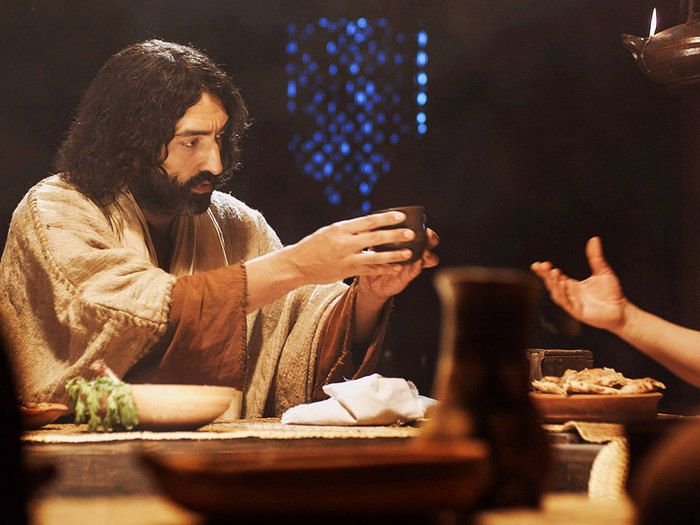
Preparations were complete for the Passover meal. Jesus and the disciples had gathered to celebrate together.

Perhaps they were beginning to recline around the table when Jesus said, “I’ve been looking forward to eating this Passover feast with you, before I suffer.”

Surely the disciples froze for a moment.

Why would their Master be talking about suffering now, as they were about to share this sacred meal?

Yes, he had mentioned it before—even spoke several times about being killed one day (Matthew 16:21). But such an actuality seemed impossible. He was the Messiah after all—come to establish God’s kingdom on earth as the Everlasting Father (Isaiah 9:6-7). How could Jesus do that if he was dead?


The disciples undoubtedly tried to ignore such puzzling and gruesome thoughts, wanting to focus on the beloved celebration of Passover. But a few moments later Jesus startled them again.

“One of you is going to betray me.”

Preposterous. Who would do such a thing to their beloved Master? Yet Jesus had never been wrong about anything before. What could he mean?

And then a third troubling statement soon followed: “I will be with you only a little longer.”

Unthinkable. They had been together for three years—over a thousand days. They had listened to his teaching—wiser than Solomon’s—and witnessed his miracles—greater than Elijah’s.


Their lives had been changed by what they’d heard and seen. And now Jesus was leaving?

Perhaps after three hard sayings the disciples began to look at one another with uncertainty and fear on their faces. Something was wrong, but understanding eluded them.*

And Jesus, knowing their thoughts before they did, spoke a proclamation that is familiar to us today.

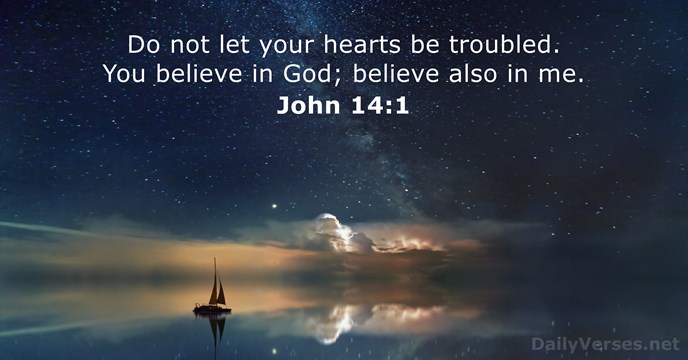
“Stop letting your hearts be troubled.”

I wonder if he paused and pointedly made eye contact with each one to focus their attention on what he would say next.

“You believe in God; believe also in me” (John 14:1).


What did they believe about God? Their scriptures (our Old Testament) taught them much about the Lord Almighty, including:

  • God is in control
  • He knows what he is doing
  • He exercises his unlimited power with wisdom and love
  • God is good (1)

And what did they know and believe of Jesus?

  • He too was good
  • He demonstrated divine power, wisdom, and love
  • He was the Son of God
  • God’s honor and glory was bestowed on him (2)

The choice was up to the disciples. They could continue to stew in anxious thoughts or they could stop, and choose to believe in their powerful and perfect Lord Jesus.

They could choose faith over fear.


And the same choice confronts us today. We can believe that:

  • God is enthroned in heaven and rules over all (Psalm 103:19)—or believe the lie that the world is spinning out of control.
  • The God of the universe is on our side, and nothing could possibly come against us and win (Romans 8:31)—or believe the lie that suffering proves God’s lack of caring.
  • All his glorious attributes (those mentioned above as well as many more) are always at work to achieve his good purpose (Romans 8:28)—or believe the lie that no good can come out of trouble (3).

We can also believe in Jesus, who has proven himself our trustworthy Savior, who is called Faithful and True, because:

  • He lives to intercede for us. Is it likely the Father will ignore his Son’s pleas? Never.
  • He died and rose again that we might live forever with him. The promise of eternal Life can provide luminous light even on the darkest of days.
  • He will come again and take us to be with him (4). We’d do well to remember:


And when we choose to trust, tranquility follows.


_____________________________________________


*The events of the Last Supper mentioned here are based on John 13.


Scriptures referenced:

  1. Isaiah 14:24; Job 11:7-9; Daniel 2:20; Jeremiah 31:3; Exodus 34:6
  2. Acts 10:38; Matthew 8:27; Mark 6:2; Matthew 14:14 and 33; Matthew 3:17 and 17:5
  3. Psalm 103:19; Romans 8:31 and 8:28
  4. 1 John 4:14; Revelation 19:11; Hebrews 7:25; Romans 8:34; 1 Peter 1:3-4; John 14:3


Art and photo credits:  http://www.freebibleimages.org; http://www.canva.com; http://www.freebibleimages.org; http://www.dailyverses.net; http://www.canva.com (2).


Read Full Post »

Today’s post is an acrostic poem (I use that term lightly!) of praise and prayer, based on the phrase, “peace in the midst of the storm.” For each letter, I chose scriptural affirmations that seemed especially appropriate for this time of upheaval and uncertainty.  (You’ll find the references at the end of the post.)

Why the Bible? There is no better source of hope and strength.

Abraham Lincoln expressed it this way during his time of trouble:

(Photo taken in 1863, in the midst of the Civil War.)

I believe that the Bible is the best gift

that God has ever given to man.

All the good from the Savior of the world

is communicated to us through this book.

I have been driven many times to my knees

by the overwhelming conviction

that I had nowhere else to go.

While collecting biblical truths that apply to our current situation, I felt my own heart uplifted.

May the following be an encouragement to you as well.

Praise be to the Lord our mighty Rock; from

Everlasting to everlasting he is God.

As we cast our cares on him, he will sustain us.

Call on him when in distress and he will answer; his

Ears are attentive to our cry.

I trust in your unfailing love, O Lord.

Nothing is too hard for you.

The Lord watches over the way of the righteous.

He performs miracles and displays his power among the people.

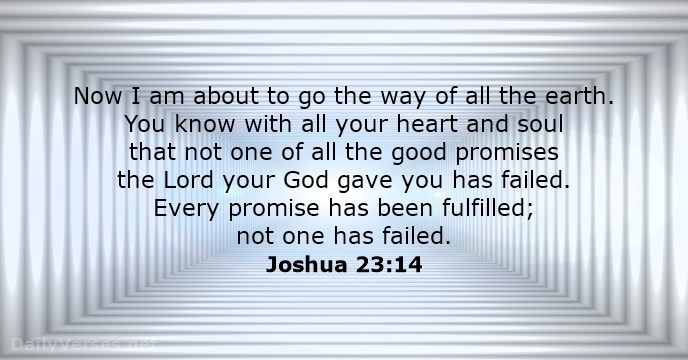
Every promise he has fulfilled; not one has failed.

My shield is God Most High.

In him I take refuge.

Do not fear; he is with us…and will help us. He will

Satisfy our needs and strengthen our frame.

Truly, our souls can find rest in God; our salvation comes from him.

Our Lord is gracious, righteous, and full of compassion; the

Fruit of his righteousness is peace.

Those who know his name trust in him, for he has never

forsaken those who seek him.

He hides us in the shadow of his wings; the

Eyes of the Lord are on those who fear him,

who hope in his unfailing love.

Send us your light and your faithful care, O God. Let them guide us

day by day.

Thank you for always leading us in triumph.

Our enemies you will trample; with you we will gain the victory.

Righteous and kind are all your ways and all your works.

My hope is in you.

Scriptures used:

  • Peace–Psalm 144:1; 90:2; 55:22; 86:7; 34:15b
  • In–Psalm 13:5a; Jeremiah 32:17b
  • The–Psalm 1:6; 77:14; Joshua 23:14
  • Midst–Psalm 7:10a; 16:1b; Isaiah 41:10; 58:11; Psalm 62:1
  • Of–Psalm 116:5; Isaiah 32:17
  • The–Psalm 9:10; 17:8b; 33:18
  • Storm–Psalm 43:3a  ISV; 2 Corinthians 2:14; Psalm 60:12; Psalm 25:21b

Photo credits:  http://www.flickr.com; http://www.wikipedia.org; http://www.geograph.org.uk; http://www.pickpic.com; http://www.dailyverses.net; http://www.flickr. com; http://www.dailyverses.net; http://www.needpix.com.

Read Full Post »

Check out this baby oak tree. Isn’t it adorable, sporting those glossy, miniature leaves on its spindly stem?


Every other spring or so our yard becomes a forest of miniature oak sprouts, peeping up over the grass. They’re birthed from the thousands of acorns produced by our neighbor’s mammoth oak tree.

Not so adorable by the dozens. They look like weeds. Thankfully most of them stop growing after being mowed down again and again.

But then there are the acorns that squirrels diligently plant among the bushes, plants, and flowers in front of the house—sometimes right at the base. A sincere effort is required to dig them all out, because their taproots grow surprisingly deep for such tiny trees.


Of course there’s good reason to reach deep. The developing oak must absorb moisture and minerals for the monumental growth that’s ahead (should the sprout be allowed to mature, that is!). The deep root also provides support for the above-ground portion.

Perhaps these two purposes were on Paul’s mind as he encouraged the Ephesian Christians to be “rooted and established in God’s love” (3:17).

But how do those root-tasks of absorbing and supporting relate particularly to God’s love?

Actually, “love” is a perfect choice for Paul’s metaphor because so many of God’s attributes come to us out of his love—such attributes as his mercy, forgiveness, grace, patience, compassion, faithfulness, goodness, attentiveness, and generosity.


To be rooted in God’s love is to draw sustenance from all that he is, in order to grow into all we can be (Isaiah 61:3b). In addition, God’s love provides stability against the winds of trouble.

Such nourishment and support for our spiritual lives is essentially found in his Word, the Bible. That’s where we learn about the many facets of God’s love:

  • His mercy—so abundant it covers every sin (Psalm 86:15)
  • His forgiveness—so complete it washes us white as snow (Isaiah 1:18)
  • His grace—so generous it overflows (Romans 5:17)
  • His patience—so extreme, he endures our pride and self-will, waiting for us to come to him (2 Peter 3:9)
  • His compassion—so reliable it never fails (Lamentations 3:22)
  • His faithfulness—so vast it reaches to the skies (Psalm 36:5)
  • His goodness—so great he has to store it up (Psalm 31:19)
  • His attentiveness—so individualized he knows the number of hairs on our heads (Luke 12:7)
  • His generosity—so magnanimous he supplies every need—and then some (Philippians 4:19; Psalm 40:5)


Like a far-reaching root system, this network of truths about God’s love supplies nourishing strength and firm support—especially during the winds of crisis like we’re enduring right now.

God’s love also sustains us against fear and uncertainty. Again, his comfort and assurance are found in the Bible—familiar passages like Psalm 23, Psalm 56:3-4, and Philippians 4:6-7.

But there are many more—very appropriate for these days of battle against the coronavirus.

For example:

Are you wondering whether you can endure until it’s over?


“Praise be to the Lord, to God our Savior,

who daily bears our burdens.”

–Psalm 68:14


“You are my strength, I sing praise to you;

you, God, are my fortress, my God on whom I can rely.”

–Psalm 59:16-17


(And don’t forget Matthew 6:26-27!)


Do worries refuse to budge from your thoughts?


“When anxiety was great within me

your consolation brought me joy.”

–Psalm 94:19*


Are there difficulties to be overcome?


“Lord, hear my prayer,

listen to my cry for mercy;

in your faithfulness and righteousness

come to my relief…

…Let the morning bring me words

of your unfailing love,

for I have put my trust in you.

Show me the way I should go,

for to you I entrust my life.”

–Psalm 143:1, 8


Reach deep into the rich soil of God’s loving assurance, provided among the pages of his Word.

The result will be peace (Isaiah 26:3).


*What does that last line mean?  Just what we’re seeking to accomplish in this post:  joyful consolation through the contemplation of God’s attributes, affirmations, and promises.


Photo credits:  http://www.pxfuel.com; http://www.commons.wikipedia.org; http://www.pxfuel.com; http://www.maxpixel.freegreatpicture.com; http://www.pickpik.com; http://www.peakpx.com.

Read Full Post »


During a former chapter of my life, I taught fourth grade language arts and social studies.

One of the reading strategies we emphasized was looking for Ah-HA Moments—places in a book where readers finally receive answers to the questions they’ve been asking—questions like:

  • Why is the main character doing that?
  • Who could be responsible for this situation?
  • How will the main character(s) solve this problem?

The quest for Ah-HA Moments helps keep readers engaged, aids comprehension, and adds more pleasure to the reading experience.

I took great delight in seeing my students internalize this strategy. Even during other subjects, I’d hear “Ah-HA!” now and then, as a student found the perfect verb for her writing or a history research-team discovered why the Erie Canal was abandoned.

Eons ago the apostle Paul desired Ah-HA Moments for his children—the spiritual offspring he’d led to faith in Jesus.


(“St. Paul” by Rembrandt, c. 1657)


In Ephesians 1:18, Paul prays that his readers would experience spiritual Ah-HA Moments.

No, you won’t find those exact words in any translation. What you will find is a statement with similar meaning:


“I pray that the eyes of your heart

may be enlightened” (NIV).


And then Paul chose to highlight three aspects of our Christian experience that can create those Ah-HA moments: 1) Our hope in Jesus, 2) The riches of his glorious inheritance in his holy people, and 3) God’s incomparable power.

I wonder what Ah-HA Moments we might discover while meditating on each one?

Consider the following:


Hope


“Hope is the reality that is being constructed,

but is not yet visible.”

—William Stringfellow (emphasis added)


And just what does our reality-under-construction include?

  • God’s good work in us that is never-failing and never-ending (Philippians 1:6)
  • Peace and joy, because we hope in Jesus (Romans 15:13)
  • God’s delight in us—not when we’re finally perfectbut when we put our hope in him (Psalm 147:11)
  • Hope that translates into strength—especially strength to persevere (Isaiah 40:31)
  • Refinement, as the anticipation of Jesus’ return “acts as a purifying hope in our lives” (1 John 3:2-3 and Kay Arthur*)


Did any of those statements provide an Ah-HA Moment for you?

For me it was the third bullet point. God delights in me, simply because I hope in him. I don’t have to wait until I’m perfect to receive his approval.


The Riches of His Inheritance


Some Bible scholars believe Paul meant God’s inheritance in us.  

We are his treasured possession, adopted into his family when we accept Jesus into our lives (Deuteronomy 7:6; Galatians 3:29).

As such, he takes care of us, provides purpose for us, and even takes pleasure in us. He enjoys our company and looks forward to the day when we’ll all be together with him for eternity (Revelation 21:3).


Again, any Ah-HA Moments?

I, for one, am astounded to realize God treasures me—sinful and flawed as I am.


God’s Incomparable Power


Every one of us can relate stories of God’s miraculous work, as he’s provided, protected, and guided in ways beyond human explanation.

But sometimes he produces super-human perseverance, inner strength, and even joy through difficult circumstances.

The Christian who avails herself of God’s power is ready for both kinds of intervention. She knows that God will supply all her needs, including the wherewithal to turn every negative into a positive.

That last statement provides my final Ah-HA for this post; maybe for you too. We can find delight—in spite of distress—as we avail ourselves of God’s power.


Of course, these two verses from Ephesians aren’t the only places in scripture where we can experience Ah-HA Moments. In fact, we will never come to the end of them—for which I am very grateful.  You too?


“Nobody ever outgrows Scripture;

the book widens and deepens

with our years.”

–Charles Spurgeon


That’s especially true as we invite God to enlighten the eyes of our hearts—with Ah-HA moments.


*Kay Arthur, His Imprint, My Expression, p. 31.


Photo credits:  http://www.needpix.com; http://www.wikimedia.com; http://www.heartlight.org; http://www.dailyverses.net; http://www.canva.com; http://www.flickr.com.


Read Full Post »

(www.thecove.org)


Have you visited the Billy Graham Training Center outside Asheville, North Carolina? You’d be hard-pressed to find a better place for retreat, relaxation, and renewal.

Ruth and Billy chose the location well, tucked as it is onto a peaceful Appalachian mountainside.

My husband and I visited years ago and reveled in five days of morning-and-evening teaching sessions under Warren Wiersbe. The afternoons were unscheduled—for the relaxation part.

One day we decided to tackle a long trail-hike and walk off some of the scrumptious food (and nightly, all-you-can-eat soft-serve ice cream!) we’d been consuming.

A staff member promised the mountain view from the lookout point at the end would be well worth the effort.

But in no time the hike became rough going. The miles we were accustomed to walking back home in the flatland of Florida hadn’t prepared us for the unrelenting incline of this trail.


I started to grunt and groan. My leg muscles begged for mercy until we had to stop and rest—several times.

For the entire distance trees surrounded us—lovely to be sure, but not once did we catch even a glimpse of the vista to come.

Finally we approached the rail of the platform lookout, and my grunts and groans turned to oohing and wowing.


Row upon row of gentle peaks stood sentry before us, stretching immeasurable miles to the horizon. Cumulous clouds above produced large patches of shade below—a jigsaw of light and shadow.

The staffer had been right. To see such a grand panorama of God’s handiwork was indeed worth the struggle.


“God has made everything beautiful in his time,” King Solomon wrote (Ecclesiastes 3:11).

“Everything beautiful” certainly includes the splendorous moments on that platform, especially in contrast to the arduous process to get there.

But equally wondrous, God knows how to create beauty out of difficult life-circumstances—circumstances like:

  • A disturbing diagnosis
  • Ongoing frustration at work
  • A hurtful relationship
  • Financial struggles

How can that be? Because those are the times that push us toward maturity (James 1:2-4)—and maturity is indeed a beautiful thing.


Our problem is, we crave a smooth pathway through life—level, broad, and full of pleasure. But God knows what spoiled, useless creatures we’d become on such a course.

So he allows uphill climbs as the training ground for developing patience, perseverance, persistence, and self-discipline—important facets of maturity.

All the while we can rest assured the day will come when we finally understand how our ugly struggles fit into God’s great and beautiful plan—“a plan so overwhelming, magnificent, and joyful, we will laugh with wonder and delight”—Arthur Christopher Bacon (1).

And how do we know that’s true?

Consider God’s attributes, including his

  • Love and faithfulness (Psalm 117:2)
  • Wisdom (Romans 11:33)
  • Rghteousness (Psalm 145:17)
  • Justice and fairness (Deuteronomy 32:4)


Such a God does not allow useless distress; there is always purpose.

And note the verse says, “He has made everything beautiful in its time.”


Every detail of your life

is fitting together to create

a tapestry of praise.

–Jane L. Fryar (2)


Sometimes we do see the details of our lives fitting together in beautiful, praise-evoking ways.

Our stories of struggle-turned-into-beauty can:

  • Inspire someone to start their own journey with Jesus
  • Offer comfort to another who’s struggling on the same stretch of pathway
  • Provide guidance for a wanderer
  • Encourage a hiker-believer to keep climbing to the heights


But I have a feeling God is saving the best and most beautiful revelations until we’ve reached the lookout of heaven.

For now we can cling to this:

All things are from him—for a purpose (Romans 11:33-36), and we will behold the beauty—when the time is right.


Notes:

  1. From Streams in the Desert, edited by Jim Reimann, Zondervan, 1997, p. 72.
  2. Be Blessed, CTA, Inc., 2009, p. 60.


Photo credits:  http://www.thecove.org; http://www.flickr.com; http://www.wikipedia.org; http://www.bible.com; http://www.canva.com;  http://www.heartlight.org; http://www.maxpixel.net.


Read Full Post »

« Newer Posts - Older Posts »

When the House is Quiet

Impressions Becoming Expressions

Mitch Teemley

The Power of Story

Still Traveling

Impressions Becoming Expressions

Living Our Days

Gaining a heart of wisdom

He Said What?!

I'm Patty, and my husband and I are living with our adult son who has autism and epilepsy. I love sharing lessons learned from life around me, especially life with Aaron.

Meditations of my Heart

Impressions Becoming Expressions

Linda Stoll

Impressions Becoming Expressions

Signora Sheila

Where faith meets la dolce vita

Heidi Viars

Finding the Image of God