Feeds:
Posts
Comments

Archive for the ‘Heroes of the Faith’ Category

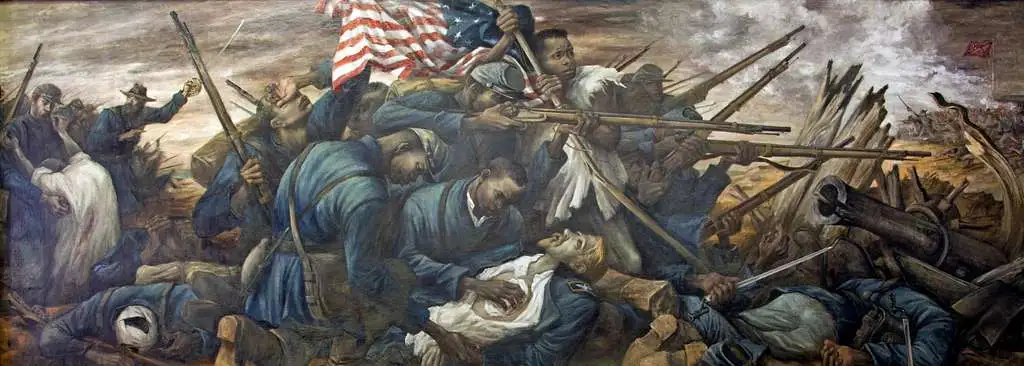
Gunfire blasts and booming cannons surrounded Union Army Private, William Carney. His regiment’s objective: to capture Fort Wagner near Charleston, South, Carolina.

The 54th Regiment of Massachusetts at the Civil War battle for Ft. Wagner, July 18, 1863.

Jerking movement nearby caught Carney’s eye. The color guard had been shot. As the dying man fell, the U.S. flag he carried began billowing toward the ground. Carney scrambled to rescue the flag from desecration and took a bullet himself.

Carney continued to crawl toward the fort, holding the flag high and calling encouragement for his fellow soldiers to follow. He was hit at least three more times, but made it to the walls of Fort Wagner, planting the flag into the sandy soil and holding it upright “until his near-lifeless body was rescued” [1] .

Even then Carney refused to let go of the flag until he was returned to his regiment’s camp. His heroism that day inspired a vital victory for the Union Army.

W. H. Carney with the flag he carried that day.

Years later Carney explained his motivation for joining the Union cause: “I had a strong inclination to prepare myself for the ministry; but when the country called for all persons, I could best serve my God by serving my country and my oppressed brothers. The sequel is short – I enlisted for the war” [2] .

Yes, Carney had been an oppressed brother himself, born into slavery in 1840. But during the 1850s he arrived in Massachusetts, either through the Underground Railroad, or perhaps his father—already a freed slave—was able to purchase his son.

Either way, Carney began to enjoy the freedoms that Blacks of the South were denied—freedoms like traveling, assembling, learning to read and write, and receiving pay for work. He passionately desired other slaves to experience the same.

That God-given passion for his fellow man surely inspired Carney that day at Fort Wagner, to give the fight his all no matter what duty fell to him. And for his tenacity and courage, William Carney received the Medal of Honor in 1900. He was the first Black soldier to do so.

Someone might ask, how was William Carney able to stay so strong?

Undoubtedly his firm stance was the result of:

  • Strong attention toward his God
  • Strong determination to live by God’s ways
  • Strong faith in God’s promises, confident that whether he lived or died, all would be well

We too can stand firm in what we face by applying the same.

Strong attention toward God includes not allowing our emotions to control us. For example, sorrow, fear, and exhaustion will insist we can’t go on, but God tells us he gives strength to the weary and increases power for the weak [3] .

Strong attention toward God includes being in relationship with him, through prayer, Bible reading, worship, and more. We can’t expect to sense his peace and strengthening presence if we never spend time with him.

Security is not the absence of danger

but the presence of God

no matter what the danger.

Unknown

Strong determination to follow God means choosing to live by his truth. Scripture is full of examples of men and women shaped by their faith and obedience in God, becoming as strong as steel: Huldah, Jeremiah, Daniel, Mary (Mother of Jesus), Peter, and Paul are among them.

We see such Bible heroes as extraordinary, but I’m sure they’d tell us they were just ordinary people who trusted in their extra-ordinary God.

Strong faith in God’s promises means we can hold on to hope with confidence and courage.

I wonder if scripture-promises echoed in William Carney’s mind as he held that flag high and emboldened his comrades–promises such as these?


  • “The Lord gives strength to his people; the Lord blesses his people with peace” (Psalm 29:11).
  • “With your help I can advance against a troop; with my God I can scale a wall. It is God who arms me with strength and makes my way perfect” (2 Samuel 22:30, 33).
  • “If I live, it will be for Christ, and if I die, I will gain even more.” (Philippians 1:21 CEV).

You and I may never fight in battle, but these same promises can echo in our minds as we confront such enemies of our souls as discouragement, anxiety, stress, guilt, and temptation.

Like William Carney WE can stand steadfast and strong [4] .

What helps you to stand strong? Please share your experience in the comment section!


[1]https://www.army.mil/article/181896/meet_sgt_william_carney_the_first_african_american_medal_of_honor_recipient

[2] https://www.nps.gov/articles/william-h-carney.htm

[3] Isaiah 40:29

[4] 1 Corinthians 15:58

Photo credits: http://www.picryl.com (2); http://www.nypl.getarchive.net; http://www.dir.es/album/hiking-in-wales-2019; http://www.wallpaperflare.com.

Read Full Post »

“I’m sorry, but we cannot treat those who cannot pay,” the doctor explained.

Katie Davis blinked in shock. How could a physician turn away an injured child, even if she was an orphan? Then again, this was Uganda, not Brentwood, Tennessee where she grew up. Fifty percent of the population here lived in poverty, and the under-resourced hospital couldn’t handle all the overwhelming needs.

People waiting in Ugandan hospital

But Katie, a kindergarten teacher, couldn’t accept the doctor’s pronouncement. This child was a student in her school, living in a shack down the street. She was the oldest of three and caretaker of the younger two; their parents had died of AIDS.

The orphanage was already full to capacity; Katie feared for the girls’ future. That very day she managed to secure custody papers, and single Katie became a mother of three—at age nineteen.[1]

What will Mom and Dad say about THIS? she must have thought.

They’d already been hesitant about Katie’s first three-week trip to Uganda, to work at a Christian orphanage her senior year of high school, 2006. Almost as soon as she arrived, Katie fell in love with the staff and students.

Upon returning to the States, Katie couldn’t wait to get back to Uganda after graduation, to take the kindergarten position offered her. The Davises had agreed, with the understanding she’d begin college the following year.

Katie returned home as promised, but her heart remained in Uganda. After one semester, her parents acquiesced and Katie flew back to the people and country she loved.

Uganda–a small land-locked country of East Africa

It was January 2008 when Katie’s adopted daughters moved into her small living quarters, but God soon provided a house to rent.

Over the next eighteen months, more orphans were brought to Katie—girls who’d been abandoned, abused, or whose parents had died of AIDS. One baby was given to Katie by an HIV-positive mother, just twelve years old herself. Child-by-child, Katie’s family grew to thirteen.

Of course, her teacher-salary couldn’t cover all the expenses. But Katie had already researched how to start a nonprofit organization, to aid Uganda’s children. Amazima International Ministries was established in 2008, based in Katie’s hometown of Brentwood.[2]

Soon 150 children were receiving assistance that included school supplies, basic medical care, and two hot meals a day—things their families couldn’t afford.

Two years passed. Katie’s life brimmed with all the responsibilities that thirteen children entail. In addition, numerous houseguests came and went—people in dire circumstances needing temporary lodging.

As with any household, disagreements and frustrations flared. But the word Katie chose to describe the atmosphere was elation—for the laughter, singing, happy noise and gratitude that filled her home.[3]

Then tragedy unfolded. A dear friend and mother of five, died. And the biological mother of one of Katie’s adoptees returned to claim her daughter—a mother unfit for parenting—but Katie had to let the child go. Grief beyond words gripped her heart as she turned to her Heavenly Father for solace. 

Early in 2014, twenty-something Benji Majors arrived in Uganda on a mission trip. He soon recognized the need for young men to be mentored. So Benji decided to stay and come alongside those wanting to become God’s men of integrity.

When Benji asked Katie out–twice, she said no both times, not sure if marriage was part of God’s plan. Besides, what man would commit himself to a woman with thirteen children? Better not to get involved, she thought. 

But Katie found herself attracted to Benji’s passionate heart for God and for people. She finally invited him for coffee—the first of many dates.

The following year Benji proposed over a picnic. When Katie said yes, her thirteen daughters jumped out of the bushes and tossed flowers at the couple. Benji had included them as part of the plan. He and Katie were married in late 2015.

The couple still lives in Uganda, running Amazima Ministries. They provide education for hundreds of children in their own Amazima School, food and health services for thousands of families, as well as job opportunities.

Who could have imagined such a far-reaching outcome when young Katie left for Uganda?

GOD could.

P.S. Ben and Katie no longer parent 13 children; the number has grown to 15 with their two biological sons.


[1] Though Ugandan law specifies an adoptive parent must be at least twenty-one, a judge can override the law in the best interest of the child(ren).

[2] Amazima means “truth” in Lugandan.

[3] https://youngadults.lifeway.com/2012/01/no-ordinary-life-katie-davis-story-of-serving-children-in-uganda/ 

Sources:

https://amazima.org/about/ . Visit here for numerous photos and information about Amazima Ministries.

https://www.christianpost.com/news/katie-davis-majors-young-adoptive-mother-of-13-ugandans-where-is-god-in-suffering-interview.html

https://justbetweenus.org/magazine/exclusive-interviews/extraordinary-love/

https://myhero.com/katie-davis-a-serving-heart-2

https://toptwentyfiveinterviews.transistor.fm/episodes/7-daring-to-hope-part-1-katie-davis-majors

Photo credits: http://www.commons.wikimedia.org (Toshihiro Horii); http://www.wikimedia.org; http://www.flickr.com; sni.no/Skole_og_utdanning_i_Uganda (Richard Lord); http://www.publicdomainpictures.com (Michael Spisak).

Read Full Post »

Dr. Matthew Keith lifted the tumbler to his nose and sniffed its contents.

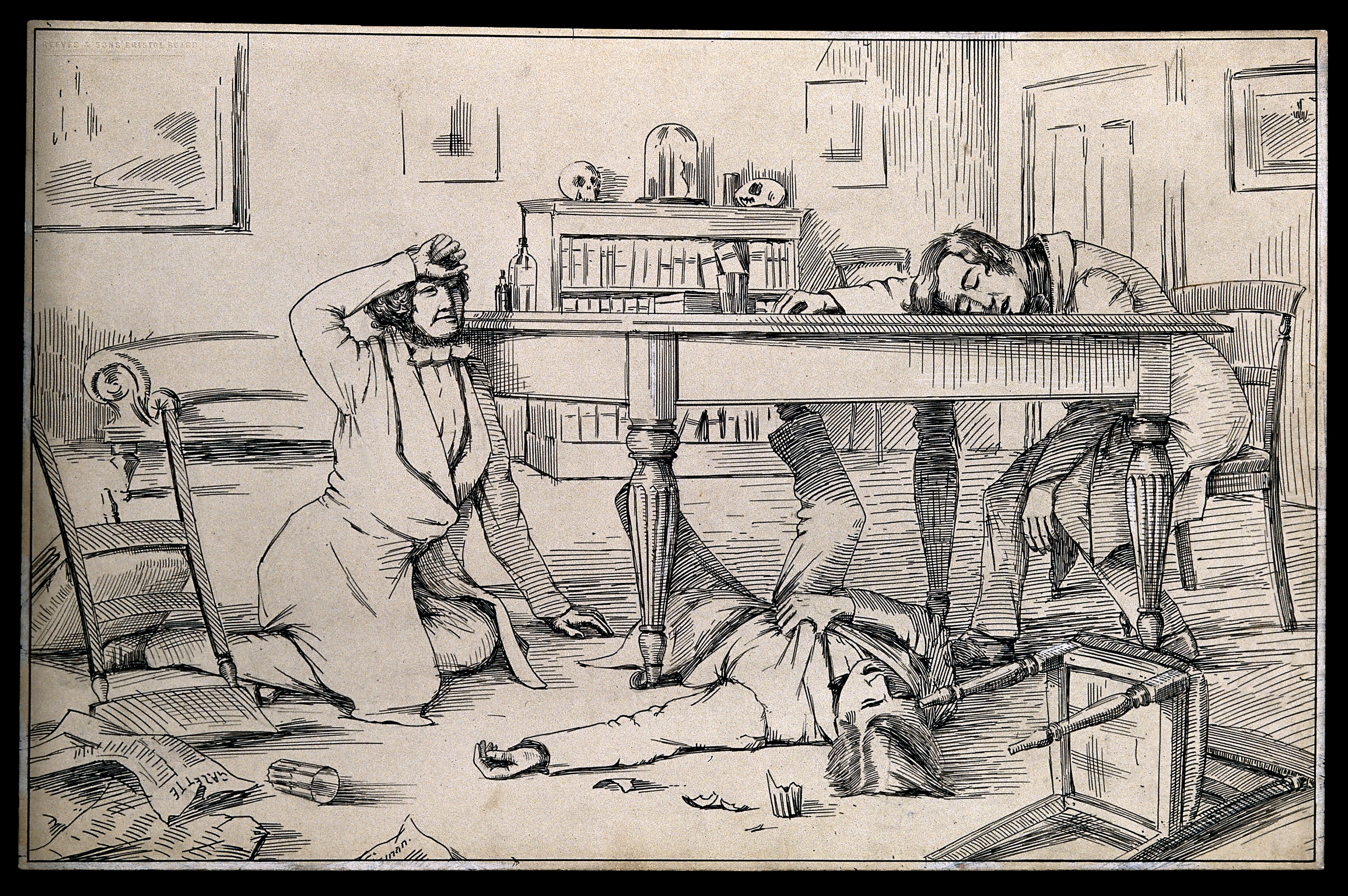
“Oh—that smells quite good,” Keith announced, placing the glass of chloroform back on the dining table. “How long before it takes effect?”

“Just a minute or two, I expect,” replied his friend, Dr. James Simpson.

Sure enough, Keith soon slumped to the floor, dead asleep.

“I’m next!” exclaimed Simpson to another friend, Dr. George Duncan, while grabbing the tumbler and taking a whiff of the chloroform.

Duncan followed suit and soon all three were fast asleep.

Such experiments were common in the Simpson home. Currently he and his friends were looking for a drug that could safely ease the pain of surgery, medical procedures, and childbirth.

At the time (1847), Simpson not only practiced obstetrics (called midwifery in those days), he was also Professor of Midwifery at the University of Edinburgh, Scotland.

No one would have expected such a respectable position for the seventh son of a baker. But the family somehow found the resources to send the whip-smart, fourteen-year-old James to university. By age 21, he’d graduated with honors and become a member of the Royal College of Surgeons at Edinburgh.

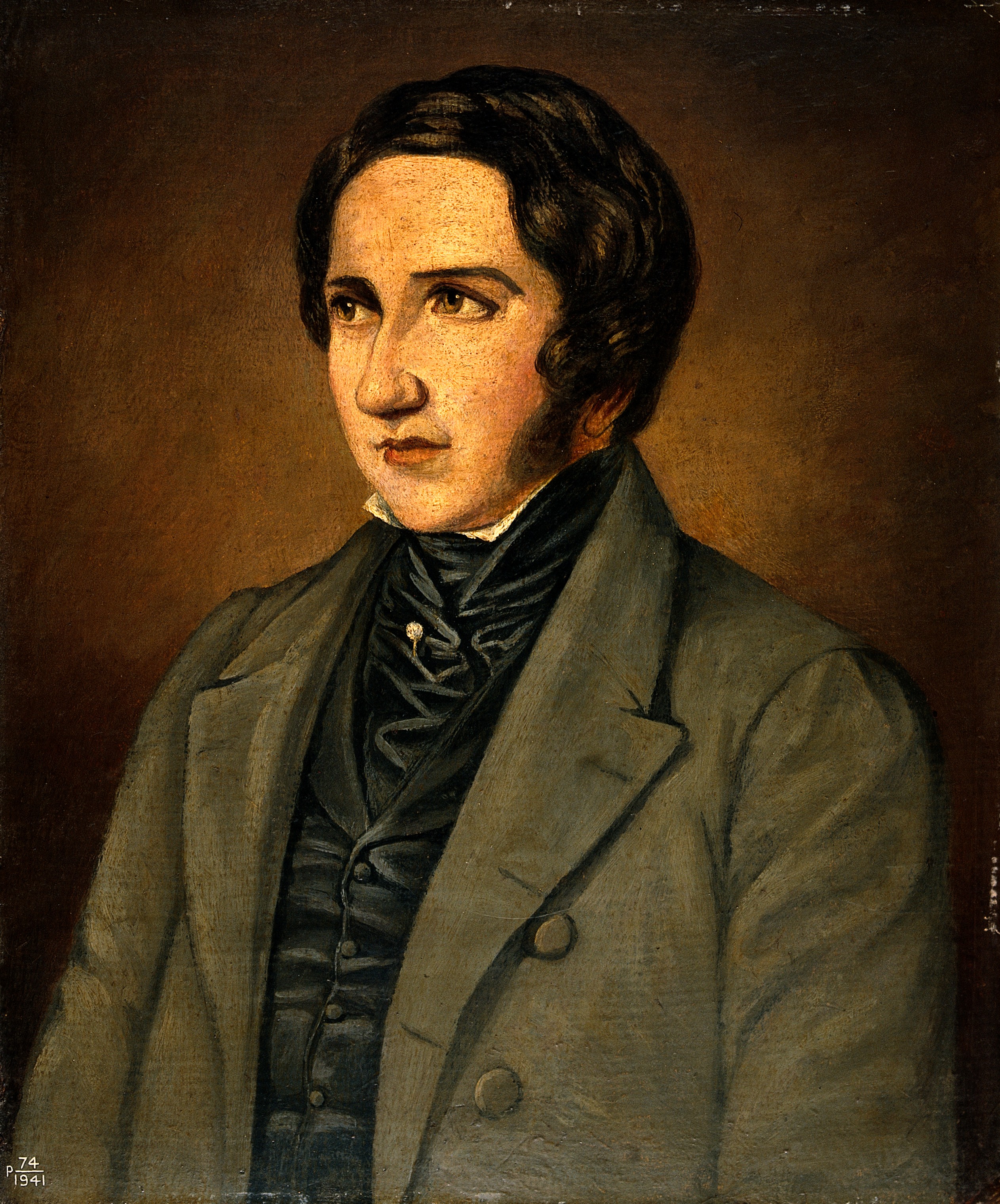
James Young Simpson, 1848

Success as an obstetrician came quickly, and Simpson married his sweetheart. He should have been happy and fulfilled; he was not. Simpson later explained: “I was living without God in the world.” He well knew about God and Jesus, because his mother had been a devout Christian.

One night he saw himself “standing on the brink of ruin, deserving nothing but hell’s destruction” because of his many sins. But he also saw Jesus his Substitute, dying on a cross for him. Simpson wept and claimed Jesus as his Savior [1].

The night of the chloroform experiment, Simpson had been practicing obstetrics for fifteen years. He desperately desired to find a drug capable of reducing his patients’ pain.

This new compound had come from the famous chemist, Lyon Playfair. His assistant had been conducting experiments with acetone and chlorine that showed great promise as a superior anesthetic to ether. Chloroform took effect more quickly, was affordable, easy to store and transport. It wasn’t noxious or flammable.

Lyon Playfair

Simpson wanted to try the new compound right there in Playfair’s shop. But the chemist insisted they administer doses to two rabbits first. The animals quickly fell asleep and awoke a while later, seemingly unharmed.  The next morning, however, they were dead.

Undeterred, Simpson purchased the compound so he and his colleagues, Keith and Duncan, could try the chloroform for themselves—just small doses that surely couldn’t cause harm to a grown man. At least that must be what they told themselves.

Thankfully the experiment succeeded. In addition, none of them experienced nausea or a headache—common side-effects of ether. They knew then that chloroform would transform the care that doctors could provide. 

Simpson was soon using it as a general anesthetic for his obstetric patients. That same year, 1847, he published a paper, “Account of a New Anesthetic Agent.”

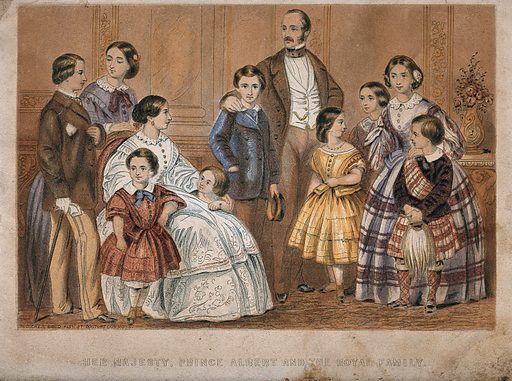
Doctors all over Europe began alleviating their patients’ pain with chloroform, especially after Dr. John Snow gave controlled doses to Queen Victoria for the birth of Leopold in 1853. She described its effect as “soothing, quieting, and delightful beyond measure [2] .”

Queen Victoria, Prince Albert, and children, ca. 1855

Dr. Simpson’s research procured him a place in medical history. He was knighted and his coat of arms read, Victo dolore, “Pain conquered.”

But he had more conquests to pursue. Simpson turned his attention to the problem of infection, rampant in hospitals. He argued that if medical personnel washed their hands in chlorine before every examination, and instruments were sterilized, the spread of infection could be reduced [3].

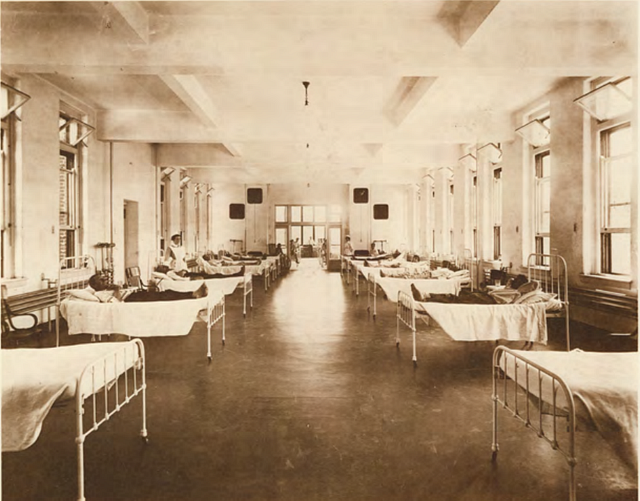
Simpson also conducted research on the impacts of overcrowding and other practices in hospitals which raised mortality rates. He proposed improved hospital design, increased ventilation, and better management strategies. His suggestions met with opposition, but over time many of Simpson’s ideas were adopted. [4]

Victoria Hospital, 1899

Throughout the decades of his career, Simpson’s faith in Christ remained a life-changing influence.

In 1866, he wrote to his dear friend, Dr. Joseph Robertson: “Jesus has suffered all for us and done all, if we only trust Him in all . . . I know that you and I place all hopes and certainties indeed upon the same immutable foundation [5].

Simpson was once asked, “What do you consider your greatest discovery?”

His reply undoubtedly surprised many:

“My greatest discovery, which I made one Christmas Day, is that Christ is able to save to the uttermost any man who implicitly trusts Him [6].”

__________________________

[1] https://gospelhallaudio.org/wp-content/uploads/2017/06/Sir-James-Simpson.pdf

[2] https://montrealgazette.com/opinion/columnists/the-right-chemistry-the-history-of-chloroform

[3] https://www.rcpe.ac.uk/heritage/college-history/james-young-simpson

[4] Ibid.

[5] Ibid.

[6] Ibid.

Other sources:

https://fn.bmj.com/content/86/3/F207

https://electricscotland.com/history/other/simpson_james.htm

https://www.mcgill.ca/oss/article/health-history-science-science-everywhere/joe-schwarcz-james-simpson-chloroform-pioneer-took-pain-away

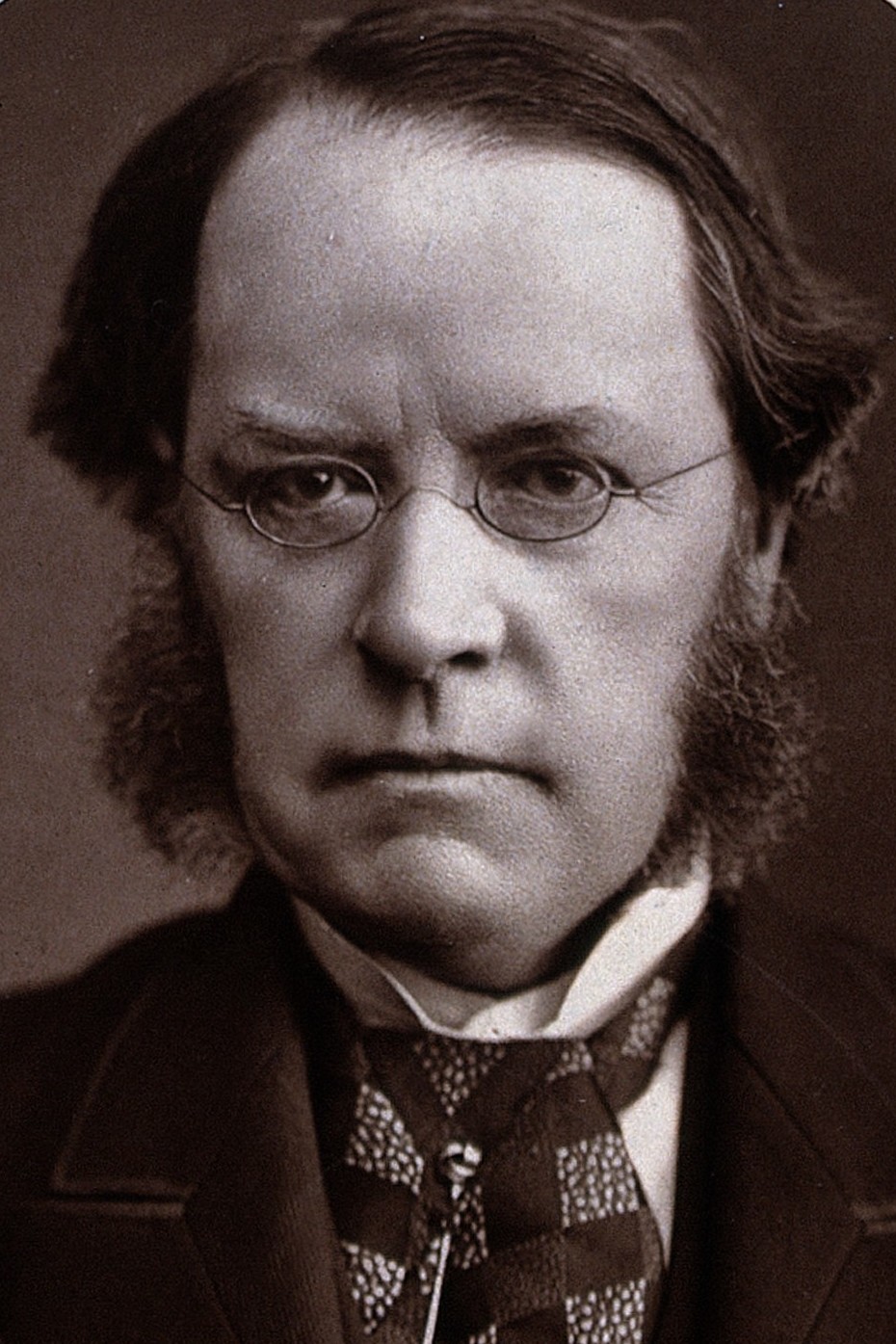
James Simpson

https://www.discover.hubpages/com/education/Famous-Doctors-in-History-Sir-James-Young-Simpson

Photo credits: 1. http://www.commons.wikimedia.org. 2. James Young Simpson, 1848 (http:11//creative commons.org/licenses/by/4.0/). 3. Lyon Playfair (V0027024 Lyon Playfair. Photograph by Lock & Whitfield, Credit: Wellcome Library, London. Wellcome Images images@http://wellcomeimages.org. 4 & 5. http://www.lookandlearn.com. 6. http://www.picryl.com. 7. rawpixel.com

Read Full Post »

“Forgive me, Mr. Ruskin, but I cannot give myself to painting the way you desire and continue to keep God at the center of my life.” Lilias Trotter looked imploringly into her tutor’s eyes.

After three years of instruction from John Ruskin, the well-known artist, author, and art critic, twenty-five-year-old Lilias had prayerfully made the difficult choice. She would forego the opportunity to become “the greatest living painter in England” (as Ruskin predicted she would be) [1], and devote more time to her mission work.

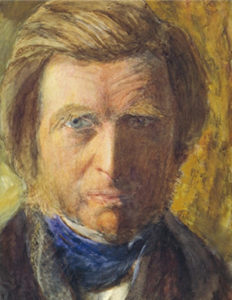
(Self-portrait of John Ruskin)

“Ah, my dear Lilias, he sighed. “I was afraid our efforts would come to this. Goodness knows how many times I’ve complained that you needed to spend more time with your brushes and less time with the women of ill-repute around Victoria Station. However, I do admire your dedication, and regretfully wish you well.”

From this crossroads, a new path began to open before Lilias Trotter.

For a while she continued her work with women at the lowest rung of society, bringing them to the newly-established YWCA for training in various employable skills and introducing them to Jesus.

But in 1887 Lilias found her heart drawn to Algeria, after hearing a plea for more missionaries to the region. She applied to the North African Mission board but was denied because of her frail health.

(Algiers, Algeria circa 1880)

Undeterred, Lilias and two friends chose to go on their own. A generous endowment from her wealthy father (upon his death in 1865) provided the financial support necessary.

The three women settled in the French Quarter of Algiers and immediately began learning the Arabic language and Muslim culture. Because of the male-dominated society, they chose to engage women and children.

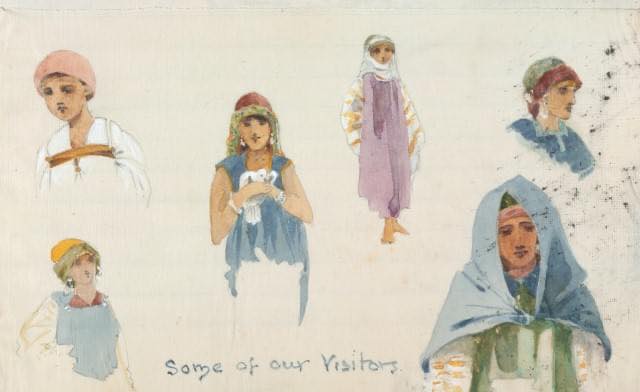
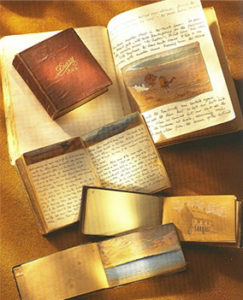
(watercolor sketches from Lilias’ journals)

Lilias put her artistic abilities to work creating leaflets. The charming illustrations drew attention to the spiritual truths she wrote. Her inspiration came from the hours she spent in Bible study, meditation, and prayer.

But inroads into Algerian society didn’t come easily. Nearly everyone was suspicious of them. They were women after all, European and Christian. Opposition came from the French authorities as well as Muslim leaders. Lilias wrote in one of her journals that she and her friends felt like they were knocking their heads against stone walls [2].

In addition, the Muslim women were difficult to reach since they were seldom allowed in public. But after several years one woman accepted Jesus into her life. Sometime later another woman and then another expressed their faith, until they could count their little band of believers on two hands.

Lilias also traveled into Morocco on the west and Tunisia on the west, into the far regions of the Sahara Desert where no European woman had been before. There too she sought out the isolated Arab women as well as the Sufi mystics who resided in the desert.

Lilias shared her pamphlets and booklets that included depictions of Arab life, always praying that her writings and drawings would help these Muslims understand who Jesus is and why he came.

Of course, persecution came to those who chose Jesus. Two of the new Arab Christians were slowly poisoned to death, others were drugged, and still more were punished in additional ways.

After twenty years of struggle, the missionaries still had little to show for their effort. And yet Lilias wrote:

I am full of hope that when God delays in fulfilling our little thoughts, it is to leave Himself room to work out His great ones. And, more and more as time goes on, I feel that the longer He waits the more we can expect, . . . and the greater will be the band of those who will come forth free from their prison walls. When one gets hold of that vision, one can throw back in the devil’s face his taunts over the seemingly wasted years that lie behind us.

Lilias Trotter

Perhaps even more productive than her conversations with people was the impact of her writings. Lilias’ appealing parables, “creatively illustrated in Eastern style” were widely circulated [3].

She felt confident that the Arabs would more seriously consider written material in the privacy of their homes, than in public conversation where opposition was likely. With her knowledge of the culture, language, and arguments of challengers, she was perfectly-suited for the task of producing these materials.

Lilias returned to Europe a number of times because of her health, each time in dire need of rest as well as relief from Africa’s oppressive heat. But Lilias often used these trips to garner interest and support for the organization she founded: the Algerian Mission Band.

A number of people responded, joining Lilias in her work. However she never asked for financial backing. “God’s wealth is boundless,” she said [4].

For forty years Lilias Trotter lived out her passion for the Algerian people. Before her death in 1928, she’d established twelve mission stations. And instead of three workers, a team of thirty had joined them, bringing the joy-filled, abundant life of Christ to the Muslims of Algeria [5].


Notes:

[1] https://ililiastrotter.wordpress.com/about/

[2] https://ishshahsstory.com/2016/08/10/celebrating-lilias-trotter-of-algeria/

[3] https://www.imb.org/2019/06/12/missionaries-you-should-know-lilias-trotter/

[4] https://thiseternalmoment.com/the-life-and-legacy-of-lilias-trotter/

[5] https://pioneers.org/2021/03/15/the-legacy-of-lilias-trotter

Other sources:

https://www.christiantoday.com/article/lilias.trotter.talented.artist.dedicated.missionary/139139.htm

https://liliastrotter.com/about/

Photos of Lilias Trotter and her paintings as well as John Ruskin’s self-portrait, courtesy of Lilias Trotter Legacy at http://www.liliastrotter.com and their Facebook page. Street scene of Algiers: http://www.commons.wikimedia.org.

Read Full Post »

“Can I come watch with you, Papa? There’s no school tomorrow.”

Papa nodded and motioned with his left hand for her to join him on the front porch. His right hand remained on the rifle across his lap. “Come on, Sugar. But you sit light, y’hear? Be ready. ‘Member what I told you?”

“Yessir. I’m to run inside but shut the door easy, and tell everybody to skedaddle to the creek, and run.”

“That’s my girl. No KKK Klan is going to mess with us, right? Now, recite for me Psalm 23 soft and slow. Such beautiful words and promises!”

Six-year-old Rosa settled herself in the rocker next to her grandfather, confident he would keep the family safe through the night. She began to recite the favorite psalm.

Violence never came to the McCauley home in Pine Level, Alabama, but throughout her growing up years there and then in Montgomery, Rosa endured the burden of racial injustice against blacks, including different (and deficient) schools and libraries, separate restaurants and water fountains.

One time a white boy shoved Rosa hard from behind. She was expected to endure such abuse without retaliation, but Rosa shoved back. The boy’s mother witnessed the incident and bellowed, “Who do you think you are?”

Rosa courageously replied, “I won’t be pushed around by your son or anyone else.” Then, in spite of her pounding heart, Rosa calmly turned and walked away. The mother let the matter lie.[1]

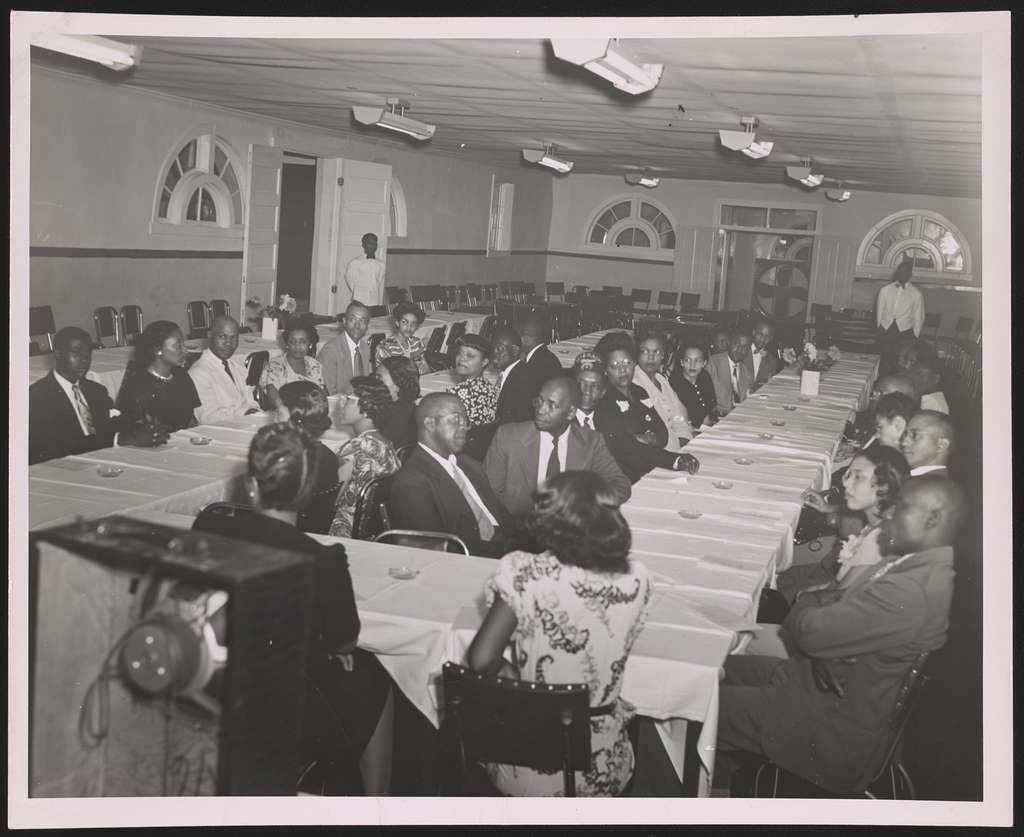
In 1932 at age nineteen, Rosa married Raymond Parks. He was an activist-member of the NAACP, the National Association for the Advancement of Colored People. A decade later, Rosa’s growing frustration with the status quo led her to join also. She eagerly learned about civil disobedience and served as secretary to the local and then state organization.

(NAACP Meeting in Montgomery, about 1947)

Along with many blacks in the South, Rosa suffered daily humiliation on the city bus, as she rode to and from work. Black passengers were required to pay their fare at the front, then get off and re-enter the bus through the back to sit in the rear. If the bus became crowded, black people had to give their seats to whites.

But on December 1, 1955, Rosa refused to relinquish her seat—not because she was physically exhausted, as some have said. No, she was tired of mistreatment because of the color of her skin.

Enough was enough.

“When that white driver waved his hand and ordered us up and out of our seats,” she later recalled, “I felt a determination cover my body like a quilt on a winter night.[2]

“God’s peace flooded my soul, and my fear melted away. All people were equal in the eyes of God, and I was going to live like the free person God created me to be. I refused to move.”[3]

Instantly Rosa felt infused with God’s strength. Police arrested her, put her in jail, and charged a $14 fine, but she remained composed through the ordeal. They released Rosa that evening.

As news of her arrest spread, more people—black and white—began to express indignation over the evil of segregation. Leaders in the NAACP decided to establish a boycott of the Montgomery bus company until the law was changed.

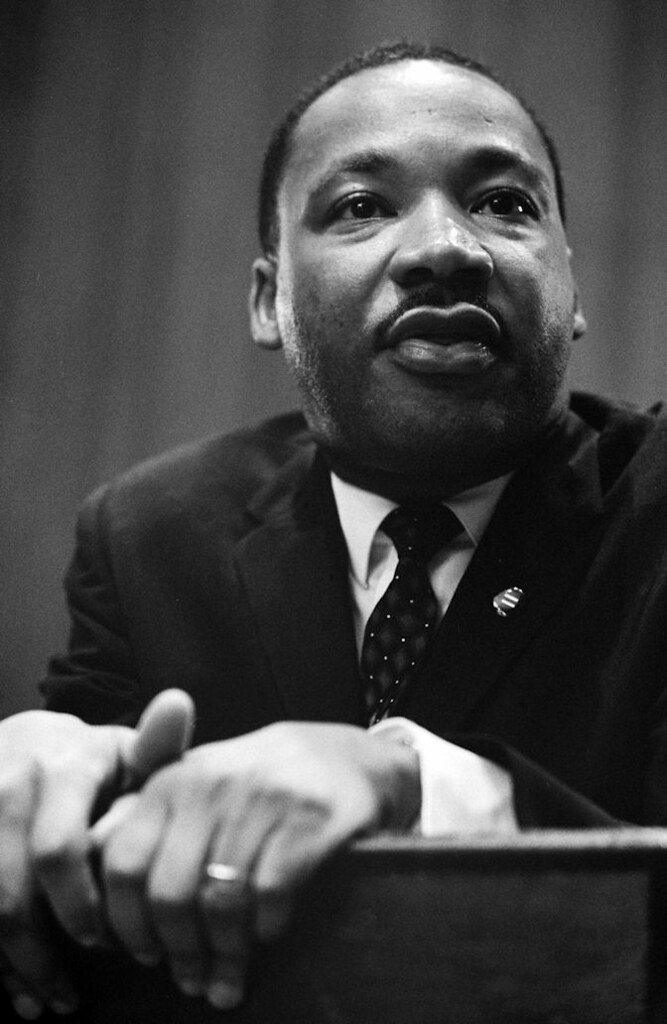
Supporters knew they would need God’s wisdom, strength, and perseverance. A prayer meeting was scheduled, and a young minister addressed the crowd: Martin Luther King, Jr.

“We must protest the law of the land because it violates God’s law,” he said. “But violence is not the answer. It is our duty to protest segregation, but we must do so with dignity and Christian love. Join me in praying that the radiant stars of love and brotherhood will soon shine over our great nation.”[4]

Boycott participants (which included blacks and whites) had to find alternate transportation. Many walked up to several miles to work and then home again. Churches helped to find rides for some. Others were given rides by coworkers—again, black and white.

Of course, opposition came quickly. False arrests, harassment, and even bombings occurred, yet the boycott continued. The bus company was losing thousands of dollars and began supporting integrated seating. City commissioners, however, would not back down.

Meanwhile, Rosa’s attorney, Fred D. Gray, took the case from Montgomery all the way to the Supreme Court. A year later, the regulation demanding black people to give up their bus seats to whites was declared unconstitutional.

That decision created a domino effect. If separation was wrong on buses, it was wrong in schools, restaurants, libraries, and elsewhere. Slowly and painfully, one segregation-law after another was abolished.

That pain would impact Raymond and Rosa. They had to leave Montgomery because of harassment and death threats. Rosa responded by spending long hours in prayer, after which “an intense calm swept over her.”[5]

The couple eventually settled in Detroit. From 1965-1988 Rosa worked for Michigan Congressman John Conyers. She remained active in the civil rights movement for sixty years and wrote several books.

Upon her death in 2005, then-Governor Bob Riley of Alabama said, “Rosa Parks will always be remembered as a courageous woman who quietly confronted injustice, and in so doing, changed a nation.”[6]

No doubt Rosa Parks would agree.


[1] https://www.christianity.com/church/church-history/church-history-for-kids/rosa-parks-and-the-bus-ride-that-changed-america-11635083.html

[2] https://www.journeywithjesus.net/Essays/20130401JJ.shtml

[3] https://canonjjohn.com/2021/10/23/heroes-of-the-faith-rosa-parks/

[4] https://www.christianity.com/church/church-history/church-history-for-kids/rosa-parks-and-the-bus-ride-that-changed-america-11635083.html

[5] https://www.journeywithjesus.net/Essays/20130401JJ.shtml, quoting from Jeanne Theoharis’ biography, The Rebellious Life of Mrs. Rosa Parks

[6] https://www.baptistpress.com/resource-library/news/civil-rights-pioneer-rosa-parks-dead-at-92-found-strength-in-scripture-church/

[7] Sinclair Ferguson quote from Grow in Grace, 33-34.

Other sources:

https://constitutioncenter.org/blog/rosa-parks-journey-as-a-civil-rights-icon

https://billofrightsinstitute.org/essays/rosa-parks-martin-luther-king-jr-and-the-montgomery-bus-boycott

Photo credits: http://www.flickr.com (Pat Henson); http://www.flickr.com; http://www.picryl.com; http://www.flickr.com; wwwflickr.com (Jim Forest); http://www.flickr.com; http://www.picryl.com; rawpixel.com.

Read Full Post »

“This is your last chance!” shouted the leader of Columbian guerillas. “Join us, convince the Motilone to join us, and you will live. Otherwise, you are a dead man.”

The surrounding group of rebels aimed their guns at American missionary Bruce Olson. He fully expected to see Jesus in the next moment.

Of course, this was not the first time Bruce faced death during his twenty-seven years with the fierce Motilone tribe.

No sooner had he arrived in 1961, than Bruce was surrounded by tribal warriors who shot him in the leg with an arrow and took him captive. The guides who had led him to their village fled.

Bruce was just nineteen years old and had received no backing from any mission organization, because of his age and lack of training. But he’d seen a picture of the remote Columbian tribe and felt drawn to share with them about Jesus.

His own life had been wonderfully transformed by Christ, and Bruce desired that for others—especially for this people-group who knew nothing about Jesus.

(The Motilone live in northeastern Colombia and western Venezuela.)

Some would say, “Bruce must have misunderstood God’s plan. Otherwise, why would he experience calamity the minute he arrived?”

But look what God did.

First, the Motilone chief forbade the warriors to kill Bruce. Later he and his men would admit there was no reason to spare him; they just did.

The next day the chief’s son, Bobarishora, brought worms for Bruce to eat, which thankfully tasted like liquified bacon and eggs. In spite of the language barrier, Bruce and Bobarishora began to build a friendship.

The leg wound became infected. Bruce escaped and returned to civilization for treatment. But upon regaining strength, the young missionary went back to the tribe—only to contract dysentery and have to seek medical help again. He almost died in the effort.

For his third attempt to settle with the Motilone, Bruce brought medical supplies. The witch doctor took great interest in their healing powers and learned from Bruce how to use them. With Bobarishora and the witch doctor as allies, Bruce began to achieve acceptance in the tribe.

Over the next four years he learned the Motilone language and set about translating the New Testament into their language, putting to use his knowledge of Hebrew, Greek, and Latin.

Bobarishora, or “Bobby,” became the first to accept Jesus into his life. At a festival not long after, Bobby sang about the jungle trail of life, a metaphor familiar to the Motilone. Bobby explained he’d seen the footprints of God.

“There are many trails in the jungles,” he said. “But there is one trail that goes to the horizon.” (Bobby was referring to heaven.)  “Christ came to walk that trail so we can walk in his footsteps.”[1]

It wasn’t long before many tribespeople had become Jesus-followers. They began sending their own missionaries to neighboring tribes to tell them about Christ.

The Motilone wanted to learn how to read and write, so Bruce started a school. He also set up a medical clinic, and led the effort to grow cacao, to help support the tribe.

(Cutting a cacao pod from the tree.)

Over time the proceeds helped finance 48 schools, more than 20 health clinics, 12 farming cooperatives, and numerous scholarships for Motilone students to attend high school and university.[2]

Then came the day in 1988 when 15 Communist guerillas kidnapped Bruce with the plan of forcing his cooperation, and convincing the Motilone to do so also. Bruce spent several months chained to a palm tree and became very ill. Somehow he survived.

One of the leaders asked Bruce to teach them how to read and write. They brought a book to Bruce, not knowing it was a New Testament. Bruce used it to teach the men to read, and many became Jesus followers.

Bruce’s health continued to deteriorate. The guerillas decided to give him a blood transfusion.

“I will give him some of my blood,” one rebel announced.

The next day he told Bruce that when he was a young child, the Motilone had given food to his widowed mother for three years, never asking for anything in return. “You saved my life,” he said, “Now, I save your life.”[3]

Months passed. No amount of mistreatment had convinced Bruce to help their cause.

One day a group stood him against a tree, announced his execution, and aimed their guns at him. But when they fired, Bruce remained unharmed. They’d shot blanks at him, expecting this final test to break him.

Sometime later one of the leaders told Bruce that capturing him had been a mistake. He hoped that Bruce could forgive them.

He promised the rebels would leave the Motilone alone, and Bruce could continue his work. After nine months of captivity, they released him.

As a result of Bruce’s long devotion to the tribe, more than 400 Motilone have graduated from high school, and over 30 from university, trained as physicians, accountants, translators, forest rangers, agriculturalists, and more. Still others have received technical training.

All have returned to their jungle communities to share their expertise within the tribe.

As of 2018, more than 70% of the Motilone tribe are following in Christ’s footsteps to the horizon.[4]

As for Bruce Olson, now 80, you’ll find him still working with the people of 18 different tribes and languages of the jungles.[5]


 Notes:

[1] https://missionexus.org/an-interview-with-bruce-olson/

[2] https://www.tms-global.org/story-details/bruchko

[3] Ibid

[4] Ibid

[5] https://www.godreports.com/2021/02/legendary-american-missionary-ate-maggots-wore-a-flea-collar-to-survive/ 

Additional Sources:

https://www.bruceolson.com/en/index.html

https://www.theopedia.com/bruce-olson

Photo credits: http://www.picryl.com; http://www.pxhere.com; http://www.flickr.com; http://www.commons.wikipedia.org (2).

Read Full Post »

Mr. Ribeau studied young Michael’s work, checking for crooked stitches and traces of glue. But after just two years of training, the young book-binding apprentice was already quite proficient.

“You’ve done a fine job, my boy!” Mr. Ribeau praised.

A small smile curled on Michael’s face. “Thank you, sir. This is the last book for today. May I go work on my experiments, please?”

Mr. Ribeau chuckled. “Of course. Off with you!” 

Michael scurried to the back room where his master had given him space to investigate his favorite subject: electricity.

Interest had begun five years before in 1803 when Michael became an errand boy for Mr. Ribeau. Michael would read the books that came into the London shop for binding. Even though he attended school for just two years, Michael read with competence.

The volumes on science especially intrigued him, and he desired to conduct his own experiments. Kind Mr. Ribeau had made it possible. He also provided extra pennies now and then to attend scientific lectures.

Another book captured Michael’s attention: The Improvement of the Mind by the famous hymn-writer, Isaac Watts. Michael determined to follow Watts’ advice including: read worthwhile books, take thoughtful notes, and “ever maintain a virtuous and pious frame of spirit.”

No doubt Michael’s heart was primed for such a book, since he came from a Christian home. And as he grew into manhood, Michael embraced his faith in Jesus with ever-maturing dedication. 

One day Mr. Ribeau presented Michael with four passes to attend presentations by Sir Humphrey Davy, a renowned chemist. At each lecture, Michael took careful notes. Later he bound them into a beautiful book.

Sir Humphrey Davy

In 1811 at age nineteen, Michael completed his apprenticeship, but had no desire to become a bookbinder. Though just a tradesman with little schooling, he sought a position with one of the scientific institutions, including Sir Davy’s prestigious Royal Institution.

With that application, he sent his precious notebook from Davy’s lectures, hoping to convince the great chemist of his passion for the sciences. But no position was available.

In 1813 an invitation arrived for Michael to interview with Davy, and he was hired as a laboratory assistant. Michael quickly proved himself, assisting Sir Davy at his lectures. Six months later, Davy selected Michael to accompany him on a two-year lecture tour through Europe.

When they returned, Michael pursued his scientific studies with passion. He researched steel, hoping to make it stronger. He sought to improve lighthouse lamps, prevent corrosion of ships, clean up the pollution in the Thames, and preserve art works and sculptures.  

Young Michael Faraday

Michael was the first person to liquefy chlorine and discovered a new element, later named benzene, that’s used in dyes, nylon, and plastics. Further discoveries included the process that produced refrigeration and the potential use of ether as an anesthetic.

But he didn’t neglect his first love, electricity. Michael invented the transformer and the dynamo that created electricity without a battery. His discoveries also paved the way for the electric motor. In fact, Michael Faraday has been called “the scientific genius who gave electricity to the world” (1).

Such research propelled Michael into elite circles. He became director of the Royal Institution where he’d begun as an assistant to Sir Davy. Oxford University awarded him a doctorate, and he was invited to become a member—even president–of the prestigious Royal Society. He declined the position.

Michael Faraday lecturing at the Royal Institution: Prince Albert and his sons in the audience. Wood engraving, 1856, after A. Blaikley. Contributors: Alexander Blaikley. Work ID: xt5crqqq.

In spite of great success, Michael Faraday remained a humble man, uninterested in the fortune he could have amassed, manufacturing his inventions.

To Michael, the pursuit of scientific studies was a holy calling, and to understand even a fraction of nature’s workings was a gift from God (2) –much more valuable than money.

But not all his waking hours were devoted to science. Faraday was an active church member, serving as elder for more than 20 years, frequently leading in worship and even preaching.

Faraday also demonstrated faith-in-action. For example:

He proved himself a forgiving man on many occasions. One time the elders removed him from their circle—even church membership for awhile–because he accepted an invitation from Queen Victoria for Sunday lunch, which meant he couldn’t be at church. 

But Michael continued to attend services and remained cordial to all, including those who’d hurt him.

Michael demonstrated grace. He and Sir Davy differed in opinion more than several times, but the younger scientist always expressed admiration for his mentor.

Michael’s generosity was also well known. He supported charities and visited the poor. And when his mother became widowed, he also supported her.

Throughout his career Michael expressed gratitude to God that he, a poor, uneducated tradesman should be privileged to explore the beauty and synchronization of God’s physical laws of creation.  

In 1861, the aging Faraday wrote to a friend, “The contemplation of death [is] a comfort—not a fear. Such peace is alone in the gift of God. . . His unspeakable gift in His beloved Son is the ground of no doubtful hope” (3).

Michael Faraday proved himself a man of intelligence and integrity, but also of strong faith in God, and in the end, peace.

Michael Faraday. Photograph by W. Walker & Sons. Work ID: hjz8gkmw.

Isaac Watts, the author that inspired Faraday, would have been pleased, and no doubt so was God (Psalm 147:11).

Notes:

1. https://www.revshirelymurphy.co.uk/post/michael-faraday-and-his-christian-faith-which-influenced-his-science

2. https://crev.info/scientists/michael-faraday/

3. Ibid

Sources:

https://answersingenesis.org/creation-scientists/profiles/michael-faraday-gods-power-and-electric-power/

Heroes of the Faith: Michael Faraday

https://christianhistoryinstitute.org/magazine/article/drinking-from-a-fount-on-sundays

https://christiantoday.com.au/news/michael-faraday-his-christian-faith-influenced-his-science.html

https://creation.com/michael-faradaygods-power-and-electric-power

Michael Faraday

https://www.revshirleymurphy.co.uk/post/michael-faraday-and-his-christian-faith-which-influenced-his-science

Art & photo credits: rawpixel.com (2); http://www.lookandlearn.com; http://www.picryl.com; http://www.lookandlearn.com; http://www.azquotes.com; http://www.lookandlearn.com.

Read Full Post »

If you’d asked Robert’s mother Elizabeth about her teenage son, she may have replied, “He is a strong-willed, rebellious daredevil. If God doesn’t get ahold of him, he may not make it to twenty!”

No doubt Robert’s parents wondered if they’d made the right decision, when they allowed him to drop out of school at age fourteen and work in an iron foundry. But given his learning difficulties, on-the-job training seemed appropriate, to prepare Robert for his future.

Two years later in 1904, God answered the concerned parents’ prayers for their son. Robert decided hell was not an option he wanted to risk and at age sixteen invited Jesus into his life.

Later he would write, “No bolts of lightning hit me. No great flash of awareness. I just prayed to the Lord to save me, and then I was aware of another presence. No words were spoken. I received no messages. It was just that all of my bitterness was drained away, and I was filled with such a vast relief that I could not contain it all.”[1]

Robert moved from one uninspiring tradesmen job to another until he became an auto mechanic and discovered his passion—machinery. He opened his own garage with a business partner in 1911.

In April of 1917 the U.S. entered World War I. Robert volunteered for the war effort, working in a naval shipyard north of San Francisco. In August of that year he married Evelyn Peterson.

Upon returning home to Stockton, CA in 1918, Robert discovered his partner had sunk their business into debt. Robert carried $5000 of that liability.

He wondered, was God trying to transition him out of business? Should he become a missionary so he could work for God more directly? Robert sought guidance from his pastor and after praying together the clergyman remarked, “You know God needs businessmen too.”

Not long after, a rancher asked Robert to level a large parcel of land. The job paid well and Robert signed on. He satisfactorily completed the task in good time and actually enjoyed the work.

Through the 1920s earth-moving contracts kept coming Robert’s way. He bought land and built an engineering shop where he put his ingenuity and giftedness for engineering to work, designing machines that completed the task more efficiently. Most other companies still used mules with plows and dozens of men with shovels.

(Two of LeTourneau’s early machines)

But even as a top-notch, road-construction contractor, financial struggles still plagued Robert. Now and then he’d sell one of his earth-moving inventions to help make ends meet for his growing family. (He and Evelyn had five children, though tragically their first died during the Spanish influenza epidemic.)

In the early 1930s, Robert’s attorney suggested, “Why don’t you focus on manufacturing your machines? That might prove more profitable.”

Robert decided to try, even though the nation was suffering through the Great Depression. During his first year in 1932, he earned a profit of more than $52,000 and by 1935, well over two million.[2]

(Robert nearly always included reference to his life verse with each signature.)

It was then that he and Evelyn decided to live on 10% of Robert’s income and give 90% to Christian mission work, colleges, and institutions. Meanwhile Evelyn started Sunday Schools and youth camps. God blessed each of their endeavors.

Robert not only invented the earth mover, but also the bulldozer, the electric wheel, the tree crusher, the log picker, the Tournawheel (a two-wheel tractor), and more. Eventually he’d own 300 patents and construction plants on four continents. He’d also design the first off-shore oil rig.

(from the R.G. LeTourneau Museum and Archives, The Margaret Estes Library, LeTourneau University)

During World War II Robert’s company supplied 70% of the U.S. Army’s earth-moving equipment, making it possible for the Allies to quickly build roads, airports, and military bases.

After the war, Robert’s machinery helped construct the 48,000 miles of U.S. interstate highways.

(R.G. LeTourneau:  The Man, Machines, and Mission Collection
Evelyn LeTourneau Collection)

In 1946 he and Evelyn founded the LeTourneau Polytechnic Institute, a Christ-centered school especially for veterans who desired training in engineering. It has since become LeTourneau University.

Business and philanthropy weren’t Robert’s only pursuits. Though he’d always feared public speaking, Robert felt compelled to accept an invitation to share his story at a banquet in 1935. Soon he was speaking all over America and even overseas.  Robert would encourage others to honor God with their wallets and see what God would do.

“You will never know what you can accomplish

until you say a great big yes to the Lord.”

Robert Gilmour LeTourneau (1888-1969)

How has God blessed you as you’ve honored him with your wallet? Please share your story in the comment section below!


 Notes:

[1] https://www.wayoflife.org/reports/christian_inventor_rg_letourneau.html

[2] Ibid

Other sources:

 http://www.giantsforgod.com/rg-letourneau/

https://www.letu.edu/75/exhibit/panel-faith.html, and subsequent panels

https://www.oemoffhighway.com/trends/article/21366254/historical-construction-equipment-association-hcea-the-great-innovator-r-g-letourneau

https://www.peoriamagazines.com/ibi/2011/jan/rg-letourneau

Photo credits: http://www.flickr.com; http://www.picryl.com; http://www.canva.com; http://www.wikipedia.org; http://www.dailyverses.net; http://www.wikimedia.org; Margaret Estes Library, LeTourneau University (2); http://www.dailyverses.net.

Special thanks to Shelby Ware at the Margaret Estes Library, LeTourneau University, for arranging permission to use the two images of R. G. LeTourneau in this post.

Read Full Post »

Nellie Gray listened to the breaking news, not believing her ears.

How is this possible? she wondered. Surely everyone agrees that slavery was wrong, treating men, women, and children as less than human. And have we already forgotten the horrors of Nazi Germany, where revolting experiments were performed on babies?

Nellie’s thoughts transported her back to the days of World War II, when she served as a corporal in the Woman’s Army Corps. And though nearly thirty years had passed since Nazi war criminals faced a panel of judges at the Nuremberg Trials, the atrocities revealed at that time remained fresh in her mind.

Nellie bristled. How can our Supreme Court sanction another atrocity against innocent victims?

And she began to consider what might be done to reverse the decision of Roe vs. Wade, handed down on January 22, 1973.

Not long after a group from Long Island, already involved in the right-to-life movement, asked Nellie to host a meeting in her home. They desired to expand their local efforts to the national stage. “You live near the Capitol—it’s the perfect location,” the spokesperson explained.

Later Nellie would quip, “Be careful who you let into your dining room because you may wind up being the president of a corporation.”[1]

The group first met in October 1973, and someone presented the idea of a march, to be held in Washington D. C. on the first anniversary of Roe vs. Wade. They hoped to draw thousands of people, which would urge Congress to overturn the court’s decision.

Nellie was asked to arrange for speakers, because of her contacts in and around Washington as a federal lawyer. The one role she was unable to fill was emcee, so Nellie provided that function herself.

The event did raise awareness, as twenty thousand people gathered in Washington, and peacefully marched twenty-one blocks on Constitution Avenue to the steps of the Supreme Court Building.

It was supposed to be a one-time-event.

“We thought we were going to march one time and Congress would certainly pay attention to 20,000 people coming in the middle of winter to tell them to overturn Roe vs. Wade,” Nellie said.[2]

But their expectation proved erroneous. And because there were leftover funds after the ‘74 event, someone suggested holding another march the following year.

Nellie decided to retire from practicing law and established the March for Life and Education Defense Fund, dedicating the rest of her life to the pro-life cause. She and the vice-president, Terrence Scanlon, took no salaries; Nellie ran the organization from her home.

As the decades passed, support for their cause continued to grow. In recent years, well over 100,000 have participated in the March for Life, enduring the cold and even snow to draw attention to the plight of unborn babies. In 2011, fifty-three members of Congress spoke at the March for Life Rally.

Also important to the cause: neonatal research, proving fetuses develop much more rapidly than we knew in 1973. For example:

  • Within the first few weeks, the beginnings of a face become apparent.
  • The heartbeat can be heard at 6 weeks.
  • The neural tube (brain, spinal cord, and other neural tissue of the central nervous system) is well formed at 8 weeks.
  • Fingers and toes are easily distinguishable by 11 weeks.
  • Thumb-sucking has been photographed at 18 weeks.
Ultrasound of 12-week old fetus

Of course, Nellie Gray and the March for Life participants have been criticized for their stand against abortion. But she explained her position this way:

“God Almighty created man and woman in his own image, and we recognize that. The United States Constitution recognizes that human beings are endowed with a right to life. We must carry out our patriotism and our love of God through such events.”[3]

In 1998, Nellie asserted the eventual overturn of Roe vs. Wade. “I have complete, utter faith that we are going to get this,” she said.[4]

Nellie Gray led every March for Life through 2012, with undaunted enthusiasm and conviction. But in August of that year, at age 88, she died of natural causes in her home.

I’ve often wondered if good news from Earth becomes known in heaven. If so, might Nellie know what happened last week–that ten years after her arrival in heaven, a giant step has been taken here toward the right-to-life of unborn babies, that her faith is being rewarded and her conviction is becoming fact?

I’d like to think so. 

Notes    


[1]https://religionnews.com/1998/01/15/news-profile-nellie-gray-25-years-behind-the-march-for-life/

[2] https://religionnews.com/2012/08/14/march-for-life-leader-nellie-gray-dead-at-88/

[3] https://heavy.com/news/2017/01/nellie-gary-march-for-life-founder-biography-anti-abortion-pro-life-quotes-2017-date/

[4] https://religionnews.com/1998/01/15/news-profile-nellie-gray-25-years-behind-the-march-for-life/

Other Sources:

http://www.marchforlife.org

http://www.todayscatholic.org

Photo credits: http://www.flickr.com; http://www.wikipedia.org; http://www.flickr.com; http://www.rawpixel.com; http://www.wikimedia.com; http://www.canva.com.

Read Full Post »

Eliza strained forward as her legs churned beneath her, the underbrush tearing at her long skirts. The small boy in her aching arms whimpered, sensing a danger he couldn’t see.

“Hush, chile,” she gasped in a whisper. “Mama’s gone keep you safe.”

Eliza dared a quick glance behind her. She could see nothing of the slave catchers who’d found her hiding place, a house near the Kentucky side of the Ohio River.  She’d slipped out the back door and into the woods as they approached the front. But they would surely guess her run for freedom, and their long legs, unencumbered by skirts, would quickly bring them close.

Runaways like Eliza Harris

Eliza dared not slow her pace toward the northern side of the river, where she and her baby had a chance to be together. Though her master had been kind, he was planning to sell her son. Eliza could not let that happen; her two older children had already died.

Finally, Eliza could see glimmering flecks through the trees as morning light danced on the water. But this was not what she’d planned. Eliza had expected to walk across the mile-wide river on ice, given the winter season. Instead she found the ice broken up into mammoth chunks, drifting slowly on the current.

With a prayer on her lips, Eliza made the choice to cross anyway, jumping from ice cake to ice cake. Sometimes the cake on which she stood sunk beneath the surface of the water. Then Eliza would slide her baby onto the next cake and pull herself on with her hands. Soon her skirts were soaked and her hands numb with cold. But Eliza felt God upholding her; she was confident he’d keep them safe.

On the northern bank stood William Lacey, one of those who watched the river for escaping slaves in order to help them. Time and again he thought the river would take the woman and child, but she miraculously reached the bank, heaving for breath and weak from cold and exhaustion.

When she’d rested for a few moments, the man helped her to a house on the edge of town. There she received food and dry clothing before being taken to another home and then another, along the Underground Railroad. Finally she reached the home of Quakers, Levi and Catherine Coffin, in Newport, Indiana.[1]

Note the mention of Levi Coffin

By the time Eliza arrived on their doorstep in 1838, the Coffins had been helping escaped slaves for more than a decade. In fact, the following year they would build a house specifically designed for their work as station masters on the Underground Railroad.

A Federalist-style house, similar to the Coffins’ home

In the basement they constructed a spring-fed well, to conceal the enormous amount of water needed for their many guests. On the second floor, they built a secret room between bedroom walls, just four feet wide. Up to fourteen people could hide in the long, narrow room.

Eliza Harris was only one of more than a thousand slaves (some say 3,000) that stayed in the Coffin home on their way to Canada. Had the Coffins (or others) been caught helping runaway slaves, they would have owed a $1000 fine (which few could afford) and would have spent six months in jail (which meant no income for the family during that time). Slave hunters were known to issue death threats as well.

But the Coffins held strong convictions concerning slavery. In the 1870s Levi wrote in his memoirs, “I . . .  risked everything in the work—life, property, and reputation—and did not feel bound to respect human laws that came in direct contact with the law of God.”[2]

For the introduction of Coffin’s book, William Brisbane[3] wrote the following about Levi and two other abolitionists:

“In Christian love they bowed themselves before their Heavenly Father and prayed together for the oppressed race; with a faith that knew no wavering they worked in fraternal union for the enfranchisement of their despised colored brethren, and shared together the odium attached to the name of abolitionist, and finally they rejoiced together and gave thanks to God for the glorious results of those years of persevering effort.”[4]

Should we face such hatred and endangerment in our day, may we stand in the midst of it like Levi and Catherine Coffin—steadfast and unmovable in the power of God.

Addendum:

In 1854 the Coffins visited Canada and happened to encounter a number of former slaves they’d helped. Eliza Harris was one of them–settled in her own home, comfortable and contented.

Her story may sound familiar because Harriet Beecher Stowe, a friend of the Coffins, included the slave’s harrowing escape in her book, Uncle Tom’s Cabin.


[1] Now called Fountain City

[2] https://www.indianamuseum.org/historic-sites/levi-catharine-coffin-house/

[3] a doctor, minister, author, and South Carolina slaveholder who turned abolitionist and moved north where he freed his slaves

[4]https://docsouth.unc.edu/nc/coffin/coffin.html

Other sources:

http://www.womenhistoryblog.com

http://www.rialto.k12.ca.us/rhs/planetwhited/AP%20PDF%20Docs/Unit%206/COFFIN1.PDF

https://mrlinfo.org/famous-visitors/Eliza-Harris.htm

Art & photo credits: http://www.nypl.getarchive.net; http://www.wikimedia.org; http://www.flickr.com; http://www.wikimedia.org; http://www.flickr.com (2); http://www.slr-a.org.uk; http://www.wikimedia.org.

Read Full Post »

« Newer Posts - Older Posts »

Still Traveling

Impressions Becoming Expressions

Living Our Days

Gaining a heart of wisdom

He Said What?!

I'm Patty, and my husband and I are living with our adult son who has autism and epilepsy. I love sharing lessons learned from life around me, especially life with Aaron.

Meditations of my Heart

Impressions Becoming Expressions

Linda Stoll

Impressions Becoming Expressions

Debby Thompson

Impressions Becoming Expressions

Signora Sheila

Notes on Life, Faith & Italy

Colleen Scheid

Writing, Acting, Living in God's Love

Mitch Teemley

The Power of Story

Heidi Viars

Finding the Image of God