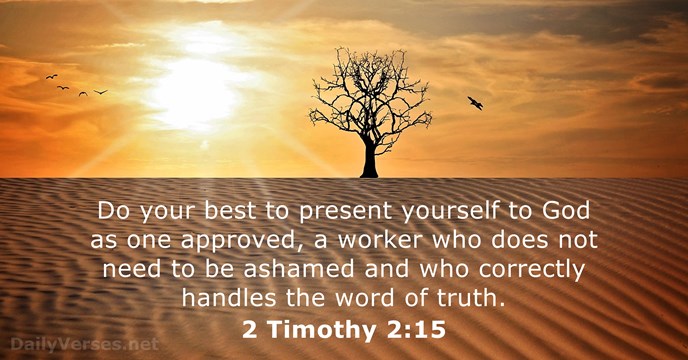
Feeds:
Posts
Comments

Archive for the ‘Holiness’ Category

In 1937, the Imperial State Crown of England was created for the coronation of King George VI. It is inarguably one of the most beautiful in the world.

The number of jewels staggers the imagination. Among them: eleven emeralds, seventeen sapphires, 269 pearls, and 2868 diamonds [1].

Front and center, just above the ermine band, sits the largest diamond—the “Star of Africa II, weighing 317.4 carats. (“Star of Africa I,” which is even larger, sits atop the British royal scepter.)

Puritan preacher and author, Thomas Watson (1620-1686), named one of God’s attributes as the most sparkling jewel of God’s crown. But before I reveal his answer, which of God’s quality traits would you consider his “attribute of attributes?”

  1. Love
  2. Holiness
  3. Power
  4. Infinitude

Watson chose B, perhaps because of the word’s meaning: separate and set apart. God is completely removed from every other creature, given his omnipotence, omniscience, and omnipresence. In addition, he is perfect in purity, goodness, faithfulness, and so much more.

In heaven the seraphim (fiery angels!) continually celebrate God’s holiness. The prophet Isaiah heard them saying:

The Apostle John, during his vision of heaven, heard a similar chant [2].

We can’t help but notice the repetition of holy three times, and if you’re like me, that makes us curious. Why three times?

First, “holy” in triplicate may seek to honor each Person of the Trinity: Father, Son, and Spirit.

Second, repetition indicates emphasis.

The ancient Hebrew language included no punctuation, no bold print, no way to indicate greater importance. When writers wanted to highlight something, they’d repeat it.

Other examples would include:

  • In Genesis chapter one “God saw that it was good” is repeated six times.
  • 1 Kings 9:26-10:29 includes the word gold fifteen times to emphasize King Solomon’s wealth.
  • Psalm 130:6 offers heartfelt longing: “I wait for the Lord more than the watchmen wait for the morning, more than watchmen wait for the morning.”
  • Psalm 136 includes “His love endures forever” twenty-six times.
  • In Ezekiel 21:27, the prophet related God’s soon-coming judgment on Jerusalem—“A ruin! A ruin! I will make it a ruin!”

But nowhere in scripture do we see a triple-repetition of an attribute for anyone but God and only for this one attribute [3]. God’s holiness is superlative; he is infinitely holy. And that holiness impacts everything else about him.

His love is holy love. His power is holy power. His justice is holy justice. All his attributes are characterized by purity and splendor beyond those of anyone else.

Gaze upon the crowning jewel of God’s holiness and be overcome with awe and reverence, as well as “a sense of our incredible, desperate need for a fresh infusion of who He is”—because he’s instructed us to be holy too [4].

“Oh, I can’t do that,” someone will say. “Even at my age I still do and say things I shouldn’t, and then leave undone the things I should do. Being holy is impossible!”

Here’s what that person doesn’t understand:

“What God’s truth demands; His grace will provide.” “Faithful is he that calls, who also will do it” [5].

The more we expand our awareness of God’s holiness, the more honor and respect we’ll long to give him through obedience—obedience that he rewards with blessing.

Just how do we expand that awareness? Through Bible study that instructs, prayer that empowers, worship that inspires, and practicing his presence that encourages.

*     *     *     *     *     *     *     *     *     *

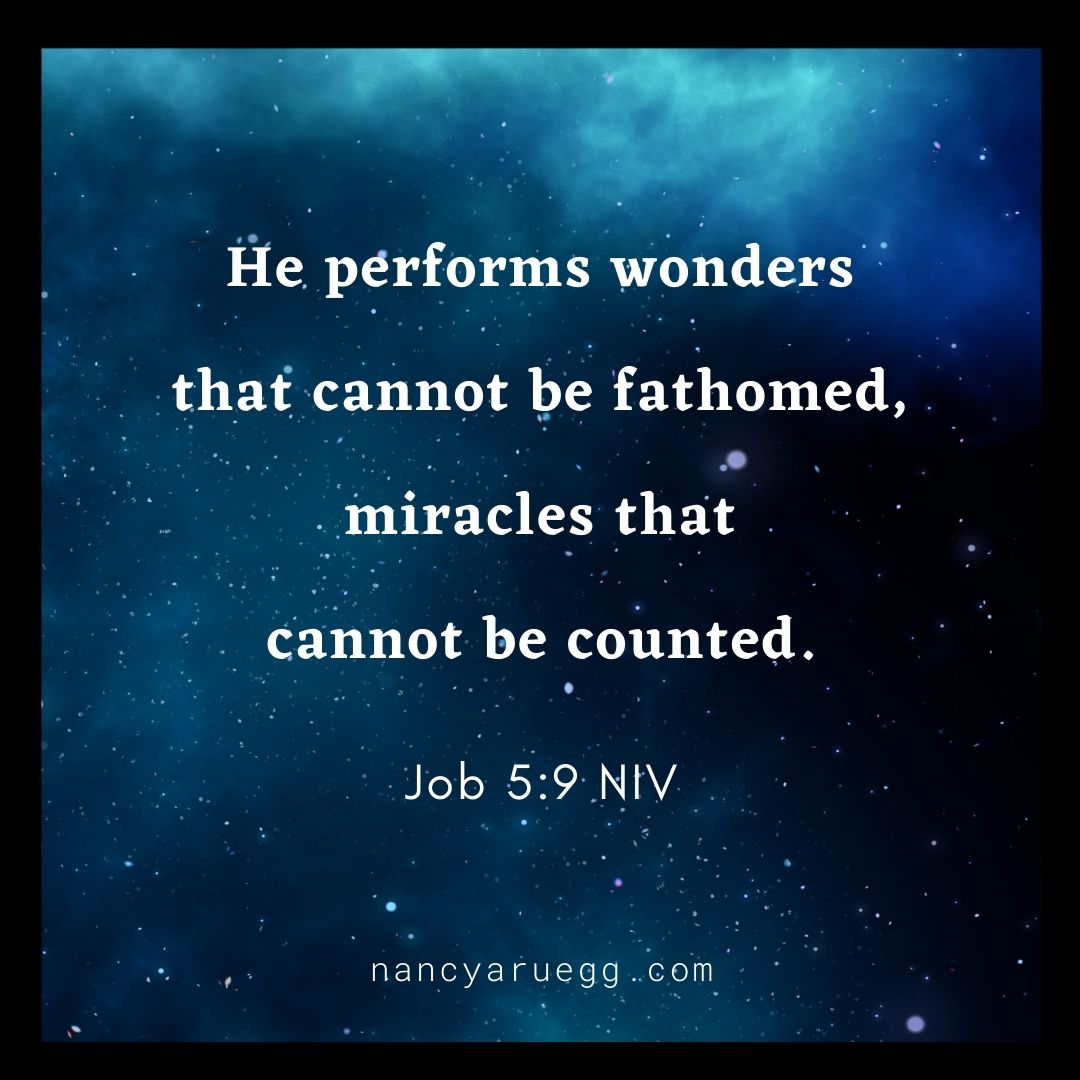
Holy God, who is like you? You are majestic in holiness beyond my comprehension; you are awesome in glory that takes my breath away. Every moment you are continually working wonders. There is no one holy like you! There is no one besides you!

I praise you, Father, for working your holiness into my spirit, enabling me to reflect your holy love, your holy goodness, your holy compassion to those around me. Empower me this day, I pray. AMEN.

(Exodus 15:11; 1 Samuel 2:2; Philippians 2:13)


[1] https://www.rct.uk/collection/31701/the-imperial-state-crown

[2] Revelation 4:8

[3] James MacArthur, Gripped by the Greatness of God, 28.

[4] MacArthur, 31.

[5] Francis Frangipane, Holiness, Truth, and the Presence of God, 23; 1 Thessalonians 5:24

Images: http://www.picryl.com; http://www.flickr.com; http://www.canva.com; http://www.rawpixel.com; http://www.heartlight.org; http://www.dailyverses.net; http://www.canva.com.

Processing…
Success! You're on the list.

Read Full Post »

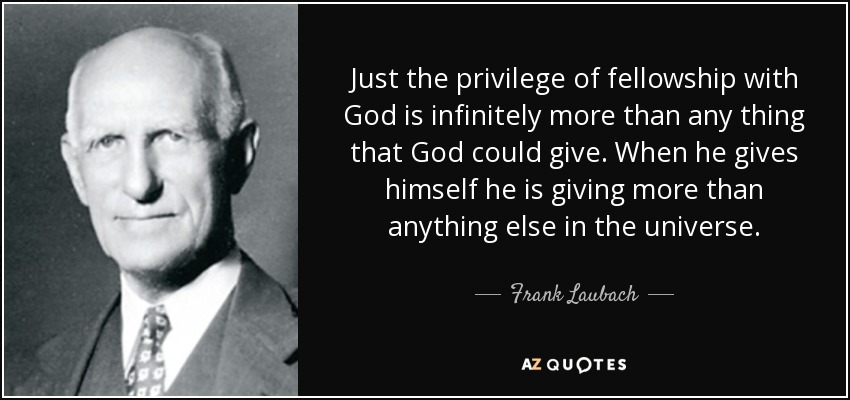
Frank Laubach (1884-1970): missionary to the Philippines, college dean, author, and developer of a highly-successful literacy program.

These are a few of the accomplishments of the devout Christian hero we met in last week’s post, “Toward Undiscovered Continents.”

His fifty-six books included those about the Philippines and teaching literacy, but also about growing into an intimate relationship with God, something he’d greatly desired, like King David centuries before:

In a letter dated March 23, 1930, Frank wrote, “Can I bring God back in my mind-flow every few seconds so that God shall always be in my mind [1]?”

He decided to make the rest of his life an experiment, and for the next forty years Frank disciplined himself to become more aware and more submissive to his heavenly Father—moment by moment.

As the habit grew, Frank wrote it was “the most amazing thing I ever ran across.” In another letter he tried to describe the sheer joy he experienced one afternoon:

“God was so close and so amazingly lovely that I felt like melting all over with a strange and blissful contentment [2].”

Surely all of us desire such loveliness and contentment in God’s presence.

But how did Frank manage to accomplish such a goal? And how might we hope to achieve that kind of intimacy with God?

First, we have to be patient with ourselves. Seeking to experience God throughout the day takes time and practice. About seven weeks into his experiment, Frank admitted:

“When for a half hour or so He slips out of mind—as He does many times a day, I feel as though I had deserted Him, as though I had lost something very precious in my life [3].”

So how did Frank become more consistent in his focus?   

 Here are a few of his practical suggestions (The comments in brackets are my own):

  • In the chinks of time between things, pray: “Lord, think your thoughts in my mind. What is on Your mind for me to do now?”
  • Instead of talking to your “inner self,” talk to Jesus. Imagine Him with you.
  • Pursue a two-way conversation in prayer. Ask, “God, what are You saying to me?” Let your imagination consider what you suppose He might answer. [It’s worthwhile to record these responses in a journal. Do keep in mind, God will never contradict what he’s already said in scripture.]

Can you imagine him saying, “I have been waiting for this moment all your life, waiting until you opened the channel so that I could speak. I have wonderful plans for you which cannot be realized until you listen as you are listening now [4].”

  • Make a daily habit to prayerfully read about the life of Jesus, from the Bible-books of Matthew, Mark, Luke, and John. Try different translations to keep the experience fresh.

[Or, listen to scripture being read to you. Here’s an APP to try: https://www.bible.com/audio-bible/111/MAT.1.NIV .]  

Frank urges, “Walk with Jesus through Galilee by walking with Him through the pages of His earthly history [5].”

  • Hum a favorite prayer-hymn or chorus to yourself. [One possibility: “Take My Life and Let It Be,” with its upbeat tune.]
  • We invite Christ to share—all day long–in everything we do, say, or think. We don’t need to stop our work, but “we try to call Him to mind at least one second of each minute [6].” [How’s that for a lofty but highly worthy goal?]

The websites listed below offer more of Frank’s suggestions.

With him we can attest: “Now that I have discovered Him I find that it is a continuous discovery. Every day is rich with new aspects of Him and His working [7].”

Doesn’t that sound delightful? Let’s make the most of our minutes, availing ourselves of that “melt-all-over, blissful contentment” in the presence of God that Frank Laubach wrote about.

https://www.azquotes.com/quote/803882


[1] https://renovare.org/articles/living-each-moment-with-a-sense-of-gods-presence-frank-laubach.

[2] Quoted by Nayswami Nakin at https://www.ananda.org/blog/laubach-christian-literacy-god/ .

[3] Letters of a Modern Mystic, quoted by Richard J. Foster and James Bryan Smith, www.renovare.org.   

[4] These first three suggestions come from Laubach’s book, Prayer: The Mightiest Force in All the World, highlighted by Bill Gaultiere, at https://www.soulshepherding.org/christ-answer-inspiration-frank-laubach/.

[5] From The Game with Minutes, by Frank Laubach, quoted by Dr. Tom Sweeney at  https://the-magpie.org/2017/02/28/laubach-on-experiencing-god-every-minute/.

Image credits: http://www.dailyverses.net; http://www.pexels.com (Mk7Bober); http://www.heartlight.org; Nancy Ruegg; http://www.pickpik.com; http://www.azquotes.com.

Processing…
Success! You're on the list.

Read Full Post »

https://www.azquotes.com/author/28916-Charles_Carroll_of_Carrollton

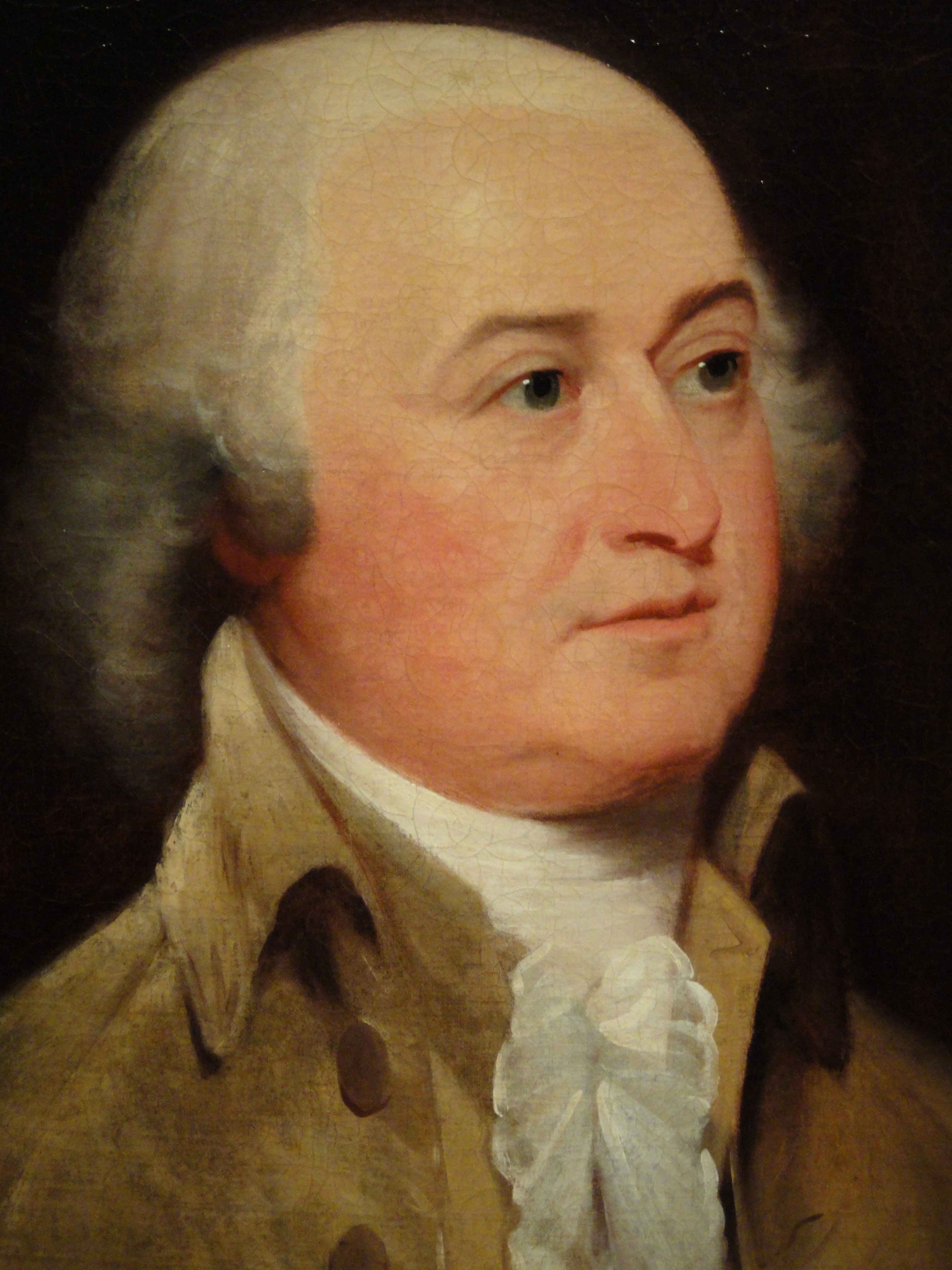
Except for the formal language, the above quote sounds like something preached from an American pulpit last Sunday. But as you can guess from his portrait, Charles Carroll lived long ago; he was a signer of the Declaration of Independence.

He’s certainly not been alone in warning of trouble, should our citizens ignore God and his wise instruction for conduct. Throughout the decades since the founding of America, there have been patriots proclaiming a similar message.

For example:

John Adams

“Our Constitution was made only for a moral and religious people. It is wholly inadequate to the government of any other” [1].

—John Adams, second U.S. president

“All the . . . evils from which men suffer from vice, crime, ambition, injustice, oppression, slavery, and war, proceed from their despising or neglecting the precepts contained in the Bible [2].”

—Noah Webster, author of Webster’s Dictionary and numerous textbooks.

Noah Webster

“If the power of the Gospel is not felt throughout the length and breadth of the land – anarchy and misrule, degradation and misery, corruption and darkness, will reign without mitigation or end [3].”

—Daniel Webster, Secretary of State under Harrison, Tyler, and Fillmore. 

“Without God there is no virtue because there is no prompting of the conscience . . . without God there is a coarsening of the society; without God democracy will not and cannot long endure. . . . If we ever forget that we are One Nation Under God, then we will be a Nation gone under [4].”

— Ronald Reagan, fortieth president of the United States.

Ronald Reagan

 And here we are in 2024, witnessing the results when such warnings against misrule, corruption, and vice are ignored.

  • “The rise in violent crime has become a national trend in the past few years as cities reach homicide rates not seen in decades [5].”
  • “The United States has done little to improve its battle against public-sector corruption in recent years, according to Transparency International, which measures experts’ perception of corruption around the world. In 2023, for the second year in a row, the U.S. ranks 24th out of 180 countries and territories” (tying with Barbados, and just ahead of Bhutan) [6].
  • Over 1 in 6 Americans, adults and teens alike, suffered a substance use disorder in 2022. . . . About 30 million had an alcohol use disorder, while 27 million had a drug use disorder — including about 6 million with an opioid use disorder [7].”

Spice addicts passed out on the pavement

And how is America to rectify such circumstances? Our sixteenth president, Abraham Lincoln shared wisdom still relevant for today:

“Intelligence, patriotism, Christianity, and a firm reliance on Him, who has never yet forsaken this favored land, are still competent to adjust in the best way, all our present difficulty [8].”

–Abraham Lincoln

Imagine if:

  •  The intelligence of best-practices was implemented against crime, drugs, homelessness and more—on a grand scale
  • Patriotic (instead of self-serving) leaders enacted the best policies to benefit the most people
  • Christian principles, proven to achieve the most profitable results (Psalm 18:30), were embraced and followed by a large majority
  • Our nation relied firmly upon God for guidance

Such outcomes are within our grasp if we take to heart the advice of these discerning leaders: 

“It is necessary for the welfare of the nation that men’s lives be based on the principles of the Bible. No man, educated or uneducated, can afford to be ignorant of the Bible [9].”

Theodore Roosevelt, twenty-sixth U.S. president

“All must admit that the reception of the teachings of Christ results in the purest patriotism, in the most scrupulous fidelity to public trust, and in the best type of citizenship [10].”

—Grover Cleveland, twenty-second and twenty-fourth U.S. president

“The only means of establishing and perpetuating our republican form of government is the universal education of our youth in the principles of Christianity by means of the Bible [11].”

— Benjamin Rush, signer of the Declaration of Independence

*     *     *     *     *     *    *     *     *     *

I pray, Heavenly Father, we might experience a fifth Great Awakening in America! Pour out your refreshing, purifying Spirit, bringing the hope of Jesus to the millions who don’t know you and are living unaware of your loving care, peace, joy, help, and more.

For those of us who do know you, I pray we may become the purest patriots of YOUR kingdom, eager to serve you in a hurting world.


[1] https://www.azquotes.com/quote/1936?ref=christian-patriotic

[2] https://christianheritagefellowship.com/christian-quotes-from-the-founding-fathers-2/

[3] https://gracequotes.org/author-quote/daniel-webster/

[4]  https://lajuett.com/patriotic-religious-quotes.html#:~:text=%22I%20tremble%20for%20my%20country,His%20justice%20cannot%20sleep%20forever.%22&text=%22I%20have%20sworn%20upon%20the,over%20the%20mind%20of%20man.%22

[5] https://www.heritage.org/crime-and-justice/commentary/8-cities-help-explain-national-crime-wave

[6] https://thefulcrum.us/corruption/corruption-perception-index-2023-2667125422

[7]  https://www.usnews.com/news/health-news/articles/2023-11-14/more-than-1-in-6-u-s-adults-teens-have-substance-use-disorder

[8]  https://lajuett.com/patriotic-religious-quotes.html#:~:text=%22I%20tremble%20for%20my%20country,His%20justice%20cannot%20sleep%20forever.%22&text=%22I%20have%20sworn%20upon%20the,over%20the%20mind%20of%20man.%22

[9] Ibid.

[10] Ibid.

[11] Ibid.

Art & photo credits: http://www.azquotes.com; http://www.commons.wikimedia.org; http://www.picryl.com; http://www.flickr.com (2), photo of drug addicts by Tim Dennell; http://www.pxhere.com; http://www.flickr.com; http://www.rawpixel.com.

Read Full Post »

The Ruegg crew–1980

Years ago when my husband Steve was two-and-a-half years into his first pastorate and our three children were ages five and under, I found myself over-committed.

Sundays, of course, included Sunday School, church, and an evening service. Mondays we hosted a small group in our home that grew to about 30 (which, in my mind, required a clean house plus fresh iced tea and coffee). Thursday evening was choir practice.

From a handful of members to a loft-full; I’m 5th from the left

Every other week, I facilitated a Moms’ support group/Bible study. Also on the to-do list: leading Children’s Church each Sunday for a year, and participating in numerous other activities that happened on a less frequent schedule.

Do you see any issues here?! I didn’t.

All this activity felt important for the growth and community-building of our church that had been dying before we arrived. As a result, I was always on the go between the responsibilities there and at home. Sometimes I resented it (which can be one of the symptoms of striving too hard).  

But the bustle felt gratifying too. In seeking to please the people around me, I was feeding my own neediness for validation. Pride and self-satisfaction lurked in the corners of my soul—wrong reasons for the striving. In addition, I was discovering those attitudes are never satiated.

What’s a Type-A person–who wants to do what’s right–supposed to do?

The following questions can help us evaluate our choices of activity, how many we choose, as well as analyze the motivations behind them:  

Am I propelled most days by determination or devotion?

The determined person rarely reads her Bible or prays except on the run. Her calendar is impressively full of good-deed commitments for others, but contentment is illusive.

This woman may know that a quiet time spent with God refreshes and transforms the spirit, but she can’t seem to make it happen.

Do I find myself pressing on (to the point of exhaustion), while rarely pressing in to be strengthened?

Pressing in includes connecting with God throughout the day, especially in the thick of stress, frustration, or anxiety.  One means is to recite scripture verses that bring our focus back to our all-powerful, all-wise God. [1]

Such verses include:

  • “God is our refuge and strength, a very present help in trouble” (Psalm 46:1).
  • “Call on me in the day of trouble; I will deliver you, and you will honor me” (Psalm 50:15).
  • “The Lord is good to those whose hope is in him, to the one who seeks him” (Lamentations 3:25).

God is ever-ready to help—with the choices before us, when to say yes and when to say no, as well as the right motivations behind those choices.

Does people-pleasing supersede God-pleasing in my life?

Author Shauna Niequist speaks for some of us when she asks: “Why am I doing this? What is it in me that keeps things moving so breakneck fast, . . . that sacrifices my own health and happiness so that people who aren’t me will think I’m doing a good job, in some vague, moving-target kind of way?”[2]

I too find my service for others frequently tinged with people-pleasing. Does that mean I should forego such activity until I can purify my intentions?

No, wrote author and pastor, Tim Keller: “If you wait until your motives are pure and unselfish before you do something, you will wait forever.”[3]

BUT! Our heavenly Father offers this glorious hope:

Because we are covered by Jesus’ righteousness, even our imperfect efforts to please God are acceptable. And as we grow in dependence upon Christ, he’ll purify our hearts more and more.[4]

*     *     *     *     *     *     *     *     *     *

Father, I know it’s downright foolish of me to strive so hard, especially for all the wrong reasons. I want to be free from people-pleasing, self-gratification of the ego, and pride. Forgive me for giving room to such attitudes in my mind.

Help me to be an eager and compliant participant as you work within me to create a pure heart and make my attitudes new.

In the powerful name of Jesus, AMEN.

(Proverbs 4:23; Psalm 51:10; Romans 12:2)


[1] Psalm 72:12 ESV

[2] Present over Perfect, 58.

[3] The Reason for God: Belief in an Age of Skepticism

[4] Isaiah 61:10; Titus 2:11-14

Photo credits: Nancy Ruegg (2); http://www.dailyverses.net; http://www.pixabay.com (TheDigitalArtist); http://www.heartlight.org; http://www.dailyverses.net.

Read Full Post »

Have you noticed how many titles there are for God in the Bible—titles like Ancient of Days, Hiding Place, and Father of Glory?

In fact, there are hundreds of names and titles for him, and each is worthy of study, as it reveals facets of his character.

Scripture also refers to us, his people, by different titles. There’s value in carefully considering these also—titles like:

Sheep

This is one we’d rather not claim, but it’s true. On our own we act very much like sheep, tending to follow the crowd, react out of fear, dig in our heels with stubbornness, and make foolish choices. 

And yet our Good Shepherd has purchased us at great price and made us his own. He actually takes delight in caring for us [1].  

Perhaps you agree with me: I’ll gladly wear the humble title of sheep if it means I can live in his divine pasture!

Saints

When many of us visualize saints, we see practically-perfect, self-sacrificing people. Their halos may be invisible, but we’re sure they’re there.

In reality, the word saint simply means holy one, and holy means set apart.

That describes you if you’ve become a Jesus-follower. God clothes every believer in his Son’s righteousness, and places within his perfect nature [2].

To honor God for all he’s done, saints aspire to unwavering focus on him and on his people.

Masterpieces

“Since you are God’s idea, you are a good idea.”

Max Lucado, Cure for the Common Life, 26.

You may remember the Greek word used for masterpiece or workmanship in Ephesians 2:10: “poema.” And just as quality poems require much effort; God expended great effort to instill quality in each of his children. We are masterpieces, each one uniquely designed to be a heavenly piece of poetry on earth.

May others be blessed as they read the verses of our lives [3]!

Temples

God could have chosen anywhere in the universe as his dwelling place, among the galaxies of stars, towering mountain peaks, or peaceful tropical islands. Instead, the all-powerful, absolutely perfect King of the universe chose to live in you and in me.

Meditate on the wonder of that for a moment.

Light

Then consider the mesmerizing beauty of light in the golden glow of sunrise or radiant sunbeams soaring heavenward into infinity.

Our Savior, the Light of the world, shines with enthralling beauty, giving us “the light of the knowledge of God’s glory displayed in the face of Christ.”

In addition, he’s privileged us with the honor of reflecting his glorious light to others—the light of his compassionate love, effervescent joy, constant peace, and more [4].

Who will you shine on today?

New Creations

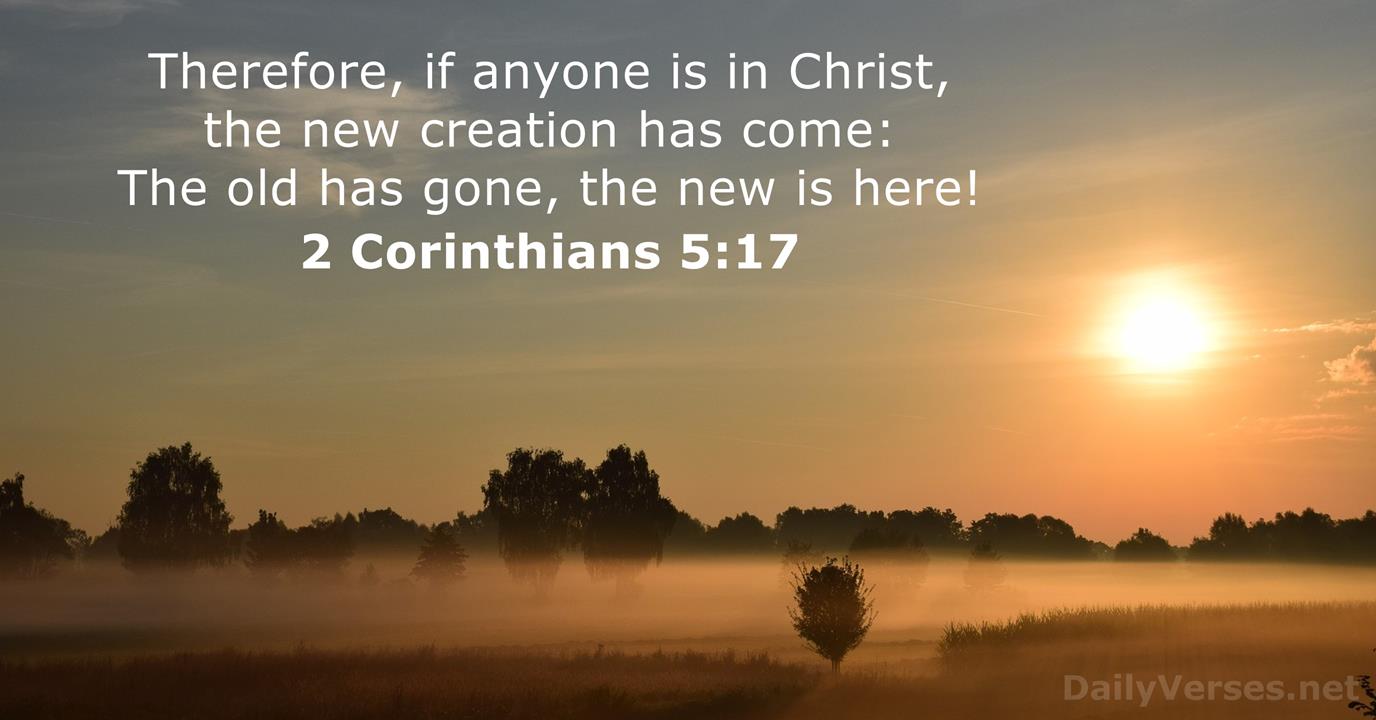
To create doesn’t mean to just improve something that already exists. It means to bring something out of nothing. God didn’t simply change us when we accepted Jesus into our lives; he created new persons! We are not the same people we were before saying “yes” to him [5].

“Marvel at the beauty of a life intertwined with God’s Presence.”

Sarah Young, Jesus Calling, 381.

*                    *                    *

Some of us don’t feel like new creatures, saintly masterpieces, or glowing light-bearers. Since we’re still capable of sin and fall short of God’s best, we’ve concluded he must barely put up with us out of his unfailing mercy.

NOT SO!

Think of the last time you saw a colorful butterfly, like the Tiger Swallowtail. Did you say, “Wow! Look at that transformed caterpillar!”

Of course not. Its former state probably didn’t even cross your mind. You saw the swallowtail for what it was in that moment, an exquisite creature of beauty and grace.

That’s how God sees you and me, dear readers, as expressed in these titles we’ve considered. The old is past; we’re new persons, living a new life, resplendent in Christ’s robe of righteousness [6].

May the true identity of who we are emphatically impact how we live.


[1] 1 Corinthians 6:19-20; Psalm 147:11

[2] Isaiah 61:10; Galatians 2:20

[3] Herbert Lockyer, Seasons of the Lord, 330.

[4] 2 Corinthians 4:6; Matthew 5:14-16

[5] Steve McVey, Grace Walk, 43.

[6] McVey, Grace Walk, 48.

Photo credits: http://www.flickr.com; http://www.pixabay.com; http://www.wikipedia.org (Anne Aubert); http://www.pixabay.com; http://www.picryl.com; http://www.peakpx.com; http://www.dailyverses.net; http://www.publicdomainpictures.com.

Read Full Post »

I remember the moment; I don’t remember when it took place . . . perhaps in young adulthood, during my quiet time. A Bible verse caught my attention–John 17:21–causing my eyes to widen and fill with tears.

First, a bit of context. That chapter includes Jesus’ prayer after the Last Supper and mere hours before the crucifixion. He asked his Father to sustain him, to manifest God’s power through his death, resurrection, and ascension, and in so doing, prove that Jesus was the Son of God (vs. 1-5).[1] 

Second he prayed for his disciples—for their protection, joy, spiritual growth, and unity (vs. 6-18).

And then (wonder of wonders!) Jesus prayed for you and me, his future followers!

“I pray also for those who will believe in me,” he said (v. 20, emphasis added).

I read on with eager expectation. What did he ask God to do on our behalf? Strength to endure? Guidance for wise choices? Kind and generous hearts?

Those are worthwhile prayers, but it would seem Jesus left those for us to request.

Instead, he prayed for one over-arching blessing to characterize his believers: unity.

“I pray that they may all be one, Father!

May they be in us, just as you are in me and I am in you.”

John 17:21a GNT

Among all the things we need as his followers, why would Jesus pray for unity? We’ll get to that in a moment.

First, we need to understand he wasn’t praying for uniformity, expecting his followers to agree on every issue. The apostle Paul and his co-missionary Barnabas disagreed over their young companion Mark (Acts 15:37-39), and godly men throughout church history have taken different sides of various issues: Martin Luther with Huldrych Zwingli, John Wesley with George Whitefield, and John Stott with Martyn Lloyd-Jones—to name a few.

It’s doubtful Jesus expected his followers to grow into one big denomination. What he did desire was a spirit of love and an attitude of grace to bind us together, equipping us to overlook differences of preference and tradition. He’d have us focus on what we have in common.

At the Christian university I attended, all students were required to take the course, Philosophy and Christian Thought. One of our textbooks (a very thick one!) was titled, The Protestant Faith. And though the differences between denominations were certainly laid out, I was struck by how much doctrine and theology we share in common—much more than what divides us.

That’s what we need to concentrate on: the foundational truths like those we recite in the Apostles’ Creed, and our purpose of introducing others to Christ as well as taking delight in obeying him and growing more like him.

Even more important? A covering of love—love that admits wrong, forgives grievances, allows for differences of opinion on nonessentials, and doesn’t dishonor others but seeks the best for them.

Last but foremost: we must continually look to Jesus through prayer and worship, privately and publicly.

Perhaps you remember A. W. Tozer’s illustration. If one hundred pianos are all tuned to the same fork, they’re automatically in tune with each other. Similarly, if one hundred worshipers look to Christ, they’re going to be much more in tune with one another than if they focus on other matters, worthwhile as they might be. That would include unity itself.[2]

And now to answer that question, why would unity be so important to Jesus? His reason is revealed at the end of John 17:21.

“May they be one, so that the world will believe that you sent me.”

John 17:21b GNT

The world is plagued by ugly divisiveness, hatred, and vitriol.

Jesus desired his followers to be characterized by the beauty of unity as we strive to love like him—overlooking slights, sidestepping fights, and giving up our rights.[3]

When people witness such beauty, there will be those who desire it for themselves and come to faith in Christ.

*     *     *     *     *     *     *     *     *     *

O Father, point out those areas where my preferences and opinions interfere with my love for your people. Help me put aside differences and focus on areas of commonality. May I play an active part in the beauty of unity within my circle of influence, drawing others to you.   


[1] Barnes Notes on the Bible, www.biblehub.com.

[2] A. W. Tozer, The Pursuit of God, 90.

[3] Patsy Clairmont, Boundless Love, 236.

Art & photo credits: http://www.commons.wikimedi.org; http://www.flickr.com (Long Thien); http://www.commons.wikimedia.org (Peter Swain); http://www.commons.wikimedia.org; http://www.rawpixel.com.

Read Full Post »

On January 25, 1905, diamond mine superintendent Frederick Wells inspected the walls of the Premier Diamond Mine in South Africa—as usual.  Suddenly his practiced eye caught a telltale glimmer in the rock.  

Workmen cut free the luminous stone that very day, then took it to be weighed in the office of mine owner Thomas Cullinan.

The miners knew the fist-sized gem was a stellar find, but no one expected what the scale revealed.  Before them lay the largest diamond ever found—3,106 carats worth, and a perfectly clear specimen except for one black spot in the middle.

Frederick Wells with the Cullinan Diamond

Named for the mine owner, the Cullinan Diamond was sold to the Transvaal provincial government and eventually presented as a birthday present to England’s King Edward VII in 1907. 

King Edward hired master-lapidary I. J. Asscher of Amsterdam to divide the stone.  Asscher studied the Cullinan for six months before making the first cut, and subsequently created nine major stones along with ninety-six smaller ones.

Opened in 1854; still in business.

The largest diamond is called the “Star of Africa I” or “Cullinan I” and sits atop the British royal scepter; Star of Africa II is part of the Imperial State Crown.[1]

Star of Africa I is the pear-shaped embellishment atop the scepter.
Star of Africa II, front and center of the crown, just above the band of ermine.

Why did God create diamonds?  For the same reason he created everything in the universe:  to display his glory.[2]

Diamonds offer a magnificent example of God’s creative power, as he applied heat and pressure to simple black carbon and created mesmerizing stones.

Of course, it takes tremendous pressure (50,000 times more than that at the earth’s surface) and severe heat (2000 degrees Farenheit) for the transformation to take place.  Such extreme conditions only occur deep in the ground—at least 90 miles below the surface.

Humans have only been able to drill a little over seven miles into the earth.  So how were diamonds even discovered?  Because of another spectacular display of God’s power:  volcanoes, which spew them up to the surface.

And though raw diamonds do glimmer, their full magnificence is not released until the lapidary cuts the stones on all sides, to maximize the refraction and reflection of light. Today’s popular brilliant cut requires 58 facets. The process takes up to two weeks.

The ancient Greeks believed that a diamond was a chip of star that had fallen to earth.  We smile at their naiveté until we learn astronomers discovered a star in 2009 that has cooled and compressed into a massive diamond—10 billion trillion trillion carats worth!

Imagine the smile on God’s face as the scientists proved lyricist Jane Taylor closer to truth than she knew: “Twinkle, twinkle, little star . . . like a diamond in the sky” (1806).

With Job, we can affirm:

In addition to displaying God’s glory, diamonds also provide valuable lessons—much as he’s used trees, sheep, and ants to teach us.[3]  At least two lessons have been encapsulated in memorable quotes. 

Lesson #1: 

You know what else makes God smile?  Transforming black-carbon lives into radiant diamond-people.  Think of those like Kirk Cameron, George W. Bush, and Franklin Graham, all of whom once lived in dark rebellion and now reflect the light of Christ.

Such transformations require a lengthy process, and most often the heat and pressure of difficult circumstances, but the results are quite spectacular.[4]

Lesson #2:


A lapidary reminds us of our Heavenly Father.  He chips away at our self-centeredness and pride until we’re Stars of Heaven, fit for his crown and radiating his glory in brilliant perfection.[5]

So, my fellow stars-in-process, “let faith and patience have their perfect work, for in the day when the crown will be set on the head of the King Eternal, Immortal, Invisible, one ray of glory will stream from you”—Charles Spurgeon.


Notes

[1] https://www.history.com/this-day-in-history/worlds-largest-diamond-found# and https://www.capetowndiamondmuseum.org/blog/2017/01/worlds-largest-diamond-the-cullinan/

[2] Psalm 19:1

[3] Jeremiah 17:7-8; Psalm 23; Proverbs 6:6-8

[4] Hebrews 12:5-11

[5] Zechariah 9:16; 2 Corinthians 3:18

Photo images: http://www.wikimedia.org; http://www.flickr.com (2); http://www.wikipedia.org; http://www.canva.com (2); http://www.wikimedia.org.

Read Full Post »


Thanks to inventor Hans Busch, physicist Ernst Ruska, and electrical engineer Max Knoll, we’ve enjoyed the benefits of their invention, the electron microscope, since 1931.

With its superior magnification power (up to 10,000,000x), scientists can capture images like those below. See if you can identify the object in each photo.


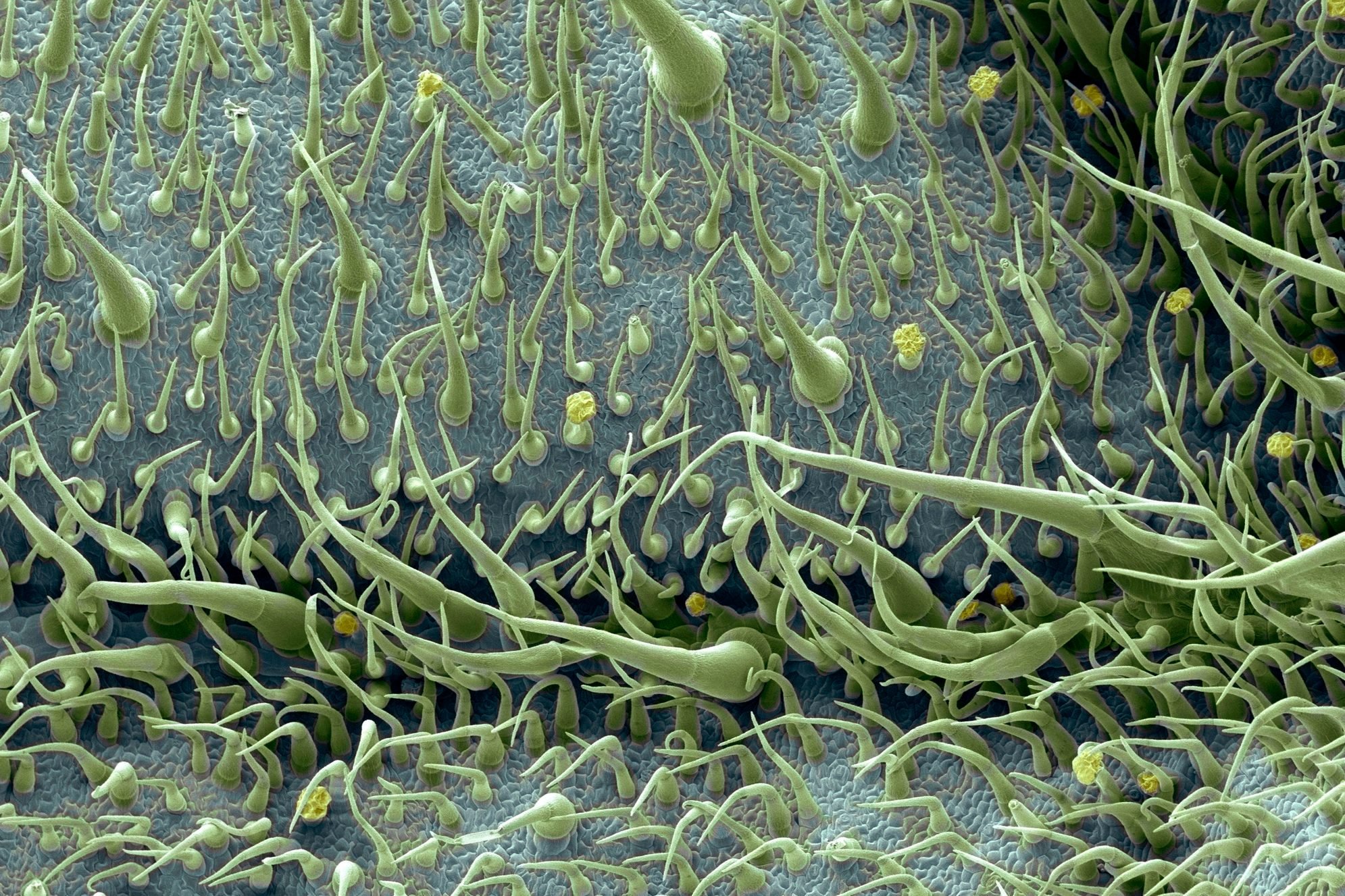
(Photo #1–the cross section of a plant stem; Photo #2–butterfly eggs; Photo #3–butterfly scales; Photo #4–olivine (rock); Photo #5–tomato plant leaf; Photo #6 rose petal.)


“The heavens declare the glory of God;

the skies proclaim the work of his hands.”

–Psalm 19:1


First, the heavens include our planet, of course.  And everything on the earth and in it also tells of the glory of God.


Second, what exactly is the glory of God? Theologian Charles Ryrie described it as “the manifestation of any or all of God’s attributes on display.” Puritan preacher Thomas Watson said it’s “the sparkling of the Diety.”  I love that, don’t you?

Just in those few microscope-images above we see evidence of his dazzling wisdom—in the design of a plant stem that moves water and nutrients upward against gravity to the leaves. And then the products produced by photosynthesis in the leaves are taken back through the stem to other parts of the plant, including the roots.

We see evidence of God’s stunning artistry in those butterfly eggs with the eye-catching ridges.

And we see his creative use of shape and color in the butterfly scales, the olivine sample, the tomato leaf, and rose petal.

Billions more examples can be found all across our varied planet, manifesting his goodness in the variety of plants, animals, landforms, and more that he’s given us to use and enjoy.


I wonder—do you suppose God smiled when he created those tiny eggs with dozens of ridges?  That tomato leaf with hundreds of sprouts? (No wonder they feel rough to the touch!)  That rose petal embroidered with ovals? Did he smile to think about the day when someone would discover the infinitesimal splendor he’d designed eons before?

And yet, even more astounding than the magnificence of God revealed in nature is God’s glory revealed in you and me.


All of us, then, reflect the glory of the Lord with uncovered faces;

and that same glory, coming from the Lord, who is the Spirit,

transforms us into his likeness in an ever greater degree of glory.

1 Corinthians 3:18 GNT


We’re a bit like those watches with phosphorescent numbers. The more light those numbers absorb, the more they glow.

Similarly, the more we bask in God’s presence through prayer, praise, and worship, the more we’ll manifest the glow of his attributes:


  • his perfect wisdom guiding our life choices, what we do, and what we say
  • his marvelous artistry in our positive imprint on others
  • his divine creativity manifested in the unique shape and color of our gifts and talents
  • his absolute goodness in the blessings we bestow to those around us


And imagine our faces, glowing ever brighter as we continually reflect more of the sparkling of our Diety.


What could be more delightful and satisfying?


Photo credits:  http://www.wikimedia.org; http://www.wikimedia.com (4); http://www.rd.com (2); http://www.pixabay.com; http://www.snappygoat.com; http://www.wikimedia.org; http://www.pixabay.com; http://www.maxpixel.freegreatpicture.


Read Full Post »


Our older son and his family enjoy a large magnolia tree in their backyard. Every spring it explodes into a breath-taking mass of pink and white blossoms, each one at least six inches across.

Unfortunately the dazzling display doesn’t last long. The petals soon fall to the ground, and thick, dark leaves begin to take their place. But when summertime heat arrives the family is grateful for the cool shade of that dense foliage.


In autumn, as the leaves take their turn to fall, the flower buds for the next spring become more visible. Compared to those on other flowering trees or plants, these are already about two inches tall—even in October. To form them, magnolias take full advantage of the sun’s energy during the summer months (1).


All winter long, those buds proclaim silent promise of the divine flowers to come. And then in March or April, as the days have lengthened and warmed, the furry buds begin to split open, offering a glimpse of their tightly-spiraled petals—a precursor of the stunning transformation just days away.


Were we to celebrate the magnolia tree for those few days she’s dressed in her chiffon-pink finery, we’d miss out on the joy of her shady embrace in summer and those hope-filled buds through fall and winter.

There is beauty in the becoming—whether it’s magnolia trees or people.


If those magnificent buds were capable of emotion, they would no doubt look forward to the glorious reveal in spring. Thankfully, we humans can anticipate our desires being fulfilled. And as God’s children, one of those desires is spiritual maturity–the day when we’ll be wise and self-sacrificing, calm and patient, peaceful and contented–to name a few traits we aspire to.


But if we’re always focused on the future, we’ll miss the wonder of what God is doing now. The question becomes, what can we celebrate as God carries out his beautification process within us? Here are two categories of possibilities to get us started.

1. Celebrate the moments when the fruit of the Spirit are on display.

For example, over the last few days can you think of occasions when you:

  • Spoke kind words or affirmation to others?
  • Shared the gift of smiles and perhaps laughter?
  • Held your tongue when tempted to argue?

Then you brought a bit of love, joy, and peace to others. Hurray for you!


2. Take note of the times when biblical truths guide your actions.

Again, review the last few days for such examples as these:

  • You found your mind wandering into negativity, then made an about-face when you remembered your goal to focus on everything excellent (Philippians 4:8).
  • You apologized for speaking harshly to someone, instead of pretending the offensive tone didn’t matter (Ephesians 4:2).


  • A stunning feature of creation grabbed your attention, and your first thought was to worship God for his incredible handiwork (Psalm 92:4).
  • The moment you recognized God’s protection, provision, or blessing, gratitude welled up in your spirit (Psalm 126:3).


Celebrate the growth of a renewed mind, humility, praise, and gratitude. You’ll be reinforcing the behaviors that contribute to your beautiful becoming.


“Growth, though silent as light

is one of the practical proofs of health.”

–Charles Swindoll (2)


Note Swindoll says growth is a proof of health—not perfection.

And when we honor God as the impetus behind the progress, we enliven our faith for the next steps of beautification he has in mind.


“Little by little

as God’s sanctifying grace works in us,

more territory of our lives becomes his.”

–Herbert Lockyer (3)


Right now we’re enduring the long winter of our development, but spring will come.


“He who began a good work in you

will carry it on to completion

until the day of Christ Jesus.”

–Philippians 1:6 NIV

(emphasis added)


*     *     *     *     *     *     *     *     *     *


I praise You, Almighty God, that as we grow in trust and surrender to you, we will become more like your Son, Jesus Christ. Day by day you are engineering experiences to that end. Thank you also we can enjoy the anticipation of that glorious day, when the beauty of becoming will finally be complete.


Notes:

  1. https://www.chicagotribune.com/lifestyles/home-and-garden/ct-sun-0226-garden-morton-20170221-story.html
  2. The Quest for Character, Multnomah Press,  1987, p. 172.
  3. Seasons of the Lord, Harper & Row, 1990, p. 351.


Photo credits:  http://www.pxfuel.com (2); http://www.pickpik.com; http://www.pikrepo.com; http://www.pixfuel.com; http://www.dailyverses.net; http://www.pixy.org; http://www.heartlight.org; http://www.wikimedia.org; http://www.pikist.com.


Read Full Post »


Ask a group of young adults to name three of their life goals, and many of them will mention: success in their careers, loving families, and good friends.

Few if any will say, “to lead a quiet life.”

Yet God inspired Paul to write:


“Make it your ambition to lead a quiet life.”

–1 Thessalonians 4:11a

(emphasis added)


First, I suppose we ought to establish what a quiet life might include—qualities such as:

  • Composure
  • Humility
  • Kindness
  • Gentleness
  • Peacefulness


Equally valuable?   An understanding of what the quiet life would not include:

  • Boasting
  • Being easily-ruffled or offended
  • Whining and Complaining
  • Bossiness
  • Being argumentative


It’s easy to see: those who lead calm, kind, gentle lives are the ones we like to be around.  The second group of boasters, whiners, and arguers–not so much.

But there are many more benefits to the quiet life than offering pleasant company for others, honorable as that is. Consider the following:


A quiet life produces inner strength.


“Strength is found not in busyness and noise but in quietness.

For a lake to reflect the heavens on its surface, it must be calm.”

–L. B. Cowman (1)


Have you noticed that those with great inner strength and tranquility are most often grounded in faith?


(Grandma Rachel, circa 1910)


My grandmother(2) was just such a person.  Her strength through tragedy and challenge came from calm confidence in God and complete dependence upon him (Isaiah 30:15).  As a result, serenity and peace radiated from her life.

She was a 1 Corinthians 13 sort of woman—quietly patient, loving, and kind–not boastful, proud, or easily-angered.  I never heard her raise her voice, gossip, or complain. And she consistently thought of others before herself.

Those qualities of the quiet life Grandma exhibited, still radiate in my heart today.

And that leads us to the next benefit:


A quiet life provides resounding impact.


Sunbeams silently rest on plant and tree, generating photosynthesis and growth. Dewdrops silently form in the night, refreshing the ground. Gravity silently presses all matter to the earth.

Similarly, a life of tranquility provides a quiet, positive influence on others through calm demeanor and gentle speech.

Limited speech is also impactful. We’d never think to apply the adjective quiet to a nonstop talker, would we? Thinking-before-speaking includes this advice:


“Don’t speak unless you can improve on the silence.”

–Spanish Proverb


Columnist Robert Brault seeks to accomplish that feat this way:


“I like to think of myself as a finely aged wine,

and one thing that keeps a wine finely aged

is to put a cork in it” (3).


A quiet life wins respect (1 Thessalonians 4:11a, 12a).


Tirades and obnoxious behavior may garner rapt attention, but composure and self-restraint earn high regard.

We’d do well to remember:


“The only way to demonstrate

that Christianity is the best of all faiths

is to prove that it produces

the best of all men [and women].”

–William Barclay (4).


A quiet life is blessing.


1) Composure and contentment result as we grow in tranquility—highly desirable qualities in this world of unrest, discontent, and anger.


2)  A quiet life also steers us toward the blessing of maturity, where trivial annoyances no longer infuriate, giving is more fun than receiving, and building up someone else is more satisfying then bragging about ourselves.


https://quotefancy.com/quote/1557578/


3) The best blessing of all for humble, gentle, and peaceable individuals? The commendation of God himself (Matthew 5:3-9).


“How slow many are to learn

that quietness is a blessing,

that quietness is strength,

that quietness is the source

of the highest activity—

the secret of all true abiding in Christ!

Let us try to learn it

and watch for whatever interferes with it.

The dangers that threaten the soul’s rest are many.”

–Andrew Murray (1828-1917)


“Abide in me and I will abide in you” (John 15:4 ISV).


Notes:

  1. Streams in the Desert, p. 450
  2. I’ve written about her before: https://nancyaruegg.com/2013/02/18/1106/
  3. http://www.quotegarden.com/speaking.html
  4. The Letters to the Philippians, Colossians, and Thessalonians, p. 234.


Photo credits:  http://www.pxfuel.com; http://www.pexels.com; http://www.pxfuel.com; Nancy Ruegg; http://www.pixabay.com; http://www.canva.com; http://www.quotefancy.com; http://www.pixabay.com.


Read Full Post »

Older Posts »

Still Traveling

Impressions Becoming Expressions

Living Our Days

Gaining a heart of wisdom

He Said What?!

I'm Patty, and my husband and I are living with our adult son who has autism and epilepsy. I love sharing lessons learned from life around me, especially life with Aaron.

Meditations of my Heart

Impressions Becoming Expressions

Linda Stoll

Impressions Becoming Expressions

Debby Thompson

Impressions Becoming Expressions

Signora Sheila

Notes on Life, Faith & Italy

Colleen Scheid

Writing, Acting, Living in God's Love

Mitch Teemley

The Power of Story

Heidi Viars

Finding the Image of God