Feeds:
Posts
Comments

Archive for the ‘Service’ Category

(A new folk tale)

William the Potter shuffled into his humble cottage just as the sun was setting. He swung the door shut with a bit more force than necessary. Then, with several grunts he peeled off his jacket and scarf. Once his outer clothing hung on the hook beside the door, he heaved a great sigh.

His wife, Katherine, turned briefly from stirring the pot of stew that was simmering over the hearth fire.

daggett-house-main-room-2-fireplace-cooking

“Welcome home, William,” she remarked with a speck of sarcasm.

William didn’t notice her tone, as he was too wrapped up in his own gloomy thoughts.

“What’s wrong, dear?” she asked, then returned to the task at hand: scraping the sides of the stew pot so no bits would be burnt and wasted.

William wearily sat down at the rough-hewn table and began working off his heavy boots.

“I’m so tired, Katherine—tired of working with dreary, dusty clay all day, tired of making the same plain, serviceable containers—jug after ordinary jug. Pot after ordinary pot. Hour after agonizing hour.”

wheel-throwing-hands-on-clay1

One boot landed with a thump on the pine floor.

“So make something fanciful every now and then,” Katherine countered.

“But it’s the everyday pots, jugs and bowls that people buy.”

The second boot clumped beside the first.

“Oh, William, I am sorry. You must remember that your work is important. Without your pottery, how would the village store their water and grain, plant their herbs and flowers, or…serve their supper?” And Katherine placed in front of him one of his clay bowls, filled with savory stew.

“M-m-m,” responded William. “In my mind I know you are right, but my heart is no longer in it.”

The next day toward sundown, William again entered the cottage and shut the door with extra force. But this time, he didn’t even take off his coat and scarf before grabbing Katherine around the waist and swinging her in a tight circle, careful to avoid the table and fire.

“Katherine! Katherine!” he bellowed. “Such good news I have to tell you!”

She pushed against his shoulders. “William! For goodness’ sake, put me down! Whatever has gotten into you?”

“Oh, my dear, you will never guess my good fortune.  Sit down while I tell you!”

Katherine wiped her hands on her apron before smoothing her skirts and taking a chair. Then clasping her hands as if to pray, Katherine sat ready to hear about this turn of events.

William drew a big breath and began.

“This afternoon I received a visitor at the shop—a visitor from the castle. The castle, I tell you! He says the king desires a new border for his gardens, a border of boxwoods in large pots. He’ll need dozens of pots, and he’s asked me to help!  Isn’t that wondrous news?”  And William looked to Katherine expectantly for her enthusiastic response.

topiary-124766055_0

Katherine paused for a moment before speaking. “Pots, you say.”

“Yes!” he replied.

“Like the pots you make for the village?” she inquired.

“The same! The king’s messenger even pointed to the ones lined up on the shelf and said they would do perfectly, except much larger, of course.  Oh, think of the honor this is, Katherine.

“Yes, dear. Quite an honor. It’s just that…well…i-it seems to me…” Katherine stammered. And finally she spoke the obvious. “You’ll still be making ordinary pots, am I correct?  Wasn’t it just yesterday you were bemoaning the very same task?”

“Ah, but starting tomorrow, I am working for the king,” William exclaimed. “These pots will be part of something glorious and enduring. And that changes everything!”

*     *     *     *     *

“Whatever you do,

work at it with all your heart,

as working for the Lord,

not for men…

It is the Lord Christ you are serving.”

–Colossians 3:23-24

(Photo credits:  www.goodlifelist.com; http://www.arteast.org; http://www.bloomiq.com.)

Read Full Post »

(Steve and I are enjoying time with family this week.  I’ll return soon with  new posts.  Meanwhile, I’ll reblog previous ones.  Hopefully you’ll find them meaningful again, or perhaps for the first time.  The following post was first published June 13, 2013.)

From stage left, she crosses the platform in confident strides.  One hand waves in sweeping arcs to the large audience. The crowd claps and cheers.

In the other hand, with confident ease, she holds the microphone.  And the smile—big and broad, bright white teeth visible even from the balcony.

Able to sing like a nightingale and articulate truth with conviction. Impacting thousands.

Now there is someone God is using in a powerful way, whispers an accusing voice.  Look at her significant contribution in the Kingdom of God. No doubt she’s highly valuable to him.  So what are you doing that’s important?  Your spot in the scheme of things is nothing compared to that shining star on the stage.  You might as well face the truth:  You are unimportant.  The ship of Significance has passed you by.

Sound the least bit familiar? You’re not alone. Demons use those same lies on a lot of us. Evil spirits aren’t very creative, are they?

But here’s the truth of the matter:

Each of us is the workmanship of God (Ephesians 2:10). The Greek word, workmanship, sometimes has the connotation of “work of art.” You are a work of art—carefully designed and meticulously executed.

The verse goes on to explain we’ve been created to do good works. It does not say the same work. Diversity of personality, talent, and interest are necessary among the children of God in order that all his plans are accomplished.

He made each of us unique, to fulfill a personalized plan. Every now and then we see such a plan unfold so clearly, we know God engineered the circumstances. Sometimes it’s a unique set of talents or gifts that work together sublimely to meet a need.

Take, for example, the naturally talented writer, who happened to grow up in a bilingual home, and studied Christian Education in college. She was especially prepared by God to write Spanish curriculum for a Christian publishing company.

Other times the plan is much less obvious, and we must trust that the task before us–caring for our families, teaching that Sunday School class, working at the homeless shelter–is indeed accomplishing divine purpose.

What we can know for certain:  each of us is valuable to God (Matthew  10:29-31).

Believe that he has prepared in advance good works for you to do (Ephesians 2:10).  Take joy and satisfaction from completing those good works.

It may not be walking across a stage with a microphone. It might mean walking across the kitchen with a rolling pin—to bake cookies for the neighbors.

That’s just a small, insignificant thing, you say?

Think about this: What if God takes particular pleasure in small things?

Personally, I’m fascinated by small things. Miniatures, doll houses, petit-point, babies!

Scripture gives us indication that God does indeed love small things as well:

Sparrows (Matthew 10:29-31).

Two little mites given by a widow (Mark 12:41-44).

Five small barley loaves and two small fish (John 6:1-13).

Bethlehem (Micah 5:2).

Let’s never again allow those little demons of abasement to put us down. God has promised: “I will bless those who fear the Lord—small and great alike” (Psalm 115:13, emphasis added).

You see, in God’s sight, we’re of equal worth.

Read Full Post »

The story of Cinderella always was my favorite fairy tale. The rags-to-riches, wrong-to-right, happily-ever-after story never grew old.

1437fdd92c98d193d310d64889316185


And that ball gown! How the illustrators of the various editions must have enjoyed creating the glory and splendor of that dress!

Rarely, if ever, are we common damsels provided opportunity to wear such grand finery. And I doubt many guys out there in the blogosphere have donned gold-braided jackets spangled with brightly colored medals. Such ostentation is almost exclusively reserved for royalty.

Ah! But whether we’re CEOs of the home front (stay-at-home parents) or CEOs of corporations, plumbers or painters, teachers or taxi drivers, we are priests of the Lord King of the universe.   And that designation makes us a royal priesthood:


81cbdeaa64193e714bde42f962d32d8a


(“You are a chosen people, a royal priesthood,

a holy nation, a people belonging to God,

that you may declare the praises of him

who called you out of darkness

into his wonderful light.”

–1 Peter 2:9)

Because we are his royal priesthood, God has provided a glorious new wardrobe for each of us, including:

  • Rich garments of salvation, replacing the sin-stained rags of our self-centeredness (1).
  • A robe of righteousness, radiant with the perfections of Jesus (2).
  • A belt of truth, studded with gems from God’s Word that inspire, instruct, encourage, and comfort (3).
  • Garments of praise, because he continually manifests his glorious attributes and showers us with blessings (4).
  • Ornaments of strength and joy (5).
  • A crown of beauty, as we allow the Holy Spirit to renew our minds and turn our thoughts to the positive (6).
  • Beautiful shoes of peace, equipping us to tread gently and share the peace of Jesus with others (7).

Note: None of this is earned, like the medals on Prince Charming’s uniform. Every radiant item has been magnanimously bestowed by our King.

Why would that be, we wonder. Is his purpose simply to display his generosity?

Surely that’s part of the answer. But the last half of 1 Peter 2:9 (above) reveals more: Now that we’re dressed in his garments of radiant splendor, we are commissioned to proclaim his excellency everywhere we go.


Two-women-talking-in-a-cafe-300x199


Sometimes we proclaim with words (Mark 16:15), as simple as “God is so good,” while sharing a story with a coworker.

Sometimes we proclaim with loving action (John 13:34-35), serving as a channel of blessing between God and others. That extra-generous tip to a waitress, for example, may pay eternal dividends  especially if she saw us praying before we ate, and we engaged her in friendly, upbeat conversation (about her).

Sometimes we proclaim with our attitudes—simply reflecting the radiance of Jesus’ peace and joy on our faces (2 Corinthians 3:18)—especially in difficult circumstances. Someone may very well ask, “I don’t know how you do it,” giving you opportunity to proclaim God’s excellencies and the blessings of living in his wonderful light—just as that verse in First Peter suggests.


sun-beams-through-forest-300x199


If our new wardrobe is on full display, people will notice.


“Let us put on the vestments of holiness

and minister before the Lord all day long.”

–Charles Spurgeon

Photo credits:  www.pinterest.com (2), http://www.icould.com; http://www.kingdomcalling.com.)

___________________________________________________________________

  1. Zechariah 3:4; Isaiah 61:10
  2. Isaiah 61:10
  3. Ephesians 6:14; 2 Timothy 3:16
  4. Isaiah 61:3
  5. Isaiah 49:18
  6. Isaiah 61:3; Romans 8:5; Philippians 4:8
  7. Isaiah 52:7; Ephesians 6:15; John 14:27


Read Full Post »

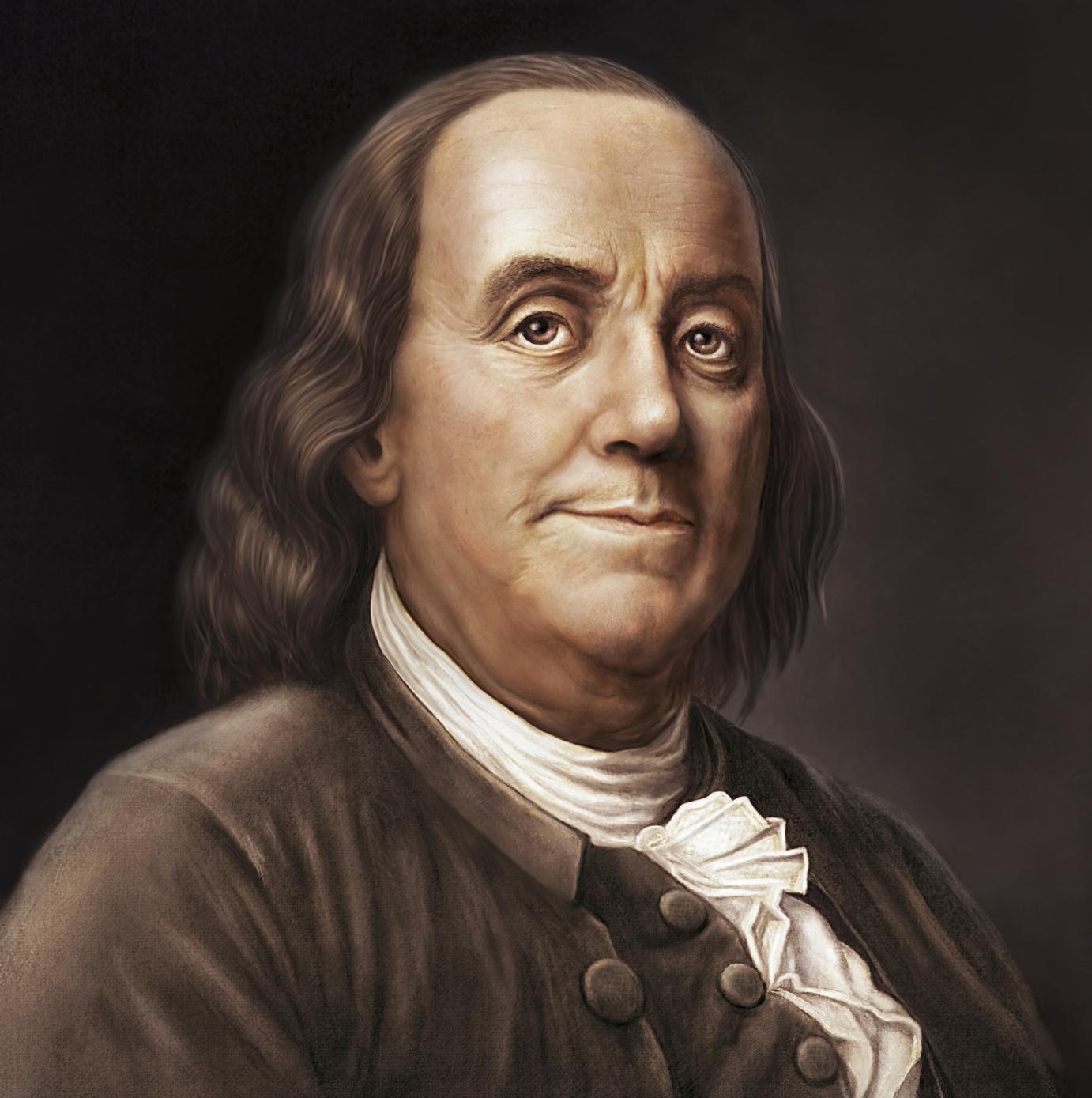
portrait_bf

Benjamin Franklin was the thirteenth child of a humble soap-and-candle maker. Obviously, no family fortune provided him easy success in life. Neither did a stellar performance in school that would lead to scholarships. His formal education lasted all of two years, from ages eight to ten. Yet Ben became:

  • a respected publisher
  • the country’s first millionaire
  • a world-famous scientist
  • an influential voice as the thirteen colonies fought for independence and established a nation
  • a distinguished diplomat in Europe

No wonder Franklin was proclaimed a self-made man. But there are other factors, outside his control, that contributed to his success, including:

INTELLIGENCE

His varied accomplishments as writer, statesman, and diplomat prove his sharp intellect.

CHARACTER

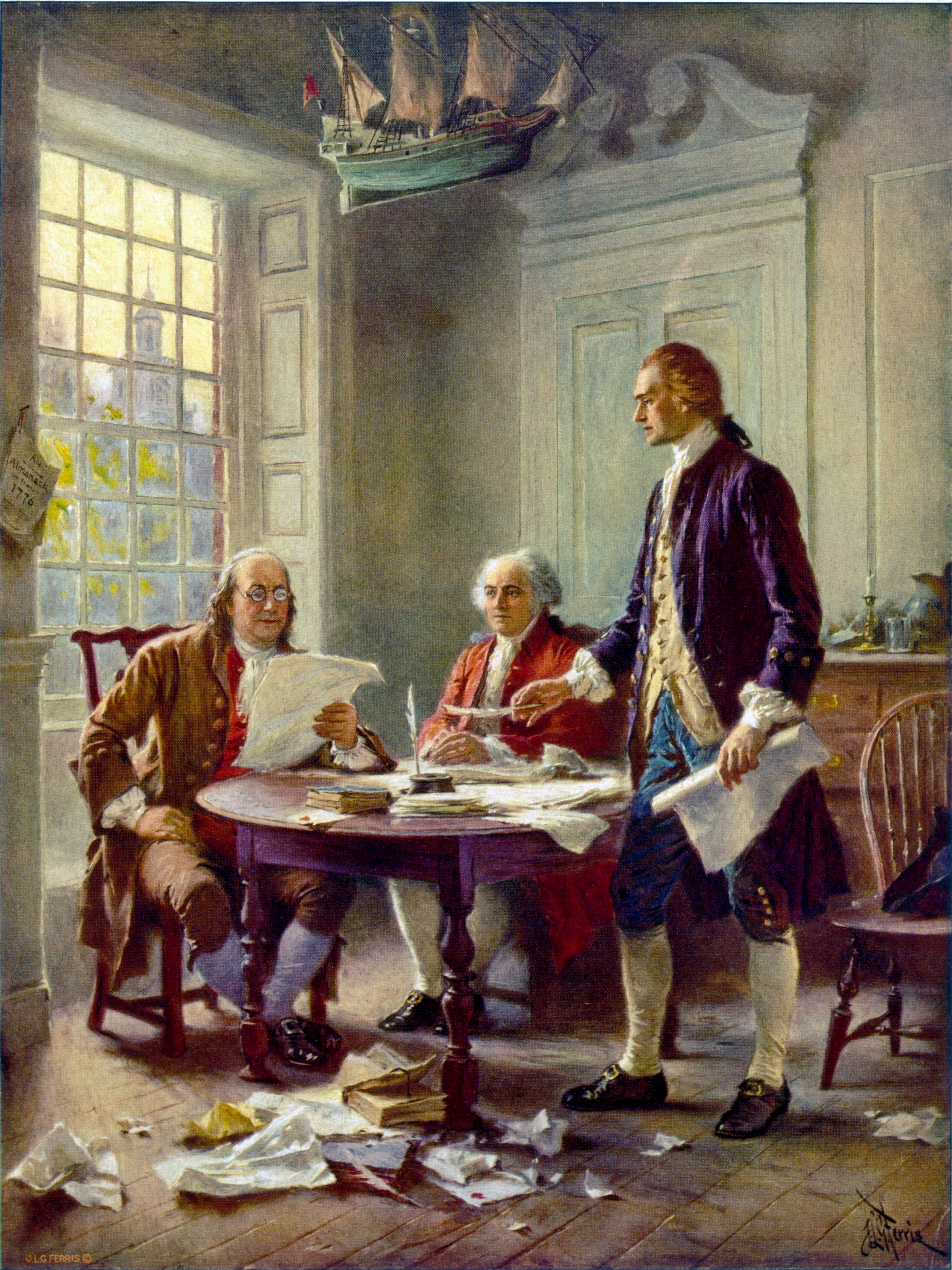
Ben was  curious and skeptical–useful attributes for a scientist. His astuteness, sense of humor, and ability to communicate served him well as publisher of Poor Richard’s Almanac. And all of these traits came into play when Franklin participated in the forming of our nation.

Writing_the_Declaration_of_Independence_1776_cph.3g09904

TEMPERAMENT

Surely Ben was an energetic and passionate individual. He was always in pursuit of something—things like:

  • Solving problems. Numerous inventions credited to Franklin grew out of need. For example, his desire to create more heat in his home led to his invention of the wood stove.
  • Acquiring new knowledge. Ben attempted his well-known key-and-kite experiment because of his curiosity about lightning.
  • Improving the lives of his fellow colonists. Franklin wrote, met with other delegates, sought the help of France, and more, in America’s struggle to gain independence from England. In 1789, at age 84, he was still writing and working. His cause? The abolition of slavery in America.

OPPORTUNITY

Franklin was often in the right place at the right time. One example: through his connections in the publishing industry of Philadelphia, Ben secured a contract to print the colony’s paper money.

Seems that Ben’s success had much to do with factors outside his control. These elements just mentioned–intelligence, character, temperament, and opportunity–came from God. In fact, for all of us, “Our sufficiency is from God” (2 Corinthians 3:5).

28847

In reality, the idea of a self-made man/woman is myth. No one is truly self-sufficient.

On the other hand, God has ordained work and effort. From beginning to end, scripture proclaims the value of industry. In Genesis 2:15 we see God placing Adam in the Garden of Eden to tend and keep it. In 2 Thessalonians 3:10, Paul says, “If a man will not work, he shall not eat.”

So how do we balance working with our God-given abilities and depending on God?

  1. Pray.  Thank God for the gifts he has given us.  Then prayerfully seek to determine what God is doing and cooperate with him. If we are earnest in this desire, he’ll make each step clear. As seminary professor, Howard Hendricks, used to say: God does not play hide-and-seek in the trees with his will.
  1. Nourish.  The effectiveness of our giftedness requires preparation and inspiration. Preparation includes study and practical experience. (Even a talented pianist must take lessons and practice.) Preparation includes nourishing the spirit, too, with study of scripture and practical experience of worship and service. Inspiration comes from the Holy Spirit as he works within us.
  1. Embrace.   Embrace the teaching of wise, godly leaders. Embrace the help of others. Keep in mind that self-sufficiency is not a praiseworthy quality; it’s a form of pride. The person who thinks he knows everything and needs no input, or who is too proud to ask for help, is someone to be pitied, not celebrated.

As dependents upon God, we are meant to work. As workers, we are meant to be dependent upon God.

And…

13498c445c1e1c4e8f0c84056a33f287

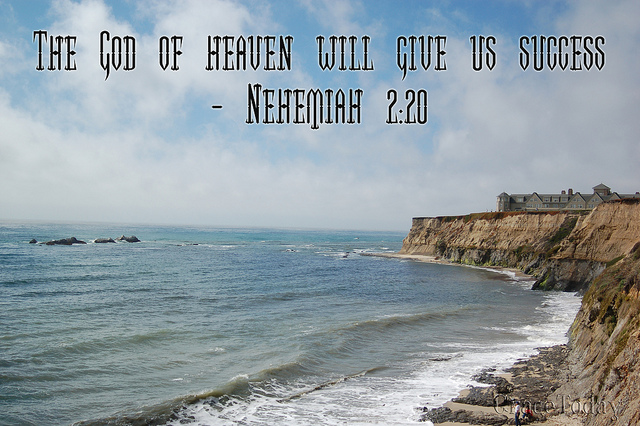
(“The God of heaven will give us success”–Nehemiah 2:20)

*     *     *     *     *     *     *     *     *     *

I praise you, Father, for being my all-sufficient God, Someone I can trust completely for guidance, direction, and training. Help me find that balance between working for you and depending on you. May I not neglect preparation, but also look to you for inspiration.  And may I be a humble, grateful recipient of help.  Amen.  

Read Full Post »

ucm284632


Research scientists rely on their five senses to collect and analyze data.

Some scientists argue that because we can’t see, touch, or hear God (out loud, in the hearing of others), he cannot exist.

So how can we embrace faith in our invisible God, and be sure of what we hope for, and certain of what we do not see (Hebrews 11:1)?

First, the Christian faith is based on a huge body of proof. Our beginning point of discovery: God’s Word. And why should we believe the Bible? Because its reliability has been proven again and again by:

  • Hundreds of archaeological discoveries. One small example: Remember the Pool of Bethesda where Jesus healed a lame man (John 5:1-8)? According to John, the pool had five porticos, or colonnaded walkways. No such place was found until 1956, because it was buried–forty feet below ground level. But, sure enough, there are five porticos (1).

Also worth noting: Not one artifact has been found to disprove a fact or claim of the Bible (2).


1422113545_7ada8fbca9_z


  • Thousands of manuscript fragments discovered, from ancient copies of the scriptures. The Dead Sea scrolls are one incredible example. Complete copies or portions of ALL books in the Hebrew Bible, our Old Testament, are included in these scrolls.  The book of Esther is the only omission (3).

viewer-Isaiah


  • Scientific and medical discoveries that have corroborated scriptural truth. Again, one example of many: In the late 1960s, deep sea exploration discovered numerous springs of fresh water pouring out of the ocean floor. Job (38:16) spoke of the “springs of the sea” eons ago (4).


Job 38-16


Hundreds of prophecies fulfilled with pinpoint accuracy.  The Old Testament contains hundreds of prophecies. Of those, more than four dozen are about Jesus. Every one of them that refers to his earthly life was fulfilled.  

Those are just a few categories of proof.

But we can also place our confidence in God because of experience.  The Bible and two thousand years-plus of church history include countless stories of believers in God who faced hardships to be sure, but lived adventurous, fulfilling, and miraculous lives of faith.

To experience the same, we have to step out in faith, like:


gen-12-1-ww-wall-9x


  • Abraham, who left his home country at God’s command, with no idea of where he was going (Genesis 12:1).
  • Moses, who confronted Pharoah and ordered the powerful ruler to release God’s people from slavery (Exodus 5:1-5).
  • David, who stepped out onto a battlefield to fight a giant—alone (1 Samuel 17).
  • King Jehoshophat, who led Judah into battle against a vast army (2 Chronicles 20).
  • The centurion who asked Jesus to heal his beloved servant—from a distance. Jesus fulfilled his request and commended the officer for his great faith (Luke 7:1-10).

We have to step out like these more recent heroes, too:


4225983_orig

  • George Muller (1805-1898), who could hardly provide for his own family, yet with great faith and not much else, founded five orphanages in Bristol, England, where ten thousand children were cared for.
  • Florence Young (1856-1940), a missionary to the Kanakas of the Solomon Islands. She and others helped the Kanaka believers minister to villages that practiced cannibalism. Thousands of people became Christians.
  • C. T. Studd (1860-1931), missionary to China, India, and then Africa. He inherited 25 million dollars ( in today’s economy) and gave it all away.
  • Betty Greene (1920-1997), who combined her passion for flying with her faith in God and helped to found Mission Aviation Fellowship.
  • Brother Andrew (1928- ), who smuggled Bibles into communist countries during the Cold War.

How were these biblical and historical heroes able to accomplish such feats? Was it because of courage and perseverance? No doubt, but the foundation underneath those traits was their faith in God.

They believed what they could not see. They were sure of God’s love and care. They were certain their final destiny was secure.  Therefore, they confidently moved forward step by step as God opened the way. That is faith.


il_570xN.189993668


*     *     *     *     *     *     *     *     *     *

Lord, I have said it many times: Whatever you want for my life is OK with me! Forgive me for wavering and fretting that perhaps your will might cause hardship. Shame on me! Help me to rest in you, Father. Since your love is steadfast and everlasting, and you have only my best interest at heart, I can confidently put my faith in you. Help me to be watchful and stand firm, a woman of strength, courage, and love.

(Psalm 116:7; Jeremiah 31:3; 1 Corinthians 16:13)

Notes:

  1. bible-history.com
  2. Grant Jeffrey, The Signature of God, p. 71.
  3. deadseascrollsfoundation.com
  4. Institute of Creation Research (icr.org)

(Photo and art credits:  www.fda.gov; http://www.flickr.com; dss.collections.imj.org.il; http://www.newheartnewspirit.com; http://www.alittleperspective.com; http://www.georgemuller.org; http://www.etsy.com.)

Read Full Post »

borfarb


“Katherine, I’m terribly sorry, but there’s nothing else to do. We have no money to hire a nursemaid for you children, and now that your mother is gone…”  His voice trailed off.

Is that what Hans von Bora told his five-year old daughter?  No record has been left.  We do know that, in 1504, after the death of her mother, Katherine was sent to a convent in Nimbschen, Germany. At age nine, she was transferred to Convent Marienthron, where she took her vows and became a nun. Katherine was just sixteen years old.

Katherine’s duties gave her opportunity to learn management and care of a large estate, since the convent owned much property. Proceeds covered the expenses for the forty-four nuns and forty servants.  They also made a profit.

About this time a tract was secretly passed among the young nuns titled, “The Monastic Life, and the Marriage of Priests, Nuns and Monks.” Monks, nuns, and clergy should be free to marry, it said. Marriage should be kept; it is monasteries that should be given up.

As this message spread it was not just monasteries that began to empty but convents also. Twelve nuns from Marienthron chose to escape on Easter evening, in April of 1523.  Among them was Katherine. Three of the young women were returned to their families, the other nine secretly delivered by wagon under cover of night to a nearby town. It happened to be the home of the monk who wrote the tract, and he took personal responsibility to see that the nine nuns were well taken care of.

Husbands were found for some of the women; others were given positions in households. Katherine was in the latter group. One suitor, a university student, did court Katherine that summer. A deep friendship grew between them, but when he returned to school, Katherine never heard from him again. Perhaps his parents did not approve of a marriage between their son and a former nun.

Was Katherine’s heart broken after this first experience of love?  Did she wonder why God would allow such a painful turn of events?  Again, no record exists.  We can only surmise that Katherine felt great disappointment as would any young woman in such circumstances.

Several other suitors came forward, but Katherine was content to stay and work in the home of the Lucas Cranach family.

Meanwhile, the monk who wrote the tract about marriage had left the monastery. He was considering taking a bride himself. Katherine let it be known that she was interested, as affection for the caring man had developed during the two years she had known him.

On June 15, 1525, the couple announced their engagement before five witnesses.   Immediately following was the wedding!

An abandoned Augustinian cloister was given to the couple for their home. Katherine became mistress of this virtual estate.  (The first floor alone contained forty rooms with cells above.)

Eventually every room was occupied, not just by their own six children, but by widows, students, and orphans that the couple took in. In fact, Katherine and her husband adopted four orphaned children from their relatives.

Can you imagine caring for so many people—without such appliances as stove, refrigerator, washer, or dryer?

But God had prepared Katherine to manage the estate.  Remember her duties at Marienthron Convent?  Katherine  was on the go from daybreak to night, overseeing the multitude of household responsibilities, the animals, a large garden, the brewery, and large parcels of land she purchased in order to grow grain for the animals.

That’s not all. Katherine ministered to the needs in her community, giving care to the sick and counsel to the hurting.

She made it possible for her husband to travel, preach, and teach, knowing that all would be well taken care of at home.

Day after day, for twenty years, Katherine served others in and around her home.   How ironic that one of the few quotes of Katherine von Bora which has survived the centuries should be:

“I’ve read enough [of the Bible]. I’ve heard enough. I know enough. Would to God I lived it.”

According to the historical record, Katherine most certainly lived by the truth of God’s Word. Who can deny her courage, perseverance, love of others, and servant’s heart?  She stands as a worthy example for us to follow.

Katherine’s husband grew to appreciate her greatly and love her deeply. He called her “Kittie, My Rib” and  “The Morning Star of Wittenberg.”

Does the name of their hometown sound familiar? Wittenberg was the home of Martin Luther.

The husband of Katherine von Bora was none other than Martin Luther himself.


(Sources:  www.the-highway.com, http://www.rpmministries.org, http://www.helios.augustana.edu, http://www.lutheranhistory.org, http://www.thegospelcoalition.org, http://www.haventoday.org.  Art credit:  www.lutherin.de.)

Read Full Post »

progressive_detail


Remember your first attempt to use a microscope? If your experience was like mine, countless adjustments had to be made to find the object under the lens and then bring it into focus.

I’m so glad our eyes don’t work that way! God made them to automatically adjust for distance, intermediate, and near. Granted, as we get older glasses are often required. Some of us even need trifocals. But the miracle of physical sight is incredibly precious, even with corrective lenses.

God offers us another miraculous gift of vision—that of spiritual sight. It, too, is trifocal–to see  lessons of the past,  opportunities of the present, and possibilities of the future.

First we need to understand where spiritual vision (godly insight and foresight) comes from.  It is a function of faith and wisdom.

Faith grows with our knowledge of God. For example, our vision of his future for us is based on such truths as: 1) He has designed a special plan for each of us. 2) He can do the impossible.   And, 3) he empowers the weak.  Embrace such truths and wishful thinking for your future can become a statement of conviction.

Faith also focuses on God’s promises.

Do you have a vision of a productive life, fulfilling his purpose? Focus on John 15:5. “I am the vine; you are the branches. If a man remains in me and I in him he will bear much fruit; apart from me you can do nothing.”

Do you need courage to step forward toward a God-inspired goal? Focus on Joshua 1:9. “Have I not commanded you? Be strong and courageous. Do not be terrified; do not be discouraged, for the Lord your God will be with you wherever you go.”

Do you feel overwhelmed and incapable of completing the task God has whispered into your spirit? Focus on Psalm 121:2. “My help comes from the Lord, the Maker of heaven and earth.”

In addition to faith, godly wisdom contributes to spiritual vision.

Godly wisdom grows with our knowledge of God’s Word. Of course, knowledge by itself is not enough; we must apply it (Psalm 19:7).

And as we absorb his truth, God gives us the ability to see those lessons of the past, opportunities of the present and possibilities of the future.

Now before I share a few examples please understand: I am no visionary with extra-spiritual powers to see the invisible. I’ve just lived long enough, had the privilege to learn from stellar Bible teachers, and spent glorious hours getting to know God and discovering his Word for myself. As a result…

…I can see lessons from my past.

One lesson:  God knows what he is doing.  Consider that…

  • He put me in a Christian home and in churches where my spirit and character were formed.
  • As a short-term missionary in Honduras and Ecuador, he grew my reliance upon him.
  • Serving at six churches with my pastor-husband stretched me emotionally and spiritually, but I also experienced much joy and fulfillment.
  • Each of the four teaching positions I held represented God’s ability to engineer circumstances in stunning ways.

Oh, yes, I can see clearly that God knows what he is doing.

I also see opportunities of the present as we babysit our granddaughter. What an awesome privilege to pass on to a new generation the heritage of faith we have treasured. I can envision the value of sweet memories, sound truth, and especially the example of godly integrity in her life. (Lord, help me provide those gifts to both of our granddaughters!)

And, I see possibilities for the future, where my husband and I might serve—perhaps at a soup kitchen. (Steve loves to cook.) And a volunteer tutoring service for under-privileged children might be able to use a retired teacher.  Each locale would provide possibilities for planting seeds of faith into the lives of others.

I want to live out the advice of missionary to India, William Carey (1761-1834):

“Expect great things from God; attempt great things for God.”

But we’ll need tri-focal, spiritual vision for that to happen.

*     *     *     *     *     *     *     *     *     *

What are you envisioning right now?


(Photo credit:  www.prescription.lensesrx.com.)


Read Full Post »

(As most of you know, Steve is retiring from the pastorate, after serving forty years in Florida. Very shortly we move to the Midwest, to be close to our sons and their families. If our daughter and her family would just move east from Washington State, life would be near-perfect!

No doubt you’re also aware that packing and unpacking are time-consuming tasks, so I’m putting the blog on hold for a few weeks. But please continue to visit! I’ll re-blog some previous posts, and hopefully you’ll find them meaningful again, or perhaps for the first time.

The following post was first published 5-16-13.)
220px-E-W-Wilcox

“With every deed you are sowing a seed, though the harvest you may not see”

(Ella Wheeler Wilcox, author and poet, 1850-1919).

Observation #1:

We never know when a small deed may plant a seed of faith or encouragement. We never know when that seed will reap a bountiful harvest in the life of someone else.

Live attentively to the fact that every deed is a seed. The people around us are watching and listening. Perhaps you’re familiar with the story of a church elder who once led a worship service for two. It happened over 150 years ago in England. A blizzard on Saturday night made it impossible for villagers to get to the church—including the pastor.


Oakwood_Park,_London_N14_-_snow_storm_-_geograph.org.uk_-_1146589


The elder almost sent home the two individuals who had come, an older man and a young boy. But something (Someone?) compelled him to speak. Later he confessed his words came out rather jumbled and brusque.

But. The elder planted a seed that immediately took root. The young boy accepted Jesus as his Savior that day. His name? Charles Spurgeon—preacher and author extraordinaire, whom God used mightily. People are still impacted by his writings to this day. (For an example of Dr. Spurgeon’s God-given genius, see the post, “Not Length But Strength,” from May 9, 1913).


Observation #2:

Our responsibility is the planting of “deed seeds”; the harvest is up to God.

The same principle that works in the physical realm works in the spiritual realm: A farmer may plant, fertilize, and water, but the germination of each seed is a miracle only God can bring about. Don’t become tightly focused on results.

The elder who led Charles to the Lord that snowy, wintry day, had no idea the boy would grow up to have such a profound effect on the world. The gentleman may not have lived long enough to see the results of his deed that morning. But we know, and we marvel.


Observation #3:

The true harvest is not measurable in physical terms, and it’s hidden from view in the spiritual realm.

Only now and then does God give us a glimpse of what our small deeds are accomplishing. Perhaps God planned it that way so pride and self-gratification do not taint the glory of the harvest.

Imagine the joy that elder continues to experience every time a saint comes through the gates of heaven–fourth and fifth generation Christians, who have been influenced by Charles Spurgeon, whose ancestors accepted Jesus because of him. In addition, thousands  have been influenced and encouraged by the preacher’s writings.

And it all began with that faithful elder.

You see, the positive influence of a man or woman of God never dies.


4 T


Such a possibility should translate into enthusiastic motivation for planting seeds wherever we go.


(Art and photo credits:  www.wikimedia.org and http://www.wikipedia.org.)

Read Full Post »


You’ve heard of spiritual gifts–those special abilities the Holy Spirit endows, which equip us to serve others.  Teaching, prophecy, discernment, and healing are examples.  Altogether, the apostles Peter and Paul listed at least twenty.

May I be so bold as to suggest there may be a few more spiritual gifts than those  listed in the New Testament?

For example:

The Gift of Thoughtfulness

Oh, my.  If I started listing the number of people who have this gift, I’d be writing through the night.  But recently…

Donna and I were admiring a craft project created by a mutual friend–little dresses made out of dish towels, to hang over the oven door.  I mentioned what fun it would be to make some of those myself, but I didn’t have a machine anymore. 

“Then I want to give you mine,” she said.  “Now that I’m living with Brenda” (her daughter), “I really don’t need it.  I can use hers.”

In spite of protests (“You can sell it, Donna.”), she was insistent.  So I now have a sewing machine!

In a world of greed and selfishness, such kindness is rare–except in the family of God where the spiritual gift of thoughtfulness abounds.

 The Gift of Joy

All my friend, Grace, has to do is chuckle, and everyone nearby joins in.  Hers is the most infectious laugh I’ve ever encountered.  She also supplies plenty of material for laughter with her quick wit.

You’d never know to look at Grace’s smiling face and twinkling eyes that she frequently suffers pain.  A case of shingles that never went away completely continues to cause problems.  But Grace never complains.

How does she manage to spread so much cheer in the midst of suffering?  It’s the spiritual gift of joy, I’m sure, bubbling up from a heart focused on Jesus.

The Gift of Chicken Soup

My husband, Steve, had just been released from the hospital, after a fever that defied explanation and aspirin.  It finally broke, although its cause remained a mystery. After a few days he was released to come home.  Meanwhile,  while Steve was hospitalized, I suffered a brutal attack of stomach flu.

The two of us were sprawled on couch and recliner when Barbara called.  “I’m making chicken soup for the two of you and bringing it over this afternoon,” she announced.

“Oh, no,” I quickly replied.  “That won’t be necessary.  We’re recouping fine.”

But Barbara didn’t buy it, and the delivery was made. 

NEVER have I tasted such savory, flavorful chicken soup.  By the end of the first bowl I felt strength returning to my limp arms and legs.  By the second bowl, I was ready for jumping jacks.

OK, I’m exaggerating–but only slightly.  That soup DID rejuvenate us!  So, there’s the proof that the spiritual gift of chicken soup exists.

If we want to be technical, I suppose these gifts and others could be categorized under those listed in scripture.  Exercising thoughtfulness like Donna is surely an example of generosity (Romans 12:8).   Dispensing joy like Grace is part of the gift of encouragement (same verse).  And Barbara’s chicken soup may very well be a manifestation of the gift of healing (1 Corinthians 12:28).

It’s true:  “All kinds of things are handed out by the Spirit, and to all kinds of people!  The variety is wonderful” (1 Corinthians 12:7, The Message).

What unique spiritual gifts have you encountered?  Share your story in the comment section below!

(Image of bow from http://www.publicdomainpictures.net.)

Read Full Post »

Remember those black and white portraits in our history textbooks–those figures posed stiffly with expressionless faces?   They looked more like statues than real people.  In fact, they appeared downright bored, didn’t they?

Take A.B. Simpson here.

Albert Benjamin Simpson

Albert Benjamin Simpson (Photo credit: Wikipedia)

He looks the part of a serious preacher, which he was.  Reverend Simpson was also a theologian and prolific author.  He wrote 101 books, numerous hymns, periodicals, articles, and even complete curriculums.

Oh.  And he founded a denomination.  A rather impressive list of accomplishments.  No wasting time for Albert.

But A.B. did much more than sit in a book-lined office with stacks of research everywhere.  While pastoring a prestigious church in New York City, God laid a special call upon his heart–to establish a church specifically for the immigrants pouring into the city.  A.B. felt burdened for the poor, homeless, sick and displaced.

Yet his dream did not stop there.  Albert wondered how he could reach people overseas who did not yet know Jesus.  And one thing began to lead to another.  He gathered like-minded people together that led to Sunday afternoon meetings, which became revivals along the East Coast.  And The Christian and Missionary Alliance denomination was born.

From the soul of such an impassioned, focused, persevering man came these warm-hearted words:

Let us but feel that

He has His heart set upon us,

that He is watching us from those heavens

with tender interest,

that He is following us day by day

as a mother follows her babe

in his first attempt to walk alone,

that He has set His love upon us,

and in spite of ourselves

is working out for us

His higher will and blessing,

as far as we will let Him –

and then nothing can discourage us.

–A. B. Simpson (1843-1919)

Knowing that A.B. gave his life in selfless service, I find his words all the more meaningful.  Surely he felt God’s heart set upon him and following close during his many endeavors, that his Heavenly Father was working things out–in spite of himself.  Not just minimal sustenance, but for God’s higher will and blessing.

I like that.  Those words “higher will and blessing” hold hope and excitement for what’s to come for each of us, as God’s plan unfolds indefinitely until we meet him face to face.

I’m with A.B;  I want nothing to hold me back.  No doubt you feel the same.

*     *     *     *     *     *     *     *     *     *

Thank you, Heavenly Father, for introducing me to A.B. Simpson today.  I love this quote that highlights your compassionate love, your desire to use us, and even bless us.  May I be mindful of your watchfulness, and then nothing can discourage me.  


Read Full Post »

« Newer Posts - Older Posts »

When the House is Quiet

Impressions Becoming Expressions

Mitch Teemley

The Power of Story

Still Traveling

Impressions Becoming Expressions

Living Our Days

Gaining a heart of wisdom

He Said What?!

I'm Patty, and my husband and I are living with our adult son who has autism and epilepsy. I love sharing lessons learned from life around me, especially life with Aaron.

Meditations of my Heart

Impressions Becoming Expressions

Linda Stoll

Impressions Becoming Expressions

Signora Sheila

Notes on Life, Faith & Italy

Heidi Viars

Finding the Image of God