Feeds:
Posts
Comments

Grace before Greatness

(In honor of Black History Month)


No sooner did Mama open the front door than Marian was in her arms, sobbing.

“Oh, Mama! It was awful. There were so many empty seats, and the critics—one said I sang as if by rote.” Marian’s throat constricted around the hurtful words.

If anything, she always put heart and soul into her music. To be told she sang by rote was as painful as being told she sang flat.

“I’m done,” Marian announced through tears. “I need to find a different profession.”

Mama paused, then quietly suggested, “Why don’t you think about it a little, and pray a lot first?”

For a full year, 1924-1925, twenty-six-year old Marian didn’t sing a note.

But a gift for music like Marian’s isn’t easily put away. She’d been singing all her life, including church solos from childhood. Her proud Aunt Mary took her to other venues in Philadelphia so everyone could hear Marian’s glorious voice with its three-octave range.

She longed to develop the gift God had given her and sing the music of the classical composers. So at age eighteen, Marian waited in a long line of applicants for a nearby music academy. Finally someone told her, “You can’t attend here; you’re Negro.”

Of course, she understood. African Americans of the time were prohibited from many establishments. But the pain didn’t come just from the words; it was how they were spoken. The young woman seemed to take delight in deflating Marian’s hope.

“That’s all right,” Mama told her. “God may have something better in mind.”

Mama was right. The principal of Marian’s high school introduced her to esteemed vocal teacher Guiseppe Boghetti, and asked him to take her as a pupil.

“No new students!” he barked, but agreed to hear her sing one song. Marian chose “Deep River,” and Boghetti miraculously found time for her.

But how would she pay him? Papa had died when Marian was twelve; Mama took in laundry and cleaned for Wanamaker’s Department Store to support her three daughters. Marian contributed as she could from her sporadic earnings as a soloist. It was their church who paid for the lessons as members contributed pennies into a special fund for her.

Soon invitations to sing arrived from outside Philadelphia. But travel, especially in the South, presented challenges and indignities. Trains did not serve food or offer sleeping berths to African Americans; hotels would not provide rooms. Marian stayed in homes or at the YWCA. And she sang to segregated audiences—Whites on one side, Blacks on the other.

Marian absorbed the ill treatment—even deflected it—by standing tall and dignified on every stage, in front of those who respected her voice but not her personhood.

Then came the devastating concert at New York City Hall, and her hiatus from singing. But within a year, Marian had returned to Boghetti for more lessons.

In 1925, he entered her in a vocal competition with 300 soloists. Marian won first prize: a concert with the New York Philharmonic Orchestra. Positive reviews fueled her courage to leave home for Europe, where she not only studied singing but the languages of the music she loved: German, Italian, and French.

From 1933-1939 she toured the continent. As those around her focused on her talent, Mama kept Marian focused in her spirit. “Grace must always come before greatness,” she would say.[1]


(1940)


As the Great Depression raged, Marian concluded each concert with several Negro Spirituals. Many were brought to tears as she poured her own emotions into each word, each note.

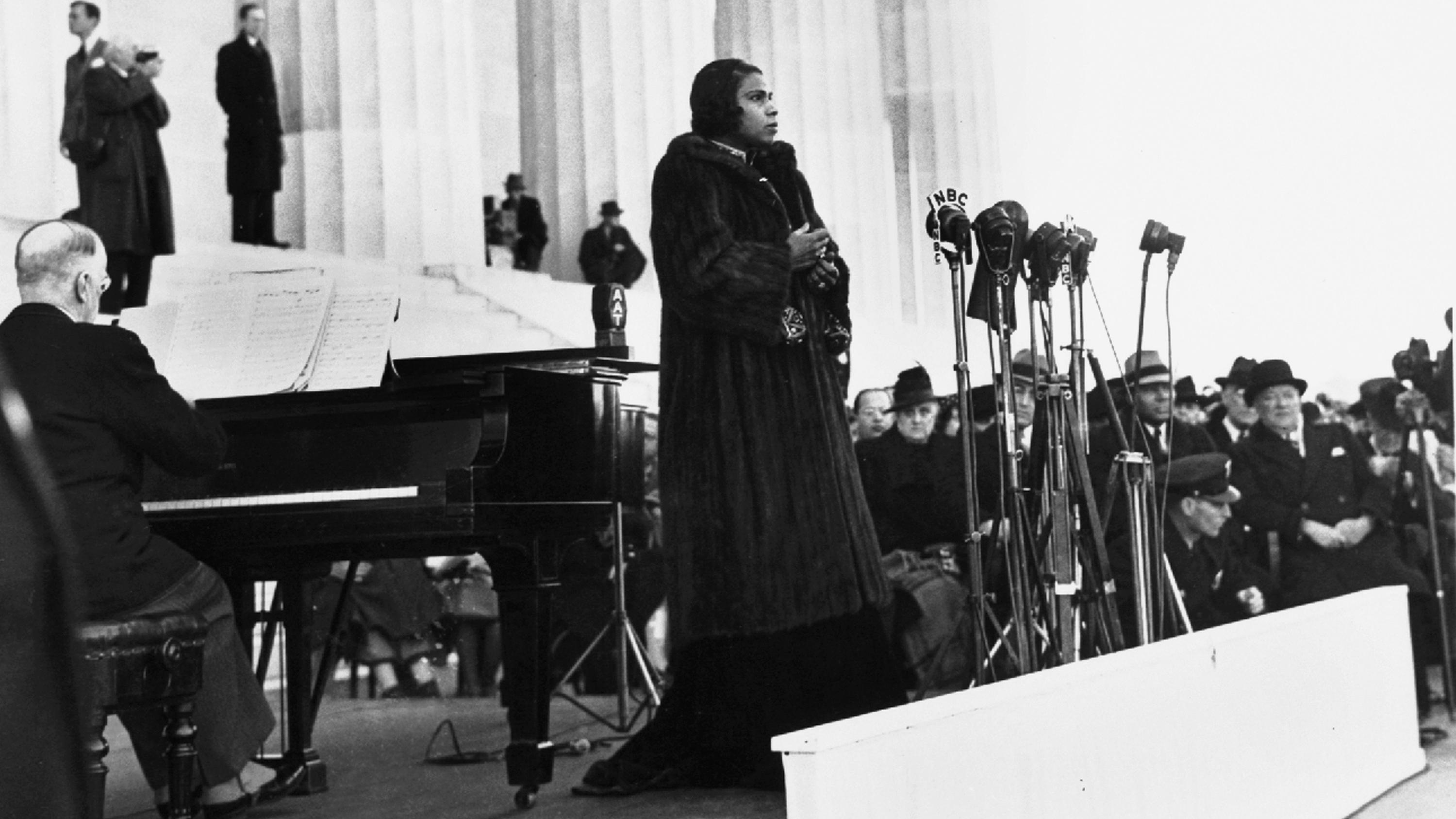
In 1939, Marian’s agent sought to book a concert at Washington D. C.’s Constitution Hall, owned by the Daughters of the Revolution. They refused the request, asserting their policy forbade African Americans from performing there.

The incident became a national headline when Eleanor Roosevelt heard of their affront. She expressed disapproval in her newspaper column and announced withdrawal of her membership from the organization.


(Eleanor and Marian, 1953)


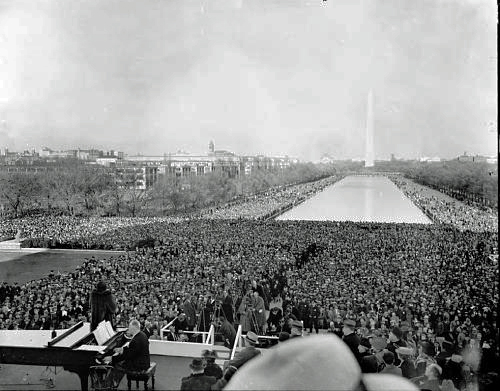
Meanwhile the Executive Secretary of the NAACP approached the Secretary of the Interior with an alternative venue. Could Marian sing from the Lincoln Memorial steps and the audience stand on the Washington Mall? Permission was granted.

Seventy-five thousand people gathered to hear her sing. Black and White attendees stood together that day, shoulder to shoulder—a picture of Martin Luther King, Jr.’s dream—nearly three decades before his famous speech, given from the same location.


(April, 1939)


More tours abroad and across the United States followed, keeping Marian away from home and family. But her mission compelled her forward:


“I sing to all, of course, but to that one, that one over the ninety-nine

whom you’d like to bring back into the fold—

if I reach that one soul, and reach it well–

then the concert was not in vain.”

—Marian Anderson [2]


By the mid-1950s the Civil Rights Movement gripped the country. Marian received criticism for not using her influence more vehemently. Perhaps they didn’t know her quiet battle behind the scenes.

For example, when the DAR sought to correct the wrong from 1939 and invited Marian to sing at Constitution Hall in 1943, she graciously accepted—with the stipulation that seating be integrated. The DAR complied.

Marian has been described as “a silent fighter who quietly opened doors for others.”[3]

Others. That was Marian’s focus, whether she was singing, serving her community, or giving interviews. In fact, she was known for questioning her interviewers, taking genuine interest in their lives.

Her nephew James LePriest remembers that even into her nineties people would comment, “You look just like Marian Anderson!”

She’d reply, “You’re the third person who’s told me that today,” and never reveal her identity.

Grace before greatness indeed.

(You can access a recording of Marian singing here:


https://www.youtube.com/watch?v=aO9yDb_9NVw&list=PL-J_hJ4fmXTik1Z1NuWrH2mXrTAk-8HVe&index=43)


Notes

[1] https://www.guideposts.org/faith-and-prayer/prayer-stories/power-of-prayer/guideposts-classics-marian-anderson-on-the-power-of-faith

[2] https://www.rightnowmedia.org/Content/Series/1165

[3] Ibid.


Other Sources:

  1. http://dla.library.upenn.edu/dla/ead/ead.html?q=year%20of%20first%20concert%20at%20New%20York%20City%20Hall&id=EAD_upenn_rbml_MsColl200&
  2. https://whittakerchambers.org/articles/time-c/marian-anderson/


Photo credits:  http://www.loc.getarchive.net; http://www.flickr.com (3).


Truth or Trash?


Attend a graduation ceremony, participate in a work-related seminar, or just join in a break room conversation, and you might hear one of these statements:

  1. God helps those who help themselves.
  2. If you can dream it, you can achieve it.
  3. Success = living life on your own terms.
  4. Believe in yourself.
  5. Follow your heart.
  6. You’ve got this.


Such statements are meant to encourage. But are they based on truth, or should a few be tossed in the trash?

Let’s consider:


Does God help those who help themselves?

Many people believe this idea comes from scripture. But the Bible teaches God helps those who recognize they can’t help themselves. The wisest course of action is to present each troubling situation to him in prayer before attempting any solution (1).


If I can dream it, is it a given I’ll able to achieve it?

Nowhere in the Bible are we told to pursue our dreams. Instead, God tells us to pursue righteousness, faith, love, and peace.

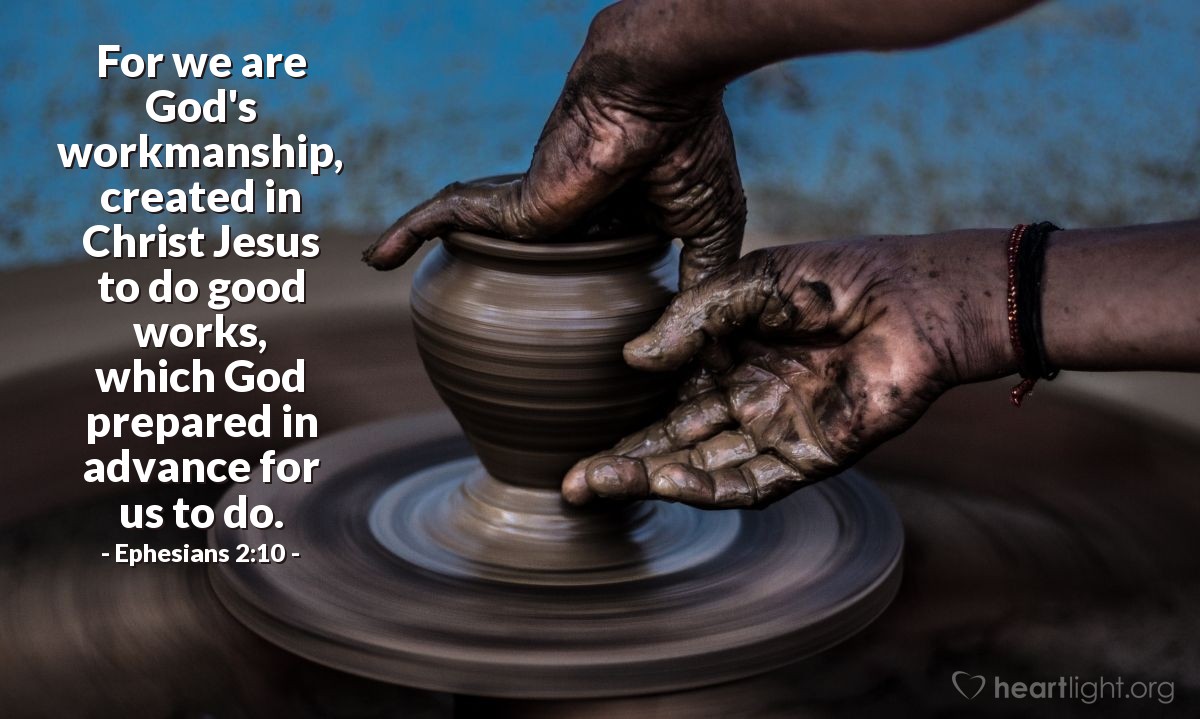
Not that God doesn’t place desires for the future on our hearts. He gladly helps us achieve all the good works He’s prepared in advance for us to do.

This is what we need to remember: “A God-given dream is never about position . . . it’s always about contribution.” And it’s through God-ordained contribution that we find satisfaction and fulfillment (2).


Is success a matter of living life on our own terms?

That kind of living most often leads to disappointment and dissatisfaction. Instead, God invites us to live the abundant life on his terms.

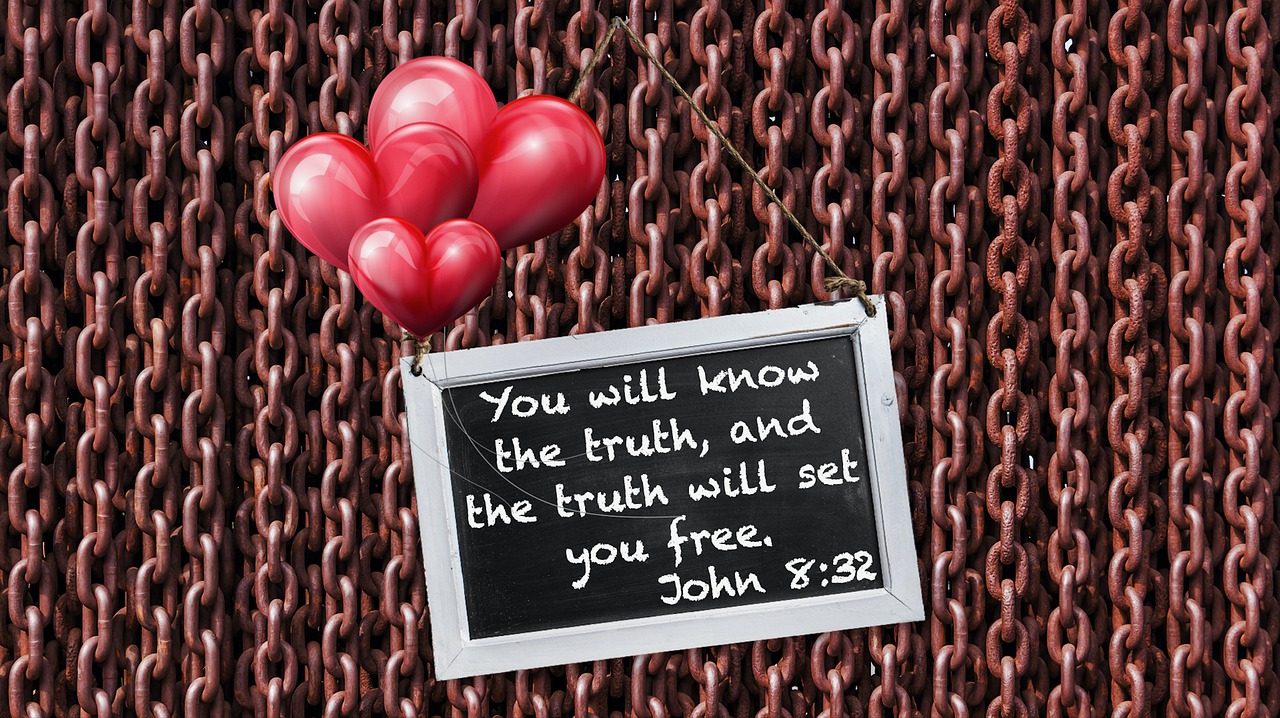
Some would say, “But God’s ways are so constrictive!” Actually, his truth provides freedom—freedom from the misery of sin and misguided choices. On the other hand, when we live the way he’s expertly designed for us, we enjoy a myriad of blessings (3).



Should we believe in ourselves?

That puts us in charge, which sounds appealing until you factor in our limited knowledge, imperfect judgment, and inadequate abilities. Due to these restrictions, stress and anxiety become constant companions while we try to keep control over our lives.

How much wiser to trust God who knows all things and can accomplish all things—including the best way to proceed through all our tomorrows.


Does it make good sense to follow our hearts?

No, our hearts are guided by feelings, desires, and emotions, which cannot always be trusted. Just ask Jennifer—Wife #2 of Jack. She believed his stories about self-centered, temperamental Wife #1. Jennifer told herself, Our marriage will be different. But she is now facing divorce herself as Jack’s eyes have wandered toward someone else.

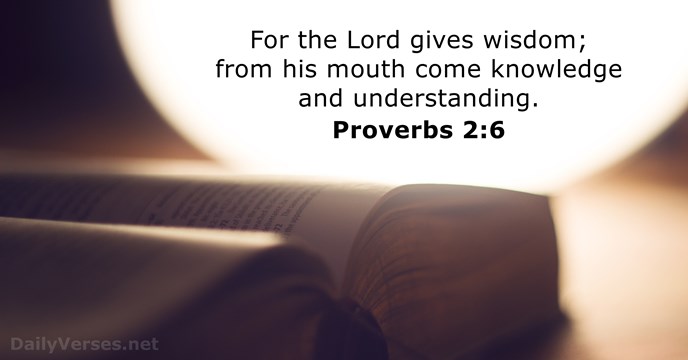
No, we can’t just follow our hearts. We need the guidance of God’s perfect wisdom (4).


Have we got this?

Not really. Life can be turned upside down in a moment—bosses terminate employment, sure investments for retirement turn to ashes, doctors reveal devastating diagnoses. What then? I can’t imagine facing such hardships without God.

How much more encouraging to remember: he’s got this. Numerous experiences of others as well as my own have proven: God always sees us through with his perfect wisdom and almighty strength—whatever we face (5).


Notice how each of these statements in bold print revolves around usour effort, our planning, our confidence—even though we’re prone to make mistakes and foolish choices. God is the only One with the wherewithal to achieve what’s best for us—100% of the time.

As it happens, all these common statements can be tossed in the trash.

So when someone says, “Believe in yourself ,”or “You’ve got this,” perhaps we could respond with a gentle nudge toward truth:

Actually, I’m eternally grateful that Someone much stronger and wiser than I am is in charge. Experience has taught me, I am much better off trusting in God than in myself.


Notes:

  1. Isaiah 41:10; Psalm 56:3; 2 Chronicles 14:11; https://www.christianity.com/wiki/christian-life/why-god-helps-those-who-help-themselves-is-presumed-to-be-biblical.html
  2. 1 Timothy 2:22; Ephesians 2:10; https://www.crosswalk.com/faith/women/why-god-doesn-t-necessarily-want-you-to-pursue-your-dreams.html
  3. Proverbs 12:15; John 8:32; see Alphabet of Joy for examples of such blessings
  4. Romans 11:33
  5. Philippians 4:19


Art & photo credits:  http://www.pxhere.com; http://www.canva.com; http://www.dailyverses.net; http://www.heartlight.org; http://www.pixabay.com; http://www.geograph.org.uk; http://www.dailyveres.net; http://www.canva.com.


Nicole blinked twice as she stared at the number on the doctor’s scale. She knew a few more pounds had glommed on her midsection, but seven?


During the ensuing consult with Dr. Ames, Nicole mentioned her knees had started to hurt, she felt tired much of the time, and seemed susceptible to every virus that came along. Dr. Ames then shared Nicole’s blood work, revealing several more concerns. His treatment solution surprised her. “I’m going to send you to a nutritionist,” he said.

Three months later, Nicole already felt much stronger and healthier—energized even. Her knees no longer hurt, and her blood pressure and cholesterol had dropped dramatically. Nicole had learned her diet included too many simple carbs and high-fat proteins, depleting her body of strength, energy, and good health.

It’s a fact: we can’t function well without proper nutrition.


The same principle applies in the spiritual realm. We can’t function well when our souls are improperly nourished. We need to ingest spiritual vitamins.

For example, consider Vitamin A. As a physical nutrient in our food, it improves our eyesight—specifically night vision. In the spiritual realm, Vitamin A might represent Adoration of God, which improves our “vision” through dark circumstances.


“When we choose to practice adoration anyway

in the midst of whatever we are feeling,

our words lift us over that barrier

and into a deeper connectedness with God.”

—Sarah Hagerty[1]


That deeper connectedness with God results in strength and perseverance for what we face.


The benefits of the Vitamin B complex include converting food into energy. In our spirits, the Bible energizes us as we convert the food of truth into the energy of faith.


“I am sorry for men who do not read the Bible every day.

I wonder why they deprive themselves

of the strength and the pleasure.”

—Woodrow Wilson[2]


Vitamin C enhances the growth of bone, skin, and muscle. Companionship with God causes us to grow in faith, character, and contentment—no matter our circumstances.


“The greater your knowledge of the goodness and grace of God on your life,

the more likely you are to praise Him in the storm.”

–Matt Chandler[3]


Vitamin D plays a role in fighting germs. Delight in God’s blessings fights off the germs of melancholy and discouragement in our souls.


“Thankfulness restores a healthy perspective about our lives.”

—Valerie Bell[4]


Vitamin E is an antioxidant that protects against cell damage. Empowerment from God protects against soul damage—from such hurtful emotions as fear, anxiety, and hopelessness.


“When God is recognized as the One who undertakes for us,

then difficulties are opportunities to trust Him . . .

contentment sings in the heart,

and all things are possible.”

—F. E. Marsh[5]


Vitamin K promotes healthy bones which support the body; knowledge of God supports the soul as we affirm his goodness and perfections.


“To fall in love with God is the greatest of all romances;

to seek Him, the greatest adventure;

to find Him the greatest human achievement.”

—St. Augustine


*     *     *     *     *     *     *     *     *     *


I praise you, O God, that as we absorb these soul-vitamins into our spirits, our trust in you will grow. We’ll find our strength renewed, and be able to run the race of life without lapsing into despair. May we be mindful each day to be enriched in your presence, in your Word, and in your power.

(Isaiah 41:31; Hebrews 4:16; Psalm 119:28; Ephesians 6:1)


Notes:

[1] Unseen, Zondervan, 2017, p. 151

[2] Soul Retreats for Busy People, compiled by Lila Epson, Inspirio, 2002, p. 40

[3] https://www.christianity.com/wiki/christian-life/inspirational-christian-quotes-about-love.html

[4] A Well-Tended Soul, Zondervan, 1996, p. 102

[5] Quote/Unquote, compiled by Lloyd C. Cory, Victor Books, 1977, p. 136


Art & photo credits: http://www.picpedia.org; http://www.pixy.org; http://www.heartlight.org; http://www.dailyverses.net; http://www.pixabay.com; http://www.pixy.com; http://www.hearlight.org; http://www.canva.com.


Standing Close

“Nancy—kitchen window!” Steve stage whispered, loud enough for me to hear.

And while dashing from the office I cried, “Coming!” because his tone meant Steve had spotted something unusual in the backyard or the strip of woods beyond that.

“Look down in the thicket to the right of the black walnut tree,” he directed. I carefully scanned the undergrowth but noticed nothing out of the ordinary.

“You don’t see four little eyes looking out?” Steve asked.

I did not.

“Stand here,” he directed, and stepped back so I could position myself directly in front of him. Then he leaned in, raised his hand to my eye level, and pointed. “Look up a foot from the base of the trunk, scan two feet to the right, under that diagonal branch, then look for four bright spots close together.”

I directed my eyes down the sight line he gave me and followed his instructions. Sure enough, two little foxes were peering out from thick foliage that provided excellent cover. But with Steve’s guidance, I was able to share with him that exceptional moment. We’ve never seen fox kits since.

God also invites us to stand close to him—not just for moments of exceptional blessing, although he offers plenty of those. No, our Heavenly Father offers us life support in the form of strength, help, serenity and more when we draw near to him. The question becomes how—how do we move in close to God? How do we best avail ourselves of all he has to offer?

Perhaps the best way to begin is:

Say yes to becoming well-acquainted with God.

As Steve explained how to spot the foxes, I never once thought he might suddenly say, “Ha-ha! Made you look!” He’s not one to play silly pranks; he has proven himself trustworthy.

The best place to become acquainted with God and his trustworthiness is in his Word. Years ago a Bible teacher recommended that whatever passage we may be reading, look for evidence of God’s attributes and think how they’re manifested in our lives. It’s a delightful, uplifting exercise.

Some are obvious. In the psalms, for example, we find many statements describing him. He is:

  • A shield around us (3:3)
  • Righteous (7:17)
  • Always loving (13:5)
  • Our rock, fortress and deliverer (18:2)
  • Our Shepherd who provides, protects, and guides (23:1-6)

Other attributes are less obvious to identify. But in the opening verses of Romans, for example, we find evidence that God is:

  • A purpose-setter for each of us (1:1)
  • a promise-keeper (1:2)
  • holy—separated from all other beings because of his perfection (v. 4)
  • gracious (v. 5)
  • our source of peace (v. 7)

And as we consider how each attribute has been manifested in our lives we soon discover: to know God is to trust God (Psalm 9:10).

Say yes to practicing his presence.

Identify stops throughout each day—moments to refocus attention on our Heavenly Father through praise, gratitude and prayer. For me that includes a quiet time each morning, exercising to Christian music, worship at the window while waiting for the microwave, and reciting scripture before falling asleep.

When I taught school, I would use the trips between my classroom and the gym, library, computer lab, etc. for moments of worship.

Say no to more screen time or whatever competes for your attention yet accomplishes little.

Years ago a young couple in our church decided to finish their college degrees—even though both worked full-time and they had two young children. How did they find time to study?

W. and T. went to bed at 8:00 when their kids did, then got up at 3:00 or 4:00 to complete assignments and prepare for tests. With discipline and perseverance they achieved their goal.

We can do the same to achieve our goal of knowing God: make time to stand close with him in his Word, in his presence.

James the brother of Jesus wrote:

Notice God leaves the choice to us; we have to make the first move.

The day of the fox kit sighting my response to Steve could have been, “Too busy—can’t come!” But I would have missed an exceptional moment.

I’m so glad my response was, “Coming!”

________________________

Other posts that address these topics:

Photo credits:  Nancy Ruegg; http://www.wikimedia.com; http://www.pixy.org; http://www.dailyverses.net; http://www.canva.com (3).

Certain Security


Uncertain times.

That phrase appears everywhere these days. Between the pandemic, political upheaval, social unrest, and concerns for the future, we can find ourselves desperate to find security—freedom from danger, fear, and anxiety.

But there is only one reliable source of security: God.


Out of his faithfulness to us, God always supplies what we need. And as it happens, the word FAITHFUL provides a tidy acrostic for eight blessings we enjoy–no matter what.

God is our:

Faithful promise-keeper. He is already ahead of us in the uncertainty of 2021, just as he went ahead of Joshua and the Israelites into Canaan. He has promised not to fail us or abandon us[1]—even when we cross dark valleys of troubling circumstances.


Attentive Father. Before we put our needs into words, God is on his way to meet it.[2]

Immutable (unchanging) Rock. He “does not change like shifting shadows.”[3] In a world where situations and relationships can change unexpectedly, God remains his rock-solid, reliable, perfect self.

Truth-Revealer.   The truth of God’s Word has been proven through numerous disciplines and in the lives of millions. Within its pages we find the wisdom and support we need.[4]


“The remedy for discouragement is the Word of God.

When you feed your heart and mind with its truth,

You regain your perspective and find renewed strength.”

–Warren Wiersbe


Hope. Our God of hope fills us with all joy and peace as we trust him. Hope allows us to see his blessings even amid hardship, and know with certainty he will use even our painful circumstances to accomplish good.[5]

Foundation. God’s ways provide a strong foundation for life, especially when storms of sorrow come. He upholds us with his love and compassion, peace and comfort that transcend our ability to explain.[6]


Unerring and righteous Judge. “Your kingdom is founded on righteousness and justice,” wrote the psalmist, “love and faithfulness are shown in all you do.” And because he is righteous and just, everything will work toward the best outcome in the end.[7]

Light, even in dark times.[8] Too often we focus on the swirling blackness of circumstances around us. But “God’s lights in our dark nights are as numerous as the stars, if only we’ll look for them.”[9]


Throughout my years as a blogger, I’ve shared many experiences illustrating how God has been faithful to our family. One in particular comes to mind that encompassed all of the above blessings.

Leadership of our church denomination assigned my pastor-husband to another church across state.   We were not ready to move. God ministered to me during those dark days of transition as I journaled through the psalms, affirming his love and compassion, peace and comfort. And as a result, hope began to blossom.


I grew in spiritual strength, compelled to rely on him through the grief of leaving beloved friends and the uncertainty of what lay ahead. He miraculously provided a teaching position for me not far from our new home. And in the end everything did work for good as that struggling church became a thriving community. (You can read a fuller account at After the Fact.)

In a book of liturgy, St. Teresa of Avila (1515-1582) kept a bookmark with the following affirmation:


“Let nothing disturb you; let nothing dismay you;

all things pass: God never changes.

Patience attains all it strives for.

He who has God finds he lacks nothing.

God only suffices.”


God only—in all the numerous demonstrations of his faithfulness–is our certain security.


_______________________________________


Should you wish to read more examples of God’s faithfulness, you can click on the following links:


Notes:

[1] Deuteronomy 31:6

[2] Matthew 6:8

[3] James 1:17c CSB

[4] Psalm 119:24, 140, 160

[5] Romans 15:13; 8:28

[6] Isaiah 54:10; Philippians 4:6-7

[7] Psalm 89:14 GNT; Genesis 50:20

[8] Psalm 27:1

[9] Max Lucado, Grace for the Moment (J. Countryman, 2000) p. 195


Art & photo credits:  http://www.wikimedia.org; http://www.canva.com; http://www.pxhere.com; http://www.heartlight.org; http://www.dailyverses.net; http://www.pixy.org; http://www.heartlight.org.


When Truth Unfolds

Young William Ramsay, along with his bride of just one year, leaned against the rail of their ship. Eagerly they scanned the horizon in order to catch the first possible glimpse of their destination, Smyrna, Turkey, with its whitewashed structures nestled into green hillsides.


(Smyrna, 1900)


William’s archaeological adventure, funded by a scholarship, was about to begin.

While the ship creaked around him, William daydreamed of the renown he would garner even as a young Oxford professor, when he proved at least one book of the Bible–Acts–was mostly fiction.

Granted, no one could say unequivocally that Peter and Paul had not performed miracles in Jesus’ name. But he could prove that Luke’s record of the apostles’ work was full of errors in the categories of geography and history, thus casting great doubt on the whole.

The inspiration for such an endeavor began with William’s exposure to the Tubingen School of thought. They asserted that only four of the epistles were actually authored by Paul, and the rest of the New Testament was written much later—perhaps two hundred years later.


(The School of Theology at Tubingen University today)


In an effort to lionize the heroes of the early church, these Tubingen scholars decided Luke had exaggerated the stories and didn’t concern himself with accurate details. But no one had proven these theories until William set out to do so in 1880.

Soon after arrival in Turkey, the Ramsays met Sir Charles Wilson, an experienced explorer. He invited William to accompany him on two lengthy investigations that included Phrygia, Lycaonia, Cappadocia, and Galatia (1).


(Ancient limestone cave houses of Cappadocia,

deteriorated into cone-shaped structures due to erosion)


Beginning with these excursions and continuing over the next thirty-four years, Ramsay saturated himself with the geography and history of the Graeco-Roman world. He began to uncover facts that refuted the Tubingen theories–information that only a first-century eyewitness like Luke could have known.

For example:

In Acts 14:1-7 Luke reports the escape of Paul and Silas from Iconium, before they were stoned to death. They fled to the Lycaonian cities of Lystra and Derbe.

However, later Roman writers including Cicero asserted that fleeing to Lystra and Derbe wouldn’t have saved the men because all three cities were in the same district.


(Turkish town of Konia, Paul’s Iconium–1911)


But in 1910 Ramsay discovered a telling inscription. In the first century A.D., Iconium was not under the authority of Lycaonia but of Phrygia, from A.D. 37-72—the exact time period when Paul and his companions would have visited the area (2).

Acts 17:1-9 relates the experience of Paul and his companions in Thessalonica. Luke uses the term politarch (translated “city officials” in NIV) in verse 6, a word not found in any other Greek literature. But Ramsay found five inscriptions in Thessalonica that used the title (3).

In Acts 18:12-17 Paul was brought before Gallio, the proconsul of Achaia. At Delphi, Ramsay and his team discovered an inscription of a letter to the proconsul from Emperior Claudius: “Lucius Junios Gallio, my friend and proconsul of Achaia.”


(The ruins at Delphi, Greece)


Historians date the inscription to 52 A.D., which corresponds to the time Paul and Silas would have visited the area (4).

In all, Ramsay was able to verify ninety-five geographical details included in the book of Acts, as well as historical facts and the names of people who existed at the time. He found no evidence of errors (5).


(Sir William Mitchell Ramsay, 1924)


Ramsay authored numerous books that give record of his findings. In one he wrote:

“I began with a mind unfavorable to it, for the ingenuity and apparent completeness of the Tubingen theory had at one time quite convinced me . . .but more recently I found myself brought into contact with the Book of Acts as an authority for the topography, antiquities, and society of Asia Minor. It was gradually borne upon me that in various details the narrative showed marvelous truth . . .

“. . . Luke is a historian of the first rank not merely are his statements of fact trustworthy . . . this author should be placed along with the very greatest historians” (6).

Some say Ramsay’s search for truth brought him to faith in Christ; others argue that he did not embrace Christianity.

But I can’t imagine dedicating decades of my life toward a cause in which I held no personal belief.

What I can imagine is God leading Ramsay from proof to proof while simultaneously working in his heart, bringing him to the point of belief in the Bible and finally in his Son as Savior.


Notes:

  1. See Acts 18:23, 14:6, and 2:9 for mention of these provinces.
  2. https://www.blueletterbible.org/Comm/stewart_don/faq/historical-accuracy-of-the-bible/question13-is-acts-historically-accurate.cfm
  3. https://highergrounds.live/2017/12/05/sir-william-ramsay-and-the-book-of-acts/
  4. https://christiantrumpetsounding.com/Archaeology/Archaeology%20Bklt/Archaeology%20Verifies%20Bible%20Ch2.htm
  5. http://taoandtawheed.com/TaoTawheed/TabId/108/ArtMID/550/ArticleID/61/Luke-Got-His-Facts-Straight.aspx
  6. William M. Ramsay, The Bearing of Recent Discovery on the Trustworthiness of the New Testament, 1915, 222.


Other sources:

  1. https://www.5minutesinchrchhistory.com/sir-william-ramsay/
  2. https://bibleevidences.com/archaeological-evidence
  3. https://biblicalstudies.org.uk/pdf/ramsay/ramsay_gasque.pdf


Photo credits:  http://www.picryl.com; http://www.wikimedia.org; http://www.pixabay.com; http://www.picryl.com; http://www.wikimedia.com; http://www.loc.getarchive.net; http://www.pxhere.co


Consider the Evidence


Years ago my husband Steve and I lived in a small town outside Lexington, Kentucky. All through the area old stone walls stitch together fields and pastures into a landscape quilt. We often marveled at the workmanship as well as the time and effort required.

According to historians, the rocks were gathered out of the fields by Scot-Irish immigrants of the 1700s, who settled the area and needed to clear the land for farms. They used the same dry masonry skills of their ancestors back in the British Isles.

As decades passed new immigrants built more walls as did the slaves who followed.


(Similar walls in Ireland)


Those stone walls came to mind as I read again a story of Samuel, recorded in 1 Samuel 7:1-12. He set up a memorial stone in celebration of an Israelite victory over the Philistines. Samuel called it Ebenezer (which means Stone of Help), explaining that “thus far the Lord has helped us.”

Thus far in our lives the Lord has helped you and me also. And if we collected a rock to represent each time God has helped us, we’d surely accumulate enough to construct many walls, stitching together our experiences into a kingdom quilt—in the kingdom of God, that is.

And what a memorial it would be to God’s faithfulness!

As many of you know, I began a journal in 1983 of God’s faithfulness to our family—a record of his provision, protection, guidance, and blessing. To date there are nearly 1400 entries.


(Note how yellowed these early pages have become!)


If I gathered a Stone of Help for every event noted, I could build a wall ten stones high and nearly 140 feet long. No doubt a record of your life would produce a similar-sized wall, perhaps longer.

Imagine an aerial view of thousands of such walls criss-crossing the landscape—a visual reminder of God’s faithfulness to all of us. Our eyes would pop in wonder.

During this challenging year of 2020, God has demonstrated his faithfulness in numerous ways.


I am particularly thankful for:

  • Sightings of wildlife that turn window glances into marvel fests
  • Family and friends within easy reach through various forms of technology
  • Livestreamed church services that allow Sunday worship with our congregation
  • No hospitalizations for Steve in 2020 (Last year he was admitted four times for various problems related to his liver transplant and a subdural hematoma.)
  • Emotional and spiritual health in spite of isolation

And all of us have benefited from God’s unending supply of strength. We’d do well to remember:


I’m guessing you can remember a situation or two when you thought it impossible to press on. But you did—because of God’s enablement.

Other times responsibilities piled up to impossible heights, and the emotional crush was nearly unbearable. But then—miraculously—cancellations and postponements occurred, assistance materialized, and the pile decreased to manageable size–because of God’s intervention.

And why is all this looking back at the past significant? Because:


Where others might say, “So far, so good!” and hope for the best, we say, “So far, so God!” and rely on him whose help is certain. He never fails to do what he has spoken (Psalm 145:13b).

The millions of virtual Ebenezers among us provide reliable evidence we can count on–for 2021 and beyond.


A blessed and confident New Year to all!


Art & photo credits:  http://www.pxhere.com; http://www.needpix.com; Nancy Ruegg; http://www.heartlight.org; http://www.canva.com; http://www.pxhere.com; http://www.pixabay.com.


Does that title sound familiar? It’s an old Christmas carol—my maternal grandmother’s favorite. Sadly it never occurred to me to ask her why.

Perhaps it was the lilting tune that dances up and down the treble clef, with leaps from low notes to high. (You can listen to the carol here: There’s a Song in the Air.)

Perhaps Grandma especially enjoyed the expressive lyrics since she was a poet herself. I found this Christmas poem in her journal.  (Keep scrolling for a typed version–easier to read.):


FOR CHRISTMAS 1955

Star of the East that shone for men

To guide to Jesus’ side,

Shines in the Christian heart today

Where the Lord Jesus abides.

For he’s the Bright and Morning Star,

Turning darkness into light.

He died on Calvary to save,

To remove sin’s dark blight.

Baby Jesus was born a King,

A Savior to die yet to reign.

He left His home in heaven above

And chose instead earth’s pain.

–C. E. M.  (Clara Edna Mensinger)


Perhaps “There’s a Song in the Air” appealed to Grandma because her creative soul responded to such artful lines as these:


  • And the star rains its fire while the beautiful sing
  • And that song from afar has swept over the world
  • In the light of that star lie the ages impearled
  • Ay! We shout to the lovely evangel they bring


“The Angel Appears to the Shepherds”

by Philip James de Loutherbourg (1740-1812)


I wonder if Grandma ever became curious about the origins of the carol? Did she know that the composer of the tune, Karl Harrington, discovered the lyrics while reading the works of one of his favorite authors Josiah Holland?

Holland was a novelist, poet, and editor of the popular Scribner’s Monthly. In the 1870s he reprinted his Complete Poetical Writings. This was the book in which Harrington found the poem “There’s a Song in the Air.”

At the time, the summer of 1904, Harrington was struggling through an overwhelming assignment: to compile a new hymnbook for the Methodist Church. Even for someone with his background as a highly trained musician, choral director, and composer–the task proved difficult.


Karl Harrington (1861-1953)


While taking a rest one hot afternoon, he picked up Harrington’s book, came across the poem, and immediately felt inspired to set the lovely verse to music.

He went to his organ and as he read the words aloud, let his fingers drift along the keys. A melody soon began to form. Harrington included the carol in the new hymnal.*

Perhaps like Harrington, my grandmother appreciated the fresh wonder stirred up by such inspiring lines as:


  • The manger of Bethlehem cradles a King!
  • There’s a tumult of joy over the wonderful birth
  • We rejoice in the light, and we echo the song, that comes down through the night from the heavenly throng


Grandma didn’t know Jesus until her mid-thirties, and up to that time had endured several painful traumas. (You can read a bit of her story in the post, The God of Rachel, Henry, and Clara Part 2.) But her newfound relationship with God brought peace and strength.


(Grandma Clara, years later, 1968.

P.S.  Those glasses were the height of fashion back then!)


Perhaps a carol about joy, light, and song reminded her of the transformation Christ had brought to her life.

Grandma would want these lyrics to speak to our hearts too, refreshing our wonder in a Savior once cradled in a manger, destined to be King, who comes to us with “the lovely evangel” (verse 4, line 3)–the good news of God’s gracious plan to rescue us.

Hallelujah and a blessed Christmas to all!


*Ace Collins, Stories Behind the Best-Loved Songs of Christmas (Grand Rapids, MI: Zondervan, 2001) 164-166.


What is your favorite carol and why? Please share in the comment section below!


Art & photo credits:  Nancy Ruegg (2); http://www.pixy.org; http://www.wikimedia.org; http://www.hymnary.org; http://www.pixy.org; Nancy Ruegg.


Mary’s Joy/Our Joy

(One of Wilson Alwyn Bentley‘s photos)


Remember your first glimpse of a snowflake under a magnifying glass and your reaction to its tiny intricacies? I’ll bet your eyes grew wide and you leaned in for a close-up view. You probably uttered Wow! or Look at that!

And perhaps while gazing at such infinitesimal beauty you learned:


Only when we examine something closely

can we begin to appreciate its value.


Scripture urges us to magnify God.


To magnify God is to look closely at him and take careful notice of his actions and attributes. Mary, the mother of Jesus, did exactly that. We read an example in the account of her visit to Cousin Elizabeth (Luke 1:39-56).

Elizabeth was much older than Mary, well beyond child-bearing age. But like Sarah of the Old Testament, God had intervened for her. Elizabeth would soon be the mother of John the Baptist.


When Mary first arrived and offered her greeting, Baby John leaped in Elizabeth’s womb (Luke 1:41). (Can you imagine how that would feel, to have a baby jump inside you?)

Elizabeth responded with a blessing for Mary and the holy baby her young cousin carried. Then Mary became overcome with joy and incredulity herself, and burst into praise. Her song is called the Magnificat, Latin for magnifies.

For ten verses (Luke 1:46-55), Mary magnifies the Lord, examining the reason for her joy (vs. 46-49) and looking closely at God’s attributes and actions (50-55). Never mind her relative poverty, the misunderstanding and derision of others, or the uncertainty of the future. Mary focused on God who was working a miracle within her.


If your Bible includes cross-references you’ll notice Mary quoted bits and pieces of seven psalms. In addition, she included fragments from Isaiah, Habakkuk, Exodus, Genesis, 2 Samuel, and Jeremiah.

It would appear Mary wove such far-spread scriptures into this beautiful prayer–on the spot! She must have been an intelligent young woman.

Perhaps she grew up in a godly home where the Law and Prophets were highly esteemed. Her parents may have taught her or, if she had brothers, Mary listened as they recited their lessons, and she too learned the ancient scriptures.

Now as Mary and Elizabeth greet one another, the young woman rejoices in God her Savior. She highlights his mercy, might, faithfulness, holiness, and saving power.


And yet in spite of his awesome greatness the Mighty One has been mindful of her—a humble, peasant girl. He has done great things on her behalf. Notice she prays in past tense, as if the events Gabriel announced had already taken place (v. 49).

Then Mary itemizes specific ways God benefits his people:

  • He extends mercy to those who reverence him
  • He performs mighty deeds
  • He has scattered the proud
  • He has brought down rulers, but lifted up the humble
  • He has filled the hungry, but sent the rich away empty
  • He has been merciful to Israel

We too are God’s people, if we believe in his Son, Jesus. And he benefits his people in these same ways today just as he has through all the eons of time.

No doubt God has been at work in your life too. He’s been mindful of you and blessed you (v. 48); he’s done great things for you (v. 49) and extended his mercy to you (v. 50).


View the activity of God in your life through the magnifying glass of meditation. Take note of his actions and attributes on display in the events of your life. And then please share with us an example in the comment section below.

Let us magnify the Lord together for his awesome deeds!


(Revised and reblogged from 12-20-2012.)


Art & photo credits:  http://www.metmuseum.org; http://www.pixabay.com; http://www.wikimedia.com; http://www.heartlight.org; http://www.pixabay.com (2).


‘Recognize that line of lyrics? It comes from verse three of “O Holy Night.”

“His holy Name” is expressed 256 different ways in the Bible, from Branch of the Lord (Isaiah 4:2) to bright Morning Star (Revelation 22:16). Why so many?

“I suppose this was because He was infinitely beyond all that any one name could express,” evangelist Billy Sunday once offered.

Just within the birth accounts of Bible books Matthew and Luke, we’ll find seven names for Christ. And these alone provide plenty of reason to praise him. Granted, these names are well-known, but let’s not allow familiarity to numb us to their splendor. As we unpack several of them below, may you find renewed wonder in his Personhood.


Jesus, Savior   (Luke 1:31, 2:11)

Jesus’ Jewish contemporaries would have called him Yeshua. Ya as an abbreviation for Yahweh, one of the names for God (Exodus 3:14), and yasha, which means rescue, deliver, or save in Hebrew.

A savior rescues or delivers from danger or harm. He preserves or guards from destruction or loss, keeps one from being lost to an opponent, maintains and preserves.

But why would God send his Son as Savior for paltry creatures like us, who require saving from the harm sin causes in our lives?

It’s so simple, some people miss it: God made us, he loves us, and wants to be in relationship with us—forever. So he sent his Son Jesus “to fit us for heaven to live with him there.” (1). All we need to do is say yes to him.


Son of the Most High, Son of God (Luke 1:32, 35)

Such names emphasize his majesty and supremacy over all (Ephesians 1:19-21).

Mary and other devout Jews of her time would have known this name for God because it’s found throughout the Old Testament, from Genesis (14:18) to Daniel (7:18).

When the angel Gabriel announced to Mary that her child would be Son of the Most High God, he was declaring Jesus would embody the magnificent essence of God (2).


Messiah (Luke 2:11)

Messiah means “anointed one” or “chosen one.” Christos (Christ) is the Greek equivalent.

The Jewish people of Jesus’ time knew the ancient prophecies concerning their Messiah. They expected Jesus to deliver them from the Roman occupation, to set up his own kingdom in which they would be rulers, not understanding that the Kingdom of God is spiritual, not political.

Even today people look to Jesus for rescue from problems and pain. They want him to make everything right, not understanding that perfect bliss in this world is an impossibility because of humankind’s sin.

However!  “Our troubles have always brought us blessings and they always will.  They are the black chariots of bright grace” (Charles Spurgeon).


Immanuel   (Matthew 1:23)

Matthew made clear:  this Hebrew name means “God with us”—not in a general sense, like an out-of-state business owner who asserts unity with his distant employees, but in a one-on-one personal sense. He sits beside us in our homes, accompanies us to work, watches over us as we sleep, and deeply cares about all our concerns (3).

In fact, he not only cares about every disappointment, every pain, and every calamity, he suffers with us (2 Corinthians 1:3-5).

And as we avail ourselves of his comforting presence we find the stability we need (Psalm 46:1-2).


*     *     *     *     *     *     *     *     *     *


We praise you, O Son of God, for crafting us with the capacity to know you as our Savior, Messiah, and Immanuel, to sense your presence, receive your comfort, and experience your peace. Through this Christmas season and always may we praise you for your magnificence, reflected in every aspect of your holy Name!

You deserve nothing less.

(Colossians 1:16; John 1:14; 2 Thessalonians 2:16, 17; John 14:27)


Notes:

  1. John 3:16 and the last line of “Away in a Manger,” as originally written
  2. https://www.gty.org/library/blog/B151218/son-of-the-most-high
  3. Matthew 28:20; Psalm 121:2-5; 1 Peter 5:7


Art & photo credits:  http://www.pixaby.com; http://www.wikimedia.com; http://www.pxhere.com; http://www.pikist.com; http://www.dailyverses.net; http://www.heartlight.org.


When the House is Quiet

Impressions Becoming Expressions

Mitch Teemley

The Power of Story

Still Traveling

Impressions Becoming Expressions

Living Our Days

Gaining a heart of wisdom

He Said What?!

I'm Patty, and my husband and I are living with our adult son who has autism and epilepsy. I love sharing lessons learned from life around me, especially life with Aaron.

Meditations of my Heart

Impressions Becoming Expressions

Linda Stoll

Impressions Becoming Expressions

Signora Sheila

Notes on Life, Faith & Italy

Heidi Viars

Finding the Image of God