Feeds:
Posts
Comments


USA-NYC-American_Museum_of_Natural_History


Sometime in the 1940s the New York Museum of Natural History created a living room space–from the perspective of a dog. Table legs rose like tall pillars, chair seats hovered overhead, and the mantel of the fireplace loomed higher still.

Now any human museum-goer would instantly know this was an unrealistic representation. But if we were all terriers, we’d bark to one another how accurately the decorator had appointed the room.

Which view of the museum display is correct—that of humans or dogs? Our instinctive response is: the way a room appears to us as humans is the accurate view.

And we think, The poor dogs—living their whole lives with an illusion they accept as reality.

 No doubt that museum space provided plenty of entertainment. But perhaps an important lesson was hiding among the over-sized furniture and features. What if we compared Planet Earth to that room? Then we are the small creatures gazing upwards—at towering mountains, high plateaus, and tall waterfalls.


Pailon-del-Diablo-ecuador

(El Pailon del Diablo–Ecuador.  Can you spot the people?)


Oh, but our view must be expanded further—far beyond Mount Everest even. We must consider what Planet Earth looks like to God, who made the numerous planets, spinning in billions of galaxies. On a map of the stars, our tiny planet isn’t even represented.

Yet it’s so easy to lose sight of this reality.  Our sphere of contacts–family, friends, and coworkers –becomes our whole world.  The pursuit of happiness within this microcosm becomes our whole focus.  And we think living life “my way” is the ticket to happiness and satisfaction.  Like our poor canine friends, we can easily spend our whole lives accepting an illusion as reality.

Then there’s God’s point of view, as taught by Jesus:


110510


“How blessed are those

who are hungry and thirsty for righteousness,

because it is they who will be satisfied!”

–Matthew 5:6 (ISV)


Which view of reality is accurate–our view or that of our sovereign Maker (who sees, understands and controls everything)?

Logic supports the latter. The real world-view is God’s view.

And if we’re ready to accept that reality, then we must also agree it makes sense to follow his instruction manual, the Bible, for living in the world he created.

My self-serving, egocentric side says, Wait a minute. I have my own ideas of what’s best for me. I ought to know what will make me happy. Doesn’t my viewpoint count for anything?

Such thinking exposes my lack of understanding, putting me on the level of a dog in that museum living room! My world view is flawed.

No, I’d be much wiser to embrace God’s point of view as revealed in his Word, and learn about true reality—the reality of his invisible, spiritual kingdom and its benefits:

  • His foundation of security


a08f3c260c4d86229c5e2290aab9d09d

“Those who know your name will trust in you,

for you, Lord, have never forsaken those who seek you.”

–Psalm 9:10 (NIV)


  • His way to happiness


691f8e21811785da8bdf30fecfd46e5f

“The one who trusts in the LORD will be happy.”

–Proverbs 16:20b (HCSB)


  • His gift of peace


1d0ac3d0af6d92af66cfb0e79ab1e541

“Let the peace that comes from Christ rule in your hearts.”

–Colossians 3:15a (NLT)


*     *     *     *     *     *     *     *     *     *


Thank you, Father, for these benefits and more, lovingly bestowed as we seek to live within the spiritual reality of your kingdom. Yes, it’s invisible to our human eyes, but no less real than the wind. And as we follow you and obey your Word, the more real your world becomes, the more wonders we experience. Help me to outgrow the immaturity of illusions and embrace your reality!


(Information about the New York Museum of Natural History room display came from Ralph Sockman’s book, The Higher Happiness, Abingdon Press, 1950.)


Photo and art credits:  www.wikipedia.org; http://www.trafficamerican.com; http://www.dailyblossom.com; http://www.pinterest.com (3).


WA264_Love_of_our_family_wall_quotes_words_letters_sayings_decals

(www.quotesgram.com)

The Ruegg family is making special memories this week, to treasure and keep for always.  I’ll be back with a new post next week!

71776


No doubt many of you know the name, Jan Karon. She’s the author of the Mitford series, named after the fictional village tucked into the Blue Ridge Mountains where most of her compelling stories take place. Within the pages of these thirteen books live Father Tim, an Episcopal priest, and a delightful cast of eccentric, endearing characters.

One of Mitford’s residents is Dooley, a foster child who is eventually adopted and the recipient of God’s generous, providential care.

In volume #11 of the series, In the Company of Others, Ms. Karon writes of Dooley: “While most people understandably took family for granted, he took it for grace.”

Isn’t that a wonderful quote? I copied it down with the thought, I want to be like Dooley and take all gifts for grace—never for granted.

Gifts such as:

  • A praise song that causes my heart to overflow in joyful, reverential tears.
  • A word of instruction or encouragement that speaks to a need in my life with uncanny accuracy.


IMG_0743

  • Participation with God in his creation–even if it’s just in the yard.  Gardening offers great pleasure and a sense of his presence in the beauty of leaf and flower; the concert of bird song as I putter; the aroma of soil, grass, and blooms; the delicate softness of petals–all gracious gifts of my Heavenly Father.
  • Holy beauty in a writer’s words (even in a secular work)–words like: “Lingering as long as it could, sunset’s sad joy filmed over the day with a delicate blush…” (Susan Vreeland, Lisette’s List, 355).

To “take all gifts for grace” can produce ethereal joy.  For a moment we experience the transcendent, as if the veil between heaven and earth is parted ever so slightly, and a single beam of God’s shimmering glory pierces through the dullness. Suddenly we’re basking in the warm euphoria of his presence.

We never want the moment to end. But inevitably the splendor begins to fade and we’re left reeling like Jacob—as though we’d been transported to the gate of heaven (Genesis 28:17).


3886825d61642e9e40513cc3b0f5aed8


And we’re anxious to repeat the experience.

Is it wrong to desire frequent glimpses of God’s glory?

I don’t think so. Yes, on the one hand we’d be misguided to try and evoke such moments (“Come on, tears! FLOW!”). On the other hand, surely God wants us to live aware, alert to receive those gifts of grace when he sees fit to grant them.

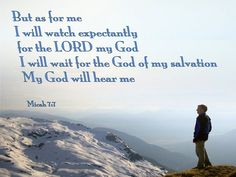
Like Micah, the prophet, we can affirm:


aeb840bdb7c75d8b80d14fc6043675eb

(“As for me, I watch in hope for the Lord,

I wait for God my Savior.”

–Micah 7:7, NIV)


Surely watchfulness is part of seeking—seeking to know him more intimately, to experience him more profoundly (Jeremiah 29:13).


2958f422983b6512856e42b6b07d56eb


And as we grow in our awareness of these glory-infused moments, we begin to realize how often they really do occur.

Just in creation alone we:

  • See him in the towering mountains and trees, the powerful oceans and rivers. There is glory in the grandeur.
  • Hear him in a pounding waterfall and crashing thunderstorm. There is glory in the power.
  • Feel him in a soft breeze and gentle rain. There is glory in the whisper.
  • Take in his aroma from the pungent pine tree and sweet honeysuckle vine. There is glory in the refreshing.


162769


In fact, his glorious gifts of grace are all around us.


*     *     *     *     *     *     *     *     *     *


Thank you, oh God, for the gracious display of your splendor throughout each day. You fill my heart with wonder and joy every time I catch a glimpse of your glory—from an early morning bird chorus to a liturgical dance performed by children, from the encouraging word of a friend to the warm welcome of strangers. I praise you that your gifts of grace are bestowed with such delightful creativity! May I never take them for granted.


What gift of grace has filled your heart with euphoric gratitude lately?  Tell us about it in the Comment section below!


(Art & photo credits:  www.goodreads.com; Nancy Ruegg; http://www.pinterest.com (2); http://www.doityourself.com.)


o-M2QbOH


Have you heard or read such statements as these?

  • Dream big! With God you can go as far as you can think or imagine.
  • Faith may not make things easy; but it does make them possible.
  • When God makes a promise he also makes a provision.

All three statements are valid IF the promises we’ve embraced coincide with God’s plan. If not, God may not be making that dream come true, or turning the unimaginable into possible, or making provision for a particular fulfillment.

That means the perfect wife or husband may not show up, the perfect job may not open up, the perfect family may not be delivered up, and the perfect ministry opportunity (in our view) may not match up with those making the choices.

What do we do when our dreams seem to be fading away like vapor?


maxresdefault


We need to remember:


  1. God is not limited to our timeframe.


We know that, right?  Sometimes God requires a waiting period before making our dreams reality. The dream will be fulfilled—but in his time.  Scripture is full of examples of those who had to wait; we’ve considered them before:  Abraham, Jacob, Joseph, David—to name a few.

Eventually their dreams came true.  Abraham became a father, Jacob was blessed with twelve sons, Joseph  became prime minister of Egypt, and David, the king of Israel.

However, we’d be wise to hold onto our dreams with a light grip, as these same four patriarchs demonstrate:

  • Abraham saw the birth of only one son of promise, not exactly the nation God foretold.
  • The full extent of blessing promised to Jacob was not fulfilled until the birth of Jesus.
  • David dreamed of erecting a temple for God, and though he collected an impressive store of materials, the privilege of building went to his son, Solomon.


SolomonTempleCropped2


Perhaps, like these Bible heroes, God has chosen to fulfill our dreams after we’re gone.

I have to decide: Will I balk at such a reality or embrace it?


  1. Maybe my heart is set on the wrong dream—even though it seems right and worthwhile.

God may desire that I set aside my Plan A and take hold of his Plan B. Oh, but that sounds like settling, doesn’t it? Not at all. God’s plan is never second best. It’s always better (Hebrews 11:39-40)!

Also important to understand: God may have chosen me to be a foundation-builder—part of the preparation process. Someone else will be the presentation. John the Baptist is a perfect example, as he prepared the way for Jesus.


john-baptist


Foundation builders serve as mentors, planners, and seed planters. Again, will I balk at such a reality or embrace it?


  1. We can be “certain of what we do not see” (Hebrews 11:1).

That includes this truth: When we do not see one promise (or more) being fulfilled, we can be certain other promises are. God is loving and good. Always. He will demonstrate his grace and compassion–no matter what.

Part of God’s goodness prompts him to foster within us: a) a deeper relationship with him (Jeremiah 33:3); b) greater obedience to his all-wise ways (Hebrews 12:7-11, 14), and c) greater spiritual strength (2 Corinthians 12:7-10). Once we begin to realize the benefit of these blessings, other desires will fade in importance.

(Note to self: When my appreciation for spiritual blessings overrides my celebration of material and circumstantial blessings, I’ll know that the maturity James talked about is taking root.)


James-1-4-Let-Patience-Have-Its-Perfect-Work-brown-copy


*     *     *     *     *     *     *     *     *     *


I praise you, oh God, for your omnipotent ability to supply, guide, sustain, change, correct, and improve–in your time, for your good purpose. Help me to rely upon your love and wisdom to choose what’s best for me, and your power to live in godly ways for your glory. That is the way to a fulfilling, satisfying life!


(Art & photo credits:  www.twitter.com; http://www.youtube.com; http://www.saltlakebiblecollege.org; http://www.pinterest.com; http://www.knowing-jesus.com.)


No Other Nation


Destroyed_Warsaw,_capital_of_Poland,_January_1945

(Warsaw, Poland, January 1945)


World War II reduced much of Western Europe to rubble. Homes, businesses, factories, and much of the infrastructure were damaged or destroyed. How could the region rehabilitate itself? It couldn’t. Even two years after the war ended, very little rebuilding had been accomplished. Many people were living in poverty. Government agencies, in chaos themselves, could offer little if any support.

America came to the rescue, helping to rehabilitate post-war Europe at the cost of $22 billion dollars.   That’s about $182 billion in today’s economy, to assist sixteen nations, including Germany, for six years (1946 to 1952) (1).

Granted, the investment provided a boon to our economy when those nations began to thrive and became strong trade partners with us. National security was undoubtedly enhanced as well.

But a nation such as ours, rich with resources and populated by creative, entrepreneurial people, could surely have survived quite well without their participation. Besides, think what America could have done with $22 billion.

No, greater than economic gain or national security was the importance of doing the right thing and providing humanitarian aid – even to our enemies.


Picture of German Children receiving aid from LWR in 1951, taken from Together in Hope book by John Bachman.

German Children receiving aid in 1951, taken from Together in Hope book by John Bachman.


“Our policy is directed not against any country or doctrine but against hunger, poverty, desperation, and chaos,” said then-Secretary of State, George C. Marshall.

No other nation in history has offered such post-war assistance—and so generously. Now, nearly seventy years later, the foreign aid continues—still totaling billions of dollars every year. And not only does this aid go to our allies or other republics, but to nations of differing political doctrines, all over the globe.

Such generosity is one of our core values in America, contributing to our nation’s greatness. But it is not the only thing.

No other nation on earth offers so much humanitarian aid—much of it by volunteers. Think of the doctors and nurses, teachers and engineers, plus a multitude of non-profit organizations whose sole objective is to relieve suffering around the world and help others lead more productive, satisfying lives.

In 2013 just one agency, the American Red Cross, accomplished the following (among many other achievements).

They:

m6040129_514x260-our-supporters

  • Assisted millions of people in 24 countries, impacted by disaster.
  • Continued to aid 4.3 million earthquake victims in Haiti to rebuild their lives.
  • Helped vaccinate over 98 million children against measles.
  • Continued to develop disaster preparedness in 32 countries, so communities are not so vulnerable.
  • Helped to reconnect nearly 900 families separated by war or disaster (2).

Is it safe to say that, without America, the world would be a very different place? Our generosity and humanitarianism alone have produced significant results around the globe. But there is still more that sets us apart.

No other nation on earth provides such freedom, opportunity, and protection for its citizens.

In addition, recent immigrants often speak of the wonder and delight they experience upon coming to America. They marvel that: roads are regularly repaired, highway signs are clear and accurate, business practices are generally fair. They’re astonished by the volume and variety of goods available–things that most American take for granted, like shampoo, disposable diapers, and deodorant (3).

And what’s the foundation of all this goodness that has contributed to America’s greatness? It’s the values and principles most Americans still embrace–those laid out in the Bible.

For example:

Our generosity can be traced back to Deuteronomy 15:7-8, Proverbs 21:26, and Matthew 25:34-40.


10f6940bb1a13a747e3a6c6c0928fed3


Our humanitarianism—even to our enemies—is rooted in the teachings of Jesus (Matthew 5:44) and Paul (Romans 12:20).

And our way of life, based on freedom, fairness, and adherence to law brings to mind the Golden Rule (Matthew 7:12), Romans 12:9-10, and many other scriptures upholding respectful treatment of all.

Granted, we’re not perfect. Selfishness, greed, and power-grabbing fester among us.  But the world is still a better place for the biblical principles named above which provide America’s foundation–whether folks acknowledge that truth or not.

Praise God for his influence through our founding fathers (many of whom were Christians) and self-sacrificing believers in Jesus throughout our 240-year history. It is on their shoulders we stand to do our part. to advance those attributes that make America great–like no other nation.


quote-america-is-great-because-she-is-good-if-america-ceases-to-be-good-america-will-cease-alexis-de-tocqueville-36-20-68


What do you think has contributed to America’s greatness?  Celebrate your appreciation for our nation in the comment section below!


Notes:

  1. usnews.com
  2. redcross.org
  3. heritage.org


(Art & photo credits:  www.wikipedia.org; http://www.lwr.org; http://www.redcross.org; http://www.pinterest.com; http://www.azquotes.com.)


Over-the-Rhine-12th-and-Vine

(Over-the-Rhine, Cincinnati, Ohio)


One benefit of living in an older city is the interesting architecture to enjoy. Our hometown for two years now, Cincinnati, includes an impressive collection of historic buildings, in a large variety of styles. Below are six examples.

  • Federal:

dsc1401-4-1

(Taft Museum of Art, built 1820)

  • Greek Revival: 


cincinnati

(Cincinnati Observatory Center, built 1873)

  • Venetian Gothic: 


Cincinnati-Music-Hall

(Cincinnati Music Hall, built 1878)


  • Romanesque: 


CincinnatiCityHall

(City Hall, built 1893)


  • Beaux Arts Classical: 


74_big

(Lincoln National Bank Building, built 1903)

  • Art Deco: 


union-terminal 700x254

(Union Terminal, now Cincinnati Museum Center, built 1933)

I, for one, am grateful to enjoy such artistic workmanship and beauty, created by architects and craftsmen long ago.

That’s one of the tenets author and artist, John Ruskin (1819-1900), promoted in his work The Seven Lamps of Architecture (1):


Buildings should be beautiful.


Ruskin’s seven “lamps,” intended as guidelines for architects, included:

  •  Sacrifice.  Buildings should reflect careful thought and strong effort.  No doubt he would agree:  “Whatever is worth doing at all, is worth doing well” (2).
  • Truth.  Ruskin disapproved of faux finishes and trompe l’oiel. Worse yet was shoddy workmanship hidden behind fancy facades. “A building should be honest,” he said.


0cfc41df3dd9d3179b1b42e957db5faa

(Ruskin probably wouldn’t approve of this trompe l’oeil

on a flat building in Cincinnati, at Central Parkway and Vine.)


  • Power.  Public buildings should exude strength and permanence. One surprising element to manifest strength: shadow— achieved with towering walls and deep recesses.  Smooth surfaces bathed in light do not achieve the same effect.
  • Beauty.  Ornamentation was important to Ruskin, distinguishing architecture from a simple building. No “voiceless buildings” devoid of expressiveness, he wrote.
  • Life.  Ruskin also said, “The life of the builder must be in the building.” He was “against mass production and any innovation that decreased the skill content” (3).
  • Memory.  Buildings ought to reflect the culture, its history and heritage. They should be built to last. As an architect sets about his work, he must take into consideration not only its current use but its use by future descendants.
  • Obedience.  Ruskin believed each nation should have a distinct style. And in much of the historical architecture of Europe, that’s exactly what we see. English Gothic, French Provincial, and Italianate are examples.


90da1a91af695c2ac2edb8d081e20639

(Italianate, above, as well as other European styles also seen in Cincinnati.

This is the John Hauck House built 1870).

Perhaps you’re noticing that the categories of Ruskin’s lamps illumine more than architecture. They enlighten our Christian experience as well. I wonder if you made similar connections to mine as you read about these seven components:

  • Sacrifice.  “Whatever you do, work heartily, as for the Lord and not for men” (Colossians 3:23). Such sacrifice is a joy, though, as we “serve the Lord with gladness” out of gratitude for all he has done for us.
  • Truth.  Just as Ruskin believed in honest buildings, so we desire to be people of integrity that reflect Jesus.
  • Power.  We also have available to us God’s strength, especially important in the valley of the shadow of death.


85b69ed50e50db3a1e98b9367bcd3553


  • Beauty.  Ruskin thought buildings should reflect creation, because the most beautiful shapes came from nature.  For example, columns resemble plant stems; pointed arches resemble leaves. Our inner “beauty” of spirit should reflect our Creator.
  • Life. “The life of the builder must be in the building,” Ruskin asserted. Doesn’t that perfectly mirror Paul’s words, “I no longer live, but Christ lives in me” (Galatians 2:20)? 
  • Memory.  Buildings should be constructed to last, useful now and for future generations. Likewise, we should strive to leave a worthy legacy to our descendants.
  • Obedience.  Just as Ruskin wanted each nationality to have its own set of architectural guidelines, we Christians have a set of guidelines from our Heavenly Father—to avail ourselves of a strong foundation (his powerful, attentive presence), and strong walls of scriptural truth for keeping out the elements–like fear, depression, and stress.

Praise the Architect of Heaven!

*     *     *     *     *     *     *     *     *     *

Thank you, Architect of Heaven, for exercising your creative and miraculous genius in my life. Sometimes, though, I resemble a big box store or factory—not reflecting your beauty at all. I do not rely fully on you–my Builder, nor follow your guidelines. But, oh how I praise you for never giving up on me! Day by day you are building me into a better version of myself, and you will bring your artistry to a flourishing finish when Jesus returns (Philippians 1:6, MSG). Glory!


maxresdefault


  1. Written in 1849. Another author, Ralph W. Sockman, mentioned this work in his book, The Higher Happiness (Abingdon Press, 1950), which I read recently. My curiosity sent me to the internet to learn about these seven lamps!
  2. Philip Stanhope, British statesman, b. 1694, d. 1773.
  3. Joffre Essley @ house-design-coffee.com
  4. However, here in America, with so many nationalities and climate zones , such strict adherence doesn’t seem as important. The wonderful variety in Cincinnati is a case in point.


(Art & photo credits:  www.wikipedia.org; http://www.taftmuseum.org; http://www.observatoriesofohio.org; http://www.wikipedia.org (2); http://www.wikimapia.org; http://www.cincymuseum.org; http://www.pinterest.com (3); http://www.youtube.com.)


Joseph_and_the_Amazing_Technicolor_Dreamcoat_(3640665731)


We’ve all heard the story of Joseph (or seen the musical, Joseph and the Amazing Technicolor Dream Coat). You’ll remember he’s the one who endured years of slavery and prison before his dreams (of bowing wheat sheaves and stars paying homage) came true.

We also know about Moses, an adopted prince in Pharaoh’s household who ended up in the wilderness herding sheep.  Forty years later God called him to lead the Hebrews out of Egypt.

And we’re familiar with Paul who spent years traveling from place to place and, yes, suffering all kinds of trials—beatings, imprisonment, dangers, shipwrecks—all for the privilege of serving God, introducing people to Jesus and establishing churches.

These Biblical stories and others teach us to never give up, because we never know when God will show up to turn a prisoner into a prime minister, a shepherd into a great leader, or a Pharisee tentmaker into a world evangelist.

Then there’s Jeremiah. His is a different kind of story altogether. He was called by God to warn the inhabitants of Judah that destruction would come if they did not return to God and follow his ways. It was not a one-time message. Over a period of forty years Jeremiah spoke many times of coming doom.


4ef160f6525a2c685725524e6193fbd9


Almost no one listened. (A brief revival took place under King Josiah, but when he died, the people returned to their complacency and evil ways.)

We love the stories of Joseph, Moses, Paul, and others, whose perseverance was rewarded with success. But what about Jeremiah?

He, too, persevered through trials–poverty and deprivation, imprisonment and ill-treatment, rejection and ridicule. For what? According to the evidence (minimal results for his efforts), Jeremiah was a wretched failure. Yet he had obeyed God faithfully, endured patiently, and preached courageously.

Perhaps visible evidence is not the best way to quantify success.

Instead, the true measure of success involves our characters, not our acquisitions (Joshua 1:8).


eac79fb6c5313818bb8b68fb51b50b24


The true measure of success may include the tenacity to get up every day and face the same tasks as yesterday, to persistently make choices that further God’s objectives for each of us, and to remain steadfast even when discouraged (1 Corinthians 15:58).

Last, a true measure of success is how our choices honor God (1 Kings 2:3). Jeremiah may not have turned thousands back to Yahweh, but that was not due to his lack of effort or disobedience to God. Jeremiah doggedly preached to the people of Judah—month after month, year after year.

So the true measure of success includes: 1) pursuing godly character, 2) persevering toward God-given purpose, and 3) making choices that honor him.


Zac-Poonen-Quote-Mans-Greatest-Honor1


Today, such successful people might look like:

  • The parent who has put his career on hold to invest time in his young children.
  • the business owner who drives a twelve-year old car so he can give generously to ministries.
  • The college student slowly working her way through school, anxious to return to her inner city neighborhood and teach school

For those of us looking for that kind of success, Jeremiah is our hero.

He lived out these precepts :

  • Do our prayerful best and leave the results with God.
  • Press on–day by day, month by month, year by year if necessary. Allow such perseverance to build our trust in God and strengthen our character.
  • Persist until God tells us to stop. (How do we know we’ve reached that moment? Peace, not uncertainty, will fill our spirits.)

We may not understand what God is doing, but we know him. And he is holy love and perfect wisdom.*


Pilgrims-Rock-gods-wisdom-is-faultless-application-of-his-perfect-knowledge-300w


*Oswald Chambers, My Utmost for His Highest, p. 129.


(Art & photo credits:  www.commons.wikimedia.org; http://www.pinterest.com (2); http://www.christianquotes.info; http://www.pilgrimsrock.com.)


God of All


psalms-145-17


Nine times in Psalm 145, David used the word, “all” to describe the totality of God’s attributes and their far-reaching impact. These attributes fall into two sets, as follows.

The Lord is:

  1. Good to all (v. 9a),
  2. Compassionate on all he has made (v. 9b),
  3. Faithful to all his promises (v. 13c), and
  4. Loving toward all he has made (v. 13d).

In addition he:

  1. Upholds all those who fall and lifts up all who are bowed down (v. 14),
  2. Is righteous in all his ways (v. 17a),
  3. Is near to all who call upon him in truth (v. 18a), and
  4. Watches over all who love him (v. 20a).


e180aa434ecb48099d3b581d3fdcd943


How glorious to consider that all these general statements apply individually also—to you and me.

With a bit of effort, these truths can be turned into personal praise:


My heart sings for joy, Father.

You are so good to me (v. 9a)—blessings abound.

Even at this moment I revel in your gently falling rain,

The sound of Steve puttering in the kitchen

(Thank you for a husband who likes to cook!),

And three year-old Elena* on the floor,

Writing a story about making pancakes with Mommy.

Your goodness is on display, even in small moments.

IMG_0730


I praise you for your compassion (v. 9b),

Expressed through a doctor who, just last Saturday,

Offered consult on a weekend,

And even checked in on Monday morning.

Your compassion is evident in the kindness of strangers as well.

Just today a driver graciously gave me

the right-of-way on a narrow street,

Bestowing respect, favor, and a smile.

1464630280235

How thankful I am for your many promises in scripture (v. 13c)–

Over 2,300 statements of hope and encouragement–

Promises sometimes fulfilled in amazing and creative ways–

Classic promises like Romans 8:28 and 1 Peter 5:7,

Realized as Steve and I moved to different communities

And embarked upon new chapters of our lives.

Personal promises, like Ruth 2:11-12 and John 13:7—

Surprisingly well-suited to the moment.

b3e39ee809ae0e119a52171b6506ca2b


I praise you for your loving nature (v. 13d),

Your attentiveness and favor expressed through

The cheer of bird song in the morning,

The grace and friendliness of people at church,

The inspiration of your Word,

The redemption from hurtful experiences of the past,

The peace of mind and joy of the Spirit

You infuse into each day.

e1ac576275a077a299fe3423e01a9c93


And thank you for the sweet comfort of your presence (v. 18a)

That fills me with delight.

How precious are those times when

I sense your nearness,

When praise songs and scripture

Bring tears that clear my eyes

For the sight of you in your grace

And make the vision of your favor more precious (1).

c497a3ccd0c1e18b744233df5f307b43


Every day I want to praise you (v. 2).

You are pure goodness,

Manifested in infinite power,

Giving the light of truth, wisdom, and discernment.

Your glorious majesty reigns supreme over all creation.

And most amazing of all:

Everything you are, you offer to your children.

You are always seeking to manifest yourself to us.

4d9b2ec605f560e6c0c6c8622aea0651

Words fail to praise you adequately.

But, oh, how I yearn to do so!


*Our granddaughter

(1) based on a Charles Spurgeon quote


(Art & photo credits:  www.dailyverses.net; http://www.pinterest.com; Nancy Ruegg; http://www.strongtowns.org; http://www.pinterest.com (4).


7a2ec1fb4dc7fb0a135a84db27d506cf

Cy lined up his machine at one edge of the wheat field. He gave Henry, their most reliable workhorse, a few reassuring pats on the shoulder, and a rub to his nose.

“This is it, old boy,” he whispered. “I think we’ve got a winner this time. Are you ready?”

Henry nodded his head as if he understood. But Cy knew the horse was just anxious to head down the rows, hopeful there’d be a carrot or two at the end.

With a doff of his hat to his watching father, Cy got behind the machine, and called, “Walk!”

Henry pulled forward and the machine followed alongside, exactly as Cy had designed it, so Henry’s hooves would not trample the wheat–just one of the problems Cy had solved as he worked on his invention.

Actually, it wasn’t solely his. Cy’s father, Robert, had worked for sixteen years developing a machine to ease the slow, back-breaking work of cutting wheat with a scythe or sickle. Also important to a wheat farmer: a quick harvest.  Too often they suffered the debilitating disappointment of a crop ruined by rain because harvest couldn’t always be achieved fast enough.


b6842d527e640684fbc89c59bbb7cee8


Solutions to several problems had evaded Robert. Twenty-one year old Cy asked if he could give the reaper a try.

Cy worked out several improvements: 1) a paddle wheel to press the wheat against the cutting blade, 2) a toothed blade that moved back and forth. 2) a comb-like affair that held the stalks in place for cutting, and 3) a divider situated ahead of the reaper, to separate the grain to be cut from the grain left standing.

Now, just six weeks after receiving permission to take over the project, Cy was ready to test his newest version.

As reliable old Henry plodded down the first row, the machine whirred among the grain, neatly slicing the stalks near the ground. In no time Cy and his reaper had reached the end of the field. The wheat was neatly cut, none had been trampled or left behind, and the blades had not jammed.


mccormick-reaper-jpeg


Cyrus McCormick had just changed the way the world farmed. For centuries, no more than an acre or two of wheat could be harvested in a day. Cy’s invention reaped a dozen or more.

On June 21, 1834 (one hundred eight-two years ago tomorrow), Cyrus McCormick took out a patent for the horse-drawn reaper.

By 1847, he and his brother, Leander, were moving from Virginia to Chicago to build a factory for reaper production. Waterways and railways made the small city of 40,000 a new hub for transportation. It was also on the edge of the Great American prairie, where pioneers were turning grasslands into farms.


9999005047-l


Four years later, Cyrus would be honored by the French Academy of Sciences for “having done more for agriculture than any other living man” (1).

He was also amassing a great fortune.

Perhaps you remember parts of Cy’s story from history class. But few history students (I would guess) know that Cyrus McCormick was a Christian—a man who didn’t just listen to God’s Word, but lived it (James 1:22).


831319be81ff7b4afe56ed0ec59a8ef6


For example:

Cyrus’ business practices followed the Golden Rule, making it possible for struggling farmers to buy a reaper. He was the first American businessman to offer: 1) an installment plan for purchase, 2) a set price—no haggling necessary (a common practice at the time), 3) a trial period, and 4) a written warranty for his product.


McCormick portrait


Jesus said, “Freely have you received, freely give” (Matthew 10:8). For Cyrus that meant supporting ministries. McCormick’s legacy included:

  • Large contributions to the salaries of two missionaries, John R. Mott and Sherwood Eddy. (At the time American mission work abroad was growing rapidly.)
  • $10,000 to Dwight L. Moody to help start the Chicago YMCA.
  • Another $100,000 to Moody to start his Bible Institute.
  • Yet another $100,000 to Northwestern Theological Seminary, later renamed McCormick Theological Seminary.

All three of these institutions are still functioning, still impacting people all these years later.

mccormick theo sem of presbyterian ch

*     *     *     *     *     *     *     *     *     *


Thank you, Father, for such heroes as Cyrus. H. McCormick, whose legacy continues in the lives of many, including the graduates of Moody Bible Institute and McCormick Theological Seminary. No doubt his influence is also at work around the globe, through the ripple effect of John R. Mott’s and Sherwood Eddy’s work. Only You know how many other ministries and individuals McCormick impacted.


Lord, keep me mindful that “the greatest use of my life is to spend it for something that will outlast it” (2). That something would be your kingdom, and Cyrus H. McCormick is a prime example.  


Notes:

  1. lemelson.mit.edu.
  2. William James


Sources:  www.cbn.org; http://www.intheworkplace.com; http://www.worldencyclopedia.org; http://www.christianhistoryinstitute.org.


Art & photo credits:  www.pinterest.com (2); http://www.american-historama.org; http://www.wisconsinhistory.org; http://www.pinterest.com; http://www.chicagotribute.org; http://www.chicagopc.info.


Faith Is. . .

How would you finish the title-statement above?

The writer of Hebrews described faith like this:


il_570xN.189993668

(“Faith is being sure of what we hope for

and certain of what we do not see.”

–Hebrews 11:1, NIV)


Other commentators and authors have added the following:

  • “Faith is to believe what we do not see, and the reward of this faith is to see what we believe.” – St. Augustine
  • “Faith is believing that Christ is what He is said to be, and that He will do what He has promised to do, and then to expect this of Him.” – Charles Spurgeon
  • “Faith is the belief that God is real and that God is good…Faith is the belief that God will do what is right.” – Max Lucado (1)


02eda6889115e500dfd208b0af671e31


  • “Faith is more than a feeling; it is acting on our belief that God is able to bring a redeeming value to any situation.” – Carole Ladd (2)

And my personal favorite:

  • “Faith is expectancy.” – Selwyn Hughes (3).

Now if true expectancy characterizes my faith, it’s going to be evident in the way I live.

That evidence will no doubt include:


  • Optimism and hope, not pessimism and despair.


9


Scripture provides numerous statements that generate a positive outlook.   One of my favorites:


“Blessed are those who have learned to acclaim you,

who walk in the light of your presence, O Lord. They rejoice in your name all day long;

they exult in your righteousness.

For you are their glory and strength.”

–Psalm 89:15-17a)


Collecting faith-building quotes can also contribute to a positive outlook. For example:


“He is beneath me as my foundation, beside me as my friend,

within me as my life. There’s no need to worry about limited visibility.”

–Barbara Johnson


  • Gratitude, not grievances.


gratitude


“Our words are the evidence of the state of our hearts

as surely as the taste of the water

is an evidence of the state of the spring.”

– J. C. Ryle (3)


That includes the words I speak only in my mind. Silent prayers of gratitude to God will bolster my faith; rehashing the challenges I face will weaken it.


  • Affirmation of truth, not doubts.


Isaiah 41:10 might be a good place to begin.


924735.large


Am I feeling afraid and alone? God says, “Do not fear; I am with you.”

Am I plagued by worries and what-ifs? God says, “Do not anxiously look about you, for I am your God.”

Do I feel weak and helpless? God says, “I will strengthen you, surely I will help you, surely I will uphold you with my righteous right hand.”


  • Pressing on, not giving up.


c5ea0099d8e0e24f258e811759f8dd33


Exercising my faith will move me forward; giving in to despair will bring me to a dead stop.

But just how do I move forward by faith? Philip Yancey says, simply respond to the next task that lies before me (4)—in a faith-directed manner. That might include making the bed while humming a praise song, sending the kids to school with hugs and a prayer, entering the office with cheerful greetings and a smile.

That monstrous problem may not be solved yet, but positive action while I wait will affirm my faith: God is at work; I can rest in his supreme competency. (That’s easier-said-than-done for me. I must continually reset my mind and spirit on him and the truth of his Word.)


  • Confidence, not discouragement.

ac60e76d12fa3e46123f68f314337e5d


Yes, I may be stymied by the circumstances facing me now. And who knows what will happen tomorrow? But you and I do know the One in charge!

He is:

Almighty (Revelation 11:17)

All-wise (Romans 11:33)

An immovable pillar of strength (Psalm 46:1-2)

Rich in love (Psalm 103:6)

Sovereign (Psalm 22:28)

Gracious (Exodus 34:6)

Trustworthy (2 Samuel 7:28)

Our Provider (Philippians 4:19)

Our Protector (Psalm 32:7)*

Our Guide (Psalm 48:14)

Perhaps our exercise of faith should begin with attribute stretches—stretching the mind and spirit with a character-review of the One in whom we trust, to build our muscles of confidence and strength.

_________________________

*Protection sometimes comes through trouble rather than from trouble. If God chooses to bring us through, he provides the wisdom and fortitude necessary.   Either way, the outcome is always for his glory.


Notes:

  1. Grace for the Moment, p70.
  2. Thrive, Don’t Simply Survive, p93
  3. Same as above, p. 130
  4. Every Day Light , p. 253.
  5. Grace Notes, p233.


What evidence of faith have you witnessed in others or recognized in yourself? Please share in the Comments section below!


(Art & photo credits:  www.etsy.com; http://www.pinterest.com; http://www.allpoetry.com; http://www.turnbacktogod.com; http://www.godinterest.com; http://www.pinterest.com (2).

When the House is Quiet

Impressions Becoming Expressions

Mitch Teemley

The Power of Story

Still Traveling

Impressions Becoming Expressions

Living Our Days

Gaining a heart of wisdom

He Said What?!

I'm Patty, and my husband and I are living with our adult son who has autism and epilepsy. I love sharing lessons learned from life around me, especially life with Aaron.

Meditations of my Heart

Impressions Becoming Expressions

Linda Stoll

Impressions Becoming Expressions

Signora Sheila

Notes on Life, Faith & Italy

Heidi Viars

Finding the Image of God