Feeds:
Posts
Comments

One custom of our church community includes the babies and toddlers. Toward the end of the worship service, many parents collect their little ones and bring them to the sanctuary for the closing praise songs.

When our two-year old granddaughter, Elena, arrives, she starts out in Mommy’s arms, then clambers to Daddy, then over to Papa (my husband, Steve), and finally to Nana—that’s me.

Last Sunday she was particularly affectionate—arms around my neck, head nestled on my shoulder. Every now and then she’d lift her head to give me a kiss on the cheek.   I held her close and kissed her silken hair.

IMG_0172

(Who could resist snuggling with this?!)


Please understand: Elena is a typical toddler. She knows what she wants and when she wants it (usually NOW!). Her expressive cries can be quite vociferous.   But those traits of stubbornness and impatience—seen in most toddlers–don’t diminish my love for her. Not a bit.

I reveled in that moment of tenderness at church, while swaying to the music and singing of our love for God. In my mind’s eye, I saw myself as the child, held in the close embrace of my Father, who lovingly forgives my sins and casts them as far as the east is from the west.

What an astounding privilege he grants us—to participate in close, familial communion with him, the King of the Universe!

Day in and day out our glorious and powerful God draws near to us:


big_thumb_b8e3ad8d855043f095b0024ab5f33ecc


  • Through creation. Just this morning, he draped pink cloud-ribbons across a crystalline sky, turning our minds to him and his infinite genius. Almighty God orchestrates every intricate aspect of life on our planet, yet we can know him as our gracious and compassionate Father.
  • Through his Word. Just this week I had occasion to study the word, abide, found in John 14:6. “And I will pray the Father, and he shall give you another Comforter, that he may abide with you for ever” (KJV). First I looked up the word in the dictionary, and discovered abide means much more than just being with someone. Abide also includes persevering under (!) and tolerating (!), in addition to remaining in one place, to continue or endure.   I had to smile at the tongue-in-cheek humor. And I prayed, “Oh, Lord, thank you for loving me that much!
  • Through people. A young woman at our new church has been enthusiastically friendly.   And though I’ve told her I appreciate her kindness, I doubt she can fully understand how her interest, hugs, and effervescence have ministered to me. God draws near with his joy each time we meet.
  • Through circumstances.  Hugs and kisses from a toddler are just one precious example that makes me mindful of God’s love for me.


*     *     *     *     *     *     *     *     *     *


Oh, Father, I shake my head in wonder to think

You long for us to be your familial friends.

I praise you for your abundant, gracious love,

Motivating you to reveal yourself

Through creation,

People, circumstances,

Your word, and more.

In fact, you are intimately involved

In every moment of our lives.

Thank you for blessing us

With your abiding presence,

Even though it requires of you

Great tolerance and perseverance!

We cling to you, our Source of

Strength, wisdom, and provision.

You are with us and in us,

Always drawing us closer to you.

Thank you for never giving up

And never letting go.


(2 Corinthians 6:16, 18; Psalm 103:8; Psalm 19:1-4;

Matthew 5:14, 16; Psalm 92:4; 2 Timothy 3:16-17;

Psalm 139:1-5; Zephaniah 3:17; James 1:17;

Isaiah 41:10; 1 Corinthians 3:16; James 4:8;

Philippians 1:6; John 10:28.)

(Photo credits:  Nancy Ruegg, and http://www.wallpaperup.com.)

John Hancock

“The whole meaning of history is in the proof that there have lived people before the present time whom it is important to meet” (Eugene Rosenstock Huessey, Speech and Reality, p. 167).

The forefathers of our nation are among them…


John_Hancock_1770-crop


(January 23, 1737-October 8, 1793)


For John Hancock, it was the last straw.

The Stamp Act of 1765 was bad enough, requiring printed materials in America to carry a special stamp, and the obligatory fees sent to England. In the 160-year history of the colonies, Americans had only paid taxes to their colonial governments.

And although the Stamp Act had been repealed, it was replaced with a more detrimental decree: The Declaratory Act of 1766, which proclaimed Britain’s absolute authority over the American colonies.

Then came the Townshend Revenue Acts of 1767, taxing the colonists further.

No wonder they took up the cry, “No taxation without representation.”

Now it was 1768. Customs officials had just confiscated John Hancock’s sloop, Liberty, in the Boston Harbor. They claimed it was being used to transport contraband goods.

And that was the last straw. Hancock had reached the end of his tolerance for sovereign British rule. He and politician, Samuel Adams began orchestrating demonstrations and rallies. They also spread the ideal of liberty to other locales.

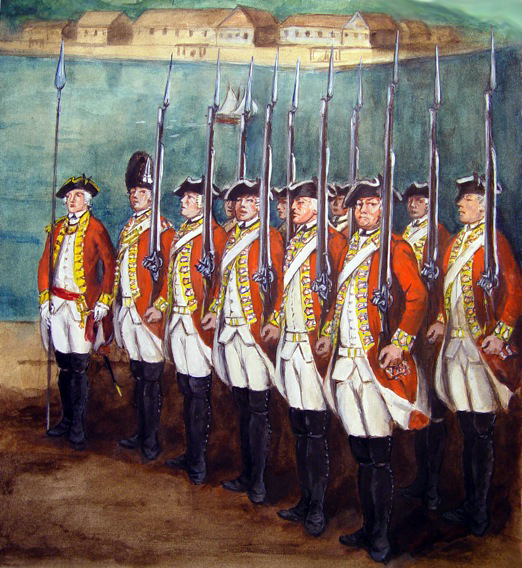
Meanwhile, British reinforcements were sent to Boston—an occupation that would last eight years.


t25-Ft-c1770s-Lawson-ASKB-Lawson-ASKB


In 1770, British soldiers shot into an unarmed crowd, killing five Bostonians and wounding others. The horrific event became known as the Boston Massacre.

For a number of years, that day, March 5, was memorialized in the city. Hancock was asked to speak in 1774. In his speech he said:

“Let us humbly commit our righteous cause to the great Lord of the Universe (Psalm 37:5), who loveth righteousness and hateth iniquity (Hebrews 1:9)…Let us joyfully leave our concerns in the hands of Him Who raiseth up and pulleth down the empires and kingdoms of the world as He pleases (Daniel 2:21).”

Then he quoted Habakkuk 3:17-18, reminding Bostonians that no matter what happened as the conflict continued, or how desperate circumstances might become, “yet we will rejoice in the Lord” (1).

So many scriptures brought together in one brief paragraph give indication of the strong Christian faith John Hancock embraced.

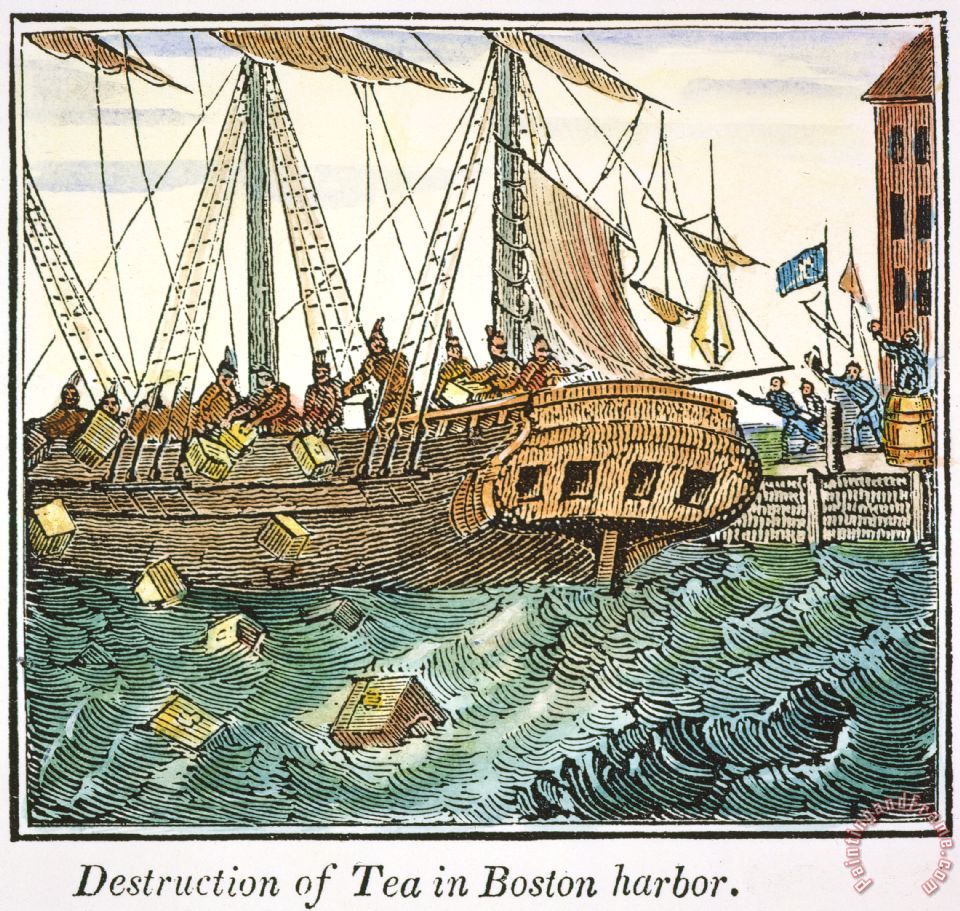
Also in the early 1770s, Hancock, Adams, and several dozen others “hosted” the Boston Tea Party. They dumped 342 chests of tea into the harbor rather than pay import duties to Britain.


The Boston Tea Party, 1773 Painting; The Boston Tea Party, 1773 Art Print for sale


In 1774, Hancock and Adams were elected to the Provincial Congress at Concord, Massachusetts. John was elected president and presided over the Committee of Safety. He and others organized the minutemen, colonial militia who could be ready in a minute to oppose the British.

April 19, 1775, seven hundred British soldiers were sent to Concord to confiscate military supplies and capture Hancock and Adams. Thanks to the warning of Paul Revere, the two men were able to escape.

At nearby Lexington, British soldiers and minutemen engaged in a skirmish, and the Revolutionary War began with the “shot heard round the world.”

Just four days before, John Hancock had written:

“All confidence must be withheld from the means we use; and reposed only on that GOD who rules in the armies of heaven, and without whose blessing, the best human counsels are but foolishness—and all created power vanity (2)”.

Hancock knew that all their efforts toward freedom were in vain if God was not on their side.

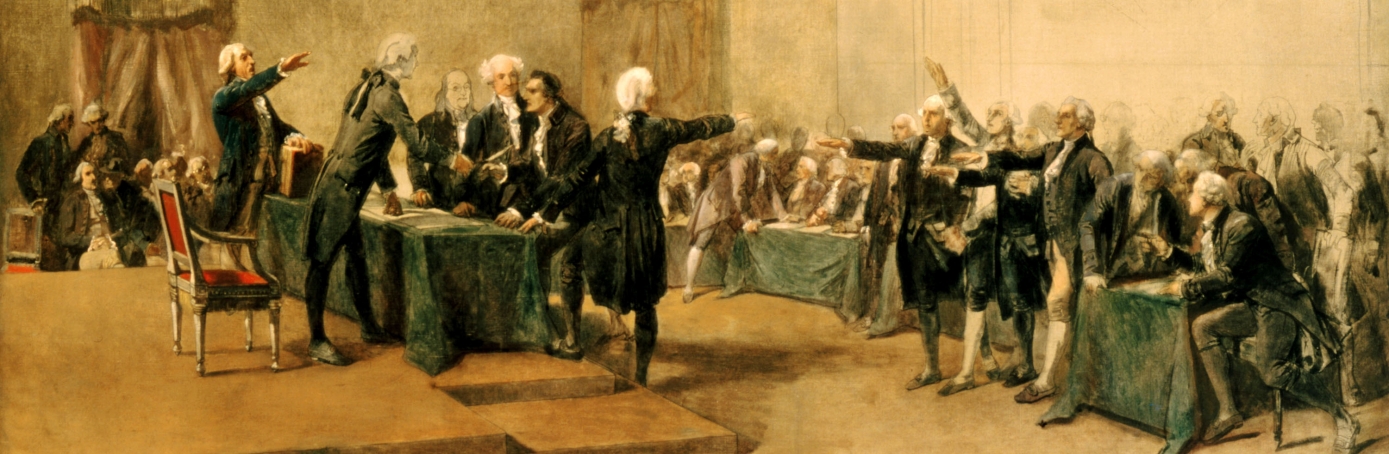
That summer he represented Massachusetts at the Continental Congress held in Philadelphia, to discuss ways of restoring harmony with Britain, yet establish rights and liberties for the colonists. Independence wasn’t on the table – yet.


continental-congress-hero-H


But 1776 brought Thomas Paine’s famous pamphlet, “Common Sense.” American patriotism grew strong, and Congress passed a resolution calling on “the aid of God in the moral cause for independence.” They encouraged fasting and prayer throughout the colonies, and “through the merits and mediation of Jesus Christ, obtain his pardon and forgiveness” (3).

That’s how deep and wide the Christian faith permeated American society.

Of course, the most important resolution of the Continental Congress, under Hancock’s presidency, was the Declaration of Independence, severing all ties to Britain. And, as most U.S. history students know, he was the first to sign in his distinctive script.


John-Hancock-dreamstime1


For almost two and a half years, Hancock tirelessly presided over the Congress, as the war escalated, and the delegates hammered out the first constitution, the Articles of Confederation.

At least four times they had to flee for their lives to other colonies in order to continue their work. In addition, long debates and political rifts took their toll on the delegates, including John Hancock. He also suffered from gout.

When Congress had completed the Articles, Hancock resigned the presidency, but continued public service in Massachusetts, assisting in the formation of the state constitution (4). He and other delegates included this requirement:

“Any person chosen governor, lieutenant governor, counselor, senator, or representative…shall…make and subscribe the following declaration: ‘I, ______________, do declare that I believe the Christian religion and have a firm persuasion of its truth” (5).

I wonder what our institutions of government would look like today if that affirmation were still required.

John Hancock, first governor of Massachusetts, became one of the first to sign that statement of faith. He served eleven years before his death in 1793, at age fifty-five.

Revisionists want to remove from the historical record any mention of God, Jesus, Christianity, and the Bible. But Hancock and many other founding fathers knew: “Without God’s blessing, the best human counsels are but foolishness.”

We had better know that, too.


Citations and Notes:

  1. The Founders’ Bible, p. 1374
  2. faithofourfathers.net
  3. johnhancock.org
  4. The only constitution in the world still in use today and older than the U. S. Constitution
  5. The Founders’ Bible, p. 2097

Sources:

  1. acheritagegroup.org
  2. biography.com
  3. The Founders’ Bible
  4. faithofourfathers.net
  5. johnhancock.org
  6. ushistory.org

Art & photo credits:  www.wikipedia.org; http://www.allthingsliberty.com; http://www.paintingandframe.com; http://www.history.com; http://www.plannersweb.com.

Jacob half-walked, half-jogged mile after mile toward Paddan Aram, to escape his furious brother, Esau. (You can read about the circumstances of Esau’s anger in Genesis 27-28.)

Finally, at sunset, Jacob had to stop and rest. In a grassy meadow surrounded by trees, he spotted a low, flat rock, perfect for a pillow. He folded his sash into a smooth bundle, to add a bit of softness under his head, then wrapped himself in his outer robe, and promptly fell asleep.

That may be the impression we’ve acquired from such art work as this:

jacob

The truth is, the area where Jacob rested that first night as a runaway, was far from pleasant. The landscape was scrubby, rocky, and desolate, which surely accentuated how very alone he was.

I doubt that Jacob rested comfortably or fell asleep quickly.   For all he knew, Esau was in hot pursuit. And though Jacob was headed to the ancestral home of his mother, it’s doubtful he’d ever met any of those relatives. What would they be like? How would he be treated? Between the uncomfortable “bed,” and the worrying and wondering, who could rest?

But Jacob had covered many miles that day. Exhaustion finally took over, and he slept—soundly enough to dream.

You know the story.  Jacob was witness to a glorious sight: angels of God, ascending and descending on a stairway that reached all the way to heaven.

At the top of the stairway stood God Almighty himself, proclaiming glorious promises to Jacob:

  • The land on which he lay would one day be his.
  • His descendants would be as numerous as the dust on the earth.
  • All the peoples of the earth would be blessed through Jacob and his offspring.
  • God would be with him to watch over him wherever he went.

Jacob awoke, astonished by his dream. Perhaps he was a bit disoriented by the darkness and desolation, when just a moment before he was surrounded by ethereal light, gazing at angels on a glowing staircase, and listening to the voice of God.

“The Lord is in this place!” he breathed.

Jacob took the stone pillow and stood it up on end as a pillar-reminder of the momentous occasion. And he renamed the location, Bethel, which means house of God (Genesis 28:10-19).

Jacob_set_up_stone_C-175

We may not be runaways like Jacob, forced to sleep in a wilderness. But we’ve all faced rough, rock-strewn places in life when:

  • Marriage is more disappointment than delight
  • The growing pains of our children become our pain too
  • Friends prove unfriendly
  • Circumstances turn our lives upside down
  • The day-to-day routine is unpleasant and boring

Amidst the desolation and darkness we forget:

God.  Is.  With.  Us.

And that is huge.

51RKiHO4XNL

“God’s presence with us is his greatest present to us” (Joanie Yoder).

The problem is, we’re often unaware just as Jacob was.

But we do have numerous assurances of God’s presence with us throughout scripture, and indications of what a sublime treasure that is:

  • Hundreds of promises in the Bible. (Jacob received only five that night at Bethel!)
  • All of God’s incredible attributes at work in and around us: his power, wisdom, loving kindness, and much more
  • His guidance, provision, protection, and empowerment–whether we currently see the evidence or not
  • His blessings, even in the desolate places of life

May we awaken to full awareness and the full meaning of his presence, because:

bestofallgodiswithus-wesley1

(Art credits:  www.keyway.ca; http://www.bibleencyclopedia.com; http://www.amazon.com; http://www.izquotes.com.)

William the Potter

(A new folk tale)

William the Potter shuffled into his humble cottage just as the sun was setting. He swung the door shut with a bit more force than necessary. Then, with several grunts he peeled off his jacket and scarf. Once his outer clothing hung on the hook beside the door, he heaved a great sigh.

His wife, Katherine, turned briefly from stirring the pot of stew that was simmering over the hearth fire.

daggett-house-main-room-2-fireplace-cooking

“Welcome home, William,” she remarked with a speck of sarcasm.

William didn’t notice her tone, as he was too wrapped up in his own gloomy thoughts.

“What’s wrong, dear?” she asked, then returned to the task at hand: scraping the sides of the stew pot so no bits would be burnt and wasted.

William wearily sat down at the rough-hewn table and began working off his heavy boots.

“I’m so tired, Katherine—tired of working with dreary, dusty clay all day, tired of making the same plain, serviceable containers—jug after ordinary jug. Pot after ordinary pot. Hour after agonizing hour.”

wheel-throwing-hands-on-clay1

One boot landed with a thump on the pine floor.

“So make something fanciful every now and then,” Katherine countered.

“But it’s the everyday pots, jugs and bowls that people buy.”

The second boot clumped beside the first.

“Oh, William, I am sorry. You must remember that your work is important. Without your pottery, how would the village store their water and grain, plant their herbs and flowers, or…serve their supper?” And Katherine placed in front of him one of his clay bowls, filled with savory stew.

“M-m-m,” responded William. “In my mind I know you are right, but my heart is no longer in it.”

The next day toward sundown, William again entered the cottage and shut the door with extra force. But this time, he didn’t even take off his coat and scarf before grabbing Katherine around the waist and swinging her in a tight circle, careful to avoid the table and fire.

“Katherine! Katherine!” he bellowed. “Such good news I have to tell you!”

She pushed against his shoulders. “William! For goodness’ sake, put me down! Whatever has gotten into you?”

“Oh, my dear, you will never guess my good fortune.  Sit down while I tell you!”

Katherine wiped her hands on her apron before smoothing her skirts and taking a chair. Then clasping her hands as if to pray, Katherine sat ready to hear about this turn of events.

William drew a big breath and began.

“This afternoon I received a visitor at the shop—a visitor from the castle. The castle, I tell you! He says the king desires a new border for his gardens, a border of boxwoods in large pots. He’ll need dozens of pots, and he’s asked me to help!  Isn’t that wondrous news?”  And William looked to Katherine expectantly for her enthusiastic response.

topiary-124766055_0

Katherine paused for a moment before speaking. “Pots, you say.”

“Yes!” he replied.

“Like the pots you make for the village?” she inquired.

“The same! The king’s messenger even pointed to the ones lined up on the shelf and said they would do perfectly, except much larger, of course.  Oh, think of the honor this is, Katherine.

“Yes, dear. Quite an honor. It’s just that…well…i-it seems to me…” Katherine stammered. And finally she spoke the obvious. “You’ll still be making ordinary pots, am I correct?  Wasn’t it just yesterday you were bemoaning the very same task?”

“Ah, but starting tomorrow, I am working for the king,” William exclaimed. “These pots will be part of something glorious and enduring. And that changes everything!”

*     *     *     *     *

“Whatever you do,

work at it with all your heart,

as working for the Lord,

not for men…

It is the Lord Christ you are serving.”

–Colossians 3:23-24

(Photo credits:  www.goodlifelist.com; http://www.arteast.org; http://www.bloomiq.com.)

Mountain Metaphor


From the backseat of my grandparents’ car, I strained to catch my first glimpse of the Smokey Mountains. The day before the three of us had left home in Aurora, Illinois and were on our way to Conyers, Georgia to visit friends of theirs.


hqdefault

(We traveled in style, in Grandpa’s 1950-something turquoise Studebaker.)


What an adventure for a six-year old.  Up until that time, I’d only visited one other state, neighboring Indiana.

Grandma had told me that mountains were like hills, only much, much taller. And instead of being a single mound (like the rise we sledded on in the wintertime), they were lined up one after another.

My imagination could hardly conjure a picture of such a phenomenon.

That second day of our trip, as we rounded the top of yet another hill in Tennessee, my straining paid off. Far in the distance we caught sight of mountain tops. Each rise thereafter afforded another spectacular view, always a bit closer to the peaks, and even more mesmerizing than the last. My breaths came in startled gasps. Never had I seen such magnificence…


smoky-mountains-in-the


Smokies-cades-cove


…until, at age fifteen, when I traveled to Colorado for a week at Young Life’s Frontier Ranch. The soaring, steep cliffs of the Rockies dwarfed the more rounded Smokies.


nevers12


Ah, but then came the semester-long, short-term missionary adventure in Quito, Ecuador, a city nestled in the Andes Mountains at 10,000 feet. Thirty miles to the south, Cotopaxi towers over the city, at 19,000 feet above sea level.  Again, my breath was taken away.


Quito volcanico141121g


“Mountains are earth’s undying monuments,” said Nathaniel Hawthorne.

Indeed, they do stand tribute to their Maker, ancient testimonials to God’s awe-inspiring, creative power.

They also provide a meaningful metaphor, because certain adjectives we use to describe mountains, also describe Him:


  • High

d10a87c019aedde4d2cd45602f98714f

(“Lead me to the rock that is higher than I.” — Psalm 61:2)

  • Firm

“God’s solid foundation

stands firm.”

–2 Timothy 2:19a

  • Strong


edee1af2af37a19a86f447ab0f87af17

(“O LORD God of Heaven’s Armies!

Where is there anyone as mighty as you, O LORD?

You are entirely faithful.” –Psalm 89:8, NLT)

  • Immoveable

“I the Lord do not change.”

–Malachi 3:6a

  • Eternal


43e033b5445c40029b82903ba9f3031d

(“The eternal God is your refuge.” — Deuteronomy 33:27a)


One of the psalmists, perhaps King Hezekiah, wrote:

“As the mountains surround Jerusalem,

so the Lord surrounds his people

both now and forevermore.”

–Psalm 125:2

(Emphasis added)


Imagine yourself surrounded by high, strong and secure mountains.

Are they likely to crumble? No. Neither will your Almighty God fall to pieces, succumbing to the pressure of insurmountable problems.  It can’t happen!

Do mountains change with every passing breeze? No.  Neither can your Lord be shaken.

Are you easily accessible when surrounded by mountains? No. You are protected. Mountains can even act as barriers against stormy weather. Similarly God shelters you from the full brunt of the storms of life.

And what is your view from this protected valley? Your eyes are drawn upward toward peaks and sky, indicative of the appropriate response when we’re facing difficulty:


Glacier_park1


Look up to the Maker of mountains

and Provider of refuge.

His righteousness is like the mighty mountains.

He surrounds us with his favor and loving kindness,

encircles us in his everlasting arms of love,

and guards us by his providence on all sides.

Hallelujah!

(Psalm 36:6; Psalm 32:10; Deuteronomy 33:27; Psalm 32:7).

(Art & photo credits:  www.youtube.com; http://www.tripadvisor.com; http://www.gatlinburg.com; http://www.mountainlake.com; http://www.cotopaxinoticias.com; http://www.pinterest.com (3), http://www.wikipedia.org.)

Numbering Our Days

psalm-90-12-230-130

“Teach us to number our days,

that we may present to you

a heart of wisdom”

–Psalm 90:12 (NAS)


I did the math and numbered my days: over 24,000 so far. That means I’m well past the half-way point of the average earthly life. And such a sobering thought would surely weigh heavy on my mind, if I did not have heaven to look forward to.

But I’m certain Moses (the author of Psalm 90, above) wasn’t asking God for a multiplication lesson.

Perhaps in learning how to number his days Moses wanted to: 

  • make each day count by accomplishing worthwhile tasks, or
  • live mindfully so steady growth and learning took place, or
  • dedicate himself to the well-being of others, or
  • look for God throughout each day, worshiping and praising, or
  • revel in the positive instead of grovel in the negative.

Perhaps Moses was thinking of all those things.

According to two commentators, Numbering our days means:  1) living in such a way that each day has value, and 2) living intentionally in ways that bring glory to God and blessing to others.

Then notice what Moses indicates will happen when we live with those supreme purposes:

We’ll be able to present to God a heart of wisdom—a heart with “the ability to see life from God’s perspective, and then to know the best course of action to take” (p. 1055, Living Application Bible). 

That seems to me a lovely gift to present to my Heavenly Father—accepting his perspective and acting upon it.


Charles-Spurgeon-Quote-Wisdom


But learning to number our days and grow in wisdom are such abstract processes. It’s difficult to determine progress. So how might we know that we’re learning and growing? These ten questions may help; they’re based on the Book of Wisdom, Proverbs. Try answering in the context of the last ten—maybe even twenty—years:

  1. Am I more aware of God’s daily gifts and more grateful to him for these blessings (15:13)?
  2. Do my thoughts frequently turn to God during the day? Am I continually turning to him for guidance? (2:1-6)
  3. Do I express trust in God more often than worry about circumstances (3:5-6)?
  4. Am I pursuing biblical instruction (8:33-34a)?
  5. Do I take great pleasure in building up others (10:11)?
  6. Am I able to think before I speak (10:19b)?
  7. Do I give people the benefit of the doubt (19:11)?
  8. Am I becoming more patient and kind–especially toward challenging people (25:21-22)?
  9. Do I thoughtfully consider the advice of those who are knowledgeable and wise (19:20)?
  10. Am I able to do what’s right even when there’s no one around to notice (10:9)?


a0ea4e208506c36a35ddbfffcd0cd872


Scripture tells us that when Abraham died, he was “satisfied with life” (Genesis 25:8, NAS).  Surely satisfaction with life includes the development of a heart of wisdom, which Abraham demonstrated by his life of faith–in spite of challenges, disappointments, and uncertainties.

But the pinnacle of satisfaction must have been presenting that heart of wisdom to God Almighty on the day he entered heaven’s gates.

My prayer is that I’ll be able to do the same.

You, too?

“What we weave in time

is what we’ll wear in eternity.”

– Mart DeHaan


(Photo and art credits:  www.faithgateway.com; http://www.quotesgram.com; http://www.pinterest.com.)

237521d60ffd35b9153d70894610fda3

(“The object of a new year is not that we should have a new year.

It is that we should have a new soul.”

G.K. Chesterton)

A new soul. I like the sound of that, don’t you? In my imagination I see a freshening of my attitudes, improved motivations, and increased spiritual strength.

But where do I start in order to achieve a new soul?

No doubt, a new soul begins with repentance—expressing to God my sorrow for wrongdoing and availing myself of his help to change. Just as King David prayed, I can ask God to:


small_efa4fbb2a9df56d01e2f4ab4


(“Create in me a pure heart, and renew a steadfast spirit within me.”

–Psalm 51:10, emphasis added)


Notice that David asked God to create in him a pure heart. David didn’t promise to clean up his act on his own. Only God could make David’s heart new and pure. The same goes for me. All I can do is submit myself to his transforming power and follow his lead.

That pure heart David asked for is a clear conscience. And with the release from guilt came a rush of joy and the restoration of sweet peace with God. Doesn’t that sound wonderful?

“No one is happier than the one who has repented of wrong” (Max Lucado).


A new soul involves renewal of the mind.


romans12_2


Or, put another way:


“Don’t copy the behavior and customs of this world,

but let God transform you into a new person

by changing the way you think.

Then you will learn to know God’s will for you,

which is good and pleasing and perfect.”

Romans 12:2, NLT (emphasis added)


Once the negative influences of sin have been removed, I need to fill my mind with excellent, praiseworthy contemplations.

Why waste my thoughts and allow them to wander on worthless topics or circle around pointless worries? Instead, I want to set my mind on the positive, especially on God himself.

A renewed mind is not problem-focused; it is Person-focused.


A new soul requires day-by-day rejuvenation.


“We do not lose heart.

Though outwardly we are wasting away,

yet inwardly we are being renewed day by day.”

–2 Corinthians 4:16 (emphasis added)

2-corinthians-4-16


God has established certain laws by which our world is governed. Gravity is one example. The law of entropy is another. It states that all elements of the universe tend to disintegrate over time. Plants and animals die and decay, iron rusts, rock erodes.

Our souls tend to disintegrate over time, too, when left unattended:

  • Worry and fear wreak havoc.
  • Self-centeredness creates an appetite for entertainment, possessions, and recognition—appetites that are never satiated.
  • Foolishness reigns because wisdom is ignored.
  • Rationalizations replace honest evaluations.
  • Uncontrolled behaviors harm relationships.

But when we avail ourselves of God’s influence day-by-day and step-by-step, the law of entropy has no effect on our souls.


f5c507e82ee69ce83a7b75164ed04bd8


The Amplified Version expands the meaning:


“The steps of a [good and righteous] man

are directed and established by the Lord,

And He delights in his way

[and blesses his path].”

–Psalm 37:23, AMP


Consider the import of these key words:


Steps – Even spiritual achievement rarely happens in an instant. God values slow and steady progress.


Directed – He isn’t just interested in the details of our lives; he’s lovingly engineering them.


Established – There is always design and strategy in God’s endeavors, even if we only occasionally perceive it.


Delights – God is pleased with those who follow the path he has thoughtfully and wisely set.


Blesses – God lovingly bestows such gifts as peace, joy, hope, satisfaction, and purposeful living.


*     *     *     *     *     *     *     *     *     *


Holy Creator of new souls, as I stand on the brink of a new year, I do confess my failings to you. Purify my heart; show me how to refine even the motivations behind my right actions. Thank you for your gentle nudges to turn my mind toward you, and your loving attention upon every step of my life. I praise you that continual contact with you results in a soul–a life–that is continually refreshed and made new!


(Art & Photo credits:  www.pinterest.com; http://www.mybible.com; http://www.verseoftheday.com; http://www.dailylifeverse.com; http://www.pinterest.com.)


hand-journal-diabetes-400x400


(Reblogged from 12-30-13)


A new year requires a new calendar. Don’t you just love the crisp, uncurled pages–the empty spaces for each day, filled with nothing but optimistic possibilities?

Perhaps you’re starting the new year with a fresh journal. Again, the pristine pages are filled with nothing but hope and expectation.

We might also desire to start the new year with:

New eyes—to see the glory of God around us.
New ears—to hear his still, small voice.
New resolve—to follow God’s direction.
New courage—to speak his truth boldly.
New faith—to live with confident trust in our Heavenly Father.

These abilities cannot be bought at Barnes & Nobles, like a calendar or journal. They are procured through prayer and discipline.

A good place to begin? David’s prayer in Psalm 51: “Create in me a pure heart, O God, and renew a steadfast spirit within me…Restore to me the joy of your salvation and grant me a willing spirit, to sustain me” (Psalm 51:10, 12).

Allow me to personalize it a bit.

Create in me a pure heart, O God (just as you created a perfect universe from chaos).

And renew a steadfast spirit within me (that my greatest desire might be to please you).

Restore to me the joy of your salvation (just as we experience in the euphoria of Christmas Eve)!

Grant me a willing spirit, to sustain me (throughout 2016).

The typical new year’s resolution is made, broken, and forgotten. Rarely does someone make a once-a-year promise and keep it faithfully for the next 364 days.

Perhaps we’d be wise to see each new day as a fresh opportunity for beginning anew. To repent of yesterday’s failures and forget them. To strain toward what is ahead—with enthusiasm, expectation, and hope (Philippians 3:13).

And gradually those new abilities we aspire after will begin to flourish.

God says, “Forget the former things; do not dwell on the past. See I am doing a new thing” (Isaiah 43:18-19a)!

* * * * * * * * * *

Thank you, Father, for your mercy to forgive the past, and your grace to provide for the future. Thank you that each morning is a fresh start, and each new day holds hidden opportunities. With great anticipation I turn the page!


(photo credit:  www.news.health.com.)

(Reblogged from December 27, 2012)


Close-Up-Christmas-Tree-570268


The main events are over: the decorating, the programs, the gift-giving. Yes, there may be a few more get-togethers to enjoy. You may still have family camped out in the living room (we do), and there’s still New Year’s Eve to look forward to.

But most of us are now experiencing the afterglow of Christmas—an agreeable feeling following a pleasant experience. (Thank you, Mr. Webster.)

In an effort to extend the euphoria, I skimmed through my blessings journal to remember special moments of Christmases past. I was surprised by the number of them and the fact I had forgotten many.

Example #1:

One year my husband’s parents were going to fly the five of us from South Florida to their home in Ohio for Christmas. Our kids could hardly wait, excited by the prospect of a new phenomenon—snow.

I was teaching school at the time, and a colleague, Ginny, asked me early in December, “Do you have warm clothes to take with you?”

“We have a few things,” I responded. “But I’m going to check the thrift stores over the weekend, and we can layer up.”

“Well, we have a bunch of stuff. Our family usually heads north for Christmas, but we’re not going this year. Let me loan you our gear.”

Ginny gave me sweaters, hats, gloves, and five coats. I think every item fit someone in our family.

Example #2:

As the kids became teenagers, their schedules became busier. Getting five people where they needed to be with only two cars was a challenge. Then a friend from church offered to sell us his car at a very low price. (He was buying a new one.) It was a blessing we hadn’t even prayed for. But it proved Matthew 6:8 perfectly: “Your Father knows what you need before you ask Him.”

Our older son got a car for Christmas that year.

Example #3:

Another year I needed a long black skirt for the Christmas musical at church. Pushing through a long to-do list each day, I kept postponing the eventual mall trip. But the afternoon I finally went shopping, God met me at Macy’s! Not long after arriving in the misses’ department, I spotted the perfect, ruffle-and-lace-trimmed skirt for almost 75% off!

How amazing is our God? He keeps track of planetary movements and weather patterns, yet he cares what we wear (Matthew 6:28-33)!

*     *     *     *     *     *     *     *     *     *

Thank you, Heavenly Father. Reviewing Christmases past does give me a lovely afterglow. But it’s not the holiday memories as much as your involvement in those moments that causes the glow in my heart. Each instance proves your loving care, and the obvious pleasure you take in surprising your children with good things. I celebrate your abundant goodness and joyfully sing of your righteousness (Psalm 145:7)!

What Christmas memory gives you an afterglow?  Share your story in the comments below!

(Photo credit:  www.freechristmaswallpapers.net.)

A Christmas Prayer

Dear Father,

Christmas 2015 is almost here. Soon, all preparation will have to cease.

However (as You well know), my to-do list is still not complete; I’m going to have to prioritize and leave some things undone. That’s probably just as well, so my OCD tendencies don’t win over reasonableness!

But even as I try to settle myself, to pray and worship You on this holy day of Christmas Eve, distracting thoughts continue to ping around in my brain:

  • Did I dust the windowsills in the guest room? ‘Can’t remember.
  • Hey! We now have an evergreen tree in the yard. I could clip off some low branches and put them in the deck planters. That might look pretty.
  • Don’t forget to make sure the oil lamp is clean and ready for lighting.

I keep writing these thoughts down so they’re on paper and not in my head, because what I really want to do in these quiet moments is focus on You. I want to wonder again at the magnificent mystery of God becoming man. And I want to thank and praise You for sending Your Son to save me from the consequences of my sins.

Hush my mind, Lord; still my spirit as I pray…


bright-light


You are the God of the heavenly lights who lovingly sheds Your radiance over us.

With the angels, we praise You: “Glory to God in the Highest!”

All honor, splendor, and glory are Yours!

No one on earth or in heaven is as perfect and splendorous as You.

Who else can wrap himself in light as if it were a robe (Psalm 104:2)?

No one.  No one is Your equal.

What a comfort to know that Someone smarter and wiser than mere man is Sovereign over all.

What peace of mind You provide when I turn over to You the concerns of my life.


banner4


Light of the World, Lord Jesus,

All praise to You for leaving Your glorious, heavenly home to dwell with us.

You are our Emmanuel—God with us.

More astounding yet, Your dwelling is not a general presence in the world, but personal.

You actually reside within each of us—when we invite You to do so. Another magnificent mystery.

And You have promised never to leave us or forsake us (Hebrews 13:5).

In addition, Your Light provides guidance for our choices of action, strength to meet all life’s situations, confident hope for our future in heaven with You, and more.


eso1031a


Help me, I pray, to rise up and shine like a brilliant star, because Your. Light. Has. Come (Isaiah 60:1; Philippians 2:14-15)! What a glorious privilege–to reflect Your Light, pointing the way to abundant life in You.

How I praise you, Lord Jesus, that Your glory, splendor, and power have risen upon me–an incomparable blessing I now enjoy in part, but one day in resplendent totality!


(Photo credits:  www.talkofjesus.com; http://www.themelight.radiantwebtools.com; http://www.eso.org.)


When the House is Quiet

Impressions Becoming Expressions

Mitch Teemley

The Power of Story

Still Traveling

Impressions Becoming Expressions

Living Our Days

Gaining a heart of wisdom

He Said What?!

I'm Patty, and my husband and I are living with our adult son who has autism and epilepsy. I love sharing lessons learned from life around me, especially life with Aaron.

Meditations of my Heart

Impressions Becoming Expressions

Linda Stoll

Impressions Becoming Expressions

Signora Sheila

Notes on Life, Faith & Italy

Heidi Viars

Finding the Image of God