Feeds:
Posts
Comments

You Are What You Eat

 No doubt all of us have heard those five words of the title.

We’re well aware that optimum food choices support optimum health while poor choices contribute to health conditions like heart disease, diabetes, and cancer, as well as quality-of-life ailments such as infection, fatigue, and brain fog [1].

But not everyone seems to know the same principle applies in the spiritual realm.

What we feed our souls impacts our spiritual health.

For example, research affirms a steady diet of isolation, dwelling on the negative, scrolling through social media, and binge-watching movies and TV all contribute to depression [2].

However, there is an alternative that results in less anxiety and more peace, less dissatisfaction and more contentment, less fear and more strength. That alternative is meditation on scripture.

What It Means to Meditate

Some might ask, So I’m supposed to read the Bible to make me feel better?

Actually, reading alone isn’t enough, any more than licking a carrot will provide the day’s requirement of vitamin A. No, to nourish the soul we need to regularly meditate on God’s Word.

“Biblical meditation is pondering the words of scripture with a receptive heart, and trusting the Holy Spirit to work in us through those words” [3] (emphasis added).

It’s slow-reading that contributes to savoring scripture much as slow-eating contributes to savoring food.

Why Meditate

My ponderings most often occur on paper. Sometimes I journal through the meaning of a passage; other times I might compose a prayer in response to what I’ve read.

Writing slows and augments my thinking. As I record impressions and prayers, new discoveries have a chance to surface, truths impact my spirit more profoundly, and encouragement nourishes my soul.

In addition, meditation on scripture offers transformation of:

  • Thought processes and choices, as God’s truth cultivates wisdom.
  • Attitudes as mentioned above—anxiety into peace, discontentment into satisfaction, fear into strength, and more.
  • Character, as I contemplate God’s attributes, and they begin to rub off on me [4].
  • Action, as a deeper relationship with God results in compassionate, loving action toward others [5].

How to Meditate

Not sure how to start? Perhaps these suggestions will be helpful. (You’ll also find a sample below.)

  • Write out the scripture or an especially-meaningful part of it. Look up definitions or synonyms of key words.
  • If you’re reading a narrative-passage, use your imagination to put yourself in the position of one of the characters. What might they be thinking and feeling?
  • Prayerfully consider what truth God wants you to understand from the verse(s).
  • Identify the characteristics of God on display or directly mentioned.  Praise him for who he is and what he has done (Psalm 150:2).
  • Write a sentence or two of prayer, presenting yourself before God to accomplish or become whatever he’s revealed during your time of meditation [6]. As you begin to write, you’ll discover more thoughts to express.

An Example of Meditative Writing

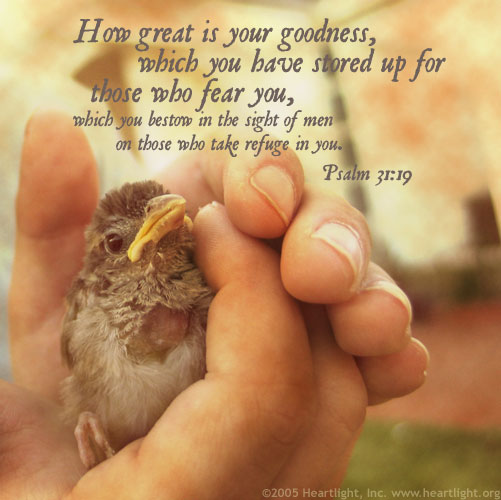
Below you’ll find an example of meditative prayer based on Psalm 31:14-15a:

I trust in you, Lord; you are my God. You’ve proven yourself faithful thousands of times in my life, demonstrating your love and compassion, wisdom and guidance, goodness and generosity [7].

Thank you for being such a gracious God! No matter what happens in the future, I know I can trust you to supply my needs. It’s a wondrous thing to rest in you, especially during these uncertain times.

You are my steadfast foundation, my shelter from the storms of life, and my strong tower of safety [8]. Thank you for these comforting images, giving vivid assurance of your power to care for your people in all circumstances. I’m so grateful my future is in your capable hands.

Just as we’d never wolf down a magnificent meal in a fine restaurant, we’d be wise not to wolf down the rich substance of scripture.

And in the savoring, we experience more intimately and powerfully the reality of God.


[1] https://my.clevelandclinic.org/department/wellness/integrative/shared-medical-appointments/eating-well-for-optimal-health-sma ; https://www.webmed.com/diet/what-is-a-balanced-diet

[2] https://www.webmd.com/depression/features/depression-traps-and-pitfalls

[3] https://ourdailybread.org/resources/what-is-biblical-meditation/

[4] Linda Dillow, Satisfy the Thirsty Soul, 15.

[5] https://www.gcu.edu/blog/theology-ministry/theology-thursday-christian-perspective-meditation

[6] See Tim Keller’s list of additional questions:

[7] These previous posts offer examples: After the Fact, Liquid Love, and Sweetness and Power.

[8] Isaiah 33:6 CEV; 25:4; Proverbs 18:10

Photo credits: http://www.pickpik.com; http://www.pexels.com; http://www.canva.com; http://www.pickpik.com; http://www.flickr.com (David Andrako); http://www.canva.com; http://www.pickpik.com; http://www.commons.wikipedia.org.

Hidden Treasures

Doesn’t the above statement make you want to search for those threads, to find the gleaming treasures he’s hidden among the ordinary moments of our days? Keeping a gratitude journal helps.

Just for fun I reviewed entries in my journal from the last three months. What follows is a short-list of treasures, found here and there through the summer of 2024.

1. On the internet: an APP called Merlin that will listen to the birds singing nearby and identify them by their calls. Such fun to hear an Eastern bluebird, for example, in the trees behind our house, and then spot his bright blue and peach feathers glowing in the late afternoon sun.

    2. In our home: celebration of long-term friendships as we enjoyed two sets of houseguests—couples we’ve known for decades. Such joy percolates from the reminiscing, catching up, and laughter!

    3. At a coffee shop: New friendship, as a young woman from church and I share our stories, encouragement, and prayer.

    4. Next door: While I completed yard work one day (not one of my favorite things to do!), a large cluster of black-eyed Susans in our neighbors’ yard suddenly caught my eye and provided such a lovely sight. I found myself smiling.

    5. From the rag bin: a new game created by our middle granddaughter–Island Tag. She and her little sister spread out numerous rags on the floor, and then we jump from one island to the next to chase or escape each other, providing MUCH laughter (and a good work-out for Nana)!

    6. At DSW: Comfy sneakers I can even throw in the wash.

    7. In a department store: A $150.00 raincoat for $38.73!

    8. At a nearby garden center: fresh produce (delivered there each day, starting sometime in July)—sweet corn, tomatoes, squash, peaches, and more. Superbly delicious.

    9. In an out-of-the-way place: a giant Thomas Dambo wood-sculpture called The Bird King (complete with a crown made of birdhouses), tucked among the trees on Vashon Island, Washington State.

    Our daughter and family took us to visit him. Check Dambo’s website to see if there’s a sculpture near you. He and local volunteers have built them nearly world-wide.

    10. In the Hoh Rainforest, also in Washington State: awe-inspiring sights around each bend of the path.

    Do you suppose a Hobbit lives here?

    11. At church, a Spirit-inspired truth from Romans 8:37, which says: “We are more than conquerors through him who loved us.” Our pastor made the point, we may have hardship, but with Jesus the hardships don’t have us.

    12. During devo-time, encouragement to lift my spirit: “Though our prayers seem feeble and sometimes appear to have gone unheard, a word has gone forth. Spiritual agents from the throne room of the King of kings are mobilized against spiritual forces from the headquarters of evil, and there will be ultimate victory.”

      I wonder, dear readers, what hidden treasures did you find over the summer? Please share an example or two in the comment section below!

      And remember, “If you remember the dignity of the Giver, no gift will seem small or mean, for nothing can be valueless that is given by the Most High God” [3].


      [1] Opening quote from Hard Places in the Way of Faith, quoted by L. B. Cowman in Streams in the Desert, 322.

      [2] Elisabeth Elliot, A Lamp unto My Feet, 149.

      [3] Thomas a Kempis

      http://www.flickr.com; http://www.commons.wikimedia.org; http://www.flickr.com (Jodi Grundig); http://www.pxhere.com; Steve Ruegg; Nancy Ruegg (3); http://www.freerangestock.

      ‘If I were you I’d buy a ticket for a boat going on the longest journey you can find and pray to know where to get off. If God doesn’t want you on that boat he’s perfectly able to stop you . . . or make the ship go anywhere in the world.’

      Jackie Pullinger of Croydon, England nodded, sensing God’s affirmation to this advice from her pastor.

      For months Jackie’s dream of becoming a missionary in Africa had been stymied. No mission society, school, or broadcasting company took interest in her, a twenty-two-year-old music teacher.

      And yet the dream she’d held since age five remained as strong as ever—stronger, in fact, upon developing a close, personal relationship with Jesus while attending the Royal College of Music.

      Jackie soon implemented her pastor’s advice and set sail from London in 1966 with no destination in mind and only ten pounds in her pocket. When she reached Hong Kong, Jackie sensed God telling her, this is the place.

      Hong Kong, 1960s

      She began exploring the island and came upon the Walled City, a place of lawlessness and squalor, open sewers and rats, gangs, drug addicts, and prostitutes. Thirty-some thousand people on six acres.

      No building codes enforced .

      Years prior the area had been occupied by the Chinese imperial garrison. “It was omitted from the lease of 1898 in which China ceded Hong Kong to Britain. Neither government had taken responsibility for it” [1].  When the garrison disbanded the underclass moved in, unchecked by any police presence.

      In spite of the filth and stench, Jackie felt happy there because in her mind’s eye she already saw the darkness lifting. She saw the kingdom of God.

      No trash pick-up either.

      To support herself, Jackie took a teaching position in a government school, but she also worked at a school in the Walled City, run by a missionary.

      Jackie turned a few shabby rooms into a youth club where teenagers could play ping pong and darts. She began to build relationships with them, many of whom were already heroin or opium addicts.

      Preaching about Jesus proved ineffective. But Jackie noticed people watching how she lived. So she focused on putting her faith in action.

      Jackie shared her rice with an old woman, took a gang member to the hospital after a fight, waited in line overnight to register a young girl for school, went to court with a gang member who said he’d been framed, and more [2].

      Many expressed appreciation for her kindness and generosity but no lives were changed—at first.

      One night thugs ransacked the youth club. Benches, skateboards, and the games equipment were destroyed, the walls and floor smeared with sewage. But a gang leader who respected Jackie assigned guards to protect the youth club from future damage.

      Another leader asked Jackie to help his gang members quit drugs. Sober members made better dealers, he explained.

      “I’ll only help them to follow Jesus, reject narcotics, and not participate in organized crime,” she told him.

      And yet the leader continued to support Jackie and even released from the gang those boys who became Christians [3].

      One day while walking through the Walled City, Jackie spotted Christopher, a boy from her youth group. She asked him to carry her accordion.

      As they walked, they talked. Christopher confessed he couldn’t become a Christian because he wasn’t good enough. Jackie made clear that wasn’t a prerequisite, and the boy became a Jesus-follower that day [4].

      Others soon made the choice to become Christians, including one of the youth-club guards. But some of these new believers lived in opium dens, making their transition to sober-living especially difficult. 

      One by one they came to live in Jackie’s home, where they received compassionate care and faith-filled prayer while processing through withdrawal. For many their transition was neither painful or traumatic [5].

      Of course, Jackie’s apartment quickly became crowded. But through gifts from other Christians and government resources she was able to rent more apartments. It wasn’t long before dozens of such living quarters became hundreds and each quickly filled to capacity.

      More workers joined in the work, including former addicts. They established additional homes for teenagers, women, and girls.

      In 1981 Jackie founded the St. Stephen’s Society, to provide accountability for the growing ministry.

      In 1985, the Hong Kong Government gave the society a complex of buildings divided into apartments. Hundreds more displaced persons—the poor, the elderly, and the infirm—were given places to live.

      In the 1990s, the government offered another property to the St. Stephen’s Society. Buildings were erected to house two hundred men as they completed the five-phase withdrawal program, from detoxification to re-entering society as productive citizens.

      The St. Stephen Society continues to function to this day, “rescuing hundreds of young people from a life of misery on the streets” [6]—not only in Hong Kong but in other countries as well.

      Jackie, now eighty years old, continues to serve.


      [1] https://mycharisma.com/charisma-archive/one-woman-vs-the-dragon/

      [2] https://www.ststephenssociety.com/about-us

      [3] https://thechurch.org.au/celebrating-jackie-pullinger-of-hong-kong/

      [4] https://www.cmf.org.uk/resources/publications/content/?context=article&id=26751

      [5] https://thechurch.org.au/celebrating-jackie-pullinger-of-hong-kong/

      [6] https://blogs.georgefox.edu/dlgp/jackie-pullinger-loving-the-unlovely/

      Photo credits: http://www.flickr.com (2); http://www.picryl.com; http://www.flickr.com; http://www.picryl.com; http://www.pickpik.com; http://www.rawpixel.com.

      Jeremy, Age 3

      When our younger son Jeremy was about three, and people would ask, “What would you like to be when you grow up?” he offered a unique response: fire truck.

      Well-meaning folks tried to amend his answer. “You mean a fire fighter?”

      “No!” he’d state emphatically. “A fire truck!”

      No doubt the blaring siren and rumbling engine appealed to our rambunctious little boy who liked all things noisy, but didn’t understand the parameters of adult vocation.

      There’s another response to that quintessential question of adults-to-children, one that would also surprise: “I want to be a servant!”

      Truth is though, scripture has a lot to say about all of us taking on the role of servant. One website lists one hundred verses on the topic [1].

      And though serving others may require sacrifice, God is quick to bless us when we do. The list of benefits happens to make a tidy acrostic too.

      To be a servant of God produces the following in our lives:

      S atisfaction

      Jesus said, “It is more blessed to give than receive”[2], which applies to money and gifts, of course, but also to the giving of time and effort.

      E nablement

      We tend to look at our feeble capacities and forget that results don’t depend on our competence, but God’s perfect proficiency working through us.

      In fact, God has promised to equip us with everything we’ll need in order to serve according to his directives [3].

      R eward

      Scripture makes clear: Upon our arrival in heaven, our gracious heavenly Father will reward us for our good deeds—rewards that will be just as good and perfect as he is.

      But some rewards come immediately, such as the joy and satisfaction mentioned above. God has engineered our spirits to be refreshed as we seek to refresh others [4].

      V alue

      God values servanthood. He sent his own beloved Son, the King of the universe, to this earth in order to serve others.

      And know this: nothing we do for him will be a waste of time or effort [5].

      A ccolades

      When Jesus returns to earth, “each will receive their praise from God” (1 Corinthians 4:5). Note the Apostle Paul doesn’t say the only ones to receive praise will be the best-of-the-best with a long list of impressive achievements.

      No, God will praise each of us for the good we’ve accomplished—the kind words we’ve spoken, the attentive listening we’ve offered, even the menial tasks we’ve completed—because “faithfulness with a small thing is a big thing” (Hudson Taylor).

      And one day we’ll hear that glorious commendation from God himself: “Well done, good and faithful servant” [6].

      N obility

      No, God’s servants don’t become lords and ladies or dukes and duchesses. It’s another definition for nobility that applies here, a definition that includes virtue, goodness, and honor.

      Actually, the title of “Lord’s servant” is a high honor bestowed upon just a handful of people in the Old Testament, including Abraham, Moses, David, and Isaiah [7].

      It’s a title we can wear with righteous pride!

      T hriving

      In 1714 pastor/Bible commentator Matthew Henry lay dying. He was only fifty-three, and had already buried his first wife and three of his children.

      Henry might have been bitter, but he said to a friend, “A life spent in the service of God, and communion with Him, is the most comfortable and pleasant life that one can live in the present world” [8].

      And that gift of “a most comfortable and pleasant life” may be ours also, as we choose to live in communion with God and spend our lives in His service.

      *     *     *     *     *     *     *     *     *     *

      Lord God, may I contentedly express my love for you by serving others, delighting in what you empower me to do for your sake.

      P.S. That little guy who wanted to be a fire truck? He’s now a pastor.

      Pastor Jeremy


      [1]  https://kingdomway.ca/100-bible-verses-on-serving-others/

      [2] Acts 20:35

      [3] Philippians 2:13

      [4] Ephesians 6:7-8; Proverbs 11:25b

      [5] Mark 10:45; 1 Corinthians 15:58

      [6] 1 Corinthians 4:5; Matthew 25:11

      [7] Based on Margaret Feinberg’s observations in Wonderstruck, 119.

      [8] https://www.wholesomewords.org/biography/bhenry6.html

      Photo credits: Nancy Ruegg; http://www.pexels.com; http://www.flickr.com; http://www.canva.com; http://www.nara.getarchive.net; Nancy Ruegg.

      Eric, our older son, and I were chatting on the phone.

      “Mom, did you happen to save my old Uncle Wiggily book from when I was little?”

      Uncle Wiggily? Goodness. I hadn’t thought about that old rabbit and his adventures for years.

      “I doubt that we have it,” I responded. “Didn’t each of you kids already take the children’s books you wanted as keepsakes? I think all we have are some leftovers, saved for the grandchildren.”

      “No, I don’t have it either,” he replied.

      “Well, maybe it was just too worn out to save.”

      “Could be. I was hoping to find a copy because it would be such fun to share with our Elena when she gets a bit older.” He paused a moment.  “Remember the picture of Uncle Wiggily in his car?”

      This illustration from an earlier edition

      No, I didn’t remember.

      “The wheels were made from big, fat sausages. That was my favorite page. But every illustration was full of imaginative detail,” he reminisced.

      That would explain why Eric, our artist, had such fondness for this book.

      “I even checked on Craig’s List to see if anyone might have a copy, but no luck.”

      Wow. He did have a big soft spot for Uncle Wiggily. And I had a big case of guilt for getting rid of it.

      Why hadn’t I remembered that book was one of his favorites? How could I have thrown it away, even if it was tattered?

      Months later, my husband Steve and I were sorting through boxes in the garage. Two of them contained the children’s books we still owned.

      Maybe we could pare down to one box, I thought.

      I started unloading the books and organizing them into piles. At the very bottom of the second box was—you guessed it–Uncle Wiggily. And it wasn’t in such bad shape after all.

      I whispered a prayer of gratitude for this small but precious gift—a blessing that I hadn’t even asked for.

      Does it seem to you that out-of-the-blue blessings bring the most joy? Perhaps that’s true because they give us such memorable glimpses of God’s love and grace–love and grace that are:

      Undeserved

      Just as he “gave” me a book I had not searched for nor prayed for, God loved and provided for each of us before we ever searched for him or prayed to know him (Matthew 5:45; Psalm 14:2).

      Personal

      Surely there are not many folks who would delight in finding an old copy of Uncle Wiggily.  The blessing of discovering its whereabouts was, it seemed, personalized–just for me (and Eric).

      Similarly, God’s love and grace are personal. He cares deeply for each of his children. Remember the parable of the lost sheep (Luke 15:1-7)?

      It’s true:

      God loves each of us as if there was only one of us.

      —St. Augustine

      Last, God’s love and grace are:

      Lavish

      It is doubtful a copy of Uncle Wiggly will turn up at a Sotheby’s auction.  It is not a valuable antique volume that collectors will pay thousands of dollars for.  

      But when I found that book at the bottom of the box, it was like finding buried treasure–placed there by God himself–an unnecessary but perfectly lovely, out-of-the-blue blessing from my Heavenly Father.

      I couldn’t wait to call Eric and share with him the good news.

      *     *     *     *     *     *     *     *     *     *

      What out-of-the-blue blessing have you received that caused great joy? Please share your story in the comment section below!

      (Revised and reblogged from August 14, 2014 while we enjoy houseguests.)

      Art & photo credits: http://www.flickr.com; http://www.commons.wikimedia.org; http://www.canva.com.; http://www.freebibleimages.com.

      How would you fill in the blank of this statement?

      _______________ is the key to everything we need to do and be in life.

      Many of us might choose faith, obedience to God, or perseverance.

      But according to Pastor/author Timothy Keller, the answer is prayer [1].

      He would have us understand that “there is nothing more important . . . or richer, or more life-altering as prayer. There is absolutely nothing so great as prayer” [2].

      However, Keller readily admits that prayer is hard. It’s a discipline to stay focused on Someone invisible. Not only do distractions cause interference, but doubts produce discouragement, and disappointments over prayers not answered (as we’d hoped) can breed demoralization.

      It’s easy to put this key aside and “let God be God” without our participation.

      Oh, what we miss.

      Puritan preacher and writer John Bunyan would have us understand:

      That is, through prayer, every cranny of our lives is impacted by his uplifting influence—our personalities, thoughts, choices, circumstances, and more. Through prayer he fills us with the totality of his excellencies and his empowering presence. 

      Could anything be more sublime?

      In addition, we can enjoy these blessings:

      Prayer makes a sour heart sweet, a sad heart merry, a poor heart rich, a foolish heart wise, a timid heart courageous, a sick heart well, a blind heart full of vision, a cold heart ardent. For it draws down the great God into the little heart; it drives the hungry soul up to the plentitude of God; it brings together those two lovers, God and the soul.

      — Mechthild of Madgeburg, a 13th century German woman, a mystic

      Could anything be more satisfying?

      To be honest though, there are days when my prayer time is more discipline than delight. I need an attitude-adjustment through review of such benefits as listed above, reminders of what prayer is supposed to be in the first place, and the positive outcomes of prayer.

      What Prayer Is Supposed to Be

      First, let’s address what prayer is not.

      Prayer is meant to be an intimate, personal encounter with God himself, the King of the universe. We so easily forget what a precious gift this is, a privilege beyond comprehension.

      In addition, prayer is meant to be a “link between his will and its accomplishment on earth. Amazing things happen, and we are given the privilege of being the channels of the Holy Spirit’s prayer” (Elisabeth Elliot).

      Could anything provide greater honor?

      Contemplation of such realities will surely renew our pleasure in prayer and produce joyful anticipation for what’s to come: amazement in our answered prayers.

      The Impact of Prayer

      Regardless of what the answers might be, prayer: 

      • fortifies human weakness with divine strength
      • transforms human irrationality into godly wisdom
      • gives to troubled minds the peace of God
      • unlocks the deepest joy
      • develops our friendship with God
      • augments our ability to discern the mind of God [3]

      Those are life-transforming outcomes! And no doubt we could list more.

      No wonder Timothy Keller named prayer as the key to everything.

      *     *     *     *     *     *     *     *     *     *

      Thank You, Father, for allowing us the privilege of prayer. What additional proof do we need of your marvelous loving kindness? Help us to use this gift wisely throughout this day [4].


      [1] Prayer: Experiencing Awe and Intimacy with God, 18.

      [2] Ibid, 32.

      [3] The first three results from Charles Spurgeon, Morning by Morning, 287; points #4 & #5 from Sara Hagerty, Unseen, 201, 207; Point #6 from Oswald Chambers.

      [4] Based on a prayer of Charles Spurgeon, Morning by Morning, 287.

      Art & photo credits: http://www.freerangestock.com; http://www.picryl.com; http://www.snl.no/Oswald_Chambers; http://www.commons.wikimedia.org.

      Puzzling Proverbs

      Remember Peter Piper who picked a peck of pickled peppers? I wonder what he’d choose if he picked a peck of puzzling proverbs? And how many puzzling proverbs would Peter Piper pick?

      Perhaps you’ve encountered some biblical proverbs that raised questions rather than supplied insight—at least at first reading. I certainly have.

      Below are five examples. (Perhaps Peter Piper would pick these too!)

      PUZZLING PROVERB #1

      But how is instruction like a garland or jewelry?

      When we receive the wise teaching of godly parents (and our Heavenly Father), our lives are crowned with the blessing and honor of maturity, integrity, and wisdom. We also radiate to others the beauty of godliness, like a chain of distinction around our necks [1].

      I wonder too if this garland on the head alludes to the peace of mind that comes from living wisely, and the chain over the chest intimates joy of heart for those who follow biblical instruction.

      PUZZLING PROVERB #2

      But rest is necessary. So what’s the meaning here?

      It’s a warning against apathy and a lack of responsibility, because it’s so easy to:

      • put off to tomorrow what we don’t feel like doing today
      • avoid certain tasks because they’re challenging
      • over-indulge in leisure and accomplish little

      We’d do well to remember:

      The enjoyment of leisure would be nothing if we only had leisure. It is the joy of work well done that enables us to [truly] enjoy rest.

      — Elizabeth Elliot

      PUZZLING PROVERB #3

      “Banquet Still Life” by Abrahan van Beyeren (1620-1690)

      Is this a summary of Aesop’s fable, “The Grasshopper and the Ants,” or might there be a spiritual lesson here?

      Actually, it’s both. Yes, God would have us live responsibly and save for the future, but he’d also have us share from our resources and enjoy the blessing of generosity.

      The wise also store up within their spirits the choice nourishment of God’s Word and the oil of divine influence, to be ready for the work God calls them to do [2].

      PUZZLING PROVERB #4

      How can it be part of God’s glory (his splendorous attributes) to conceal a matter, and why is it the glory of a king to seek answers?

      One reason God doesn’t reveal everything to us is this: knowledge of all things would overwhelm and frustrate our finite minds.

      Second, if God answered all our why questions (like “Why did So-and-So have to die? She was so young!”), it’s likely we still wouldn’t be satisfied. We’d want to suggest he accomplish his plans some other less painful way.  

      But. Living with uncertainty does teach us endurance and trust as we wait for the day when all will be made clear.

      On the other hand, we do well to prayerfully seek guidance for our decisions. This is especially true for those in authority. It’s to their credit to learn the facts of a matter, consider probable solutions in light of outcomes and impact on others, and apply wisdom [3].

      PUZZLING PROVERB #5

      But what about those saints who’ve exhibited great wisdom, yet have suffered adversity, ill health, and/or untimely, undeserved death?

      Obviously, King Solomon is not suggesting that wisdom results in complete protection from difficulty. His point is, by following the wise ways of scripture, we can avoid many of the troubles and heartaches that fools bring upon themselves.

      In addition, true wisdom leads us to seek truth. Truth leads to Christ, and he leads us to the way of salvation and eternal safety in heaven [4].

      I wonder, do you suppose Peter Piper is wise enough to be guided by these once-puzzling, now-clarified proverbs?

      Are we?


      [1] John 15:10-11; 1 Samuel 2:30; https://biblestudycourses.org/proverbs-bible-study-courses-sect-1/proverbs-1-8-19-exploring-the-passage/ ; Proverbs 1:8-9 NLT

      [2] Acts 20:35; Barnes Notes on the Bible for Proverbs 6:1-11; Matthew 25:1-13; Deuteronomy 8:3b

      [3] John 13:7; Psalm 119:130; https://www.bibleref.com/Proverbs/25/Proverbs-25-2.

      [4] Proverbs 2:3-5, 9-11; John 1:17b; John 14:6; Acts 4:12

      Art & photo credits: http://www.rawpixel.com; http://www.pexels.com; http://www.henikirbyhistory.getarchive.net; commons.wikimedia.org; http://www.pickpic.com; http://www.pexels.com; http://www.dailyverses.net.

      Come with me on a journey through time and space and watch God spin a miracle, crossing more than ten countries and spanning more than seventy years.

      First, Sweden, 1885: Pastor and poet Carl Boberg watches a storm roll across the countryside—loud and blustery with pelting rain. For all its fury however, the maelstrom soon moves on and leaves behind a sparkling landscape, arched by a glowing rainbow.

      Boberg is inspired to write and composes a nine-verse poem, “O Great God,” celebrating the beauty of God’s creation.

      In 1891 he hears his poem being sung, set to a traditional Swedish melody. He publishes his poem and the tune together. However, the popularity of “O Great God” quickly subsides.

      Second, Estonia, 1907: Manfred von Glehn becomes acquainted with Boberg’s hymn and translates the lyrics into German. . .

      . . . and third, in 1925, E. Gustav Johnson brings the hymn to America and translates it to English, titling it “O Mighty God.”

      In Russia, 1927, Ivan Prokhanoff hears the hymn while imprisoned for his faith. He translates the lyrics into Russian and his rendition is published in Moscow.

      Fifth, the Carpathian Mountains in Eastern Europe, 1934: British missionary Stuart L. Hine bicycles from village to village, sharing his faith in Jesus and distributing Bibles to peasants who’ve never even seen one.

      No doubt there were few paved roads through the Carpathian Mts. in the 1930s

      Like Boberg, Hine also witnesses a fearsome storm and is reminded of a hymn he’s heard, the Russian form of “O Great God.” However, new lyrics begin to develop in his mind, and he writes an original stanza in English.

      In Romania Hine marvels at the beauty and serenity of the woods, the warbles, trills, and whistling of the birds. He adds a second verse.

      High up in the mountains he comes upon the village of Dmitri and Lyudmila who do own a Bible, left behind by a Russian soldier in 1915.

      Just that year Lyudmila had learned to read, and as Hine arrives at their home, she’s just completed a read-aloud to other villagers. They’re discussing the wonder of God’s love, and Hine is prompted to write verse three.

      By 1939, war threatens Europe again. Hine and his wife Mercy are forced to return home to England.

      Nazi troops marching through Warsaw, Poland, September, 1939

      Six years later they immerse themselves in ministering among the thousands of refugees. “Their stories of loss and hope inspire the fourth verse of the hymn, filled with the promise of eternal reunion” [1].

      In 1949, Hine publishes his lyrics in a gospel magazine that’s sent to missionaries in fifteen countries across Europe and Asia.

      India, 1954: British-American missionary J. Edwin Orr hears a choir singing Hine’s hymn. He experiences the power of the lyrics and tune.

      Back in America, 1954, Orr begins sharing the song at conferences he leads on college campuses.

      Children of actor/singer/song-writer Tim Spencer attend one of those colleges. Tim had been a well-known singing cowboy in the 1930s and ‘40s, appearing in numerous films.

      (One cowboy trio, but no Tim!)

      But in 1949 Tim had become a Christian. When his kids share with him this new, inspiring song, he also becomes an enthusiast.

      In 1955 Spencer founds Manna Music Publishing and purchases the rights to Hine’s song. This same year, a friend of George Beverly Shea and Cliff Barrows introduces them to the newly-published hymn.

      (Some of you will recognize those names. Shea was a featured soloist and Barrows was the music and program director for the Billy Graham Crusades.)

      Toronto, Canada, 1955: Shea sings the hymn at one of the crusades and it rapidly gains popularity.

      New York City, 1957: Shea and the crusade choir sing the song ninety-nine times during the sixteen weeks of meetings [2].

      1959: It became the theme song for Billy Graham’s weekly radio program and continued to grow in popularity.

      1978: The American Society of Composers, Authors, and Publishers named the song “The All-Time Outstanding Gospel Song” in America [3].

      It has been translated into more than fifty languages and recorded by dozens of artists.

      To this day the hymn “How Great Thou Art” remains a beloved favorite of many, as the lyrics lift our hearts in worship:


      [1] https://worshipleader.com/worship-culture/how-great-thou-art-75-years-later/

      [2] https://billygraham.org.uk/p/summer-soul-refresher-how-great-thou-art/

      [3] https://www.umcdiscipleship.org/resources/fiftieth-anniversary-of-how-great-thou-art-in-the-united-states

      Other Sources:

      https://www2.cbn.com/article/not-selected/story-behind-how-great-thou-art

      https://www.crosswalk.com/faith/spiritual-life/the-story-you-don-t-know-behind-how-great-thou-art.html

      https://www.ibelieve.com/slideshows/10-incredible-facts-about-how-great-thou-art.html

      https://www.premierchristianity.com/worship/the-ukrainian-roots-of-britains-favourite-hymn-how-great-thou-art/12908.article

      http://www.wycliffe.ca

      Photo credits: http://www.garystockbridge617.getarchive.net; http://www.commons.wikimedia.org; http://www.picryl.com; http://www.rawpixel.com; http://www.boudewijnhuijgens.getarchive.net; http://www.rawpixel.com.

      (An imaginary conversation between God and me.)

      ME:

      You know me, Lord. If I’m not careful my mind can slide into fear and worry, especially about the needs and struggles of loved ones. Or I can slip backward into hurts or regrets of the past. Release from such thoughts is not always easy.

      But I’ve heard it said, “What is IM-possible is HIM-possible” (Unknown).

      So when negativity seeks to pull me down, I want to be quick to remember who YOU are, your promises, and what you can do that make all things HIM-possible.

      GOD:

      Indeed, nothing is IM-possible with me (Luke 1:37).

      Here are four important truths to keep in mind that make for HIM-possible-living:

      I am greater than your fears.

      Think on My sovereignty and might.

      I am in control of all things. I have established My throne in heaven and My kingdom rules over all. Therefore, the one who fears Me need not fear anything else [1].

      I am all-wise and all-powerful, always with you and ready to offer counsel.

      I am your all-sufficient Father, able to provide everything and anything you’ll ever need.

      ME:

      I praise You, Lord, for equipping me to contend with whatever circumstances unfold. You are the Mighty Warrior who saves!

      (Psalm 103:19; 1 John 4:18a; Romans 11:33; Psalm 15:3, 46:1; Ephesians 3:20; Zephaniah 3:17)

      GOD:

      I am greater than your troubles.

      Remember My power and strength.

      Out of My omnipotence, I promise to supply you with strength sufficient for the day. Each morning I provide a fresh supply of all my mercies.

      No matter what the future may hold, you can keep on bearing all things through My Son, Jesus Christ, who constantly infuses you with His strength.

      Every trouble produces benefit–strong, honorable character in you, and blessing for others as they see My peace and joy reflected in you.

      ME:

      I praise you, Lord, for being a present-and-active help in times of trouble.

      (2 Chronicles 20:6; Psalm 18:32; Lamentations 3:22-23; Philippians 4:13;

      Romans 8:28; James 1:2-4; Matthew 5:16; Psalm 46:1)

      GOD:

      I am greater than your hurts.

      Remember my love and tenderness, my grace and kindness.

      I provide a solid foundation on which to rest, even when wave after wave of challenge sweeps through your life [2].

      I am your Great Physician. Cling to Me by immersing yourself in My Word and find the cure for your heartache.

      I am patiently transfiguring all the notes of your life into the song of My Son, Jesus . . . All is grace, as your hurts and heartaches become tools in My hands, to transform you into the image of Christ [3].

      ME:

      I praise you, Lord, for your devoted, attentive care.

      (Isaiah 66:13a; Psalm 86:15; Psalm 147:3; Psalm 119:49-50; 2 Corinthians 3:18)

      GOD:

      I am greater than your regrets.

      Remember my compassion and forgiveness.

      Dwell on regrets and you’ll stir up a whirlpool of excruciating details. It’s an easy place to drown [4].

      Leave the irreparable past in My hands, and step into the irresistible future with Me [5]. You’ll find joy replacing remorse and peace replacing agitation.

      When thoughts of your failures do push their way into your consciousness, allow my total forgiveness to relieve your pangs of guilt. Then offer Me praise for accepting you just as you are, thanking Me for growing you into more than you were yesterday [6].

      ME:

      I praise you, Lord, for your mercy to forgive and your grace that meets me where I am but does not leave me where it found me [7].

      I praise you that victory over fears, troubles, hurts, and regrets is more than HIM-possible with you!

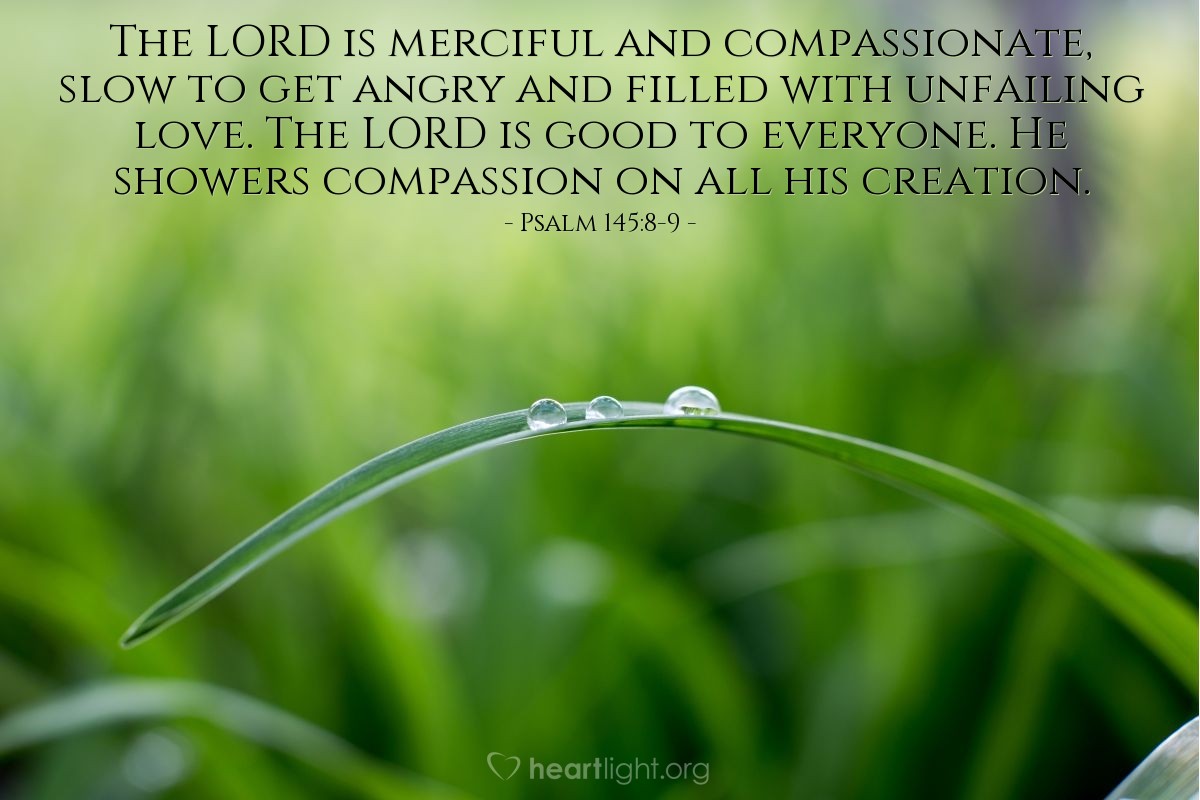
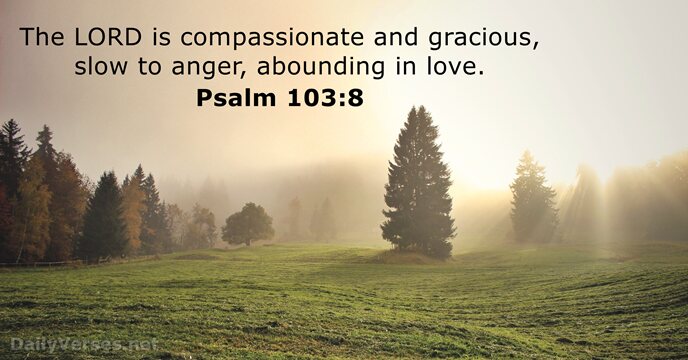
      (Psalm 103:8, 13; Romans 8:37)


      [1] The fear of God in the original language doesn’t mean to be afraid. It means sustaining a joyful, astonished, awe and wonder before Him—Timothy Keller.

      [2] Jane Fryar, Be Blessed, 34-35.

      [3] Ann Voskamp, One Thousand Gifts, 100; Kay Arthur, His Imprint, My Expression, 180.

      [4] Based on a David Powlison quote, https://www.sgclouisville.org/blog/2024/01/16/sermon-quotes-what-do-we-do-with-regret.

      [5] Oswald Chambers, My Utmost for His Highest, Dec. 31.

      [6] Ruth Bell Graham, Blessings for a Mother’s Day, 101.

      [7] Anne Lamott, GRACE Eventually.

      Art & photo credits: http://www.canva.com; http://www.heartlight.org; http://www.pxhere.com; http://www.canva.com; http://www.heartlight.org; http://www.dailyverses.net; http://www.rawpixels.com.

      Rejoice!

      We’re about to follow Einstein’s advice and enjoy the beautiful land of life with beloved family members. We are indeed rejoicing–big time–whenever these opportunities arise.

      I’ll be back next week with a new post!

      Photo credit: http://www.flickr.com.

      Still Traveling

      Impressions Becoming Expressions

      Living Our Days

      Gaining a heart of wisdom

      He Said What?!

      I'm Patty, and my husband and I are living with our adult son who has autism and epilepsy. I love sharing lessons learned from life around me, especially life with Aaron.

      Meditations of my Heart

      Impressions Becoming Expressions

      Linda Stoll

      Impressions Becoming Expressions

      Debby Thompson

      Impressions Becoming Expressions

      Signora Sheila

      Notes on Life, Faith & Italy

      Colleen Scheid

      Writing, Acting, Living in God's Love

      Mitch Teemley

      The Power of Story

      Heidi Viars

      Finding the Image of God