David Bussau sat with three of his teenage friends in the dining hall of Sedgley Boys’ Home, an orphanage in New Zealand.
“How’d you guys like to work for me?” he asked.
David had lived in the orphanage himself until recently. Now he was out on his own, living at a boardinghouse. But David had prepared for this eventuality, saving money from odd jobs while living at Sedgley.
Currently he was running his own hot dog stand, and now he was ready to expand. With the help of his friends, David became proprietor of three hot dog stands, then two other food stands, followed by a bakery, and a pancake company. David improved each business and sold them for a substantial profit.
In 1965 at age 25, David married Carol Crowder, a girl from his church. Not long after they moved to Sydney, Australia.

Sydney, Australia 1960s
David found work as a construction foreman, and quickly learned the business. Before long he was part-owner of the company.
Over the next ten years, the Bussaus became parents to two daughters. His boss retired and David purchased his shares of the company. Soon he owned three construction companies, and reached the status of millionaire—before his thirty-fifth birthday.
David knew money wouldn’t satisfy. He wanted to live on enough and use his God-given wealth and talent as an entrepreneur to serve others. But how?
In 1974 a cyclone devastated Darwin, Australia. David and twenty volunteers traveled two thousand miles to help with reconstruction.
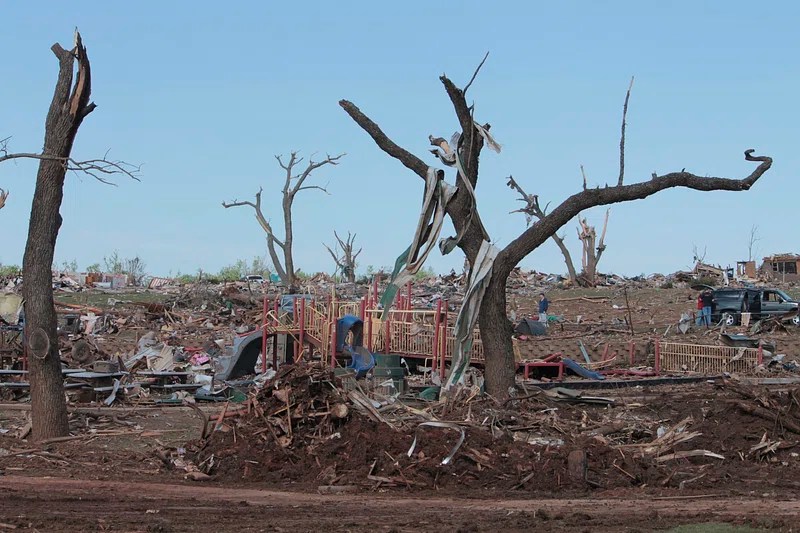
Of course, several weeks of work made little difference. So David made arrangements for his businesses in Sydney to carry on without him and moved his family to Darwin. In addition to supervising construction crews, David raised funds throughout Australia for the flattened city.
By 1976 Darwin was nearly rebuilt, and the Bussaus’ pastor in Sydney presented them a new opportunity in Bali, to rebuild a church destroyed by earthquake. Their answer: yes.

“This was my first real exercise in faith,” David said later. “Even when I’m out of my depth I like to take on a challenge. I jumped into it trusting and believing that God would redeem if I screwed up.” [1]
In the remote village of Blimbingsari, the Bussaus lived in a thatch-roofed home with no electricity, running water, or phone. But the community of one thousand Christians were willing to work hard to have a church again.

Water was the top priority, in order to make concrete for a sturdy structure. But bringing water to the village meant bypassing two Hindu villages. David and his crew built a dam and laid pipe, providing water to them first.
That project yielded another blessing. Now the villagers could irrigate their rice fields and harvest twice a year, not just once.

While working toward church construction, David learned of the systemic debt plaguing the rice farmers. Landowners required sixty percent of the crop as rent; the remaining proceeds didn’t cover most families’ expenses.
They often mortgaged their children to manage mounting debts, but it was rarely enough.
David created a solution: micro-financing. He began with his interpreter, Ketut, whose wife knew how to use a sewing machine.
David lent them fifty dollars to purchase an old one. They sold the crafted items in surrounding villages, and as the business grew Ketut paid back the loan.
Even better, they made enough to buy a second machine and hire another worker. Before long Ketut and his family were ready to diversify. They opened an import/export business as well as a taxi service, employing more community members.
And so began the villagers’ escape from chronic debt into sustainable, successful businesses.
When the church was complete, village leaders asked the Bussaus to stay and help build a hotel. People could then be trained to work in the growing tourist industry.
David and Carol agreed. (Their two daughters loved living in Bali, making the decision even easier.)

To further develop his ability to provide micro-loans, David founded a non-profit organization called “Maha Bhoga Marga”— “The Way of Prosperity.” Over the decades he’s founded seventeen international ministries.
David also joined forces with a colleague to form Opportunity International (O.I.). As of 2021, it has served over 18 million clients in thirty countries. [2]

An O. I. savings and loans ready to open in Ghana, 2011
“O. I. creates a job in the developing world every thirty seconds, and they estimate that every permanent job created directly lifts six people out of poverty.” [3]
David explains their success: “Our original intent wasn’t to set up an international organization, it just grew. That’s the way God works. [When you] do what He puts in front of you, the more doors He opens up. The result is that God is glorified through it.” [4]
Now in his eighties, David still travels internationally, furthering the work God gave him to do: bringing people out of poverty one micro-loan at a time and glorifying God through it.

[1] https://www.issuu.com/opportunity/docs/oia_agency_issue08
[2] https://opportunity.org/content/News/Publications/Annual%20Report/annual-report-2021/annual-report-2021.pdf
[3] https://www.hopechannel.com/read/david-bussau-creates-opportunity
[4] https://www.issuu.com/opportunity/docs/oia_agency_issue08
Other sources:
https://www.discoverwalks.com/blog/australia/top-10-sensational-facts-about-david-bussau/
https://opportunity.org/news/blog/2021/december/back-to-the-beginning-david-bussau
Photo credits: http://www.commons.wikimedia.org; http://www.rawpixel.com; http://www.flickr.com; http://www.commonswikimedia.org; http://www.rawpixel.com; http://www.commonswikimedia.org (2).; http://www.piqsels.com.





 From the Inside Out