Feeds:
Posts
Comments

Posts Tagged ‘Advent’

The Annunciation by Philippe de Champaigne, 1644

‘Remember what the angel Gabriel said to Mary when he first appeared to her?

“Greetings, you who are highly favored! The Lord is with you. Do not be afraid, you have found favor with God” [1].

He then made an incredible announcement. Mary would give birth to the Messiah [2].

Did her mind jump to Isaiah’s prophecy about a young woman who would conceive and give birth to Immanuel?
Surely many Jewish girls knew the passage. And each must have wondered, Might I grow up to be the mother of the King of all?

God favored Mary with the singular role of mother to the Righteous One. Perhaps his choice was based on Mary’s virtue, but scripture gives no indication of that.

Luke did mention that Zacharias and Elizabeth, the parents of John the Baptist, “were righteous in the sight of God, observing all the Lord’s commands and decrees blamelessly” [3].

But no such commendation is given for Mary. It may be God wanted us to understand: he can use anyone. His empowerment doesn’t depend on social standing, intelligence, accomplishments, or even moral superiority.

Our part is willingness and faith, which Mary did demonstrate when she professed: ‘’I am the Lord’s servant. May your word to me be fulfilled” [4]. Mary acquiesced to God’s plan, his choice for her.  
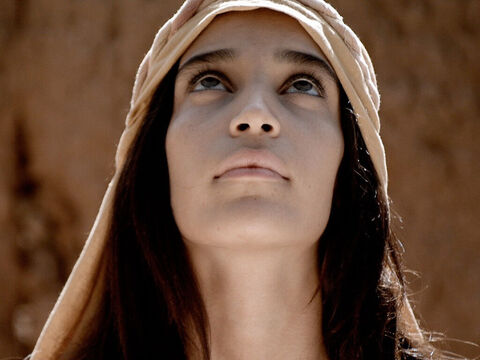
If you’re like me, you’ve wondered about the favor bestowed upon Mary. To us the word conjures up kindness and generosity.

But Mary faced:

  • rejection and cruelty as a pregnant and unmarried, young teen [5]
  • the probable annulment of her engagement to Joseph
  • a grueling trip to Bethlehem, nine months pregnant
  • delivering her first child in a stable-cave
  • another difficult journey to Egypt to protect Jesus from Herod’s slaughter
  • the hurtful disapproval of many for her firstborn, including his own half-siblings
  • watching her son die in agony [6]

How could Gabriel call Mary favored?

We’re looking in the wrong direction. God’s favor, his best for us, does not guarantee an easy path through life and an abundance of material blessings. That kind of favor would only spoil us.

God would have us look in the direction of more satisfying favor: his spiritual blessings [7].

That’s what Mary did, evidenced by her Magnificat, a prayer preserved for us in Luke 1:46-55, where she praised God for his mindfulness of her, his might that had accomplished great things for her, his mercy extended to those who fear God, and more.

In the NIV Study Bible, nineteen cross-references from this passage cite verses from seven books of the Old Testament. Mary knew scripture.

It’s unlikely she thought God’s favor would bring fame and fortune. Mary would have known that God’s best more often includes:

  • empowerment to carry out his assignments
  • instruction in the ways we should choose
  • help in times of trouble
  • strength to endure hardship and grief
  • compassion and comfort to quell distress
  • satisfaction in taking part in God’s wonderful plans [8]

And as God’s wonderful plan of redemption for all people began to unfold, his favor began to flow upon Mary.

He dispelled her fears, gave her courage to tell Joseph the unsettling news, inspired Mary to visit her wise cousin Elizabeth for encouragement, filled her with endurance for the journey to Bethlehem, and strength for the birth of her first child in less-than-ideal circumstances.

Of course, Mary isn’t the only one who’s experienced the favor of the Lord. God’s best is available to everyone who allows God to choose what’s best.

God would have us know:
By his favor he forms our characters and fits us for satisfying service. He charts our course, imparts strength to accomplish his plan, supplies all that is necessary, and ultimately crowns our efforts [9].

Just as he did for Mary.


[1] Luke 1:26-30 NIV, emphasis added

[2] Luke 1:31-33

[3] Luke 1:6

[4] Luke 1:38

[5] This was surely Mary’s experience, given the social norms of the day.

[6] Matthew 1:18-19; Luke 2:1-5; 6-7; Matthew 2:13-15; Mark 3:20; John 19:26-27

[7] Ephesians 1:3

[8] Psalm 138:8 ESV; 25:12; 46:1; 73:26; 86:15; Isaiah 66:13a; Psalm 128:1

[9] Based on Herbert Lockyer quote, Seasons of the Lord, 202.

Image credits: http://www.picryl.com; http://www.canva.com; http://www.freebibleimages.org (4); http://www.stockvault.net.

Processing…
Success! You're on the list.

Read Full Post »

Two weeks ago we embarked upon a reflection of one of the most important songs in the history of the Christian faith: “O Come, O Come, Emmanuel.”

The lyrics beautifully weave together the Old and New Testaments, telling the story of our Messiah, “the chosen One”—who would come to deliver his people from the consequences of their sins and establish his kingdom forever [1].

As noted before, the unknown lyricist carefully based each stanza on scripture. You’ll find references for further reflection listed at the end of this post.

Today we turn our attention to verses four and five [2]:

VERSE 4

I praise you, Lord Jesus, for fulfilling all the Messianic prophecies in the Old Testament—at least 300 of them (!), proclaimed long before your birth. The one referenced here offers such glorious hope, as I’m reminded that:

Jesse was the father of King David, and the prophet Jeremiah foretold you’d be a descendant of this king, a man loyal to the Lord. But as the centuries passed, the nation of Judah turned their backs on God. Again and again he urged them to return to him [3].

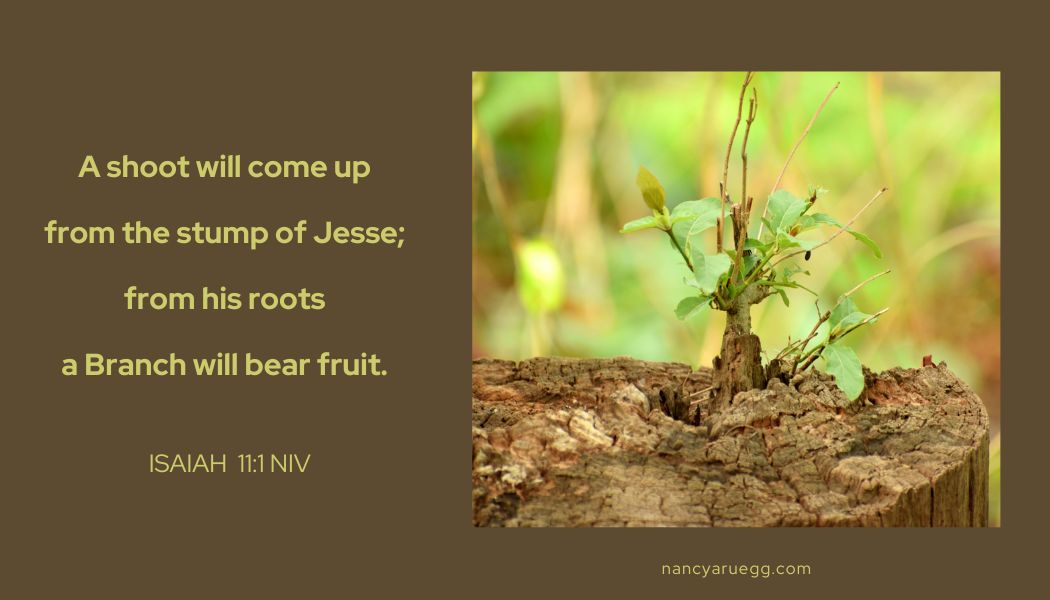
Isaiah (another prophet) painted a word picture of the events that would occur. He compared the kingdom of Judah and the throne of David’s descendants to a tree that would be cut down. All that would remain would be a stump–a remnant of the people [4].

Eleven years later, events unfolded just as Isaiah and four others prophets had foretold. Jehoiachin, the last legitimate king of Judah, was removed from his throne by the Babylonian king, Nebuchadnezzar.

Thousands of Judeans were taken captive so they’d see the error of their ways, seek forgiveness, and follow God once again [5].

But I praise you, Lord Jesus, that Isaiah’s word picture didn’t end there. He proclaimed that out of that hopeless, rotting stump would come a strong sapling.

Six centuries later, you came to earth, the only Righteous One of God, fulfilling that prophecy [6].

Not only were you from the lineage of David on your earthly father Joseph’s side, but also on your mother Mary’s side. This fulfilled the prophecies proclaiming you are the descendant of David that the Jewish people longed for: their Messiah [7].

I praise you, Lord Jesus, for coming to save your people–Jews and Gentiles alike. Because of your great mercy, you rescued me from the specter of hell, taking the punishment I deserved.

And now, the grave has no power over anyone who acknowledges you as their Rescuer [8]!

VERSE 5  

I praise you, Lord Jesus, for possessing the Key of David. That’s significant because a key indicates authority over a domain.  

King David was given authority to rule over all Israel; you rule over all mankind. In fact, God has seated you at his right hand in the heavenly realms, far above all rule and authority, all power and dominion [9].

Out of your magnificence and perfection, you’ve prepared heaven for your people—a place of utter tranquility, blissful and continual joy, eternal and lavish love—beyond what we can imagine.

I praise you, Lord Jesus! You’ve opened wide the gates of heaven; you hold open the door of opportunity for all to enter [10].

As you’ve promised, one day you’ll return and take your children home along “the heavenward road.” Then you will shut the door upon death once and for all [11].

REFRAIN

In all of this and more I REJOICE! You are my Rescuer, saving me from the greatest enemy of all: death.

I praise You, Lord Jesus, for graciously providing the way heavenward. I REJOICE in you, my Savior, my Lord, my King!


[1] Ace Collins, Stories Behind the Best-Loved Songs of Christmas,127; Isaiah 59:20; John 1:40-49; Romans 6:23; Revelation 11:15.

[2] From www.hymnary.org. (Lyrics vary depending on the source.)

[3] Jeremiah 23:5; 1 Samuel 13:14; Isaiah 3:8-9; 55:7

[4] Isaiah 11:1, 10

[5] 2 Kings 24:8-17; 25:21; Isaiah 55:7; Joel 2:12-13

[6] Acts 22:14; 3:18

[7] Matthew 1; Luke 3; Jeremiah 23:5-6

[8] Psalm 86:13 GW; 56:13; Ephesians 1:17; Romans 8:11

[9] Revelation 3:17; Matthew 28:18; Ephesians 1:20—22

[10] Isaiah 22:22; Revelation 3:7

[11] John 14:1-3; Hebrews 2:14; Revelation 21:4

Art and photo credits: http://www.pixexid.com; http://www.stockvault.net; http://www.pexels.com; http://www.pixahive.com; http://www.stockvault.net; http://www.pixexid.com; http://www.stockvault.net.

Read Full Post »

Last week we embarked upon a reflection of one of the most important songs in the history of the Christian faith: “O Come, O Come, Emmanuel.”

The lyrics beautifully weave together the Old and New Testaments, telling the story of our Messiah, “the chosen One”—the One who would come to deliver his people from the consequences of their sins and establish his kingdom forever [1].

Each verse of “O Come, O Come, Emmanuel” directs our spiritual eyes toward Christ’s return by remembering his first coming, and then expressing hope, anticipation, and yearning for his second coming [2].

Our needs here in the present are also addressed as we look to him–our Emmanuel (God with us), our Wisdom from on high, our great Lord of might, and more.

As noted last week, the unknown lyricist carefully based each stanza on scripture. You’ll find a number of references listed at the end of this post for further reflection.

This week we meditate on verses two and three [3]:

VERSE 2

I praise you, Lord Jesus, that you are the wisdom of God from on high, and have become for us wisdom. In you are hidden all the treasures of discernment and knowledge—more profitable than silver, yielding better returns than gold, and more precious than rubies [4].

Through you, God Almighty made the universe, and he appointed you heir of all things. Your wisdom is on display in the order of everything: the orbits of planets, the balance of ecosystems, the cycle of seasons, and more [5].

I praise you, Lord Jesus! You are the radiance of God’s glory and the exact representation of his being. You wisely, actively, and expertly sustain all things by your powerful word [6]!

The Milky Way Galaxy is just one of approximately 200 billion galaxies in the universe–a conservative estimate.

It measures about 100, 000 lights years in diameter. Our whole planetary system occupies one tiny spot of the galaxy.

During your earthly life you exemplified the epitome of wisdom in what you taught and how you lived.

As if that wasn’t enough, you provide wisdom to those who trust you as their Lord and Savior and simply ask.

You know exactly when to give, how to give, what to give, and what to withhold [7].

We can trust you to show us the best path to follow, so that we may enjoy the abundant life you offer [8].

VERSE 3

I praise you, Lord Jesus, that you are our Lord of might, sovereign over all. You are leading everything to the conclusion you ordained before time began, by the same power, wisdom, and love with which you made it. Nothing can be amiss [9].

You will not fail to do your pre-ordained, unerring part, which is ultimately the only part that matters [10].

I praise you that just as the people of Israel saw the radiance of your glory on Mount Sinai as Moses received the law, we too can see evidence of your majesty and splendor. In fact, it’s all around us in:

  • The wonders of your creation
  • The truths in scripture
  • The love and compassion evident in your generous blessings
  • The beauty of your attributes on display—your knowledge, wisdom, power, goodness, and more
  • The scriptural prophecies fulfilled; the promises kept
  • The miracle of your grace that meets us where you find us but doesn’t leave us where you found us [11]

REFRAIN:

In all of this and more we REJOICE!

You have come to be with us, our Emmanuel. You support us with your perfect wisdom, omnipotent might, and more.

Hallelujah!


[1] Ace Collins, Stories Behind the Best-Loved Songs of Christmas, 127; Isaiah 59:20; John 1:40-49; Romans 6:23; Revelation 11:15

[2]  https://www.danielim.com/2017/12/19/the-hidden-theology-and-history-of-o-come-o-come-emmanuel/  

[3] From www.hymnary.org. The lyrics of this hymn vary depending on the source.

[4] 1 Corinthians 1:24, 30; Colossians 2:3; Proverbs 3:13-15

[5] Hebrews 1:2; Jeremiah 51:15

[6] Hebrews 1:3; Colossians 1:16-17

[7] Charles Spurgeon, Morning by Morning, 84.

[8] Proverbs 3:5-6

[9] Daniel 7:13-14. Last two sentences based on Julian of Norwich quote

[10] Based on Elisabeth Elliot quote

[11] Based on Anne LaMott quote

Art & photo credits: http://www.pixexid.com; http://www.stockvault.net (Mirko Fabian); http://www.pxhere.com; http://www.stockvault.net (Mirko Fabian); http://www.pxhere.com; http://www.pickpik.com.

Read Full Post »

Earlier this week I greeted a store clerk with “Merry Christmas” and in return received a beaming smile.

“You’re the first person to say that to me this year!” she enthused. “Merry Christmas to you too!”

Technically, this woman and I were rushing the season by several weeks. According to the centuries-old church calendar, the Christmas celebration only extends from December 25 to January 6.

In these three to four weeks (depending on the year) leading up to Christmas, we ought to be offering one another a different greeting: “Happy Advent.”

And what exactly is Advent? The word comes to us from Latin, adventus, which means coming. It’s a season not just of waiting for Christmas, but also a time to anticipate the second coming of Christ.

For that reason, many churches will sing the ancient Advent hymn, “O Come, O Come, Emmanuel,” perhaps this Sunday. Dating from the eighth century, it’s probably the oldest song of the season that we still sing today.

It’s also considered one of the most important songs in the history of the Christian faith [1]. The lyrics beautifully weave together the Old and New Testaments, telling the story of our Messiah, “the chosen one,” who would come to deliver his people from the consequences of their sins and establish his kingdom forever [2].

Each verse of “O Come, O Come, Emmanuel” directs our spiritual eyes toward Christ’s return by remembering his first coming, then hoping, anticipating, and yearning for his second coming [3], expressed in the soulful tune of the verses.

In contrast, the assertive “Rejoice! Rejoice!” of the refrain conveys the joy of assurance: Our Emmanuel has come, he is with us now in spirit, and he will come again “in the same resurrected, glorified body in which He ascended to heaven” [4].

The unknown lyricist carefully based each stanza on scripture. You’ll find a number of references listed at the end of this post for further reflection.

Please join me over the next few weeks as we delve into the meaning of this grand hymn.

Today we’ll consider verse one and the refrain that put us in the first century with those who ached for the Messiah to come. And yet the lyrics also speak to us today as we long for him to return.

I praise you, Lord Jesus, for being my Emmanuel (“God with us”) [5].

You are with me when:

  • Frustrations build
  • Fear begins to rise
  • Circumstances overwhelm
  • Disappointments deflate my spirit
  • My heart aches

You are with me to:

  • Help in every situation
  • Supply guidance, strength, comfort, provision, and more
  • Fill my heart with your fullness of joy as I focus on who you are and what you’ve done
  • Grant me peace of mind as I trust in you
  • Give me hope based on your fail-proof promises

I praise you, Lord Jesus, for these facets (and many more) of the abundant life you offer, when I avail myself of your enduring influence.

Even so, like the captive Jews in Babylon centuries ago, many mourn in exile here [6]. This world is a painful place as self-centeredness, greed, injustice, rage, war, lust and more create havoc. We long for your kingdom of righteousness, justice, peace, love, joy, and prosperity.

Yet I still praise you, Lord Jesus! When the time was right, you came to pay the ransom for our souls and release us all—Jew and Gentile alike–from the bondage of sin and Satan [7].

Then you invite us to dwell in your spiritual kingdom with you. And those of us who accept your invitation will one day dwell in your wondrous heaven.

Even now as we grieve the suffering caused by sin and imperfection, we rejoice that when the time is right, you will return to earth, Lord Jesus, to end all suffering and receive us into your flawless and glorious kingdom.

Thank you, dear Christ, for making it possible.   


[1] Ace Collins, Stories Behind the Best-Loved Songs of Christmas, 127.

[2] Isaiah 59:20; John 1:40-49; Romans 6:23; Revelation 11:15

[3] https://www.danielim.com/2017/12/19/the-hidden-theology-and-history-of-o-come-o-come-emmanuel/  

[4]  https://carm.org/about-jesus/will-the-second-coming-of-jesus-be-a-literal-bodily-return/

[5] Isaiah 7:14; Matthew 1:23

[6] Psalm 137:1-4; Psalm 119:136-138

[7] Luke 4:18; Romans 2:11-21

Photo credits: http://www.picryl.com; http://www.pixexid.com; http://www.canva.com; http://www.stockvault.net (Mirko Fabian); http://www.dailyverses.net; http://www.publicdomainpictures.net (George Hodan).

Read Full Post »

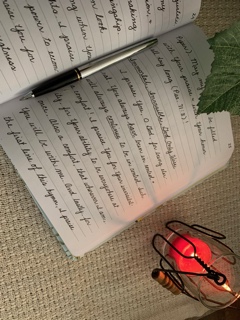
Some time ago, wise-and-insightful blogger Michele Morin (over at Living Our Days) shared that she was journaling through some of the old hymns. Isn’t that a brilliant idea?

I imagined her digging into the meaning of some of the rich language and theology, personalizing the truths, and/or using them as the basis for prayer.

Most often we sing through the lyrics so quickly we miss their full significance. But if we intentionally slow our thinking by putting pen or pencil to paper, we make room for wonderful blessings to emerge—blessings like increased understanding of God and his Word, renewal of the mind, and augmented intimacy with God.

Our contemplations can become worship.

So far I’ve journaled through seven hymns. For Advent I chose to contemplate a Christmas carol: Charles Wesley’s “Hark! The Herald Angels Sing,” which offers both rich language and theology. (The story behind the song is also interesting. You can read it here: “Hark, the Herald Angels Sing.”)

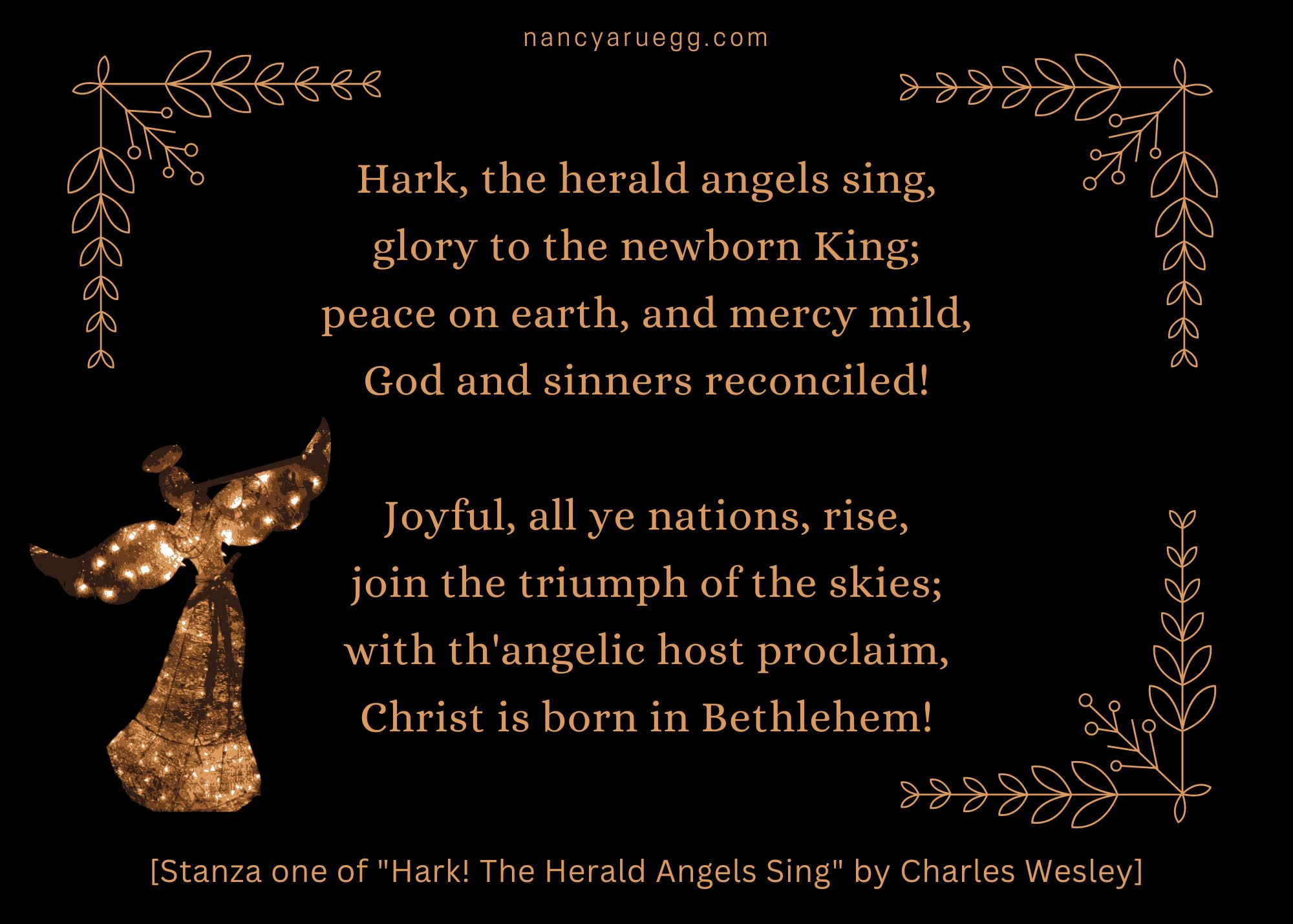
Over the next three weeks we’ll savor the three best-known verses of this carol. No doubt you’re familiar with the first:  

My journaled prayer included the following.

“Hark!” the hymn writer begins, inviting me to listen with close attention. His lyrics take me back in time to that night when angels declared life-transforming news for those who embrace it:

A new King has been born—a king like no other (1)!

That’s YOU, Lord Jesus. You are the Prince of Peace, the One who offers inner tranquility to all who desire it (2), and universal, all-encompassing peace when the new heaven and the new earth are established (3).

I praise You, O Christ, for Your comforting peace

that steadies me and gives me hope.

You’re the One who bestows mercy—tender-hearted forgiveness—when I confess the wrongs I’ve committed. You’re the One who put ultimate mercy into action by “being obedient to God and dying a criminal’s death on a cross” (4).

I praise You, O Christ, for your unceasing mercy.

You have not punished me

the way I deserve, and You never will.

You’re the One who reconciled me to God (5). First, You chose to do the unthinkable, to die in my place and pay the penalty for every sin I commit.

Then You restored my broken relationship with God, as I put my trust in You and accepted Your free gift of eternal life. Because of You, I have right standing with God and access into His presence at any time.

I praise You, O Christ, for your unimaginable sacrifice,

making the impossible possible.

For all these blessings (and so much more) I rise up with Jesus-followers from around the world to sing joyful praise to You (6)!

Our voices join those of the angels to give you glory (7)–celebrating Your attributes, rejoicing in Your excellent works, and taking pleasure in the privilege of being sons and daughters of Almighty God.

I praise You, O Christ, for leaving the wonders of heaven

to be born in the humble village of Bethlehem

and live among ignoble humanity—

all for our benefit.

I praise You, O Christ, for the incredible FREE gift

of eternal ecstasy in paradise with You.

And I praise You for being my compassionate Christ,

my glorious Emancipator, and my powerful King!

Notes:

  1. Revelation 1:5-6
  2. Romans 5:1
  3. 2 Peter 3:13
  4. Philippians 2:8 TLB
  5. 2 Corinthians 5:18-19
  6. Psalm 67:4
  7. Psalm 148:11-13

Photo credits: http://www.pxhere.com; Nancy Ruegg; http://www.openclipart.com and http://www.canva.com; http://www.negativespace.com (3); http://www.publicdomainpictures.net.

Read Full Post »


With Advent near the surface of my thinking these days, I was primed to notice a new-to-me phenomenon in the word adventure.

It begins with Advent!

I don’t know how I’ve missed that similarity before. But once the word-within-a-word jumped out at me, I began to wonder: Are the two words related or is it just coincidence? Might there be significance to the similarity?

Research uncovered several interesting insights.

The Oxford English Dictionary defines Advent as “the arrival of a notable person or thing.” It comes to us from Latin; ad- means “to” and venire means “come” (1).


Adventure refers to an undertaking that may involve danger and unknown risks, and/or an exciting or remarkable experience (2).

Etymologically the words are more like distant cousins than siblings. But they do come together at Christ’s advent into the world—and in our individual lives—because he does offer grand adventure—the adventure of faith.

Mary certainly chose such an adventure as Gabriel announced she would conceive the Son of God. “I am the Lord’s servant,” she affirmed. “May your word to me be fulfilled” (Luke 1:38).

Joseph also stepped into the adventure of the Messiah’s birth, risking the derision of his community (Matthew 1:18-25).  If his neighbors didn’t know it yet, they’d learn soon enough that his betrothed was pregnant.


Neither Joseph nor Mary knew the dangers they’d face (including King Herod’s paranoia) and the uncertainties of parenting the perfect Son of God who would be misunderstood, scorned, and even murdered.

For their adventure, the shepherds ignored the first rule of sheep-tending: never leave the flock to fend for themselves. Instead, these men  threw caution to the wind and participated in a remarkable experience. They were among the first to see the long-anticipated Christ Child (Luke 2:8-18).

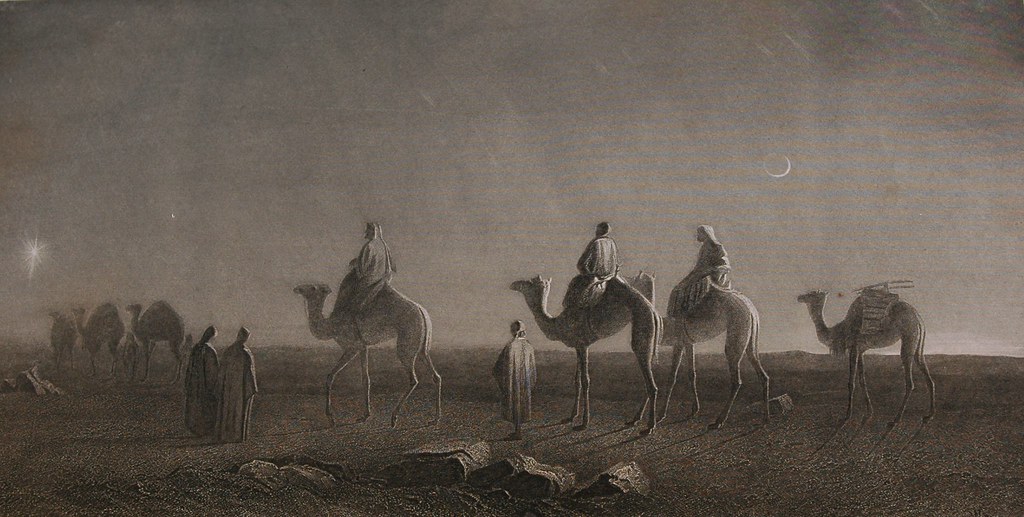
The wise men most likely adventured for two years, traveling to Judea from Babylon or Persia in order to worship the newborn King (Matthew 2:1-12). Imagine the stories of danger, risk, and astonishment they had to tell.


And now it’s our turn to choose. Will we step into the adventure of faith as they did—not knowing exactly what will happen and not being in control?

Yes, we might encounter danger or risk, but we are also guaranteed remarkable experiences, including:

  • Being used by God for eternal good, as we offer ourselves as his servants, just like Mary did.
  • Becoming the best version of ourselves as God works within us, developing our character and maturity (Galatians 5:22-23).
  • Looking for the miracle-drenched moments—taking holy delight in the ordinary (Psalm 40:5).
  • Getting acquainted with the Bible, finding sincere pleasure in knowing God’s Word. The more we know him, the more we love him, and the more wonder we experience (Psalm 112:1).
  • Participating in God’s work through prayer (James 5:16b).


Two years ago our son and daughter-in-law gave us three wooden Christmas ornaments, created by a girl overseas. We’ll call her Kiana. Kiana works in a factory run by a missionary couple sent out from our church.

On the tag attached to the ornaments was Kiana’s name and picture. Her sparkling eyes and joyous smile grabbed my heart and seemed to indicate Kiana just might know Jesus.

I began to pray for this young woman on a regular basis, thanking God for his promised provision and protection over her. I asked God to honor Kiana, bringing her to Jesus if she did not know him yet, and using her to impact others if she was already a believer.

Not long ago, those missionaries came home on furlough. I had the chance to ask about Kiana and learned she is a sweet Christian and even leads a Bible study.

My eyes filled with tears as I realized the privilege God had given me, to participate with him in the work he’s doing half-way around the world—through the adventure of prayer.


(One of the ornaments created by Kiana)


‘You see how gracious God is? Advent is only the beginning. The joy of this season can become an extended adventure that unfolds day after day, year after year, as we make ourselves available to him.

And that’s not all. The remarkable experience of heaven is yet to come.

The question is: will we embrace the adventure that begins with Advent, or will we withdraw?


Notes:

  1. https://www.europelanguagejobs.com/blog/turning_advent_into_adventure.php
  2. Mirriam-Webster’s Collegiate Dictionary, Tenth Edition, 2001.


Photo and art credits:  http://www.thebluediamondgallery.com; http://www.canva.com; http://www.wikimedia.com (painting by James Tissot); http://www.flickr.com; http://www.canva.com; Nancy Ruegg


Read Full Post »


Christmas is indeed a season of light.

Candles glow and twinkling lights glimmer from houses, buildings, and trees.

People love all the flickering and shimmering!  Some spend weeks decorating their yards and rooftops in spectacles of illumination.  If you asked them why, they might be hard-pressed to express more than, “They’re beautiful!”


But perhaps it’s more than just aesthetics.  Perhaps it’s a heart-response.

Light is symbolic for:

  • Beauty.  Light grabs our attention, whether it’s sparkling and dazzling or soft and luminous.


  • Safety.  Where there is light, we can navigate through our surroundings.
  • Comfort.  A nightlight offers just that for many a child who is afraid of the dark.
  • Hope.  Light gleams triumphantly in the darkness at the end of a tunnel.
  • Guidance.  Light illuminates the way.


Might it be that people respond to light, especially when associated with Christmas, because the human spirit is made to respond to the Light?

Jesus came from the Father who is Light (1 John 1:5), and proclaimed, “I am the Light of the world” (John 8:12).

But that statement is more than symbolic.

God the Son is our safety, because he offers eternal life.


“My sheep listen to my voice; I know them and they follow me.

I give them eternal life, and they shall never perish;

no one can snatch them out of my hand.”

John 10:28-29


God the Father is our comfort, because he is loving and compassionate.


“Praise be to the God and Father of our Lord Jesus Christ,

the Father of compassion and the God of all comfort,

who comforts us in all our troubles.”

2 Corinthians 1:3-4a


God the Son is our hope, because of his resurrectionWe will be raised from the dead because he was. 


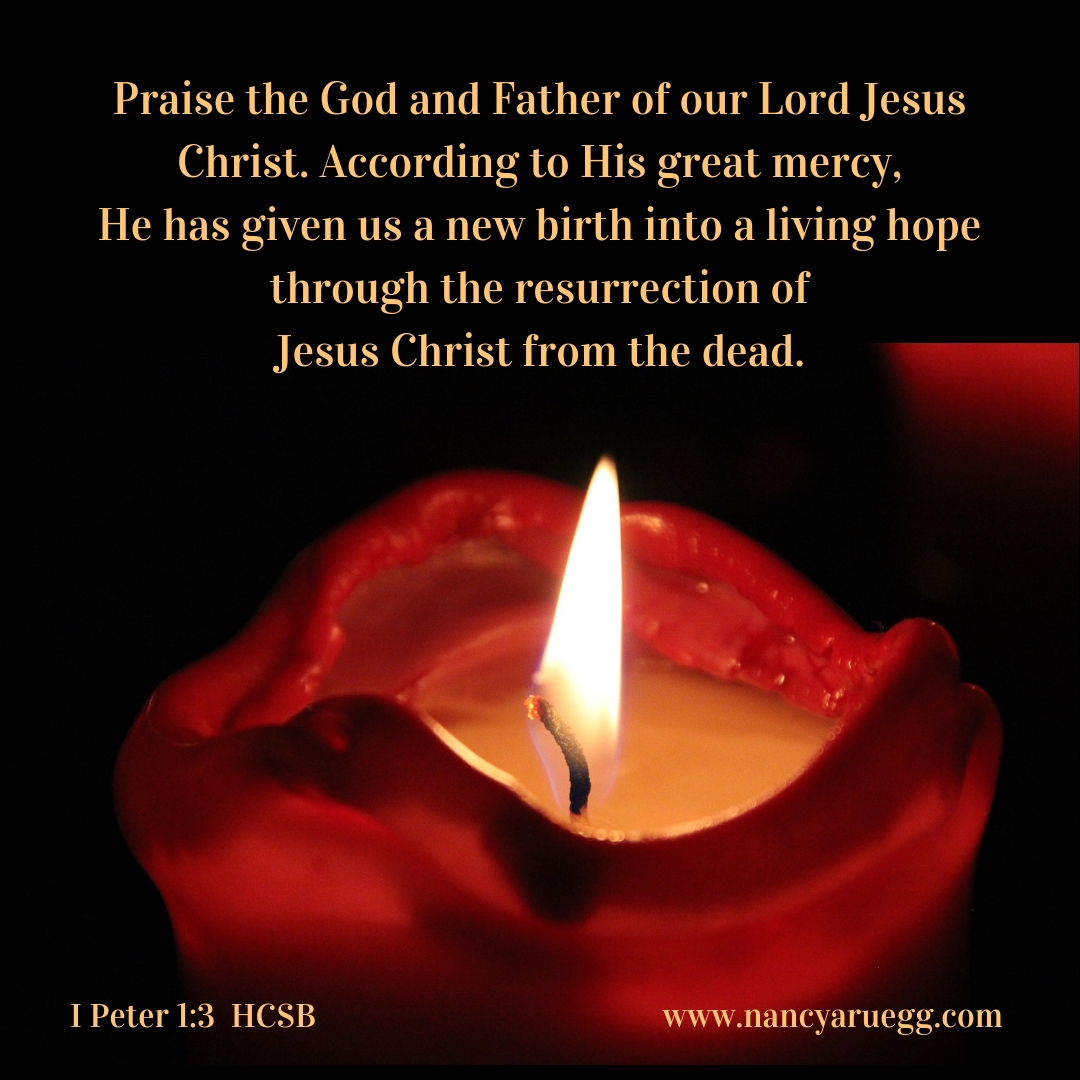
“In his great mercy [God] has given us new birth

into a living hope through the resurrection of Jesus Christ from the dead,

and into an inheritance that can never perish, spoil, or fade—

kept in heaven for you.”

1 Peter 1:3b-4


God the Father is beauty, because of all his exquisite attributes.  And we have the opportunity to bask in that beauty.


“I’m asking God for one thing…

To live with him in his house my whole life long.

I’ll contemplate his beauty; I’ll study at his feet.”

Psalm 27:4  MSG


God the Father is guidance, characterized by wisdom, compassion, and readiness.


The Light of the world offers us all this and more.

I can’t imagine life without him, can you?

Let’s make time to linger in his Light during this Advent season.


Let’s be watchful for “Glory-moments, awash in his dazzling Light” (Sarah Young).


*     *     *     *     *     *     *     *     *    *


How else might we expand our heart-response to Jesus?  Please share your thoughts in the comment section below!


Photo credits: http://www.pxhere.com; http://www.wikimedia.com; http://www.tOrangebiz; http://www.flickr.com; http://www.dailyverses.net; http://www.canva.com (3).


(Revised and reblogged from December 2, 2013.)

Read Full Post »

41VdqTVobWL._SY344_BO1,204,203,200_


“Advent:

the time to listen for footsteps –

you can’t hear footsteps

when
 you’re running yourself.”

Bill McKibben


Are you caught up in the Holiday Hurry yet? I’m talking about the decorating–baking– card-writing—shopping—wrapping—parties—rehearsals—event-participation and attendance. No doubt I omitted a few items on your list.

Perhaps you’re craving a bit of quiet this Christmas. Time to enjoy the presence of your Savior. Time to reflect on Bethlehem blessings—those gifts we enjoy as a result of Christ’s advent into the world.

But how can we stop running long enough to hear our Savior’s footsteps? How can we avail ourselves of his peace and strength when our days are doubly-busy?

May I recommend the devotional book, Let Every Heart Prepare Him Room (Barbour Publishing, 2014), by my good blogger-friend, Jean Wise?

First, the soft, leather-like cover is a pleasure to hold. The thick, gilded pages are a delight to turn. And the subtle, star-studded border on each page adds beauty to the text.

Jean has provided four weeks of quieting devotionals, offering a perfect start for each day. Each week has its own theme: 1) Preparation, 2) Pause, 3) Ponder, and 4) Promise.

Each reading includes a brief devotional, appropriate scriptures, well-chosen quotes, suggestions for a more meaningful Advent season, and a closing prayer.

I’ve just begun reading and internalizing this book myself. But already my spirit has been calmed by Jean’s soothing words. For example:

“We drink in His presence and linger in His light for warmth and nourishment. We quench our thirst at His well” (p. 27).

Doesn’t that sound refreshing and rejuvenating? So “take a deep breath and enjoy the journey,” Jean recommends. Embrace moments of stillness, thank God for the gift of His Son, express gratitude, and rest.

Jean also provides gentle challenge. She well knows the tyranny of the to-do list at this time of year. A pointed question steers our focus in the right direction:

“What are we clinging to so tightly we can’t reach out to God” (p. 16)?

And then there are those readings where God’s wisdom flows through Jean’s words.

In the devotional entitled, “Advent Assignments,” she reminds us that our role in the Christmas season is not to be the perfect hostess or flawless decorator, and not to portray the ideal family.

“Preparing our hearts for the Lord implies knowing our boundaries and acknowledging our limitations…Focus on the manger in the center of the stage of our hearts (p. 32).”

Each day Jean encourages me to “reduce the clutter.” Her words bring me to the center of the stage of my heart, to “spend less time on busy work and more time with God” (p. 12).

Time to reflect. Time to listen. Time to savor the presence of my Savior.

Won’t you join me?

(You may order the book on http://www.barnesandnoble.com or purchase at a Family Christian bookstore and at Christian Book Distributors.) 


Read Full Post »

Cover of "The Guernsey Literary and Potat...

Cover via Amazon

The title grabbed my attention:  The Guernsey Literary and Potato Peel Pie Society (by Mary Ann Shaffer and Annie Barrows).   And it turned out to be an excellent read, especially since I particularly enjoy historical fiction.

But this post is not a book review.  It’s about a statement one of the characters makes.

First, a bit of background.  A group of folk who lived on the island of Guernsey, in the late 1940s, were greatly anticipating the arrival of a writer.  This writer  was going to tell their story of what happened during the German occupation of World War II.

Upon her arrival, one of the village residents, Juliet, says, “How beautiful of you to come” (p. 26).

Note she did not say, “How wonderful of you to come.”  She said, beautiful.

I love the use of an unexpected word that catches me by surprise and makes me think.

As I read Juliet’s statement, I thought it made a perfect gratitude prayer to Jesus, especially at Christmastime.

How beautiful of you to come—how lovely, graceful, goodly, splendorous, and magnificent.

Oh, yes, Lord Jesus.

 How beautiful of you to come, leaving the resplendent perfection of heaven behind, and:

  • Making yourself nothing,
  • Taking the very nature of a servant,
  • Becoming obedient to death (Philippians 2:7-8).

How beautiful of you to come, with glorious qualities that delight our hearts—qualities such as:

  • Love, expressed with forgiveness, patience, and benevolence (1 Corinthians 13:4-5).
  • Perfect sinlessness, giving us a worthy example to follow (Hebrews 4:15).
  • Truth, in which we can trust (John 14:6).
  • Peace that defies explanation (Philippians 4:6-7).

How beautiful of you to come, to:

  • Turn my darkness into light (2 Samuel 22:29b).
  • Be the source of my salvation (Hebrews 5:9).
  • Be with me always (Matthew 28:20).
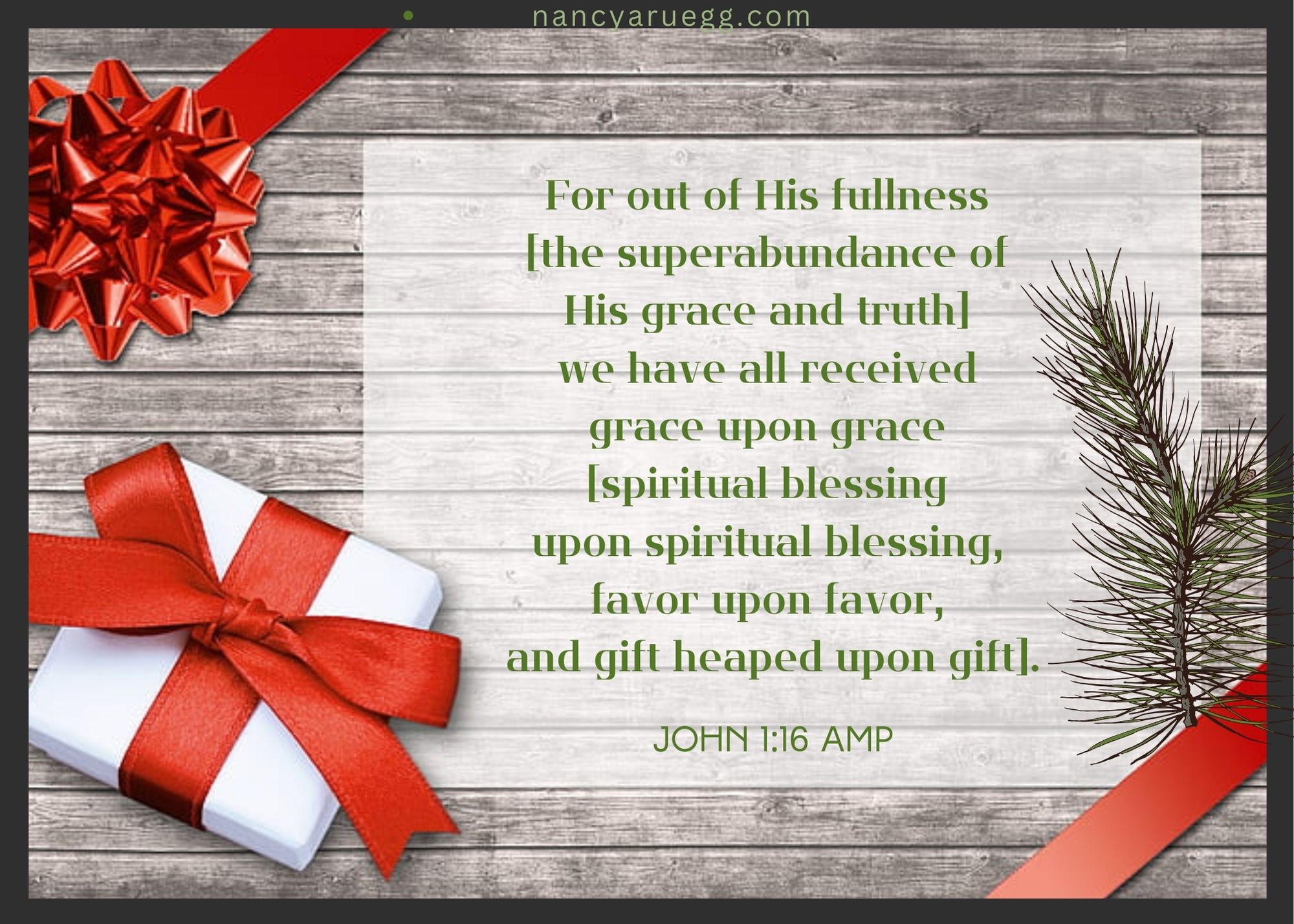
  • Provide blessing after blessing (John 1:16).

How beautiful of you to come. 

And as we welcome you into our hearts, Lord Jesus, you make us new (2 Corinthians 5:17).

You make us beautiful!  We can:

  • Shine like stars (Philippians 2:15).
  • Be the aroma of Christ to others (2 Corinthians 2:14-15).
  • Reflect your image (Romans 8:29) of holiness, moral purity, and love.

Oh, how beautiful of you to come!
Read Full Post »

Still Traveling

Impressions Becoming Expressions

Living Our Days

Gaining a heart of wisdom

He Said What?!
I'm Patty, and my husband and I are living with our adult son who has autism and epilepsy. I love sharing lessons learned from life around me, especially life with Aaron.

Meditations of my Heart

Impressions Becoming Expressions

Linda Stoll

Impressions Becoming Expressions

Debby Thompson

Impressions Becoming Expressions

Signora Sheila

Notes on Life, Faith & Italy

Colleen Scheid

Writing, Acting, Living in God's Love

Mitch Teemley

The Power of Story

Heidi Viars

Finding the Image of God