Feeds:
Posts
Comments

Posts Tagged ‘Civil War Heroes’

Gunfire blasts and booming cannons surrounded Union Army Private, William Carney. His regiment’s objective: to capture Fort Wagner near Charleston, South, Carolina.
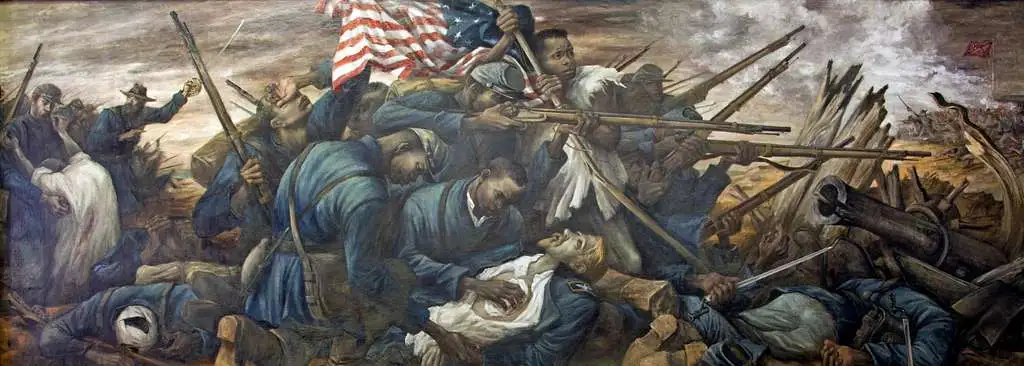
The 54th Regiment of Massachusetts at the Civil War battle for Ft. Wagner, July 18, 1863.

Jerking movement nearby caught Carney’s eye. The color guard had been shot. As the dying man fell, the U.S. flag he carried began billowing toward the ground. Carney scrambled to rescue the flag from desecration and took a bullet himself.

Carney continued to crawl toward the fort, holding the flag high and calling encouragement for his fellow soldiers to follow. He was hit at least three more times, but made it to the walls of Fort Wagner, planting the flag into the sandy soil and holding it upright “until his near-lifeless body was rescued” [1] .

Even then Carney refused to let go of the flag until he was returned to his regiment’s camp. His heroism that day inspired a vital victory for the Union Army.

W. H. Carney with the flag he carried that day.

Years later Carney explained his motivation for joining the Union cause: “I had a strong inclination to prepare myself for the ministry; but when the country called for all persons, I could best serve my God by serving my country and my oppressed brothers. The sequel is short – I enlisted for the war” [2] .

Yes, Carney had been an oppressed brother himself, born into slavery in 1840. But during the 1850s he arrived in Massachusetts, either through the Underground Railroad, or perhaps his father—already a freed slave—was able to purchase his son.

Either way, Carney began to enjoy the freedoms that Blacks of the South were denied—freedoms like traveling, assembling, learning to read and write, and receiving pay for work. He passionately desired other slaves to experience the same.

That God-given passion for his fellow man surely inspired Carney that day at Fort Wagner, to give the fight his all no matter what duty fell to him. And for his tenacity and courage, William Carney received the Medal of Honor in 1900. He was the first Black soldier to do so.

Someone might ask, how was William Carney able to stay so strong?

Undoubtedly his firm stance was the result of:

  • Strong attention toward his God
  • Strong determination to live by God’s ways
  • Strong faith in God’s promises, confident that whether he lived or died, all would be well

We too can stand firm in what we face by applying the same.

Strong attention toward God includes not allowing our emotions to control us. For example, sorrow, fear, and exhaustion will insist we can’t go on, but God tells us he gives strength to the weary and increases power for the weak [3] .

Strong attention toward God includes being in relationship with him, through prayer, Bible reading, worship, and more. We can’t expect to sense his peace and strengthening presence if we never spend time with him.

Security is not the absence of danger

but the presence of God

no matter what the danger.

Unknown

Strong determination to follow God means choosing to live by his truth. Scripture is full of examples of men and women shaped by their faith and obedience in God, becoming as strong as steel: Huldah, Jeremiah, Daniel, Mary (Mother of Jesus), Peter, and Paul are among them.

We see such Bible heroes as extraordinary, but I’m sure they’d tell us they were just ordinary people who trusted in their extra-ordinary God.

Strong faith in God’s promises means we can hold on to hope with confidence and courage.

I wonder if scripture-promises echoed in William Carney’s mind as he held that flag high and emboldened his comrades–promises such as these?
 

  • “The Lord gives strength to his people; the Lord blesses his people with peace” (Psalm 29:11).
  • “With your help I can advance against a troop; with my God I can scale a wall. It is God who arms me with strength and makes my way perfect” (2 Samuel 22:30, 33).
  • “If I live, it will be for Christ, and if I die, I will gain even more.” (Philippians 1:21 CEV).

You and I may never fight in battle, but these same promises can echo in our minds as we confront such enemies of our souls as discouragement, anxiety, stress, guilt, and temptation.

Like William Carney WE can stand steadfast and strong [4] .
What helps you to stand strong? Please share your experience in the comment section!


[1]https://www.army.mil/article/181896/meet_sgt_william_carney_the_first_african_american_medal_of_honor_recipient

[2] https://www.nps.gov/articles/william-h-carney.htm

[3] Isaiah 40:29

[4] 1 Corinthians 15:58

Photo credits: http://www.picryl.com (2); http://www.nypl.getarchive.net; http://www.dir.es/album/hiking-in-wales-2019; http://www.wallpaperflare.com.
Read Full Post »

h63568

(In honor of Black History Month)

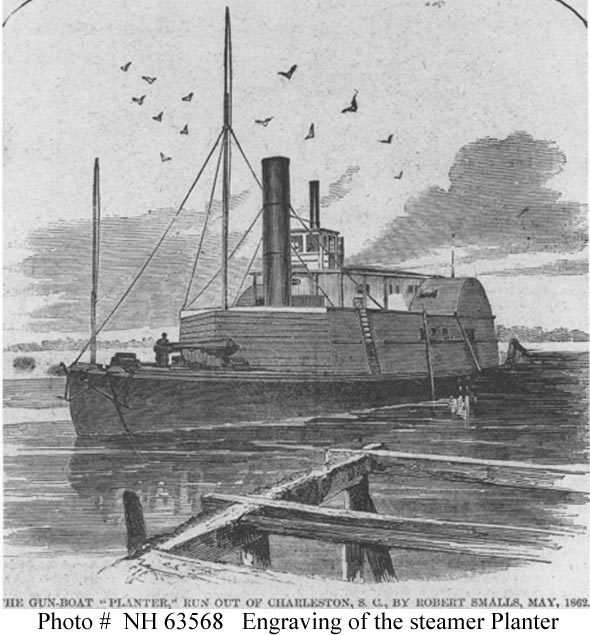
In the predawn hours of May 13, 1862, Robert Smalls’ experienced hands gripped the ship’s wheel of the Planter, though his heart was pounding. Ahead were five checkpoints along the Charleston River, and then the open sea. Within a few hours he and the fifteen others onboard would be free from slavery.

Or, failing to succeed, they would be sinking the ship, jumping overboard and perishing together. They had already decided: being captured was not an option.

Smalls prayed aloud, for the benefit of his crew and passengers: “Lord, we entrust ourselves into thy hands. Like thou didst for the Israelites in Egypt, please stand over us to our promised land of freedom” (1).

The first checkpoint came into view, its lanterns gleaming gold against the darkness. Even though the sentries would not be able to see him clearly, Smalls had taken the precaution of wearing the captain’s coat and straw hat. He even assumed his captain’s posture. And when Smalls gave the correct whistle signal, they allowed him to pass without question.

Robert whispered another prayer, this time of gratitude and praise. He marveled how God had engineered events–starting in his youth–to bring him to this moment:

  • At age twelve, Smalls’ master, Mr. McKee of Beaufort, South Carolina, had rented him to an employer in Charleston. Smalls had worked in the city ever since, as waiter, lamplighter, and then wharf hand.
  • Currently he was employed as wheel hand aboard the Confederate supply ship, Planter, under command of Captain Ripley. His circumstances had allowed him to learn how to sail and how to make the correct whistle signals at checkpoints.
  • The captain and white crew members frequently spent their nights in Charleston, not on the ship. This night was one of them.

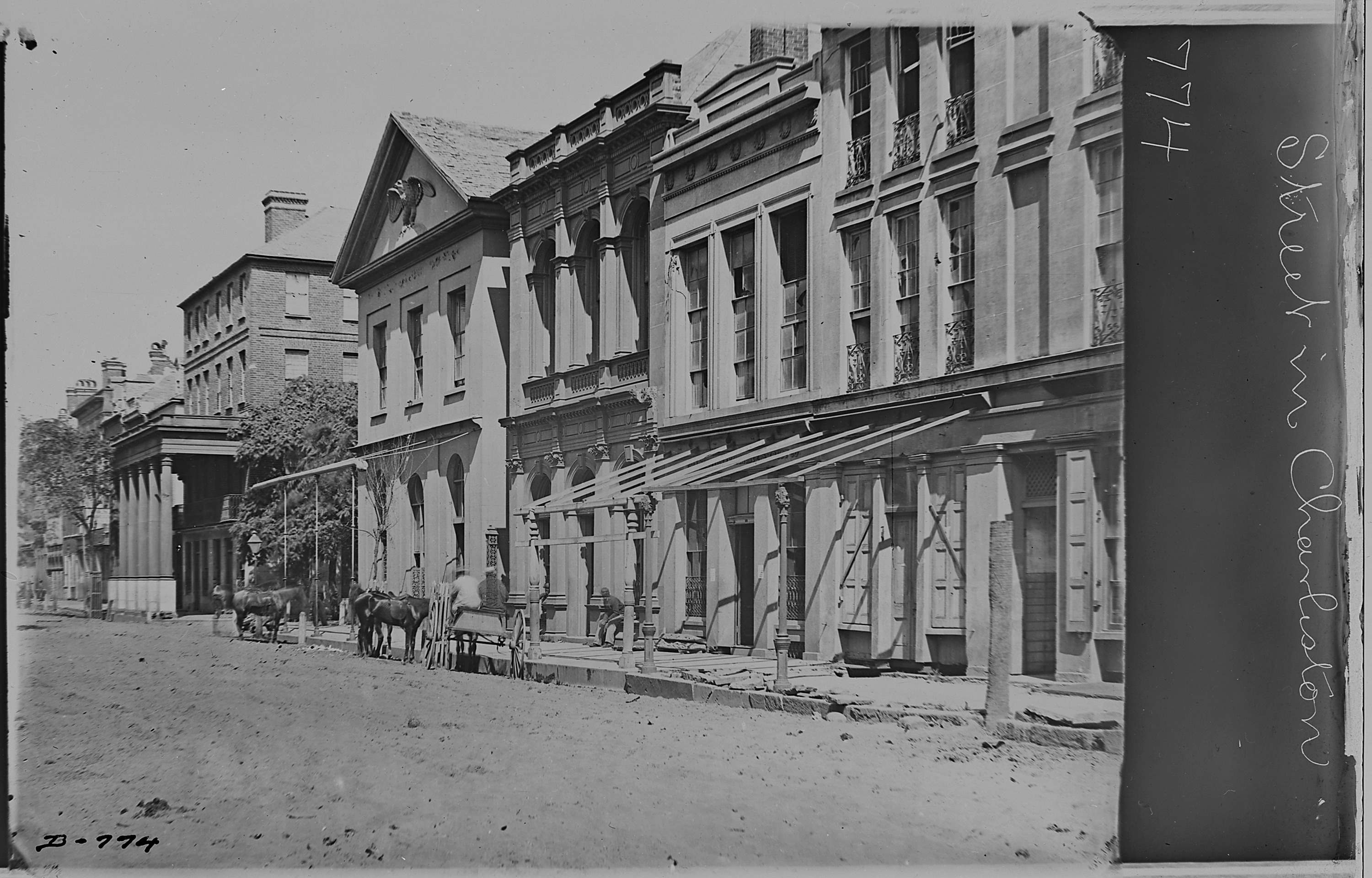
charleston_s-c-_-_street_scene_-_nara_-_525179

(Charleston street scene by Matthew Brady)

  • Smalls enjoyed good rapport with the other ship-hand slaves of the Planter. Without them, this daring getaway would have been impossible.
  • The opportunity for escape presented itself when a pre-dawn mission was scheduled for May 13. Smalls’ 3:30 a.m. departure, although earlier than actually scheduled, did not alert the harbor guards.
  • Smalls had time to notify his wife and children that he would pick them up at a prearranged wharf nearby, prior to the first checkpoint.

A small pinpoint of pale light appeared ahead. Checkpoint Two. Again, the Planter slid by without incident as Smalls signaled to those on shore. Three, four, and five also allowed them to pass.

By sunrise they were sailing into safe Union waters. Upon sighting the first vessel of the Union blockade, Smalls took down the Confederate flag and hoisted a white sheet—just in time before sailors aboard the Onward began firing at the Confederate vessel.

His plan had worked; the little band onboard had escaped to freedom. No doubt their shouts of celebration included, “Thank you, Jesus!”

Smalls surprised the captain of Onward with his knowledge of Rebel fortifications and their locations. Also of value: a book of secret flag signals used by the Confederates, and a full cargo of armaments.

It wasn’t long before Smalls had joined the war effort for the Union, helping to enlist Black men to fight. Nearly 5,000 former slaves fought courageously for the North.

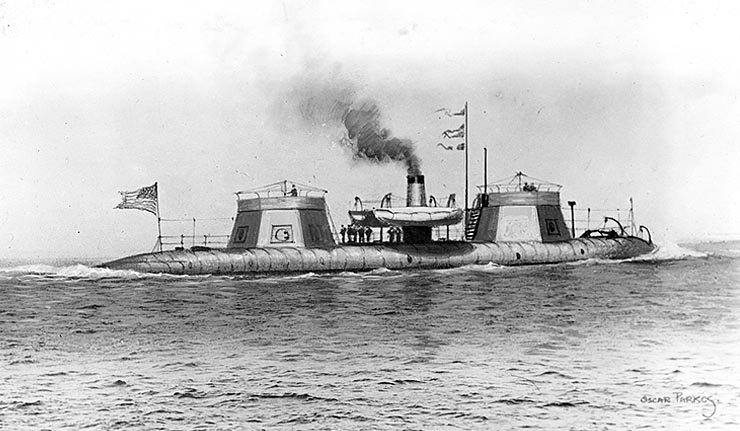
For his part, Smalls became the Union Navy captain for the CSS Planter, the ship he had sailed to freedom. He also captained the ironclad, USS Keokuk.

uss_keokuk_h59546

(The USS Keokuk)

Smalls led Union ships into waters the Confederacy had protected with mines—mines that Small had helped to plant while enslaved in Charleston. Soldiers deactivated the mines, opening those passageways to Union vessels.

Smalls courageously conducted seventeen missions in and around Charleston, which included assisting in the destruction of railroad bridges in the harbor area.

After the war, Smalls and his family returned to Beaufort, South Carolina. He was awarded the rank of Major General of the South Carolina Militia during Reconstruction, and turned his attention to business, education, and finally, politics.  He opened a general store and started a newspaper. He helped establish the first school built for African-American children in Beaufort County.

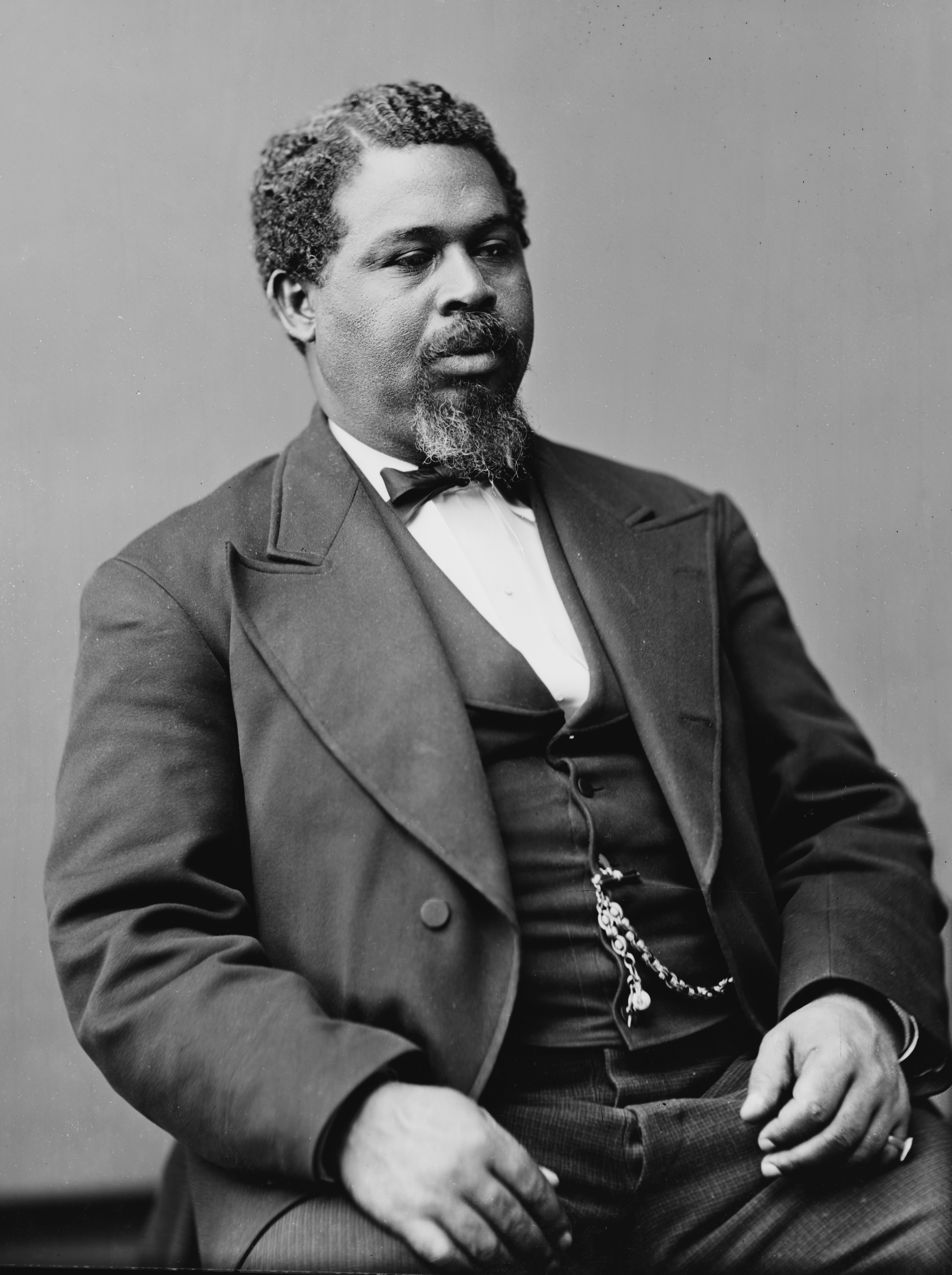
robert_smalls_-_brady-handy

(Robert Smalls)

From 1869 to 1889 Smalls served in both houses of the South Carolina Legislature, and five terms in the U.S. Congress. Referring to his political service, one commentator said, “His record was brilliant, consistent, and indeed he led in all the most prominent measures” (2).

One story in particular highlights Smalls’ Christ-like attitude that impacted his entire life:

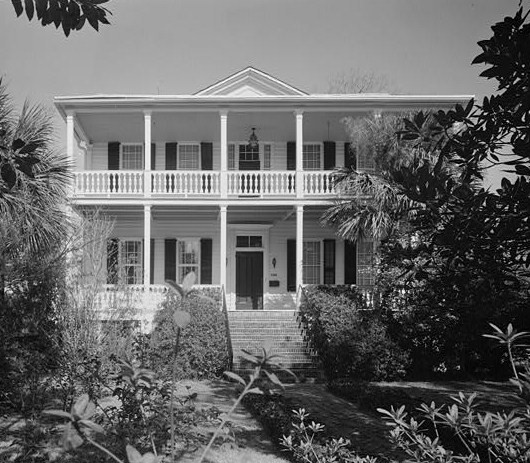
robert_smalls_house_beaufort_south_carolina

(The McKee/Smalls House in Beaufort, SC)

He eventually acquired enough wealth to purchase the house in Beaufort where he and his mother had been slaves of the McKee family. Sometime after Smalls and his family moved in, Mrs. McKee came to the door. By this time she was elderly and perhaps suffering from dementia. She thought the house still belonged to her.

The natural inclination would have been to send her away or have her delivered to her current home. But that was not Robert Smalls’ way. He invited Mrs. McKee inside, gave back to the woman her old bedroom, and then served her.

Robert Smalls died in 1915 at age 76, and was buried with great honors.

In 2001 a Logistics Support Vessel was launched with his name, the Major General Robert Smalls. It was the first ship named for an African-American.

A worthy honoree, indeed.

Notes:

(1) Boone, Bishop Wellington, Black Self-Genocide, p. 165.

(2) http://www.docsouth.umc.edu/neh/simmon/simmons.html

Sources:

Art & photo credits:  www.ibiblio.org; http://www.wikimedia.org (4)

(Reblogged from February 2, 2017.  Jury duty has interfered with writing time this week.)

Read Full Post »

Still Traveling

Impressions Becoming Expressions

Living Our Days

Gaining a heart of wisdom

He Said What?!

I'm Patty, and my husband and I are living with our adult son who has autism and epilepsy. I love sharing lessons learned from life around me, especially life with Aaron.

Meditations of my Heart

Impressions Becoming Expressions

Linda Stoll

Impressions Becoming Expressions

Debby Thompson

Impressions Becoming Expressions

Signora Sheila

Notes on Life, Faith & Italy

Colleen Scheid

Writing, Acting, Living in God's Love

Mitch Teemley

The Power of Story

Heidi Viars

Finding the Image of God