Feeds:
Posts
Comments

Posts Tagged ‘Jeremiah 31:3’

Elohim [1], Lord of heaven, summoned the angel Gabriel to his craft studio. The latter winged his way down the hallways of paradise and soon entered the Master’s presence.

He found Elohim hunched over his work table, pouring over design sheets, but he looked up as the grand angel entered.

“Gabriel!” boomed Elohim. “Thank you for coming so quickly. I need to discuss with you my plans for the human race before creating Adam and Eve.

“It’s important you know these plans since you’ll play an important role in the coming world.”

Gabriel stood erect and folded his wings in precise pleats. “I am your servant, Lord, ready to do your bidding [2].”

Elohim smiled. “Thank you, Gabriel. Now—here’s what I’m thinking. First, you’ll remember we’ve already decided to give humans the freedom of choice, since puppet-children would be pointless.

“I can’t enjoy the blessing of relationship with puppets! No, my children must have free will [3].”

Elohim began to pace around his mammoth work table. “Second, much as I’d love to lavish each of my future children with perpetual happiness, I know such circumstances in their human state would only spoil them.

“There must be a balancing of the scales between blessing and challenge in order to do them good—to demonstrate my love and grace, yet bring them to a place of maturity and strength [4].”

“Yes, my Lord. I can see the wisdom of such a plan. How will you execute it?”

Elohim swished his flowing train around a corner of the table and continued to pace. “I’ll have to allow bitter along with the sweet, since too much pleasure will intoxicate them and too much sorrow will crush them.

“Too much success will lead to conceit, and too much failure will cause debilitation. Too much praise will contribute to pride, and too much criticism will bring on despair [5].”

Gabriel nodded thoughtfully. “I see what you mean, Elohim.”

“Even so, I want humans to grow in their understanding that happiness will not only be within them, nor will it solely be without. Happiness will be most dependent on their relationship with me.”

“Well said, my Lord!”

Elohim stopped pacing, a twinkle dancing in his eyes. “Thank you, Gabriel. Eons from now I’ll inspire one of my children, Blaise Pascal, to write similar words.”

With his star-studded pen Elohim pointed to a shelf holding one large scroll and tied with a scarlet cord.

That is my plan for initiating relationship with humans: faith in my Son, Jesus—either looking forward to his coming, or trusting in him for eternal life after his death and resurrection [6].”

Elohim then indicated the design sheets strewn on his work table. “Currently in the planning stages, these individually-designed blessings to lift the spirits of my children when faced with difficulty.

“For example, I’ll bring a loving friend alongside a person who’s grieving, or paint a glowing sunrise to remind them of My presence, or lead them to a scripture that perfectly addresses their need—that sort of thing.”

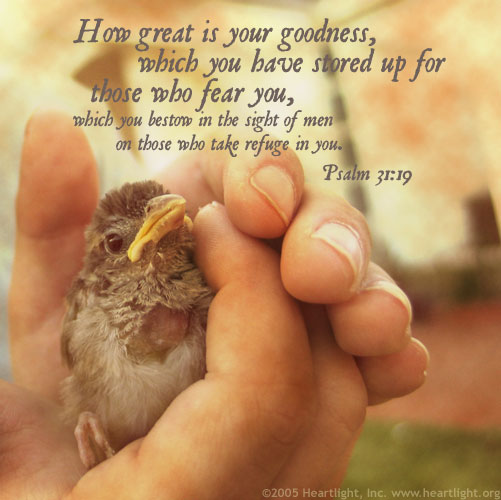
With a flourish of his white-robed arm, Elohim pointed to countless rolls of such design sheets tucked into cubby-holes along the wall. “As you can see, I’ve planned out a number of good things already [7]!”
Now it was Gabriel’s turn to smile. “And no doubt you’ve enjoyed all the creating and designing.”

Elohim affirmed Gabriel’s assumption with a satisfied grin. “I shall have blessings ready for every circumstance my dear children face, though they will have to keep watch so they don’t miss them!”

Elohim paused. In softer tones, yet with passion and resolve he declared, “Gabriel, even before this epic of humanity begins, I already love them.

“Yes, they’ll choose to behave foolishly, but I will still bestow kindness with generosity, mercy with understanding, and goodness with wisdom [8].
“My greatest desire is that all humankind turn to me. And for those who do, a multitude of tender mercies await [9].” Elohim indicated the overflowing cubbies on the wall.

Gabriel bowed in reverence. “May all the peoples-of-the-earth-to-come stand in awe of your gracious provisions [10]!”


[1] The name “Elohim” indicates God is the Creator and ruler in the circumstances of humankind

[2] Psalm 103:20

[3] Galatians 5:13

[4] Psalm 86:15; James 1:4

[5] Based on a Don Fortner quote, www.gracequotes.org

[6] John 3:16; 1 John 4:9-10; John 6:29

[7] Psalm 31:19

[8] Jeremiah 31:3; Isaiah 53:6; Psalm 69:16 AMP; Lamentations 3:22-23; Psalm 145:9

[9] 1 Timothy 2:4; Psalm 69:16

[10] Psalm 33:8

Photo credits: http://www.pexels.com; http://www.canva.com (2); http://www.heartlight.org (2); http://www.pickpik.com.

Processing…
Success! You're on the list.

Read Full Post »

Have you noticed that Bible verses about God’s love often include one particular adjective? In the New International Version, translators chose the word unfailing, as in:

 Just in the psalms alone of that version you’ll find the phrase unfailing love used at least twenty-seven times.

Even more interesting, look up those same verses in other translations and you’ll find no less than eight different expressions in place of unfailing love, including:

  • Gracious love (International Standard Version)
  • Devoted love (Berean Standard Bible)
  • Steadfast love (English Standard Version)
  • Constant love (Good News Translation)
  • Merciful love (New American Standard Bible)
  • Lovingkindness (Amplified Bible)
  • Faithful love (Holman Christian Standard Bible)
  • Loyal love (New English Bible) [1]

Each one adds to the wonder of an all-powerful King of the universe who delights in you, who treasures you.

Yes, he does.

So for the next few moments, let God love on you. Deliciate in the lavish love of your Heavenly Father. [2]

He would have you know:

My love for you, precious child, is gracious

I do not just put up with you!

My grace to you is affirmation of my acceptance

and pleasure in you. [3]

My love for you is devoted

caring, affectionate, and attentive.

Remember, I am always thinking about you;

I am always supplying your needs. [4]

My love for you is steadfast.

“No matter what you might do,

you don’t have to worry about letting Me down,

because you were never holding Me up.” [5]

My love for you is constant.

I already loved you before time began.

Regardless of your performance,

My love for you will never diminish. [6]

My love for you, dear one, is merciful—

forgiving, sympathetic, and ungrudging.

I’ve given you a dazzling crown of mercy and compassion;

will you not wear it? [7]

My love for you is full of kindness.

Through My Son I made it possible

for you to enjoy a rich and satisfying life.

I continually bless you with good things. [8]

My love for you is faithful.

Time and again I have “accomplished wonders,

plans formed long ago—with perfect faithfulness”—

To bless you, provide for you, grow you. [9]

My love for you is loyal

Unchanging, unwavering, and unfailing.

The more you depend on Me,

The more dependable you will find me to be. [10]

*     *     *     *     *     *     *     *     *     *

I can scarcely believe that you, the God of the universe, with all your perfections and glory, would love me—with all my imperfections and shame. Yet you eagerly bestow your gracious favor in wondrous ways. Help me to continually rest in your unfailing love, free from anxiety and fear. Amen.  

How is God loving on you today? Please share in the comment section below!

Art & photo credits: http://www.pickpik.com (2); http://www.heartlight.org; http://www.canva.com; http://www.picryl.com (artist: Richard Jakopic); http://www.pickpik.com (2).


[1] In many Old Testament scriptures, it’s the multi-dimensional Hebrew word hesed (used nearly 250 times) that translators are trying to express.

[2] Based on a statement of Margaret Feinberg, Wonderstruck, 25.

[3] John 1:12; Psalm 147:11

[4] Psalm 139:17-18; Philippians 4:19

[5] Lysa Terkeurst, Embraced, 130.

[6] Jeremiah 31:3; 1 John 4:8; Romans 8:38-39

[7] Psalm 103:2-4

[8] John 10:10 NLT; Psalm 107:9 GNT

[9] Isaiah 25:1; Matthew 7:11; Psalm 23:1; Philippians 1:6

[10] James 1:17; Psalm 145:13b; Cliff Richard, https://www.searchquotes.com/search/Dependable_God/

Read Full Post »

John and me–1964 (?)

The third and last home of my childhood, the one we moved to when I was ten, is of course the one I remember best. With no effort at all I can conjure up the kitchen and imagine Mom at the sink, peeling potatoes for dinner, while I cut up veggies or fruit for a salad.

I can see Dad in the basement, working on his current carpentry project, and my younger brother John puttering with the wood scraps.

Surrounding us all–thanks to the speakers Dad had installed in every room–was the sweet and serene instrumental music of a nightly radio program called “Candlelight and Silver”.

Such memories provide clarity for a statement made by author and pastor Alexander Maclaren:

The memories of those evenings at home (as seen through rose-tinted glasses, I admit) help me understand: dwelling in God’s presence doesn’t mean constant awareness of him, any more than my family was constantly aware of the radio music.

We were occupied with other things and conversing with one another, yet influenced nonetheless by the beautiful and soothing melodies in the background.

But it wasn’t just the music that contributed to those peaceful times. It was the atmosphere of love. Mom and Dad were clearly devoted to one another.

And though disagreements certainly occurred, I don’t remember a single quarrel.

Between them they created a stable, supportive environment in which my brother and I could flourish.

(Had the opposite been true, and their relationship contentious, not even sweet melodies coming from the radio could have dispelled the resulting atmosphere of anger and tension.)

Similarly, our Heavenly Father’s presence is like sweet music because of the atmosphere of love he continually provides. After all:

Think of it: the Most High God of the universe is not just near; he is here. In this moment. With you. With me.

And we have the privilege of knowing him.

But wait! There’s more, and it’s even more incredible: This King of kings actually wants to dwell with us. “I have loved you with an everlasting love,” he declares with compassion. “I have drawn you with unfailing kindness”. [1]

So how do we train ourselves to hear that undercurrent of sweet Song?

We can start with daily scripture-reading and prayer, as well as weaving moments of worship and praise into our routines, so there’s never a day we aren’t in contact with God [2].

And what will be the result? Troubles will be made bearable, joys will be brightened, and a peaceful calm will permeate the atmosphere—even in the midst of busyness.

It’s true: “Dwelling [in the sweet music of God’s constant presence] is a little piece of heaven on earth”—Stephanie Bryant [3].

*     *     *     *     *     *     *     *     *     *

O Sovereign God! Thank you for singing over us your song of love, compassion, and faithfulness and gifting us with a little piece of heaven on earth.

Even when nothing else around us is good, the sweet music of your presence in the midst of deep pain is a good gift indeed [4].

And as we live in the undercurrent of your Song, may we learn to tune our hearts, our minds, our lives, to voice your melodies [5].

In the power of your name we pray, AMEN.


[1] Jeremiah 31:3

[2] See the previous blog post, Ten Ways to Keep Mindful of God.

[3] p. 367, A Moment to Breathe, Denise J. Hughes, ed.

[4] Aliza Lotta, Take Heart, p. 162, Grace P. Cho and Anna E. Rendell, ed.

[5] Douglas Kaine McKelvey, Every Moment Holy, p. 250.

Art & photo credits: Nancy Ruegg; wwwpublicdomainpictures.com (Sabine Sauermaul); http://www.canva.com; http://www.heartlight.org; http://www.flickr (Faye Mozingo); http://www.pxhere.com.

Read Full Post »

(Based on the story of the Prodigal Son, Luke 15:11-24)


019-prodigal-son300x225


Eliab plodded to the top of a familiar rise.  Just ahead he could see the flat rooftop of his ancestral home. Eliab’s heart began to drum in his ears, his face grew hot with shame, and sweat trickled down his back. Soon Eliab would face his father.

As he watched his feet take one step after another, thoughts circled around one question:

What would his father say?

Perhaps, “Get out of my sight! I no longer have two sons, only one.”

Perhaps, “Alright, Eliab, you may work in the fields and barn to pay back your debt. You may also sleep in the barn and take your meals with the other hired hands. Such flagrant waste of your inheritance must be recompensed.”

Eliab would soon know the response that would determine his fate.  He looked up once again to check his progress.  A man was running toward him down the road. What would cause him to be in such a hurry?

No sooner had the question formed in his mind than he recognized the bearing of the approaching figure. It was his father. Eliab’s knees grew weak, and not just from hunger. He collapsed to the ground in a heap, tears streaming down his face.

Quick steps approached; strong arms lifted Eliab up and grasped him in a tight embrace. He heard his father cry, “Oh, Eliab!” And together they wept.


prodigalson


Moments passed and Eliab steeled himself for the speech he had prepared during his long journey.

“Father,” he choked, “I’ve sinned against God and I’ve sinned before you. I know I can no longer be considered your son, but…”

Eliab’s father wasn’t even listening. He turned to call out to his servants, “Get a clean set of clothes and new sandals. Bring the family signet ring. Then prepare the grain-fed heifer for roasting.   We are going to have the grandest celebration our village has ever seen! My son that was as good as dead to me is alive again!”

And with that, Eliab, caretaker of pigs, was lavishly honored because his father:

  • Forgave him for being so foolish, squandering his inheritance.
  • Restored his position in the family, symbolized by the specific request of shoes. (Family members wore shoes; slaves did not.)
  • Clothed him in fresh, clean robes.
  • Honored him with the signet ring, a symbol of authority.
  • Loved him, pure and simple.


return-of-prodigal-son-celebrated


Now I’ve never been a caretaker of pigs. You probably haven’t been either. But I’ve certainly committed my own foolish acts of selfish rebellion. Maybe you have, too.

And yet, when we throw ourselves on God’s mercy, he

  • Forgives our sins and remembers them no more (Hebrews 8:12).
  • Adopts us into his family, making us his children (John 1:12-13).
  • Clothes us in the righteousness of Jesus (Isaiah 61:10), and God sees us as if we had never sinned (Colossians 1:21-22).
  • Honors us (Psalm 91:15)—with his presence and countless gifts. Someday we’ll receive a crown of glory that will never fade away (1 Peter 5:4).
  • Loves us, pure and simple, for now and always (Jeremiah 31:33).

tumblr_nc8rcivx4e1ttry05o1_500

*     *     *     *     *     *     *     *     *     *

How I thank you, Heavenly Father, for taking pity on me, as the father did in the story of the prodigal son.  You redeemed my life from the pig sty.  You forgive my sins–every one of them.  You have more than satisfied me with your goodness and faithful love.  Never do I want to lose the wonder of your love and grace!

(Psalm 103:1-5, 13)

Eliab means “to whom God is Father.”

(Art & photo credits:  www.childrenschapel.org; http://www.ncregister.som; http://www.susaneball.com; http://www.spiritualinspiration.tumblr.com.)

Read Full Post »

Hardship

Hardship (Photo credit: Wikipedia)

On Monday our starting point was Acts 14:22: “We must go through many hardships to enter the kingdom of God.” Not exactly an encouraging affirmation, is it!

But we discovered that problems can actually be opportunities—opportunities to improve our perspective, foster appreciation, and draw us closer to God.

Another benefit? Problems build character.

And why is that a valuable endeavor? Wise King Solomon answered that question eons ago: “I know, my God, that you test the heart and are pleased with integrity” (1 Chronicles 29:17).  That means,  when I face problems with integrity, I bring pleasure to my Heavenly Father.  Now that’s a goal worth pursuing.

integrity

integrity (Photo credit: glsims99)

Integrity is firm adherence to a code or standard of values. The one and only true standard is God’s standard, laid out in his Word.  Integrity includes righteousness, courage, perseverance, and faith–character traits that don’t develop without pressure.

The key is to live within the spiritual realm with him. Then the physical realm becomes less important. It’s as if we exist in an alternative reality. No wallowing in self-pity. No rehashing the negative aspects of the situation. No time wasted considering the “what-ifs.”

Instead we “count it all joy when we meet various trials” (James 1:2). How?

1. Practice his presence by speaking to him throughout the day.   Keep rehearsing God’s attributes. Remember all his benefits. Think of the blessings he has already provided.

2. Acknowledge those little demons of worry, shame, or inadequacy. Call them by name and present them before God. Notice how they cower as God proclaims his everlasting love (Jeremiah 31:3). Watch them retreat as he affirms his infinite power (Jeremiah 32:27).

3. Anticipate what God might accomplish through these difficult circumstances. Wonderful possibilities exist as he sends us in new directions and uses us to minister to others.

No doubt there are more steps we can take. But these offer a good start. And what will be the result? Difficulties develop perseverance, and perseverance produces maturity—the one positive character trait that covers them all (James 1:2).

Heavenly Father, you know even better than I how easy it is to verbally affirm these truths; it’s another to live by them moment by moment. I still have much to learn about counting it all joy in the midst of trials. But I do aspire to be a mature person, able to say, “It is well with my soul.”   No.   Matter.   What.   Thank you for continuing to work on me, for never giving up.

IT IS WELL

IT IS WELL (Photo credit: Amydeanne)

Read Full Post »

Still Traveling

Impressions Becoming Expressions

Living Our Days

Gaining a heart of wisdom

He Said What?!

I'm Patty, and my husband and I are living with our adult son who has autism and epilepsy. I love sharing lessons learned from life around me, especially life with Aaron.

Meditations of my Heart

Impressions Becoming Expressions

Linda Stoll

Impressions Becoming Expressions

Debby Thompson

Impressions Becoming Expressions

Signora Sheila

Notes on Life, Faith & Italy

Colleen Scheid

Writing, Acting, Living in God's Love

Mitch Teemley

The Power of Story

Heidi Viars

Finding the Image of God