Feeds:
Posts
Comments

Posts Tagged ‘Matthew 7:24’

Some paintings appear so realistic, we can mistake them for photographs:

Painting by Simon Luttichuys, 1650

And while studying the fine brush strokes, the accuracy of color, proportion, and shading, we wonder, How can someone paint like that?

Architecture can stir up the same awe in our hearts. Gloucester Cathedral in England offers a fine example:
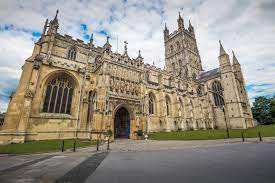
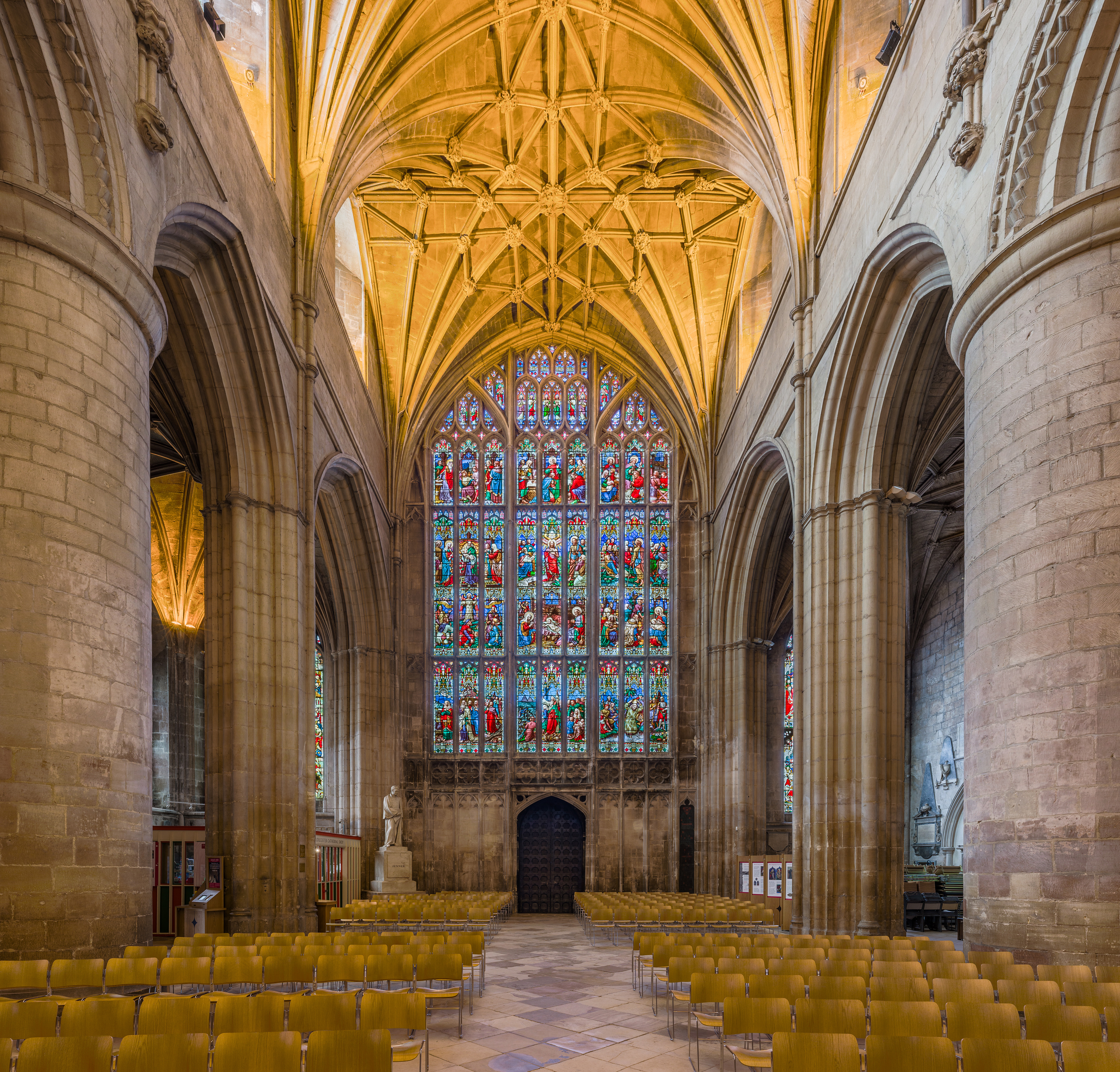
The foundation was laid in 1089, and forty-one years later the builders completed the main structure. Its fan-vaulting is a marvel of architecture; its Great East Window is the size of a tennis court.

Other forms of artistic genius can bring us to tears, like a soul-stirring song or a writer’s words that surprise us by their beauty or wisdom.

Some of you have devoted yourselves to training and practiced for hours in order to achieve expertise in one or more of these fields. Others of us have to make do with amateur efforts.

But there’s one dimension where we can all participate with glorious results—as artists of the soul. Scripture provides a few guidelines for us, as we consider the strengths of the masters in each of the above pursuits. For example:

The perceptive artist sees differently.

Just as an artist sees more than most of us—the subtleties of detail, color, light, and contour—the enlightened heart sees all the nuances of hope that God supplies–for positive change, answers to prayer, better tomorrows, and eternal life.

In addition, hope splashes the colors of joy into our souls and casts light into every corner.

The skilled architect builds solidly.

The requirements for a stable structure include a firm foundation on rock, sturdy walls, and a reliable roof.

A soul that is stable and secure for eternity must include the same entities: a firm foundation of faith on our Rock, Jesus Christ, sturdy walls of certainty in God’s truth, and reliable protection over us in the storms of life [1].

The effective writer communicates plainly.

All writers seek to tell their story or share their message with clarity; all of us who follow Jesus should desire to communicate clearly our love and trustworthiness.

But how we express these traits may vary–especially when it comes to love–just as authors’ writing-styles can differ.

For example, you may know a person who exhibits warmheartedness toward others with his cheerfulness and infectious laugh, someone else by listening and empathizing, and still another by lending a hand wherever needed.

But no matter our style, love (and integrity) are what we’re called to communicate [2].

The proficient vocalist and instrumentalist express passion.   

Those who really know how to express music bring more to their performance than perfected technique. They sing or play from their hearts and artfully communicate the emotion of the piece.

In Psalm 147:7 above, we’re told our music before God should communicate grateful praise. And genuine gratitude sparks passion. We’d do well to remember our audience also:

“Sing [or play] as if performing for a King.

You are.”

Unknown

Even as we strive to honor God, a small miracle unfolds within us: the music washes away from our souls the dust of everyday life [3].

So, as an artist of the soul, what form will your worship take today? Will you:
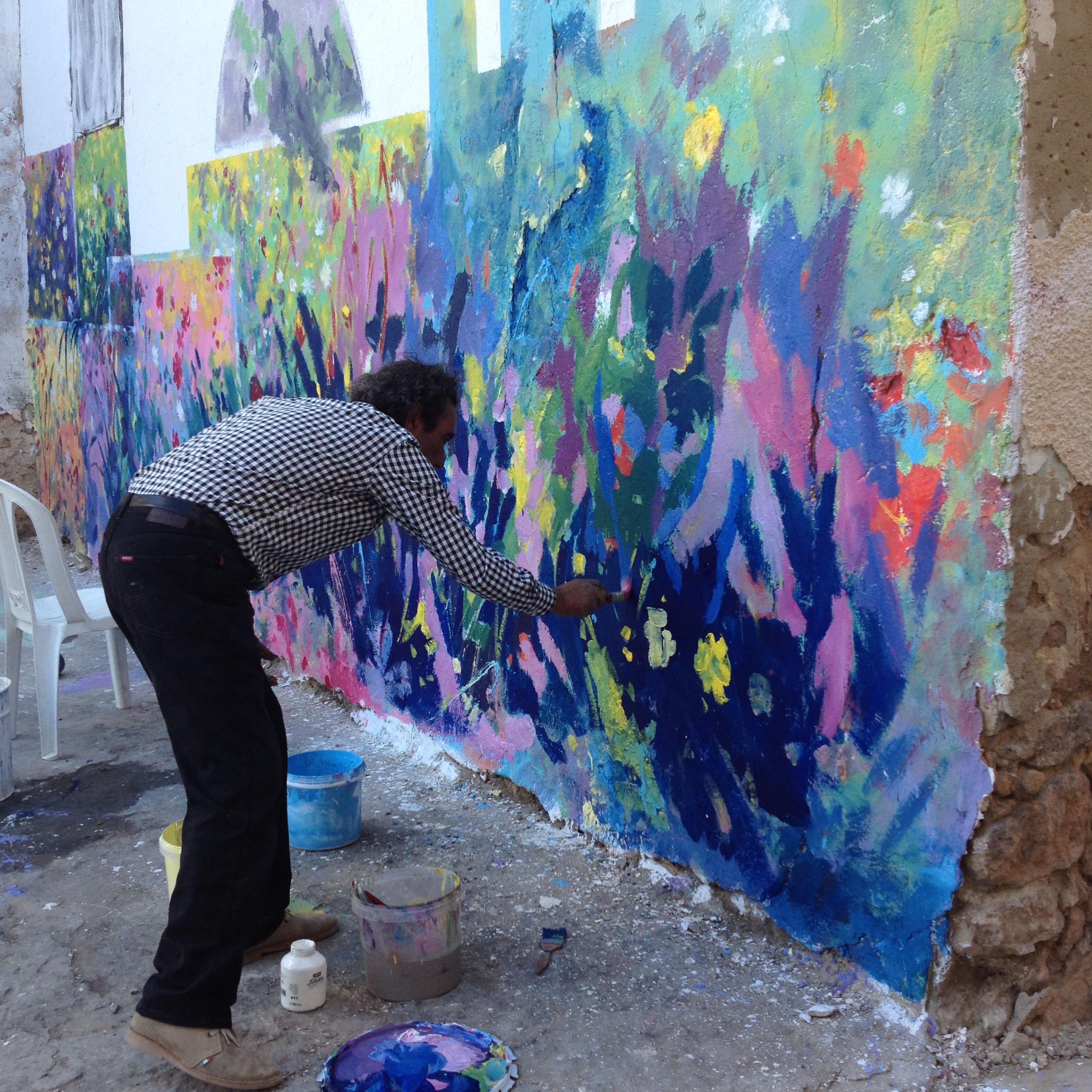
  • Determine to splash the colors of joy in your spirit with the nuances of hope?
  • Add more bricks of faith from God’s Word, to increase your stability?
  • Communicate love and faithfulness to those around you?
  • Sing or play your grateful praise to God your King—with passion? (Remember, he won’t mind a bit if it’s not perfect.)

Let’s make today a work of art for him!


[1] 1 Corinthians 3:11; Psalm 91:2; Psalm 5:11.

[2] John 13:35; Proverbs 4:26 NIV

[3] Based on a Berthold Auerbach quote

Art & photo credits: http://www.commons.wikimedia.org; http://www.pxhere.com; http://www.commons.wikimedia.org (2); http://www.wallpaperflare.com; http://www.pxfuel.com; http://www.canva.com; http://www.peakpx.com; http://www.commonswikimedia.org.

Read Full Post »

The psalmists of old seemed to have a favorite metaphor for God: Rock. You’ll find the imagery used twenty-nine times.  Sometimes the writers included reasons why this was a meaningful comparison for them; sometimes they included synonyms:

  • “The Lord is my rock, my fortress” (18:2)
  • “My God is my rock, in whom I take refuge, my shield . . . my  stronghold” (also 18:2)
  • “Lead me to the rock that is higher than I” (61:2)
  • “God alone is the mighty rock that keeps me safe” (62:2 CEV)
  • “Be to me a rock of habitation to which I may continually come” (71:3 NASB)

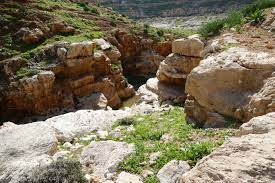
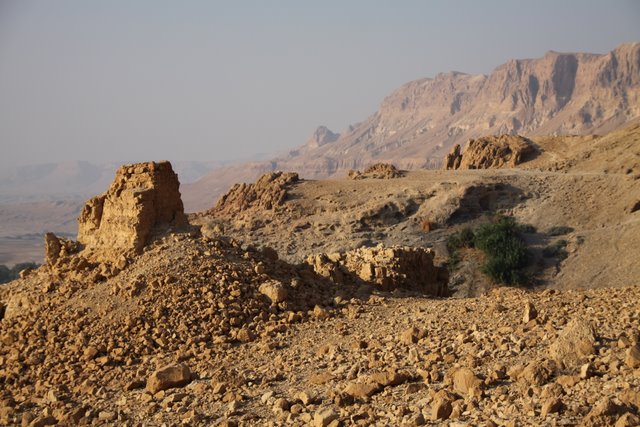
David seemed especially fond of this metaphor, perhaps because he spent months hiding from King Saul in the rocky terrain of the Judean wilderness. Psalm 57 was written specifically when he escaped into a cave. It may have been the characteristics of the rock walls surrounding him that brought to mind descriptors of God—solid, strong, protective, and unchanging.

Perhaps a cave such as this hid David and his men.
Might such a formation as this have provided the inspiration behind
“Be the rock that is higher than I” (Psalm 61:2)?

Later when he became king, David composed Psalm 18, probably after the numerous battle victories summarized in 2 Samuel 8.  Four times in that psalm he extolled God as his Rock.

In the New Testament we find Jesus’ parable about a foolish man building his house on sand, and a wise man building his house on rock. The point is clear: God is a reliable foundation-Rock on which to build our lives.  He provides:

  • solid, trustworthy wisdom for decisions 
  • strength and power for life’s challenges
  • protection from our arch enemy, Satan
  • unchanging reliability, faithfulness, and love—to name a few unfailing attributes
“Anyone who listens to my teaching and follows it is wise,
like a person who builds a house on solid rock” Matthew 7:24.
(House in Meteora, Greece.)

One of my favorite examples of Bible imagery is found in Philippians 2:15.  To understand the context though, we have to start reading at verse fourteen:

Do everything without grumbling or arguing,

so that you may become blameless and pure,

children of God without fault in a warped and crooked generation.

Then you will shine among them like stars in the sky

as you hold firmly to the word of life.

–Philippians 2:14-15 NIV

Isn’t that a glorious statement in the fourth line above?  We can shine into the darkness of the world like stars as we allow the Spirit to foster purity within us!

Ngc 3603 Nebula Cluster Of Stars

Now why would letter-writer Paul choose stars to make his point? Perhaps their beauty reminded him: with kindness, patience, joy, and more we can bring beauty to the world around us–a world darkened by selfishness, greed, and hatred.

Paul would also have known about using stars for navigation.  As far back as 3000 B.C. ancient Minoans were using constellations to navigate the Mediterranean Sea (1).  Perhaps Paul connected the starlight to God’s wisdom shining in mature believers, enabling them to provide guidance to those around them.

But now, centuries later, we know more about stars than Paul did and further comparisons can be drawn:

Stars shine by burning hydrogen into helium in their cores.  We shine as the Holy Spirit burns away the dross in our lives—those unbecoming traits like pride, negativity, and ingratitude. That’s when we can become radiant.

One prominent star in the evening sky of Fall and Winter is Deneb in the constellation Cygnus (the Swan), which is 19 quadrillion miles from earth.  The gleam we see left Deneb about 1500 light years ago in 521 A.D (2). The gleam of our lives can also achieve far-reaching effect as one life touches another which touches another, and then another . . . ad infinitum.

Stars not only create beauty but fulfill function.  They manufacture and distribute into the universe such elements as carbon, nitrogen, and oxygen (3). As we shine like stars in our circles of influence, we too fulfill function, manufacturing and distributing such elements as goodness, encouragement, and helpfulness.

From earth and sky come these two insightful examples of biblical imagery:  rock and stars.

Do you see the connection between the two? As you plant yourself on the firm Rock of Almighty God and shine for him like a star . . .

. . . YOU are a Rock star!

Notes:

  1. https://nationalgeographic.org/encyclopedia/navigation/
  2. https://earthsky.org/space/ten-things-you-may-not-know-about-stars/
  3. https://science.nasa.gov/astrophysics/focus-areas/how-do-stars-from-and-evolve

Photo credits: http://www.hippopx.com; http://www.canva.com; http://www.wikimedia.org (2); http://www.pixfuel.com; http://www.maxpixel.net; http://www.heartlight.org; http://www.maxpixel.net.

Read Full Post »

Still Traveling

Impressions Becoming Expressions

Living Our Days

Gaining a heart of wisdom

He Said What?!

I'm Patty, and my husband and I are living with our adult son who has autism and epilepsy. I love sharing lessons learned from life around me, especially life with Aaron.

Meditations of my Heart

Impressions Becoming Expressions

Linda Stoll

Impressions Becoming Expressions

Debby Thompson

Impressions Becoming Expressions

Signora Sheila

Notes on Life, Faith & Italy

Colleen Scheid

Writing, Acting, Living in God's Love

Mitch Teemley

The Power of Story

Heidi Viars

Finding the Image of God