Feeds:
Posts
Comments

Posts Tagged ‘missionary work’

Joy Ridderhof pulled the blankets around her head to warm her shivering body, knowing she’d soon be throwing them off as sweat soaked her nightgown.

Joy had succumbed to malaria before, but this episode wouldn’t subside. As a result, she’d had to leave the people she’d grown to love in Honduras and return home to Los Angeles. The year: 1937.

Her doctors weren’t sure why she didn’t improve. Added to her discomfort was their discouragement: “You mustn’t go back to Honduras, Joy.”
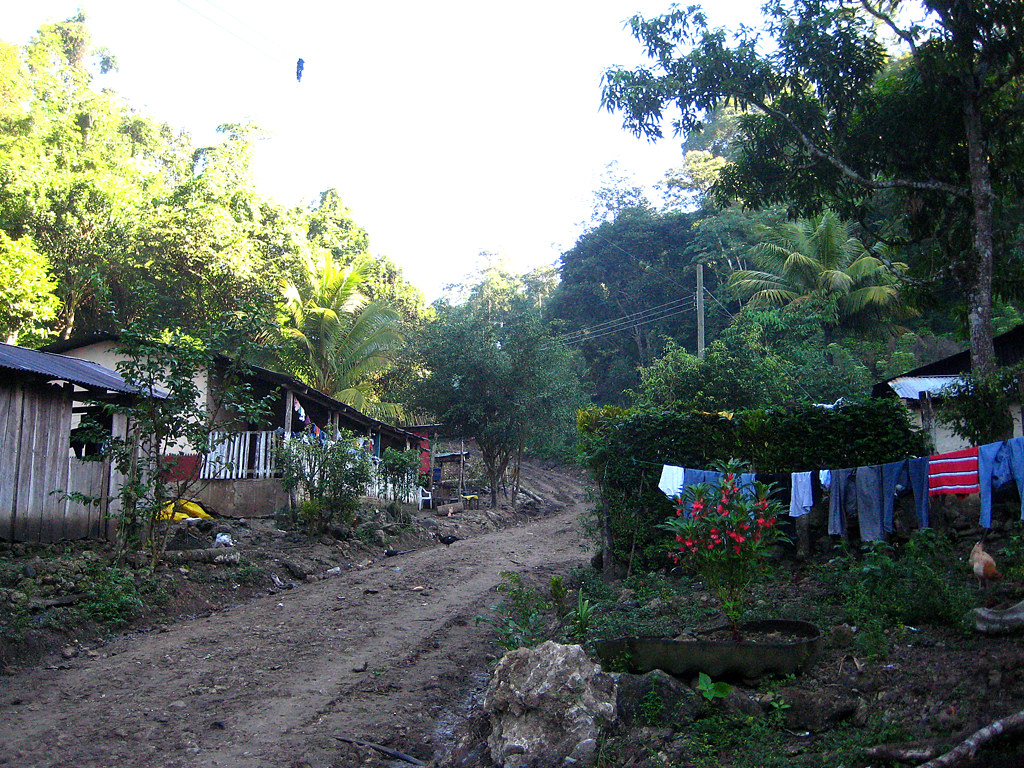
A mountain village of Honduras , 2008

The thirty-four-year-old had served as a missionary in a remote, mountain village for five years. In spite of hardship, illness, and even threats on her life, she’d loved her time there, and many Hondurans had come to know Christ.

Now it appeared that challenging yet satisfying life-chapter was over. Joy faced the possibility of being an invalid the rest of her life—or at least a semi-invalid.

One day as Joy lay in bed, a wonderful idea occurred to her. The gramophones many villages owned could be put to good use if she made records of stories and songs about Jesus. As far as she knew, no such records existed in Spanish.
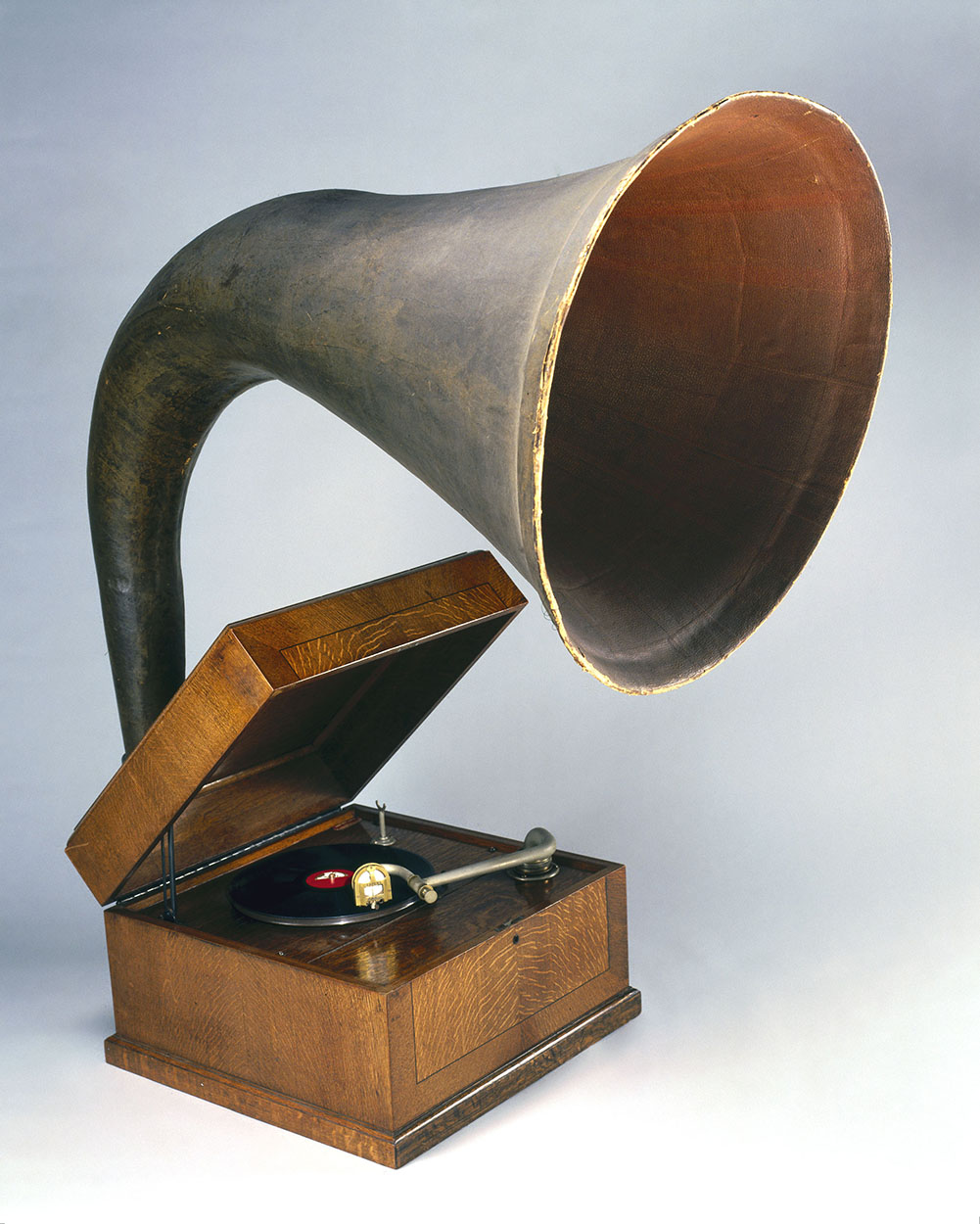
But how could she implement such a plan? Joy began to pray and asked others to join her.

Slowly, her health improved. And then, she happened to be introduced to a missionary returned from Central America who’d built a recording studio in his home. She shared her idea, and he became enthused about such a project.

Joy wrote the scripts and arranged for singers and their accompaniment. She herself read the stories.

The first record was produced on December 31, 1938. Joy sent them to various locations in Central America. Now people who couldn’t read would hear about Christ in their own language.

But each record cost fifty cents to produce and Joy had no income. The Great Depression meant resources were tight everywhere. Joy prayed for God’s provision. She believed what the great missionary Hudson Taylor had said [1]:
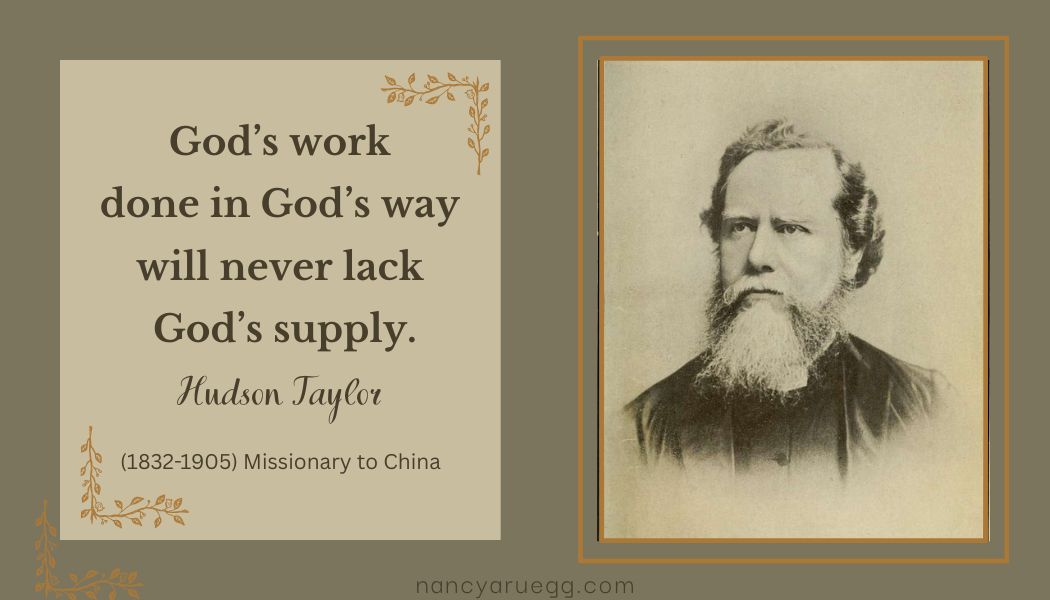
And supply God did.

In May 1939, Joy established Spanish Gospel Recordings.

Missionaries in Mexico heard about Joy’s work and asked for records in another language. Of course, finding native speakers in L. A. for an indigenous Mexican-Indian language would be nearly impossible.

So Joy and her college friend Ann Sherwood left for Mexico and Central America in 1944, a trip made possible by a doctor who loaned them a car and provided gas ration coupons.

Once they arrived in Mexico, a man invited them to use his new recording studio. The women spent ten months producing records in thirty-five languages, then returned to the States, satisfied their task was complete.

But God had more in store.

Missionaries to the Navajo Indians in Arizona asked for recordings; Joy found native speakers to translate and record scripts for them [2].

Next came a call from Alaska. The two women drove from L.A. to Alaska, equipped with one of the first tape recorders produced in America. While there, someone mentioned that such records would be helpful in the Philippines.

“Oh no!” Joy laughed. “Now we’ve got to go to there!”

Joy and Ann spent one year in the Philippine Islands, producing records in ninety-two languages [3].

By 1955, the two women and others had travelled around the world. Records were being sent to more than one hundred countries [4], prepared on top-of-the-line recorders that God supplied.

He also provided workers who lived in various countries. By 1980 about 3,500 languages had been recorded [5]. Millions of records had been produced.

Of course, not all remote villages owned a record player. So Joy’s organization developed and supplied a number of different players over the decades.

The simplest was a cardboard sleeve that also housed the record for shipping. When opened up, a needle fastened to one edge played the record when placed on the stubby spindle attached to one side. The record could be turned by a pencil or stick stuck into a hole on the edge of the label.   

Hand-wound box-players were later issued, then cassette players, followed by hand-wound mp3 players. Today, the internet and apps allow people all over the world to hear about Jesus and his gift of salvation.

In an interview recorded in 1974 [6], Joy Ridderhof (1903-1984) passionately affirmed:

“We have a God that’s alive, who answers prayer, takes care of us, gives us joy in the work, and provides great results from our work.

“Many thousands have heard about Jesus; little churches have sprung up in different places. He has met our needs and proven himself faithful [7]!”

Today, the Global Recordings Network includes forty offices worldwide, and has produced recordings in more than 6,500 languages [8].  
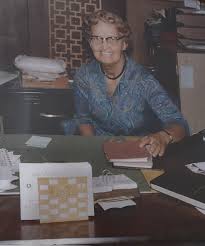
Joy Ridderhof


[1] https://www.globalrecordingsusa.org/wp-content/uploads/2024/03/Magazine-viewing-version-1.pdf

[2] https://fromthevault.wheaton.edu/2024/03/04/too-impractical-to-be-a-missionary-remembering-missions-pioneer-joy-ridderhof/

[3]  https://www.youtube.com/watch?v=TsLfY9bOkxo

[4] https://fromthevault.wheaton.edu.

[5] www.globalrecordings.org

[6] (and [7])  https://www.youtube.com/watch?v=TsLfY9bOkxo

[8] https://www.globalrecordingsusa.org/about/overview/

Image credits: http://www.canva.com; http://www.flickr.com; commons.wikimedia.org; http://www.picryl.com; http://www.canva.com; http://www.commons.wikimedia.org (2).

Processing…
Success! You're on the list.

Read Full Post »

Young Klaus-Dieter John read the last page of another “jungle doctor” book by Dr. Paul White—his favorite series. The adventures, based on the missionary doctor’s experiences in Africa, never failed to capture Klaus’s imagination and heart.

The boy sighed. How great would it be to live in the jungle and help people as a medical missionary.

That dream stayed with Klaus through high school in his hometown of Weisbaden, Germany. As graduation neared in the late 1970s, he felt certain God wanted him to become a doctor and serve in a third world country.

Another person in his school carried the same dream, a pretty girl named Martina. Soon Klaus and Tina were a couple.

The next decade included university, medical school, and marriage. Further training took the Johns to England, Johannesburg, and finally America. Klaus studied at Harvard, and then completed his surgical residency at Yale.

Meanwhile, Tina earned board certification in pediatrics, in Germany and America.

God used a backpacking trip through Peru in 1991 to draw their hearts toward the Quechua people, descendants of the Incas. These Indians live on high plateaus and in deep valleys of the Andes Mountains, impoverished and illiterate.

At that time, just four doctors served 40,000 people. The Johns knew immediately: this was where God wanted them to serve.

First they volunteered for five years at a well-established mission hospital in Ecuador. During that time Klaus and Tina founded the Diospi Suyana organization to alleviate the suffering of Peruvian Indians.

In Quechua, the words mean, “We trust in God.”

But they desired to do much more. “What if,” the couple dreamed, “we could establish a hospital for the Quechua people near Machu Picchu—not just a bare-bones clinic but a true hospital with everything necessary to provide excellent care?”

Just saying the words out loud highlighted the implausibility of their desire. How could they raise the millions of dollars necessary? And even if they could build such a facility, how would they keep it staffed and equipped?

But God propelled them forward.

In 2004 the Johns began seeking financial support for their vision, first in Germany and then in other countries. A trickle of donations at first grew to a steady flow. Several companies even committed to provide equipment and materials.

Also during this time, Klaus and Tina moved their family of five into a mud home in the village of Curahuasi, a village strategically located between three Peruvian cities.

By May 2005, the Johns were participating in a miracle: the ground-breaking for Diospi Suyana Hospital—a project that would cover eight-plus acres of land, and cost $100,000 each month to construct [1].

The couple was determined not to incur debt. God would either supply the needed funds or construction would be discontinued.

Supply he did—through more than 50,000 individual donors who’ve contributed to the hospital’s ministry [2].

As the complex took shape, fifteen miles of computer cable were set in the walls, as well as “countless miles of pipes for suction, compressed air, and oxygen” [3].  

The dedication of the facilities took place in August, 2007. By 2017, 300,000 Peruvian patients had received care at Diospi Suyana—patients who only pay 20% of the cost of their care—at most; the other 80% is paid by generous donors.

Each day begins with a worship service. Thousands of Peruvians have heard about Jesus and been told of his gift of eternal life. For those who accept that gift, one of the hospital pastors visits their home and connects them to a local church [4].

The ministry has expanded over the years to include dental and eye clinics, Kids’ Clubs, a school for six hundred children, and a radio station [5].

Many miraculous provisions have contributed to the flourishing of Diospi Suyana.

For example, in January 2006, while Klaus was in Germany on a speaking tour, he met with a good friend. Klaus mentioned they needed a civil engineer to oversee the hospital construction, but the person had to be willing to serve without pay.

“I know someone who might be interested,” declared the friend and he made a phone call, setting an appointment for later that day with the engineer Udo Klemenz.

Meanwhile, when the phone rang at the Klemenz’ home, Udo and his wife were in the midst of praying about their plans for the future.

At the meeting that afternoon, Klaus made his proposal. The couple gasped in surprise for this near-instantaneous answer to their prayer.

“Come to Peru for as long as you can stay,” Klaus invited.

Udo and his wife soon traveled to Curahausi—and stayed for eight years [6].

Klaus affirms often, “God has become visible in my life” [7]. (Emphasis added.)

Indeed, he has.


[1] https://cvm.swisshealthweb.ch/fileadmin/assets/CVM/2018/cvm.2018.00564/cvm-2018-00564.pdf

[2] https://cbn.com/news/news/hospital-built-faith-proof-me-god-real

[3] https://cvm.swisshealthweb.ch/fileadmin/assets/CVM/2018/cvm.2018.00564/cvm-2018-00564.pdf

[4] https://cbn.com/news/news/hospital-built-faith-proof-me-god-real

[5] https://www.diospi-suyana.de/diospi-suyana-2-2/?lang=en#

[6] https://cvm.swisshealthweb.ch/fileadmin/assets/CVM/2018/cvm.2018.00564/cvm-2018-00564.pdf

[7] https://www.churchtimes.co.uk/articles/2014/3-october/features/interviews/interview-klaus-dieter-john-founding-director-diospi-suyana-hospital

Photo credits: http://www.pixabay.com (2); http://www.canva.com; http://www.heartlight.org; http://www.travelingteacheronline.com, H. McElwee; http://www.pxhere.com.

TAKE NOTE! A newsletter launched this month that includes additional topics to what’s on the blog. Please sign up below and check out the first installment. Thank you!

Processing…
Success! You're on the list.

Read Full Post »

Still Traveling

Impressions Becoming Expressions

Living Our Days

Gaining a heart of wisdom

He Said What?!

I'm Patty, and my husband and I are living with our adult son who has autism and epilepsy. I love sharing lessons learned from life around me, especially life with Aaron.

Meditations of my Heart

Impressions Becoming Expressions

Linda Stoll

Impressions Becoming Expressions

Debby Thompson

Impressions Becoming Expressions

Signora Sheila

Notes on Life, Faith & Italy

Colleen Scheid

Writing, Acting, Living in God's Love

Mitch Teemley

The Power of Story

Heidi Viars

Finding the Image of God