Feeds:
Posts
Comments

Posts Tagged ‘Proverbs 8:35’

The Annunciation by Philippe de Champaigne, 1644

‘Remember what the angel Gabriel said to Mary when he first appeared to her?

“Greetings, you who are highly favored! The Lord is with you. Do not be afraid, you have found favor with God” [1].

He then made an incredible announcement. Mary would give birth to the Messiah [2].

Did her mind jump to Isaiah’s prophecy about a young woman who would conceive and give birth to Immanuel?
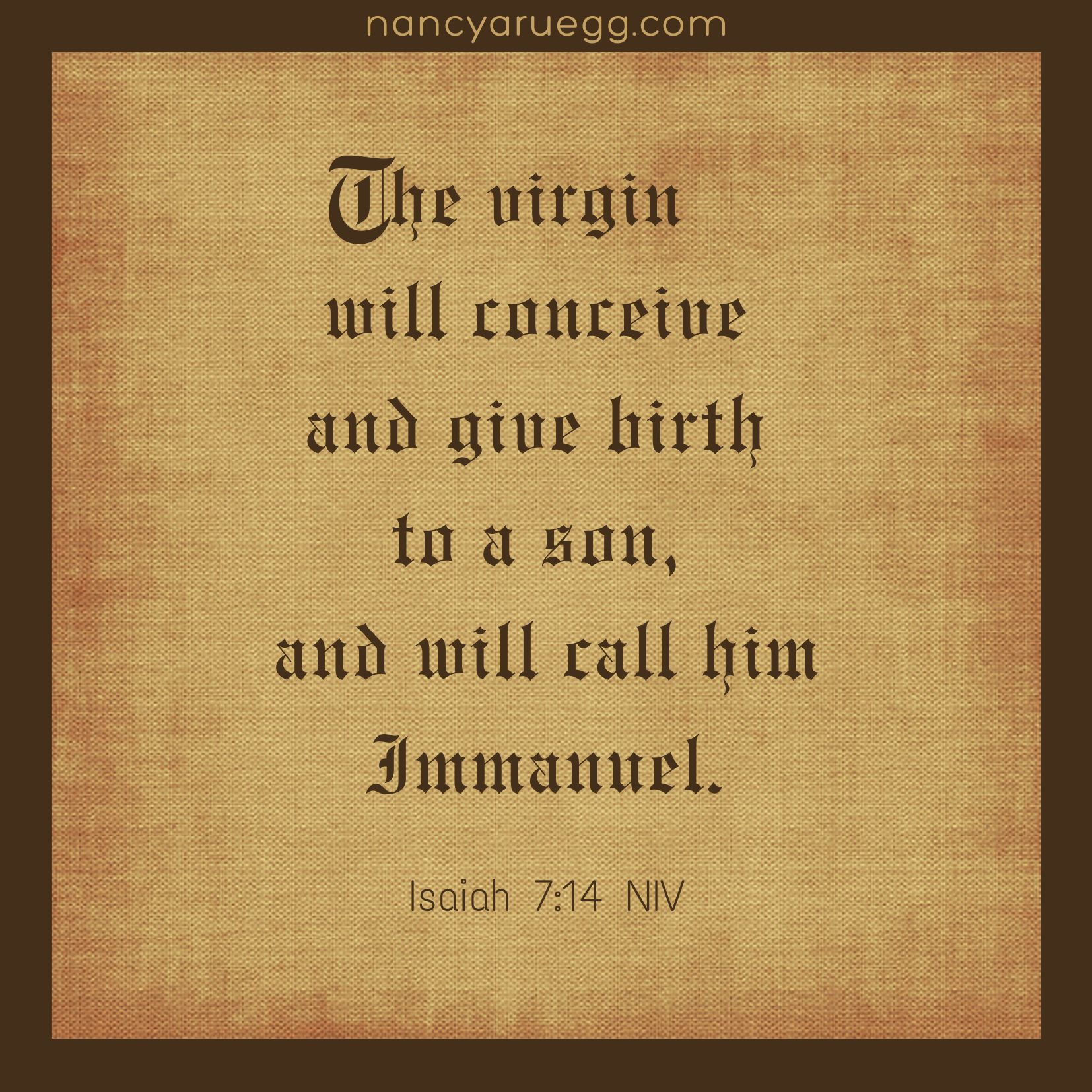
Surely many Jewish girls knew the passage. And each must have wondered, Might I grow up to be the mother of the King of all?

God favored Mary with the singular role of mother to the Righteous One. Perhaps his choice was based on Mary’s virtue, but scripture gives no indication of that.

Luke did mention that Zacharias and Elizabeth, the parents of John the Baptist, “were righteous in the sight of God, observing all the Lord’s commands and decrees blamelessly” [3].

But no such commendation is given for Mary. It may be God wanted us to understand: he can use anyone. His empowerment doesn’t depend on social standing, intelligence, accomplishments, or even moral superiority.

Our part is willingness and faith, which Mary did demonstrate when she professed: ‘’I am the Lord’s servant. May your word to me be fulfilled” [4]. Mary acquiesced to God’s plan, his choice for her.  
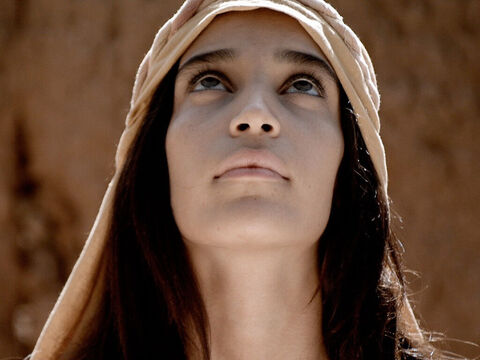
If you’re like me, you’ve wondered about the favor bestowed upon Mary. To us the word conjures up kindness and generosity.

But Mary faced:

  • rejection and cruelty as a pregnant and unmarried, young teen [5]
  • the probable annulment of her engagement to Joseph
  • a grueling trip to Bethlehem, nine months pregnant
  • delivering her first child in a stable-cave
  • another difficult journey to Egypt to protect Jesus from Herod’s slaughter
  • the hurtful disapproval of many for her firstborn, including his own half-siblings
  • watching her son die in agony [6]

How could Gabriel call Mary favored?

We’re looking in the wrong direction. God’s favor, his best for us, does not guarantee an easy path through life and an abundance of material blessings. That kind of favor would only spoil us.

God would have us look in the direction of more satisfying favor: his spiritual blessings [7].

That’s what Mary did, evidenced by her Magnificat, a prayer preserved for us in Luke 1:46-55, where she praised God for his mindfulness of her, his might that had accomplished great things for her, his mercy extended to those who fear God, and more.

In the NIV Study Bible, nineteen cross-references from this passage cite verses from seven books of the Old Testament. Mary knew scripture.

It’s unlikely she thought God’s favor would bring fame and fortune. Mary would have known that God’s best more often includes:

  • empowerment to carry out his assignments
  • instruction in the ways we should choose
  • help in times of trouble
  • strength to endure hardship and grief
  • compassion and comfort to quell distress
  • satisfaction in taking part in God’s wonderful plans [8]

And as God’s wonderful plan of redemption for all people began to unfold, his favor began to flow upon Mary.

He dispelled her fears, gave her courage to tell Joseph the unsettling news, inspired Mary to visit her wise cousin Elizabeth for encouragement, filled her with endurance for the journey to Bethlehem, and strength for the birth of her first child in less-than-ideal circumstances.

Of course, Mary isn’t the only one who’s experienced the favor of the Lord. God’s best is available to everyone who allows God to choose what’s best.

God would have us know:
By his favor he forms our characters and fits us for satisfying service. He charts our course, imparts strength to accomplish his plan, supplies all that is necessary, and ultimately crowns our efforts [9].

Just as he did for Mary.


[1] Luke 1:26-30 NIV, emphasis added

[2] Luke 1:31-33

[3] Luke 1:6

[4] Luke 1:38

[5] This was surely Mary’s experience, given the social norms of the day.

[6] Matthew 1:18-19; Luke 2:1-5; 6-7; Matthew 2:13-15; Mark 3:20; John 19:26-27

[7] Ephesians 1:3

[8] Psalm 138:8 ESV; 25:12; 46:1; 73:26; 86:15; Isaiah 66:13a; Psalm 128:1

[9] Based on Herbert Lockyer quote, Seasons of the Lord, 202.

Image credits: http://www.picryl.com; http://www.canva.com; http://www.freebibleimages.org (4); http://www.stockvault.net.

Processing…
Success! You're on the list.

Read Full Post »

FORTUNE COOKIE WITH BLANK FORTUNE

‘Cracked open a fortune cookie not long ago and discovered this bit of wisdom:

“It’s not the years in your life,

but the life in your years

that counts.”

Come to find out, that’s not from Confucius or any other Chinese sage.  It’s from a beloved, former U.S. president, Abraham Lincoln.

Many folks might interpret this proverb to mean:

Live each day to the fullest; a full life is a meaningful life.

But what brings fullness to the day? And what makes a life meaningful?

The answers to those questions lie in another collection of proverbs, not found in fortune cookies, but in the Bible:

  1. A meaningful life comes from finding favor with God and with others (Proverbs 3:4; 21:21). 

Proverbs 3:3 names the qualities that garner favor: faithfulness and love.

It’s true.  Those two character traits play out in goodness, generosity and grace. Without fail, that kind of person experiences great satisfaction in her relationships. After all, that’s how God designed us (Acts 20:35).

“A full life cannot be measured by the quantity

but rather the quality of one’s relationships

with others and with God.”

–Warren Mueller

  1. A meaningful life comes from living wisely (Proverbs 8:35).

And just how do we do that? By applying integrity to our actions, discretion in our conversations, and prayerful, Spirit-led discernment in our decisions.

“Wisdom is the power to see

and the inclination to choose

the best and highest goal,

together with the surest means of attaining it.”

–J. I. Packer

And wisdom leads to peace of mind, contentment, and a clear conscience—important foundation stones for a meaningful life.

  1. A meaningful life comes from internalizing God’s ways (Proverbs 11:28, 21:21). 

These proverbs, (11:28 and 21:21), provide a corollary to the previous one. A wise person follows the course of conduct established by the Father of Wisdom and revealed in the Bible.  He made us; he knows the best way for us to live.

Countless millions have devoted their lives to the accumulation of stuff, the pursuit of fame, and the climb to a position of power.

Yet King Solomon (who had it all) proclaimed: “Meaningless! Meaningless! Utterly meaningless! Everything is meaningless” (Ecclesiastes 1:2).  Did you notice that four words out of seven in that verse are the same?   “Meaningless!” I hear a bit of frustration in Solomon’s voice, don’t you?

Wouldn’t it be wise for us to avoid the mistakes he made? Maybe we should post that verse on the fridge, to keep us grounded in what really matters: God’s purpose for our lives.

“No real meaning exists

apart from linking our lives

to God’s purpose.”

–John Maxwell

  1. A meaningful life comes from reverencing God (Proverbs 14:27; 19:23). 

And reverence includes honor, respect, adoration, and awe. Embracing these attitudes toward God leads to deep satisfaction, complete peace, and true joy, because:

“The man who has God as his treasure

has all things in One.”

–A.W. Tozer

  1. A meaningful life comes from trusting God (Proverbs 16:20b).

God alone knows me better than I know myself. He alone is aware of what’s going on in the lives of those around me. And he alone can see into the future. Why do I think I’m capable of moving ahead on my own?

Even when trouble comes to call, I can rest assured that such experiences have purpose and meaning (Romans 8:28).

I would do well to remember: 

“Relinquishment is a prerequisite to fulfillment.”

–Eugene Peterson

  1. A meaningful life comes from an attitude of humility (Proverbs 22:4).

Humility is the proper perspective of oneself, especially in relation to God. He is all-powerful, all-wise, all-seeing, and more. Reminding ourselves of his magnificence is one way to foster humility.

Another way is to be thankful. A full, satisfied life is grounded in humble gratitude.

“Gratitude can transform common days into thanksgiving,

turn routine jobs into joy,

and change ordinary opportunities into blessings.”

–William Arthur Ward (italics added)

M-m-m. Living thankfully, joyfully, and blissfully aware of each blessing. Yes, that does sound like a highly satisfactory way to live.

*     *     *     *     *     *     *     *     *     *

Service, Wisdom, Obedience, Reverence, Trust, Humility, and Gratitude.  That’s a long list, Lord.  Perhaps the full, meaningful life is out of reach for me.  Oh, but if I consider the interrelatedness of these qualities, the reach is shortened considerably.  Obedience includes service, and reverence naturally leads to humility.  Humility includes gratitude, and trust leads to wisdom.  Most important of all, YOU want all of your children to experience life to the fullest. Oh, how  I praise you for your direction and provision to make that happen! 

(John 10:10; Philippians 1:6; 2 Peter 1:3)  

(Photo credit:  www.kitchendaily.com.)


Read Full Post »

Still Traveling

Impressions Becoming Expressions

Living Our Days

Gaining a heart of wisdom

He Said What?!

I'm Patty, and my husband and I are living with our adult son who has autism and epilepsy. I love sharing lessons learned from life around me, especially life with Aaron.

Meditations of my Heart

Impressions Becoming Expressions

Linda Stoll

Impressions Becoming Expressions

Debby Thompson

Impressions Becoming Expressions

Signora Sheila

Notes on Life, Faith & Italy

Colleen Scheid

Writing, Acting, Living in God's Love

Mitch Teemley

The Power of Story

Heidi Viars

Finding the Image of God