Feeds:
Posts
Comments

Posts Tagged ‘Psalm 31:19’

Elohim [1], Lord of heaven, summoned the angel Gabriel to his craft studio. The latter winged his way down the hallways of paradise and soon entered the Master’s presence.

He found Elohim hunched over his work table, pouring over design sheets, but he looked up as the grand angel entered.

“Gabriel!” boomed Elohim. “Thank you for coming so quickly. I need to discuss with you my plans for the human race before creating Adam and Eve.

“It’s important you know these plans since you’ll play an important role in the coming world.”

Gabriel stood erect and folded his wings in precise pleats. “I am your servant, Lord, ready to do your bidding [2].”

Elohim smiled. “Thank you, Gabriel. Now—here’s what I’m thinking. First, you’ll remember we’ve already decided to give humans the freedom of choice, since puppet-children would be pointless.

“I can’t enjoy the blessing of relationship with puppets! No, my children must have free will [3].”

Elohim began to pace around his mammoth work table. “Second, much as I’d love to lavish each of my future children with perpetual happiness, I know such circumstances in their human state would only spoil them.

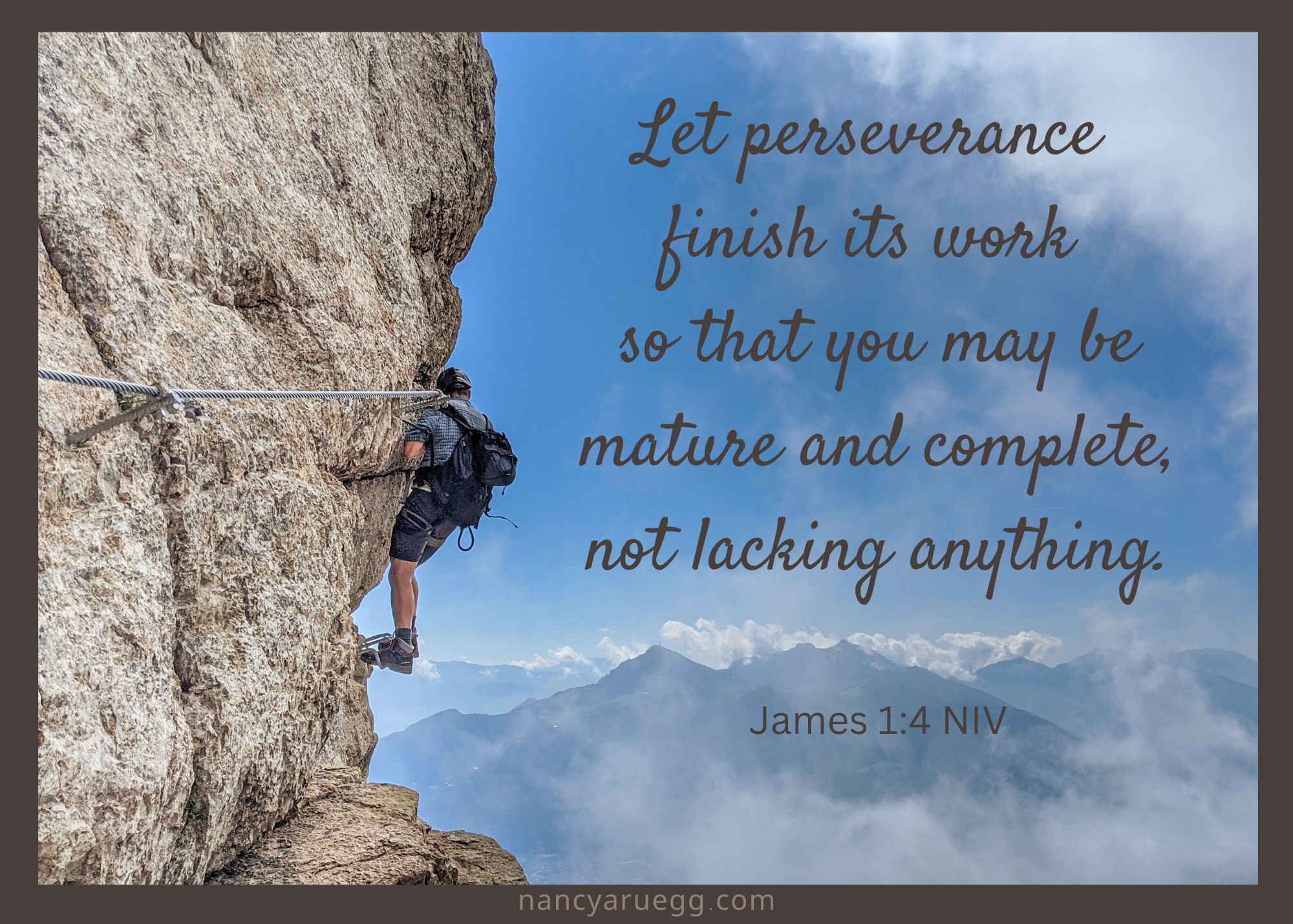
“There must be a balancing of the scales between blessing and challenge in order to do them good—to demonstrate my love and grace, yet bring them to a place of maturity and strength [4].”
“Yes, my Lord. I can see the wisdom of such a plan. How will you execute it?”

Elohim swished his flowing train around a corner of the table and continued to pace. “I’ll have to allow bitter along with the sweet, since too much pleasure will intoxicate them and too much sorrow will crush them.

“Too much success will lead to conceit, and too much failure will cause debilitation. Too much praise will contribute to pride, and too much criticism will bring on despair [5].”

Gabriel nodded thoughtfully. “I see what you mean, Elohim.”

“Even so, I want humans to grow in their understanding that happiness will not only be within them, nor will it solely be without. Happiness will be most dependent on their relationship with me.”

“Well said, my Lord!”

Elohim stopped pacing, a twinkle dancing in his eyes. “Thank you, Gabriel. Eons from now I’ll inspire one of my children, Blaise Pascal, to write similar words.”

With his star-studded pen Elohim pointed to a shelf holding one large scroll and tied with a scarlet cord.

That is my plan for initiating relationship with humans: faith in my Son, Jesus—either looking forward to his coming, or trusting in him for eternal life after his death and resurrection [6].”

Elohim then indicated the design sheets strewn on his work table. “Currently in the planning stages, these individually-designed blessings to lift the spirits of my children when faced with difficulty.

“For example, I’ll bring a loving friend alongside a person who’s grieving, or paint a glowing sunrise to remind them of My presence, or lead them to a scripture that perfectly addresses their need—that sort of thing.”

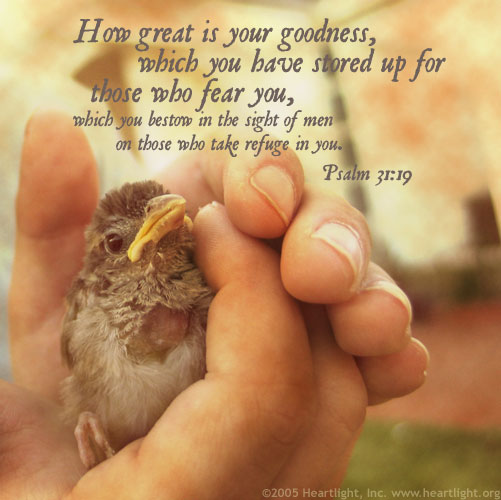
With a flourish of his white-robed arm, Elohim pointed to countless rolls of such design sheets tucked into cubby-holes along the wall. “As you can see, I’ve planned out a number of good things already [7]!”
Now it was Gabriel’s turn to smile. “And no doubt you’ve enjoyed all the creating and designing.”

Elohim affirmed Gabriel’s assumption with a satisfied grin. “I shall have blessings ready for every circumstance my dear children face, though they will have to keep watch so they don’t miss them!”

Elohim paused. In softer tones, yet with passion and resolve he declared, “Gabriel, even before this epic of humanity begins, I already love them.

“Yes, they’ll choose to behave foolishly, but I will still bestow kindness with generosity, mercy with understanding, and goodness with wisdom [8].
“My greatest desire is that all humankind turn to me. And for those who do, a multitude of tender mercies await [9].” Elohim indicated the overflowing cubbies on the wall.

Gabriel bowed in reverence. “May all the peoples-of-the-earth-to-come stand in awe of your gracious provisions [10]!”


[1] The name “Elohim” indicates God is the Creator and ruler in the circumstances of humankind

[2] Psalm 103:20

[3] Galatians 5:13

[4] Psalm 86:15; James 1:4

[5] Based on a Don Fortner quote, www.gracequotes.org

[6] John 3:16; 1 John 4:9-10; John 6:29

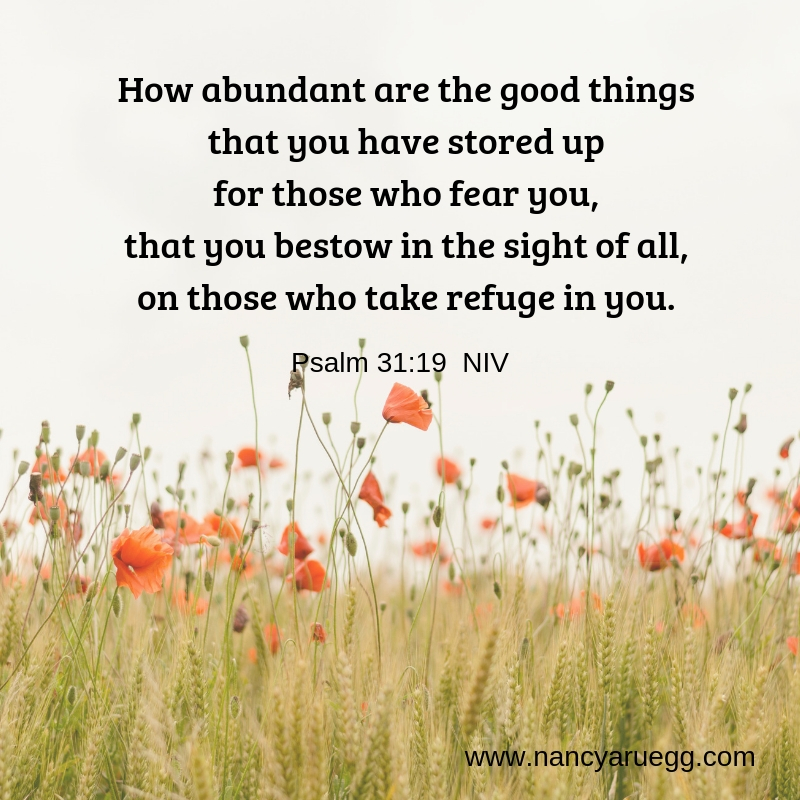
[7] Psalm 31:19

[8] Jeremiah 31:3; Isaiah 53:6; Psalm 69:16 AMP; Lamentations 3:22-23; Psalm 145:9

[9] 1 Timothy 2:4; Psalm 69:16

[10] Psalm 33:8

Photo credits: http://www.pexels.com; http://www.canva.com (2); http://www.heartlight.org (2); http://www.pickpik.com.

Processing…
Success! You're on the list.

Read Full Post »

Eric, our older son, and I were chatting on the phone.

“Mom, did you happen to save my old Uncle Wiggily book from when I was little?”

Uncle Wiggily? Goodness. I hadn’t thought about that old rabbit and his adventures for years.

“I doubt that we have it,” I responded. “Didn’t each of you kids already take the children’s books you wanted as keepsakes? I think all we have are some leftovers, saved for the grandchildren.”

“No, I don’t have it either,” he replied.

“Well, maybe it was just too worn out to save.”

“Could be. I was hoping to find a copy because it would be such fun to share with our Elena when she gets a bit older.” He paused a moment.  “Remember the picture of Uncle Wiggily in his car?”

This illustration from an earlier edition

No, I didn’t remember.

“The wheels were made from big, fat sausages. That was my favorite page. But every illustration was full of imaginative detail,” he reminisced.

That would explain why Eric, our artist, had such fondness for this book.

“I even checked on Craig’s List to see if anyone might have a copy, but no luck.”

Wow. He did have a big soft spot for Uncle Wiggily. And I had a big case of guilt for getting rid of it.

Why hadn’t I remembered that book was one of his favorites? How could I have thrown it away, even if it was tattered?

Months later, my husband Steve and I were sorting through boxes in the garage. Two of them contained the children’s books we still owned.

Maybe we could pare down to one box, I thought.

I started unloading the books and organizing them into piles. At the very bottom of the second box was—you guessed it–Uncle Wiggily. And it wasn’t in such bad shape after all.

I whispered a prayer of gratitude for this small but precious gift—a blessing that I hadn’t even asked for.

Does it seem to you that out-of-the-blue blessings bring the most joy? Perhaps that’s true because they give us such memorable glimpses of God’s love and grace–love and grace that are:

Undeserved

Just as he “gave” me a book I had not searched for nor prayed for, God loved and provided for each of us before we ever searched for him or prayed to know him (Matthew 5:45; Psalm 14:2).

Personal

Surely there are not many folks who would delight in finding an old copy of Uncle Wiggily.  The blessing of discovering its whereabouts was, it seemed, personalized–just for me (and Eric).

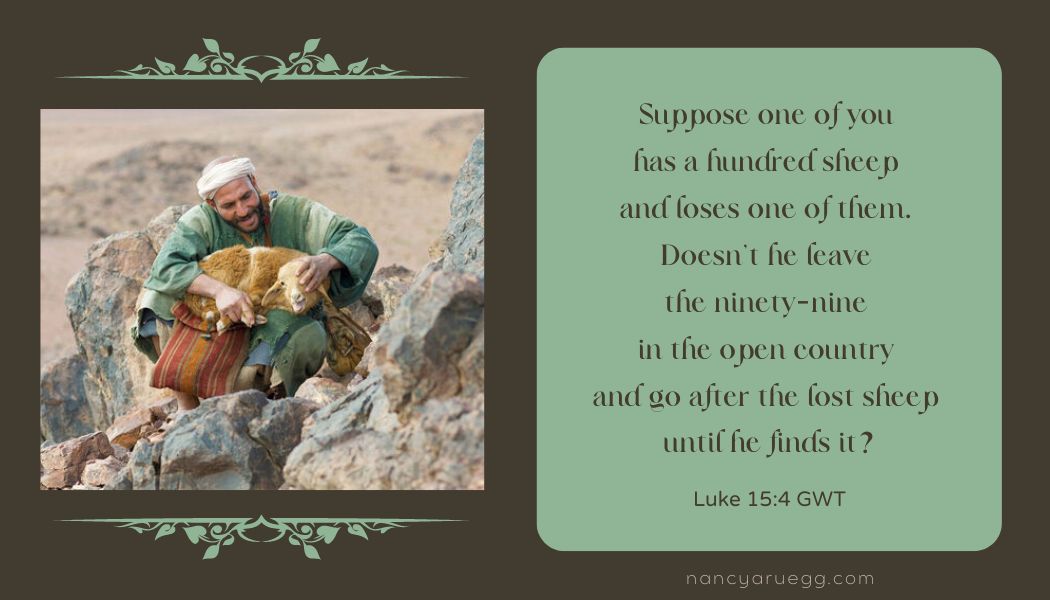
Similarly, God’s love and grace are personal. He cares deeply for each of his children. Remember the parable of the lost sheep (Luke 15:1-7)?

It’s true:

God loves each of us as if there was only one of us.

—St. Augustine

Last, God’s love and grace are:

Lavish

It is doubtful a copy of Uncle Wiggly will turn up at a Sotheby’s auction.  It is not a valuable antique volume that collectors will pay thousands of dollars for.  

But when I found that book at the bottom of the box, it was like finding buried treasure–placed there by God himself–an unnecessary but perfectly lovely, out-of-the-blue blessing from my Heavenly Father.

I couldn’t wait to call Eric and share with him the good news.

*     *     *     *     *     *     *     *     *     *

What out-of-the-blue blessing have you received that caused great joy? Please share your story in the comment section below!

(Revised and reblogged from August 14, 2014 while we enjoy houseguests.)

Art & photo credits: http://www.flickr.com; http://www.commons.wikimedia.org; http://www.canva.com.; http://www.freebibleimages.com.

Read Full Post »

The Miracle of the Loaves and Fishes

James Tissot, Brooklyn Museum


It’s a familiar story:

Crowds of people teemed the hillside—thousands of them. They had gathered hours before so Jesus could heal the sick and infirm. But soon the sun would set, and hunger gnawed at everyone’s belly.

One young boy offered his meager lunch, and with its contents Jesus provided an ample supper for the entire throng.

I can only imagine, Jesus breaking the pickled fish and barley rolls into pieces over and over, his hands hiding the actual multiplication. He must have worked fast too.

Let’s see…if 5,000 men were in attendance, and perhaps an additional 5,000 women and children, the total count may have approached 10,000 people.

And if each bread-and-fish meal required one second of Jesus’ time to create, he would have been producing food for two hours and forty-six minutes. (Math whizzes: please check my figuring.) In actuality, the process must have been much more rapid.

But even when everyone had eaten all they wanted, Jesus wasn’t finished yet.

“Gather all the leftovers,” he told his disciples. And they filled twelve baskets with broken pieces (Matthew 14:13-21; Mark 6:32-44; Luke 9:10-17; John 6:1-13).


Now why would Jesus create an overabundance? Such excessiveness seems without purpose. And why did he instruct the disciples to collect all those leftovers? The birds would have swooped in and quickly devoured the remains.

But Jesus had his reason. Like all the other miracles he performed, his objective was to make plain certain truths about himself and his Father.

Consider:

  • The sheer number of wonders proved he was the Messiah. No one before or since has achieved such a record number of miracles.
  • Jesus’ supernatural deeds for people of all walks of life demonstrated his love and compassion for everyone; a person’s nationality or social status didn’t matter.
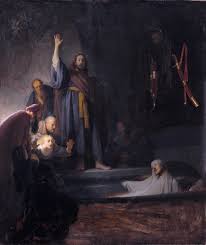
  • The breadth of his power became clear as he turned water into wine, healed numerous kinds of diseases and infirmities, quieted the wind, caused nets to fill with fish, walked on water, and even raised the dead.


The Raising of Lazarus by Rembrandt


The miracle of multiplied bread and fish highlights God’s benevolence. And the leftovers in particular provide a memorable picture of God’s inexhaustible resources and overflowing grace, available to us through Jesus.

I wonder if the disciples were reminded of Psalm 31:19 as their baskets began to fill with roll fragments:


Such abundance none of them had ever seen before.  The fact that it was an abundance of bread is significant too, because the very next day Jesus called himself the Bread of Life (John 6:35).


Just as he had supernaturally provided an abundance of bread for a huge crowd, so he would supernaturally provide an abundance of life (John 10:10)a God-enhanced, satisfying, joy-filled life—to those who believe in him (John 11:25-26).

And what about those twelve baskets? Where might a band of wandering disciples find a dozen baskets on a Galilean hillside?

Historians can explain. Each man would have been carrying his own kophinos—a knapsack-type basket. It would have held food and necessary items for a journey, and also provided a place for acquired objects or supplies along the way.

The baskets might symbolize our hearts where the Bread of Life dwells. But unlike the disciples’ grapevine backpacks, our hearts are elastic, capable of stretching to hold more and more of the fullness of God.

And there is a wondrous and glorious abundance to be gathered.


*     *     *     *     *     *     *     *     *     *


I praise you, Father,

“We need not fear that we shall ever come to the end of your goodness or any experience for which you will have no blessing ready” (J. R. Miller).

You are our Almighty God, able to do above and beyond all that we ask or think. With you, amazing things are always ahead.  Hallelujah!  

(Luke 12:29-31; 2 Corinthians 9:8; Ephesians 3:20)


Art & photo credits:  http://www.wikimedia.org ( U.S. work public domain in the U.S. for unspecified reason but presumably because it was published in the U.S. before 1924.); http://www.pxhere.com; http://www.wikipedia.org; http://www.canva.com; http://www.dailyverses.net; http://www.heartlight.org.


Read Full Post »

Still Traveling

Impressions Becoming Expressions

Living Our Days

Gaining a heart of wisdom

He Said What?!

I'm Patty, and my husband and I are living with our adult son who has autism and epilepsy. I love sharing lessons learned from life around me, especially life with Aaron.

Meditations of my Heart

Impressions Becoming Expressions

Linda Stoll

Impressions Becoming Expressions

Debby Thompson

Impressions Becoming Expressions

Signora Sheila

Notes on Life, Faith & Italy

Colleen Scheid

Writing, Acting, Living in God's Love

Mitch Teemley

The Power of Story

Heidi Viars

Finding the Image of God