Feeds:
Posts
Comments

Archive for April, 2024

‘Tis Poetry Month once again, a time to celebrate this art form that can stretch, inspire, and amaze us in ways unique from prose. Award-winning poet Pattiann Rogers identified at least one element of that uniqueness: the music of poetic language.

But is the composing of such music reserved only for experts? That question brings to mind another quote:

Such encouragement for us amateur-poets to give it a try and be stretched, inspired, and amazed when we create our own music of poetic language—unsophisticated as it may be.

This year I’ve experimented with three forms: Shadorma, diamante, and quadrille.

The Shadorma is of Spanish origin. It contains six lines, each with a specific syllable count that follows this pattern: 3/5/3/3/7/5.

Early morning on our deck offered inspiration for this Shadorma:

Dawn Rising

Sunbeams climb

Dusky shadows fade

Breezes kiss

Robins trill

Nasturtiums spangle with dew

Morning masterpiece

The diamante (diamond) form derives its name from its shape. It was created by American poet Iris McClellan Tiedt in 1969.

The pattern for diamante is more complex than Shadorma. The first half of the poem relates to the one word of the first line; the second half to the one word of the last line. These two lines often present opposites. The middle line provides a bridge between the two. 

Each of the seven lines requires a certain number of words of a certain part of speech:

  • Line 1: 1 word (subject/noun)
  • Line 2: 2 adjectives that describe line 1
  • Line 3: 3 -ing words that relate to line 1
  • Line 4: 4 nouns (first 2 relate to line 1, last 2 relate to line 7–if you’re writing about opposite topics)
  • Line 5: 3 -ing words that relate to line 7
  • Line 6: 2 adjectives that describe line 7
  • Line 7: 1 word (subject/noun)

This diamante began to take shape as I considered the transformation Christ can make in a person’s life. A list of R-words began to grow—repentance, redeemed, restored, so I pursued the pattern.

A Transformed Life

Ruin

Repugnant, reprehensible

Rebelling, ravaging, retaliating

Rashness, recalcitrance, remorse, repentance

Returning, Releasing, Receiving

Redeemed, restored

Renewal

The Quadrille form first appeared at www.dversepoets.com in 2016. The only requirement is to include 44 words (excluding the title). They believe that “limitation can happily breed extreme creativity.” Each Monday they provide a word-prompt, and participants must use that word in their poems.*

I chose my own word from John 15:1, 5—vine. And while I played with possibilities, my poem began to fit a pattern. Every line contains seven words except the last, which contains nine.

First, the scripture, as a point of reference:
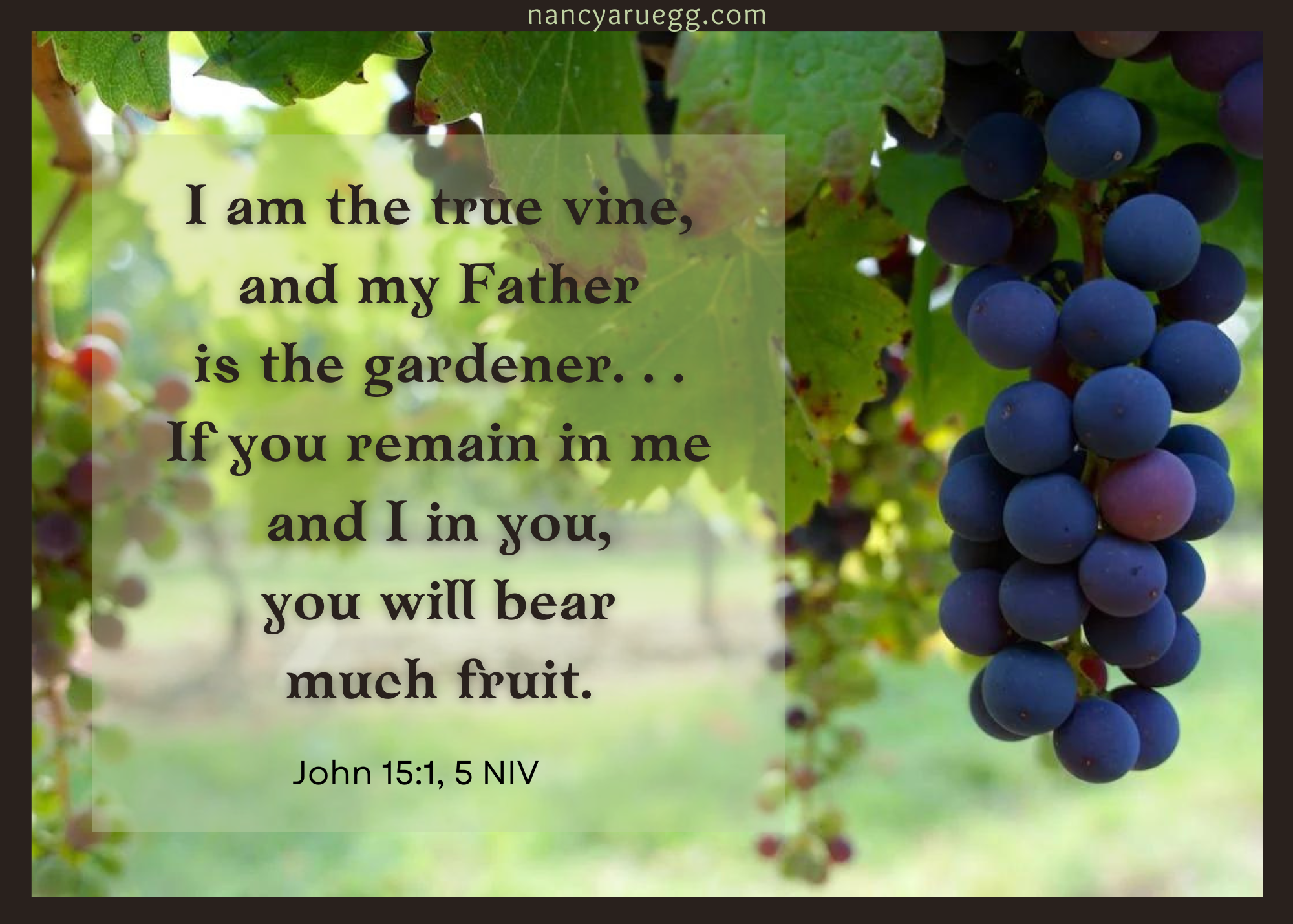
And now, the poem.

Bonded to the Vine

Praise to the Gardener of our souls!

Once we’re grafted to his Vine, he

Prunes away withered branches of worthless folly,

Waters us with his life-giving, spirit-strengthening Word,

And produces pleasing fruit with boundless sufficiency.

Such beauty results when we’re bonded to the Vine!

Remember the quote of Christopher Fry at the beginning of this post–“Poetry is the language in which man explores his own amazement?”

I wonder if he knew that the pleasure in exploring our amazement—whether as poets or not—is greatly enhanced when we include the Genius behind all things amazing.


* https://dversepoets.com/2017/09/11/quadrille-40/

Photo credits: http://www.canva.com; http://www.pxhere.com; http://www.pickpik.com; http://www.pexels.com (3); http://www.commons.wikimedia.org.

Read Full Post »

After the cold starkness of winter, spring gleefully reawakens our senses with her: 

  • Effusion of colorful flowers
  • Scents of hyacinth, lilacs, and freshly-mowed grass
  • Symphony of bird song
  • Flavors of tender asparagus, luscious strawberries, and tart rhubarb
  • Textures of furry pussy willows, fuzzy moss, and silken magnolia petals

Praise God for our abilities to see, smell, hear, taste, and touch, allowing us to enjoy Spring in so many ways!

Even better, those abilities allow us to meet God in at least five ways.

Our five senses help us understand God more clearly.

Consider how the far-flung stars and planets speak of his power; the clever camouflage of lizard, fawn, and frog display his wisdom; the endless variety of colors, shapes, and textures prove his creativity; the instinctive parenting skills of adult animals demonstrate his goodness.

Our five senses help us experience God’s glory more profoundly.

  • We can see his power at work in the transformation of lives [1].
  • We can hear his wisdom in godly men and women, such as Thomas á Kempis or Corrie ten Boom (just two among millions!):
  • We can feel God’s loving touch through a hug that conveys compassion, a worship song that quickens the heart, or a landscape vista that gives us glory-goosebumps.
  • We can taste his goodness in all the variety of blessings we enjoy (Psalm 34:8).
  • We can smell the fragrance of his sweet presence (Psalm 45:6-8)—if we pay attention.

Our five senses help us connect with God more intimately in solitude.

Many people call it Quiet Time—moments they spend with God in scripture reading/study, prayer, perhaps journaling, and/or listening to peaceful worship music.

It’s in the quiet we begin to see important realities of the spiritual realm, hear God’s voice within our spirits providing wisdom and encouragement, feel his presence more palpably as we touch our knees to the floor in prayer, and again, smell the fragrance of his sweet presence as he meets us in our place of solitude.

   Our five senses help us worship God more intently in community.

Jerry Kerns [2]

Kerns would have us fully engaged–first to bless God’s heart and then to elevate the experience for us also.

How?

  • See the majesty and splendor of God on his throne–in your imagination. This is who you are worshiping [3]!
  • Hear the music and join in with grateful, enthusiastic praise [4].
  • Feel the presence of God as you pray. Try placing your hands on your lap, palms up—open and empty, symbolic of humility and receptivity [5].
  • Taste the bread and wine/juice with prayerful gratitude. Jesus is our Bread of Life who satisfies our spiritual hunger, who shed his blood for us so we might one day enjoy heaven with him. May we never become desensitized to the magnitude of his sacrifice.
  • Smell the fragrance of God’s saints as they leave the perfume of kindness, uplift, and joy in their wake.

Our five senses help us live out our faith more joyfully.

When our heart’s desire is to serve God by serving others, we’ll aspire to live so people:

  • See the Light of Jesus in our choices, behavior, and attitudes (Matthew 5:14-15)
  • Hear us speak truth, wisdom, and encouragement (Proverbs 10:20-21)
  • Feel the love of God in our interactions with them (John 13:35)
  • Taste the flavorful salt of God’s divine grace within us (Matthew 5:13)
  • Smell the fragrance of Christ in our lives (2 Corinthians 2:15-16)

 And as we engage all five senses in these five ways, what will happen?

We’ll bring more glory to God and enjoy more fully the satisfying, abundant life his Son provides.

That sounds mighty good to me. You too?


[1] Stunning examples include Jake DeShazer (https://nancyaruegg.com/2016/08/18/a-miracle-of-forgiveness/), Johnny Hart (https://nancyaruegg.com/2018/08/09/johnny-and-jesus/), and Isobel Kuhn (https://nancyaruegg.com/2024/04/11/goodness-and-mercy-followed/).

[2] https://www.experiencingworship.com/articles/general/2001-7-great-quotes-on-worship.html

[3] See: https://nancyaruegg.com/2023/07/06/in-awe-of-gods-magnificence/

[4] See: https://nancyaruegg.com/2015/09/07/when-worship-loses-the-wonder/

[5] See: https://nancyaruegg.com/2015/03/23/the-ultimate-delight/

Art & photo credits: http://www.pixabay.com; http://www.pexels.com; http://www.goodfon.com; http://www.stockvault.net; http://www.canva.com; http://www.pickpik.com (2); http://www.heartlight.org.

Read Full Post »

She was very popular at the University of British Columbia: effervescent, attractive, and intelligent. Yet Isobel (Belle) Miller found herself standing at the medicine cabinet in her parents’ home, ready to swallow poison.

Life had become meaningless, her spirit restless. To make matters worse, her fiancé was seeing another girl. Belle didn’t turn to God, having brushed aside her Christian upbringing when a professor insisted Christianity was for the superstitious.

She heard her father’s snuffling snore from the next room.  If he found her dead, Belle knew it would break his heart. She returned to her room.

Suddenly, a line from Dante came to mind: “In His will is our peace.”

Belle prayed, “God, if you prove to me that you are, and if you will give me peace, I will give you my whole life[1].  She began a passionate search for God, truth, and purpose.

Following graduation in 1922, Belle taught school. During this time she heard J. O. Fraser speak about his ministry in China and the need for more missionaries. Belle wondered, Is this what you want me to do, God?

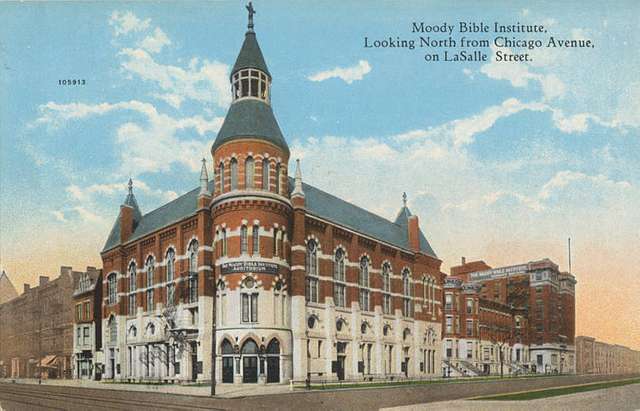
Fraser was staying with Belle’s family. She asked questions about missionary life and the China Inland Mission he represented. Belle learned they required two years of Bible school and Fraser recommended Moody Bible Institute. With funds from a friend, she enrolled.

While at Moody, Belle met John Kuhn who also felt called to serve in China. Friendship developed into romance, but Belle wasn’t sure God wanted her to marry him. John sailed for China in 1926.

After graduation, Belle attended the China Inland Mission training school in Toronto. She and John corresponded frequently. In one of his letters he proposed and Belle said yes. They prayed to be assigned in the Yunnan province, hoping to work under Fraser. God answered their prayer affirmatively.

After Belle completed a year of language study, she and John finally married in 1929. Belle moved to Cheng Chiang where he lived.

Yunnan Province in southwest corner

The first time she hosted a few women in their home, a baby soiled the Kuhn’s new rug. Worse yet, Belle found more “guests” after the humans left: bed bugs, fleas, and lice.

“Lord, make these souls more important to me than anything else,” she prayed. And soon genuine love superseded concerns about vermin or stains.

Over the next twenty years, the Kuhns served in five locations. For the most part, John preached in the villages and Belle taught women’s Bible classes. Their first child Kathryn arrived in 1931.

A terrible flood occurred in 1933, during Belle’s second pregnancy. John was away preaching, so she dragged belongings upstairs, some very heavy. Belle miscarried the baby.

There was little time to grieve as a new directive arrived from Fraser the next day: You’re needed in the Salween Valley to work with the Lisu people.

In 1936 Communist soldiers threatened the valley and missionaries were instructed to evacuate. For eight days they trekked northward, but so did the enemy.

“It seemed as if the Communists were after us,” she wrote, “but in real fact, our pursuers were those faithful watch dogs of Jehovah . . . ‘Goodness and Mercy followed us all our days ‘”[2].

In 1937, as the war with Japan escalated, they were told Kathryn needed to attend a far-distant CIM school out of harm’s way, causing a heartbreaking separation.

Belle fought her distress with a new form of ministry to train church leaders: Rainy Season Bible School, taking advantage of the free time inclement weather provided. Many men attended.

In 1938 their dear friend Fraser died. John’s ministry broadened to include travel throughout Lisu territory. At home, Belle continued to teach, but she also found time to write, completing four books during those twenty years of ministry.

Several times the Kuhns had to escape the Communists and then the Japanese. Each time the Kuhns returned when the danger had passed.

Yangtze River, Yunnan Province

Daniel Kuhn was born in 1942. When he was six, Belle and her son had to evacuate again. This time they traveled to America where Kathryn was attending college. John followed a short time later. They were never allowed to return to China.

Did the Kuhns wonder if the Lisu Christians would lose heart and give up their faith?

Author Wright Doyle wrote: “Of the 18,000 Lisu who lived in Fugong, Yunnan in 1950, 3,400 professed faith in Christ. As of 2007, it is estimated that 80-90% of the 70,000 population make the same profession. In Yunnan, it is estimated that there are between 100,00-200,000 Lisu Christians”[3].

A church in Fugong today

For three years the Kuhns worked in Thailand, but then Belle was diagnosed with cancer. She died in 1957 at age fifty-five. Yet even while battling disease, Belle completed five more books.

To this day, the legacy of Isobel Miller Kuhn lives on, among her beloved Lisu people and through her writing.


[1] https://bdcconline.net/en/stories/kuhn-isobel-miller

[2] https://fromthevault.wheaton.edu/2021/03/01/letters-from-lisuland-the-ministry-of-isobel-kuhn/

[3] https://g1.fieldpartner.org/isobelkuhn/

Other sources:  

https://www.evangelical-times.org/isobel-kuhn

https://www.thetravelingteam.org/articles/isobel-kuhn

Photo credits: http://www.dailyverses.net; http://www.picryl.com; http://www.flickr.com; http://www.dailyverses.net; http://www.flickr.com; http://www.enwikipedia.org.

Read Full Post »

Several years ago I read these words written by a pastor: “When hard times come, say to yourself, ‘Now is the time to use my faith in a new way.’”

I had to wonder, What might that new way include? He didn’t say.

But while considering my own hard times I remembered a few new-to-me strategies God brought to my attention that did indeed strengthen my faith. 

First, he led me to a new way to read scripture, recording any thoughts, insights, or prayers in a notebook. Writing helps slow my thinking so I can absorb more of what God would have me understand.

A few questions, prayerfully considered, might help our pens begin to write. For example:

  • God, what do you want me to understand and embrace from this passage/verse?
  • How would you desire this insight to impact my attitudes, beliefs, and/or actions going forward?
  • What does this passage teach me about you, as God the Father, Son, and/or Holy Spirit? How might this knowledge impact my current frame of mind?

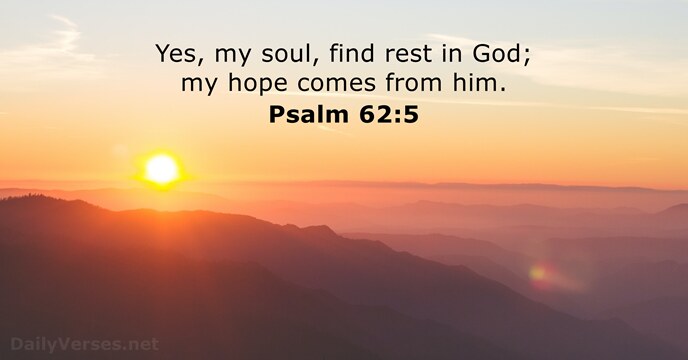
During one time of upheaval I wrote the following, based on Psalm 62:5.

You are my hope, O God. Your plan is to prosper me, to help me grow in faith and Christian maturity. My eternal hope in you can help keep this present difficulty in perspective. After all, when compared to eternity, any hardship here on earth is brief. Someday I’ll live forever with you and the problems I’ve faced will seem insignificant in the light of heaven!

God also introduced me to a new way to pray: spend less time rehashing the problem, and more time rejoicing with gratitude. It’s the kind of praying Paul encouraged (Philippians 4:6-7):

We can thank God for each of his attributes at work on our behalf: his wisdom, power, goodness and more. We can also thank him for graciously upholding us, surrounding us with encouraging family and friends, and allowing us to sense his presence more palpably.

Consider also the positive impact on mind and spirit if we pray with anticipation, affirming God will act to fulfill his highest purpose. If we thank God that it will be so before it is so—that’s faith!*

Such a prayer might be:

I praise you, O God, for your power that can fulfill grand purpose even through (name the situation.) I praise you for being a creative God who solves problems in amazing, miraculous ways.

I thank you for being an involved God who takes an active, loving role in the lives of his children. I thank you that you are faithful and trustworthy, that when we commit our way to you and trust in you, you will act (Psalm 37:5)!

God also led me to a new way to embrace the promises, by acquiescing to his plan for fulfilling them.

For example, when a beloved fellow believer is diagnosed with cancer, our prayer is for a complete restoration, of course. We might site the promise of Psalm 41:3:

And sometimes God’s answer is yes. Even the doctors are surprised how quickly the patient recovers. Sometimes God’s answer is wait, as the patient endures radiation, surgery, and chemotherapy. And sometimes the answer is no.

But isn’t that complete healing as well as the patient is taken home to heaven where no sickness exists?

Life-experience and a growing relationship with God teach us:

It is then we turn to promises like these—promises we can count on no matter what:

  • He will guide us along the right paths (Proverbs 3:5-6)
  • He will provide peace of heart (John 16:33)
  • He will bring good out of every situation (Romans 8:28)
  • His grace will see us through (2 Corinthians 12:9)
  • He will provide everything we need (Philippians 4:19) 

These are among the promises to hold especially close.

And as we exercise such ways of faith presented above, they lead us to know God more, trust God more, and experience more of the spiritual blessings he longs to bestow.

And now, what new way of faith have you discovered that strengthens you during hard times? Please share in the Comments section below!

*Arnold Prater, Bonding with God, 81.

Art & photo credits: http://www.picryl.com; http://www.rawpixel.com; http://www.dailyverses.net; http://www.commons.wikimedia.org; http://www.canva.com; http://www.picryl.com; http://www.canva.com; http://www.pexels.com.

Read Full Post »

Still Traveling

Impressions Becoming Expressions

Living Our Days

Gaining a heart of wisdom

He Said What?!

I'm Patty, and my husband and I are living with our adult son who has autism and epilepsy. I love sharing lessons learned from life around me, especially life with Aaron.

Meditations of my Heart

Impressions Becoming Expressions

Linda Stoll

Impressions Becoming Expressions

Debby Thompson

Impressions Becoming Expressions

Signora Sheila

Notes on Life, Faith & Italy

Colleen Scheid

Writing, Acting, Living in God's Love

Mitch Teemley

The Power of Story

Heidi Viars

Finding the Image of God