Feeds:
Posts
Comments

Archive for the ‘Bible Study’ Category

62a4c3a8e4ff97161c6624861584a495

At least one verse in the Bible achieves a remarkable feat. It covers the entire expanse of eternity—from before the beginning of time into the infinite future—with just eighteen words (in the NIV):

“Those [God] predestined, he also called;

those he called, he also justified,

those he justified, he also glorified.”

–Romans 8:30.

That verse also includes four heavy-duty theological concepts. Thick volumes of commentary have been written about each one: 1) predestination, 2) God’s call upon a life, 3) justification, and 4) glorification. But Eugene Peterson has explained each with brevity, wisdom, and simplicity:

 “After God made the decision of what his children should be like” (predestined*),

”he followed it up by calling people by name” (called).

“After he called them by name, He set them on a solid basis with himself” (justified).

“And then, after getting them established, he stayed with them to the end,

gloriously completing what he had begun” (glorified).

–Romans 8:30, The Message

Part of that completion will occur when Jesus presents us with our new bodies and abilities, once we reach heaven (Philippians 3:20-21).

where-is-heaven

But note that those key verbs: predestined, called, justified, and glorified, are all past tense—even the last one.

Some Bible scholars make the point that our glorification in heaven** is so certain, Paul chose past tense.

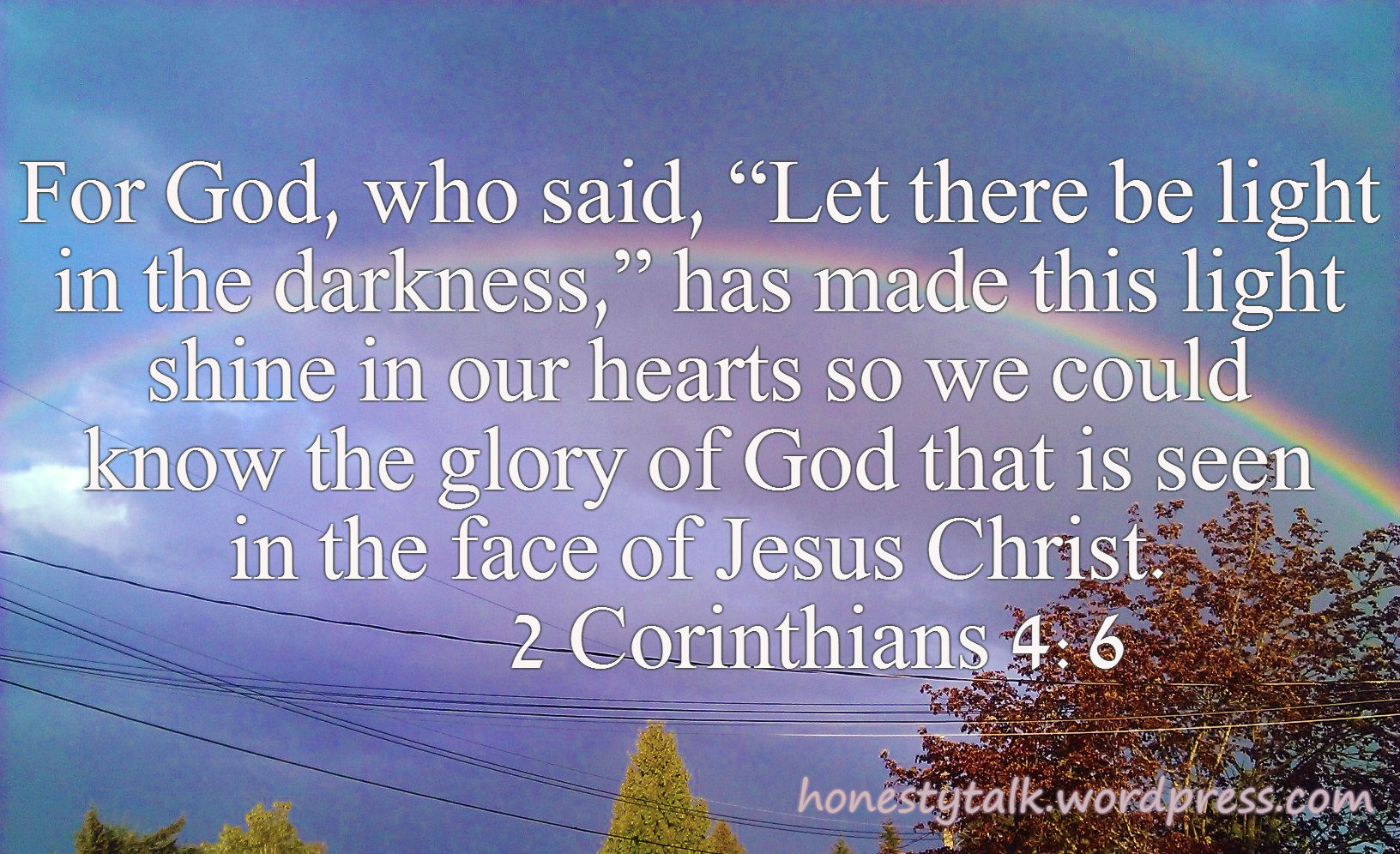
But there are at least several aspects of glorification that are available to us now. That’s because God’s glory—the sum of his majesty, splendor, and wondrous attributes—gleams brightly in the hearts of those who know Jesus (2 Corinthians 4:6).

Think of it. Everything he is, he offers to us in the present, including his wisdom, grace, and kindness; goodness, mercy, and strength; truth, power, and love. Of course, that’s just a partial list. Our God is infinite; so are his glorious attributes.

And as we make ourselves available to God, we begin to experience God’s glory in our lives.

We begin to recognize his goodness in every provision, his mercy and power each time we’re shielded from harm, his wisdom when events unfold for our growth, his love in every blessing, great and small.

We begin to make choices that reflect God’s glorious presence within.  Out of love and appreciation, we desire to lead a life worthy of him and pleasing to him in every way (Colossians 1:10).

We also begin to reflect God’s glory to others.

Gold_panning_in_Nelson_Gulch_near_Helena_Montana

In 1852, a small band of miners discovered gold in Montana. Knowing that the gold rush in California (1849) had caused cutthroat competition and gross inflation, they decided to keep their find a secret. But not long after they returned to town, word spread of their discovery.

Who let the secret slip out? No one. The townspeople knew they had found gold because of the joy on their faces.

We, the glorified children of God, have found greater wealth than gold in our Heavenly Father.  And as we contemplate his glory, we become transformed into his image.  Joy radiates from our faces, just as it did from the miners’ (2 Corinthians 3:18).

Even more wondrous? As we seek to know him, the Almighty God of the universe is pursuing us. He longs for us to be close to him, where we can experience more of his glory—here and now– and “the glorious riches of his inheritance among the saints” (Ephesians 1:18 HCSB).

Praise to our glorious God for his overflowing love, kindness, and generosity!

*     *     *     *     *     *     *     *     *     *

*Predestination is a confusing concept. I appreciate Warren Wiersbe’s explanation in Be Right (Victor Books, 1976). He says the concept only applies to Christians. Nowhere in the Bible do we find evidence that God has prechosen certain people to be forever condemned. He’s given each person the choice to follow him or not (John 1:12).

 ** a thorough transformation into holy radiance (Ephesians 5:27)

(Art & photo credits:  www.pinterest.com; http://www.faithgateway.com; http://www.egoldprospecting.com.)

Read Full Post »

IMG_0210

On my right hand I wear a ring–just a small ruby solitaire, set in a narrow gold band with a bit of delicate embellishment on either side.

I’ve owned the ring since I was a young teen—a long time ago! Yet the ring is even older than I am, passing its one hundredth birthday back in 2004.

The original owner was my grandmother. Great Grandpa and Grandma gave her the ring in 1904, on her fourteenth birthday. On my fourteenth birthday, she surprised me by passing the ring on to me.

All these decades since, the presence of that little band continually reminds me of her—a kind, soft-spoken woman of deep strength and enduring faith. (I wrote about her a couple of years ago. You can access that post–“The God of Rachel, Clara, and Henry, Part 1”– here.)

Perhaps you, too, own a cherished possession that may not appear significant to others, but is highly valuable to you. In fact, you treasure it.

On a much grander scale, God treasures you. You are dearly beloved and precious to him.

Oh, no, some will say. Not me. I’m not good enough, smart enough, or talented enough to be highly valued.

That’s not what scripture says:

SONY DSC

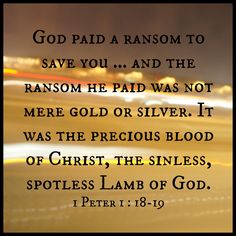
(“For you know that God paid a ransom to save you from the empty life you inherited from your ancestors.  And it was not paid with mere gold or silver, which lose their value. It was the precious blood of Christ,the sinless, spotless Lamb of God” (1 Peter 1:18-19).

God paid a very high price with the precious blood of his own Son, in order to make you his treasured possession. Evidently goodness, smarts, and talent have nothing to with it (Ephesians 2:8-9)!

And God doesn’t view you as ordinary, anymore than I consider my ruby ring ordinary.

Here are several indicators of the high value he places on you:

5094a14f12436499ab59bb749c55ec54

  • You are precious and honored in God’s sight simply because he loves you (Isaiah 43:4). Just as God went to great lengths to bring his precious children of Israel out of captivity, so he has gone to great lengths to bring you into his family.
  • He is constantly thinking about you (Psalm 139:17)–preparing for your welfare, providing for your needs, guiding and guarding until it is time for your final journey to heaven.
  • He blesses you with all spiritual blessings (Ephesians 1:3). It is not the material stuff of the outer life that satisfies; it is the wealth of spiritual blessings of the inner life. God offers: forgiveness of sin, freedom from guilt, peace of mind, joy of heart, wisdom, comfort and strength—to name a few.
  • God has prepared for you an eternity of absolute bliss (1 Corinthians 2:9).

1-Corinthians-2-9

Think of it. God Almighty sees and appreciates your value, your beauty.

He speaks affirmation and restoration to your soul through his Word (Psalm 19:7).

He listens with wrapt attention when you call to him (Psalm 145:18).

He enfolds you in his wings of protection and comfort (Psalm 36:7).

image3

He is with you, for you, and in you.

Accept it, embrace it. Send your roots down deep into the truth:

You. Are. Highly. Cherished.

(Photo and art credits:  Nancy Ruegg; http://www.pinterest.com; http://www.winterpastfinally.blogspot.com; http://www.faithgateway.com; http://www.thelovelyscribe.com.

Read Full Post »

???????????????????????????


Music.

It has the power to thrill our hearts, calm our fears, and strengthen our resolve.

Music energizes, encourages, and inspires. It even augments our connection to God.

So it’s no wonder that, in the Bible:

  • There are more than 400 references to singing.
  • There are fifty direct commands to sing.
  • The longest book is a collection of songs.

It would seem that music is important to God.  In fact, God himself sings.


GOD SINGS

David proclaimed,

psalm32_7-paul

(“You are my hiding place; you will protect me from trouble

and surround me with songs of deliverance — Psalm 32:7”)

 Granted, we may not hear an actual melody, but the power of his Word sings comfort, hope, and strength into our spirits., much as we can “sing high praises” of someone, without a tune.

The sons of Korah, who were temple musicians, composed Psalm 42. In verse eight they state, “At night his song is with me.” Job also spoke of God “who gives songs in the night” (Job 35:10).  In other words, even when we face dark circumstances, God gives his song of help, salvation, and deliverance.

One more affirmation that God sings is found in this uplifting verse from Zephaniah:

zephaniahweb_large

(“The Lord your God is with you, he is mighty to save.

He will take great delight in you, he will quiet you with his love,

he will rejoice over you with singing”–3:17.)

His songs can inspire courage, like a rousing march.  His songs can be like sweet lullabies, expressing peace and love.  And they can be joyful and upbeat, expressing delight in who we are becoming.

The power of God’s songs is in his attributes expressed.


NATURE SINGS

An anonymous psalmist wrote:

il_570xN.403823930_lgif


“All the earth bows down to you, [God]; they sing praise to you,

they sing praise to your name–Psalm 66:4.”)

Other scriptures offer more specificity:

  • Trees of the forest sing for joy before the Lord (1 Chronicles 16:33).
  • Meadows, flocks, valleys, and grain shout for joy and sing (Psalm 66:13).
  • Birds of the air sing among the branches (Psalm 104:12).
  • The heavens sing for joy (Isaiah 44:23).
  • Mountains burst into song (Isaiah 49:13).

Did you notice a theme? All creation sings for joy to their Maker.

Perhaps the biblical poets were speaking metaphorically, giving musical voices to creation where none really exist (except for the birds, of course). However, is it not possible that a choral symphony is wafting on the wind–it’s just that our human ears cannot hear that particular range of decibels? (Just like we can’t hear a dog whistle.)

Imagine:

  • Trees providing sweeping arias
  • Meadows and valleys echoing the refrain
  • Birds creating the grace notes
  • The heavens resounding in a mighty chorus of melody and harmonies
  • The mountains booming deep, rich bass notes

The power of nature’s song may very well be ringing around us this very moment.


WE SING


Planetshakers-BandCrowd-Melbourne-Planetshakers-Awakening-1

Praise God he has given us the ability to sing also. What a precious gift to fuse melody, harmonies, and rhythm that augment the meaning of our words—sometimes even supersede the necessity of words—as we express our praise, gratitude, devotion and love to God.

But what if we can’t sing or play an instrument? What then?

Meet Antonio, a lover of music who lived long ago. Imagine his bitter disappointment as he grew from boyhood to youth and realized he would never sing or play an instrument well.

But a wise friend told him, “There are many ways to make music. What matters is the song in the heart.” That friend happened to be a violin-maker. And because of his influence, Antonio was encouraged to become a violin-maker himself. Perhaps you’ve heard of him. Antonio Stradivarius?

We would all do well to remember his friend’s wise words:

What matters is the song in our hearts.

Ephesians-5-19

“Sing and make music in your heart to the Lord,

always giving thanks to God the Father for everything,

in the name of our Lord Jesus Christ.”

(Ephesians 5:19-20)

The power of our songs is to touch God’s heart.

(Art & photo credits:  www.dreamstime.com; http://www.heartlight.org; http://www.cards.ccojubilee.org; http://www.etsy.com; http://www.christianitymalaysia.com; www,denisehighes.com.)

Read Full Post »

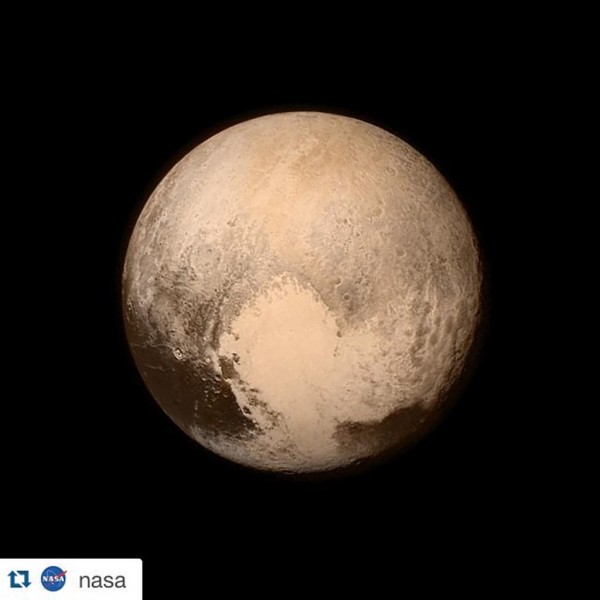
Tuesday afternoon, our older son, Eric, held up his iPhone so I could see the screen. On display was an unimpressive image of a sphere, various shades of beige to brown against a black background. Not much of an attention-grabber.

“What am I looking at?” I inquired.

pluto-best-image-new-horizons-e1436876696310

“Get ready to be amazed,” he teased. “It’s Pluto.  The New Horizons spacecraft just arrived there after a 9 ½-year flight, and sent this photo back to NASA.”

First, I was impressed by how far the spacecraft had traveled: over three billion miles. Even at thousands of miles per hour, it took New Horizons almost a decade to reach Pluto.  Incredible.

Then I noticed how well-lit the dwarf planet appeared, considering its distance from the sun (3.6 billion miles).  Also astounding.

And I marveled how a tiny sphere of rock that far-distant, is still controlled by the sun’s strong gravitational pull, keeping it in orbit within the solar system. In fact, there are even more dwarf planets beyond Pluto that are maintained in a stable, elliptical orbit around the sun.

It’s no wonder David proclaimed:

maxresdefault


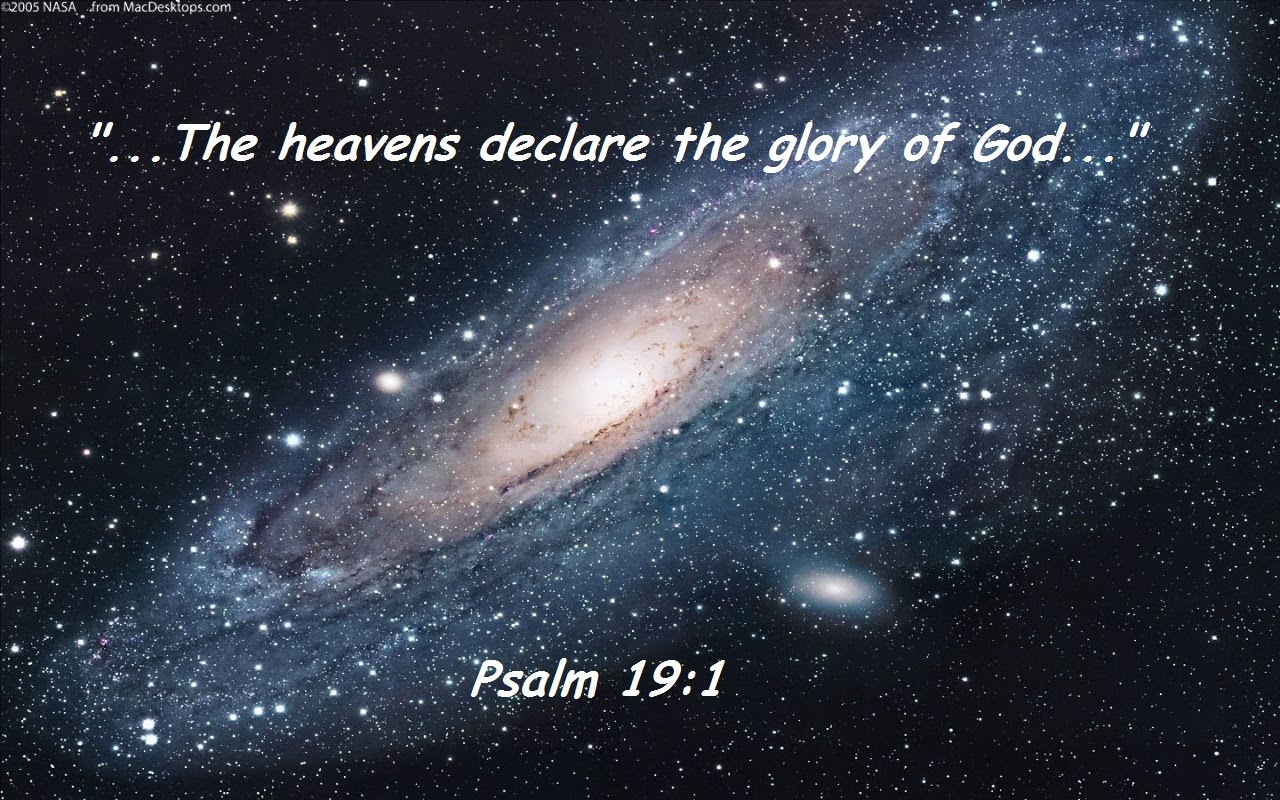
“The heavens declare the glory of God;

the skies proclaim the work of his hands.”

–Psalm 19:1

We’d be smart to consider the heavens with David.  Our attention is so often focused on to-do lists, calendars, and bank accounts, we forget we’re just specks in the cosmos. Even Planet Earth is less than a tiny pinhead of matter, when compared to the universe.

Yet we view the sun as playing a supporting role in our lives, giving us light and keeping us warm. In fact, the sun is the star (pun intended!) of the Solar System Show. It occupies center stage, and accounts for 99.8% of the mass in our planetary system.

In actuality, the sun is the most important influence to our existence. It is perfect in size, perfectly distanced from earth, burning at the perfect temperature and brightness in order to sustain life here on our little planet.

Sun

Yet another sun is even more perfect.   “The Lord is a sun” (Psalm 84:11).

Just as the physical sun is a glorious object in creation, so our God is glorious in light and splendor (Psalm 104:1-2).

The sun has existed since time began, and will continue to exist until time (as we know it) ceases. God, too, spans all of time (Isaiah 40:28).

The sun is a source of incomprehensible power. To produce the same amount of energy as the sun, 100 billion tons of dynamite would have to be detonated every second! Yet our God is even more powerful. He is the Creator of our mighty sun, the sovereign Lord of the universe (Jeremiah 32:17).

The sun provides light; the Lord provides the light of his presence and understanding (Psalm 44:3; 2 Corinthians 4:6).

The sun provides warmth; our God provides the warmth of comfort and consolation (2 Corinthians 1:3).

Without the warmth and light of the sun we would soon die. Without the Light of Life (Jesus) in our lives, we would forfeit eternal life (1 John 1:5-7).

The sun’s glowing beams shed beauty and joy; our God sheds beauty and joy into our hearts (Isaiah 61:3).

mark-mawson-sun-beams-through-stormy-sky-sydney-new-south-wales-australia-pacific

*     *     *     *     *     *     *     *     *     *

Thank you, Father of the heavenly lights, for illuminating our lives from without and within.  We praise you for your dazzling splendor!  May we walk in the light of the Sun of Righteousness, and reflect his radiance to those around us.

 James 1:17; Malachi 4:2, 1 Corinthians 3:18

(Photo credits:  www.earthsky.org; http://www.youtube.com; http://www.suddenlinkfyi.com; http://www.allposters.com.)

Read Full Post »

“You have given me the shield of your salvation,

and your right hand supported me,

and your __________ made me great.”

–Psalm 18:35 (EST)


What word would you put in that blank?

  • Power?
  • Grace?
  • Mercy?


The word chosen most often by translators* may surprise you. It certainly surprised me.

“Your GENTLENESS made me great.”

In addition to being surprised, I was puzzled. How can God’s attribute of gentleness make a person great?

A good place to begin our search for understanding is the background of this psalm.  It was written by King David, perhaps during his later years. He may have been pondering the incredible progression of his life from lowly shepherd boy to exalted king.


89446669


Surely young David never even daydreamed of becoming the most powerful man in Israel, as he sat on the hillsides of Bethlehem watching over his father’s sheep.

Neither could he have known at least fifteen years would pass between his anointing as king (a ceremony indicating a setting apart) and his actual coronation.

And contrary to human logic, those intervening years would not be spent as a student in preparation, but as a fugitive and outlaw, running for his life.  Seems like such a waste of time, doesn’t it? As David hid from King Saul in the Cave of Adullam, did he wonder, Lord God, what ARE you doing?

In hindsight we can see that God was gently teaching and preparing David his way, with practical, hands-on lessons such as:


d61f0ae266f6e653dd1702ccdb3a4b40


  • The Lord hears the prayers of the afflicted and encourages them (Psalm 10:17).
  • The Lord’s unfailing love can be trusted (Psalm 13:5).
  • The Lord gives wise counsel (Psalm 16:7).
  • The Lord is like a rock. His people can take refuge in him (Psalm 18:2).
  • There is no need to fear evil, because the Lord is always present with his own (Psalm 23:4).

One definition of gentle is “considerate or kindly.” God certainly demonstrated gentleness of this nature by endowing David with certain character traits–traits that would serve him well as monarch over Israel:


david-goliath-carousel


  • Courage—most obvious, perhaps, when teenaged David took on nine-foot-plus Goliath (1 Samuel 17)
  • Perseverance—when he spent those years waiting for God’s plan to be fulfilled, all the while fleeing from Saul’s vengeful rage (1 Samuel 19-2 Samuel 1)
  • Cleverness—on display when David pretended madness in order to avoid death at the hands of the Philistines (21:10-15)
  • Restraint—when he twice resisted the opportunity to kill Saul before the king killed him (chapters 24 and 26)
  • Respectability—During his years as a fugitive, six hundred men gathered in support of David and fought with him (27:3-4).


Another definition of gentle is “tender hearted.” No doubt it was with a tender heart that God:

DAVIDHARP


  • Bestowed upon David  the gifts of poetry and music (1 Samuel 16:18)
  • Demonstrated his wonderful love (Psalm 31:21)
  • Forgave David (32:1-2)
  • Remained faithful to him (57:3)
  • Protected David in the shadow of his wings (61:4)


But here’s even better news about God’s gentleness: It wasn’t reserved just for David or other Bible heroes. God displays his gentle nature to all of his children, every day.

In hindsight, we, too, can often see God’s gentle teaching and preparation for what he has called us to do. (If you’re in the middle of that process, rest assured those tough life-lessons you’re enduring now will not be for nothing!)

Second, with kind and gentle consideration, God has bestowed upon each of us specific character traits that qualify us to accomplish his plans. (And that plan isn’t complete until we hear the angels sing!)

Third, God has surely demonstrated his gentle, tender-hearted love for us, beginning with the death of his Son on a cross and ending with…

…well, there is no end to his faithfulness, grace, mercy, attentive care, peace, joy, and more.  How glorious is that?

And though it’s very doubtful you or I will ever be great monarchs like David, we can aspire to greatness in God’s eternal kingdom.

How? By serving him wherever we are with the specific gifts and traits he has given us.

Jesus spoke that truth very clearly:


deb571b6619a70af4ad01348af4191b3

(“The greatest among you will be your servant.” –Matthew 23:11)


*     *     *     *     *     *     *     *     *     *

I praise you, God, for your gentleness that tenderly prepares us for our purpose, kindly endows us with attributes for that calling, and graciously showers us with the benefits of your character, all throughout life.

Help me, I pray, to be compliant under your tender hand, ready and willing to follow your gentle lead, and generous to bestow upon others the graces of your character which I have enjoyed.  Amen.


(Photo and art credits:  www.panoramio.com; http://www.pinterest.com; http://www.donnarios.com; http://www.plusii.blogspot.co.uk; http://www.pinterest.com.)
 

* www.biblehub.com provides easy access to twenty translations of the Bible. Fifteen out of twenty include the word “gentleness” at the end of Psalm 18:35, or a synonym: humility, lowliness, or meekness.

Read Full Post »

Munttar17

In a desert land he found him,

in a barren and howling waste.

He shielded him and cared for him;

he guarded him as the apple of his eye

(Deuteronomy 32:10, italics added).

Notice the verbs: found, shielded, cared for, and guarded. Just as God watched over the Hebrew nation in the wilderness, God is surely watchful over each of us. See if these stories trigger memories of your own–when God found, shielded, cared for, and guarded you.

FOUND:

Growing up in a Christian home, I learned about Jesus before taking my first steps. At age four, after hearing the crucifixion story, I asked Jesus to be my Savior and constant Companion. Even as a preschooler, I understood my need for Someone to take the punishment I deserved for my naughtiness, so I could receive God’s gift of eternal life. If Jesus was willing to suffer and die in my place, how could I say, “no?”

81dcb5dcf618c976c041e845ebb0dd25

Praise God he seeks after lost sheep—even the little ones (Luke 15:4)!

Where did God find you?

 SHIELDED:

Numerous times over the years I have felt shielded from harm, including serious car accidents.

One time while approaching a stoplight, I hit a rain-slicked patch of city street, with cars in front of me and a bus to the right. My car began to slide and swerve; I started pumping the brakes. But there was no way to stop soon enough and avoid collision with the slowing line of vehicles ahead.

I took a chance and turned a bit to the right, hoping beyond hope there would be enough room for me to squeeze ahead of the bus, where the lane was open. Surely God intervened and created the needed space. (I think he also alerted the bus driver to apply his brakes and leave room for me!) My car did come to a safe stop, with room to spare.

God has shielded me in other important ways, too. He’s protected me from life-choices that would have led me down treacherous paths. He’s saved me from unhealthy relationships.

Psalms_28-7

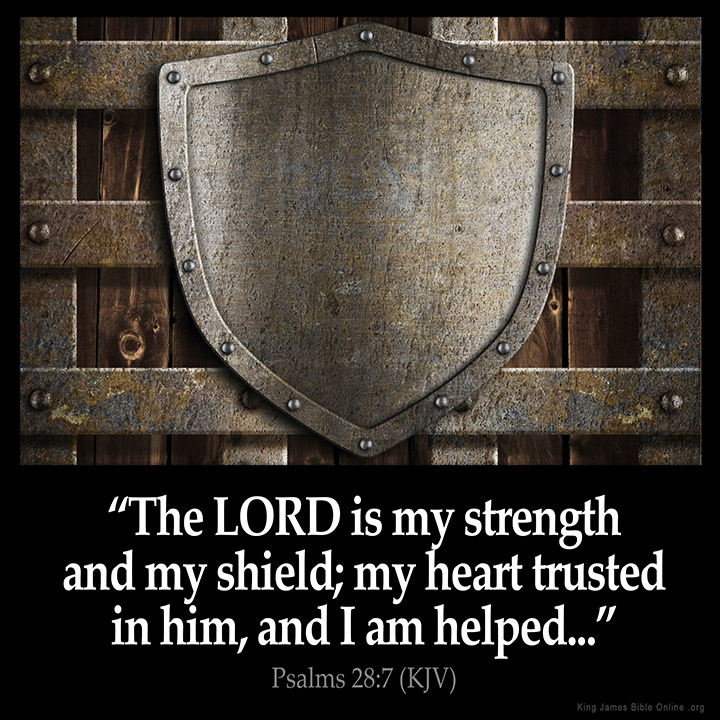
Praise God he is our shield! We can trust in him, and receive the help we need (Psalm 28:7).

How has God shielded you?

CARED FOR:

I couldn’t find the dental insurance form I needed to drop off at Dr. H.’s office. Jeremy (our younger son and a middle schooler at the time) assisted me in a thorough search.  No form. While out on my walk, it suddenly occurred to me the form may have been gathered up with the newspaper. Sure enough, that’s where it was. Being Wednesday, those papers—and the dental form—should have been long gone in the recycling truck, but Jeremy was saving newsprint for his art teacher. God not only revealed to me the location of that form, but kept it safe, saving me the hassle of getting a new one and filling it all out again.

a6b7d3947c75be26393ae18a51f35ccc

Praise God for his loving attention, even in small matters like dental forms (1 Peter 5:7)!

How has God cared for you?

GUARDED:

One spring day in 1985, an elderly gentleman hit the gas pedal instead of the brake, at the stop sign on our corner. He drove his station wagon right through the garage wall. Several feet more to the right and he would have plowed into our daughter’s room, and she was playing there at the time. The driver was protected, too, sustaining only minor injuries.

god-of-the-bible-gcsrw-25-638

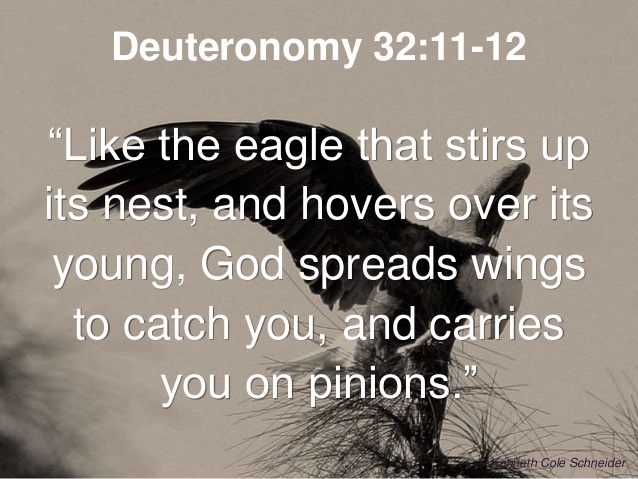
Praise God he guards us like an eagle, hovering over its young (Deuteronomy 32:11).

How has God guarded you?

THE APPLE OF HIS EYE:

The last phrase of Deuteronomy 32:10 explains why God is so attentive to his people. We are the apple of his eye. Some translations replace apple with pupil. God protects us as the pupil of his eye.

Just as our eyesight is precious to us, so we are precious to God.

As we’re careful to provide protective care for our eyes, shielding them from danger, for example, so God provides loving, protective care of us.

May we continually praise our God for all he is to us. First, he found us, and then became our attentive Shield, Provider, and Guard.

bbd550f7373b204033320b16c5638e3c

(“You make me glad by your deeds, O Lord; I sing for joy at the works of your hands” — Psalm 92:4.)

 In the Comments below, please share your personal stories of how God found you, or how he has proved himself as your Shield, Provider, and Guard. Let’s celebrate together God’s powerful deeds on our behalf!

(Art and photo credits:  www.biblewalks.com; http://www.pinterest.com; http://www.kingjamesbibleonline.com; http://www.imagefriend.com; http://www.slideshare.net; http://www.pinterest.com.)


Read Full Post »

FORTUNE COOKIE WITH BLANK FORTUNE

‘Cracked open a fortune cookie not long ago and discovered this bit of wisdom:

“It’s not the years in your life,

but the life in your years

that counts.”

Come to find out, that’s not from Confucius or any other Chinese sage.  It’s from a beloved, former U.S. president, Abraham Lincoln.

Many folks might interpret this proverb to mean:

Live each day to the fullest; a full life is a meaningful life.

But what brings fullness to the day? And what makes a life meaningful?

The answers to those questions lie in another collection of proverbs, not found in fortune cookies, but in the Bible:

  1. A meaningful life comes from finding favor with God and with others (Proverbs 3:4; 21:21). 

Proverbs 3:3 names the qualities that garner favor: faithfulness and love.

It’s true.  Those two character traits play out in goodness, generosity and grace. Without fail, that kind of person experiences great satisfaction in her relationships. After all, that’s how God designed us (Acts 20:35).

“A full life cannot be measured by the quantity

but rather the quality of one’s relationships

with others and with God.”

–Warren Mueller

  1. A meaningful life comes from living wisely (Proverbs 8:35).

And just how do we do that? By applying integrity to our actions, discretion in our conversations, and prayerful, Spirit-led discernment in our decisions.

“Wisdom is the power to see

and the inclination to choose

the best and highest goal,

together with the surest means of attaining it.”

–J. I. Packer

And wisdom leads to peace of mind, contentment, and a clear conscience—important foundation stones for a meaningful life.

  1. A meaningful life comes from internalizing God’s ways (Proverbs 11:28, 21:21). 

These proverbs, (11:28 and 21:21), provide a corollary to the previous one. A wise person follows the course of conduct established by the Father of Wisdom and revealed in the Bible.  He made us; he knows the best way for us to live.

Countless millions have devoted their lives to the accumulation of stuff, the pursuit of fame, and the climb to a position of power.

Yet King Solomon (who had it all) proclaimed: “Meaningless! Meaningless! Utterly meaningless! Everything is meaningless” (Ecclesiastes 1:2).  Did you notice that four words out of seven in that verse are the same?   “Meaningless!” I hear a bit of frustration in Solomon’s voice, don’t you?

Wouldn’t it be wise for us to avoid the mistakes he made? Maybe we should post that verse on the fridge, to keep us grounded in what really matters: God’s purpose for our lives.

“No real meaning exists

apart from linking our lives

to God’s purpose.”

–John Maxwell

  1. A meaningful life comes from reverencing God (Proverbs 14:27; 19:23). 

And reverence includes honor, respect, adoration, and awe. Embracing these attitudes toward God leads to deep satisfaction, complete peace, and true joy, because:

“The man who has God as his treasure

has all things in One.”

–A.W. Tozer

  1. A meaningful life comes from trusting God (Proverbs 16:20b).

God alone knows me better than I know myself. He alone is aware of what’s going on in the lives of those around me. And he alone can see into the future. Why do I think I’m capable of moving ahead on my own?

Even when trouble comes to call, I can rest assured that such experiences have purpose and meaning (Romans 8:28).

I would do well to remember: 

“Relinquishment is a prerequisite to fulfillment.”

–Eugene Peterson

  1. A meaningful life comes from an attitude of humility (Proverbs 22:4).

Humility is the proper perspective of oneself, especially in relation to God. He is all-powerful, all-wise, all-seeing, and more. Reminding ourselves of his magnificence is one way to foster humility.

Another way is to be thankful. A full, satisfied life is grounded in humble gratitude.

“Gratitude can transform common days into thanksgiving,

turn routine jobs into joy,

and change ordinary opportunities into blessings.”

–William Arthur Ward (italics added)

M-m-m. Living thankfully, joyfully, and blissfully aware of each blessing. Yes, that does sound like a highly satisfactory way to live.

*     *     *     *     *     *     *     *     *     *

Service, Wisdom, Obedience, Reverence, Trust, Humility, and Gratitude.  That’s a long list, Lord.  Perhaps the full, meaningful life is out of reach for me.  Oh, but if I consider the interrelatedness of these qualities, the reach is shortened considerably.  Obedience includes service, and reverence naturally leads to humility.  Humility includes gratitude, and trust leads to wisdom.  Most important of all, YOU want all of your children to experience life to the fullest. Oh, how  I praise you for your direction and provision to make that happen! 

(John 10:10; Philippians 1:6; 2 Peter 1:3)  

(Photo credit:  www.kitchendaily.com.)


Read Full Post »

SunsRays

The exhibition of God’s glory

and the deepest joy of human souls

are one thing.

–Jonathan Edwards

(1703-1758, preacher, theologian, author)


Wooh—that’s a mouthful! I have to break that down into smaller bites.

God’s glory includes his splendor and majesty, infinite power and wisdom, creative genius and perfect engineering, absolute holiness and righteousness, and much more. God’s glory is, in part, the sum of his glorious attributes.

The exhibition of God’s glory is all around us in creation, and visible to all people (Isaiah 6:3, Psalm 97:6).

36e8e624124bc4606ae3499824a2dded

But more profound:  God’s glory is made known to us in our hearts—to those who have asked Jesus to save us from the ultimate consequence of our sin, and to become Master of our destinies (2 Corinthians 4:6).

2-corinthians-4-6

How incredible that we can experience God’s glory here and now, although in a limited way. And how wonderful that the deepest joy of humans souls is a result of knowing him now—not just when we get to heaven.

Someday, though, we will witness the full revelation of his splendor, and that of his Son, Jesus. It’s beyond our wildest imaginings (1 Corinthians 2:9).

1-Corinthians-2-9

Scripture does include a few glimpses, however. We see his:

  • Golden splendor and awesome majesty (Job 37:22)
  • Garment of light, wrapped around himself (Psalm 104:2a)
  • Clouds surrounding the throne (Daniel 7:13)
  • Belt of gold and gleaming, flaming eyes (Daniel 10:5-6)
  • Long robe with a golden sash across his chest, white hair, and blazing eyes (Revelation 1:13-16)

Charles Spurgeon eloquently expressed the glory of Jesus in a sermon, over 150 years ago. He proclaimed Christ…

 “…Radiant with splendor,

effulgent with light,

clothed with rainbows,

girded with clouds,

wrapped in lightning,

crowned with stars,

the sun beneath his feet.”


Doesn’t that give you holy goosebumps?

Yet there is more.

When he appears, we shall be like him (2 Thessalonians 2:14; 1 John 3:2).

1029-2TH003005ENGKJV08000480ISP05531394000

Can you imagine? We will share in the radiant splendor of our Savior. As if that wasn’t enough, we’ll finally be transformed into the holy and perfect beings we have always wanted to be.

And as we share in the glory of Jesus, we will enjoy incredible blessings that God has prepared. The following scriptures offer us tantalizing samples—to whet our appetites for what is to come:

  • There will be no need for sunlight; God will be our everlasting light. There will also be no more sorrow (Isaiah 60:19-20).
  • We will see Jesus face to face and finally have full understanding of all things (1 Corinthians 13:12-13).
  • We will bear the likeness of Jesus (1 Corinthians 15:49).
  • We will reign with Jesus forever (Revelation 3:21; 22:5).
  • There will be no night and no impurity (Revelation 21:23-27).

Now, there are those who worry that heaven will involve a lot of cloud-sitting and harp-playing. Well, yes, there are clouds and harps.  (I, for one, am very glad for the harps–it’s my favorite instrument. And, I have to admit, there are some days when a bit of cloud-sitting and harp-playing sounds rather appealing!)

However, I agree with theologian, Albert Barnes. “To reign with Jesus” means we will share in Christ’s dominion of the universe, administering the affairs of all the worlds.” That sounds exciting and fulfilling (but mind-boggling) to me!

Such glimpses of our glorious future really are too much for my mind to absorb. But, oh how thankful I am that God has tucked them into his Word, to fill our hearts with expectation and hope.

Also worth contemplating is the eternal expanse of time we’ll enjoy God’s majesty and splendor. According to John Piper, heaven’s joys will actually increase as we discover more and more of God’s glory. “The end of increased pleasure in God will never come” (God’s Passion for His Glory, p. 37).

Then “the exhibition of God’s glory and the deepest joy of human souls” will indeed be one perfect, sublime, eternal thing.

*     *     *     *     *     *     *     *     *     *

Lord God of heaven and earth, my heart shouts praise in honor of your glory! I praise you for being a holy God, completely separate from all else in the universe. No one is your equal in power, wisdom, creativity, splendor, or love. No one else is perfect in all he does. Thank you for your Word, where we can glimpse your glory and your plans–for our glorious and joyous future with you.

(Photo & art credits:  www.beforethebeginning.net; http://www.pinterest.com; http://www.honestytalk.wordpress.com; http://www.verseaday.com.)


Read Full Post »

Every field of study includes specialized vocabulary or terms that students learn, in order to function in that realm.

In economics, you need to know arbitrage, equilibrium price, and store of value.

Business-Meeting-1

Those in the field of education learn about asynchronous learning, constructivism, and heutagogy.

elementary-classroom-panorama

An engineer becomes familiar with Bernoulli’s Theorem, fixture units, and porosity.

civil-engineering-1

(Give yourself a pat on the back for each of those terms you can actually define!)

The study of God, theology, is no different. Sit among a group of seminary students and you’re likely to hear terms that don’t come up in our daily conversations, such as immutability, omniciency, and transcendency.

But maybe those words (and others that describe God’s attributes) should become familiar, everyday terms, because:

  • What we think about God influences what we think about everything else—our values and possessions, other people, the world, etc.
  • to fully appreciate our God, we must know him well
  • the better we know him, the greater his impact upon our lives
  • the more we know him, the more we can trust him

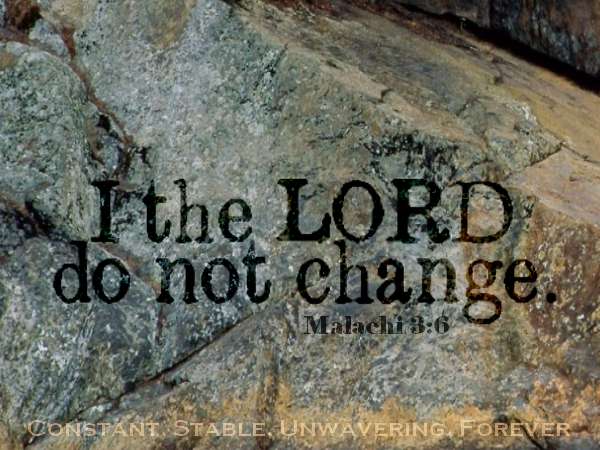
Take, for example, that fancy, six-syllable word, immutability. It refers to God’s insusceptibility to change (Malachi 3:6; Hebrews 13:8). It is not in his nature to change—ever. God is always the same. He is consistent in all his attributes, all the time.

malachi-3-6

Isn’t that glorious news? When we come to him, we don’t have to worry that maybe he’s decided we’re not worthy to enter his presence anymore. We don’t have to worry about whether he’s in a good mood or not.  And we don’t have to worry that he might go back on his promises. God’s character never changes, and he doesn’t change his mind either.

How about omniciency? That’s only four syllables, but just as profound as immutability. It refers to God’s ability to know all things—perfectly.

“Stop and consider God’s wonders,” Elihu said to Job. “Do you know how God controls the clouds and makes his lightning flash? Do you know how the clouds hang poised, those wonders of him who is perfect in knowledge” (Job 37:14-16, italics added)?

lightning-over-water_270_600x450

Again, what stunning news! He knows all things.  He knows the past and the future, therefore he can guide me—perfectly. He knows my personality, my innermost thoughts, my motivations. Therefore, he understands me–perfectly. He knows my needs, therefore, he can provide for me—perfectly.

And then, last but not least (for today, that is): transcendency, which means God is above all of his creation. He existed before the first glimmer of light appeared in the universe (Genesis 1:1-3). And his existence is not dependent upon creation as we are. In addition, the way God thinks and works is far beyond our limited capacities (Isaiah 55:9).

3cd90b99ac5d610014f7285a6cc10735

Under the heading of God’s transcendence we find his infallible wisdom, incomprehensible power, self-existence (because no one made him), righteousness, justice, mercy, and more.

And all of these wonderful attributes he graciously exerts upon us who believe in him, who seek to know him.

Think of it. The immutable, omniscient, transcendent God who oversees the universe, is also Overseer of each of our lives. He is caring for us, living in us, and participating with us each and every day.

*     *     *     *     *     *     *     *     *     *

I praise you, oh God, for the magnificence of your attributes. You are immutable, never responding out of character. You are omniscient, always responding in our best interest, because you know all. And you are transcendent. From you, through you, and to you are all things (Romans 11:36). Oh, that we may worship you as you deserve!

(Art & photo credits:  stagecraft.co.uk; http://www.teachtought.com; http://www.hengineers.com; http://www.shareaverse.wordpress.com; http://www.environment.nationalgeographic.com; http://www.pinterest.com.)

Read Full Post »

 Zwald-62


One of the “Letters to the Editor” in the most recent issue of Country Magazine caught my attention. The writer, James, related an event from his boyhood days on a farm in the 1940s.

Seems he had injured his hand quite severely one day while tightening a chain. But work on a farm doesn’t wait, especially during hay-baling season when the hay is ripe for harvesting. So in spite of his injury, James had to wear rough work gloves as he operated the wire baler. Every day for a week when he removed the gloves, the scab on his hand would come off and the wound would bleed profusely again.

On Sunday afternoon he plopped down on the living carpet to take a nap. His dog, Shadow, came to lie down beside him. But instead of settling in for a snooze himself, Shadow began to lick James’ wound. It actually felt good, James explains, so he let the dog continue.

The next morning James was astonished to see that his wound was completely healed. “It was as if the injury had never happened.”

Not until much later did James find out that a dog’s saliva contains healing properties. That’s why, when injured, they will lick their own wounds over and over.

I found James’ story particularly interesting because of a question that had been niggling in my mind this Easter season: Why did Jesus bear the scars of the crucifixion—in his hands, feet, and side–after the resurrection? It was certainly within God’s power to return Christ’s physical body to perfect wholeness, “as if the injuries had never happened.”

Come to find out, I’m not the first one to consider this question. As far back as the seventh century, Saint Bede of England (672-735, A.D.) wrote about the possibilities. Many others throughout the ages of the church have contemplated the reasons, including the following:

  1. The scars were proof to the disciples that he was the same person after resurrection as before. Had Jesus been completely restored, his followers may have assumed that their first inclination was correct: that what they saw was an apparition of Christ. After all, he appeared to them out of nowhere—an impossibility for a physical body.

But they not only saw him, Jesus invited them to touch him, so there could be no doubt (Luke 24:36-42).

  1. The scars were part of the proof of the prophecy that Jesus spoke of himself, that he would suffer, be killed, and rise again on the third day (Matthew 16:21). “This is what I told you,” Jesus reminded them (Luke 24:44).
  1. The scars provided evidence of Jesus’ physical body. Early in church history there were those who taught that Jesus didn’t really suffer on the cross. He was not truly human, therefore he only appeared to suffer.

They could not fathom the sinless Son of God submitting himself to such humiliation and horrific pain.   But dismissing the agony of Christ on the cross as well as the scars is incomprehensible.

Those three answers do quiet our curiosity, but what relevance might Jesus’ scars provide for us today?

  1. The scars prove that Jesus knows what it means to suffer. Crucifixion is the most cruel of death penalties, the worst that man can deliver. No one can say, “Jesus doesn’t know what I’m going through.” No, he is well-acquainted with grief. He knows what it’s like to bear scars of suffering.
  1. The scars prove God’s love and compassion. As the Son of God, he didn’t have to suffer on our behalf. Surely he could have devised a less abhorrent way. Instead, he identified himself with humanity by becoming human himself. He took our physical, emotional, and spiritual pain upon himself.   And he will wear the scars of suffering for eternity (Revelation 5:6).
  1. The scars remind us of what is to come. On Good Friday, Jesus body was beaten, bruised, and pierced. On Easter Sunday, those wounds became scars. A miraculous healing of gruesome wounds had occurred in a matter of hours.

One day a miraculous healing of our gruesome wounds will take place. Pain, suffering, loss, illness, and physical challenges will cease. Every negative aspect of life will melt away.

*     *     *     *     *     *     *     *     *     *

Oh, Lord Jesus, thank you, THANK YOU for carrying our pains, our disfigurements, all the things wrong with us.  Thank you for taking the punishment we deserve and making us whole.  You are the one and only source of eternal salvation.  And only through your eternal bruises are we healed.  Out of overwhelming gratitude, we give ourselves to you.  We want to follow your example and please you.  Make us into what gives you pleasure.  

All glory to you, Jesus, forever and always!”  

 (Isaiah 53:4-6; Hebrews 5:9, 13:21, MSG)

Photo credits:  www.motherearthnews.com

Read Full Post »

« Newer Posts - Older Posts »

When the House is Quiet

Impressions Becoming Expressions

Mitch Teemley

The Power of Story

Still Traveling

Impressions Becoming Expressions

Living Our Days

Gaining a heart of wisdom

He Said What?!

I'm Patty, and my husband and I are living with our adult son who has autism and epilepsy. I love sharing lessons learned from life around me, especially life with Aaron.

Meditations of my Heart

Impressions Becoming Expressions

Linda Stoll

Impressions Becoming Expressions

Signora Sheila

Where faith meets la dolce vita

Heidi Viars

Finding the Image of God