Feeds:
Posts
Comments

Archive for the ‘Bible Study’ Category

Jesus-Praying-Last-Supper-570x377


Whether I heard it or read it, I don’t remember. But the words caught me by surprise, and I jotted them down:

“What was uppermost in Jesus’ mind as Good Friday approached?

“Joy.”

Do you find that surprising, too?

Yet at least three times on the eve of his crucifixion Jesus spoke about joy (John 15:11; 16:22, 24; 17:13)–a most unusual topic and completely unnatural.  Who thinks about joy when they know that catastrophe is about to strike?

Jesus, that’s who.

Within the next twenty-four hours he would face excruciating pain, total abandonment by his Father, and the most horrific death ever devised.

But his concern was for his disciples, not himself.  Jesus wanted them to remember the important principles of love, obedience, and joy–an empowering joy that no one could take away from them.

Perhaps you remember the scene. Jesus and his disciples had just finished their last Passover supper together. After the meal, he taught his final lesson.

The first mention of joy came near the end of his teaching about the vine and the branches:

“I have told you this

so that my joy may be in you

and that your joy may be complete”

(John 15:11).

The word, “this,” refers to the ways Jesus had just mentioned that will contribute to joy:

1.  Live close to him and produce much good in and through your life (vs.4-8).

2.  Live in obedience to Jesus and experience the warmth, peace, and care of His love (vs. 9-10).

 Note that Jesus wanted his joy to be in the hearts of his disciples. What characterized his joy, compared to that of others?

  1. Strong awareness of the Father’s love for him, and his own love for the Father (vs. 9-10).
  1. Absolute surrender and self-sacrifice of himself to his Father, and the joy of doing what his father had sent him to do. Even during his great travail in the Garden of Gethsemane, his one desire was to do his Father’s will (Luke 22:42).

Jesus’ joy coexisted with the profound sorrow of his impending suffering, because he was already well-acquainted with the satisfaction and fulfillment of obedience.

  1. The understanding that joy deferred to the future is anticipatory joy in the present. “For the joy set before him he endured the cross” (Hebrews 12:2).

And finally, Jesus told his disciples that he desired complete joy for them. What does complete joy look like? It is:

  • Not so much an emotion as it is a conviction (Keith Krell, “Moment by Moment,” http://www.bible.org).
  • Inner contentment, resulting from continually cultivating an intimate relationship with Jesus.
  • Constant, not dependent on circumstances.
  • Enduring, day after day. Indestructible.
  • Perfect—the perfect, joy-filled fulfillment of the destiny for which God created you, even when a portion of that destiny is suffering.

I’m thinking of the martyrs–Stephen, Polycarp, Ignatius of Antioch, William Tyndale, John Wycliffe and countless others who demonstrated complete joy even as they died in anguish.

Polycarp, disciple of the Apostle John and Bishop of Smyrna for many years, refused to revile Jesus. For that he was burned at the stake.

But before the flames rose up, Polycarp prayed:

“O Lord God Almighty, Father of thy blessed and beloved Son, Jesus Christ, through whom we have been given knowledge of thyself…I bless thee for granting me this day and hour, that I may be numbered amongst the martyrs, to share the cup of thine Anointed and to rise again unto life everlasting…”

Such devotion, courage, and supernatural strength are impossible to fathom apart from the enablement of the Holy Spirit.

Can you hear the grace in Polycarp’s voice as he blessed God for the privilege of dying a martyr?

That is complete joy, only experienced by those who trust in Jesus implicitly.

Complete joy that Jesus purchased for us at Calvary.

*     *     *     *     *     *     *     *     *

We marvel, Heavenly Father, in the extreme paradox that is the cross. Out of the evil unleashed upon your Son comes your holy, righteous goodness–upon us. Out of the horror of the crucifixion that Jesus endured comes inexpressible and glorious joy, to those who put their faith in him–not a temporary feeling of elation, but deep, abiding, abundant joy. 

All praise to you, our loving, gracious God!       

(Acts 3:13-16, 1 Peter 1:8, John 6:47, John 10:10)


(Photo credit:  www.rejesus.co.uk.)



Read Full Post »


On June 3, 1953, millions of people watched the inauguration of Queen Elizabeth II on television. Amidst much fanfare and pomp she slowly and elegantly processed down the aisle of Westminster Abbey. Behind her trailed a robe of royal purple velvet, eighteen feet long. Six maids of honor supported the weight of the magnificent train.

But even Queen Elizabeth’s grand, stately robe does not begin to compare to one mentioned in scripture:

“In the year that King Uzziah died,

I saw the Lord seated on a throne,

High and exalted,

And the train of his robe

Filled the temple.”

(Isaiah 6:1)

I have to wonder: What might the train of the Lord’s robe symbolize? Is there significance to the expansiveness of this robe? Why would Isaiah include the detail that it “filled the temple?”

A bit of research revealed interesting, heart-stirring answers.

The train of his robe: In ancient times, the flowing train on a monarch’s robe was a symbol of glory and splendor. To understand the importance of a train, we have to remember that in those days, all clothing had to be constructed “from scratch”—fibers of cotton, linen, or wool had to be spun into thread, threads had to be woven into cloth, cloth had to be cut and sewn into garments by hand. It was a time-consuming process.

Only the rich and powerful could afford to add extra length to their robes. The longer the train, the more glorious and splendid the king. And as he paraded past his subjects, the length of his robe was meant to impress.

Filled the temple: Isaiah’s statement conveys the magnitude of God’s glory compared to any earthly king or queen. Symbolically, the robe represents God’s infinite splendor and majesty—his glory. As one preacher explained, “air is the atmosphere of earth, God’s glory is the atmosphere of heaven.”  One day we will breathe God’s glory!  That gives me goosebumps.

God’s glorious robe that fills the temple signifies:

his absolute authority. “There is no room for anyone else in this high-exalted place. God is all in all” –Selwyn Hughes (1928-2006, Welsh pastor, theologian, author).

his divine perfections. There is no one else who is all-powerful, all-knowing, unhindered by the limitations of time and space, and absolutely righteous in all he does.

his incomparable splendor. Isaiah, Ezekiel, Daniel, and John the Revelator gave us glimpses of their heavenly visions.  They saw a high and exalted throne encircled by an ethereal rainbow, seraphs crying “Holy, holy, holy,” lamps blazing, lightning flashing, thunder rumbling, angels and saints worshiping.

Artists have tried to imagine the sight:


441495a7b7e000ac4e649a52998c0a9f


But God’s authority, perfection, and incomparable splendor are not only on display in heaven. His glory is on display in creation–all around us. Consider these few examples:

• The delicate wing of the butterfly, emblazoned with brilliant colors in intricate patterns.


MM7820_090523_20124_xgaplus


• The intriguing double-spiral of sunflower seeds—one spiral in a clockwise direction, the other, counter-clockwise.


george-grall-close-up-of-a-sunflower-showing-the-spiraling-center-filled-with-seeds


• Lacy feathers of frost gathering on a window.


frost-patterns-on-windows-1387971944JG1


• The graceful curl of the wentletrap shell.


Epitonium_scalare_shell


• The jewel-like qualities of grains of sand.


Scala_dei_Turchi_Sand_062313


“Our God is lavish in splendor.  His creative fullness spills over in excessive beauty” (John Piper, pastor and author).

And why is that important to embrace and celebrate? Because we are so often distracted by the concerns of life.  We allow them to consume too much of our attention.  There’s a better way to live that many people never discover.

“Many people gaze at their problems and glance at the Lord.  But I tell you to gaze at the Lord and glance at your problems” (Ted Smith, pianist for Billy Graham Crusades).

Let’s visualize God’s grandeur–every day, as we prepare ourselves to pray.  Let’s become enthralled in the throne room of heaven, in the splendor and majesty of Almighty God.  And let’s bow down in humble gratitude that this magnificent God is also our loving Heavenly Father.  Think of it.  The glorious, all-powerful King of the universe is our Abba–our Dad!  Can any realization be more comforting, strengthening, or empowering than that?

*     *     *     *     *     *     *     *     *     *

Dearest Abba, too often my thoughts are a tangled mess of concerns.  I need a fresh vision of your glory to supersede the “what-ifs.”   Remind me that with you, the God of all authority and might, I have nothing to fear.  You are all I need.

(Photo and art credits:  www.wikimedia.com; http://www.pinterest.com; http://www.forums.thesims.com; http://www.allposters.com; http://www.publicdomainpictures.net; http://www.wikipedia.org; http://www.wikimedia.com.)

Read Full Post »

The spacious, free life is from God,

It’s also protected and safe.

God-strengthened, we’re delivered from evil—

When we run to him, he saves us.

(Psalm 37:39-40, The Message)

Freedom-Quote


There are folks who think that Christians surrender their freedom when they choose to follow Jesus. They think we give up our freedom to do as we please and take part in everything life has to offer.

Those folks miss an important fact: Self-centeredness does not satisfy in the long-term.

Even secular research has proven that truth. Several years ago, the Journal of Research in Personality published a study conducted by psychologists. They recorded their therapy sessions and found that individuals who used more of the first-person singular pronouns (I, me, my) were more likely to suffer from depression.

The truth of the matter is, real freedom is not freedom to, but freedom from. God offers us a number of glorious freedoms. For example:

  • Freedom from guilt. God forgives my sins and remembers them no more (Isaiah 43:25).  How loving, merciful and gracious He is!
  • Freedom from fear. He is my stronghold in time of trouble (Psalm 37:39.) How often have I called out, “Oh, Jesus,” with my heart pounding in my chest—at the moment a car crash was imminent, a child approached with blood oozing from his head, or the phone rang just before curfew, and our teenager wasn’t home yet.

bible11

But fears can be quieted as we affirm who is in control. God is Lord of every circumstance. He is also the Source of solace, perspective, strength and wisdom–whatever I need, for every situation.

  • Freedom from worry. God has promised to supply my needs (Philippians 4:19). 

When worries begin to whirl in my head, I try to put into practice what Kay Arthur teaches: “Focus on God. Rehearse his character, his promises, his works. Remember his names, his attributes and how they suit your situation” (His Imprint, My Expression, p. 117). Extolling God’s greatness causes my problems to shrink.

Notice I said try. I’ve not always accepted God’s offer of freedom from worry. Sometimes dark clouds of concern fill my thoughts and blot out his goodness—his character, promises, and works. Sometimes it takes awhile for me to remember: My God is all-sufficient. He will see me through.

 As I grow older, the gap is shortening between worry-onset and God-focused thinking. Practice hasn’t made perfect yet, but at least it’s producing improvement.

  • Freedom from foolish decisions. He provides wisdom when I ask (James 1:5).

“I need not despair because the living God is my partner. I do not have sufficient wisdom to meet these difficulties, but He is able to direct me. I can pour out my heart to God and ask Him to guide and direct me and to supply me with wisdom. Then I have to believe that He will do so. I can go with good courage to my business and expect help from Him in the next difficulty that may come before me” – George Mueller

816184962d6bdc67aaa7f052c00369bf

  • Freedom from discouragement, because God is omnipotent. With him all things are possible (Matthew 19:26). He specializes in redeeming disappointment. And while we wait, our loving Father provides strength.

The shroud of discouragement can also be lifted through gratitude, praise, and worship. Focusing on who our God is and what he has already provided can relieve the ache for what has not come to pass—yet.

 This post is getting long, so I’ll just list another five briefly:

  • Freedom from despair. He is my God of hope, joy, and peace as I trust in him, so I can overflow with hope by the power of the Holy Spirit (Romans 15:13.)
  • Freedom from loneliness, because He is always with me (Psalm 23:4).
  • Freedom from prolonged sadness.  Weeping may remain for a night, but rejoicing comes in the morning (Psalm 30:5).
  • Freedom from feeling helpless. In God’s hands are strength and power (1 Chronicles 29:12).
  • Freedom from feeling useless, as we live each moment for the praise of His glory (Ephesians 1:11-12).

0a44f1bd0f54a3d2e22c78ec65923491

Jesus said, “If the Son sets you free, you will be free indeed” (John 8:36). What he offers is the spacious, free life–to those who follow him, to those who become the children of God.


*     *     *     *     *     *     *     *     *     *


My heart is overwhelmed, Father, as I skim down this list of miseries for which you provide relief. No doubt there are even more freedoms that could be included. I pray that when these negative emotions threaten to overtake my spirit, you would tap me on the shoulder and remind me: the more I turn my thoughts and feelings over to you, the more spacious my soul will become to enjoy the freedom of your peace. Praise you, gracious God, for such glorious provision.

(Photo credits:  www.moreofimministries.org; http://www.wallpaper4god.com; http://www.treasuring-christ.org; http://www.887thebridge.com.)


Read Full Post »

prd_007161


His kayak paddle provided more steering than propulsion, as the tourist enjoyed a quiet excursion past tall conifers and wide-armed hardwoods. Slowly he meandered southward, confident that returning to his launching point would not be a challenge.  The man at the kayak-rental shack had assured him: surface water flowed at just over one mile per hour. And should he fall out of his craft, no real danger would threaten. The water was only three feet deep, and the shore not more than ten feet to either side.

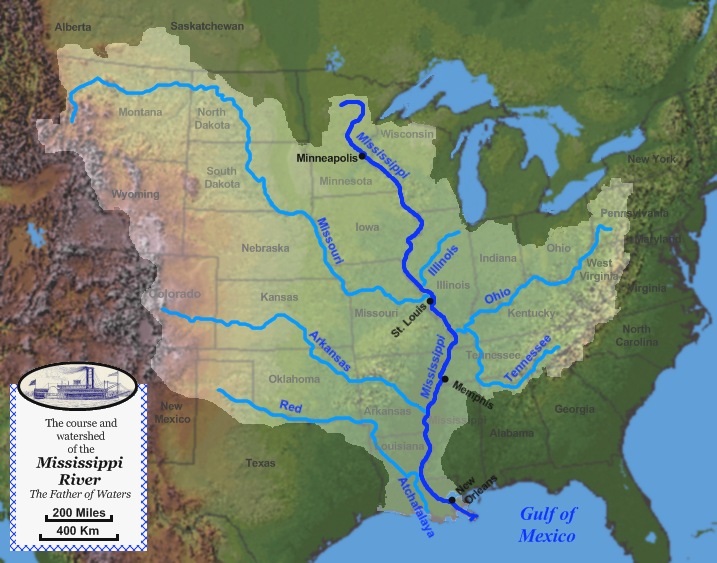
It’s hard to imagine, the kayaker thought,  that this narrow, shallow stream actually becomes a mammoth river. He’d been told the stream was fed by underground springs, and flowed another 2,300 miles from where he paddled. Along the way, more rivers would flow into it. And when the fresh water finally met salt, the river would be over a mile wide.

Mississippi-River

Have you guessed the name of this waterway? It’s the grand and powerful Mississippi. Yet its headwaters is a tame little stream, fed by a few underground springs or fountains.

Such a river offers an illuminating picture of our relationship with God. We are the rivers, and…

…“[God] is the fountain of life,” (Psalm 36:9).

Anglican bishop John James Stewart Perowne (1823-1904) said: “These are some of the most wonderful words in the Old Testament. Their fullness of meaning no commentary can ever exhaust.”

But if we don’t at least try to grasp the wealth of truth in these six words, we stand to lose much profit.

So let’s consider that, as our fountain of life:

  • God the Son is the source of all life, and all life is sustained by him (Hebrews 1:3). Without him, all life would cease.
  • In him we live, and move, and have our being (Acts 17:28).
  • He is like a spring of water welling up to eternal life in our spirits (John 4:14).

Those are wonderful concepts, which Dr. Perowne surely had in mind as he contemplated Psalm 36:9. Yet our triune God is like a fountain of spring water in more ways.

First, a bit of digression. No doubt you’re aware that bottled spring water is a big business these days, supposedly offering water that is much superior to what comes out of the tap. Critics have their doubts.

But our God is 100% perfect! No doubt about it.

 psalm8-how-excellent-your-name0

“He is the Rock, his works are perfect, and all his ways are just. A faithful God who does no wrong, upright and just is he” (Deuteronomy 32:4).

Consider as well the following scriptures, which itemize his excellent perfections. And keep in mind they come to us in unending supply:

  • Presence.  “I am with you always” (Matt. 28:20).
  • Reliability.  “The plans of the Lord stand firm forever; the purposes of his heart through all generations” (Psalm 33:11).
  • Right-Doing. “His righteousness endures forever” (Psalm 111:3).
  • Faithfulness.  “The faithfulness of the Lord endures forever” (Psalm 117:2).
  • Sovereignty.  “He rules forever by his power, is eyes watch the nations” (Psalm 6:7).
  • Love.  “His love endures forever” (Psalm 100:5).
  • Compassion.  “[The Lord’s] compassions never fail” (Lam. 3:22).
  • Protection.  “Save your people and bless your inheritance; be their shepherd and carry them forever” (Psalm 28:9).
  • Stability.  “The Lord is the Rock eternal” (Isaiah 26:4).
  • Joy.  “With joy you will draw water from the wells of salvation” (Isaiah 12:3).
  • Blessing.  “Surely you have granted him eternal blessings and made him glad with the joy of your presence” (Psalm 21:6).
  • Grace.  “God is able to make all grace abound to you, so that in all things at all times, having all that you need, you will abound in every good work” (2 Cor. 9:8).

That’s an even dozen attributes. But since our God is infinite, his attributes are also infinite. We’ve barely begun to explore his perfections. In addition, he will forever expend those attributes for our good (Romans 8:28)—not only outwardly, as he engineers circumstances, but inwardly as we allow his attributes to flow in us.

In addition, God is flowing through us, so we can provide life-giving grace to those around us—grace that expresses itself in love, compassion, and blessing.

And that brings me to another metaphor–for those tributaries that pour into the Mississippi. They remind us of the influence of others in our lives–faithful and mature family members, friends, pastors, and teachers, who come alongside us by example and with wisdom, providing strength and growth.

Mississippi_watershed_map_1

Chances are, those tributaries of the Mississippi are also fed by springs. For every believer, our triune God is the pure, ever-flowing, life-giving source of all that is excellent, and everything we need for a fulfilling life.

Is your heart overflowing with praise?

*     *     *     *     *     *     *     *     *     *

We do give you praise, oh God! You are the fountain of our abundant and excellent spiritual life. You are the only spring that quenches our thirst for fulfillment, joy, peace, and satisfaction.  Thank you for flowing in us, so these desires and more are fully met. And thank you for flowing through us, so we might have the privilege of sharing your living water with others.


(Information about the headwaters of the Mississippi from the Mississippi Headwater Board and wikipedia.org.  Photo & art credits:  www.nature.org; http://www.1mississippi.org; http://www.fbcphil.org; http://www.agodman.com; http://www.wikipedia.org.)


Read Full Post »

Check a map that traces the trek of the Israelites from Egypt to Canaan, and you’ll see a meandering, looping pathway:

Wilderness Journey

God could have taken them along the coast of the Mediterranean Sea, a much more direct route. One commentator says that route would have required just days of travel. A short journey would have been so much easier on everyone, right?  Less chance of fatigue, boredom, and impatience to develop and create problems.

But God had his reasons for a long, winding route.

Reason #1: The Philistines. That’s not conjecture; that’s exactly what scripture tells us. “When Pharaoh let the people go, God did not lead them on the road through the Philistine country though that was shorter. For God said, ‘If they face war, they might change their minds and return to Egypt’ ” (Exodus 13:17).

The Philistines’ territory stretched for fifty miles along the Mediterranean Sea, with the southern border touching Egypt. They were a well-organized, warring people. Five great cities, strategically located throughout their coastal holdings, created an alliance, the famous Philistine pentapolis.

A people suppressed by slavery for four hundred years would not be able to fight such an adversary. The Israelites didn’t have any trained soldiers among them either. Could God have given them a rousing victory over the Philistines anyway? Of course. But he chose not to.

Reason #2: Perhaps God determined his people needed some wilderness experience to train them in his ways and build their trust in him. Instead of quick and easy, God chose slow, step-by-step progress. He was like an eagle, teaching his fledglings by degrees how to fly (Deuteronomy 32:11).

4ffd5fa25fbd4e401e15ae1fe344938f

I wonder if the Israelites thought, Does God have any idea where he’s taking us? What is he DOING?!

In hindsight we can see God’s purpose:

  • To prepare them to be his holy people by giving them the law. (By the way, according to Exodus 19:1, Moses went up to Mount Sinai during the third month after they left Egypt. God was certainly in no hurry to get his children to the Promised Land.)
  • To teach them.  Through the laws he gave Moses, God taught the Israelites how to treat one another and how to worship him. They were to be different from all other peoples on earth.   “I am the Lord your God; consecrate yourselves and be holy,” he said, “because I am holy” (Leviticus 11:44).
  • To challenge them. For example, God let them experience great thirst and hunger. Then he stepped in and supplied their needs. By degrees God taught them to trust him.

I have to admit: my life experiences have paralleled the Israelites’ in a number of ways. I’ve encountered a few winding roads, puzzling detours, uncomfortable wait times, and unanswered questions of my own.

You, too?

Here’s what we can remind ourselves of: God may not direct us by the nearest, fastest way—even though he could. In his omnipotent wisdom, he knows a better way. And he has perfectly sound reasons for his decision.

My choice in the matter? I can plead for the shorter route, complain about the delay, try to forge ahead on my own self-chosen fast track, OR…

…trust my all-knowing, all-wise Heavenly Father.

5db138f980d331b5ee31f939d399464e

Seeing the choices laid out in black and white, here on my computer screen, the decision is easy. However, complete trust in the moment of uncertainty, fatigue, and discomfort is much more challenging.

Perhaps I can encourage myself by reviewing God’s purposes for the Israelites. Chances are, he desires the same results in me:

  • God prepared the Israelites; he may be preparing me for the next chapter in my life.
  • God taught the Israelites; he may be teaching me what the next level of maturity includes.  (Yes, even an old Christian like me still has growing to do!)
  • God challenged the Israelites; he may be challenging me to trust him—in spite of a long, winding road and uncomfortable wait time.

In summary:  As I cooperate with him, God can transform me into a prepared, mature, trusting servant for the next chapter of my life.   I like the sound of that!

You, too?

*     *     *     *     *     *     *     *     *     *

“Who compares with you, O God?  Who compares with you in power, in holy majesty, in awesome praises, wonder-working God” (Exodus 15:11, The Message)?  You are over-the-top trustworthy!  So, in advance, I thank you for the good that will come out of the winding road, detours, and wait time in my life–experiences you ordained for me, before one of them came to be (Psalm 139:16).  I place my hand in yours, my caring, constant Companion.  Help me to focus on your strong grip, not the uncertainties ahead.  Amen.


(Art credits:  www.registrypartners.net; http://www.pinterest.com.)

Read Full Post »

2d3c14e3fd1f6d47776b5a17f69d7fbd


With the Sunday morning congregation, she sang enthusiastically and with conviction in her voice:

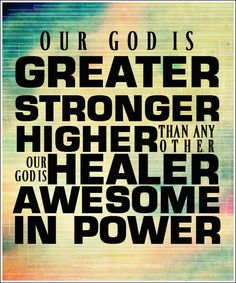
“Our God is greater, our God is stronger,

God you are higher than any other.

Our God is Healer, Awesome in Power,

Our God! Our God!”*

She raised her hands, palms upward, offering her song as an expression of trust.

Other inspiring songs followed. By the time she sat down, her spirit already felt strengthened and uplifted. Then came the encouraging prayer time and an empowering sermon.

“Thank you, Lord,” she breathed while exiting the sanctuary. “My heart overflows with joy. You are the stronghold of my life—of whom shall I be afraid” (Psalm 27:1)?

Then came Monday morning, with its hectic commute to work, dozens of emails to process, a meeting that went too long and accomplished little, a disturbing phone conversation with a disgruntled caller, a notice from the boss asking for the impossible, etc., etc.

In a matter of hours the storehouse of strength was depleted, her joy gone. And on the way home that afternoon, she whispered, “God, I don’t understand. One day I’m on a mountaintop of faith, the next I’m crawling around in the mud of discouragement!”

How do I know the experience of this woman? Because I am she.

There are times I am no better than the Israelites of Moses’ time, allowing frustration, stress, and self-pity to nibble away at my faith.

Just three days after their miraculous rescue at the Red Sea, the Israelites lost their trust in God. (At least they lasted three days!)

Yes, they had witnessed the ten plagues that chipped away at Pharaoh’s resolve to keep his slaves at all costs.  Yes, they had watched as God parted the waters of the sea so they could walk across on dry land. And they saw all Pharaoh’s horses and chariot-driving horsemen drown.

After four hundred years of slavery, the Israelites walked away from the shores of the Red Sea, a free people. And they had done nothing to make it happen. God did it all.

But by the third day, they were tired and very thirsty. They had been traveling through the Desert of Shur and had found no water. Finally they came to Marah where water flowed. But it was too bitter to drink.

Discouragement quickly gave way to complaining. The people railed against their leader, Moses. “What are we supposed to drink?” they cried.

Note what they did not do. They did not cry out to God. But Moses did. God showed him a piece of wood to throw in the bitter waters, and the water became sweet (Exodus 15:22-25).

Scripture tells us this experience at Marah was a test (v.25). Perhaps God wanted to show them that their actions and reactions did not yet back up their words–words they sang when God rescued the Israelites at the Red Sea: “In your unfailing love you will lead the people you have redeemed. In your strength you will guide them” (Exodus 14:13).

Might miserable Mondays be a type of test for me?  Are you facing a test?  And how do we pass such tests?  Listed below are possible strategies.  We can:

  1. Pour out our hearts to God in total honesty as David did: “How long must I wrestle with my thoughts and every day have sorrow in my heart? How long will my enemy triumph over me?” (Psalm 13:1-2).  Honesty with God puts us in a humble frame of mind so he can help us.
  1. Turn our thoughts to expressions of praise and assurance. Again, that’s what David did. “But I trust in your unfailing love,” David affirmed in the same psalm. “My heart rejoices in your salvation. I will sing to the Lord, for he has been good to me” (vs. 5-6).  We cannot help but strengthen our faith when we meditate on the beautiful attributes of our God.
  1. Reaffirm that our Heavenly Father loves to bring good out of every circumstance (Romans 8:28).   We can look for the good in our lives instead of focusing on the negative.
  1. Resolve to be obedient to God’s Word. What he told the Israelites at Marah is true for us, too: “Listen carefully to the voice of the Lord your God and do what is right in his eyes…I am the Lord, who heals you (Exodus 15:26). He is the One who will heal us of discouragement, frustration, and stress–as we follow his instructions.
  1. Take encouragement from the very next stop in the Israelites’ journey: Elim. “There were twelve springs and seventy palm trees, and they camped there near the water (v. 27)” We can remind ourselves that our personal Elims may very well be just around the corner!

What strategies help when you are faced with frustration, stress, or discouragement?  Please share your ideas/experiences in the Comment section below!

* From the chorus of Chris Tomlin’s song, “Our God” (2010).

(Art credit:  www.pinterest.com.)

Read Full Post »


6a00e54f0d380188340133f2ef50d4970b 

One of the delights of grand-parenting is recapturing the joys of childhood. In the name of entertaining the little ones, we get to return to such fun activities as drawing with crayons, molding Play-Doh, and building with blocks.

Little eyes watch in wonder as we sketch a flower, create a clay nest of eggs, or fashion a tall tower. It doesn’t take much to wow the little tykes.

Just the other day I demonstrated for our toddler granddaughter the first rule of constructing block skyscrapers: A solid, level foundation is a must. Without that strong base, the tower will lean and fall.

For centuries, the success of constructing real buildings depended on one foundation stone in particular: the chief cornerstone. Without the sophisticated tools of today, stone masons had to be certain that first stone was level and its corners squared accurately. The rest of construction conformed to that one stone. If the cornerstone was faulty in any way, the building would lean and fall.

The chief cornerstone also carried the weight of the structure. If laid properly, the weight of the building was evenly distributed and the structure remained sound.

Scripture tells us that Jesus is our cornerstone. God said,

“See, I lay a stone in Zion, a tested stone, a precious cornerstone for a sure foundation; the one who trusts will never be dismayed” (Isaiah 28:16).

Oh, my. So much good news in one short verse!

The “stone in Zion” is Jesus, our Rock (1 Corinthians 10:4), who has been tested for two thousand years. Billions of believers over the centuries have found him to be a trustworthy Savior, Shepherd, Friend, Prince of Peace, Teacher, and more.

Jesus is our precious cornerstone—highly valuable to us who believe in him. Think of the excellency of his character and his perfect, holy life. Think of his position. God exalted him to the highest place and gave him the name that is above every other name in the universe (Philippians 2:9). Think of the myriad ways he blesses, guides, comforts, and strengthens us, his followers.

He is also our sure foundation—strong and reliable. In his divine power he gives us everything we need for life. We can depend on his great and precious promises (1 Peter 1:5).

Those who trust in him will never be dismayed; their lives will not topple and fall into ruin. However, commitment to obedience is crucial. If I’m not following his blueprint for life, as provided in the Bible, I’m not demonstrating trust.  (Still working on that!)

Also important to understand: God’s architectural plan does not end with the placement of the chief cornerstone, his Son, in our individual lives. Each of us who believe in Jesus are like a stone or brick in the building of the Church universal.

The truth is, individual bricks by themselves are practically useless. They must be mortared together to realize their full potential. As Christians, we, too, must come together as the Church to realize our full destiny.

We become more significant, not less, as we gather to pray, encourage one another to lead godly lives, work together, and share with others the good news about Jesus.

We also become stronger, able to withstand storms and hardships because the stress from such forces is distributed over numerous bricks. We carry one another’s burdens.

Even better, we have a strong, sure foundation in Jesus. He is more than sufficient to carry the weight of our cares. On him rests the Spirit of power, which he dispenses on our behalf (Isaiah 11:2; Philippians 4:13).

*     *     *     *     *     *    *     *     *     *

Thank you, Father, for the wonderful, rock-solid saints you have brought into my life over the years, shining examples of living stones, spiritually well-hewn, and set apart for your service. I’m thinking of family members, pastors, Sunday School teachers, youth leaders, Bible study teachers, mentors, authors, friends. Countless saints have helped, encouraged, and challenged me to become a living stone for you also.

And oh, Lord Jesus, how I praise you for the sure foundation you provide in my life. When a storm of worry begins to stir, you offer reassurance of your power and strength. When I’m ready to topple from a multitude of cares, you uphold me. When fear wants to consume me, you soothe me with your Word. Over and over, with calm stability, you have steadied me. You are my foundational Rock.

(1 Peter 1:5; Isaiah 28:16; Matthew 6:25-26; 1 Peter 5:7; Isaiah 26:3; Psalm 18:31)

Photo credit:  www.amberdusik.com.

Read Full Post »

“Who has known the mind of the Lord?” Paul asked (1 Corinthians 2:16).

That’s an easy question to answer: Nobody! His intellect and wisdom are far beyond our human ability to comprehend.

After all…

God has worked out the complexities of every living cell–with perfect precision.


yeast-front

(X-ray microscopy combine to picture interior of living cell)


He has engineered a staggering number of specialized plants and creatures, carefully interrelated in a web of reliance upon one another.


wshedcrosscut2


He has created the unfathomable reaches of the universe filled with countless heavenly bodies of immeasurable proportions.


hs-2007-41-a-small_web

(Spiral Galaxy M74)


Such intellect and wisdom to accomplish these feats is incredible.

Yet, at the end of that same verse above, Paul makes a statement even more astounding. In fact, at first glance it seems ludicrous.


Unknown

 “We have the mind of Christ.”


What? How is that possible? His knowledge and wisdom are infinite; ours is markedly limited.

But Paul makes clear:  we have the mind of Christ because he lives within us (Galatians 2:20).


Galatians-21


Not that we can know everything and respond with pure wisdom in all situations. Our perfection is a process that won’t be completed until Jesus returns (Philippians 1:6).

But my heart beats a little bit faster to realize that, each day and for all my tomorrows, I might think more like Jesus, understand more like Jesus, and react more like Jesus.

One particular action will encourage progress: spending time with him, especially in his Word.


Young woman reading bible


Here’s an analogy, though far from perfect. Steve and I have been married a very long time—forty-four years.  At this point, we can finish each other’s sentences, supply missing information or words in a conversation, and sometimes even know what the other is thinking.

It’s as if we’ve acquired a bit of the other person’s mind. And it’s happened bit by bit, over time.

So I repeat: We will have the mind of Christ as we spend time with him day by day– especially in his Word.

And how will we know that his way of thinking is becoming our way of thinking? After all, there’s no measuring stick for spiritual growth.


tapemeasure


Oswald Chambers, in My Utmost for His Highest, posed an excellent question that can help us determine our progress:

“Are other people beginning to see God in my life more and more (p. 78)?” Because a person with the mind of Christ will demonstrate Christ-like behavior.

Perhaps we could take an occasional inventory, based on the fruit of the Spirit (Galatians 5:22-23). The attributes listed in these two verses characterize a person with the mind of Christ–someone who is loving, joyful, peace-filled, patient, kind, good, and so on.  We could ask ourselves, how have I demonstrated these attributes this week?

And what will be the result of cultivating the mind of Christ? “The mind controlled by the Spirit is life and peace” (Romans 8:6).


Romans8_6


Life that is characterized by vitality and purpose.

Peace that includes inner-contentment, freedom from guilt, and security for eternity.

That sounds awfully good to me.

*     *     *     *     *     *     *     *     *     *

Heavenly Father, we praise you for taking us into the high places of blessing in Jesus. That includes this gift: the mind of Christ. And day by day you are transforming us into his likeness, with ever-increasing glory. May I seize this day and its opportunities to think like you, understand like you, and react like you.  

(Ephesians 1:3; 2 Corinthians 3:18)


Art and photo credits:  www.lbl.gov; http://www.chesapeakebay.net; http://www.hubblesite.org; http://www.crosspointenwa.com; http://www.pinterest.com; http://www.changingthefaceof christianity.com; http://www.footsoldier4christ.com; http://www.motivationalquotes.com.


Read Full Post »

DSC05030b

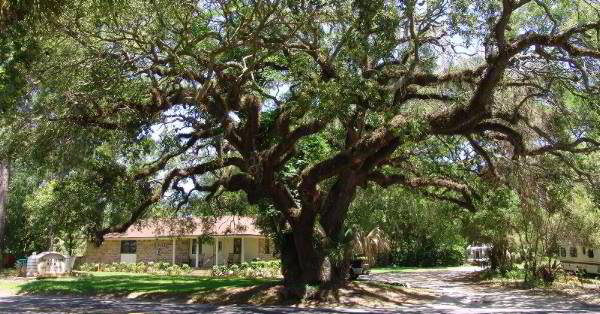
When Steve and I moved from South Florida to north of Tampa, we were delighted to see the abundance of live oak trees. Each one reaches wide with graceful, curving branches that outline intriguing free-form shapes.

Live oaks can grow to be eighty feet tall and just as broad over a life-span of hundreds of years.  The key to their longevity is their root system, which reaches down into the soil about four feet, and extends laterally to ninety feet. Such depth and width offers strong support for the tree.

Of course, roots also provide water and nutrients. A mature oak can take in more than fifty gallons of water per day, much of which evaporates and keeps the tree cool.

Such facts give me greater understanding and appreciation for Jeremiah 17:7-8.

“Blessed is the man who trusts in the Lord,

whose confidence is in him.

He will be like a tree planted by the water

that sends out its roots by the stream.

It does not fear when heat comes;

its leaves are always green.

It has no worries in a year of drought

and never fails to bear fruit.”

Doesn’t that sound satisfying and peaceful? Yet too often I’ve been more like a tumbleweed in the desert—dry, flitting here and there, and anything but peaceful.

Tumbleweed

How do I turn my tumbleweed self into a mature, flourishing tree?

The secret is in the roots. Oak tree roots grow wide and deep; tumbleweeds have none.

I have to send out my roots into the soil of God’s Word. That’s where the nutrients of strength, wisdom, and encouragement will come from. The deeper and wider my knowledge, the more empowered I’ll be to withstand the buffeting challenges of life.

The soil also represents God’s love (Ephesians 3:17-18). I must learn about my loving Heavenly Father and spend time with him in order to know him. As intimacy develops, trust grows.

And when roots grow deep into God’s Word and his love, when we practice his presence, we can remain strong when life turns up the heat…

  • When our kids make foolish choices
  • When the boss’s high expectations ratchet up a few more notches
  • When the paycheck will not stretch another penny
  • When a disagreement becomes an impasse
  • When a decision must be made and the pros and cons swim endlessly in our heads

We express our trust by affirming what we know about God. And we affirm our confidence in him by reviewing his promises–not once a day in a quick morning prayer, but moment by moment.

Roots are continually absorbing water and nutrients. We must do the same by praising and thanking God all day long. Even our concerns can be expressed with praise and gratitude:

“Father, I lift up _______ to you as he looks for another job. We are trusting you to provide, knowing that those who seek you lack no good thing (Psalm 34:10). Our hope is in you because no one who hopes in you is put to shame (25:3). I thank you that he is looking to you, God, and seeking your path. You are a good and upright God; you will instruct ______ in the way you have chosen for him (Proverbs 3:5-6).  Hallelujah!”

As our roots grow deep, our spirits can reach high and strong like live oak branches — in adoration and praise for our trustworthy God.

I am DONE with tumbleweed living!  How about you?

(Photo credits:  www.nativetreesociety.org; http://www.sonoragardensinc.com)

Read Full Post »


7391174590_2875a49ea4


Every time…

…I drive down a street canopied by interlaced trees, I think of the elms standing sentry over the town of my childhood.

Every time…

…I hear Trumpet Voluntary by Henry Purcell, I’m transported back to my wedding day.

Every time…

…I stroke soft velvet, I remember the turquoise velvet dress my mother wore—over fifty years ago.

Every time…

…I eat raspberries, my grandmother comes to mind. She made the best jam with fresh berries from her own bushes in the backyard.

Every time…

…I smell a wood fire, visions of family-reunion picnics float in my memory.

stock-footage-johnstown-new-york-a-large-extended-family-enjoys-a-big-summer-picnic-get-together-reunion

Our senses are powerful catalysts for memories and emotional response.  But out of the five, researchers say the most powerful is the sense of smell.

So when the ancients read this scripture verse, what images came to their minds?

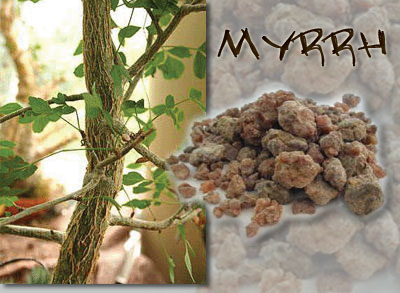
“All your robes are fragrant with myrrh and aloes and cassia; from palaces adorned with ivory the music of the strings makes you glad” (Psalm 45:8).

myrrh


First, a bit of background might be helpful:

Psalm 45 was composed for a royal wedding. Verse eight, about the groom’s robes, might refer to a long-held custom in the Middle East of perfuming one’s clothing, especially for special occasions.

But the imagery of the psalm also speaks prophetically of another “wedding”–between Christ and his bride, the church.

Many of the descriptors for the Groom fit Jesus perfectly:

 “You are the most excellent of men and your lips have been anointed with grace, since God has blessed you forever…In your majesty ride forth victoriously in behalf of truth, humility and righteousness; let your right hand display awesome deeds” (vs. 2-4).

But if the psalm is a word-picture for the relationship of Christ to his church, what is the significance of verse 8? Why the description of his robes, fragrant with myrrh, aloes, and cassia?

Perhaps the pleasing, aromatic scents represent all the pleasing virtues Jesus embodied: his love, wisdom, and grace.

Perhaps they are also an allusion to his burial.  In ancient times, spices were also used in the embalming process.

After the crucifixion, you’ll remember that Joseph of Arimathea asked Pilate for the body of Jesus. He was accompanied by Nicodemus, who brought seventy-five pounds of myrrh and aloes to wrap within the linen burial strips (John 19:38-40).

Why would the same spices be used at Jesus’ death and at the great Wedding Supper yet to come?


marriage_supper


Bible teacher, Ray Stedman, explains: The resplendent wedding described in Psalm 45 is made possible by a death—the death of the Groom himself.  Only out of his death could come this glorious celebration. And now, the fragrance of his beauty is everywhere!

Have you ever hugged someone and then carried away with you the scent of that person’s cologne?

The aroma of Christ should cling to us just like that.

“Everywhere we go people breathe in the exquisite fragrance. Because of Christ, we give off a sweet scent rising to God, which is recognized by those on the way of salvation—an aroma redolent with life” (2 Corinthians 2:14-16, The Message).

*     *     *     *     *     *     *     *     *     *

Oh, Lord Jesus, I delight in the sweet fragrance of all your glorious attributes.  May my words and actions diffuse your exquisite fragrance of life, love and grace to everyone around me.


(Photo and art credits: http://www.saveourelms.com; http://www.footage.shuttershock.com; http://www.dwellingintheowrd.wordpress.com; http://www.divinerevelations.info.)


Read Full Post »

« Newer Posts - Older Posts »

When the House is Quiet

Impressions Becoming Expressions

Mitch Teemley

The Power of Story

Still Traveling

Impressions Becoming Expressions

Living Our Days

Gaining a heart of wisdom

He Said What?!

I'm Patty, and my husband and I are living with our adult son who has autism and epilepsy. I love sharing lessons learned from life around me, especially life with Aaron.

Meditations of my Heart

Impressions Becoming Expressions

Linda Stoll

Impressions Becoming Expressions

Signora Sheila

Where faith meets la dolce vita

Heidi Viars

Finding the Image of God