Feeds:
Posts
Comments

Archive for the ‘Bible Study’ Category

Imagine hosting an ultra-special guest in your home, someone well-loved and well-known. One evening you pass the open door of his room and see him kneeling by the bed in prayer.

His words are barely audible but in that moment, you happen to hear your name.

Would you stop and listen, to see what this respected man considered important for you? I’m thinking you would.

Long ago, someone well-loved and well-known did pray for you and for me—Jesus—and at a most unexpected time, the night before his crucifixion.

Painting by Marcilio Soares

Think of it.  Jesus–the most significant Person in all of history–prayed for you and me.

If I knew that tomorrow would be a day of horrific pain and then death, I’d be praying for strength and courage. But Jesus’ prayer centered on his disciples and then he said:

That’s us—the people down through the centuries who’ve heard the story of Jesus and believe in him as the Son of God.

Are you curious about what Jesus considered important? I’m thinking we should be.

What follows is a selection of those requests, the holy whispers Jesus presented to our Heavenly Father that night:

First, “keep them in your name” (John 17:11).

This is a prayer of protection, that we’d be preserved in the name of God, through his attributes at work for our benefit: his compassion to care for us, power to sustain, goodness to bless, wisdom to guide, and more.

Not that we won’t experience difficulty, but Jesus prayed we won’t be overcome by it.

Second, “possess the full measure of my joy within” (v. 13).

This is not the joy we experience in human relationships or happy events. This is the joy we experience in Christ alone, based on who he is and what he’s done as our Savior, Shepherd, Immanuel (God with us), and Light of life—to name a few of his titles.

These glorious realities can cause joy to well up in our hearts, even while troubles seethe around us. This is what Jesus desires for us.

 Third,protect them from the evil one” (v. 15).

Satan wants to take us out. He tirelessly works to increase our desire for harmful things. He’ll tell us it’s no big deal, offer excuses for the behavior, and minimize our ability to think through the consequences of sinful choices. 

BUT! Jesus has prayed for our protection. We can fight against temptation with God’s Word, just as Jesus did, as well as exercise his power to fight.  We also have the assurance God won’t allow any temptation that we can’t withstand [1].

Fourth, “sanctify them by the truth” (v. 17).

Jesus would have us consecrated to God, growing into his likeness through obedience, and becoming more intimate with him.

How? We begin by spending time in His Word. That’s how we come to know him.

To truly know him is to love him, and to truly love him is to want to please him by obedience.

Many believe following God’s ways will lead to dissatisfaction in life, but in reality obedience leads to peace, joy, and contentment [2].

These are the qualities of life Jesus desires for us.   

Fifth, “be with me and see my glory” (v. 24).

I’m reminded of Christmastime, when empty-nesters such as Steve and me look forward to the full gathering of family, to share in the glories of the season together.

Similarly, Jesus looks forward to the day when we’ll all be together with our Heavenly Father, to share in his celestial glory!

Study further this prayer of Jesus and discover more concerns that he addressed, and then understand: this was not a single prayer offered once for all time.

He is still praying for us continually [3]—holy whispers of love and compassion, with a desire that we experience his best.

Soak in the wonder of such a reality.

P.S. Another quality Jesus prayed we’d experience? Unity. See Jesus’ Prayer for You for a meditation on that topic.


[1] Luke 4:1-13; 2 Peter 1:3 NASB; 1 Corinthians 10:13

[2] Job 22:21; John 15:10-11; Psalm 119:35

[3] Romans 8:34; Hebrews 7:25; 1 John 2:1

Art & photo credits: http://www.rawpixel.com; http://www.commons.wikimedia.org (Marcilio Soares); http://www.commons wikimedia.org; http://www.dailyversers.net (2); http://www.canva.com; http://www.publicdomainpictures.net (George Hodan).


Read Full Post »

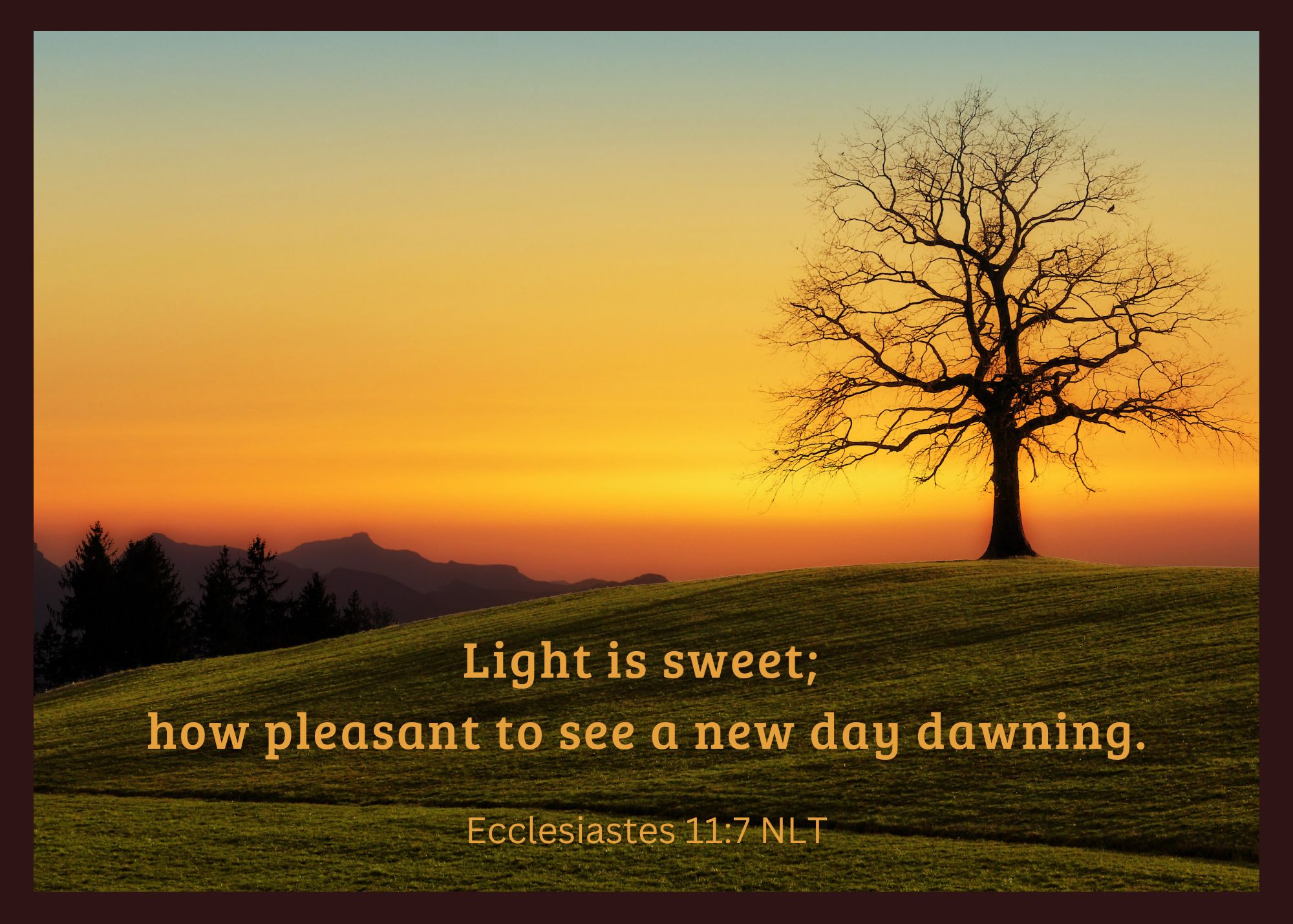
No matter how many sunrises a person might witness over a lifetime, who could tire of the majestic spectacle, with its mesmerizing shades of lavender, scarlet, apricot, and golden yellow—all aglow with the backlight of the sun, and each dawn different than all those before.

I’m filled with wonder as the morning sky begins to fill with light and “the heavens proclaim the glory of God. The skies display his craftsmanship”[1].  He is the supreme Artist.

My favorite sunrise-displays are those when clouds are positioned just right to create magnificent gleaming rays reaching into infinity.

Perhaps God inspired the prophet Malachi with just such a sunrise as he wrote: “The Sun of Righteousness [our Messiah] will rise with healing in his wings for you people who fear my name”[2].

Wings refers to sunbeams, bringing to mind the unending healing of God’s forgiveness, available to all who put their trust in Jesus. He provides for us the dawning of a new day as we choose to move out of darkness and into his marvelous light [3].

Sunrise is also God’s daily reminder that his faithfulness is great and his mercies begin anew each morning . Perhaps he wanted us to understand that his faithfulness to us is as certain and consistent as the sunrise, yet full of surprise and creativity as well [4].

The dawn brings hope, reminding us that:

  • Just as the sun is bigger than any planet in our solar system, so God is bigger than any challenge we might face.
  • Just as the sun always shines whether in full view or behind clouds, God is always with us whether we sense his presence or not.
  • Just as the sun never fails to rise, so the Son will never fail to rise, bringing the light of his salvation, truth, and wisdom.
  • Yesterday’s disappointments and failures are past; a new day with fresh blessings and possibilities has dawned [5]!

In addition to hope, fresh joy comes with the morning light.

But to see the dawn and experience its pleasure, a person must look at the sunrise. If we’re going to see joy and experience its pleasure, we must look to the Son, the source of joy [6]. Then, each day becomes an opportunity to live in wild, blissful amazement of God.

When you do witness a glorious sunrise doesn’t it make you smile—if not on your face, then in your spirit? We can augment that joy with gratitude—not just for a breath-taking dawn, of course, but for all the beautiful, remarkable, and pleasurable things God generously bestows.

Author Roman Payne wrote in celebration of the sun: “O, Sunlight! The most precious gold to be found on Earth!” And surely we’d agree, a golden sunrise especially proves his point.

But just such a sunrise might better serve as a reminder to celebrate the Son:

O SonLight, more precious than all the gold to be found on Earth!

*     *     *     *     *     *     *     *     *     *

I praise you, God the Father, Son, and Holy Spirit, for your light that is brighter than the brilliance of a sunrise! You are the source of all blessing, the brightness of our days, and our guiding Light to show the way. Without you, life is like twilight with dark night ahead. But with you, it is the dawn of morning with the light and warmth of a full day ahead.

(Psalm 84:11 PTP; James 1:19; 2 Samuel 22:29; Psalm 119:105;

last sentence based on Philip Schaff quote.)


[1] Psalm 19:1 NLT

[2] Malachi 4:2a

[3] 1 Peter 2:9

[4] Lamentations 3:23, and an idea inspired by Eugene Peterson, Run with the Horses, pp. 115-116.

[5] Philippians 4:13; Psalm 23:4; 27:1; 119:105, 130; Ecclesiastes 2:13

[6] John 15:11

Photo credits: http://www.pixabay.com; http://www.peakpix.com; http://www.canva.com (2); http://www.rawpixel.com.; http://www.peakpix.com.

Read Full Post »

Where might Jesus have spent his first afternoon after the resurrection? With his disciples or family? That would make sense.

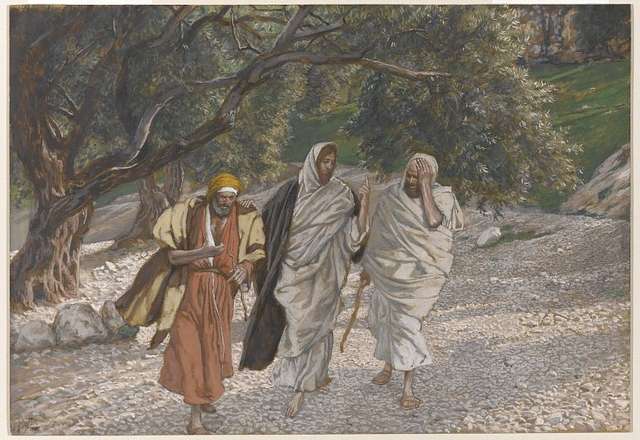
But Jesus chose instead to take a solitary walk–on the road from Jerusalem to Emmaus–and happened upon Cleopas and an unnamed believer.

They didn’t recognize him; God chose to hide his Son’s identity from them. Almost immediately they began to talk about recent events in Jerusalem: Jesus’ death and resurrection.

The companions explained what they knew and expressed their disappointment in the outcome.

“We thought he’d rescue us from Roman rule and establish the kingdom of God he always talked about,” they confessed. “This morning some women and a few disciples went to his tomb and it was empty, but as far as we know, no one has actually seen him.”

Jesus chided them for focusing solely on the prophecies that presented a reigning Messiah who would overtake Israel’s enemies. He started expounding on other scriptures that foretold a suffering Messiah, who’d come to bear the penalty for humanity’s sins.

And as Jesus spoke, their spiritual eyes were opened to see how each prophecy had been fulfilled in Jesus Christ [1].

What scriptures did he share? The Bible doesn’t tell us. But perhaps Jesus included such examples as these:

1.“They conspire against me and plot to take my life” (Psalm 31:13b).

Fulfillment: “Then the Pharisees went out and began to plot with the Herodians how they might kill Jesus” (Mark 3:6).

2. “And the Lord said to me, ‘Throw it to the potter’—the handsome price at which they valued me! So I took the thirty pieces of silver and threw them to the potter at the house of the Lord” (Zechariah 11:13).

Fulfillment: Judas was paid thirty pieces of silver to betray Jesus. When he returned it out of remorse, the chief priests used the money to buy a potter’s field as a burial place for foreigners (Matthew 26:14-16; 27:6-10).

3.  “Dogs surround me, a pack of villains encircle me; they pierce my hands and my feet” (Psalm 22:16).

Fulfillment: Jesus was crucified, his hands and feet nailed to a cross (Matthew 27:35).

4. “They divide my clothes among them and cast lots for my garment” (Psalm 22:18).

Fulfillment: “When the soldiers crucified Jesus, they took his clothes, dividing them into four shares, one for each of them, with the undergarment remaining. This garment was seamless, woven in one piece from top to bottom.

“‘Let’s not tear it,’ they said to one another. ‘Let’s decide by lot who will get it.’” (John 19:23-24).

5. “All who see me mock me; they hurl insults, shaking their heads” (Psalm 22:7).

Fulfillment: Passersby, Romans soldiers, chief priests, teachers of the law, elders, and even those crucified with him all mocked Jesus (Matthew 27:27-31, 39-44).

6. “They . . . gave me vinegar for my thirst” (Psalm 69:21).

Fulfillment: Jesus said, “I am thirsty.” They dipped a sponge in wine vinegar, put the sponge on a stalk, and lifted it to Jesus’ lips (John 19:28-29).

Of course, the hour or two Jesus discussed prophecies with Cleopas and his companion wasn’t nearly enough time to cover them all. The Old Testament contains over 300 passages about him, revealing at least 48 details about his life, death, and resurrection [2].

But the evidence the men heard was enough to prompt this passionate response: “Didn’t our hearts burn within us as he talked with us on the road and explained the Scriptures to us” [3]?

Some have called their reaction holy heartburn!

Have you too felt your heart strangely warmed [4]?

As I’ve reviewed just these six prophecies listed above, my heart responded with the warm glow of wonder and worship. Only God could weave together so many precise circumstances into one Life—a Life that has defeated death for all who believe in him!

May such truths create a fire of devotion within us—holy heartburn that will warm and delight forever!


[1] Luke 24:13-32

[2] A recommended resource for more thorough study: The Moody Handbook of Messianic Prophecy, edited by Michael Reidelnik and Edwin Blum.

[3] Luke 24:32 NIV

[4] That was the description evangelist and theologian John Wesley gave of his spiritual encounter with Jesus (https://www.christianity.com/church/church-history/timeline/1701-1800/john-wesleys-heart-strangely-warmed-11630227.html).

Art & photo credits: “The Pilgrims of Emmaus on the Road,” by James Tissot, Brooklyn Museum; http://www.freebibleimages.org (4).

Read Full Post »

I remember the moment; I don’t remember when it took place . . . perhaps in young adulthood, during my quiet time. A Bible verse caught my attention–John 17:21–causing my eyes to widen and fill with tears.

First, a bit of context. That chapter includes Jesus’ prayer after the Last Supper and mere hours before the crucifixion. He asked his Father to sustain him, to manifest God’s power through his death, resurrection, and ascension, and in so doing, prove that Jesus was the Son of God (vs. 1-5).[1] 

Second he prayed for his disciples—for their protection, joy, spiritual growth, and unity (vs. 6-18).

And then (wonder of wonders!) Jesus prayed for you and me, his future followers!

“I pray also for those who will believe in me,” he said (v. 20, emphasis added).

I read on with eager expectation. What did he ask God to do on our behalf? Strength to endure? Guidance for wise choices? Kind and generous hearts?

Those are worthwhile prayers, but it would seem Jesus left those for us to request.

Instead, he prayed for one over-arching blessing to characterize his believers: unity.

“I pray that they may all be one, Father!

May they be in us, just as you are in me and I am in you.”

John 17:21a GNT

Among all the things we need as his followers, why would Jesus pray for unity? We’ll get to that in a moment.

First, we need to understand he wasn’t praying for uniformity, expecting his followers to agree on every issue. The apostle Paul and his co-missionary Barnabas disagreed over their young companion Mark (Acts 15:37-39), and godly men throughout church history have taken different sides of various issues: Martin Luther with Huldrych Zwingli, John Wesley with George Whitefield, and John Stott with Martyn Lloyd-Jones—to name a few.

It’s doubtful Jesus expected his followers to grow into one big denomination. What he did desire was a spirit of love and an attitude of grace to bind us together, equipping us to overlook differences of preference and tradition. He’d have us focus on what we have in common.

At the Christian university I attended, all students were required to take the course, Philosophy and Christian Thought. One of our textbooks (a very thick one!) was titled, The Protestant Faith. And though the differences between denominations were certainly laid out, I was struck by how much doctrine and theology we share in common—much more than what divides us.

That’s what we need to concentrate on: the foundational truths like those we recite in the Apostles’ Creed, and our purpose of introducing others to Christ as well as taking delight in obeying him and growing more like him.

Even more important? A covering of love—love that admits wrong, forgives grievances, allows for differences of opinion on nonessentials, and doesn’t dishonor others but seeks the best for them.

Last but foremost: we must continually look to Jesus through prayer and worship, privately and publicly.

Perhaps you remember A. W. Tozer’s illustration. If one hundred pianos are all tuned to the same fork, they’re automatically in tune with each other. Similarly, if one hundred worshipers look to Christ, they’re going to be much more in tune with one another than if they focus on other matters, worthwhile as they might be. That would include unity itself.[2]

And now to answer that question, why would unity be so important to Jesus? His reason is revealed at the end of John 17:21.

“May they be one, so that the world will believe that you sent me.”

John 17:21b GNT

The world is plagued by ugly divisiveness, hatred, and vitriol.

Jesus desired his followers to be characterized by the beauty of unity as we strive to love like him—overlooking slights, sidestepping fights, and giving up our rights.[3]

When people witness such beauty, there will be those who desire it for themselves and come to faith in Christ.

*     *     *     *     *     *     *     *     *     *

O Father, point out those areas where my preferences and opinions interfere with my love for your people. Help me put aside differences and focus on areas of commonality. May I play an active part in the beauty of unity within my circle of influence, drawing others to you.   


[1] Barnes Notes on the Bible, www.biblehub.com.

[2] A. W. Tozer, The Pursuit of God, 90.

[3] Patsy Clairmont, Boundless Love, 236.

Art & photo credits: http://www.commons.wikimedi.org; http://www.flickr.com (Long Thien); http://www.commons.wikimedia.org (Peter Swain); http://www.commons.wikimedia.org; http://www.rawpixel.com.

Read Full Post »

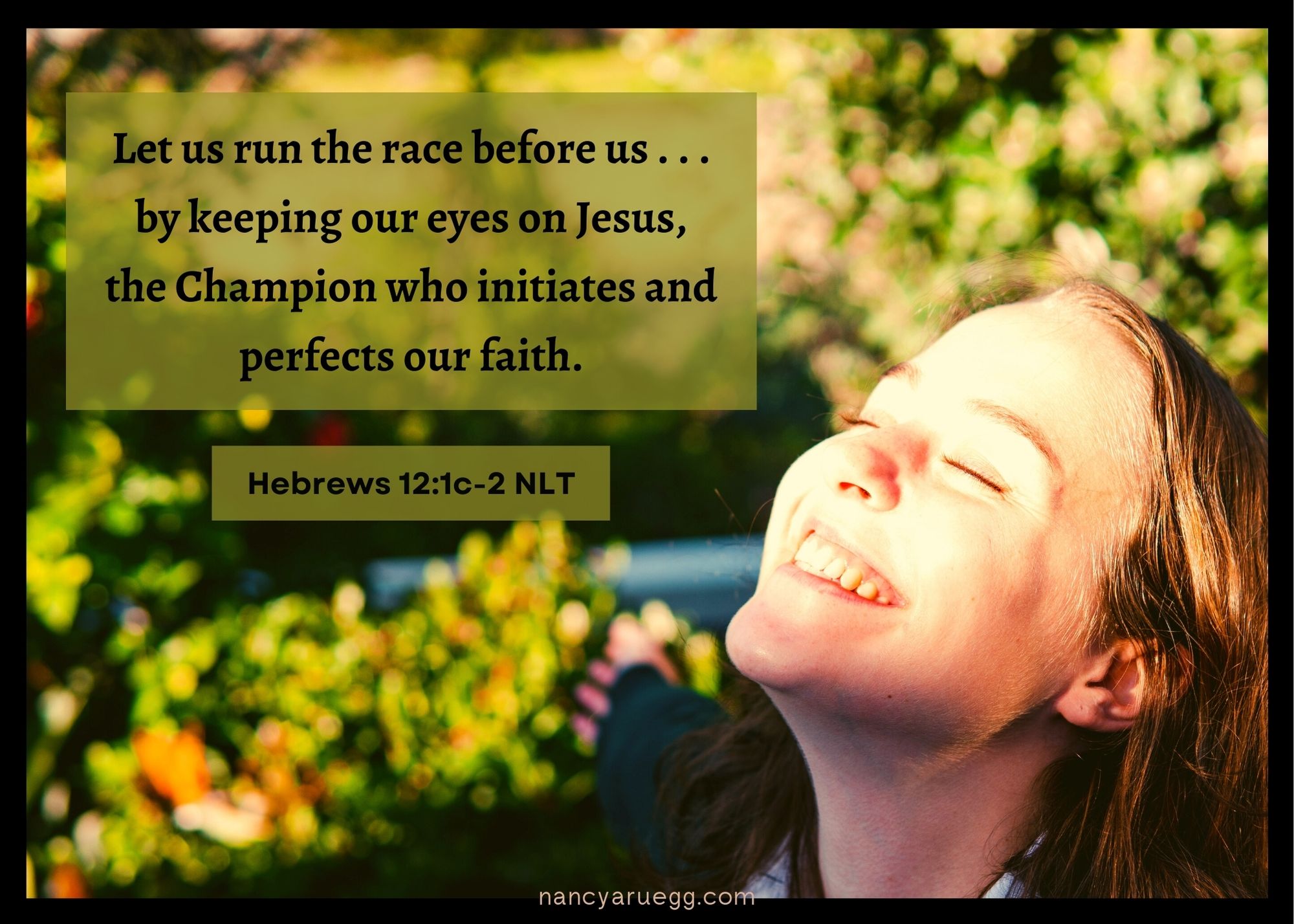
That title comes from the New Living Translation of Hebrews 12:2:

Isn’t that a strength-infusing image? Picture our Lord Jesus wearing a spotless white robe, sitting tall on a regal white horse, a golden sash encircling his chest.  See his face glowing like the sun, eyes blazing like fire. And in his hands rests a scepter of iron. Everything about him conveys authority, glory, and power.[1]

Statue located in Hendersonville, TN at Trinity Music City. Photo by Brent Moore.

But more important than how he looks, of course, is what he does. And that list is extensive. 

We have a Champion on our side—an all-victorious One—who is ready to help us win this race of life as we stay focused on him.[2]

Scripture reveals remarkable truths about our Champion. The following sixteen statements not only create an acrostic, but offer glorious reasons for praise.  

Our Lord Christ is:

Jesus, the Son of God through whom all things were created and through whom we live.[3]

Everlasting Father, protecting and providing for us now and always.[4]

Sovereign over all, reigning with wisdom, righteousness, and mercy.[5]

Unfailing and unchanging in his personal love for each of us.[6]

Savior to all who believe in him.[7]

Overcomer of our arch enemy, Satan, who’s already been defeated.[8]

Upholder of justice and truth, always acting with integrity, always speaking rightly.[9]

Rescuer from every evil attack, who will take us to heaven when the time is right.[10]

Conqueror of death who brought us the good news of salvation, offering life to us that never ends.[11]  

Hero of impeccable character and omnipotent power, willing to help us every moment.[12]

Alpha and Omega, the all-sufficient One who always was and always will be.[13] 

Mighty Warrior King, coming to earth again to establish his glorious kingdom.[14] 

Perfector of our faith, who will never give up on us.[15]

Intercessor for all believers, continually pleading for us before God.[16]

One and only Word of God—communicating and manifesting the magnificence of God to us.[17]

Name above all names, the result of his absolute perfections and humble sacrifice in our place.[18]

And what will be the result as we focus our contemplations upon Jesus our Champion?

His influence will penetrate to the core of who we are.

The Apostle Paul put it this way:

We’ll begin to act and react like Jesus, talk and even think like Jesus.

And in the process we’ll become champions ourselves—victors and conquerors, able to triumph over whatever comes our way.[19] 

*     *     *     *     *     *     *     *     *     *

I praise You, Lord Jesus, for being my Champion. What a glorious relief to know that you—the all-sufficient One–go before me each day, ready to defend, protect, guide, and provide. May I keep my eyes fixed on you to bolster my faith and grow me more like you. I do want to live in confident victory!

2 Corinthians 2:14a; Deuteronomy 31:8;

Psalm 91:14-15; 2 Peter 3:18; 1 John 5:4

Scriptural support for this post:


[1] Daniel 7:9; Revelation 19:11-15; 1:13-16; Daniel 7:14

[2] Philippians 3:7-12; Hebrews 12:2

[3] 1 Corinthians 8:6 NLT

[4] Revelation 21:4

[5] Ephesians 1:19b-21; Jeremiah 23:5; Isaiah 42:1; James 5:11

[6] John 15:13

[7] John 3:16

[8] John 16:33; 1 John 3:8

[9] Jeremiah 33:15; Revelation 19:11; 1 Peter 2:22

[10] 2 Timothy 4:18; John 14:2-3

[11] 1 Timothy 1:10 CEV

[12] 1 John 2:1; Ephesians 1:19; Philippians 4:13

[13] Revelation 22:13; Colossians 1:13-20

[14] Isaiah 42:13; Psalm 72

[15] Philippians 1:6

[16] Romans 8:34 GNT

[17] John 1:1; Colossians 1:15; 2:9

[18] Philippians 2:6-11

[19] 1 Corinthians 15:57; Romans 8:37

Photo credits: http://www.canva.com; http://www.flickr.com (Brent Moore); http://www.dailyverses.net; http://www.commons.wikimedia.org; http://www.canva.com; http://www.dailyverses.net; http://www.rawpixels.com; http://www.commons.wikimedia.org.

Read Full Post »

Pretend you’re on an ocean liner headed from New York City to England.   You and several thousand other passengers enjoy your days at sea, free to choose from dozens of activities—games, shopping, shows, sports, crafts, and more.

You can eat anytime you like, sleep whenever you feel drowsy, make friends among the other passengers or remain solitary. In other words, you make many choices during the voyage, but all the while the ship is headed towards its predetermined destination.

A.W. Tozer gave us this ocean-voyage illustration in his classic, The Knowledge of the Holy, to help us understand God’s sovereignty:

  • Our all-powerful God wields total authority in the universe, just as the shipping authorities exercise sovereignty over the course of a ship.
  • We’ve been given much freedom within the confines of God’s sovereignty to move about and make choices.

Now some folks take issue with God’s control. They want to direct the course of their life-ships.  I for one find great comfort in the numerous, reassuring scriptures about God’s sovereignty.

For example, everything in heaven and earth belongs to Him. He is the glorious head over all, the ruler of all things (1 Chronicles 29:11-12). That includes us–those who know Jesus and belong to the family of God.

As our Heavenly Father, he provides for our needs, guides us through decisions, bestows many blessings, and more. What encouraging truth! The Almighty God of the universe is in charge of our lives as we submit to him. We don’t have to navigate alone.

The key, however, is submission. God is a gentleman and will not force himself upon us. He’s chosen to limit his sovereignty, to allow humans free choice.

Another reassuring truth: God is totally competent. We’ve all known inept leaders who couldn’t fulfill their responsibilities.

But our Ruler is supremely capable. Nothing is too hard for him (Jeremiah 32:17).  As we focus on his complete sufficiency, our worries shrink in significance.

In addition, no plan of God’s can be thwarted (Job 42:2).   What God says, happens.

His sovereign plan is efficient and goal-oriented. He works out everything in conformity with the purpose of his perfect plan (Isaiah 25:1).

God’s sovereignty is also employed with infinite wisdom (Job 12:13).  No foolish decisions come from God’s throne!

And contrary to appearances, he does maintain over-arching rule on humankind (Daniel 4:35).

Consider how circumstances must have seemed to the people of Judah as the barbaric Babylonians destroyed Jerusalem in 586 B. C., murdered all the nobles, and took thousands of Jewish captives to Babylon.

That wasn’t an isolated case of oppression either. Good people have suffered at the hands of the wicked for eons, and it breaks our hearts. It breaks God’s heart too (Isaiah 63:10). 

Our question of why God allows bad things to happen to good people doesn’t always get answered. We’re not privy to everything God knows or all the reasons behind his decisions (Romans 11:33-36).

What we do know is this: evil never wins in the end. Every evil empire of history that rose in prominence and power eventually fell in ruin. Our sovereign God knows what he’s doing.

And he will have the last word.

So when the squeaky wheels of worry, doubt, or fear begin to spin in your head, and you wonder, Who’s in Charge Here?, apply the oil of gladness, delighting in who God is—your all-powerful, all-knowing, all-wise, and yes, in-control God!

Take joy in the knowledge that “if God is for us, who can be against us” (Romans 8:31)?

And rest in thIs affirmation: “from him and through him and to him are all things” (Romans 11:36, emphasis added).

*     *     *     *     *     *     *     *     *     *

Sovereign Lord of the universe, I bow in worshipful wonder of your magnificence. Your greatness shatters all boundaries! I stand in awe of your vast power and infinite wisdom, always at work in the world.

But for those times when I cannot understand your plan or your ways, help me stand in the truth of who you are.

(Revised and reblogged from February 26, 2015, while we enjoy the company of out-of-town family.)

Photo credits: http://www.commons.wikimedia.org; http://www.heartlight.org (2); http://www.dailyverses.net; http://www.canva.com; http://www.dailyverses.net.

Read Full Post »

Oh—you’ve never heard of yabbits? Not to worry. If I change the spelling and offer a few examples, you’ll instantly understand. Yabbits are the “Yeah, but . . .” statements that create havoc in our minds, much like rabbits create havoc in a backyard garden.

Who–ME?

For example:

  • YEAH, I know worry doesn’t help . . . BUT I can’t seem to shut it off.
  • YEAH, I know the Bible teaches that God is good . . . BUT what about all the evil in the world?
  • YEAH, I know I’m supposed to forgive . . . BUT this hurts!
  • YEAH, I know Romans 8:28 about all things working together for good . . . BUT I’m not seeing it in this situation, and it’s been going on a long time.
  • YEAH, I know some Christians seem to live in a bubble of joy . . . BUT I’m not feeling it!

These yabbits have names: Distrust, Disbelief, Disappointment, Discouragement, and Discontentment. They’re almost as challenging to keep out of our minds as rabbits are from our gardens.

Of course, the first line of defense against rabbits is a strong, deeply-implanted fence. For yabbits, that fence is scripture—promises and truths deeply implanted in our spirits, that can stand guard when those pesky Yeah-but statements come to devour our faith. Scriptures such as these:

For those times when DISTRUST wants to nibble at your faith, turn to Psalm 9:9-10.

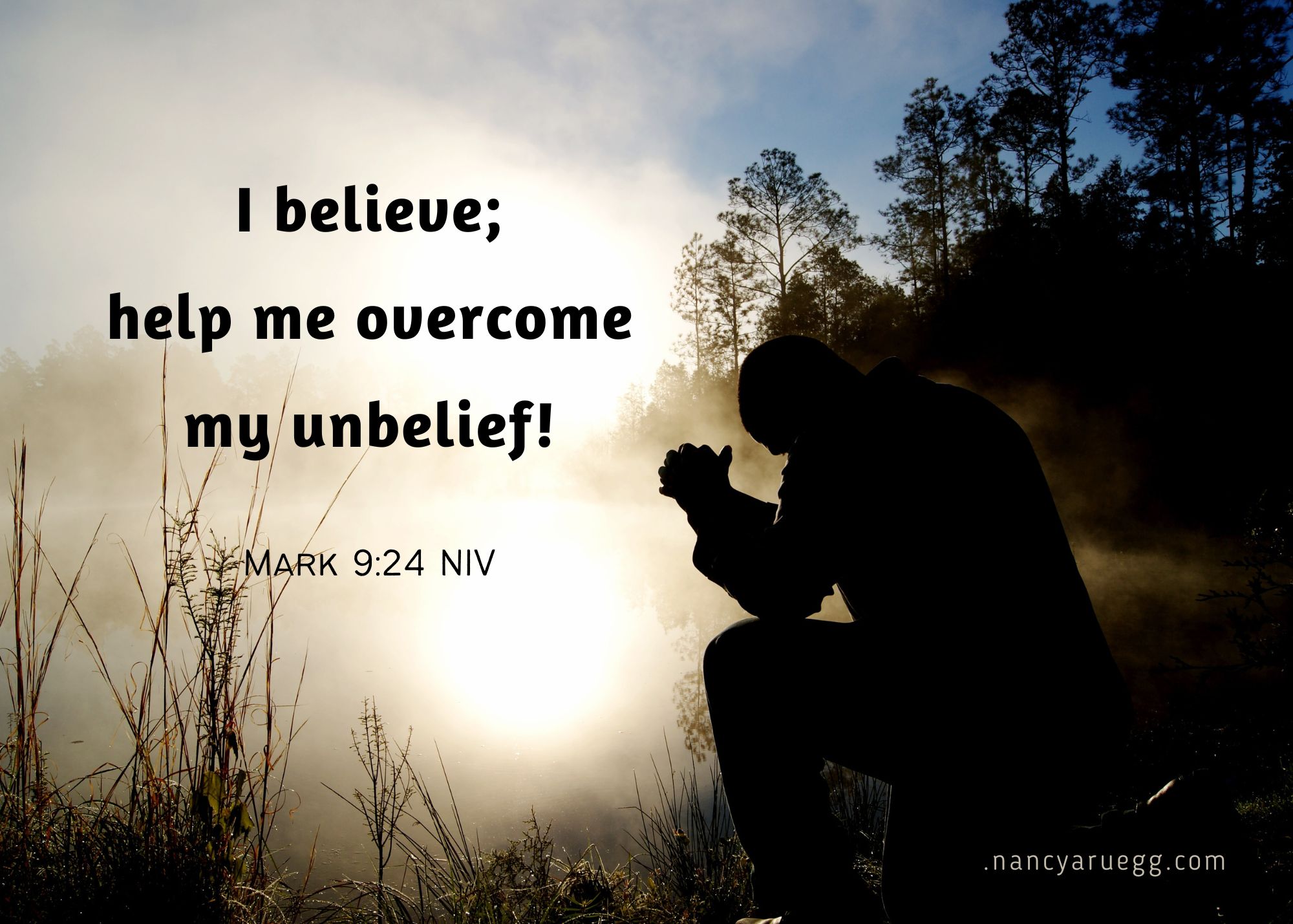
Keep out the yabbits of DISBELIEF with Mark 9:24. [1]

When DISAPPOINTMENT tries to invade our thoughts, we need to remember such affirmations from God as Isaiah 55:8-9.

The yabbits of DISCOURAGEMENT can be turned away with 2 Corinthians 4:16-18.

And last, DISCONTENTMENT can be kept at bay when we adopt Habakkuk’s attitude.

We’d also do well to follow Rev. Charles F. Deems’ (1820-1893) recommendation, as we take on these yabbits:

Believe your beliefs and doubt your doubts.

Most people believe their doubts and doubt their beliefs.”

Of course, the scriptures mentioned above are just a few examples out of many. More scripture planks will create an even stronger fence.

Someone may ask, “How can we know our trust in scripture is well-placed?”

Whole books have been written about the reliability of scripture, but here’s a short, worthwhile article to introduce the topic: “Three Reasons Why the Bible Can Be Trusted.”

We can also bolster our faith with the testimonies of others who’ve embraced the power of scripture:

  • “Every year I live—in fact nearly every day—I seem to see more clearly how all the peace, happiness, and power of the Christian life hinges on one thing. That one thing is taking God at His word, believing He really means exactly what He says, and accepting the very words that reveal His goodness and grace.”—Frances Ridley Havergal, English poet and hymnwriter [2]
Frances Havergal (1836-1879)
  • “Take all of this Book that you can by reason and the balance by faith, and you will live and die a better man. It is the best Book which God has given to man.”—Abraham Lincoln [3]
  • “In the Bible I find a confidence mightier than the utmost evil.”—Helen Keller [4]
  • “The Bible is the book of my life. It’s the book I live with, the book I live by, the book I want to die by.”—N. T. Wright, Biblical scholar and Anglican bishop [5]
N. T. Wright (1950- ____)
  • “The Bible creates endurance. Its promises lift the heart and its panoramic insights strengthen the will.”—Pastor and author Timothy Keller with his wife Kathy [6]

Of course, the occasional reading of a scripture passage won’t suffice. That would be like trying to build a fence with slices of Swiss cheese–too flimsy and full of holes.

No, it’s Bible study and meditation that creates a sturdy fence.

Sound boring?  Hardly.

The Bible is worth all the other books

which have ever been printed.

–Patrick Henry

(1736-1799)

With faith, diligence, and a prayerful heart, every student of the Bible finds that Henry and countless others have been right. In fact, I’ve never met an earnest seeker of scripture-truth who later regretted the time they’d spent absorbing God’s Word.

And when we follow their example, the yabbits prove much less troublesome.

What Bible verse helps keep the yabbits out of your garden of faith? Please share in the comment section below!


Notes:

[1] The father speaking these words was admitting that doubts tainted his trust, yet Jesus still performed the miracle. We don’t have to be perfect pillars of faith for him to intervene for us!

[2] Quoted in Streams in the Desert by L. B. Cowman and edited by Jim Reimann, 127.

[3] Ibid.

[4] https://digitalcommons.liberty.edu/cgi/viewcontent.cgi?article=1070&context=owners_manual

[5] https://www.crosswalk.com/faith/spiritual-life/inspiring-quotes/25-quotes-from-influential-christians-about-the-bible.html

[6] The Songs of Jesus, 310.

Photo credits: http://www.rawpixel.com; http://www.pexels.com; http://www.heartlight.org; http://www.canva.com; http://www.dailyverses.net; http://www.flicker.com; http://www.dailyverses.net; http://www.flickr.com (2); http://www.pexels.com.

Read Full Post »

In 2 Peter 1:17 the apostle calls God, “the Majestic Glory.” Isn’t that an inspired name for God?

This week I chose to use each letter as a portal into aspects of his majestic glory—other names that reveal his Personhood. With each one, my awe for Almighty God expanded.

See if your spirit responds similarly, as you consider God as the:

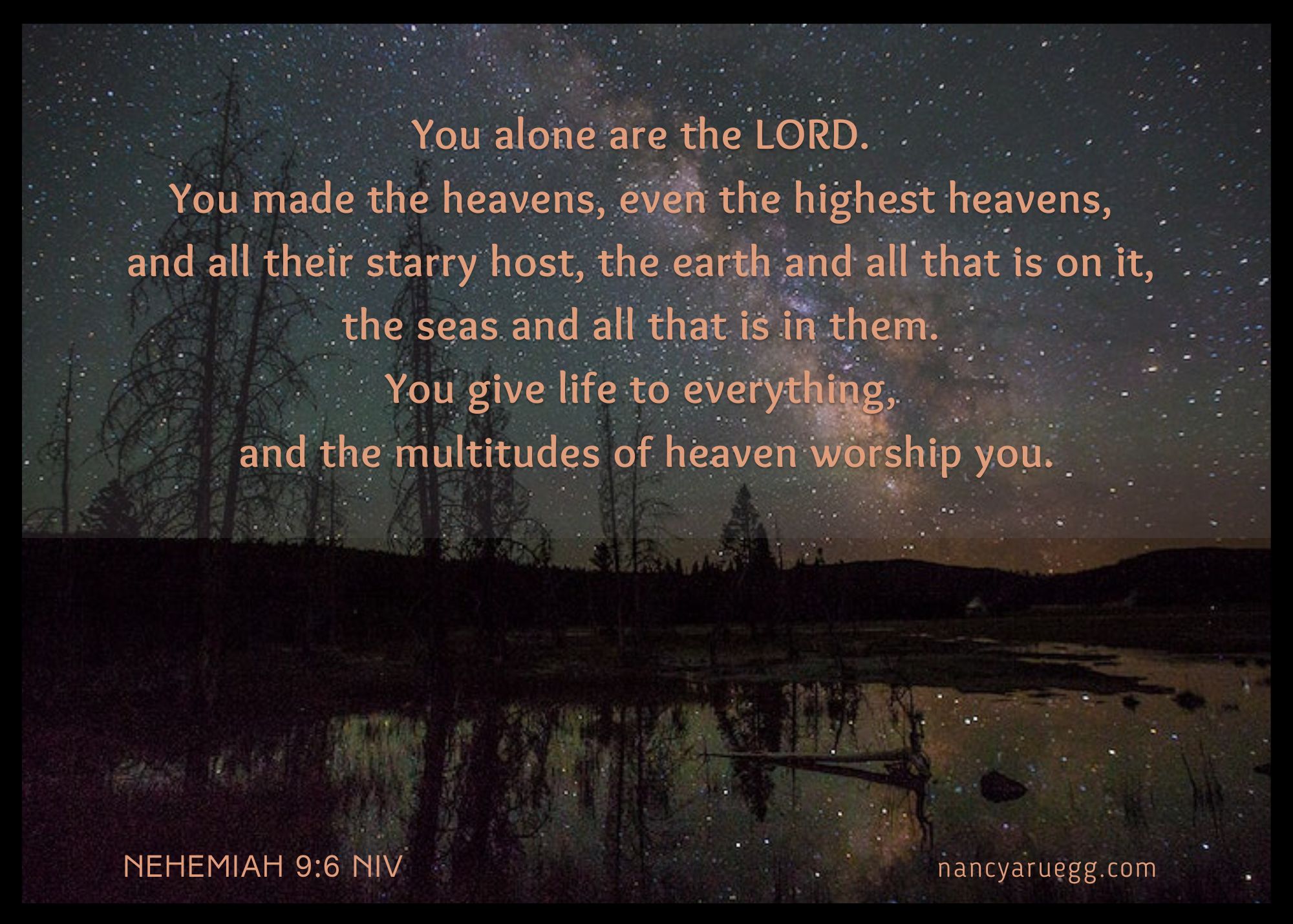
Maker of All Things (Nehemiah 9:6)

He is responsible for every star in the heavens (200 billion trillion of them, thereabouts), every tree on our planet (all 3 trillion, give or take) and every fish in the seas (among 34,000 or so species)!

A rchitect of Heaven (Hebrews 11:10)

Here on Earth we marvel at God’s handiwork in the towering mountain peaks, delicate butterflies, and far-reaching rainbows. Try to imagine the fresh beauty, new wonders, and absolute perfection he’s prepared for us in heaven!

Jealous (Exodus 34:14)

God’s jealousy is simply passionate eagerness to protect what belongs to him, what is precious to him—you and me. He doesn’t want us following after such false gods as greed, self-gratification, or popularity that will never satisfy. Only he can.

Everlasting God (Genesis 21:33)

In contrast to this ever-decaying world, our God’s perfections never change and his mercies will never end. He is always and eternally available to us.[1]

Song (Psalm 118:14 ESV)

Think of song as a synonym for joy. He is the Author and Giver of joy, even in difficult times. In fact, “He uses troubles to show where true joys are to be found—in him.”[2]

True God (John 17:3)

He’s the one and only Creator and Sustainer of the universe. Yet, as holy, powerful, and awe-inspiring as he is, God invites us to know him—to pull up a chair to his table and talk with him.[3]

I AM (Exodus 3:14)

With this name that encompasses all his glorious complexities, God makes clear: “I AM the God of absolute power and sublime perfection, abiding faithfulness and assured reliability, unfailing love and generous benevolence.” Of course, these descriptors just scratch the surface of his infinite glory!

Comforter (Isaiah 51:12)

We can take comfort in the knoweldge that, even in the dark pit of emotional pain., we are not without hope. God always comes alongside to help us endure until it’s time to bring us out of those depths. And then, when we stand at last on the solid ground of restoration, we experience the exhilaration of greater faith and the enrichment of wisdom-from-experience.

Gardener (John 15:1)

Jesus often used figurative language in his teaching. One time he compared himself to a grapevine and called his Father the Gardener/Vinedresser.

Of course, our God knows intimately what we–the branches–need.  He supplies streams of living water to continually nourish and refresh, and he provides optimum conditions for growth, in order to produce the best yield of the fruit of the Spirit within us.

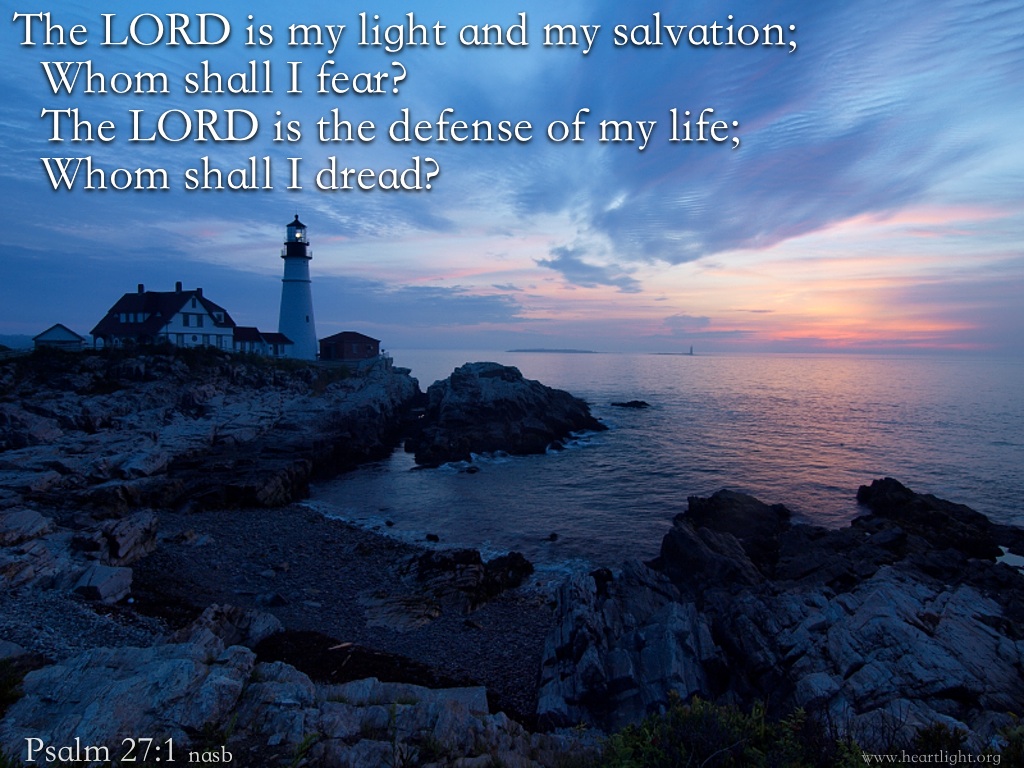
Light  (Psalm 27:1)

His Light reveals the way on the dark path ahead, lifts the shadows of hurt and despair, and guides us through “the grayness of doubt and uncertainty.”[4]

Only Wise God (Jude 1:25)

Yes, there is darkness and confusion in our world. Wickedness seems to be winning in the battle between good and evil. BUT! Our all-wise God knows what he’s doing—in our personal lives and in the world at large.

When the time is right he’ll dispel the darkness with his dazzling light and bring order out of confusion. One day he’ll rid the world of evil once and for all.

Revealer of Truth (John 16:13)

Our God is the “possessor and giver of all truth. Truth is not men’s discovery; it is God’s gift. . . At the back of all truth there is God.”[5]

And the more we avail ourselves of his truth in scripture, the more we treasure it.

Your Very Great Reward  (Genesis 15:1)

How rich we are because God is in us and with us, wielding his glorious attributes for our best good. How poor we are without him.[6]

Look upon God in all his MAJESTIC GLORY. This is your Heavenly Father who loves you with an everlasting love!

Breathe in the wonder.


[1] Lamentations 3:22; Isaiah 41:10

[2] Timothy Keller with Kathy Keller, Songs of Jesus, 200.

[3] 1 Corinthians 8:16; Colossians 1:17; Jeremiah 33:3

[4] Iris Hesselden, quoted in Grandma’s Inspirational Recipes, 40.

[5] William Barclay, The Daily Study Bible, The Gospel of John, Volume 2, 229.

[6] MacLaren’s Expositions

Photo credits: http://www.rawpixel.com; http://www.dailyverses.net; http://www.flicker.com; http://www.dailyverses.net; http://www.canva.com; http://www.pixnio.com.

Read Full Post »

Thomas Jefferson gave us this bit of wisdom:

 https://www.azquotes.com/quotes/topics/brevity.html

Note how the following authors demonstrate this most valuable of all talents:

  • “It is good people who make good places.”—Anna Sewell, Black Beauty
  • “Trials come to prove and improve us.”—St. Augustine
  • “Change always comes bearing gifts.”—Price Pritchett

Conciseness contributes to effectiveness, agreed?

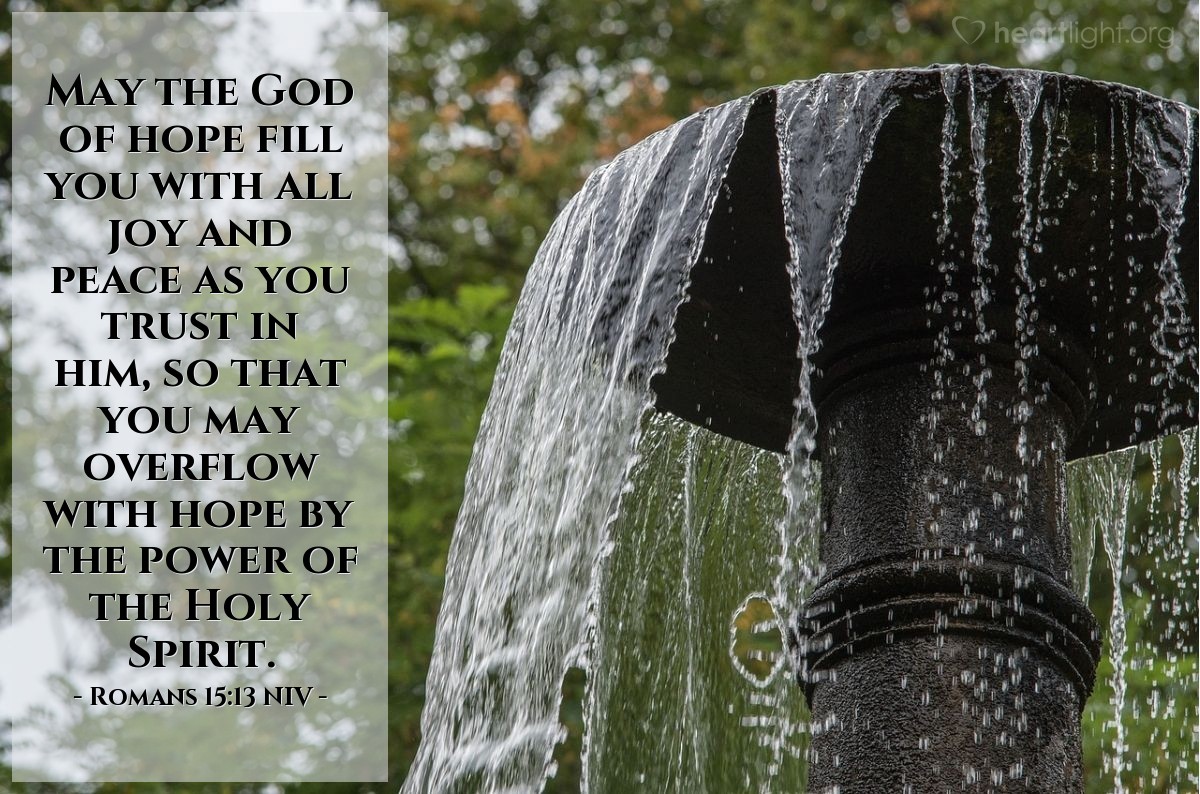
In Romans 15:13, the Apostle Paul wrote a magnificent but concise blessing for the Christians in Rome. He brought together five key concepts of our faith—hope, joy, peace, trust, and power—in just thirty words or so, depending on the translation:

Whole books have been written to expound on each concept. But since this is a blog post, not a treatise, I’ll try to keep it short—and concise!

HOPE

Our Christian hope is not wishful thinking; it is confident reliance on the sacred certainties of our Heavenly Father.

Paul calls him our God of hope because of his glorious attributes manifested in our lives—his omnipotent power, gracious mercy, continual patience, lavish kindness, and absolute reliability—to name a few.

And with statements of faith we can bolster our hope—statements such as these:

  • “God is kind and good, wise and powerful. All his attributes are always at work for my benefit.”
  • “God is accomplishing purpose in these circumstances, just as he always does.”
  • “He will bring me through this situation, and I’ll be a better person for it.”

JOY

Joy is not the absence of all misery and the presence of every whim; joy is found in the presence of God.

Sound silly? Talk to an old saint who has walked with Jesus many years—who’s felt the Lord’s presence surrounding him, heard God’s whispers in his heart, and experienced his guidance and provision again and again. 

This saint will tell you: the pleasures of this life don’t begin to compare to the soul-delight of intimacy with God.

PEACE

Peace is not found in circumstances; it’s found in a Person, the Prince of Peace. The better we know him, the better we know peace.

Tension decreases as we affirm:

  • He is completely trustworthy.
  • He knows everything; he’s in control of everything.
  • He takes pleasure in blessing us with all that we need.
  • He is with us to comfort, strengthen, and encourage.
  • Even in the midst of difficulty, we can experience his peace. In fact, it’s a promise.

TRUST

It’s God’s part to work all things for good; it’s our part to trust.

The question becomes, What can I do to grow in trust?

The answer: express gratitude. “The foremost quality of a trusting disciple is gratefulness”[1]

So thank God, even in the midst of frustration, disappointment, heartache, and pain. “There’s a good God leading, working all things into good. It is safe to trust”[2]!

POWER

The power to thrive does not come from within ourselves; it comes from the power of the Holy Spirit.

Do circumstances appear impossible to rectify? Think on the power of God. He scatters the stars in space. He breathes life into every creature. He provides everything necessary to sustain our little planet.

It’s that kind of absolute, unlimited power that will see each of us through every crisis until we’re home with him.

And so, in one concise verse Paul majestically highlights five pillars of the abundant life.

When we embrace the hope, joy, and peace that God offers, when we trust in him with expectancy and resolve, when we pray for his power to be released in and through us, our lives and outlook will become radiant and alive[3]!

Doesn’t that sound like a glorious way to live?

Scriptures for further reflection:

Hope–Psalm 145:8-9; Daniel 2:20; John 5:17; Philippians 1:6; Romans 8:28; James 1:2-4

Joy–Psalm 16:11; Psalm 71:5-8

Peace–Deuteronomy 32:4; 1 John 3:20b; Jeremiah 31:3; Philippians 4:19; Deuteronomy 31:8; Isaiah 40:29-31; Philippians 4:6-7

Trust–Proverbs 3:5-6; Psalm 9:10; 28:7; 112:7; Colossians 2:7; Psalm 110:4-5; 1 Peter 1:6-7

Power of the Holy Spirit–1 Corinthians 8:6; Psalm 8:3; Job 12:10; Psalm 46:1

Notes


[1] Brennan Manning, Ruthless Trust, 24.

[2] Ann Voskamp, 1000 Gifts, 155.

[3] The last clause is based on Touchstone’s revised version (1995) of the J. B. Phillips’ translation for Romans 15:13.

Art & photo credits: http://www.azquotes.com; http://www.heartlight.org; http://www.canva.com; http://www.pxhere.com; http://www.dailyverses.net; http://www.rawpixel.com; http://www.canva.com; http://www.pxhere.com.

Read Full Post »

Stuffed pork tenderloin, prepared by our son.

Our son became interested in cooking while attending university, and he’s been experimenting ever since. Now guests often say his fare is better than what many restaurants offer.

Father’s Day last Sunday was no exception. We enjoyed a sumptuous dinner off the grill: perfectly-seasoned, tender steaks; thick, golden, onion slices sprinkled with bleu cheese and slivered almonds; and polenta squares topped with lightly-sauced mushrooms.

The big surprise came skewered: Brussel sprouts alternated with radishes. I’d never eaten the latter cooked, but these were amazing—nothing like their raw flavor.

Our daughter-in-law creates memorable desserts. One time she constructed a rainbow cake—six layers of jewel-toned deliciousness under a cloud of butter cream frosting. All from scratch of course.

H.’s cake looked every bit as perfect as this one.

Now what if E. and H. invited new guests unfamiliar with the stellar meals these two can produce. And what if E. shared that the menu would include onions with bleu cheese and cooked radishes.

These unaware invitees might say, “Uh, no thanks, our schedule is really tight, plus we have other plans.” Later to themselves they’d likely comment, “E. and H. actually eat that stuff?! It sounds awful!”

But they’d miss out on a memorable meal.

God offers us gourmet cuisine too, but of a different variety.

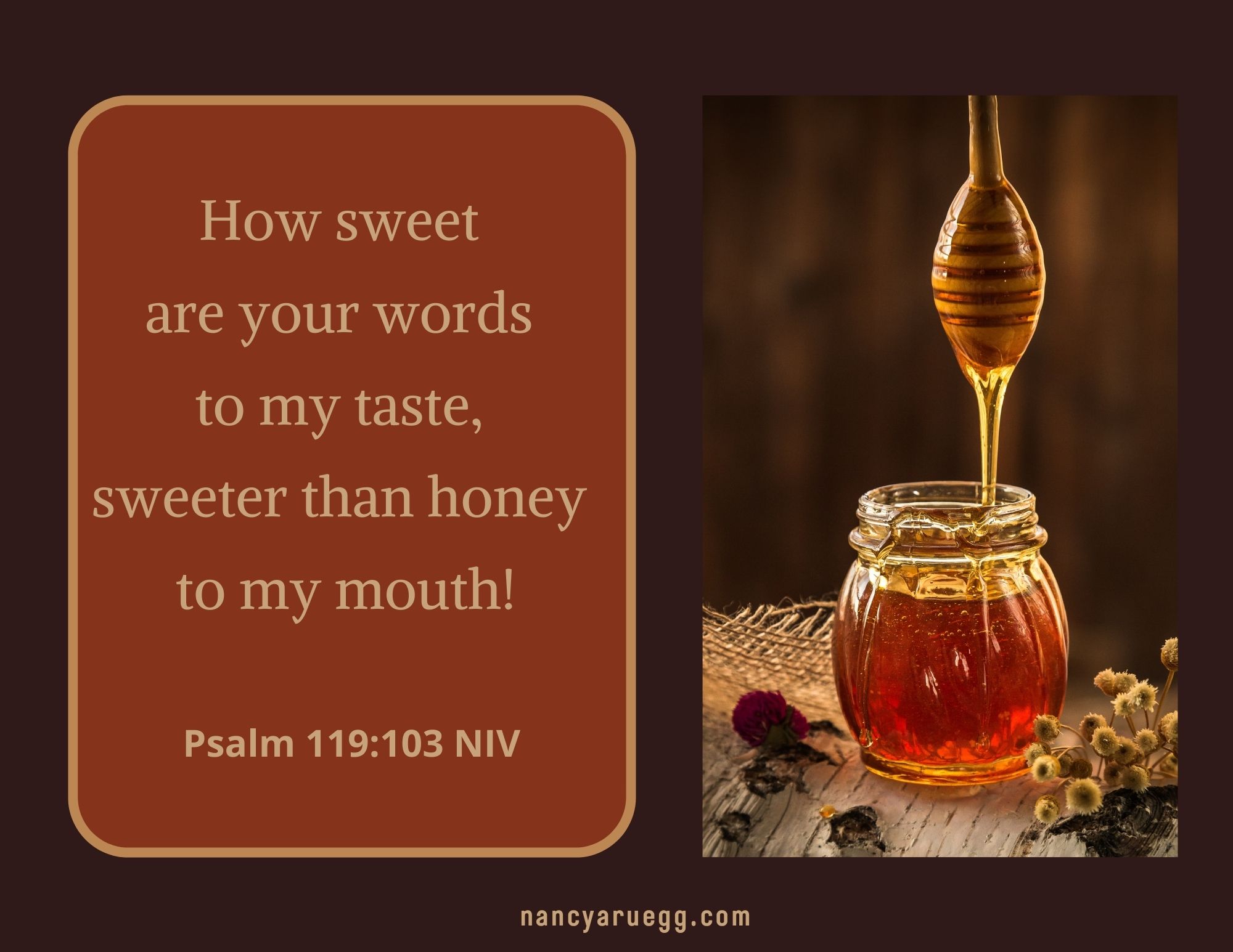
“Open wide your mouth and I will fill it,” he says. “I would feed you with the finest of wheat; with honey from the rock I would satisfy you” (Psalm 81:10, 16).

God offers fine food for our souls, found first of all in the Bible. Some people believe the Book is out-of-touch and irrelevant, containing whole sections of unintelligible gibberish.

These folks are like those invited dinner guests, turning down a marvelous opportunity because the offerings sound unappealing. If they’d only come and try the dishes new to them, they’d be more than pleasantly surprised.

God’s soul food also includes wonderful surprises: useful wisdom, uplifting encouragement, fortifying support, and sweet comfort. We miss so much if we let a busy schedule and other interests interfere with the feeding of our souls.

A well-read Bible is a sign of a well-fed soul.

–Unknown

Just one of my father’s well-read Bibles.
Note the numerous and tiny comments he wrote in the margins.

To make time, we may have to give up something—like those long minutes on social media or watching TV. During my years as a teacher, making time meant getting up earlier than everyone else in the house. And the ten years I commuted a half-hour each way, the alarm sounded at 4:30 a.m.

But it was not a hardship; I just went to bed earlier. The feast each morning was well worth it. (For an example of one feast, you can read from an earlier post, “Down the Aisle of Your Years.” Scroll down to just below the James 1:17 image.)  

Another problem: The Bible looks like a huge buffet to some. They wonder where to start. Add all those puzzling cultural and historical references, and it’s tempting to give up before turning the first page and taking the first bite. What we may need are a few utensils.

Just like a shrimp fork or steak knife make it easier to eat those foods, certain tools help us consume God’s Word. Many are available online. For example, www.biblestudytools.com or www.studylight.org offer word definitions, cultural and historical background, commentaries, and more.

Bible study guides also help us dig into the sustenance the Bible has to offer. A few recommendations include:

  • NavPress LifeChange series, with each study focused on a book or two of the Bible. Luke is a good place to begin, with its many stories and teachings of Jesus.
  • LifeWay Press also produces worthwhile Bible studies, including an overview by Angie Smith, titled Seamless. Others I’ve enjoyed include: Believing God by Beth Moore and Discerning the Voice of God by Priscilla Shirer. You can’t go wrong with studies by these women.
  • Another LifeWay Press classic? Experiencing God by Henry T. Blackaby and Claude V. King. Millions of people have already benefited from this study.
  • Harper Christian Resources offers 40 Days through the Bible from Lysa Terkehurst and her team. They provide an overview by theme, including: identity, freedom, and fulfillment.

What if, when E. and H. invited dinner guests and shared what’s on the menu, I was there to add, “Oh, you’ve GOT to come. I’ve eaten at their house numerous times, and it’s always delicious!” Might they be more likely to come? Perhaps.

In the same vein, consider this post my affirmation of what God has to offer in His Word. I’m here to say, “You’ve GOT to read it, study it, digest it. I’ve dined at God’s table of truth countless times over the decades and have never been disappointed!”

What Bible study materials or methods have you found nourishing to your soul? Please share in the comment section below!

Art & photo credits: Nancy Ruegg; http://www.flickr.com (2); Nancy Ruegg; http://www.picryl.com; http://www.freebibleimages.org; http://www.canva.com.

Read Full Post »

« Newer Posts - Older Posts »

When the House is Quiet

Impressions Becoming Expressions

Mitch Teemley

The Power of Story

Still Traveling

Impressions Becoming Expressions

Living Our Days

Gaining a heart of wisdom

He Said What?!

I'm Patty, and my husband and I are living with our adult son who has autism and epilepsy. I love sharing lessons learned from life around me, especially life with Aaron.

Meditations of my Heart

Impressions Becoming Expressions

Linda Stoll

Impressions Becoming Expressions

Signora Sheila

Where faith meets la dolce vita

Heidi Viars

Finding the Image of God