Feeds:
Posts
Comments

Archive for the ‘Bible Study’ Category


maxresdefault


Three-year old Elena (our granddaughter) had much to report about preschool last Thursday:

“Firemen came and they brought their fire truck! We got to hold the hose!”

Later Elena recited what to do if a fire occurred: 1) Don’t open a hot door, 2) To get out, crawl along the floor under the smoke, 3) Stop, drop, and roll if clothes catch fire, and 4)…


mutcd_d12-4


“…CALL 9-1-1!” she announced loudly and firmly.

Isn’t it a comfort to know that with three quick taps on our phones we have access to emergency help almost anywhere at any time?   The process to develop such a system, however, was not quick. It took forty-some years to fully install the Emergency Call Answering System, from its inception in the 1950s to almost complete coverage of 911 service across all America by the 1990s.

On the other hand, Pastor Arnold Prater pointed out years ago in one of his sermons that King David of Bible times called 9-1-1.

Did you know that?  I didn’t.

David recorded his call in Psalm 91, verse one – 911:


2887929_orig


(“He who dwells in the shelter of the Most High

will rest in the shadow of the Almighty.”)


Notice his call was not characterized by panicked fear. Instead his attitude is one of calm faith.  David affirmed several important truths about Who he was calling and what the Almighty had to offer to those who dwell in His shelter.

Wait a minute. DWELL? How do we dwell in the presence of an unseen God?

By bringing our thoughts back to him throughout the day with praise, worship, and gratitude. We can:


31498-god-is-almighty


  • Say his name to center our attention. He has dozens but to get us started, he is God Almighty, Maker of all things, The Lord Who Provides, and our Helper. Let who he is impact how we function.
  • Breathe out the stressful, worrisome thoughts; breathe in the Spirit, the breath of the Almighty (Job 33:4). Listen for his voice.
  • Pray, recite scripture, sing, even shout (Psalm 47:1-2)!


7b845733fb0d8cab146a600a7aaa3150


David says we dwell in the SHELTER of God. Bible writers used the word, shelter, or synonyms like refuge and sanctuary, more than 40 times. In Psalm 91, David alludes to several details of God’s sheltering protection. He is trustworthy (v. 2), faithful (v. 4), watchful (v. 11), attentive (v. 15), thoughtful and compassionate (vs. 15-16).

These traits are just a few examples of our Heavenly Father’s character—which he brings to bear in our lives. He never responds out of character; he is always motivated by love and goodness. Take shelter in such glorious thoughts!

In addition to those mentioned above, the MOST HIGH is another meaningful name of God. One of the ancient creeds described him as “a Spirit infinite, eternal and unchangeable in His being, wisdom, power, holiness, justice, goodness and truth.” No one can claim to be of higher capacity or higher worth.


142bc769336ae962d6d969299ab8d82a


And in him we can REST. How? I like Spurgeon’s advice: “Use the Lord’s words as your pillows. Lie down and [rest] in Him.” We can collect pillow after pillow as we prayerfully read our Bibles, asking God to speak comfort and strength into our weary souls.

And in the SHADOW OF THE ALMIGHTY we find:

  • Security (Psalm 17:8),
  • Love and Kindness (Psalm 36:7),
  • Refuge (Psalm 57:1),
  • Satisfaction and Joy (Psalm 63:7).


ccf88a0f00dc4247ec9a0bdbbce5efed


Now some readers of Psalm 9-1-1 might assume David was promising a delightful, problem-free life of ease. But his own life proved otherwise as he ran from murderous King Saul, lived as a fugitive in enemy territory, fought numerous battles, dealt with problem sons, and more.

No, David would be among the first to tell us that God doesn’t rescue us from all difficulty; he uses difficulties to nudge us closer to him.

In the shelter of the Most High.

In the shadow of the Almighty.


18c22855ad3b3711af86475363993b92


What better place to be?


(Art & photo credits:  www.youtube.com; http://www.wikimedia.org; http://www.thefellowshipsite.org; http://www.flickr.com; http://www.quotes.gram.com; http://www.pinterest (4).


Read Full Post »

blessings-rock-design


Say the word, blessings, and our minds turn to the many ways God continually bestows good things. The more attentive we are, the more blessings we notice.

But in the Sermon on the Mount, Jesus described eight blessings that sound quite bizarre at first hearing. For example:

“You’re blessed when you’re at the end of your rope.” (Matthew 5:3a, MSG).


rope-end_blkgrad


Surely his listeners blinked in astonishment and thought, There’s no happiness at the end of that rope!

Jesus continued. “With less of you there is more of God and his rule” (v. 3b, MSG). Some may have nodded in agreement at this statement, having experienced profoundly God’s help in time of trouble.

Others may have wondered, More of God sounds good, but if I’m still at the end of my rope, where’s the blessing?

At least a few probably misunderstood the word, blessed. It’s more than happiness; it’s deep down, untouchable contentment. No matter what might happen, the blessed person remains confident in his God, hopeful in his outlook, and peaceful in his spirit—despite the turmoil of circumstances.


8931990d53ead93cbc1d019b29df9c34


In the ancient Greek of New Testament times, blessed was not a word spoken in sedate, pious tones. It was a shout of overflowing joy. And in the Be-Attitudes of Matthew 5:3-12, Jesus announced shout-worthy blessings—satisfying consequences of embracing God’s way of thinking and living.

“You ARE blessed,” Jesus taught (emphasis added). Notice he used present tense verbs. These statements were not hope-filled platitudes for the future; they expressed conditions for the present, available immediately.

Notice, too, that such overflowing joy is not procured through the acquisition of material goods or the experience of pleasure. King Solomon found that out long ago. He had it all, only to discover that everything was meaningless (Ecclesiastes 1:2). Countless others have tried the same route; each one has failed.

In the face of so much evidence, why do we expect self-indulgence to provide deep satisfaction?

On the other hand, Matthew 5:3-12 is just the beginning of blessing-instruction, presenting God’s guarantees for soul-happiness. If Jesus had preached another sermon of Be-Attitudes (Maybe he did!), our wise Savior/Teacher might have included these:


Blessed are the stretched and overwhelmed,

for they shall discover strength (Isaiah 41:10).


8e19aab3f607964fe4cc36e982e53f2d


You probably know heroes of the faith who have proven: “God gives unexpected strength when unusual trials come” (Charles Spurgeon). That strength isn’t just for heroes; it’s available to us all.


Blessed are the disappointed,

for they shall be transformed (Romans 12:2, NLT).


77b169645087be1250c595d5fc42fcb1


As God leads us toward a new focus, a new perspective, we find our minds renewed and our spirits uplifted.


Blessed are the shaken,

for they shall experience the security

of the Lord, the Rock (Psalm 27:5).


3ff23d7ee160cb09f776e781d968c9af


Praise God he is reliable, immoveable, and firm! We can confidently depend upon him now and forever.


Blessed are the confused,

for they shall receive wisdom (James 1:5).


b9cb5351798d9d7fb54651eeaca285f4


God never turns away from a sincere heart seeking his guidance.


Blessed are those who celebrate God’s blessings–

even in the midst of difficulty–

for they shall find contentment in gratitude (Philippians 4:6-7).


14036821596_74ddb6f942_b


We can follow the example of Jean Baptiste Alphonse Karr (1808-1890) who said, “Some people grumble that roses have thorns; I am grateful that thorns have roses.”

Know this, too: We can humbly and resolutely expect such blessings as these. God doesn’t make such promises lightly; He fulfills what he says:


5a1003098e1e0f9637ccecdc9a73b34b


“God is not a man, that he should lie,

nor a son of man, that he should change his mind.

Does he speak and then not act?

Does he promises and not fulfill?”

–Numbers 23:19 NIV


No indeed.

‘Care to give God a shout-out for joy (Psalm 95:1-3)?


(Art & photo credits:  www.askideas.com; http://www.lifemoreabundant.me; http://www.pinterest.com (5); http://www.flickr.com; http://www.pinterest.com.)


Read Full Post »

The bright red ad demanded attention, its bold lettering enticing buyers with:

CoYCLL8WYAAGyuf

40% off entire store!

But then the small print at the bottom of the ad listed three top brands that were not included in the sale. (How do businesses get away with such blatant dishonesty?)

I can only imagine the frustration of an unsuspecting shopper, combing the racks of those “forbidden” brands, trying them all on to select those that fit best, only to take them to a counter (where she must wait in line with other bargain-hunters) and finally be told, “Oh, I’m sorry. Those brands are not included in the sale.”

fine-print-shadow

We have to read the fine print—of advertising, offers, and contracts.

And buyer beware:

quote-nothing-in-fine-print-is-ever-good-news-andy-rooney-157768

(“Nothing in fine print is ever good news.”

–Andy Rooney, radio and TV writer)

There is one exception however where the fine print does provide very good news. That’s because the word, fine, has many more definitions than small.

Among the eleven definitions in Webster’s Dictionary, fine can mean:

fine_gold_bullion_design_vector_set_584088

  1. Free from impurities, as in fine gold
  2. Very sharp, as in the fine edge of a knife or a fine intellect
  3. Exemplary of great skill, as in fine lace
  4. Capable of superior quality and craftsmanship, as in a fine carpenter
  5. Manifesting precision, as in a fine timepiece

breguet-ref.-1160-pocket-watch

With these definitions in mind, the finest print in the world is God’s Word, the Bible. It is:

  1. Free from the impurities of lies or even a stretching of the truth (Psalm 19:7a).

53a536fb81eb2d712845c314d8df272e

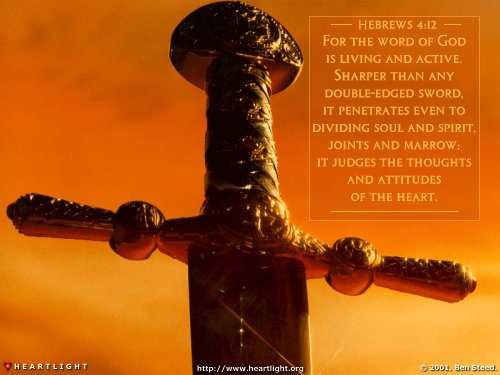
2. Very sharp, able to discern the thoughts and intentions of the heart (Heb. 4:12, NLT).

hebrews4_12

  1. Exemplary of great skill—God’s skill.

He brought together more than forty men from diverse cultures and all classes of citizens – from kings to fishermen – to record His Word. God extended his work over 1500 years and three continents (Asia, Africa, and Europe), three languages (Hebrew, Aramaic, and Greek), and nine different genres. Yet the diverse pieces fit together in one unified whole. What other book can compare?

  1. Superior in quality and craftsmanship.

007e7eed0d91527c56b9dc8f003be0a4

(“As for God, his way is perfect;

the word of the Lord is flawless.”

 –2 Samuel 22:31, NIV)

  1. A masterpiece of precision. Those who doubt the accuracy of the Bible would do well to learn about the:

a) hundreds of fulfilled prophecies contained within its pages,

b) scores of archaeological discoveries which verify people, places, and events mentioned in scripture,

c) thousands of manuscripts and fragments which validate the accuracy of the Bible, and

d) scientific and medical research affirming the truth of various passages – long before that truth could be verified.

Indeed, the fine print of scripture is of rare quality, demonstrating absolute purity and perfection. That’s because the Author is himself the epitome of purity, precision, and perfection.

So read the fine print of scripture . Marvel in its superior quality compared to other books.  Get to know the faithful and trustworthy Author through his Word.  And embrace its life-changing truth.

Also be mindful that:

3cd5612848334cec127daad7d5be1f15

(“A Bible that’s falling apart

usually belongs to someone who isn’t.

― Charles H. Spurgeon)

No other fine print can offer such stability.

Art & photo credits:  www.twitter.com; http://www.thedailysheeple.com; http://www.izquotes.com; http://www.all-free-download.com; http://www.pinterest.com (2), http://www.verseoftheday.com; http://www.pinterest.com (2).

Read Full Post »


07dc15999a0da94f13bff356c829f3e3


Three times in the New Testament, Jesus is referred to as Author. Peter called him the Author of life (Acts 3:15), and the writer of Hebrews referred to him as the Author of salvation (2:10) as well as the Author and Finisher of our faith (12:2).

As someone who enjoys writing, I’m intrigued by this title for Jesus. How is he like an author? And how should his role as Author impact my life?

Research and ponderings took me down these pathways:


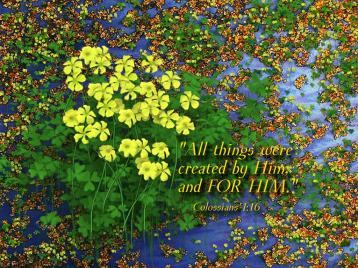
colossians-116_5541_1024x768


Writers are creators.  Where a character, place, or idea did not exist before, an author brings them to life.  Without C.S. Lewis, for example, we would not know Aslan, the great and noble lion, the land of Narnia, or the concept of a New Narnia with its astounding dimensions: ” The further up and the further in you go, the bigger everything gets.  The inside is larger than the outside” (The Last Battle, Book #7 of the Narnia series, p. 180).

Jesus, the Author of life, participated in the creation of the world, including us.  “By him all things were created in heaven and earth…all things were created by him and for him.”  (See also Note #1.)

Writers animate settings, characters, and ideas with the choicest words they can find. The sentence, “A bird sat on the gate looking over the snowy field,” becomes “A black and white magpie, sitting on the rail of a gate, reigned benevolently over the tranquility of a snowy field” (from Lisette’s List by Susan Vreeland, p. 322). Jesus animates our lives with his choicest blessings: purpose, hope, contentment, and joy.


c55bcecf2b75dbddc64093d554ffd077


Writers cajole their ideas on the page, striving to form nebulous concepts into clear, solidly built statements. They organize their thoughts, structure sentences, and decide upon word selection. Jesus lovingly coaxes us along, slowly over time sharpening the fuzzy understandings of our faith into solidly built knowledge, wisdom, and conduct.

Writers peel away redundancies, wordiness, and boring details. Jesus peels away our sins, spiritually unhealthy habits, and weighty emotions like discouragement, anxiety, and fear—any excesses that keep us from being our best selves.

According to author, Joan Lowery, writing is “a complicated mixture of art, craft, structure, free-flowing ideas, unleashed imagination, soaring hopes, wondrous insights, giddy joy, deep satisfaction, strong persistence and solid determination” (from The Making of a Writer, pp. 1-2).


15195-ephesians-2-10


As we allow the Author of Life (2) to write upon our souls, he applies these same processes. Persistently and determinedly he:

  • crafts our spirits into works of poetry (Ephesians 2:10) (3),
  • offers us safe structure in which to function (Proverbs 2:6-8),
  • exposes us to ideas of freedom we never knew existed (John 8:31),
  • surprises us with more blessings than we could ever imagine (Ephesians 3:20),
  • fills us to overflowing with hope (Romans 15:13),
  • imparts wondrous insights, especially through his Word (Psalm 119:130),
  • bestows his complete joy upon us (John 15:11), and
  • fills our hearts with deep satisfaction (Luke 6:21, John 10:10).


4f432dd9f0d297c6db04e6342ac30d58


Joan Lowery’s long list of writing components (above) appears daunting. It’s a wonder anyone puts pen to paper or fingers to keyboard.

Yet there are many of us who actually enjoy the process—the discovery of new information and ideas as we research, the development of clearer understanding while wrestling with a concept; the puzzle-assembling of thoughts into organized paragraphs and words into precise sentences; the delight of creating a musical rhythm among the syllables.

In fact, Truman Capote asserted:


723b897eebef7b17d26576f4073d0477

(“The greatest pleasure of writing is not what it’s about,

but the inner music the words make”

–Truman Capote)

Surely Jesus feels the same. His purpose as Author is not to produce best sellers of our life stories. He’s interested in relationship. In collaboration with each of us, Jesus wants to write upon our souls and create inner music together: symphonies of joy, madrigals of peace, and songs of love.

Praise God, he takes great pleasure in the process (Psalm 149:4, Philippians 2:13).

*     *     *     *     *     *     *     *     *     *

NOTES:

  1. For the record, Genesis 1:2 and Psalm 104:30 give us glimpses of the Holy Spirit’s role as well.
  2. God the Father and the Holy Spirit are also involved in the process, of course, as three-in-one.
  3. Paul said, “We are God’s workmanship, created in Christ Jesus” (Ephesians 2:10). That word, workmanship, is translated from the Greek word, poema, from which we derive our English word, poem. Our triune God is making us into heavenly pieces of poetry—“the highest, finest, most beautiful expressions of his thought and purpose!” (Herbert Lockyer, Seasons of the Lord, 330).

(Art & photo credits:  www.pinterest.com; http://www.wallpaper4god.com; http://www.pinterest.com; http://www.crosscards.com; http://www.pinterest.com (2).

Read Full Post »


Joseph_and_the_Amazing_Technicolor_Dreamcoat_(3640665731)


We’ve all heard the story of Joseph (or seen the musical, Joseph and the Amazing Technicolor Dream Coat). You’ll remember he’s the one who endured years of slavery and prison before his dreams (of bowing wheat sheaves and stars paying homage) came true.

We also know about Moses, an adopted prince in Pharaoh’s household who ended up in the wilderness herding sheep.  Forty years later God called him to lead the Hebrews out of Egypt.

And we’re familiar with Paul who spent years traveling from place to place and, yes, suffering all kinds of trials—beatings, imprisonment, dangers, shipwrecks—all for the privilege of serving God, introducing people to Jesus and establishing churches.

These Biblical stories and others teach us to never give up, because we never know when God will show up to turn a prisoner into a prime minister, a shepherd into a great leader, or a Pharisee tentmaker into a world evangelist.

Then there’s Jeremiah. His is a different kind of story altogether. He was called by God to warn the inhabitants of Judah that destruction would come if they did not return to God and follow his ways. It was not a one-time message. Over a period of forty years Jeremiah spoke many times of coming doom.


4ef160f6525a2c685725524e6193fbd9


Almost no one listened. (A brief revival took place under King Josiah, but when he died, the people returned to their complacency and evil ways.)

We love the stories of Joseph, Moses, Paul, and others, whose perseverance was rewarded with success. But what about Jeremiah?

He, too, persevered through trials–poverty and deprivation, imprisonment and ill-treatment, rejection and ridicule. For what? According to the evidence (minimal results for his efforts), Jeremiah was a wretched failure. Yet he had obeyed God faithfully, endured patiently, and preached courageously.

Perhaps visible evidence is not the best way to quantify success.

Instead, the true measure of success involves our characters, not our acquisitions (Joshua 1:8).


eac79fb6c5313818bb8b68fb51b50b24


The true measure of success may include the tenacity to get up every day and face the same tasks as yesterday, to persistently make choices that further God’s objectives for each of us, and to remain steadfast even when discouraged (1 Corinthians 15:58).

Last, a true measure of success is how our choices honor God (1 Kings 2:3). Jeremiah may not have turned thousands back to Yahweh, but that was not due to his lack of effort or disobedience to God. Jeremiah doggedly preached to the people of Judah—month after month, year after year.

So the true measure of success includes: 1) pursuing godly character, 2) persevering toward God-given purpose, and 3) making choices that honor him.


Zac-Poonen-Quote-Mans-Greatest-Honor1


Today, such successful people might look like:

  • The parent who has put his career on hold to invest time in his young children.
  • the business owner who drives a twelve-year old car so he can give generously to ministries.
  • The college student slowly working her way through school, anxious to return to her inner city neighborhood and teach school

For those of us looking for that kind of success, Jeremiah is our hero.

He lived out these precepts :

  • Do our prayerful best and leave the results with God.
  • Press on–day by day, month by month, year by year if necessary. Allow such perseverance to build our trust in God and strengthen our character.
  • Persist until God tells us to stop. (How do we know we’ve reached that moment? Peace, not uncertainty, will fill our spirits.)

We may not understand what God is doing, but we know him. And he is holy love and perfect wisdom.*


Pilgrims-Rock-gods-wisdom-is-faultless-application-of-his-perfect-knowledge-300w


*Oswald Chambers, My Utmost for His Highest, p. 129.


(Art & photo credits:  www.commons.wikimedia.org; http://www.pinterest.com (2); http://www.christianquotes.info; http://www.pilgrimsrock.com.)
 

Read Full Post »

“Matt* and Loren* are coming to visit the weekend after next. Would you be able to join us for dinner that Saturday night?” I asked, Dave*, the worship leader of our church.

I had just arrived at ensemble practice.  Dave was already there organizing music.

“Yeah, I’ll come. It’ll be great to catch up with them.” Matt and Loren were mutual friends who had moved away.

“We’ll probably eat around six, but come early—say five? That’ll give us more time to chat,” I added.

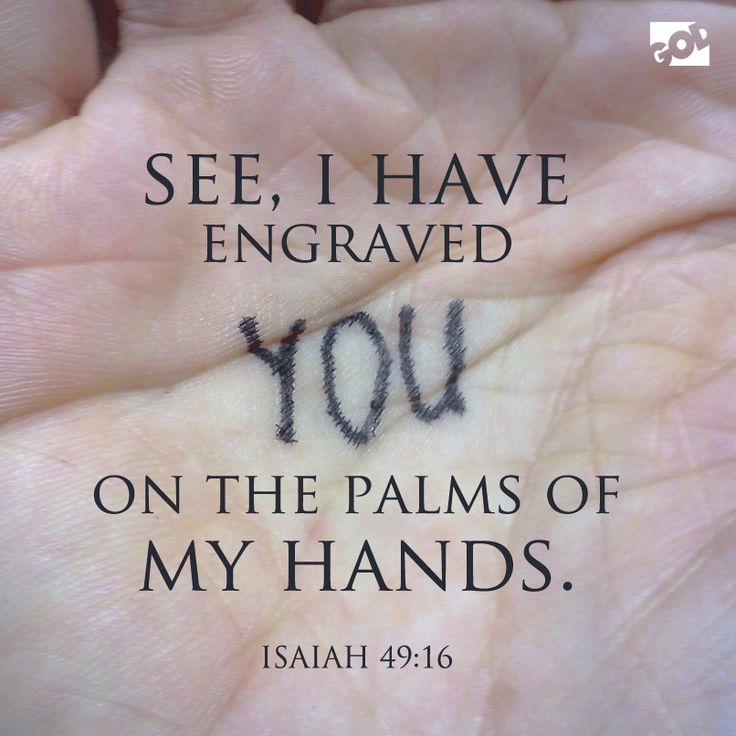
Dave whipped a pen off the piano and wrote a note to himself—on his hand.

I had to smile. Dave was/is one of the most creative, musically talented young men I’ve ever met. Not only is he a concert-trained pianist, he’s a composer with a gift for turning artful melodies into worship.

But in those days, he would have been the first to tell you that keeping track of details or appointments was a challenge; thus the notes-on-the-hand habit. If the commitment was right there in front of him, he’d most likely remember to put it on his calendar later. The message wouldn’t be forgotten amidst all the ideas and musical themes racing through his head.

I know someone else who writes information on the palm of his hand. The information is your name and mine. The someone? Our Heavenly Father.


1660084f44a0e4b7a47d6c0c97fbbb65


(“See, I have engraved you on the palms of my hands.”

–Isaiah 49:16 NIV)

Of course, this assurance was addressed to the people of Israel, but it’s applicable to each of us, because: 1) those of us who believe in Jesus have been adopted into Abraham’s family (Galatians 3:6-9), and 2) God does not lose sight of the individual within the multitude (Luke 3:3-7).

“God loves each of us as if there was only one of us.”

–St. Augustine

But don’t think of God’s love as perfunctory or pity-driven.

You are a treasure to your Heavenly Father—the delight of his heart (Deuteronomy 7:6; Psalm 149:4).


28c54369c8dcb691a13ff44f54e136bf


You and I are constantly in his thoughts (Psalm 139 17-18).

And the imagery of our names engraved (cut, carved, or etched) on his palms brings to mind several important truths:

  1. God cannot and will not forget us or abandon us.
  1. His omniscient knowledge doesn’t just include our names, but also who we are—our personalities, dreams, circumstances, strengths and weaknesses—everything about us—is on his mind.
  1. Our images engraved on God’s palms represent an incredible role reversal. In ancient times, slaves bore the brand mark of their masters. But our Master has sacrificially submitted himself to inscribe our names on his palms.
  1. The image represents who we are becoming in God’s view, which is undoubtedly different from ours. “Reality is not what we see; reality is what God sees” (Biblical Illustrator). And that reality is perfection.


67bc5cb27ae7404c8049303ad1857bf5


(“By one sacrifice he has made perfect forever

those who are being made holy.”

–Hebrews 10:14 NIV)


Of course, that one sacrifice was Jesus, who bled and died on a cross so we might be made right with God and receive the gift of eternal life.

As a result, Isaiah 49:16 (about our names written on God’s palms)  has taken on new meaning:


“See, I have engraved you—in blood—on the palms of my hands.”


*     *     *     *     *     *     *   *     *     *

I praise you, Heavenly Father, that it is totally impossible for you to forget your own.  How humbling to realize I am engraved on your hands—hands that withstood the nails for me. But gratitude alone is terribly insufficient.

I want your name, Lord, engraved on my palms, so I might become that perfected reality you already see.


*Names have been changed.

Art & photo credits:  www.pinterest.com (3)


Read Full Post »

What might have been uppermost in Jesus’ mind the morning after his triumphal entry into Jerusalem? Surely his thoughts were already swirling around the inevitable suffering just days away.   Perhaps the emotional anguish that peaked in the Garden of Gethsemane (Luke 22:39-44) was already starting to build.

How did he maintain the presence of mind to continue teaching his disciples and the crowds, telling parables, and answering the religious leaders’ trick questions?


Scene 07/53 Exterior Galilee Riverside; Jesus (DIOGO MORCALDO) is going to die and tells Peter (DARWIN SHAW) and the other disciples this not the end.


Then, as the Last Supper, Judas’ betrayal, and the horrors of the crucifixion took place, how did he endure, much less maintain his calm and resolute demeanor?

The writer to the Hebrews reveals at least part of the answer: Jesus kept his focus on “the joy set before him” (12:2).

What might that joy have included?

  • Returning to heaven. No doubt he could vividly see in his mind the splendor and bliss of his home that he’d given up some thirty-three years before.
  • Returning to his Father. Jesus looked forward to being glorified with God, reveling in the glory he had enjoyed with the Father before the world began (John 17:5).


26765


  • Commanding angels, authorities and powers subjected to him (1 Peter 3:22). This privilege was not a self-aggrandizing end in itself. It was a means of aiding and rescuing his people–us (Acts 5:31).
  • Becoming our mediator and saving us from the natural consequence of our sin: eternal death (Hebrews 7:25).
  • Offering glory to God for the work he had faithfully and perfectly completed on earth (John 17:4).

These joys were set before Jesus. They provided sublime assurance of what was to come.

These joys helped to sustain him through horrific agony—agony that was swallowed up in anticipated and certain victory (1 Corinthians 15:54).


ac7e84ccd3f21b2fff7bc9c1293097e7


We, too, can fix our attention on the joy set before us. And just what do we have to look forward to?

  • Discovering heaven as our splendorous, blissful home.
  • Residing in the realm of our perfect Heavenly Father, the King of the universe.
  • Ruling with Jesus, at the right hand of God, as joint heirs of the kingdom (Romans 8:17, Revelation 20:6).
  • Offering glory and honor to the Lord (Revelation 4:11). I imagine a grand choir made up of all of us–millions of voices, singing heart-stirring melodies with intricate harmonies.  I see our arms raised toward the throne, reaching out in holy reverence toward our awesome King.

Years ago, a talented singer named Helen Lemmel (1863-1961) enjoyed the fulfilling life of a concert soloist, sharing her faith through song in many churches throughout the Midwest. For a number of years Helen ministered with evangelist, Billy Sunday, singing and song-writing for his crusades. (She composed over 500 poems and hymns in her lifetime.)

Suddenly in midlife Helen began to go blind, her husband left her, and other heartaches enveloped her as well. Through it all, however, the singer/composer maintained her faith and joy—all ninety-seven years of her life.

One of her best-known songs, perhaps, is “Turn Your Eyes Upon Jesus” (1918), written in the midst of her trials. You might recognize the chorus:


slide_31


(“Turn your eyes upon Jesus,

Look full in His wonderful face,

And the things of earth will grow strangely dim

In the light of His glory and grace.”)


Peace, determination, and strength result from focus—focus that’s riveted on Jesus and the joy set before us.


(Photo credits:  www.truthforfree.com; http://www.biblepic.com; http://www.pinterest.com; http://www.slideplayer.com.)

Read Full Post »

220px-Nicholasflamel

Nicolas Flamel (ca. 1310-1418, pictured above) looks like he could be St. Nicholas, with that full beard and impish face. In fact he lived long after and far away from the well-known saint. Flamel was a French scribe and manuscript seller. He also dabbled in alchemy.

Alchemists were those who, especially during the Middle Ages, experimented with various materials and procedures to turn ordinary metals like lead into gold.

Another dream of theirs was to discover an elixir of life—a potion that would provide eternal life.

Sir William Fettes Douglas The Alchemist 19th cent.

“The Alchemist,” by Sir William Fettes Douglas, 1855

By the seventeenth century, legends had developed around Nicolas Flamel. Some claimed that he had discovered the Philosopher’s Stone, the alchemical substance that would turn lead into gold and produce the elixir of life.

But the only immortality he achieved is in print. Victor Hugo mentioned him in The Hunchback of Notre Dame, and R. K. Rowling in Harry Potter and the Philosopher’s Stone.

Nicolas Flamel is buried in Paris at the Musée de Cluny.

By the 1600s, alchemy was, for the most part, abandoned.

Alchemy simply did not work in the physical realm.

However! In the spiritual realm, with God exercising his supernatural power, the alchemy of grace (1) performs great wonders:

gracechangeseverything4-w855h425

The lost become found (Luke 19:10)

Darkness becomes light (John 8:12)

Death becomes life (Ephesians 2:4-5)

Mourning becomes joy (Jeremiah 31:13)

Ashes become beauty (Isaiah 61:3)

dae3bd5f8c1b4d3b842eb316d9202c90

Hatred becomes love (Acts 9:1-2; Philippians 4:1)

Discouragement becomes hope (Romans 5:1-2)

Fear becomes peace (John 14:27)

Striving becomes resting (Exodus 33:14)

Weakness becomes strength (2 Corinthians 12:9)

2_corinthians_12-9

No doubt we could mention many more magnificent facets of transformation that occur because of God’s alchemy of grace—a transformation even more miraculous than turning lead into gold.

To appreciate just how miraculous, consider what happens when we’re left to our own devices:

Darkness begets depression

Hatred begets ulcers

Fear begets paranoia

Striving begets stress

Discouragement begets self-pity

Would it be disrespectful to say that Jesus is our Philosopher’s Stone? He is the one and only Way to experience the alchemy (and grandeur and wonder!) of God’s grace (2).

3c06d8c8fc3f09557711b1bb7679f3a5

Do you find your heart swelling with gratitude and praise?

“Trace the roots of grace, or charis in the Greek, and you will find a verb that means ‘I rejoice, I am glad” – Phillip Yancey (3).

*     *     *     *     *     *     *     *     *     *

Holy Father, how astounding to consider that we are being transformed into the likeness of your Son with ever-increasing glory. Thank you for the alchemy of your grace that transforms our leaden lives into lustrous, 24-carat gold! 

(2 Corinthians 3:18; Job 23:10)

* The “alchemy of grace” is a phrase borrowed from Charles Spurgeon.

(1) Grace is undeserved love, manifested in unmerited favor.

(2) John 14:6, Acts 4:12, 1 Timothy 2:5-6

(3) Phillip Yancey, What’s So Amazing about Grace?, Zondervan, 1997, p. 13.

(Art & photo credits:  www.wikipedia.org (2), http://www.theodysseyonline.com; http://www.pinterest.com; http://www.biblehub.net; http://www.pinterest.com.)

Read Full Post »

1-samuel-12-24-consider-the-lord-landscape_1956134444


Consider what great things [God] has done for you,”

(from the farewell address of Samuel the prophet,

to the people of Israel–1 Samuel 12:24b, italics added).


I wonder if Samuel paused after those words, to give the Israelites a moment of reflection.  God had blessed them in numerous ways by:

  • Miraculously bringing them out of slavery in Egypt.
  • Sustaining them during their wilderness journey to Canaan.
  • Providing laws and commands for them to assure an orderly, pleasant, and productive life.
  • Giving them victory over their enemies.
  • Sending prophets and judges to guide and encourage (vs. 6-15).


31118_000_025_15


And what might have been the Israelites’ response as they remembered those blessings?

Were they whispering prayers of praise, because God had cared for them so attentively?

Did they resolve to reverence him more intentionally and serve him more faithfully, as Samuel suggested (12:24a)?


132658d0c1661c211eb040ed8e8a8308


Surely both responses were called for.

I also wonder if we might similarly be impacted by considering daily the great things God has done for us.

My own pondering made me realize my life includes parallels to those of the Israelites (although in less striking ways). Perhaps you, too, have had similar experiences.

God has:

  • Brought me out of difficult situations. (One small example: When a teaching job opened up nearby, I no longer had to endure  a stressful 50-minute commute.)
  • Sustained me with a heightened sense of his presence through the wilderness of hurt and emotional pain.
  • Provided his Word of wisdom for an orderly, pleasant, and productive life. (Not that I’ve always taken advantage of that wisdom.)
  • Given me the final victory over Satan, through his Son, Jesus. One day I will enjoy life in heaven with my Savior.
  • Sent spiritual teachers, pastors, and mentors to guide and encourage me.


A group of young women bow their heads and pray with bibles.


But perhaps you feel excluded from God’s blessings. Any consideration of your circumstances makes you shake your head in disillusionment. After all, the evidence seems clear. While others are enjoying marriage and family, a satisfying career, good health and/or _______________ (fill in the blank), you’re not.

Perhaps another point of view would provide alternative evidence. Consider your circumstances and the blessings they do provide.

For example:


worldteach-guyana-500


  • Not married? You benefit from greater freedom in your life.
  • No children? You can invest fresh energy and enthusiasm into children-not-your-own, providing the parents a much-needed break.
  • Struggling in a wilderness of emotional upset right now? Draw near to God and he will draw near to you in new, profound ways. Look for him in creation and in his Word. Listen for him in a song or in the encouragement of a mature friend. Be watchful, because he reveals himself in highly creative ways.
  • Is Jesus a part of your everyday life? Then you have a constant Friend who loves you, cares for you, withholds no good thing, and will never leave you.
  • Are there mentors and models in your life, showing you the way to a God-enhanced life? How splendid not to be struggling alone.

The bottom-line consideration is this:

Do I want to wear a shroud of despair or a garment of praise (Isaiah 61:3)?


26054-field-girl-woman-armsout-praise.1200w.tn


Do I want to live selfishly or in grateful obedience to the One who has bestowed so much?

*     *     *     *     *     *     *     *     *     *

Amazing God, words fail to express my gratitude as I consider your countless blessings.  Nor can words sufficiently extol your grace that motivates such loving benevolence.  I long to be continually grateful and consistently obedient, as a love-gift back to you.  May thankfulness energize my obedience! 


(Art & photo credits:  www.wallpaper.knowing-jesus.com; http://www.lds.org; http://www.pinterest.com; http://www.fullsupply.org; http://www.americakeswick.org; http://www.transitionsabroad.com; http://www.crosswalk.com.)

Read Full Post »

A Bit of Nan-Sense for 1-28-16:


IMG_0415


My son and daughter-in-law gave me a lovely, cloth-bound journal for my birthday. I decided to record favorite scripture verses, perhaps one or two for each book of the Bible, then meditate on the meaning, and record how the truths have played out in my life.

One of the first entries included Exodus 14:13-14, when the Israelites had just escaped slavery in Egypt only to come up against the Red Sea. To make matters worse, Pharaoh’s army was in fierce pursuit. The people were terrified, desperately wishing they’d stayed in Egypt.

Moses said, “Do not be afraid. Stand firm and you will see the deliverance the Lord will bring you today…The Lord will fight for you; you need only to be still.”

True to his word, God did miraculously rescue them.

Notes to self, in response:

Time and again God has proven to me his trustworthiness and demonstrated his loving care. My blessings journal with over 1000 entries thus far provides ample proof.

In addition, Scripture abounds with promises that give me hope during difficult times. I know that God specializes in bringing beauty out of ashes (Isaiah 61:3). And though deliverance may not come as soon as I’d like or in the way I expect, I know God will see me through.

With those words, “be still” (at least in this context) God was not suggesting total inactivity. After all, the Israelites did have to walk through the Red Sea to the other side. It appears God was urging them to be still of heart – to cease the negativity, consternation, and fretting.

That’s my part in God’s provision, too:  stillness of heart.

And how do I achieve that?

A mind is kept stilled in peace by staying focused on Almighty God (Isaiah 26:3).


(Does that make sense to you, too? Share your thoughts below!)


Photo:  Nancy Ruegg

Read Full Post »

« Newer Posts - Older Posts »

When the House is Quiet

Impressions Becoming Expressions

Mitch Teemley

The Power of Story

Still Traveling

Impressions Becoming Expressions

Living Our Days

Gaining a heart of wisdom

He Said What?!

I'm Patty, and my husband and I are living with our adult son who has autism and epilepsy. I love sharing lessons learned from life around me, especially life with Aaron.

Meditations of my Heart

Impressions Becoming Expressions

Linda Stoll

Impressions Becoming Expressions

Signora Sheila

Notes on Life, Faith & Italy

Heidi Viars

Finding the Image of God