Feeds:
Posts
Comments

Archive for the ‘Bible Study’ Category

12-27-11iStock_000018316152

Years ago I read a story that still comes to mind now and then.

As I recall, an older church member–a woman of very high standards which she vocalized frequently–came to visit a young mother of the church unannounced.

The impromptu hostess—we’ll call her Beth—invited Mrs. Perfect into her home, grateful that she’d straightened up a bit after her two older children left for school. The two younger ones were playing quietly with new Legos (How fortunate was that?), allowing the two women to chat.

kitchen-after-counter-1

As they sat at the kitchen table, Beth considered the room from her guest’s perspective: table cleared, dishes done, counters not too cluttered or spotted. Whew.

Then she saw it: an orange peel on the floor—not a fresh strip from breakfast; more likely from last week. How did I miss that? Beth thought. One thing for sure: Mrs. Perfect wouldn’t miss it. It was in plain view from where she sat too.

Suddenly Beth experienced an epiphany. What difference did it make to her if this poor, old woman noticed the orange peel? Mrs. Perfect, however, would leave with a spring in her step because she would never allow such filth to remain undetected on her floor.

And Beth smiled to herself as the other woman prattled on about the upcoming bazaar.   I hope that orange peel makes her day. And Beth truly meant it.

God brings that story to my mind because I have to fight against perfectionism too.

Obsessive man laying on grass, perfection

And the reasons? So others will be pleased with me, appreciate me, and admire my efforts. Notice: me, me, my.

Clearly perfectionism is a close relative of self-centeredness.  Oh, Lord, forgive me.

I pray God steers me away from such counter-productive expectations of myself. Instead I want to strive for excellence.

Yes, there is a difference between perfection and excellence.

Perfectionists have the tendency to:

  • Set unreasonably high standards
  • Experience satisfaction only when those high standards are met
  • Become depressed over failures and disappointments
  • Be controlled by fear of failure and therefore procrastinate
  • Worry about disapproval when mistakes are made

On the other hand, those striving for excellence are likely to:

  • Set standards that are high but reachable
  • Enjoy the process as well as the outcome
  • Recover quickly from failures and disappointments
  • Keep fear under control with positive truth
  • View mistakes as opportunities for growth

c398dcb781f29c5f0c3e1946d50a4422

For the Christian, excellence should be our loving response to God with the desire to please him.

And what might those responses look like, as we strive for excellence?

  • Ask God to reveal his expectations. Then invite him to work toward meeting his standard:  maturity (James 1:4).
  • Take pleasure in signs of spiritual growth, as we manifest the fruit of the Spirit more and more each day (Philippians 1:9-11).
  • Turn to him for encouragement and strength when failures and disappointments come (Psalm 18:25-33).
  • Keep fear under control with appropriate scriptures and uplifting devotionals (Psalm 118:5-8).
  • View mistakes as opportunities to grow in maturity and in our relationship with God (Proverbs 24:16).

6f8af2878da632fd3fcbfe0e23c9a750

By the way, when the Bible tells us to be perfect (as in Matthew 5:48), the words mature and complete are helpful synonyms to interpose. Perfection is not within our abilities to achieve (Romans 3:23). We know it and God knows it.

Here’s what we can do:

“Strive toward holiness, yet relax in grace.”

–Philip Yancey


Isn’t that a wonderfully balanced goal?

Let’s remember: “Christ has set us free to live a free life. So take your stand! Never again let anyone [including ourselves] put a harness of slavery [to perfectionism] on you.” – Galatians 5:1 (MSG)*

*Words in brackets added.

Photo credits:  www.deeprootsathome.com; http://www.femhack.com; http://www.worshipmatters.com; http://www.pinterest.com (2).

What are your thoughts about perfectionism and Christian excellence?  Share your comments below!

Read Full Post »

3571053_orig

(Remember Susan Boyle?)


Makeovers. What a remarkable change-of-appearance can be achieved with a becoming hairstyle (and maybe color-enhancement!), deftly applied make-up, and well-fitted clothing.  Add the benefit of plastic surgery and a person hardly resembles her former self.

But the transformation of someone’s face and body doesn’t begin to compare to the transformation of someone’s spirit.


tumblr_m8s31eBVQU1qbwmglo1_1280


Anyone who belongs to Christ has become a new person.

The old life is gone; a new life has begun!

–2 Corinthians 5:17 (NLT) 


Notice: We’re not just improved and beautified. Jesus remakes each of us into a brand new person.

And what might that newness include? Here’s a partial list:


  • New purpose


357191882884919061_1401068073

(“Whatever you do, do it all for the glory of God.”

–1 Corinthians 10:31b)


Those who follow this directive discover an interesting phenomenon: honoring God brings satisfaction and fulfillment to us. (By the way, God is not on some ego trip, demanding us to give him all the glory. He desires his splendor and benevolence to be evident everywhere, so others might be drawn to him.)


  • New attitude resulting in new character


 e2


(“Put on your new nature and be renewed

As you learn to know your Creator and become like him.”

–Colossians 3:10)


The more we know of God and appreciate all his benefits, the more we want to please him by following his example. That new attitude impacts every aspect of our lives.


  • New perspective


Psalm-23-6

(“Surely goodness and love will follow me all the days of my life.”

–Psalm 23:6)


Just knowing God has our best interest at heart is enough to renew energy and hope.


  • New power to face what comes


d7d8bc8fd004fe850361444ecf5acb49

(“[He] is able to do immeasurably more than all we ask or imagine,

according to his power that is at work within us.”

–Ephesians 3:20)


Think of it: the same power that controls the universe is at work within us. Tell me again why we revert to worrying?!


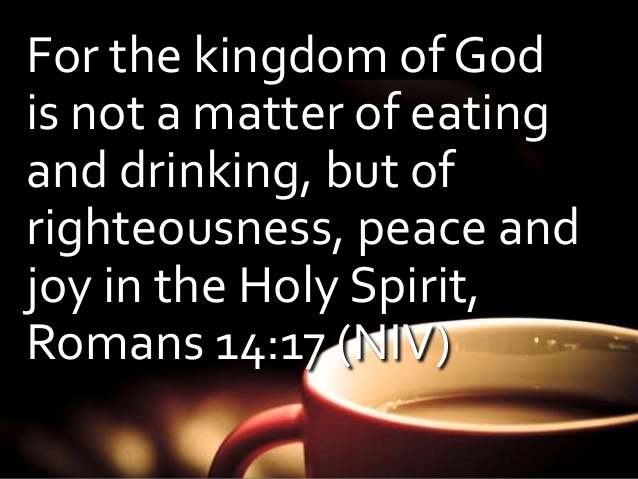
  • New emotions, such as peace and joy


coffee-cupverses7-28-638

(“The kingdom of God is not a matter of eating and drinking,

but of righteousness, peace, and joy in the Holy Spirit.”

–Romans 14:17)


We do not need to live at the mercy of our circumstances. With God as our constant companion, we can experience peace and joy in spite of what happens. The Bible is full of examples of people who lived that way: Joseph, Daniel, Peter, and Paul readily come to mind.


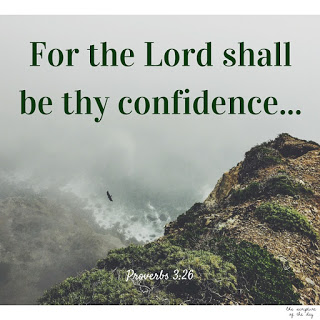
  • New confidence

Proverbs 3.26 

(“The Lord will be your confidence.”

–Proverbs 3:26a)


God is not only with us, he is our Protector, Provider, and Guide.  As we become increasingly aware of his faithfulness, our trust grows. Trust = confidence.


  • New opportunities and blessings


ef03f9e29f19624eaa836b41accd6d80

(“The faithful love of the LORD never ends!

His mercies never cease. Great is his faithfulness;

his mercies begin afresh each morning.”

–Lamentations 3:22-23 (NLT)


Experience tells us that when we say “yes” to Jesus, God does not bestow the full measure of all of these wonderful new things instantaneously. God told Isaiah: “Behold I am doing a new thing” (Isaiah 43:19).  That hints at process. We’re made new, but growing into that newness.


843ae42db665b78c33102645c1850579


Think of buying a coat in the fall that’s a little too big for your child. She owns the coat, but it doesn’t quite fit yet.  Within a matter of weeks however, the sleeves hit the wrist not the fingertips, and the shoulder seams sit properly–no sagging down the arms.

Might it be that when we invite Jesus in our lives, our spirits are made new, but we don’t quite fit into them yet? Then, as we cooperate with Holy Spirit and his fruit grows within us (Galatians 5:22-23), we steadily become more Christ-like, day by day.

*     *     *     *     *     *     *     *     *     *

Oh, Father, I don’t want to cling to aspects of the old me—things like worry, perfectionism, selfishness, and pride. I want to embrace everything new that YOU bring to my life, to become my true self—the one you designed me to be.**


**Based on idea from Jesus Calling by Sarah Young, Thomas Nelson, p. 381.

Photo credits:  www.joblogging.weebly.com; http://www.ilovemybible.tumblr.com; http://www.pinterest.com; http://www.dayofgrace.me; http://www.faithgateway.com; http://www.pinterest.com; http://www.slideshare.net; http://www.plus.google.com; pinterest.com (2).

Share your thoughts in the comment section below.  I’d love to hear from you!

Read Full Post »

(Following is a personalized version of Psalm 103:1-5. Scripture quotes are in bold type, personal worship-thoughts* are in regular type. Perhaps you’ll pray along?)


aPsalm103_1-3


1 Praise the Lord, O my soul; all my inmost being, praise his holy name.

2 Praise the Lord, O my soul, and forget not all his benefits–

Oh, Lord, my heart overflows with love and gratitude for all you are to me and all you do for me. If I recorded these benefits, the volumes produced would surely fill a library.

But just as parents and grandparents are pleased when children say, “thank you,” I want to “praise your holy Name,” to extol you for the sum of all your attributes. In my life you have expressed your:

  • Power, by supplying my needs–sometimes in miraculous ways
  • Love and Goodness, with blessings beyond measure
  • Wisdom, as you’ve guided me day by day in the ways that are best for me
  • Patience, when I’ve been slow to learn and reluctant to obey
  • Mercy, by forgiving me of my sins, especially when I knew better
  • Faithfulness, with your constant presence and attention

May I always be mindful of your benefits, and vocal about them to others.


daily-bible-verse-1024x512


3 who forgives all your sins and heals all your diseases, 

May I never take for granted the horrific price you paid at Calvary with the life of your Son. May I never tire of praising you for making me a new creation, one who can be in relationship with you, the all-powerful God of the universe.

I praise you for being the Healer of all diseases, whether of body, soul, or spirit. You heal broken hearts, broken lives, broken relationships, broken minds—either instantaneously, over time, or when we’re transported to heaven.


a5651813e095c28655b6c63d958164c3


4 who redeems your life from the pit and crowns you with love and compassion 

I praise you that not only have you saved me from the pit of hell, but from the depths of depression, discouragement, and disappointment. You are “a redeeming God who is able to bring freshness to places that seem rotten and decayed” (Carole Ladd)—places like hurt, unfair circumstances, and unfulfilled dreams.

I praise you for encircling me with your love and compassion, symbolized by a gleaming crown, and reminding me: those who know Jesus are royalty (1 Peter 2:9)! I bow in humble wonder at the incredible privilege you bestow, to be a daughter of the King of kings.


Psalms103.5


5 who satisfies your desires with good things so that your youth is renewed like the eagle’s.

 I praise You, O God, for knowing exactly which good things to grant me—those things that will produce a good outcome. (I know that catering to my every pleasure would ultimately be to my detriment.)

I praise you that even into old age you will strengthen my spirit so I can remain vibrant, optimistic, and full of hope. On the wings of your wisdom I’ll be able to soar (Proverbs 24:5).

Finally, may your praise always be on my lips; may my soul always boast in you, because you are a good and gracious God—always and forever (Psalm 34:1, 145:7-8)!


*Prior to composing this worship-prayer, I researched some of the terminology in these verses, to expand my understanding of the passage. Sources included: Be Exultant by Warren Wiersbe; www.bible.org; Jesus Calling by Sarah Young; Thrive, Don’t Simply Survive by Carole Ladd; and The Daily Study Bible Series, Psalms, by George A. F. Knight.


(Photo credits:  www.suggestkeyword.com; http://www.studentdevos.com; http://www.pinterest.com; http://www.suggestkeyword.com.)

Read Full Post »

My sister-in-law sent me this Hallmark card for my birthday:

IMG_0262

Mary is my kind of person. I’ll bet she’s your kind, too. We tend to appreciate positive people, especially since negative input seems to bombard us continually. We’re not thin enough, smart enough, tech-savvy enough, confident enough, spiritual enough, disciplined enough, efficient enough, successful enough, patient enough, persevering enough, ad nauseam.

Positive people neutralize the impact of all that negativity. It’s not just their pleasant company that brings uplift to our spirits; they often exhibit the gift of encouragement.

That gift includes the ability to:

  • relate to others in positive ways
  • be optimistic, and cheerful
  • listen attentively and make others feel understood
  • be patient and generous with their time
  • make others feel special
  • genuinely celebrate the successes of others

But there’s one more behavior to add to that list, and it’s undoubtedly the most important. Beyond uplifting and motivating, we can infuse others with our faith.

Anyone can offer encouragement; only people of faith can offer faith.

You see, encouragement may not necessarily be based on fact. For example:

  • A mom says to her son, “You’re a fantastic soccer player. Of course you’ll make the team.” Only he doesn’t. Mom’s optimism wasn’t based in reality.
  • “After what you’ve told me, I just know you’ll get the job,” says one friend to another. But it doesn’t happen. The friend listened and understood, but her intuition proved false.
  • “Oh, that solo was wonderful, Katie!” when it clearly wasn’t.

However, statements of faith based on scriptural fact provide absolute truth and a much stronger foundation for hope than empty praise.

romans15_4

(“Everything that was written in the past was written to teach us, so that through endurance and the encouragement of the Scriptures we might have hope.” — Romans 15:4).

Everyone needs hope, especially those in crisis.

Centuries ago, the people of Jerusalem needed hope as they faced the possibility of annihilation by the Assyrian army. King Hezekiah gathered the people in the open square of the city gate and addressed them:


“Be strong and courageous.

Do not be afraid or discouraged

because of the king of Assyria

and the vast army with him,

for there is a greater power with us than with him.

With him is only the arm of the flesh,

but with us is the Lord our God

to help us and to fight our battles.”

–2 Chronicles 32:7-8


Hezekiah was not simply offering optimistic encouragement. Those bold statements were based on earlier scriptures, some of which you may recognize:

  1. “Do not be afraid or terrified because of them, for the Lord your God goes with you; he will never leave you nor forsake you” (Deuteronomy 31:6).

be strong and courageous

  1. “Some trust in chariots and some in horses, but we trust in the name of the Lord our God” (Psalm 20:7).
  1. “You come against me with sword and spear and javelin, but I come against you in the name of the Lord Almighty, the God of the armies of Israel” (spoken by David to Goliath, 1 Samuel 17:45).
  1. “Do you have an arm like God’s” (Job 40:9a)?
  1. “Do not be afraid of them; the Lord your God himself will fight for you” (Deuteronomy 3:22).

cm-deuteronomy-3-22-social-138x80

You and I can follow King Hezekiah’s example and share the positive, factual truth of God’s Word. We can be the encouraging voices that help others thrive, especially to those whose faith is beginning to falter.

The scripture-seeds we plant may spur a person to persevere or take a step in a new direction. And who knows where that perseverance or step might lead?

(Art & photo credits:  Nancy Ruegg, http://www.allaboutgod.net; http://www.quotationslibrary.com; http://www.crosscards.com.)

*     *     *     *     *     *    *     *     *     *

What scripture truth has been an encouragement to you?  Share with us in the Comments section below.  Perhaps your contribution will be just what someone else needs to hear/see!

Read Full Post »

Evidence confirms: God loves to take ordinary people living ordinary lives and accomplish impossible feats. Examples include:

www-St-Takla-org--Bible-Slides-genesis-240

  • An imprisoned slave, elevated to prime minister in a matter of minutes
  • A village shepherd boy who became the greatest king of his nation
  • A widow who took a stranger into her home, and witnessed miraculous events
  • A common girl, chosen as queen in a foreign land and became the savior of her people

No doubt you recognize these persons. We would never consider them ordinary because of how God used them:

  • Joseph
  • David
  • The widow of Zarephath
  • Esther

But if we visited Joseph in prison before Pharaoh sent for him, if we passed by David watching his father’s sheep, if we ran into the widow of Zarephath at the village well, or if we met Esther in her cousin Mordecai’s home, would we have recognized greatness? Would we have known that these people were extraordinary? I doubt it.

We easily forget that what we see from our human perspective is never the whole picture. Only God has an omniscient view of circumstances and events—including past, present, and future.

Only God has the capability of weaving complex events to accomplish his purposes. And his work is always extraordinary. The wonders of creation offer undeniable proof.

nature-mountin-flowers

And since you are part of God’s wondrous creation, you are extraordinary. Yes, YOU!

That means:

Our seemingly ordinary lives, lived out through ordinary days, can have extraordinary significance, because God Almighty is orchestrating them.

That doesn’t mean we just sit on the sidelines and watch God work. Choices must be made:

  • Joseph chose to honor God in Potiphar’s house (Genesis 39:4), and in prison (v.22), long before his miraculous promotion from slave to prime minister.
  • David chose to spare King Saul twice, even though the king pursued David with the intent to kill David chose to wait for God’s timing for his coronation (1 Samuel 24, 26).
  • The widow of Zarephath (a town not in Israel) surely knew nothing of Elijah or his God when she met him at the town gate. There was no reason to take him in; she had nothing to offer him. As it was, the woman and her son were starving. The land was parched dry by famine. But she chose to believe his assurance that God would supply their needs. And miracles resulted (1 Kings 17:7-24).
  • Esther chose to intercede for her people, even though it may have led to her own death. She saved the Jewish captives in Persia from annihilation (Esther, ch. 4, 5).

Esther-and-the-King

We never know when a decision or choice may directly or indirectly cause significant, extraordinary results.

Therefore, our decisions must be based on scripture-based convictions and values. It is God-influenced choices, day by day, even moment by moment, that will lead us to extraordinary living, accomplishing divine purpose.

But be prepared. We may not know the significance of some of our choices until we reach heaven.

Think of Ruth, who chose to follow her mother-in-law, Naomi, from her home in Moab, back to Naomi’s home in Judah. She also decided to follow Naomi’s instructions and glean barley in Boaz’ field. At the end of the beautiful drama it is revealed that Ruth became the great-grandmother of King David and a descendant of Jesus himself, and a book of the Bible is devoted to her story. What an honor for a woman not even from the house of Israel!

ruth

But Ruth never knew.

Extraordinary people live extraordinary lives when they’re led by God–choice by choice, decision by decision. And they leave the results in his capable hands.

(Art & photo credits:  www.St-talkla.org; http://www.1decision1day.com; http://www.ammiministry.org; http://www.joyfulphpist.wordpress.com.)

Read Full Post »

Depressed young woman


“I don’t understand why this is happening,” Kelly cried. “Doesn’t God want me to be happy?”

*     *     *

“I’m not sure what God is doing, but business is bound to pick up soon,” Dave asserted. “I’m working harder than ever—like seventy hours a week. God helps those who help themselves, right?”

*     *     *

“I thought I was where God wanted me to be, but that loser job was not a good fit—such boring work and for such a lousy salary,” moaned Erika. “I just had to quit! But I’ll be OK. God loves me; he’ll take care of me.”

*     *     *

Ever hear comments similar to these? Each one represents a misunderstanding about God. The truth is:

  • God’s primary concern is our welfare, not necessarily our happiness (Philippians 4:19). The two are not synonymous.
  • God has not promised to help those who help themselves. That proverb is not in the Bible.
  • Neither has God promised to take care of us if we live irresponsibly (2 Thessalonians 3:10).

So, I’m sorry, Kelly, Dave, and Erika. Somewhere along the way you’ve heard these ideas about God’s ways which were misrepresented as truth.

But how can we know the truth of how God works in our lives? (They might ask!)

By becoming better acquainted with God’s Word. Within its pages we find such wonders as perfect wisdom, inspiring encouragement, hope-giving promises, and practical instruction.

For example:

Kelly, God loves you too much to grant everything you want. Over-indulgence leads to spoiled children. Discipline demonstrates true love; permissiveness demonstrates foolishness. Sometimes God exercises tough love in order to develop our characters, grow our faith, and prepare us to serve him in greater capacities.


no-pain-no-gain

(“The Lord disciplines those he loves”–Hebrews 12:6a).

Dave, God is compassionate and good to his people (Psalm 103:4-5). He has promised to be our help, but it has nothing to do with our effort prompting him to come alongside. It’s the person who trusts in God wholeheartedly and follows his ways who may anticipate divine help:

“You who fear him, trust in the Lord—

he is their help and shield.”

–Psalm 115:11

and…


16072

(“May your hand be ready to help me, for I have chosen your precepts” –Psalm 119:173.)


Erika, God certainly does care for you (1 Peter 5:7), but he does not condone irresponsibility. A wise course of action would include prayerful assessment of the current job as well as other possibilities, while asking God for his guidance. Meanwhile:

“Do your best.

Work from the heart for your real Master, for God,

confident that you’ll get paid in full

when you come into your inheritance.

Keep in mind always that

the ultimate Master you’re serving is Christ.”

–Colossians 3:22-24 (The Message)

To all of us: When our corner of the world is rocked by challenges and disappointment, our best strategy is to turn to God’s Word. We can steady ourselves with the truth about his character and his ways, even experience joy and peace as those truths soak deep into our hearts (Psalm 119:35, 165).

“It is only when we understand who God is

that we begin to understand what he does.”

– Selwyn Hughes

*     *     *     *     *     *     *     *     *   *

Thank you, Father, for the precious gift of your Word, for the way it continues to minister afresh, day by day, year after year, with reliable truth and uplifting encouragement. As if that wasn’t enough, you reveal yourself through its pages, allowing us to know you, the King of the universe. Open my eyes that I may see even more wonderful things in your Word (Psalm 119:18)!

b4015e676ff0bec5726ece111fd8d5ee

(Art & photo credits:  www.med-health.net; http://www.kristamcgeebooks.com; http://www.biblepic.com; http://www.pinterest.com.)

Read Full Post »

romans1-7

“Grace and peace to you from God our Father

and from the Lord Jesus Christ.” 

–Romans 1:7b


With those words the Apostle Paul greeted the Christians of Rome in a letter.

Turn a few pages in your Bible to Paul’s next epistle, 1 Corinthians, and you’ll read:

“Grace and peace to you from God our Father

and the Lord Jesus Christ.” 

–1 Corinthians 1:3


Notice any similarities?! In fact, all thirteen letters written by Paul and included in our New Testament begin with the same or similar greeting. Sometimes the wording changes a bit, but he always expresses the desire for God’s grace and peace to be upon his friends.

Was there purpose behind his choice, or was he simply following polite protocol for the day, much as we might say, “Hello, how are you?”

grace

GOD’S GRACE

Perhaps Paul’s intent was to highlight for his readers, first and foremost, the foundation-truth of God’s grace. It is only because of his loving kindness toward us that he:


“Grace is the overflow of God’s total self-sufficiency.”

–John Piper


And I would add, toward those with no sufficiency in themselves.

We deserve none of his benevolence.

“We’ve compiled a long and sorry record as sinners and proved that we are utterly incapable of living the glorious lives God wills for us” (Romans 3:23, The Message).

 And yet, his goodness to us, his grace, is mentioned 104 times in the NIV translation of the New Testament—that’s how overarching it is–woven throughout scripture; woven into every day of our lives.

godspeace0711

GOD’S PEACE

In addition to grace, Paul includes peace in his greetingspeace that indicates a state of untroubled tranquility, harmony, and well-being.

Peace is surely an aspect of God’s grace, one of the blessings he bestows upon us out of his loving kindness. So why did Paul choose to mention it separately?

Perhaps because we fail to appropriate it.  Paul wanted to remind his readers that God’s precious gift of peace is always available:

  • Peace with ourselves as we place our wills, our hopes, and our futures in his capable hands (Philippians 4:6-7).
  • Peace with circumstances, as we affirm that his perfect peace is available to those who think on God and trust in him (Isaiah 26:3).
  • Peace in our relationships, as he provides the grace to love as he loves (Romans 14:19).

GOD’S GRACE WITH YOU

As already mentioned, Paul began his letters with “grace and peace to you.” Turn to the end of each letter and you’ll read his signature closing: “Grace be with you.” For example:

1-corinthians-16-23

“The grace of our Lord Jesus be with you.” 

–1 Corinthians 16:23

Now why would Paul make that slight change? Is it important?

Perhaps he wanted his readers (including us!) to be mindful that God’s grace is always with us—day and night, in trouble or triumph, through the ordinary as well as the extraordinary. Maybe Paul chose the phrase as a worthy send-off.  After his listeners and readers had paid careful attention to the instructional content of his letters, came the time to apply it…

…by God’s grace, which was always with them.  And just as surely, God’s grace is always with us.

*     *     *     *     *    *     *     *     *     *

Thank you, Heavenly Father, for the unmerited favor of your grace that has brought us salvation, strength, kindness, and incredible riches in the spiritual realm. All of your grace is always with us—no matter who we are, no matter where we find ourselves. In fact, you long to be gracious to us, to rise and show us compassion. You astonish us!

(Titus 2:11; 2 Timothy 2:1; Ephesians 2:7; Isaiah 30:18)

Art & photo credits:  www.suggestkeyword.com; http://www.knoxchristian.com; http://www.www1.usw.salvationarmy.org; http://www.inbetweenthepinesamightyoakgrows.files.wordpress.com.) 

Read Full Post »

personal-trainer-t-shirt1


Many people these days hire personal trainers to help them achieve their fitness goals. The benefits they site include:

  • Motivation and encouragement
  • A personalized routine, designed to produce maximum benefit for the time and effort invested
  • Injury prevention
  • Up-to-date information on health, nutrition, and fitness

Actually I have a Personal Trainer (you do, too) but for a far more important aspect of life than physical fitness. God is at work to “enlarge my heart.”

 

Pressing-toward-the-goal 


“I shall run the way of your commandments,

for you will enlarge my heart.”

Psalm 119:32, HCSB


In other words, God is working in me (Philippians 1:6) and with me (Psalm 23:4a) to develop my faith and mold my character into his likeness.

I do need his help to “run the way of [his] commandments,” just as the psalmist wrote eons ago (quoted above). Too often I’m side tracked onto self-chosen paths.

But how does God enlarge my heart to run his way?

First he initiates a change of heart.


8350127978_634d866931_z-2


And one day he will complete the process. We will be like Jesus (1 John 3:2). Can you imagine? One day we’ll finally become the holy and perfect people we’ve always wanted to be!

In between initiation and final transformation, we run:

The Christian life involves effort on our part, much as physical fitness requires effort. Just hiring a personal trainer won’t get us healthy and strong; we must take responsibility to follow the trainer’s instructions.

Similarly, while being responsible to exercise diligence and discipline in order to become spiritually mature, we also depend completely on what God supplies.


“We must work out what God has worked in.”

–John MacArthur


And what has God worked in? Everything we need for life and godliness:


2-Peter-1-3-His-Diving-Power-Has-Given-Us-Everything-green-copy


Yes, even our faith comes from him (Hebrews 12:2).

Now perhaps you’re one of those who have experienced the euphoria of being in “the zone,” during your workout. Once your heart rate is up, the blood is pumping, and your muscles are executing every move with precision, you experience a surge of energy and great pleasure in the activity.

I have never experienced that zone. My daily workouts involve uncomfortable huffing and puffing, aching muscles that beg me to “Stop with the push-ups already!” and downright boredom. (After decades of jumping jacks, they’re getting a bit old.)


img_08811


But it’s the results we’re after, isn’t it, including better heart health.

The function of our spiritual hearts is also improved by the application of exercise in the form of difficulties, hurt, illness, discouragement, and more.

Wait a minute! How does hardship improve spiritual heart health?

God uses such circumstances to produce such results as fully developed maturity.


“When troubles of any kind come your way,

consider it an opportunity for great joy.

For you know that when your faith is tested,

your endurance has a chance to grow.

So let it grow, for when your endurance is fully developed,

you will be perfect and complete, needing nothing.”

James 1:2-4, NLT


9a2544d9327a7da1f434c3cfa2c08232


I may never experience the euphoria of the zone during physical exercise, but James’ assurance here promises a zone of joy as I allow God to enlarge my heart and choose to persevere through the challenges of life his way.

Talk about perfect results!

*     *     *     *     *     *     *     *     *     *

Heavenly Father, I praise you for working into my life everything I need in order to become “perfect, complete, and needing nothing.” With your gracious provision, may I pursue the way of your commandments, and experience your euphoric joy!


(Art & photo credits:  www.tampabayathletics.com; http://www.successandfailure.net; http://www.flickr.com; http://www.knowing-jesus.com; http://www.321delish.com; http://www.pinterest.com.)

Read Full Post »

62a4c3a8e4ff97161c6624861584a495

At least one verse in the Bible achieves a remarkable feat. It covers the entire expanse of eternity—from before the beginning of time into the infinite future—with just eighteen words (in the NIV):

“Those [God] predestined, he also called;

those he called, he also justified,

those he justified, he also glorified.”

–Romans 8:30.

That verse also includes four heavy-duty theological concepts. Thick volumes of commentary have been written about each one: 1) predestination, 2) God’s call upon a life, 3) justification, and 4) glorification. But Eugene Peterson has explained each with brevity, wisdom, and simplicity:

 “After God made the decision of what his children should be like” (predestined*),

”he followed it up by calling people by name” (called).

“After he called them by name, He set them on a solid basis with himself” (justified).

“And then, after getting them established, he stayed with them to the end,

gloriously completing what he had begun” (glorified).

–Romans 8:30, The Message

Part of that completion will occur when Jesus presents us with our new bodies and abilities, once we reach heaven (Philippians 3:20-21).

where-is-heaven

But note that those key verbs: predestined, called, justified, and glorified, are all past tense—even the last one.

Some Bible scholars make the point that our glorification in heaven** is so certain, Paul chose past tense.

But there are at least several aspects of glorification that are available to us now. That’s because God’s glory—the sum of his majesty, splendor, and wondrous attributes—gleams brightly in the hearts of those who know Jesus (2 Corinthians 4:6).

Think of it. Everything he is, he offers to us in the present, including his wisdom, grace, and kindness; goodness, mercy, and strength; truth, power, and love. Of course, that’s just a partial list. Our God is infinite; so are his glorious attributes.

And as we make ourselves available to God, we begin to experience God’s glory in our lives.

We begin to recognize his goodness in every provision, his mercy and power each time we’re shielded from harm, his wisdom when events unfold for our growth, his love in every blessing, great and small.

We begin to make choices that reflect God’s glorious presence within.  Out of love and appreciation, we desire to lead a life worthy of him and pleasing to him in every way (Colossians 1:10).

We also begin to reflect God’s glory to others.

Gold_panning_in_Nelson_Gulch_near_Helena_Montana

In 1852, a small band of miners discovered gold in Montana. Knowing that the gold rush in California (1849) had caused cutthroat competition and gross inflation, they decided to keep their find a secret. But not long after they returned to town, word spread of their discovery.

Who let the secret slip out? No one. The townspeople knew they had found gold because of the joy on their faces.

We, the glorified children of God, have found greater wealth than gold in our Heavenly Father.  And as we contemplate his glory, we become transformed into his image.  Joy radiates from our faces, just as it did from the miners’ (2 Corinthians 3:18).

Even more wondrous? As we seek to know him, the Almighty God of the universe is pursuing us. He longs for us to be close to him, where we can experience more of his glory—here and now– and “the glorious riches of his inheritance among the saints” (Ephesians 1:18 HCSB).

Praise to our glorious God for his overflowing love, kindness, and generosity!

*     *     *     *     *     *     *     *     *     *

*Predestination is a confusing concept. I appreciate Warren Wiersbe’s explanation in Be Right (Victor Books, 1976). He says the concept only applies to Christians. Nowhere in the Bible do we find evidence that God has prechosen certain people to be forever condemned. He’s given each person the choice to follow him or not (John 1:12).

 ** a thorough transformation into holy radiance (Ephesians 5:27)

(Art & photo credits:  www.pinterest.com; http://www.faithgateway.com; http://www.egoldprospecting.com.)

Read Full Post »

IMG_0210

On my right hand I wear a ring–just a small ruby solitaire, set in a narrow gold band with a bit of delicate embellishment on either side.

I’ve owned the ring since I was a young teen—a long time ago! Yet the ring is even older than I am, passing its one hundredth birthday back in 2004.

The original owner was my grandmother. Great Grandpa and Grandma gave her the ring in 1904, on her fourteenth birthday. On my fourteenth birthday, she surprised me by passing the ring on to me.

All these decades since, the presence of that little band continually reminds me of her—a kind, soft-spoken woman of deep strength and enduring faith. (I wrote about her a couple of years ago. You can access that post–“The God of Rachel, Clara, and Henry, Part 1”– here.)

Perhaps you, too, own a cherished possession that may not appear significant to others, but is highly valuable to you. In fact, you treasure it.

On a much grander scale, God treasures you. You are dearly beloved and precious to him.

Oh, no, some will say. Not me. I’m not good enough, smart enough, or talented enough to be highly valued.

That’s not what scripture says:

SONY DSC

(“For you know that God paid a ransom to save you from the empty life you inherited from your ancestors.  And it was not paid with mere gold or silver, which lose their value. It was the precious blood of Christ,the sinless, spotless Lamb of God” (1 Peter 1:18-19).

God paid a very high price with the precious blood of his own Son, in order to make you his treasured possession. Evidently goodness, smarts, and talent have nothing to with it (Ephesians 2:8-9)!

And God doesn’t view you as ordinary, anymore than I consider my ruby ring ordinary.

Here are several indicators of the high value he places on you:

5094a14f12436499ab59bb749c55ec54

  • You are precious and honored in God’s sight simply because he loves you (Isaiah 43:4). Just as God went to great lengths to bring his precious children of Israel out of captivity, so he has gone to great lengths to bring you into his family.
  • He is constantly thinking about you (Psalm 139:17)–preparing for your welfare, providing for your needs, guiding and guarding until it is time for your final journey to heaven.
  • He blesses you with all spiritual blessings (Ephesians 1:3). It is not the material stuff of the outer life that satisfies; it is the wealth of spiritual blessings of the inner life. God offers: forgiveness of sin, freedom from guilt, peace of mind, joy of heart, wisdom, comfort and strength—to name a few.
  • God has prepared for you an eternity of absolute bliss (1 Corinthians 2:9).

1-Corinthians-2-9

Think of it. God Almighty sees and appreciates your value, your beauty.

He speaks affirmation and restoration to your soul through his Word (Psalm 19:7).

He listens with wrapt attention when you call to him (Psalm 145:18).

He enfolds you in his wings of protection and comfort (Psalm 36:7).

image3

He is with you, for you, and in you.

Accept it, embrace it. Send your roots down deep into the truth:

You. Are. Highly. Cherished.

(Photo and art credits:  Nancy Ruegg; http://www.pinterest.com; http://www.winterpastfinally.blogspot.com; http://www.faithgateway.com; http://www.thelovelyscribe.com.

Read Full Post »

« Newer Posts - Older Posts »

When the House is Quiet

Impressions Becoming Expressions

Mitch Teemley

The Power of Story

Still Traveling

Impressions Becoming Expressions

Living Our Days

Gaining a heart of wisdom

He Said What?!

I'm Patty, and my husband and I are living with our adult son who has autism and epilepsy. I love sharing lessons learned from life around me, especially life with Aaron.

Meditations of my Heart

Impressions Becoming Expressions

Linda Stoll

Impressions Becoming Expressions

Signora Sheila

Notes on Life, Faith & Italy

Heidi Viars

Finding the Image of God