Feeds:
Posts
Comments

Archive for the ‘Christmas’ Category


persuasive-landing-pages-words-have-power


Companies spend much time and money analyzing factors that grab our attention to their advertisements. They’ve discovered that certain colors, shapes, and layouts create impact upon buyers.

In fact, researchers have even determined the most powerful, persuasive words. They recommend  advertisers use these top ten:

  • You – you matter; you deserve the product
  • Free – after all, everyone likes a deal
  • Because – people need reasons why they should buy
  • Instantly – we care about immediate results
  • New – everyone appreciates an improved product
  • Save – people like a bargain
  • Proven – we appreciate research that backs up an advertiser’s claim
  • Love – taps into what’s important to us, like family, safety, and security
  • Discover – hints of a promise that we’ll be satisfied
  • Guarantee – removes the feeling of risk

As I read through this list it occurred to me all these words are part of the glorious message of Christmas:
IC1445820_l

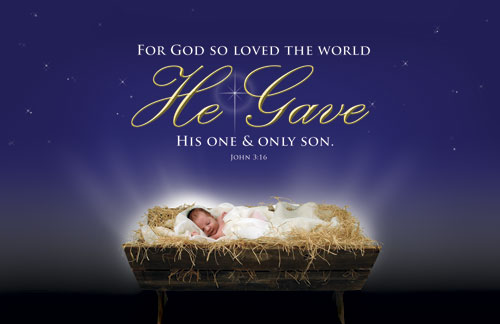
On that quiet night in sleepy Bethlehem, God sent his only Son into the world to be our Savior. Why? Because he loves us. Whoever believes on him will be saved from death and will receive the free gift of eternal life (John 3:16). That includes you!

 Oh, but there’s more. When we fuse ourselves to Jesus, we become brand new people (2 Corinthians 5:17).   Our outlook on life is revitalized; our values and motivations change. We instantly experience the peace of God and his joy (John 14:27 and 10:10). Each day is an opportunity to discover more of what it means to live a God-enhanced life.

And how do we know those statements are true? God’s Word is our guarantee that these blessings become ours through Jesus. The truth presented within its pages has been proven. 

  • Over 150 years of archaeological studies back up the accuracy of numerous facts in scripture. Not one discovery has uncovered an inaccuracy.
  • Dozens of Old Testament prophecies about the Messiah were fulfilled by Jesus. The mathematical laws of chance refute the possibility of coincidence.
  • Scientific and medical information in the Bible has been verified centuries later.*
  • Thousands of ancient manuscript fragments and letters (which include Bible quotes) corroborate the scriptures – many more than any other ancient text.
  • The influence of the Bible has been evident in the lives of individuals and upon the culture and history of the Western world. No other book has produced such impact.

There you have it. Ten words that researchers have found to be powerful and persuasive for selling products, or ten words that persuasively express the significance of Christmas and why it makes sense to embrace it.

The apostle John summarized the central truth of Christmas with these ten words:

nativityscene

(“The Word became flesh and made his dwelling among us.” John 1:14)

That is glorious, incredible news worth celebrating.

But Christmas isn’t just a happy one-day celebration, it’s meant to be a joyous, whole new way of living with Jesus — all year, every year.

Better yet?  A day is coming when the joy of Christmas will be purified, intensified and extended for all eternity–on the day when he comes again!


*For one small example, see “Pathfinder of the Seas” about Matthew Maury and his discoveries.


(Art & photo credits:  www.wordstream.com; http://www.beyondwaiting.com; http://www.outreach.com.)

Read Full Post »

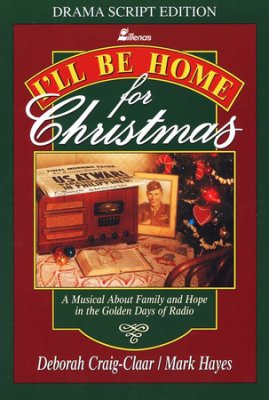
“Oh, Lord, please don’t put me at a table where everyone else knows each other,I prayed while putting on earrings. “It’s bad enough that Steve can’t go.”

I was getting ready to attend a dinner theater performance of I’ll Be Home for Christmas*, being held at a nearby church.  Had the evening been a date with my husband as originally planned, it wouldn’t have mattered where we sat. But Steve was in bed with a virus, leaving me to attend alone.

I couldn’t use Steve’s illness as an excuse to stay home.  Our daughter was one of the dancers. I had to be there; I wanted to be there.

God answered my prayer. No one knew each other at my assigned table, and we spent a delightful hour becoming acquainted—no conversation-monopolizers or negative Nellies in the group.

images

However, I couldn’t help notice that several tall people were seated between the stage and me. I was going to be rocking back and forth a lot to keep up with the performance. (You short people know what I’m talking about!)

A couple at the table, Larry and Susan, knew one of the teachers from the school where I taught.

“In fact,” Susan added, “She’s here tonight, too–I saw her come in. I think she’s at a table up front.”

During the after-dinner/before-performance break, I wove my way up front to greet Diane. Imagine my surprise when she said,

“We’ve got an extra seat here. Why don’t you come sit with us?”

I scurried back to my original table, expressed my pleasure in meeting everyone, and explained where I was moving and why.

Later, when Heather and the other dancers performed, she was right in front of me much of the time—with no obstructions. Thank you, Lord, for blessings not even asked for, I whispered.

The entire production was over-the-top wonderful, with an engaging script, a well-directed and thoroughly rehearsed cast, and a delightful score. In addition, everyone on stage seemed to be having as much fun as the audience.

2346151

But I could tell hours of time had been expended to coordinate the various elements: costumes, set design, actors, dancers, singers, lighting, sound etc. The script also required impeccable timing for certain scenes. No doubt they had practiced again and again to get it just right.

Wouldn’t it be amazing to work on such a musical at our church, I mused. But no way that’s going to happen.

Our music ministry was in need of a new director; the interim (though trying valiantly) was barely keeping us going. The choir had dwindled by half. We weren’t even doing a cantata that year.

But several weeks later, a dynamic director named Dixie accepted the vacant position, and attendance immediately improved.  A few weeks after that she announced we would perform a musical for Easter.

Oh, no, I thought. We’re not ready!

But it turned out we were.   It took a few Saturday rehearsals and longer choir practices on Wednesday nights, but I don’t remember anyone complaining.   The extra hours developed stronger camaraderie among us, renewed our confidence, and bolstered our faith.  Dixie showed us that all things are possible with God—even Easter musicals memorized in six weeks!

Several years later in August, Dixie announced the musical we’d perform for Christmas. And guess what script she pulled out? Yup. I’ll Be Home for Christmas*.

4191970

The Lord does indeed fulfill the desires of those who fear him (Psalm 145:17)– desires beyond probability, beyond hope, beyond what we ask for.

*I’ll Be Home for Christmas, by Deborah Craig-Claar and Mark Hayes, Lillenas, 1994.

Photo credits:  www.jointhedinnerparty.com; http://www.nph.com; http://www.christianbooks.com.

Read Full Post »

After you’ve known God awhile you begin to notice:

His ways are not our ways–they’re better.

And he loves to weave together disparate, even far-removed elements (sometimes over decades of time) to achieve his plans…

Brothers, John and Charles Wesley are well-known names in church history.  God used them as highly effective evangelists in England and America during the 1700s.


(c) John Wesleys House & The Museum of Methodism; Supplied by The Public Catalogue Foundation

(c) John Wesley’s House & The Museum of Methodism; Supplied by The Public Catalogue Foundation


Early in their ministry, they became convinced of the power of music to teach scriptural truth and create meaningful worship. Charles in particular began to write hymns. (In fact, he composed over 6,000 in his lifetime.  We still sing a number of them today.*)

One of those familiar hymns is “Hark! The Herald Angels Sing.” Some say the carol was inspired as Charles walked to church on Christmas Day, 1739.


d54881f673bc3e77e2711ab65d0ca5dd


As the church bells rang out he wrote:

“Hark! How all the welkin** ring.

Glory to the King of kings!”

For years to come, those attending the Wesleys’ open-air meetings sang the carol to the tune of another Wesley hymn, “Christ the Lord Is Risen Today.”

In 1743, another famous preacher, George Whitefield, decided to include the carol in a hymnbook he compiled, but changed the first lines to what we know today:

“Hark! The herald angels sing,

‘Glory to the newborn King.”

Charles Wesley did not appreciate the altered words, because scripture includes nothing about angels singing at the birth of Christ. Luke 2:13 clearly states “a great company of the heavenly host appeared with the angel, praising God and saying, ‘Glory to God in the highest.’”


220px-William_Hayman_Cummings

Skip ahead more than one hundred years to 1856. Church organist, William H. Cummings (above), discovered a new and perfect tune for the carol, hiding within a cantata by his favorite composer, Felix Mendelssohn. (He had once enjoyed singing in a chorale directed by the famous Mendelssohn.)

The score, Festegesang (1840), had been composed for the 400th anniversary celebration of Gutenberg’s printing press. In the second section, Cummings heard “a beautiful melody looking for words.” He took Charles Wesley’s verses, George Whitfield’s revisions, and Mendelssohn’s tune to create a hymn suitable for congregational singing.

The result: the familiar carol we sing to this day.

If it had been up to Wesley, those lyrics would never have been changed.  He once commented that he and John were honored to have their hymns published, but he did wish the editors would “not attempt to mend them.”

If it had been up to Mendelssohn, his melody never would have become a Christmas carol.  Granted, he had recognized its  potential for a popular song, but as a Christian, Mendelssohn never considered the melody suitable for sacred words.

God had different plans, however, than Wesley or Mendelssohn. And he used two more gentlemen to accomplish his purpose.

Isn’t that just like our God?

Master Weaver indeed.

________________________________

*Some popular hymns of Charles Wesley: “O for a Thousand Tongues to Sing”; “Blessed Be the Name”; “Come, Thou Long Expected Jesus”; “And Can It Be?”; and “Love Divine, All Loves Excelling”.

** Welkin is an old Anglo-Saxon word meaning “the vault of heaven where the angels dwell.” 

Sources: Stories behind the Best-Loved Songs of Christmas by Ace Collins (2001); Stories of the Great Christmas Carols by Kenon D. Renfrow and June C. Montgomery (2003); www.aproundtable.com; www.markroberts.com .

 Art and Photo Credits:  www.bbc.co.uk; http://www.pinterest.com; http://www.wikipedia.org.


Read Full Post »

5c1cdef89b871e8095f70ce44bf2c898

(“Thanks be to God for his indescribable gift!”

–2 Corinthians 9:15 NIV)

Consider.

Jesus, our Savior, is:

  • Incomparable – without equal or rival (Psalm 86:8)


85d81ac7ab8a0b3947d92604f1091b4f


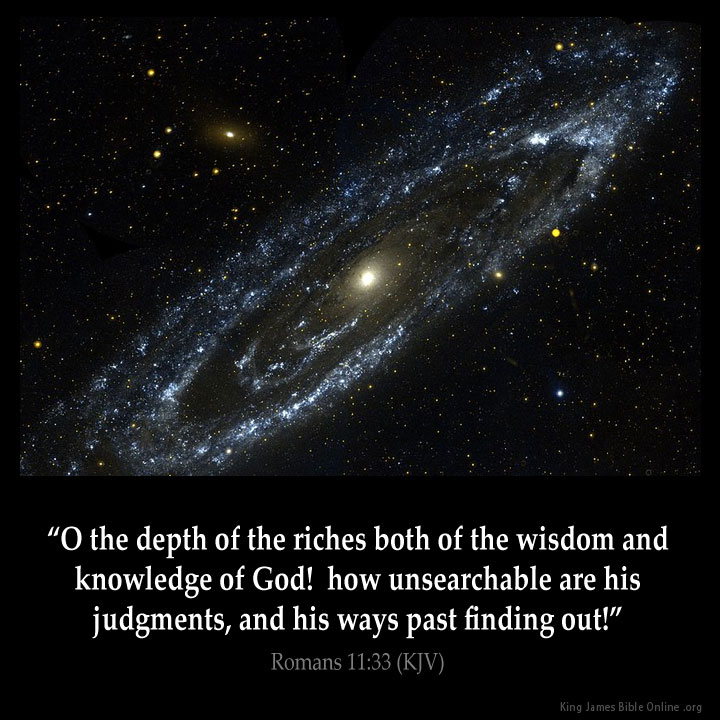
  • Incomprehensible – beyond understanding or knowing; unfathomable (Romans 11:33)


Romans_11-33


  • Indescribable – exceeding description (Jeremiah 10:6-7)


image10

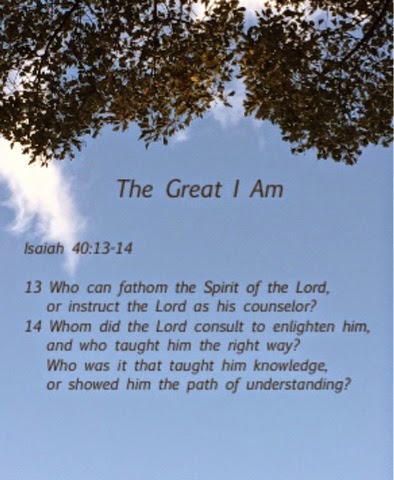
  • Indisputable — incontestable (Isaiah 40:13-14)


blogger-image-1447150886


  • Inestimable – of incalculable value (Psalm 145:3)


fbf41a5427ef67c257c65dc01af288ff


  • Inexhaustible – incapable of being used up or consumed or becoming tired (Revelation 1:8; Psalm 121:3)


d9d9e4567f79b10eb2ca1ee33f55e92d


  • Infallible – cannot fail or even make a mistake (Psalm 145:17)


f65a18471e84ba787378cce22761e36d


  • Invariable – never-changing (Hebrews 13:8)


1ac798f9a8c3556236c4b2b9561ce3e6


  • Invisible – John 1:18


98e17694c4978f1297c069388e500041


And those nine descriptors only begin to define Jesus. No matter how many fancy, multi-syllable words we might collect, the attributes of God’s Son are beyond full comprehension.  And he is God’s gift to us.

*     *     *     *     *     *     *     *     *     *

Oh, Jesus, how we thank you for giving up the splendor of heaven and the glory of your deity, to take on human form and become our Savior. How incomprehensible that you could love such pitiful creatures as mankind. Nevertheless you came so that we, too, could become God’s sons and daughters. Even more incredible, many of the descriptors above will be true of us—on that day when you appear again, and  We.  Shall.  Be.  Like.  You. 

(Philippians 2:6-7; John 3:16; Romans 8:29; 1 John 2:2)

(Art & photo credits:  www.pinterest.com; http://www.kingjamesbibleonline.org; http://www.thelovelyscribe.com; http://www.tgreatiam.blogspot.com; http://www.pinterest (5).


Read Full Post »

The Christmas season is well underway at our house. The tree is lit and ornamented,


IMG_0370


other decorations are in place,


IMG_0378


some of the Christmas cards are complete as well as some of the shopping.

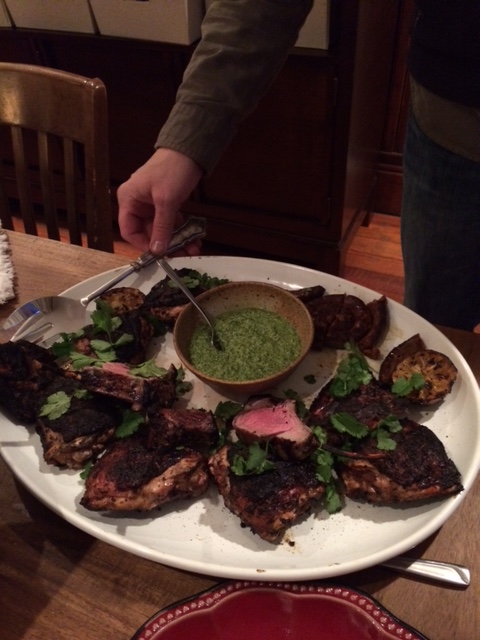
But none of this would matter much if the whole family were not able to gather in just a few weeks. Eager expectation mounts for the noise and laughter, thought-provoking conversations, fabulous meals (prepared by several gourmet cooks in the family), and more.


IMG_0067


I actually find much to enjoy just in the anticipation of all this activity. In my imagination I visualize joyful faces, hear the good-natured teasing, smell the wonderful aromas wafting from the kitchen, and feel the warmth and camaraderie of loved ones who even like each other.

Our spirits are lifted as we relish these sublime moments–even before they’ve become reality–because pleasant anticipation is…


“..that sanguine expectation of happiness

which is happiness itself.”

Jane Austen, Sense and Sensibility


But there is much to be said for delightful surprises as well, when:

  • The florist delivers a fragrant Christmas centerpiece from friends.
  • The doorbell announces the arrival of uninvited guests–carolers.
  • The check at a restaurant is paid for by friends who happen to be dining at another table.
  • An unexpected, especially thoughtful gift is drawn out from behind the tree.


hand-small-christmas-gift-box-man-present-luxury-life-48215666


Our hearts beat a little faster, and feel-good endorphins flood the system.

How glorious that the story of the first Christmas gives us both: delicious anticipation and delightful surprises.

First, the anticipation:

  • Hundreds of years before Jesus was born, the prophets foretold his coming, including his birth to a virgin (Isaiah 7:14), his birthplace in Bethlehem (Micah 5:2), his ancestry from the house of David (Isaiah 11:1-2), and more.
  • Devout Jews such as Simeon and Anna (Luke 2:25-38) had waited all their lives for the Messiah to come. Their eager expectation was finally fulfilled with the birth of Jesus.


Simeon


Then the story includes several surprises.

  • Imagine yourself occupied in ordinary tasks on an ordinary day, when the angel, Gabriel, appears out of nowhere, telling you not to be afraid. (Impossible under the circumstances!)  Imagine hearing the words, “You will be the mother of the Son of the Most High.”

Or,

  • An angel visits you in a dream to explain that the baby boy your fiancé is carrying was put there by the power of the Holy Spirit. (I wonder if Joseph asked the angel to please repeat his message?)
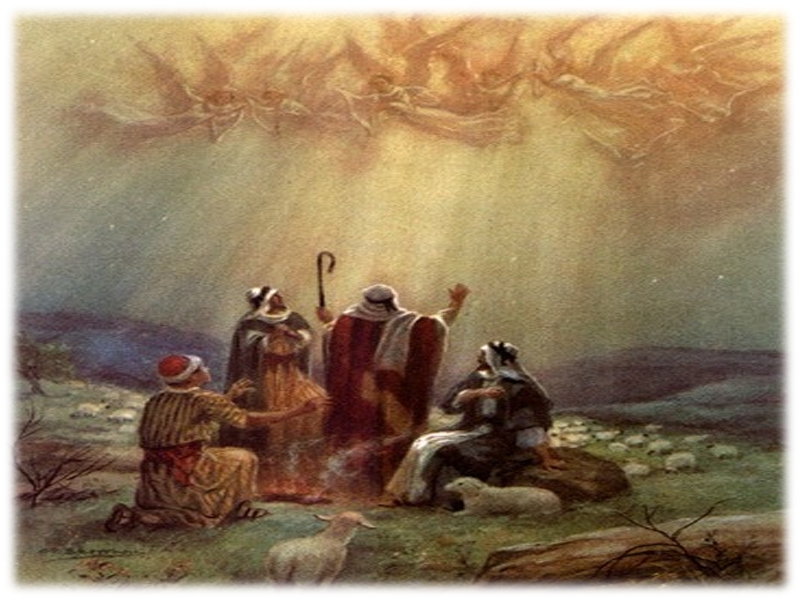
  • Picture yourself as a shepherd, drowsily watching your flock at night, when POOF! An angel appears, casting ethereal light all around you and announcing the birth of the long-awaited Messiah, the Lord of all. He’s finally here! And his birth is being declared to you—lowly shepherds at the bottom of the social strata. You try to absorb the news while your heart hammers in your chest.


ShepherdsBethlehem


Whichever you prefer—anticipation of the expected or out-of-nowhere surprises—the season offers opportunity for both.

We look forward to the well-loved traditions, familiar carols, and warm family gatherings. These activities can surely be counted among God’s precious gifts to us.

And just as the Jews longingly looked toward the coming of their Messiah, so we anticipate the second Advent or coming of Jesus, when he will begin his reign as the King of kings.

And if you prefer surprises, remember: God still performs wonders and miracles! In fact, he loves to display his glory as he works for our ultimate good in ways we don’t expect.

Perhaps our best attitude is to embrace them both.

Delicious anticipation embodies hope; delightful surprise unfolds into great joy.


il_214x170.866041452_t17z

(Art & photo credits:  Nancy Ruegg (3), gift:  www.dreamstime.com; Simeon:  www.deliveredbygrace.com; angel visitation: http://www.freerepublic.com; hope and joy:  www.etsy.com.)

Read Full Post »

We’re All Wrapped Up!

bcdf5133d5ad29987dfc54f9f5bf5423

Steve and I are enjoying the presence of our happy family this week.  May you also be creating glorious memories to enjoy for years to come.

I’ll be back with a new post on Monday, January 5!

(Art credit:  pinterest.com)

Read Full Post »

It’s Christmas!

Glorified-Christ-in-Heaven

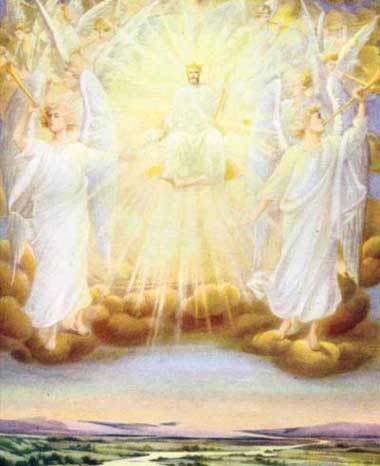
Praise God, our Savior has come.  The King of kings and Lord of lords left the glories of heaven for us.

The Son of God became a man

to enable men to become the sons of God.

-C.S.Lewis
(Mere Christianity)

Incredible, isn’t it?

(Art credit:  www.coolchaser.com.)

Read Full Post »

Nativity-29

Bethlehem. One word that immediately conjures images from the Christmas story: an inn with no room for a travel-worn couple, a stable or cave that became the birthplace of a King, angel choirs announcing his birth, and exuberant shepherds worshiping the newborn Messiah.

But just five miles from Bethlehem lies Jerusalem. In fact, from some locations within the little village, you can gaze northward and glimpse the rooftops of the capital city.

Perhaps, as Christmas approaches, we would do well to shift our gaze for a few moments, from the manger in Bethlehem toward Jerusalem: the place where our Savior gave up his life on a cross.

Most of our thoughts this time of year focus on the village where the little Lord Jesus laid down his sweet head, where angels came from the realms of glory and shepherds quaked at the sight. Each year we sing carols that highlight nearly every aspect of the story.

But there is one carol that reminds us of the bitter realities of Calvary, even while celebrating the sweet story of Jesus’ birth: “The Holly and the Ivy.”

Historians tell us that long before Christ was born, Europeans were bringing holly into their homes during winter, as part of several pagan celebrations. Later, Christians continued the tradition, but adapted the symbolism associated with the plant.

To these believers of long ago, holly represented Jesus. The sharp points on the leaves reminded them of the crown of thorns pressed down on Jesus’ head prior to his crucifixion. The bright red berries represented the blood he shed. Holly also produces white flowers, symbolic of Christ’s purity.

And what of the ivy?  One source suggested that ivy requires a support system as it grows.  Small tendrils find places to cling. (Ivy seems especially fond of brick walls, doesn’t it?) Perhaps the lyricist of this carol was thinking of us when he included the ivy. We need to cling to God for support in our lives.

Note the last line of the first verse: “The holly bears the crown.” Indeed.  He is the King of kings and Lord of lords!


The holly and the ivy, when they are both full-grown,

Of all the trees that are in wood,

The holly bears the crown.


The holly bears a blossom as white as lily flower,

And Mary bore sweet Jesus Christ

To be our sweet savior.

The holly bears a berry, as red as any blood,

And Mary bore sweet Jesus Christ

To do poor sinners good.


The holly bears a prickle, as sharp as any thorn

And Mary bore sweet Jesus Christ

On Christmas day in morn.


The holly bears a bark

As bitter as any gall,

And Mary bore sweet Jesus Christ

For to redeem us all.

The Bethlehem Christmas story includes so many elements to celebrate: God’s love manifested in the birth of a Savior; Mary’s and Joseph’s faithfulness to fulfill God’s plan, the angel’s message of peace on earth, and the shepherds’ joy.

But may our celebration also include appreciation for God’s love that prompted him to give up his only Son to death, that those who believe on him might have eternal life. May we celebrate the faithfulness of our Savior to fulfill God’s plan in spite of the agony and sorrow.

And, yes, may we celebrate the deep-down, long-lasting peace and joy that only Jesus can provide (John 14:27; 15:11).


(Sources:  Christmas, by Charles Allen and Charles Wallis (Revell, 1977); http://www.hymnsandcarolsofthefaith.com; http://www.landscaping.about.com; http://www.mymerrychristmas.com.)

Art credit:  www.lamblion.com.

Read Full Post »

F7007


Christmas. The first syllable surely needs no explanation of origin. It speaks of the One we celebrate.

But what about the second syllable, -mas?

Christmas is a term that has been around for nearly a thousand years, coming to us from Old English. Cristes Maesse meant “Mass of Christ.” It was established by church leaders to disconnect the church celebration of Jesus’ birth from pagan holidays and customs—holidays such as Winter Solstice. (Even before the birth of Christ, Romans were celebrating the shortest day of the year, in anticipation of the sun’s gradual return.)

As a matter of fact, as early as the fourth century, Christians were creating their own wintertime celebration. One theologian pointed out in 320 A.D.: “We hold this day holy, not like the pagans because of the birth of the sun, but because of Him who made it.”

Yet there are those who wish to keep the customs of Christmas without including the One being celebrated. Seems they’d like to take away the first syllable, Christ. But then all that’s left is –mas.

Sounds like mess.

Indeed. I am confident that without Christ, my life would be a mess. 

A mess of fears.

A mess of brokenness.

A mess of worry.

A mess of guilt.

A mess of dissatisfaction.

It’s possible that for a long while I’d be able to hide the mess under glittery packages of stuff, noise and distraction, busy-ness.

But eventually, a body must stop and rest. That’s when my mind would kick into high gear and the mess would wreak havoc in my soul. Chances are I’d develop sleep problems, depression, or perhaps even physical manifestations like ulcers. Stress can do that to a person.

Shouldn’t I at least consider the alternative? What if I do allow Christ in my life?

Oh, my. The list of precious gifts He bestows is astounding and practically endless. To begin, he provides:

  • Calm in place of fear.

“Do not let your hearts be troubled. Trust in God; trust also in me” (John 14:1), Jesus said.

  • Restoration in place of brokenness.

 “Anyone united with the Messiah gets a fresh start, is created new. The old life is gone; a new life burgeons” (2 Corinthians 5:17, The Message)!

  • Peace of mind in place of worry.

 “Steep your life in God-reality, God-initiative, God-provisions. Don’t worry about missing out. You’ll find all your everyday human concerns will be met…God will help you deal with whatever hard things come up when the time comes” (Matthew 6:33-34, The Message).

  • Forgiveness in place of guilt.

 “Everyone who believes in [Jesus] receives forgiveness of sins through his name” (Acts 10:43).

  • Contentment in place of dissatisfaction.

 “Godliness with contentment is great gain” (1 Timothy 6:6).

 And among his many other gifts to us, Jesus grants us the incredible privilege of eternal life (John 3:16)—with him in heaven.

But how will I be able to enjoy all these gifts if I don’t give Christ a chance?

I really have nothing of value to lose. Just the mess.


“Thanks be to God for his indescribable gift” (2 Corinthians 9:15)–the Christ of Christmas!


(Art credit:  www.emblibrary.com .)

Read Full Post »

DSCN3147


No Christmas season would be complete without the reading of the second chapter of Luke—the account of Mary and Joseph traveling to Bethlehem, presiding over the birth of Jesus in a stable or cave, and receiving shepherd-guests.

Toward the end of the account, as those shepherds were spreading the word of Jesus’ birth, Luke wrote, “Mary treasured up all these things and pondered them in her heart” (v. 19).

Indeed. She had much to process:

  • Her baby was the Messiah, the Promised One, who would save his people from their sin. I wonder if she studied him, looking for signs that he was different from other infants.
  • This was the Prince of Peace cradled in her arms. Yet he had been born to a common village girl in very primitive conditions.  Did that seem strange to her?
  • The shepherds had learned of his birth when angels visited them, just as the angel, Gabriel, had visited Mary and then Joseph.  Gabriel had also visited Zechariah, the father of John the Baptist. Four angel visitations in a matter of months. Never had that happened before.

I find myself pondering, too—pondering Mary herself–this dear, young girl who carried a tremendous burden for a long time.

Dear means beloved and valued. Mary is certainly that for numerous reasons.

  • She embraced Gabriel’s announcement with great faith. “May it be to me as you have said,” (Luke 1:38). She put herself in the care of God in spite of incomprehensible circumstances.
  • Her prayer, the Magnificat (Luke 1:46-55), gives indication of a heart fully committed to God.
  • She endured much: shame for her pregnancy, a long, uncomfortable journey to Bethlehem, and crude circumstances for the birth of her Son.

Mary was young—perhaps between thirteen and fifteen years of age. That was the typical age for a girl to be married in Bible times.

Yet, young as Mary was, Gabriel praised her for being “endued with grace” (v. 28, AMP). In addition, Mary demonstrated stamina, maturity, and gentleness beyond her years, in dire circumstances. No doubt God graced her with these traits. But I have to believe Mary also had freedom of choice, as we all do, to embrace God’s way for her.

But what I ponder most about Mary is the fact she carried a tremendous burden, given to her by an elderly man, Simeon, eight days after Jesus was born.

You undoubtedly remember the story. Joseph and Mary took Jesus to the temple at Jerusalem to be circumcised. There they met the righteous and devout Simeon who had been waiting decades for the Messiah. The Holy Spirit had revealed to him he would not die until he had seen the Lord Christ.

Immediately upon seeing the child, Simeon knew this was the One. He praised God for keeping his promise, blessed Mary and Joseph, and then spoke particularly to Mary, saying Jesus would cause some to rise and some to fall, and the thoughts of many hearts would be revealed.

Simeon’s last words must have caused Mary’s eyes to grow wide and her heart to skip a beat: “And a sword will pierce your own soul too” (Luke 2:21-35).

What?! Wasn’t the worst behind her? Surely Mary wanted to ask Simeon, “What do you mean?” Scripture gives us no indication that she did so. Perhaps Simeon walked away, leaving the stunned couple to stand speechless there in the temple court.

For thirty-three years those last words of Simeon must have echoed in Mary’s mind again and again. How does a person live with such long-term foreboding? Perhaps her mind turned back to the night of Gabriel’s visitation. Perhaps, for thirty-three years, Mary repeated what she had told the archangel: “I am the Lord’s servant. May it be to me as you have said” (1:38).

Mary may very well have developed the calm assurance that even when God’s ways are baffling, we can rest assured he is orchestrating events to accomplish far more than we could ever imagine (Ephesians 3:20). She had been witness to such orchestration in Bethlehem.

Mary knew that even our personal hardships can fulfill purposes that extend far beyond ourselves.

That’s a lesson for all of us to embrace with calm assurance.


(Art credit:  www.seekerville.blogspot.com.)

Read Full Post »

« Newer Posts - Older Posts »

When the House is Quiet

Impressions Becoming Expressions

Mitch Teemley

The Power of Story

Still Traveling

Impressions Becoming Expressions

Living Our Days

Gaining a heart of wisdom

He Said What?!

I'm Patty, and my husband and I are living with our adult son who has autism and epilepsy. I love sharing lessons learned from life around me, especially life with Aaron.

Meditations of my Heart

Impressions Becoming Expressions

Linda Stoll

Impressions Becoming Expressions

Signora Sheila

Where faith meets la dolce vita

Heidi Viars

Finding the Image of God