Feeds:
Posts
Comments

Archive for the ‘Dreams’ Category

One fall years ago, we visited friends in North Carolina during peak leaf season.  At the time, Steve and I lived in Florida. It had been years since we’d enjoyed autumn leaves.

The day after our arrival, plans included a drive along the Blue Ridge Parkway to take in all the festive foliage of: birch (yellow), dogwood (deep red), oak (russet to maroon), red maple (from yellow to maroon), sassafras (orange), and more.

But our much-anticipated excursion had to be postponed due to fog and rain.

On Day Three we finally ventured forth, and surveyed mountains transformed. Dust had been washed away, sunlight reflected from gleaming leaves, and the vibrant colors took our breath away.

Sometimes the dust of concern, discontentment, frustration and more can accumulate in my spirit, clouding the colors of joy and awareness of God’s presence. Life loses its luster.

My eyes miss his blessings, my ears miss his words, my heart misses moments of intimacy with him.

What then? Is there refreshing rain for the soul? Oh yes!
God himself renews. All we have to do is ask [1], perhaps with such a prayer as this:

Restore my EYES, Father. May the tears of repentance clear my vision to see more clearly the beauty of your perfections.

And with an enhanced view of you, I’ll be able to view all other things more clearly [2]–like what you want to show me instead of what I want to see.

Refresh my MOUTH, O God. May I be quick to share gracious words with others as well as appreciation and songs of praise to you for your marvelous deeds.

King Solomon wrote, “The tongue has the power of life and death.” Keep me mindful of this power, to use my words as refreshing balm for others, for my own spirit, and to celebrate you also [3].

Renew my EARS, O Lord—to be attentive to your gentle whisper within.  May I heed your instruction as you train me in the delight of right-doing, and lead me ever deeper into the abundant life you provide.

Tune my ears to hear your words of inspiration, cheering me on [4].

Restore my MIND, Father—my understanding, thoughts, and intentions. The things I think are the things that impact my soul.

May I meditate on all the wonders of your attributes and think Christ-honoring thoughts, becoming more Christ-like as a result [5].

Refresh my HEART, O Lord—my motivations, dreams, and desires. I want my heart to align with yours because I know that’s the first step toward fulfilling purpose and satisfaction in life.

Turn my heart, I pray, from what I’d like to have happen, to who you’d have me become—a reflection of your image. That’s where contentment lies [6].

Renew my SPIRIT, O God—my faith, passions, and confidence. May I navigate the challenges of this day with your strength pulsing through my spirit.

Remind me: when negativity or frustration begin to rise, you are my God of help to quell such emotions.

When setbacks occur, you are my God of guidance to show me the way forward, and when disappointments come, you are my God of hope who brings good out of every situation [7].

I praise you, Father, that I can rely upon you to wash away the grime of discouragement, listlessness, and aggravation.

Because of your compassionate love and with your omnipotent power you will restore, refresh, and renew my inner self—just as you have promised.

Begin this moment, I pray.

Restore my eyes, to see more clearly.

Refresh my mouth, to speak gratitude, grace, and praise.

Renew my ears to listen well (and then obey).

Restore my mind to think Christ-honoring thoughts.

Refresh my heart to align my desires with yours.

Renew my spirit to navigate this day with your strength.

P.S. Try renewing your spirit with “Thirty Days of Praise,” offered below (as part of the newsletter).


[1] Psalm 51:10b

[2] Psalm 119:15; 50:2. Last statement based on Selwyn Hughes, Every Day Light, Day 1.

[3] Psalm 98:1; Proverbs 16:24

[4] Proverbs 2:1-5; 1 Kings 19:11-13; John 10:10

[5] Hannah Whitall Smith, quoted in Values for Life, 256; Psalm 143:5; Romans 12:1-2

[6] 2 Corinthians 3:18

[7] Isaiah 41:10; Psalm 32:8; Romans 15:13

Image credits: http://www.pickpik.com; freerangestock.com (JJ Skys the Limit); http://www.canva.com; http://www.pxfuel.com; http://www.pickpik.com; http://www.canva.com; http://www.pexels.com (Furkan Idrizi).

Processing…
Success! You're on the list.

Read Full Post »

Young Klaus-Dieter John read the last page of another “jungle doctor” book by Dr. Paul White—his favorite series. The adventures, based on the missionary doctor’s experiences in Africa, never failed to capture Klaus’s imagination and heart.

The boy sighed. How great would it be to live in the jungle and help people as a medical missionary.

That dream stayed with Klaus through high school in his hometown of Weisbaden, Germany. As graduation neared in the late 1970s, he felt certain God wanted him to become a doctor and serve in a third world country.

Another person in his school carried the same dream, a pretty girl named Martina. Soon Klaus and Tina were a couple.

The next decade included university, medical school, and marriage. Further training took the Johns to England, Johannesburg, and finally America. Klaus studied at Harvard, and then completed his surgical residency at Yale.

Meanwhile, Tina earned board certification in pediatrics, in Germany and America.

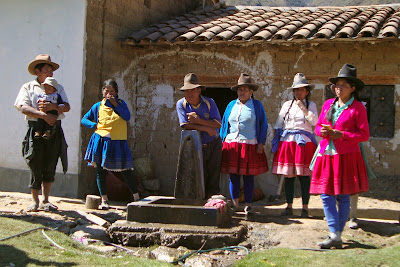
God used a backpacking trip through Peru in 1991 to draw their hearts toward the Quechua people, descendants of the Incas. These Indians live on high plateaus and in deep valleys of the Andes Mountains, impoverished and illiterate.

At that time, just four doctors served 40,000 people. The Johns knew immediately: this was where God wanted them to serve.

First they volunteered for five years at a well-established mission hospital in Ecuador. During that time Klaus and Tina founded the Diospi Suyana organization to alleviate the suffering of Peruvian Indians.

In Quechua, the words mean, “We trust in God.”

But they desired to do much more. “What if,” the couple dreamed, “we could establish a hospital for the Quechua people near Machu Picchu—not just a bare-bones clinic but a true hospital with everything necessary to provide excellent care?”

Just saying the words out loud highlighted the implausibility of their desire. How could they raise the millions of dollars necessary? And even if they could build such a facility, how would they keep it staffed and equipped?

But God propelled them forward.

In 2004 the Johns began seeking financial support for their vision, first in Germany and then in other countries. A trickle of donations at first grew to a steady flow. Several companies even committed to provide equipment and materials.

Also during this time, Klaus and Tina moved their family of five into a mud home in the village of Curahuasi, a village strategically located between three Peruvian cities.

By May 2005, the Johns were participating in a miracle: the ground-breaking for Diospi Suyana Hospital—a project that would cover eight-plus acres of land, and cost $100,000 each month to construct [1].

The couple was determined not to incur debt. God would either supply the needed funds or construction would be discontinued.

Supply he did—through more than 50,000 individual donors who’ve contributed to the hospital’s ministry [2].

As the complex took shape, fifteen miles of computer cable were set in the walls, as well as “countless miles of pipes for suction, compressed air, and oxygen” [3].  

The dedication of the facilities took place in August, 2007. By 2017, 300,000 Peruvian patients had received care at Diospi Suyana—patients who only pay 20% of the cost of their care—at most; the other 80% is paid by generous donors.

Each day begins with a worship service. Thousands of Peruvians have heard about Jesus and been told of his gift of eternal life. For those who accept that gift, one of the hospital pastors visits their home and connects them to a local church [4].

The ministry has expanded over the years to include dental and eye clinics, Kids’ Clubs, a school for six hundred children, and a radio station [5].

Many miraculous provisions have contributed to the flourishing of Diospi Suyana.

For example, in January 2006, while Klaus was in Germany on a speaking tour, he met with a good friend. Klaus mentioned they needed a civil engineer to oversee the hospital construction, but the person had to be willing to serve without pay.

“I know someone who might be interested,” declared the friend and he made a phone call, setting an appointment for later that day with the engineer Udo Klemenz.

Meanwhile, when the phone rang at the Klemenz’ home, Udo and his wife were in the midst of praying about their plans for the future.

At the meeting that afternoon, Klaus made his proposal. The couple gasped in surprise for this near-instantaneous answer to their prayer.

“Come to Peru for as long as you can stay,” Klaus invited.

Udo and his wife soon traveled to Curahausi—and stayed for eight years [6].

Klaus affirms often, “God has become visible in my life” [7]. (Emphasis added.)

Indeed, he has.


[1] https://cvm.swisshealthweb.ch/fileadmin/assets/CVM/2018/cvm.2018.00564/cvm-2018-00564.pdf

[2] https://cbn.com/news/news/hospital-built-faith-proof-me-god-real

[3] https://cvm.swisshealthweb.ch/fileadmin/assets/CVM/2018/cvm.2018.00564/cvm-2018-00564.pdf

[4] https://cbn.com/news/news/hospital-built-faith-proof-me-god-real

[5] https://www.diospi-suyana.de/diospi-suyana-2-2/?lang=en#

[6] https://cvm.swisshealthweb.ch/fileadmin/assets/CVM/2018/cvm.2018.00564/cvm-2018-00564.pdf

[7] https://www.churchtimes.co.uk/articles/2014/3-october/features/interviews/interview-klaus-dieter-john-founding-director-diospi-suyana-hospital

Photo credits: http://www.pixabay.com (2); http://www.canva.com; http://www.heartlight.org; http://www.travelingteacheronline.com, H. McElwee; http://www.pxhere.com.

TAKE NOTE! A newsletter launched this month that includes additional topics to what’s on the blog. Please sign up below and check out the first installment. Thank you!

Processing…
Success! You're on the list.

Read Full Post »

‘If I were you I’d buy a ticket for a boat going on the longest journey you can find and pray to know where to get off. If God doesn’t want you on that boat he’s perfectly able to stop you . . . or make the ship go anywhere in the world.’

Jackie Pullinger of Croydon, England nodded, sensing God’s affirmation to this advice from her pastor.

For months Jackie’s dream of becoming a missionary in Africa had been stymied. No mission society, school, or broadcasting company took interest in her, a twenty-two-year-old music teacher.

And yet the dream she’d held since age five remained as strong as ever—stronger, in fact, upon developing a close, personal relationship with Jesus while attending the Royal College of Music.

Jackie soon implemented her pastor’s advice and set sail from London in 1966 with no destination in mind and only ten pounds in her pocket. When she reached Hong Kong, Jackie sensed God telling her, this is the place.

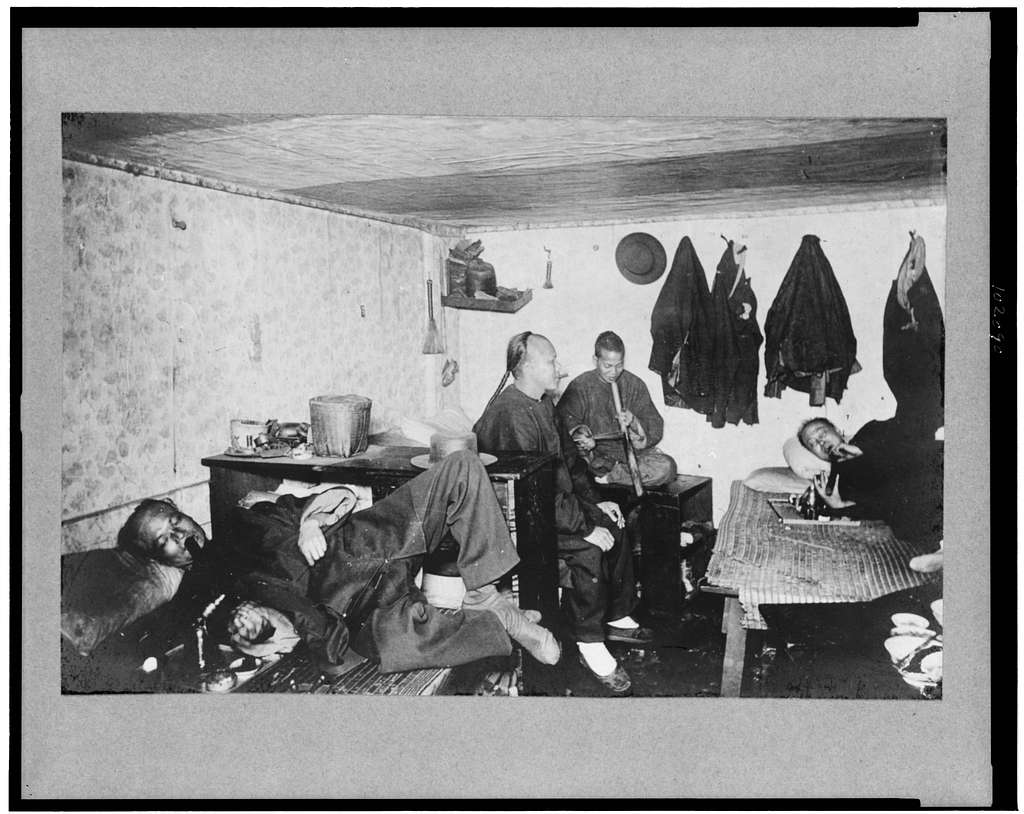
Hong Kong, 1960s

She began exploring the island and came upon the Walled City, a place of lawlessness and squalor, open sewers and rats, gangs, drug addicts, and prostitutes. Thirty-some thousand people on six acres.

No building codes enforced .

Years prior the area had been occupied by the Chinese imperial garrison. “It was omitted from the lease of 1898 in which China ceded Hong Kong to Britain. Neither government had taken responsibility for it” [1].  When the garrison disbanded the underclass moved in, unchecked by any police presence.

In spite of the filth and stench, Jackie felt happy there because in her mind’s eye she already saw the darkness lifting. She saw the kingdom of God.

No trash pick-up either.

To support herself, Jackie took a teaching position in a government school, but she also worked at a school in the Walled City, run by a missionary.

Jackie turned a few shabby rooms into a youth club where teenagers could play ping pong and darts. She began to build relationships with them, many of whom were already heroin or opium addicts.

Preaching about Jesus proved ineffective. But Jackie noticed people watching how she lived. So she focused on putting her faith in action.

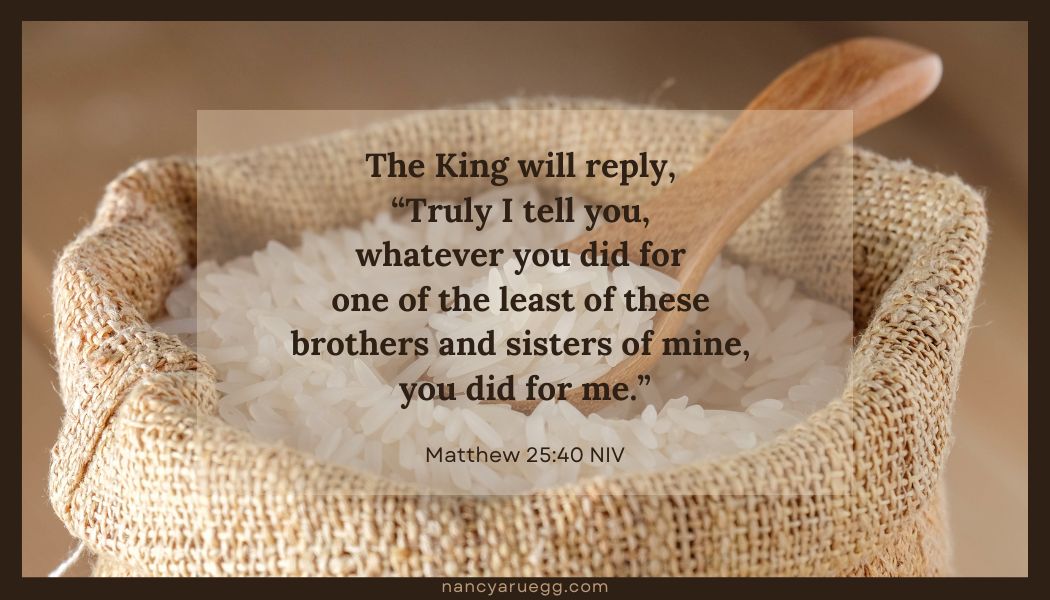
Jackie shared her rice with an old woman, took a gang member to the hospital after a fight, waited in line overnight to register a young girl for school, went to court with a gang member who said he’d been framed, and more [2].

Many expressed appreciation for her kindness and generosity but no lives were changed—at first.

One night thugs ransacked the youth club. Benches, skateboards, and the games equipment were destroyed, the walls and floor smeared with sewage. But a gang leader who respected Jackie assigned guards to protect the youth club from future damage.

Another leader asked Jackie to help his gang members quit drugs. Sober members made better dealers, he explained.

“I’ll only help them to follow Jesus, reject narcotics, and not participate in organized crime,” she told him.

And yet the leader continued to support Jackie and even released from the gang those boys who became Christians [3].

One day while walking through the Walled City, Jackie spotted Christopher, a boy from her youth group. She asked him to carry her accordion.

As they walked, they talked. Christopher confessed he couldn’t become a Christian because he wasn’t good enough. Jackie made clear that wasn’t a prerequisite, and the boy became a Jesus-follower that day [4].

Others soon made the choice to become Christians, including one of the youth-club guards. But some of these new believers lived in opium dens, making their transition to sober-living especially difficult. 

One by one they came to live in Jackie’s home, where they received compassionate care and faith-filled prayer while processing through withdrawal. For many their transition was neither painful or traumatic [5].

Of course, Jackie’s apartment quickly became crowded. But through gifts from other Christians and government resources she was able to rent more apartments. It wasn’t long before dozens of such living quarters became hundreds and each quickly filled to capacity.

More workers joined in the work, including former addicts. They established additional homes for teenagers, women, and girls.

In 1981 Jackie founded the St. Stephen’s Society, to provide accountability for the growing ministry.

In 1985, the Hong Kong Government gave the society a complex of buildings divided into apartments. Hundreds more displaced persons—the poor, the elderly, and the infirm—were given places to live.

In the 1990s, the government offered another property to the St. Stephen’s Society. Buildings were erected to house two hundred men as they completed the five-phase withdrawal program, from detoxification to re-entering society as productive citizens.

The St. Stephen Society continues to function to this day, “rescuing hundreds of young people from a life of misery on the streets” [6]—not only in Hong Kong but in other countries as well.

Jackie, now eighty years old, continues to serve.


[1] https://mycharisma.com/charisma-archive/one-woman-vs-the-dragon/

[2] https://www.ststephenssociety.com/about-us

[3] https://thechurch.org.au/celebrating-jackie-pullinger-of-hong-kong/

[4] https://www.cmf.org.uk/resources/publications/content/?context=article&id=26751

[5] https://thechurch.org.au/celebrating-jackie-pullinger-of-hong-kong/

[6] https://blogs.georgefox.edu/dlgp/jackie-pullinger-loving-the-unlovely/

Photo credits: http://www.flickr.com (2); http://www.picryl.com; http://www.flickr.com; http://www.picryl.com; http://www.pickpik.com; http://www.rawpixel.com.

Read Full Post »

David Steward leaned against the family cow as he milked her, his hands automatically squeezing left, right, left, right. This was his final chore of the day; he’d already cleaned out the barn and fed the pigs and cow.

The twelve-year-old tried not to think about morning chores awaiting him in just twelve hours: emptying the chamber pots, milking the cow again, then collecting the ashes from the potbelly stove and spreading them on the driveway to create traction.

His only consolation was, his seven siblings had their chores too.

David trudged back to the house. He could smell collard greens frying in bacon grease, the pork and beans simmering in the Dutch oven, and cornbread browning in the skillet.

It wasn’t a fancy supper-spread, but all ten of them got enough to eat, thanks to Daddy’s hard work and the whole family pitching in on the farm.

Daddy should have made enough money to support them. He’d been trained as a master mechanic while living in Chicago in the 1930s and ‘40s. But now it was 1963 and the family resided in Mama’s hometown of Clinton, Missouri—a segregated town—and the Stewards were Black. Many businesses didn’t hire people of color.

So Daddy took whatever work he could find as a personal mechanic, nightwatchman, and part-time policeman. He managed a janitorial service, transported coal or trash, even tended bar at parties.

Daddy and Mama could have been bitter; but David and his siblings saw them demonstrate Christian love and kindness, grace and forgiveness, strength and resolve.

Times were changing however; segregation was finally outlawed in 1964. David was among the first Blacks allowed to swim in the community pool.

The next year David started high school and made the basketball team. Four years later he was playing for Central Missouri State University, and after proving himself, earned a sport scholarship. In 1973 he graduated with a degree in business administration.

Over the next eight years, David worked for several companies, including the Missouri Pacific Railroad and Federal Express. In each position David learned skills related to manufacturing, marketing, accounting, sales, and more.

While senior account executive at Federal Express he earned the Salesman of the Year Award and received a trophy—a silver ice bucket engraved with his initials. David looked inside and was struck by its emptiness. Is this all I want out of life? he thought.

The answer was no. He’d long dreamed of owning his own company and managing it with biblical principles.  He and his wife Thelma had faith that now was the time—even with their family of four to support.

In 1984, David launched Transportation Business Specialists, putting to use the lessons he’d learned at Missouri Pacific Railroad. His new company audited bills and overcharges for the rail industry.

Another company was launched in 1987, Transport Administrative Service, and finally, in 1990, World Wide Technology, Inc., to help companies use technology for solving business-related problems.

Success did not come quickly. And though David always made sure his employees received their paychecks, sometimes his family went without.

But he didn’t give up. David wrote: “What we were doing for our employees and customers was meaningful. I had faith that our company was capable of providing exceptional value” [1].

A unique opportunity presented itself in 1995. U.S. troops in Bosnia needed specialized computer software, so David’s company developed a program customized to their needs. They provided the hardware also.

That success led to the development of more applications for additional functions, useful to other government entities. A company that began with a $2000 investment and a handful of employees is now a Fortune 500 company (#71), bringing in twenty billion dollars in annual revenue and employing 10,000 people [2].

In the early 2000s, the Stewards’ pastor asked them to lead a Bible study about doing business God’s way. That led to a book, Doing Business by the Good Book: Timeless Principles for Making an Eternal Impact (2004).

The overall theme: strong leadership is love, expressed by serving others—employees and their families, customers and associates, as well as your own family.

David considers his company his ministry as he applies biblical principles in the workplace.

Eighty-six percent of his employees say World Wide Technology is a great place to work [3].

David also sees himself as an ambassador for Christ in the business world. He keeps one scripture-based goal in mind.

Every day David asks the question:

“Am I living my life worthy of the sacrifice that was made on my behalf”[4]?

That’s a profitable question for each of us. May we all—no matter our place in life—answer with a joy-filled YES!

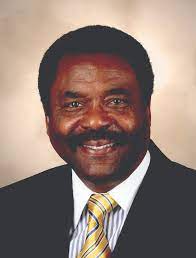
David L. Steward (1951 – )


[1] Doing Business by the Good Book, 2004, quoted by https://www.referenceforbusiness.com/biography/ S-Z/Steward-David-L-1951.html

[2] https://www.wwt.com/corporate/why-wwt/overview

[3] https://www.greatplacetowork.com/certified-company/1100933

[4] https://www.youtube.com/watch?v=OCtItBwZEEU (Steward, 3:36-3:46)

Other sources:

1. https://www2.cbn.com/article/not-selected/david-steward-building-business  

2. https://horatioalger.org/members/detail/david-l-steward/

3. https://www.referenceforbusiness.com/biography/S-Z/Steward-David-L-1951.html#google_vignette

4. https://coinnounce.com/the-success-story-of-david-steward-second-richest-black-man-in-the-us/

Photo credits: http://www.rawpixel.com; http://www.picryl.com; http://www.pexels.com; http://www.daiyverses.net; http://www.en.wikipedia.org; http://www.amazon.com; http://www.heartlight.org; http://www.flickr.com.

Read Full Post »

Sometime during my teens, workers constructed a new house down the street and around the corner—a white Colonial with pillars—something like this:

I dreamed of living there in its spacious rooms, decorated in classic style, similar to the homes in House Beautiful magazine:

Of course, my dreams included a pool . . .

. . . and my favorite car parked out front, just for me to drive—a baby blue Mustang convertible:

Then I’d be deliriously happy.

And according to Psalm 84:11, those good things should have been mine, right?

After all, I was a pretty good kid—never got in serious trouble.

But now, all these decades later, I know: 1) Any sin at all is enough to separate me from all-righteous God (Isaiah 59:2). And 2) . . .

Chuck Swindoll

Now I realize there’s nothing more I could wish for in this world than what God desires to give me*–gifts that are the result of his ever-perfect goodness, never-ending grace, and breath-taking glory, gifts that are good for me.

Just for fun I challenged myself to list such gifts from A to Z, to celebrate the breadth of his generosity to his children.

I pray you’ll be celebrating too as you peruse the following.

Out of his abundant love, God has graced us with:

Access into his presence any time (Ephesians 2:18)

Bible truth that teaches, guides, and inspires (Psalm 119:24)

Comfort in pain and sorrow (Matthew 5:4)

Delights and blessings (Psalm 103:5)

Enablement to endure life’s downturns (Philippians 4:13), remembering that:

His Forgetfulness of our confessed sins (Hebrews 8:12)

His Grace to redeem us from death (Ephesians 1:7-8)

(The pleasure of) Humor, because the cheerful heart has a continual feast (Proverbs 15:15b)

Immortality with God in heaven (2 Timothy 1:10)

Amos Traver

(His) Jealousy that compels him to preserve his relationship with his people (Exodus 20:5)

Kingdom-living and all its benefits (Luke 12:32)

Loving-kindness, lavished upon us (1 John 3:1; Psalm 36:7-9)

Miracles too numerous to count (Job 5:9)

Nature that brims with beauty and wonder (Psalm 104)

Overflow of his benevolence in our lives (Psalm 119:65 NLT)

Promises that never fail (Psalm 145:13b)

Quietness of spirit that offers peace and contentment (Psalm 23:1-2)

Relationships characterized by unity, support, and love (Ephesians 2:17-22)

(The gift of) Song, enlivening our hearts with strength, joy, and encouragement (Psalm 98:4-6)

Berthold Auerbach

Truth found in Jesus, setting us free from the impossible burden of earning our way to heaven (John 14:6; 8:32)

Uplift to those who are discouraged, guilt-ridden, and/or grieving (Psalm 145:3-13)

Victory over death, given to us through Jesus Christ (1 Corinthians 15:57)

Wonders that showcase his power, wisdom, goodness, and more (Psalm 145:3-13)

(The) X-cellence of his character, compelling him to always do the right thing at the right time (Psalm 96:1-6)

(The) Yoke of Jesus, symbolic of his help as we follow his lead (Matthew 11:28-30)

Zion, the eternal city of perfection prepared for his redeemed (Isaiah 35:10)

And now I can affirm more strongly than ever:

Elizabeth Barrett Browning

Including the best dreams of foolish teenage girls.

*     *     *     *     *     *     *     *     *     *     *     *

Thank you, Heavenly Father, for showcasing in our lives your marvelous attributes and showering us with so many wondrous gifts! May the eyes of my heart turn away from the baubles of this world and revel instead in the beauty of your character and kingdom—a kingdom where you preside in all your perfections and provide for us all good things. Hallelujah!

*based on a statement by Joni Eareckson Tada, A Quiet Place in a Crazy World, 127

Photo credits: http://www.flickr.com (2); http://www.pexels.com (Dylan Leagh); http://www.pickpik.com; http://www.flickr.com (Kerry Ann Dame); http://www.rawpixel.com; http://www.pexels.com; http://www.publicdomainpictures.net (Sheila Brown); http://www.pxhere.com.

Read Full Post »

Ken looked up from his Bible into the faces of his children, gathered for their family devotions [1]. He’d been reading to them from a puzzling passage, and the circle of glassy eyes betrayed their lack of understanding.

Ken knew the problem; he’d dealt with it himself growing up in the 1920s. The King James Version of 1611, used by most Protestant churches at the time, was difficult for modern generations to comprehend—much less Ken’s children growing up in the 1940s and ‘50s.

He stopped reading and explained the meaning of the confusing verse.

“But Daddy,” said one of his daughters, “if that’s what it means, why doesn’t it say so” [2]?

Why not, indeed, thought Ken. That’s when he decided to rewrite certain Bible stories for his ten children.

Ken’s background provided a strong foundation for such a project. He’d grown up in the home of a pastor father and godly mother, and earned an advanced theology degree.

That training served him well, first as editor for HIS magazine, then at Good News Publishers, and finally as director of Moody Press in Chicago.

Ken’s children loved his stories, and when he shared them with colleagues at Moody, they urged him to publish. (He’d already published two children’s books.) The first collection of scripture-stories, The Bible in Pictures for Little Eyes (1956), was followed by several more.

Then came a new God-inspired epiphany. What if he rewrote scripture thought-for-thought instead of word-for-word, but still based on the original Hebrew or Greek? Could he make scripture—even the non-story parts—more understandable for his children?

Ken flipped open his Bible, and his eyes landed on 2 Timothy 2:4.

“No man that warreth entangleth himself with the affairs of this life; that he may please him who hath chosen him to be a soldier” (KJV).

After careful thought, Ken wrote: “As Christ’s soldier do not let yourself become tied up in worldly affairs, for then you cannot satisfy the one who has enlisted you in his army [3].”

That night he shared his rewrite with the family. They approved.

Thus began a multi-year commitment of evenings, weekends, and vacations, revising scripture for his family. Ken even worked during the 45-minute commute by train from his home (in Wheaton, Illinois) to Chicago.

Each evening he’d share the results of his efforts with the family.

A few years later another possibility occurred to Ken. Other families might also appreciate a scripture revision in modern-day English. By this time (1962), he’d completed the twenty-one epistles (letters) of the New Testament. He called the book Living Letters.

However, publisher after publisher rejected the manuscript. They doubted people would be interested in a modern version of the epistles so far removed from the familiar King James.

Ken and his wife Margaret decided to finance from their savings a printing of 2000 copies. He then rented half a booth at a Christian book convention and sold 800 copies.

The family helped process the orders at the dining room table. Boxes of books were stored under their beds.

Several months passed before the first orders arrived at their home. Ken dipped into their savings again and printed 5,000 copies. A few months later, 10,000 more.

In 1963 the Billy Graham Association contacted Ken. They wanted to offer Living Letters to anyone who requested a copy. They distributed six hundred thousand copies world-wide.

Considerable proceeds began to accumulate, but Ken and Margaret weren’t interested in upgrading their modest lifestyle. They set up a foundation in order to fund Christian mission projects worldwide [4].

Another prompting from God led Ken to leave Moody Press so he could write full-time and revise more books of the Bible into modern day language.

From 1964 to 1970 Ken added such volumes as The Living Prophecies (1964) and The Living Gospels (1966).  Each one included a different portion of the Bible.

By 1965, the dining room no longer sufficed for conducting the business of their company, Tyndale House Publishing [5]. Ken moved the operation to offices nearby. Another move became necessary in 1967 when even more space was required.

By 1972 Ken had completed the revision of the entire scriptures. The Living Bible was released, selling eight million copies by the end of that year.

In 1973, The Living Bible became the best-selling book in America, and Tyndale House Publishing soon became the well-known and highly-respected company it is today.

By the late 1980s Ken had been semi-retired for several years and his son Mark served as CEO. Tyndale House brought together ninety Bible scholars to work on The New Living Translation, which would be “faithful to the ancient texts and eminently readable” [6]. That volume was released in 1996 and has sold more than 50 million copies.

To this day Tyndale House carries on the passion and Living legacy of Kenneth N. Taylor (1917-2005), ministering to “the spiritual needs of people, primarily through literature consistent with biblical principles” [7].


[1] A time of Bible reading and prayer

[2] https://todayschristianliving.org/ken-taylor-making-scripture-clear/

[3] Ibid.

[4] Ibid.

[5] William Tyndale translated the Bible into English, and was burned at the stake in 1536 for doing so.

[6] https://www.tyndale.com/about-the-nlt

[7] https://www.tyndale.com/kenneth-n-taylor

Other sources:

https://www.zianet.com/maxey/ver4.htm

https://www.referenceforbusiness.com/history2/6/Tyndale-House-Publishers-Inc.html

Read Full Post »

As the new year makes its entrance, a fresh breeze of possibilities and dreams fills the mind:

  • Perhaps this year . . .
  • Wouldn’t it be wonderful if . . .
  • All things are possible with God, so . . .

But no sooner do I start finishing those statements with starry-eyed optimism, than some scratchy, irritating thoughts demand my attention.  Thoughts such as:

  • You’re too old, terribly unworthy, and under-qualified.
  • You’ve already waited so long. Your desires obviously aren’t God’s desires for you.
  • You’ve hopelessly veered from God’s plan; otherwise your life circumstances would surely be different.

And my heart cries out:

I need your Word, God, your Sword of the Spirit, to slay these lies. And though I am grateful for familiar sword-thrusts like Romans 8:28, Jeremiah 29:11, and Philippians 4:13 to wield against the untruths listed above, a few new moves would surely increase my resolve. “Strengthen me according to your word” (Psalm 119:28b).

And God seems to say:

“All right, Nancy, let’s look at each statement from my viewpoint.

“You are too old? Not so. Moses was eighty when he became the leader of the Hebrew nation, bringing them out of Egypt and into Canaan. Daniel served as prime minister in Babylon well past the age of eighty. John was quite elderly when he received the Revelation. Age has nothing to do with usefulness.

“You are unworthy? Also not so. You are one of My chosen people, a royal priestess, who belongs to Me, the King of the universe (1 Peter 2:9a). Like all My children, you are precious and honored in My sight because I love you (Isaiah 43:4).

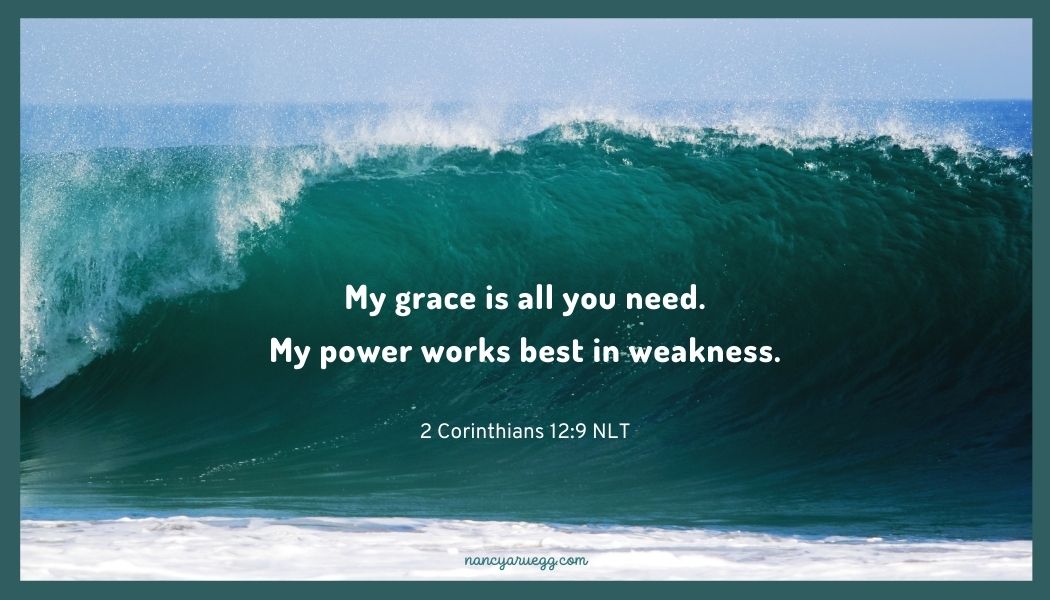
“You are under-qualified? All the better for My purposes! My G.R.A.C.E. (God’s Riches at Christ’s Expense) includes wisdom, power, strength, discernment, all spiritual gifts, all fruit of the Spirit, and more. My grace is more than sufficient for you; it’s all you need. In fact,“My strength comes into its own in your weakness” (2 Corinthians 12:9 MSG).

“You’ve waited too long? Think again. Abraham waited 25 years for Isaac. Joseph waited seventeen years for his dream to come true. Caleb waited 45 years for his special parcel of the Promised Land.

“You’ve veered from My plan for you? Please refer to Ephesians 1:11. Your singular purpose is to display My glory, that is, my attributes of love, joy, goodness, and more. Wherever you are . . . “whatever you do, work at it with all your heart, as working for the Lord, not for men” (Colossians 3:23). And remember: small acts can achieve important results also.

“One closing thought to keep in mind: There is method and reason to every decree I have judiciously ordained since the beginning of time, to accomplish My will according to My sovereignty. I AM the Almighty, all-wise God, your Heavenly Father.”

*     *     *     *     *     *     *     *     *     *

O God, help me to look toward 2024, not through the eyes of discouraging doubt but through the eyes of ever-increasing faith. And when I cannot understand, help me just to stand. In Jesus’ powerful name, Amen. *

* Based on a prayer from Selwyn Hughes in Every Day Light, 105.

Image credits: http://www.pxhere.com; http://www.pickpik.com.

(Revised and reblogged from 1-3-2013 while we enjoy the last couple of days with out-of-town family.)

Read Full Post »

Prince Kaboo’s head hung over his chest. Every part of his body ached from being tied to a wooden cross and then beaten. His back stung like fire from whippings with poisonous vines that also caused chills and fever. 

All Kaboo could think about was death, and he welcomed it. Then the continual torture and starvation would stop, inflicted by the powerful Grebo tribe, who’d taken him captive in central Liberia. They used Kaboo to extort “peace payments” from his father, chieftain of the neighboring Kru tribe. He was only fourteen years old; the year, 1887.

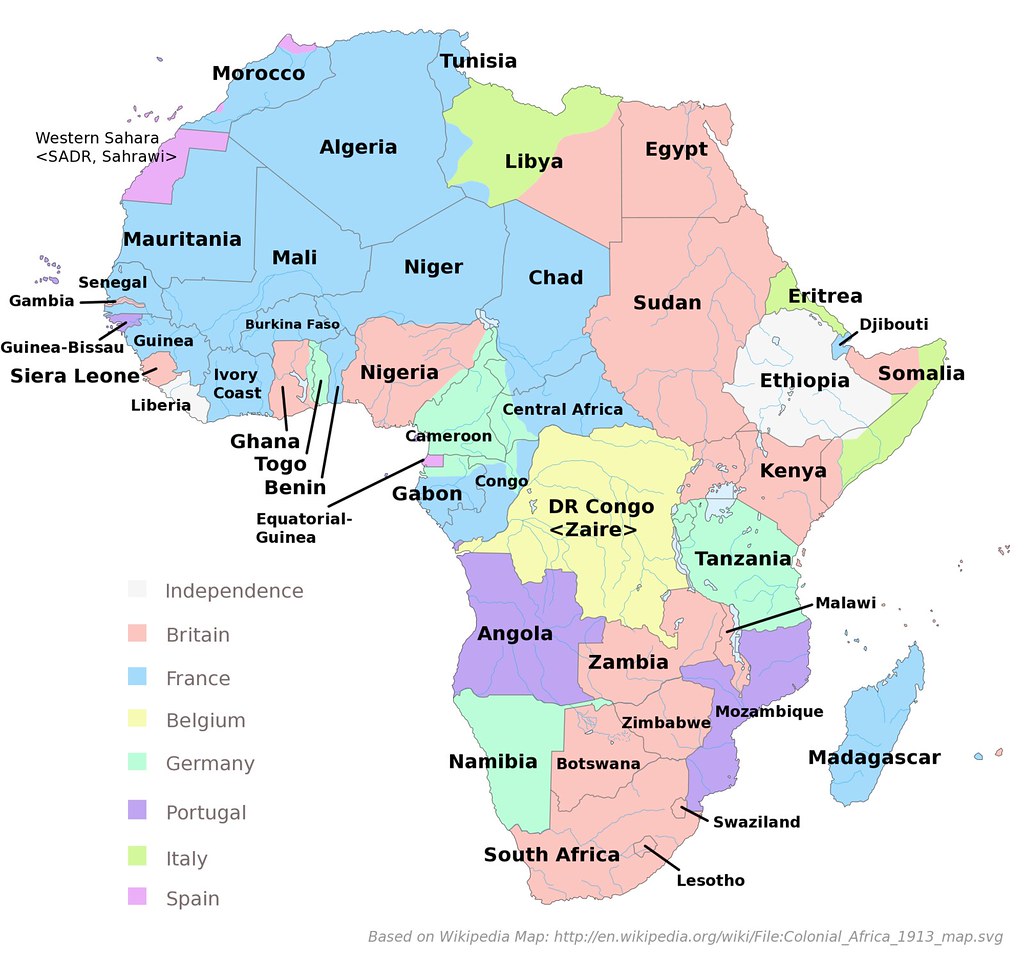
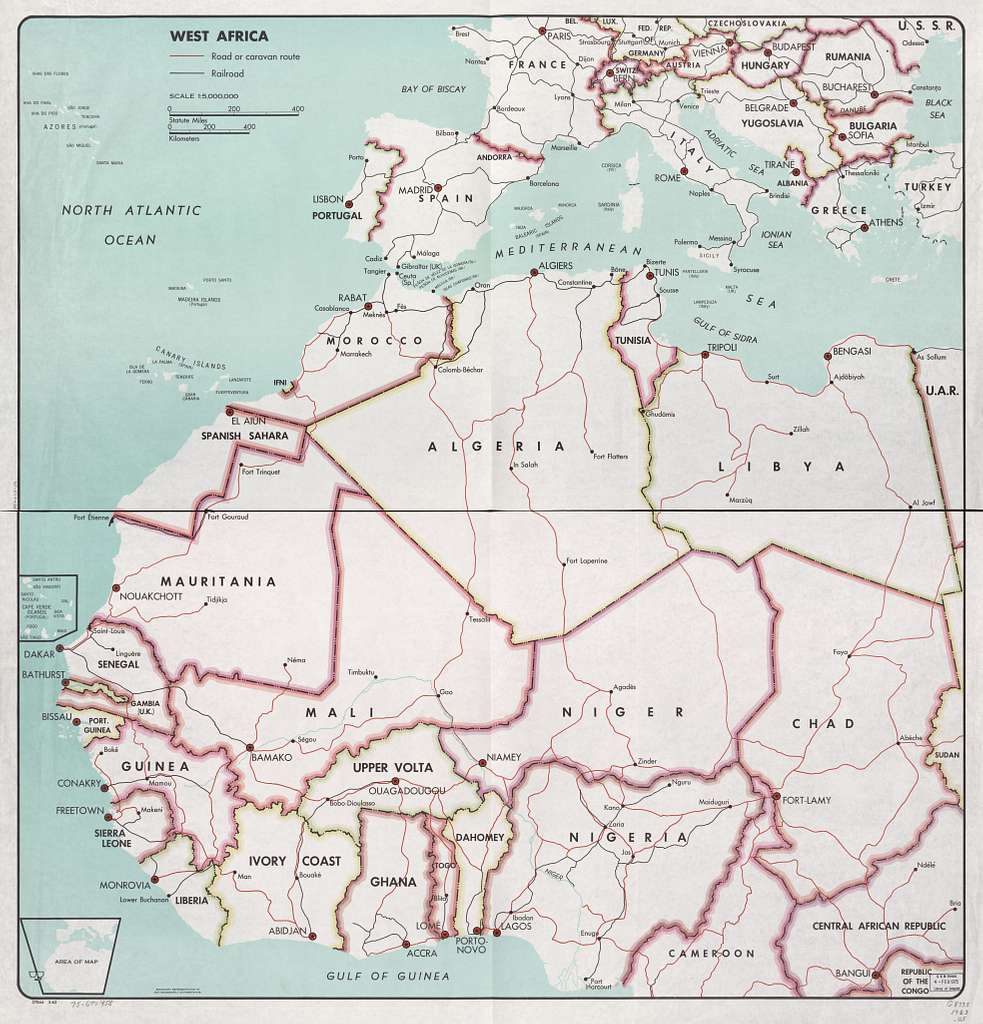
(Liberia is located west of the Ivory Coast in southwestern West Africa.)

Suddenly, a bright light appeared over Kaboo. The ropes that held him to the cross fell off, and a voice called, “Kaboo! Run!” He felt miraculous strength return to his emaciated body.

Kaboo did as the voice commanded, dashing for the jungle and hiding inside a hollow tree until nightfall. Questions swarmed in his head. Where had the light come from? Who spoke to him? How did he become instantaneously strong? Kaboo had no answers.

The young prince did know he could not return home. The Grebos would just come for him again. So Kaboo determined to go in the opposite direction. At nightfall when he emerged from the tree, Kaboo was startled to see the light still shining above him. It guided him through the jungle.

Kaboo walked many days and finally came to a farm where he met one of the workers who happened to come from his tribe. That young man introduced Kaboo to the boss, who gave him a job.

The fellow tribesman took Kaboo to church on Sunday.

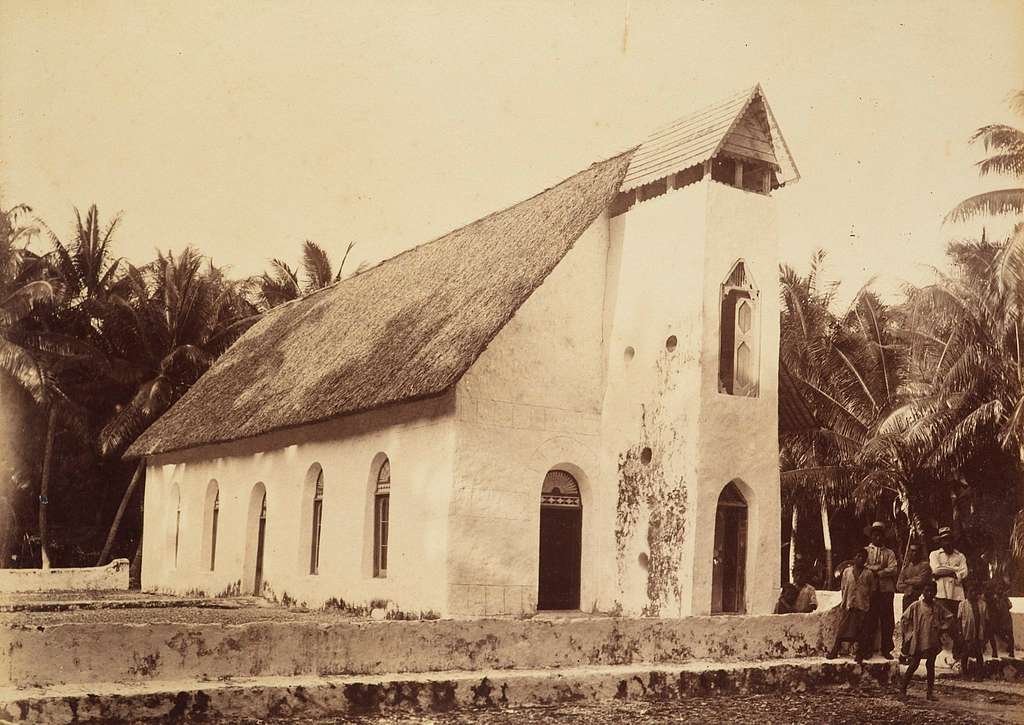
(Perhaps the church resembled this one.)

There he heard the story of a man named Saul who saw a great light and heard a voice.

“That’s what happened to me!” Kaboo exclaimed. He realized the same Jesus who spoke to Saul had spoken to him, and he invited Jesus into his life.  Soon after, an American missionary, Miss Knolls, gave Kaboo a new name: Samuel Morris, after her benefactor.

Months later Kaboo met a boy who’d been a slave in the Grebo tribe when Sammy (as he came be known) was held hostage. The boy told Sammy, “We didn’t know what happened to you. A bright light flashed over you, someone called your name, and then you were gone!”

Sammy explained the miracle of his escape and the boy became a Christian too.

A dream began to form in Sammy’s heart, to head for America where there’d be knowledgeable teachers and many books about God. He was hungry to learn. So Sammy set out on foot for the coast where he found a ship headed to America.

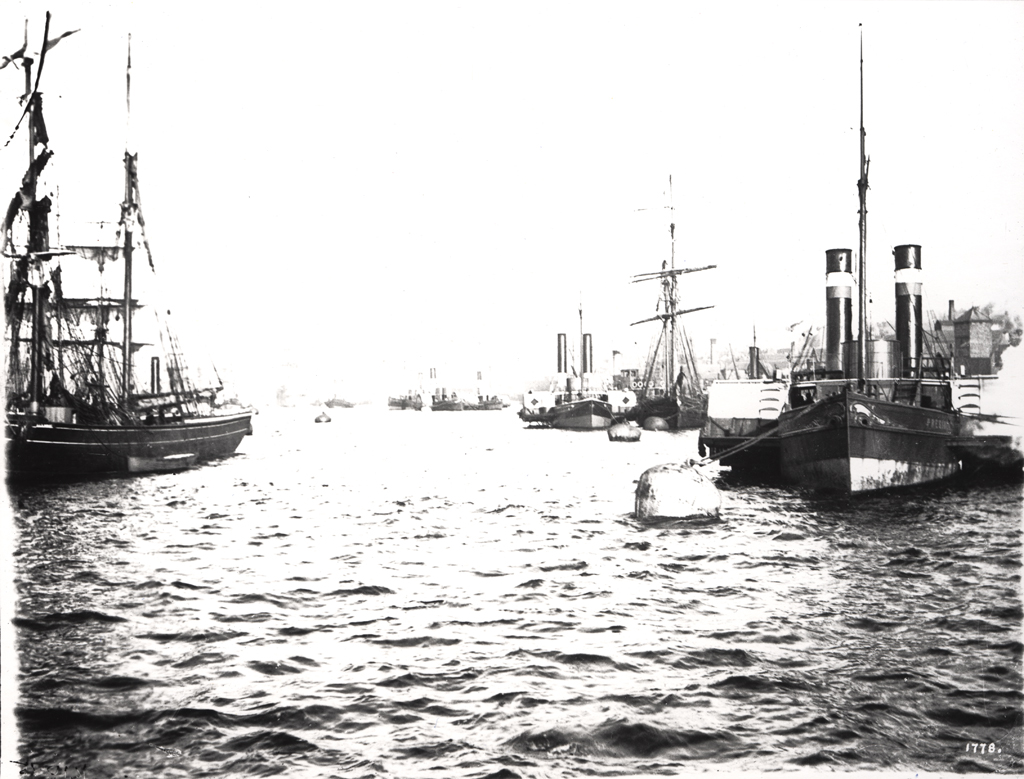
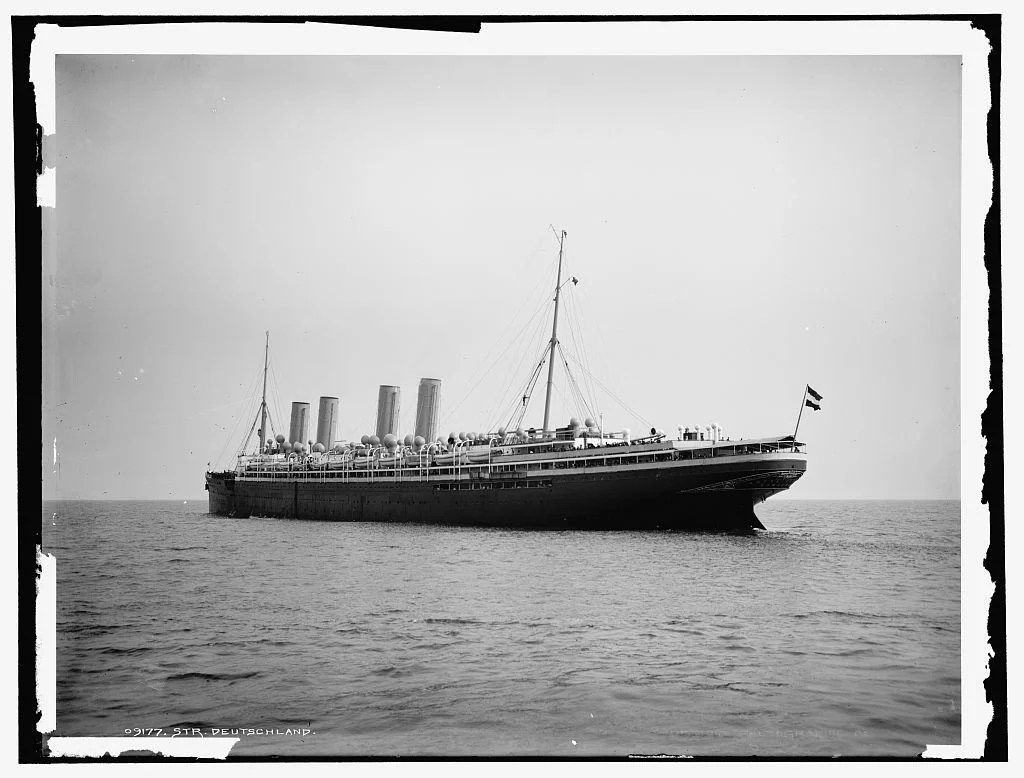
(Such a scene may have greeted Sammy as he arrived at the port in Monrovia.)

He offered to work in exchange for passage but the captain declined.

“Oh Lord,” Sammy prayed. “Change his heart!”

And God answered. One of the sailors became sick and Sammy was assigned his tasks. Others on board mistreated him, but Sammy’s kindheartedness won them over, and by voyage’s end many chose to believe in Jesus, including the captain.

Upon arrival in New York City, Sammy set out to find Stephen Merritt. According to his missionary friends back in Liberia, this superintendent of a homeless mission would gladly help him.

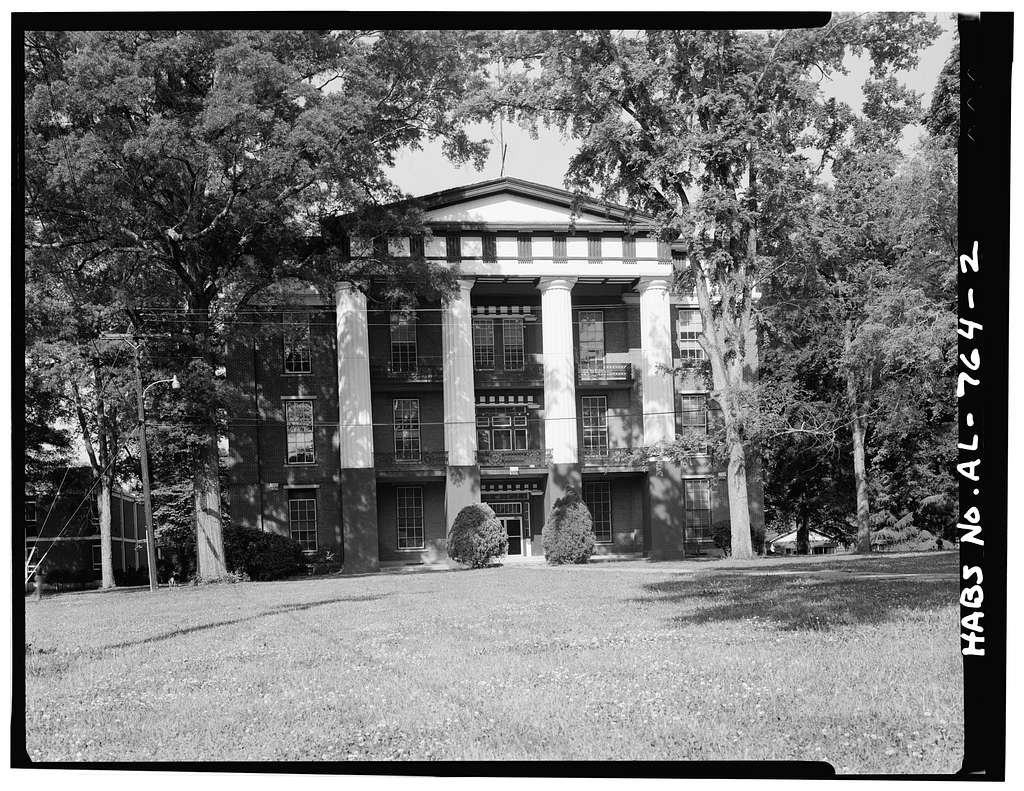
(New York City, 1880-1890)

Sammy stayed several months with Stephen, learning to know God better and assisting with the mission work. His passion for Jesus was contagious and many of the men who came through the mission also accepted Christ into their lives.

Stephen urged Sammy to go to Taylor University in Indiana to continue his education. The superintendent contacted the school’s president, Thaddeus Reade, on Sammy’s behalf.

This was the same university where the missionary, Miss Knolls, had attended. By December of 1891, Sammy had enrolled at Taylor and planned to become a missionary himself to the people of Liberia.

(Samuel Morris)

On May 12, 1893, the unthinkable occurred. Sammy died from a respiratory infection.

Some would say, “Why would God allow such a tragedy?”

But here’s what happened.

A few days after Sammy’s funeral, one Taylor student declared in a prayer meeting, “I feel impressed this moment that I must go to Africa in Sammy’s place, and I pray that as his work has fallen upon me, the mantle of his faith may also fall upon me.”[1] 

Two more of that group affirmed they felt God wanted them to go to Africa also. Instead of one missionary—Samuel Morris—there would be three. And many more have followed.

In addition, five books and a film chronicle his life. In Sinoe County, Liberia, stands the Samuel Morris Educational Resource and Conference Center—a joint project of Taylor University, the Sinoe County Association of the Americas (SCAA), and local agencies in Liberia. At Taylor, scholarships and a dorm bear his name, and the school still prepares missionaries to serve around the world.

“Samuel Morris was a divinely sent messenger of God to Taylor University. He thought he was coming over here to prepare himself for his mission to his people, but his coming was to prepare Taylor University for her mission to the whole world. All who met him were impressed with his sublime, yet simple faith in God.”[2]

Thaddeus Reade


[1] https://pillars.taylor.edu/cgi/viewcontent.cgi?article=1000&context=samuel-morris

[2] https://www.taylor.edu/about/samuel-morris

Sources:

https://www.taylor.edu/about/samuel-morris

https://www.taylor.edu/news/taylor-group-traveling-to-liberia-for-dedication-cornerstone-laying-of-samuel-morris-center

https://wellsofgrace.com/biography/english/morris.htm

Photo sources: http://www.picryl.com; http://www.wikimedia.com; http://www.flickr.com; http://www.picryl.com; http://www.wikimedia.org.

Read Full Post »

Fixate on current events and become anxious.

Consider the bleak projections for the future and become fearful.

Dwell on your own struggles and become discouraged.

Focus on personal inadequacies and become doubtful.

Mull over regrets and become guilt-ridden.

Contemplate fading dreams and become despondent.

Permit negativity free reign and become depressed.

How easy it is to drift away from the truths that provide prosperity of soul.

We must choose to remember the following.

NO MATTER what we see happening, no matter the fear beginning to build, we can affirm: “For every visible reason for terror, there is an invisible and immensely more powerful reason for trust.” [1]

O Lord, God of our ancestors,

you alone are the God who is in heaven.

You are ruler of all the kingdoms of the earth.

You are powerful and mighty;

no one can stand against you!

–2 Chronicles 20:6 NLT

NO MATTER that we may not know the way forward; we do know the loving, all-powerful, and trustworthy Way Maker who has promised:

NO MATTER that life is a struggle right now, God will use it for good.  “There is coming a day [when] . . . We will have the glorious truth of our difficult ‘now’ laid out before us in a way that makes perfect sense, that will leave us panting a breathless ‘hallelujah’ for the process we’ve walked to get there.” [2]

“You do not realize now what I am doing,

but later you will understand.”

–John 13:7

NO MATTER how inadequate you feel because of failures, shortcomings, and doubts, you must remember:  “Weakness . . . is the very thing that qualifies you. Never mind your feelings of inadequacy; it is God’s work, not yours. 

“Simply make yourself available, and let go of any need to impress others, or prove yourself worthy, or achieve ‘success.’  What matters is that God has chosen you, and that God claims you as His own.” [3]

NO MATTER what you’ve done, “You no longer have to fear the consequences of your past, for your sovereign God promises that he will cause everything in your life to work together for your good and Christlikeness.” [4]

“Blessed are those whose transgressions are forgiven. . .

. . . Blessed is the one whose sin

 the Lord will never count against them.”

–Romans 4:7-8

NO MATTER that your dreams may be fading; “the death of your dream [is] not the death of God’s dreams for [you].” [5]

NO MATTER that circumstances conspire to steal your joy, you can . . . “Begin to rejoice in the Lord and your bones will flourish like an herb, and your cheeks will glow with the bloom of health and freshness. Worry, fear, distrust, care-all are poisonous! Joy is balm and healing, and if you will but rejoice, God will give power.” [6]

“Do not be worried,

for the joy of the Lord

is your strength and your stronghold.”

Nehemiah 8:10 AMP

NO MATTER the uncertainties and challenges of life, we have an all-powerful, wise and caring Companion for the journey, who provides all we need to experience prosperity of soul.

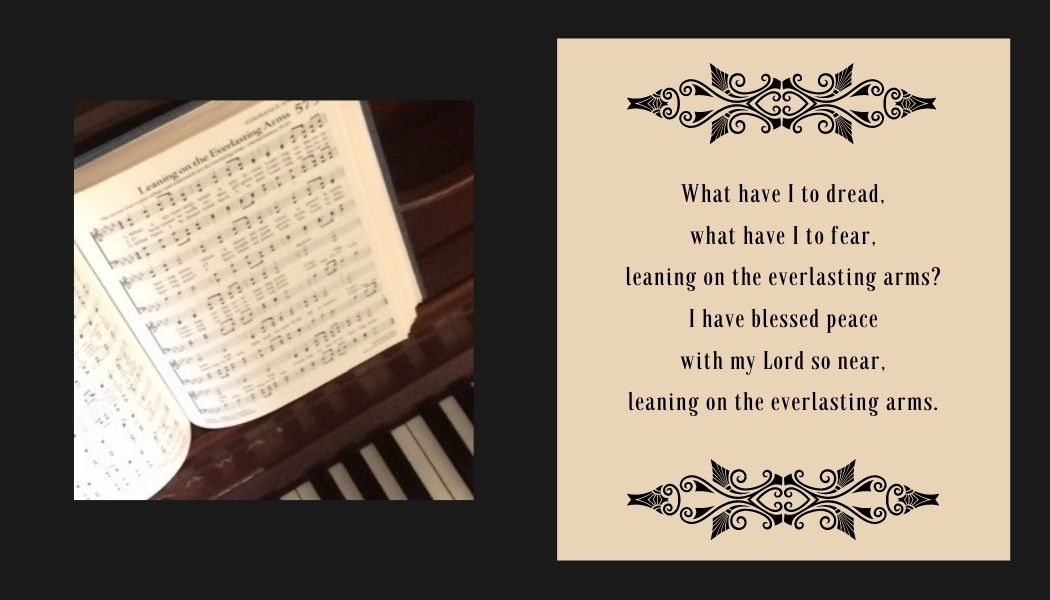
Stanza #3 from “Leaning on the Everlasting Arms” by Elisha A. Hoffman

[1] Elisabeth Elliot, These Bold Ashes, 11.

[2] F. Elaine Olson, Peace for the Journey, 101.

[3] Brother David Vryhof

[4] Kay Arthur, His Imprint, My Expression, 274 and Romans 8:28.

[5] Tasha June, Take Heart, 25.

[6] A. B. Simpson

Photo credits: http://www.pxfuel.com; http://www.piqsels.com; http://www.www.pixfuel.com; http://www.wikimedia.org; http://www.canva.com; http://www.heartlight.org; Nancy Ruegg.

Read Full Post »

(In honor of Black History Month)


No sooner did Mama open the front door than Marian was in her arms, sobbing.

“Oh, Mama! It was awful. There were so many empty seats, and the critics—one said I sang as if by rote.” Marian’s throat constricted around the hurtful words.

If anything, she always put heart and soul into her music. To be told she sang by rote was as painful as being told she sang flat.

“I’m done,” Marian announced through tears. “I need to find a different profession.”

Mama paused, then quietly suggested, “Why don’t you think about it a little, and pray a lot first?”

For a full year, 1924-1925, twenty-six-year old Marian didn’t sing a note.

But a gift for music like Marian’s isn’t easily put away. She’d been singing all her life, including church solos from childhood. Her proud Aunt Mary took her to other venues in Philadelphia so everyone could hear Marian’s glorious voice with its three-octave range.

She longed to develop the gift God had given her and sing the music of the classical composers. So at age eighteen, Marian waited in a long line of applicants for a nearby music academy. Finally someone told her, “You can’t attend here; you’re Negro.”

Of course, she understood. African Americans of the time were prohibited from many establishments. But the pain didn’t come just from the words; it was how they were spoken. The young woman seemed to take delight in deflating Marian’s hope.

“That’s all right,” Mama told her. “God may have something better in mind.”

Mama was right. The principal of Marian’s high school introduced her to esteemed vocal teacher Guiseppe Boghetti, and asked him to take her as a pupil.

“No new students!” he barked, but agreed to hear her sing one song. Marian chose “Deep River,” and Boghetti miraculously found time for her.

But how would she pay him? Papa had died when Marian was twelve; Mama took in laundry and cleaned for Wanamaker’s Department Store to support her three daughters. Marian contributed as she could from her sporadic earnings as a soloist. It was their church who paid for the lessons as members contributed pennies into a special fund for her.

Soon invitations to sing arrived from outside Philadelphia. But travel, especially in the South, presented challenges and indignities. Trains did not serve food or offer sleeping berths to African Americans; hotels would not provide rooms. Marian stayed in homes or at the YWCA. And she sang to segregated audiences—Whites on one side, Blacks on the other.

Marian absorbed the ill treatment—even deflected it—by standing tall and dignified on every stage, in front of those who respected her voice but not her personhood.

Then came the devastating concert at New York City Hall, and her hiatus from singing. But within a year, Marian had returned to Boghetti for more lessons.

In 1925, he entered her in a vocal competition with 300 soloists. Marian won first prize: a concert with the New York Philharmonic Orchestra. Positive reviews fueled her courage to leave home for Europe, where she not only studied singing but the languages of the music she loved: German, Italian, and French.

From 1933-1939 she toured the continent. As those around her focused on her talent, Mama kept Marian focused in her spirit. “Grace must always come before greatness,” she would say.[1]


(1940)


As the Great Depression raged, Marian concluded each concert with several Negro Spirituals. Many were brought to tears as she poured her own emotions into each word, each note.

In 1939, Marian’s agent sought to book a concert at Washington D. C.’s Constitution Hall, owned by the Daughters of the Revolution. They refused the request, asserting their policy forbade African Americans from performing there.

The incident became a national headline when Eleanor Roosevelt heard of their affront. She expressed disapproval in her newspaper column and announced withdrawal of her membership from the organization.


(Eleanor and Marian, 1953)


Meanwhile the Executive Secretary of the NAACP approached the Secretary of the Interior with an alternative venue. Could Marian sing from the Lincoln Memorial steps and the audience stand on the Washington Mall? Permission was granted.

Seventy-five thousand people gathered to hear her sing. Black and White attendees stood together that day, shoulder to shoulder—a picture of Martin Luther King, Jr.’s dream—nearly three decades before his famous speech, given from the same location.


(April, 1939)


More tours abroad and across the United States followed, keeping Marian away from home and family. But her mission compelled her forward:


“I sing to all, of course, but to that one, that one over the ninety-nine

whom you’d like to bring back into the fold—

if I reach that one soul, and reach it well–

then the concert was not in vain.”

—Marian Anderson [2]


By the mid-1950s the Civil Rights Movement gripped the country. Marian received criticism for not using her influence more vehemently. Perhaps they didn’t know her quiet battle behind the scenes.

For example, when the DAR sought to correct the wrong from 1939 and invited Marian to sing at Constitution Hall in 1943, she graciously accepted—with the stipulation that seating be integrated. The DAR complied.

Marian has been described as “a silent fighter who quietly opened doors for others.”[3]

Others. That was Marian’s focus, whether she was singing, serving her community, or giving interviews. In fact, she was known for questioning her interviewers, taking genuine interest in their lives.

Her nephew James LePriest remembers that even into her nineties people would comment, “You look just like Marian Anderson!”

She’d reply, “You’re the third person who’s told me that today,” and never reveal her identity.

Grace before greatness indeed.

(You can access a recording of Marian singing here:


https://www.youtube.com/watch?v=aO9yDb_9NVw&list=PL-J_hJ4fmXTik1Z1NuWrH2mXrTAk-8HVe&index=43)


Notes

[1] https://www.guideposts.org/faith-and-prayer/prayer-stories/power-of-prayer/guideposts-classics-marian-anderson-on-the-power-of-faith

[2] https://www.rightnowmedia.org/Content/Series/1165

[3] Ibid.


Other Sources:

  1. http://dla.library.upenn.edu/dla/ead/ead.html?q=year%20of%20first%20concert%20at%20New%20York%20City%20Hall&id=EAD_upenn_rbml_MsColl200&
  2. https://whittakerchambers.org/articles/time-c/marian-anderson/


Photo credits:  http://www.loc.getarchive.net; http://www.flickr.com (3).


Read Full Post »

Older Posts »

Still Traveling

Impressions Becoming Expressions

Living Our Days

Gaining a heart of wisdom

He Said What?!

I'm Patty, and my husband and I are living with our adult son who has autism and epilepsy. I love sharing lessons learned from life around me, especially life with Aaron.

Meditations of my Heart

Impressions Becoming Expressions

Linda Stoll

Impressions Becoming Expressions

Debby Thompson

Impressions Becoming Expressions

Signora Sheila

Notes on Life, Faith & Italy

Colleen Scheid

Writing, Acting, Living in God's Love

Mitch Teemley

The Power of Story

Heidi Viars

Finding the Image of God