Feeds:
Posts
Comments

Archive for the ‘Encouragement’ Category


Which would you say is the most common human weakness?

A. Living unaware?

B. Greed?

C. Pride?

D. Selfishness?

According to pastor and author, Lou Guntzelman, the answer is A.*

Even twenty years ago when Guntzelman wrote his book, he saw many people living superficially, busily, and distractedly –moving too fast and focusing too much on insignificant matters.


Maybe those descriptors don’t apply to you. But I have been guilty on all counts.

And those of us who tend to fly through our days are at great risk of missing life.

We don’t see the unique qualities of the people around us.


We don’t hear the laughter of our children.



We don’t even think to take in deep gulps of rain-scented air, just for the pleasure of breathing.



We don’t taste and see God’s goodness in the world.


(Blackwater Falls, WV)


We don’t sense His presence.



But!


When we learn to engage the mind and especially the spirit in the moment at hand, we discover the splendor of God’s glory tucked into surprising places–right in front of us.


“The moment one gives close attention to anything,

even a blade of grass,

it becomes a mysterious, awesome,

indescribably magnificent world in itself.”

–Henry Miller


The obvious question is: how do we reprogram ourselves to live more aware?


Perhaps the first step is to condition our minds through quiet reflection.


In a place of solitude, we avail ourselves of his presence and redirect our attention from the day’s cares to God’s truth.



Sometimes that might include:

  • Studying and contemplating scripture, open to a change of heart or a change of direction.
  • Naming God’s attributes and celebrating how he’s demonstrated those attributes in our lives.
  • Keeping a gratitude journal, to help us tune in to the positive.  (It’s a transformative habit!)
  • Reading books by thought-provoking Christian authors, then mentally processing their tenets, and seeking ways of application to life when appropriate.


The state of our minds affects our perception of everything.


Second, we condition our focus.


We determine to:

 

(Backyard beauties at our house,

on display the end of April)


  • Appreciate more fully the natural wonders around us—even in the backyard, on the way to work, while running errands.
  • Honor each person we meet with eye contact, smiles, and a kind word.
  • Sift out the immaterial and apply ourselves to the important.
  • Refuse pointless worry and find priceless treasure in scriptural reassurance and God’s inimitable peace.
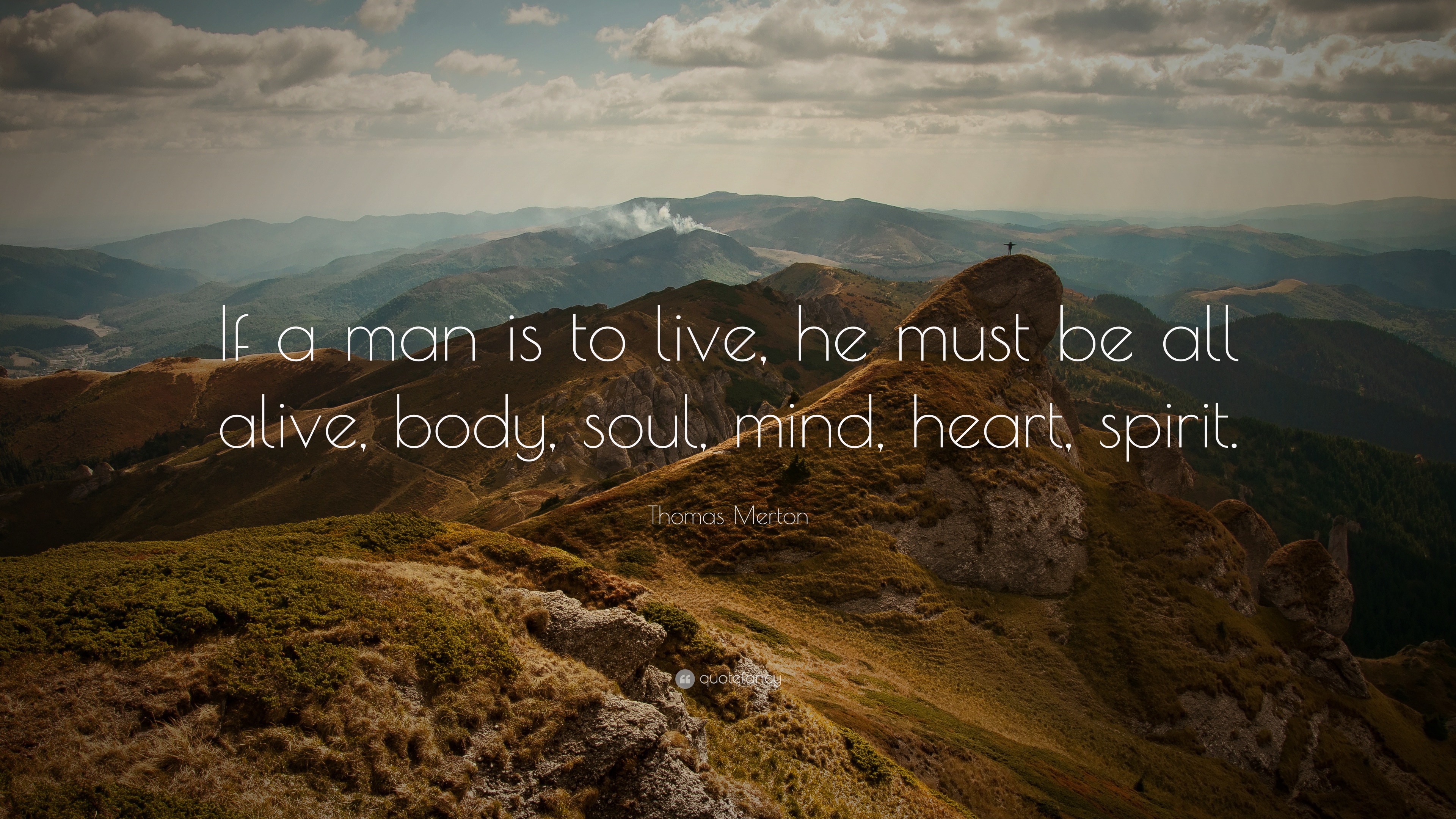
  • Pursue wholeness—the state of being perfectly well in body, soul (mind, will, and emotions) and spirit.  That happens as we submit more and more to God’s perfect ways (Psalm 119:1-2).


And what will be the result?

Each day there will be the anticipation of discovery and delight, joyful praise and expectant hope. We’ll find ourselves speaking to God more and more often, and hearing his whispers in our hearts. We’ll experience greater satisfaction in life as we train our focus on him and savor his endless blessings.



Bottom line: We will live on the threshold of heaven.


*     *     *     *     *     *     *     *     *     *


Oh, this is where I want to live, Father—on the precipice of your glory. Though responsibilities must be taken care of, I can still take note and inwardly digest all the beauty, blessings, discoveries, and lessons that you bring to my attention. Help me to live aware!


*Lou Guntzelman, So Heart and Mind Can Fill, St. Mary’s Press, 1998.


Art & photo credits:  http://www.publicdomainpictures.net; http://www.commons.wikimedia.org; wwwpxhere.com; http://www.pixabay.com (2); http://www.commons.wikimedia.org; http://www.pxhere.com (2); http://www.pixabay.com; http://www.pixnio.com; Nancy Ruegg; http://www.quotefancy.com; Nancy Ruegg; http://www.pxhere.com.


Read Full Post »

(A personal psalm)


When thoughts are allowed free rein…


…I worry about the future, forgetting who’s in charge–You!–The all-powerful, all-wise God of the universe, Master Controller of all things (1 Chronicles 29:11-12). The truth is, if I’m worrying, I’m not trusting.


…I become overwhelmed by the tasks ahead, overlooking your reliability in all situations (Philippians 4:13). Key word: in. You provide strength in the midst of the journey, not before it has begun.


…I question the reason for difficult circumstances, failing to remember all the benefits you bring out of trials, including maturity, strong faith, and deficiency in nothing (James 1:2-4).


…I feel inadequate to handle new responsibilities, forgetting you will not leave me to muddle through on my own. I can confidently depend on your help and put my hope in your promises (Psalm 46:1; Numbers 23:19).


…I allow disbelief to fester in my mind, neglecting to “dismantle doubts with declarations” (1)—declarations of stabilizing truth from your Word (Psalm 119:93, 160).


…I become discouraged in prayer, not considering that You grant what we would have asked for, if we knew everything you know (2) (Isaiah 55:9).


…I feel like a failure, losing sight of how you can turn weakness into strength and redeem any situation (1 Corinthians 1:26-31). How miraculous that even “worthless dross [you] transform into pure gold”(3).


…I make poor choices, ignoring the wisdom of your ways and what it cost you to pay for my sin (Psalm 119:137-138; Galatians 2:20).


…I experience despair, giving no thought to your over-all objective:  to accomplish what is good and right–always. That good purpose may not be fulfilled today or to my preference, but it is certain nonetheless (Psalm 42:5 and 145:17; Jeremiah 29:11).


…I am discontented,  forgetting to clarify my perspective with praise–for who you are and what you’ve already done (Psalm 31:19; Psalm 145).


…I become jealous of others, neglecting to celebrate your uniquely designed plans and specially chosen blessings for me (Ephesians 2:10).


…I feel weak, overlooking “the inner dynamic of grateful joy that empowers the greatest efforts” (4) (Colossians 3:15-17; Nehemiah 8:10).


For every troublesome emotion, every problem, every insufficiency that plays in my mind:  you, O God, are El Shaddai–the All-Sufficient One.


You are the answer for everything I face.


I will praise you, O Lord, with all my heart;

I will tell of all your wonders. 

I will be glad and rejoice in you;

I will sing praise to your name, O Most High. 

–Psalm 9:1-2  NIV


Notes:

(1)  Jody Collins, author of Living the Season Well and blogger at https://jodyleecollins.com/blog/

(2)  Timothy Keller with Kathy Keller, The Songs of Jesus, Viking Press, 2015, p. 52.

(3)  Charles Spurgeon, Morning by Morning, December 8.

(4)  Timothy Keller with Kathy Keller, The Songs of Jesus, Viking Press, 2015, p. 31.


Art & photo credits:  http://www.flickr.com, by Giogio Montersino; http://www.pixabay.com; http://www.heartlight.org (2); http://www.canva.com; http://www.dailyverses.net; http://www.canva.com (2).


Read Full Post »


Samuel always wanted to be an artist. He even studied in England with the famous American artist-become-Londoner, Benjamin West. And though painting was his first love, Samuel soon won a prestigious award for a sculpture: “The Dying Hercules (1813).”

God’s plan seemed clear for the devout Christian. Samuel was created to be an artist.

Upon returning to the United States, Samuel turned his attention to portrait painting, traveling from town to town to offer his talent. And although his income was often meager, Samuel was very happy in the work.


(One of Samuel’s paintings, “Gallery of the Louvre,” 1831-1833)


A proud moment came in 1825 when he was invited to paint none other than James Monroe, the fifth president of the United States. And while in Washington, Samuel was also commissioned to paint the French General, Marquis de Lafayette.


(Samuel’s portrait of Lafayette, 1825)


Surely God was smiling his favor upon the artist’s success.

And then disaster struck.

Samuel received word that his wife, Lucretia, had died after the birth of their third child, back home in Connecticut. He rushed to New Haven, but by the time he arrived, Lucretia was already buried.

His anguish was accompanied by frustration. If only there were a faster way to communicate across great distances, he thought.

And he remembered another time of similar frustration.

In 1811 when Samuel had first arrived in London, a second war between Britain and the United States was imminent. English ships were attacking American ships, suspected of carrying goods to Britain’s enemy, France. England did seek reconciliation with America, but before the letter arrived in Washington, America declared war on Britain.

Slow communication caused hardship and pain at the end of that war also. After the peace treaty was signed, another major battle was fought because the generals didn’t know the war was over.


In 1832, Samuel was en route from Europe to America, after further study of painting, and happened to hear a passenger describe Benjamin Franklin’s experiment of passing electric current through miles of wire. The current had sparked instantaneously at the opposite end.

And Samuel thought, Perhaps there is a way to make rapid communication possible.  He began to devise plans immediately.

Now one might think such a worthy endeavor, undertaken by a devout believer in Jesus, would receive God’s blessing, and the road from experimentation to completion would be level, smooth, and short.

Not so.

For years he worked through disappointments and setbacks. Finally, in 1842, Samuel applied for a patent. The next hurdle: to find financial support in order to put his invention to work.

Two more years passed as Samuel tried to find backers, first in the U.S. and then in Europe. No one was interested.

A man of lesser faith would surely have given up; but not Samuel. During this time, he wrote:

“I am perfectly satisfied that, mysterious as it may seem to me, it has all been ordered in view of my Heavenly Father’s guiding hand” (1).

And…

“The only gleam of hope, and I cannot underrate it, is from confidence in God…I will wait patiently for the direction of Providence” (2).


(The House of Representatives, by Samuel, 1822-1823)


Finally, the U.S. Congress allotted $30,000 for him to lay cable across the harbor between Baltimore and Washington, D.C.

Samuel invited the daughter of a friend to choose the first transmitted words. She selected a passage from scripture, knowing that behind Samuel’s passion and perseverance was the God who had inspired and sustained him.

On May 24, 1844 in Washington, DC, Samuel tapped out the first telegraph message in a binary code he invented. It soon bore his name—Morse code.


Instantly in Baltimore, the message was received: “What hath God wrought,” (Numbers 23:23).


By the mid-1850s, more than 20,000 miles of cable had been laid across America.


(Samuel Morse, 1857.  Photograph by Matthew Brady)


And by the mid-1860s, a cable was laid across the floor of the Atlantic Ocean, providing instantaneous communication between America and Europe.

Samuel Morse became one of the most famous men in the world and acquired great wealth (much of which he donated to charity).

But Samuel made it clear:

“It is [God’s] work,” he wrote; “and He alone carried me thus far through all my trials and enabled me to triumph over the obstacles, physical and moral, which opposed me. ‘Not unto us, not unto us, but to Thy name, O Lord, be all the praise’”(3).


*     *     *     *     *     *     *     *     *     *

Oh, yes—“To Thy name, O Lord, be all the praise”—in spite of the trials and obstacles that threaten. Thank you for the legacy of saints like Samuel Morse who teach us that even difficulties and disappointments have purpose: to teach us how to hope, persevere, and trust.


Notes:

  1. https://answersingenesis.org/creation-scientists/profiles/samuel-morse-the-artist-who-invented-the-morse-code/
  2. (https://www.christianity.com/church/church-history/timeline/1701-1800/the-amazing-morses-sam-and-jed-11630271.html
  3. https://crev.info/scientists/samuel-f-b-morse/


Sources:

  1. https://answersingenesis.org/creation-scientists/profiles/samuel-morse-the-artist-who-invented-the-morse-code/
  2. (https://www.christianity.com/church/church-history/timeline/1701-1800/the-amazing-morses-sam-and-jed-11630271.html
  3. https://crev.info/scientists/samuel-f-b-morse/
  4. https://www.history.com/this-day-in-history/first-transatlantic-telegraph-cable-completed


Art & photo credits:  http://www.wikipedia.org; http://www.wikimedia.com; http://www.wikipedia.org; http://www.wikimedia.com (2); http://www.wikipedia.org; http://www.flickr.com; http://www.wikimedia.com; http://www.dailyverses.net.


P.S.    We received the wonderful news this afternoon:  Steve is now on the wait list (at least six months) for a liver transplant!  Thank you all for your continued prayers of healing for him.


Read Full Post »


After running a few errands last Saturday, Steve and I stopped at Panera for soup, salad, and sandwich.

We’d been seated for a while when Steve said, “A few tables behind you are two young men, and the one facing this way is wearing a T-shirt that says, ASK ME FOR PRAYER. Great big block letters too. ”

“Interesting. ‘Haven’t seen that one before,” I commented.

“Do you suppose he means it?”

“It’s a bold statement; I’ll bet he does.”

When we’d finished our lunch, I headed to the cold drinks bar to refresh my tea; Steve headed to the table of the young man in the T-shirt.

(We never did exchange names, so I’ll call him Paul, because I can see the Apostle Paul wearing just such a shirt, if it were available in his day.)

By the time I reached their table, Steve had discovered Paul did indeed mean what was blazoned on his chest.

“I’d appreciate it if you’d put me on your prayer list,” Steve told him. “I’m facing some serious health problems right now.”

But Paul did not assure us that he would pray. Instead he said, “Let’s pray for you right now!”

He and his friend immediately stood up, laid their hands on Steve, and Paul prayed for him right in the middle of Panera—and very articulately.


With conviction he praised God for His power to heal every kind of disease and sickness. He thanked God for his compassion on those who suffer, and prayed for the Spirit to move in Steve’s body and restore him to health. Paul also prayed against the spiritual forces of evil that would try to attack–and all in the powerful name of Jesus.


We spoke for a few moments more, first thanking them for hitting the pause button on their lunch to minister to us. Steve told them he’d been a pastor for forty years; Paul said he was from Tennessee, just passing through Cincinnati.

On the way to our car Steve said, “That was the most genuine, thorough healing prayer I’ve heard in a long time.”

And it undoubtedly came from a righteous man. In just those few moments of contact we saw passion, sincerity, obedience to God, humility, and grace.

You might remember what God promised about the prayers of such a person:


I found myself wishing we’d asked Paul for his business card. Wouldn’t it be fun, perhaps a year from now or so, to share with Paul how God had answered every part of his prayer on behalf of Steve.

Then, I remembered.  Eventually Paul will know, because:

  • God knows everything (Isaiah 40:13-14).
  • And since God and his Son are One (John 1:18), Jesus knows everything.
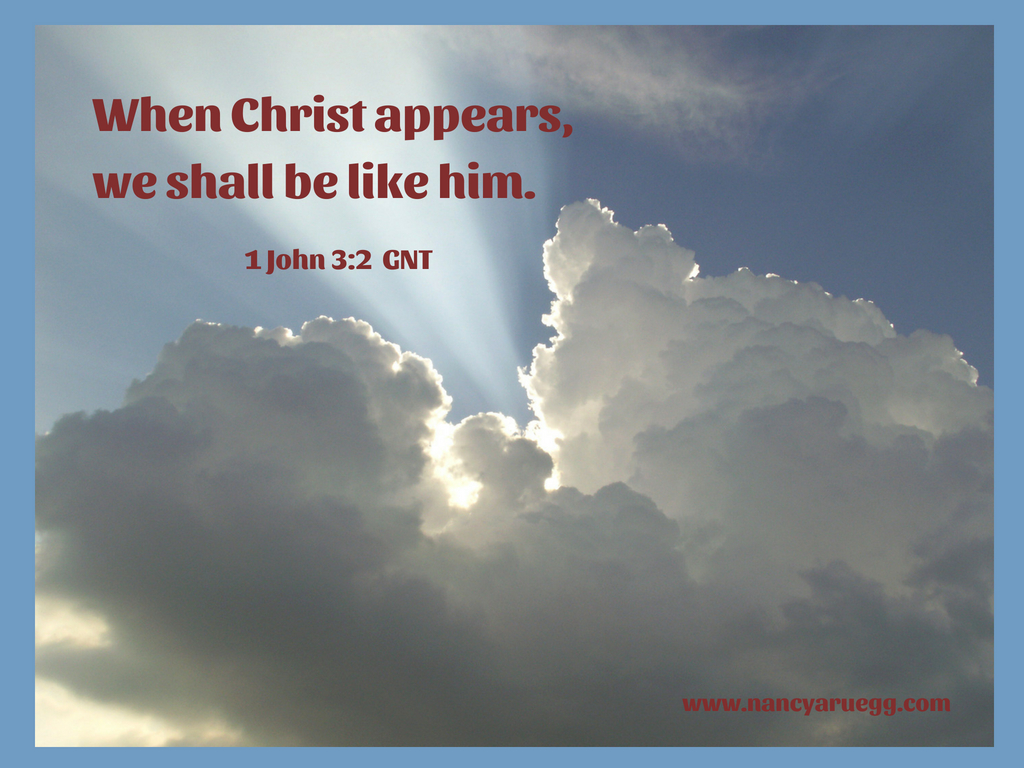
  • And when Jesus returns, we’ll be like him (1 John 3:2), and then we will know everything too.


So, one day, “Paul” will realize the outcome of his prayer for that preacher named Steve, while he just happened to be in an out-of-state Panera restaurant, wearing his ASK-ME-TO-PRAY-FOR-YOU T-shirt.

*     *     *     *     *     *     *     *     *     *

We praise you, O God, for your excellent deeds–like engineering delightful, specially designed events.  What God is there in heaven or on earth who can do such marvelous and mighty works you do?  We also praise you for your acts of power–like healing, because you are the God who performs miracles; you display your power among the peoples.

(Deuteronomy 3:24; Psalm 77:14)


(Art & photo credits:  http://www.flicker.com; http://www.pixabay.com; http://www.dailyverses.net; http://www.canva.com (2); http://www.maxpixel.net.)

Read Full Post »


Numerous times in the Bible we’re reminded that the Lord is our strength. We’re promised that out of his infinite power he will supply the wherewithal to withstand any strain, force, or stress.


The question becomes, how do we avail ourselves of God’s glorious might?

The answer may lie in just three strategies: affirm, trust, and thank.


1) AFFIRM such scriptural realities as God’s sovereignty over all things, his power at work on our behalf, and his constant, loving presence to sustain us (1).


We can direct our thoughts toward the promises he’s made to help, guide, and protect (2). In fact, scripture contains dozens of promises that offer hope and encouragement for any situation, because:  “He who promised is faithful” (Hebrews 10:23 NIV).


Asserting biblical truth hour by hour, even moment by moment, results in spiritual strength, much as repetitive moves with weights build physical strength.

Also beneficial to affirm: what we’ve seen God do in the past. Has a surprise check arrived in the mail—almost to the penny of what was needed? Have you escaped a car collision by that much? Has the answer to a prayer far exceeded the request? God has granted such miracles in our family, too.


And that brings us to the second strategy, trust.


2) TRUST that the God of perfection will be true to his Word and keep his promises.

But when fretful thoughts do threaten, we can bring them before God with total honesty, just as King David did in the psalms (3). Next, we can return to the Affirm Strategy (above)—which David also embraced. Third, we simply do the next thing, refusing to worry about tomorrow.


And a trusting heart is a thankful heart.


3) THANK God at every opportunity. Even in the midst of trials, we can find joy:

  • In Him and all his glorious attributes
  • In his Word, where we find comfort and encouragement
  • In creation, with all his meticulous handiwork and grand displays
  • In the people around us, with their expressions of loving concern and help
  • Through the five senses, providing unlimited delight

And the joy of the Lord will be our strength (Nehemiah 8:10).


These three strategies–affirming, trusting, and thanking—will enable us to move through each day with grace and a light spirit, just as a deer gracefully and lightly clears obstacles and scales rocky peaks, because:


*     *     *     *     *     *     *     *     *     *

Oh, Lord, keep me mindful that no one is exempt from trouble in this sin-wracked world, but you rule supreme and will engineer good even from the worst of circumstances. Help me to be ever-conscious of the ways I can avail myself of your strength. And may I learn not just to withstand stressful times, but actually flourish in the midst of them.


Notes:

(1) 1 Chronicles 29:11-12; Isaiah 64:4; Deuteronomy 31:6

(2) Isaiah 41:10; Psalm 32:8 & 12:5b

(3) Psalm 10, 13, 31, and 102 offer examples of psalms that begin with lament and end with praise.


P.S. A personal update: Steve received his first chemo treatment this week to keep the cancer from growing and spreading to other organs as we wait for a liver transplant. The anti-cancer drug was applied directly to the tumors. We were warned he might experience pain, nausea, fever, and/or other side effects. But except for some discomfort and fatigue he has been fine. We continue to praise God for his faithfulness!


(Art & photo credits:  http://www.canva.com (2); http://www.christianqotes.info; http://www.dailyverses.net; http://www.brainyquote.com; http://www.quotefancy.com; http://www.canva.com; http://www.dailyverses.net; http://www.brainquotes.org.)


Read Full Post »


There are those who would say the sweetest time of life is childhood, when we carry few responsibilities and enjoy hours of play.

Others will say the teen years are best, when the freedoms to go, do, and become are gloriously opened before us.

Ah, but then come the years of building a career and perhaps raising a family. Maybe that’s the sweetest time, as we pursue success in our vocations and witness the achievements of our children—from first steps to last graduation and beyond.

As a retiree of almost seven years, I would chime in with Vance Havner who said:

“The last chapter of life can be the best.”


Yes, aging has its downside. The person we see in the mirror has changed drastically. Joints refuse to bend and twist like they used to. And though we wish our waists would thin out, it’s our skin that has.

But that’s just the outside—the least important part of who we are.

The golden years offer much sweetness to savor. If you’re not there yet, here’s what you have to look forward to:

  1. The gift of memory

The older we get the more memories we have to enjoy. And just about everything reminds us of something else. ‘Ever try reading street signs and billboards to see if the names conjure up people or places from the past? It’s a game guaranteed to make you smile.

Cindy Lane reminds me of a dear friend in Florida (Hi, Cindy!), Barbara Circle conjures up a valued colleague from my teaching days, and Harrison Avenue takes me back to my childhood, riding my bike on the street of the same name in my small hometown.

Shared memories are even more delightful. Not long ago in church, the pastor asked if we could remember a time when low expectations generated poor output. Steve and I made eye contact and simultaneously whispered the name of a union-controlled company he worked for years ago.   We almost laughed out loud amidst the silent congregation. Such fun.


  1. The wisdom of experience

Experience with God teaches us the wisdom of his perfect ways (Psalm 18:30). Life is enhanced when faith, kindness, and gratitude characterize our days–just as he’s said.

Occasionally our wisdom-from-experience may be sought by others. But actions speak louder than words. To live wisely and make prudent choices—that’s the best way to impart wisdom. They’ll remember what we did better than what we said.


  1. The expansion of certain abilities

Research indicates that as we get older our abilities to reflect, create, and analyze can actually improve. The reason may be “we bring experience to knowledge and then add wisdom to our result.” Of course, we must continue to “cultivate our mental acuity as we age”.*  We must never stop learning, evaluating, and thinking about new ideas.


  1. The time to be present in the moment

We can savor such luxuries as watching raindrops make momentary rings in puddles and checking for signs of burgeoning spring that were not noticeable yesterday.

Now we have more time to express our gratitude for every good gift God bestows. And since gratitude begets joy and contentment, we can make these years a season of delight.

We also have more time to stop and listen—to the frustrated store clerk, the struggling waitress, the overwhelmed young parent. At our disposal are the benefits just listed–the gift of memory, the wisdom of experience, the enhanced abilities of reflection and evaluation—all useful for offering beneficial (but brief!) encouragement.

And as we lighten the burden of others we find our own spirits uplifted.


  1. The faith to persevere 

We’ve lived long enough to see God bring us through sadness, difficulty, distress, and more. We know he will provide for every need to the end. And such confidence overflows in perfect peace.

__________________________________


For these reasons and more, our latter years can be the sweetest time of life.


(http://quotefacy.com/quote/758763)


“For age is opportunity no less

Than youth itself, though in another dress,

And as the evening twilight fades away

The sky is filled with stars, invisible by day.”

–Henry Wadsworth Longfellow


In that we can rejoice!


*Joan Chittister, The Gift of Years, p. 96.


(Art & photo credits:  http://www.pxhere.com; http://www.afgsc.af.mil; http://www.Canva.com; http://www.pixabay.com; http://www.flickr.com; http://www.quotefancy.com.)


Read Full Post »


From the time Darlene McIntosh was ten years old, she knew God wanted her serve him on the mission field.

By age twenty-two, Darlene was newly married to pioneer missionary Russell Deibler, and settled in the jungle of New Guinea where he had built a two-room home for her out of woven bamboo mats.


Russell and Darlene proceeded to build relationships with members of a nearby primitive tribe, the Kapauku, who had never heard of Jesus. She fell in love with the people, the work, and her surroundings.

On her twenty-third birthday in May of 1940, the couple heard that the Nazis had invaded Holland. It didn’t take long for the war to find them, even in their remote location. The Deiblers and other missionaries could have escaped to safety but chose to stay at their mission compound.

In January of 1942 the Japanese came and took the men captive. Russell’s last words to Darlene were: “Remember one thing, dear: God said that He would never leave us nor forsake us.” That was the last time she saw Russell; he would die in the prison camp.


For a short while, the women and one older man continued to live at the mission.

One night Darlene heard scuffling noises in the house. She got up from her bed and encountered a bandit armed with a knife.

Darlene surprised herself by rushing at him. Even more surprising, the bandit turned and fled; Darlene chased him out of the house. Suddenly a gang of bandits ran out of the jungle to join the first. She expected them to attack her. Instead the first bandit yelled to the others, and they all turned and ran.

From then on, the missionaries kept clubs at the feet of their beds, but they never had to use them.

Darlene always suspected the compound gardener had been the bandit, because he was familiar with the house. After the war, Darlene asked him why he had never tried to steal from the missionaries again.

“It was because of all those people you had there–” he replied.  “Those people in white who stood about the house!”


In May of 1943, Darlene and the other remaining missionaries were taken to a prison camp in Kampili. Commander Yamaji, a man with a mercurial temper, required strenuous work quotas of the six hundred women living there, including killing flies.

The flies bothered the pigs, raised at the camp to feed Japanese soldiers. Each prisoner was required to bring Commander Yamaji 100 dead flies every day (That’s 60,000 flies!)—even while completing numerous other tasks.

Darlene prayed for Commander Yamaji and was able to tell him about Jesus. “He died for you,” she told him. “Maybe that’s why God brought me here, to tell you he loves you.” The commander suddenly left his office with tears on his cheeks.


In May of 1944, the Japanese secret police came to escort Darlene to another prison. She was put in solitary confinement, falsely accused of espionage.

Darlene endured nightly mosquito swarms, near-starvation, malaria and other serious illnesses, inhumane conditions, brutal interrogations, and torture.

But only her Heavenly Father saw her tears, never the captors. She sustained herself by singing hymns, quoting scripture, and reciting Russell’s last words: God will never leave you nor forsake you.


One day Darlene pulled herself up to look out the small window of her cell. She saw a woman make her way to the fence, reach through the underbrush, and come away with a bunch of bananas, which she quickly concealed in the folds of her skirt.

Oh, to eat just one banana, Darlene thought. Lord, how I would love a banana! Darlene could not get the coveted fruit out of her mind. She talked to God about her craving, knowing that such a fantastical desire could not be fulfilled.

The next morning, Darlene had a surprise visitor, Commander Yamaji. Tears filled her eyes. “It’s like seeing an old friend,” she exclaimed.

“You are very ill, aren’t you,” he remarked.

“Yes, Mr. Yamaji, I am.”

When the commander left, Darlene watched him speak to the guards for a long time. Later she heard the familiar stomp of boots outside her cell. The door was unlocked and one of the guards threw a stalk of bananas onto the floor.

“From Mr. Yamaji,” he said.

With tears of praise to God, Darlene counted ninety-two bananas. God had provided—far above what she imagined. She savored them, one per day for three months.


Darlene would surely have been beheaded as a spy, but she was inexplicably returned to Kampili, the POW camp under Commander Yamaji’s leadership.

Soon nightly bombings began. The women hid as best they could in ditches. Every morning they would have to bury those who had not survived.

One night during the siege, Darlene felt compelled by God to leave her shelter in the dirt, go back to the barracks, and retrieve a Bible. By the time she returned to her ditch the bombing had subsided.

But during Darlene’s brief absence, her refuge had been hit directly and destroyed.


Finally, in the fall of 1945 the horrific ordeal ended. Darlene returned to her family in America to be nursed back to health. She weighed 80 pounds.

Four years later, Darlene was back in New Guinea. God had brought Gerald Rose into her life, another missionary who also carried a passion for indigenous people. They were married and together raised two sons. For forty years they served God, not only in New Guinea but also in the Outback of Australia.

In 1976, a friend told Darlene she had heard Mr. Yamaji sharing his story on Japanese radio. The angry and cruel prison camp commander had become a changed man because of Jesus.


No doubt God had used Darlene as an important influence in his life—and in the lives of countless others as well.


*     *     *     *     *     *     *     *     *


Almighty God, we exult in your sustaining power that carries us through even the most excruciating circumstances. You supply impossible strength, courage, and perseverance to endure. And just as Russell told Darlene, you never leave us nor forsake us. Hallelujah!

(Psalm 28:7; Philippians 4:13; Deuteronomy 31:6; James 1:2-4, Deuteronomy 31:8)


Sources:

1) http://reneeannsmith.com/a/tag/darlene-deibler-rose/

2) http://pursuedandconquered.blogspot.com/2012/08/bananas-in-prison.html

3) http://www.danielakin.com/wp-content/uploads/2016/08/Psalm-27-The-Lord-Is-My-Light-and-My-Salvation…Darlene-Diebler-Rose-Convocation-Fall-2016-kh.pdf

4) http://www.scripturaltruths.org/Articles/Real%20Life%20Experiences/REAL%20LIFE%20STORIES%20-%20Darlene%20Deibler%20Rose%20-%20Prisoner%20of%20War%20-%20May%202017%20-%20PDF.pdf


Art & photo credits:  http://www.darlenerose.org; http://www.wikimedia.com; http://www.dailyverses.net; http://www.heartlight.org;www.canva.com (2); http://www.heartlight.org (2); http://www.canva.com.

Read Full Post »


“Are you all set for your move to Chicago?” I heard Jessica* ask. She’s one of the hair stylists at the salon I go to. Her station is just on the other side of a partition from where my stylist Anna* works.

As I settled into Anna’s chair last Wednesday morning, I readily heard the conversation between Jessica and her client.

“Yes, we found the perfect house,” the woman was saying. “There are just two bedrooms, but…”

I knew that voice.

In late December my hair appointment had overlapped with the same client. That day she had expressed concern because none of the properties shown on realtor websites were fitting her and her husband’s criteria. She feared there would be no suitable homes to tour during their house hunt set for mid-February.

“I don’t know what we’re going to do,” she confided. “I hate to think of moving into a rental and then moving again later.”

It seemed fitting to share our house-search experience.

“Excuse me,” I interrupted while peeking around the partition. “I couldn’t help overhearing your conversation and just wanted to tell you the same thing happened to us before we moved here three and a half years ago.  We discovered that if the perfect house becomes available too soon, it’s likely to be sold by the time you’re able to visit the area and view homes.

“Our perfect house came on the market just two weeks before we flew up here from Florida to house-hunt. The same will happen for you, I’m sure of it!”

She thanked me warmly, appreciative of the voice-of experience offering reassurance.

And now, at the end of March, I was quite certain that same woman (whom I had not seen since December) was in Jessica’s chair again, sharing the next chapter of her story.

I peeked around the partition just as I had before.  Instantly we recognized each other.

“You found the perfect house! Awesome!” I cried.

“Just like you said, “ she replied. “It came on the market a couple of weeks before our trip to Chicago.”

It wasn’t long before the two of us sported our coloring-chemicals and sat together so I could hear about her house. We chatted away like old friends.

A couple of times Diane* mentioned her husband’s illness but gave no specifics; I didn’t press for details. Later in the conversation it seemed appropriate to share Steve’s recent diagnosis of liver cancer. (You can read a short explanation at the end of last week’s post, “Haven of Peace.”)

“I don’t always talk about the details of my Ken’s* illness,” Diane confided, “but you need to know.” She paused. “Ken was diagnosed with brain cancer two years ago. The doctors only gave him twelve to fifteen months to live after the surgery, but it’s been two years and he’s still here!”

And together we praised God for his goodness.

I left the salon last Wednesday with my heart greatly uplifted. Ordinarily I would have sat at Anna’s station and read magazines or the book I always bring along.

But God is El Roi, the God Who Sees (Genesis 16:13). He saw my need for companionship that day.

He is Jehovah Jireh, the Lord Will Provide (Genesis 22:14). He provided Diane to be his voice of encouragement, hope, and joy.

He is El Shaddai, God Almighty (Psalm 91:1). He rules over all—every situation, every difficulty, every illness—even cancer.  Sometimes he ordains miracles.   Diane’s husband and countless others are living proof.


He is Yahweh Nissi, The Lord Our Banner (Exodus 17:15-16).  He goes into the battle before us, leading the way toward victory in all circumstances—a victory of faith in the face of trouble (1 John 5:4).

He is Yahweh Rapha, The Lord Who Heals (Psalm 103:2-3). And if the healing is not realized on earth, it is guaranteed in heaven (Revelation 21:4).


*     *    *     *     *     *     *     *     *     *


We praise you, O God,

for your knowledge that comforts,

your provision that reassures,

your power that enables,

your leadership that guides,

your healing that perfects.

You alone are the wellspring

of all that we need.

May we trust in you

with unwavering confidence

and rest in your transcendent peace.  


*Names changed.


(Photo credits:  http://www.minot.af.mil (Cassandra Jones, photographer); http://www.dailyverses.net.


Read Full Post »

Saturday afternoon provided the perfect circumstances for a cozy sit by the fire.   The calendar was clear for the day and we could burrow into the quiet. Snow showers added to the tranquility as they gently outlined backyard trees in white.


The serenity of our sitting area is enhanced by the beloved hand-me-down decor: the clock, oil lamp and child-size rocker from my grandmother, lanterns that belonged to Steve’s Dad and grandfather, books of our parents’ youth, and a painting that once hung in the home of Steve’s parents.


Altogether, the golden firelight, familiar furnishings, and cozy comfort engender peace and contentment.

But as delightful as these moments are, this kind of tranquility is fleeting. At any moment the phone might ring and the caller share distressing news. Then we’ll hardly notice our snug surroundings as concerns and questions begin to demand our attention.

When that phone call comes, circumstantial peace will not be enough. But that’s the only kind this world can offer. What we really need at such times is a stillness of spirit that originates outside this world from the Master of Peace.

My peace I give you,” Jesus told his disciples. “I do not give you as the world gives.”


Remember when he spoke those words? The night before he died.  He well knew what was to come (1). The next day would be a maelstrom of suffering, climaxed by tortuous pain on a cross.

How could he speak of peace on the eve of such horror?

Because his heart was always directed Godward, resulting in radiant peace. Jesus faced rejection, false accusations, hateful treatment (from religious leaders no less), and even attempted stoning. And yet he remained unruffled.

“Christ’s life outwardly was one of the most troubled lives that was ever lived…But the inner life was a sea of glass. The great calm was always there” (2).


And this is the peace he offers us—a peace that includes tranquility, security, and prosperity of spirit in spite of circumstances. It is “a rare treasure, dazzling in delicate beauty yet strong enough to withstand all onslaughts” (3).

How do we avail ourselves of this treasure?

By reviewing the attributes and promises of our Prince of Peace–all day long.

“Great thoughts of Christ will pilot you into the haven of peace,” said Charles Spurgeon.


Perhaps we could word our great thoughts of Christ as a prayer:

You, Lord Jesus, are our Good Shepherd, always leading in the way we should go. You tenderly watch over us, meeting every need and protecting us from evil—including wild, fearful thoughts and emotions (4).  

You are full of love for us. Out of your kindness and compassion you see us through every dark valley of life. Though we may not always be aware, you are ever-present, ready to offer strength and support (5).


You have said, “Everything is possible for those who believe” (6). And we know that’s true because we’ve seen your miracles. You’ve healed incurable diseases; you’ve protected and provided in hopeless situations. You’ve enabled others to transition to heaven with impossible grace and joy.

For these reasons and many others, we place ourselves in your attentive, all-wise, all-powerful care.

You are our Mighty One, our Rock, our Haven of Peace.


______________________________


P.S. I started rough drafting this post last Saturday afternoon, while sitting by that fire. Uncertainty had already moved into our hearts after Steve’s blood work last week turned up questionable results. The doctor immediately called for a cat scan that took place on Friday. Monday he shared the results with us: liver cancer.

Steve is now on an obstacle-ridden road toward a liver transplant, and the future holds much greater uncertainty than we faced last week.

Do you suppose it’s just coincidence that I’ve been reading, thinking, and writing about peace for the last six days?

I don’t think so either.


Notes:

(1) Luke 22:15-16

(2) Henry Drummond

(3) Sarah Young

(4) John 10:3-4; 2 Thessalonians 3:3; John 10:11

(5) Ephesians 5:1-2; Luke 6:35; Matthew 28:20

(6) Mark 9:23


Photo credits:  http://www.publicdomainpictures.net; Nancy Ruegg; http://www.canva.com; http://www.flickr.com; http://www.wikimedia.com; http://www.canva.com; http://www.wikimedia.org.


Read Full Post »


“Your life can overflow with radical blessings!” Jesus told the crowd.

Maybe he didn’t use those words (even in Aramaic), but that was the reason he shared eight glimpses of what happens when we embrace God’s way of thinking and living.  Those eight declarations of blessedness are called the Beatitudes (Matthew 5:1-12).

Declaration #1 reads as follows:


The subsequent seven statements follow the same pattern.

But read through the rest of scripture and you’ll find other beatitudes as well, especially in Proverbs. And now that I’ve accumulated some life experience over a number of decades, I see more clearly than ever:  we do receive radical blessings when we embrace God’s ways.

For example:

Rhonda was struggling financially, trying to work part-time as much as she could while putting herself through college. She came over for dinner one night and I felt compelled to give her a bunch of coupons from my file, for the things she purchased regularly.


Now you have to understand, that coupon collection was extensive, because I gathered from numerous sources, traded with others, and even sent away product labels to receive high-value coupons.

It hurt to hand over a fistful of my precious stash. But I knew it was the right thing to do.

The next week, I received–from two different women–two bags full of coupon inserts from Sunday newspapers.

And I learned:


Or, written Beatitude-style:

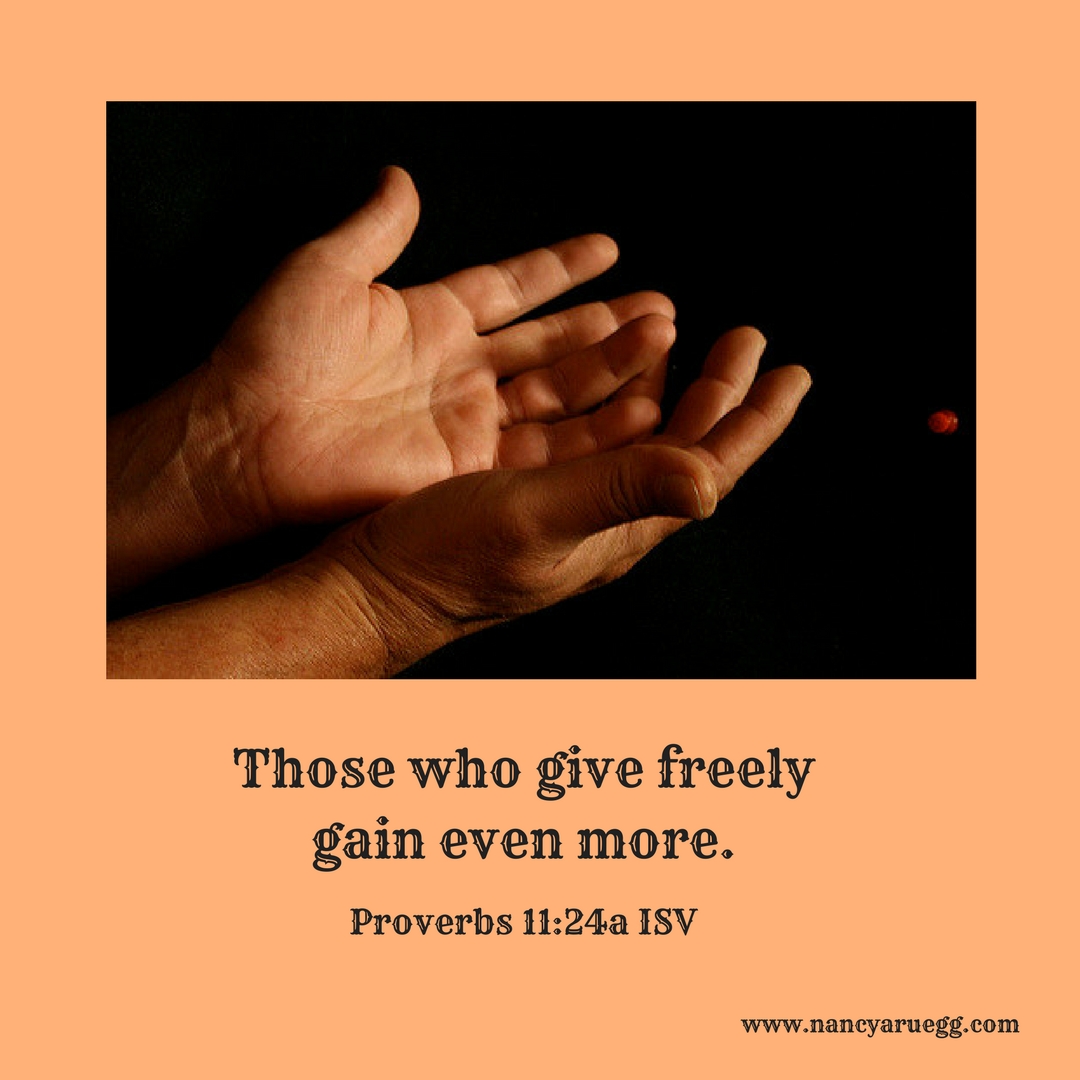
Blessed are those who give freely,

for they will gain even more.*


___________________________________


Everyone loved “Aunt Toss.” She never went anywhere without a smile on her lips, a twinkle in her eye, and a chuckle at the ready. Frequently Aunt Toss would pop into Steve’s office to share a joke he might be able to use in a sermon. She saw humor in everything, was quick with the witty quip, and could pun with the best of them.

Yet during the years we knew her, she suffered terribly from shingles. And she missed her husband dearly. No one would have blamed Aunt Toss if her cheerfulness slipped a little. But she didn’t let that happen.

Instead, Aunt Toss enjoyed a continual feast of happy thoughts, pleasurable moments, and the reflected cheer from others, as she caused everyone around her to smile and laugh with her.

And I learned:


Written Beatitude-style:


Blessed are the cheerful,

for they have a continual feast of delight.


(The lovely lady in the photograph is not Aunt Toss, but she exuded the same joy.)


___________________________________


One of my husband’s spiritual gifts is generosity (Romans 12:8). Even during those early years of our marriage when the budget was tight, he would graciously help others in need.

So how did we make ends meet? We lived quite frugally, owned one car, wore some very nice hand-me-down clothing from family and friends, shopped with coupons of course, and watched for bargains.

One store in particular became a regular stop on my errands—a hit-or-miss place that carried an ever-changing array of goods.

One day a jumble of Keds lay piled on a table near their door. Heather, our middle child, was just about ready for a new pair. But she had narrow feet; her shoes had to be purchased at places like Stride Rite. The chance I’d find her size on that table was slim to none. (‘Hope you like puns!)

But a good rummage through the mound turned up a pair of size 7 slim after all. The best part? The price. You are not going to believe this:

Fifty cents.


Now granted, this occurred in the late 1970s. Things were cheaper back then, but not THAT cheap! At Stride Rite, we were paying $14.00 for a pair of Keds.

During those years of financial challenge, God provided bargain after bargain and gift after gift, due at least in part to Steve’s God-honoring generosity. And as only our Heavenly Father can do, he made sure our needs were always met—and then some.


For our beatitude statement, we can add the result of kindness, from verse 31:

Blessed is he who is kind to the needy,

for he honors God.


___________________________________


Over and over God has proved:   His ways are always best.  In fact, they are perfect.


How has he proved his wise ways in your life?  Please share your story in the comment section below!


* Of course, financial gain is not the only way God blesses those who give freely. Gains can be received through enhanced relationships, an uplifted spirit, added wisdom, greater contentment—and that’s just for starters. Our God is highly creative; he brings gain into our lives in countless ways.


Art & photo credits — Sermon on the Mount: wikimedia.com, bird on branch: www,canva.com,  coupons: http://www.pexels.com, hands: http://www.flickr.com, smiling woman: http://www.pexels.com, heart: http://www.pexels.com,  tennis shoes: ww.pixabay.com, Proverbs 14:21: http://www.heartlight.org, 2 Samuel 22:31: http://www.dailyverses.net.

Read Full Post »

« Newer Posts - Older Posts »

When the House is Quiet

Impressions Becoming Expressions

Mitch Teemley

The Power of Story

Still Traveling

Impressions Becoming Expressions

Living Our Days

Gaining a heart of wisdom

He Said What?!

I'm Patty, and my husband and I are living with our adult son who has autism and epilepsy. I love sharing lessons learned from life around me, especially life with Aaron.

Meditations of my Heart

Impressions Becoming Expressions

Linda Stoll

Impressions Becoming Expressions

Signora Sheila

Notes on Life, Faith & Italy

Heidi Viars

Finding the Image of God