Feeds:
Posts
Comments

Archive for the ‘Excellence’ Category

And just what might that decision be?

A. Your food choices to stay healthy and energized?

B. The tasks you’ll complete to use your time wisely?

C. The attitudes you’ll adopt to influence your emotions?

Author/pastor Charles Swindoll chose C: “I believe the single most significant decision I can make on a day-to-day basis is my choice of attitude” (1).

Now why would that be? “Attitude is that ‘single string’ that keeps me going or cripples my progress,” he added.

Zig Ziglar explained the impact of attitude this way:

Science actually supports such statements.

According to an article in the British Medical Journal, “There is not a tissue or an organ in the body that is not influenced by the attitude of the mind and spirit” (2).

So the question becomes, how do we foster a positive attitude when circumstances conspire against us, or our days are a treadmill of monotonous routine, or we’re just glass-half-empty-kind-of-people by genetics?

The fact is, it’s still a matter of choice. And that choice alone wields great effect because:

“The inward impacts the outward” (3).

This principle is even evident in nature. Did you know that the color of silk can be altered depending on what is fed to the silkworms? Red dye in their food results in pink silk. Even the worms turn pink.

What we feed our minds and spirits colors our attitudes. We can choose to feast on the delights of God’s grace—his love, provision, promises, and blessings—or we can gorge ourselves on pig slop—disappointments, hurts, injustice, and the failures of others.

The Apostle Paul provided the perfect example while imprisoned in Rome. He never referred to himself as prisoner of Festus or Caesar or a victim of the Sanhedrin’s unjust treatment. He called himself a prisoner of the Lord (Ephesians 4:1), and saw his detainment as helping to spread the good news about Jesus (Philippians 1:12).

Paul also told his readers to pattern their lives after his (3:17). Years ago I wrote Wow! next to that verse in my Bible. Such a claim. But the book of Acts provides the evidence of his selflessness, integrity, and passion for Christ.

So when he wrote to the Philippian Christians from prison to rejoice in the Lord always (4:4), we can be sure he was choosing the same habit. When he recommended they focus on what’s excellent and praiseworthy (4:8), it’s a given that’s what he was doing too.

And now neuroscience has proven what God inspired Paul to write centuries ago: think positive thoughts and the brain will produce serotonin, which creates a sense of well being and helps the brain function at is best.

Think on negative thoughts and the brain produces cortisol, diminishing brain function and even causing depression (4).

https://www.azquotes.com/quote/662828

But controlling our thoughts is not easy.  Here are several strategies I’ve found to be helpful:

1. Keep in God’s Word.

We’ve considered this important step before (5); it’s number one for a reason.

2. Keep coming back to the center.

Ever play tennis or watch it on TV? After every shot a player returns to the center of the court, so he’s not caught too far afield when the ball comes back. When you find your thoughts crouched in a dark corner, come back to the Center: Jesus. Keep your mind happily occupied on all the ways He is excellent and praiseworthy.

3.  Keep a record.

We can train ourselves to see God all around us as we keep a journal of God’s faithfulness. I began mine in 1983, in response to a Bible study (6), and now there are over 1300 entries. Just the weight of that notebook encourages my spirit.

How about a gratitude journal, to record at least one thing every day for which you’re thankful? I didn’t start that one until three years ago. It’s a delightful exercise to review God’s gifts of the day and choose one to highlight (7). It’s also fun—and spirit lifting—to look back and remember previous gifts.

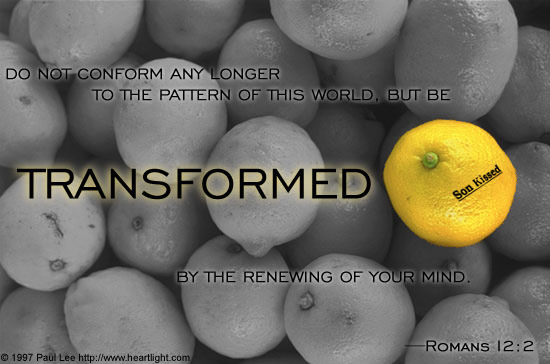
Slowly but surely, the most amazing thing happens. Our joy begins to expand and we start to become transformed into our best selves—with an increased ability to live freely and enjoy God’s presence—just by choosing a better attitude through the way we think (Romans 12:2 NLT).

Notes:

  1. Strengthening Your Grip, p. 207
  2. Quoted by Selwyn Hughes in Every Day Light, p. 132.
  3. Charles Spurgeon, Morning by Morning, p. 335.
  4. https://www.psychologytoday.com/us/blog/prime-your-gray-cells/201108/happy-brain-happy-life
  5. https://nancyaruegg.com/2018/08/23/perfect-trouble/
  6. See  https://nancyaruegg.com/2012/11/12/proving-gods-presence/   for the full story.
  7. The post that started my gratitude journal: https://nancyaruegg.com/2017/03/30/eating-live-frogs-and-other-blessings/

Art & photo credits:  http://www.publicdomainpictures.net; http://www.canva.com; http://www.wallpaperflare.com; http://www.pixabay.com; http://www.heartlight.org; http://www.azquotes.com; http://www.canva.com; http://www.pickpik.com; http://www.heartlight.org.

Read Full Post »

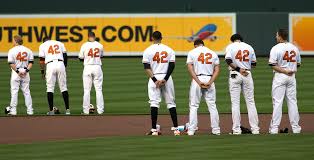
If we could gather in large crowds right now, and if our plans had included a baseball game yesterday, we would have witnessed an interesting phenomenon: every player wearing the same number—42.

Yesterday was Jackie Robinson Day, when all major league teams celebrate his first game with the Brooklyn Dodgers, April 15, 1947, wearing #42. As you may know, for the preceding seventy years, all players had been white.  Jackie Robinson was African-American.

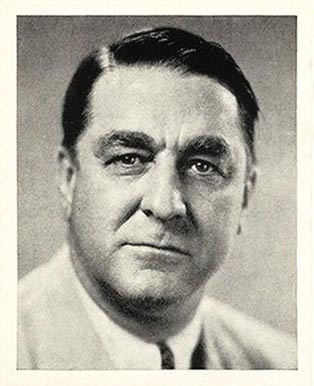
You may also know how such an opportunity opened up for Jackie, through president and general manager for the Dodgers, Branch Rickey.

But perhaps you didn’t know (because many books and films have omitted this information) both Branch Rickey and Jackie Robinson were Christian men of high integrity.

So what inspired Branch Rickey to put his faith in action by fighting against racial prejudice? It began with an incident in 1906.

Rickey coached the college baseball team at Ohio Wesleyan. When they traveled to South Bend, Indiana to play Notre Dame, his star catcher Charles Thomas, a black player, was denied lodging with the rest of the team at the Oliver Hotel.

Rickey asked if Thomas could stay in his room on a cot. With reluctance, management agreed. Later that evening when Rickey returned to their room, he found Thomas crying and rubbing his skin.

“If only I could make it white; if only I could make it white,” he sobbed.

Rickey made a vow to God that night. If he ever had a chance to combat racial prejudice, he would take it (1).

Not until 1942 did the opportunity present itself, when Rickey was hired to manage the Dodgers. The timing seemed perfect.

All races of Americans were fighting against the racist Nazi regime in Europe—even as racism continued in the States. The incongruity was obvious to anyone who considered the evidence.

Rickey spent two years contemplating the impact of integration on baseball and looking for the best candidate—a man of athletic ability and godly faith who could withstand the maelstrom of trouble sure to come.

Finally, in 1945, Rickey found Jackie. Not only could he play ball with the best of them, he was a strong Christian.

The two men met and Rickey offered Robinson a place on the team. He warned the recruit that racially motivated abuse would likely occur. “I’m looking for a ballplayer with guts enough not to fight back,” Rickey told him (2).

That meant Jackie could not retaliate. Only then might their experiment succeed, so more players of other races would be able to join major league teams. And once the color-barrier in sports was broken, perhaps change would come in business, entertainment, education, and more.

In October 1945, Branch Rickey told his friend and well-known broadcaster Lowell Thomas he was about to announce the signing of an African-American to the Dodgers.

“Branch! All H-___-___-L will break loose!” Thomas cried.

“No, Lowell,” Rickey responded, “all heaven will rejoice” (3).

Thomas’s words seemed prophetic. That first year, Jackie Robinson suffered vehement loathing—ridicule, defamation of character, death threats, and more–not just from baseball fans or opposing teams. His teammates added their own abuse with snide remarks and exclusion.

How could Jackie withstand such contempt day after day, week after week?

He prayed—on his knees—asking God for strength to resist fighting back, and Jackie trusted God to guide him and sustain him.

“I can testify to the fact it was a lot harder to turn the other cheek and refuse to fight back than it would have been to exercise a normal reaction,” he later wrote. “But it works, because sooner or later it brings a sense of shame to those who attack you. And that sense of shame is often the beginning of progress” (4).

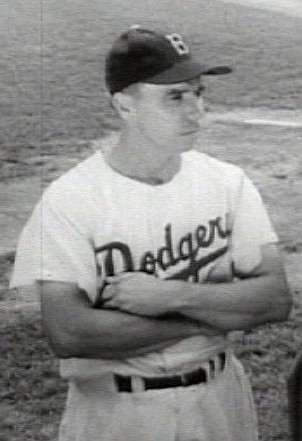
Progress was enhanced by the support of Leo Durocher, Dodgers’ player-manager, Ed Stankey, second baseman, and PeeWee Reese, shortstop and team captain.

(PeeWee Reese)

By the next season, a few black players were hired by other teams and two more by the Dodgers. Pressure on Jackie eased.

Years later, Jackie wrote of Branch Rickey: “Others have insinuated that he is not sincere because he speaks so frequently and so emotionally about the Fatherhood of God and the brotherhood of man. It is the way of some people to make light of sincerity of this kind, because they themselves are too small to speak, think, and live big” (5).

As for Jackie, sportswriter Red Smith wrote, “[Jackie Robinson] would not be defeated. Not by the other team and not by life. The word for Jackie Robinson is ‘unconquerable’” (6).

______________________________

We too can be unconquerable in our challenges if we remember:

Jackie Robinson showed us the way.

Notes:

  1. https://godreports.com/2013/04/jackie-robinson-how-god-used-two-faith-filled-believers-to-desegregate-baseball/
  2. https://www.foxnews.com/opinion/jackie-robinson-100th-birthday-his-faith-in-god-was-the-secret-ingredient-to-his-success
  3. https://www.investors.com/news/management/leaders-and-success/branch-rickey-revolutionized-baseball-in-more-ways-than-one/
  4. https://www.foxnews.com/opinion/jackie-robinson-100th-birthday
  5. https://sportsspectrum.com/sport/baseball/2017/07/18/jackie-robinsons-faith-god-detailed-new-book
  6. https://goodnewsmag.org/2011/03/the-life-and-faith-of-jackie-robinson/

Other sources:

http://www.davidprince.com/2015/04/15/the-ferocious-christian-gentleman-behind-jackie-robinsons-famous-moment-2/

https://www.usatoday.com/story/opinion/2013/04/11/jackie-robinson-a-man-of-faith-column/2075367/

Photo credits: http://www.flickr.com (2); http://www.wikimedia.org; http://www.militarytimes.com; en.wikipedia.org; http://www.canva.com; www,wikimedia.com; http://www.canva.com.

Read Full Post »

h63568

(In honor of Black History Month)

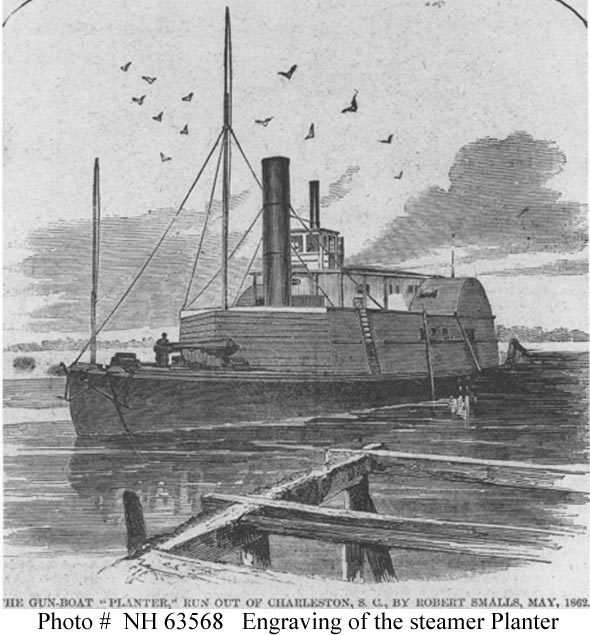
In the predawn hours of May 13, 1862, Robert Smalls’ experienced hands gripped the ship’s wheel of the Planter, though his heart was pounding. Ahead were five checkpoints along the Charleston River, and then the open sea. Within a few hours he and the fifteen others onboard would be free from slavery.

Or, failing to succeed, they would be sinking the ship, jumping overboard and perishing together. They had already decided: being captured was not an option.

Smalls prayed aloud, for the benefit of his crew and passengers: “Lord, we entrust ourselves into thy hands. Like thou didst for the Israelites in Egypt, please stand over us to our promised land of freedom” (1).

The first checkpoint came into view, its lanterns gleaming gold against the darkness. Even though the sentries would not be able to see him clearly, Smalls had taken the precaution of wearing the captain’s coat and straw hat. He even assumed his captain’s posture. And when Smalls gave the correct whistle signal, they allowed him to pass without question.

Robert whispered another prayer, this time of gratitude and praise. He marveled how God had engineered events–starting in his youth–to bring him to this moment:

  • At age twelve, Smalls’ master, Mr. McKee of Beaufort, South Carolina, had rented him to an employer in Charleston. Smalls had worked in the city ever since, as waiter, lamplighter, and then wharf hand.
  • Currently he was employed as wheel hand aboard the Confederate supply ship, Planter, under command of Captain Ripley. His circumstances had allowed him to learn how to sail and how to make the correct whistle signals at checkpoints.
  • The captain and white crew members frequently spent their nights in Charleston, not on the ship. This night was one of them.

charleston_s-c-_-_street_scene_-_nara_-_525179

(Charleston street scene by Matthew Brady)

  • Smalls enjoyed good rapport with the other ship-hand slaves of the Planter. Without them, this daring getaway would have been impossible.
  • The opportunity for escape presented itself when a pre-dawn mission was scheduled for May 13. Smalls’ 3:30 a.m. departure, although earlier than actually scheduled, did not alert the harbor guards.
  • Smalls had time to notify his wife and children that he would pick them up at a prearranged wharf nearby, prior to the first checkpoint.

A small pinpoint of pale light appeared ahead. Checkpoint Two. Again, the Planter slid by without incident as Smalls signaled to those on shore. Three, four, and five also allowed them to pass.

By sunrise they were sailing into safe Union waters. Upon sighting the first vessel of the Union blockade, Smalls took down the Confederate flag and hoisted a white sheet—just in time before sailors aboard the Onward began firing at the Confederate vessel.

His plan had worked; the little band onboard had escaped to freedom. No doubt their shouts of celebration included, “Thank you, Jesus!”

Smalls surprised the captain of Onward with his knowledge of Rebel fortifications and their locations. Also of value: a book of secret flag signals used by the Confederates, and a full cargo of armaments.

It wasn’t long before Smalls had joined the war effort for the Union, helping to enlist Black men to fight. Nearly 5,000 former slaves fought courageously for the North.

For his part, Smalls became the Union Navy captain for the CSS Planter, the ship he had sailed to freedom. He also captained the ironclad, USS Keokuk.

uss_keokuk_h59546

(The USS Keokuk)

Smalls led Union ships into waters the Confederacy had protected with mines—mines that Small had helped to plant while enslaved in Charleston. Soldiers deactivated the mines, opening those passageways to Union vessels.

Smalls courageously conducted seventeen missions in and around Charleston, which included assisting in the destruction of railroad bridges in the harbor area.

After the war, Smalls and his family returned to Beaufort, South Carolina. He was awarded the rank of Major General of the South Carolina Militia during Reconstruction, and turned his attention to business, education, and finally, politics.  He opened a general store and started a newspaper. He helped establish the first school built for African-American children in Beaufort County.

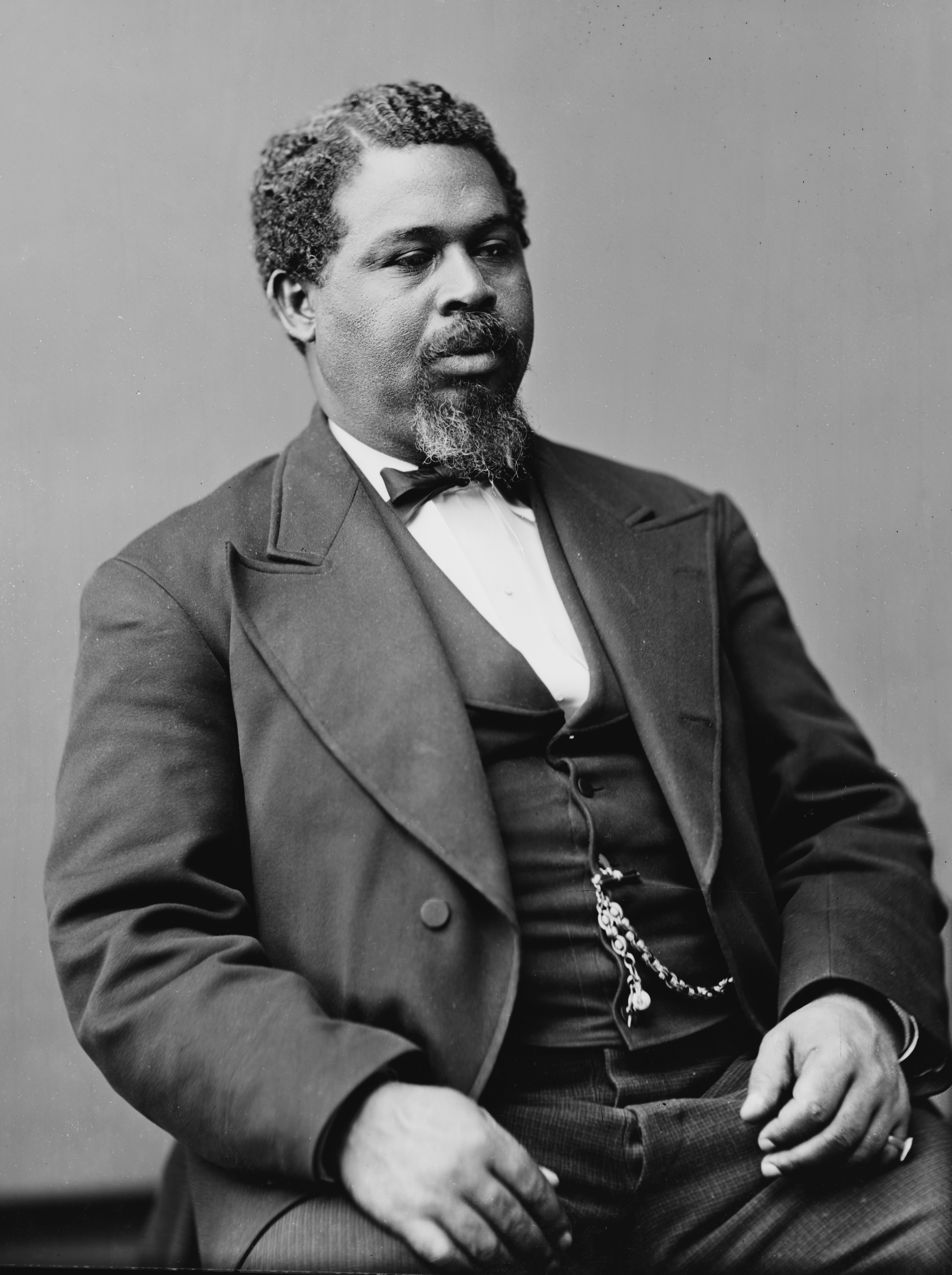
robert_smalls_-_brady-handy

(Robert Smalls)

From 1869 to 1889 Smalls served in both houses of the South Carolina Legislature, and five terms in the U.S. Congress. Referring to his political service, one commentator said, “His record was brilliant, consistent, and indeed he led in all the most prominent measures” (2).

One story in particular highlights Smalls’ Christ-like attitude that impacted his entire life:

robert_smalls_house_beaufort_south_carolina

(The McKee/Smalls House in Beaufort, SC)

He eventually acquired enough wealth to purchase the house in Beaufort where he and his mother had been slaves of the McKee family. Sometime after Smalls and his family moved in, Mrs. McKee came to the door. By this time she was elderly and perhaps suffering from dementia. She thought the house still belonged to her.

The natural inclination would have been to send her away or have her delivered to her current home. But that was not Robert Smalls’ way. He invited Mrs. McKee inside, gave back to the woman her old bedroom, and then served her.

Robert Smalls died in 1915 at age 76, and was buried with great honors.

In 2001 a Logistics Support Vessel was launched with his name, the Major General Robert Smalls. It was the first ship named for an African-American.

A worthy honoree, indeed.

Notes:

(1) Boone, Bishop Wellington, Black Self-Genocide, p. 165.

(2) http://www.docsouth.umc.edu/neh/simmon/simmons.html

Sources:

Art & photo credits:  www.ibiblio.org; http://www.wikimedia.org (4)

(Reblogged from February 2, 2017.  Jury duty has interfered with writing time this week.)

Read Full Post »


Ask a group of young adults to name three of their life goals, and many of them will mention: success in their careers, loving families, and good friends.

Few if any will say, “to lead a quiet life.”

Yet God inspired Paul to write:


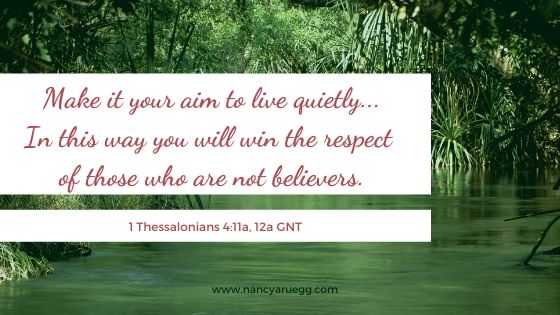
“Make it your ambition to lead a quiet life.”

–1 Thessalonians 4:11a

(emphasis added)


First, I suppose we ought to establish what a quiet life might include—qualities such as:

  • Composure
  • Humility
  • Kindness
  • Gentleness
  • Peacefulness


Equally valuable?   An understanding of what the quiet life would not include:

  • Boasting
  • Being easily-ruffled or offended
  • Whining and Complaining
  • Bossiness
  • Being argumentative


It’s easy to see: those who lead calm, kind, gentle lives are the ones we like to be around.  The second group of boasters, whiners, and arguers–not so much.

But there are many more benefits to the quiet life than offering pleasant company for others, honorable as that is. Consider the following:


A quiet life produces inner strength.


“Strength is found not in busyness and noise but in quietness.

For a lake to reflect the heavens on its surface, it must be calm.”

–L. B. Cowman (1)


Have you noticed that those with great inner strength and tranquility are most often grounded in faith?


(Grandma Rachel, circa 1910)


My grandmother(2) was just such a person.  Her strength through tragedy and challenge came from calm confidence in God and complete dependence upon him (Isaiah 30:15).  As a result, serenity and peace radiated from her life.

She was a 1 Corinthians 13 sort of woman—quietly patient, loving, and kind–not boastful, proud, or easily-angered.  I never heard her raise her voice, gossip, or complain. And she consistently thought of others before herself.

Those qualities of the quiet life Grandma exhibited, still radiate in my heart today.

And that leads us to the next benefit:


A quiet life provides resounding impact.


Sunbeams silently rest on plant and tree, generating photosynthesis and growth. Dewdrops silently form in the night, refreshing the ground. Gravity silently presses all matter to the earth.

Similarly, a life of tranquility provides a quiet, positive influence on others through calm demeanor and gentle speech.

Limited speech is also impactful. We’d never think to apply the adjective quiet to a nonstop talker, would we? Thinking-before-speaking includes this advice:


“Don’t speak unless you can improve on the silence.”

–Spanish Proverb


Columnist Robert Brault seeks to accomplish that feat this way:


“I like to think of myself as a finely aged wine,

and one thing that keeps a wine finely aged

is to put a cork in it” (3).


A quiet life wins respect (1 Thessalonians 4:11a, 12a).


Tirades and obnoxious behavior may garner rapt attention, but composure and self-restraint earn high regard.

We’d do well to remember:


“The only way to demonstrate

that Christianity is the best of all faiths

is to prove that it produces

the best of all men [and women].”

–William Barclay (4).


A quiet life is blessing.


1) Composure and contentment result as we grow in tranquility—highly desirable qualities in this world of unrest, discontent, and anger.


2)  A quiet life also steers us toward the blessing of maturity, where trivial annoyances no longer infuriate, giving is more fun than receiving, and building up someone else is more satisfying then bragging about ourselves.


https://quotefancy.com/quote/1557578/


3) The best blessing of all for humble, gentle, and peaceable individuals? The commendation of God himself (Matthew 5:3-9).


“How slow many are to learn

that quietness is a blessing,

that quietness is strength,

that quietness is the source

of the highest activity—

the secret of all true abiding in Christ!

Let us try to learn it

and watch for whatever interferes with it.

The dangers that threaten the soul’s rest are many.”

–Andrew Murray (1828-1917)


“Abide in me and I will abide in you” (John 15:4 ISV).


Notes:

  1. Streams in the Desert, p. 450
  2. I’ve written about her before: https://nancyaruegg.com/2013/02/18/1106/
  3. http://www.quotegarden.com/speaking.html
  4. The Letters to the Philippians, Colossians, and Thessalonians, p. 234.


Photo credits:  http://www.pxfuel.com; http://www.pexels.com; http://www.pxfuel.com; Nancy Ruegg; http://www.pixabay.com; http://www.canva.com; http://www.quotefancy.com; http://www.pixabay.com.


Read Full Post »


Biology defines life as

“the metabolic activity of protoplasm.”

But there are times when it seems even worse than that.

–Unknown*


Truthfully, a day of mere metabolic activity—going through the motions but without any delight or satisfaction—can hardly be called life. That’s simply existing.

What we really aspire to is a life of vitality, purpose, and joy.

The question is, how do we find it?

Some pursue pleasure, accumulate wealth and possessions, and/or fight against the effects of aging. But these activities provide momentary satisfaction at best.


Then there’s a different kind of living—life in Jesus.

I am the life,” he proclaimed (John 11:25, 14:6).

And millions upon millions of people through the centuries have lived out the truth of his statement—with the vitality, purpose, and joy he offers.

That’s because:


Jesus is our source for life.


To be alive with Christ is to have eternal life.

That could be a curse if it meant enduring intolerable conditions decade after decade, century after century.

But what we’re promised is God’s eternity–heavenly bliss–when we pass from this life to the next.

Until that moment we’re privileged with God’s presence and his activity in our livesIn addition, he delights to saturate our imperfect inner selves with his own excellencies (Ephesians 3:19), transforming us into his likeness.  And that in turn provides delight for us.


Jesus is our sustenance for life.


“I am the bread of life.

Whoever comes to me

Will never go hungry.”

–John 6:35


As bread supports physical life, Jesus supports spiritual life.

How? Sustenance occurs as we meditate on him—his attributes, acts of power, and wonderful works.

Just thinking about the vastness of his creative genius, the splendor of his miracles, and the overflow of his blessings breathes new life—strength, stamina, and joy—into our spirits.


Jesus is our solution for life.


Breathe in the assurance of God’s truth and the hope of his promises:

“The Lord is strong and mighty, therefore overwhelming victory is mine through Christ who loves me” (Psalm 24:8; Romans 8:37 NLT).

“From him and through him and to him are all things, therefore all circumstances are in the capable hands of my great God and Savior” (Romans 11:36; Titus 2:13).

“With God all things are possible, therefore he will fulfill his purpose for me” (Matthew 19:26; Psalm 138:8, emphasis added).

Such statements revitalize faith and attitude.


Jesus is our solace for life.


Take comfort in who Jesus is:

  • Our indescribable gift (2 Corinthians 9:15). All we have to do is accept.
  • Our constant companion (Matthew 28:20). All we have to do is acknowledge his presence.
  • Our wonderful Counselor (Isaiah 9:6). All we have to do is ask.
  • Our burden-bearer (Matthew 11:28). All we have to do is come to him.
  • Our all-powerful overcomer (John 16:33). All we have to do is avail ourselves and remember our enemy is already defeated.


There is no protoplasmic subsistence with Jesus.

You are a member of God’s royal family because of Jesus (John 1:9)–even during days of mundane repetition or unrecognized contribution.

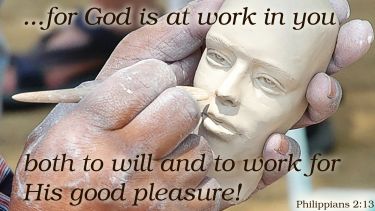
As a result of your standing, all things have become new.  You’ve been revitalized into an extraordinary creation (2 Corinthians 5:17) and bestowed with cosmic significance, a personalized place in the scheme of meaningful events and divine purposes (Philippians 2:13).


All because of Jesus.

He does indeed make life worth living.


*from Quote/Unquote, compiled by Lloyd Cory, Victor Books, 1977, p. 181.


Photo credits:  http://www.wikimedia.com; http://www.wikipedia.org; http://www.heartlight.org; http://www.pixabay.com; http://www.heartlight.org (3).


Read Full Post »


While Steve and I savor the last few days of family gathered in one place, I hope you’ll find wisdom to savor, among these seven quotes:


The bad news is time flies.

The good news is God is the pilot.

–Unknown


I wish, my brothers and sisters, that during this year you may live nearer to Christ than you have ever done before. Depend upon it: it is when we think much of Christ that we think little of ourselves, little of our troubles, and little of the doubts and fears that surround us.–Charles Spurgeon


REFLECT. REVIEW. REPENT. RENEW.

–Unknown


Renewal is rooted in faith, not in resolutions! They are made for New Year’s and forgotten on an average of thirteen days later, say the surveys. Faith is the result of a decision about Christ. I cannot make a new me or a new you, but Christ can make you new and me new, as well, if we decide for Him.–Frank Harrington


If this is to be a Happy New Year,

a year of usefulness, a year in which we shall live to make this earth better,

it is because God will direct our pathway.

How important then, to feel our dependence upon Him!

— Matthew Simpson


Trust an unknown future to a known God.

–Corrie ten Boom


Recipe for a Happy New Year

Take twelve fine, full-grown months; see that these are thoroughly free from old memories of bitterness, rancor and hate, cleanse them completely from every clinging spite; pick off all the specks of pettiness and littleness; in short, see that these months are freed from all the past—have them fresh and clean as when they first came from the great storehouse of Time.

Cut these months into thirty or thirty-one equal parts. Do not attempt to make up the whole batch at one time (so many persons spoil the entire lot this way) but prepare one day at a time.

Into each day put equal parts of faith, patience, courage, work (some people omit this ingredient and so spoil the flavor of the rest), hope, fidelity, liberality, kindness, rest (leaving this out is like leaving the oil out of the salad dressing—don’t do it), prayer, meditation, and one well-selected resolution.

Put in about one teaspoonful of good spirits, a dash of fun, a pinch of folly, a sprinkling of play, and a heaping cupful of humor.—Anonymous


___________________________________


Which quote was most meaningful to you?  Tell us about it in the comment section below.


May 2020 be a year of increasing spiritual strength and prosperity of soul for us all!


Photo credit:  http://www.pxfuel.com.


Read Full Post »

Did you catch last week’s post, “There’s No Such Thing as a Christian Genius?”

That title came from a blog-responder some years ago who didn’t realize evidence refuted his opinion. Intelligence is to be found among believers in Jesus—in the sciences (as we discovered last week), and in the humanities, as presented below:

ART 

Albrecht Durer (1471-1528)—considered by many as the greatest Renaissance artist of northern Europe. His career began at the dawn of the Reformation under Martin Luther, whom Durer supported.

One of his prayers penned five hundred years ago is just as applicable today. Included here are excerpts:

O God in heaven, have mercy on us!

Preserve in us the true genuine Christian faith,

Help us recognize your voice,

Help us not to be allured by the madness of the world,

So that we may never fall away from you,

O Lord Jesus Christ (1).

Self-portrait of Durer

Casper David Friedrich (1774-1840) produced more than 500 works. He is best known for his landscapes, all of which possessed a spiritual quality and meaning.

Friedrich expressed his convictions in poetry as well:

Through the gloomy clouds break

Blue sky, sunshine,

On the heights and in the valley

Sing the lark and the nightingale.

God, I thank you that I live

Not forever in this world

Strengthen me that my soul rise

Upward toward your firmament (2).

Two Men Contemplating the Moon by Friedrich, ca. 1824

Thomas Cole (1801-1848) was one of several who led the Hudson River School, a group of painters known for their realistic landscapes.

They desired to portray the presence of God in his creation. One technique was to include small human figures surrounded by mammoth trees and vast meadows.

Cole saw “the mission of the artist as a spiritual one, to spread the Word of God through art devoted to nature” (3). To that end, Cole prayed before he painted.

Dream of Arcadia by Cole, ca. 1838

MUSIC

George Frideric Handel produced numerous works in at least seven genres. His most remarkable effort is perhaps his most famous composition, Messiah, which he accomplished in just twenty-four days.

In 1759, while receiving an ovation after his last performance, Handel cried out: “Not from me…but from Heaven…comes all” (4).

He hoped to die on Easter, hoping to “meet his good God, his sweet Lord and Savior, on the day of his Resurrection” (5). Handel arrived in heaven the day before, in 1759.

George Frideric Handel

Johann Sebastian Bach, another prolific composer, is considered one of the greatest Western composers of all time.

While serving as a church organist and teacher, he set an impossible goal: write a different cantata for every Sunday, for three years. Not only did Bach create the music, but made sure his singers and instrumentalists had copies, and time to rehearse with him before each Sunday’s service.

Even on his secular works, Bach often wrote “I.N.J.” for “in the name of Jesus.” Finished manuscripts were frequently initialed, “S.D.G.”—Soli Deo Gloria (to God alone, the glory) (6).

“Soli Deo Gloria” in Bach’s own hand, bottom right

Felix Mendelssohn excelled in numerous fields: philosophy, linguistics, watercolor painting, poetry, gymnastics, and of course, music. During his brief life of only thirty-eight years, Mendelssohn produced approximately 750 musical works in nearly every genre.

He gained great popularity and prestige as a musician, yet maintained a humble and devout faith in Christ.  In one of his letters, Mendelssohn wrote: “Pray to God that He may create in us a clean heart and renew a right spirit within us” (7).

LITERATURE 

Elizabeth Barrett Browning (1806-1861) had no equal in the literary history of any country, according to the Edinburg Review (8). Her literary works reflected keen intelligence and deep faith. As a teenager, she taught herself Hebrew so she could read the Old Testament with greater understanding.

Browning’s writings often explored Christian themes:

“Earth is crammed with heaven,

and every common bush is afire with God.

And only those who see take off their shoes;

the rest sit around and pluck blackberries” (9).

–from Aurora Leigh

And from the poem, “Comfort”:

“SPEAK low to me, my Saviour, low and sweet
From out the hallelujahs, sweet and low
Lest I should fear and fall, and miss Thee so
Who art not missed by any that entreat” (10).

Elizabeth Barrett Browning

G. K. Chesterton (1874-1936) distinguished himself as an essayist, columnist, humorist, poet, and novelist. About him, one evangelical scholar wrote : “There has not been a more articulate champion of classic Christianity, virtue, and decency.”

Articulate indeed:

“Just going to church doesn’t make you a Christian any more than standing in your garage makes you a car”—original source unknown (11).

“These are the days when the Christian is expected to praise every creed except his own.”—from the Illustrated News, 8-11-1928 (12).

G. K. Chesterton

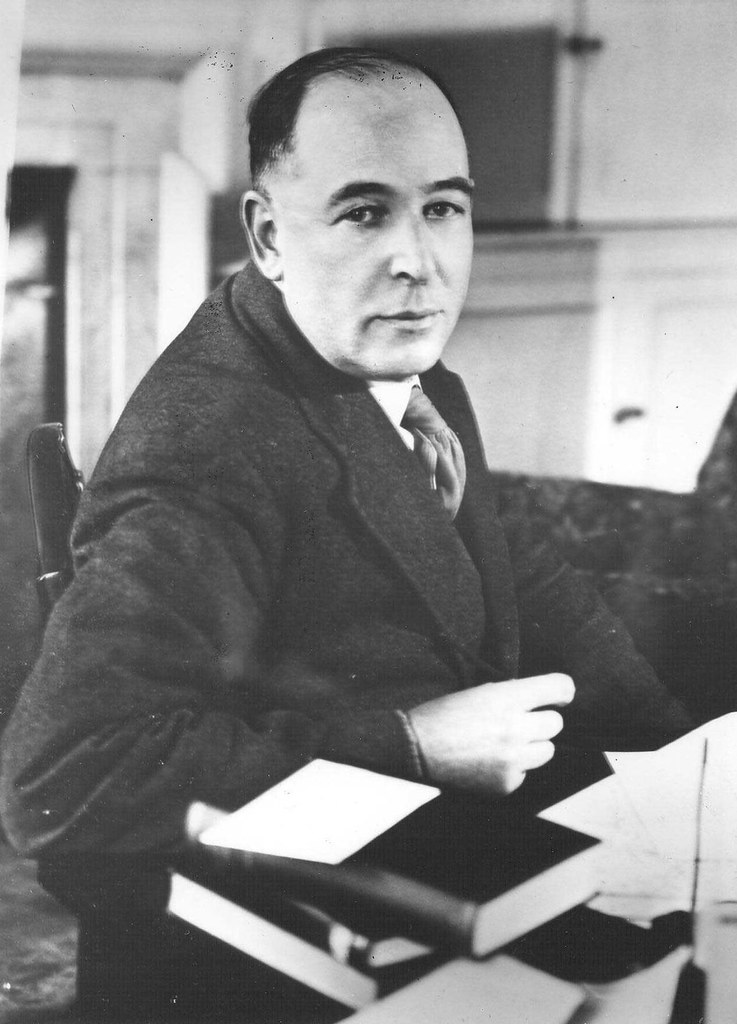
Clive Staples Lewis (1898–1963), professor at Oxford and then Cambridge, is considered one of the intellectual giants of the twentieth century. He authored more than thirty books; many are popular to this day.

Lewis came to Christian faith out of atheism, through the reading of such authors as George MacDonald, G. K. Chesterton, and others. Also influential, other intellectuals of faith associated with Oxford, including J. R. R. Tolkien.

C. S. Lewis came to understand:

“Look for yourself and you will find in the long run only hatred, loneliness despair, rage, ruin, and decay. But look for Christ and you find Him, and with Him, everything else thrown in”from Mere Christianity (13).

C. S. Lewis, ca. 1940

______________________________

As noted last week, it is a fact many acclaimed geniuses have chosen not to become Christians.

But it cannot be said there is no such thing as a Christian genius.

Again, who would you add to the list?  Please share in the comment section below!

Notes:

  1. historyofpainters.com/durer/
  2. As quoted and translated by Linda Siegel in Caspar David Friedrich and the Age of German Romanticism, 1978, p. 48.
  3. https://www.equip.org/article/what-has-art-to-do-with-evangelism/
  4. christianheritageedinburgh.uk
  5. https://www.christianitytoday.com/history/people/musiciansartistsandwriters/george-frideric-handel.html
  6. christianheritageedinburgh.uk
  7. thirdmill.org/paul/impact_mendelssohn.asp
  8. poetryfoundation.org/poets/elizabeth-barrett-browning
  9. https://www.bartleby.com/236/86.html
  10. https://www.poemhunter.com/poem/comfort/
  11. http://famousquotefrom.com/g-k-chesterton/
  12. https://www.chesterton.org/quotations-of-g-k-chesterton/
  13. http://www.cslewisinstitute.org/cslewisonauthenticdiscipleshippage4

Photo credits:  http://www.flickr.com; http://www.picryl.com; http://www.wikimedia.org; http://www.wikipedia.org; http://www.wikimedia.org; http://www.wikipedia.org; http://www.wikimedia.org (2); http://www.flickr.com.

Read Full Post »

At least that’s what an anonymous responder tried to persuade the readership on a blog some years ago. According to this person, the Bible is just “a bad book of poetry” that no intelligent person would believe. And he challenged other readers to name a Christian genius (1).

Okay.  Here are a few to begin the list:

MATHEMATICS

Blaise Pascal’s notable mathematical works included the development of the theory of probabilities. Later in life, he devoted himself to theological writings. “There is a God-shaped vacuum in the heart of every man which cannot be filled by any created thing, but only by God, the Creator, made known through Jesus” (2).


Blaise Pascal (1623-1727)


Sir Isaac Newton, famous for his laws of physics, also paved the way for the subject of calculus. He too dedicated his later years to interpreting scripture. “Godliness consists in the knowledge, love, and worship of God, Humanity in love, righteousness & good offices towards man” (3), he wrote.


Sir Isaac Newton (1643-1727)


Dr. John Lennox is Professor Emeritus of Mathematics at the University of Oxford. He has published over seventy mathematical papers and co-authored two research level texts in algebra. But Lennox is also an astute Christian apologist, and has written such books as Can Science Explain Everything (4)?


Dr. John Lennox (1943- )


SCIENCE

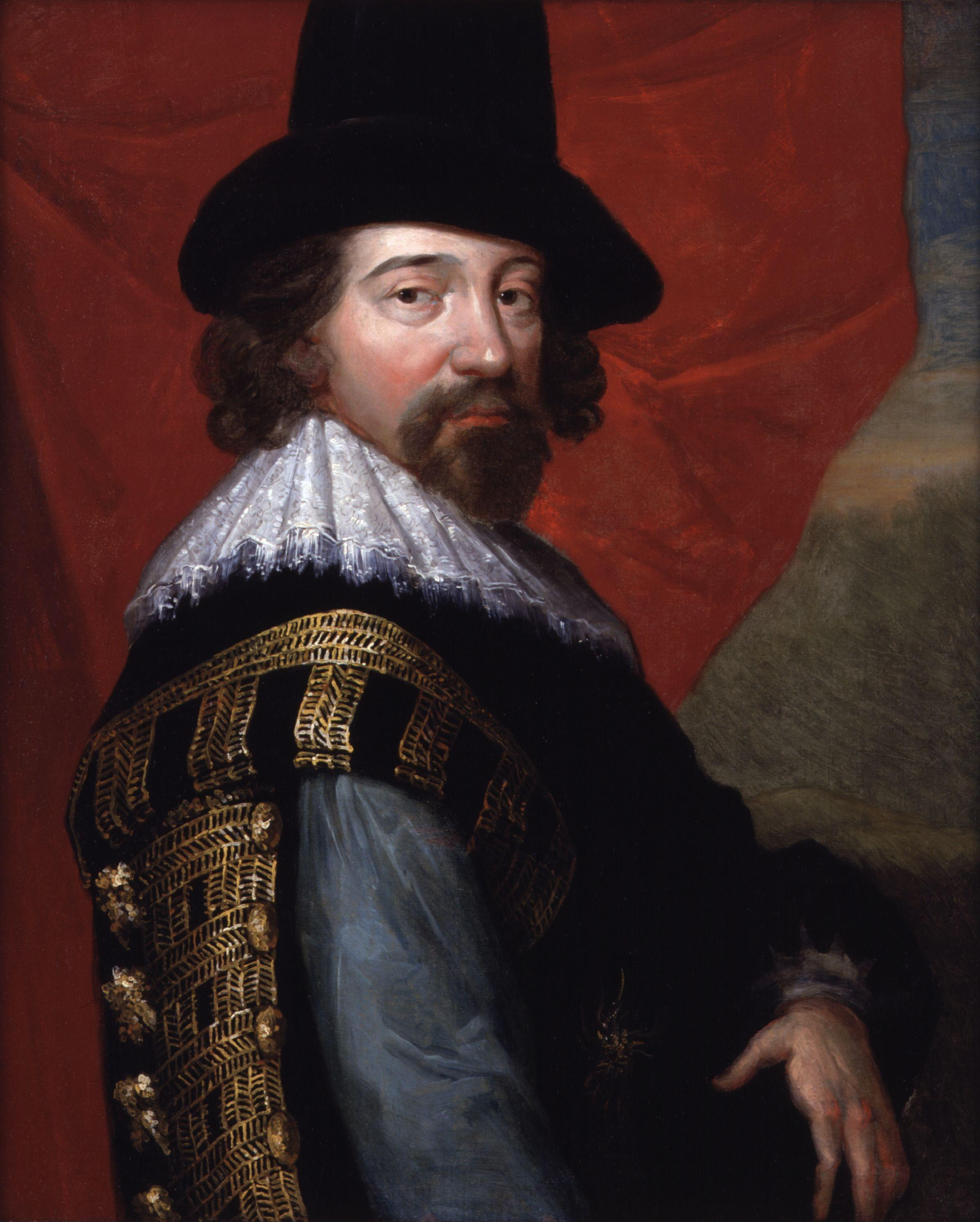
Sir Francis Bacon, who established the scientific method, viewed science as a way to learn deeper truths about God. In his will, he included this final prayer: “When I thought most of peace and honor, thy hand [was] heavy on me, and hath humbled me, according to thy former loving kindness. … Just are thy judgments upon my sins. … Be merciful unto me for my Savior’s sake, and receive me into thy bosom” (5).


Sir Francis Bacon (1561-1626)


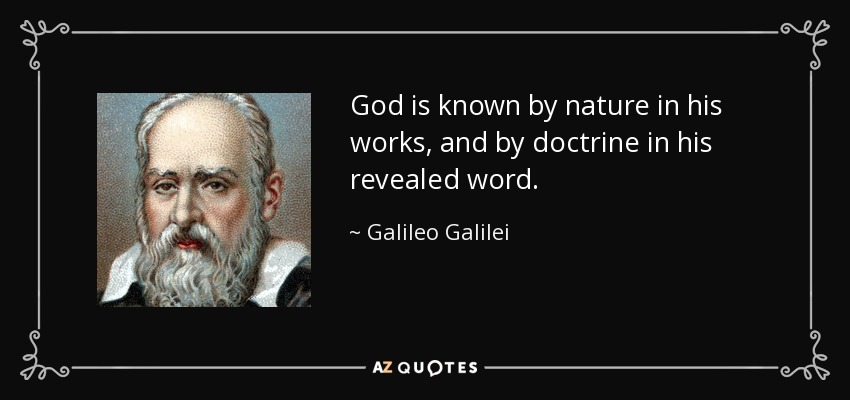
Galileo Galilei (1564-1642)–One of the most important and influential physicists, astronomers, inventors and scientists to ever live. He saw no conflict between science and faith in God. “God is known by nature in his works, and by doctrine in his revealed word” (6).


James Clerk Maxwell memorized the Bible by the age of 14.  Yes, the whole thing. His extensive scientific studies determined that light is an electromagnetic wave, and his kinetic theory established that temperature is entirely dependent on the speeds of particles. Upon his death, a colleague wrote: “We his contemporaries at college, have seen in him high powers of mind and great capacity and original views, conjoined with deep humility before his God, reverent submission to His will, and hearty belief in the love and atonement of that Divine Savior” (7).


James Clerk Maxwell (1831-1879)


MEDICINE

Sir James Simpson, an outstanding obstetrician, pioneered many techniques in his field. He’s also credited for his discovery of the anesthetic qualities of chloroform. But when asked by a journalist about his greatest discovery, Dr. Simpson replied he was a sinner and Jesus Christ his Savior (8).


Sir James Simpson (1811-1870)


Dr. Joseph Lister, the father of modern surgery, determined as a medical student to not just practice medicine, but to also conduct research. Among the surgical techniques he developed, Lister proved the benefits of antiseptic surgery. A devout Quaker, Lister made it clear: “I am a believer in the fundamental doctrines of Christianity” (9).


Dr. Joseph Lister (1827-1912)


Alexander Fleming–biologist, physician, microbiologist, and pharmacologist—changed the world when he discovered penicillin, but he gave God the credit. “Discoveries of this magnitude are rare . . . God took care to hide that country till he judged his people ready; then, he chose me for his whisper and I found it and it’s yours.” Fleming also asserted: “My greatest discovery was that I needed God, and that I was nothing without him and that he loved me and showed his love by sending Jesus to save me” (10).


Alexander Fleming (1881-1955)


Still further evidence of genius is found among the humanities. In an effort to keep this post of reasonable length, I’ll save that topic for next week.   But perhaps you’ll enjoy uncovering evidence for yourself of the godly faith of these Christians and others. The websites listed below offer a beginning point.

It is a fact that many proclaimed geniuses have chosen not to become Christians. God has chosen to bestow brilliant minds among all mankind, just as he grants the rain on the just and the unjust (Matthew 5:45).

But it cannot be said there is no such thing as a Christian genius.


___________________________________________


What Christian geniuses would you add to the list?

Please share in the comment section below!


Notes:

1. http://www.rightnation.us/forums/index.php?autocom=blog&blogid=7&showentry=742

2. https://www.timetoast.com/timelines/contributions-of-famous-christian-mathematicians 

3.  same as above

4.  https://www.rzim.org/speakers/john-lennox

5.  https://www.christianitytoday.com/history/people/scholarsandscientists/francis-bacon.html

6.  https://www.christianitytoday.com/history/people/scholarsandscientists/galileo-galilei.html

7.  https://creation.com/great-creation-scientists-james-clerk-maxwell

8.  http://evangelicalfocus.com/blogs/3118/The_Reformation_and_Medicine_My_lecture_to_commemorate_the_500th_anniversary-

9.  https://answersingenesis.org/creation-scientists/joseph-lister-father-of-modern-surgery/

10.  http://www.staplefordresources.co.uk/files/files/Alexander_Fleming.pdf


Other Sources:

https://coldcasechristianity.com/writings/the-rich-historic-roll-call-of-great-christian-thinkers-and-scientists/

https://www.famousscientists.org/great-scientists-christians/

http://evangelicalfocus.com/blogs/3118/thereformationandmedicinemylecturetocommemoratethe500thanniversary_

https://relevantmagazine.com/god/9-groundbreaking-scientists-who-happened-be-christians/

https://answersingenesis.org/intelligent-design/signature-god-medicine-and-microbiology/


Art & Photo credits:  http://www.wikimedia.org (2); http://www.flickr.com; http://www.wikimedia.org; http://www.azquotes.com; http://www.flickr.com (2); http://www.wikimedia.org (2).

 

Read Full Post »


Cinematographer Conrad Hall won three Academy Awards during his fifty-year career. His genius produced such classic films as Butch Cassidy and the Sundance Kid, and more recently, The Road to Perdition.

When Hall died of cancer in 2003, his colleagues declared him “one of the great cinematographers and a master of light.”  Yet toward the end of his career, Hall stated, “You are always a student, never a master. You have to keep moving forward.”

Another cinematographer, John Bailey, affirmed the same truth: “A lifetime commitment to learning and studying…is real important.  It’s a constant process…you’re a student for your whole career.”

I wonder…

Might the dynamic of continual learning be important for us as believers in Jesus?


He seemed to think so.

During one of his last teaching sessions with the disciples (recorded in John 14-16), Jesus inferred they would always be students—even though these men had been under his tutelage for three years (the time it takes to earn a degree in ministry today).  Consider also, their Master was the Son of God.

But even they required more –a Helper to guide them into all the truth (16:13).

And so do we.

Now some might be discouraged by the reality we can never attain full understanding about God or achieve perfection of character this side of heaven.  Even the great Apostle Paul asserted he had not arrived:


But there is a positive side…

I can imagine that cinematographers Conrad Hall and John Bailey (mentioned above) enjoyed ever-increasing satisfaction in their work, as their knowledge expanded and their competence developed.

We too can enjoy ever-increasing satisfaction in working out our salvation (1), as we expand our knowledge of God and his Word, and develop the competence of a mature believer.

It’s a process that continues as long as we live on earth. The better acquainted we become with God, the more we want to live by his wisdom. The more we live by his wisdom, the sweeter and more satisfying life becomes.


Just as cinematographers cooperate with their directors to bring characters to life, we cooperate with the Holy Spirit, and he brings to life the character within each of us, developing a mature person–complete and not lacking anything (James 1:4).

His Word becomes the joy of our hearts, obedience becomes a delight, and peace rules in our minds (2).


So…

“Don’t lose a minute in building on what you’ve been given, complementing your basic faith with good character, spiritual understanding, alert discipline, passionate patience, reverent wonder, warm friendliness, and generous love, each dimension fitting into and developing the others.

“With these qualities active and growing in your lives…no day will pass without its reward as you mature in your experience of our Master Jesus (3).”

You know who wrote that? The Apostle Peter—one of the disciples at that last Passover meal with Jesus. And for several decades after that memorable dinner, Peter did allow the Helper to guide him through the maturing process. He knew the rewards.

Now it’s our turn to learn, study, and cooperate.

Together let’s keep moving forward–and revel in the process as we do.


This post is based on a mini-devotional written by our son, Pastor Jeremy Ruegg.


Notes:

  1. The clause, “working out our salvation” comes from Philippians 2:13: “Work hard to show the results of your salvation (NLT).” By no means can we earn a place in heaven by working hard (Ephesians 2:8-9).  We could never work hard enough to deserve its magnificent riches.
  2. Psalm 119:111, 35, 165
  3. 2 Peter 3:5-8 (MSG)


Photo credits:  http://www.wikipedia.org; http://www.thebluediamondgallery.com; http://www.canva.com; http://www.pixabay.com; http://www.heartlight.org; http://www.pexels.com


Read Full Post »


“Here comes another one!” little Jim cried to his dad, as they stood atop the small airport terminal not far from their house. Father and son spent occasional afternoons watching the planes take off and land, much to Jim’s delight.

His sharp ears would pick up a plane’s droning buzz before his eyes could make out the small dot in the sky. He hardly breathed as the plane slowly descended, then lightly touched down on the landing field.

The wonder never grew old. And Jim wished more than anything to be in the cockpit, participating in the miracle of flight, not just observing.

That dream stayed with Jim all through school. Upon graduation he attended the U.S. Naval Academy, and then entered the Air Force. His plan was to become a commercial pilot after his term of service.


(The P-51 Mustang)


And then Jim chanced to fly a P-51, the fastest jet of the time and capable of flying almost vertically. After that experience, commercial piloting seemed much too tame.

Jim went back to school to earn his master’s degree in aeronautical and instrumentation engineering and graduated in 1957.

The National Aeronautics and Space Administration (NASA) was established the following year and Jim Irwin set his sites on becoming an astronaut. To achieve that goal he needed to become a test pilot.


Jim entered that program in 1960. Once qualified he was assigned to a top-secret mission: testing a plane that flew higher and faster than any previous aircraft.

Three times he applied for the astronaut program; twice he was rejected. Finally in 1966 his acceptance letter arrived. Jim’s first assignment was to direct the testing of a lunar landing module that engineers were designing.


Then came the moment he’d been waiting for. He and fellow astronauts David Scott and Alfred Worden were chosen for the Apollo 15 mission, scheduled to take place the summer of 1971.

Eighteen months of intense training were required to prepare the men for the twelve-day expedition, three of which would be spent on the moon.

The boy who wanted to fly would soar where only a dozen men had traveled before him.


Their mission included collecting rock samples and conducting experiments in an unexplored region of the moon. They would also be the first astronauts to drive a Lunar Rover that allowed investigation of a larger area than that of previous missions.

Jim was the eighth person to walk on the moon—certainly a thrill-of-a-lifetime. But later he would insist, those moments on the moon weren’t exciting because he was there, but because God was there. Jim profoundly sensed his presence.


He’d been a Christian for over twenty years by 1971, but “I was…[a] silent Christian,” he would explain.

On the moon, as Jim looked up at Planet Earth against the black backdrop of the universe, he marveled at its fragile appearance—so delicate that if someone reached out to touch it, the world would surely crumble and fall apart, he said. Jim experienced overwhelming awe for the creation of God and his love for the entire human race—love that sent his Son Jesus earthward to die in their place.


One of Jim’s responsibilities on the mission was to set up the mechanism for lunar experiments. Not all steps proceeded successfully. But instead of inquiring the NASA engineers, Jim prayed, because waiting for a reply from Houston would take too long.

Each time he sensed God telling him what to do, and he felt the supernatural presence of God with him as he worked. That sensation was so strong, Jim felt sure if he turned around, Jesus would be standing right there at his shoulder.

As complicated as the moon landings were, Apollo 15 proceeded without major problems. The three astronauts landed safely in the Pacific Ocean on August 7, even though one parachute (out of three) didn’t deploy.


A little more than two weeks later Irwin, Scott, and Worden were honored by a ticker tape parade in New York City. As Jim waved to the thousands gathered along the street, his heart ached for those who did not know Jesus as a personal Friend, and he felt God wanted him to tell others about his Son.

A year later Jim resigned from NASA and formed the High Flight Foundation to share about Jesus from his experiences as an astronaut, and to encourage archaeological research, confirming the accuracy of the Bible.

Jim even participated in exploration of Mt. Ararat in Turkey, where other adventurers claimed to have seen what looked like ship remains, high up on the slopes. Conjecturers proposed that perhaps Noah’s ark had been found.


(Mount Ararat, nearly 17,000 ft. in elevation)


Jim’s astronaut-status provided opportunities that other exploratory teams had not been able to achieve. Government officials allowed the High Flight Foundation access to sites that had been refused to others. Yet in spite of these privileges, Jim and his crew never found the ancient ark.

For twenty years after his moon-landing adventure, Jim Irwin told others that “Jesus walking on earth was much more important than man walking on the moon, that Jesus was the way to know God and receive eternal life.”*


The day before the twentieth anniversary of his homecoming from the moon, the boy who wanted to fly flew further still. Jim experienced his homecoming in heaven, due to a massive heart attack. He was survived by his wife Mary and their five children.

No doubt, James Benson Irwin heard those beautiful words, “Well done, good and faithful servant (Matthew 25:21)!” Only this time, Jim didn’t just feel Jesus’ presence. This time, Jim was able to see his Savior and Friend face to face.


* https://godreports.com/2100/03/encounter-with-jesus-on-the-moon-left-astronaut-changed/


Sources:

  1. https://biography.yourdictionary.com/james-benson-irwin
  2. https://crev.info/scientists/james-irwin/
  3. https://defendingthechristianfaith.org/others-who-testify-of-faith-in-christ.html
  4. https://godreports.com/2011/03/encounter-with-jesus-on-the-moon-left-astronaut-changed/
  5. https://ramsheadpress.com/messiah/ch17.html
  6. https://www.rocketstem.org/2015/07/07/rovering-across-the-moon-during-apollo-15/


Photo credits:  http://www.ebay.com; http://www.commons.wikimedia.org; http://www.nationalmuseum.af.mil; http://www.nasa.gov; http://www.jsc.nasa.gov; http://www.wikipedia.org; http://www.picryl.com; http://www.wikimedia.com (3); http://www.canva.com.


Read Full Post »

« Newer Posts - Older Posts »

When the House is Quiet

Impressions Becoming Expressions

Mitch Teemley

The Power of Story

Still Traveling

Impressions Becoming Expressions

Living Our Days

Gaining a heart of wisdom

He Said What?!

I'm Patty, and my husband and I are living with our adult son who has autism and epilepsy. I love sharing lessons learned from life around me, especially life with Aaron.

Meditations of my Heart

Impressions Becoming Expressions

Linda Stoll

Impressions Becoming Expressions

Signora Sheila

Notes on Life, Faith & Italy

Heidi Viars

Finding the Image of God