Feeds:
Posts
Comments

Archive for the ‘Faith’ Category

Ever try sleeping on a rock pillow? I, for one, can’t imagine actually falling asleep on such a hard surface.

The only person I know who had to try was Jacob of the Bible. (The story of that night is found in Genesis 28:10-22. It was also the subject of a previous post, which you can access here: Surely God Is in This Place.)


jacob


The scene above of Jacob resting on his rock pillow provides a worthwhile image for a Spurgeon quote I encountered recently:


“Use the Lord’s words as your pillows.

Lie down and [rest] in Him.”


Indeed, resting on the rock-solid assurances of God’s Word is wise advice, fostering peace within our spirits.

Just reciting scripture can provide effective comfort.

A good place to start? In the book of Beginnings. This example comes from Jacob himself:


fd3ddff270b84696468cc48b3a806d08


“Let us go up to Bethel where I will build an altar to God,

who answered me in the day of my distress

and who has been with me wherever I have gone.”

–Genesis 35:3 (NIV)


Notice this excerpt is seven chapters and many years past the “rock pillow” event. Jacob is no longer a young man; he’s seventy-seven as he embarks for Bethel. And during those intervening years, Jacob has experienced many days of distress as he:

  • ran away from home (Genesis 27-28),
  • worked for his Uncle Laban who took advantage of him (chapter 29 and 31:7), and then
  • set out on his own through enemy territory to return to Bethel, the home of his father, Isaac (chapters 35).

But in the verse quoted above, Jacob recognizes that through all those challenges, God demonstrated his favor, because with the Lord’s presence comes his guidance, provision, and protection.

I, too, have experienced distressing days. Who hasn’t?

But God has been with me through them all—circumstances such as these:

  • When my husband’s boss caused turmoil for us week after week,
  • When we received the unwelcome news (five times) that we were being moved to another church*, and
  • When pressure from certain administrators and parents caused ongoing stress at school (during my twenty-six years in the elementary classroom).

Yet now, looking back, I see that in each situation God was teaching me patience, perseverance, and reliance upon him. In fact, some distressing experiences were undoubtedly designed specifically to accomplish those benefits.

From the advantage of hindsight, I can see the pathway God prepared, to get us/me through those stressful days, and how he richly blessed on the other side.

As Charles Udall observed:


2b474d3c1facc1c1b3f28bfe6339057d

(“In life you will always be faced with a series of

God-ordained opportunities

brilliantly disguised as problems and challenges.”)


I wish I could say that through all of life’s challenges I’ve rested completely on pillows of promise and statements of faith. That wouldn’t be true. But I know that scripture-promises, prayer, and faith-statements have made a positive difference. And the strength of my faith did grow through each experience.

Notice Mr. Udall says we’ll always face challenges. I can give in to the distress of that fact or choose to rest on the pillow of promise that God is preparing me for what lies ahead as well as preparing the way through it.

*     *     *     *     *     *     *     *     *     * 

I praise you, Father, for being an all-knowing God.  No event catches you by surprise; you know every challenge I may yet face. Like Jacob, I think back upon stressful days of the past and affirm your comforting presence, attentive provision, and wise guidance through it all. May I be mindful to rest on your rock-solid pillows of promise from this day forward.

Art & photo credits:  www.keyway.ca; http://www.pinterest.com (2).


*For those who may not know, my husband was a pastor for forty years.
Read Full Post »

A Bit of Nan-Sense for 1-28-16:


IMG_0415


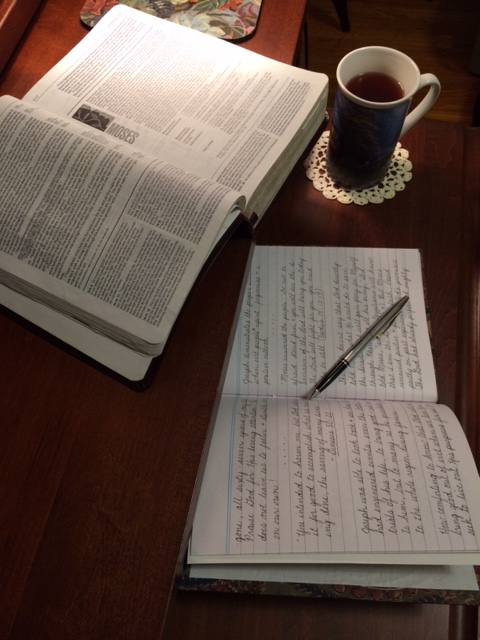
My son and daughter-in-law gave me a lovely, cloth-bound journal for my birthday. I decided to record favorite scripture verses, perhaps one or two for each book of the Bible, then meditate on the meaning, and record how the truths have played out in my life.

One of the first entries included Exodus 14:13-14, when the Israelites had just escaped slavery in Egypt only to come up against the Red Sea. To make matters worse, Pharaoh’s army was in fierce pursuit. The people were terrified, desperately wishing they’d stayed in Egypt.

Moses said, “Do not be afraid. Stand firm and you will see the deliverance the Lord will bring you today…The Lord will fight for you; you need only to be still.”

True to his word, God did miraculously rescue them.

Notes to self, in response:

Time and again God has proven to me his trustworthiness and demonstrated his loving care. My blessings journal with over 1000 entries thus far provides ample proof.

In addition, Scripture abounds with promises that give me hope during difficult times. I know that God specializes in bringing beauty out of ashes (Isaiah 61:3). And though deliverance may not come as soon as I’d like or in the way I expect, I know God will see me through.

With those words, “be still” (at least in this context) God was not suggesting total inactivity. After all, the Israelites did have to walk through the Red Sea to the other side. It appears God was urging them to be still of heart – to cease the negativity, consternation, and fretting.

That’s my part in God’s provision, too:  stillness of heart.

And how do I achieve that?

A mind is kept stilled in peace by staying focused on Almighty God (Isaiah 26:3).


(Does that make sense to you, too? Share your thoughts below!)


Photo:  Nancy Ruegg

Read Full Post »

“The whole meaning of history is in the proof that there have lived people before the present time whom it is important to meet” (Eugene Rosenstock Huessey, Speech and Reality, p. 167).

The forefathers of our nation are among them…


John_Hancock_1770-crop


(January 23, 1737-October 8, 1793)


For John Hancock, it was the last straw.

The Stamp Act of 1765 was bad enough, requiring printed materials in America to carry a special stamp, and the obligatory fees sent to England. In the 160-year history of the colonies, Americans had only paid taxes to their colonial governments.

And although the Stamp Act had been repealed, it was replaced with a more detrimental decree: The Declaratory Act of 1766, which proclaimed Britain’s absolute authority over the American colonies.

Then came the Townshend Revenue Acts of 1767, taxing the colonists further.

No wonder they took up the cry, “No taxation without representation.”

Now it was 1768. Customs officials had just confiscated John Hancock’s sloop, Liberty, in the Boston Harbor. They claimed it was being used to transport contraband goods.

And that was the last straw. Hancock had reached the end of his tolerance for sovereign British rule. He and politician, Samuel Adams began orchestrating demonstrations and rallies. They also spread the ideal of liberty to other locales.

Meanwhile, British reinforcements were sent to Boston—an occupation that would last eight years.


t25-Ft-c1770s-Lawson-ASKB-Lawson-ASKB


In 1770, British soldiers shot into an unarmed crowd, killing five Bostonians and wounding others. The horrific event became known as the Boston Massacre.

For a number of years, that day, March 5, was memorialized in the city. Hancock was asked to speak in 1774. In his speech he said:

“Let us humbly commit our righteous cause to the great Lord of the Universe (Psalm 37:5), who loveth righteousness and hateth iniquity (Hebrews 1:9)…Let us joyfully leave our concerns in the hands of Him Who raiseth up and pulleth down the empires and kingdoms of the world as He pleases (Daniel 2:21).”

Then he quoted Habakkuk 3:17-18, reminding Bostonians that no matter what happened as the conflict continued, or how desperate circumstances might become, “yet we will rejoice in the Lord” (1).

So many scriptures brought together in one brief paragraph give indication of the strong Christian faith John Hancock embraced.

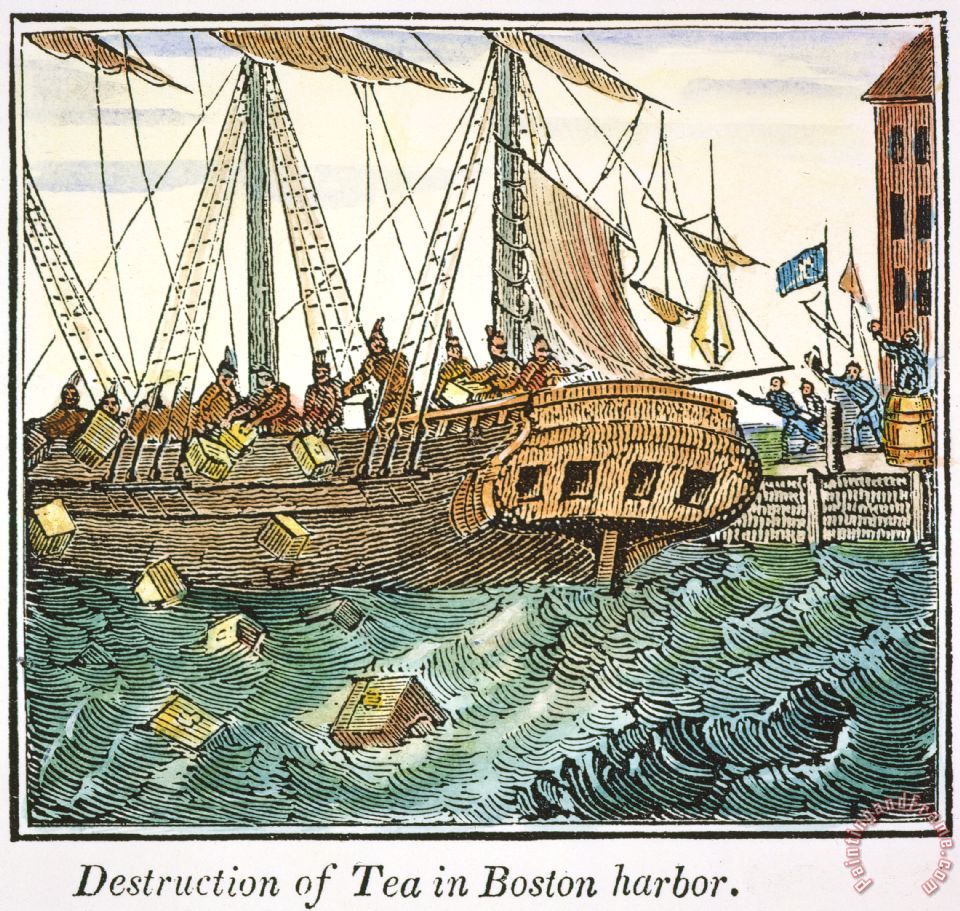
Also in the early 1770s, Hancock, Adams, and several dozen others “hosted” the Boston Tea Party. They dumped 342 chests of tea into the harbor rather than pay import duties to Britain.


The Boston Tea Party, 1773 Painting; The Boston Tea Party, 1773 Art Print for sale


In 1774, Hancock and Adams were elected to the Provincial Congress at Concord, Massachusetts. John was elected president and presided over the Committee of Safety. He and others organized the minutemen, colonial militia who could be ready in a minute to oppose the British.

April 19, 1775, seven hundred British soldiers were sent to Concord to confiscate military supplies and capture Hancock and Adams. Thanks to the warning of Paul Revere, the two men were able to escape.

At nearby Lexington, British soldiers and minutemen engaged in a skirmish, and the Revolutionary War began with the “shot heard round the world.”

Just four days before, John Hancock had written:

“All confidence must be withheld from the means we use; and reposed only on that GOD who rules in the armies of heaven, and without whose blessing, the best human counsels are but foolishness—and all created power vanity (2)”.

Hancock knew that all their efforts toward freedom were in vain if God was not on their side.

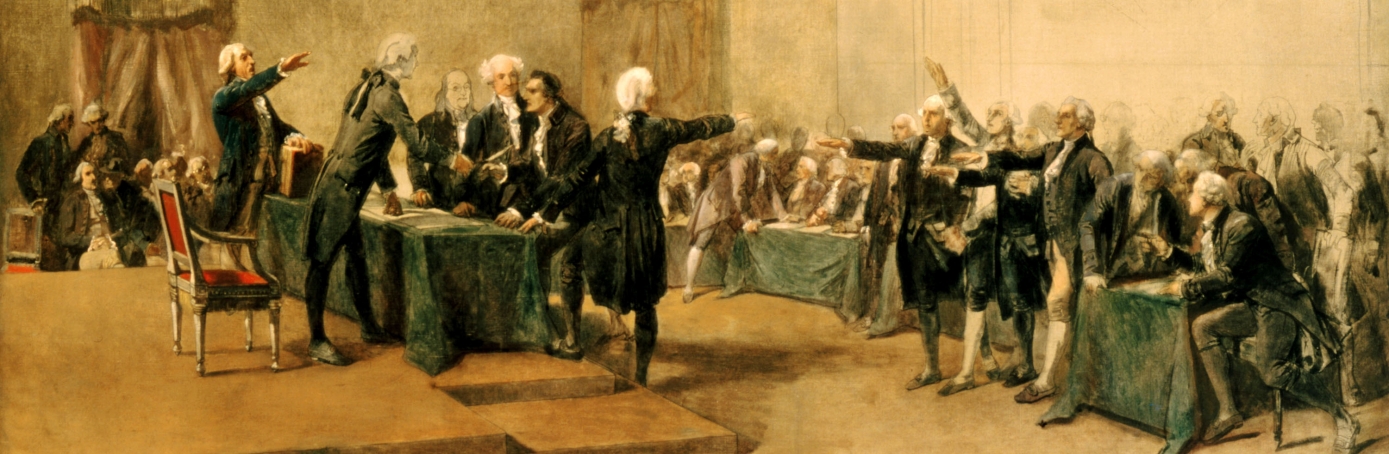
That summer he represented Massachusetts at the Continental Congress held in Philadelphia, to discuss ways of restoring harmony with Britain, yet establish rights and liberties for the colonists. Independence wasn’t on the table – yet.


continental-congress-hero-H


But 1776 brought Thomas Paine’s famous pamphlet, “Common Sense.” American patriotism grew strong, and Congress passed a resolution calling on “the aid of God in the moral cause for independence.” They encouraged fasting and prayer throughout the colonies, and “through the merits and mediation of Jesus Christ, obtain his pardon and forgiveness” (3).

That’s how deep and wide the Christian faith permeated American society.

Of course, the most important resolution of the Continental Congress, under Hancock’s presidency, was the Declaration of Independence, severing all ties to Britain. And, as most U.S. history students know, he was the first to sign in his distinctive script.


John-Hancock-dreamstime1


For almost two and a half years, Hancock tirelessly presided over the Congress, as the war escalated, and the delegates hammered out the first constitution, the Articles of Confederation.

At least four times they had to flee for their lives to other colonies in order to continue their work. In addition, long debates and political rifts took their toll on the delegates, including John Hancock. He also suffered from gout.

When Congress had completed the Articles, Hancock resigned the presidency, but continued public service in Massachusetts, assisting in the formation of the state constitution (4). He and other delegates included this requirement:

“Any person chosen governor, lieutenant governor, counselor, senator, or representative…shall…make and subscribe the following declaration: ‘I, ______________, do declare that I believe the Christian religion and have a firm persuasion of its truth” (5).

I wonder what our institutions of government would look like today if that affirmation were still required.

John Hancock, first governor of Massachusetts, became one of the first to sign that statement of faith. He served eleven years before his death in 1793, at age fifty-five.

Revisionists want to remove from the historical record any mention of God, Jesus, Christianity, and the Bible. But Hancock and many other founding fathers knew: “Without God’s blessing, the best human counsels are but foolishness.”

We had better know that, too.


Citations and Notes:

  1. The Founders’ Bible, p. 1374
  2. faithofourfathers.net
  3. johnhancock.org
  4. The only constitution in the world still in use today and older than the U. S. Constitution
  5. The Founders’ Bible, p. 2097

Sources:

  1. acheritagegroup.org
  2. biography.com
  3. The Founders’ Bible
  4. faithofourfathers.net
  5. johnhancock.org
  6. ushistory.org

Art & photo credits:  www.wikipedia.org; http://www.allthingsliberty.com; http://www.paintingandframe.com; http://www.history.com; http://www.plannersweb.com.

Read Full Post »

Two and a half years ago I posted, “Nan-Sense: It Makes Sense to Me.”  I’ve collected a bit more Nan-sense since then! Here are a few examples from this month. Perhaps in reviewing these truths with you, they will become more firmly planted in me.

vision 

  1. I’ve been studying Hebrews, chapters 10-13, using Chuck Swindoll’s study book, Hebrews, Volume II (1983). One question invites readers to consider their personal  vision.  From the dictionary I chose the definition, “a mental image created by the imagination.”

My vision for my character includes these qualities: a) a quiet and gentle spirit (1 Peter 3:4), b) contentment whatever the circumstance (Philippians 4:12), c) consideration of others before myself (Philippians 2:3), d) rejoicing always (Philippians 4:4), and e) practicing God’s presence (John 15:5).

Slowly but surely, that vision is taking shape, by the power of the Spirit. (Although I still have a way to go!)

What is your personal vision?

 01

  1. One morning I glanced out the kitchen window to see a young squirrel perched at the very end of a dead tree branch. I could observe him quite closely because our house is built into a hill. The kitchen/family room, along the back of the house, is at the height of a second story.

Although I was looking almost straight ahead at him, he was about fifteen feet off the ground. His tail curled up gracefully over his back, and he appeared to be resting comfortably—no nervous glances, no shivers of fear.

God reminded me: He has equipped squirrels with claws that grip so tightly, they have no fear of heights. He has equipped me also with his shield of faith and sword of the Spirit. I have no need to fear either.  This, the morning after the horrific tragedy in Paris.

God, help me to be faithful to use that sword and shield!

What small moment experience has made an impression upon you recently?

 16158542

  1. Not long ago, I finished reading The Boys in the Boat (2013), by Daniel James Brown—the story of the eight-oar crew that won Olympic gold in 1936, in Berlin. Reviewers have used such adjectives as “suspenseful,” “riveting,” and “inspiring.” All accurate.

Now most readers would not expect to find statements of spiritual significance in a secular book. But often times I do, and this selection was no exception. From p. 53:

“It is hard to make the boat go as fast as you want to. The enemy, of course, is resistance of the water…but that very water is what supports you and that very enemy is your friend. So is life: the very problems you must overcome also support you and make you stronger in overcoming them” (George Yeoman Pocock, shell-builder*).

Sounds like George knew James 1:2-4.

What have you read lately from a secular source that had spiritual significance?

Rocky_pathway

  1. Last, I heard this quote on the radio, though I doubt this is a word-for-word rendering:

“Don’t worry that you don’t have strength before you start. God gives strength as we journey.”

Sound truth, right? Yet often I’d like to see my life-path at least a few miles ahead, and feel strong enough now to handle anything on that life-path.

God doesn’t work that way.

“Do not worry about tomorrow, for tomorrow will worry about itself,” Jesus taught (Matthew 6:34). Why? Because knowledge and provision ahead of time would cancel out the need for faith. And faith is one of the most precious treasures a person can possess.

What have you heard recently that spoke to your heart?

Join the conversation below with your observations!


*The long, narrow boats used by crews are called shells.


(Art & photo credits:  www.movation.wordpress.com; http://www.nighthawkpublications.com; http://www.goodreads.com; http://www.commons.wikimedia.org.)


Read Full Post »

image.ashx

Scripture is full of promises that speak of precious gifts God is willing to give us:

  • Unstoppable love (Romans 8:38-39)
  • Overflowing hope (Romans 15:13)
  • Wise guidance (Psalm 32:8)
  • Courageous confidence (Psalm 56:3-4)
  • Compassionate comfort (Psalm 34:18)
  • Peaceful rest (Matthew 11:28-29)

And that’s not a complete list by any means. The question is: Are we willing to receive all these blessings?

Or, are our minds full of:

  • Doubt?

“God may love me in a general sense, but personally? I doubt it. After disappointing him so many times, I don’t deserve his gifts.”

  • Negativity?

“Look at all these challenges in my life. I’m not seeing very many blessings.” 

  • Timidity? 

“That promise can’t be for me, can it?” 

These kinds of thoughts originate with Satan, the father of lies, who’s delighted when we don’t embrace God’s blessings.

For most of us, accepting gifts—even from God–can be more difficult than giving them. Gracious receiving is an art.

So how do we develop the art of receiving? 

  1. Reject those lies of the devil.

With the help of the Holy Spirit, we can take such thoughts captive and cast them out of our minds (2 Corinthians 10:5). The next step is to…

  1. Fill our minds with uplifting thinking.

“Whatever is noble, whatever is right, whatever is pure, whatever is lovely, whatever is admirable—if anything is excellent or praiseworthy—think about such things” (Philippians 4:8).

Such glorious categories on which to focus! And undoubtedly our hearts will fill with gratitude as we contemplate God’s magnificent gifts.

  1. Practice. 

Any art form—music, writing, painting, etc.—requires practice. So does the art of receiving. God has not chosen to instantaneously transform our attitudes for us. He almost always takes a gradual approach, providing numerous opportunities for practice.

The art of receiving is no different, developing over time through faith and self-discipline. We affirm that God loves and blesses his children—despite our feelings–and discipline our minds to counter doubt, negativity, and fear with trust-statements from his Word.

  1. Spend time in God’s Word. 

The more time we spend reading the Bible, the more scripture-gems we discover that speak of God’s gracious character, his promises, and blessings. And the more we learn, the more we respond, “Thank you, Father, for all the blessings of the abundant, God-enhanced life with you!”

  1. Receive graciously, even enthusiastically, from others. 

Too often, we’re uncomfortable at the receiving end.  We feel embarrassed or unworthy and worry about repaying the favor.

We need to remind ourselves: gracious, enthusiastic receiving is in itself a gift of: 

Affirmation.  Every gift bestowed with good intention is meaningful—whether it’s a compliment, a favor, or an object. Granted, we may feel awkward when complimented, we may not need the favor or desire the object, but the thoughtfulness can be affirmed just the same.

Pleasure.  God has engineered us so that when the receiver expresses pleasure, the giver also experiences pleasure—usually more so.

Gratitude.  Thoughtful gratitude shows honor and esteem for the giver.

So let’s grit our teeth and be gracious receivers!

No, gritting won’t be necessary if we remember: All gifts originate in the heart of our Heavenly Father (James 1:17). He is the One bestowing the blessings, frequently using people as his agents.

Our highest privilege is to bestow pleasure and honor upon God, by passing the praise and gratitude on to him

In doing so, the art of receiving comes full circle.

(Photo credit:  www.familyconnect.org.)


Read Full Post »

(Steve and I are enjoying time with family this week.  I’ll return soon with  new posts.  Meanwhile, I’ll reblog previous ones.  Hopefully you’ll find them meaningful again, or perhaps for the first time.  The following post was first published September 13, 2013.)

Women's Bible Study

“I know we have to persevere and not give up on what we sense God wants us to do,” Melissa shared at Bible study.  “And from the lives of Joseph, Moses, Daniel, and others in the Bible, I know God rarely smooths out  the path perfectly.  But what I want to know is how to proceed.  I’d like steps to follow!”

Heads nodded around the table, mine included.  Wouldn’t it be nice if God laid out for us to see ahead of time step one, step two, and so on toward his perfect plan?

That idea has been circulating in my brain for nearly a week now.  Here are some observations.

1. God values our growth in faith more than our comfort in a revealed plan.   

If it was best for us to know his plan in advance, then that’s what God would provide.  Instead, he allows our faith to be tested, in order to build our character.  That is important to him:

“The Lord detests men of perverse heart but he delights in those whose ways are blameless” (Proverbs 11:20).

2.  God values the process of spiritual growth, not just the final outcome of a purpose fulfilled.

Times of challenge give us opportunity to develop maturity more readily than times of ease.  What might that development include?

  • Self-discipline–when we tackle difficult tasks.  Granted, the Holy Spirit empowers us (Galatians 5:22-23), but we must give ourselves over to him.  How?  Through frequent prayer, offered throughout the day, consistently asking for his guidance and help.
  • Self-denial–by doing without.  However, the attentive person will soon discover much to celebrate that may have been missed otherwise:  the stunning display of God’s creation, the joy of love and laughter with family and friends, the peace and strength from frequent communion with God.  Suddenly, gratitude flourishes in the heart, and what has been given up doesn’t seem so important anymore.
  • The full meaning of love–when given opportunity to respond in kind ways to difficult people.

None of these valuable traits of discipline, selflessness, and love would fully develop without lessons of experience.

3.  God values the development of our prayer lives–not for his benefit, but for ours.

Jean Nicolas Grou, a Jesuit priest of the 1700s, described healthy prayer as humble, reverent, loving, confident, and persevering.  As we practice those traits in our prayer lives, surely they will overflow into our character, in our actions and reactions.

Patient pursuit, then, is best applied to God’s ways, and then to God’s plan.

(photo credit:  http://www.st-tims-church.org )

Read Full Post »

3571053_orig

(Remember Susan Boyle?)


Makeovers. What a remarkable change-of-appearance can be achieved with a becoming hairstyle (and maybe color-enhancement!), deftly applied make-up, and well-fitted clothing.  Add the benefit of plastic surgery and a person hardly resembles her former self.

But the transformation of someone’s face and body doesn’t begin to compare to the transformation of someone’s spirit.


tumblr_m8s31eBVQU1qbwmglo1_1280


Anyone who belongs to Christ has become a new person.

The old life is gone; a new life has begun!

–2 Corinthians 5:17 (NLT) 


Notice: We’re not just improved and beautified. Jesus remakes each of us into a brand new person.

And what might that newness include? Here’s a partial list:


  • New purpose


357191882884919061_1401068073

(“Whatever you do, do it all for the glory of God.”

–1 Corinthians 10:31b)


Those who follow this directive discover an interesting phenomenon: honoring God brings satisfaction and fulfillment to us. (By the way, God is not on some ego trip, demanding us to give him all the glory. He desires his splendor and benevolence to be evident everywhere, so others might be drawn to him.)


  • New attitude resulting in new character


 e2


(“Put on your new nature and be renewed

As you learn to know your Creator and become like him.”

–Colossians 3:10)


The more we know of God and appreciate all his benefits, the more we want to please him by following his example. That new attitude impacts every aspect of our lives.


  • New perspective


Psalm-23-6

(“Surely goodness and love will follow me all the days of my life.”

–Psalm 23:6)


Just knowing God has our best interest at heart is enough to renew energy and hope.


  • New power to face what comes


d7d8bc8fd004fe850361444ecf5acb49

(“[He] is able to do immeasurably more than all we ask or imagine,

according to his power that is at work within us.”

–Ephesians 3:20)


Think of it: the same power that controls the universe is at work within us. Tell me again why we revert to worrying?!


  • New emotions, such as peace and joy


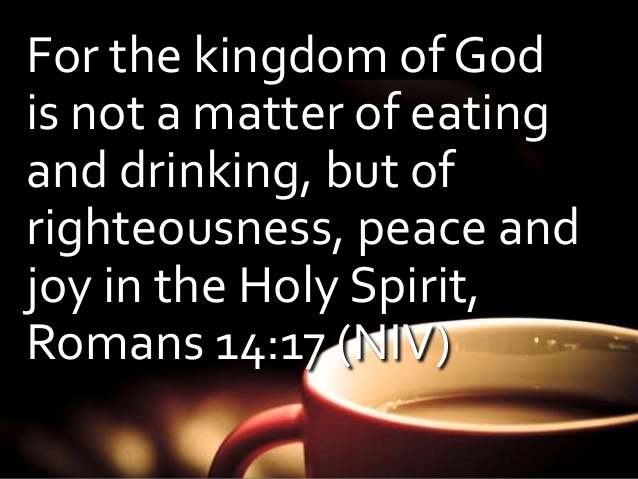
coffee-cupverses7-28-638

(“The kingdom of God is not a matter of eating and drinking,

but of righteousness, peace, and joy in the Holy Spirit.”

–Romans 14:17)


We do not need to live at the mercy of our circumstances. With God as our constant companion, we can experience peace and joy in spite of what happens. The Bible is full of examples of people who lived that way: Joseph, Daniel, Peter, and Paul readily come to mind.


  • New confidence

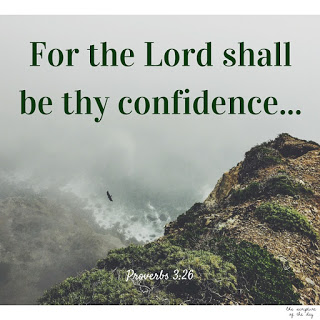
Proverbs 3.26 

(“The Lord will be your confidence.”

–Proverbs 3:26a)


God is not only with us, he is our Protector, Provider, and Guide.  As we become increasingly aware of his faithfulness, our trust grows. Trust = confidence.


  • New opportunities and blessings


ef03f9e29f19624eaa836b41accd6d80

(“The faithful love of the LORD never ends!

His mercies never cease. Great is his faithfulness;

his mercies begin afresh each morning.”

–Lamentations 3:22-23 (NLT)


Experience tells us that when we say “yes” to Jesus, God does not bestow the full measure of all of these wonderful new things instantaneously. God told Isaiah: “Behold I am doing a new thing” (Isaiah 43:19).  That hints at process. We’re made new, but growing into that newness.


843ae42db665b78c33102645c1850579


Think of buying a coat in the fall that’s a little too big for your child. She owns the coat, but it doesn’t quite fit yet.  Within a matter of weeks however, the sleeves hit the wrist not the fingertips, and the shoulder seams sit properly–no sagging down the arms.

Might it be that when we invite Jesus in our lives, our spirits are made new, but we don’t quite fit into them yet? Then, as we cooperate with Holy Spirit and his fruit grows within us (Galatians 5:22-23), we steadily become more Christ-like, day by day.

*     *     *     *     *     *     *     *     *     *

Oh, Father, I don’t want to cling to aspects of the old me—things like worry, perfectionism, selfishness, and pride. I want to embrace everything new that YOU bring to my life, to become my true self—the one you designed me to be.**


**Based on idea from Jesus Calling by Sarah Young, Thomas Nelson, p. 381.

Photo credits:  www.joblogging.weebly.com; http://www.ilovemybible.tumblr.com; http://www.pinterest.com; http://www.dayofgrace.me; http://www.faithgateway.com; http://www.pinterest.com; http://www.slideshare.net; http://www.plus.google.com; pinterest.com (2).

Share your thoughts in the comment section below.  I’d love to hear from you!

Read Full Post »

My sister-in-law sent me this Hallmark card for my birthday:

IMG_0262

Mary is my kind of person. I’ll bet she’s your kind, too. We tend to appreciate positive people, especially since negative input seems to bombard us continually. We’re not thin enough, smart enough, tech-savvy enough, confident enough, spiritual enough, disciplined enough, efficient enough, successful enough, patient enough, persevering enough, ad nauseam.

Positive people neutralize the impact of all that negativity. It’s not just their pleasant company that brings uplift to our spirits; they often exhibit the gift of encouragement.

That gift includes the ability to:

  • relate to others in positive ways
  • be optimistic, and cheerful
  • listen attentively and make others feel understood
  • be patient and generous with their time
  • make others feel special
  • genuinely celebrate the successes of others

But there’s one more behavior to add to that list, and it’s undoubtedly the most important. Beyond uplifting and motivating, we can infuse others with our faith.

Anyone can offer encouragement; only people of faith can offer faith.

You see, encouragement may not necessarily be based on fact. For example:

  • A mom says to her son, “You’re a fantastic soccer player. Of course you’ll make the team.” Only he doesn’t. Mom’s optimism wasn’t based in reality.
  • “After what you’ve told me, I just know you’ll get the job,” says one friend to another. But it doesn’t happen. The friend listened and understood, but her intuition proved false.
  • “Oh, that solo was wonderful, Katie!” when it clearly wasn’t.

However, statements of faith based on scriptural fact provide absolute truth and a much stronger foundation for hope than empty praise.

romans15_4

(“Everything that was written in the past was written to teach us, so that through endurance and the encouragement of the Scriptures we might have hope.” — Romans 15:4).

Everyone needs hope, especially those in crisis.

Centuries ago, the people of Jerusalem needed hope as they faced the possibility of annihilation by the Assyrian army. King Hezekiah gathered the people in the open square of the city gate and addressed them:


“Be strong and courageous.

Do not be afraid or discouraged

because of the king of Assyria

and the vast army with him,

for there is a greater power with us than with him.

With him is only the arm of the flesh,

but with us is the Lord our God

to help us and to fight our battles.”

–2 Chronicles 32:7-8


Hezekiah was not simply offering optimistic encouragement. Those bold statements were based on earlier scriptures, some of which you may recognize:

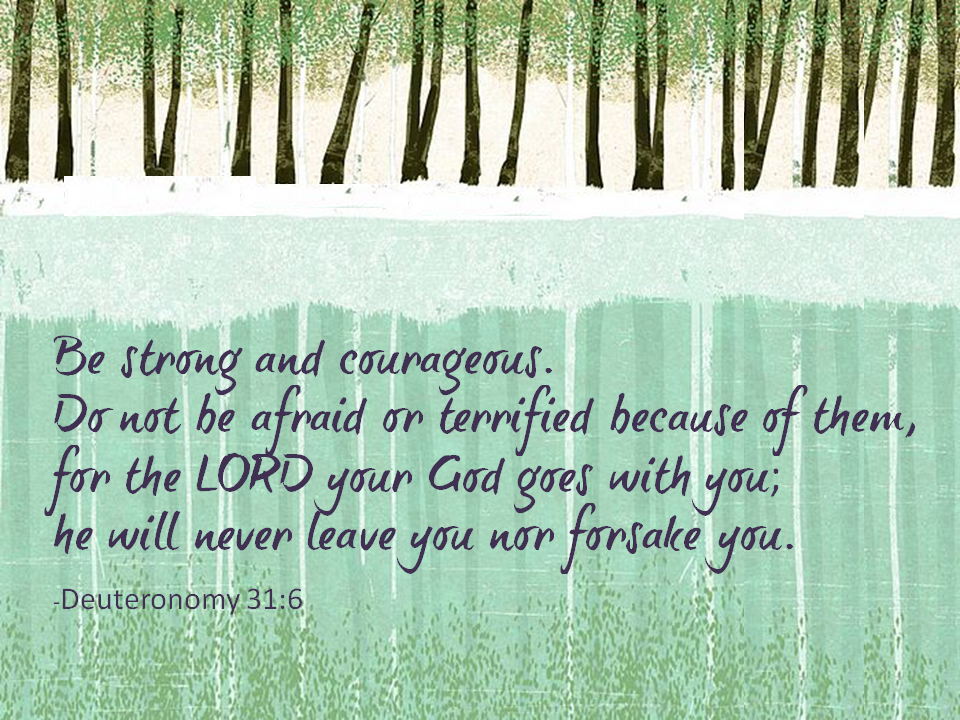
  1. “Do not be afraid or terrified because of them, for the Lord your God goes with you; he will never leave you nor forsake you” (Deuteronomy 31:6).

be strong and courageous

  1. “Some trust in chariots and some in horses, but we trust in the name of the Lord our God” (Psalm 20:7).
  1. “You come against me with sword and spear and javelin, but I come against you in the name of the Lord Almighty, the God of the armies of Israel” (spoken by David to Goliath, 1 Samuel 17:45).
  1. “Do you have an arm like God’s” (Job 40:9a)?
  1. “Do not be afraid of them; the Lord your God himself will fight for you” (Deuteronomy 3:22).

cm-deuteronomy-3-22-social-138x80

You and I can follow King Hezekiah’s example and share the positive, factual truth of God’s Word. We can be the encouraging voices that help others thrive, especially to those whose faith is beginning to falter.

The scripture-seeds we plant may spur a person to persevere or take a step in a new direction. And who knows where that perseverance or step might lead?

(Art & photo credits:  Nancy Ruegg, http://www.allaboutgod.net; http://www.quotationslibrary.com; http://www.crosscards.com.)

*     *     *     *     *     *    *     *     *     *

What scripture truth has been an encouragement to you?  Share with us in the Comments section below.  Perhaps your contribution will be just what someone else needs to hear/see!

Read Full Post »

Evidence confirms: God loves to take ordinary people living ordinary lives and accomplish impossible feats. Examples include:

www-St-Takla-org--Bible-Slides-genesis-240

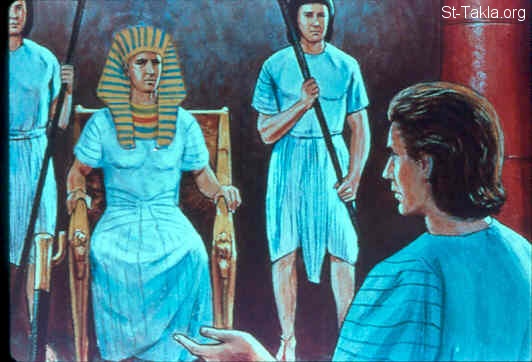
  • An imprisoned slave, elevated to prime minister in a matter of minutes
  • A village shepherd boy who became the greatest king of his nation
  • A widow who took a stranger into her home, and witnessed miraculous events
  • A common girl, chosen as queen in a foreign land and became the savior of her people

No doubt you recognize these persons. We would never consider them ordinary because of how God used them:

  • Joseph
  • David
  • The widow of Zarephath
  • Esther

But if we visited Joseph in prison before Pharaoh sent for him, if we passed by David watching his father’s sheep, if we ran into the widow of Zarephath at the village well, or if we met Esther in her cousin Mordecai’s home, would we have recognized greatness? Would we have known that these people were extraordinary? I doubt it.

We easily forget that what we see from our human perspective is never the whole picture. Only God has an omniscient view of circumstances and events—including past, present, and future.

Only God has the capability of weaving complex events to accomplish his purposes. And his work is always extraordinary. The wonders of creation offer undeniable proof.

nature-mountin-flowers

And since you are part of God’s wondrous creation, you are extraordinary. Yes, YOU!

That means:

Our seemingly ordinary lives, lived out through ordinary days, can have extraordinary significance, because God Almighty is orchestrating them.

That doesn’t mean we just sit on the sidelines and watch God work. Choices must be made:

  • Joseph chose to honor God in Potiphar’s house (Genesis 39:4), and in prison (v.22), long before his miraculous promotion from slave to prime minister.
  • David chose to spare King Saul twice, even though the king pursued David with the intent to kill David chose to wait for God’s timing for his coronation (1 Samuel 24, 26).
  • The widow of Zarephath (a town not in Israel) surely knew nothing of Elijah or his God when she met him at the town gate. There was no reason to take him in; she had nothing to offer him. As it was, the woman and her son were starving. The land was parched dry by famine. But she chose to believe his assurance that God would supply their needs. And miracles resulted (1 Kings 17:7-24).
  • Esther chose to intercede for her people, even though it may have led to her own death. She saved the Jewish captives in Persia from annihilation (Esther, ch. 4, 5).

Esther-and-the-King

We never know when a decision or choice may directly or indirectly cause significant, extraordinary results.

Therefore, our decisions must be based on scripture-based convictions and values. It is God-influenced choices, day by day, even moment by moment, that will lead us to extraordinary living, accomplishing divine purpose.

But be prepared. We may not know the significance of some of our choices until we reach heaven.

Think of Ruth, who chose to follow her mother-in-law, Naomi, from her home in Moab, back to Naomi’s home in Judah. She also decided to follow Naomi’s instructions and glean barley in Boaz’ field. At the end of the beautiful drama it is revealed that Ruth became the great-grandmother of King David and a descendant of Jesus himself, and a book of the Bible is devoted to her story. What an honor for a woman not even from the house of Israel!

ruth

But Ruth never knew.

Extraordinary people live extraordinary lives when they’re led by God–choice by choice, decision by decision. And they leave the results in his capable hands.

(Art & photo credits:  www.St-talkla.org; http://www.1decision1day.com; http://www.ammiministry.org; http://www.joyfulphpist.wordpress.com.)

Read Full Post »

Depressed young woman


“I don’t understand why this is happening,” Kelly cried. “Doesn’t God want me to be happy?”

*     *     *

“I’m not sure what God is doing, but business is bound to pick up soon,” Dave asserted. “I’m working harder than ever—like seventy hours a week. God helps those who help themselves, right?”

*     *     *

“I thought I was where God wanted me to be, but that loser job was not a good fit—such boring work and for such a lousy salary,” moaned Erika. “I just had to quit! But I’ll be OK. God loves me; he’ll take care of me.”

*     *     *

Ever hear comments similar to these? Each one represents a misunderstanding about God. The truth is:

  • God’s primary concern is our welfare, not necessarily our happiness (Philippians 4:19). The two are not synonymous.
  • God has not promised to help those who help themselves. That proverb is not in the Bible.
  • Neither has God promised to take care of us if we live irresponsibly (2 Thessalonians 3:10).

So, I’m sorry, Kelly, Dave, and Erika. Somewhere along the way you’ve heard these ideas about God’s ways which were misrepresented as truth.

But how can we know the truth of how God works in our lives? (They might ask!)

By becoming better acquainted with God’s Word. Within its pages we find such wonders as perfect wisdom, inspiring encouragement, hope-giving promises, and practical instruction.

For example:

Kelly, God loves you too much to grant everything you want. Over-indulgence leads to spoiled children. Discipline demonstrates true love; permissiveness demonstrates foolishness. Sometimes God exercises tough love in order to develop our characters, grow our faith, and prepare us to serve him in greater capacities.


no-pain-no-gain

(“The Lord disciplines those he loves”–Hebrews 12:6a).

Dave, God is compassionate and good to his people (Psalm 103:4-5). He has promised to be our help, but it has nothing to do with our effort prompting him to come alongside. It’s the person who trusts in God wholeheartedly and follows his ways who may anticipate divine help:

“You who fear him, trust in the Lord—

he is their help and shield.”

–Psalm 115:11

and…


16072

(“May your hand be ready to help me, for I have chosen your precepts” –Psalm 119:173.)


Erika, God certainly does care for you (1 Peter 5:7), but he does not condone irresponsibility. A wise course of action would include prayerful assessment of the current job as well as other possibilities, while asking God for his guidance. Meanwhile:

“Do your best.

Work from the heart for your real Master, for God,

confident that you’ll get paid in full

when you come into your inheritance.

Keep in mind always that

the ultimate Master you’re serving is Christ.”

–Colossians 3:22-24 (The Message)

To all of us: When our corner of the world is rocked by challenges and disappointment, our best strategy is to turn to God’s Word. We can steady ourselves with the truth about his character and his ways, even experience joy and peace as those truths soak deep into our hearts (Psalm 119:35, 165).

“It is only when we understand who God is

that we begin to understand what he does.”

– Selwyn Hughes

*     *     *     *     *     *     *     *     *   *

Thank you, Father, for the precious gift of your Word, for the way it continues to minister afresh, day by day, year after year, with reliable truth and uplifting encouragement. As if that wasn’t enough, you reveal yourself through its pages, allowing us to know you, the King of the universe. Open my eyes that I may see even more wonderful things in your Word (Psalm 119:18)!

b4015e676ff0bec5726ece111fd8d5ee

(Art & photo credits:  www.med-health.net; http://www.kristamcgeebooks.com; http://www.biblepic.com; http://www.pinterest.com.)

Read Full Post »

« Newer Posts - Older Posts »

When the House is Quiet

Impressions Becoming Expressions

Mitch Teemley

The Power of Story

Still Traveling

Impressions Becoming Expressions

Living Our Days

Gaining a heart of wisdom

He Said What?!

I'm Patty, and my husband and I are living with our adult son who has autism and epilepsy. I love sharing lessons learned from life around me, especially life with Aaron.

Meditations of my Heart

Impressions Becoming Expressions

Linda Stoll

Impressions Becoming Expressions

Signora Sheila

Where faith meets la dolce vita

Heidi Viars

Finding the Image of God