Feeds:
Posts
Comments

Archive for the ‘God’s Presence’ Category

blog-prayer-woman


How would you finish this prayer: 

“Oh, Lord, what I need most right now is ____________________.”

What word would you put in the blank?

Guidance?

Provision?

Strength?

Purpose?

One glorious Bible verse tucked into Isaiah presents four comforting promises that cover each of those needs:
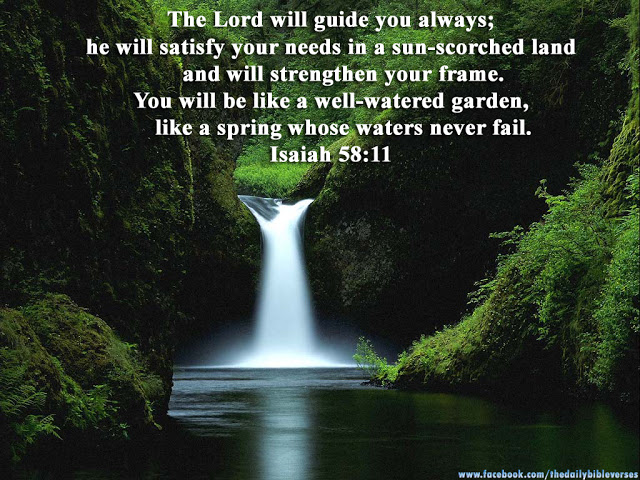
 

Isaiah58.11 

“The Lord will guide you always;

He will satisfy your needs in a sun-scorched land

And will strengthen your frame.

You will be like a well-watered garden,

Like a spring whose waters never fail” (58:11).

Lots of truth packed into five short lines. Each phrase warrants careful consideration. For example:


1.  The Lord will guide you always.


He’s not a life coach, counselor, or psychologist. The almighty God of the universe promises to be your guide—free of charge! And he’s available 24/7. Think, too, of his astounding attributes that make him the perfect guide:

  • God is omniscient—He knows everything (Psalm 139:1-6), including every detail of your situation and the people involved.
  • God is righteous—Everything he does is good (Deuteronomy 32:4). He can be relied upon to lead you down a perfect path.
  • God is merciful—He responds in loving compassion (Psalm 116:5). He’s your understanding Father, your strongest ally.
  • God is truthful—All that he says can be trusted (Titus 1:2). He will not lead you astray.
  • God is faithful—He keeps his Word (Psalm 33:4). God does not lie or forget what he said. Neither does he change his mind.

Notice that first phrase says God will always be your guide. Not every once in a while when you’re really in a quandary, but always. You are never left alone to your own devices—unless that’s the way you want to live. God is a gentleman; he leaves the choice up to you.


2.  He will satisfy your needs in a sun-scorched land.


Not he might satisfy your needs if he feels like it. He will. 

No matter what the landscape of your life looks like, God will see that your needs are met.

Have you ever been surrounded by sun-scorched land, perhaps a desert or wilderness where no life is visible?

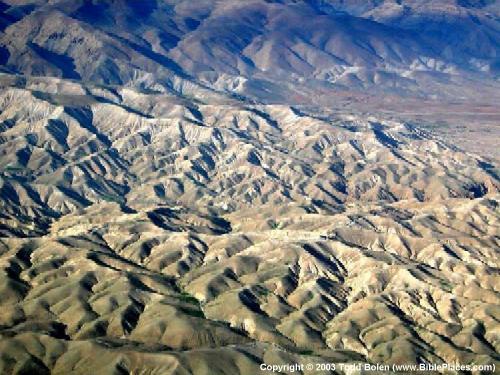
Steve and I visited Israel a number of years ago. One of our tour stops was in the Judean wilderness—a desolate and foreboding sight to behold. Not a single tuft of grass. No bushes or plants of any kind—not even cactus. Only two things are visible when standing in the midst of this desert: sky and pale gray-brown mountainous rock, as far as the eye can see.
 

judean_wilderness_west_of_jericho_ariel_tb_q010_03


Should you decide to live there, you’d have to bring with you everything necessary for survival: all your food, water, and clothing. For shelter, you might find a cave.

Ah! But what if there was Someone there ahead of you? Someone who already had at his disposal the supplies you required? And they would never run out? That’s the life-giving, unfailing provision of your Heavenly Father.

Let’s you and me rest in the assurance that the essentials—and even many delights!—will be generously supplied. If something is meant to be, he will take care of it—just as he’s been doing since each of us was born.

Think how he has led you through the wilderness of broken relationships and difficult circumstances. His grace has been sufficient for every challenge (2 Corinthians 12:9), right?

Now project that assurance into the future. Even if we walk through the valley of the shadow of death, we have no need to fear. Our all-powerful God is with us (Psalm 23:4)–guiding and providing.

(Please remind me of that when I come to a wilderness-patch, will you?)


*     *     *     *     *     *     *     *     *     *


Heavenly Father, I praise you that day by day, moment by moment, you are delighted to guide us in perfect wisdom. You generously provide for our needs and lovingly care for us body, soul, and spirit. Thank you for your compassion, your faithfulness, and grace to see us through the wilderness valleys. “I trust in you, O Lord; I say, ‘You are my God. My times are in your hands.’” (Psalm 31:14-15a).  


Please come back on Monday. We’ll meditate on the second half of Isaiah 58:11.


(Photo credits:  www.hischurchwomen.com; http://www.freerepublic.com; http://www.biblestudytools.com.)


Read Full Post »

Olive-grove

In one of his many psalms, David compared himself to an olive tree:

“I am like an olive tree flourishing in the house of God; I trust in God’s unfailing love for ever and ever” (Psalm 52:8).

If you’re like me you’re wondering: Why does David identify himself as this particular tree? Is there something special about olive trees?

As a matter of fact, yes.

It may be that, as David composed this psalm, he was contemplating several qualities characteristic of these distinctive trees:

Long Life

Olives are among the longest-living trees, continuing to grow for hundreds of years.   In fact, one specimen in Algarve, Portugal is 2000 years old, according to carbon dating.

Perhaps their longevity is due to adaptability. They can grow in various conditions—on terraced hillsides or in valleys, in rocky soil or rich, fertile loam. But even in hot climates with little rainfall the olive can grow quite contentedly.

Not only is it adaptable, the olive tree is tenacious. If it is cut down, shoots from the roots will develop, and the tree will miraculously regenerate itself.

Far-Reaching Root Systems

Because they grow for centuries, and spread their branches wide, the root system of an olive tree can be quite massive, expanding twenty feet in every direction around the trunk.

Fruitfulness

Even dwarf olive trees will produce 20-40 pounds of fruit each year.  The largest variety can produce a ton of olives annually!  The oil pressed from the fruit is also useful for cooking, for fuel in oil lamps, and even for skin care products.

No doubt you already see parallels to a life rooted and established in God:

  • The olive tree is almost eternal; David knew that one day he would “dwell in the house of the Lord forever” (Psalm 23:6).
  • The massive root system brings to mind the qualities of stability and perseverance, and the habit of abiding (John 15).  An anonymous psalmist expanded the word picture for us when he wrote: “And he shall be like a tree firmly planted [and tended] by the streams of water, ready to bring forth its fruit in its season; its leaf also shall not fade or wither; and everything he does shall prosper [and come to maturity]” (Psalm 1:3, AMP). In other words, a person seeking after God is so well-rooted in Him, nothing can destroy his spirit.
  • The fruitfulness of the olive tree reminds us of the fruitfulness of the Spirit-led life (Galatians 5:22-23).  As a person grows deep in her knowledge of God and in relationship with God, she becomes more loving, joyful, peaceful, and so on.  Not all at once, however.  It is a growing process, after all.

And so, an expansion of David’s metaphor in Psalm 52 might read:

I am like an olive tree,

Content to bloom where the Gardener plants me,

Flourishing and thriving even,

In the gracious presence of my God–

Immortal through faith,

Grounded in Him,

Growing toward maturity

As I trust

In His unfailing love,

His protection and provision,

His guidance, and grace–

Forever and ever.

We praise you, Heavenly Father, for what you have done (Psalm 52:9a)!


(Photo credit:  www.home-hunts.net.)

Read Full Post »

‘Ever watch one of those television shows that provides a person with a complete makeover? By the end of the hour she (or sometimes he) has acquired a personalized, updated wardrobe, learned how to apply make-up, and received a new hair-do.  The physical transformation is always stunning.

However, there is a transformation even more amazing.  Paul explains it this way:

“If anyone is in Christ, he is a new creation; the old has gone, the new has come” (2 Corinthians 5:17).


new-creation


Those of us in Christ haven’t just been adjusted, primped, polished, or camouflaged.  We have become new people with clean slates, strong purpose, deep joy, and vibrant enthusiasm for life.

And that’s not all.  Each day we’re becoming better than the day before–a bit more perfected–if we remain in Christ.  Sarah Young (Jesus Calling) says we’re becoming more fully our true selves–the ones God designed us to be.  I like that.

Each day in Christ is an opportunity to grow more completely into his glorious image.  These changes have nothing to do with outward appearance.  They take place on the inside, impacting our personalities, emotions, minds, and spirits.

That expression, in Christ (also “in the Lord” and “in him”), occurs 164 times in Paul’s letters.  Such repetition would indicate the importance of the concept.

So how would we define the meaning of being “in Christ?”  Here are a few possibilities.

1.  In Christ means we live within his presence.  Now that’s a rather abstract concept. Perhaps an analogy would increase our understanding.

Picture yourself surrounded by trees in a forest.  The woods fill your senses—the sight of tall, stately trees, the sound of chirping birds, the aroma of pine and earth, the textures of rough bark and velvety moss, the taste of cold, clear water from a stream.


SunShiningThroughDustInWood

Similarly, the presence of Christ completely surrounds us as believers.  Christ fills the senses of our hearts, if we avail ourselves. We see more fully the glory of his creation, hear his truth, breathe in his love like a fine fragrance, feel his strength upholding us, and taste his goodness in the feast of blessings he provides.

Such sensations change who we are.  In Christ, we can become stable, contented, joy-filled people.

2.  In Christ means we are united with him, like a branch fused to the vine (John 15:1-8). He is the Source of everything we need, but we must stay in contact with him. How do we do that with Someone who’s invisible? Possibilities include prayer, praise, gratitude, and worship–throughout the day.

And when we’re united with him, his peace and strength are infused into us.

3.  In Christ means we’re in close relationship with him. Never should there “be day when we give ourselves a chance to forget him” (William Barclay).

And when we live in the presence of Christ, and in union with Christ, the inner transformation he has instituted will most definitely become visible. Jesus’ character will begin to flow through our attitudes and actions, just as sap flows through the vine into the branches. Attitudes like kindness, understanding, and forgiveness will give strong evidence that we’re living in Christ.


Woman praising with arms raised in the air


And what will the people around us see?  Folks who…

  • exude joy and optimism.
  • are gracious to others.
  • exhibit self-control.
  • make wise choices.
  • aim to express love–always.

Such delightful, purposeful living awaits those who center themselves  in Christ.

*     *     *     *     *     *     *     *     *     *

Thank you, Lord Jesus, for the supreme privilege of living in your presence.  You are the King of the universe, yet you want to be united with us in close relationship.  And as we avail ourselves, you infuse us with your attributes, your strength, your peace.  All praise to you, gracious Savior, the Author and Perfecter of our faith, as we abide in you.

(Photo credits:  www.brotherransome.com, http://www.wikipedia.org., and alishagratehouse.com.)


Read Full Post »

????????????????????????????


Our son was telling me about the church he and his wife attend.

“You should hear this mother and daughter play their violins together.  The girl is only ten or eleven, but she’s very talented. I think the mom is teaching her.”

It would be delightful to hear them, I thought.

Several months later, I happened to attend their church when the mother and daughter were scheduled to play.  My heart was filled with delicious anticipation as they approached the piano with their violins.

Soon soft, mellow notes of melody and harmony resonated through the broad, high-ceilinged sanctuary.  My son had not been exaggerating. They were both gifted violinists.

I had to hold back the tears.

Yes, the sweet music touched my spirit. However, my reaction arose from more than that.

The music was greatly enhanced by the mystical bond between mother and daughter.

One evidence of that bond was the subtle means by which the two remained in sync. The mother would nod her head or sway slightly as she directed the music. However, the girl didn’t actually watch. Just every now and then she would make eye contact over her violin–and smile at her mother like an angel—pure, innocent, and tender.

Her eyes seemed to say, “I love doing this with you,”  Mother smiled her love and pleasure in return.

In fact, the very atmosphere seemed to be permeated with love during those moments. But the affection of parent and child was only a part.

The Spirit of God and his love flowed in wondrous waves through the music and that mother and daughter. God’s love—the width, length, height, and depth that Paul spoke of*– filled every nook of that sanctuary.

Surely I was not the only one who felt wrapped in God’s warm embrace during those moments.

And to be loved by God is no small matter.

He is the Master of the universe and the King of glory. Angels sing his praises continually. And yet he delights in us, who reverence him and put our hope in his unfailing love (Psalm 147:11).

Isn’t that knowledge alone enough to astound the intellect and overwhelm the heart with joy?

The only possible response is worship, from a heart overflowing with gratitude. An overflow that often becomes tears, as praise intertwines with the invisible but palpable touch of God.

And I can almost hear him say, “I love doing this with you.”

*     *     *     *     *     *     *     *     *     *

When has the overflow of love for God and gratitude to him brought you to tears?  Share your story in the Comment section below.


*Ephesians 3:18


(Photo credit:  www.visualphotos.com.)


Read Full Post »

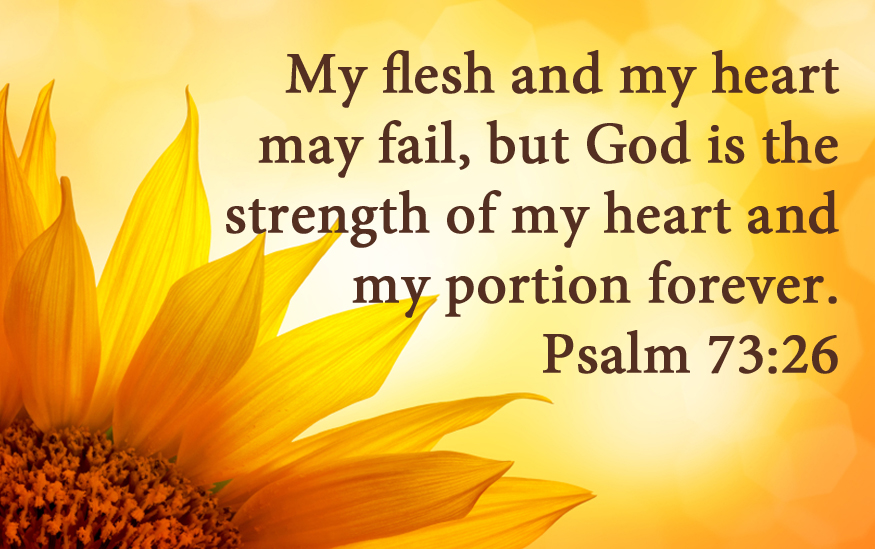
Psalm-73_26

Have you met Asaph? He was one of the worship leaders appointed by King David. Twelve of the psalms are credited to him or his sons, including #73.

Read that particular psalm in a modern translation or paraphrase, and you’ll think Asaph is a present-day poet.   He writes about pretentious, arrogant people who wear the latest fashions–how they’re pampered, overfed, and full of hot air.

“People actually listen to them—can you believe it?” he complains (vs. 6-10, The Message).

Asaph found his attention drawn to these people who seemed to have it made. He lost sight of true reality for a moment–until he refocused on God and his ways.   Asaph realized that many who appear confident and successful are actually on a slippery slope toward disaster. They do not know God.

Tucked at the end of Psalm 73 Asaph celebrates a number of glorious blessings we enjoy as children of the Most High God:

  • He is as close as a father holding his son or daughter by the hand
  • With perfect wisdom he guides us through life
  • When our earthly lives are completed, he’ll take us to heaven to be with him
  • He is our strength—dependable and empowering
  • He is our portion forever (vs. 23-26)

These are precious gifts that money cannot buy. God—our constant companion, our perfect guide, our omnipotent strength. Simply affirming such attributes can energize my spirit and provide new resolve.

But one concept does leave me puzzled: “God, my portion.”

A bit of research revealed that the statement, “My portion forever,” is a metaphor taken from an ancient custom of the Jews. When the patriarch of a family died, they would divide the inheritance among the sons. Each would receive his allotted portion, and have his basic necessities taken care of.

The psalmist is proclaiming that GOD is his portion. That portion includes the Lord’s presence, power, strength, peace, joy—all supplied in generous measure. And those are just a few of his many attributes, blessing us with sublime goodness.

Unlike the inherited portion of ancient times, all of God’s children receive all of him, not just a part.

And God as our portion will never diminish. Never could we exhaust all of these attributes. He will be our gracious, caring, empowering Heavenly Father forever.

“As for me, it is good to be near God,” the psalmist continued (v. 28).   He’s saying, to live with God is good for us.  

Oh, yes.  To rest secure upon him as our foundation is the epitome of peace.

To allow him to work through us to fulfill his perfect plan is the essence of fulfillment.

To know that heaven awaits is the height of security.

God as our portion means complete wholeness and absolute contentment.

Who could want anything more?

*     *     *     *     *     *     *     *     *     *

Like Asaph, Father, I can lose my focus on what is truly important and valuable. Thank you for this timeless psalm that draws me back to you and the splendorous gifts you offer. Thank you for nurturing me so that I may affirm with Asaph: “ Earth has nothing I desire besides you” (v. 25). Amen—so be it.

(Photo credit:  www.susancady.com.)

Read Full Post »

Behind our new home stand many large trees that border a small creek. As the sun goes down, fireflies rise from the grass and slowly soar higher and higher until the trees appear decorated for Christmas. Hundreds of glimmering lights sparkle against the deep dark of night.


cjn1029-lfireflies-n6963


God’s creative handiwork, right in our own backyard.  

*     *     *     *     *

On the Fourth of July our family attended the local Independence Day parade. While waiting for the festivities to begin, a young boy seated next to us chatted with me every now and then.

One time he commented, “Wow! There’s not even one cloud in the sk___ …Wait a minute. There’s a little one over there.”

We both studied the wisp of vapor for a moment. “It’s disappearing already,” he added.

Together we witnessed the last visible curl evaporate away.   My attention returned to people-watching.

But the boy suddenly cried out, “There it is again!”

Sure enough, the water droplets had regathered themselves.

It was then I noticed a phenomenon that I’d missed before. In the area of that little cloud was a faint veil of fog, barely visible. Millions, perhaps billions of water droplets were suspended there all along.

The boy and I only noticed them when they drew together in a dense gathering.

Watching the cloud reform, the boy exclaimed, “Cool!”  Cool indeed.


pullquote_sky_mind_500_375


God’s ingenious engineering of the elements, right above the street.

*     *   *     *     *

After dinner recently Steve said, “I’ll do the dishes.”

Now lots of husbands probably do the dishes now and then. But do they also do the cooking? My Steve does! He actually enjoys it, and almost always takes care of the cleanup, too. (Sorry, he’s not for sale.)


th


God’s love expressed to me through my loving husband, right there in our kitchen.  

*     *     *     *     *

Our toddler granddaughter loves the swings at the park. “Weeee!” she squeals with each push.  For her it’s a new, exciting delight.

Actually, Elena’s days are filled with new discoveries: the ping-sound of a metal post when struck with a stick, the mystery of bubbles that disappear with a touch, the slow, spiral dance of a dropped feather.

Her eyes sparkle; her smiles and laughter indicate intense pleasure.


IMG_8196_picnik


God’s gift of joy on display right in our own family.  

*     *     *     *     *  

And paying attention to all of these manifestations makes me more aware of his presence.

And awareness of his presence changes my heart.

Stress gives way to peace, tedium gives way to joy, striving gives way to contentment, fear gives way to consolation.

And surely God must smile when we live aware and celebrate his gracious provision.

*     *     *     *     *

I praise you, Father, for reminding me of your active, loving presence throughout each day, everywhere I go — even at a parade.  Thank you for ministering to my needs, assuaging my fears, comforting my hurts, and giving me joy.  What a gracious God you are!


(Photo credits:  www.billemory.com; http://www.spacious-passion.org; http://www.generationnext.com; www. projectnursery.com.)


Read Full Post »

(As most of you know, Steve will soon be retiring from the pastorate, after serving forty years in Florida. Mid-June we move to the Midwest, to be close to our sons and their families. Now if our daughter and her family would just move east from Washington State, life would be near-perfect!

No doubt you’re also aware that packing and unpacking are time-consuming tasks, so I’m putting the blog on hold for a few weeks.  But please continue to visit! I’ll re-blog some previous posts, and hopefully you’ll find them meaningful again, or perhaps for the first time.

The following post was first published 12-3-12.)


When I was a little girl, my parents kept a large garden in the backyard. They grew corn, beans, tomatoes, strawberries, lettuce, and more.

Among all that produce grew something else: garter snakes. I was petrified of those snakes, in spite of assurances from Mom and Dad that they could do me no harm.


Garter_Snake


So what was my reaction if, while playing in the yard, I noticed the slightest bit of slithering? I RAN while emitting eardrum-splitting shrieks. No doubt those snakes took off just as rapidly in the opposite direction, but I never looked back to find out.

Those experiences make a good word-picture of what my response should be when snakes of negativity, worry, or hurt feelings invade my mind. RUN!

James recommended exactly that: “Resist the devil, and he will flee from you” (4:7b).

But where should I run to? As a child, when seeking escape from the garter snakes, I often ran into the house, a safe and secure refuge. (Although I did have the occasional nightmare about smart snakes, who knew how to slither under doors and up stairs, so even the house wasn’t safe!)

As an adult, facing “snakes” of a different nature, where should I run?

“God is our refuge and strength, an ever-present help in trouble (Psalm 46:1).

That means, when my thoughts begin to turn to the negative, I need to run to God, my refuge of hope and help (Psalm 119:114).

When people speak or act unkindly and my emotions are bruised, I need to run to God, my refuge of comfort (Psalm 31:19-20).

When worry overtakes me, I need to run to God, my refuge of peace (Psalm 9:9).

Once my attention is focused on him, I must:

  • Look into his eyes and see the great everlasting love he has for me (Jeremiah 31:3).
  • Sense his strong arms around me, holding me close to his heart (Isaiah 40:11).
  • Hear him reminding me of all his promises and all the times he has blessed me in the past (Psalm 77:11-12).
  • Taste his goodness (Psalm 34:8) in all the flavors of his attributes: power, wisdom, holiness, loving-kindness, grace, and more.

And what will be the end result? “Let all who take refuge in you be glad; let them ever sing for joy” (Psalm 5:11a). That sure beats cowering, fretting, and flustering, doesn’t it?

*     *     *     *     *     *     *     *     *     *

Thank you, Father, for availing yourself to us as a refuge, a person-place we can run to for help, protection, and peace. We love you, O Lord, our strength, because you are our rock, our fortress, and our deliverer (Psalm 18:1).

Thank you for caring for us, those who seek to trust in you (Nahum 1:7). May we avail ourselves of your gladness and joy rather than let the snakes of negativity, worry, or emotional hurt get the best of us!

(Photo credit:  www.wikimedia.org.)

Read Full Post »

IMG_2275


“Nancy, come here!” Tabbitha called, as she poked her head through the door of my classroom.  Tabbitha taught across the hall from me. It was still early morning, and students hadn’t begun to arrive yet.

“I want to show you something!” she beckoned. Tabbitha’s smile and sparkling eyes gave me a hint that, whatever her surprise, it was going to be good.

Quickly she led me out of the school building and back towards the parking lot. She stopped at a row of low, scraggly bushes that grew along the sidewalk.

“Look!” Tabbitha cried, pointing down at one of the bushes.

I looked but saw nothing. “What am I supposed to see?”

“Right here,” she said, and moved her finger closer to the object.

My eyes finally focused on what she saw: a shriveled brown pouch adhered to a branch. A chrysalis.


chrysalis


I couldn’t remember ever seeing one in the wild before, only in a butterfly habitat.

We studied the chrysalis closely, marveled at the miracle within, and wondered whether the end result would be a butterfly or moth.

“Actually, I have to tell you. I didn’t spot the cocoon,” Tabbitha confessed. “Brooke did.”

Of course.   Tabbitha’s daughter, Brooke, was four years old at the time–closer to the ground to notice such details as an odd protrusion on a low stem. But Brooke was also an observer. Her little eyes and ears didn’t miss much, and her mind was always active—learning, wondering, connecting,

As for me, I hardly even noticed there were bushes along that sidewalk, much less a miracle taking place among them. My mind was always busy with the to-do list, lesson plans, students needing special attention that day, the emails to be answered, the meeting after school, etc., etc.

Little Brooke taught me a lesson that morning:  Pay attention!

God is revealing himself to me every day—his creative genius, his loving care, and his wisdom. He arranges little serendipity gifts for me to discover. My challenge is to be watchful.

The blessings are there, the joy available–not just in grand rainbows and sunsets that grab my attention, but in the sheen on rain-washed leaves or in the mesmerizing flicker of a candle flame.


candle_flame_2


Joy is not the result of happy events, a collection of lovely things, or even near-perfect relationships with family and friends.  Joy is experienced in the presence of God (Psalm 16:11). And when God and I together enjoy his creation, his people or his engineering of events, the joy becomes rapturous.

However! I have been a slow student to learn the habit of attentive living. I’m still developing a praise-frame of mind.

But when I pause long enough to enjoy a cocoon on a stem, a group of children on a playground, or the smile on the face of a friend, I want to extend that pause into a prayer:

Oh, God, thank you for lavishing gifts of love upon me each day. Thank you for filling me with eternal pleasures at your right hand (Psalm 16:11), all day long, now and forever. Yet there is more!  Thank you that, as I celebrate these blessings together with you, my joy is expanded even further. Help me to become attentive like little Brooke. And perhaps, as I express my contentment in you and in all your gifts, your heart will be filled with joy as well.


(photo credits:  www.princetonaturenotes.blogspot.com; http://www.discovermagazine.com; http://www.brantfordfire.ca.) 

Read Full Post »


“Oh no, Elena, you don’t want that,” I say to our one-year old granddaughter.  Obligingly she holds up to me a minuscule scrap of paper she’s found on the floor.  Thanks to much practice with Cheerios, her thumb and forefinger can pick up the tiniest items.

Elena and I are on an excursion through the living room and dining room.  From her jaunty steps, I can tell she’s loving the freedom to explore.  And I’m glad to provide the watchful eye she needs.

No sooner do I slip the paper into my pocket than her little hands are grabbing for a cell phone on a side table.  You wouldn’t think her arms are long enough to reach that far.  Daddy says she has the wingspan of a pterodactyl.

“I’m sorry, Elena,” I tell her.  “We’ll have to put that up here on the shelf.  Mommy’s phone isn’t a toy.”

I think she’s heard that before.  The removal of the phone doesn’t upset her; she just moves on. Quickly Elena toddles toward the living room fireplace where unlit candles stand in a decorative formation.  Not for long.  She grabs the chunky, center candle, clutches it to her chest, and proceeds on her way around the table.

“Let’s leave the candle here,” I say, gently prying it out of her fingers.  “If you drop that on your toes, it will hurt.”

I’m surprised Elena doesn’t become upset.  For a moment I think she’ll march on to other discoveries and leave the other candles in the fireplace.  Instead, she wastes no time turning around and heading back.  Soon there are five candles up on the table.

And so it goes as I tag along behind a toddler who knows very little, fears practically nothing, and desperately wants to be free and independent.  We adults must be attentive, instructive, and protective.

You know what?  There are times I’m not much more than a toddler in God’s family.  I, too, know very little, lack a healthy fear of those things that could hurt me, and struggle against the desire to be free and make my own choices.

Good thing I have a Heavenly Father who is so attentive.

“He who watches over [me] will not slumber” (Psalm 121:3).

My Heavenly Father is instructive.

“He guides the humble in what is right and teaches them his way” (Psalm 25:9).  Key word:  humble.  I have to be accepting of instruction and willing to apply it.

My God is also protective.

“He is my loving God and my fortress, my stronghold and my deliverer, my shield, in whom I take refuge” (Psalm 144:2).

*     *     *     *     *     *      *     *     *     *

Oh, Father, forgive me for the times I act like a toddler and take off on my own.  Thank you for your constant, watchful presence, for those times you’ve grabbed things from my grasp because you knew they were not in my best interest. Thank you for instructing me through your word and through wise, godly people.  Slowly but surely you have equipped me with the knowledge of your ways–ways that are good and right.  Then you’ve patiently trained me to follow those ways.  May my heart be set on keeping your decrees to the very end (Psalm 119:112)!

(Photo credit: http://www.pexel.com)

Read Full Post »


“I can’t remember the last time I felt truly happy.”

“Nobody understands what this situation is like.”

“I don’t know what I’m going to do.”

Chances are, at some point in your life, you’ve experienced one or more of the emotions behind those statements,  including:  discouragement, self-pity, hopelessness, and fear.

When circumstances seem out of control and problems defy solution, what can we do?

A good place to start:  praise God.

I know.  That seems an odd course of action and counter-intuitive.  But that’s what God instructs us to do (1 Thessalonians 5:18).

Now why would that be?

Reason #1:  Praise is a powerful weapon against those emotions listed above. It fosters peace and contentment by taking our minds off our problems and focusing our attention on God.

David shows us the way in Psalm 103.  In verse two he says,  “Forget not all [God’s] benefits.”  Then he lists  a number of them:  forgiveness of all sins, healing of all diseases*,  redemption from the pit, God’s love, compassion, righteousness, and justice (vs. 3-6).

What would your personal list include?  What specific ways has he provided for you, guided and protected you, fulfilled promises to you, and empowered you?

“Praise is the honey of life

which a devout heart extracts

from every bloom of providence and grace.”

–Charles H. Spurgeon

Reasons #2:  Praise invites his presence, and with his presence comes his strength and help.

“Praise be to the Lord, for he has heard my cry for mercy.  the Lord is my strength and my shield; my heart trusts in him, and I am helped.” (Psalm 28:6-7).

I have to be honest here.  There have been times when my praise to God had to be squeezed through gritted teeth.  And the first words of affirmation did not immediately lift me into golden clouds of euphoria.

What I can tell you is this:  Depression, discouragement, self-pity, and hopelessness were kept at bay.  And I felt the presence of God around me, giving me strength to press on.

How has praise brought God’s strength and help into your life?

Reason #3:  Praise lifts our spirits and gives us hope.  When words won’t come, we can turn to the psalms.  Chapter 145 offers one example of eloquent praise:

“God is magnificent; he can never be praised enough.  There are no boundaries to his greatness. ..

“God is all mercy and grace–not quick to anger, is rich in love.  God is good to one and all; everything he does is suffused with grace…

“Generous to a fault, you lavish your favor on all creatures.  Everything God does is right–the trademark on all his works is love…

“My mouth is filled with God’s praise” (vs. 3, 8-9, 16-17, 21,  The Message)!

Can you feel the hope, comfort, and strength stirring in the depths of your soul?

Keep praising!

*     *     *     *     *     *     *     *     *     *

Oh, yes, Lord, may my mouth be filled with your praise, whether I’m celebrating on a mountaintop or plodding through a valley.  Thank you for the delight of the former and your comfort and care through the latter.  I praise you that all things are under your control.  With a grateful heart,  I put my hope and trust in you. 

* All of our diseases are healed:  1) instantly and miraculously, often as the result of prayer, 2) slowly over time, often with extended prayer and medical intervention, or 3) eternally, when we reach heaven.

(photo credits:  www.pxhere.com; http://www.stockvault.com.)

Read Full Post »

« Newer Posts - Older Posts »

When the House is Quiet

Impressions Becoming Expressions

Mitch Teemley

The Power of Story

Still Traveling

Impressions Becoming Expressions

Living Our Days

Gaining a heart of wisdom

He Said What?!

I'm Patty, and my husband and I are living with our adult son who has autism and epilepsy. I love sharing lessons learned from life around me, especially life with Aaron.

Meditations of my Heart

Impressions Becoming Expressions

Linda Stoll

Impressions Becoming Expressions

Signora Sheila

Where Faith Meets La Dolce Vita

Heidi Viars

Finding the Image of God