Feeds:
Posts
Comments

Archive for the ‘God’s Protection’ Category

john15-1

(“I am the true vine, and my Father is the vinedresser.” — John 15:1)

With that metaphor, Jesus began teaching his followers about living like branches and abiding in him, the vine.

No doubt the disciples readily pictured a vineyard and the vinedresser tending to his work. They would have been familiar with the tasks he performed to assure a maximum yield.

But today, most of us live far removed from the sources of our food and drink. We have little knowledge of what ranchers, farmers, or vinedressers do to assure a high quality product.

We’re left wondering as we read this verse, How is God like a vinedresser?

Here is what I discovered:

His/her main duties include caring for the vines, pest management, irrigation, pruning, and harvest.

granmonte-vineyard

Caring for the Vines

 Grapevines produce fruit for thirty to fifty years. Therefore the vinedresser comes to know each vine like a shepherd knows each sheep. He understands the special care each one requires and how to provide the best growing conditions, depending on the type of grape, the amount and direction of sunlight, the soil conditions, and more.

When branches grow long enough, the vinedresser lifts them up from the ground and gives them support so they can grow upward toward the sun. This practice also helps protect the vine from disease.

Vinedressers remove individual leaves to increase the amount of sunlight on the grapes and air circulation around the clusters, which improves the color and flavor of the crop. The vinedresser must know which leaves to remove, depending on the angle of the sun. Just the right number must be chosen also. If too many leaves are removed, the vine won’t be able to absorb enough sunlight for photosynthesis. If not enough are removed, the crop will fail to achieve optimum quality.

Pest Management

Weeds must be removed by hand or with a hoe. Contemporary vinedressers might be tempted to use a Weed-Eater, but it could easily damage the trunks of the vines. Insects and diseases must also be eradicated.

Irrigation 

Though grapevines can survive dry conditions, parched vines will not produce much fruit. Some experts recommend watering deeply and thoroughly so roots receive plenty of moisture.

 Pruning

Grapevines produce some branches that are barren and worthless. These must be pruned radically. In fact, “vines never produce to full capacity without drastic pruning” (William Barclay).

Harvest

The vinedresser knows the exact moment to harvest.  The grapes are plump, juicy, and rich in color. The skins are slightly transparent; the flavor a balance between sweet and tart.

6351f7348ecdc436db1fb43b7b900e5f


 Given even this scant information, we begin to appreciate God’s role of Vinedresser in our lives:

  • He knows each of us just as an attentive vinedresser knows his vines (Psalm 139:1-5).
  • He tends to us with vigilant, individualized care, providing circumstances, relationships and events that will create the best growing conditions for our souls (Titus 2:11-14).
  • He lifts us up, encouraging our development toward the Son (James 4:10).
  • As we submit to our Vinedresser, he eradicates the disease of sin (Psalm 103:3).
  • He provides streams of living water so we need not fear a year of drought. We can continually bear the fruit of the Spirit and good deeds (Jeremiah 17:8).
  • Like any wise vinedresser, he prunes with discipline, cutting away bad habits, erroneous beliefs, harmful influences, poor attitudes, pride, selfishness and more. He helps us become spiritually healthy as well as productive influences in the world (Hebrews 12:5-11).

And when we’ve reached maturity, our transparency allows the sweet, rich nature of Jesus to radiate from within us.

*     *     *     *     *   *     *     *     *     *

Thank you, Heavenly Vinedressser, for your careful attention and protection. I marvel that you created me for abundance—abundant pleasure in you, abundant fruitfulness for you. Help me to abide in you, Jesus, the Vine, and respond in obedience and trust, so that I might live for your glory–the glory of my splendorous Vinedresser.

(Photo credits:  www.carolinasnalc.org; http://www.tripadvisor.com; http://www.pinterest.com.)

Read Full Post »

(Following is a personalized version of Psalm 103:1-5. Scripture quotes are in bold type, personal worship-thoughts* are in regular type. Perhaps you’ll pray along?)


aPsalm103_1-3


1 Praise the Lord, O my soul; all my inmost being, praise his holy name.

2 Praise the Lord, O my soul, and forget not all his benefits–

Oh, Lord, my heart overflows with love and gratitude for all you are to me and all you do for me. If I recorded these benefits, the volumes produced would surely fill a library.

But just as parents and grandparents are pleased when children say, “thank you,” I want to “praise your holy Name,” to extol you for the sum of all your attributes. In my life you have expressed your:

  • Power, by supplying my needs–sometimes in miraculous ways
  • Love and Goodness, with blessings beyond measure
  • Wisdom, as you’ve guided me day by day in the ways that are best for me
  • Patience, when I’ve been slow to learn and reluctant to obey
  • Mercy, by forgiving me of my sins, especially when I knew better
  • Faithfulness, with your constant presence and attention

May I always be mindful of your benefits, and vocal about them to others.


daily-bible-verse-1024x512


3 who forgives all your sins and heals all your diseases, 

May I never take for granted the horrific price you paid at Calvary with the life of your Son. May I never tire of praising you for making me a new creation, one who can be in relationship with you, the all-powerful God of the universe.

I praise you for being the Healer of all diseases, whether of body, soul, or spirit. You heal broken hearts, broken lives, broken relationships, broken minds—either instantaneously, over time, or when we’re transported to heaven.


a5651813e095c28655b6c63d958164c3


4 who redeems your life from the pit and crowns you with love and compassion 

I praise you that not only have you saved me from the pit of hell, but from the depths of depression, discouragement, and disappointment. You are “a redeeming God who is able to bring freshness to places that seem rotten and decayed” (Carole Ladd)—places like hurt, unfair circumstances, and unfulfilled dreams.

I praise you for encircling me with your love and compassion, symbolized by a gleaming crown, and reminding me: those who know Jesus are royalty (1 Peter 2:9)! I bow in humble wonder at the incredible privilege you bestow, to be a daughter of the King of kings.


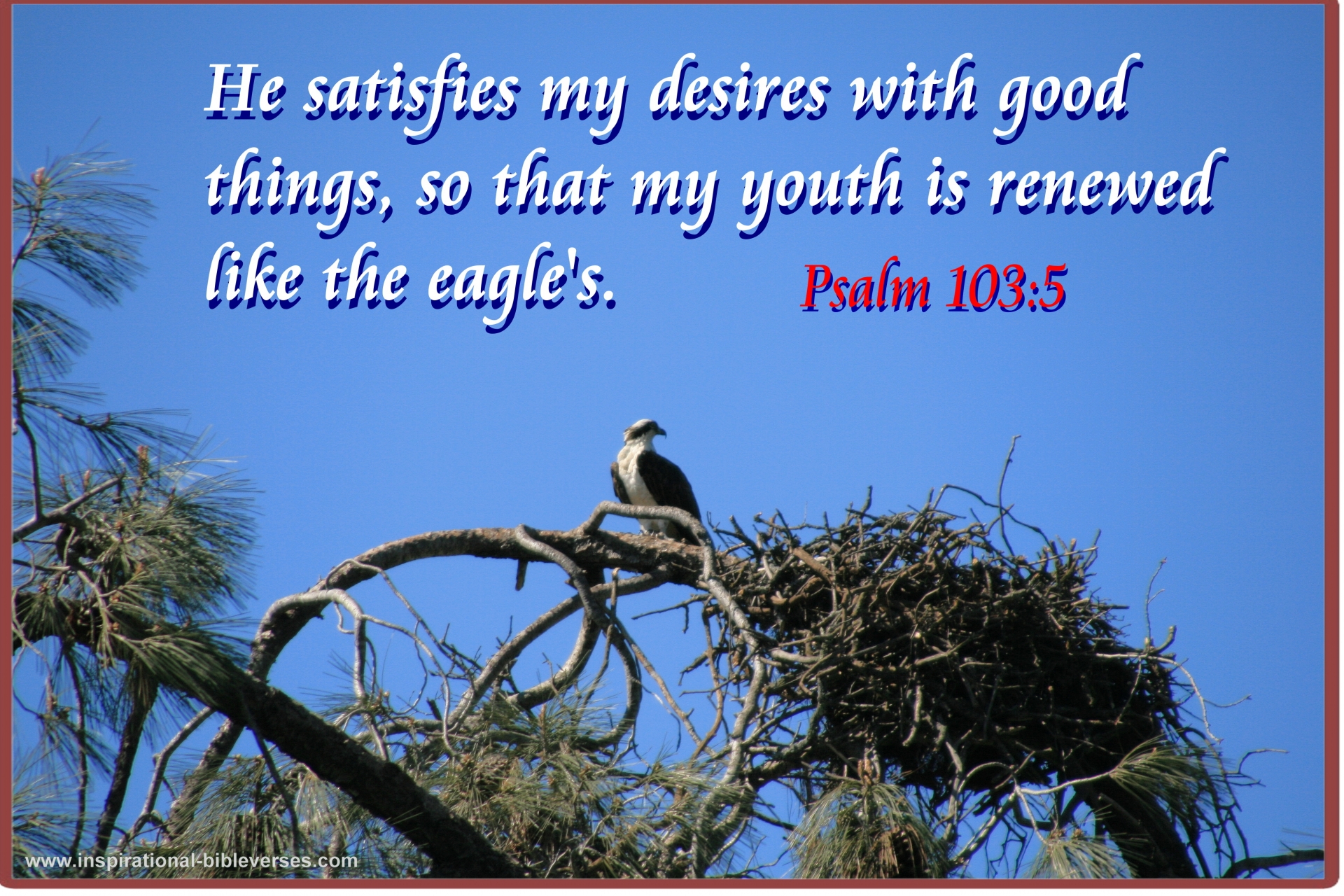
Psalms103.5


5 who satisfies your desires with good things so that your youth is renewed like the eagle’s.

 I praise You, O God, for knowing exactly which good things to grant me—those things that will produce a good outcome. (I know that catering to my every pleasure would ultimately be to my detriment.)

I praise you that even into old age you will strengthen my spirit so I can remain vibrant, optimistic, and full of hope. On the wings of your wisdom I’ll be able to soar (Proverbs 24:5).

Finally, may your praise always be on my lips; may my soul always boast in you, because you are a good and gracious God—always and forever (Psalm 34:1, 145:7-8)!


*Prior to composing this worship-prayer, I researched some of the terminology in these verses, to expand my understanding of the passage. Sources included: Be Exultant by Warren Wiersbe; www.bible.org; Jesus Calling by Sarah Young; Thrive, Don’t Simply Survive by Carole Ladd; and The Daily Study Bible Series, Psalms, by George A. F. Knight.


(Photo credits:  www.suggestkeyword.com; http://www.studentdevos.com; http://www.pinterest.com; http://www.suggestkeyword.com.)

Read Full Post »

Munttar17

In a desert land he found him,

in a barren and howling waste.

He shielded him and cared for him;

he guarded him as the apple of his eye

(Deuteronomy 32:10, italics added).

Notice the verbs: found, shielded, cared for, and guarded. Just as God watched over the Hebrew nation in the wilderness, God is surely watchful over each of us. See if these stories trigger memories of your own–when God found, shielded, cared for, and guarded you.

FOUND:

Growing up in a Christian home, I learned about Jesus before taking my first steps. At age four, after hearing the crucifixion story, I asked Jesus to be my Savior and constant Companion. Even as a preschooler, I understood my need for Someone to take the punishment I deserved for my naughtiness, so I could receive God’s gift of eternal life. If Jesus was willing to suffer and die in my place, how could I say, “no?”

81dcb5dcf618c976c041e845ebb0dd25

Praise God he seeks after lost sheep—even the little ones (Luke 15:4)!

Where did God find you?

 SHIELDED:

Numerous times over the years I have felt shielded from harm, including serious car accidents.

One time while approaching a stoplight, I hit a rain-slicked patch of city street, with cars in front of me and a bus to the right. My car began to slide and swerve; I started pumping the brakes. But there was no way to stop soon enough and avoid collision with the slowing line of vehicles ahead.

I took a chance and turned a bit to the right, hoping beyond hope there would be enough room for me to squeeze ahead of the bus, where the lane was open. Surely God intervened and created the needed space. (I think he also alerted the bus driver to apply his brakes and leave room for me!) My car did come to a safe stop, with room to spare.

God has shielded me in other important ways, too. He’s protected me from life-choices that would have led me down treacherous paths. He’s saved me from unhealthy relationships.

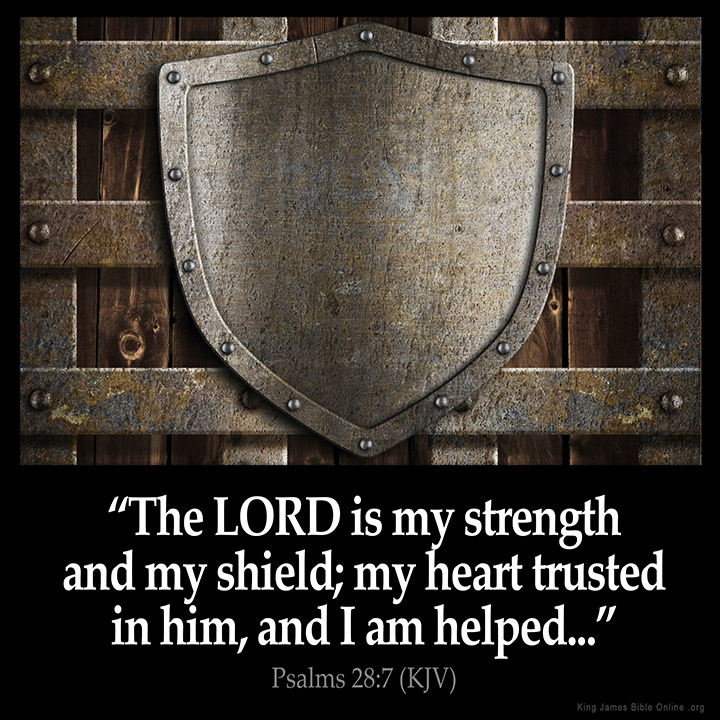
Psalms_28-7

Praise God he is our shield! We can trust in him, and receive the help we need (Psalm 28:7).

How has God shielded you?

CARED FOR:

I couldn’t find the dental insurance form I needed to drop off at Dr. H.’s office. Jeremy (our younger son and a middle schooler at the time) assisted me in a thorough search.  No form. While out on my walk, it suddenly occurred to me the form may have been gathered up with the newspaper. Sure enough, that’s where it was. Being Wednesday, those papers—and the dental form—should have been long gone in the recycling truck, but Jeremy was saving newsprint for his art teacher. God not only revealed to me the location of that form, but kept it safe, saving me the hassle of getting a new one and filling it all out again.

a6b7d3947c75be26393ae18a51f35ccc

Praise God for his loving attention, even in small matters like dental forms (1 Peter 5:7)!

How has God cared for you?

GUARDED:

One spring day in 1985, an elderly gentleman hit the gas pedal instead of the brake, at the stop sign on our corner. He drove his station wagon right through the garage wall. Several feet more to the right and he would have plowed into our daughter’s room, and she was playing there at the time. The driver was protected, too, sustaining only minor injuries.

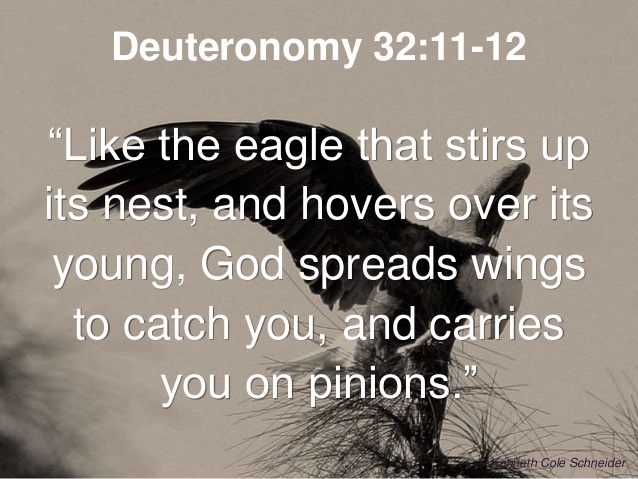
god-of-the-bible-gcsrw-25-638

Praise God he guards us like an eagle, hovering over its young (Deuteronomy 32:11).

How has God guarded you?

THE APPLE OF HIS EYE:

The last phrase of Deuteronomy 32:10 explains why God is so attentive to his people. We are the apple of his eye. Some translations replace apple with pupil. God protects us as the pupil of his eye.

Just as our eyesight is precious to us, so we are precious to God.

As we’re careful to provide protective care for our eyes, shielding them from danger, for example, so God provides loving, protective care of us.

May we continually praise our God for all he is to us. First, he found us, and then became our attentive Shield, Provider, and Guard.

bbd550f7373b204033320b16c5638e3c

(“You make me glad by your deeds, O Lord; I sing for joy at the works of your hands” — Psalm 92:4.)

 In the Comments below, please share your personal stories of how God found you, or how he has proved himself as your Shield, Provider, and Guard. Let’s celebrate together God’s powerful deeds on our behalf!

(Art and photo credits:  www.biblewalks.com; http://www.pinterest.com; http://www.kingjamesbibleonline.com; http://www.imagefriend.com; http://www.slideshare.net; http://www.pinterest.com.)


Read Full Post »

prd_007161


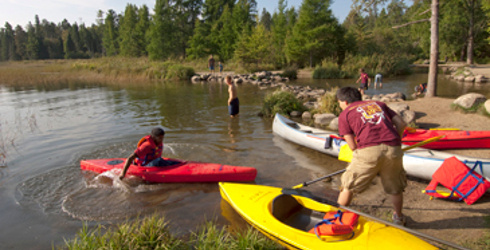
His kayak paddle provided more steering than propulsion, as the tourist enjoyed a quiet excursion past tall conifers and wide-armed hardwoods. Slowly he meandered southward, confident that returning to his launching point would not be a challenge.  The man at the kayak-rental shack had assured him: surface water flowed at just over one mile per hour. And should he fall out of his craft, no real danger would threaten. The water was only three feet deep, and the shore not more than ten feet to either side.

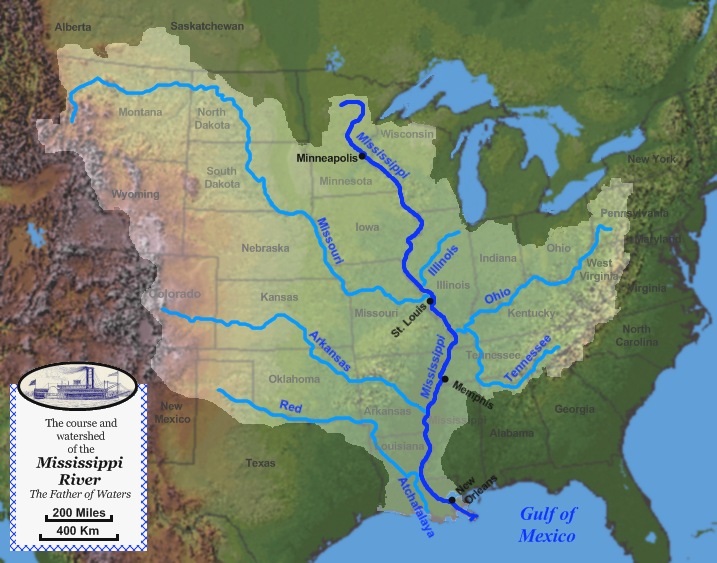
It’s hard to imagine, the kayaker thought,  that this narrow, shallow stream actually becomes a mammoth river. He’d been told the stream was fed by underground springs, and flowed another 2,300 miles from where he paddled. Along the way, more rivers would flow into it. And when the fresh water finally met salt, the river would be over a mile wide.

Mississippi-River

Have you guessed the name of this waterway? It’s the grand and powerful Mississippi. Yet its headwaters is a tame little stream, fed by a few underground springs or fountains.

Such a river offers an illuminating picture of our relationship with God. We are the rivers, and…

…“[God] is the fountain of life,” (Psalm 36:9).

Anglican bishop John James Stewart Perowne (1823-1904) said: “These are some of the most wonderful words in the Old Testament. Their fullness of meaning no commentary can ever exhaust.”

But if we don’t at least try to grasp the wealth of truth in these six words, we stand to lose much profit.

So let’s consider that, as our fountain of life:

  • God the Son is the source of all life, and all life is sustained by him (Hebrews 1:3). Without him, all life would cease.
  • In him we live, and move, and have our being (Acts 17:28).
  • He is like a spring of water welling up to eternal life in our spirits (John 4:14).

Those are wonderful concepts, which Dr. Perowne surely had in mind as he contemplated Psalm 36:9. Yet our triune God is like a fountain of spring water in more ways.

First, a bit of digression. No doubt you’re aware that bottled spring water is a big business these days, supposedly offering water that is much superior to what comes out of the tap. Critics have their doubts.

But our God is 100% perfect! No doubt about it.

 psalm8-how-excellent-your-name0

“He is the Rock, his works are perfect, and all his ways are just. A faithful God who does no wrong, upright and just is he” (Deuteronomy 32:4).

Consider as well the following scriptures, which itemize his excellent perfections. And keep in mind they come to us in unending supply:

  • Presence.  “I am with you always” (Matt. 28:20).
  • Reliability.  “The plans of the Lord stand firm forever; the purposes of his heart through all generations” (Psalm 33:11).
  • Right-Doing. “His righteousness endures forever” (Psalm 111:3).
  • Faithfulness.  “The faithfulness of the Lord endures forever” (Psalm 117:2).
  • Sovereignty.  “He rules forever by his power, is eyes watch the nations” (Psalm 6:7).
  • Love.  “His love endures forever” (Psalm 100:5).
  • Compassion.  “[The Lord’s] compassions never fail” (Lam. 3:22).
  • Protection.  “Save your people and bless your inheritance; be their shepherd and carry them forever” (Psalm 28:9).
  • Stability.  “The Lord is the Rock eternal” (Isaiah 26:4).
  • Joy.  “With joy you will draw water from the wells of salvation” (Isaiah 12:3).
  • Blessing.  “Surely you have granted him eternal blessings and made him glad with the joy of your presence” (Psalm 21:6).
  • Grace.  “God is able to make all grace abound to you, so that in all things at all times, having all that you need, you will abound in every good work” (2 Cor. 9:8).

That’s an even dozen attributes. But since our God is infinite, his attributes are also infinite. We’ve barely begun to explore his perfections. In addition, he will forever expend those attributes for our good (Romans 8:28)—not only outwardly, as he engineers circumstances, but inwardly as we allow his attributes to flow in us.

In addition, God is flowing through us, so we can provide life-giving grace to those around us—grace that expresses itself in love, compassion, and blessing.

And that brings me to another metaphor–for those tributaries that pour into the Mississippi. They remind us of the influence of others in our lives–faithful and mature family members, friends, pastors, and teachers, who come alongside us by example and with wisdom, providing strength and growth.

Mississippi_watershed_map_1

Chances are, those tributaries of the Mississippi are also fed by springs. For every believer, our triune God is the pure, ever-flowing, life-giving source of all that is excellent, and everything we need for a fulfilling life.

Is your heart overflowing with praise?

*     *     *     *     *     *     *     *     *     *

We do give you praise, oh God! You are the fountain of our abundant and excellent spiritual life. You are the only spring that quenches our thirst for fulfillment, joy, peace, and satisfaction.  Thank you for flowing in us, so these desires and more are fully met. And thank you for flowing through us, so we might have the privilege of sharing your living water with others.


(Information about the headwaters of the Mississippi from the Mississippi Headwater Board and wikipedia.org.  Photo & art credits:  www.nature.org; http://www.1mississippi.org; http://www.fbcphil.org; http://www.agodman.com; http://www.wikipedia.org.)


Read Full Post »

slide_064_Wirtz_classroom

“Please write your name, home city and state, and your major on the index card in front of you,” requested Dr. R.

It was the first day of American History, my junior year of college.

We all complied, and Dr. R. collected the 3 x 5s. He took a few moments to study each face and card, commenting or asking a clarifying question. Then he proceeded to name every person in the class of thirty or so students—without the cards. Quite impressive.

Each day that first week of class, as we entered the room, we’d see Dr. R., leaning against the front of his desk, reviewing those 3 x 5s. He always used our names when addressing us.

On one occasion I ran into Dr. R. in the hall of one of the classroom buildings. “Hello, Nancy,” he called without hesitation. Now that might not seem very remarkable except I had graduated ten years before. Steve and I were on campus for homecoming.

Not only did Dr. R. remember my name that day, he asked if I still lived in Wheaton, and if I was teaching. I wasn’t simply “a” Nancy who had been in one of his classes. I was “the” Nancy from Wheaton, who majored in elementary education.  Who can remember such detail for so long?! And even if that moment was only the result of his incredible recall ability, I felt valued.

Few people have such a gift as Dr. R. But I know Someone with an even greater capability to remember names and details. Too many, in fact, to quantify.

Jesus calls us by name (John 10:3).

5f0a69a406cc999a2cec2b5c02dc118d

Our names are more than labels to him, identifying one person from another. He knows our character and personalities, as well as intimate details—our likes and dislikes, concerns, feelings, and thoughts. He knows one Nancy from another, one Steve from another, one __________ (put your name here) from another.

However, calling us by name indicates not only profound knowledge about us but keen interest in us. He deeply cares about each individual (1 Peter 5:7).

fb6ee7a03664a8589ba2f3541c37745e

Now sympathy and compassion are comforting qualities, and Jesus demonstrates both. But true caring involves more. Care suggests action. And that’s exactly what he does. Jesus takes action when one of his own is in trouble (Luke 15:3-7).

In fact, every detail of our lives is under his capable, loving control.

  • His eye is ever watchful (Psalm 121:3).
  • His ear is always attentive (Psalm 34:15).
  • His heart beats with everlasting love (Jeremiah 31:3).
  • His powerful hand brings help when the time is right (Psalm 138:7-8).

Many of you are familiar with Sarah Young’s Jesus Calling (Thomas Nelson, 2004). Among the impressions from God she has recorded, is the following encouraging note. Our Heavenly Father wants us to know:

“If you could see how close I am to you and how constantly I work on your behalf, you would never again doubt that I am wonderfully caring for you” (December 12).

ex3-he-knows-your-name

God knows each and every one of our names.

How validating he is.

When God calls, “Nancy” or “Steve,” “John” or “Jennifer,” he’s remembering who we are—our unique personalities, backgrounds, needs, and deepest thoughts.

How compassionate our God is.

Best of all, is the love in his voice as he speaks. And the benevolent action he sets into motion—specifically tailored to our needs.

How astounding our God is.

*     *     *     *     *     *     *     *     *     *

Heavenly Father, I thank you for taking personal interest in each of your children. To think that you know me by name—out of the billions of people throughout the centuries–what a precious reality.   At those times I feel insignificant and small, may I hear your gentle voice calling my name.

(Photo & art credits:  www.cobniu.edu; pinterest.com; http://www.dwellingintheword.wordpress.com.)

Read Full Post »

article-step-by-step_ds-photo_getty_article_178_67_200377237-001_XS

Back in the 1970s somebody came up with the idea of worry stones—small, smooth pebbles that people could rub between their fingers to release their worries. (What a great money-maker, huh?  Collect some free pebbles, clean ’em up and sell for 100% profit.  Genius.)

According to enthusiasts, the constant rubbing activates the nerves at the base of the thumb, releasing endorphins. As a result, a sense of calmness purportedly settles in the user’s mind.

Even if that’s true, what happens when the person stops rubbing? Since the worry has not been resolved; isn’t it likely to return? I can’t see myself rubbing a stone until I fall asleep at night, can you?

Here’s a better idea.  Instead of going to a small pebble for worry-relief, go to the Rock.

What Rock, you ask?

“There is no one holy like the Lord; there is no one besides you; there is no Rock like our God” (1 Samuel 2:2).

Next question:  Why go to the Rock?

1.  God our Rock is more stable and reliable than Gibraltar.

igibrat001p4

The Rock of Gibraltar has become a symbol for stability, having stood sentry on the southern coast of Spain for centuries. Some say it dates back to the Jurassic Period.

But our God is older still, isn’t he.

“Trust in the Lord forever, for the Lord is the Rock eternal” (Isaiah 26:4).

And he is the same yesterday, today, and forever (Hebrews 13:8).  Now that’s reliable.

2.  God our Rock is more sheltering than a deep cave.

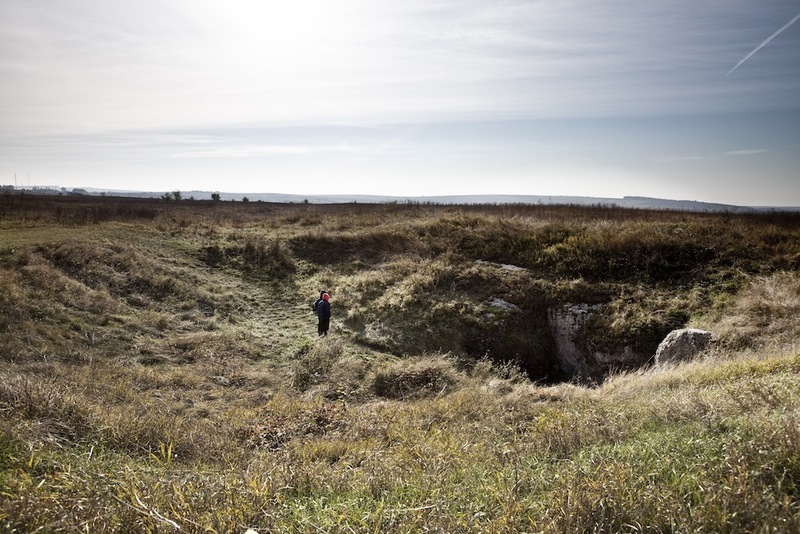
Verteba_Cave

(Verteba Cave, Ukraine)

During World War II, a small group of Ukrainian Jews found a way to escape the Nazis. They lived underground in caves for a year and a half.

At night they foraged for food. They even built showers and latrines deep inside.

But imagine living every day in pitch blackness and in fear of being discovered.

One day it happened. Nazi soldiers stumbled upon their hiding place. A courageous woman spoke for the group, as German guns pointed straight at her.

“What are you afraid of here?” she said. “Is the Furhrer going to lose the war because we live here?” Miraculously the soldiers left without doing anyone harm.

The band of Jewish villagers found relative safety in those caves,  and in April, 1944, the cave dwellers were liberated, able to return to the light.

But God our Rock offers guaranteed eternal safety for our souls. His Son, Jesus “became the source of eternal salvation for all who obey Him” (Hebrews 5:9)

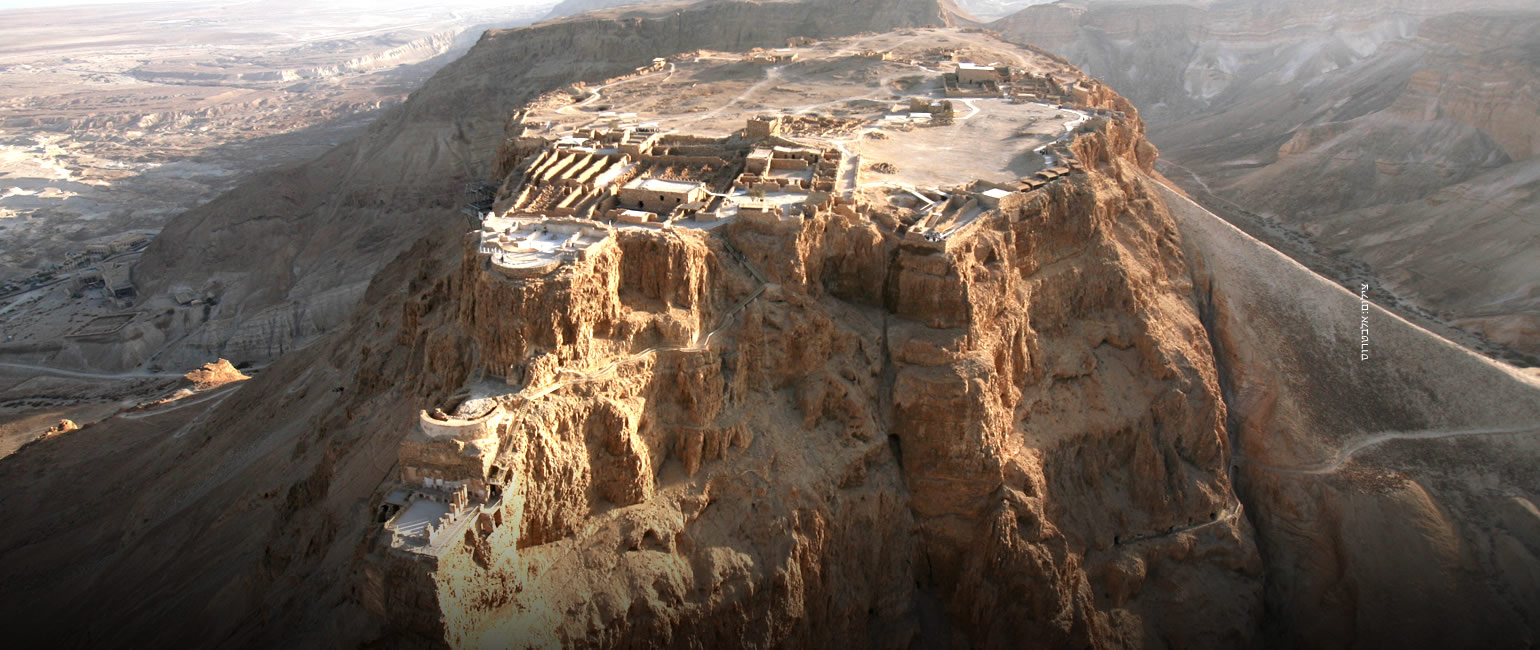
3.  God our Rock is more protective than Masada.

slide-static

Perhaps you’re familiar with the mountaintop fortress, towering 1500 ft. above the Dead Sea.   The refuge was built by Herod the Great, from 37 to 31 B.C., to showcase his power.

Infamous for his brutality, Herod had good cause to be paranoid. He spared no expense to make sure this desert fortress could withstand attack and provide long-term refuge. His plan included protective casement walls, an ingenious water-collection system and cisterns for storage, storehouses, barracks, palaces, an armory and more.

Impregnable? Almost.

When Herod died, Jewish rebels were able to overtake the Roman guard remaining at the fortress. A thousand Jewish zealots lived atop Masada for three years.

Yet nothing or no one on earth can compare to God our Rock.

“Lead me to the Rock that is higher than I,” cried David. “For you have been my refuge, a strong tower against the foe” (Psalm 61:2-3).

And how do we avail ourselves of God’s refuge?  Through gratitude, praise, and prayer.  We can:

  • Thank him for his promises, for the times he has protected and provided in the past.  We must feed our confidence in God rather than our fear.
  • Praise him for his glorious attributes that he is bringing to bear upon our situations–attributes such as power, wisdom, trustworthiness, and love.
  • Affirm our faith. If we occupy our minds with expressions of trust, there won’t be room for thoughts of worry.

“My soul finds rest in God alone;

my salvation comes from him.  

He alone is my rock and my salvation;

he is my fortress, I will never be shaken…

Find rest, O my soul, in God alone;

my hope comes from him”

(Psalm 62:1-2, 5).

(Photo credits:  www.ehow.com; http://www.kids.brittanica.com; http://www.noplaceonearthfilm.com; http://www.masada.org.il.)

Read Full Post »


“Oh no, Elena, you don’t want that,” I say to our one-year old granddaughter.  Obligingly she holds up to me a minuscule scrap of paper she’s found on the floor.  Thanks to much practice with Cheerios, her thumb and forefinger can pick up the tiniest items.

Elena and I are on an excursion through the living room and dining room.  From her jaunty steps, I can tell she’s loving the freedom to explore.  And I’m glad to provide the watchful eye she needs.

No sooner do I slip the paper into my pocket than her little hands are grabbing for a cell phone on a side table.  You wouldn’t think her arms are long enough to reach that far.  Daddy says she has the wingspan of a pterodactyl.

“I’m sorry, Elena,” I tell her.  “We’ll have to put that up here on the shelf.  Mommy’s phone isn’t a toy.”

I think she’s heard that before.  The removal of the phone doesn’t upset her; she just moves on. Quickly Elena toddles toward the living room fireplace where unlit candles stand in a decorative formation.  Not for long.  She grabs the chunky, center candle, clutches it to her chest, and proceeds on her way around the table.

“Let’s leave the candle here,” I say, gently prying it out of her fingers.  “If you drop that on your toes, it will hurt.”

I’m surprised Elena doesn’t become upset.  For a moment I think she’ll march on to other discoveries and leave the other candles in the fireplace.  Instead, she wastes no time turning around and heading back.  Soon there are five candles up on the table.

And so it goes as I tag along behind a toddler who knows very little, fears practically nothing, and desperately wants to be free and independent.  We adults must be attentive, instructive, and protective.

You know what?  There are times I’m not much more than a toddler in God’s family.  I, too, know very little, lack a healthy fear of those things that could hurt me, and struggle against the desire to be free and make my own choices.

Good thing I have a Heavenly Father who is so attentive.

“He who watches over [me] will not slumber” (Psalm 121:3).

My Heavenly Father is instructive.

“He guides the humble in what is right and teaches them his way” (Psalm 25:9).  Key word:  humble.  I have to be accepting of instruction and willing to apply it.

My God is also protective.

“He is my loving God and my fortress, my stronghold and my deliverer, my shield, in whom I take refuge” (Psalm 144:2).

*     *     *     *     *     *      *     *     *     *

Oh, Father, forgive me for the times I act like a toddler and take off on my own.  Thank you for your constant, watchful presence, for those times you’ve grabbed things from my grasp because you knew they were not in my best interest. Thank you for instructing me through your word and through wise, godly people.  Slowly but surely you have equipped me with the knowledge of your ways–ways that are good and right.  Then you’ve patiently trained me to follow those ways.  May my heart be set on keeping your decrees to the very end (Psalm 119:112)!

(Photo credit: http://www.pexel.com)

Read Full Post »

(No, the title is not a typo!  Please read on!)

One time only the verb wrestle is used in scripture.  You probably remember the story of Jacob wrestling with a man through the dark hours of one night. Chances are, Jacob would have been sleepless anyway.  The next day he was to reunite with his estranged brother, Esau (Genesis 32:22-32).  Echoing in Jacob’s mind was his brother’s vow to kill him (27:41).

At the end of the wrestling match, when the man left Jacob, he realized his opponent had been God (32:30)!  (Some say God took the form of an angel.  Some say this was an appearance of Jesus, a pre-incarnate visitation, before he was born as a baby in Bethlehem.)  

Jacob’s heart must have been pounding madly at that moment, but not just from the exertion.  Imagine his shock to realize he had engaged with the all-powerful King of the universe in hand-to-hand combat!

The chronicler to record this event (and all the other events in Genesis) is generally accepted to be Moses.  As he wrote this particular story, Moses must have smiled to himself at the word play that flowed from his pen (Did they use pens of some sort in those days?)

First of all,  Jacob’s name in ancient Hebrew is ya’ aqob.  The word, wrestled, is ye’ abeq.  Even the location of the event is included in the word play.  Verse 22 indicates Jacob was camped along the stream called Jabbok, or yabbok in Hebrew.  Perhaps it was named later, as a memoriam to Jacob’s once-in-history experience.  By Moses’ time, the name would have been well-established.

But that’s just an interesting aside.   Showcasing his sense of humor was not God’s main objective for including this story in scripture.  What might he want us to learn from Jacob’s experience?

Perhaps it is a lesson in humility, as it certainly was for Jacob.  At the end of that wrestling match, God wrenched Jacob’s hip.  He limped for the rest of his life–a constant reminder that God was his Shepherd-caretaker, responsible for Jacob’s successes.  God was also his Angel-deliverer.  Jacob could not guarantee his own escape from Esau’s harm. or any other danger (Genesis 48:15-16).

God proved himself as Jacob’s Mighty One (49:24) the next day.  Shortly after the man left Jacob, Jacob looked up and saw Esau coming toward him–with four hundred men.  Quickly Jacob took precautions to protect his family.  But it was unnecessary.  Esau ran to meet Jacob and embraced him.  The two brothers, who had been alienated from one another for years, now wept in each others’ arms (33:1-4).

At the end of his life, Jacob reaffirmed that it was God Almighty who had provided all the blessings he’d enjoyed (Genesis 49:25).  The patriarch was as powerless to bless himself as he was to overpower God in a wrestling match.  And he prayed that the Strong God would give his blessings–tumbling out of the skies, bursting up from the Earth–to rest on the head of Joseph (vs. 25-26, The Message).

Jacob did not pray that Joseph, too, might  wrestle with God, but that God’s blessing would rest upon him.

Yes, wrestling with God has its place.  At times we may spar with God using words, much as David openly and honestly expressed his disappointments, depression, and even anger to God.  (See Psalms 22, 55, and 77 for examples.)  God is big enough to handle it.

But then comes the morning when we can affirm that his compassions, his blessings, never fail.  Great is the faithfulness of our God (Lamentations 3:22-23)!

So an additional bit of word play brings the two concepts together, thanks to my preacher-son, Jeremy:  wrestling + resting = wresting.

Wrestling allows load-shifting; resting results in peace.  Together they make us strong, steadfast, and firm in our faith.

(art credit:  http://www.bishopmarcelopires.org )


Read Full Post »

Years ago in my hometown, when the community pool was built, Dad often took my brother and me swimming.  I marveled at the way my father could slice the water with a smooth dive, roll over on his back, and float.  Without even moving his arms and legs, he could remain on top of the water.  Amazing!

When I tried it, I sank–immediately.

“Daddy!  Show me how to float!” I cried.

First, he helped me to lie flat-out on top of the water.  His hand gently supported the middle of my back.  And then Dad said the strangest thing.

“Now, relax.”

What?!  Every fiber of my being was tense.  I just knew that if I relaxed, my nose would instantly fill up with heavily chlorinated water.

But I trusted Dad.  He wouldn’t trick me into a catastrophe.  So I tried to relax.

Easier said than done.  Try as I might, my body would not relax.  My focus was more on the possibility of sinking than it was on the one thing that would keep me afloat.

“That’s OK,” Dad probably said.  “This is just your first try.  Keep practicing, and all of a sudden you’ll get the feel of it.  That’s how it happened for me.”

This experience came to mind as I read Charles Spurgeon’s comment on an excerpt from Isaiah 30:15.

First, the scripture-excerpt:  “In quietness and confidence shall be your strength.”

And now, the Spurgeon quote:  “We are sinking by our struggles when we might float by faith.”

But learning to relax in the spiritual realm is just as difficult as it was to relax on my back in that swimming pool.  It is so much easier said than done–at least for me.

Why is fretting and worrying my default mode?  It’s so pointless.  Resting in God is the only way to hope and peace (Psalm 62:5).

The big question is how.  How can I relax into quiet confidence that will be my strength, and keep me afloat?

Perhaps the answer is in that word practice.  As I reaffirm over and over God’s glorious attributes, as I review His wonderful promises, my focus will change and my spirit will learn how to rest.

What attributes might be wise to focus on?  King David included a number of them in his glorious psalm of thanksgiving, found in 1 Chronicles 16:8-36:

  • Power (vs. 9, 12, 14) – He is able to work wonders.
  • Integrity (v. 15) – He is totally trustworthy.
  • Holiness (v. 29) – He is absolutely pure and righteous, totally set apart from anyone else in the universe.
  • Goodness (v. 34) – His blessings to us are bountiful and frequently displayed.
  • Love (v. 34) – Not based on our paltry deeds, but on his kind and gracious nature.

And what promises would build my confidence?  Here are three for a good start:

  • “As for God, his way is perfect; the word of the Lord is flawless.  He is a shield for all who take refuge in him” (Psalm 18:30).
  • “My God will meet all your needs according to his glorious riches in Christ Jesus” (Philippians 4:19).
  • “I will lead the blind by ways they have not known, along unfamiliar paths I will guide them; I will turn the darkness into light before them and make the rough places smooth.  These are the things I will do; I will not forsake them” (Isaiah 42:16).

Notice:  He promises protection, provision, and guidance.  Everything we might face is covered.

Thinking back to those summer days at the community pool, I’m reminded of two things that happen when we float:  1) Our eyes are focused upward.  2) Our ears cannot hear very well, situated as they are beneath the surface.  Noise is silenced.

Those two things need to happen in the spiritual realm if we’re to float by faith.  Our eyes need to be focused upward on our powerful, loving, promise-keeping God, and our ears need to be stopped to the voices of worry.

The former will undoubtedly take care of the latter.

(Photo credits:  www.sciforums.com ; www.dailyencouragement.net ; www.flickr.com ; www.confessionsofasmowflake.com )

Read Full Post »

Group of sparrows.

Group of sparrows. (Photo credit: Wikipedia)

“Are not two sparrows sold for a penny?  Yet not one of them will fall to the ground apart from the will of your Father…So don’t be afraid; you are worth more than many sparrows” (Matthew 10:29, 31).

Why did Jesus choose sparrows for this illustration?

They’re so small and common.  (Have you ever felt unimportant and ordinary?)

Sparrows were of such little value in Jesus’ day, they were sold two for a penny.  The poor would buy them to eat—a cheap source of protein.

Nobody much cared about sparrows in Bible times; most folks still don’t care today.  They’re just drab little birds we see every day—hardly worth our attention.

But the smallest, drabbest sparrow doesn’t slip by God’s attention.  Not one can fall to the ground without God knowing.  And if he knows and cares about the sparrows, he certainly knows and cares about each of us.  Verse thirty-one makes it clear:  “You are worth more than many sparrows.”

There’s a modicum of comfort in the knowledge that God sees our situations.  To be honest, though, the fact that he just knows isn’t all that helpful.

Better yet is the news that not one sparrow can fall without God’s consent.

Nothing happens to us that hasn’t first received the stamp of approval from God Almighty.

“Wait a minute,” you might say.  “If a sparrow falls, he’s likely to die.  Not much comfort in that either– knowing that God gave his OK!

Here’s what I want to embrace:  we have the mind of Christ (1 Corinthians 2:16b), right?  When it’s my turn to fall off the branch, I want to be able to affirm, “Yes, Lord.  Whatever you think is best is A-OK with me.  I know I can trust you because you love me.  And I rejoice in the promise that whatever happens, you will bring good from it.”   (Remind me of that truth when I start to wobble, will you?)

But here’s the best news:  Notice that Jesus didn’t speak of God as some detached, omnipotent being.

He said, Father.

It is our gracious and kind Heavenly Father who tenderly watches over his little sparrows.

Red Bike

Red Bike (Photo credit: swanksalot)

Think of a loving mother who witnesses her small son falling off his bike.  When he gets up with a scraped knee, she won’t just say, “Oh, I saw that happen, Johnny.  I’m so sorry you’re hurting.”  Small comfort in that.

No, that mother will run to her son, hold him in her arms, talk to him reassuringly, take him to the house, and patch him up.  That’s just what a loving parent does.

When trouble comes, our loving Heavenly Father is right there with us, just like that mother.

He holds us.  Isaiah wrote, “He gathers the lambs in his arms and carries them close to his heart” (40:11).

He talks reassuringly to us, especially through His Word.  With the psalmist, we can pray, “Strengthen me according to your word” (Psalm 119:28b).

God is our refuge and sanctuary; he is our home, our dwelling place. (Psalm 91:1-2).

And God patches us up; he restores our souls (Psalm 23:3).  He renews our energy, purpose, and hope.

So, “Don’t be afraid,” he says. “If I take care of the sparrows, I will most certainly take care of you, because you are worth more than many sparrows.”

See? You’re not small, unimportant, and ordinary–not at all!

*     *     *     *     *     *     *     *     *     *

Thank you, Lord, for not playing favorites.  What glorious news that each of us is precious to you!  Thank you also for being an attentive God who tenderly watches over us.  And especially thank you for being an involved God, always acting on our behalf, and always for our good.  We are in awe of you, our loving, gracious Heavenly Father!    

Read Full Post »

« Newer Posts - Older Posts »

Still Traveling

Impressions Becoming Expressions

Living Our Days

Gaining a heart of wisdom

He Said What?!

I'm Patty, and my husband and I are living with our adult son who has autism and epilepsy. I love sharing lessons learned from life around me, especially life with Aaron.

Meditations of my Heart

Impressions Becoming Expressions

Linda Stoll

Impressions Becoming Expressions

Debby Thompson

Impressions Becoming Expressions

Signora Sheila

Notes on Life, Faith & Italy

Colleen Scheid

Writing, Acting, Living in God's Love

Mitch Teemley

The Power of Story

Heidi Viars

Finding the Image of God