Feeds:
Posts
Comments

Archive for the ‘God’ Category

As the new year makes its entrance, a fresh breeze of possibilities and dreams fills the mind:

  • Perhaps this year . . .
  • Wouldn’t it be wonderful if . . .
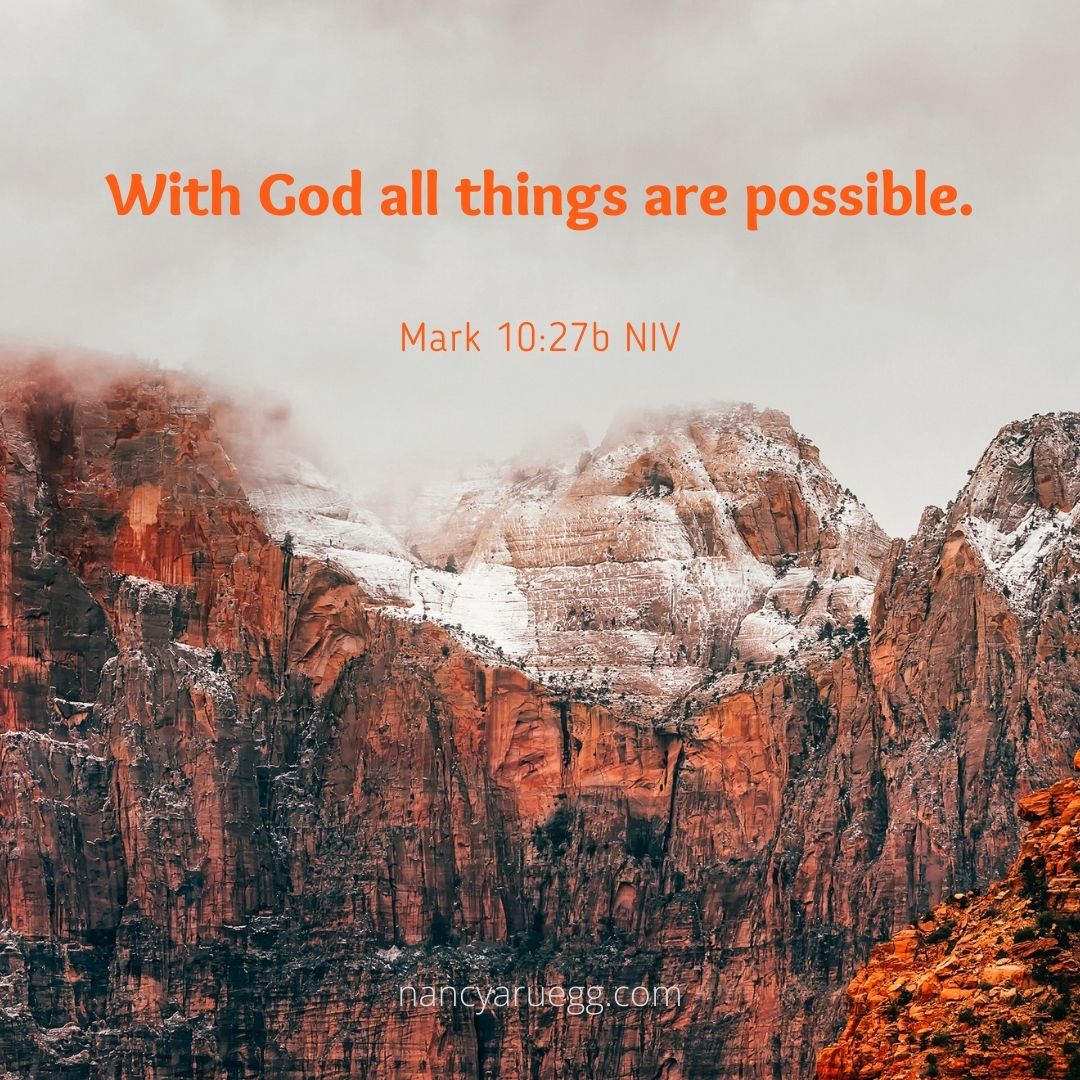
  • All things are possible with God, so . . .

But no sooner do I start finishing those statements with starry-eyed optimism, than some scratchy, irritating thoughts demand my attention.  Thoughts such as:

  • You’re too old, terribly unworthy, and under-qualified.
  • You’ve already waited so long. Your desires obviously aren’t God’s desires for you.
  • You’ve hopelessly veered from God’s plan; otherwise your life circumstances would surely be different.

And my heart cries out:

I need your Word, God, your Sword of the Spirit, to slay these lies. And though I am grateful for familiar sword-thrusts like Romans 8:28, Jeremiah 29:11, and Philippians 4:13 to wield against the untruths listed above, a few new moves would surely increase my resolve. “Strengthen me according to your word” (Psalm 119:28b).

And God seems to say:

“All right, Nancy, let’s look at each statement from my viewpoint.

“You are too old? Not so. Moses was eighty when he became the leader of the Hebrew nation, bringing them out of Egypt and into Canaan. Daniel served as prime minister in Babylon well past the age of eighty. John was quite elderly when he received the Revelation. Age has nothing to do with usefulness.

“You are unworthy? Also not so. You are one of My chosen people, a royal priestess, who belongs to Me, the King of the universe (1 Peter 2:9a). Like all My children, you are precious and honored in My sight because I love you (Isaiah 43:4).

“You are under-qualified? All the better for My purposes! My G.R.A.C.E. (God’s Riches at Christ’s Expense) includes wisdom, power, strength, discernment, all spiritual gifts, all fruit of the Spirit, and more. My grace is more than sufficient for you; it’s all you need. In fact,“My strength comes into its own in your weakness” (2 Corinthians 12:9 MSG).

“You’ve waited too long? Think again. Abraham waited 25 years for Isaac. Joseph waited seventeen years for his dream to come true. Caleb waited 45 years for his special parcel of the Promised Land.

“You’ve veered from My plan for you? Please refer to Ephesians 1:11. Your singular purpose is to display My glory, that is, my attributes of love, joy, goodness, and more. Wherever you are . . . “whatever you do, work at it with all your heart, as working for the Lord, not for men” (Colossians 3:23). And remember: small acts can achieve important results also.

“One closing thought to keep in mind: There is method and reason to every decree I have judiciously ordained since the beginning of time, to accomplish My will according to My sovereignty. I AM the Almighty, all-wise God, your Heavenly Father.”

*     *     *     *     *     *     *     *     *     *

O God, help me to look toward 2024, not through the eyes of discouraging doubt but through the eyes of ever-increasing faith. And when I cannot understand, help me just to stand. In Jesus’ powerful name, Amen. *

* Based on a prayer from Selwyn Hughes in Every Day Light, 105.

Image credits: http://www.pxhere.com; http://www.pickpik.com.

(Revised and reblogged from 1-3-2013 while we enjoy the last couple of days with out-of-town family.)

Read Full Post »

Summer 2021

A happy family is

but an earlier heaven.

–George Bernard Shaw

We’ve been enjoying an earlier heaven this week as our three children, their spouses, and three grandchildren have gathered. (Steve’s sister and brother-in-law joined us for a day also.)

Because such occasions happen only now and then, I totally agree with Kathleen McGowan, who wrote:

The only thing sweeter than union

is reunion.

–Kathleen McGowan

Indeed, we treasure these times of togetherness, just as Wanda Hope Carter advocates:

Family and friends are hidden treasures.

Seek them and enjoy their riches.

–Wanda Hope Carter

A Spanish-American philosopher came close to describing why we find treasure in familial relationships:

The family is one of

nature’s masterpieces.

–George Santayana

I’d amend his statement to: “The family is one of God’s masterpieces.” After all, family is God’s idea, established at the beginning of time (Genesis 1:28).

Author Dillon Burroughs adds this viewpoint:

When we think of our family,

our spouse, parents, or children,

let us see them as a gift from God.

–Dillon Burroughs

Indeed! I am supremely grateful to my Heavenly Father for giving us the gift of a family that loves, supports, and takes joy in one another.

They make my soul blossom.

Let us be grateful to people who make us happy;

They are the charming gardeners who make our souls blossom.

–Marcel Proust

Read Full Post »

Three weeks ago we embarked upon a reflection of one of the most important songs in the history of the Christian faith: “O Come, O Come, Emmanuel.”

The lyrics beautifully weave together the Old and New Testaments, telling the story of our Messiah, “the chosen One”—who would come to deliver his people from the consequences of their sins and establish his kingdom forever [1].

Each verse helps us place our eyes on Jesus’ return by remembering his first coming and then expressing hope and yearning for his second coming [2].

As noted before, the unknown lyricist (from the eighth or ninth century) carefully based each stanza on scripture. You’ll find references for further reflection listed at the end of this post.

One fact not mentioned thus far: the poet constructed the Latin lyrics in the form of a seven-sentence acrostic. When the first letter of the second word of each sentence (the names of Jesus) are put together, they spell SARCORE.

Read that word backwards, and the letters form two words of sublime hope: Ero cras, which means, “I will be present tomorrow.”

Whatever the future may hold, our Emmanuel will see us through. What a faith-stirring surprise the lyricist created for us [3]!

Now let’s turn our attention to the last two verses [4].

VERSE SIX

I praise you, Lord Jesus, that just as the morning star shines brightly against the darkness of night, you are the glorious Light of the world, shining brightly against the darkness of evil [5].

Just as the morning star glows steadily without a flicker, you shine in our lives with unwavering faithfulness and love [6].

Just as the morning star is a promise of coming day, your light provides hope and assurance that you will come again, to usher in The Day of the Lord, when a new heaven and a new earth will be established and righteousness will dwell [7].

Finally, just as the morning star can guide those at sea, your light guides our way through life. “In your light we see light”—the light of wisdom and discernment [8].

Such truths do bring us comfort, dispelling shadowy thoughts and flooding our spirits with the light of your perfection.

I praise you, Lord Jesus, for turning the darkness of sin, anxiety, discouragement, and more, into the light of your forgiveness, peace, hope, and joy [9]!

VERSE SEVEN  

I praise you, Lord Jesus, our King! How comforting to know that Someone all-wise and supremely gracious is the Ruler of all nations, all things [10].

Yet you are also a respecter of persons. You’ve bestowed upon us the gift of choice, the ability to determine our own way. And what have we accomplished? Our world is tainted by selfishness, pride, and contention [11].

How we need you, Lord Jesus! You are our only hope for our selfishness to be transformed into selflessness, pride into humility, and contention into unity.

So we boldly pray that every person on earth would come to faith in you [12].

Is that an unattainable dream? No, because you also are unwilling that anyone should perish. And all things are possible with you, our sovereign God and Savior [13].

After all, you:

  • Created all things everywhere
  • Maintain order in the entire universe
  • Control the course of human history
  • Depose kings and raise up others
  • Exist in all places at the same time [14]

I praise you, Lord Jesus, that nothing can prevent you from accomplishing your purpose [15].

And I praise you, Lord Jesus, that you’ve given us the wherewithal to experience harmony with one another, as we demonstrate love and compassion with humility [16].

May we be examples to the world, whetting their appetite for what we experience: the joy of living in the presence of the King of Peace [17]!


[1] Ace Collins, Stories Behind the Best-Loved Songs of Christmas,127; Isaiah 59:20; John 1:40-49; Romans 6:23; Revelation 11:15.

[2] https://www.danielim.com/2017/12/19/the-hidden-theology-and-history-of-o-come-o-come-emmanuel/

[3] https://www.ligonier.org/learn/articles/o-come-o-come-emmanuel

[4] From www.hymnary.org. (Lyrics vary depending on source.)

[5] Revelation 22:16

[6] Psalm 100:5; John 8:12

[7] 2 Peter 3:12-13

[8] Psalm 36:9b; Ecclesiastes 2:13-14

[9] Psalm 18:28

[10] Revelation 19:16

[11] Proverbs 5:23

[12] 1 Timothy 2:1-4

[13] 2 Peter 3:9; Mark 10:27b

[14] Colossians 1:16-17; Daniel 2:21; Jeremiah 23:23-24 GNT

[15] Psalm 115:3

[16] 1 Peter 3:8

[17] Psalm 16:11

Photo credits: http://www.flickr.com; http://www.heartlight.org; http://www.stockvault.net; http://www.rawpixel.com; http://www.stockvault.net; http://www.canva.com; http://www.pickpik.com.

Read Full Post »

Two weeks ago we embarked upon a reflection of one of the most important songs in the history of the Christian faith: “O Come, O Come, Emmanuel.”

The lyrics beautifully weave together the Old and New Testaments, telling the story of our Messiah, “the chosen One”—who would come to deliver his people from the consequences of their sins and establish his kingdom forever [1].

As noted before, the unknown lyricist carefully based each stanza on scripture. You’ll find references for further reflection listed at the end of this post.

Today we turn our attention to verses four and five [2]:

VERSE 4

I praise you, Lord Jesus, for fulfilling all the Messianic prophecies in the Old Testament—at least 300 of them (!), proclaimed long before your birth. The one referenced here offers such glorious hope, as I’m reminded that:

Jesse was the father of King David, and the prophet Jeremiah foretold you’d be a descendant of this king, a man loyal to the Lord. But as the centuries passed, the nation of Judah turned their backs on God. Again and again he urged them to return to him [3].

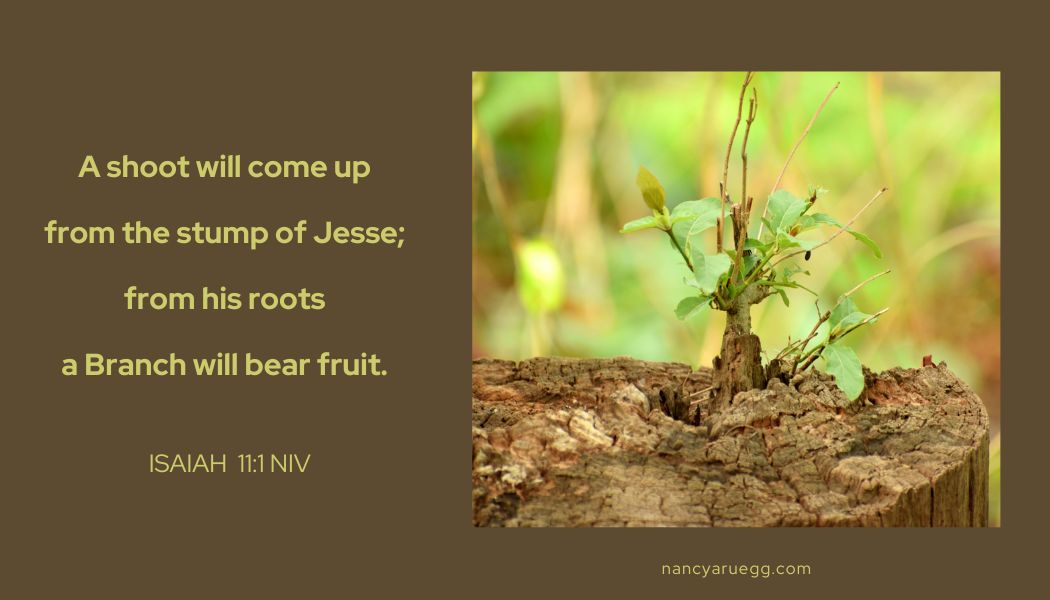
Isaiah (another prophet) painted a word picture of the events that would occur. He compared the kingdom of Judah and the throne of David’s descendants to a tree that would be cut down. All that would remain would be a stump–a remnant of the people [4].

Eleven years later, events unfolded just as Isaiah and four others prophets had foretold. Jehoiachin, the last legitimate king of Judah, was removed from his throne by the Babylonian king, Nebuchadnezzar.

Thousands of Judeans were taken captive so they’d see the error of their ways, seek forgiveness, and follow God once again [5].

But I praise you, Lord Jesus, that Isaiah’s word picture didn’t end there. He proclaimed that out of that hopeless, rotting stump would come a strong sapling.

Six centuries later, you came to earth, the only Righteous One of God, fulfilling that prophecy [6].

Not only were you from the lineage of David on your earthly father Joseph’s side, but also on your mother Mary’s side. This fulfilled the prophecies proclaiming you are the descendant of David that the Jewish people longed for: their Messiah [7].

I praise you, Lord Jesus, for coming to save your people–Jews and Gentiles alike. Because of your great mercy, you rescued me from the specter of hell, taking the punishment I deserved.

And now, the grave has no power over anyone who acknowledges you as their Rescuer [8]!

VERSE 5  

I praise you, Lord Jesus, for possessing the Key of David. That’s significant because a key indicates authority over a domain.  

King David was given authority to rule over all Israel; you rule over all mankind. In fact, God has seated you at his right hand in the heavenly realms, far above all rule and authority, all power and dominion [9].

Out of your magnificence and perfection, you’ve prepared heaven for your people—a place of utter tranquility, blissful and continual joy, eternal and lavish love—beyond what we can imagine.

I praise you, Lord Jesus! You’ve opened wide the gates of heaven; you hold open the door of opportunity for all to enter [10].

As you’ve promised, one day you’ll return and take your children home along “the heavenward road.” Then you will shut the door upon death once and for all [11].

REFRAIN

In all of this and more I REJOICE! You are my Rescuer, saving me from the greatest enemy of all: death.

I praise You, Lord Jesus, for graciously providing the way heavenward. I REJOICE in you, my Savior, my Lord, my King!


[1] Ace Collins, Stories Behind the Best-Loved Songs of Christmas,127; Isaiah 59:20; John 1:40-49; Romans 6:23; Revelation 11:15.

[2] From www.hymnary.org. (Lyrics vary depending on the source.)

[3] Jeremiah 23:5; 1 Samuel 13:14; Isaiah 3:8-9; 55:7

[4] Isaiah 11:1, 10

[5] 2 Kings 24:8-17; 25:21; Isaiah 55:7; Joel 2:12-13

[6] Acts 22:14; 3:18

[7] Matthew 1; Luke 3; Jeremiah 23:5-6

[8] Psalm 86:13 GW; 56:13; Ephesians 1:17; Romans 8:11

[9] Revelation 3:17; Matthew 28:18; Ephesians 1:20—22

[10] Isaiah 22:22; Revelation 3:7

[11] John 14:1-3; Hebrews 2:14; Revelation 21:4

Art and photo credits: http://www.pixexid.com; http://www.stockvault.net; http://www.pexels.com; http://www.pixahive.com; http://www.stockvault.net; http://www.pixexid.com; http://www.stockvault.net.

Read Full Post »

Last week we embarked upon a reflection of one of the most important songs in the history of the Christian faith: “O Come, O Come, Emmanuel.”

The lyrics beautifully weave together the Old and New Testaments, telling the story of our Messiah, “the chosen One”—the One who would come to deliver his people from the consequences of their sins and establish his kingdom forever [1].

Each verse of “O Come, O Come, Emmanuel” directs our spiritual eyes toward Christ’s return by remembering his first coming, and then expressing hope, anticipation, and yearning for his second coming [2].

Our needs here in the present are also addressed as we look to him–our Emmanuel (God with us), our Wisdom from on high, our great Lord of might, and more.

As noted last week, the unknown lyricist carefully based each stanza on scripture. You’ll find a number of references listed at the end of this post for further reflection.

This week we meditate on verses two and three [3]:

VERSE 2

I praise you, Lord Jesus, that you are the wisdom of God from on high, and have become for us wisdom. In you are hidden all the treasures of discernment and knowledge—more profitable than silver, yielding better returns than gold, and more precious than rubies [4].

Through you, God Almighty made the universe, and he appointed you heir of all things. Your wisdom is on display in the order of everything: the orbits of planets, the balance of ecosystems, the cycle of seasons, and more [5].

I praise you, Lord Jesus! You are the radiance of God’s glory and the exact representation of his being. You wisely, actively, and expertly sustain all things by your powerful word [6]!

The Milky Way Galaxy is just one of approximately 200 billion galaxies in the universe–a conservative estimate.

It measures about 100, 000 lights years in diameter. Our whole planetary system occupies one tiny spot of the galaxy.

During your earthly life you exemplified the epitome of wisdom in what you taught and how you lived.

As if that wasn’t enough, you provide wisdom to those who trust you as their Lord and Savior and simply ask.

You know exactly when to give, how to give, what to give, and what to withhold [7].

We can trust you to show us the best path to follow, so that we may enjoy the abundant life you offer [8].

VERSE 3

I praise you, Lord Jesus, that you are our Lord of might, sovereign over all. You are leading everything to the conclusion you ordained before time began, by the same power, wisdom, and love with which you made it. Nothing can be amiss [9].

You will not fail to do your pre-ordained, unerring part, which is ultimately the only part that matters [10].

I praise you that just as the people of Israel saw the radiance of your glory on Mount Sinai as Moses received the law, we too can see evidence of your majesty and splendor. In fact, it’s all around us in:

  • The wonders of your creation
  • The truths in scripture
  • The love and compassion evident in your generous blessings
  • The beauty of your attributes on display—your knowledge, wisdom, power, goodness, and more
  • The scriptural prophecies fulfilled; the promises kept
  • The miracle of your grace that meets us where you find us but doesn’t leave us where you found us [11]

REFRAIN:

In all of this and more we REJOICE!

You have come to be with us, our Emmanuel. You support us with your perfect wisdom, omnipotent might, and more.

Hallelujah!


[1] Ace Collins, Stories Behind the Best-Loved Songs of Christmas, 127; Isaiah 59:20; John 1:40-49; Romans 6:23; Revelation 11:15

[2]  https://www.danielim.com/2017/12/19/the-hidden-theology-and-history-of-o-come-o-come-emmanuel/  

[3] From www.hymnary.org. The lyrics of this hymn vary depending on the source.

[4] 1 Corinthians 1:24, 30; Colossians 2:3; Proverbs 3:13-15

[5] Hebrews 1:2; Jeremiah 51:15

[6] Hebrews 1:3; Colossians 1:16-17

[7] Charles Spurgeon, Morning by Morning, 84.

[8] Proverbs 3:5-6

[9] Daniel 7:13-14. Last two sentences based on Julian of Norwich quote

[10] Based on Elisabeth Elliot quote

[11] Based on Anne LaMott quote

Art & photo credits: http://www.pixexid.com; http://www.stockvault.net (Mirko Fabian); http://www.pxhere.com; http://www.stockvault.net (Mirko Fabian); http://www.pxhere.com; http://www.pickpik.com.

Read Full Post »

Have you noticed that Bible verses about God’s love often include one particular adjective? In the New International Version, translators chose the word unfailing, as in:

 Just in the psalms alone of that version you’ll find the phrase unfailing love used at least twenty-seven times.

Even more interesting, look up those same verses in other translations and you’ll find no less than eight different expressions in place of unfailing love, including:

  • Gracious love (International Standard Version)
  • Devoted love (Berean Standard Bible)
  • Steadfast love (English Standard Version)
  • Constant love (Good News Translation)
  • Merciful love (New American Standard Bible)
  • Lovingkindness (Amplified Bible)
  • Faithful love (Holman Christian Standard Bible)
  • Loyal love (New English Bible) [1]

Each one adds to the wonder of an all-powerful King of the universe who delights in you, who treasures you.

Yes, he does.

So for the next few moments, let God love on you. Deliciate in the lavish love of your Heavenly Father. [2]

He would have you know:

My love for you, precious child, is gracious

I do not just put up with you!

My grace to you is affirmation of my acceptance

and pleasure in you. [3]

My love for you is devoted

caring, affectionate, and attentive.

Remember, I am always thinking about you;

I am always supplying your needs. [4]

My love for you is steadfast.

“No matter what you might do,

you don’t have to worry about letting Me down,

because you were never holding Me up.” [5]

My love for you is constant.

I already loved you before time began.

Regardless of your performance,

My love for you will never diminish. [6]

My love for you, dear one, is merciful—

forgiving, sympathetic, and ungrudging.

I’ve given you a dazzling crown of mercy and compassion;

will you not wear it? [7]

My love for you is full of kindness.

Through My Son I made it possible

for you to enjoy a rich and satisfying life.

I continually bless you with good things. [8]

My love for you is faithful.

Time and again I have “accomplished wonders,

plans formed long ago—with perfect faithfulness”—

To bless you, provide for you, grow you. [9]

My love for you is loyal

Unchanging, unwavering, and unfailing.

The more you depend on Me,

The more dependable you will find me to be. [10]

*     *     *     *     *     *     *     *     *     *

I can scarcely believe that you, the God of the universe, with all your perfections and glory, would love me—with all my imperfections and shame. Yet you eagerly bestow your gracious favor in wondrous ways. Help me to continually rest in your unfailing love, free from anxiety and fear. Amen.  

How is God loving on you today? Please share in the comment section below!

Art & photo credits: http://www.pickpik.com (2); http://www.heartlight.org; http://www.canva.com; http://www.picryl.com (artist: Richard Jakopic); http://www.pickpik.com (2).


[1] In many Old Testament scriptures, it’s the multi-dimensional Hebrew word hesed (used nearly 250 times) that translators are trying to express.

[2] Based on a statement of Margaret Feinberg, Wonderstruck, 25.

[3] John 1:12; Psalm 147:11

[4] Psalm 139:17-18; Philippians 4:19

[5] Lysa Terkeurst, Embraced, 130.

[6] Jeremiah 31:3; 1 John 4:8; Romans 8:38-39

[7] Psalm 103:2-4

[8] John 10:10 NLT; Psalm 107:9 GNT

[9] Isaiah 25:1; Matthew 7:11; Psalm 23:1; Philippians 1:6

[10] James 1:17; Psalm 145:13b; Cliff Richard, https://www.searchquotes.com/search/Dependable_God/

Read Full Post »

Christian trudged to the church he pastored as rain drummed on his umbrella. His pant cuffs grew increasingly damp from his splashing boots.

Is this really worth the effort, he wondered. Only a handful of people attended the Monday night prayer meetings, which he’d established several years prior at Church of St. Nicholas.

And yet the faithful few who came demonstrated such hope, Christian always felt uplifted by the end of each gathering.

Encouragement of any kind was in short supply. Times were difficult; everyone was suffering except the government elite and their cronies.

In the third year of the weekly prayer sessions, Christian felt compelled to invite fifty people to his church to discuss the oppressive circumstances of their country. More than six hundred came, and subsequently, attendance at the Monday prayer meetings also grew.

Such a large crowd didn’t slip by the attention of authorities. They discouraged religious gatherings, but assumed that prayer meetings were harmless.

Attendees began bringing family and friends. Over the next few years the church started to fill to overflowing. Eventually eight thousand people gathered every Monday night, praying for peace in their land and throughout the world.

Other churches around the country organized their own prayer meetings. Some attendees would walk the streets afterward, carrying candles and praying or singing as they went.

The authorities finally ran out of patience with the demonstrations. They barricaded the streets around the Church of St. Nicholas to discourage attendees. Instead, the congregation grew.

The next step included peaceful protests. Thousands of people participated. And even though hundreds of demonstrators were beaten and arrested, they weren’t deterred.

Numerous threats were made; some lost their jobs. One woman reported that government officials took custody of her children for a while, due to her participation in what they called an extremist group.  

Worse yet, the protesters were threatened with death. And though many admitted to fearing for their lives, they did not back down.

“Our fear was not as big as our faith,” Christian explained later [1].

One night, after an hour-long service at St. Nicholas Church, Christian led the people outside to join a crowd of approximately 70,000, all gathering from various churches. Each one carried a candle and marched through the city chanting “we are the people” and “no violence” [2].

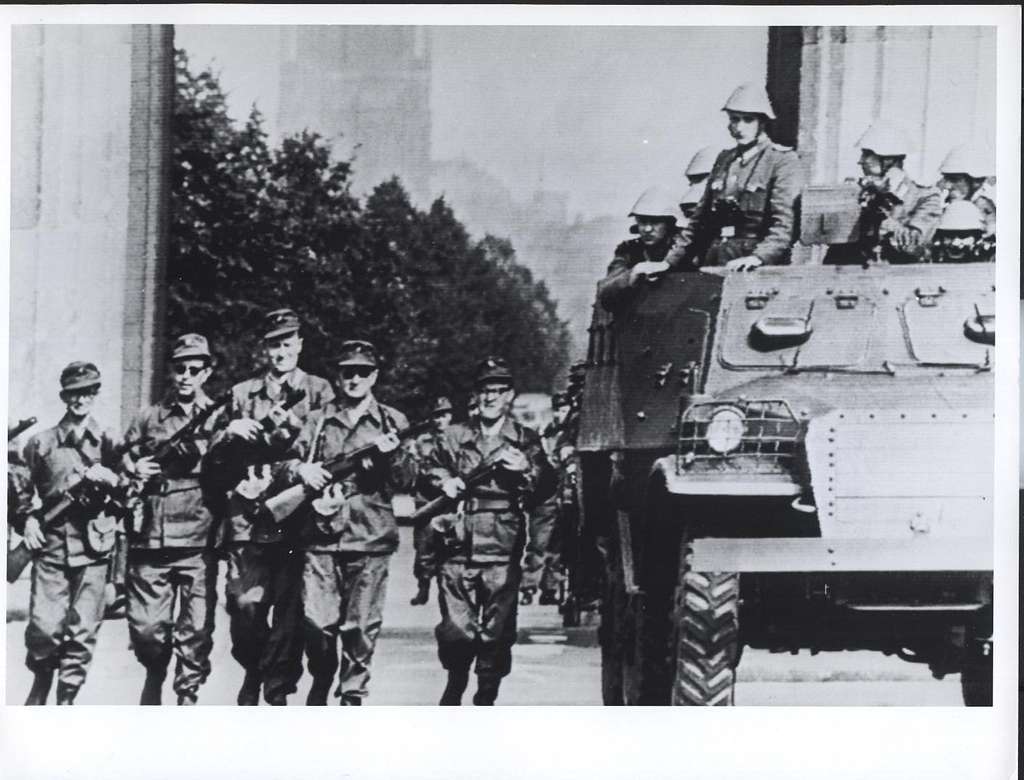
All along the way, long rows of armed police watched their every move.  More soldiers manned tanks, waiting for the order to disperse the crowd with murderous force.

But the order never came. Afterward it was revealed that government officials persuaded their leader to leave the protesters alone.

One of the demonstrators gave a soldier a lighted candle. He put down his weapon and accepted it. Others followed suit. “Soon all the soldiers had lowered their weapons and joined with the protestors” [3].

In the following weeks, the prayerful, candle-carrying crowd grew to 120,000, then 300,000, and finally 700,000.

A crowd such as this must have gathered.

The country’s leader resigned, knowing that without the army to back him, he had become powerless. Soon the whole regime resigned, unable to fight against the power of prayer and Light.

One month after the tide-changing protest, a government spokesperson mistakenly announced in a public broadcast that a monumental change was about to take place. Citizens would be allowed to travel freely, effective immediately [4].

News spread rapidly, reported across the world. Thousands of people soon gathered at the symbol of their thirty-year oppression, a barrier that had divided them into east and west: the Berlin Wall.

Harald Jager, commanding officer of the border guards that night, called his superiors to find out how to deal with the gathering crowd. He received no orders.

“People could have been injured or killed . . . if there had been panic among the thousands gathered at the border crossing,” he declared afterward. “That’s why I gave the order: Open the barrier” [5].

And so, on November 9,1989, thousands flowed through, celebrating and crying. Others climbed over the barrier, chipping away at the wall with hammers and pickaxes. Bulldozers and cranes soon made quick work of dismantling the entire structure [6].

Thirty-four years ago today, that menacing wall became rubble, and a tyrannical regime miraculously toppled with it.

And it all began with Pastor Christian Furher and a handful of praying saints.

Christian Furher (1943-2014)


[1] https://contemporarychurchhistory.org/2014/09/reflection-on-pastor-christian-fuhrer-of-the-nikolai-church-in-leipzig/

[2] https://embracingbrokenness.org/2020/10/prayer-and-the-berlin-wall-by-charles-buttigieg/

[3] http://storage.cloversites.com/worldhistoryinstitute/documents/WHI_03Mar014_Journal_4.pdf

[4] https://www.foxnews.com/lifestyle/this-day-history-nov-9-1989-berlin-wall-falls-cold-war-victory-us-allies

[5] https://www.bbc.com/news/world-europe-50013048

[6] https://www.history.com/topics/cold-war/berlin-wall

Additional Source: http://www.godgossip.org/article/did-a-prayer-meeting-really-bring-down-the-berlin-wall

Photo credits: http://www.commons.wikimedia.org; http://www.pxhere.com; http://www.rawpixel.net; http://www.picryl.com; http://www.commons.wikimedia.org; http://www.pexels.com; http://www.nara.getarchive.net; http://www.picryl.com; http://www.commons.wikimedia.org.

Read Full Post »

Looking ahead at the calendar for 2024, I found more than a few wild-and-crazy celebrations in store for those who care to participate. Just in January alone, we can look forward to:

  • National Cream Puff Day—January 2 (Who thought this was a good idea right after the holidays when so many will be embarking on diets?)
  • World Logic Day—January 14 (If only we could fix in one day the irrational and absurd thinking that seems to be increasing these days.)
  • National Popcorn Day—January 19 (This one I can get behind!)
  • National Blonde Brownie Day—January 22 (If you prefer cream cheese brownies, your day is coming February 10.)
  • National Backwards Day—January 31 (Seems like we’d benefit more from honoring evidence of going forward—toward integrity, responsibility, and maturity.)

Didn’t I tell you they were wild-and-crazy observances?

To be honest, we Christians are encouraged to celebrate some wild-and-crazy things—things that make no sense at first glance, like:

Weakness

Too many of us assume we have to be supremely talented and gifted in order to be used by God. But the opposite is true.

God most often chooses ordinary people who’ve emptied themselves of prideful ambition and self-centered motives. They are the ones whom God can fill with himself, who become the ideal showcases for his greatness and glory [1].

Turns out, when we recognize just how weak we are—with our inadequacies, missteps, and fears—we’re actually in the best position to manifest the power of God.

Now that’s worth celebrating!

Meekness

The Hebrew word for meekness suggests “being molded.” The meek are God-molded; they’ve submitted to him and are patterning their lives after him [2]. The meek delight in leaving everything in God’s capable hands.

That may sound unappealing to some, but little do they know: the meek get the most out of life.

For example:

  • They view life with joyful gratitude, not disgruntled entitlement
  • They appreciate their resources—not for the prestige they offer but for their usefulness
  • They don’t harbor envy or jealousy, but genuinely enter into the joys of others

And note what God promises to the meek in Psalm 37:11 (above): an abundance of peace. Isn’t that a happy reality to celebrate?

Servanthood

Not many of this world are interested in the role of servant. But God’s kingdom works very differently:

Every day is a new opportunity to discover what eternal business might be lurking in the ordinary business of being human [3].

Bruce Wilkerson

Yes, there is eternal business in serving others as we:

  • prepare meal after meal that keeps the family fed, but also nourishes their hearts with comfort and delight
  • perform small deeds of kindness—because they’re woven into the larger expanse of God’s far-reaching grace
  • work for the benefit of others and the glory to God—whether anyone notices or not

There is honor in such serving.

Trouble

Now I’ve gone too far, some will say. Celebrating difficulty seems downright sadistic. But consider:

We can take delight in what God will do through the trial.

First, God delights in transforming the black-carbon pressures of our lives into diamonds of radiant beauty, as he chips away at the rough places of our character and the distractions in our lives, allowing the Light of Christ to shine with greater clarity.  Such an undertaking rarely happens overnight; it’s a process that takes time [4].

Second, think of those you’ve known or learned about who did shine with the radiant Light of Christ. They undoubtedly faced trouble, yet persevered and triumphed in the end. We too can experience fulfillment as the Light of Christ shines through us to impact others.

Third, while we’re in the midst of the trial, God often brings the sweetest discoveries of himself [5].

These realities also warrant celebration.

The question remains, how will we celebrate?  Perhaps with an ancient song:


[1] Nancy Leigh DeMoss Wolgemuth, Biblical Womanhood in the Home, 67.

[2] Ralph Sockman, The Higher Happiness, 65.

[3] A Life God Rewards, 114, emphasis added.

[4] Joanna Weaver, Having a Mary Heart in a Martha World, 199.

[5] L. B. Cowman, Jim Reimann (ed.), Streams in the Desert, 143.

Art & photo credits: http://www.pixexid.com; http://www.dailyverses.net; http://www.pixexid.com; http://www.depositphotos.com; http://www.canva.com; http://www.commons.wikimedia.org.

Read Full Post »

David Bussau sat with three of his teenage friends in the dining hall of Sedgley Boys’ Home, an orphanage in New Zealand.

“How’d you guys like to work for me?” he asked.

David had lived in the orphanage himself until recently. Now he was out on his own, living at a boardinghouse. But David had prepared for this eventuality, saving money from odd jobs while living at Sedgley.

Currently he was running his own hot dog stand, and now he was ready to expand. With the help of his friends, David became proprietor of three hot dog stands, then two other food stands, followed by a bakery, and a pancake company. David improved each business and sold them for a substantial profit.

In 1965 at age 25, David married Carol Crowder, a girl from his church. Not long after they moved to Sydney, Australia.

Sydney, Australia 1960s

David found work as a construction foreman, and quickly learned the business. Before long he was part-owner of the company.

Over the next ten years, the Bussaus became parents to two daughters. His boss retired and David purchased his shares of the company. Soon he owned three construction companies, and reached the status of millionaire—before his thirty-fifth birthday.

David knew money wouldn’t satisfy. He wanted to live on enough and use his God-given wealth and talent as an entrepreneur to serve others. But how?

In 1974 a cyclone devastated Darwin, Australia. David and twenty volunteers traveled two thousand miles to help with reconstruction.

Of course, several weeks of work made little difference. So David made arrangements for his businesses in Sydney to carry on without him and moved his family to Darwin. In addition to supervising construction crews, David raised funds throughout Australia for the flattened city.

By 1976 Darwin was nearly rebuilt, and the Bussaus’ pastor in Sydney presented them a new opportunity in Bali, to rebuild a church destroyed by earthquake. Their answer: yes.

“This was my first real exercise in faith,” David said later. “Even when I’m out of my depth I like to take on a challenge. I jumped into it trusting and believing that God would redeem if I screwed up.” [1]

In the remote village of Blimbingsari, the Bussaus lived in a thatch-roofed home with no electricity, running water, or phone. But the community of one thousand Christians were willing to work hard to have a church again.

Water was the top priority, in order to make concrete for a sturdy structure. But bringing water to the village meant bypassing two Hindu villages. David and his crew built a dam and laid pipe, providing water to them first.

That project yielded another blessing. Now the villagers could irrigate their rice fields and harvest twice a year, not just once. 

While working toward church construction, David learned of the systemic debt plaguing the rice farmers. Landowners required sixty percent of the crop as rent; the remaining proceeds didn’t cover most families’ expenses. 

They often mortgaged their children to manage mounting debts, but it was rarely enough.

David created a solution: micro-financing. He began with his interpreter, Ketut, whose wife knew how to use a sewing machine.  

David lent them fifty dollars to purchase an old one. They sold the crafted items in surrounding villages, and as the business grew Ketut paid back the loan.

Even better, they made enough to buy a second machine and hire another worker. Before long Ketut and his family were ready to diversify. They opened an import/export business as well as a taxi service, employing more community members.

And so began the villagers’ escape from chronic debt into sustainable, successful businesses.

When the church was complete, village leaders asked the Bussaus to stay and help build a hotel. People could then be trained to work in the growing tourist industry.

David and Carol agreed. (Their two daughters loved living in Bali, making the decision even easier.)

To further develop his ability to provide micro-loans, David founded a non-profit organization called “Maha Bhoga Marga”— “The Way of Prosperity.” Over the decades he’s founded seventeen international ministries.

David also joined forces with a colleague to form Opportunity International (O.I.). As of 2021, it has served over 18 million clients in thirty countries. [2]
An O. I. savings and loans ready to open in Ghana, 2011

“O. I. creates a job in the developing world every thirty seconds, and they estimate that every permanent job created directly lifts six people out of poverty.” [3]

David explains their success: “Our original intent wasn’t to set up an international organization, it just grew. That’s the way God works. [When you] do what He puts in front of you, the more doors He opens up. The result is that God is glorified through it.” [4]

Now in his eighties, David still travels internationally, furthering the work God gave him to do: bringing people out of poverty one micro-loan at a time and glorifying God through it.


[1]  https://www.issuu.com/opportunity/docs/oia_agency_issue08

[2] https://opportunity.org/content/News/Publications/Annual%20Report/annual-report-2021/annual-report-2021.pdf

[3] https://www.hopechannel.com/read/david-bussau-creates-opportunity

[4]  https://www.issuu.com/opportunity/docs/oia_agency_issue08

Other sources:

https://christiantoday.com.au/news/cma-courageous-leadership-conference-melbourne-and-interview-with-micro-finance-pioneer-david-bussau.html

https://www.discoverwalks.com/blog/australia/top-10-sensational-facts-about-david-bussau/

https://opportunity.org/news/blog/2021/december/back-to-the-beginning-david-bussau

Photo credits: http://www.commons.wikimedia.org; http://www.rawpixel.com; http://www.flickr.com; http://www.commonswikimedia.org; http://www.rawpixel.com; http://www.commonswikimedia.org (2).; http://www.piqsels.com.

Read Full Post »

According to American theologian R. C. Sproul (1939-2017): “Prayer does change things, all kinds of things. But the most important thing it changes is __________ [1].”

What would you put it the blank? A few possibilities include:

  1. The lives of those we pray for
  2. The way events unfold
  3. The attitudes and perspective of those prayed for
  4. Us—the people doing the praying

Sproul wrote, the most important thing prayer changes is us.

Author and Bible teacher Kay Arthur (1939- ) wrote similarly: “You cannot spend time in prayer, even intercessory prayer [for others], and not have it impact you personally [2].”

Such statements as these beg the question how. How could our prayers for others affect us?

One possibility comes readily to mind. Praying for others and watching miraculous answers unfold strengthens our faith, which contributes to peace of mind and heart.

On the other hand, in those situations when God chooses to postpone his response and yet we continue to pray, the waiting teaches us patience and persistence.

But might there be more ways intercessory prayer impacts us? A bit of research turned up the following. You may be surprised as I was by how many there are.

Intercessory prayer fosters unity in our hearts with those we pray for. We can even find ourselves growing in compassion and affinity for them.

I’ve prayed for Kiana for a number of years now. We’ve never met; I know very little about this young woman in India and yet love for her has bloomed in my heart just the same. I’m looking forward to meeting Kiana in heaven and hearing her story [3].

Intercessory prayer teaches us selflessness as our thoughts are directed away from ourselves and toward others.

Intercessory prayer changes our perspective as we see our desires for a person or situation shift to what God wants to do. We remember: his expansive plan always includes more benefit than we can perceive [4].

We also acknowledge that even times of pain and trouble produce worthwhile results.

Esther Ahn Kim was a Korean Christian who spent six years in a Japanese prison during Word World II as a result of her faith. No doubt many prayed for her release, and yet freedom wasn’t granted. However, at least two guards and many of Esther’s fellow prisoners became believers in Jesus—because of her [5].

Intercessory prayer shifts our attitudes from fear and anger to peace and calm as we affirm the truth of scripture, including:  

  • Whatever transpires has been allowed by God
  • We will never understand all the workings of God this side of heaven
  • Even suffering achieves purpose [6]

Intercessory prayer develops humility as we acknowledge our limited ability to impact people or circumstances and affirm only God can affect any change he chooses.

Intercessory prayer augments our usefulness and causes spiritual growth.

When Pastor Hendricks learned that Matt T. had been asked to teach the Sunday School class for junior high boys, his eyebrows went up. Matt was just out of college and still had some growing up to do himself.

But before long, Pastor Hendricks began hearing reports of the once-rowdy boys eagerly participating in the class. He invited Matt to lunch and asked about his secret of success.

Matt showed him a little black book with one page for each boy. On each page were comments like, “Having trouble in math,” “comes to church against his parents’ wishes,” and “wants to be a missionary but doesn’t feel capable.” Matt was praying over the pages every day.

Pastor Hendricks observed: When we pray for others, we become more like Jesus. And as we grow, God shows us more, and uses us more [7].

Isn’t that just like our Heavenly Father? Even as we seek to bless others with our prayers, God is also blessing us.

P.S. Please join me in prayer for the suffering people of Israel and the innocents of Gaza. Let’s pray that the perpetrators of evil are thwarted at every turn [8].


[1] The Prayer of the Lord

[2] His Imprint, My Expression, 157.

[3] You can read how I learned about Kiana at https://nancyaruegg.com/2019/12/12/advent-ure/  

[4] Ephesians 2:20

[5] https://www.thegospelcoalition.org/article/esther-ahn-kim-steadfast-in-persecution/

[6] Romans 11:33-36; James 1:2-4

[7] https://www.lifeway.com/en/articles/sermon-prayer-life-of-a-christian-colossians-4

[8] Psalm 125:4-5

Photo credits: http://www.freerange.com; http://www.canva.com; http://www.pickpik.com; http://www.dailyverses.net; http://www.canva.com.

Read Full Post »

« Newer Posts - Older Posts »

When the House is Quiet

Impressions Becoming Expressions

Mitch Teemley

The Power of Story

Still Traveling

Impressions Becoming Expressions

Living Our Days

Gaining a heart of wisdom

He Said What?!

I'm Patty, and my husband and I are living with our adult son who has autism and epilepsy. I love sharing lessons learned from life around me, especially life with Aaron.

Meditations of my Heart

Impressions Becoming Expressions

Linda Stoll

Impressions Becoming Expressions

Signora Sheila

Notes on Life, Faith & Italy

Heidi Viars

Finding the Image of God