Feeds:
Posts
Comments

Archive for the ‘God’ Category

Twenty-one-year-old James Gribble, a streetcar conductor, scanned the avenue ahead, but his mind swirled with visions of the future. Life was treating him well in Philadelphia with its many amenities in 1904, compared to his hometown of Mechanicsburg, PA. What opportunities might lie ahead?

Then it happened. A woman stepped off the still-moving trolley, caught her skirt under a wheel, and was pulled under. She died at the scene.

James agonized over the terrible accident. “Oh God, deliver me, and I’ll serve you!” he wrote in his journal.

That Sunday James attended church and accepted Jesus into his life. That evening he was baptized.

On Monday while reading his Bible, James came to Matthew 28:19a:

He told his pastor, “I think God wants me to become a missionary.”

For several years James received mentoring and instruction, then joined the African Inland Mission. To his delight, the team included a pretty young doctor, Florence Newberry. In 1908 they established a mission station in West Central Africa and started ministering to the nearby tribes.

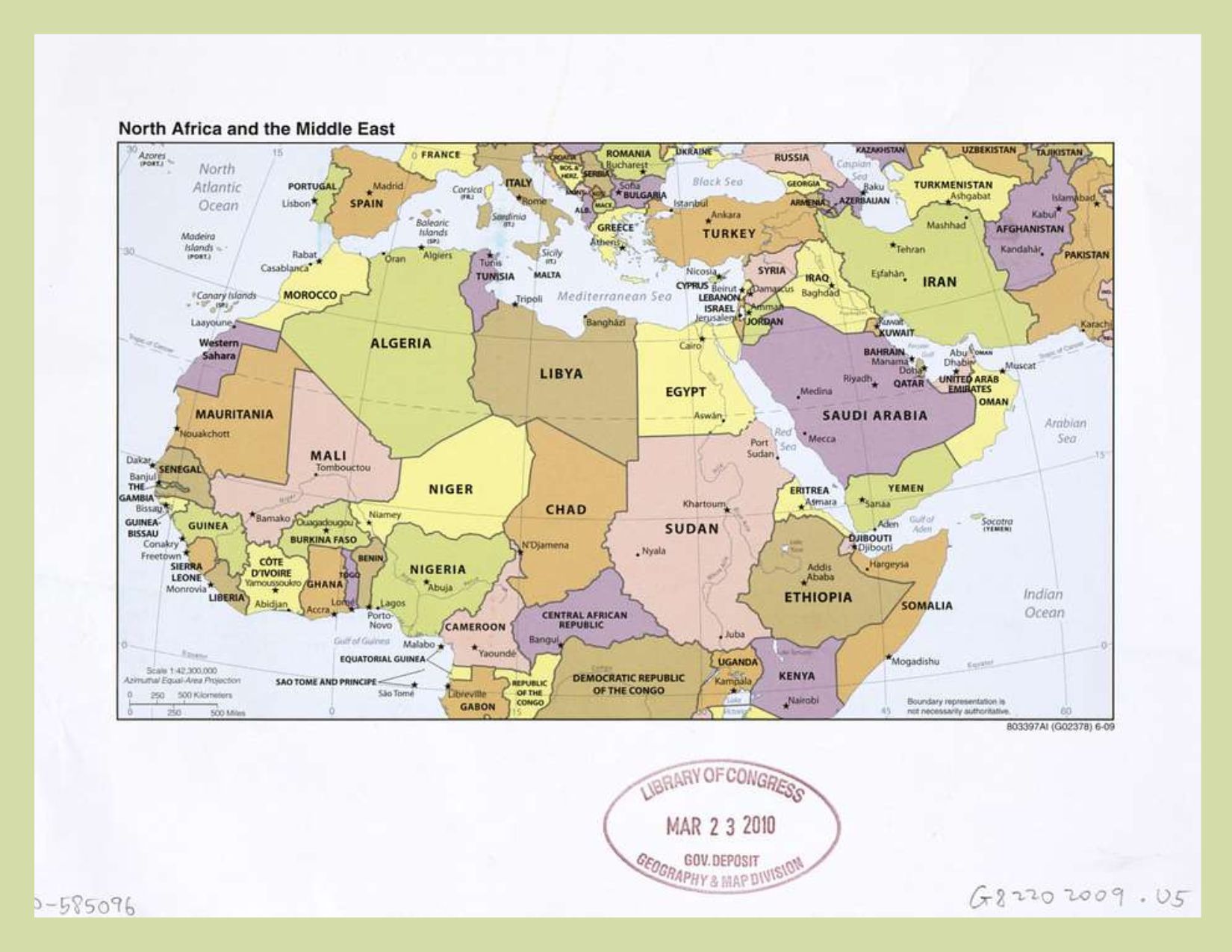
The station was located in what is now the Central African Republic, south of Chad.

James wanted to become better-acquainted with Florence, but patients kept her busy from morning till night. Suddenly genius struck. James could pretend he was sick!

During the appointment he suggested courtship. Florence preferred they remain friends, still devastated over a previous beau uninterested in foreign mission work.

Twice more over the next four years James would approach her about courtship; twice more she declined.

James and another missionary traveled inland to establish a new station.

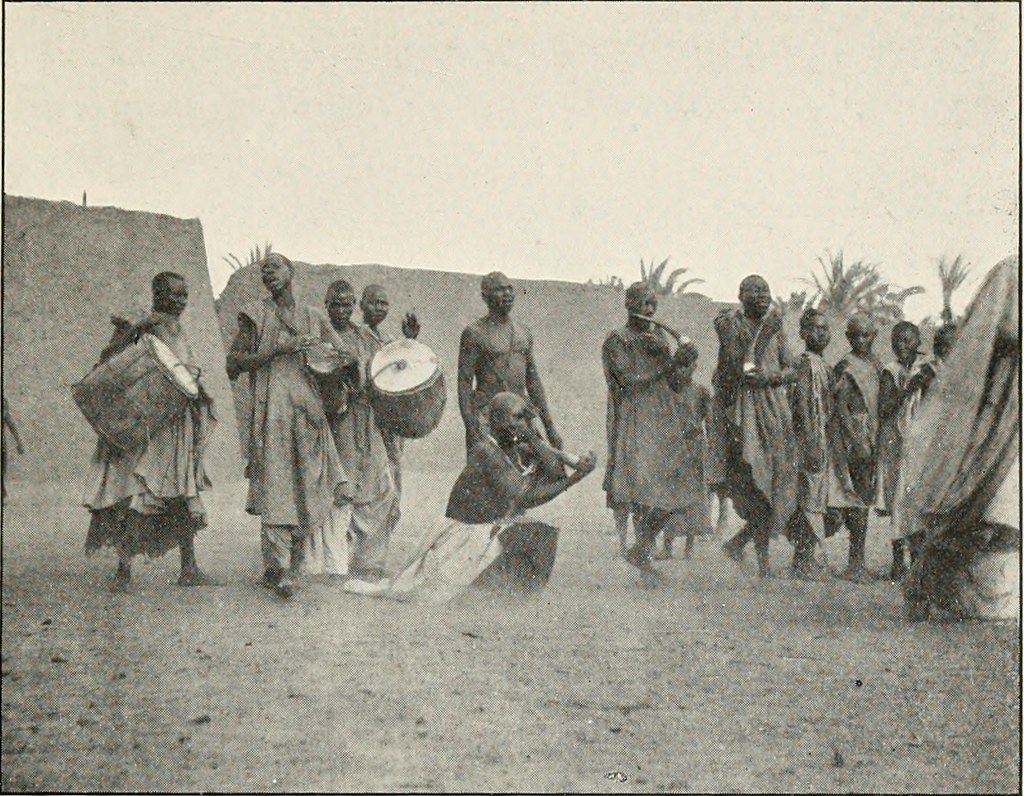
West African tribesmen, 1912

Soon his partner became ill and had to return to base camp, then James succumbed to black water fever. He expected to die.

Afterward James wrote about the vision God gave him on his sickbed—a panoramic view of the tribes of West Central Africa. God said, “Thou shalt be instrumental in carrying the gospel to these.” James knew then he’d survive.

During a prayer vigil in 1912, Florence’s thoughts turned to James. Her heart had warmed toward the trustworthy and kind missionary, so passionate about sharing Christ with the African people. Florence sensed the Spirit whispering to her, “Why not?”  

The two were married within a few months.

Sometime later Florence developed appendicitis and required hospitalization. For thirty days they traveled the three hundred miles to the nearest hospital.

As she slowly recovered, the doctor told James, “You must take her back to America. She cannot live in the tropics.”

Florence did return home and six months later James followed. They lived in Chicago for several years while Florence regained strength. Their only child Marguerite was born there in 1915.

Daily James would pray over a map of Africa. He found his attention drawn to a town named Bozoum, in Ubangi-Shari (now the Central African Republic). He wondered why.

Bozoum is located in the northwestern province of Ouham-Pende.

The couple shared their hope with area churches: to establish base camps across central Africa as a barrier against encroaching Islam. When they returned in 1918, two nurses and another family joined them.

The group desired to enter a French-controlled area, but it took eighteen months to receive permission. They named their base, Camp-Wait-Some-More.

Finally able to move on, they arrived in Carnot. While waiting there another eighteen months, they spent their time learning the language and praying.

A new official arrived, and James made an appointment with him.

He asked James, “Where do you intend to set up camp, now that you’ve received permission?”

Permission?! James was stunned. “Where would you recommend?”

Then came Surprise #2. “I think Bozoum would be a good place.”

Now James knew why God had inspired him to pray particularly for this town.

In 1921, Florence and James became ill again. She had to return to the States, taking their daughter with her. Eighteen months later Florence traveled back to Africa, but without Marguerite. Though an anguishing decision, the couple determined she should remain in America to attend school.

In 1923 a young recruit was due to arrive, but he died within miles of reaching their mission station, causing more heartache.

James wrote:

Not long after, James succumbed to black water fever again; this time the forty-year-old did not survive.

He’d previously written to Florence, “I shall be content with the lowest seat in heaven if only there I may sit and see the redeemed of the Lord come in from those fields where I have a been a pioneer missionary.”

Except James had not witnessed one person becoming a Christ-follower during his years in Africa.

Some might say those years of pain and hardship had accomplished nothing. And what about God’s promise: ““Thou shalt be instrumental in carrying the gospel to these?”

James had been instrumental, by bringing others to join in their work. Even his own daughter returned to Africa, ministering with her husband for thirty-one years.

James had served as a foundation builder—constructing base camps, encouraging others, and giving himself to prayer. He followed in the footsteps of the Apostle Paul:

Today, 70% of the population of the Central African Republic are Christians.

In my mind’s eye I see James in heaven, greeting saint after saint from West Central Africa, just as he imagined. But instead of sitting, I think James is standing and celebrating with all his heart.

Sources:

Photo credits: http://www.flickr.com; http://www.rawpixel.com; http://www.picryl.com; http://www.flickr.com; http://www.commons.wikimedia.org; http://www.nara.getarchive.net; http://www.commons.wikimedia.org.

Processing…
Success! You're on the list.

Read Full Post »

Joy is a word seen frequently during the Christmas season–on cards, ornaments and even fence gates.

But holiday-pleasure based on Santa, gifting, and parties, quickly disappears with the decorations and Christmas cookies.

Where do we find January-Joy that will carry us through the new year and even beyond?

First, we have to understand: true joy is more than feel-good endorphins.

To some that sounds ridiculous. Acquiescence sounds like distasteful servitude. And what possible delight can a person find in Someone we can’t see or hear?

Little do they know the depth of joy Jesus offers us (John 15:11).

Little do many people understand:

This deep sea of joy is made available to us as we obey God–another reality that makes some bristle. They don’t realize when Christ tells us to follow God’s ways, he’s not trying to make our lives miserable. He’s showing us the way to enjoy abundance of life (John 15:9-11; John 10:10)!

Scripture presents a number of principles that contribute to our fullness of joy, including:

POSITIVITY (Philippians 4:4)

GRATITUDE (Psalm 126:3)

MINDFULNESS (Psalm 89:15-16)

(How else might we make space for joy? That’s a question worth contemplating!)

GENEROSITY OF JOY (Acts 20:35)

Also worth remembering:

Empathy (Romans 12:15a)

And what happens to those who focus on all things beautiful, good, and true—no matter how small—and thank God for them?

What happens to those who discover the joys of the here and now—no matter their circumstances–and praise God for them?

“They are the change agents who bring fullest Light [and JOY] to all the world.”*

JOY to the world! For January–beyond.

Now there’s an objective to embrace for 2025.


* Ann Voskamp, One Thousand Gifts, 58.

Art & photo credits: http://www.pickpik.com; http://www.freerangestock.com; http://www.negativespace.co; http://www.pickpik.com; http://www.pixabay.com; http://www.canva.com.

Processing…
Success! You're on the list.

Read Full Post »

No Christmas season would be complete without the reading of the second chapter of Luke—the account of Mary and Joseph traveling to Bethlehem, presiding over the birth of Jesus in a stable or cave, and receiving shepherd-guests.

Toward the end of the account, as those shepherds were spreading the word of Jesus’ birth, Luke wrote, “Mary treasured up all these things and pondered them in her heart” (v. 19).

Indeed. She had much to process:

  • Her baby was the Messiah, the Promised One, who would save his people from their sin. I wonder if she studied him, looking for signs that he was different from other infants.
  • This was the Prince of Peace cradled in her arms. Yet he had been born to a common village girl in very primitive conditions.  Did that seem strange to her?
  • The shepherds had learned of his birth when angels visited them, just as the angel, Gabriel, had visited Mary and then Joseph.  Gabriel had also visited Zechariah, the father of John the Baptist. Four angel visitations in a matter of months. Never had that happened before.

I find myself pondering, too—pondering Mary herself–this dear, young girl who carried a tremendous burden for a long time.

Dear means beloved and valued. Mary is certainly that for numerous reasons.

  • She embraced Gabriel’s announcement with great faith. “May it be to me as you have said,” (Luke 1:38). She put herself in the care of God in spite of incomprehensible circumstances.
  • Her prayer, the Magnificat (Luke 1:46-55), gives indication of a heart fully committed to God.
  • She endured much: shame for her pregnancy, a long, uncomfortable journey to Bethlehem, and crude circumstances for the birth of her Son.

Mary was young—perhaps between thirteen and fifteen years of age. That was the typical age for a girl to be married in Bible times.

Yet, young as Mary was, Gabriel praised her for being “endued with grace” (v. 28, AMP). In addition, Mary demonstrated stamina, maturity, and gentleness beyond her years.

No doubt God graced her with these traits. But I have to believe Mary also had freedom of choice, as we all do, to embrace God’s way for her.

What I ponder most, however, is the fact Mary carried a tremendous burden, given to her by an elderly man, Simeon, eight days after Jesus was born.

You undoubtedly remember the story. Joseph and Mary took Jesus to the temple at Jerusalem to be circumcised.

There they met the righteous and devout Simeon who had been waiting decades for the Messiah. The Holy Spirit had revealed to him he would not die until he had seen the Lord Christ.

Immediately upon seeing the Child, Simeon knew this was the One.

He praised God for keeping his promise, blessed Mary and Joseph, and then spoke particularly to Mary, saying Jesus would cause some to rise and some to fall, he would be spoken against, the thoughts of many hearts would be revealed, and a sword will pierce your own soul too (Luke 2:21-35).

Those last words must have caused Mary’s eyes to grow wide and her heart to skip a beat. Wasn’t the worst behind her? Surely Mary wanted to ask Simeon, “What do you mean?” Scripture gives us no indication that she did so.

For thirty-three years those last words of Simeon must have echoed in Mary’s mind again and again. How does a person live with such long-term foreboding? Perhaps her mind turned back to the night of Gabriel’s visitation.

Perhaps, for thirty-three years, Mary repeated what she had told the archangel: “I am the Lord’s servant. May it be to me as you have said” (1:38).

Mary may very well have developed the calm assurance that even when God’s ways are baffling, we can rest assured he is orchestrating events to accomplish far more than we could ever imagine (Ephesians 3:20). She’d been witness to such orchestration in Bethlehem.

Mary knew that even our personal hardships can fulfill purposes that extend far beyond ourselves.

That’s a lesson for all of us to embrace with calm assurance.

(Revised and reblogged from December 15, 2014, while we enjoy a blessed week with family!)

Photo credit: http://www.stocksnap.io.

Processing…
Success! You're on the list.

Read Full Post »

I praise you, Lord Jesus, for surrendering all the glorious perfections of heaven, to live among us with all our un-glorious imperfections [1].

Also astounding is your arrival as an infant, born to peasants, in a stable-cave. How ignoble for the King of kings, the Alpha and Omega who always was and always will be.

As Mary and Joseph tried to rest on scratchy straw, did they wonder, “How could this be part of your plan, Lord Jehovah? How could the Messiah fulfill his grand destiny from such lowly beginnings?”

Little did the couple know:

  • their helpless baby who could not stand “would one day walk on water” [2]
  • his little hands that could not grasp would one day break five rolls and two fish into pieces and feed five thousand people
  • their Child who could not speak would one day make the hearts of men burn within them as he spoke words of supernatural wisdom and insight
  • his flailing arms would one day spread wide on a cross, to save his people from their sins [3]

The depth of your humility and the magnitude of your sacrifice, Lord Jesus, overwhelm me.

I praise you for all the ways you demonstrated God’s character to us during your earthly ministry—his love, compassion, goodness, and more.

I praise you, Lord Jesus, for your power on display in the miracles you performed and those you continue to perform to this day, confirming who you are—not just a wise teacher or mystic but the Son of God.

I praise you for the glimpses of heaven we experience from time to time of what it will be like when all creation is “brought into the freedom and glory of the children of God,”–because of what you accomplished [4].

Such glimpses include:

  • The exquisite beauty of nature, causing us to gasp in wonder
  • The profound heart-to-heart connections we experience with other believers
  • The songs that move our spirits and cause tears of blissful joy
  • The sense of your presence—your encompassing and perfect shalom [5]

–C. S. Lewis (The Problem of Pain, 150-151)

I praise you, Lord God, that before time began, you’d already established the plan for your Son’s birth, ministry, death, and resurrection [6].

I praise you, Lord Jesus, for withstanding horrific suffering in our place, paying the penalty for our sins [7].

I praise you Heavenly Father, for your power over death, proven by the resurrection of your Son. He received a grand welcome back to heaven and now sits on his throne, receiving the honor, glory, and power he deserves [8].

I praise you for the promise—repeated many times through scripture—that upon our physical deaths, those of us who believe in Christ will live forever with you, surrounded by the wonders of heaven [9].

I praise you, Lord Jesus, we’ll even sit with you on your throne [10]!

Such an honor seems downright absurd, and yet there it is—promised and guaranteed in your infallible Word—promises we can trust, a guarantee we can believe in.

I pray that many will see:

And may many embrace you, O Christ, as their Prince of Peace and King of kings, to experience your shalom and joy. May they accept your gift of gifts: eternal life!


[1] Philippians 2:5-7

[2] From Mark Lowry’s carol, “Mary Did You Know”; see also Matthew 14:22-33 for one example

[3] Matthew 14:13-33; Luke 24:13-24; Luke 23:33; Matthew 1:21

[4] Romans 8:21

[5] Shalom includes not only peace, but complete well-being and wholeness

[6] Titus 1:2

[7] Romans 5:8

[8] Revelation 3:21

[9] John 3:16

[10] Revelation 3:21

[11] From a sermon, “The Great Birthday of Our Coming Age,” December 21, 1884.

Photo credits: http://www.freebibleimages.com; http://www.canva.com; http://www.heartlight.org; http://www.dailyverses.net; canva.com.

Processing…
Success! You're on the list.

Read Full Post »

As his father prayed, little Isaac peeked through his fingers to see what was causing a rustling sound. His eyes spied a mouse crawling up a bell-rope, and Isaac giggled.

After family prayers, Father wanted to know what had possessed his son to be so disrespectful.

“I saw a mouse running up the bell-rope, and it came to my mind:

There was a mouse for want of stairs,

‘Ran up a rope to say his prayers.”

Father was not amused and reached for the rod. Isaac fell to his knees and begged:

“Father, Father, pity take,

And I will no more verses make [1]!”

Neither the little poet Isaac Watts (1674-1748) nor his father could have known where the boy’s penchant for rhymes would take him.

As a late teen, Isaac complained often to his father about the tiresome, chanted hymns of the church. How was a person supposed to sing them with joy as the Bible-psalms often urged, when the music droned in a minor key?

From a 1600’s hymnal

Mr. Watts finally suggested he turn complaining into composing and create better melodies and lyrics. Isaac did, and over the next fifty-plus years more than six hundred of his hymns were published.

Some people found fault with Isaac’s contemporary worship songs. But at least several prominent leaders supported him, including Samuel Johnson, Cotton Mather, and John Wesley [2].

Isaac Watts

Probably the best known of Watts’ hymns is “Joy to the World,” although Watts never set it to music. Decades later Lowell Mason felt inspired to do so and upon publication in 1848, the song soon became a beloved Christmas carol.

Some insist this hymn has no place in the carol-category, because Watts included no elements of the Christmas story in the lyrics.

But as Alyssa Poblete points out: This song celebrates what Christ came to do. And along with looking back at the grace accomplished in the past, we also look forward to the grace accomplished for our future, to the ultimate joy to be revealed [3].

That enlightenment helps explain that puzzling first line, “Joy to the world, the Lord is come” (emphasis added). I’ve often wondered why Watts didn’t choose “has come.”

Ms. Poblete gives us indication. God’s grace (explained in part by the acronym, God’s Riches at Christ’s Expense) is active in all of time—past, present, and future.

Our Messiah’s birth was long-promised for centuries. His coming ushered in a new kingdom of Light. Those who believe in Jesus gain release from the kingdom of darkness, and one day that evil kingdom will be utterly destroyed [4].

In addition:

Christ’s coming is an ever-present and ongoing engagement in the world.

–Darrow L. Miller [5]

The Lord didn’t just come. He is here! And we can sing with dazzling Christmas joy because:

  • One day the whole earth will receive her King. Therefore, let heaven and nature sing (v. 1) [6]
  • The Savior reigns forever and ever (v. 2) [7]
  • Sins and sorrows will be no more, when Christ returns (v. 3) [8]
  • He comes to make his blessings flow (v. 3) [9]
  • He rules the world with truth and grace (v. 4) [10]
  • The glories of his righteousness and the wonders of his love are on display everywhere (v. 4) [11]

These musicians capture well the dazzling joy of knowing our Savior reigns!

For the reasons listed above and more, Watts invites: “Let every heart prepare him room” (v. 1), and “Let men [all humanity] their songs employ” (v. 1)!

May we be just such people who sing with intention, from a place of authenticity [12].

In fact, take a moment right now if you can, and worship, celebrate, and sing with dazzling Christmas joy!


[1] Betty Dunn, https://www.powerofchange.org/blog/2011/12/16/isaac-watts-joy-to-the-world.html

[2] Erin Tabor, https://www.zmiinternational.org/daily-dose-of-encouragement/joy-to-the-world-the-lord-is-come  

[3] https://www.thegospelcoalition.org/article/joy-to-the-world-a classic-christmas-hymn-reconsidered/

[4] Isaiah 7:14 and 9:6; Colossians 1:14; Revelation 20:7-20.

[5] https://disciplenations.org/wp-content/uploads/202004/Music-that-Writes-Culture-Reflections-on-Joy-to-the-World.pdf

[6] Romans 8:19-23; Revelation 22:20; Psalm 96:1-4

[7] Revelation 11:15

[8] Revelation 21:4

[9] Psalm 5:12; 34:10b; 2 Peter 1:3

[10] John 1:14; Colossians 1:16-17

[11] Psalm 33:4; 145:17 31:21

[12]  https://passioncitychurch.com/article/joy-to-the-world/

Art & photo credits: http://www.justanotherclaypotblogspot.com 9/10/2008; http://www.boudewijnhuijgens.getarchive.net; http://www.jenikirbyhistory.getarchive.net; http://www.canva.com (2); youtube.com; http://www.pxhere.com and canva.com.

Processing…
Success! You're on the list.

Read Full Post »

You’ve heard the Christmas story—probably multiple times.

You may even know interesting background information such as:

  • The number of miles Mary and Joseph traveled from Nazareth to Bethlehem—about seventy—and the number of days on the road—four to seven
  • Angels not necessarily singing to the shepherds but most likely speaking their message [1]
  • The gifts of the Magi holding symbolic meaning: gold for Christ’s royalty, myrrh (used in embalming) for his humanity, and incense for his divinity

But perhaps a new insight or two about the familiar story will add a bit of icing to your Christmas joy!

For example, consider:

A Disadvantaged Upbringing

Most of us would choose a sophisticated city like Jerusalem (in the homes of priests perhaps) for the upbringing of the mother and earthly father of the Christ Child.

Instead, God chose Nazareth–a small, nondescript town that nobody cared about. That’s where Mary and Joseph, the parents for the Son of God, were likely born and raised.

We mustn’t think anyone too weak, untrained, or undistinguished to fulfill God’s plans.

An Unknowing Participant

The Roman emperor Caesar Augustus—not a believer in God—unknowingly carried out holy purpose [2]. Our Lord can and does use the most unlikely people; we mustn’t underestimate his influence and power.

An Unlikely Invitation

by Alexander Laureus, 1815

Neither the powers of Rome nor the priests of the Jewish people received an invitation to the birthplace of the King of kings. Instead, angels delivered the news of the Messiah’s birth to scruffy shepherds and told them where Christ could be found.

Often it is the lowly who are the beneficiaries of God’s special favors and blessings—more so than the rich or famous [3].

An Unassuming Humility

Our Savior God is a humble God. Even though he’s the sovereign power of the universe, Christ humbled himself to be born a helpless baby, grow into manhood, and suffer death in the place of all sinners who put their faith in him [4].

How dare I entertain even the smallest of prideful thoughts?

An Unexpected Circumstance

Our God loves surprises! Imagine the shepherds crying out in shock as an angel suddenly appears to them, only to be even more surprised by the angel’s message!

No doubt you’ve been surprised by God too, as he worked out impossible circumstances, miraculously supplied a dire need, or blessed beyond imagination. God’s surprises prove his creative capability to perform wonders that cannot be fathomed, and miracles that cannot be counted!

An Unlikely Juxtaposition

The shepherds visited the True Shepherd; the kings from the East visited the King of the universe. And that Shepherd-King (such a mind-boggling juxtaposition of humility and majesty!) now lives within us.

An Uncommon Possibility

When angels announced Christ’s birth to the shepherds, “the glory of the Lord shone around them [5].”

I wonder, might that celestial light have been rainbow-infused? Consider Revelation 4:3 where the Apostle John tries to describe the glory around God’s throne.

He wrote, “A rainbow that shone like an emerald encircled the throne.” Perhaps those same, glorious rainbow hues swirled in the light above the hills of Bethlehem that night!  

This is the only public-domain image that hints toward what I’m imagining!

Some people enjoy adding such facts and conjectures to their bank of knowledge.

Better yet is to let such information provide the icing on our Christmas joy—the icing of delicious astonishment and sweet encouragement that leads to worship.

*     *     *     *     *     *     *     *     *     *

I praise you Lord God, that your Word is living and active. No matter how often we read a passage or hear a scripture story, you can breathe fresh life into its meaning and impact.

The Christmas narrative is no exception. As we read and hear again the grand story of Jesus’ birth, may our hearts be open to your inspiration, may we overflow with renewed wonder, and in response, offer you our heartfelt worship.

Hebrews 4:12a; Proverbs 4:20-22;

Psalm 119:18; Psalm 40:5; Psalm 72:18-19


[1] Luke 2:13-14

[2] Luke 2:1-4

[3] http://www.examiner.com

[4] Colossians 1:17; Philippians 2:5-8

[5] Luke 2:9

Art & photo credits: http://www.freebibleimages.org; http://www.pickpik.com; http://www.flickr.com; http://www.rawpixel.com; http://www.canva.com; http://www.flickr.com; http://www.canva.com.

Processing…
Success! You're on the list.

Read Full Post »

We know that gratitude provides benefits–mentally, spiritually, and even physically.

We desire to become more thankful, to weave the attitude through the hours of each day.

But how?

Author Lysa Terkeurst provides this model:

Note the particular benefits she highlights: heightened awareness of God’s presence, and experiencing his powerful peace–each one well worth the effort of developing the habit of gratitude, yes?

So look around you in this moment. What can you be grateful for?

Let it be a reminder that God is with you, lavishing you with his love, faithfulness, and compassion.

Think on that knowledge, note the peace enveloping your heart, and enjoy a very happy day of Thanksgiving–today and always!

Read Full Post »

Although the family gathered ’round him wept openly, Pastor Martin Rinkhart held back his own tears as men lowered another townswoman into her grave. It was his forty-second burial that day; and a few more would require his administration before sundown.

The next day promised more of the same as the plague ravaged the city of Eilenburg, Germany, Rinkhart’s hometown. But this wasn’t their only tragic circumstance. Long before in 1618 the Thirty Years’ War had begun, devastating much of Europe—especially Germany.

Now it was the mid-1630s, and numerous refugees had crowded into the walled city of Eilenburg to escape death and destruction at the hands of the Swedish army. The plague had soon followed.

Eight thousand people died, including many children, two clergymen from nearby neighborhoods, and Rinkhart’s wife. He would bury nearly 4,500—forty to fifty per day– before mass graves were instituted.

Martin Rinkhart could never have imagined such heartbreak when he earned his degree in theology in 1602.  He no doubt looked forward to shepherding a little flock of believers, leading them to grow in faith and ministering to their needs.

And for fifteen years or so, Rinkhart did serve as music minister or pastor in several locations. Then in 1617, at age thirty-one, he was invited back to his native Eilenburg.

Eilenberg, Germany today

Shortly after his relocation, the Thirty Years’ War began—one of the longest, most destructive conflicts in European history, taking eight million lives [1].

The Swedish army caused much suffering. Soldiers plundered livestock, food stores, and household goods.  They demanded to be billeted in citizens’ homes. Even as Rinkhart endured these same hardships, he continued to faithfully care for his hurting parishioners.

No sooner did the plague subside than famine gripped the land. Rinkhart did his best to help others, reducing rations for his own household until he found himself mortgaging his future income in order to purchase food and other necessities for them.

During this time, the Swedish army returned, besieging Eilenberg for several months. They finally demanded an exorbitant ransom to leave the city. Rinkhart met with the general to plead the city’s case, but he wouldn’t back down.

One account explains that Rinkhart called together his parishioners and others to pray. “Come my children,” he invited. “We can find no hearing, no mercy with men; let us take refuge with God” [2].

Evidently the general was present as Rinkhart prayed fervently for God’s deliverance. The Swede acquiesced, and lowered the ransom considerably.

During these decades of suffering, in 1636, Rinkhart wrote a mealtime prayer-song for his two children. They sang it at bedtime too.  

Most of us would expect a prayer pleading for relief and rescue by God’s power and mercy. Instead, Rinkhart focused on gratitude:

His prayer became the basis for a beloved hymn, chosen to be sung at the national thanksgiving service when the Thirty Years’ War ended. It’s still sung today:

https://youtu.be/ItfKjxkXhMk?si=TXR0eN0Tj9rP0Of4

I marvel how someone could write such lyrics—about the wondrous things God has done, his blessings along the way, and countless gifts of love—all while suffering terrible hardship and grief.

But I’m thankful for Martin Rinkhart’s example, demonstrating what it means to trust in the Lord with all your heart, in all circumstances [3].

Still, the question remains: WHY. Why Lord?” we plead toward heaven. “Why must good people suffer?”

Herbert Lockyer would have us understand:

No doubt Rinkhart embraced those truths. He also understood: Gratitude to God nurtures hope in him, the One who brings good out of all circumstances [5].


[1] https://enjoyingthejourney.org/hymn-history-now-thank-we-all-our-god/

[2] https://www.thedestinlog.com/story/lifestyle/faith/2018/11/20/story-behind-song-pastor-gives-praise-thanks-during-darkest-of-times/8320618007/

[3] Proverbs 3:5; 1 Thessalonians 5:18

[4] Seasons of the Lord, 371.

[5] Romans 8:28

Additional Source: http://www.baptistnews.com/article/now-thank-we-all-our-god/

Art & photo credits: http://www.picryl.com (Artist: Jozef Szermentowski); http://www.wikimedia.org; http://www.rawpixels.com.

Processing…
Success! You're on the list.

Read Full Post »

The heading promised: “Expert Tips for Creating a Gratitude List.”

But nowhere did the writer suggest who we’re supposed to thank. And that omission raises an important question: Can gratitude provide any value if there’s no one to receive it?

On the other hand, giving thanks and praise to God lifts our spirits as we review his unfailing love for us, expressed in countless ways.

Imagine King David’s euphoria as he wrote:

In Psalm 31, David included these five inspiring truths: our God is faithful (5), loving (7, 16, 21), good (19), merciful (22) and protective (23).

And as I considered theses scriptures, my thoughts turned to examples in our family’s lives when we’ve seen these attributes in action. For example:

God is faithful (Psalm 31:5) and shows us the wonders of his love (21).

Our son Eric needed slides of his paintings for a college application. However, several days of overcast skies made it impossible to sufficiently light his work and show it to best advantage. 

The deadline was fast approaching, and four paintings still hadn’t been photographed.

Eric decided he’d have do his best with the light available. But as he finished setting up and adjusting the painting on his easel, the sun came out! Three more times, just as he finished positioning, the clouds parted and the sun shone!

God stores up abundant good things for those who honor and trust him (Psalm 31:19).

Our family has experienced an abundance of good things—sometimes in miraculous ways (like provision for employment through an astonishing string of God-incidences [1]), and sometimes in smaller-but-no-less-startling events, like the one described above.

I’ve recorded hundreds of such moments in a notebook-journal kept since 1983 (as many of you regular readers know). Entry after entry proves our God is abundantly good and ever faithful [2].

God hears my cries for mercy when I call to him for help, and he protects the faithful (Psalm 31:22, 23).

Years ago before GPS, I became hopelessly lost on a lonely, tree-lined road. To make matters worse, the gas tank was approaching empty, and I was going to be late for an appointment.

In near-panic mode I prayed, LORD HELP ME!, and tried to calm my racing heart by affirming that God would not fail me nor abandon me (Hebrews 13:5b NLT).

Suddenly a three-way stop appeared. I looked left to see a gas station about fifty yards down the road, almost hidden by the trees.

I turned the corner—into the 1950s. The style of the building and peeling paint indicated the age of the station; the pumps were just as old.

More alarm ensued as I studied one of the ancient pumps. What do I do with THIS?

And then an older gentleman approached (an angel, perhaps?) and kindly offered, “I’ll pump that for you.” He also directed me where I needed to be, and I arrived at my appointment just a few minutes late.

I could share SO many more examples. But it’s not just our family that’s experienced God’s goodness, faithfulness and love. All of us have stories to tell of God working wonders in our lives.

May we be quick to give him the thanks he deserves, and with King David, experience the euphoria of gratitude and praise that makes us leap for joy!

Now it’s your turn. In the comment section below, please share one of your stories that makes you leap for joy in what God accomplished!


[1] See https://nancyaruegg.com/2020/08/27/after-the-fact-2

[2] See https://nancyaruegg.com/2012/11/12/proving-gods-presence for how this journal came to be.

[3] Quoted by Herbert Lockyer, Seasons of the Lord, 199.

Art & photo credits: http://www.flicr.com (Evelyn Lim); http://www.biblepics.co; http://www.pickpik.com; http://www.freerangestock.com (Paul Morris); http://www.pickpik.com; http://www.flickr.com (Bill Badzo); http://www.canva.com.

Processing…
Success! You're on the list.

Read Full Post »

Surely you’ve met them—those glowing saints whose eyes always twinkle, smiles always dazzle, and whose faith and attitude always inspire.  We’re left wondering, how did they grow that glow?

No doubt it begins with strong trust in Christ, cultivated by scripture-study and prayer. They apply what they’ve learned about:

  • Giving all their concerns to God, knowing he truly cares
  • Focusing on the positive, the joyful, the beautiful
  • The pleasure of giving such gifts as time, encouragement, and a listening ear
  • Practicing God’s presence to experience his peace, strength, and more [1]

But researcher Michael Zigarelli discovered another reason why godly saints radiate joy: gratitude. He found that expressing continual gratitude to God actually energizes the practice of other spiritual disciplines, and altogether they contribute to growing that saintly glow [2].

Insightful author, Ann Voskamp concurs:

“The brave who focus on all things good and all things beautiful and all things true, even in the small, who give thanks for it and discover joy even in the here and now, they are the change agents who bring fullest Light to all the world” [3].

In addition, author and theologian Warren Wiersbe would have us know:

“That’s all fine and good,” someone might say. “But right now I see very little to be thankful for. We’ve had one financial setback after another, my job is more stressful than ever, our son is having a hard time in school, and my brother and sister-in-law just announced they’re separating. ‘See what I mean?”

Yes, we do. Some seasons of life include multiple troubles all at once.

But take note of this good news: simply expressing thankfulness (even if we don’t feel grateful) has been proven to create positive change in our brain chemistry [4].

And we find: continual gratitude contributes to a sense of WELL-BEING.

Another surprise?

Continual gratitude provides HEALING for the wounds of distress [5] —especially appreciation for who our Savior God is and what he has done.

Think of it: He created all things! He sustains all things! He has supremacy over all things! He is our Emmanuel (God with us), our Good Shepherd, our Wonderful Counselor, and so much more [6]!

God hears us as we pray, loves us with an everlasting love, empowers us through the Holy Spirit, fills us with hope, and anchors us through the storms of life [7]

And as we cultivate continual gratitude for such realities, we find PEACE.

The truly thankful person

is a truly peaceful person.

—Lysa TerKeurst [8].

It makes sense. The more we thank God for all the benefits he bestows, the firmer our faith-stance in his competence to sustain us.

Third, continual gratitude cultivates JOY.

Turn [your] eyes toward Jesus and everything shines—

even the tough spots morph into excitement. . .

How is he going to solve my problem this time? . . .

When I am consciously aware of him,

life fills with wonder and wonder brings joy [9].

What better way to remain aware of God and expand joy-inducing wonder than with gratitude?

Last, continual gratitude “lays out planks of TRUST” [10].

Think of all the moments he’s been faithful, when:

  • an impossible situation worked out amazingly well
  • a potentially difficult conversation turned out to be restorative and beneficial
  • an inspired idea came to mind that cleverly solved a problem
  • a surprising bargain materialized, supplying a current need
  • a string of just-so-happened circumstances provided the answer to a prayer

Yes, some will call these coincidences. Around here we call them God-incidences, because “whatever is good and perfect is a gift coming down to us from God our Father” [11].

And every time we acknowledge such gifts of provision, protection, and guidance, we lay another plank of trust, constructing a strong bridge of faith from yesterday into tomorrow [12].

Now we know. Each of us can grow a glow as we embrace the power of gratitude.

And isn’t November—with Thanksgiving just a few weeks away—the perfect month to grow that glow a little bit brighter?


[1] 1 Peter 5:7; Philippians 4:8; Acts 20:35; Isaiah 26:3 NLT

[2] https://godsmissionarychurch.org/2018/10/26/growing-through-thankfulness/

[3] One Thousand Gifts, 58.

[4] https://www.focustsoul.com/blog/signs-of-maturity-in-christ-part-1-gratitude-and-joy

[5] https://cct.biola.edu/spirituality-suffering-gratitude/, emphasis added

[6] Colossians 1:15-20; Matthew 1:23; John 10:14; Isaiah 9:6

[7]  1 Peter 3:12; Jeremiah 31:3; 2 Timothy 1:7; Romans 15:13; Hebrews 6:19

[8] Embraced, 256.

[9] Deanna Chadwell, Soul Bare, 82-84.

[10] Ann Voskamp, One Thousand Gifts, 151.

[11] James 1:17 NLT

[12] Voskamp, 152.

Art & photo credits: http://www.commons.wikimedia.org; http://www.heartlight.org; http://www.pexels.com; http://www.pickpik.com; http://www.flickr.com; http://www.shutterstock.com.

Processing…
Success! You're on the list.

Read Full Post »

« Newer Posts - Older Posts »

When the House is Quiet

Impressions Becoming Expressions

Mitch Teemley

The Power of Story

Still Traveling

Impressions Becoming Expressions

Living Our Days

Gaining a heart of wisdom

He Said What?!

I'm Patty, and my husband and I are living with our adult son who has autism and epilepsy. I love sharing lessons learned from life around me, especially life with Aaron.

Meditations of my Heart

Impressions Becoming Expressions

Linda Stoll

Impressions Becoming Expressions

Signora Sheila

Notes on Life, Faith & Italy

Heidi Viars

Finding the Image of God